Month: May 2020 Page 2 of 5

Life in Books Tag

Life in Books Tag
I don’t know where this one came from (if you know, I’d love to credit them), but this looked like a fun tag to tackle, and I was in the mood to try one.

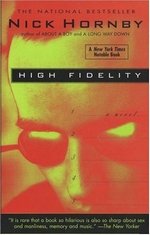
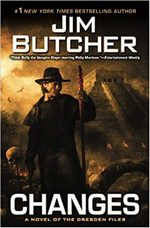
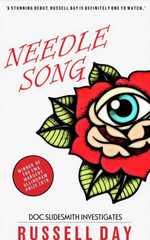
1. Find a book for each of your initials

High Fidelity Changes Needle Song

High Fidelity by Nick Hornby

Changes by Jim Butcher

Needle Song by Russell Day


2. Count your age along your bookshelf – what book is it?

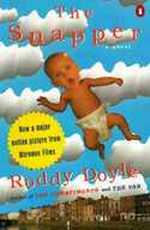
The Snapper

The Snapper by Roddy Doyle


3. A book set in your city/country

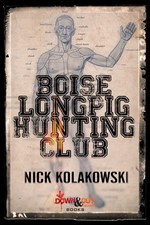
Boise Longpig Hunting Club

Boise Longpig Hunting Club by Nick Kolakowski

Boise isn’t my hometown, but this book takes place in Boise and many surrounding areas—Jake Halligan would have to drive by my town several times in this book, so I’m counting it.


4. A book that represents a destination you’d love to travel to

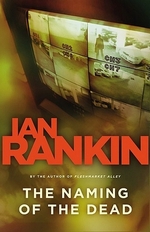
 The Naming of the Dead

The Naming of the Dead by Ian Rankin

I’m not really that big on travel, but my wife and I have often talked about going to Scotland, and it doesn’t get more Scottish than Ian Rankin?


5. A book that’s your favorite color

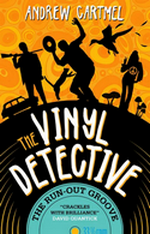
The Run-Out Groove

The Run-Out Groove by Andrew Cartmel

Haven’t read this yet, but it’s sitting on my TBR Shelf for ages—love that orange.


6. Which book do you have the fondest memories of?

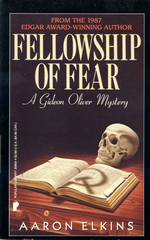
The Fellowship of Fear

The Fellowship of Fear by Aaron J. Elkins

This was hard, really hard. There are a handful I could think of here, but they’re the ones I can’t shut up about. But as I tossed ideas around (which was a lot of fun, and I spent more time doing than I’m going to admit), when I stumbled onto this one, I mentally threw in the towel. My first encounter with Gideon Oliver, this kind of mystery (it might have been my first amateur detective who wasn’t a lawyer), Forensic Anthropology—literary love at first sight.


7. Which book did you have the most difficulty reading?

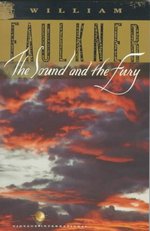
The Sound and the Fury

The Sound and the Fury by William Faulkner

There are a few that fit here, too. But I remember struggling mightily with this one—which bothered me, I loved the Faulkner I read in college and often figured I’d turn into one of those guys with a deep familiarity with his opus. Instead, I’ve got Douglas Adams, Robert B. Parker, and Jonathan Tropper. Not exactly equivalent.


8. Which book in your TBR pile will give you the biggest accomplishment when you finish it?

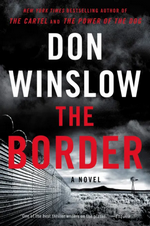
The Border

The Border by Don Winslow

The Cartel kicked my butt, and ThePower of the Dog left me shell-shocked, to imagine there’s one to tie off the series really intimidates me. But I really want to find out how he wraps it up.


As usual, I’m not tagging anyone in this—but I’d like to see what you all have to come up with.

Top Ten Tuesday: Top 10 Opening Lines


The topic for this week’s Top Ten Tuesdays is Opening Lines.

Part of what made cutting last week’s Top 5 Opening Lines down to just five was that I knew this was coming. I let myself go a little long with these, hopefully not annoyingly so. These may not be the best openings I’ve ever read, but they’re the most memorable.

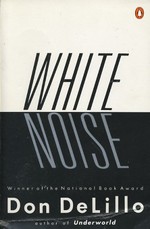
10 White Noise

White Noise by Don DeLillo

This is just one of those novels that imprinted on me in ways I don’t fathom, and it all started like this.

The station wagons arrived at noon, a long shining line that coursed through the west campus. In single file they eased around the orange I-beam sculpture and moved toward the dormitories. The roofs of the station wagons were loaded down with carefully secured suitcases full of light and heavy clothing; with boxes of blankets, boots and shoes, stationery and books, sheets, pillows, quilts; with rolled-up rugs and sleeping bags; with bicycles, skis, rucksacks, English and Western saddles, inflated rafts. As cars slowed to a crawl and stopped, students sprang out and raced to the rear doors to being removing the objects inside; the stereo sets, radios, personal computers; small refrigerators and table ranges; the cartons of phonograph records and cassettes; the hairdryers and styling irons; the tennis rackets, soccer balls, hockey and lacrosse sticks, bows and arrows; the controlled substances, the birth control pills and devices; the junk food still in shopping bags—onion-and-garlic chips, nacho things, peanut creme patties, Waffelos and Kabooms, fruit chews and toffee popcorn; the Dum-Dum pops, the Mystic mints.

I’ve witnessed this spectacle every September for twenty-one years. It is a brilliant event, invariable. The students greet each other with comic cries and gestures of sodden collapse. Their summer has been bloated with criminal pleasures, as always. The parents stand sun-dazes near their automobiles, seeing images of themselves in every direction. The conscientious suntans. The well-made faces and wry looks. They feel a sense of renewal, of communal recognition. The women crisp and alert, in diet trim, knowing people’s names. Their husbands content to measure out the time, distant but ungrudging, accomplished in parenthood, something about them suggesting massive insurance coverage. This assembly of station wagons, as much as anything they might do in the course of the year, more than formal liturgies or laws, tells the parents they are a collection of the like-minded and the spiritually akin, a people, a nation.

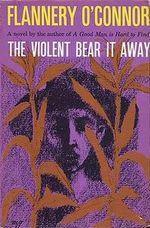
9 The Violent Bear It Away

The Violent Bear It Away by Flannery O’Connor

O’Connor’s the perfect mix of Southern sensibility, Roman Catholic worldview, and glorious prose.

FRANCIS MARION TARWATER’S uncle had been dead for only half a day when the boy got too drunk to finish digging his grave and a Negro named Buford Munson, who had come to get a jug filled, had to finish it and drag the body from the breakfast table where it was still sitting and bury it in a decent and Christian way, with the sign of its Saviour at the head of the grave and enough dirt on top to keep the dogs from digging it up. Buford had come along about noon and when he left at sundown, the boy, Tarwater, had never returned from the still.

The old man had been Tarwater’s great-uncle, or said he was, and they had always lived together so far as the child knew. His uncle had said he was seventy years of age at the time he had rescued and undertaken to bring him up; he was eighty-four when he died. Tarwater figured this made his own age fourteen. His uncle had taught him Figures, Reading, Writing, and History beginning with Adam expelled from the Garden and going on down through the presidents to Herbert Hoover and on in speculation toward the Second Coming and the Day of Judgment.

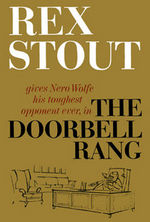
8 The Doorbell Rang

The Doorbell Rang by Rex Stout

I could’ve filled this list with Stout beginnings. But I limited myself to this one.

Since it was deciding factor, I might as well begin by describing it. It was a pink slip of paper three inches wide and seven inches long, and it told the First National City Bank to pay to the order of Nero Wolfe one hundred thousand and 00/100 dollars. Signed, Rachel Bruner. It was there on Wolfe’s desk, where Mrs. Bruner had put it. After doing so, she had returned to the red leather chair.

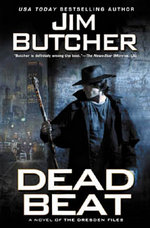
7 Dead Beat

Dead Beat by Jim Butcher

The first words I read by Butcher, got me hooked but good.

On the whole, we’re a murderous race.

According to Genesis, it took as few as four people to make the planet too crowded to stand, and the first murder was a fratricide. Genesis says that in a fit of jealous rage, the very first child born to mortal parents, Cain, snapped and popped the first metaphorical cap in another human being. The attack was a bloody, brutal, violent, reprehensible killing. Cain’s brother Abel probably never saw it coming.

As I opened the door to my apartment, I was filled with a sense of empathic sympathy and intuitive understanding.

For freaking Cain.

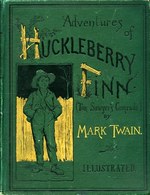
6 Adventures of Huckleberry Finn

Adventures of Huckleberry Finn by Mark Twain

This was the hardest cut from last week’s list, but I just can’t resist the moocow.

You don’t know about me without you have read a book by the name of The Adventures of Tom Sawyer; but that ain’t no matter. That book was made by Mr. Mark Twain, and he told the truth, mainly. There was things which he stretched, but mainly he told the truth. That is nothing. I never seen anybody but lied one time or another, without it was Aunt Polly, or the widow, or maybe Mary. Aunt Polly—Tom’s Aunt Polly, she is—and Mary, and the Widow Douglas is all told about in that book, which is mostly a true book, with some stretchers, as I said before.

Now the way that the book winds up is this: Tom and me found the money that the robbers hid in the cave, and it made us rich. We got six thousand dollars apiece—all gold. It was an awful sight of money when it was piled up. Well, Judge Thatcher he took it and put it out at interest, and it fetched us a dollar a day apiece all the year round—more than a body could tell what to do with. The Widow Douglas she took me for her son, and allowed she would sivilize me; but it was rough living in the house all the time, considering how dismal regular and decent the widow was in all her ways; and so when I couldn’t stand it no longer I lit out. I got into my old rags and my sugar-hogshead again, and was free and satisfied. But Tom Sawyer he hunted me up and said he was going to start a band of robbers, and I might join if I would go back to the widow and be respectable. So I went back.

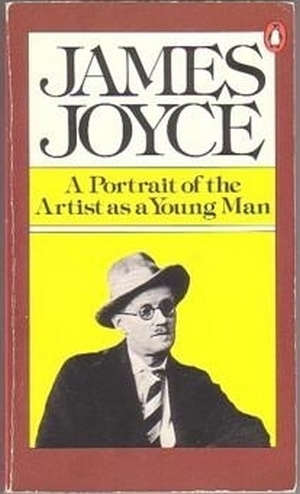
5 A Portrait of the Artist as a Young Man

A Portrait of the Artist as a Young Man by James Joyce

I remember in our English class in High School when we were assigned this book, pretty much no one was interested. When Mr. Russo passed out the paperbacks, a few of us flipped it opened and read these first words—and suddenly we were open to the idea (didn’t last long for all of us, but that’s beside the point, we’re focused on the opening lines here). It’s stuck with me for almost 30 years, that’s gotta say something.

Once upon a time and a very good time it was there was a moocow coming down along the road and this moocow that was coming down along the road met a nicens little boy named baby tuckoo….

4

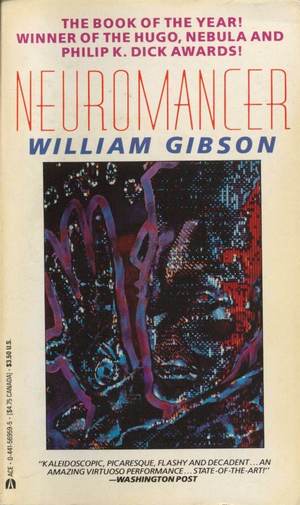
Neuromancer by William Gibson

This sentence was love at first glance for me. Still love it. Naturally, no one knows what color this is referring to anymore.

The sky above the port was the color of television, tuned to a dead channel.

“It’s not like I’m using,” Case heard someone say, as he shouldered his way through the crowd around the door of the Chat. “It’s like my body’s developed this massive drug deficiency.” It was a Sprawl voice and a Sprawl joke. The Chatsubo was a bar for professional expatriates; you could drink there for a week and never hear two words in Japanese.

Ratz was tending bar, his prosthetic arm jerking monotonously as he filled a tray of glasses with draft Kirin. He saw Case and smiled, his teeth a webwork of East European steel and brown decay. Case found a place at the bar, between the unlikely tan on one of Lonny Zone’s whores and the crisp naval uniform of a tall African whose cheekbones were ridged with precise rows of tribal scars. “Wage was in here early, with two joeboys,” Ratz said, shoving a draft across the bar with his good hand. “Maybe some business with you, Case?”

Case shrugged. The girl to his right giggled and nudged him.

The bartender’s smile widened. His ugliness was the stuff of legend. In an age of affordable beauty, there was something heraldic about his lack of it.

3

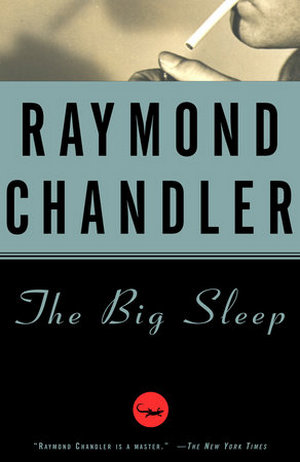
The Big Sleep by Raymond Chandler

Oft-parodied. Oft-imitated. Often-celebrated. Does it get better than this?

It was about eleven o’clock in the morning, mid October, with the sun not shining and a look of hard wet rain in the clearness of the foothills. I was wearing my powder-blue suit, with dark blue shirt, tie and display handkerchief, black brogues, black wool socks with dark blue clocks on them. I was neat, clean, shaved and sober, and I didn’t care who knew it. I was everything the well-dressed private detective ought to be. I was calling on four million dollars.

The main hallway of the Sternwood place was two stories high. Over the entrance doors, which would have let in a troop of Indian elephants, there was a broad stained-glass panel showing a knight in dark armor rescuing a lady who was tied to a tree and didn’t have any clothes on but some very long and convenient hair. The knight had pushed the vizor of his helmet back to be sociable, and he was fiddling with the knots on the ropes that tied the lady to the tree and not getting anywhere. I stood there and thought that if I lived in the house, I would sooner or later have to climb up there and help him. he didn’t seem to be really trying.

2

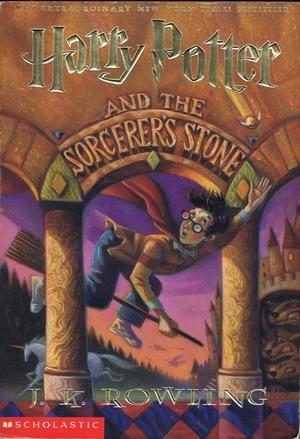
Harry Potter and the Sorceror’s Stone by J. K. Rowling

Why bother saying anything here?

Mr. and Mrs. Dursley, of number four Privet Drive, were proud to say that they were perfectly normal, thank you very much. They were the last people you’d expect to be involved in anything strange or mysterious, because they just didn’t hold with such nonsense.

1

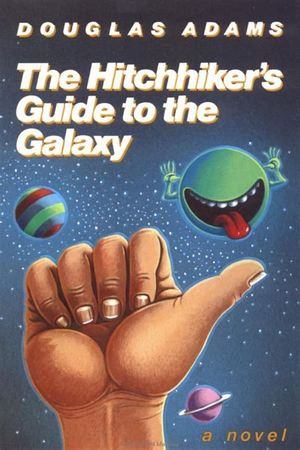
The Hitchhiker’s Guide to the Galaxy by Douglas Adams

Far out in the uncharted backwaters of the unfashionable end of the Western Spiral arm of the Galaxy lies a small unregarded yellow sun.

Orbiting this at a distance of roughly ninety-eight million miles is an utterly insignificant little blue-green planet whose ape-descended life forms are so amazingly primitive that they still think digital watches are a pretty neat idea.

This planet has—or rather had—a problem, which was this: most of the people living on it were unhappy for pretty much of the time. Many solutions were suggested for this problem, but most of these were largely concerned with the movement of small green pieces of paper, which was odd because on the whole it wasn’t the small green pieces of paper that were unhappy.

And so the problem remained; lots of the people were mean, and most of them were miserable, even the ones with digital watches.

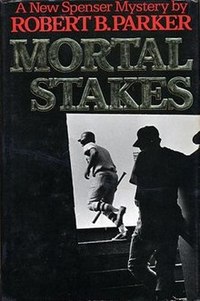
Classic Spenser: Mortal Stakes by Robert B. Parker

Classic Spenser

Mortal Stakes

Mortal Stakes

by Robert B. Parker
Series: Spenser, #3

Mass Market Paperback, 328 pg.
Dell, 1975

Read: March 30, 2020
Grab a copy from your local indie bookstore!


After stumbling onto Spenser: For Hire—I think during season 2 summer re-runs, I headed to my local library and grabbed the earliest in the series they had—Mortal Stakes. This wasn’t the first “adult” novel or mystery that I’d tried, but it was the best. Between Parker’s voice, Spenser’s wit, and the kind of story it told, I was sold and spent the next few months getting my hands on every one of the series I could. Re-reading this one is always like coming home.

Spenser is hired by a Boston Red Sox executive to investigate their best pitcher, Marty Rabb. There’s a hint of a suggestion of a rumor that he’s shaving points on behalf of gamblers, and the executive wants to know if it’s true. If so, he wants to address it quitely, If Rabb’s clean, he wants to know that quietly.

It takes no time at all for Spenser to determine that he is—and why. The bulk of the novel is Spenser’s attempt to learn who is blackmailing Rabb to do this and then to extricate him from their grip before it ruins his career and/or marriage. This is a significant challenge.

Spenser sees a lot of himself in Rabb—they share the same values, sense of honor, sense of play. Spenser will later look into a similar case in Playmates, and he’ll meet a similar athlete—only his sport is College Basketball. Parker will often use clients to shine a light on an aspect of Spenser’s character, usually by way of contrast—but with athletes, it’s because of similarity.

On the expanding Spenser-verse front, we meet New York Madam, Patricia Utley. She’s no “hooker with a heart of gold,” by any means. She’s a businesswoman first and foremost. She does remember where she came from, and can occasionally be counted on to display a bit of sentimentality. She will reappear several times in this series (and will make appearances in related series)—a reliable source of information as well as a resource.

In The Godwulf Manuscript we saw Spenser physically rough up a couple of college kids and verbally push around an older man. Each incident is followed by Spenser berating himself. In a fit of pique following a botched stakeout for the ransom delivery in God Save the Child, Spenser breaks the handle of the rake he was using as a prop and feels so bad that he leaves money to pay for it. Parker goes out of his way to show Spenser’s conscience. Yet in this book, Spenser arranges to outright kill two people. Yes, he’s wracked with guilt—physically ill—but he’s able to justify it to himself. Which mostly works, but he has to go to Susan Silverman to talk things out and convince himself he did the right thing.

This book shows that Spenser is changing. He doesn’t like being alone—he needs to talk some of the difficult things through with Susan. He’s had a couple of dates with Brenda Loring earlier in the book—but he notes she’s good for having fun with, but for serious talk, it has to be Susan. I appreciate the slow growth in the character here.

This isn’t the best Spenser volume—but it’s a very good one. This is the first (of many) extended look at Spenser’s code. We see Spenser wade in deep ethical waters (and doesn’t necessarily come out clean). But most importantly, we see Spenser doing all he can—whether his employer wants him to or not—to dig a couple of people out form a tight spot. Mortal Stakes is Parker at his best and is just a pleasure to read.


5 Stars

Just a Spoonful of Sugar—Non-Fiction to Smile With and Learn From

So I stumbled onto my notes from Funny, You Don’t Look Autistic: A Comedian’s Guide to Life on the Spectrum the other day (and yeah, I forgot almost all of them in my post). But it got me thinking about McCreary’s approach—taking a hard-to-talk about subject, and adding a touch of humor (or at least a light-hearted voice) to it to make it palatable. It’s a great way to get someone to look at the subtleties of what the Autism Spectrum Disorder can be, how individuals can fall somewhere on that spectrum (and therefore have many things in common), and yet be very different from one another.

Now, I realized that some would point to this as a problem, our cultural inability to discuss difficult subjects with the sobriety and seriousness they deserve. And there’s something to that. More than something, probably. Still, I don’t like to think I enjoy these because I’m shallow, but I guess I could be.

Shallowness aside, there’s something to that approach—whether it’s technical issues, trauma, socially awkward topics, disease, disorders or other things people try to avoid discussing—doing so in a light-hearted manner or with plenty of laughs, tends to make the audience receptive. It takes a lot of skill to blend the difficult topic into an entertaining package. But it’s a great way to gain a new perspective, a deeper understanding, or learn something.

Some of the others that I’ve read/posted about in the last few years that entertain while informing/giving insight:
bullet Wishful Drinking by Carrie Fisher—Fisher addresses her addictions and mental health problems (and the extreme solutions) in this frequently laugh-out-loud memoir
bullet Everything is Normal by Sergey Grechishkin—Grechishkin’s memoir of growing up in 1980’s-era Soviet Russia brings the grins (and a chuckle or two) while not letting us forget how hard and terrifying it could be.
bullet Kasher in the Rye: The True Tale of a White Boy from Oakland Who Became a Drug Addict, Criminal, Mental Patient, and Then Turned 16 by Mose Kasher—Kasher’s account will make you smile, break your heart, and help you understand addiction
bullet Gluten Is My Bitch: Rants, Recipes, and Ridiculousness for the Gluten-Free by April Peveteaux—on the one hand, this seems the slightest of the issues addressed. Ask any person with Celiac Disease how hard it can be to find food that doesn’t make you violently ill—and just how violent that illness can be. But Peveteaux will make you laugh, while offering hope and help.
bullet Henry by Katrina Shawver—even in a Nazi work/death camp, friendship helps, people can find some release.

Help me expand this list—what are some other works along these lines that I should read?

Towel Day ’20: Some of my favorite Adams lines . . .

(updated 5/25/20)
There’s a great temptation here for me to go crazy. I’ll refrain from that and just list some of his best lines . . .

The Hitchhiker’s Guide to the Galaxy

bullet Time is an illusion. Lunchtime doubly so.”
bullet This must be Thursday. . . I never could get the hang of Thursdays.”
bullet “You’d better be prepared for the jump into hyperspace. It’s unpleasantly like being drunk.”
“What’s so unpleasant about being drunk?”
“You ask a glass of water.”
(I’m not sure why, but this has always made me chuckle, if not actually laugh out loud. It’s just never not funny)
bullet He had found a Nutri-Matic machine which had provided him with a plastic cup filled with a liquid that was almost, but not quite, entirely unlike tea.
bullet In those days spirits were brave, the stakes were high, men were real men, women were real women and small furry creatures from Alpha Centauri were real small furry creatures from Alpha Centuari. And all dared to brave unknown terrors, to do mighty deeds, to boldly split infinitives that no man had split before . . .
bullet “Look,” said Arthur, “would it save you a lot of time if I just gave up and went mad now?”
bullet The ships hung in the sky in much the same way that bricks don’t.

The Restaurant at the End of the Universe

bullet It is a curious fact, and one to which no one knows quite how much importance to attach, that something like 85 percent of all known worlds in the Galaxy, be they primitive or highly advanced, have invented a drink called jynnan tonnyx, or gee-N-N-T’Nix, or jinond-o-nicks, or any one of a thousand or more variations on the same phonetic theme. The drinks themselves are not the same, and vary between the Sivolvian “chinanto/mnigs” which is ordinary water served at slightly above room temperature, and the Gagrakackan “tzjin-anthony-ks” which kills cows at a hundred paces; and in fact the one common factor between all of them, beyond the fact that the names sound the same, is that they were all invented and named before the worlds concerned made contact with any other worlds.

Life, the Universe, and Everything

bullet The Hitchhiker’s Guide to the Galaxy has this to say on the subject of flying.There is an art, it says, or rather, a knack to flying.The knack lies in learning how to throw yourself at the ground and miss.

(It goes on for quite a while after this — and I love every bit of it.)

bullet “One of the interesting things about space,” Arthur heard Slartibartfast saying . . . “is how dull it is?””Dull?” . . .”Yes,” said Slartibartfast, “staggeringly dull. Bewilderingly so. You see, there’s so much of it and so little in it.”

So Long, and Thanks for All the Fish

bullet Of course, one never has the slightest notion what size or shape different species are going to turn out to be, but if you were to take the findings of the latest Mid-Galactic Census report as any kind of accurate guide to statistical averages you would probably guess that the craft would hold about six people, and you would be right.You’d probably guessed that anyway. The Census report, like most such surveys, had cost an awful lot of money and told nobody anything they didn’t already know — except that every single person in the Galaxy had 2.4 legs and owned a hyena. Since this was clearly not true the whole thing eventually had to be scrapped.
bullet Here was something that Ford felt he could speak about with authority.”Life,” he said, “is like a grapefruit.””Er, how so?”

Well, it’s sort of orangy-yellow and dimpled on the outside, wet and squidgy the middle. It’s got pips inside, too. Oh, and some people have half a one for breakfast.”

“Is there anyone else out there I can talk to?”
bullet Arthur had a swordfish steak and said it made him angry. He grabbed a passing waitress by the arm and berated her.”Why’s this fish so bloody good?” he demanded, angrily.”Please excuse my friend,” said Fenchurch to the startled waitress. “I think he’s having a nice day at last.”

Mostly Harmless

bullet A common mistake that people make when trying to design something completely foolproof is to underestimate the ingenuity of complete fools.

Dirk Gently’s Holistic Detective Agency

bullet If it looks like a duck, and quacks like a duck, we have at least to consider the possibility that we have a small aquatic bird of the family anatidae on our hands.
bullet Let’s think the unthinkable, let’s do the undoable. Let us prepare to grapple with the ineffable itself, and see if we may not eff it after all.

(I’ve often been tempted to get a tattoo of this)

The Long Dark Tea-Time of the Soul

bullet There are some people you like immediately, some whom you think you might learn to like in the fullness of time, and some that you simply want to push away from you with a sharp stick.
bullet It can hardly be a coincidence that no language on earth has ever produced the expression, ‘As pretty as an airport.
bullet The impossible often has a kind of integrity to it which the merely improbable lacks.”
bullet She stared at them with the worried frown of a drunk trying to work out why the door is dancing.
bullet As she lay beneath a pile of rubble, in pain, darkness, and choking dust, trying to find sensation in her limbs, she was at least relieved to be able to think that she hadn’t merely been imagining that this was a bad day. So thinking, she passed out.

The Last Chance to See

bullet “So what do we do if we get bitten by something deadly?” I asked.He looked at me as if I were stupid.”You die, of course. That’s what deadly means.”
bullet I’ve never understood all this fuss people make about the dawn. I’ve seen a few and they’re never as good as the photographs, which have the additional advantage of being things you can look at when you’re in the right frame of mind, which is usually around lunchtime.
bullet I have the instinctive reaction of a Western man when confronted with sublimely incomprehensible. I grab my camera and start to photograph it.
bullet Human beings, who are almost unique in having the ability to learn from the experience of others, are also remarkable for their apparent disinclination to do so.
bullet The aye-aye is a nocturnal lemur. It is a very strange-looking creature that seems to have been assembled from bits of other animals. It looks a little like a large cat with a bat’s ears, a beaver’s teeth, a tail like a large ostrich feather, a middle finger like a long dead twig and enormous eyes that seem to peer past you into a totally different world which exists just over your left shoulder.
bullet One of the characteristics that laymen find most odd about zoologists is their insatiable enthusiasm for animal droppings. I can understand, of course, that the droppings yield a great deal of information about the habits and diets of the animals concerned, but nothing quite explains the sheer glee that the actual objects seem to inspire.
bullet I mean, animals may not be intelligent, but they’re not as stupid as a lot of human beings.

And a couple of lines I’ve seen in assorted places, articles, books and whatnot

bullet I love deadlines. I love the whooshing noise they make as they go by.
bullet A learning experience is one of those things that says, “You know that thing you just did? Don’t do that.”
bullet The fact is, I don’t know where my ideas come from. Nor does any writer. The only real answer is to drink way too much coffee and buy yourself a desk that doesn’t collapse when you beat your head against it.
bullet Solutions nearly always come from the direction you least expect, which means there’s no point trying to look in that direction because it won’t be coming from there.


Towel Day ’20: Do You Know Where Your Towel Is?

(actually updated and slightly revised this 5/25/20!)

The Hitchhiker’s Guide to the Galaxy has a few things to say on the subject of towels.

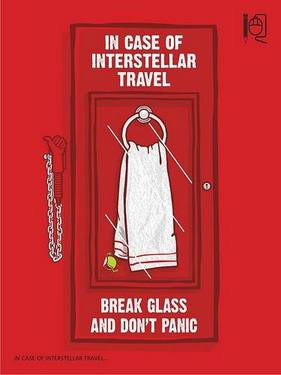
A towel, it says, is about the most massively useful thing an interstellar hitchhiker can have. Partly it has great practical value. You can wrap it around you for warmth as you bound across the cold moons of Jaglan Beta; you can lie on it on the brilliant marble-sanded beaches of Santraginus V, inhaling the heady sea vapors; you can sleep under it beneath the stars which shine so redly on the desert world of Kakrafoon; use it to sail a miniraft down the slow heavy River Moth; wet it for use in hand-to-hand-combat; wrap it round your head to ward off noxious fumes or avoid the gaze of the Ravenous Bugblatter Beast of Traal (such a mind-bogglingly stupid animal, it assumes that if you can’t see it, it can’t see you); you can wave your towel in emergencies as a distress signal, and of course dry yourself off with it if it still seems to be clean enough.

More importantly, a towel has immense psychological value. For some reason, if a strag (strag: non-hitch hiker) discovers that a hitch hiker has his towel with him, he will automatically assume that he is also in possession of a toothbrush, face flannel, soap, tin of biscuits, flask, compass, map, ball of string, gnat spray, wet weather gear, space suit etc., etc. Furthermore, the strag will then happily lend the hitch hiker any of these or a dozen other items that the hitch hiker might accidentally have “lost”. What the strag will think is that any man who can hitch the length and breadth of the galaxy, rough it, slum it, struggle against terrible odds, win through, and still knows where his towel is is clearly a man to be reckoned with.

Hence a phrase that has passed into hitchhiking slang, as in “Hey, you sass that hoopy Ford Prefect? There’s a frood who really knows where his towel is.” (Sass: know, be aware of, meet, have sex with; hoopy: really together guy; frood: really amazingly together guy.)

Towel Day, for the few of who don’t know, is the annual celebration of Douglas Adams’ life and work. It was first held two weeks after his death, fans were to carry a towel with them for the day to use as a talking point to encourage those who have never read HHGTTG to do so, or to just converse with someone about Adams. Adams is one of that handful of authors that I can’t imagine I’d be the same without having encountered/read/re-read/re-re-re-re-read, and so I do my best to pay a little tribute to him each year, even if it’s just carrying around a towel.

One of my long-delayed goals is to write up a good all-purpose Tribute to Douglas Adams post, and another Towel Day has come without me doing so. Belgium.

Next year . . . or later. (he says for at least the 5th straight year, a work ethic I like to believe Adams would recognize).

In the meantime, here’s some of what I’ve written about Adams. A couple of years back, I did a re-read of all of Adams’ (completed) fiction. For reasons beyond my ken (or recollection), I didn’t get around to blogging about the Dirk Gently books, but I did do the Hitchhiker’s Trilogy:
bullet The Hitchhiker’s Guide to the Galaxy
bullet The Restaurant at the End of the Universe
bullet Life, The Universe and Everything
bullet So Long, and Thanks For All The Fish
bullet Mostly Harmless
Also, I should mention the one book Adams/Hitchhiker’s aficionado needs to read is Don’t Panic by Neil Gaiman, David K. Dickson and MJ Simpson.

I’ve only been able to get one of my sons into Adams, he’s the taller, thinner one in the picture from a few years ago.

TowelDay.org is the best collection of resources on the day, recently posted this pretty cool video, shot on the ISS by astronaut Samantha Cristoforetti.

Even better—here’s an appearance by Douglas Adams himself from the old Letterman show—so glad someone preserved this:

Love the anecdote (Also, I want this tie.)

Saturday Miscellany—5/23/20

Odds n ends about books and reading that caught my eye this week. You’ve probably seen some/most/all of them, but just in case:
          bullet I’ve been starting off with ways to support Indie Bookstores during all the shutdown, etc. I don’t have a broad, all of us can do it, for this week. But here’s what my local store is starting, which is a great idea. Book a Private Shopping Experience at Rediscovered Books—are stores near you doing clever things like this? I’m curious about what strategies individual stores are taking up.
          bullet On the origin of the word “blurb.”—One of those things you didn’t know you wanted to know.
          bullet Why We Need Family Adventure Stories
          bullet Penguin Worlds Book Club: Jim Butcher in conversation with Patrick Rothfuss—A fun chat between the two
          bullet The Great Fantasy Debate continues with What is the Best Fantasy Mode of Transportation? with authors Marie Lu and Naomi Novik
          bullet A lot of people were talking about reviews this week, some of those that stuck out to me are:
                    bullet Markk over on Booklikes asked this provocative question: Why do YOU review books?
                    bullet Why Do I Review Books: An Answer to A Question—Moonlight Reader’s response to Marrk
                    bullet Why Should You Write Book Reviews?—Ramona Mead takes on the topic from a different angle
                    bullet Why I don’t believe in unbiased reviews—Not only does The Orangutan Librarian have some good things to say about the craft (for lack of a less pretentious term), but she includes
          bullet Obligated Reading: A Book Blogger’s Conundrum—I have tried to write a post like this several times, and it just comes out whiny.
          bullet Why I Love Reading Fantasy (Hint: Dragons Are Involved)—a great list

A Book-ish Related Podcast Episode (or two) you might want to give a listen to:
          bullet Blood Brothers Podcast Episode 9 with M.W. Craven—I had a lot of fun listening to this one, and am all the more eager for Craven’s The Curator now.

This Week's New Releases That I’m Excited About and/or You’ll Probably See Here Soon:
          bullet The Ballad of Songbirds and Snakes by Suzanne Collins—You may have heard of Collins YA series, The Hunger Games, it got a little bit of buzz a few years ago. Well, here’s the prequel. Which seems to have scared almost the entire publishing industry away from publishing anything else this week.
          bullet One Man by Harry Connolly and Stephen Bel Davies—Connolly’s One Man is out on audio!

Lastly I’d like to say hi and extend a warm welcome to Matt Sweeney, indiefan20, Susan and Bookworm Blogger for following the blog this week. Don’t be a stranger, and use that comment box, would you?

The History of Tom Jones, a Foundling by Henry Fielding: BOOK VI., xii.-VII., iv.

Fridays with the Foundling
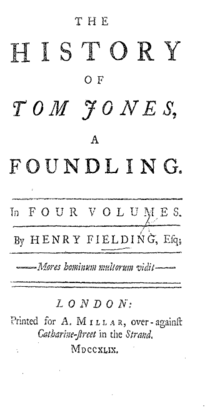
Tom Jones Original CoverWe start off this week seeing what Sophia was up to in around the letter Tom wrote her as he was leaving town (I really should’ve read this chapter a couple of weeks ago)—there’s not much there, but a little bit of humor involving Black George and his conscience. Mr. Western and his sister get into an argument over the way he’s raised Sophia, and he essentially gives his daughter over to her management.

We then move on to the next Book, and as usual, we begin with Fielding treating us to another digression and commentary. This time his focus is on the world as a stage. Unlike most (for example, Shakespeare), Fielding focuses not on those who strut and fret on the sage, but on the audience. Which is an interesting way to do it, you have to admit. He closes with this reminder about judging:

Upon the whole, then, the man of candour and of true understanding is never hasty to condemn. He can censure an imperfection, or even a vice, without rage against the guilty party. In a word, they are the same folly, the same childishness, the same ill-breeding, and the same ill-nature, which raise all the clamours and uproars both in life and on the stage. The worst of men generally have the words rogue and villain most in their mouths, as the lowest of all wretches are the aptest to cry out low in the pit.

With some encouragement from Blifil, Tom resolves to take to the Ocean, while the Western household is in turmoil—we get more conversations between Sophia and her aunt; Sophia and her father; her aunt and her father all about how Sophia— has to marry Blifil and her steadfast refusal to do so.

These chapters really feature a lot of talking, but very little actual communication—after the last couple of weeks, full of action, this was really quiet. It was all about setting the stage, I just hope the stage is fully set for a bit. I’m really curious about what Tom has in mind for his expedition.

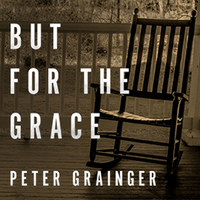
But For The Grace (Audiobook) by Peter Grainger, Gildart Jackson: DC Smith Investigates an(other) Unexpected Killing

But For The Grace

But For The Grace

by Peter Grainger, Gildart Jackson (Narrator)
Series: A DC Smith Investigation, #2

Unabridged Audiobook, 9 hrs., 17 min
Tantor Audio, 2016

Read: April 20-21, 2020
Grab a copy from your local indie bookstore!


When I talked about the first installment in this series last year, I said, “There’s something about this one that got under my skin more than a typical procedural does—it’s maybe DC Smith, it’s maybe Grainger’s style (there’s a lot of subtle humor in a dark text)—it’s a Gestalt thing, I think. I really dug it.” I’m tempted to leave this at that, too. But that’s giving this short shrift.

There are three main stories—the least interesting to me (at present, but it keeps coming up, so I expect that it’ll be of vital importance and interest at some point) is the “big case” that defined Smith’s career. There’s a True Crime writer who wants to revisit the case with DC’s help. There’s a couple of good moments revolving this, but I’m not (yet) seeing the appeal.

The more interesting thread centers on DC Smith’s future. Smith’s old partner, and father of the newly-minted detective Smith’s training, owns a private security firm and wants him to come aboard in a senior position. At the same time, there’s an opportunity that many are urging Smith to take in a regional criminal investigation task force. But Smith’s inclination is to stick with his current duty—but he’s tempted by both over the course of the novel.

But the focus for the book is a death in a retirement home that’s identified as suspicious. Smith and his team start investigating this pretty colorful home. The characters—staff and residents—are well-drawn, colorful and the kind of characters you want to spend time with. The case goes pretty much how you’d expect (motive, culprit, and resolution), but there are a couple of twists that keep the reader/listener on their toes. Watching Smith and his colleagues pursue the killer is the joy in this. The pleasure is in the journey, not just the destination here.
Once again, Jackson weaves a spell with his narration—he sucked me in once again. A perfect combination of narrator and text.

A solid follow-up novel, that also provides plenty of incentive to move on to the rest. This is a series you should jump into—in print or audio.

4 Stars

This post contains an affiliate link. If you purchase from it, I will get a small commission at no additional cost to you. As always, opinions are my own.

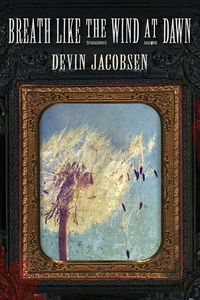
Breath Like the Wind at Dawn by Devin Jacobsen: Obscure When not Vile. A book that Simply Didn’t Work for Me.

 Breath Like the Wind at Dawn

Breath Like the Wind at Dawn

by Devin Jacobsen

eARC, 208 pg.
Sagging Meniscus Press, 2020

Read: May 18-19, 2020

Let’s keep this short for everyone’s sake by kicking things off with the Publisher’s blurb

Spanning two decades, Breath Like the Wind at Dawn tells the epic story of the Tamplin family—of outlaw-twins Quinn and Irving; their brother Edward, who is on the run from a dark past; and their mother Annora, who has been left to defend their haunted Minnesota homestead. Yet at the center of the novel is Les, patriarch of the Tamplins, Civil War veteran, and sheriff of Utica, who is possessed by an indelible lust to strangle his victims. Only when the brothers set about to rob Utica’s bank will the family at last converge in an unforgettable finale when blood will be met with blood.

Combining the multi-perspective family drama of As I Lay Dying with the violent lyricism of Blood Meridian, Breath Like the Wind at Dawn brings a brave new voice to American fiction.

Of the 208 pages in this book, I’m going to estimate that maybe 15 worked for me. I didn’t connect with the prose, the characters, the story, or anything. I thought Jacobsen’s style got in his way, that attempts to be artistic rendered the text obscure; word choice (particularly when attempts were made at a vernacular) was off-putting; and the characters were lifeless (when they weren’t vile or abhorrent).

I’m just not up for enumerating my problems with the novel beyond that. I didn’t see the appeal to any of it. I’m not saying that no one will or could, but it’s incomprehensible to me that anyone would.

Disclaimer: I received this eARC from the author via Lori @ TNBBC Publicity in exchange for this post—thanks to both for this, I do appreciate the opportunity (despite what it may read like).

Page 2 of 5

Powered by WordPress & Theme by Anders Norén