Month: July 2016 Page 1 of 4

Saturday Miscellany – 7/30/16

Second week in a row that I’m late with this…blame my wife insisting that I should interact with people in this “Real World” she keeps going on about. Oh, and sleep — my chief foe (and welcoming friend).

Odds ‘n ends over the week about books and reading that caught my eye. You’ve probably seen some/most/all of them, but just in case:

    This Week’s New Releases I’m Excited About and/or You’ll Probably See Here Soon:

  • The Summer that Melted Everything by Tiffany McDaniel — I’ve gushed enough about this already, but it’s officially out now — get reading!
  • How did I miss Outfoxed by David R last week? Seriously, what’s wrong with me? Andy Carpenter, a dog on the cover, with crime and jokes inside — a recipe for fun.
  • Nevernight by Jay Kristoff — after The Lotus War I’ve gotta give whatever he puts out a shot. Doesn’t hurt that this looks really good.
  • GUN by The Gun Collective — an experimental, collaborative novel put out my the mavericks over at Fahrenheit Press.
  • City of Wolves by Willow Palecek — A “gaslamp fantasy noir” — I’m not really sure what that means (but I have a pretty good idea), but it looks like a fun read.

Lastly, I’d like to say hi and welcome to Grace Crandall for following the blog this week. Thanks to ThemisAthena for all the encouraging likes and to Bookstooge for catching my BookLikes goof.

Party with a Plan Book Tour

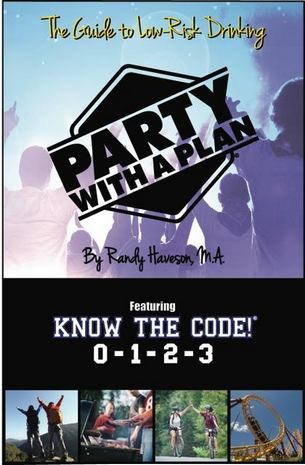
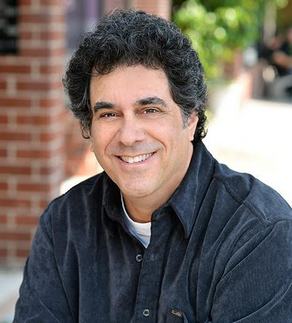
Welcome to our Book Tour stop for Party with a Plan. In addition to this blurb about the book and author, I’ve got a an interview with the Author, Randy Haveson. I haven’t read the book (yet), but you know what? It seems like a good idea — I like the approach here. Look into it.

iRead Tours

Book Details:

Book Title: Party With a Plan
Author: Randy Haveson
​Category: Adult nonfiction, 63 pages
Genre: Health & Wellness, Self-help
Publisher: RISE Publishing
Release date: May 2016
Content Rating: PG-13 (Since this is a book that teaches people how to drink alcohol in a low-risk manner, it’s not really appropriate for kids.)

Book Description:

Finally! Here is a proven, practical way to drink alcohol and lower your risk for problems. Up until now, there have been two primary messages when it comes to drinking alcohol. One is “just say no,” which for the majority of the population is not an option. The other is to “drink responsibly.” But what does that mean? If you ask five random people to define responsible drinking, you will most likely get five completely different answers. This invalidates the term because it can be defined in so many different ways. Party with a Plan® gives a concise and research based formula that teaches people how to drink and lower their risk of negative consequences. It’s like creating a speed limit for drinking. If you stick to the speed limit, your chance of problems is minimal. However, the more you go over the speed limit, and the more often you go over the speed limit, the more you put yourself and others at risk. This book is long overdue!

Book Trailer:

Author’s Bio:

Randy HavesonRandy Haveson knows addiction. As an alcoholic in long-term recovery (May, 1984), he has dedicated his life to helping others make more empowered choices in their lives. He is a 25 year veteran in the substance abuse field with extensive experience as a counselor, Director of Health & Alcohol Education at highly accredited universities, and speaker on over 100 campuses, speaking about harm reduction, self-esteem, leadership, and supporting students in recovery.

Connect with the author: Website ~ Twitter ~ Facebook

iRead Tours

A Few Quick Questions With…Devri Walls

Devri Walls was kind enough to participate in a Q&A with me along with providing me a copy of her book The Wizard’s Heir (see my thoughts on it from earlier today). I asked her a little bit about the book, what’s next for her, and her writing in general. In addition to Heir, she’s got a YA series and another one on the way — I’d recommend checking at least one of those out.

What’s the one (or two) book/movie/show in the last 5 years that made you say, “I wish I’d written that.”?
The Hollow City concept was genius and so fun! I would’ve loved to have come up with that and been able to work a story around those incredible pictures. Also, The Mortal Instrument Series. To be the one to have come up with Shadow Hunters… oh man! So much fun would’ve been had!
In the writing of The Wizard’s Heir, what was the biggest surprise about the writing itself?  Either, “I can’t believe X is so easy!” or “If I had known Y was going to be so hard, I’d have skipped this and watched more TV”.
I’ve written enough books, and enough drafts of books, that I can usually predict where my trouble spots will be. While annoying in their consistency, it’s not usually a surprise. On the other hand, I’m almost always surprised by a character. I’ll add a new one, intending them to play a small, meaningless part, and then fall in love and alter the plot to include them as a larger player. It’s always the best thing that could’ve happen to the story, but still a surprise.

In The Wizard’s Heir it was, Asher. Everyone, including myself, really connected with him. He was a bit of a throw away character until I added the scene where he goes to the boat to pick up supplies, and that was it, I loved him immediately and gave him a much larger role to play. The Wizard’s Heir is a stand alone novel but I’ve been approached several times about writing a second book in that world, while I don’t have one officially in the plans, if I ever did it would be written with Asher as the main character.

Who are some of your major influences? (whether or not you think those influences can be seen in your work — you know they’re there)
I’ve been influenced by Cassandra Clare, Dean Koontz, Stephen King and Cinda Williams Chima to name a few. I also pick up a little good with any great book I read. There are always little nuggets that I try to make note of to improve the next book.
I’ve often heard that writers, or artists in general, will forget hundreds of positive reviews but always remember the negative — what’s the worst thing that someone’s said about one of your books, and has it altered your approach to future books?
The worst thing? Oh man, something about, “this story would’ve been good if an author with talent had written it.” Lol. Nice, right? Negative reviews did alter my writing in the best way possible. I realized fairly quickly that the things one person complained about, someone else loved, and vice versa. In addition, where some people hate my work… with more vehement than perhaps necessary, others love what I write with a passion far and above what it probably deserves. I could write the Pulitzer prize winning novel and someone would still write a review that it was the worst pile of drivel they’d every read. Once I realized that, those negative reviews became freeing, I do the absolute best I can at the time and that’s all I can do. I push myself, hard. And I rewrite until I throw my hands up and say, I really can’t do any more.
It looks like your next book is on the verge of release, what can you tell us about that — and what comes next?
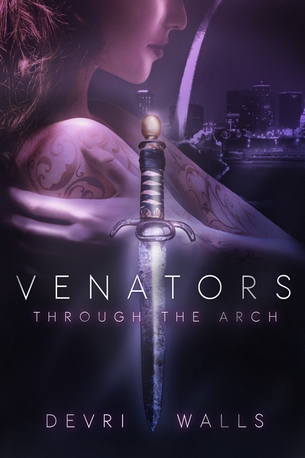
Yes! My Venator series is getting close to the release of book one. I’m always hesitant to give a date until I have return commitments from the editors but I am hoping for late August, early September.

I’m really excited about this series. I’m still working on the official blurb but it’s the story of two teenagers who cross through the St. Louis arch to an alternate dimension where everything you’ve ever read about exists—Fae and Vampires, Werewolves and Dragons. Seriously, nothing is off limits and it is so much fun to work with. I think my readers who were missing the environment of The Solus Series will be especially pleased with this. The Venator series is slated for multiple books, so that’s where my brain is at right now, but I have a whole notebook full of story ideas that I will get to eventually.

Since I don’t have an official blurb in hand yet, can I give your readers a sneak peek of the cover?

Nice looking cover! Thanks for your time, and thanks for The Wizard’s Heir.

The Wizard’s Heir by Devri Walls

The Wizard's HeirThe Wizard’s Heir

by Devri Walls

Kindle Edition, 378 pg.
SuperStorm Productions, 2015

Read: July 4, 2016


Walls does so many things right in this stand-alone fantasy, it’s hard to know where to start.

Tybolt and Auriella are Deviants –which is not as bad as it sounds, it just means that they’re immune to magic. As such, they are part of the King’s force devoted to hunting down Wizards. Thanks to the most powerful Wizard in recent history, Eriroc is in the midst of devastating drought, wholly dependent on trade with other nations for basic food supplies — which are barely enough to keep people fed enough to survive.

There’s something different about Tybolt than the other Hunters (and, come to think of it, most people in the King’s favor) — he uses the money he makes to help out those less fortunate and spends a lot of time with them. Aurielle doesn’t treat everyone as cruelly as the other fortunate souls do, but she certainly pays no heed to anyone she doesn’t have to and doesn’t understand their plight. She’s not a bad person — just oblivious, at least when we meet her. Tybolt has a great sense of humor to go with his heart, he can enjoy the simple things in life — and would do anything to get Aurielle to think of him in any way other than co-worker. If you don’t like Tybolt from the get-go, watching his charitable efforts should win you over. Asher is another Hunter who has little to do with Tybolt initially, but eventually comes to play a pivotal role in the events of the book, but you’ll have to take my word for it — and as unimportant as he seems to be at the beginning, that’ll change. Just pay attention to him.

Walls’ worldbuilding is great — on the one hand, it’s standard Fantasy fare, enough that you instantly have a good idea about the world, the culture, the conditions and politics. But she tweaks it just enough to make it her own, and differentiate it from the rest. Sometimes I wondered why she constructed things the way she did — or why she revealed them in the way she did — but in the end, I saw (well, think I saw) the reasoning behind both and could appreciate her choices.

The plot is pretty conventional, and within a few chapters there are few readers who will not know pretty exactly how the rest of the story will go. But I didn’t mind — Walls hits every beat just right, every reveal is pulled off capably, the voice used is engaging and the fun and humanity of the situation shines through enough that the reader doesn’t demand novelty. Sincerity can be just as winning as innovation, and Walls pulls that off. There were a couple of character deaths you saw coming from miles away and I still was shocked by them when they happened, ditto for “aww” moments.

I, like the book, focused on the heroic hunters above. But there are plenty of other characters running around — the King is despicable, and there are a handful of Hunters that are probably worse (and seem to pull the rest along with them). But none of them are cartoons — there are several characters that aren’t all that heroic or evil — they’re just trying to survive (which can be heroic in a not-that-heroic way), and are well-executed. No matter where they fall on the moral scale, the characters work — developed enough to fulfill their role in the book (and maybe a little more).

This book isn’t going to blow anyone away — but it will entertain, it will keep you turning pages and will engage you in its world and the lives of its characters. It’s a good, fun read. There’s excitement, a dash of romance, some magic and a few good fight scenes — pretty much what you want from a fantasy. Oh, and there’s a good definitive end — no series commitment! It’ll satisfy you and probably make you want to read more of Walls’ material.

Disclaimer: I received a copy of this book from the author in exchange for this post.

—–

3.5 Stars

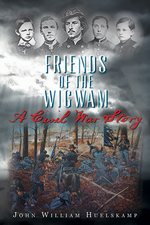
Friends of the Wigwam by John William Huelskamp

Friends of the Wigwam Friends of the Wigwam: A Civil War Story

by John William Huelskamp

Paperback, 358 pg.

Barrington Group Publications, 2016
Read: July 20 – 23, 2016


Don’t just read the first sentence, please:

This book has all the elements of a winning historical novel — a great (and large) cast of characters, solid research, rich setting — but it just doesn’t come together in the way it should. But it frequently comes close. What it really needed to be successful is pretty simple: More. More of just about everything. Longer scenes, more developed characters, more developed storylines. The book covers the years from 1857 to 1864 in 358 pages — roughly 51 pages a year (with some of those taken by pictures) — you just can’t do a whole lot in that space. Longer scenes could’ve given the chance for characters and events to develop, for nuance to be shown.

The only thing it didn’t need more of was dialogue. Well, that’s not exactly true, it could’ve used more, but primarily it needed better dialogue. There was one scene, and only one, that I didn’t cringe almost every time someone spoke. It was wooden, stiff, artificial.

The book follows a group of friends and people they know from their part of Illinois in the days leading up to and through the heart of the Civil War — just about everyone mentioned was a real person that the historian Huelskamp researched thoroughly. The book is littered with photos of the people, letters and other documents supporting his work. Some of them are political movers and shakers, some are in the military, and some are citizens worrying about loved ones.

The characters — as historically accurate as they might be — were drawn pretty thinly. If Huelskamp is going to talk about interpretation of historical figures, he needs to interpret them multi-dimensionally. I wanted to like everyone (well, except Loomis — who no one is supposed to like), but I couldn’t muster up affection for anyone, there wasn’t enough of anyone to really appreciate.

    Beyond the clearly extensive historical research (and documentation!), this book had a few strengths that I want to focus on:

  • The Battle Scenes were great — the internal dialogue of the combatants detracted a lot from that, but the description of the events, the action was just about everything you’d hope for.
  • In the early days of the war, one of the friends is killed — seeing the emotion when the group gets the news was a high point of the book, Huelskamp captures it perfectly and then ruined the moment with clumsy writing.
  • The best part of the book is in the aftermath of a battle concerning two friends comforting each other after being wounded — it was just perfect.

The book could’ve been really strong; maybe as a trilogy (or duology), it could’ve been great. But in its too-short form, it was just almost a good book. I bet Huelskamp’s historical writing is really something — his fiction? Maybe one day. The richness of the historical work here does elevate this over a lot of historical fiction I’ve read recently, so I’m going to give it the 3rd star.

Disclaimer: I received a copy of this from the author in exchange for my honest thoughts.

—–

3 Stars

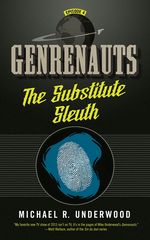
Pub Day Repost: The Substitute Sleuth by Michael R. Underwood

The Substitute SleuthThe Substitute Sleuth

by Michael R. Underwood
Series: Genrenauts, #4eARC, 88 pg.
2016
Read: July 11, 2016

Adventure, excitement, hypothermia. All of this and more await you in the Genrenauts!

Once again, Leah Tang is having a rough time on her first visit to a genre world. It’s Chicago, there’s a snow storm, her primary partner on this particular mission is getting a bit too wrapped up in the story, and she had to see her second dead body (not that such a sight is ever pleasant, but this one is well, is fit for the opening scenes of Castle, Bones, etc.). Thankfully, her sense of humor isn’t only welcome on this mission, it’s required.

It all starts when poor Leah has to wake up early, summoned for a mission to patch a small story breach on Crime World — the Police Procedural region to be precise. King’s going to let her take the lead on it as a training exercise. And then things go wrong. Because, well, that’s just how things are going for this team lately — and the one story breach they came to Crime World to patch is overshadowed by a bigger one. Crime World breaches left unpatched bleed over into our world in the form more, and worse, crimes. Every bleed from a Genre World into ours sounds bad — but this one is worse. Leah is still having qualms about the ethics involved in what her team does, but given the stakes, she’s willing to put them aside.

Probably more than in the previous adventures, Leah and King lean on and exploit the tropes of this world and region. As a fan of the Whacky Investigator/Straight-Laced Law Officer partner stories/shows, I loved watching the two of them use, critique, and play with the story beats, types and clichés. White Hat hacking, convenient recovery periods after being shot, how clues show up at just the right time, and so on. At one point, Leah sees a pair of detectives that work in the precinct with the detective at the center of the breach:

Leah took them to be the friend cops, the other team that would work another part of a case—the cases that would all too often end up being related, thanks to the laws of narrative conservation.

I love that phrase “laws of narrative conservation,” I am stealing that, period. I talk about that phenomenon all the time here, and this phrase is going to save me so much typing.

Between this and the Max novella, we’re learning a good deal about Angstrom King — I think I’m getting a really good sense of him, and I’m liking him more than I expected. Leah is pretty much Leah, just a little more confident in her place and moving onward from where she’s been so far in the series. The rest of the team faded to the background to an extent that I found surprising, and I hope it’s not a sign of things to come. I’m pretty sure it’s not, Underwood wouldn’t have spent so much time establishing the team and characters if he was going to drop them. Everyone was present, but their roles were very diminished. Mallery’s got a bit more to do than the others, but really not much.

The closing pages of this do a great job of setting-up the two-part season finale in the next two novellas. I can’t say more than that — but how any fan of this series can be patient waiting to see what comes next is a greater mystery than the ones the team encounters on Crime World. Best of the bunch.

N.B.: As this was an ARC, there’s a chance that the quotations above might not be in the published version, I’ll try to confirm them as soon as I can.
Disclaimer: I received a copy of novella from the author in exchange for this post–thanks, Mr. Underwood!

—–

4 1/2 Stars

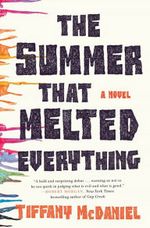
Pub Day Repost: The Summer that Melted Everything by Tiffany McDaniel

The Summer that Melted EverythingThe Summer that Melted Everything

by Tiffany McDaniel
eARC, 320 pg.
St. Martin’s Press, 2016
Read: July 18 – 19, 2016

The greatest trick the Devil ever pulled was convincing the world he didn’t exist.

Yeah, Keyser Söze’s paraphrase of C. S. Lewis’ appropriation of Charles Baudelaire isn’t part of this book, but it might just encapsulate it. Maybe.

It’s the summer of 1984 in Breathed, OH, and it’s hot. Really hot — and about to get a lot hotter. 1984 is a big year — HIV is identified as the virus that leads to AIDS, Apple releases the Macintosh, Michael Jackson’s Pepsi commercial shoot, and the following advertisement runs in the local newspaper, The Breathian:

Dear Mr. Devil, Sir Satan, Lord Lucifer, and all other crosses you bear,

I cordially invite you to Breathed, Ohio. Land of hills and hay bales, of sinners and forgivers.

May you come in peace.

With great faith,
Autopsy Bliss

Autopsy Bliss is the local prosecutor, who wants to see for himself what evil looks like. Hence the advertisement.

So who shows up in response? A bruised, short black boy dressed in tattered and torn overalls who simply seems to want some ice cream and to say hi to the man who invited him. Autopsy’s son, Fielding, is the first one in town to meet the boy and takes him home to his father (sadly, no ice cream is available in town — unbelievably — for the remainder of the Summer). The Bliss family ends up taking the lad in, and starts calling him Sal. He and Fielding become fast friends and are almost inseparable for the rest of the summer. One by one, almost everyone in this sleepy community is touched by the appearance of Sal — either first-hand or by proxy — demons (figurative), troubled family and personal histories are exposed, latent corruptions come to light, and accidents strike many. No one in Breathed will be the same after the day Sal first appears to Fielding.

The book is narrated by Fielding about 70 years after that summer looking back on the time, thinking of all the regrets he’s had since then and all the ways his time with Sal has overshadowed the ensuing decades. It honestly reminded me of A Prayer for Owen Meany because of this — little kid who talks oddly, is smarter than any of his (apparent) peers, and divides a community, while leaving an indelible mark on his closest friend (who’s not always a friend).

Almost every name (maybe every name, and I’m not clever enough to get it all) is rich in meaning and symbolism — there’s symbolism all over the place, but McDaniel gets her money’s worth with the names in particular. This book will reward close readings, and probably repeated readings as well.

There are so many depictions and descriptions of child abuse and spousal abuse that it’s almost impossible to believe that there households in that world where someone isn’t getting hit on a pretty regular basis. Thankfully, we’re spared watching characters going through it (the vast majority of the time), but there are many mentions of it.

This is not fun read, really, but I loved the whole experience, it is a rewarding read. McDaniel writes with such richness, such depth, there are phrases throughout this that will knock you out. There’s one sentence that I went back to at least a half-a-dozen times one evening — not because I needed to try to suss it out, but because I just liked it so much. The variety of ways she can describe the horrible and debilitating heat wave that struck that part of Ohio those months is pretty astounding — I’m just glad I had some sort of air conditioning most of the time I spent reading the book. Sal’s descriptions of Hell and his fellow prisoners there are full of haunting images that will stick with me for a while (some good haunting, some less-so). I’m troubled by some of what this book said about God, but since the Devil is the one who told about God, I’m not sure we’re supposed to trust his characterizations. On the other hand, just about everything that the book says about the devil seems to be spot-on.

There are no easy answers to be found here — is Sal the devil? Is someone else in town? Is there a devil at all? Are the naturalistic explanations offered here and there throughout enough? I just don’t think you can think about this book without dealing with the Baudelaire/Lewis/Söze thought.

Can’t help but wonder how things would’ve gone if he’d just gotten a little ice cream.

Disclaimer:I received this eARC via NetGalley at the author’s invitation in return for this post. My thanks to NetGalley, St. Martin’s Press, and Tiffany McDaniel for this.
N.B.: As this was an ARC, any quotations above may be changed in the published work — I will endeavor to verify them as soon as possible.


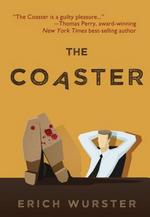
The Coaster by Erich Wurster

The CoasterThe Coaster

by Erich Wurster

eARC, 284 pg.
Poisoned Pen Press, 2016

Read: July 23 – 25, 2016


This is one of those mystery/crime novels that’s hard to talk about without giving too much away (which seems to be especially true when it comes to darker comedies in that genre). So this is going to have to be vague: The Coaster — an amusing read, but hard to talk about without spilling the beans. But let’s see what I can do:

Rob and Sarah have been married for about 19 years, with a couple of kids, and several horses. Sarah’s dad is a self-made, very successful businessman, and Sarah is being groomed to be his successor — and likely has an even better aptitude for business. Rob, um, is well-liked and good at making it look like he’s working. When Sarah’s father dies unexpectedly, Rob is even more unexpectedly named trustee and given oversight of the finances.

Not long after this, an old college drinking buddy comes to town to work on a business deal that was put on hold after the death and he begins to use some tactics that aren’t going to get him in well with the Better Business Bureau (gross oversimplification, but roll with is). One thing leads to another, and Rob and Sarah find themselves sinking in a metaphorical quicksand of crime. It’s pretty nonviolent, and most of the violence is implied.

Rob’s really not that likeable when you stop and think about it — he says he’s a good dad and husband, but I’m not sure there’s all that much evidence for it. Yeah, I can see how he gets by with superficial relationships in social settings, and even with his friends (or reasonable facsimiles thereof), but as far as family goes? Nope. Early on, especially because we only see her through Rob’s eyes, Sarah’s even less likeable — I was at the 20% mark before I noticed any real affection between Bob and Sarah, or any indication at all why someone would like Sarah. After that, I had no problem believing it, they actually start functioning well as a couple (or at least we see it in a way we couldn’t before).

Erich Wurster’s debut novel, The Coaster, is a charming dark comedy. It was pretty easy to guess what was going on with the criminals and how Rob and Sarah could extricate themselves, and most of the twists weren’t that twisty. But, it was a fun ride regardless. Wurster was able to get me to find this pretty unlikeable guy fun and entertaining. I wanted the couple to get out of trouble (relatively) unscathed, and enjoyed seeing if it was possible. The pacing was fine, the wit was sharp and the comedy was the right mix of light and dark for this. A solid first novel that made me interested in seeing more.

Disclaimer: I received this eARC from Poisoned Pen Press
via NetGalley in exchange for this post — thanks to both for the book.
N.B.: As this was an ARC, any quotations above may be changed in the published work — I will endeavor to verify them as soon as possible.
—–

3 Stars

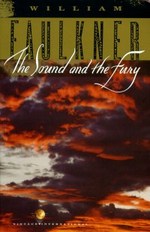
United States of Books – The Sound and the Fury by William Faulkner

The Sound and the FuryThe Sound and the Fury

by William Faulkner

Paperback, 321 pg.
Vintage, 1929


Wow, it took like 2 minutes for me to remember just how much work this guy is to read. This is not the kind of book you take to the breakroom at work for a few minutes during lunch. The Sound and the Fury, like all of Faulkner that I can remember, takes work. You have to think — especially here in Part 1. Don’t get me wrong, Part 2 is no walk in the park, but Benjy’s narration is just so difficult to wade through given his cognitive ability.

Maybe I should back up a bit — this is the story of the fall of the Compson family — a great Southern family from Jefferson, MS, through (primarily) various stream of consciousness points of view. Part 1 is told through the point of view of Benjy. Benjy is 33 year-old developmentally disabled man, and his section is almost impossible to follow. There’s no chronological sense to it, it’s impossible to follow on first read as Benjy talks about a variety of events over the course of his life. Which is not to say there’s not a certain poetry, a power to it. But man . . .

Part 2 is possibly more difficult to understand, honestly, despite being told from Benjy’s older brother’s POV. But I don’t want to talk about the details — I just hate spoilers (even if you’ve had around 90 years to catch up). There are other POVs (including — thankfully, an omniscient third-person).

The plot is one thing — the experience of reading the novel is another. You want to know the power of the English language? Read William Faulkner. I don’t know what else to say. I’m not sure I’m equipped to talk about this, really — P.I.s, wizards, werewolves, dogs? Sure. The kind of thing that wins Nobel Prizes? That’s just beyond me. This is the stuff of history — of legend, really.

There is horrible language used throughout — the kind of thing that gets books banned from schools and classrooms, so if you’re easily offended, skip this. But it’s how people talked (still do), it’s honest, it’s brutal, it’s ugly, it’s human.

This is not my favorite novel by Faulkner — nor is it something I recommend to someone who’s never read the man before (maybe, As I Lay Dying?). That said, it’s full of fantastic writing, insights into the human condition, strange southerners, tragedy, and complexity that I cannot describe. Faulkner, as always, stands so far above the pack that it’s almost not fair to other books. Of course, 5 stars, how could it be anything else?

—–

5 Stars

Saturday Miscellany – 7/23/16

Odds ‘n ends over the week about books and reading that caught my eye. You’ve probably seen some/most/all of them, but just in case:

    This Week’s New Releases I’m Excited About and/or You’ll Probably See Here Soon:

  • Nightshades by Melissa F. Olson — Crime Fighting and Vampires — sounds like a good idea from someone (see above) who knows their way around Policing the Supernatural.
  • The Dragon Lords: Fool’s Gold by Jon Hollins — the tag line definitely grabs your attention: Guardians of the Galaxy meets The Hobbit in this rollicking fantasy adventure.” And the description makes it sound like it’d be worthwhile seeing if the book is nearly as good.
  • Flying by Carrie Jones — looks like I might enjoy spending an afternoon with this, and it could be a new obsession for my Doctor Who loving daughter.

Lastly, I’d like to say hi and welcome to wanderlustexplored, ThemisAthena and kittensandhumans for following the blog this week.

Page 1 of 4

Powered by WordPress & Theme by Anders Norén