Category: K-O Page 1 of 22

PUB DAY REPOST: A Divided Duty by Seanan McGuire: Family Don’t End in Blood

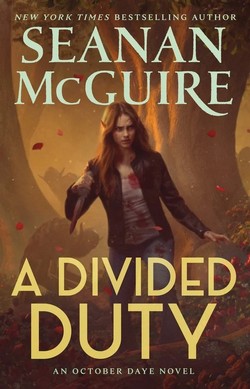
Cover of A Divided Duty by Seanan McGuireA Divided Duty

by Seanan McGuire

DETAILS:
Series: Toby Daye, #20
Publisher: Tor Books
Publication Date: September 29, 2026
Format: eARC
Length: 384 pg.
Read Date: September 16-18, 2026

Buy from Bookshop.org Support Indie Bookstores

What’s A Divided Duty About?

In brief—because Raysel’s not ready to come home, because she wants to keep doing therapy in a place with low expectations, and because she and Toby can work the system, the Queen decides that at the one-year mark, Raysel needs to stay in service to Toby.

Things get mighty tense at court when this is announced—tense enough that war could’ve broken out (literally). But cooler heads seemed to prevail for the moment.

Then Raysel’s mom kidnaps her. If she can’t be with her daughter legally, Luna will take Raysel out of the Queen’s jurisdiction—out of anyone’s jurisdiction—and bring her to Blind Michael’s land. With both of them with Luna’s mother in her father’s land, Luna trusts that she and Raysel will be able to stay there in peace and re-establish a connection.

But, of course, things don’t go the way Luna planned. Thankfully, Toby wasn’t going to give her a chance to do anything anyway. Or so Toby’s plan went.

What happens when neither plan goes right?

The Trauma That Keeps on Giving

So, if you’re not familiar with the events of Be the Serpent/Sleep No More/The Innocent Sleep you’re probably not reading this post. But if you are reading and haven’t read them…skip down to the next section.

One of the strengths of this series is that events matter—events from the third novel, An Artificial Night, were important to Sleep No More/The Innocent Sleep, for example. So it’s no surprise that the events of the three titles I mentioned in the last paragraph are still casting their shadows on these novels. Actually, so is An Artificial Night, now that I mention it.

In both the novel and the accompanying novella, But by Degrees, we see our heroes (and their opponents and allies) dealing with the repercussions of that trilogy—both when it comes to political fallout, psychological fallout, and emotional repercussions, and more. It’s evident everywhere and will likely take you by surprise at how those show up in these pages. The trauma from those events, mixed with what’s happened since then, combine to some twisted results—and simple new situations that are neither good nor bad, but are clearly the result of that trauma.

And honestly, I don’t think we’re done with that yet. Faerie (at least those living along the Western Coast) has a lot of healing and recovery to do.

Why did I pick this up? Why did I keep reading?

Well, I’ve read the previous nineteen books 1-3 times each, so naturally I’m going to pick up #20.

I kept reading because I can’t imagine DNFing McGuire—especially not this one. I saw a few ways for this to end, and it really wasn’t until the last moment that I was sure how it was going to go. There were a handful of surprises along the way—not just related to the plot, but because of what I talked about in the previous section.

What does this book tell us about humanity?

Underneath everything—the court intrigue, the kidnapping, the family conflict, Toby’s work—even a lot of what the Luidaeg is up to (in both the novel and novella) has to do with healing and recovery. And the genuine human need for the space and time to pursue it. Toby’s not meddling with Raysel, Sylvester, and Luna for kicks—or from some kind of vengeance (although that would be understandable). No, she’s trying to give Raysel the time and space for recovery. She’s trying to get Sylvester to see that it’s what Raysel needs and to stand up for her to Luna. As far as Luna…well, that relationship has been damaged for so long, I’m not sure that Toby has much hope of anything.

But it’s not just Raysel that needs to recover—Sylvester does. Many in his service do, too. The same can be said for the Queen in the Mists and those in her court or in her knowe. Dean’s not in great shape, either. Or…or…or… you get the idea.

I’m not trying to echo what I said above, but I sort of am. But that’s the heart of this book—that people who’ve been through something need to find a way to recover and heal. That will not look the same for everyone, but those who care for them need to try to realize what they need for that recovery and give it to them. Even if that goes against what they want (or think would be best). Those people that give you the space, time, and support to recover, to figure yourself out—they’re your family, no matter what DNA or heritage says.

This book is about both efforts to find those ways to recovery, and what happens when they’re prevented or ignored.

So, what did I think about A Divided Duty?

I’m always amazed at how quickly I start thinking of Toby’s world as a comfort—one day I’ll go in remembering it and looking for it, but it wasn’t with this book. But right away, it happened. Sure, I knew it was going to get dangerous soon—because it always does. But that’s okay, because Toby’s determination and optimism make you think it’ll be okay again soon.

Toby goes to some dark places here (in multiple senses of the word), but she doesn’t seem to let it get to her as much as she might have otherwise. Maybe that’s because she and Tybalt are in a really good place and he’s watching her back. Maybe it’s because Miranda’s at home waiting for her with May, and as long as Miranda’s good, Toby’s good. She also seems more confident in her own magic (and even learns a bit more about it).

Speaking of Miranda—she’s at a really young age now, so she’s conveniently left at home with May and the rest to look over her. But that won’t last for long, I don’t think—if only so that May can do more than cook and babysit. I’m eager to see Toby and Tybalt balance parenting and heroics.

Toby has to face some of her biggest fears, and come to grips with a job she maybe could’ve done better years ago, which was good to see her deal with. And she does so with her typical aplomb and flair—and her husband and a member of her Urchin Squad (Cassandra’s term) by her side.

Good tension, good action—a good puzzle (or two) for Toby to solve. When the penny finally dropped for me, I was flabbergasted (arguably shouldn’t have been) and delighted—McGuire played me like a fiddle. Which makes me so happy. This was everything you want in a Toby Daye novel.

Disclaimer: I received this eARC from Tor Publishing Group via NetGalley—my thanks to both for this. This post contains my honest opinion about a book I chose to read.

This post contains an affiliate link. If you purchase from it, I will get a small commission at no additional cost to you. As always, the opinions expressed are my own.
Irresponsible Reader Pilcrow Icon

A Divided Duty by Seanan McGuire: Family Don’t End in Blood

Cover of A Divided Duty by Seanan McGuireA Divided Duty

by Seanan McGuire

DETAILS:
Series: Toby Daye, #20
Publisher: Tor Books
Publication Date: September 29, 2026
Format: eARC
Length: 384 pg.
Read Date: September 16-18, 2026
Buy from Bookshop.org Support Indie Bookstores

What’s A Divided Duty About?

In brief—because Raysel’s not ready to come home, because she wants to keep doing therapy in a place with low expectations, and because she and Toby can work the system, the Queen decides that at the one-year mark, Raysel needs to stay in service to Toby.

Things get mighty tense at court when this is announced—tense enough that war could’ve broken out (literally). But cooler heads seemed to prevail for the moment.

Then Raysel’s mom kidnaps her. If she can’t be with her daughter legally, Luna will take Raysel out of the Queen’s jurisdiction—out of anyone’s jurisdiction—and bring her to Blind Michael’s land. With both of them with Luna’s mother in her father’s land, Luna trusts that she and Raysel will be able to stay there in peace and re-establish a connection.

But, of course, things don’t go the way Luna planned. Thankfully, Toby wasn’t going to give her a chance to do anything anyway. Or so Toby’s plan went.

What happens when neither plan goes right?

The Trauma That Keeps on Giving

So, if you’re not familiar with the events of Be the Serpent/Sleep No More/The Innocent Sleep you’re probably not reading this post. But if you are reading and haven’t read them…skip down to the next section.

One of the strengths of this series is that events matter—events from the third novel, An Artificial Night, were important to Sleep No More/The Innocent Sleep, for example. So it’s no surprise that the events of the three titles I mentioned in the last paragraph are still casting their shadows on these novels. Actually, so is An Artificial Night, now that I mention it.

In both the novel and the accompanying novella, But by Degrees, we see our heroes (and their opponents and allies) dealing with the repercussions of that trilogy—both when it comes to political fallout, psychological fallout, and emotional repercussions, and more. It’s evident everywhere and will likely take you by surprise at how those show up in these pages. The trauma from those events, mixed with what’s happened since then, combine to some twisted results—and simple new situations that are neither good nor bad, but are clearly the result of that trauma.

And honestly, I don’t think we’re done with that yet. Faerie (at least those living along the Western Coast) has a lot of healing and recovery to do.

Why did I pick this up? Why did I keep reading?

Well, I’ve read the previous nineteen books 1-3 times each, so naturally I’m going to pick up #20.

I kept reading because I can’t imagine DNFing McGuire—especially not this one. I saw a few ways for this to end, and it really wasn’t until the last moment that I was sure how it was going to go. There were a handful of surprises along the way—not just related to the plot, but because of what I talked about in the previous section.

What does this book tell us about humanity?

Underneath everything—the court intrigue, the kidnapping, the family conflict, Toby’s work—even a lot of what the Luidaeg is up to (in both the novel and novella) has to do with healing and recovery. And the genuine human need for the space and time to pursue it. Toby’s not meddling with Raysel, Sylvester, and Luna for kicks—or from some kind of vengeance (although that would be understandable). No, she’s trying to give Raysel the time and space for recovery. She’s trying to get Sylvester to see that it’s what Raysel needs and to stand up for her to Luna. As far as Luna…well, that relationship has been damaged for so long, I’m not sure that Toby has much hope of anything.

But it’s not just Raysel that needs to recover—Sylvester does. Many in his service do, too. The same can be said for the Queen in the Mists and those in her court or in her knowe. Dean’s not in great shape, either. Or…or…or… you get the idea.

I’m not trying to echo what I said above, but I sort of am. But that’s the heart of this book—that people who’ve been through something need to find a way to recover and heal. That will not look the same for everyone, but those who care for them need to try to realize what they need for that recovery and give it to them. Even if that goes against what they want (or think would be best). Those people that give you the space, time, and support to recover, to figure yourself out—they’re your family, no matter what DNA or heritage says.

This book is about both efforts to find those ways to recovery, and what happens when they’re prevented or ignored.

So, what did I think about A Divided Duty?

I’m always amazed at how quickly I start thinking of Toby’s world as a comfort—one day I’ll go in remembering it and looking for it, but it wasn’t with this book. But right away, it happened. Sure, I knew it was going to get dangerous soon—because it always does. But that’s okay, because Toby’s determination and optimism make you think it’ll be okay again soon.

Toby goes to some dark places here (in multiple senses of the word), but she doesn’t seem to let it get to her as much as she might have otherwise. Maybe that’s because she and Tybalt are in a really good place and he’s watching her back. Maybe it’s because Miranda’s at home waiting for her with May, and as long as Miranda’s good, Toby’s good. She also seems more confident in her own magic (and even learns a bit more about it).

Speaking of Miranda—she’s at a really young age now, so she’s conveniently left at home with May and the rest to look over her. But that won’t last for long, I don’t think—if only so that May can do more than cook and babysit. I’m eager to see Toby and Tybalt balance parenting and heroics.

Toby has to face some of her biggest fears, and come to grips with a job she maybe could’ve done better years ago, which was good to see her deal with. And she does so with her typical aplomb and flair—and her husband and a member of her Urchin Squad (Cassandra’s term) by her side.

Good tension, good action—a good puzzle (or two) for Toby to solve. When the penny finally dropped for me, I was flabbergasted (arguably shouldn’t have been) and delighted—McGuire played me like a fiddle. Which makes me so happy. This was everything you want in a Toby Daye novel.

Disclaimer: I received this eARC from Tor Publishing Group via NetGalley—my thanks to both for this. This post contains my honest opinion about a book I chose to read.

This post contains an affiliate link. If you purchase from it, I will get a small commission at no additional cost to you. As always, the opinions expressed are my own.

Irresponsible Reader Pilcrow Icon

HC Chats with K.R. Lockhaven About ALL of His Books and some other stuff

I sat down yesterday to talk to the wonderful K.R. Lockhaven about his upcoming novel Fool (you can check out the Cover Reveal here to learn a little more about the book). But before we got to that, we took a little walk down Amnesia Lane to talk briefly about his previous novels/novella.

Lockhaven is a frequent guest around these parts in written form, and I’ve written something about all of his books, but it’s better hearing it right from the source, right? We talked about a few other things and then rolled our eyes at my inability to find the mouse to end recording—at his prompting, I’m sticking with my “Do Not Edit” policy for these videos. So you can roll your eyes at my ineptitude along with me.

I forgot to talk to him about how odd it must feel to have such a brief title for the first time, and (more importantly) the Washington State Council of Firefighters Burn Foundation, sponsors of Camp Eyabsut. Go to his website to learn more about that.

The Books discussed were:

bullet The Conjuring of Zoth-Avarex: The Self-Proclaimed Greatest Dragon in the Multiverse
bullet Zoth-Avarex’s Escape Plan: A Pick-Your-Own-Path Experience
bullet The Marauders, the Daughter, and the Dragon (The Azure Archipelago, Book 1)
bullet The Foundling, the Heist, and the Volcano (The Azure Archipelago, Book 2)
bullet The Grimoire, the Gods, and the Girl (The Azure Archipelago, Book 3)
bullet Mrs. Covington’s
bullet Fool

Irresponsible Reader Pilcrow Icon

Butterfly Effects by Seanan McGuire: The Johrlac vs. Sarah

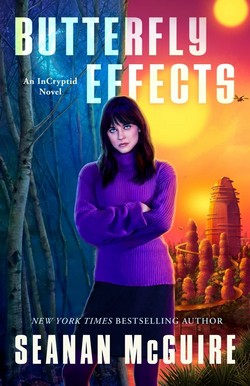
Cover of Butterfly Effects by Seanan McGuireButterfly Effects

by Seanan McGuire

DETAILS:
Series: InCryptid, #15
Publisher: Tor Books
Publication Date: March 10, 2026
Format: eARC
Length: 432 pg.
Read Date: February 23-24, 2026
Buy from Bookshop.org Support Indie Bookstores

Huh. Didn’t see that coming.

The InCryptid series is really a series of small arcs featuring a particular narrator before we move on to the next. Back in 2020 and 2021, we got an arc featuring Sarah Zellaby. Then we moved on to a pair of books focusing on Alice and then two on Aunt Mary.

But whoops–we’re not actually done with Sarah’s arc. It wasn’t a duology after all; it was a trilogy, and McGuire’s back to tie everything up.

I didn’t think we needed that. But now I see how much we did and how the series as a whole is better for it.

So, What is Butterfly Effects About?

So, we’d learned in Sarah’s books that the Johrlac on Earth (and in the wake of destruction they’d left behind) aren’t Johrlac-proper, they’re a bunch who’d been ejected from their home world for being as awful as we’d thought. These cuckoos were practically a separate species at this point, and most of what people on Earth knew about the cuckoos or Johrlac was horribly wrong.

And basically, everyone had moved on–it didn’t matter anymore, because there were only a handful left on Earth and Sarah had removed the ticking genetic time-bombs from them.

Except…the Johrlac are a really uptight bunch and once they saw what Sarah had done, they came to Earth and arrested her to be tried for crimes against Johrlac law. They also kidnapped Arthur to be used as State’s Exhibit A in the show trial, right out of the Edo of Rubicun III vs. Wesley Crusher on “Justice.”

Back on Earth, Annie and Alice get word of this, so they grab Thomas and use some of Alice’s remaining travel spells and inter-dimensional know-how to launch a rescue mission (and Sam insists on coming along).

And things get interesting from there…

We Sing It Anyway

I almost never discuss the novellas packaged with McGuire novels–and I’m not going to do that this time, either. Primarily because it’s solely “here’s what happens because of the novels conclusion next.” So to really talk about it would be to talk about the last half-chapter of the novel in detail.

So why am I talking about it at all? Just because I’m sure some readers are like me and don’t always read the novellas. Don’t skip this one. Trust me.

Why did I pick this up? Why did I keep reading?

I grabbed this because I’ve been on board for this series since the beginning.

Why did I keep reading? Pretty much everything I have said–or am about to say–about the book. I wasn’t prepared for McGuire to revisit this storyline, and I enjoyed getting to see what she was up to. I thought the world of the Johrlac was utterly fascinating–and watching the chaos that follows Annie, Sarah, and Alice as they interact with it was as entertaining as it could be.

What does this book tell us about humanity?

That’s the tricky thing, isn’t it? Given this series, I’m going to have to broaden this idea to “people” or “persons.” Also, a good part of it is about just how non-human some of these people can be.

Yet there’s something that humans and other non-human species can relate to in the middle of all the otherness.

(also, McGuire’s a human and all of her species are going to reflect that in some way, it can’t be helped)

The culture of the Johrlac is all about the collective–but there are several individuals expressing themselves (and we can assume some others we don’t encounter) in various and sundry ways. Most of these individual expressions are small–insignificant, really. But you get enough insignificant acts, and something noticeable can happen.

That’s one of the main things this book is about. While collectives–like both the Johrlac or the Price-Healys–are important, and together can accomplish great feats. It’s the individuals involved in them, and their interests and strengths, that make the collectives powerful.

So, what did I think about Butterfly Effects?

This is one of the better books in this series lately. I do worry that we’re becoming too dependent on the Annie/Sam/Alice/Thomas antics to the detriment of the others. But also? I don’t care, because I like Annie/Sam/Alice/Thomas, and everyone else is busy raising kids, so I prefer them out of danger.

The story took a lot of twists and turns that keep you on your toes. Not just on your toes, either, there are a few outright surprises. Some of those surprises come from the fact that the main action of this novel isn’t on Earth, and our friends don’t have to pull their punches so they can stay under the radar. Annie and her fire can do a whole lot when given the chance.

But this isn’t all danger, twists, and fire–there’s a lot of fun to be had on this alien world. It’s so strange that you just can’t help but have fun.

Action, heart, and plenty of smiles. This series shines brightest when McGuire brings these elements to the forefront. Butterfly Effects is proof of that.

Disclaimer: I received this eARC from Tor Publishing Group via NetGalley in exchange for this post which contains my honest opinion—thanks to both for this.

This post contains an affiliate link. If you purchase from it, I will get a small commission at no additional cost to you. As always, the opinions expressed are my own.
Irresponsible Reader Pilcrow Icon

A Few Scattered Thoughts on My Latest Reading of The Last Battle by C.S. Lewis

Further Up and Further In A Year with C.S.Lewis

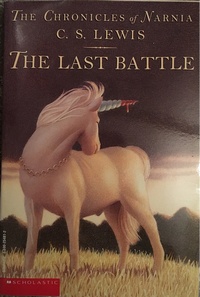
Cover of The Last Battle by C.S. LewisThe Last Battle

by C. S. Lewis , illustrated by Pauline Baynes

DETAILS:
Series: The Chronicles of Narnia, #7
Publication Date: June 25, 1994
Format: Paperback
Length: 211 pg.
Read Date: December 24, 2025
Buy from Bookshop.org Support Indie Bookstores


If you need to know what this book is about, or anything about this series…seriously, just stop what you’re doing and pick up this book. I don’t mean to be a snob, or maybe I do, but something was missing from your childhood, and now is your time to fix it. I realize that there are many legitimate reasons for people not to have read this (more than some of the earlier), and I’m not questioning the choices you or your parents made (actually, I guess I am). But I’m not going to try to talk about this book like I do most others.

If only because everything worth saying has been said by other, better, writers. Probably several times.

I’ve also read this too many times to count as a child—even through my college years, and at least once a decade since. I’ll probably pick up the pace of re-reading them so I can talk to the grandcritters about them, too.

But I feel the need to say something now, so here are a few things that jumped out at me during this read:

bullet Shift is the first Narnian primate we’ve seen, right? There’s probably a lot of meaning to be mined from that. hmmm….
bullet A couple of pages of watching Shift in action is enough to make a guy want to go hang out with pre-Dragon Island Eustace just for the company.
bullet I just want to yell at Tirian to pay attention to the Centaur and his reading of the stars. I mean sure the astrology is nonsense (or is it in Narnia?), but the rest of it…
bullet Then just a few pages later, we get word that “Aslan” is ordering tress to be cut down and sold. Sorry, just how clueless are Tirian, Jewel, and anyone else who thinks, “yeah, this could maybe be the guy.”
bullet

The King was so dizzy from being knocked down that he hardly knew what was happening until the Calormenes untied his wrists and put his arms straight down by his sides and set him with his back against an ash tree. Then they bound ropes round his ankles and his knees and his waist and his chest and left him there. What worried him worst at the moment—for it is often little things that are hardest to stand—was that his lip was bleeding where they had hit him and he couldn’t wipe the little trickle of blood away although it tickled him.

That is just a great little detail there at the end. Hard to resist the impulse to wipe your mouth/chin there.
bullet Even in the midst of the end of the world, Lewis can find time to bring a smile with something like this:

…in Narnia your good clothes were never your uncomfortable ones. They knew how to make things that felt beautiful as well as looking beautiful in Narnia: and there was no such thing as starch or flannel or elastic to be found from one end of the country to the other.

bullet I thought about talking about Susan’s absence at the end, but it seems even less controversial to me on this read than on others. Also, I just got my hands on Gaiman’s “The Problem with Susan,” and should keep my powder dry until I can read/interact with it.
bullet I didn’t take that many notes while reading this one–I think I just caught up in the reading. Oops. I really liked Jill here (nothing against Eustace, but Jill really got to shine).
bullet This isn’t a wholly satisfying ending to the series, but it’s such a good one. I wonder a bit if Lewis could’ve done more–but I really can’t complain. It’d have been really easy for him to bungle this–I’ll take a pretty good conclusion over a mess.

And as He spoke He no longer looked to them like a lion; but the things that began to happen after that were so great and beautiful that I cannot write them. And for us this is the end of all the stories, and we can: most truly say that they all lived happily ever after, But for them it was only the beginning of the real story. All their life in this world and all their adventures in Narnia had only been the cover and the title page: now at last they were beginning Chapter One of the Great Story which no one on earth has read: which goes on forever: in which every chapter is better than the one before.

This post contains an affiliate link. If you purchase from it, I will get a small commission at no additional cost to you. As always, the opinions expressed are my own.
Irresponsible Reader Pilcrow Icon

PUB DAY REPOST: Through Gates of Garnet and Gold by Seanan McGuire: Quieting the Dead

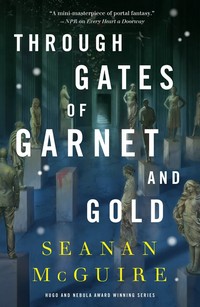
Cover of Through Gates of Garnet and Gold by Seanan McGuireThrough Gates of Garnet and Gold

by Seanan McGuire

DETAILS:
Series: Wayward Children, #11
Publisher: Tordotcom
Publication Date: January 6, 2026
Format: eARC
Length: 148 pgs.
Read Date: December 23, 2025
Buy from Bookshop.org Support Indie Bookstores

What’s Through Gates of Garnet and Gold About?

We watched Nancy get her door and get to go home 10 years ago (in publication time, I’m a little unclear about how long it’s been in Eleanor West’s School’s time, as is at least one student). And aside from a quick “hi,” a few books later, that was pretty much the end of her story.

Until now, obviously, otherwise, why would I start by talking about her?

She’s back, and there’s a rule-breaking quest involved. The twist this time is that Nancy has been sent by The Lady of the Dead. Something…someone…is attacking people like Nancy in the Halls. People who have come through their own Doors from their own worlds to their true home. The dead are left unmolested and undisturbed. But it’s the other living people there who are being attacked. Nancy’s friends (or as close as living statues have to friends), are being killed and they need help.

This is a first for Eleanor West and her students–but they can’t say no. They don’t want to. Kade, as almost always, the leader of the group. Christopher, who is more comfortable with the dead than anyone other than Nancy, and his bone flute come along as well. There’s no way that Sumi, Nancy’s old roommate, is going to pass up this opportunity. Talia demands to be part of it, too. She has no skills that seem to make sense for this task*, but she’s done the math. Going on a quest with other students is just about the best way to guarantee getting her Door when it’s completed. So no one had better stop her. I, for one, hadn’t done this connection–and I’m guessing many of the other students haven’t either, or there’d be several others clamoring for a change.

* Naturally, it turns out that it’s good she came along.

An Introduction to the Series

McGuire’s been clear from the get-go that this series can be read in any order–and that’s true enough. But I think there are a couple of books that should be read in a particular order, regardless of what she thinks. And you’re just better off in general going in publication order.

But let’s say that this is the first book you pick up–you’re in for a treat. In an Introduction of sorts–not really a prelude or prologue–a couple of pages before chapter one, whatever you want to call them–McGuire introduces this series, sketches the function of the Doors, the impact they make on those who pass through. Those who want them back, etc.

This isn’t a “The Story So Far…” kind of thing–but it’s the closest that this series is going to get. I hope we get these exact pages–or ones very like them–from here on out.

I Needed a Fresh Dose of Sumi

Sumi is one of the characters who appears with greater consistency than others in this series–and I, for one (but am probably not alone), am so grateful for that. Her weaponized optimism, utter lack of regard for social niceties, unwavering positivity, and generous affections emphasize all the good things to be found in a person and situation. She also brings a level of comedy and heart to every scene she’s in. She can also be profound, usually unintentionally, and add emotional weight to a scene when you didn’t realize it needed it.

And when she gives a warning–you know things are serious. But the reader gets to chuckle the way she does it.

Obviously, we needed Sumi if we’re going to spend time with Nancy (we’re going to need Kade for similar reasons). But I personally needed a dose of her in general. And while what we got was sufficient, I’m hoping it’s not too long before we spend time with her again.

So, what did I think about Through Gates of Garnet and Gold?

After last year’s Adrift in Currents Clean and Clear, I assumed we’d get something good, but not great for this book–we were due for McGuire to take her foot off the pedal a bit and coast a little. I’m very glad that McGuire wasn’t thinking like that and brought us another stellar installment in this series.

I mean, I was sold from the instant I saw that Nancy was coming back–and McGuire did right by this return. When Nancy got her door again, I wasn’t prepared for that to happen. I didn’t realize we were going to spend so little time with most of these characters, just enough to fall in love with them as characters, and then watch them go on to the next chapter of their lives–and that we’d very likely be done with them (aside from an occasional glance at most). I’ve embraced that when it comes to these books, and it no longer gets to me so much that we walk away from them. But I’ve always wanted more Nancy.

So, sure, that made me an easy sell for this book–but that didn’t mean I was guaranteed to rave over it. It just made it very likely.

I didn’t really understand what Nancy saw in the Halls of the Dead before, nor do I think I truly understood what was involved. This world made a lot less sense to me than any of the others, and I really wasn’t that interested in it other than as it served as Nancy’s true home. But we got to see much more of it than we have previously, we get some more mature description of it from Nancy (and her Lady). I see the appeal, the attraction. Or at least I understand where some would. Personally? The only world I’m less interested in is the underwater world that Nadya introduced us to last year (I just don’t think I could get over being underwater). But now, I get why Nancy and the others want to be there.

What the questors and readers learn about the forces attacking–and their plans–is pretty unsettling, and tells us a little more about McGuire’s universe and the stories she’s telling. In a way that made me uncomfortable and pleased me at the same time. You’ll have to read it yourself. But it’s such a fantastic touch.

As usual for this series, McGuire balances whimsy and danger, joy and weeping, with skill and aplomb. For Adrift in Currents Clean and Clear, I wrote:

This is definitely one of the stronger books in this series that is on a great roll lately, I commend it to your attention. As with just about every book in the series, it can be read as a stand-alone or as an entry point (but I strongly encourage reading at least Every Heart a Doorway before any of the others). I was sad when it ended—not because of the way it ended, I just wasn’t ready to move on. I predict I won’t be alone in that.

That’s a pretty good way to wrap up this post, too. With one significant difference–I need to know what happens after the last page, preferably now. It’s not a cliffhanger (this is not one of those series), in fact it’s a perfectly fitting ending for this novella. But I really need the next page–and fear McGuire is going to make us wait a bit before she gives it to us.

Disclaimer: I received this eARC from Tordotcom Publishing via NetGalley in exchange for this post—thanks to both for this.


4 1/2 Stars

This post contains an affiliate link. If you purchase from it, I will get a small commission at no additional cost to you. As always, the opinions expressed are my own.
Irresponsible Reader Pilcrow Icon

A Few Scattered Thoughts on My Latest Reading of The Magician’s Nephew by C.S. Lewis

Further Up and Further In A Year with C.S.Lewis

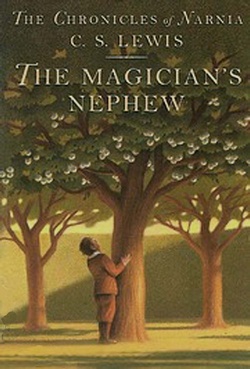
Cover of The Magician’s Nephew by C.S. LewisThe Magician’s Nephew

by C. S. Lewis , illustrated by Pauline Baynes

DETAILS:
Series: The Chronicles of Narnia, #6
Publication Date: June 25, 1994
Format: Paperback
Length: 202 pg.
Read Date: December 19-20, 2025
Buy from Bookshop.org Support Indie Bookstores


If you need to know what this book is about, or anything about this series…seriously, just stop what you’re doing and pick up this book. I don’t mean to be a snob, or maybe I do, but something was missing from your childhood, and now is your time to fix it. I realize that there are many legitimate reasons for people not to have read this (more than some of the earlier), and I’m not questioning the choices you or your parents made (actually, I guess I am). But I’m not going to try to talk about this book like I do most others.

If only because everything worth saying has been said by other, better, writers. Probably several times.

I’ve also read this too many times to count as a child—even through my college years, and at least once a decade since. I’ll probably pick up the pace of re-reading them so I can talk to the grandcritters about them, too.

But I feel the need to say something now, so here are a few things that jumped out at me during this read:

bullet

“The Wood between the Worlds,” said Polly dreamily. “It sounds rather nice.”

I wholeheartedly agree, Polly. And I do wish you two had taken the opportunity to dip in and out of a few more before you stumbled into the worst pool possible.
bullet Ugh. I hate reading things like this:

And you could see at once, not only from her crown and robes, but fro mthe flash of her eyes and the curve of her lips, that she was a great queen.

Yes, please, Mr. Lewis–let’s focus on the surface appearance. Greatness of appearance=greatness of person. No matter how the adjective “great” is meant here–since when does this work out? He very easily could’ve thrown in some remark that this is how Pool and Diggory thought, but that it obviously was a wrong way to think–he makes that sort of comment all over the place.
bullet Oooh, a growing lamp-post. Now that is interesting and strange. And if you read this in Chronological order, you really won’t care much (or will want to see a lot more of it). But if you read them in the publication order, you get to that point and say, “ahhhhh. That’s cool,” feel a warm glow of recognition/satisfaction, and move on. This is the only time I’m going to say anything about the reading order in this series. But I could go on.
bullet Watching the animals crawl out of the land as they’re created–very cool. Some clever writing, and the best part of this book. Sadly, it’s pretty short.
bullet The bit where the Talking Beasts are trying to figure out just what Uncle Andrew is (animal–but not talking one like them, a tree maybe?) is pretty funny and good engagement.
bullet Where Jadis tempts Diggory with the apple (a bit heavy-handed on the symbolism) is just fantastic. A better bit of temptation than we got with Edward succumbing.
bullet The whole thing with the garden and the apples, the Tree of Protection, etc., feels…I dunno. Sort of crammed in other than the temptation bit. It just left me feeling “meh”–particularly the little quest that Aslan sent Diggory on to get there. I even checked Paul F. Ford’s Companion to Narnia (yes, I am the sort of nerd that has books like that sitting on my shelves), and it was less than helpful on this point.
bullet The book as a whole feels like Lewis is trying to augment the mythology he’s already created for Narnia, fill it out some (how is this the first we’re hearing of former Sons of Adam/Daughters of Eve as rulers??), so he can bring it all home in an epic conclusion. Even if the augment doesn’t make much sense, largely falls flat (in my eyes), and doesn’t do much other than establish a framing device of sorts to get us to The Last Battle. But other than giving us Diggory and Pool, I’m unconvinced that this does anything for the series and is almost entirely skippable.

This post contains an affiliate link. If you purchase from it, I will get a small commission at no additional cost to you. As always, the opinions expressed are my own.
Irresponsible Reader Pilcrow Icon

Through Gates of Garnet and Gold by Seanan McGuire: Quieting the Dead

Cover of Through Gates of Garnet and Gold by Seanan McGuireThrough Gates of Garnet and Gold

by Seanan McGuire

DETAILS:
Series: Wayward Children, #11
Publisher: Tordotcom
Publication Date: January 6, 2026
Format: eARC
Length: 148 pgs.
Read Date: December 23, 2025
Buy from Bookshop.org Support Indie Bookstores

What’s Through Gates of Garnet and Gold About?

We watched Nancy get her door and get to go home 10 years ago (in publication time, I’m a little unclear about how long it’s been in Eleanor West’s School’s time, as is at least one student). And aside from a quick “hi,” a few books later, that was pretty much the end of her story.

Until now, obviously, otherwise, why would I start by talking about her?

She’s back, and there’s a rule-breaking quest involved. The twist this time is that Nancy has been sent by The Lady of the Dead. Something…someone…is attacking people like Nancy in the Halls. People who have come through their own Doors from their own worlds to their true home. The dead are left unmolested and undisturbed. But it’s the other living people there who are being attacked. Nancy’s friends (or as close as living statues have to friends), are being killed and they need help.

This is a first for Eleanor West and her students–but they can’t say no. They don’t want to. Kade, as almost always, the leader of the group. Christopher, who is more comfortable with the dead than anyone other than Nancy, and his bone flute come along as well. There’s no way that Sumi, Nancy’s old roommate, is going to pass up this opportunity. Talia demands to be part of it, too. She has no skills that seem to make sense for this task*, but she’s done the math. Going on a quest with other students is just about the best way to guarantee getting her Door when it’s completed. So no one had better stop her. I, for one, hadn’t done this connection–and I’m guessing many of the other students haven’t either, or there’d be several others clamoring for a change.

* Naturally, it turns out that it’s good she came along.

An Introduction to the Series

McGuire’s been clear from the get-go that this series can be read in any order–and that’s true enough. But I think there are a couple of books that should be read in a particular order, regardless of what she thinks. And you’re just better off in general going in publication order.

But let’s say that this is the first book you pick up–you’re in for a treat. In an Introduction of sorts–not really a prelude or prologue–a couple of pages before chapter one, whatever you want to call them–McGuire introduces this series, sketches the function of the Doors, the impact they make on those who pass through. Those who want them back, etc.

This isn’t a “The Story So Far…” kind of thing–but it’s the closest that this series is going to get. I hope we get these exact pages–or ones very like them–from here on out.

I Needed a Fresh Dose of Sumi

Sumi is one of the characters who appears with greater consistency than others in this series–and I, for one (but am probably not alone), am so grateful for that. Her weaponized optimism, utter lack of regard for social niceties, unwavering positivity, and generous affections emphasize all the good things to be found in a person and situation. She also brings a level of comedy and heart to every scene she’s in. She can also be profound, usually unintentionally, and add emotional weight to a scene when you didn’t realize it needed it.

And when she gives a warning–you know things are serious. But the reader gets to chuckle the way she does it.

Obviously, we needed Sumi if we’re going to spend time with Nancy (we’re going to need Kade for similar reasons). But I personally needed a dose of her in general. And while what we got was sufficient, I’m hoping it’s not too long before we spend time with her again.

So, what did I think about Through Gates of Garnet and Gold?

After last year’s Adrift in Currents Clean and Clear, I assumed we’d get something good, but not great for this book–we were due for McGuire to take her foot off the pedal a bit and coast a little. I’m very glad that McGuire wasn’t thinking like that and brought us another stellar installment in this series.

I mean, I was sold from the instant I saw that Nancy was coming back–and McGuire did right by this return. When Nancy got her door again, I wasn’t prepared for that to happen. I didn’t realize we were going to spend so little time with most of these characters, just enough to fall in love with them as characters, and then watch them go on to the next chapter of their lives–and that we’d very likely be done with them (aside from an occasional glance at most). I’ve embraced that when it comes to these books, and it no longer gets to me so much that we walk away from them. But I’ve always wanted more Nancy.

So, sure, that made me an easy sell for this book–but that didn’t mean I was guaranteed to rave over it. It just made it very likely.

I didn’t really understand what Nancy saw in the Halls of the Dead before, nor do I think I truly understood what was involved. This world made a lot less sense to me than any of the others, and I really wasn’t that interested in it other than as it served as Nancy’s true home. But we got to see much more of it than we have previously, we get some more mature description of it from Nancy (and her Lady). I see the appeal, the attraction. Or at least I understand where some would. Personally? The only world I’m less interested in is the underwater world that Nadya introduced us to last year (I just don’t think I could get over being underwater). But now, I get why Nancy and the others want to be there.

What the questors and readers learn about the forces attacking–and their plans–is pretty unsettling, and tells us a little more about McGuire’s universe and the stories she’s telling. In a way that made me uncomfortable and pleased me at the same time. You’ll have to read it yourself. But it’s such a fantastic touch.

As usual for this series, McGuire balances whimsy and danger, joy and weeping, with skill and aplomb. For Adrift in Currents Clean and Clear, I wrote:

This is definitely one of the stronger books in this series that is on a great roll lately, I commend it to your attention. As with just about every book in the series, it can be read as a stand-alone or as an entry point (but I strongly encourage reading at least Every Heart a Doorway before any of the others). I was sad when it ended—not because of the way it ended, I just wasn’t ready to move on. I predict I won’t be alone in that.

That’s a pretty good way to wrap up this post, too. With one significant difference–I need to know what happens after the last page, preferably now. It’s not a cliffhanger (this is not one of those series), in fact it’s a perfectly fitting ending for this novella. But I really need the next page–and fear McGuire is going to make us wait a bit before she gives it to us.

Disclaimer: I received this eARC from Tordotcom Publishing via NetGalley in exchange for this post—thanks to both for this.


4 1/2 Stars

This post contains an affiliate link. If you purchase from it, I will get a small commission at no additional cost to you. As always, the opinions expressed are my own.
Irresponsible Reader Pilcrow Icon

A Few Scattered Thoughts on My Latest Reading of The Horse and His Boy by C.S. Lewis

Further Up and Further In A Year with C.S.Lewis

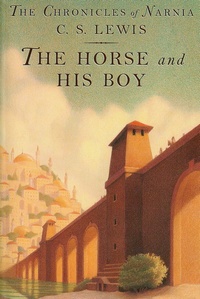
Cover of The Horse and His Boy by C.S. LewisThe Horse and His Boy

by C. S. Lewis , illustrated by Pauline Baynes

DETAILS:
Series: The Chronicles of Narnia, #5
Publication Date: June 25, 1994
Format: Paperback
Length: 243 pg.
Read Date: December 16-17, 2025
Buy from Bookshop.org Support Indie Bookstores


If you need to know what this book is about, or anything about this series…seriously, just stop what you’re doing and pick up this book. I don’t mean to be a snob, or maybe I do, but something was missing from your childhood, and now is your time to fix it. I realize that there are many legitimate reasons for people not to have read this, and I’m not questioning the choices you or your parents made (actually, I guess I am). But I’m not going to try to talk about this book like I do most others.

If only because everything worth saying has been said by other, better, writers. Probably several times.

I’ve also read this too many times to count as a child—even through my college years, and at least once a decade since. I’ll probably pick up the pace of re-reading them so I can talk to the grandcritters about them, too.

But I feel the need to say something now, so here are a few things that jumped out at me during this read:

bullet

And when all the serious eating and drinking was over, a blind poet came forward and struck up the grand old tale of Prince Cor and Aravis and the horse Bree, which is called The Horse and His Boy and tells of an adventure that happened in Narnia and Calormen and the lands between, in the Golden Age when Peter was High King in Cair Paravel. (I haven’t time to tell it now, though it is well worth hearing.)

Seriously, who reads this bit from The Silver Chair for the first time, and says, “I want to know that story”?
bullet It is so hard to read all the “true Northern stock,” “dark faces,” and “accursed but beautiful barbarians” of the North stuff. You remember going in that kind of thing is going to be there, along with the pseudo-Arabian caricatures. But remembering it and reading it are two different things.

…Bree said, “And now, Tarkheena, tell us your story. And don’t hurry it—I’m feeling comfortable now.”

Aravis immediately began, sitting quite still and using a rather different tone and style from her nusual one. or in Calormen, story-telling (whether the stories are true or made up) is a thing you’re taught ,just as English boys and girls are taught essay writing. The difference is that people want oto hear the stories, whereas I enver heard of anyone who wanted to read the essays.

Granted, his students were much more advanced than these boys and girls, but this is not really something you want to read after a sleepless night or two finishing up an assignment. (still, who’s going to disagree with him?)
bullet Edmund, Susan, and the rest of their party are indulging in that court-speak that bugged me at the end of LWW. I’m so glad Caspian didn’t get too into that. Surely there’s another way to signal that they’re all royal and grown-up?
bullet During the climactic battle, rather than seeing it from the perspective of a combatant or two, we just get a play-by-play from the Hermit observing it for those with him. This is a fantastic way to get this information—especially for Lewis’ audience. All the highlights, none of the blood and gore.
bullet I thoroughly enjoyed Bree going on about the nature of Aslan (just before meeting him and showing how little he knew)—he reminded me so much of the pompous Liberal from The Great Divorce.
bullet Shasta/Cor’s line, “And by the way, Father’s an absolute brick [how odd that a Calorman uses slang from the UK]. I’d be just as pleased—or very nearly—at finding he’s my father even if he wasn’t a king. Even though Education and all sorts of horrible things are going to happen to me.” Just delights me. Huck Finn lives!
bullet It’s interesting that Lucy is able to tell the tale of the Wardrobe here at the end of the book. How long are the Pevensies around after this before they get to the point that they’ve forgotten it? How are Lucy and Susan (who is likely pursued by more than just this twerp) unmarried in all that time? Pfui—how are Peter and Edmund? The more I think about this point, the more bothered I am.
bullet Speaking of marriage, this is likely my favorite bit of writing from this book (and really, this is book has more genuinely funny moments/depictions than the rest of the series):

Aravis also had many quarrels (and, I’m afraid, even fights) with Cor, but they always made it up again: so that years later, when they were grown up, they were so used to quarreling and making up again that they got married so as to go on doing it more conveniently.

bullet At the end of the day, this is a perfectly fine MG adventure story. Could it be better? Yeah. Does it almost feel like someone was trying to establish the Narnia Cinematic Universe? Yeah. Is it as unsatisfying as The Magician’s Nephew? Nope.

This post contains an affiliate link. If you purchase from it, I will get a small commission at no additional cost to you. As always, the opinions expressed are my own.

Irresponsible Reader Pilcrow Icon

The Christmas Tree Killer by Chris Frost: Some Gifts Should Remain Wrapped

Cover of The Christmas Tree Killer by Chris FrostThe Christmas Tree Killer

by Chris Frost

DETAILS:
Series: DI Tom Stonem, Book 2
Publisher: HarperNorth
Publication Date: November 6, 2025
Format: eBook
Length: 296 pg.
Read Date: December 17-18, 2025

‘Obviously the timing isn’t ideal, what with it being so close to Christmas…’

Tom shivered. He hoped that festive murders were not going to become his professional speciality. He supposed the dark of winter was a good time for hiding dark deeds – but some were darker than others.

What’s The Christmas Tree Killer About?

You don’t have to unwrap every package with your name on it. Especially if you’re out on a long hike in the woods by yourself and you come across a package with your name on it. I’m just saying. Of course, the impulse to open it is going to be there—curiosity killed the cat, right? And in this case, traumatized the hiker. Because there was a severed foot underneath the wrapping paper.

Now, as feet are usually attached to people and not typically used in even White Elephant exchanges, the police get involved. The local force isn’t quite up to dealing with a case this extensive, so they call in help from another local force. That help ends up being DI Tom Stonem and his partner. Before they can make too much progress with this foot, another body part is found—and the gift tag bears another name.

It’s pretty clear that this is going to be anything but a holly or jolly Christmas unless Tom and his colleagues can figure out what’s going on (and where the rest of the body/bodies are).

Well, Now I Feel Like a Jerk…

As soon as I saw that Frost was giving us another Christmas-themed mystery, I started joking about it to myself (and I think in a post or two here). Naturally, I wasn’t the only one—Tom and a couple of colleagues indulged in some dark humor about it.

But a local reporter (who had a run-in with Tom before) isn’t joking about it. As the investigation doesn’t produce instant results, he starts taunting Tom and even runs a story. I’ll give you a sample of.

The headline was repeated here, bold and unapologetic. Beneath it was a photograph of him from last year pinning a journalist to a wall outside Gateshead police station. Tearing his eyes away from the photo, he started on the article.

CHRISTMAS CURSE FOR DI STONEM

Another holiday season, another body count – should DI Tom Stonem still be leading investigations?…

For most, Christmas brings music, mince pies and cherished moments with family. For DI Tom Stonem, it seems to bring something far more sinister: murder.

The embattled detective, who transferred to Gateshead following what police sources once called ‘commendable service’ in Manchester, has once again found himself at the centre of a high-profile homicide investigation – his second Christmas running.

This gets to Tom–who’s still dealing with the events of last year’s case, and is starting to make some progress. This sets him back and gets into his head.

It: 1. Is a really good idea, and worked well with the story on many levels.
2. Made me feel like a jerk for mocking the guy.

I got over it, sure. Still…

Personal Stories

The romantic subplot(s) worked out pretty much the way you think they would—the primary one seems a bad idea for all involved, but that’s not for me to say. Frost did it well enough, but it could maybe have used a little more subtlety in the depiction.

The familial stories, on the other hand, were done well. I hope we get to see a bit more of Tom’s family in the books to come. I thought that went really well.

So, what did I think about The Christmas Tree Killer?

‘Standard practice out here, apparently. I don’t think I’m made for the country.’

‘Nor me,’ she said, a wry smile on her face. ‘Though, don’t you think it’s funny that we’re repulsed at some dead moles when we’re potentially walking towards another severed human foot like it’s just another day at the office.’

Some of the procedural moments bothered me—they spent too long before trying to track down people associated with the first “gift’s” recipient, I had a hard time buying that from an investigative point of view. And from the point of view of someone who’s read a lot of books like this? You just knew it was going to end badly, the only question was how. Also, there was one person they should’ve looked at more closely early on—but if they had, this would’ve been a short story. So, I get why they didn’t—but maybe Frost could’ve sold it a bit better.

It’s a clever little mystery novel—with some decent red herrings, some good twists and reveals along the line. The pacing was good—maybe its strongest suit—once you get into this, you have to see it through—and your attention isn’t given a lot of room to waver.

It’s maybe not your mother’s idea of a pleasant Christmas read—but it’ll scratch an itch for a good segment of readers. If you can find a corner to tuck yourself away in for a couple of hours without delighted children or chatty relatives, it’d be a perfect read for Dec. 25.

If only for the sake of his reputation, I do hope that Tom’s next adventure happens on a nice, summery day. Or perhaps mid-Spring. Regardless of the season, if Frost does bring us another book featuring him—I’m eager to read it.

Irresponsible Reader Pilcrow Icon

Page 1 of 22

Powered by WordPress & Theme by Anders Norén