Category: F-J Page 1 of 27

The Brothers McKay by Craig Johnson: A Contemporary Take on a Classic Murder—and Walt Gets a New Pet?

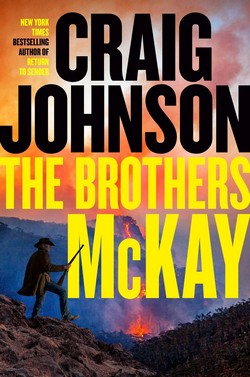
Cover of The Brothers McKay by Craig JohnsonThe Brothers McKay

by Craig Johnson

DETAILS:
Series: Walt Longmire, #22
Publisher: Viking
Publication Date: May 26, 2026
Format: Hardcover
Length: 349 pg.
Read Date: June 8-9, 2026

Buy from Bookshop.org Support Indie Bookstores

It wasn’t so much of a surprise that Pepper McKay was dead as much as it was an amazement to everyone in the county that it had taken so long for him to die, or for somebody to kill him.

What’s The Brothers McKay About?

That’s the opening paragraph of the book—and we keep getting reminded of this point. A chapter or so later, Walt is interviewing a witness:

“Have Pepper and Manx been having any difficulties lately?”

“Lately?” She laughed and then covered her mouth with a hand as if to capture the sound. “You mean beyond the last twenty-two years?”

“Manx didn’t seem very torn up about Pepper’s passing.”

“Do you honestly think anybody in the county will be?”

That won’t be the last time the sentiment is echoed.

Pepper has three (legitimate) sons, and one known illegitimate son. And more enemies—or at least people who actively disliked him—than the population of Absaroka County. At least it seems that way.

Walt Longmire happens to be one of them (but not a suspect). But that’s how much this man is disliked. I really can’t understand how he was able to convince the mothers of his children to sleep with him, but he seems to have plenty more lovers, too. I’m really not sure Johnson established that to my satisfaction (one of two problems I have with this book, so take it with a grain of salt).

Soon, he, Vic, and Double-Tough find themselves with too many suspects—including all of the man’s (known) children—and at least one monk! Motives range from revenge to greed to jealousy. And there are multiple suspects for each motive, too.

It’s noticed by several people that the murders—oh yeah, there are multiple killings (eventually)—resemble a certain Russian classic. But I’ll talk about that in a minute.

Chekov’s Wildfires

One of Johnson’s—and the series’—strengths is highlighting the stark beauty of Wyoming, the nature around Absaroka County, the wide stretches of uninhabited land, and the forces of nature. We’re really used to seeing storms wreak havoc on Walt and the rest of his Department.

This time, it’s fire.

We learn early on about a couple of fires that are being fought near—but not too-near—the crime scene. Now, everyone who’s watched TV or read more than one book reads about them and knows that before the end of the book, at least one of those fires is going to play a role. This is made even clearer by Walt getting regular updates about them getting closer.

Sticking with one of themes of this book, let’s borrow an idea from Russian literature and call them Chekov’s wildfires.

Johnson brings those fires to life in much the same way he has done with blizzards—but the danger seems (and probably is) greater for Walt and those with him. It’s an extended part of the book—a lot longer than I expected it to be. But once the flames started nipping at their heels, it engulfed my attention and wouldn’t let go. It was some really exciting material.

The Brothers Karamazov

Now, what I know about Russian literature couldn’t fill up a decent blog post. When it comes to [author’s] The Brothers Karamazov, my knowledge is even more limited.

It was expanded a lot by this book—both in what I can tell were parallels Johnson was drawing, and what Walt and Sidorov mused about it.

From what I gather, people better read than I can probably easily see what Johnson was doing there and appreciate it. Not unlike Walt’s version of the Inferno back in Hell is Empty.

I also have to say, learning that The Brothers Karamazov is volume 1 of an unfinished trilogy pretty much guarantees I’m never going to get around for it. People complain about Martin and Rothfuss, but 146 years is far too long to wait for a sequel. Where are the songs and memes about Dostoevsky?

Why did I pick this up? Why did I keep reading?

I grabbed this reflexively because it was a new Walt Longmire novel.

I stuck with it because you just don’t walk away from Walt. But more importantly, because it worked in so many ways that you really didn’t notice you’d been reading for a while—all you know is that you’re in the middle of a puzzle for Walt and you’re having a good time. I’m really not sure how aware I was of anything else.

So, what did I think about The Brothers McKay?

She studied me. “What’s the matter?”

I slumped back on the bench, taking off my hat and staring up at the delicate design of the pressed-tin ceiling. “It’s all just so abstract, stupid, and petty.”

Vic glanced at Henry and Sidorov, and then back at me before making her way over to the mini fridge and pulling out four cans of Rainier. Sauntering over, she popped the top of one and handed it to me. “How long have you been in law enforcement?”

“Most of my life, but I keep hoping that our species will evolve.”

“Yeah, good luck with that.”

This is the best Longmire in a while. The interplay with the characters, the complexity of the case, the characters that were created just for this book—and the little glimpse we got into Walt’s younger years…and a few other things I can’t think of at the moment, really elevate this to one of the best in the series. I don’t think Johnson’s written a bad novel, but some are clearly better than others. This falls into the “better” column.

As usual, I really enjoyed Vic in this book. As usual, I wanted more of her—but what we got was great. Henry didn’t show up in this as much as he could’ve—and that worked for the best. And we got some good time with Double-Tough—it has been far too long since he graced the pages of this series.

What I said above about Chekov’s wildfires started off as a line or two here…but I won’t repeat myself. The other bit of nature that worked really well in this book was a mule. Johnson did a good job in making you care as much about the mule as he did many of the humans.

Oh, and we shouldn’t forget Walt’s dry wit, Vic’s less subtle humor, and Walt’s deep font of trivia. Who knew you’d get the history of a boardgame in the book?

Johnson really brought Sidorov (the Russian that’s been lurking around Walt lately) into the spotlight for both this novel and to set up the next one (at least). When we got his first big update about Ruth One Heart, the writing was on the wall for Walt’s future, sadly. I’m not crazy about: a. the set-up for the next novel—as much as I figured something like it was going to happen; b. the way that Johnson set it up—as well as it was executed. I’ll save my complaints for the next book (hopefully after Johnson changed my mind).

But that’s for 2027, for now? I can focus on what a great book this was.

This post contains an affiliate link. If you purchase from it, I will get a small commission at no additional cost to you. As always, the opinions expressed are my own.

Irresponsible Reader Pilcrow Icon

REPOSTING JUST CUZ: Heroic Hearts ed. by Jim Butcher and Kerrie L. Hughes: Street-wise Herculeses to fight the rising odds

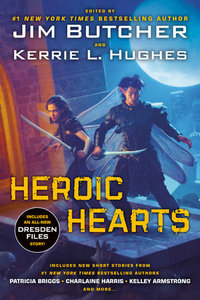
Cover of Heroic HeartsHeroic Hearts

edited by Jim Butcher and Kerrie Huges

DETAILS:
Publisher: Ace
Publication Date: May 3, 2022
Format: Paperback
Length: 345 pg.
Read Date: May 18-19, 2022
Support Independent Bookstores - Visit IndieBound.org

Heroes have fascinated humanity since we started telling stories. They became even more fascinating when we started writing the stories down—and achieved the status previously reserved for pantheons of deities when we started putting them on the big screen. Heroes have become big business.

But heroes, real heroes, aren’t titans or icons.

Real heroes are standing behind cash registers, starting cold trucks, getting kids out of bed. They’re the everyday humans who happen to be standing there when something bad happens, and when there is a sudden need for skill, courage, or intelligence. They’re the regular people in irregular circumstances who find themselves considering others first and standing up to do whatever needs to be done.

What’s Heroic Hearts About?

In her Foreword, Kellie Hughes describes this as

a collection of hopeful stories about courage, bravery, codes to live by, and people you can trust.

Who doesn’t love a hero story? Here we have twelve stories from a dozen UF authors all approaching this idea in their own distinctive ways. Some are stand-alones, some are parts of a series.

Authors I’m Not That Familiar With (if at all)

It’s the rare anthology that will be full of only authors you know well—half the point of one of these is to be exposed to someone new so you can decide if you want to read more by them.

Charlaine Harris wrote the only story I didn’t appreciate in this collection, I just couldn’t get into it. That’s likely something to do with my mood/what I ate today/something else. Most days, I simply wouldn’t have cared—I don’t think it’s in me to really like this one.

I thought the rest of the stories were entertaining and well-executed, but a few are going to get me to keep an eye out for authors/series. Chloe Neill’s “Silverspell” tempted me to check out the rest of that series, these are characters and a world I could spend more time with. Jennifer Brozek’s “The Necessity of Pragmatic Magic” was great—ditto for “Grave Gambles” by R.R. Virdi.

“Troll Life” by Hughes was just wonderful. It’s everything you want in a short story—we’re given a well-developed world, a handful of strong and interesting characters, a good plot, and it just made me smile throughout.

Authors I’m Very Familiar With

Kevin Hearne, Patricia Briggs, and Jim Butcher are what brought me to this collection. I’ve read everything I can by them, so that’s not surprising, right?

We meet up with Atticus, Starbuck, and Oberon in Australia, looking into the cause of a massive forest fire, in “Fire Hazard.” It’s told from Oberon’s point of view, which makes it a sure-fire win. I’ll read just about anything in Oberon’s voice—and this story demonstrates why. It’s funny and action-packed. Some of the best lines in the book are in this story, too.

I wasn’t that interested in “Dating Terrors,” by Patricia Briggs based on the idea. “Asil on a blind date” just doesn’t draw me in—sure, I’m curious about Asil’s activities, so I wanted to read it. But the concept didn’t grab me. That lasted only a few pages—now I want to see more about Asil’s date and her friends. Preferably with Asil around, but that’s not necessary. I should’ve known Briggs would hook me by the end, and come into it with better expectations.

This brings us to the story the book opens with (but I saved until the end), Jim Butcher’s “Little Things.” This happens days after Battle Ground, as the city (and its wizard defender) is trying to recover from those events. The “Little Things” this story focused on are Major General Toot-Toot Minimus, his forces, Lacuna, and Mister. When a threat to the castle slips by the guards and other defenses, these heroes have to rise to the challenge. It’s deceptively fun, light, and breezy. But it’s Butcher, you know he won’t let you off that easy. Dresden in the shadow of Battle Ground? The emotional core of this story isn’t small. The story made my day…I’ve got nothing negative to say about it.

So, what did I think about Heroic Hearts?

This is a strong collection of Urban Fantasy stories, with a little something for everyone. Anything I didn’t mention above was fine—they’re all written well, but some characters/stories aren’t for everyone, and that would describe the few I didn’t talk about. Every story was worth the time (except for that thing by Harris, I just didn’t see why that was written—and I wouldn’t be shocked to hear that most readers of the book will think I’m nuts for that).

This probably would’ve gotten a warm 3 Stars from me, if not for the Briggs and Butcher stories. I enjoyed almost all of these stories, and really only disliked one. But wow, those two were just outstanding. Nothing that made me as happy as those two did is going to get less than 4.

Even if you’re new to the genre or are only a fan of one or two of the authors, I expect you’ll find yourself enjoying most, if not all, of the book. Pick it up.


4 Stars

This post contains an affiliate link. If you purchase from it, I will get a small commission at no additional cost to you. As always, opinions expressed are my own.

Oberon’s Bathtime Stories by Kevin Hearne: The Canine Dynamo Will Spark Joy, Mark My Words!

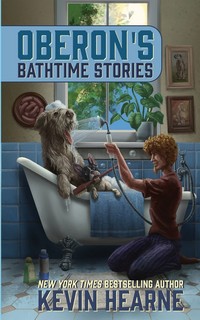
Cover of Oberon's Bathtime Stories by Kevin HearneOberon’s Bathtime Stories

by Kevin Hearne

DETAILS:
Series: Iron Druid Chronicles/Oberon’s Meaty Mysteries
Publisher: Horned Lark Press
Publication Date: April 8, 2025
Format: Paperback
Length: 127 pg.
Read Date: December 19, 2025
Buy from Bookshop.org Support Indie Bookstores

What’s Oberon’s Bathtime Stories About?

So, whenever Oberon—the Iron Druid’s Irish Wolfhound—gets a bath, he gets told a story so he’ll put up with it long enough to get clean. This is something we’ve known since the first book, and it continues in Atticus’ (largely undocumented) adventures and life post-Scourged.

This is a collection of those stories—eleven of them plus something a little different. The outline is simple—Oberon and/or his buddy Starbuck engage in some sort of shenanigans or misadventure. Atticus cleans them up, telling them a story about meeting some famous person—usually with a point/lesson—then the dogs get the zoomies and take a nap.

These people range from the Visigoth King Alaric to John Quincy Adams, from Corrie Ten Boom to Robert Johnson, and so on.

A Break in the Pattern

There’s one exception to this pattern—chapter 5, “The Triple Nonfat Double Bacon Five-Cheese Mocha.” Features Oberon prompting Atticus into action. It’s nothing major—it’s just a brief 17 page story, after all. But it’s the kind of thing that would take up part of an early chapter in an Iron Druid novel.

It was good to have this break, so everything wasn’t just the same. It was also fun to see the Iron Druid in action, knowing that he’s still got it in him.

So, what did I think about Oberon’s Bathtime Stories?

This was fun—some good light entertainment. Not quite as satisfying as a dog would find a belly rub, but probably a good series of scritches behind the ear.

I do think Hearne got a little preachy a time or two—both in the selection of subject and how he told their story, particularly Atticus’ lessons for Oberon and Starbuck. I don’t particularly take umbrage with his messages, just the delivery. Not so much umbrage that I didn’t immediately turn the page to the next story—I’m just using this excuse to say umbrage a few times.

If you’re a fan of the Iron Druid Chronicles and this somehow slipped by your radar, you’re going to want to invest the time. It’s absolutely worth it. If the idea of stories featuring historical figures told to a dog, and you haven’t read the IDC, you’ll likely still enjoy it. Hearne’s got a reliable charm.

This post contains an affiliate link. If you purchase from it, I will get a small commission at no additional cost to you. As always, the opinions expressed are my own.
Irresponsible Reader Pilcrow Icon

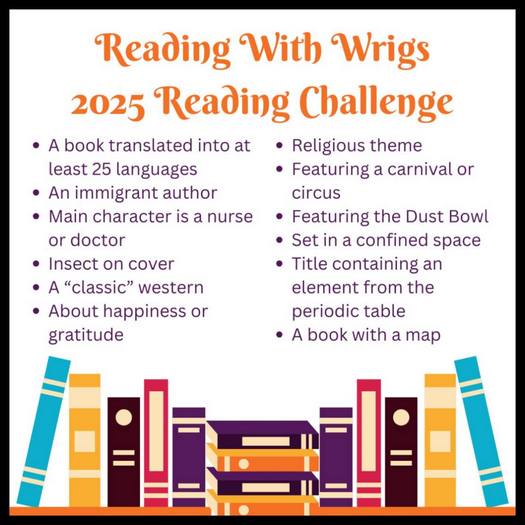
Reading with Wrigs 2025 Challenge—Oh, Right…I Did a Thing

Reading with Wrigs
Rising from the ashes of the While I Was Reading Challenge, came Reading with Wrigs. Last year, I didn’t do good with the challenge, and then this year, I actually finihsed it about a week ago and then forgot to make note of it. Ooops. Go figure–last year, I didn’t finish it; this year, I finish with breathing room and forget to note it.

Anyway, here we go:

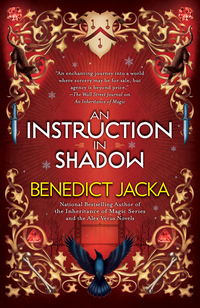
REPOSTING JUST ‘CUZ: Instruction in Shadow by Benedict Jacka: Second Verse, Same as the First (in a good way)

Cover of An Instruction in Shadow by Benedict JackaAn Instruction in Shadow

by Benedict Jacka

DETAILS:
Series: Stephen Oakwood, #2
Publisher: Ace Books
Publication Date: October 15, 2024
Format: Paperback
Length: 310 pg. 
Read Date: December 9-11, 2024
Buy from Bookshop.org Support Indie Bookstores

What’s An Instruction in Shadow About?

This picks up mere hours after An Inheritance of Magic, and Stephen is feeling pretty good about himself. His job is going okay, he’s continuing to improve in his magic, he’s got a good lead when it comes to his father’s location—sure, things with his mother weren’t quite what he’d hoped for. But she left the door open to further communication.

And it doesn’t take long for things to start going wrong—but nothing disastrous.

The best way to summarize this book is to say that: everything from the last book continues along the same trajectory, but gets harder. This means nothing if you haven’t read that book, but you really should (at the very least, go check out my post about it). Among the ways that happens—a cult (or cult-like group) tries to recruit him, an assassin makes an (almost successful) attempt on his life, he gets suspended from work, and he runs afoul of a group of Russian criminals.

Worst of all, Stephen gets in deeper with his mother’s family.

The World and Its Magic System

We don’t learn much more about sigl work or Wells—we see more examples of what we’ve already seen at work, but that’s about it. Alright, we get to see what medical sigls can do, so that’s new.

What we get more of-—and it’s just the tip of the iceberg, I’m sure–is insight into the families and companies that run the sigl economy and Well markets. If there are ethics governing them in any way, shape, or form, Stephen hasn’t shown them to us. It’s all about power, manipulation, and things that happen under the table and behind the scenes. It’s both unthinkable that things operate in this fashion in the 21st century—and somehow the part of the book that seems the least fictional or fantastic.

Much of this comes from an info drop or two—but they’re worked into the narrative perfectly. They’re neither disruptive to the overall story nor are they clunky exposition.

So, what did I think about An Instruction in Shadow?

Let me start with this: I would happily read books 3 and 4 in this series in the next couple of months, and still be eager for more. The more we see about this world—and the more questions we have raise, the more I want to learn and see.

Am I a little worried about the arc that Jacka is suggesting for Stephen? Yes. Am I also almost certain that the arc won’t go the way it looks, and that there’s nothing to worry about? Yes.

I really just want more of it—-I am not certain that I care too much about the whole “where’s Stephen’s dad” part of the overall story, but I’m pretty sure that I don’t need to, because the series has been inevitably moving in that direction since the beginning, and when the time comes, I’ll get invested.

But Jacka has got me sitting on the edge of my seat when it comes to everything else. I want to see more of how this economy works—on the legitimate side, the illegitimate side, and then the murky overlap. I want to understand how Stephen is going to operate and keep his head above water in it. He’s not just a MacGuffin, but he kind of feels that way right now.

I’m feeling really inarticulate when it comes to this series—and this installment in particular. Everything I said about the first one is still true. We really just got more of what he’d already given, so my position and thoughts are pretty much the same, too.

I did think that despite his struggles and the aforementioned almost successful assassination, things went a little too easy for Stephen this time. I’d have liked a failure or two. Or at least another draw or two. Even when things were at their hardest for him in this book, he found a way to turn the oncoming defeat into a victory. I typically really appreciate that kind of thing (obviously), but I had very little doubt each time that Stephen was going to come out on top. I just want a little more suspense and doubt on that front. But this wasn’t a major distraction or detraction—it’d just be good for Stephen’s life to be seen as difficult as he sees it.

Also, one of the better parts of An Inheritance of Magic was watching the trial and error Stephen went through—it was very effective in terms of character development and showing us the way sigls work. Give me more of that and I’m happy.

Again—I thoroughly enjoyed this book and am eager to read more. I just wanted it to be a teeny bit better.

If you’re into inventive UF, there’s no better time than now to jump on this series—I think you’ll be as invested in getting more as I am.


4 Stars

This post contains an affiliate link. If you purchase from it, I will get a small commission at no additional cost to you. As always, the opinions expressed are my own.

Irresponsible Reader Pilcrow Icon

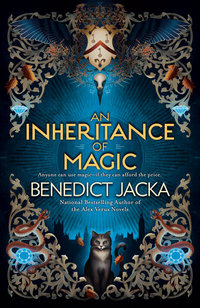
REPOSTING JUST CUZ: An Inheritance of Magic by Benedict Jacka: I Cannot Recall the Last Time I was This Excited about a New UF Series

An Inheritance of MagicAn Inheritance of Magic

by Benedict Jacka

DETAILS:
Series: Stephen Oakwood, #1
Publisher: Ace Books
Publication Date: October 10, 2023
Format: eARC
Length: 384 pg.
Read Date: September 22-26, 2023
Buy from Bookshop.org Support Indie Bookstores

This is Hard

I want to limit my comparisons between this new series and Jacka’s previous series to just one section—but that’s not going to happen. It makes sense, I suppose. It’s Jacka’s first non-Alex Verus book (other than the two hard-to-find children’s novels), so comparisons are inevitable, but I don’t want to turn this into an X vs. Y situation.

I will say at the outset, that if it wasn’t for the name on the cover, I don’t know that I’d have known they had the same author—so that tells you something about the comparisons. (except in quality—this is definitely up to the standards Jacka has established)

What’s An Inheritance of Magic About?

This is tricky. The Author’s Note at the beginning of the book tells us that this book is an introduction to the series. We are introduced to the world, the characters, the magic, and so on. Yes, there is a plot—a handful, actually—but the main point is for us to get oriented.

Basically, we meet Stephen—he’s roughly 20 and is fairly aimless. He doesn’t have the money (or, really, ambition) to go to University. He bounces from temp job to temp job, hangs out at his local with his friends regularly, takes care of his cat, and works on his magic in his spare time. It’s his real passion, but he doesn’t do much with it.

Then one day, some distant relatives that he’s never heard of come into his life (it’d be too complicated to list the reasons they give, and I think they’re half-truths at best, anyway). Suddenly, Stephen is thrown into a dangerous, high-stakes world of money and power—and he’s just a pawn to be used in the games of his “family” (and by family, I mean people that 23andMe would identify as relatives, but he’s never been in contact with or aware of for his entire existence). He’s a relatively unimportant pawn at that. He’s sort of grateful for that as he realizes it—but he’d have been happier if they never bothered him in the first place. Happier and with significantly fewer bruises.

However, through their machinations, he’s introduced to new levels of magic society and ways that the magic in this world works. Best of all he finds ways that he can be employed and use his magic—the best of both worlds. Sure, his friends don’t get it (not that he tells many of them, because he prefers that they think he’s sane), but he’s bringing in enough money to live and he’s getting stronger and more capable.

The World and Its Magic System

So, where the Alex Verus series was about one man and his friends/allies trying to navigate (and survive) the politics and power of the magical society in England (largely), at this point the Stephen Oakwood series appears to be about one man making his way (and hopefully surviving) the money and power of a different sort magical society—and it’s intersection with the non-magical world. We’re not just talking Econ 101 kind of stuff here—Stephen’s family appears to be some of the 1% of the 1% and there are huge multi-national corporations involved here with defense contracts to governments all over the world.

Basically, Alex had an easier place to navigate.

Most of the magic that’s used in this world comes from sigils—physical objects created from various kinds of energy wells (earth magic, life magic, light magic, and so on) to do particular tasks (shine a light, augment strength, heal minor wounds, etc.). There are likely bigger and better things along those lines (hence defense contracts), but that should give you an idea. The overwhelming number of these sigils are pumped out by some sort of industrial companies and are only good for a limited amount of time.

Stephen was taught (by his father, and by himself) to make sigils on his own—his are individualized, artisanal kinds of things. Think of a sweater you get from some hobbyist off of Etsy vs. the kind of thing you can get for much less at Walmart or on Wish—quality that lasts vs. cheap and disposable. He also reverse engineers almost all of his sigils—he sees something in a catalog (no, really, this is how people get their sigils for personal use) or in use and tries to figure out how such a thing will work and then sets out to create one.

I don’t know where Jacka is going to go with all of this, obviously. But I love this setup.

Alex and Stephen

It wasn’t until I was just about done with the book that I finally figured out what Alex and Stephen had in common—which is odd, it was staring me in the face for most of the novel. But before that, I really wouldn’t have said they had much in common at all.

Stephen is our entry point to this world, and he only knows a little bit about it so as he learns, so does the reader. Alex pretty much knew everything that was going on in his world, so he had to catch the reader up—or he could help Luna understand something (and make it easier for the reader to learn that way). Stephen has to learn almost everything by getting someone to teach him, or through trial and error—either way, the reader is along for the ride and learns with him.

Similarly, Stephen’s really just starting to get the knack of his abilities where Alex was already a pro—sure he had more to learn (and his power increased), but Stephen’s not even a rookie, really when things get going.

Stephen had a loving and supportive father growing up, a strong group of friends, and experience outside the area of magic users—something we never got a strong idea that Alex ever had. Alex had trauma and hardships behind him—Stephen doesn’t. So their personalities, outlooks, etc. are very different from the outset.

It’s not really that shocking that the protagonists of two different series wouldn’t be that similar. And yet…we’ve all read a second or third series from an author with a protagonist that’s just a variation of their initial breakout character. So it’s good to see that Jacka’s able to make that transition between his two series—it gives you hope for what he’s going to do in the future.

Oh, what did I finally realize the two characters shared? They watch and learn. Alex does it because that’s essentially what his abilities were—he could sift through the various futures and decide what to do based on that. Stephen just doesn’t know enough about anything so he has to sit and observe—and from there he can decide how to act. But where others will try to think first and act second, Stephen and Alex watch first—and for a long time—before they think and then act. It’s something not enough characters (especially in Urban Fantasy) seem to spend much time doing. So I’m glad to see it.

So, what did I think about An Inheritance of Magic?

I am just so excited about this series. I didn’t know how Jacka could successfully follow up the Verus series. I trusted he would, because he’s earned that over the last decade—but, I didn’t expect that I’d respond so positively so soon.

We need to start with Stephen’s spunky attitude—with a little bit of a chip on his shoulder due to his circumstances in life (that grows to a degree as he learns how much he and his father missed out on and starts to guess why)—is a real winner. He’s got a gritty (in an Angela Duckworth sense, not Raymond Chandler or William Gibson sense) outlook, is generally optimistic—and can even be funny—all the attributes you want in an underdog.

Then there’s the world-building that I tried to sketch out above—and did a not-wholly-inadequate job of. I want to know more about it—and figure increased familiarity is just going to make me more curious.

I have so many questions about the family members who’ve inserted themselves in Stephen’s life related to their motivations, trustworthiness (I suspect at least one will turn out to be an ally, however temporary), goals, and abilities. I have those questions about Stephen’s guides and allies—and think at least one of them is going to turn on him in a devastating way (thankfully, he doesn’t trust most of them completely). There’s also this priest who keeps assigning him theological work to study. Some good theology, too. I don’t fully know where this is going—but I’m dying to find out.

Are we going to get a Big Bad—or several—for Stephen to face off against? Or is this simply going to be about a series of obstacles Stephen has to overcome until he can carve out an okay existence for himself? Is this about Stephen becoming one of those 1% and the corruption of his character that will necessitate?

I’m not giving this a full 5 stars mostly because of the introductory nature of the book—also because I want to be able to say that book 2 or 3 is an improvement over this (which I fully expect). But that says more about me and my fussy standards than it does about this book. I loved it, and am filled with nothing but anticipation for the sequel/rest of the series. It’s entirely likely that as this series wraps up that we’re going to talk about the Alex Verus series as Jacka with his training wheels on.

I’m now in danger of over-hyping. Also, I’m going to just start repeating laudatory ideas. Urban Fantasy readers need to get on this now.

Disclaimer: I received this eARC from Berkley Publishing Group via NetGalley in exchange for this post—thanks to both for this.


4 1/2 Stars

This post contains an affiliate link. If you purchase from it, I will get a small commission at no additional cost to you. As always, the opinions expressed are my own.

Irresponsible Reader Pilcrow Icon

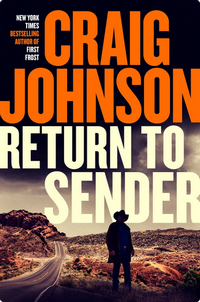
Return to Sender by Craig Johnson: The Misadventures of the World’s Worst Undercover Sheriff

Cover of Return to Sender by Craig JohnsonReturn to Sender

by Craig Johnson

DETAILS:
Series:Walt Longmire, #21
Publisher: Viking
Publication Date: May 27, 2025
Format: Hardcover 
Length: 321 pg.
Read Date: May 30-June 2, 2025
Buy from Bookshop.org Support Indie Bookstores

“You know this is how you’re going to get yourself killed, right? Something stupid like this?”

“I hope not.”

“I’m serious. It’s when you least suspect it, Walt.”

What’s Return to Sender About?

For the previous twenty books, we’ve learned a lot about Martha, Walt’s late wife. We learn a little more about her here—she had a cousin who is now the Postal Inspector for Wyoming. Sure, this doesn’t give us a lot of insight into her as a person—but it does allow this cousin, Mike Thurmin, to call upon Walt for a favor.

A few months ago, a postal worker who carries mail on the longest route in the U.S., 307 miles, disappeared from the face of the Earth. Law enforcement has written it off as an adult willingly leaving her home, her boyfriend has sold off pretty much everything she left behind, but her supervisor/friend isn’t satisfied. And that lack of satisfaction worked its way up to Thurman—who roped Walt into looking for her.

It’s possible, if not likely, that Blair McGowan’s boyfriend is behind her disappearance (he’s certainly unpleasant enough that you can see why many people would speculate about it); she’s an activist, and it’s possible she’s irked someone powerful; there’s a lot that can happen in 307 miles; or the aliens she claimed that abducted her a few years ago came back and picked her up again. Walt’s pretty sure it’s something else, but he has to look into things.

This book pretty much has three acts—let’s take a quick look at them.

The Search for Blair McGowan

In this part, we get the lay of the land and meet the essential characters. Walt tries to go undercover as a postal carrier brought in to cover for Blair temporarily (at least). While doing so, he makes some attempts to investigate—many of which lead people to believe he’s not a postal carrier.

Still, Walt and Dog have some interesting encounters with people in and around the Red Desert of Wyoming. There’s a little bit of consultation with Vic over the phone, and she (and a few others) repeatedly remind Walt to get to Cheyenne for a reception that is important to Cady.

The Women in Walt’s Life

Vic, Cady, Ruby, and Lola feature prominently in the second act (although we don’t get to really see Lola)—with a quick chat or two with Lucian and Henry. It’s all about the change in Wyoming government—a new governor and a prospective promotion for the greatest legal mind of our time.

That promotion to A.G. is complicated by her father’s position in the state—both as a sheriff of one county and his prominence in the law enforcement community.

It breaks up the search for McGowan, it moves some storylines forward, but it largely feels out of place in this book. Still, it was good to see these things move forward a little (and we can assume it will continue to do so).

The Next Search for Blair McGowan

That dealt with, the search for Blair picks back up in earnest. There’ve been a few developments while Walt was in Cheyenne, but Walt has reason to question them—and a greater determination to get to the bottom of things.

This Act takes up the majority of the book, and we learn a lot more about almost everyone we were introduced to in the first Act. There’s a lot of action, some fun new characters are introduced, and Walt is pushed to the limits physically and maybe mentally.

We really have to go back a few books for me to enjoy things as much as I enjoyed this portion of the book, really. I’m thinking Daughter of the Morning Star or Next to Last Stand. The first two parts felt more like Johnson was getting warmed up, and then things really kicked into gear when Walt came back.

Dog

Dog rarely gets to shine in this series—he’s largely just a presence to receive a pat or two, to scarf down some food, and maybe to intimidate someone. But when he does get the spotlight—as he does a few times in Return to Sender—it’s a lot of fun. He’s almost too good to be true, but honestly—who cares? Johnson keeps it pretty grounded (much more so than the ghost of Virgil that might pop up here and there).

For a lot of this book, it’s Walt and Dog against the world—and there are few dogs that can carry that weight.

Oh, yeah, that…

There’s some movement on the part from First Frost about the disappearance of Ruth One Heart. But that’s pretty much all I can cover.

So, what did I think about Return to Sender?

I watched my family members enjoying themselves and then asked. “Lucian, how did you know it was time to hang up your star?”

“You came along.”

“No, seriously.”

“l am being serious.” He stopped and turned to look at me. “When I saw the county would be in good hands, I stepped down and never bad a second thought.”

“I don’t think I have that luxury. Saizarbitoria isn’t ready, and the voters won’t elect Vic.”

He smiled. “Maybe if you gag her.”

Walt’s retirement has been discussed a lot recently, and it seems like it’ll come up more (up until he actually puts in his papers).

Now, I was fully entertained—but also frustrated by Johnson—in the first two Acts. But I have few quibbles or frustrations with the rest. I do wonder about Walt’s ability to do everything physically that he did—but what’s the point of being able to suspend disbelief if you don’t do it occasionally? And there’s much to be said for the combination of adrenaline, necessity, and stubbornness.

Walt vs. nature; Walt vs. big odds; Walt’s determination to do the right thing even when he’s on his own. These are all hallmarks of the best of this series. We got them all, with some great character moments for friends old and new.

What’s not to like? This would work as a jumping-on point for the series (Johnson says every book should work like that, but I beg to differ). For fans? It’s a must read.


4 Stars

This post contains an affiliate link. If you purchase from it, I will get a small commission at no additional cost to you. As always, the opinions expressed are my own.
Irresponsible Reader Pilcrow Icon

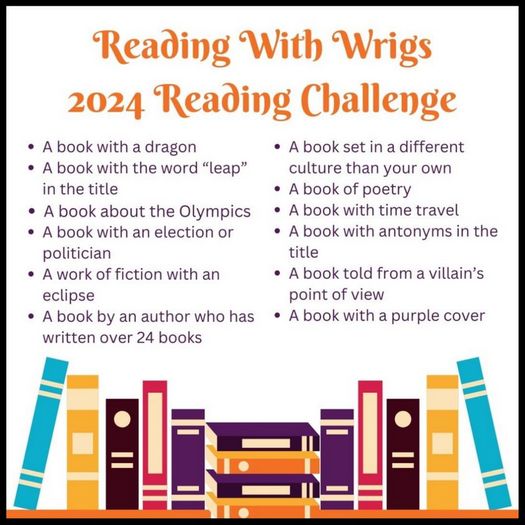
Reading with Wrigs 2024 Challenge—Well, that’s a miss.

Reading with Wrigs
Rising from the ashes of the While I Was Reading Challenge, came Reading with Wrigs. I’ve done pretty well with While I Was Reading most of the I participated, and I thought this would be the same—but it wasn’t meant to be this year. I just assumed I’d come across some of these without going out of my way to look for anything. Ah well, I’ll do better next year.

Probably.

Anyway, here are my incomplete results:

  • A Book with a Dragon: Aftermarket Afterlife by Seanan McGuire
  • A Book with the word “leap” in the title: Couldn’t think of one.
  • A Book with the Olympics: Running and Jumping by Steven Kedie
  • A Book with an Election or Politician: The Olympian Affair by Jim Butcher
  • A Work of Fiction with an Eclipse: Missed it
  • A Book by an Author Who Has Written Over 24 Books: Dream Town by Lee Goldberg
  • A Book Set in a Different Culture Than Your Own: I have an idea or two.
  • A Book of Poetry: Enough Rope by Dorothy Parker
  • A Book with Time Travel: A Quantum Love Story by Mike Chen
  • A Book with Antonyms in the Title: I really thought I’d get this one, but, alas
  • A Book Told from the Villian’s Point of View: Assassins Anonymous by Rob Hart kind of applies.
  • A Book With a Purple Cover: Abnormal Ends by Bryan McBee

Instruction in Shadow by Benedict Jacka: Second Verse, Same as the First (in a good way)

Cover of An Instruction in Shadow by Benedict JackaAn Instruction in Shadow

by Benedict Jacka

DETAILS:
Series: Stephen Oakwood, #2
Publisher: Ace Books
Publication Date: October 15, 2024
Format: Paperback
Length: 310 pg. 
Read Date: December 9-11, 2024
Buy from Bookshop.org Support Indie Bookstores

What’s An Instruction in Shadow About?

This picks up mere hours after An Inheritance of Magic, and Stephen is feeling pretty good about himself. His job is going okay, he’s continuing to improve in his magic, he’s got a good lead when it comes to his father’s location—sure, things with his mother weren’t quite what he’d hoped for. But she left the door open to further communication.

And it doesn’t take long for things to start going wrong—but nothing disastrous.

The best way to summarize this book is to say that: everything from the last book continues along the same trajectory, but gets harder. This means nothing if you haven’t read that book, but you really should (at the very least, go check out my post about it). Among the ways that happens—a cult (or cult-like group) tries to recruit him, an assassin makes an (almost successful) attempt on his life, he gets suspended from work, and he runs afoul of a group of Russian criminals.

Worst of all, Stephen gets in deeper with his mother’s family.

The World and Its Magic System

We don’t learn much more about sigl work or Wells—we see more examples of what we’ve already seen at work, but that’s about it. Alright, we get to see what medical sigls can do, so that’s new.

What we get more of-—and it’s just the tip of the iceberg, I’m sure–is insight into the families and companies that run the sigl economy and Well markets. If there are ethics governing them in any way, shape, or form, Stephen hasn’t shown them to us. It’s all about power, manipulation, and things that happen under the table and behind the scenes. It’s both unthinkable that things operate in this fashion in the 21st century—and somehow the part of the book that seems the least fictional or fantastic.

Much of this comes from an info drop or two—but they’re worked into the narrative perfectly. They’re neither disruptive to the overall story nor are they clunky exposition.

So, what did I think about An Instruction in Shadow?

Let me start with this: I would happily read books 3 and 4 in this series in the next couple of months, and still be eager for more. The more we see about this world—and the more questions we have raise, the more I want to learn and see.

Am I a little worried about the arc that Jacka is suggesting for Stephen? Yes. Am I also almost certain that the arc won’t go the way it looks, and that there’s nothing to worry about? Yes.

I really just want more of it—-I am not certain that I care too much about the whole “where’s Stephen’s dad” part of the overall story, but I’m pretty sure that I don’t need to, because the series has been inevitably moving in that direction since the beginning, and when the time comes, I’ll get invested.

But Jacka has got me sitting on the edge of my seat when it comes to everything else. I want to see more of how this economy works—on the legitimate side, the illegitimate side, and then the murky overlap. I want to understand how Stephen is going to operate and keep his head above water in it. He’s not just a MacGuffin, but he kind of feels that way right now.

I’m feeling really inarticulate when it comes to this series—and this installment in particular. Everything I said about the first one is still true. We really just got more of what he’d already given, so my position and thoughts are pretty much the same, too.

I did think that despite his struggles and the aforementioned almost successful assassination, things went a little too easy for Stephen this time. I’d have liked a failure or two. Or at least another draw or two. Even when things were at their hardest for him in this book, he found a way to turn the oncoming defeat into a victory. I typically really appreciate that kind of thing (obviously), but I had very little doubt each time that Stephen was going to come out on top. I just want a little more suspense and doubt on that front. But this wasn’t a major distraction or detraction—it’d just be good for Stephen’s life to be seen as difficult as he sees it.

Also, one of the better parts of An Inheritance of Magic was watching the trial and error Stephen went through—it was very effective in terms of character development and showing us the way sigls work. Give me more of that and I’m happy.

Again—I thoroughly enjoyed this book and am eager to read more. I just wanted it to be a teeny bit better.

If you’re into inventive UF, there’s no better time than now to jump on this series—I think you’ll be as invested in getting more as I am.


4 Stars

This post contains an affiliate link. If you purchase from it, I will get a small commission at no additional cost to you. As always, the opinions expressed are my own.
Irresponsible Reader Pilcrow Icon

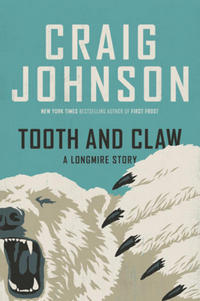
Tooth and Claw by Craig Johnson: Even in The Arctic, Nature’s Red

Cover of Tooth and Claw by Craig JohnsonTooth and Claw

by Craig Johnson

DETAILS:
Series: Walt Longmire, #.5
Publisher: Viking
Publication Date: November 19, 2024
Format: Hardcover
Length: 189 pg.
Read Date: November 28, 2024
Buy from Bookshop.org Support Indie Bookstores

What’s Tooth and Claw About?

After his time with the Marines is over, Walt needs to get away from people, society, anything that makes him think of Vietnam and what he witnessed there. He also wants to get away from what he knows–and what fits that description better than Alaska? He takes a job working security on an oil field, replacing someone who’d killed himself.

He also finds himself drinking. A lot. There’s not much to do when he’s not on the job—and you get the impression he can do a lot of it with a little bit of a buzz on.

We encounter Walt in this state as Henry comes up to visit–he’s concerned about what Walt’s doing to himself (as is Walt’s former fiance, Martha). Henry shows up at the end of December, when there are very few hours of daylight each day up by the Arctic Circle.

Henry’s a little bored, truth be told, so when Walt finds the opportunity to take him along on a quick research trip to help keep a scientist safe they go.

The day trip doesn’t go the way they expect (naturally). Instead, the friends find danger, a blizzard, a large polar bear (even by polar bear standards), a ghost ship, and some garden-variety human evil.

So, what did I think about Tooth and Claw?

This quick novella was fine. Walt and Henry against nature—weather and animal—isn’t exactly new territory, but Alaska isn’t what we’re used to seeing from them. It makes Wyoming look crowded. It’s a bit more extreme than we’re used to for them.

Add in a bunch of people we don’t know and a ship out of legend, and you’ve got something even better. There’s a potential supernatural element here–and the story works either way you approach that element.

It’s not a perfect read. The criminal activity seemed a bit perfunctory—and really didn’t add much to the novella, I might have appreciated the novella more without it. I don’t know that Johnson sold Walt’s drinking as being as much of a problem as Henry and a couple of others made it out to be.

But for what it is—a quick thrill-ride and a look at young-Walt, it’s good. There are some entertaining moments, it’s good to see these two in another environment. There’s at least one character I’d like to run into again.

It’s not a must-read for Longmire fans or the best introduction to the characters—but it’ll please longtime fans and should whet the appetites of new readers for the full novels. That’s good enough, right?


3 Stars

This post contains an affiliate link. If you purchase from it, I will get a small commission at no additional cost to you. As always, the opinions expressed are my own.
Irresponsible Reader Pilcrow Icon

Page 1 of 27

Powered by WordPress & Theme by Anders Norén