Category: Science Fiction Page 1 of 36

What Can I Possibly Say about Dungeon Crawler Carl That You Haven’t Read Dozens of Times?

Okay, after putting it off for months, I finally got around to reading the paperback I bought last year. Then a friend got me the audiobook—and I had to see if Hays was as great as everyone said. So I did both versions in a month. Which isn’t how I usually do things, but sometimes…


Cover of Dungeon Crawler Carl by Matt DinnimanDungeon Crawler Carl

by Matt Dinniman, read by Jeff Hays

DETAILS:
Series: Dungeon Crawler Carl, #1
Publisher: Ace; Audible Studios
Publication Date: December 30, 2025; January 28, 2021 
Format: Paperback, Audiobook
Length: 427 pg.; 13 hrs., 31 min.
Read Date: June 9-11, 2026; June 26-30, 2026
Buy from Bookshop.org Support Indie Bookstores

“Not everything will be social commentary.”

“It’s usually just stupid,” I muttered.

“It’s entertainment,” Mordecai said.

What’s Dungeon Crawler Carl About?

For the maybe 5 of you who haven’t learned this (inadvertently or purposefully), after living amongst us for decades, an alien race nearly wipes out the human race in an instant. Every human being—or physical object, plant, or animal—that was in an enclosed space was crushed when those buildings flattened. Those who survived were given the opportunity to enter a Dungeon to compete in a Hunger Games sort of reality show for several alien races to watch.

Sadly, for Carl, he only survived this because he was outside to catch his ex-girlfriend’s cat in the middle of the night. As he thought this would be a quick dash outside, he was wearing a jacket, t-shirt, boxers, and his girlfriend’s Crocs. Somehow, he didn’t realize he’d be in these clothes—and only these clothes—for (possibly) the rest of his life.

On the other hand, Carl is a veteran of the Coast Guard with plenty of experience in explosives, who worked as a marine technician in Seattle before the Dungeon.

The series is about he and that cat doing everything they can to survive the Dungeon.

Grand Champion, Breed Winner Regional, National Winner Princess Donut the Queen Anne Chonk

Cats are assholes. I get it. But do you know why people like cats, despite their asshole-ness? It’s because they don’t fucking talk. If they did, and they were all like you, they’d all be extinct because we’d have killed you all by now.

Ignoring my mild allergy, I’m not anti-cat. I’m just ambivalent about them. It generally comes across as a vague dislike (especially if I’m not ignoring my mild allergy). And when it comes to fictional Felis catus representation, I’m ambivalent at best.

So imagine my surprise when I’m about halfway through this book when I have to confess to my cat-loving daughter that there’s a good chance that my favorite new character of the year is a particular tortoiseshell Persian cat—”one of those fluffy, flat-faced cats that look like they need to be sitting on the lap of a Bond villain.” Okay, her surprise was bigger than mine.

Princess Donut is just so much fun—well, at least once she eats the Enhanced Pet Biscuit which turns her into a talking, sentient cat with plenty of memories of her life before the Dungeon (mostly to Carl’s consternation). She soon picks up the ability to hurl magic missiles from her eyes.

She is vain, she is mildly manipulative when it comes to Carl, her charisma score enables her to charm just about every NPC they encounter (and she does okay with the rest, too). Thanks to her history of competing in cat shows, she’s a natural when it comes to dealing with the media.

And…I don’t know…she’s got buckets of je ne sais quoi and I can’t get enough of her. I’m not sure I trust her choice in pets (she adopts a baby velicraptor-like creature toward the end of the book), but I can’t see how that won’t prove to be hilarious down the road (just seeing some fan art online assures me of that).

One Monster Description That Tells You a Lot About the Book

Part of a collective mind intent upon destroying any semblance of scientific progress in the universe, the Krakaren is the only communal brain entity in the galaxy who actually gets stupider as time moves on. Consisting of multiple, shrieking tentacles, members of the Krakaren cooperative spend their days birthing their disease-laden minions, creating and selling harmful products, attempting to debate scientific experts, and proselytizing to the weak-minded, all in an attempt to… Well, nobody knows what the hell their end goal is. Even Eris, Goddess of Chaos, doesn’t want anything to do with these crazy assholes.

(was this essentially me reaching to find an excuse to post that quotation? Yes. But also…it really does give you the flavor of the prose, humor, and strangeness of the monsters)

A Quick Word about the Narration

Jeff Hays is on his way to being my favorite audiobook narrator. He’s got stiff competition, but after two books, he’s got a shot at knocking people like Lorelei King, Gildart Jackson, Luke Daniels, and Ray Porter off the podium.

His choice to base Carl’s voice off of Patrick Warburton (and his performance of it) was inspired. His portrayal of Princess Donut is dynamite. And the way he does every other character is great.

If this is how polished he is with the first book—I can only imagine he’ll be fantastic once he gets some experience with Dinniman’s characters and style.

So, what did I think about Dungeon Crawler Carl?

If we get to the point where we don’t help each other anymore, that’s when we stop being human.

I really do think that it’s possible to dig deep with a lot of this book, to sink your teeth into it and see that Dinniman is accomplishing a lot and has a lot to say.

It’s also entirely possible to shutdown all your critical faculties and just have a blast with this book.

Both are totally appropriate ways to enjoy this (well, that’s true of just about every book—but it feels truer here).

I’m going to try to dig deeper when I get to future installments. But for now, I’ll just note that this is more than just jokes and killing things and leave it at that.

Dinniman draws on a bunch of video games, Douglas Adams, The Hunger Games, The Running Man, Ready Player One to create this world—and that would be enough, but when you add in his particular brand of humor and heart…I tell you what, that’s just great stuff.

If you, like me, have held off from this for whatever reason you have. Reconsider it. This is one of the most entertaining books I’ve read in ages, and I’m counting down the days until they finally release book two in paperback (and/or I decide to pay for the hardcovers).

This post contains an affiliate link. If you purchase from it, I will get a small commission at no additional cost to you. As always, the opinions expressed are my own.

Irresponsible Reader Pilcrow Icon

Just A Couple of Thoughts about Artificial Condition by Martha Wells

Cover of Artificial Condition by Martha WellsArtificial Condition

by Martha Wells

DETAILS:
Series: The Muderbot Diaries, #2
Publisher: Tordotcom
Publication Date: May 08, 2018
Format: Hardcover
Length: 158 pg.
Read Date: June 19, 2026
Buy from Bookshop.org Support Indie Bookstores

What’s Artificial Condition About?

For the first time in its existence, Murderbot is free to go where it wants (although it needs to be careful about where, so it’s not mistaken for a rogue unit), do what it wants, all for itself.

Somewhat surprisingly—at least that’s how I reacted for half-a-second and then it made total sense—it wants to go back to the mining colony where it killed so many humans to try to understand what happened. And how it relates to the hacking of its governor module.

Along the way, it befriends a transport vessel, and hires on to protect some scientists who are trying to take on a mega-corporation.

So, what did I think about Artificial Condition ?

Okay, so why did I sleep on this for so long? Yes, I should’ve just bought and read the entire series (available at the time) back in 2023 when I read All Systems Red. But I didn’t. Then I bought this one back in February 2025—and still didn’t read it until June.

I promise you, there has been much in the way of self-berating since I started reading this.

The novella is so short, that to give it my usual treatment seems like too much. So let me just cut to the chase:

Not only does Murderbot make a new friend (although the road to friendship was bumpy) with the transport ship it dubbed, ART. But there’s a connection made with another ‘bot, too. There’s a growing network of connections of beings with similar intelligence and interests (especially in episodic media) for our friend, and I’m enjoying it as much as I wonder where Wells is taking us with that notion.

The humans Murderbot tries to help this time aren’t quite at the same level as the PreservationAux crew when it comes to taking care of themselves—or at paying attention Murderbot. But it was good to see it try with others, even as what it learns about itself by interaction with them is a little sad.

On the other hand, watching Muderbot deal with humans who are trying to take advantage of his new group…well, that’s another kind of satisfying.

As much as I enjoyed the first of The Murderbot Diaries, this one really set the hook in . The character development was fantastic—as is watching its increasing self-awareness, and…well all the intangible stuff doing on with the former SecUnit. The narrative voice alone is worth coming back for—but there are a multitude of reasons to do so.

If you—like me—continue to sleep on this series. Quit it. You won’t be sorry.

This post contains an affiliate link. If you purchase from it, I will get a small commission at no additional cost to you. As always, the opinions expressed are my own.

Irresponsible Reader Pilcrow Icon

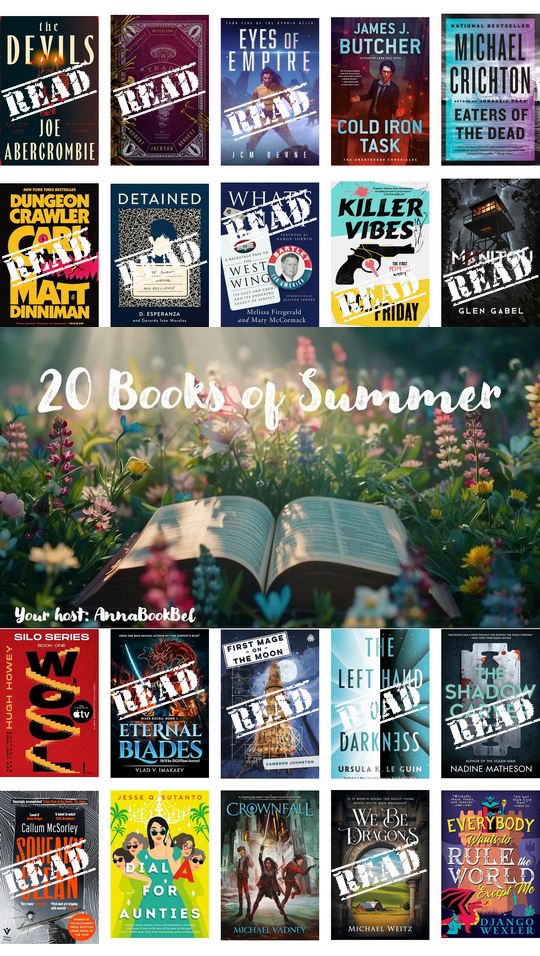
20 Books of Summer 2026: June Check-In

20 Books of Summer 2026
Annabel from AnnaBookBel carries on the work started by Cathy of 746 Books . You can read her kick-off post here.

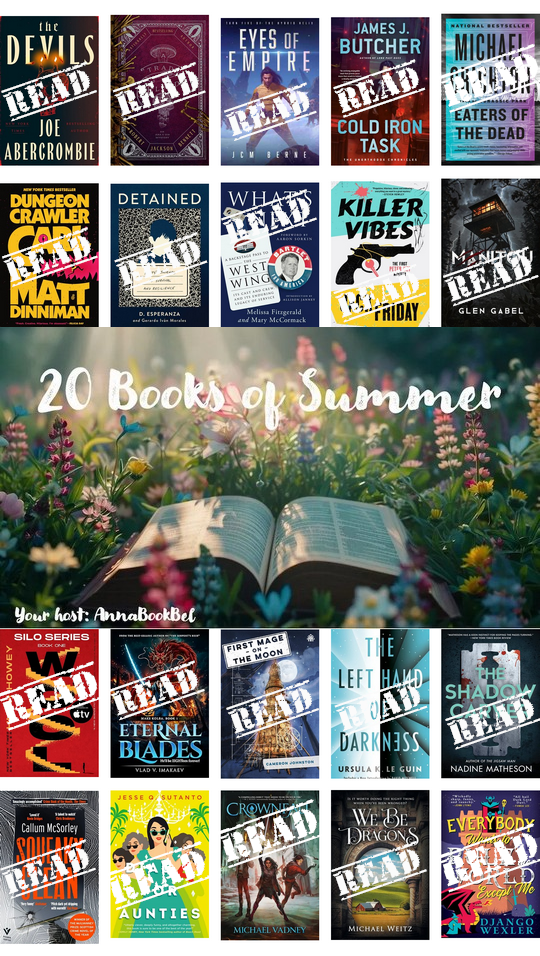
I have read 8 of the 20 so far, which is not bad. One of that 8 is the biggest by page count (but probably one of the easiest reads), so I’m feeling pretty good about being able to check this one off the list. Sadly, I’ve written about only…let me check my math here…none of them. That’s not good. I have 80% of a post done for The Devils, but am so busy second-guessing myself that it’s now been 7 days since I meant to post it. Ooops. I think I’ll catch up on those pretty quickly. I hope to, anyway.

Not that it matters, but I’ve also finished one off of my Top Ten Tuesday: Books on My Summer 2026 to-Read List (That Aren’t on My 20 Books Challenge) list, too.

This summer, my 20 are:

✔ 1. The Devils by Joe Abercrombie
2. Trade of Blood by Robert Jackson Bennett
3. Eyes of Empire by JCM Berne
4. Cold Iron Task by James Butcher
5. Eaters of the Dead by Michael Crichton
✔ 6. Dungeon Crawler Carl by Matt Dinniman
7. Detained: A boy’s journal of survival and resilience by D. Esperanza and Gerardo Iván Morales
✔ 8. What’s Next: A Backstage Pass to The West Wing, Its Cast and Crew, and Its Enduring Legacy of Service by Melissa Fitzgerald and Mary McCormack
9. Killer Vibes by Jack Friday
✔ 10. Manitou by Glen Gabel
✔ 11. Wool by Hugh Howey
✔ 12. Eternal Blades by Vlad V. Imakaev
13. First Mage on the Moon by Cameron Johnston
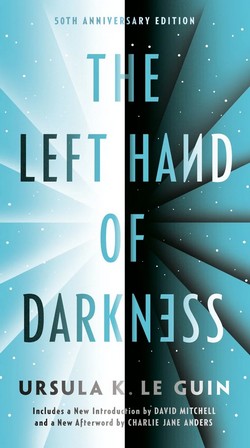
14. Left Hand of Darkness by Ursula K. Le Guin
✔ 15. The Shadow Carver by Nadine Matheson
✔ 16. Squeaky Clean by Callum McSorley
17. Dial A for Aunties by Jesse Q. Sutanto
18. Crownfall by Michael Vadney
✔ 19. We Be Dragons by Michael Weitz
20. Everybody Wants to Rule the World Except Me by Django Wexler

(subject to change, as is allowed, but I’m going to resist the impulse to tweak as much as I can).

What do you think of this list? Any warnings—or anything you think I should be really excited about?

20 Books of Summer '26 Chart June Check-in

Quick-Take Catchups: The Leftovers from April

Once again, I’m a few weeks behind on this, but that “To Write About” stack is still calling. Time for me to do a few more of these—emphasizing pithiness, not thoroughness.


Cover of Violet Thistlewaite Is Not a Villain Anymore by Emily KrempholtzViolet Thistlewaite Is Not a Villain Anymore

by Emily Krempholtz, Emma Ladji (Narrator)

DETAILS:
Publisher: Penguin Random House Audio Publishing Group
Publication Date: November 18, 2025
Format: Unabridged Audiobook
Length: 11 hrs.
Read Date: March 31-April 2, 2026

A nice little story about a supervillain (however coerced into it she might have been) trying to go straight and live a quiet life. Naturally, it doesn’t go that well, people learn who she is/was and…things get dicey. It’s a very cozy little story with just a hint of danger. This is primarily a Romance with a streak of Fantasy. Not totally my cup of tea, but a very pleasant book.

Cover of Guns of Brixton by Paul D. BrazillGuns of Brixton

by Paul D. Brazill

DETAILS:
Publisher: Fahrenheit Press
Publication Date: November 15, 2025
Format: Paperback
Length: 181 pg.
Read Date: April 15, 2026

This is a dark noir full of insane comedy and violence. Peopled by characters you love reading about and never want to meet the likes of in real life. The various plotlines and character arcs overlap and weave together in a way that is really impressive–and is very typical for this kind of read. Just kick back and enjoy it.

It’s fast and furious read that will make you want more from Brazill. I have to leave it for a catch-up post like this, where I’m forced to be vague, I’d end up telling you too much about it in a full-length post.

My only complaint is that as an American with little (read: no) understanding of FIFA history, I had to hit up a friendly-neighborhood search engine to understand the ending. I’d be clearer there, but I don’t want to ruin anything. It’s worth getting to that point and then learning what it meant–the delayed gratification is still gratifying.

Cover of Replaceable You by Mary RoachReplaceable You: Adventures in Human Anatomy

by Mary Roach

DETAILS:
Publisher: Penguin Random House Audio Publishing Group
Publication Date: September 16, 2025
Format: Unabridged Audiobooks
Length: 8 hrs., 37 min.
Read Date: April 13-16, 2026

Overall, a really good look at the frontiers of human transplant technology—and other ways to replace broken/sick/malfunctioning human parts. Oh, and hair. There was a lot about hair replacement and the various technologies there.

As is typical for a book by Roach, there’s a lot of good information here. A couple of chapters that don’t seem worth it. Some jokes were winners. Some jokes didn’t seem worth the effort.

Frog and Toad Are Doing Their Best by Jennie EgerdieFrog and Toad Are Doing Their Best [A Parody]

by Jennie Egerdie, Ellie Hajdu (Illustrator)

DETAILS:
Publisher: Running Press Adult
Publication Date: October 5, 2021
Format: Hardcover
Length: 96 pg.
Read Date: April 17, 2026
Buy from Bookshop.org Support Indie Bookstores

As I recall, I always thought that the Frog and Toad were pleasant enough, but needed something more to be something I’d read when there wasn’t anything else handy. Things were similar with my kids and the books. This is a little better—only because it’s updated and vaguely amusing to see the pair in 2020s mode.

The art is as perfect as it could be, like it was by the original artists.

It’s not a must-read, but it’s a quick shot of pleasure.

Cover of Worse than a Lie by Ben CrumpWorse than a Lie

by Ben Crump

DETAILS:
Publisher: Bantam
Publication Date: February 17, 2026
Format: Hardcover
Length: 368 pgs.
Read Date: April 16-17, 2026
Buy from Bookshop.org Support Indie Bookstores

I had huge hopes for this one, expecting that I’d read the series to follow. That is not going to happen. The dialogue is atrocious. The plot was…fine, but executed messily, yet predictably. The bad guys are as evil as evil can be—no subtlety to it at all. Actually, that was one of my notes about the book as a whole—there’s nothing subtle about it. The solution and the aftermath were practically a fairy tale. I really can’t think of anything positive to say. The promising premise deserved a whole lot better.

Cover of This Book Made Me Think of You by Libby PageThis Book Made Me Think of You

by Libby Page, Zadeiah Campbell-Davies (Narrator)

DETAILS:
Publisher: Penguin Random House Audio Publishing Group
Publication Date: February 3, 2026
Format: Unabridged Audiobook
Length: 10 hrs., 26 min.
Read Date: April 16-20, 2026

Oh, golly, this book was so heartwarming and sweet. It’s also a great look at grief and the way it lingers in the lives of those affected by death. Primarily it’s a sweet book about a (dead) husband’s love expressed through his wife’s passion for reading. Each month, a book is waiting for her at a local bookstore.

Oh, yeah—this is also a tribute to local bookstores and what they can mean for a community.

Grief, books, love, and bookstores. What more could you want?

Cover of A Memory Called Empire by Arkady MartineA Memory Called Empire

by Arkady Martine

DETAILS:
Series: Teixcalaan, #1
Publisher: Tor Books
Publication Date: February 25, 2020
Format: Paperback
Length: 480 pg.
Read Date: April 20-24, 2026
Buy from Bookshop.org Support Indie Bookstores

Oh, there were just so many great ideas packed into this volume. Several layers of political machinations—with two cultures that are new to the reader. A mind-blowing technology that raises all sorts of questions about identity, memory, and life. A character death that makes me mad months later. And a looming threat that’s so far in the background that few characters realize it’s a thing.

I did enjoy it, I’m just not sure how much —but I’m so glad that I read it. I need to find time for book two.

This post contains affiliate links. If you purchase from any of them, I will get a small commission at no additional cost to you. As always, opinions are my own.

The Photonic Effect by Mike Chen: Chen’s Most Out-of-This-World Novel Yet

Cover of The Photonic Effect by Mike ChenThe Photonic Effect

by Mike Chen

DETAILS:
Publisher: S&S/Saga Press
Publication Date: April 21, 2026
Format: Paperback
Length: 431 pg.
Read Date: May 19-23, 2026
Buy from Bookshop.org Support Indie Bookstores

What’s The Photonic Effect About?

The Horizon is a science/exploratory vessel that was stuck out in deep space for a decade. Many adventures were had, new crew members were added, challenges faced. Think the U.S.S. Voyager. When they come home, they find that The Cluster (think Federation) has broken into Civil War. Members of the crew by family, origin planet, or perspective belong on both sides of the conflict.

But peace pretty much reigns on the ship (while strained) while they’re able to focus on their mission–an experimental drive. But their fleet commanders are dragging the Horizon into the conflict–and things start going wrong there.

On every level–levels that her captain, Demora Kim, probably wasn’t aware of. While Kim tries to keep her crew together, keep her command, and keep Horizon from having to fire a shot–some important allies the ship made while being stranded send a distress call.

If Kim can’t find a way to help–the destruction that follows could be devastating to their ally, the Horizon, and both sides of The Cluster’s War.

An Atypical Chen Novel

I’ve said this before—and Chen has talked about it frequently. Basically, Chen’s novels are only technically genre tomes. You have a love story, a story about fatherhood, relationships between siblings, family, etc.—and then he injects some SF or other genre elements into them.

This is straight-SF. Chen lets his geek run free here. Yes, there’s a lot of heart, he has a lot to say about romantic love, found family, loyalty, duty, and whatnot.

And it’s utterly fascinating—Chen puts us right in the middle of a saga. It almost feels like this should be book two or three of a series, and the reader has to play catch up with the history of the ship and its crew. The previous books* would be action-packed and full of great concepts. Getting thrown in like this was a great setup—we have to focus on this aftermath-type of story.

* I feel like I need to stress that these don’t exist. They’re purely theoretical previous books.

Why did I pick this up? Why did I keep reading?

Chen’s been an auto-pick-up for me for years. And I’ve never seen a reason to depart from that.
I kept on with this because this world, the characters, and the story were just so fascinating—there was no reason to walk away. I started here to list 2-3 things in particular that drove me on, but I couldn’t just pick a couple. I needed to know everything Chen wanted to tell me about this ship and crew. Period.

What does this book tell us about humanity?

One of the—if not the—most prominent things I picked up is trust. The need for trust, how people react when someone breaks that trust, and how hard it is to re-establish it. But for those who can rebuild—or have the grace to keep it—how great a safety it is. And, sadly, the damage that can be done when the wrong people are trusted.

In this book, that goes beyond humanity to other races, too.

There’s also a great deal to say about loyalty–and combating loyalties. The Horizon‘s crew has a great deal of loyalty to each other (tested by some trust issues), but they also have loyalties to their families, loved ones, planets, their government, and so on.

Loyalty and trust are both tested and broken on several levels for every character, and the question is–what do you (and the rest of your crew) do in the face of a common challenge when those don’t remain?

So, what did I think about The Photonic Effect?

I don’t think this is Chen’s best work. But I did enjoy watching him cut loose on a Space Opera.

I loved, loved, loved the way that we’re dropped into this thing mid-story–or mid-arc–and had to catch up. Getting to figure out what’s going on while guessing/assuming details of what came before was an extra layer of enjoyment.

There are two primary characters–the Captain and Chief Engineer (I think that’s his title, or maybe I’m just assigning that to him. He’s a Scott/LaForge/Lamarr-type character). I would read a multi-part series with these two–or with either of them. Watching them navigate their way through the twisty plot and strange events is more than enough for me.

I was on the edge of my seat throughout the book, while filling in the backstory all the while; the cast of characters was outstanding, with many competing motivations throughout (all of them believable); the universe this was set in could be the framework for a huge series, and it was nice to be introduced to. It missed the je ne sais quoi to make me rave about–but I can’t imagine someone picking it up and not coming away satisfied.

This post contains an affiliate link. If you purchase from it, I will get a small commission at no additional cost to you. As always, the opinions expressed are my own.
Irresponsible Reader Pilcrow Icon

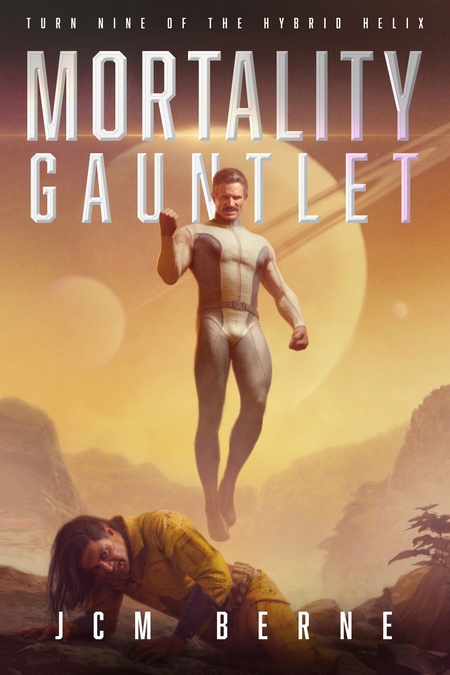
Cover Reveal: Stranded by Nicholas W Fuller

I’m very pleased today to welcome the Cover Reveal for Nicholas W Fuller’s Stranded to The Irresponsible Reader today. This one is a doozy.

Before we see the cover, let’s learn a little bit about the book and author, shall we? It’ll just take a moment, and then we can all take a peak at the cover.

About the Book:

Quick Stats / Facts

  • Title: Stranded
  • Series Title: Sanguine Stars
  • Author: Nicholas W Fuller
  • Cover Art & Typography: Jeff Brown
  • Genre: Sci-fi, Sci-Fantasy, Action Adventure
  • Pitch: If you put the vibes and setting of Firefly in a room with Words of Power by Shami Stovall, add a touch of Dungeon Crawler Carl humor, and put some baby making music on… In nine months, you’d have Stranded.

FAQs

  • There’s already 30+ chapters available on Patreon.
  • The first four chapters you can read FOR FREE.
  • Stranded will be complete on Patreon in just a few months!
  • I’m planning a cool, limited print run before the end of the year. 😉
  • The events of Stranded happen after Shattered: A Sanguine Stars Novella, BUT, Stranded makes a better entry point and Shattered is best as a book 1.5 in the planned trilogy.

Blurb

Poey Targe is stranded.

His skug-sucking captors dragged his ass all the way across the galaxy to who-the-hell-knows-where instead of just killing him when they forced him to watch his home planet’s destruction.

Fortunately, even on this mud ball in the middle of nowhere there’s a bit of civilization; enough that there’s a bar where a man can get drunk. That’s all that Poey cares about—losing everything you ever loved will do that to a man.

But, while he’s out killing monsters to keep the bar safe and earn his next drink, Poey starts to hear a voice in his head… has he cracked? Or could this be the key to untold power as the voice claims? Perhaps the procedure he endured before his home was blown to bits wasn’t a failure. If the voice is telling the truth, he might not only have a way to survive, but grow in power. Just as he starts to ask the only other person on the colony rumored to hear voices, he overhears a mayday – one that carries a codeword he made back home…

Poey’s new mission is to rescue whoever put out that mayday and he’ll stop at nothing to get there.

Sanguine Stars
is a fast-paced, Sci-Fantasy story featuring found family and a unique progression system with many mysteries to unravel..

and now…

The Cover

cover for Stranded by Nicholas W Fuller

Kudos to Cover Artist Jeff Brown for this eye-grabber. I’ve seen so many covers credited to Jeff Brown in the last few weeks, I can’t help but wonder who isn’t using his art. I sure would be if I had a book coming out.

Irresponsible Reader Pilcrow Icon

20 Books of Summer 2026: Commence

20 Books of Summer 2026
Annabel from AnnaBookBel carries on the work started by Cathy of 746 Books . You can read her kick-off post here.

Initially, I was going to use this as time to catch up on my “Read Everything I Buy in 2026 in 2026” goal, but then I remembered things like my book clubs and NetGalley. So I had to accept some setbacks there. I’ve got an ambitious, but easily achievable list.

I’ve frequently used the unofficial US Dates for Summer—Memorial Day to Labor Day, but Memorial Day has already passed. So, I’ll go along with the “official” June 1-August 31.

There’s still time to join in the fun—if you’re into this kind of thing. (there are 10 and 15 book versions, too)

This summer, my 20 are going to be:

1. The Devils by Joe Abercrombie
2. Trade of Blood by Robert Jackson Bennett
3. Eyes of Empire by JCM Berne
4. Cold Iron Task by James Butcher
5. Eaters of the Dead by Michael Crichton
6. Dungeon Crawler Carl by Matt Dinniman
7. Detained: A boy’s journal of survival and resilience by D. Esperanza and Gerardo Iván Morales
8. What’s Next: A Backstage Pass to The West Wing, Its Cast and Crew, and Its Enduring Legacy of Service by Melissa Fitzgerald and Mary McCormack
9. Killer Vibes by Jack Friday
10. Manitou by Glen Gabel
11. Wool by Hugh Howey
12. Eternal Blades by Vlad V. Imakaev
13. First Mage on the Moon by Cameron Johnston
14. Left Hand of Darkness by Ursula K. Le Guin
15. The Shadow Carver by Nadine Matheson
16. Squeaky Clean by Callum McSorley
17. Dial A for Aunties by Jesse Q. Sutanto
18. Crownfall by Michael Vadney
19. We Be Dragons by Michael Weitz
20. Everybody Wants to Rule the World Except Me by Django Wexler

(subject to change, as is allowed, but I’m going to resist the impulse to tweak as much as I can).

What do you think of this list? Any warnings—or anything you think I should be really excited about?

20 Books of Summer '26 Chart

Towel Day ’26: Some of my favorite Adams lines . . .

(updated 5/25/26)

A Blue towel with the words Towel Day on it

There’s a great temptation here for me to go crazy and use so many quotations that I’d get in copyright trouble. I’ll refrain from that and just list some of his best lines . . .*

* The fact that this list keeps expanding from year to year says something about my position on flirting with temptation.

The Hitchhiker's Guide to the Galaxy

The Hitchhiker’s Guide to the Galaxy

Time is an illusion. Lunchtime doubly so.

This must be Thursday. . . I never could get the hang of Thursdays.

“You’d better be prepared for the jump into hyperspace. It’s unpleasantly like being drunk.”

“What’s so unpleasant about being drunk?”

“You ask a glass of water.”

(I’m not sure why, but this has always made me chuckle, if not actually laugh out loud. It’s just never not funny. It’s possibly the line that made me a fan of Adams)

He had found a Nutri-Matic machine which had provided him with a plastic cup filled with a liquid that was almost, but not quite, entirely unlike tea.

“You know,” said Arthur, “it’s at times like this, when I’m trapped in a Vogon airlock with a man from Betelgeuse, and about to die of asphyxiation in deep space that I really wish I’d listened to what my mother told me when I was young.”

“Why, what did she tell you?”
“I don’t know, I didn’t listen.

In those days spirits were brave, the stakes were high, men were real men, women were real women and small furry creatures from Alpha Centauri were real small furry creatures from Alpha Centuari. And all dared to brave unknown terrors, to do mighty deeds, to boldly split infinitives that no man had split before . . .

“Look,” said Arthur, “would it save you a lot of time if I just gave up and went mad now?”

The ships hung in the sky in much the same way that bricks don’t.

For a moment, nothing happened. Then, after a second or so, nothing continued to happen.

“Space,” [The Guide] says, “is big. Really big. You just won’t believe how vastly, hugely, mindbogglingly big it is. I mean, you may think it’s a long way down the road to the chemist’s, but that’s just peanuts to space, listen…”

He attacked everything in life with a mix of extraordinary genius and naive incompetence, and it was often difficult to tell which was which.

He felt that his whole life was some kind of dream and he sometimes wondered whose it was and whether they were enjoying it.


The Restaurant at the End of the Universe

The Restaurant at the End of the Universe

It is a curious fact, and one to which no one knows quite how much importance to attach, that something like 85 percent of all known worlds in the Galaxy, be they primitive or highly advanced, have invented a drink called jynnan tonnyx, or gee-N-N-T’Nix, or jinond-o-nicks, or any one of a thousand or more variations on the same phonetic theme. The drinks themselves are not the same, and vary between the Sivolvian “chinanto/mnigs” which is ordinary water served at slightly above room temperature, and the Gagrakackan “tzjin-anthony-ks” which kills cows at a hundred paces; and in fact the one common factor between all of them, beyond the fact that the names sound the same, is that they were all invented and named before the worlds concerned made contact with any other worlds.

Reality is frequently inaccurate.

Life is wasted on the living.


Life, The Universe and Everything

Life, the Universe, and Everything

The Hitchhiker’s Guide to the Galaxy has this to say on the subject of flying. There is an art, it says, or rather, a knack to flying. The knack lies in learning how to throw yourself at the ground and miss.

(It goes on for quite a while after this—and I love every bit of it.)

“One of the interesting things about space,” Arthur heard Slartibartfast saying . . . “is how dull it is?”

“Dull?” . . .

“Yes,” said Slartibartfast, “staggeringly dull. Bewilderingly so. You see, there’s so much of it and so little in it.”


So Long, and Thanks For All The Fish

So Long, and Thanks for All the Fish

Of course, one never has the slightest notion what size or shape different species are going to turn out to be, but if you were to take the findings of the latest Mid-Galactic Census report as any kind of accurate guide to statistical averages you would probably guess that the craft would hold about six people, and you would be right. You’d probably guessed that anyway. The Census report, like most such surveys, had cost an awful lot of money and told nobody anything they didn’t already know—except that every single person in the Galaxy had 2.4 legs and owned a hyena. Since this was clearly not true the whole thing eventually had to be scrapped.

Here was something that Ford felt he could speak about with authority. “Life,” he said, “is like a grapefruit.”

“Er, how so?”

“Well, it’s sort of orangy-yellow and dimpled on the outside, wet and squidgy in the middle. It’s got pips inside, too. Oh, and some people have half a one for breakfast.”

“Is there anyone else out there I can talk to?”

Arthur had a swordfish steak and said it made him angry. He grabbed a passing waitress by the arm and berated her. “Why’s this fish so bloody good?” he demanded, angrily.

“Please excuse my friend,” said Fenchurch to the startled waitress. “I think he’s having a nice day at last.”


Mostly Harmless

Mostly Harmless

A common mistake that people make when trying to design something completely foolproof is to underestimate the ingenuity of complete fools.

Fall, though, is the worst. Few things are worse than fall in New York. Some of the things that live in the lower intestines of rats would disagree, but most of the things that live in the lower intestines of rats are highly disagreeable anyways, so their opinion can and should be discounted.


Dirk Gently's Holistic Detective Agency

Dirk Gently’s Holistic Detective Agency

There is no point in using the word ‘impossible’ to describe something that has clearly happened.

If it looks like a duck, and quacks like a duck, we have at least to consider the possibility that we have a small aquatic bird of the family anatidae on our hands.

Let’s think the unthinkable, let’s do the undoable. Let us prepare to grapple with the ineffable itself, and see if we may not eff it after all.

Sherlock Holmes observed that once you have eliminated the impossible then whatever remains, however improbable, must be the answer. I, however, do not like to eliminate the impossible.

(I’ve often been tempted to get a tattoo of this)


The Long Dark Tea-Time of the Soul

The Long Dark Tea-Time of the Soul

There are some people you like immediately, some whom you think you might learn to like in the fullness of time, and some that you simply want to push away from you with a sharp stick.

It can hardly be a coincidence that no language on earth has ever produced the expression, ‘As pretty as an airport.’

The impossible often has a kind of integrity to it which the merely improbable lacks.

She stared at them with the worried frown of a drunk trying to work out why the door is dancing.

It was his subconscious which told him this—that infuriating part of a person’s brain which never responds to interrogation, merely gives little meaningful nudges and then sits humming quietly to itself, saying nothing.

As she lay beneath a pile of rubble, in pain, darkness, and choking dust, trying to find sensation in her limbs, she was at least relieved to be able to think that she hadn’t merely been imagining that this was a bad day. So thinking, she passed out.


The Last Chance to See

The Last Chance to See

“So what do we do if we get bitten by something deadly?” I asked.

He looked at me as if I were stupid. “You die, of course. That’s what deadly means.”

I’ve never understood all this fuss people make about the dawn. I’ve seen a few and they’re never as good as the photographs, which have the additional advantage of being things you can look at when you’re in the right frame of mind, which is usually around lunchtime.

I have the instinctive reaction of a Western man when confronted with the sublimely incomprehensible. I grab my camera and start to photograph it.

Human beings, who are almost unique in having the ability to learn from the experience of others, are also remarkable for their apparent disinclination to do so.

The aye-aye is a nocturnal lemur. It is a very strange-looking creature that seems to have been assembled from bits of other animals. It looks a little like a large cat with a bat’s ears, a beaver’s teeth, a tail like a large ostrich feather, a middle finger like a long dead twig and enormous eyes that seem to peer past you into a totally different world which exists just over your left shoulder.

One of the characteristics that laymen find most odd about zoologists is their insatiable enthusiasm for animal droppings. I can understand, of course, that the droppings yield a great deal of information about the habits and diets of the animals concerned, but nothing quite explains the sheer glee that the actual objects seem to inspire.

I mean, animals may not be intelligent, but they’re not as stupid as a lot of human beings.


The Salmon of Doubt

The Salmon of Doubt: Hitchhiking the Galaxy One Last Time

We are stuck with technology when what we really want is just stuff that works.

I’ve come up with a set of rules that describe our reactions to technologies:
1. Anything that is in the world when you’re born is normal and ordinary and is just a natural part of the way the world works.
2. Anything that’s invented between when you’re fifteen and thirty-five is new and exciting and revolutionary and you can probably get a career in it.
3. Anything invented after you’re thirty-five is against the natural order of things.

The fact that we live at the bottom of a deep gravity well, on the surface of a gas covered planet going around a nuclear fireball 90 million miles away and think this to be normal is obviously some indication of how skewed our perspective tends to be.


And a couple of lines I’ve seen in assorted places, articles, books, and whatnot

I love deadlines. I love the whooshing noise they make as they go by.

A learning experience is one of those things that says, “You know that thing you just did? Don’t do that.”

The fact is, I don’t know where my ideas come from. Nor does any writer. The only real answer is to drink way too much coffee and buy yourself a desk that doesn’t collapse when you beat your head against it.

Solutions nearly always come from the direction you least expect, which means there’s no point trying to look in that direction because it won’t be coming from there.

Don't Panic

Towel Day ’26: Scattered Thoughts about Reading The Hitchhiker’s Guide to the Galaxy Trilogy

(updated and revised this 5/25/26)

A Blue towel with the words Towel Day on it
I’ve been trying for a few years now to come up with a tribute to Adams. This isn’t quite what I had in mind, but it’s a start. In my mind, this is a work in progress (a multiple-year project), but I’m posting it anyway. Next year’s version will be better—or at least more complete.


Some time in 7th or 8th grade (I believe), I was at a friend’s house, and his brother let us try his copy of the text-based Hitchhiker’s Guide game, and we were no good at it at all. Really, it was embarrassing. However, his brother had a copy of the first novel, and we all figured that the novel held the keys we needed for success with the game (alas, it did not help us one whit). My friends all decided that I’d be the one to read the book and come back in a few days as an expert.

I fell in love with the book almost instantly, and I quickly forgot about the game. Adams’ irreverent style rocked my world—could people actually get away with saying some of these things? His skewed take on the world, his style, his humor…and a depressed robot, too! It was truly love at first read. As I recall, I started re-reading it as soon as I finished it—the only time in my life I’ve done that sort of thing.

Also, I finally understood that song, “Marvin, I Love You,” that I kept hearing on Dr. Demento.

It was one of those experiences that, looking back, I can say shaped my reading and thinking for the rest of my life (make of that what you will). Were my life the subject of a Doctor Who or Legends of Tomorrow episode, it’d be one of those immutable fixed points. I got my hands on the next three books as quickly as I could (the idea of a four-volume trilogy was one of the funniest ideas I’d encountered up to that point in my life), and devoured them. I do know that I didn’t understand all of the humor, several of the references shot past me at the speed of light, and I couldn’t appreciate everything that was being satirized. But what I did understand, I thought was brilliant. Not only did I find it funny, the series taught me about comedy—how to construct a joke, how to twist it in ways a reader wouldn’t always expect, and when not to twist but to go for the obviously funny idea. The trilogy also helped me to learn to see the absurdity in life.

One of the big lessons that HHGTTG taught me was something I didn’t realize for quite some time- I noticed and talked about it, but I didn’t really realize what was going on. Whether in the game, the novel, the TV show, or the radio show (my local library getting those tapes was a revelation)–Adams took several key scenes and put them in different order, almost completely intact (although with some different jokes sometimes). Each time he did that, it was to play to the strength of the various media. I learned later that he did this for a couple of other versions, and then the movie. When it comes to story–you can keep the big items and play with them to get them to serve your aim, without doing any real damage to the core of your story/point. Like I said, it took a while for me to get the vocabulary to describe that–or to spend any time thinking about it beyond, “hey, that’s cool how he did that.” It’s just one of those things that stuck deep in my mind.

Outside of one family member–HHGTTG was my first exposure to an atheist. I mean, I knew they existed–the way I knew Australia existed. I’d read about it in books, maybe seen it on a TV show or something (hey, I was a kid from a small town in Southern Idaho in the 80s). But here was a guy wearing that on his sleeve–but he made a joke about it. Well, he made a few jokes–several by the end of the trilogy (including at least one that undercut them all). I didn’t threaten my young faith or rattle me, it was more of a “huh, so that’s what they’re like.” Nothing scary, just silly. I also have to say–again, sheltered kid from Idaho pre-Internet–that one of those jokes involved someone getting killed at a zebra crossing. It wasn’t until a few reads in that I started to wonder if that was actually a thing, and not another of his Adams’ jokes about a special road crossing for those particular animals. It was a learning experience for me in many ways.

Years later, when the final volume (by Adams) was released, I’d already cemented what I thought about the books from these frequent re-reads. I’m not sure that Mostly Harmless changed things much (except for making me think for the first time that maybe I didn’t want him to write more in this series). His non-Hitchhiker’s work illustrated that he was capable of making you see things in a new light–either with a smile or a sense of regret—even when he wasn’t writing the trilogy, even when he was writing non-fiction. It was never the setting or the genre—it was Adams.

But here on Towel Day—as with most of the time I talk about Adams (but I need to change that), it comes down to where I started—the Trilogy. I read the books (particularly the first) so many times that I can quote significant portions of them, and frequently do so without noticing that I’m doing that. I have (at this time) two literary-inspired tattoos, one of which is the planet logo* featured on the original US covers. In essence, I’m saying that Adams and the series that made him famous have had an outsized influence on my life and are probably my biggest enduring fandom. If carrying around a (massively useful) piece of cloth for a day in some small way honors his memory? Sure, I’m in.

So, Happy Towel Day, You Hoopy Froods.

* I didn’t know it at the time, but Adams didn’t like that guy. Whoops.

Don't Panic

Towel Day ’26: Do You Know Where Your Towel Is?

(updated and revised this 5/25/26)

A Blue towel with the words Towel Day on it

The Hitchhiker’s Guide to the Galaxy has a few things to say on the subject of towels.

A towel, it says, is about the most massively useful thing an interstellar hitchhiker can have. Partly it has great practical value. You can wrap it around you for warmth as you bound across the cold moons of Jaglan Beta; you can lie on it on the brilliant marble-sanded beaches of Santraginus V, inhaling the heady sea vapors; you can sleep under it beneath the stars which shine so redly on the desert world of Kakrafoon; use it to sail a miniraft down the slow heavy River Moth; wet it for use in hand-to-hand-combat; wrap it round your head to ward off noxious fumes or avoid the gaze of the Ravenous Bugblatter Beast of Traal (such a mind-bogglingly stupid animal, it assumes that if you can’t see it, it can’t see you); you can wave your towel in emergencies as a distress signal, and of course dry yourself off with it if it still seems to be clean enough.

More importantly, a towel has immense psychological value. For some reason, if a strag (strag: non-hitch hiker) discovers that a hitch hiker has his towel with him, he will automatically assume that he is also in possession of a toothbrush, face flannel, soap, tin of biscuits, flask, compass, map, ball of string, gnat spray, wet weather gear, space suit etc., etc. Furthermore, the strag will then happily lend the hitch hiker any of these or a dozen other items that the hitch hiker might accidentally have “lost”. What the strag will think is that any man who can hitch the length and breadth of the galaxy, rough it, slum it, struggle against terrible odds, win through, and still knows where his towel is is clearly a man to be reckoned with.

Hence a phrase that has passed into hitchhiking slang, as in “Hey, you sass that hoopy Ford Prefect? There’s a frood who really knows where his towel is.” (Sass: know, be aware of, meet, have sex with; hoopy: really together guy; frood: really amazingly together guy.)

Towel Day, for the few who don’t know, is the annual celebration of Douglas Adams’ life and work. It was first held two weeks after his death, fans were to carry a towel with them for the day to use as a talking point to encourage those who have never read HHGTTG to do so, or to just converse with someone about Adams. Adams is one of that handful of authors that I can’t imagine I’d be the same without having encountered/read/re-read/re-re-re-re-read, and so I do my best to pay a little tribute to him each year, even if it’s just carrying around a towel. TowelDay.org is the best collection of resources on the day.

In commemoration of this date, here’s most of what I’ve written about Adams. I’ve struggled to come up with new material to share for Towel Day over the years, mostly sticking with updating and revising existing posts. And, this year is no exception. A few years back, I did a re-read of all of Adams’ (completed) fiction. For reasons beyond my ken (or recollection), I didn’t get around to blogging about the Dirk Gently books, but I did do the Hitchhiker’s Trilogy:
bullet The Hitchhiker’s Guide to the Galaxy
bullet The Restaurant at the End of the Universe
bullet Life, The Universe and Everything
bullet So Long, and Thanks For All The Fish
bullet Mostly Harmless
bullet I had a thing or two to say about the 40th Anniversary of The Hitchhiker’s Guide to the Galaxy
bullet I took a look at the 42nd Anniversary Illustrated Edition of The Hitchhiker’s Guide to the Galaxy

I should also point to a posts I wrote about Douglas Adams’ London by Yvette Keller and 42: The Wildly Improbable Ideas of Douglas Adams edited by Kevin Jon Davies—both are great ways of filling out one’s understanding of Adams and his work. I have to mention the one book that Adams/Hitchhiker’s aficionado needs to read is Don’t Panic by Neil Gaiman, David K. Dickson and MJ Simpson.

If you’re more in the mood for a podcast, I’d suggest The Waterstones Podcast How We Made: The Hitchhiker’s Guide to the Galaxy—I’ve listened to several podcast episodes about this book, and generally roll my eyes at them. But this is just fantastic. Were it available, I’d listen to a Peter Jackson-length version of the episode.

I’ve only been able to get one of my sons into Adams, he’s the taller, thinner one in the picture from a few several years ago.

I’m trying to pass this on to the next generation as well. Here’s his son, the Grand-critter, from 2 years ago:

You really need to check out this comic from Sheldon Comics—part of the Anatomy of Authors series: The Anatomy of Douglas Adams.

Lit in a Nutshell gives this quick explanation of The Hitchiiker’s Guide:

One of my favorite posts there is this pretty cool video, shot on the ISS by astronaut Samantha Cristoforetti.

Even better—here’s an appearance by Douglas Adams himself from the old Letterman show—I’m so glad someone preserved this:

Love the anecdote (Also, I want this tie.)

Don't Panic

Page 1 of 36

Powered by WordPress & Theme by Anders Norén