Category: P-U Page 1 of 36

PUB DAY REPOST: Cat on a Hot Tin Woof by Spencer Quinn: Chet Searches for an Influencer Cat

This was supposed to go up yesterday…but apparently, the key is to press the “Schedule” button. Just a friendly tip from you to me.


Cover of Cat on a Hot Tin Woof by Spencer QuinnCat on a Hot Tin Woof

by Spencer Quinn

DETAILS:
Series: Chet and Bernie, #16
Publisher: Minotaur Books
Publication Date: April 14, 2026
Format: eARC
Length: 320 pg.
Read Date: April 1-6, 2026
Buy from Bookshop.org Support Indie Bookstores


Before I get into things…that title is great (not that Quinn’s a stranger to good titles). I want to believe he wrote that title down some time ago and spent a couple of years thinking of a story to go with it.

What’s Cat on a Hot Tin Woof About?

One of the best things about the Chet and Bernie books is the wide diversity in cases they investigate—sure, the Little Detective Agency specializes in missing persons cases—but they do it all. Well, almost all. The clients they have this time are something that Bernie isn’t really ready for—and Chet would’ve been happier if they’d never run into them.

It’s a mother-daughter pair—the daughter had accidentally launched herself (well, her cat) to Internet fame and a very respectable income for a high schooler (well, more than respectable). Her mother is her business manager. Their problem? Miss Kitty is missing. Their sponsors are coming in soon to sign a new deal, and her audience is clamoring for fresh content. So the clock is ticking.

Bernie understands very little of this, but signs on—and quickly learns that despite what his clients believed—the cat didn’t slip out of the house somehow. She’s been stolen.

Naturally, it doesn’t stop with a stolen cat—more crimes turn up, as does an element of danger.

Bernie’s ex-wife, Leda, has some drama of her own, for him to deal with, too. But Bernie’s focus is on the case (although he takes time out for a fun scene to help Leda)

Why did I pick this up? Why did I keep reading?

That’s simple—while Quinn isn’t a stranger to less-impressive books, he’s incapable of writing an un-entertaining one—particularly with this series. And it’s been a while since he stumbled anyway.

Why did I keep at it? There is simply something infectious about Chet’s voice—as much as you want to figure out what happened—who kidnapped the cat and why, will they figure out the other mysteries along the way, will Bernie lose a lot of money doing something foolish, etc.—you want to stay in Chet’s head for longer than it’ll take to finish the book. This book is a textbook example of that.

What does this book tell us about humanity?

There’s a good deal here about the human propensity for making mistakes you’d regret later—if not sooner.

There’s a lot about good parenting and inadequate parenting/parents. There are a couple of good parents in this book (one came so late in the book, you’d almost despair of seeing another one ever again), and several inadequate ones. Most of those didn’t realize they were—but boy howdy, they should’ve.

What this book tells us most about humanity—and this is largely true for every Chet and Bernie book is the importance of a connection between a human and an animal. Even if it’s just a connection for a short-time. We’ve got cats, a pig, and a couple of dogs. The cats enrich (literally, in at least one case) the lives of those they stay with. Chet gets to comfort people going through rough times and gets to support Bernie. The pig? Well, it’s there. The cats and the dogs are just wonderful and will make you want your own (assuming you don’t already).

So, what did I think about Cat on a Hot Tin Woof?

It’s a Chet and Bernie book—of course, I had a good time.

I’d have liked a little more clarity on a point or two about the conclusion. But when your narrator is delightfully unreliable, that’s hard. I think about these cases in a way Chet wouldn’t bother with, so unless Bernie muses about some of the action, there’s just no way that we get the answers I want.

But you have to expect that going in, so it really doesn’t matter.

It’s been a minute since “old man Heydrich” was brought up (and I’m more than okay with that), and I think his replacement could be fun. We get some good Charlie and Leda stuff. Weatherly could’ve been in it more (but was used well). The client herself is the kind that you hope Quinn finds a way to bring back (as he does with another client here), and…well, it’s all just good.

It’s a fun mystery that will keep you smiling throughout—even when Chet solves the mystery (and doesn’t realize it)—maybe it’d be better to say that the reader solves it through Chet’s eyes—and you’re just sitting there waiting for Bernie to catch up. That’s frequently a frustrating experience when I’m that far ahead of the protagonist in a book—but here, it’s just fun.

If you’ve never met our intrepid pair of P.I.s, this would be a perfect book to jump into the series with—honestly, any of them would work, but you might as well start with this one. If you’ve been around the duo before, this is as good as you remember. Either way—check out Cat on a Hot Tin Woof.

Disclaimer: I received this eARC from St. Martin’s Press via NetGalley in exchange for this post, which contains my honest opinion—thanks to both for this.

This post contains an affiliate link. If you purchase from it, I will get a small commission at no additional cost to you. As always, the opinions expressed are my own.

Irresponsible Reader Pilcrow Icon

Cat on a Hot Tin Woof by Spencer Quinn: Chet Searches for an Influencer Cat

This was supposed to go up yesterday…but apparently, the key is to press the “Schedule” button. Just a friendly tip from you to me.


Cover of Cat on a Hot Tin Woof by Spencer QuinnCat on a Hot Tin Woof

by Spencer Quinn

DETAILS:
Series: Chet and Bernie, #16
Publisher: Minotaur Books
Publication Date: April 14, 2026
Format: eARC
Length: 320 pg.
Read Date: April 1-6, 2026
Buy from Bookshop.org Support Indie Bookstores


Before I get into things…that title is great (not that Quinn’s a stranger to good titles). I want to believe he wrote that title down some time ago and spent a couple of years thinking of a story to go with it.

What’s Cat on a Hot Tin Woof About?

One of the best things about the Chet and Bernie books is the wide diversity in cases they investigate—sure, the Little Detective Agency specializes in missing persons cases—but they do it all. Well, almost all. The clients they have this time are something that Bernie isn’t really ready for—and Chet would’ve been happier if they’d never run into them.

It’s a mother-daughter pair—the daughter had accidentally launched herself (well, her cat) to Internet fame and a very respectable income for a high schooler (well, more than respectable). Her mother is her business manager. Their problem? Miss Kitty is missing. Their sponsors are coming in soon to sign a new deal, and her audience is clamoring for fresh content. So the clock is ticking.

Bernie understands very little of this, but signs on—and quickly learns that despite what his clients believed—the cat didn’t slip out of the house somehow. She’s been stolen.

Naturally, it doesn’t stop with a stolen cat—more crimes turn up, as does an element of danger.

Bernie’s ex-wife, Leda, has some drama of her own, for him to deal with, too. But Bernie’s focus is on the case (although he takes time out for a fun scene to help Leda)

Why did I pick this up? Why did I keep reading?

That’s simple—while Quinn isn’t a stranger to less-impressive books, he’s incapable of writing an un-entertaining one—particularly with this series. And it’s been a while since he stumbled anyway.

Why did I keep at it? There is simply something infectious about Chet’s voice—as much as you want to figure out what happened—who kidnapped the cat and why, will they figure out the other mysteries along the way, will Bernie lose a lot of money doing something foolish, etc.—you want to stay in Chet’s head for longer than it’ll take to finish the book. This book is a textbook example of that.

What does this book tell us about humanity?

There’s a good deal here about the human propensity for making mistakes you’d regret later—if not sooner.

There’s a lot about good parenting and inadequate parenting/parents. There are a couple of good parents in this book (one came so late in the book, you’d almost despair of seeing another one ever again), and several inadequate ones. Most of those didn’t realize they were—but boy howdy, they should’ve.

What this book tells us most about humanity—and this is largely true for every Chet and Bernie book is the importance of a connection between a human and an animal. Even if it’s just a connection for a short-time. We’ve got cats, a pig, and a couple of dogs. The cats enrich (literally, in at least one case) the lives of those they stay with. Chet gets to comfort people going through rough times and gets to support Bernie. The pig? Well, it’s there. The cats and the dogs are just wonderful and will make you want your own (assuming you don’t already).

So, what did I think about Cat on a Hot Tin Woof?

It’s a Chet and Bernie book—of course, I had a good time.

I’d have liked a little more clarity on a point or two about the conclusion. But when your narrator is delightfully unreliable, that’s hard. I think about these cases in a way Chet wouldn’t bother with, so unless Bernie muses about some of the action, there’s just no way that we get the answers I want.

But you have to expect that going in, so it really doesn’t matter.

It’s been a minute since “old man Heydrich” was brought up (and I’m more than okay with that), and I think his replacement could be fun. We get some good Charlie and Leda stuff. Weatherly could’ve been in it more (but was used well). The client herself is the kind that you hope Quinn finds a way to bring back (as he does with another client here), and…well, it’s all just good.

It’s a fun mystery that will keep you smiling throughout—even when Chet solves the mystery (and doesn’t realize it)—maybe it’d be better to say that the reader solves it through Chet’s eyes—and you’re just sitting there waiting for Bernie to catch up. That’s frequently a frustrating experience when I’m that far ahead of the protagonist in a book—but here, it’s just fun.

If you’ve never met our intrepid pair of P.I.s, this would be a perfect book to jump into the series with—honestly, any of them would work, but you might as well start with this one. If you’ve been around the duo before, this is as good as you remember. Either way—check out Cat on a Hot Tin Woof.

Disclaimer: I received this eARC from St. Martin’s Press via NetGalley in exchange for this post, which contains my honest opinion—thanks to both for this.

This post contains an affiliate link. If you purchase from it, I will get a small commission at no additional cost to you. As always, the opinions expressed are my own.
Irresponsible Reader Pilcrow Icon

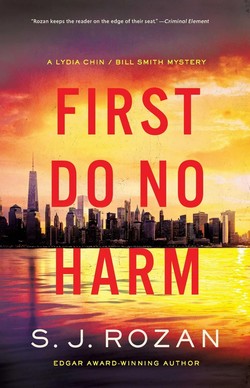
First Do No Harm by S. J. Rozan: A Hospital’s Seedy Underbelly

Cover of First Do No Harm by S. J. RozanFirst Do No Harm

by S. J. Rozan

DETAILS:
Series: Lydia Chin & Bill Smith, #16
Publisher: Pegasus Crime
Publication Date: January 6, 2026
Format: Hardcover
Length: 320 pg.
Read Date: February 18-19, 2026
Buy from Bookshop.org Support Indie Bookstores

My brother needs a lawyer,” I told Bill over the phone from the sky diving hut.

“Your brother is a lawyer. Unless it’s a different brother, in which case his brother is a lawyer.”

“It’s Elliott, he needs a criminal lawyer, and it’s for a friend.”

“That’s what they all say. What happened?”

“The friend was found at the hospital in the company of a dead body.”

“Did he make it dead?”

“No.”

“That’s what they all say. New York City? Long Island, upstate, New Jersey? ”

“That’s as far as your reach extends?”

“God no. You need Nebraska? The Leeward Islands?”

“Just testing. Manhattan.”

“The guy’s in custody?”

“Yes, and he’d rather not be,”

“That’s what they all say.”

What’s First Do No Harm About?

That’s basically all you need to know. Lydia’s brother gets a call from a coworker that he’s friendly with, who’s the prime suspect in a murder at the hospital. After Bill connects him with a good criminal lawyer, that lawyer hires the duo to do the investigating for her.

It doesn’t go well at first—there’s a lot of institutional resistance to helping them—the hospital just wants to put the incident behind them—they’re on the verge of a nurses’ strike, and the additional bad press associated with a murder is too much for them. They’re perfectly willing to let this staff member be arrested and convicted, as long as it happens fast and keeps them out of the news.

Thankfully, Lydia and Bill are good at making allies and cashing in favors—once they start learning secrets and talking to the right people (probably in the reverse order), they start finding more people who will talk to them (willingly or not), and a picture—very slowly begins to emerge.

They’ve had some real doozies of a case before—and honestly, this is one of the more straightforward cases they’ve had (if you ignore all the distractions they encounter along the way)

Why did I pick this up? Why did I keep reading?

I picked this up because it’s a Lydia Chin/Bill Smith book.

I kept reading for the expected reasons: the mystery/crimes they uncovered and their chemistry and banter. It’s also a “Lydia” book, so it’s a bit more upbeat and fun.

The way these two interact has always been something that attracted me to the books, and it continues strong here. There’s a little competition between the two of them early on about who can charm the most people connected to the case—and neither of them does very well. Dismally, really. But it’s fun to watch them go back and forth about it—it’s a nice twist on Spenser’s strategy of going around annoying people until someone does something that leads him somewhere. At least they’re (superficially, at least) trying to charm people.

But really, just getting the chance to watch the two of them talk to each other is enough to keep me reading.

What does this book tell us about humanity?

This is a tricky one, because like most PI Fiction, the core of this book is people being despicable and trying to get away with it. But there’s a focus to this one.

“Seriously,” I said, sipping the cinnamony froth off my mug, “I’ve never seen so many people doing so many nefarious things. It’s a little disheartening. No, it’s a lot disheartening. A hospital? Isn’t it a thing that medical people are supposed to at least do no harm?”

Bill shrugged. “I always thought so.”

Lydia has seen a lot of…well, a lot. Crime, corruption, organized crime, family dysfunction, murder, and so on. A lot of what she’s seen would be too much for many of us (myself included). Yet this case disheartens her. She’s seen the various and sundry corruptions, backstabbing, machinations, poor conditions surrounding the workers at this hospital—and we’re not even talking about patient care/conditions—who knows what would show up if that happened. It’s all behind-the-scenes stuff. And it gets to her. She mentions it frequently.

Even with a brother who works in the ER in this hospital, all of this mess shocks her. Bill doesn’t seem as disturbed, but I don’t get the impression that he expected it to be this bad, either. Even people like them—given their experience, profession, and what they’ve heard—they expect hospitals to be about helping people. Healing people. Not trying to profit at other people’s expense.

I think it says something about how all of us have illusions about institutions. Or that even in the best places for humanity, our collective depravity shows up. Or maybe, that despite all the nefarious things going on, there are people (like her brother) who help people—and that even those who are getting away with things still manage to do some good.

Okay, I’m not sure what this book tells us about humanity. It’s not cut and dry—and on one level, we all know that, but something that Crime Fiction is good at is reminding us all that humanity is a mess, but still some good things happen.

So, what did I think about First Do No Harm?

I thoroughly enjoyed it. I think my only complaints are that we didn’t get enough of Lydia’s brother—because I enjoyed him in his element; and we definitely didn’t get more time with the accused murderer—because he was such a fun ball of chaos and earnestness. Seriously, can he get accused of another crime soon? I’d like to see him back in this series.

Everything else was great—good red herrings, a good twisty mystery that exposed a lot of other criminal/crime-adjacent activities, some winning characters. And more than one scuzzy person that you wouldn’t have minded being guilty of the murder—sadly, some that get to keep being less-than-upstanding and successful. The final reveal of the killer? I didn’t see it coming, but in perfect murder mystery style, once revealed, I couldn’t not see it and was annoyed with myself for missing it.

As one expects, Rozan did it again. And now we get to wait for her next successful outing. This would make a fine jumping-on point for the series. I think every book in the series would, for that matter. You’ve got no excuse not to read it.

This post contains an affiliate link. If you purchase from it, I will get a small commission at no additional cost to you. As always, the opinions expressed are my own.
Irresponsible Reader Pilcrow Icon

Robert B. Parker’s Showdown by Mike Lupica: New Media and Old Problems

Cover of Showdown by Robert B. ParkerRobert B. Parker’s Showdown

by Mike Lupica

DETAILS:
Series: Spenser, #53
Publisher: G.P. Putnam's Sons
Publication Date: November 25, 2025
Length: 339 pg.
Read Date: November 26-27, 2028
Buy from Bookshop.org Support Indie Bookstores

What’s Showdown About?

Rita Fiore comes to Spenser for some help—she has a client, Daniel, a young man who has come to Boston to confront the man he thinks is his biological father. Daniel’s mother has recently been killed and while going through her effects, he found some things that made him believe what he’d been told about the father he’d never met was untrue and that Vic Hale was his actual father.

Vic Hale is a podcaster with an audience close to Rogan’s and politics several yards to the right of Rush Limbaugh. A frequent obsession for Hale is illegal immigration. Daniel’s mother had been an undocumented worker employed by Hale. If Daniel went public, it could likely bring down (at least shake) Hale’s media empire and possibly damage the multi-million dollar deal he’s on the verge of signing. (it’s up in the air which is more important to Hale)

Daniel, an up-and-coming immigration activist, would relish that. But before he does that, he wants to confront his father personally (and Rita would like a little more proof of his paternity). This is where Spenser comes in.

Then Spenser uncovers connections to a local mobster. And then more money gets introduced into the picture. Then someone is killed. And well…you know how things go from there.

A Couple of Quirks (no, not Martin)

These aren’t problems with the book, and if these things disappear with next year’s novel, I won’t mind. But if they continue for long, Lupica will have altered these characters in a way that I’m not wild about.

Susan winks a lot in this particular novel. Perhaps as often as she had in the previous 52 books combined, I could be exaggerating, but it doesn’t feel that way. Parker (and Atkins) typically let the dialogue lines carry that connotation—perhaps with one of Susan’s variety of smiles. If she winked once, I wouldn’t have minded. But when it happened twice within a few pages, it got my attention, and then screamed at me every time afterward. Just roll it back a little.

The other thing that got under my skin is the way that Spenser keeps dropping bits of trivia that those around him (Hawk, Susan, Quirk, Belson, and others—maybe even Tony Marcus) find annoying, and will mock him for. Spenser even engages in a bit of self-mockery about it, as if this is something he’s spent years doing. Spenser doesn’t go out of his way to show off his knowledge like this—yes, he’ll drop a historical note when appropriate, he’ll use a sesquipedalian word from time to time (particularly to needle someone who is condescending toward him), he’ll make literary allusions/drop quotations often. But he’s not the kind of guy who’ll hit pause while watching a TV show/movie to inform others in the room about some point about an actor, script note, or a directorial choice.* Spenser’s only a show off when he thinks it’ll impress Susan—not in a way that will annoy anyone.

Also, the constant references to Spenser’s age feel a little dangerous—Parker had left him frozen in time, and while Atkins had made it clear that he was on the older end of things, he kept it vaguer than that (which fit the direction Parker had set up).

* I know it’s annoying and I really shouldn’t, but I only do it for things that are illuminating or incredibly interesting (to me, if no one else).

So, what did I think about Showdown?

There were two major reveals in store for the reader—I was certain I’d had one sussed out from almost the beginning, and I couldn’t have been more wrong. I’m not sure if I should’ve come up with it on my own if I hadn’t been so distracted, maybe…just maybe. The other might as well have had neon signs pointing to it throughout. I do buy Spenser et al. not seeing it, however. 1 out of 2 ain’t bad (for Lupica or me).

I think the story meandered a little bit, chewing up pages for the sake of chewing up pages—making me think of Lupica again as emulating latter-day Parker. So that’s a plus, in a strange way. And really, none of the meandering hurt anything—much more of it would’ve.

The addition of a new character—Spenser’s intern Cassius, was a choice—as my kids used to say. Perhaps a good one (it certainly helps with the technophobic PI getting help with databases, social media, and whatnot). I’m holding my tongue on it for at least one more novel. I sort of wish that Mattie Sullivan would’ve filled that role, at least to an extent. Or maybe Sixkill.

At the end of the day, readers pick up a Spenser novel for the characters, the banter, and a little action. Lupica delivers those here (even if the characters are a little out of focus). There’s a bit about Noah Kahan that made me hoot (and annoyed my daughter). I think Hot Property was a better Spenser novel—and will be the standard by which I’m going to judge Lupica going forward. Still, while not as satisfying, it did the job and I’m more than ready to return to the series in a year or so.


3.5 Stars

This post contains an affiliate link. If you purchase from it, I will get a small commission at no additional cost to you. As always, the opinions expressed are my own.
Irresponsible Reader Pilcrow Icon

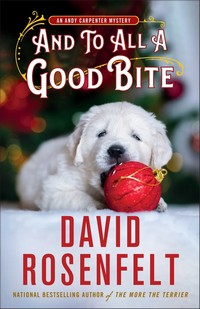
And to All a Good Bite by David Rosenfelt: Andy Carpenter’s Back Out of Retirement Again

Cover of And to All a Good Bite by David RosenfeltAnd to All a Good Bite

by David Rosenfelt

DETAILS:
Series: Andy Carpenter, #31
Publisher: Minotaur Books
Publication Date: October 14, 2025
Format: Hardcover
Length: 293 pg.
Read Date: November 13-14, 2025
Buy from Bookshop.org Support Indie Bookstores

“Will you help me?”

“I believe I will,” I say, proving once again that my mouth has a mouth of its own. It did not consult with my brain before saying it, which is a major breach of the decision-making chain of command.

What’s And to All a Good Bite About?

Two years ago, Jeff Wheeler watched the building his girlfriend was in explode while he engagement ring he got for her was in his pocket. In vain, he ran into the building to try to save her, but the fire was too intense. He was, however, able to save a dog.

He ends up—with Andy Carpenter’s help—adopting the dog, and the two of them are happy. Jeff has come to think that the building’s explosion wasn’t an accident, but was caused by the building’s owner. Jeff starts hounding the man, trying to get him to admit to it and trying to take him to court over it.

When that man is shot, Jeff’s an early suspect. When some evidence is uncovered conveniently close to Jeff’s home, he’s arrested.

Now it’s up to Andy to admit he’s not retired (again) and to do what he can to save Jeff’s life.

The Holiday-ness of it

This is about as far from a Christmas book that Rosenfelt could do—the holiday itself is dealt with in maybe 5 pages, and those are fairly early-on. It really could be a case of “which of these three novels I’m almost done with could I most easily insert the holiday?”

This next sentence is not really a spoiler, but it kind of is, so skip to the next heading if you want. Also, the body count in this book is high for this series (and potentially even higher), and the motive behind it seems to make it even worse. It’s hard to reconcile that with the Season of Cheer. (not that it needs to, I’m just thinking holiday stuff).

So, what did I think about And to All a Good Bite?

So my son eats vegetables….I find it hard to come to terms with that. I’ve been assuming for years that he will outgrow it, but it doesn’t seem like it’s going to happen. But it still pains me when the waiter comes over and Ricky asks how they prepare the brussels sprouts.

We back up a little on Marcus’ intelligibility here—which felt odd, maybe Rosenfelt realized he’d taken too much of the mystery away from him—maybe even the superhumanness of him. Or maybe it’s a case of perception—I thought that Andy was fully capable of understanding Marcus recently because relative to most of the series, he could. But compared to Willie or Corey (check spelling of Simon Garfunkel’s human), Marcus is unintelligible. It could just be some re-calibration in general. Marcus’ super-humanness is seriously reinforced on other fronts this time.

The client’s dog is far more important to the story than usual—something I appreciate, as much as I like a cute dog photo on the cover, or a canine-related pun in the title (which has nothing to do with the plot at all). When the dog actually plays a role in the story, I like it.

Andy seems to make a call on the whole retirement/semi-retirement thing, which is nice. Otherwise, this is your standard Andy Carpenter book—some solid wisecracks, a clever mystery, some nice reveals, some convenient breaks, some courtroom hijinks, Andy’s familiar (yet fresh and entertaining) thoughts on jury selection and jury deliberation. There’s just enough that’s not typical to keep long-time fans engaged. Up to, and including, more Vince-related action than we’ve seen in a bit—up to the part where I could throw in a click-baity “You won’t believe what Vince does” kind of headline. But I won’t stoop to that. Really.

Oh, wait—Ricky is 16 now? I’m sorry, when did his actual aging creep into these books? How is Rosenfelt not keeping him a cute kid/tween for forever, the way that Tara is not a senior dog yet? Has Rosenfelt been giving us higher numbers for a while now and I just haven’t noticed?

Anyway, back to the “standard Andy Carpenter book” remark. That’s really what this is—that’s good news. It’s not a let-down, it’s not a rare stumble for Rosenfelt, it’s not shaking up the entire series with a gritty turn—it’s a reliable author giving his fans just what they want, quality entertainment with old friends. And that’s just the kind of gift an author like Rosenfelt should give his readers for the holidays.*

* That’s one of the cheesiest things I’ve written on this site, but I kind of like it.


4 Stars

This post contains an affiliate link. If you purchase from it, I will get a small commission at no additional cost to you. As always, the opinions expressed are my own.
Irresponsible Reader Pilcrow Icon

When Archie Met Lily

“I’ll show you the phone.” It was a voice behind me, and I turned. The girl in yellow slacks was there close. I realized with surprise that her head came clear to my chin or above, and she was blonde but not at all faded, and her dark blue eyes were not quite open, and one corner of her lips was up with her smile.

“Come on, Escamillo,” she said, “I’ll show you the phone.”

I told her, “Much obliged,” and started off with her.

She brushed against me as we walked and said, “I’m Lily Rowan.”

“Nice name.” I grinned down at. her. “I’m Escamillo Goodwin.”

According to Some Buried Caesar, 87 years ago today, Archie Goodwin—one of my top 5 All-Time Favorite Characters—met the only woman who could keep his attention for more than a few months, Lily Rowan. Lily shows up several times in the Nero Wolfe/Archie Goodwin series and threatens to steal every scene she appears in (and frequently succeeds). Check out this post from Today in Mystery Fiction for the details—one of my favorite scenes, from one of my favorite books in possibly my favorite series—(I think I have 3 or 4 copies of it), so I had to say something.

Besides, it’s not like I have a long list of dates associated with fictional events to commemorate (but I really should work on one).

How they met 87 years ago, when Archie’s only in his mid-30s today, is beyond me. But Math was never my strong suit, I’m sure it makes sense, Charlie Epps could probably explain it to me.

Regardless, it’s a great exchange—the first of many between the two. Lily will go on to have great scenes with Mr. Wolfe, as well–one of the more memorable happens at a crucial point in In the Best Families where she does something that no one else does in the Wolfe/Archie books.

Why does she call him Escamillo? (a nickname she never drops, I should add). Well, a couple of pages before that exchange of names, Wolfe and Archie were crossing a field between the road (and their disabled car) and a nearby house, and well…

“Stop! Don’t move!”

I stopped dead, with [Wolfe] beside me. I thought he had discovered something psychological about the bird on the fence, but he said without looking at me, “Stand perfectly still. Move your head slowly, very slowly, to the right.”

For an instant I thought the nut with the gun had something contagious and Wolfe had caught it, but I did as I was told, and there was the second surprise. Off maybe 200 feet to the right, walking slowly toward us with his head up, was a bull bigger than I had supposed bulls came. He was dark red with white patches, with a big white triangle on his face, and he was walking easy and slow, wiggling his head a little as if he was nervous, or as if he was trying to shake a fly off of his horns. Of a sudden he stopped and stood, looking at us with his neck curved.

I heard Wolfe’s voice, not loud, at the back of my head, “It would be better if that fool would quit yelling. Do you know the technique of bulls? Did you ever see a bull fight?”

I moved my lips enough to get it out: “No, sir.”

Wolfe grunted. “Stand still. You moved your finger then, and his neck muscles tightened. How fast can you run?”

“I can beat that bull to that fence. Don’t think I can’t. But you can’t.”

“I know very well I can’t. Twenty years ago I was an athlete. This almost convinces me . .. but that can wait. Ah, he’s pawing. His head’s down. If he should start… it’s that confounded yelling. Now… back off slowly, away from me. Keep facing him. When you are 10 feet from me, swerve toward the fence. He will begin to move when you do. As long as he follows slowly, keep backing and facing him. When he starts his rush, turn and run—”

I never got a chance to follow directions. I didn’t move, and I’m sure Wolfe didn’t, so it must have been our friend on the fence—maybe he jumped off into the pasture. Anyhow, the bull curved his neck and started on the jump; and if it was the other guy he was headed for, that didn’t help any, because we were in line with him and we came first. He started the way an avalanche ends. Possibly if we had stood still he would have passed by, about 3 feet to my right, but either it was asking too much of human nature to expect me to stand there, or I’m not human. I have since maintained that it flashed through my mind that if I moved it would attract him to me and away from Nero Wolfe, but there’s no use continuing that argument here. There’s no question but what I moved, without any preliminary backing, And there’s no question, whoever he started for originally, about his being attracted by my movement, I could hear him behind me. I could damn near feel him, Also I was dimly aware of shouts and a blotch of something red above the fence near the spot I was aimed at, There it was—the fence. I didn’t do any braking for it, but took it at full speed, doing a vault with my hands reaching for its top, and one of my hands missed and I tumbled, landing flat on the other side, sprawling and rolling, I sat up and panted and heard a voice above me:

“Beautiful! I wouldn’t have missed that for anything.”

I looked up and saw two girls, one in a white dress and red jacket, the other in a yellow shirt and slacks. I snarled at them, “Shall I do it again?”

Irresponsible Reader Pilcrow Icon

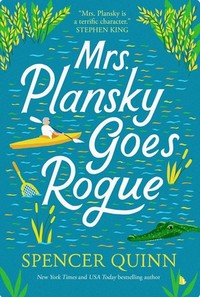
Mrs. Plansky Goes Rogue by Spencer Quinn: The 72-Year-Old is Back for More Adventure!

Cover of Mrs. Plansky Goes Rogue by Spencer QuinnMrs. Plansky Goes Rogue

by Spencer Quinn

DETAILS:
Series: Mrs. Plansky, #2
Publisher: Forge Books
Publication Date: July 15, 2025
Format: eARC
Length: 304 pg.
Read Date: July 5-8, 2025
Buy from Bookshop.org Support Indie Bookstores

What’s Mrs. Plansky Goes Rogue About?

Mrs. Plansky and Kev Dinardo (who I think we met briefly toward the end of her first book), win an exciting mixed doubles tournament between a couple of retirement communities. Flush with victory and excitement, they head back to his home to celebrate on his yacht. Their mood is sobered considerably when his yacht explodes in front of them. Kev tells the fire department that it was lightning that hit the boat.

The next day, Mrs. Plansky returns to check on Kev and is told he’s not available. The person who tells her this seems…off. But she accepts him for who he claims to be. Mostly. But when she can’t find Kev and it looks like his home has been ransacked.

When she factors in the fact that she didn’t see any lightning and that Kev seems to have been involved—at least a little bit—with her son and his probably criminal associates…all sorts of bells go off in Mrs. Plansky’s head and she starts to do a little sleuthing.

Things get interesting—and perhaps a little dangerous—after that.

Also, I should mention that the alligator on the cover is not just there for decoration.

Your Results May Vary, But…I Just Had No Patience

When I started writing this post, I was afraid I was going to have to walk back something I said last year when I wrote about Mrs. Plansky Gets Revenge. So I went back and read that post. Turns out, I agree with myself. Last year, I wrote:

I loved most of the characters (even the bad guys). And even…when I didn’t like the characters, I appreciated the way Quinn wrote them. The one exception is her father, who lives in a nearby assisted living facility. I’m not sure that we needed Mrs. Plansky’s father as a character—I think he was supposed to be both comic relief and just one more source of financial pressure for her. I don’t think the comedy worked all that well—and Quinn could’ve given us another source for the pressure.

It turns out that I have an even dimmer view of her father as a character this time (as a person, I’m just as impressed). I didn’t find him, his antics, or his behavior amusing at all. I found scenes that he was in tiresome at best—and I don’t think Mrs. Plansky came across half as well in them as she does in the rest of the book.

I hope that I’m alone in this and that the rest of Quinn’s readers don’t get what I’m saying. I just don’t see it, and hope that the events of this book take him off the board for most of the next book.

Mrs. Plansky’s Chettification

I write frequently about Quinn’s other ongoing series, the Chet and Bernie mysteries. And Chet is one of my favorite characters in detective fiction—and one of my favorite dogs in fiction. That said, we don’t need another Chet. And there are times in this book that I think Mrs. Plansky got too close to it.

She’s under stress, she’s dealing with injury and confusion (and possibly a concussion at one point). But there are times when the omniscient narrator gives us a look into her thought processes and she comes across as distractible and erratic as our beloved canine hero. That carries over at least once to a conversation she has with a human.

I’m not saying it’s not realistic, nor am I suggesting that it’s wrong to think that a woman in her seventies might not be as wholly lucid as she was a decade or two ago—or as lucid as she wants to be. It’s just…when she reminds you of a non-human character…it’s not good. Particularly when the book usually shows her as strong and capable—determinedly working through a world that’s ready to dismiss her because of her age.

Quinn’s capable of better.

So, what did I think about Mrs. Plansky Goes Rogue?

This was not my favorite book by Quinn (nor was it my least favorite), and I wasn’t as enchanted by Mrs. Plansky this time. But let’s not for a moment think that means I didn’t have a lot of fun with this book. Also, I’m more than ready to see what Quinn has in store for her. (There’s no way that he leaves this here; at the very least, Kev needs to get some stability in his life)

I do like the…I don’t want to say growth, that feels out of place—the development of Mrs. Plansky’s character. She’s gained some good confidence in herself after her Romanian adventures. This doesn’t mean she’s impervious to self-doubt or braver than she should be. But she knows—and can prove—that she’s capable of more than what most people think she is. She can see this through—although she knows she needs help.

There were some good twists—some surprises that I don’t know that I fully enjoyed, and a couple that I did. And I did enjoy this read—and most people who met Mrs. Plansky in the first book will, too. And I’m very glad to see that she isn’t the victim of anything—this time she’s just someone in the wrong place at the wrong time who decided to do something about it.

I do recommend this to the growing audience for senior citizen amateur sleuths out there (more than I would most others in the subgenre), it’s fun, and Mrs. Plansky is a great character that you cannot help but root for—in her investigation and on the tennis court.

Disclaimer: I received a copy of this book from Tor Publishing Group via NetGalley—thanks to both for this.


3.5 Stars

This post contains an affiliate link. If you purchase from it, I will get a small commission at no additional cost to you. As always, the opinions expressed are my own.
Irresponsible Reader Pilcrow Icon

REPOST: Mrs. Plansky’s Revenge by Spencer Quinn: A (Relatable) Revenge Fantasy Full of Heart and Panache

Mrs. Plansky's RevengeMrs. Plansky’s Revenge

by Spencer Quinn

DETAILS:
Series: Mrs. Plansky, #1
Publisher: Forge
Publication Date: July 25, 2023
Format: Hardcover
Length: 291 pg.
Read Date: September 4-5, 2023
Buy from Bookshop.org Support Indie Bookstores

“…there’s also what you might call a demotivating factor.”

“Which is?” said Mrs. Plansky. For some reason she was now finding Agent Gatling easy to understand.

“From our point of view the scammers are bad guys, end of story. But to the elite running the show over there the scammers are bad guys who also have a nice little industry going, bringing in the Yankee dollar and lots of ‘em. And to the everyday Joe they’re punching up, the kind of outlaw people have a soft spot for.”

“Like Robin Hood.”

“You got it.”

They gazed at each other. The message was in his eyes, Mrs. Plansky voiced it.

“You’re telling me to lose hope.”

“Not in so many words.”

What’s Mrs. Plansky’s Revenge About?

Mrs. Plansky is enjoying her retirement (however much it’s tainted by the semi-recent death of her husband). Her hip replacement’s healed enough that she can play tennis, and she’s practically back at the level she was before the surgery. Her kids are established in their lives, her grandchildren are doing okay (although she has some concerns about her grandson’s friends and associates). Things are as good as she could’ve wanted.

Then one day, she’s scammed by someone claiming to be her grandson who needs some money for bail. We’ve (probably) heard about versions of this scam—they don’t just get the bail money, they get enough information from her to empty her accounts.

She’s devastated. How is she going to live? How’s she going to help her father, her children, or her grandchildren? Is she going to be able to convince them that they don’t need to worry about her emotional stability or soundness of mind? And what can she do when even the FBI seems to be giving up before they’ve even started?

Well, Mrs. Plansky does what she’s always done—put her nose to the grindstone and get to work. The FBI said something about some small Romanian town, why not start there? So she sells a very nice piece of jewelry and buys a plane ticket. It may be a fool’s errand, but little ventured, little gained, right?

Norm and the Mrs.

Throughout the book, Mrs. Plansky is identified as “Mrs. Plansky.” Not “Loretta” or “Plansky” as most writers would do after establishing the protagonist’s name. This is how she thinks of herself (although she tells people to call her Loretta all the time). Now, you could come at this with some sort of feminist critique about how her personality/identity has been swallowed by her husband’s or something along those lines. And in some books that would be valid.

But I don’t think that’s the case here (Mr. Quinn, feel free to correct me on this). She just thinks of herself as Norm’s wife. And, I expect, that were he still with us, Norm would think of himself as Loretta’s husband. He’s constantly on her mind as she goes through all this. They had a strong marriage, built a business together (each displaying their own strengths), raised a couple of kids together, and enjoyed a life together (made all the more pleasant by the business taking off and giving them a very comfortable life).

The fact that after his death she still thinks of herself in this way I found particularly sweet. They may have been parted by death, but in many real and tangible ways, they’re still married. It’s a great character point and tells us so much about her without Quinn having to do so. This is not to say that Mrs. Plansky might not consider future romantic entanglements, but she’ll always be Norm’s wife in some sense.

Mrs. Plansky’s Other Opponent

She closed her eyes, resting them, in fact. Giving her eyes a little rest from time to time? That was new in her life. Her eyes had gone along for more than seven decades content to take their rest when the rest of her was resting—team players, the pair of them—but now they were making demands.

Related to that—Mrs. Plansky’s no spring chicken. She’s in great shape for someone of her years and will surprise herself by some of what she’s able to do physically (for example, on the tennis court). At the same time, she’s having to come to grips with the effects of aging—her strength and endurance isn’t what it was, her attention slips from time to time, and her recall might struggle a bit. Everything, basically, is a little more difficult than it used to be. I appreciated the way that Quinn depicted this—not that everything’s falling apart, or that with grit and determination she’s triumphing against the effects of aging, she’s simply noticing and adjusting.

There are moments here and there where this makes Mrs. Plansky (rather, a close third-person narration) slightly unreliable. But Quinn’s spent years writing from the POV of a dog who doesn’t fully understand what humans are doing, and he’s great at depicting that without casting doubt on everything going on and getting the reader to understand things that the protagonist missed.

The Tone

Overall, the book has a lighter and optimistic tone. Most of that comes from Mrs. Plansky’s character and frame of mind.

But (to go with that character), not all of it is light. There are some dark moments, some real despair and worry. For example, I knew the premise of this book months ago, back when Quinn first announced it. Yet when Mrs. Plansky’s on the phone with the scammer and is giving away too much information, I was reading with one hand over my eyes. Similarly, as she comes to grips with just how bad things are for her—and takes in Agent Gatling’s message about how little hope she has to recover the funds…you can’t help but feel for her.

But when she comes up with a plan and begins to execute it—and enjoys doing so. It’s impossible not to catch that optimism and lightness.

So, what did I think about Mrs. Plansky’s Revenge?

This is a very different flavor than I’ve seen from Quinn before—yes, it shares some elements from his other work (The Right Side and the Chet and Bernie books in particular), but overall, it feels like a new and welcome direction. I mean, it’s welcome here as long as he comes back to Chet and Bernie. There’s a depth, a perspective, and a different kind of character than I’m used to. And a total dearth of animal companions, which is just strange.

I loved most of the characters (even the bad guys). And even (in the case of her children, for example—a sure sign that Mr. and Mrs. Plansky weren’t great at everything) when I didn’t like the characters, I appreciated the way Quinn wrote them. The one exception is her father, who lives in a nearby assisted living facility. I’m not sure that we needed Mrs. Plansky’s father as a character—I think he was supposed to be both comic relief and just one more source of financial pressure for her. I don’t think the comedy worked all that well—and Quinn could’ve given us another source for the pressure.

One quick aside, I’m just curious—between this book and Osman’s Thursday Murder Club books, I’m wondering if there’s a surfeit of charming Eastern European men with a “flexible” understanding of the law running around. Can anyone confirm that?

An implausible, but great story. A revenge fantasy that many people will have had, taken on by a relatable character that you can’t help but root for. There’s plenty of heart to go around, and it’ll just leave you feeling good (as long as you don’t put it down while she’s being ripped off).

If you’ve tried Quinn before and he hasn’t clicked with you, try this one. If you haven’t tried him before, try this one. If you’re not sure you want to read a dog-less book from him, try it. If there’s anyone I haven’t covered in this paragraph—try it.


4 1/2 Stars

This post contains an affiliate link. If you purchase from it, I will get a small commission at no additional cost to you. As always, the opinions expressed are my own.

Irresponsible Reader Pilcrow Icon

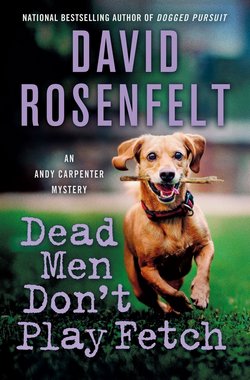
Dogged Pursuit by David Rosenfelt: An Origin Story

Cover of Dogged Pursuit by David RosenfeltDogged Pursuit

by David Rosenfelt

DETAILS:
Series: Andy Carpenter, #32
Publisher: Minotaur Books
Publication Date: July 1, 2025
Format: eARC
Length: 288 pg.
Read Date: July 3-4, 2025
Buy from Bookshop.org Support Indie Bookstores

What’s Dogged Pursuit About?

Andy Carpenter has recently left the Prosecutor’s Office to become a defense lawyer. He’s rented an office, helped one client, and…well, that’s it. His wife is leaning on him to take a job as a corporate lawyer (and her father can get him such a position), but his heart isn’t in it.

He has decided it’s past time for him to get a dog after years of wanting one—so he goes to a shelter, falls head over heels with one, and adopts her. The shelter tells him that his new dog (Carpenter fans know Tara very well at his point) has bonded with the dog she shared a run with. So he offers to adopt her, too. That can’t happen because her owner is in jail awaiting trial. They assure him that if he can get a release from the owner, he can take the dog.

Carpenter fans know at this point that this will be Andy’s first client. People new to the series will probably know this, too. Rosenfelt isn’t playing his cards close to his chest here.

And, hey, what do you know? That’s exactly what happens. The trick is that Andy’s new client is charged with multiple murders—that of his old friend and boss who fired him two weeks previously, and the two people he was giving a ride home to (so they wouldn’t drive after drinking at a corporate party).

The circumstantial case is pretty strong—almost too strong. No one that Andy talks to at his client’s old company could believe he’d be capable of such a thing. And he really seems to care about his dog. Which is enough for Andy to dive in.

He just needs evidence on his side, an investigator to do some work for him, and a clue about how to defend this particular client. But that’ll come, right?

The Prequel-ness

I was surprised when I saw this was a prequel. I don’t know that I ever stopped and wondered, “How did Andy get started in the business?” Particularly as early in his career that book one, Open and Shut, isn’t that far into his career and really serves just as well as an origin story.

That said…this is a really good novel, a solid prequel, and a treat for fans of the series. Let’s take a quick glance at some of the series regulars we meet here:

bullet Tara. You don’t have an Andy Carpenter book without his best friend. Their meeting goes beyond a meet-cute, and watching their relationship blossom is great. Honestly, the rest of this list isn’t necessary, as long as Rosenfelt nailed this one, and it’s no surprise that he did.
bullet Sam. Sam gets a little more “screen time” here than he typically does. This is a-ok with me, Sam’s great. We get some seeds planted for a lot of what we see from this accountant/hacker in the future. What we don’t get—and this is the biggest problem with this book—is the song talking. I get that he and Andy have grown out of it by later books (as odd as it is to think of Andy maturing). I miss it, but I can cope (as well as grumble about it). But they’re not there yet. Something that so characterizes their relationship in the first few books should be here now.
bullet Laurie. Andy meets and hires Laurie here, a wonderful decision on his part. It’s totally platonic, Rosenfelt shows us that Andy is a stand-up guy on that front (as he continues to be). Given where their relationship ends up, I have to give Rosenfelt a lot of credit for keeping it professional. Laurie struggles some (as I think she continues to do for quite a bit) with working for the defense—not as much as say, Harry Bosch does (although she wasn’t working for the PD as long as Bosch did). And that’s good to see, but her adaptability and smarts are on full display.
bullet Pete. Pete and Andy aren’t as friendly as they will one day be. It’s actually nice to see them approach bonding, and the beginning of Andy picking up Pete’s tab.
bullet Nelson Carpenter. We don’t get to see a lot of Andy’s father before his death, so it was really nice to see the healthy relationship here. It’s hard not to like this guy, and you can see why he was such a legend in the legal community in the area.
bullet Edna. Andy hasn’t hired—much less met—Edna at this point, but she’s mentioned to him a few times as someone he should hire. Reading what Andy is told about her, and what we know about her, is one of the best chuckle-generators of this novel.
bullet Nicole. This has to be the trickiest one in the book—the relationship is doomed, we all know this. But neither Andy nor Nicole is ready for it to end. Rosenfelt has to show the crumbling, without showing the last straws—as those straws are still to come. And man…I liked Nicole. I enjoyed seeing her bond with Tara. I liked seeing her interact with Andy; she seems like a pretty good match for him.

Marcus

In a couple of the more recent books, I’ve wondered if Marcus is losing a bit of what made him such a fun character for the readers because we’ve learned more about him. Is the mystique gone? Is he on the verge of becoming just another member of Andy’s circle?

That question gets set on the back burner for a while—phew—because in this prequel, Marcus is all mystique. Nothing but mystique and mystery.

So, what did I think about Dogged Pursuit?

Okay, let’s set aside all the fun of the prequel stuff. How’s the mystery, the case, the resolution?

Those are just what you want. Andy’s not the cocky, flashy trial lawyer he will become. But you can see it on the horizon. He’s nervous—in and out of the courtroom. He’s not prepared to meet with some of the truly nasty characters he needs to—or the threat they can represent.

There are plenty of twists and a revelation or two at the end that are just satisfying.

There’s not a huge conspiracy with international implications afoot. There’s some criminal activity around the murders that Andy runs across—but it’s not at the heart of the book.

There are some truly good lines (particularly involving Andy’s cowardice and lack of ability to defend himself—always a good place for Rosenfelt to return to). The momentum carries you right along, right up to the surprises at the end.

Throw in Andy and Tara’s relationship? You’ve got a solid book.

I strongly recommend this book to people who’ve read Andy Carpenter in the past (even if you’ve taken a break for whatever reason). If people have seen my glowing posts in the back and haven’t wanted to dive into a series of 30 mid-stream, this is a great place to jump on board. If people have never seen a thing I’ve written about this series before—this is a great place to jump on board, too. Really, there’s no one that I wouldn’t recommend this book to. I thoroughly enjoyed myself, and I think you will, too.

Disclaimer: I received a copy of this book from St. Martin’s Press via NetGalley—thanks to both for this. I apologize for the tardiness.


4 Stars

This post contains an affiliate link. If you purchase from it, I will get a small commission at no additional cost to you. As always, the opinions expressed are my own.
Irresponsible Reader Pilcrow Icon

PUB DAY REPOST: I Have Too Many Things to Say About Robert B. Parker’s Buried Secrets by Christopher Farnsworth

Cover of Robert B. Parker's Buried Secrets by Christopher FarnsworthRobert B. Parker’s Buried Secrets

by Christopher Farnsworth

DETAILS:
Series: Series: Jesse Stone, #22
Publisher: G.P. Putnam's Sons
Publication Date: February 4, 2025
Format: eARC
Length: 352 pg.
Read Date: January 4-6, 2025
Buy from Bookshop.org Support Indie Bookstores

What’s Buried Secrets About?

Jesse is called to make a welfare check on an elderly Paradise resident (no one he knows) and finds the worst outcome—they are weeks too late for this check. Also, the man was a hoarder, and it’s near impossible to navigate through his home to his body without disturbing some of his stacks of…whatever it was that he’d accumulated.

When one box of photos is dislodged, Jesse finds several photos of murder victims. Crime Scene techs soon find $2 million in cash stashed in the house. Either one of these finds would send Jesse’s “coply intuition” to sound alarm bills—the two together? He knows that they stumbled onto something bad—and worse is on the way to Paradise if they can’t wrap up this case soon.

The A Story and Jesse

(not that most of the cast of characters aren’t involved in this storyline)
Something about this case sets Jesse off. Something is eating him in ways that he’s unprepared for, and he gets a little on edge and grumpy (at least to those on the outside). The bottle is calling to him in a way it hasn’t for a while. The voice is loud and tempting. There’s at least once that he goes looking for a bottle that thankfully isn’t there anymore.

The way this—and the related issues it brings up—work themselves out through this novel shows just how far Jesse has come since he first came to Paradise—or even since he stopped drinking in earnest. But that battle isn’t over.

The rest of the PPD is involved in this storyline, but this is Jesse’s focus throughout the novel—it’s also where everything that Jesse goes through emotionally/psychologically is rooted. As such, I’ve found that I can’t keep talking about this without telling you too much. So let’s move on to:

The B Story and Everyone Else

The day that this body is found is also the first day for a new officer for the PPD. He’d spent some time on patrol in a major city, and then a smaller city before this relocating. He tells Jesse that he wanted to be in a town like Paradise, where he could do some good.

There’s an incident or two—you could see them as first-day on-the-job eagerness, a training issue, or something worse. Before you know it, people in Paradise (and in the PPD) are divided over this one officer. Jesse is too caught up in this case, the city politics, and other things to really dig into things. Some others in the department aren’t so sure about him. Others are willing to give him a chance or three. Essentially, Jesse is willing to let things shake out on their own—at least until he’s able to close the murder.

He might not get that chance. Making this call is arguably Jesse’s biggest mistake in the novel.

In addition to the story of this officer, Farnsworth is able to bring in some discussion of what it means to be a police officer in the 21st Century USA. What does it look like, what kind of people should wear the badge? What kind of equipment should police departments have? How can people who have a problem with the police in their area safely do? There’s a related scene that touches on public protest and social media/legacy media fanning the flames.

In many—most—ways, this story is not the main focus of the book—but it’s so close that it might as well be. And as much as I enjoyed The A Story, this is the one that hooked me the deepest. Farnsworth did the franchise proud with it, too.

Farnsworth at the Helm

Poor Jesse Stone, this is his fourth author since Parker’s death. Just for that reason alone, I hope Farnsworth sticks around for a while. He and his readers need some continuity. Once you figure in what a bang-up job that Farnsworth did, I can underscore that hope a couple of times.

Unlike just about every other (I think every other, but let’s throw some wiggle room into this), Farnsworth didn’t give us a lot of trivia from Parker’s books to establish his bona fides. There were some references, but they were the same kind that Parker himself made. Farnsworth showed us his credentials in the way he wrote these characters, this community, and the story.

I was a little apprehensive about him—I read at least the first two of his Nathaniel Cade books—maybe all three, but nothing since. There was something about whichever Cade book was my last that didn’t leave me eager to try him again. Don’t ask me what it was—it’s been over a decade. I’m glad my loyalty to the series won out over my vague sense of apprehension (it wasn’t a close competition). He nailed it.

The one item that I’m most happy about is that with one line of dialogue, Farnsworth expanded on—added depth to—Dix. Did we need this for Dix? But I love that we got it. Also…it was a great way to give that gift to us.

BTS Question

I know there have been conversations between some of the Parker-verse authors about moves they were going to make with certain characters and whatnot—I can’t remember the details, but I heard in one or two interviews that  Atkins or Coleman had to make an adjustment to one book because of something the other did (I’m being very vague because I don’t remember too much and I’m too lazy to do the homework). So I’m sure that Farnsworth and Lupica had a conversation about this book and the events of Hot Property.

What I want to know is how did Hot Property impact this novel? Did Farnsworth have Rita’s scenes in this book completed and added a couple of lines to reflect it? Did he have something else in mind for those scenes and revised them to take advantage of Lupica’s latest? Just what kind of collaboration happened?

Does this impact my appreciation for either book? Nah. But I’m certainly curious.

So, what did I think about Buried Secrets?

At each step along the way, I kept thinking of other things I wanted to say about this one—and at book 22 of a series (no matter how many authors have contributed), that’s saying something. I’ve done my best to limit myself to the bigger matters, but I think I could add at least another 5 paragraphs without breaking a sweat (and they’d likely lead to others).

When Coleman got Jesse into AA, I saw one fan complain about him turning Jesse into “another whining Twelve Step wuss” (that’s very close to it). This seemed like an odd take, as most of Parker’s work (since 1974’s God Save the Child) has celebrated people getting help via therapy or some other means to improve—even save—their lives. I’m afraid that some of what this book does is going to elicit similar reactions from that fan and many others. I hope that the publisher, the Parker Estate, and Farnsworth ignore all that. I don’t see anything here that doesn’t fit in Parker’s worldview (or at least the worldview of all of his fiction).

The Paradise Police Department—particularly the officers we’ve spent time with since Night Passage—got to shine as they ought to. Sure, it’s Jesse’s series, but Molly, Suit, Peter, Gabe, and the others are more than just cardboard cutouts in the background (obviously we don’t know as much about Peter and Gabe as we do some others). The more the various personnel get to contribute, the more the books feel like it’s about a Police Chief—not some rogue lawman. I’m glad Farnsworth did that.

Buried Secrets was satisfying on every level that I can think of. It’s the best Jesse Stone novel in years (with all due respect to Mr. Lupica), specifically since The Hangman’s Sonnet or Colorblind (now that I’ve mentioned those two books in particular, I could probably have written a post just about the ways that Buried Secrets parallels major elements of those, something I hadn’t thought of until now). It contains a good mystery, some strong social commentary, some great character moments, a bunch of characters on the other side of the law that you just have to meet, some solid action, and most of all, time with characters that fans have been spending time with for decades.

I strongly recommend this.

Disclaimer: I received this eARC from PENGUIN GROUP Putnam via NetGalley in exchange for this post which contains my honest opinion—thanks to both for this.


4 1/2 Stars

This post contains an affiliate link. If you purchase from it, I will get a small commission at no additional cost to you. As always, the opinions expressed are my own.

Irresponsible Reader Pilcrow Icon

Page 1 of 36

Powered by WordPress & Theme by Anders Norén