Month: December 2016 Page 1 of 4

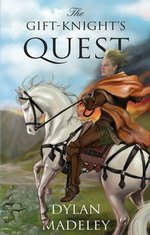
The Gift-Knight’s Quest by Dylan Madeley

The Gift-Knight’s QuestThe Gift-Knight’s Quest

by Dylan Madeley

Kindle Edition, 289 pg.
Matador, 2015

Read: December 29 – 30, 2016


I typically try to be thoughtful and at least semi-thorough when I write about a book here — even (maybe especially) those I didn’t care for. I don’t think I have it in me for this one.

This fantasy novel is full of political intrigue, secrets, revelations (not nearly enough of those), and deception — it felt like someone who wanted to write a streamlined George R. R. Martin novel. But here’s why Martin works — we care about the people involved (we may not like them, but we care what happens to them — even if that’s just them getting molten gold poured over them, we care that it happens). Speaking of Martin, his books are complex webs — this was a convoluted mess. It wouldn’t have been too hard to clear up things a bit — but it still wouldn’t have made it good, but it’d have been easier to read.

The characters were sketches, when not clichés. Chandra, the central(ish) character is close to an actual character that I can almost care about, understand and root for. Close, but not quite there.

Actually, that sums up the book — close, but not quite there.

Disclaimer: I received a copy of this book from the author in exchange for my honest opinion. This is overdue, and I am sorry about that, however.

—–

2 Stars

Saturday Miscellany – 12/31/16

Surprisingly small batch of links for this week — holidays messing with my normal haunts, I think. Hopefully, things pick up in the new year.

Here are the odds ‘n ends over the week about books and reading that caught my eye. You’ve probably seen some/most/all of them, but just in case:

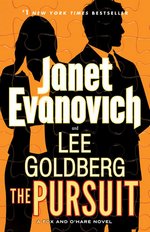
The Pursuit by Janet Evanovich and Lee Goldberg

Why this took me so long to post, I’ll never know…it’s bad enough that it took me a month and a half to read it.

The PursuitThe Pursuit

by Janet Evanovich and Lee Goldberg
Series: Fox and O’Hare, #5

Hardcover, 304 pg.
Bantam, 2016

Read: September 2, 2016

“I’ll send your money, but don’t think about running out on me,” Dragan said. “Or I’ll torture and kill both of you.”

Nick shook his head. “You can’t go ten minutes without making a threat, can you?”

“It’s called leadership,” Dragan said. “Stay in touch.”

Following the cliff-hanger ending to The Scam, I wondered if this book would shake off the fairly well-established outline for these books and instead, we’d get Kate globe-trotting from exotic locale to exotic locale hunting them down. Thankfully, Evanovich and Goldberg had something better in mind (not that something like my idea wouldn’t have been fun), while pretty much sticking to the typical outline.

Nick’s kidnapping ends up setting the stage for taking down an international thief and would-be terrorist. This thief, Dragan, is the anti-Nick. He’s about profit, violence, and more profit. There’s no style, no fun, no zest . . . But Dragan knows what he needs to accomplish a couple of his biggest heists: Nick.

Naturally, he gets more than he bargains for (and I don’t just mean Kate). Of the various criminals, masterminds, thieves and all around nasty folks that these two have taken down or encountered, Dragan is the worst. Thankfully, Evanovich and Goldberg are able to balance the threat and the humor, the romance and the robbery.

It all comes down to relationships: which is really why we come back to this series. Kate and Nick (I’m gladdened/relieved/a little surprised by where they have the relationship now). Nick and Jake. Kate and Jake. The rest of the team with Nick and/or Kate. Jake and anyone he comes into contact with (if we could get some young, active duty Jake stories, that’d be awesome). I like the way that their team is doing non-con work together — despite their best intentions, Nick and Kate have formed an actual team. There are a couple of additions this go-around (one is a blast from the past, but still, new to this side of the road).

I think there’s a misfire here — there’s a new foil introduced into Kate’s life, an FBI agent who is to work with her without knowing about this little side-project. He’s a little humorous, but mostly annoying. And his existence seems to run counter to the people at the top of the FBI sanctioning (however unofficially) what’s going on here. I’m prepared for them to convince me otherwise, but until they do, I’m going to groan whenever he shows up.

The writing is crisp as ever, it seems so smooth and effortless that it has to take a lot of work. There’s a great info-dump (because that’s actually a thing, rare as it may be) about an infectious disease. Not only does it inform the reader, but it’s written in a way to flesh out a character and add a sense of threat to the narrative.

There’s an editing blunder in the final few chapters that took me out of the moment (using Kate’s name instead of one of Dragan’s crew), that was oddly reassuring to me — even the big publishers stumble, not just the small press/self-pubbed guys like I’ve been reading so much lately.

I can’t recall if I’ve mentioned Harry Harrison’s Slippery Jim diGriz when talking about this series, but this is Nick Fox at his Slippery Jimmiest (Kate is a little like Angelina diGriz, too, come to think of it — but not as much). Fans of either should look into the other. The Pursuit is another solidly entertaining adventure in this series. Really looking forward to what’s next.

Oh, I should add that if you’re a fan of eggs, you might want to eat a few extra before reading this book, because it’ll be tough to eat one for a while. Trust me on this one.

—–

4 Stars

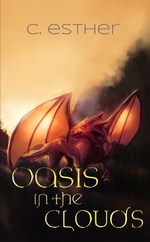
Oasis in the Clouds by C. Esther

Oasis in the CloudsOasis in the Clouds

by C. Esther

Kindle Edition, 248 pg.
Createspace, 2016

Read: December 27 – 28, 2016


I started this with a degree of trepidation — I’ve been burned lately by sub-par fantasy novels, and try as I might, I couldn’t ignore that when I pulled this up. Thankfully, it took less than a chapter to dispel the trepidation, and not much longer to win me over.

Niri is the Crown Princess and the subject of prophecy. Which is why she’s been kidnapped, imprisoned in an idyllic floating island, and had her memory wiped. Or so she’s been told by a rescuer. She’s really not sure, because, well, that whole memory wipe thing.

Why don’t bad guys, misguided people’s champions, pranksters, etc. ever learn what prophecy means before trying to defeat it? We’re not talking weather forecasting, punditry, or statistical analysis — we’re talking prophecy. It’s going to happen. (not really a spoiler, here) Sure, we’d lose out on some good stories if not for this stubborn refusal to pay attention to definition — or self-deception. And, it needs to be remembered, not every prophecy is going to be interpreted correctly.

Anyway, I need to jump off of that particular rabbit trail . . . her rescuer helps her start to retrieve her memories, as well as to develop magical abilities she didn’t know she had (even before the memory wipe), in an effort to confront her kidnapper, fulfill the prophecy and save the kingdom.

The book blurbs give away less than most, and I’m going to try to honor that here, so that’s it for plot from me.

I liked the characters — the King and Queen aren’t as useless as most authors would make them, Niri’s kid sister is a pretty good character, Love Interest Guy seems pretty decent, too. Niri’s allies are great (I wouldn’t have minded the snarky one being snarkier). I liked Niri and started rooting for her almost instantly. The villain of the story is believable and fairly sympathetic. Really well-drawn.

The writing is warm and engaging — it could be better, some of the dialogue is stilted; there are goofs like using “implicated” instead of “implemented” (just a guess, but given context, I’m betting that’s what she was going for); commas out of place, someone having a “photo” in a fantasy kingdom — minor, and relatively rare, goofs. The story and people C. Esther has wrapped around these flubs are entertaining and compelling enough that you shake them off and move on.

This is a fun book — it could’ve used a little more polishing, sharpening up some plot points and character beats a little. But it’s good enough as it is to recommend it. Fun, a little out of the norm, with a satisfying conclusion. That’s good enough for me. Check this one out.

Disclaimer: I received a copy of this book from the author in exchange for my honest opinion. Honest, not punctual. Really sorry for the delay, C. Esther.

—–

3 Stars

Scrappy Little Nobody by Anna Kendrick

Scrappy Little NobodyScrappy Little Nobody

by Anna Kendrick

Hardcover, 271 pg.
Touchstone, 2016

Read: December 22 – 26, 2016


Unlike some of the celebrity memoirs I’ve read this year (and yeah, there’s been a lot of them — I’m not sure why), this is a pretty straight-forward one. Roughly chronological, it covers Kendrick’s life and career from childhood to the last year or two. What separates this is Kendrick’s voice — it is so strong, so funny (I almost wish I’d gone for the audiobook version — narrated by the author — instead for her literal, not just authorial, voice), so brutal.

Thankfully, she saves most of her mockery for herself, so she comes across as charmingly self-deprecatory and insecure.

I’m not sure what to say about this, without resorting to a very long list of quotations that will be too long, and yet not long enough.

I chuckled often, I enjoyed the look at her life and strange childhood; the behind-the-scenes anecdotes about some of her films and award-shows; the present-day social awkwardness. I may not have much to say, but it’s only because my brain isn’t firing right tonight (it seems), not because the book doesn’t deserve it.

If you’re a fan of Kendrick’s, you’ll enjoy this. If you wouldn’t call yourself a fan, but have enjoyed some of her work, you’ll probably enjoy this. If you don’t know anything about her, you still might like this (and get a list of movies to go look into).

—–

4 Stars

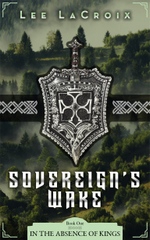
Sovereign’s Wake by Lee LaCroix

Sovereign’s WakeSovereign’s Wake

by Lee LaCroix
Series: In the Absence of Kings, #1

PDF, 344 pg.
2015

Read: December 26 – 27, 2016


I don’t normally get into the nitty-gritty of the writing when I compose these posts — not because I don’t notice or care about it — but sometimes you have to. When I can’t make it past the first three paragraphs without the writing drawing attention to itself (not in the delicious way that Neil Gaiman or Don Winslow do so often), I feel like I’ve got to mention it.

In a different time, there was a forest that was as deep as it was plentiful. . .

That boy, Novas, possessed deep green eyes as verdant as the wild around him . . .

. . . He was taught that the land was just as alive as he was . . .”

That phraseology isn’t wrong — but it’s easy to overuse, and when you do it once in each of the first three paragraphs, you might was well be waving a flag to draw attention to it. Now, there’s no author that doesn’t stumble a bit, I can’t tall you how many times I’ve posted something here that I wish I’d rewritten a few times — I don’t want to pick on him, but wow, this kind of thing kept coming.

It wasn’t too much later that Garreth (I’ll talk about him in a bit) tells his son,

“Over my employment, many people tried to kill the King, and it was my duty to stand in between them. Instead, I put them to death…”

Uh, what?

Soon, Garreth and his son head to the capital, but we read:

In order to reach the capital of Amatharsus, their journey was not an odyssey of undertaking.

Editing is about more than just grammar and spell checking — it shouldn’t be less than that. I don’t know if I could find a page that didn’t have a problem with the writing.

Enough about that, I had a few more notes on that front, but no one wants to read it (I don’t want to write it). Let’s get on to story and character.

Garreth is a former guard of the king, who has taken a post guarding the forest. And, let’s be honest, doing something else, too. But LaCroix won’t reveal that until book three. We know nothing about his wife and/or the mother of his son. We’ll probably learn about Novas’ parentage in book three, too. Anyway, the two learn that the king is dead and that The Queen/Powers acting without knowledge and consent of the Queen/The Queen working with these Powers have decided to level the forest for economic reasons.

Garreth can’t believe this, so he and the boy leave for the capital to find out what’s really going on. Along the way, they learn more about the Blackwoods Company — the same people out to raze the forest — who are playing both sides of the law — thieving, pillaging and whatnot, while acting as enforcers for the authorities. The two join up with — and taking leading roles — in the resistance to the new order that has developed in the absence of a king.

Overall, this is a poorly written book. The story was adequate, but there was nothing about it that made you pay attention. Many of the characters had potential to be something, but they end up being something we’ve all seen dozens of times before in better stories. I can’t think of anything to commend this novel.

Disclaimer: I received a copy of this book from the author in exchange for my honest opinion. I really wish this had been more timely, sorry about that.

—–

2 Stars

Follow the Dotted Line by Nancy Hersage

Follow the Dotted LineFollow the Dotted Line

by Nancy Hersage

Kindle Edition, 326 pg.
Kindle Press, 2016

Read: December 17, 2016


Mitch’s assistant opens the mail one day and finds a styrofoam container (the kind fast food joints used to widely use) holding the remains of Mitch’s father. His fairly new wife had sent them via the USPS with a note saying, leave me alone. So Mitch calls his younger brother — a guitarist for a country band to tell him the news. Ian calls one sister, who calls the other, who calls their mother, Andy. Clearly a close-knit family. Mark was a jerk, dumped his family and did little for them afterwards. They responded in kind.

Still, your ex- (that you really never got over) or your father dies, and it gives you pause. Particularly when you’re mailed his ashes with no details about his death. Eventually, curiosity (and the slight possibility of an inheritance gets the better of the kids and they decide to investigate a bit, and get Andy to do it. Andy dives in with both feet — eventually bringing her best friend/accountant, Lorna and her nephew, Harley Davidson (long story). There’s really nothing to commend Andy for this gig — she’s a TV movie writer in-between projects/facing retirement. But, there’s something to say for availability and commitment, I guess.

This is a comedic mystery — heavy on the comedy. It is easy as pie to correctly guess/predict every beat in the mystery once Andy gets underway. But Hersage is a competent writer, and hits her marks well, tells them in an entertaining way and keeps the reader engaged. So who cares if it’s that easy?

The characters of Andy, Lorna, and the children are a lot of fun — and its with them that Hersage shines. I liked them all, enjoyed their interchanges, etc. Even the villain was told in an entertaining way — was a villain, did evil things and got some just desserts, but still fit tonally with the whole. I wasn’t crazy about Harley — it’d be very easy for people belonging to a couple of religious groups to be offended by him, but he was clearly written to be the object of mockery. So I wasn’t offended (even if I am , but I couldn’t care about him as a character, you know?

On a very minor note, one of the locations for this story was a city about 10 minutes away from my home — nice to see it in a novel and not used as a punchline. Thanks for that, Ms. Hersage!

I’m not really that convinced that this was a good book — but it entertained me, and I think it’ll entertain most readers. So, if nothing else there’s that. It’s funny, it has some well-executed (if predictable) twists, and for something in this genre, it’s pretty violence-free (I’ve read bloodier cozies).

Disclaimer: I received this book from the author in exchange for my honest opinion, it had no bearing on anything I said. This is very overdue, and I’m really sorry about that — and that had no bearing on anything, either.

—–

3 Stars

To Kill a Shadow by Nathan Ronen

To Kill a ShadowTo Kill a Shadow

by Nathan Ronen

Kindle Edition, 269 pg.
2016

Read: December 19 – 21, 2016


(other than the author link, the links above don’t work, because I wasn’t given any and can’t pull up anything on google other than goodreads or amazon pages — I’ll fix them if possible)

Ostensibly, what we have here is an espionage thriller from the point of view of a Mossad operative, juggling intelligence operations, internal politics, revenge, and a messy personal life. I liked that idea, I like the concept, and think I could’ve liked this book if that’s what it delivered. Instead we get a collection of half-baked ideas, story snippets scattered around with an attempt made to squish them into a coherent whole.

Arik Bar Nathan is a Mossad agent — and apparently can’t tell anyone in his family that. His marriage and relationships with his son and daughter have been the major casualties of that. Not that his relationship with his younger sister and mother have fared all that well, either. Events conspire to get him to realize just how badly he’s messed things up, and some Oprah-level advice enabled him to start the process of rebuilding things with his kids. This is quite possibly the most successful part of the book.

The heads of Israeli Intelligence (and those close to them) and the Prime Minister all apparently have the emotional maturity of middle-school girls — they fly off the handle for no reason, have the shortest fuses you can imagine, yell and scream at the drop of a hat, and play petty political games dealing with pettier personal gripes. If people were this mercurial in the real world, the Middle East would be in worse shape than it is. Somehow, these characters are able to pull off a couple of major operations without major loss of life and stability.

There are a few other storylines, too. Like a love story that defies logic, and can only work because this super-spy is super-gullible when it comes to this woman, and because the reader is willing to suspend every once of disbelief.

There is no sense of urgency to anything, really. Well, I take that back — if there’s an event, say, Arik’s mother having a medical crisis, or someone being shot — there’s a lot of hustle and bustle surrounding that. But as soon as the immediate situation is addressed, the issue is put on the back burner and ignored. I understand that a lot of intelligence operations are about timing, patience, waiting for dots to be connected and opportunities to arise. But can you tell as story about that without seeming to ignore the issues while waiting for opportunities? Absolutely. If you know there’s an assassin in a small country targeting one man, you should maybe, I don’t know…hunt for him. Especially if the target is supposed to be a cracker-jack spy.

There is a subplot that shows up for one chapter centering on a secondary character and then disappear — other than offering a distraction from the story, there’s no purpose for its inclusion. Even that secondary character acts pretty differently in this chapter than he does throughout the novel.

Most of the characters are not much more than sketches — there’s no life to them. They’re almost well-developed, a few are almost complex — but Ronen leaves them at almost. Those characters at the beginning of NCIS or Bones that find the dead bodies to kick off episodes are better drawn than just about all of these.*

I do think that Ronen had a bunch of cool things running around in his head — some to do with espionage, some to do with a spy putting his personal life back together, some to do with descendants of the Holocaust finding peace — but he didn’t know how to execute them in a narrative. I couldn’t connect with anyone or any story, but I really wanted to. I honestly didn’t know what I was going to say about this book when I started writing this post — I’ve been trying to come up with a reason to recommend this one, but I can’t.

Disclaimer: I received a copy of this book from the author in exchange for my honest opinion — it clearly didn’t impact things.

—–

* That’s not a huge insult, really. They pack a lot of character into those couple of minutes.

—–

2 Stars

Practice Makes Perfect by Michael Portnoy, Adelia Drubetski, Freda Zolty Kovatch

Practice Makes PerfectPractice Makes Perfect

by Michael Portnoy, Adelia Drubetski (Illustrator), Freda Zolty Kovatch (Translator)

Kindle Edition, 26 pg.
Tzameret Books Ltd, 2016

Read: December 16, 2016


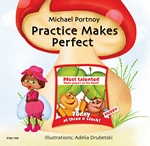
Madam Fly’s two sons are musical geniuses, or something like it — because she’s convinced they should put on concerts despite having no experience with playing whatsoever. How hard can it be?

Well, experience and the crickets who run the local music shop try to teach them an important lesson when it comes to music (or just about anything). The question is: will they learn?

Drubetski’s art is eye-grabbing, distinctive, and attractive. I’ve never been good at talking about illustrations, so I won’t try too hard — but I liked it, and think my kids would’ve at the right age, too (they might now, but there’s no way that they’d deign to give an opinion on kids’ books at their ages).

Kovatch scored big here — it’s got to be tough enough to translate someone’s book, especially one for this age group and make it work. Then you add in rhyming? Forget it. I don’t know how she did it, but it couldn’t have been easy.

This is supposed to be for ages 6-8, I can buy 4-6. But I do have a tendency to miss those targets, still — give it a glance before you give it to a 2nd Grader.

Yeah, it’s a bit moralistic and preachy, with an abrupt ending (which just emphasizes the moral). But I think it works for the target audience. I would’ve appreciated some clear evidence of growth on Madam Fly’s part, but . . . who’s kidding who here? It wasn’t that likely.

A fun little book that teaches a lesson too few want to hear. Recommended.

Disclaimer: I was provided a copy of this book by the author in exchange for this post.

—–

3 Stars

Sons in the Son by David B. Garner

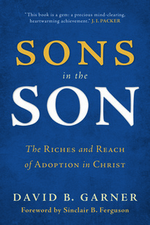
Sons in the Son Sons in the Son: The Riches and Reach of Adoption in Christ

by David B. Garner

eARC, 400 pg.
P & R , 2017

Read: October 23 – December 11, 2016

At the heart of Pauline soteriology is the redemptive-historically charged concept of adoption (huiothesia). For Paul, the entirety of our redemption—from the mind of God before creation itself until its eschatological completion in our bodily resurrection—is expressed by filial reality, filial identity, and a filially framed union. As we will see in the following pages, this filial grace in Christ Jesus is expressly and implicitly, in Pauline theology, adoption.

I remember the first time I was really introduced to the doctrine of Adoption — sure, the idea had been mentioned throughout my Christian life, and using some material from an Ancient History class on Roman culture, I’d developed my understanding a bit, but it wasn’t until I’d been Reformed for a year or two that I heard someone seriously discuss the doctrine — the elder of the church I belonged to at the time walked us through the Westminster Confession’s teaching on it — the most robust development and explanation of the doctrine in Reformed Confessional history. I recall being struck by this teaching, how vital it was — and then hearing very little about it (on the whole) for the next couple of decades.

You see, despite being one of the three benefits the Westminster Shorter Catechism says that they who are effectually called partake of in this life (the other two being justification and sanctification, with several benefits that flow from or accompany these three), by and large, it’s been ignored in favor of the other two. Garner will describe it as a “deafening theological silence characterizing huiothesia [adoption] since the WCF.” It’s a slight exaggeration, but only slight.

Garner wants to push this doctrine to the forefront, to the limelight that it deserves, has pursued this in various forms throughout the years, and now brings it all into focus through this outstanding book.

He begins by describing various approaches to the topic — historically, linguistically, and so on — and sets out how he will proceed and build upon the best (primarily: Calvin and Westminster). This is a daunting section, but does well setting forth the landscape. It was interesting and thorough, I don’t know that it wowed me at any point, but it certainly whet my appetite for that which lay ahead.

Part 2 is where the major Biblical heavy lifting takes place — Garner goes for in-depth exegetical looks at each text that touches on the topic, building both a case for each text individually, as well as a Biblical-Theological whole. I will be honest, a lot of this went over my head — at least the details. But Garner writes in a way to ensure that even untrained laity can follow the his train of thought.

In part 3, Garner brings Adoption into Systematic Theology, primarily discussing its relation to Justification and Sanctification. He brushes up against some of the recent Justification controversies here, and demonstrates how a better understanding of Adoption, can (and should) play a significant role in resolving them. He does similar work with some Sanctification controversies — but not as much, partially because Justification has been a larger issue of late, and because historically Adoption has been (incorrectly) considered as forensically as Justification. This section probably takes more work to understand than the Exegetical section, but that could be just because I don’t try to get too much of a handle on the Greek, and I don’t have that hang up with English. Takes more work, sure, but doable.

Garner isn’t writing for laity explicitly, but he doesn’t write in a way that’s only accessible by theologians and scholars. Yeah, you sometimes there’s a lot of technical jargon to wade through, but it can be done (if nothing else, you feel smarter — and probably learn a couple of things). It was a bit weightier than most of what I’ve been reading lately, and I took my time with it to make sure it didn’t overwhelm me (it easily could have).

It’s absolutely worth the effort — this book is full of pastoral application, it will help you understand and appreciate the Pauline texts — and will deepen your assurance. This is quite possibly the best book I’ve read this year. Read this one. I will re-read it — I’m even going to buy a hard copy when this is released, you should, too.

Disclaimer: I received this eARC from P & R Publishing via NetGalley in exchange for this post — thanks to both for this. I meant it, I’m buying a hard copy as soon as I can.
N.B.: As this was an ARC, any quotations above may be changed in the published work — I will endeavor to verify them as soon as possible.

—–

5 Stars

Page 1 of 4

Powered by WordPress & Theme by Anders Norén