Month: March 2019 Page 2 of 4

The First World Problems of Jason Van Otterloo by James Bailey: This Kid’s Struggles will Bring A Smile to Your Face

The First World Problems of Jason Van OtterlooThe First World Problems of Jason Van Otterloo

by James Bailey
Series: The Jason Van Otterloo Trilogy, Book 1

Kindle Edition, 193 pg.
2018
Read: March 15, 2019

Subject: New worst day of my life

If you have stock in me, sell it now. Or is it buy? Buy low, right? Then buy, buy, buy, because if JVO shares go any lower it can only mean I’m dead. Nothing is going right and everything is going wrong. Very wrong.

It’s been awhile since I read an epistolary novel (maybe Where’d You Go, Bernadette? — oh, and The Summer Holidays Survival Guide from last year — duh — I should stop thinking before I have to rewrite this whole paragraph), but I’ve always enjoyed them. There’s something about the structure, the conceit, the immediacy of it all that really appeals to me, and has since the day I first cracked the cover of Dear Mr. Henshaw 35 years ago or so.

This particular novel is a collection of e-mails from fifteen year-old Jason Van Otterloo (known by some as Otterpop, others just call him Jason) and his friends over the summer of 2003 in Seattle. This is a good setting for the book — it’s before the ubiquity of cell-phones/texting among teens, but at a time they could be emailing several times a day and it not seem strange (like it would in the mid-90s). I don’t know if that was Bailey’s thought process, but it’s what occurred to me. The emails are primarily Jason’s — not just because he’s prolific, but that’s a lot of it. Incidentally, I only caught one thing that jumped out at me as an anachronism — which is about the best that I can think of in an indie book set in the past (I don’t go looking for them, but they jump out at me. Binge-watching wasn’t a thing in 2003. At least not by that name)

Jason’s a pretty bookish kid who loves classic movies — not just AMC (back when that’s what the station was about), but there’s a theater near his home that shows old movies. His best friend, Drew (the recipient of most of his emails), frequently goes to those with him — they also play video games together, generally at Drew’s. Jason’s parents, Janice and Rob, aren’t in the running for Parents of the Year, to say the least. I’m not sure at what point Jason lost enough respect for the that he started calling them by their first name, but it could have been when he was pretty young. On the other hand, there’s enough venom in it (at least the way it reads to me) that it might be a recent development.

Janice shows the occasional burst of maternal activity or instinct, but it’s rare. Rather than a father, Rob seems like the bullying older brother character in most books I read as a kid. But in general, the two of them act like they’re stuck in their early 20’s — coming home from work long enough to greet each other and Jason, then they leave (not together) to meet up with friends and get drunk. Occasionally, they’ll get into a fight with each other, but nothing too serious. It doesn’t appear there’s any intentional abuse — physical or mental. It’s primarily neglect that they’re guilty of. Over the course of the summer, Rob does say a few things that will likely cause emotional scars when Jason has a few years to think about them, but they’re unintentionally mean (one was said when Rob was attempting to be nice and fatherly).

Generally, Jason’s e-mails are about whatever antics his parents are up to, arranging to meet Drew or whoever else, Jason’s soliciting Drew for advice about a girl he meets (he ignores almost everything Drew says, to the reader’s amusement and Drew’s frustration), and Jason recruiting Drew or someone to get summer jobs together. There’s an ongoing thread about a new neighbor who enjoys sunbathing, and Jason enjoys (hopefully surreptitiously) watching her. Rob enjoys watching her, too, but doesn’t bother trying to be surreptitious.

Jason’s emails are largely self-centered. Most of the stories told are his, not Drew’s. He does seem to care about Drew and is interested when Drew unloads a little. But largely, the relationship seems to be about Drew listening to Jason. Drew gets something out of it, however — maybe offline — because he seems emotionally-centered enough (for a fifteen year-old) to not put up with Jason as much as he does, if Jason just didn’t contribute anything to the friendship. Just don’t ask me what it is. His self-centeredness seems typical for his age, and it doesn’t make him a bad kid — just a selfish one, and a lot of that is because he’s never been parented by anyone who has a clue. Although, really, I’m not sure how many kids who have been well-parented who don’t act like that.

His parent’s (individually and corporately) show a signs of self-improvement — AA, marriage counseling, and others. Jason is openly skeptical about these efforts — perhaps because he’s seen similar things before. Not only is he skeptical, but he seems to actively subvert these efforts. It seems odd for a kid who spends so much time complaining about his parents to complain about them trying to be better — but it’s honest. He doesn’t believe in them, so why get his hopes up that this time will be any different? Sure, from the reader’s perspective it’s easy to say that these reforms might be longer-lived if he supported them. But from Jason’s? Nah.

There is a little character development over the course of the novel — but not a lot, But it’s just a few months, so there shouldn’t be a lot, right? What’s there seems genuine and true to the character — which is great. At the end of the day, you’ll have enjoyed watching Jason struggle and survive — learning enough to keep going.

Jason’s optimistic and amusing — which is says a lot about him. The whole book is told with a light touch –it’s not overly comic, but you grin as Jason recounts his latest embarrassment with Gina, or Rob’s most recent humiliating escapades — or even as he and Drew talk about their mutual astonishment when another friend has some romantic success. Things are bad, but they’re not bleak. They’re even kind of fun.

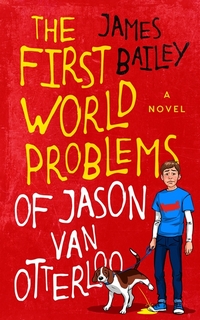
The cover, by the way, is perfect. It not only reflects a plot point, but it encapsulates the feel of the book. In a figurative sense the world pees on Jason the way this dog literally does. Yet, it’s kinda cute and amusing while it’s happening. Several good things happen to the boy, but overall, the book is about his problems (right?) and his reactions to them.

I don’t know what a YA reader would think of this — I imagine they’d find Jason relatable and likeable, but I’m not sure. But for those of us with enough distance from their YA days, it’s something that can be read with an air of “I remember when life was like that.” Even if it’s set over a decade later than my own teen years, I know people like Jason, I had friends who had a Gina in their life, and I dreamed of a girl like Sian. I’m probably not alone in this. This is a comfort-food kind of read — it’s entertaining and makes you feel good. I get kind of a Thomas Rockwell or 80’s version of Todd Strasser feel from this, very much a Lad Lit starter kit kind of thing, now that I think about it — which is good. Young Adults need something that’s not dystopian. There’s a sequel coming out in a week or two, and I’m really looking forward to it.

Disclaimer: I received this book from the author in exchange for this post and my honest opinion, which is what I provided.

—–

3.5 Stars
LetsReadIndie Reading Challenge

Saturday Miscellany — 3/23/19

Busy week for me — not much screen time, alas. So this post will be short. Can’t promise sweet.

Here are the odds ‘n ends over the week about books and reading that caught my eye. You’ve probably seen some/most/all of them, but just in case:

    There weren’t any new releases that caught my eye this week — which is a double-edge sword. I feel like I probably missed a few things, but it also gives me a chance to catch up. The struggle is real, my friends.

Lastly, I’d like to say hi and extend a warm welcome to Blair Leftly, upstateasb and vickyofficiallyofficial for following the blog this week.

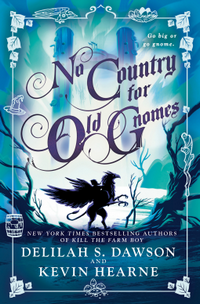
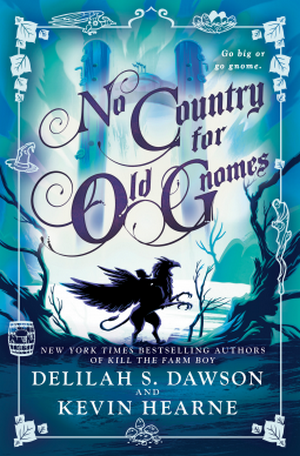
No Country for Old Gnomes by Delilah S. Dawson and Kevin Hearne is a very foine booke that surpässes the original while showing full respect to the umlaut

I’ve tweaked and retweaked this to the point that I can’t read it any more. Hope it’s mostly coherent.

No Country for Old GnomesNo Country for Old Gnomes

by Delilah S. Dawson and Kevin Hearne
Series: The Tales of Pell, Book #2

eARC, 352 pg.
Del Rey, 2019

Read: March 9 – 12, 2019


As much as I loved 2018’s Kill the Farm Boy — and talked about it everywhere and repeatedly — I wasn’t sure how much I really wanted to pick up the sequel. There’s no way it would be as good, the humor would be a little stale, and the whole approach wouldn’t seem as novel. Still, I knew curiosity would get the better of me — and it’d still have its moments. Also, I’m not at the point where I can live in a world with a Kevin Hearne book in print that I haven’t read.

I was so, so wrong. Having established their off-kilter world, strong voice, and approach to the stories of Pell, Dawson and Hearne have come back to play in it. The result is superior in every way that I can think of. I lost track of how many times I said to myself while reading something along the lines of, “how did they improve things this much?”

So this book happens in different corner of the kingdom than Farm Boy did. The Skylar is a choice piece of the land that is home to two diminutive races — halflings and gnomes. Gnomes want to live in their nice little homes, tinker with their little projects and inventions, and wear brightly colored cardigans (well, there was one gnome who wanted to wear a black cardigan, but let’s leave that aside for now). The halflings have found their government hijacked by criminals and those particular halflings are waging a war of sorts on the gnomes, driving them from their homes for unknown reasons. Driven by desperation, two of these displaced gnomes are part of our questing party here. A halfling — committed to (some may say obsessed with) the law that is being ignored by his people is another member of the party.

These three join themselves to an ovitaur named Agape — an ovitaur is like a faun, but is humanoid with sheep characteristics (feet, legs, ears, etc). She’s the last of a long family line serving as teh guardians of a rare treasure, and needs guidance. A gryphon, named Gerd, outcast from his people has been accompanying the halfling for some time, but is devoted to protecting Agape now. The last member of the party is a dwarf named Båggi Biins. Båggi is on his Meadschpringå — a time when young dwarves leave their homes to purge the violence from themselves so they can return to their homes to pursue an ascetic life of creativity. He joins the others certain that journeying with them, protecting them along their way will provide all the outlet required to use his violence in a noble cause.

Their quest? To go to the Great Library, where the founding documents of the gnomeric and halfling civilizations are located — which should prove invaluable to re-establish the peace and help the two societies get along. Agape should find resources to direct her in her guardianship, and hopefully provide Gerd with the proof that he broke no laws of the gryphons.

The fact that most people on Pell consider the Great Library to be a myth shouldn’t be taken as an argument against this quest. What better place than a possibly mythical library to provide the answers they seek?

While these characters are on their quest, working for peace — the king and his advisor are trying to solve the problems between the halflings and gnomes in a more direct approach. We also see (briefly in most cases) other characters from Farm Boy. We see just enough to know how things are going for them some months later — and on the whole, it’s just as you’d hoped/expected it to be for them. It is not essential to have read the previous volume to get 95% of this book. It’s safe to hand this one off to family, friends and coworkers who are wondering what you’re cackling about without making them do homework first.

Along the way, these characters meet a cult of cabbage worshipers, who have the ability to read prophecies in the vegetables; some very frightening mermaids (that look nothing like anything anyone expects); a very Tom Bombadil-esque character (and a few other Tolkien-inspired jokes). As in Farm Boy, the authors manage to use these ideas as sources of comedy and to propel the plot along in meaningful ways. Similarly, they use racial and personal characteristics of the characters to play with, play against and mock genre standards. But almost none of the characters are mere jokes, they’re well-developed characters that happen to be able to comedic. This is not an easy balance to achieve — and Hearne and Dawson are almost flawless on this front.

For example, gryphons are convinced that they perceive greater nuance and details in colors, sounds, tastes and the like and adjust their pronunciation of words via capital letters, umlauts and extra syllables. Gerd’s dialogue is littered with these. It starts off as a joke that just won’t stop, and instead of it getting tired or annoying (which I assumed it would), it becomes just part of the way that Gerd talks. His own particular dialect, that occasionally will strike you as amusing — maybe even just funny occasionally. I wouldn’t say it’s because the authors show restraint with it, employing it just when needed to keep it funny. Quite the reverse, they seemingly take the approach of drowning you in the joke, figuring that it’ll be funny often enough to justify it.

If you’re like me, you have a tendency to skip chapter titles. Doing so with The Tales of Pell would be a mistake. The titles are long, fitting, and insanely goofy. The only thing better are the chapter epigraphs I imagine the drafts going back and forth between the authors, each trying to top the other with the next chapter title/epigraph. And generally succeeding.

These books are noted (as I’ve focused on) for their comedy — as is right, because they are funny. But as anyone who’s read other works by Dawson and Hearne know, they’re about a lot more than comedy. The battle scenes are exciting. The emotional themes and reactions are genuine and unforced. And tragedy hits hard. It’s easy to forget in the middle of inspiring moments or humorous aftermaths of battle that these kind of novels involve death and other forms of loss — and when you do forget, you are open to getting your heart punched.

In case I haven’t made it clear here, Dawson and Hearne knocked it out of the park here. I thought Kill the Farm Boy was outstanding, and No Country for Old Gnomes surpassed it on every front. I don’t expect that the third volume of The Tales of Pell will continue this trend — but I’m more than open to being proven wrong next year. But for 2019? I’m just going to revel in the goodness — the laughs, the pathos, the excitement — brought by this adventure and the wonderful cast of characters. Get your hands on this one.

Disclaimer: I received this eARC from Random House Publishing Group – Ballantine via NetGalley in exchange for this post — thanks to both for this, I really appreciate it.

—–

4 1/2 Stars

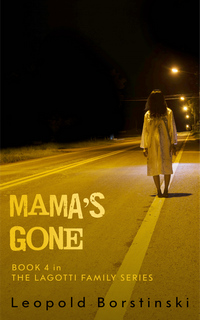
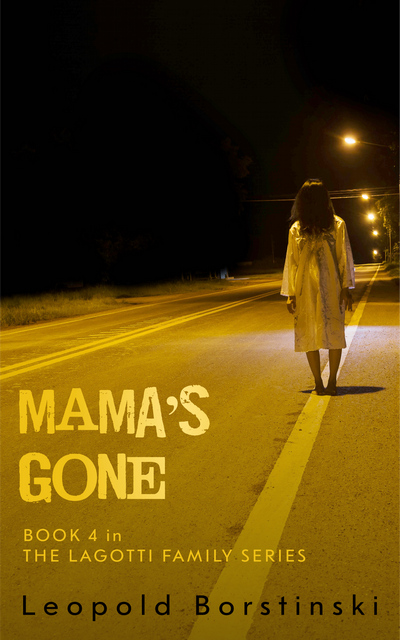
Mama’s Gone by Leopold Borstinski: The Once and Future Lagotti Family

Mama's GoneMama’s Gone

by Leopold Borstinski
Series: The Lagotti Family, #4

Kindle Edition, 301 pg.
Sobriety Press, 2019

Read: March 13 – 14, 2019

This is the fourth installment in a series whose timeline goes back to the 60’s. Which seems intimidating and not that approachable — but Borstinski places plenty of context for the reader and ensures that you don’t get lost in chronology.

Since the days of Mario Puzo (with some help from Francis Ford Coppola, Martin Scorsese, and David Chase), there’s been a cultural expectation for mob families — how much of that expectation matches reality is doubtful, but when it comes to fictional depictions we know what we should expect. A strong sense of family, of propriety, of the leadership mantle being passed from father to son in some sort of warped echo of landed nobility. But what happens as the strong leadership ages? Puzo himself gave a taste of this, but Vito Corleone had an heir in place. Of course, Junior Soprano did, too — but that didn’t mean he turned things over to him. Don Winslow’s The Power of the Dog showed the aging leader pass things off to the younger generation, and Robert B. Parker’s Broz family showed what it was like for a crime boss to hand things off to an heir who wasn’t capable of carrying the mantle.

But none of them approached the idea quite like Borstinski did – the first three books seem to chronicle the establishment of Mary Lou Lagotti in the American Crime scene — from robberies to hits on mob figures — Mary Lou showed herself to be brave, decisive and gutsy. With her second husband, Bobby, Mary Lou earned her territory in Los Angeles and the drug, prostitution and gambling money she and her people earned was well deserved and defended. We see a little bit of the establishment of Mary Lou’s empire in the 70’s as the novel opens, but really, things kick off in the mid-90s.

Mary Lou’s children — the driven, smart and careful Alice, and the impulsive, reckless, and rash Frank, Jr.; — are done with college when the book’s action really kicks off. Both are ready and eager to take their place in the family business. Alice is given an assignment or two, meets with success and is given more. Frank, is largely put in positions where he can’t hurt the family. He eventually grows up enough to establish something lasting (with a little help from his mother) on the East Coast, while Alice is living on her own, but near her parents helping expand and solidify the family’s business.

Then (and I don’t feel too bad talking about this, it’s in the blurb) Alice and Bobby start noticing little things that aren’t quite right with Mary Lou — she’s missing signs, she’s making decisions that seem out of character, she loses track of conversations. And the two of them make simple moves to cover for her and start to plan for the future — and try to get Frank involved, too.

Then with the breakup of the Soviet Union and the changes in Russia — Russian crime figures come to the U.S. and start taking territory and business. Mary Lou’s reactions to the challenge on her borders, and she tries to expand (and while she’s dealing with her memory problems) will determine not only her future, but the future of her family.

Watching Alice and Bobby trying to deal with this changing reality is fascinating, trying to keep the appearances of normality while protecting the family and their employees. This kind of story has been told before — with politicians or business leaders — but rarely with the kind of stakes that the Lagotti’s are dealing with.

Technically, this novel a mess — spelling errors, punctuation problems (both missing punctuation ad unnecessary), there are entire conversations without dialogue tags (sometimes you can tell who’s saying what, but not all of the time), word choices that bring out your inner-Inigo (“I do not think it means what you think it means”), etc. I’m not sure that criminals in the 1940’s actually used the phrase “stool pigeon,” I’m even less convinces that hardened killers and drug dealers in the 1990’s did. While the dialogue is full of slang (archaic and otherwise), the narrative avoids it — with one exception, “fellas.” “Fellas” is used repeatedly by characters (including a Russian mobster) and the narrative several times. It’s just jarring. All of the technical issues are repeated — I’ll cut off my list there, it’s fairly representative. It’s possible — I wouldn’t say it’s easy — to ignore the problems with the writing to focus on the characters and story.

For a crime novel, a lot more of the text is devoted to sex than to criminal activity or violence. Call me a prude ,but most of it is unnecessary to the plot and far too detailed — occasionally, it’s used to reveal character and in a way that advances the plot. But largely, it’s about crude titillation and I have no patience for that (especially in the volume this book gives us).

This is a flawed book, but a fascinating premise that’s thoughtfully executed. I’ve read (and watched) plenty of mob/organized crime stories, but the number of creators that have approached these topics is practically nil — making this something out of the ordinary and worthy of a ruminative read.


My thanks to damppebbles blog tours for the invitation to participate in this tour and the materials they provided.

BOOK SPOTLIGHT: Mama’s Gone by Leopold Borstinski

Today I welcome the Book Tour for the latest entry of the Lagotti Family saga, Mama’s Gone by Leopold Borstinski. Along with this spotlight post, I’ll be giving my take on the novel here in a bit.

Book Details:

Book Title: Mama’s Gone by Leopold Borstinski
Publisher: Sobriety Press
Release date: March 18, 2019
Format: Ebook
Length: 301 pages

Book Blurb:

When children grow up, the parents must die.

California gang leader Mary Lou has built a criminal empire while her adult children are desperate for their mother’s attention and love.

As her mental faculties wane, Alice and Frank Jr must acknowledge their mother is not the woman she once was and that they need to step up and take the helm, despite the stark differences between them.

But their sibling rivalry blinds both of them to their weaknesses which threatens the family when the Russian mob moves into the state. How can they fend off those attacks while fighting to decide who will lead the family now their dear Mama’s gone?

About Leopold Borstinski:

Leopold BorstinskiLeopold Borstinski is an independent author whose past careers have included financial journalism, business management of financial software companies, consulting and product sales and marketing, as well as teaching.

There is nothing he likes better so he does as much nothing as he possibly can. He has travelled extensively in Europe and the US and has visited Asia on several occasions. Leopold holds a Philosophy degree and tries not to drop it too often.

He lives near London and is married with one wife, one child and no pets.

Leopold Borstinski’s Social Media:

Twitter ~ Facebook ~ Website ~ Amazon Author Page

Purchase Links for Mama’s Gone:

Amazon UK ~ Amazon US ~ Goodreads


My thanks to damppebbles blog tours for the invitation to participate in this tour and the materials they provided.

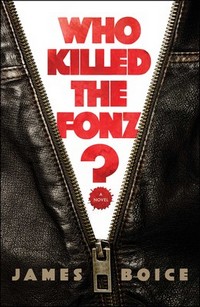
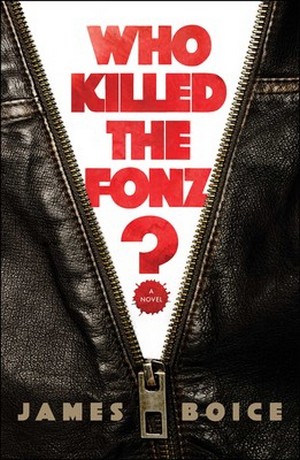
Who Killed the Fonz? by James Boice will leave you groovin’ all week

Who Killed the Fonz?Who Killed the Fonz?

by James Boice
Hardcover , 208 pg.
Simon & Schuster, 2019
Read: March 9, 2018

“Everyone gets old,” said Ralph. “No one stays cool forever. Not even the Fonz.”

Like almost every American of a certain age — I have warm memories about the show Happy Days. Granted, my memories are a bit hazy — the show premiered when I was a few months old, but I was 10 when it ended. So I know I watched a lot of it between the first-run episodes and syndication (surely, someone syndicated those and I watched them) — I mean, we had 3 channels (plus PBS), what else were we going to do? I remember very little about it — I thought Potsie was kind of annoying, Ralph was hilarious, I didn’t care too much about Joanie or Chachi, and the Fonz? I mean . . . who didn’t want to be Fonzie? For everyone in my generation, our first exposure to the concept of “cool” our first symbol of it, the avatar of coolness was Arthur “Fonzie” Fonzarelli.

I have clear memories of being 5 (+/-) and being at a semi-local amusement park riding a Carousel that in addition to animals, had some cars you could ride in — or motorcycles. I hopped on those motorcycles and every time I went around to where my parents were standing and watching, I’d give them a big thumbs up and an “Ayyyyyyy.”

What I’m trying to say is that I am a full-fledged member of the target audience for this book. But then again, pretty much everyone alive who’s roughly my age or old is, too.

This novel takes place in late October of ’84. Filmmaker Richard Cunningham’s career is on the skids, he’s got an epic movie he’s been trying for years to make, but no one wants him to (today we’d call it Oscar-bait, his agent and movie companies considered it to be Box Office poison); he’s just spent time talking to friend/contemporary “Steve” about his new time travel movie with the kid from Family Ties and his agent is trying to get him to write a script for a well-funded Star Wars-knock off.

The poor guy is having a rough day . . . and then he gets home to learn that his old friend, Arthur Fonzarelli has been in a wreck on his beloved motorcycle and is dead. Granted, the two had lost touch, but the knowledge that the Fonz is dead shakes Richard to his core. He quickly makes arrangements to head back to Milwaukee to attend the funeral. Neither his mother (who lives in his home) or Lori Beth can make the flight, so he’ll stay in Joanie and Chachi’s house (they’re on vacation and can’t catch a flight home in time to attend). Shortly after arriving, he runs into Al, Ralph, Potsie — and even the jukebox.

Very quickly, Boice has set the tone (nostalgic, amusing, and wistful) and ticked off the major boxes when it comes to fan-service. He’s going to have some fun with and even re-examine some aspects of the series (see the conversation that opening quote came from) — but he’s going to do it with respect for the source material. This isn’t The Brady Bunch Movie, but it’s not a slave to the original (see, Superman Returns).

That accomplished, he puts Richard into new territory — he’s brought out to the home of a Wisconsin gubernatorial candidate, who wants him to write a commercial for the final days of the campaign — Richard even agrees to direct it. This gives him time to decide if he wants to follow his agent’s wishes as well as an excuse to stay in town. Which he needs once he’s given some information that leads him to conclude that Fonzie wasn’t the victim of an accident, but was murdered.

So Richard has to figure out the direction of his career, convince anyone else that the Fonz was killed and/or find the killer, in a matter of days. All the while coming to terms with being home for the first time since he left for Hollywood, just days after coming home from the Army.

You make this a novel about struggling filmmaker Robert Cummings, returning to Detroit for the funeral of his old friend Frankie — free and clear of pre-existing pop-culture prejudices and baggage — and I’d still probably like t his book. Not as much, but it’d still be good. Wrap this up in beloved characters? The pretty good book becomes something else.

The identity of the killer was pretty clear soon after Richard started thinking about it (maybe even before then), and the motive seemed semi-obvious. But a big reveal close to the end changed the stakes significantly and made the motive and identity much more believable. And like with so many mysteries, the “whodunit” is less important than the journey taken to get to the revelation of the identity — and this journey rocked. Richard’s introspection and self-assessment was well-handled, as was his getting re-acquainted with his old high school friends, seeing what they’d made of themselves, etc. There’s a good balance of sentiment and story here — not unlike a certain situation comedy at its best.

I read this in one sitting, which I love doing, and the book moved along so nicely I didn’t even think about putting it down for any reason. It’s a thoughtful read, but not a ponderous one. It’s a murder mystery, but there’s only one or two moments of danger — it’s very much on the cozy side of the street, and can easily appeal to people who’d never read a murder mystery. It’s lightly told and frequently amusing, but not very comedic. I will say that I laughed once — thanks to Ralph, of course. While frequently amusing, this wasn’t a comedy — but Boice was able to use Richard’s friends to lighten a pretty tense moment — and to use that incident to push the story along rather than detract from the story. It’s not a grab you and won’t let go, kind of book — but it’ll easily keep you engaged.

The nostalgia starts with the Table of Contents (I’m serious here) and flows right to the last page, but never dominates anything. Boice keeps it from being schmaltzy or cheap, it’ snot just about the show, it’s about the characters (which I think would be particularly difficult with this group). This gets a strong recommendation from me — even if you end up not liking it as much as I do, I can’t imagine anyone walking away from this anything but happy about the time they spent with it. It’s one of those that gets better the more you think about it — the way that Boice built-on the foundation of the series and yet created something wholly original (and possibly deserving of a sequel, as long as it didn’t involve a murder) is truly impressive.

—–

4 1/2 Stars

2019 Library Love Challenge 2019 Cloak & Dagger Challenge

Saturday Miscellany — 3/16/19

Story behind this late post isn’t as interesting — but nicer — than last week’s. If you’re curious, check out my other blog in a bit (bit = 1-48 hours). Otherwise, here are the odds ‘n ends over the week about books and reading that caught my eye. You’ve probably seen some/most/all of them, but just in case:

    This Week’s New Releases I’m Excited About and/or You’ll Probably See Here Soon:

  • The Last Act by Brad Parks — an out of work actor goes undercover in prison. Not really the Feel Good Novel of the Year, but what else do you expect from Brad Parks? I had a bit more to say about it recently.
  • Titan Shade by Dan Stout — Alien Nation + whatever that Will Smith Urban Fantasy Netflix movie was + Life on Mars (UK version). Or something. UF about a homicide cop in the 70s. Looks like it could be fun.
  • Instant Karma by Todd Morr — disgraced ex-cop becomes a security advisor to the underworld. Also looks like fun — it’s on my Kindle, hoping to get to it before the end of the year (I wish that was a joke…)

Lastly, I’d like to say hi and extend a warm welcome to Erwin Wensley, dragonflybooks, virgoebooks and BOOKVENGER-44 for following the blog this week.

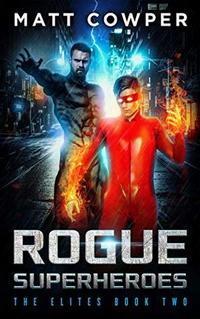
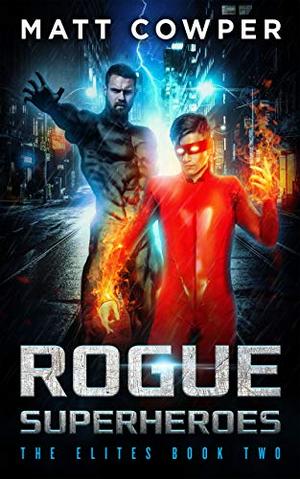
Rogue Superheroes by Matt Cowper: Unintended Consequences Wreak All Sorts of Havoc on the Heroes’ Lives

Rogue SuperheroesRogue Superheroes

by Matt Cowper
Series: The Elites, #2

Kindle Edition, 242pg.
2019

Read: March 7- 8, 2019

When we left Nightstriker at the end of The World Savers, he was trying to apply the new convictions he’d adopted after The Elites encounter with the Giftgiver and his followers. Yes, the primary task for heroes like himself was to take on super-human threats, but other sources of injustice should be in their sights as well. Starting with corrupt politicians and government officials. Nightstriker, who seems to accumulate intelligence on everyone he stands next to in line at Starbucks, had plenty of dirt on them all — and starts releasing some of this information to the Press. Suddenly, officials are forced to resign in droves — and the stresses on the fault-lines of society increase exponentially.

Suddenly, the nation seems on the verge of civil war, and Nightstriker comes clean to the team about what he’s done. Before they can even decide how to react, their HQ is attacked and the President identifies Nightstriker (and because of him the rest of the Elites) as the source of the leaks and exposé stories. As they try to get out of the rubble that was their HQ, a new, government-controlled, team of heroes comes to arrest them. Before the Elites can really wrap their minds around what’s going on they’re on the run, hiding and licking their wounds.

So the Elites have to clean up their image, defeat the new team, and try to help fix the mess that Nightstriker inadvertently created by not thinking things through as he should have. It’s a good thing they’re super-heroes, or this could be very daunting.

That’s not the whole book — like before, a significant portion of the book is devoted to Sam (Blaze’s) continued maturing and the growth of his powers. There are heavy prices for him to pay along those likes I have to say, but especially for the reader — it’s all worth it. The rest of the team have strong storylines — and a good number of people from the previous book make appearances (some pretty significant). It’s easy (and right) to focus on his “Big Three” and what’s going on with them, but without the rest of these characters, the book wouldn’t work.

In the midst of a story where the stakes are so high — Cowper throws in a lot of smaller stories, a good number of scenes that aren’t involved in the overall story, but develop the characters well. It’s a well-balanced story, just enough of things that aren’t the overarching stories to round out things so you can take in all the details of the rest.

I cannot tell you how many times Cowper did things with these characters I didn’t see coming. Things happened to people (powered or not) and then the heroes reacted in ways that were shocking. Despite the fact that this is only the second book in a series, Cowper is clearly playing for keeps and won’t be satisfied with simply injuring some characters. More than once, I had to go back and read a couple of paragraphs again just to make sure that Cowper had the chutzpah to do what I thought he did. “I couldn’t have read that right, because that’s just . . . nope, he did do that.” It wasn’t deconstruction and shocking moves for the sake of it, there was a reason for it all and it served the story, but wow.

But that’s not to say that everything is dark and grim — yes, Cowper’s Super-Hero stories are more like a movie directed by Zack Snyder than one directed by Patty Jenkins or Jon Favreau, but there are moments of joy, of small victories, even a little romance. The moments with Blaze and Metal Girl continue to be enjoyable and are a great break from the Nightstriker drama (even when the moments with the two aren’t happy times). The character Anna, introduced late in The World Savers proved to be another source of relief from the tensions — which is odd, because things don’t really go that well for her for most of the book.

Slab and Buckshot continue (in my opinion) to be under-served, but they both had opportunities to shine here, and we saw more aspects of their character. I do understand why they don’t get the time devoted to them that Metal Girl, Blaze and Nightstriker get — I really do. Also, I’ll probably complain about Slab’s use until Cowper gives him POV chapters that make up at least a third of a novel. Still, Cowper uses the characters well and I like them a lot — he’s probably right to give them the “screen time” that he does. It’s better to leave readers wanting more, anyway, right? Rather than a “I don’t know why we spent so much time with Buckshot, when we could’ve got some more awkward flirtation from Blaze” situation.

A quick note — I thought the original cover for The World Savers was just fine. But the new cover, that matches the look of this cover, is just outstanding (as is this one). It’s a small thing, but the covers are great.

I had a blast with The World Savers, but Rogue Superheroes surpassed it on every front, and I was excited to read it. I’m not sure how Cowper continues the story from where it is — The Elites and the world around them were pushed to such extremes in these pages that topping this book might prove too much to try — but if instead of trying to climb that mountain, he goes around it just right, it could be very satisfying. I am really looking forward to seeing how he proceeds (and how wrong he proves me).

For solid super-hero action, a dash of intrigue and some jaw-dropping outcomes, Rogue Superheroes will satisfy any reader, and I encourage you to go grab it.

Disclaimer: I received a copy of this novel from the author in exchange for my honest opinion about it.

—–

4 Stars

LetsReadIndie Reading Challenge

Coming Attractions (I hope…)

The last three nights I’ve sat down to write my next post and have promptly fallen asleep before finishing a paragraph. Which is quite annoying, because I’m not more tired than normal (I don’t think) and I am very excited about these three books.

So in lieu of an actual post, given largely as proof of life, here’s a quick glance at what’s coming down the pike. Hopefully starting in 24 hours.

Who Killed the Fonz?Who Killed the Fonz?

by James Boice

This is funny, heartfelt, a goofy idea, and a far better book than it has any right to be.

Rogue SuperheroesRogue Superheroes

by Matt Cowper

This takes everything he did right in The World Savers and improves on it (at least a little) while continuing the story.

No Country for Old GnomesNo Country for Old Gnomes

by Delilah S. Dawson and Kevin Hearne

Set in the same kingdom as Kill the Farmboy, and features (at least for a couple of pages) the same characters, but focuses on a new cast. I figured this was going to be almost as good as its predecessor, but it’s better in every way — better characters, better story, and more laughs. None of which I’d have thought likely.

Pub Day Repost: The Last Act by Brad Parks: He’s in the jailhouse now

The Last ActThe Last Act

by Brad Parks

ARC, 368 pg.
Dutton Books, 2019
Read: February 26 – 27, 2019

Inspired by the Wachovia Bank scandal from a few years back, Brad Parks’ third stand-alone is a departure in a sense from his previous two. Rather than crimes close to home for his protagonists, this is crime on an international scale, with most of the figures involved never laying eyes on each other.

Mitch Dupree was a high-level bank executive who was convicted of aiding a Mexican drug cartel by laundering a lot of money. He’s been sentenced to a minimum security prison in West Virginia. If after reading this — or even while reading it — you want a few more details about what happened with Dupree before the novel starts (or more specifics about the events leading up to his arrest), check out the prequel short story, The Whistle Blower. He has made it known both far and wide that he has a large amount of evidence against the cartel tucked away safely — and as long as he and/or his family are alive, that evidence stays hidden.

Naturally, the DEA, FBI and the cartel want to get their hands on it — and are willing to do some above and beyond work to get it.

Enter Tommy Jump — he’d risen to fame and prominence (and a Tony nomination) as a child on Broadway, but as he aged into adulthood the parts dried up. He’s on the verge of calling it quits — at least for a couple of decades. He’s approached by a childhood friend, Danny Ruiz, flashing a shiny FBI badge and an interesting job offer. Danny and his partner, Rick Gilmartin, want Tommy to go undercover with an assumed identity of a bank robber and serve time in the same prison. He has six months to get close to Dupree, win his trust and get the location of the documents. If the intelligence he gathers leads to indictments, he gets a hefty bonus on top of the pretty nice initial paycheck (all the funds come from civil forfeiture, and the well seems to run pretty deep). Given that his fiancé — a painter waiting to be discovered — just told him she was pregnant, any kind of pay-day sounds good to an out-of-work actor, one with a pay-day that could set them up for years? How can he pass that up?

The early stages of the plan go pretty smoothly — Tommy’s given a new identity, develops a cover story and is sentenced to the same prison. He arrives and gets settled — not really making friends, but getting well acquainted with fellow inmates, who show him the ropes and help him get acclimated. It goes so smoothly, actually, that it bugged me a little. Sure, he’s an actor, but this isn’t a play, there’s no script, and it seems easy. But, Tommy’s such a likeable guy, a winning narrator that I just kept shrugging off my skepticism and rolled with it — I wanted things to work out for Tommy and Amanda, I wanted to see what happened with Dupree — so whatever it took to get me to seeing if things would work out for them I could accept.

And then — because this is a thriller, because Parks is good at torturing his readers (that’s why we keep coming back), and because no one is as lucky as Tommy seemed to be — everything got nearly impossible. On a dime, the momentum changes and suddenly thing look incredibly grim for Tommy, Amanda, Dupree and several other characters. Naturally, at the same time the bottom fell out and I was reeling from a pretty significant reveal, my lunch break ended and I had to get back to work with no time to process things. I know it’s stupid, but it felt like Parks planned it that way.

The novel alternates between Tommy chapters and chapters with Amanda, one of the cartel’s higher-ups and his efforts to find the evidence, Danny and Rick, and Mitch Dupree’s wife. I was honestly surprised how much time we got with Amanda and Mrs. Dupree — both of whom had their own character arcs independent of (although influenced by) Tommy and Mitch. I could’ve used a little more of both of them — not that Parks short-changed them in any way, but their stories were so interesting that I would’ve enjoyed it. Alternatively, by the end of the book (especially in light of The Whistle Blower), I was surprised how little time we got with Mitch Dupree — again, it’s not that he was short-changed, I just would’ve assumed we’d have more time with him. And what time we do have with him was by and large mediated through Tommy or his wife.

Beyond that, all the characters are well-drawn, well-developed and the kind that you would like to spend more time with. Parks has always displayed a great knack at creating characters that you can easily imagine coming across in real life — no matter their walk of life. They’re not all good people (particularly those who are aligned with the cartel), but they’re all believable people.

Before I get back to what Parks did right, I have a couple of problems that I want to talk about — as always, I’m afraid that the amount of space I spend talking about them is going to give the idea that I had real problems with the book as a whole. I didn’t. It’s just a couple of issues — issues that take more space to explain than the bits I like take. Still, they’re worth talking about.

I’m not 100% convinced that Parks adequately gets the point across about how dangerous this cartel that Tommy’s mixed up in is. Don’t get me wrong, it’s not like he portrays them as cuddly or anything. But I’m still not sure I got a large sense of threat and doom from them–Tommy and Dupree carry that sense, they’re adequately scared (especially Dupree), but I’m not sure that Parks gets the readers to be. I know he’s capable of it, I’m just not sure he did it here.

Similarly, I think he could’ve done a better job depicting life in the minimum security prison, the daily ins and outs — the lack of privacy, the loneliness, the hardships. I’m struggling for words here — the deprivations from a life of liberty that make prison a place you want to avoid, even a minimum security prison.. . It honestly felt like Tommy had an easier time getting up to stuff (including out-of-the-building excursions) in the middle of the night than Harry, Ron and Hermione did at Hogwarts. Or to put it in a different light — Say Nothing‘s Scott Sampson’s pretty sizeable home and nice office, felt far more confining than the prison did. And the small house that Melanie Barrick called home in Closer Than You Know seemed much more restricting and frightening than Tommy’s incarceration (as did the county jail she spent time in).

That said — what Parks was able to convey very strongly was the life-and-death nature of the situation that Tommy, Dupree, and Dupree’s wife was in. Also, the questions of identity, the future consequences of everyone’s actions loomed large here and dominated their thoughts, motives and actions. Where Scott and Melanie’s stories were much more immediate in their focus (yes, with long-range repercussions, but a very intense focus on the immediate future), Tommy’s story and his own focus is on the future. He spends very little time thinking about the now of things, most of his eye is on a decade away — which is likely tied in to his sentence.

As I mentioned earlier, when things started going bad for Tommy, they went really bad — and the rest of the book didn’t lighten up on him. It’s almost as if Parks lulled readers into letting their guard down before hitting them hard (actually, it’s probably exactly that). The twists and turns start to come fast and relentlessly. The beginning of the book is interesting and winning — and then once the hook is set, Parks just messes with you and you can’t relax until everything is over. In his previous stand-alones, Parks pretty much kept the tension and suspense going from the first chapter theory the end. In this book, he saved almost all of it until the end, so it hits you harder. So it stops being about characters that you’d like to see succeed or find out more about, to characters that you like and have to know if they’re going to survive with their wits, health and family intact — and you have to know it right now.

About the same time that things got intense, I had a realization — I think I’ve figured out what makes Parks’ novels work so well, how he gets his readers to commit — in The Last Act — and everything else he writes — what matters most is family. Ultimately, all his books are celebrations of family, and what people will go through for the sake of family. It’s tucked away in some of the Carter Ross books — but, without going back to reread any, I’m pretty sure its there. But especially in his stand-alones, this is Parks’ recurring theme. It’s the way he connects his audience to whatever his protagonist is going through and to the protagonists themselves. There’s something instinctive, primal about the way that Parks portrays family and the lengths that individuals will go through for them — whether the family is just starting or well-established. something that Tommy and Dupree have a conversation about made that click with/for me — and thinking about it is the only thing that got me to think about putting this book down for a moment.

I’ve yet to be disappointed by a Parks book, I’ve enjoyed all of them — and this is no exception. I do think there’s something special about this one, both in Park’s construction of the novel and what it’s saying about the characters. He takes some risks, and does some things he hadn’t done before, and I was pleased to see the results. There’s a lot of heart in The Last Act, a lot of tension, and more hope than you might expect. There’s also some things said about the drug war and the prison system that are worth reflecting on. I’m not sure what else I can say to convince you to try this, so I’ll just call that good.

Disclaimer: I received this ARC from Dutton Books, which did not influence anything I had to say about it — it just means I was able to say something about it before the publication date. I do thank them for the opportunity, however.

—–

4 Stars

Page 2 of 4

Powered by WordPress & Theme by Anders Norén