Month: September 2023 Page 3 of 6

Some of the Guidance I Received on Giving Terry Pratchett Another Try

Last week, I asked for some advice on where I should start with Discworld books, since my attempts with reading The Colour of Magic and The Light Fantastic didn’t really leave me wanting more.

I received some good input, and thought I’d pass some of it along (if only so there’s a central location for me to come back to later for reference).

The overall consensus was that I picked a couple of bad ones to start with. But beyond that,

bullet Mike Finn (you should read his blog, by the way), said (in part):

Here’s the best map I know of for showing the reading order of the various Discworld subgroups.

https://upload.wikimedia.org/wikipedia/commons/thumb/1/12/Discworld_Reading_Order_Guide_3.0_(cropped)

My favourites are the Watch novels and the Witches novels.
The Watch novels start with Guards! Guards!
The Witches novels start with Equal Rites.

If you read those two and still don’t like Pratchett then he’s probably not for you.

bullet K.R.R. Lockhaven (you should read his books, by the way) admitted:

I…um…have to admit that I haven’t actually read ALL of them. Most, though. I’m partial to the City Watch books, starting with Guards! Guards! Maybe Small Gods would be good, too. It’s a standalone.

bullet Lockhaven also pointed me to Fiction Fans podcast’s “Bonus Episode: Which Discworld Book Should You Read First?” It was an interesting chat–the episode notes include:

They… don’t really give a straight answer. But they DO know which book you should NOT read first. You’re welcome.

Possible First Reads:
Wyrd Sisters (if you like witches)
Reaper Man (if you like Death)
Small Gods (if you want a good standalone with religious satire)
Hogfather (if you like Christmas)
Monstrous Regiment (if you want a good standalone with scathing social commentary)
Going Postal (if you like con artists)

bullet wyrdsis (an account name that suggests they might know a thing or two about the series), chimed in with:

…I got really into it with the Witches (starting with Equal Rites), and Ankh Morpork City Watch (starting with Guards! Guards!), then Hogfather, Thief of Time, The Truth, the von Lipwig series….etc

bullet David Frew sent me to

A DISCWORLD PRIMER*

*or, why should I read this thing that everyone keeps going on about?

by Micah @rincewind.run (another account name that suggests they might know a thing or two about the series).
bullet Gary Hayenga chipped in:

The first two novels are very different than the subsequent novels. As the previous commenter mentioned there are several sub-series set on the Discworld. Based on the other things you’ve posted about liking here I would recommend that you start with The Watch series, starting with Guards! Guards!. The second book in that series is even better.

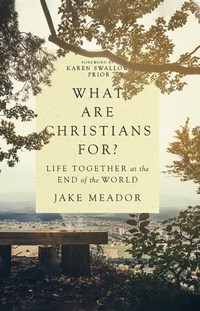
REPOSTING JUST CUZ:What Are Christians For? Life Together at the End of the World by Jake Meador: A View for Living in Culture and Nature

What Are Christians For?What Are Christians For?:
Life Together at the End of the World

by Jake Meador

DETAILS:
Publisher: IVP
Publication Date: February 21, 2022
Format: Hardcover
Length: 170 pg.
Read Date: March 27- April 3, 2022
Support Independent Bookstores - Visit IndieBound.org

God looks at this world and loves it, which is why we can and should do the same. This world is not something we should seek to escape through conquest or bend to our will through technique, power, or control. Rather, it is a gift given to us by God for our joy and his glory. Because God is love and his law is good, we can look at our neighbor and love him or her. Because God gave himself to us, we can give ourselves to others. We can confidently and joyfully enter into these debts of love that we build up over a lifetime of living in the world, and we can dispense them with extravagance, trusting that whatever wrongs we might experience today as a result of such living will be gathered up and made right in the glorious and perfect love of God.

The Back of the Book

What does a Christian political witness look like in our day?

Politics ought to be defined by fidelity to the common good of all the members of society. But our modern Western politics are defined by a determination to bend the natural world and human life to its own political and economic ends. This wholesale rejection of the natural order is behind the dominant revolutions in our history, and defines our experience in Western society today—our racialized hierarchy, modern industry, and the sexual revolution.

In What Are Christians For?, Jake Meador lays out a proposal for a Christian politics rooted in the givenness and goodness of the created world. He is uninterested in the cultural wars that have so often characterized American Christianity. Instead, he casts a vision for an ordered society that rejects the late modern revolution at every turn and is rooted in the natural law tradition and the great Protestant confessions. Here is a political approach that is antiracist, anticapitalist, and profoundly pro-life. A truly Christian political witness, Meador argues, must attend closely to the natural world and renounce the metallic fantasies that have poisoned common life in America life for too long.

Faithful Presence

In his discussion of the Christian response to those revolutions, Meador borrows a scheme from James Davison Hunter describing the four postures Christians have taken: defensive against, relevance to, purity from, and faithful presence.

He doesn’t spend a lot of space—but sufficient space—defining and then critiquing the first three, but gives more space to faithful presence. And actually, everything he argues for in the remainder of the book could fit in this category. I want to say I’d heard of Hunter’s categories before this, but I can’t remember where (in print or lecture). But first off, I really appreciated the schema in terms of describing how the American Church has responded. But even more, I appreciated Meador’s explanation of faithful presence and then his application of it.

Influences

Meador builds the arguments in this book on the work of Herman Bavinck—particularly his book, Christian Worldview. But he’s drawing on several other thinkers and writers from across the theological spectrum (a methodology borrowed from Bavinck). You can see the fingerprints of Lewis, Tolkien, Wendell Berry, John Paul II, Solzhenitsyn, Martin Bucer—and others. There’s a breadth of influences here that’s impressive and adds a lot to the arguments (and makes narrow-minded guys like me a little uncomfortable).

So, what did I think about What Are Christians For??

What did [Aleksandr Solzhenitsyn] propose as a way through the revolution? We must turn, our eyes upward to the heavens, he said, not as a place to conquer, as his compatriots in the space program believed, but as a reminder that our lives exist as a vapor in the wind, and then comes the judgment.

We do not conquer the heavens; we are judged by them. And if we fail to discover the sources of spiritual health, there is nothing else for us. Our spiritual lives will continue to be trampled on by the weight of our age. And if our spiritual lives are destroyed, no amount of wealth or power can atone for such a loss.

This seems like one of those books that I need to read a handful of times and then read some scholarly reviews—pro and con—before I can really say I have a handle on the strengths and weaknesses of the arguments. Thankfully, this isn’t that kind of blog.

How did it read? Very nicely. Meador’s writing is strong, it’s clear, and he’s able to express complex thoughts in a very digestible manner. Sure, I think I need to read it a few more times before I could say I mastered the thoughts—but that’s on me, not the text, this is just not the kind of thing I spend a lot of time thinking about. I appreciated Meador being critical of both the American Left and the American Right (you rarely see that in Christian literature), while putting forth a vision built on the best of the Christian traditions.

I don’t think Meador offers a perfect solution to the situation we find ourselves in, but there’s a lot of insight and wisdom to be found in these pages. And even if it’s not perfect, it’s a whole lot better than anything else I’ve found.


4 1/2 Stars

This post contains an affiliate link. If you purchase from it, I will get a small commission at no additional cost to you. As always, opinions are my own.

Saturday Miscellany—9/16/23

I’m putting the “misc” in “miscellany” today. I have a shorter (but will take you hours to get through if you play out every link) and pretty varied offering. I hope you find something to scratch an itch (or create one)

Odds ‘n ends about books and reading that caught my eye this week. You’ve probably seen some/most/all of them, but just in case:
bullet “I Can Give It Away to Whoever I Want”: Fables Creator Declares Hit Comic Series Public Domain, But DC Disagrees—I’ve tried a few times over the years to dive deeply into Fables, but laziness (and trouble finding them when I want them) have kept me from it. But still, it’s hard to miss the drama around Willingham and DC. I wonder how this will play out.
bullet The real spiritual journey behind Tod Goldberg’s fake-rabbi desert antihero—a good profile and I really appreciate the observations and ideas expressed about Crime Fiction (paragraph 4 is quite telling, isn’t it?)
bullet Goldberg’s brother shared the video Craig Johnson in conversation with Lee Goldberg & cast members of Longmire at Live Talks Los Angeles this week. I haven’t finished it yet, but it’s well worth your time.
bullet The Dark Humor of Millennial Crime Capers: 30-somethings can laugh in the face of anything—including death.
bullet Tufa Songs: Songs mentioned in and inspired by the Tufa novels.—Alec Bledsoe posted this playlist to Facebook this week to go with the first four Tufa novels being put on Kindle Unlimited—”a Tufa-themed Spotify playlist made up of songs mentioned in the books, songs that inspired the books, and songs that have the same vibe as the books.” Good reading music even if you (tragically) haven’t encountered the series yet.
bullet dresden files.—Flipphony put this out last year, but I didn’t see it until this week–a nice little video introduction to the Dresden files (there’s also one on the First Law that I should check out)
bullet BookForager started Counting Down to SciFiMonth 2023—and I can already tell my TBR Stack is gonna grow
bullet The Ultimate List of 46 Fantasy Books for Beginners—Oh, wow. There’s so much to mine here.
bullet The Creation of The Fantasy Explosion Flowchart—when is Peat Long going to put us all out of our misery and publish a giant book on Fantasy fiction so we all have a good, one-stop, reference?
bullet The Road to 100K Via Burnout—a good piece on burnout (something I’ve flirted with more than I probably realize)
bullet Is There a Market for “Quiet” Children’s Books?—That’s a good question (and a good answer is given). The term “Quiet Books” is new to me, but I like it.

This Week’s New Releases that I’m Excited About and/or You’ll Probably See Here Soon:
bullet The Last Devil to Die by Richard Osman—The Thursday Murder Club is back in action–who cares what it’s about?
bullet The Ninja’s Oath by Tori Eldridge—Lily Wong heads to Japan to rescue a kidnapped girl and deals with all sorts of other issues as well.
bullet Shadow of Hyperion by JCM Berne—Rohan gets a call to help from Earth.
bullet Catch Her Death by Melinda Leigh—Bree Taggert’s family are in the crosshairs in this book, and Dana’s suspect #1 in a murder. Should be an eventful read.
bullet Federation Cowboy by Joyce Reynolds-Ward—”Caroline Starshine didn’t expect to find a job when she met Jeff Tophand…Nor did she expect to find drug smugglers, a conspiracy intended to overthrow two Galactic powers and turn them into an Empire, unusual allies, a new family, and…love.”
bullet How I Won a Nobel Prize by Julius Taranto—this novel is “about a graduate student who follows her disgraced mentor to a university that gives safe harbor to scholars of ill repute, igniting a crisis of work and a test of her conscience (and marriage)”.

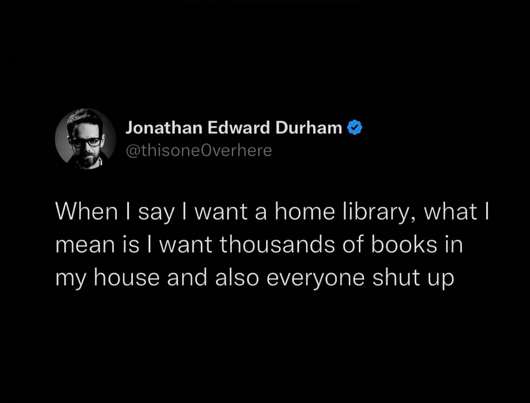
When I say I want a home library, what I mean is I want thousands of books in my house and also everyone shut up - Jonathan Edward Durham

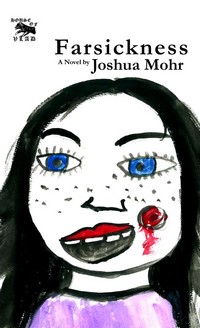
Farsickness by Joshua Mohr: A Surreal Pilgrimage

FarsicknessFarsickness

by Joshua Mohr

DETAILS:
Publisher: House of Vlad Press
Format: eARC
Length: 140 pgs. 
Read Date: September 8-9, 2023
Buy from Bookshop.org Support Indie Bookstores

A Quick Vocabulary Lesson

Leave it to our Teutonic friends to have a word for every occasion—in this case, we’re talking about “Fernweh.” Briefly, it’s the opposite of homesickness. It’s a longing for a far-off place, a farsickness. Not necessarily a particular place, but frequently it is one. The desire to travel would be another way to put it.

What’s Farsickness About?

Hal—he doesn’t really remember much about himself beyond his name—is hearing a voice inside his head. A voice telling him to go home. To go to Scotland (a place Hal doesn’t think he’s ever been, so how is it home?), to a particular castle there. Hal decides to call this voice “Fern” (from Fernweh, in case it wasn’t clear why I started talking about it) and does what Fern tells him to. Hal asks a lot of questions, only some of which get answers.

Then like Dante with Virgil, Christian with Evangelist (and others), Hal is taken on a journey once he gets off the plane in Scotland that is so strange, so fraught with peril and symbolism, and the difficult to explain, that I’m not going to bother trying. But in the end, Hal is taken on the journey to the places he’s really longing for.

So, what did I think about Farsickness?

The writing here—regardless what you think of what and who Mohr’s writing about—is worth your time. He’s got some of the nicest, most evocative phrases and sentences I’ve come across this year. They can make you grin until you remember he’s describing something horrible (or just plain weird). I think some passages would be great to read aloud—or listen to—just because of the sounds. There’s a scene of a submarine sinking, for example, it was a pure pleasure to read, the imagery was fantastic, it was a little funny, the vocabulary was vivid—and yet, it was about a manned vehicle going down. I tell you what, Tom Clancy, couldn’t have done it better (and he’d have taken multiple pages rather than the very tight paragraph or two Mohr used)—or as well.

I only have an ARC, so I’m not going to quote from it, just in case something changed—so you don’t get samples, but I’m telling you, it’s great. Think Lance Olsen, Mark Richard, or (because those names are likely too obscure) a decaffeinated Mark Leyner, and you’re on the right track. Kind of.

I’m clearly having trouble talking about that, so let’s move on to the who and what.

The more I think about it (and I’ve spent longer on it than I anticipated), I don’t know that Hal actually had fernweh. I think it’s something else—or we’re talking a metaphorical other place he wants to go. Or he thought he had fernweh, but was mistaken/confused/deceived. And…ugh. it’s hard to talk about what I’m trying to say without a lot of citations and deep-diving. It’s just something to think about as you read, I guess—”is ‘fernweh’ an appropriate term?” I actually think it adds another layer or three to things if Hal wasn’t feeling that after all. Not that it’s a bad or misleading title. I’m just wondering if we need to ponder it a while.

I’m also tempted to say that I’m overthinking things. But I’m reasonably sure that Mohr wouldn’t agree that I was.

(this would be so much easier to talk about if you had all read the book already. Why don’t you all agree to go read it right now and come back in 140 pages or so to read the rest of my post about why you should read it? Yeah…there’s something about that proposal that doesn’t work.)

Farsickness is one of those books that will tempt you almost immediately to try and figure out “what’s really going on,” to dive into the symbolism and other figurative representations to get to the bottom of things. I’d encourage you not to, just let Mohr and Hal take you along this surreal exploration of parts unknown (or are they?). Just let it unfold—relatively quickly you’ll start to think, “Oh, this is about ____.” Not long after that, you’ll know, “this is about ____.” Then you’ll start to see why it’s about ____, and why it matters. And everything you wondered about at the beginning will make utter sense. Then you’ll get some resolution to the story. Yeah, you could suss it out early on if you set your mind to it—but I think it’s a more satisfying experience (at least with this novel), if you let Mohr do the work.

Also, that approach lets you soak in and enjoy the very peculiar characters and imagery. Both of those deserve discussions of 500-1000 words a piece, but I’m not the writer to provide that.

There’s a pretty simple—and heart-tugging and sweet—story at the center of all this. But the 3+ licks to get to that Tootsie Roll center are enjoyable in their own way—and might do a little heart-tugging of their own. Yes, that candy shell is about trauma, healing, violence, forgiveness, and horror. But it’s not presented in a way that will make it too difficult to read. Like Hal, I didn’t know where I’d end up when I started the journey through Farsickness and I ended up far away from where I started—but it was absolutely worth the time (actually, it’d have been worth longer than it took, too).

This is no straightforward narrative, but the prose isn’t terribly dense and is fairly effortless to get through. After a few pages, you won’t notice it at all, Mohr will have sucked you into his absurd little reality and you’ll be turning pages like this is a thriller. I don’t know that I’d have gone out of my way for this (particularly with the cover), but I’m very glad Farsickness came across my path, and I wager you will be, too, if you give it a chance.

Disclaimer: I received this eARC from the author and Lori Hettler of The Next Best Book Club in exchange for this post—thanks to both for this.


4 Stars

This post contains an affiliate link. If you purchase from it, I will get a small commission at no additional cost to you. As always, the opinions expressed are my own.
Irresponsible Reader Pilcrow Icon

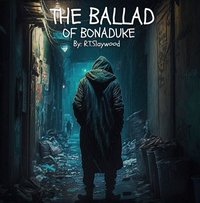
The Ballad of Bonaduke—Episode 33: Player 2 by R. T. Slaywood: From Strange to Stranger

Life, the Universe, and Everything has taken me away from this longer than I realized. Glad to get back into this series. I’m apparently 27 episodes behind, that’s a lot. I’d better try to avoid breaks for a bit.


The Ballad of BonadukeThe Ballad of Bonaduke—
Episode 33: Player 2

by R.T. Slaywood

DETAILS:
Series: The Ballad of Bonaduke, #33
Format: Kindle Vella Story
Read Date: September 14, 2023

“You gave an NPC your magic, and now we’re in the game.”

I nodded pretending to know what the hell she was talking about, trying to temper my anger. ‘Ah yes, I see, that makes sense.” I said putting as much dripping sarcasm I could into each word.

The Story So Far…

A drunken Michael Bonaduke decides to use a grift (with maybe some sort of magic/magic-like “help”) to win on a scratch-off lottery ticket so he has money to buy more to drink. He pulls off whatever he did, gets his money and some booze and stumbles off into the darkness to drink himself into oblivion so he can start again the next day. He’s hit by dark memories (probably what’s driving him to the drinking) of fire, pleading, and screaming. There’s going to be a price to pay for his grift, and he’s trying to be ready.

He’s abducted by some representatives of a mysterious group who subject him to a test—if he passes, everything will be explained to him (and hopefully the reader, too). He passes—and is brought somewhere for answers, or maybe training, or maybe another test. Time will tell (or things are going to get really annoying). Answers aren’t quick to come—but the mysteries and questions keep piling up.

Things get hairy and Bonaduke leaves and finds himself back in the neighborhood he started from. He takes refuge in a homeless encampment shortly before a police raid. He’s apprehended and finds himself an interrogation room and shortly escapes after using his grift (but with results he didn’t quite intend). He finds himself by a group of squatters who seem to have strapped a woman to a chair for reasons that can’t be good. He attempts to rescue her before he even realizes what he’s doing, and seems to have succeeded—well, the two of them got away from the group anyway—breathing but bruised. They make their way to a fast-food taco joint and Bonaduke really needs to refuel to keep going. He tries, but fails to get food because he keeps passing out. Thankfully, the clerk is the same guy from the liquor store and he both recognizes him and gives him first aid. The woman (Zero) wakes up and shows some abilities of her on as she helps them escape from her captors who’ve tracked her down.

What’s Player 2 About?

As Episode 32: Suspect number 1 wrapped up, Bonaduke tried something wreckless—even by his standards. This episode is about the results of that move.

So, Zero’s power involved tying reality into a video game, which helped her accomplish things that were impossible. As a result of Bonaduke’s meddling, they’re now in that video game—and they have a limited opportunity to get back out of it. And yeah, that sounds strange. But what do you want for this series?

So, what did I think about Player 2?

When I talked about the last episode, I said I wasn’t sure what Bonaduke was trying to do there—and honestly, I’m still not sure. But I enjoyed the fallout from his dumb move (not that he realized it was that dumb when he made it). I wonder how long Slaywood is going to stick with this arc within an arc, but I think it’s going to be fun.

Despite Zero’s attitude (and comments) about Eric, I wonder if he’s going to play a bigger role in this story than I’d anticipated. I think that’d be good. The more this series has Bonaduke with people rather than just bouncing around from event to event/location to location by himself, the better it is. You get Zero and Eric with him for a prolonged time and I think it’ll only improve. Especially if they all start understanding each other.

And if that doesn’t happen and we just get Zero for a bit? I’m okay with that, too, she’s one cool character. (and I mean “cool” in a number of ways)

This was a fun episode and the next episode or two that it sets up should be as good.


4 Stars

Scareground by Angela Kecojevic: A Twisty and Fun Ride for the MG Crowd

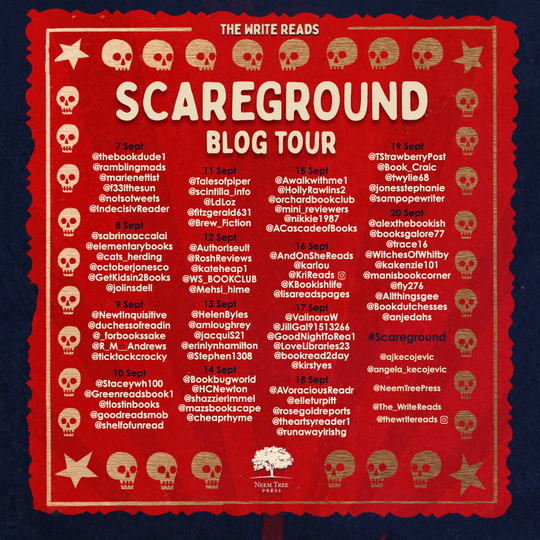
Scareground Tour Banner

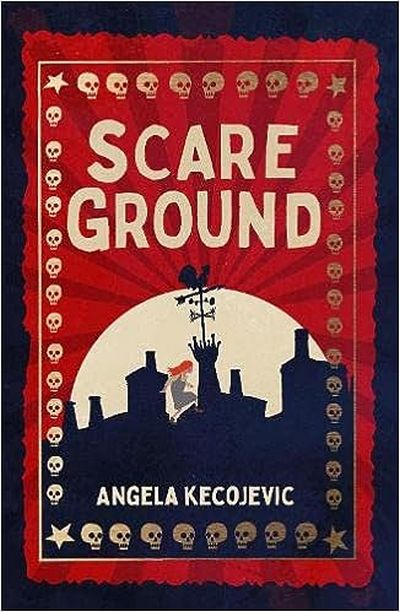
ScaregroundScareground

by Angela Kecojevic

DETAILS:
Publisher: Neem Tree Press
Publication Date: September 7, 2023
Format: eARC
Length: 304 pg.
Read Date: September 6-8, 2023

What’s Scareground About?

Nancy’s an adventuresome girl who helps in her (adoptive) parents’ bakery. There’s something about her that puts most children off—but on the whole, she enjoys her life—and gets up to a lot of mischief by running all over the rooftops of the small town she lives in. (she seems a little young, and historically early to practice Parkour, but really that’s what she does).

Through her antics, she has managed to make one friend, Arthur. Arthur’s father is overprotective due to his mother’s death and keeps a short leash on his son. But these two find ways to stretch the leash and have fun together.

Some strange things start happening in their town, pointing to the arrival of a fair. There’s no way that either of them will be permitted to attend, but they’re determined to have a look. It seems fun enough, it’s something that doesn’t happen often (not in their lifetimes, anyway), and they’ve been forbidden by their parents. For pre-teen Middle-Grade characters, you know that means they’ll sneak into it and get into adventures. Nancy has another reason to go—but she can’t bring herself to tell Arthur—she’s pretty sure that she’ll learn something about the circumstances around her parents leaving her to be found and taken in by the Crumpets.

And they do sneak in, they do get into adventures—most of which are far beyond what they could’ve imagined. The fair—the Scareground—is much more than a typical traveling fair.

Kecojevic’s Language

There’s something about the language—particularly a couple of word choices—that bothered me. A few words (like “macabre,” and “maritime”) are used perhaps too often. It feels like someone learned a new word and was trying to squeeze it in as often as possible. I obviously don’t think that’s what happened—it just feels that way.

Aside from that, the vocabulary and phrasing do strike me as someone trying to capture or create a mood—a feel to the book. One that’s reminiscent of a fairy tale or a story from another time. I don’t know that Kecojevic was entirely successful at it, however. But you can’t help but see that’s what she was going for, and it adds just the right amount of whimsy to enliven this story and the characters (Nancy in particular).

So, what did I think about Scareground?

As many good things that were in the book, several little choices that Kecojevic made added up—like the final words of the prologue which were an over-the-top threat delivered to no one at all just so the villain could monologue for a bit—and almost makes this book die a death of a thousand cuts. Please note the “almost” there. Thinking back to the prologue—you snip that monologue and you’ve got a nice, disturbing introduction to the book.

The book works well if you take it on the surface, enjoy Nancy and Arthur—and the friends they make along the way—and get caught up in the story and the strange world it takes place in. If you think about many aspects too much, it doesn’t hold up too well. It’s not a house of cards by any means, but maybe balsa wood.

Or, come to think of it—think of this as a carnival ride or fair attraction. That’s appropriate, right? It might be a spooky ride through a house of horrors, it might be an exciting-looking roller coaster, or it might be a pretty carousel—but if you look behind the curtain, or too closely at the structure, or spend too much time looking at the paint job on the horses or the lighting fixtures, and it’s less impressive.

Thankfully, you’re not going to find a lot of the target audience dwelling on aspects—they’re going to be in it for the ride. Which, getting back to my main point—works well when you take Scareground that way.

Nancy and Arthur are a whole lot of fun. The Crumpets are a delightful couple and the kind of parents (biological or not) that you want to see in fiction. And so many other characters could be talked about in this way. Nancy’s extra abilities are a wonderful, imaginative touch—but so is her heart and drive. Arthur matches that heart and drive without her abilities, and it’s their friendship that makes a lot of this work.

It’s a fast and strange ride that will entertain, for sure. I recommend it to readers of the right age.

Disclaimer: I received this eARC from Neem Tree Press via NetGalley in exchange for this post—thanks to both for this.

My thanks to The Write Reads for the invitation to participate in this tour and the materials they provided.

BOOK SPOTLIGHT: Scareground by Angela Kecojevic

This morning, I’m very pleased to welcome The Write Reads Ultimate Blog Tour for Angela Kecojevic’s Scareground. In addition to this Spotlight, my post about the book will be coming along soon. In the meantime, go check out https://twitter.com/WriteReadsTours—we’re in the middle of this tour and several bloggers have been writing interesting things about this book and and there are more to come you can find them all there. But for now, let’s learn a little bit about the book, shall we?

Scareground Tour Banner

Book Details:

Title: Scareground by Angela Kecojevic
Genre: Middle Grade, Spooky mystery
Age Category: Middle Grade
Publisher: Neem Tree Press
Release date: September 7, 2023
Format: Paperback/Ebook/Audiobook
Length: 304 pages
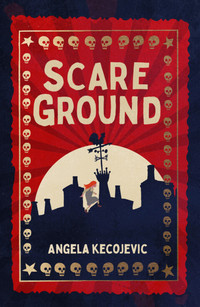
Scareground Cover

About the Book:

Roll up, roll up, the Scareground is in town!

Twelve-year-old Nancy Crumpet lives above a bakery and her life is a delightful mix of flour, salt, and love. Yet her mind is brimming with questions no one can answer: Why did her birth parents disappear? Why can she speak with the sky? And why must she keep her mysterious birthmark hidden?

Everything is about to change when the Scareground returns to Greenwich. Nancy is convinced it holds the answers to her parents’ disappearance. Nancy and her best friend Arthur Green meet the fair’s spooky owner, Skelter, and discover a world full of dark magic and mystery. Nancy must confront her greatest fears to get to the truth. But is she ready for all the secrets the Scareground will reveal?

Book Links:

Amazon UK ~ Amazon US

About the Author:

Angela Kecojevic
Angela Kecojevic is a senior librarian, author and creative writing tutor. She has written for the Oxford Reading Tree programme and the multi-award-winning adventure park Hobbledown where her characters can be seen walking around, something she still finds incredibly charming! She is a member of the Climate Writers Fiction League, a group of international authors who use climate issues in their work. Angela lives in the city of Oxford with her family.

Author Links:

Website ~ Twitter ~ Instagram ~ TikTok ~ Threads ~ Linktree

My thanks to The Write Reads for the invitation to participate in this tour and the materials they provided.

WWW Wednesday, September 12, 2023

Hey, look—I’ve actually put out two posts today. First time in too long that I’ve done that. Stay tuned to see if I can build on this for the rest of the week. (and I’m very thankful for allyson johnson pointing out that I’d forgotten to hit publish hours ago!)

This meme was formerly hosted by MizB at A Daily Rhythm and revived on Taking on a World of Words—and shown to me by Aurore-Anne-Chehoke at Diary-of-a-black-city-girl.

The Three Ws are:

What are you currently reading?
What did you recently finish reading?
What do you think you’ll read next?

Easy enough, right?

What are you currently reading?

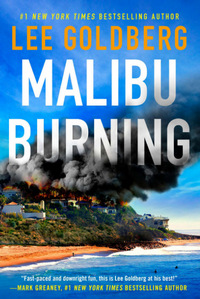
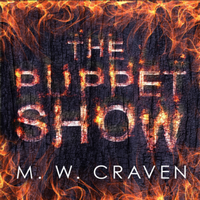
I’m reading Malibu Burning by Lee Goldberg, introducing a series I hope to read for years to come. I’m listening to (the very, very, very good) The Puppet Show by M.W. Craven, John Banks (Narrator) on audiobook, Craven’s another author I hope to keep reading for years to come.

Malibu BurningBlank SpaceThe Puppet Show

What did you recently finish reading?

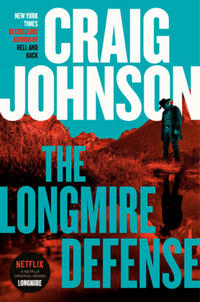
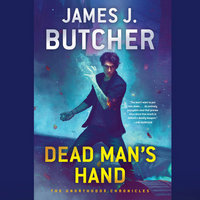
I just finished Craig Johnson’s The Longmire Defense (one of his best in years) and Dead Man’s Hand by James J. Butcher, James Patrick Cronin (Narrator) on audio.

The Longmire DefenseBlank SpaceDead Man's Hand

What do you think you’ll read next?

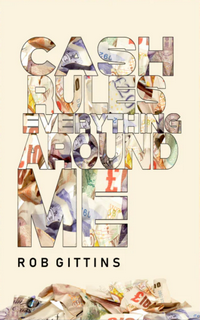
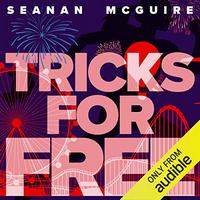
My next book should be Cash Rules Everything Around Me by Rob Gittins and my next audiobook should be Tricks for Free by Seanan McGuire, Emily Bauer (Narrator).

Cash Rules Everything Around MeBlank SpaceTricks for Free

Are you reading anything worth talking about?

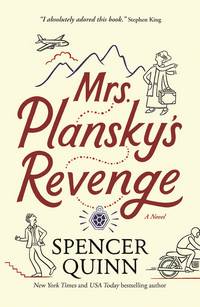
Mrs. Plansky’s Revenge by Spencer Quinn: A (Relatable) Revenge Fantasy Full of Heart and Panache

Mrs. Plansky's RevengeMrs. Plansky’s Revenge

by Spencer Quinn

DETAILS:
Series: Mrs. Plansky, #1
Publisher: Forge
Publication Date: July 25, 2023
Format: Hardcover
Length: 291 pg.
Read Date: September 4-5, 2023

Buy from Bookshop.org Support Indie Bookstores

“…there’s also what you might call a demotivating factor.”

“Which is?” said Mrs. Plansky. For some reason she was now finding Agent Gatling easy to understand.

“From our point of view the scammers are bad guys, end of story. But to the elite running the show over there the scammers are bad guys who also have a nice little industry going, bringing in the Yankee dollar and lots of ‘em. And to the everyday Joe they’re punching up, the kind of outlaw people have a soft spot for.”

“Like Robin Hood.”

“You got it.”

They gazed at each other. The message was in his eyes, Mrs. Plansky voiced it.

“You’re telling me to lose hope.”

“Not in so many words.”

What’s Mrs. Plansky’s Revenge About?

Mrs. Plansky is enjoying her retirement (however much it’s tainted by the semi-recent death of her husband). Her hip replacement’s healed enough that she can play tennis, and she’s practically back at the level she was before the surgery. Her kids are established in their lives, her grandchildren are doing okay (although she has some concerns about her grandson’s friends and associates). Things are as good as she could’ve wanted.

Then one day, she’s scammed by someone claiming to be her grandson who needs some money for bail. We’ve (probably) heard about versions of this scam—they don’t just get the bail money, they get enough information from her to empty her accounts.

She’s devastated. How is she going to live? How’s she going to help her father, her children, or her grandchildren? Is she going to be able to convince them that they don’t need to worry about her emotional stability or soundness of mind? And what can she do when even the FBI seems to be giving up before they’ve even started?

Well, Mrs. Plansky does what she’s always done—put her nose to the grindstone and get to work. The FBI said something about some small Romanian town, why not start there? So she sells a very nice piece of jewelry and buys a plane ticket. It may be a fool’s errand, but little ventured, little gained, right?

Norm and the Mrs.

Throughout the book, Mrs. Plansky is identified as “Mrs. Plansky.” Not “Loretta” or “Plansky” as most writers would do after establishing the protagonist’s name. This is how she thinks of herself (although she tells people to call her Loretta all the time). Now, you could come at this with some sort of feminist critique about how her personality/identity has been swallowed by her husband’s or something along those lines. And in some books that would be valid.

But I don’t think that’s the case here (Mr. Quinn, feel free to correct me on this). She just thinks of herself as Norm’s wife. And, I expect, that were he still with us, Norm would think of himself as Loretta’s husband. He’s constantly on her mind as she goes through all this. They had a strong marriage, built a business together (each displaying their own strengths), raised a couple of kids together, and enjoyed a life together (made all the more pleasant by the business taking off and giving them a very comfortable life).

The fact that after his death she still thinks of herself in this way I found particularly sweet. They may have been parted by death, but in many real and tangible ways, they’re still married. It’s a great character point and tells us so much about her without Quinn having to do so. This is not to say that Mrs. Plansky might not consider future romantic entanglements, but she’ll always be Norm’s wife in some sense.

Mrs. Plansky’s Other Opponent

She closed her eyes, resting them, in fact. Giving her eyes a little rest from time to time? That was new in her life. Her eyes had gone along for more than seven decades content to take their rest when the rest of her was resting—team players, the pair of them—but now they were making demands.

Related to that—Mrs. Plansky’s no spring chicken. She’s in great shape for someone of her years and will surprise herself by some of what she’s able to do physically (for example, on the tennis court). At the same time, she’s having to come to grips with the effects of aging—her strength and endurance isn’t what it was, her attention slips from time to time, and her recall might struggle a bit. Everything, basically, is a little more difficult than it used to be. I appreciated the way that Quinn depicted this—not that everything’s falling apart, or that with grit and determination she’s triumphing against the effects of aging, she’s simply noticing and adjusting.

There are moments here and there where this makes Mrs. Plansky (rather, a close third-person narration) slightly unreliable. But Quinn’s spent years writing from the POV of a dog who doesn’t fully understand what humans are doing, and he’s great at depicting that without casting doubt on everything going on and getting the reader to understand things that the protagonist missed.

The Tone

Overall, the book has a lighter and optimistic tone. Most of that comes from Mrs. Plansky’s character and frame of mind.

But (to go with that character), not all of it is light. There are some dark moments, some real despair and worry. For example, I knew the premise of this book months ago, back when Quinn first announced it. Yet when Mrs. Plansky’s on the phone with the scammer and is giving away too much information, I was reading with one hand over my eyes. Similarly, as she comes to grips with just how bad things are for her—and takes in Agent Gatling’s message about how little hope she has to recover the funds…you can’t help but feel for her.

But when she comes up with a plan and begins to execute it—and enjoys doing so. It’s impossible not to catch that optimism and lightness.

So, what did I think about Mrs. Plansky’s Revenge?

This is a very different flavor than I’ve seen from Quinn before—yes, it shares some elements from his other work (The Right Side and the Chet and Bernie books in particular), but overall, it feels like a new and welcome direction. I mean, it’s welcome here as long as he comes back to Chet and Bernie. There’s a depth, a perspective, and a different kind of character than I’m used to. And a total dearth of animal companions, which is just strange.

I loved most of the characters (even the bad guys). And even (in the case of her children, for example—a sure sign that Mr. and Mrs. Plansky weren’t great at everything) when I didn’t like the characters, I appreciated the way Quinn wrote them. The one exception is her father, who lives in a nearby assisted living facility. I’m not sure that we needed Mrs. Plansky’s father as a character—I think he was supposed to be both comic relief and just one more source of financial pressure for her. I don’t think the comedy worked all that well—and Quinn could’ve given us another source for the pressure.

One quick aside, I’m just curious—between this book and Osman’s Thursday Murder Club books, I’m wondering if there’s a surfeit of charming Eastern European men with a “flexible” understanding of the law running around. Can anyone confirm that?

An implausible, but great story. A revenge fantasy that many people will have had, taken on by a relatable character that you can’t help but root for. There’s plenty of heart to go around, and it’ll just leave you feeling good (as long as you don’t put it down while she’s being ripped off).

If you’ve tried Quinn before and he hasn’t clicked with you, try this one. If you haven’t tried him before, try this one. If you’re not sure you want to read a dog-less book from him, try it. If there’s anyone I haven’t covered in this paragraph—try it.


4 1/2 Stars

This post contains an affiliate link. If you purchase from it, I will get a small commission at no additional cost to you. As always, the opinions expressed are my own.

Irresponsible Reader Pilcrow Icon

When Archie Met Lily

According to Some Buried Caesar, 85 years ago today, Archie Goodwin—one of my top 5 All-Time Favorite Characters—met the only woman who could keep his attention for more than a few months, Lily Rowan. Lily shows up several times in the Nero Wolfe/Archie Goodwin series and threatens to steal every scene she appears in (and frequently succeeds). Check out this post from Today in Mystery Fiction for the details—one of my favorite scenes, from one of my favorite books in possibly my favorite series—(I think I have 3 or 4 copies of it), so I had to say something.

Besides, it’s not like I have a long list of dates associated with fictional events to commemorate (but I really should work on one).

How they met 85 years ago, when Archie’s only in his mid-30s, is beyond me. But Math was never my strong suit, I’m sure it makes sense, surely Charlie Epps could explain it to me.

Regardless, it’s a great scene—the first of many between the two. Lily will go on to have great scenes with Mr. Wolfe, as well–one of the more memorable happens at a crucial point in In the Best Families where she does something that no one else does in the Wolfe/Archie books.

Irresponsible Reader Pilcrow Icon

Page 3 of 6

Powered by WordPress & Theme by Anders Norén