Month: October 2023

Cover Reveal: Arvia: Wings of the Wild by D.H. Willison

I’m very pleased today to welcome The Write Reads Cover Reveal for fourth volume of D.H. Willison’s Arvia series, Wings of the Wild this morning! Before we get to revealing the cover, let’s learn a little bit about the book and author, shall we? It’ll just take a moment, and then we can all take a peak at the cover.

Book Details:

Book Title: Wings of the Wild by D.H. Willison
Series: Tales of Avira, Book 4
Genre: Humorous fantasy adventure + fantasy romance
Length: 584 pages
Release Date: November 22, 2023

About the Book:

It’s easy to stand up for your friends. What about for anonymous creatures nobody else cares about?

With their homes apparently safe from the magical storms, Darin and Rinloh venture to an isolated elven village and another ancient mystery: ruins of an imperial city whose entire population vanished centuries ago.

The duo befriend a host of eccentric new characters, from a chipper ogress and hipster troll to a deadpan griffin. Yet the Forest of Nightmares challenges them as never before. Merciless carnivorous trees, subterranean horrors, ethereal creatures no mortal weapon can slay… and most sinister of all, the greed and ambition lurking within the human heart.

Darin and Rinloh’s empathic connection grows stronger the deeper into the wilderness they go, but will it be enough to stop a dark conspiracy from ravaging the land?

Arvia: Wings of the Wild challenges the harpy-human duo with their grandest adventure yet. They must balance their deepening relationship as they sharpen their skills and work together as never before to unravel a deadly new plot.

About the Author:

D.H. WillisonD.H. Willison is a reader, writer, game enthusiast and developer, engineer, and history buff. He’s lived or worked in over a dozen countries, learning different cultures, viewpoints, and attitudes, which have influenced his writing, contributing to one of his major themes: alternate and creative conflict resolution. The same situations can be viewed by different cultures quite differently. Sometimes it leads to conflict, sometimes to hilarity. Both make for a great story.

He’s also never missed a chance to visit historic sites, from castle dungeons, to catacombs, to the holds of tall ships, to the tunnels of the Maginot Line. It might be considered research, except for the minor fact that his tales are all set on the whimsical and terrifying world of Arvia. Where giant mythic monsters are often more easily overcome with empathy than explosions.

Subscribe to his newsletter for art, stories, and humorous articles (some of which are actually intended to be humorous).

Author Links:

Website ~ Instagram ~ Facebook ~ Twitter~ Goodreads

and now…

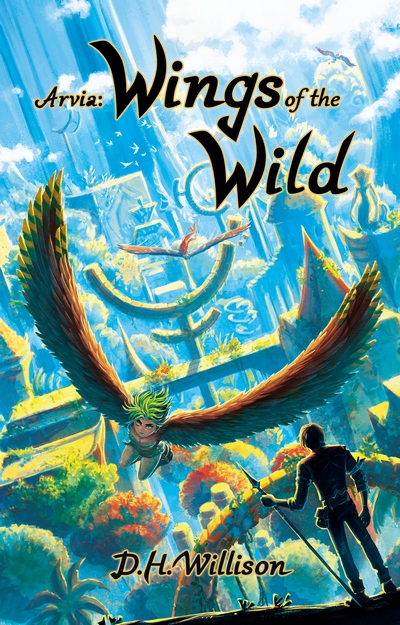
The Cover

Arvia: Wings of the Wild Cover

Keep your eyes peeled for this one, folks. It’ll be out in a little over a month and will be worth the wait!

My thanks to The Write Reads for the invitation to participate in this reveal and the materials they provided.

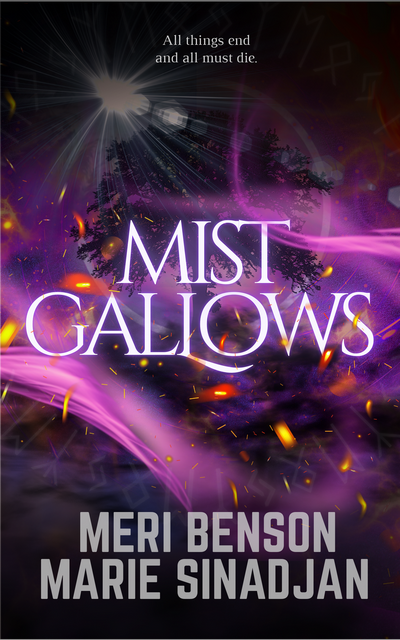
COVER REVEAL: Mist Gallows by Meri Benson, Marie Sinadjan

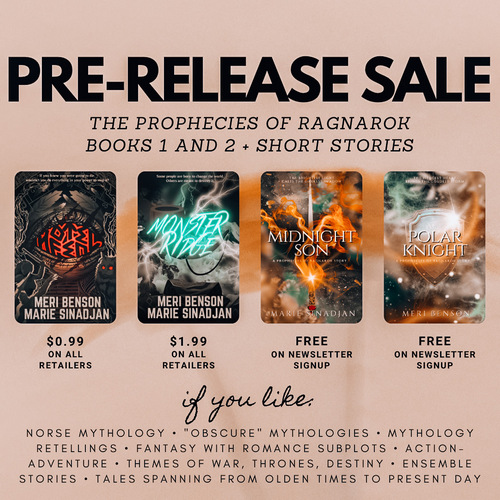
I’m very pleased to welcome the Cover Reveal for Meri Benson and Marie Sinadjan’s Mist Gallows to The Irresponsible Reader this morning! This novel is the third in the series, The Prophecies of Ragnorak. Before we get to revealing the cover, let’s learn a little bit about the book and author, shall we? It’ll just take a moment, and then we can all feast our eyes on the cover. Oh, and there’s a word about a sale on the series, too.

Book Details:

Book Title: Mist Gallows by Meri Benson, Marie Sinadjan
Series: The Prophecies of Ragnorak, Book 3
Genre: Norse Mythology Based Urban Fantasy
Digital Release Date: October 13, 2023
DPaperback/Hardcover/Audiobook Release Date: TBA

About the Book

Are you ready for the battle of a lifetime?

The end has begun. Ragnarok has arrived as prophesied. The Great Winter has brought Midgard to its knees, and it’s only a matter of time before the gods and their armies clash on Vigrid one last time.

Desperate to save the realms, Victor leads his friends on a mission to the underworld. He intends to seek out Hel, daughter of Loki and Hodr’s lover, and convince their side to stand down and make peace with Odin, therefore averting the war.

But a far greater threat than the reckoning of an ancient feud looms on the horizon. Silje learns that Yggdrasil is dying, and if the Tree of Worlds dies, the worlds die along with it…

Book Links

Pre-Release Sale

Digital Edition Sale (October 6-13) Info:

About the Authors

Meri Benson is a Chicago native that has always been in love with the written word. When not living in other people’s worlds, she’s creating her own. From urban fantasy worlds that mirror our own to fantasy worlds that are all their own. Her favorite distractions from creative endeavors and writing are her two cats that enjoy ‘helping’ by settling themselves on her, or whatever project has stolen her attention away from her number one “fans”.

Website ~ Twitter ~ Instagram ~ TikTok ~ Threads ~ Newsletter ~ Linktree

Marie Sinadjan is a Filipino fantasy author, singer-songwriter, and musical theatre actress. The Prophecies of Ragnarok is her debut series, though her short stories have appeared in anthologies, magazines and literary journals. She mainly writes fantasy of the mythology, fairytales and folklore variety. When not crunching numbers for her full-time job or spending time with her family, she’s traveling, drinking coffee, reading and reviewing books, dreaming up more worlds, writing more songs, or serenading vegetables. She currently lives in the United Kingdom with her husband.

Website ~ Twitter ~ Instagram ~ Facebook ~ TikTok ~ BlueSky ~ Threads ~ Newsletter ~ Linktree

and now…

The Cover

Mist Gallows Cover

You see that on a shelf, you’re taking a second look to catch the details, right?

It’s out next week, be ready to jump on it then!

Irresponsible Reader Pilcrow Icon

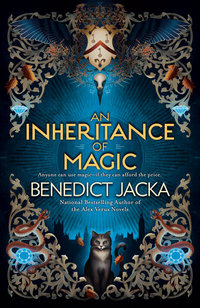
An Inheritance of Magic by Benedict Jacka: I Cannot Recall the Last Time I was This Excited about a New UF Series

An Inheritance of MagicAn Inheritance of Magic

by Benedict Jacka

DETAILS:
Series: Stephen Oakwood, #1
Publisher: Ace Books
Publication Date: October 10, 2023
Format: eARC
Length: 384 pg.
Read Date: September 22-26, 2023
Buy from Bookshop.org Support Indie Bookstores

This is Hard

I want to limit my comparisons between this new series and Jacka’s previous series to just one section—but that’s not going to happen. It makes sense, I suppose. It’s Jacka’s first non-Alex Verus book (other than the two hard-to-find children’s novels), so comparisons are inevitable, but I don’t want to turn this into an X vs. Y situation.

I will say at the outset, that if it wasn’t for the name on the cover, I don’t know that I’d have known they had the same author—so that tells you something about the comparisons. (except in quality—this is definitely up to the standards Jacka has established)

What’s An Inheritance of Magic About?

This is tricky. The Author’s Note at the beginning of the book tells us that this book is an introduction to the series. We are introduced to the world, the characters, the magic, and so on. Yes, there is a plot—a handful, actually—but the main point is for us to get oriented.

Basically, we meet Stephen—he’s roughly 20 and is fairly aimless. He doesn’t have the money (or, really, ambition) to go to University. He bounces from temp job to temp job, hangs out at his local with his friends regularly, takes care of his cat, and works on his magic in his spare time. It’s his real passion, but he doesn’t do much with it.

Then one day, some distant relatives that he’s never heard of come into his life (it’d be too complicated to list the reasons they give, and I think they’re half-truths at best, anyway). Suddenly, Stephen is thrown into a dangerous, high-stakes world of money and power—and he’s just a pawn to be used in the games of his “family” (and by family, I mean people that 23andMe would identify as relatives, but he’s never been in contact with or aware of for his entire existence). He’s a relatively unimportant pawn at that. He’s sort of grateful for that as he realizes it—but he’d have been happier if they never bothered him in the first place. Happier and with significantly fewer bruises.

However, through their machinations, he’s introduced to new levels of magic society and ways that the magic in this world works. Best of all he finds ways that he can be employed and use his magic—the best of both worlds. Sure, his friends don’t get it (not that he tells many of them, because he prefers that they think he’s sane), but he’s bringing in enough money to live and he’s getting stronger and more capable.

The World and Its Magic System

So, where the Alex Verus series was about one man and his friends/allies trying to navigate (and survive) the politics and power of the magical society in England (largely), at this point the Stephen Oakwood series appears to be about one man making his way (and hopefully surviving) the money and power of a different sort magical society—and it’s intersection with the non-magical world. We’re not just talking Econ 101 kind of stuff here—Stephen’s family appears to be some of the 1% of the 1% and there are huge multi-national corporations involved here with defense contracts to governments all over the world.

Basically, Alex had an easier place to navigate.

Most of the magic that’s used in this world comes from sigils—physical objects created from various kinds of energy wells (earth magic, life magic, light magic, and so on) to do particular tasks (shine a light, augment strength, heal minor wounds, etc.). There are likely bigger and better things along those lines (hence defense contracts), but that should give you an idea. The overwhelming number of these sigils are pumped out by some sort of industrial companies and are only good for a limited amount of time.

Stephen was taught (by his father, and by himself) to make sigils on his own—his are individualized, artisanal kinds of things. Think of a sweater you get from some hobbyist off of Etsy vs. the kind of thing you can get for much less at Walmart or on Wish—quality that lasts vs. cheap and disposable. He also reverse engineers almost all of his sigils—he sees something in a catalog (no, really, this is how people get their sigils for personal use) or in use and tries to figure out how such a thing will work and then sets out to create one.

I don’t know where Jacka is going to go with all of this, obviously. But I love this setup.

Alex and Stephen

It wasn’t until I was just about done with the book that I finally figured out what Alex and Stephen had in common—which is odd, it was staring me in the face for most of the novel. But before that, I really wouldn’t have said they had much in common at all.

Stephen is our entry point to this world, and he only knows a little bit about it so as he learns, so does the reader. Alex pretty much knew everything that was going on in his world, so he had to catch the reader up—or he could help Luna understand something (and make it easier for the reader to learn that way). Stephen has to learn almost everything by getting someone to teach him, or through trial and error—either way, the reader is along for the ride and learns with him.

Similarly, Stephen’s really just starting to get the knack of his abilities where Alex was already a pro—sure he had more to learn (and his power increased), but Stephen’s not even a rookie, really when things get going.

Stephen had a loving and supportive father growing up, a strong group of friends, and experience outside the area of magic users—something we never got a strong idea that Alex ever had. Alex had trauma and hardships behind him—Stephen doesn’t. So their personalities, outlooks, etc. are very different from the outset.

It’s not really that shocking that the protagonists of two different series wouldn’t be that similar. And yet…we’ve all read a second or third series from an author with a protagonist that’s just a variation of their initial breakout character. So it’s good to see that Jacka’s able to make that transition between his two series—it gives you hope for what he’s going to do in the future.

Oh, what did I finally realize the two characters shared? They watch and learn. Alex does it because that’s essentially what his abilities were—he could sift through the various futures and decide what to do based on that. Stephen just doesn’t know enough about anything so he has to sit and observe—and from there he can decide how to act. But where others will try to think first and act second, Stephen and Alex watch first—and for a long time—before they think and then act. It’s something not enough characters (especially in Urban Fantasy) seem to spend much time doing. So I’m glad to see it.

So, what did I think about An Inheritance of Magic?

I am just so excited about this series. I didn’t know how Jacka could successfully follow up the Verus series. I trusted he would, because he’s earned that over the last decade—but, I didn’t expect that I’d respond so positively so soon.

We need to start with Stephen’s spunky attitude—with a little bit of a chip on his shoulder due to his circumstances in life (that grows to a degree as he learns how much he and his father missed out on and starts to guess why)—is a real winner. He’s got a gritty (in an Angela Duckworth sense, not Raymond Chandler or William Gibson sense) outlook, is generally optimistic—and can even be funny—all the attributes you want in an underdog.

Then there’s the world-building that I tried to sketch out above—and did a not-wholly-inadequate job of. I want to know more about it—and figure increased familiarity is just going to make me more curious.

I have so many questions about the family members who’ve inserted themselves in Stephen’s life related to their motivations, trustworthiness (I suspect at least one will turn out to be an ally, however temporary), goals, and abilities. I have those questions about Stephen’s guides and allies—and think at least one of them is going to turn on him in a devastating way (thankfully, he doesn’t trust most of them completely). There’s also this priest who keeps assigning him theological work to study. Some good theology, too. I don’t fully know where this is going—but I’m dying to find out.

Are we going to get a Big Bad—or several—for Stephen to face off against? Or is this simply going to be about a series of obstacles Stephen has to overcome until he can carve out an okay existence for himself? Is this about Stephen becoming one of those 1% and the corruption of his character that will necessitate?

I’m not giving this a full 5 stars mostly because of the introductory nature of the book—also because I want to be able to say that book 2 or 3 is an improvement over this (which I fully expect). But that says more about me and my fussy standards than it does about this book. I loved it, and am filled with nothing but anticipation for the sequel/rest of the series. It’s entirely likely that as this series wraps up that we’re going to talk about the Alex Verus series as Jacka with his training wheels on.

I’m now in danger of over-hyping. Also, I’m going to just start repeating laudatory ideas. Urban Fantasy readers need to get on this now.

Disclaimer: I received this eARC from Berkley Publishing Group via NetGalley in exchange for this post—thanks to both for this.


4 1/2 Stars

This post contains an affiliate link. If you purchase from it, I will get a small commission at no additional cost to you. As always, the opinions expressed are my own.
Irresponsible Reader Pilcrow Icon

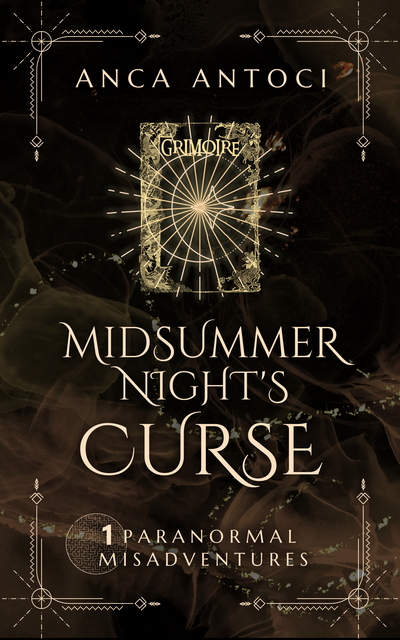
COVER REVEAL: Midsummer Night’s Curse by Anca Antoci

I’m very pleased to welcome the Cover Reveal for Anca Antoci’s Midsummer Night’s Curse to The Irresponsible Reader this morning! This novel is an an urban fantasy (with a romantic subplot) focused on Romanian mythology (by a Romanian), if you’re like me, that alone will pique your curiosity. The blurb will crank that up for you. Before we get to revealing the cover, let’s learn a little bit about the book and author, shall we? It’ll just take a moment, and then we can all feast on the cover.

Book Details:

Book Title: Midsummer Night’s Curse by Anca Antoci
Series: Paranormal Misadventures, Book 1
Genre: Paranormal Mystery, Urban Fantasy
Length: 342 pages
Release date: October 20th, 2023
Preorder: Yes

About the Book

Amidst the misty hills and ancient forests of Transylvania, Ella Martin thought she found a perfect place to escape from her old life. She’s a witch on the run from her coven and no one would think to seek her amid vampires at Count Dracula Inn. What could go wrong?

But locals don’t take kindly to outsiders, so when a teenage girl goes missing on the midsummer night at the inn, the villagers point their fingers at Ella. But then the handsome Inspector Felix Goia starts digging into her past, suspecting she must be hiding something. And the witch knows she must find the missing girl to get everyone off her back. If she fails, she has to flee before everyone finds out she’s a witch and they turn on her.

Adding to the chaos, the recently appointed police captain, Radu Lupu, dove into the fray. Beneath his charming exterior lies a ruthless streak that few people have seen. They reluctantly work together to solve the case of the missing girl, and the jaw-dropping discovery they make leaves everyone speechless. Faced with magic, they resort to mischief to save the girl. But can they succeed in their paranormal misadventure?

Book Links

Amazon ~ Goodreads

About the Author

Anca AntociAnca’s overactive imagination pours into her stories bringing otherworldly creatures to life. Her debut novel, Forget Me Not, is the first part of a trilogy published in 2020.

Before starting her writing journey, Anca was active in the blogging community as a fantasy book reviewer. The fanfiction stories she wrote long before she dreamed of being a writer are still popular and available on her blog. Although not as often, she still posts book reviews and book recommendations on her blog www.summonfantasy.com.

Living in Romania, Anca speaks English as a second language and is quite self-conscious about her accent, which is why she never speaks in her videos on TikTok. She loves taking long walks through the parks to recharge her batteries before a writing sprint. Anca loves cooking and can often be found in the kitchen trying out a new recipe while an audiobook keeps her entertained.

Website ~ Facebook ~ Twitter ~ Instagram ~ Pinterest ~ Medium ~ Mastodon

and now…

The Cover

Midsummmer Night's Curse Cover

That’s one sharp-looking cover right there.

Irresponsible Reader Pilcrow Icon

WWW Wednesday, October 4, 2023

My energy levels aren’t what they need to be this week–and I’ve got some personal stuff going on, so I’m not getting much done here on the ol’ blog. But next week is going to be a lot of fun here! This that little teaser, why don’t we get to this week’s WWW?

This meme was formerly hosted by MizB at A Daily Rhythm and revived on Taking on a World of Words—and shown to me by Aurore-Anne-Chehoke at Diary-of-a-black-city-girl.

The Three Ws are:

What are you currently reading?
What did you recently finish reading?
What do you think you’ll read next?

Easy enough, right?

What are you currently reading?

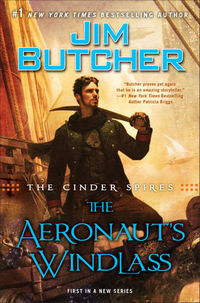
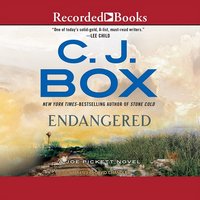
I’m re-reading The Aeronaut’s Windlass by Jim Butcher, and am listening to Endangered by C.J. Box, David Chandler (Narrator) on audiobook.

The Aeronaut's WindlassBlank SpaceEndangered

What did you recently finish reading?

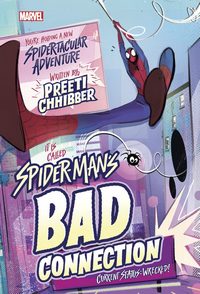
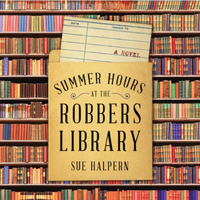
I just finished Preeti Chhibber’s Spider-Man’s Bad Connection, a fun sequel, and Summer Hours at the Robbers Library by Sue Halpern, Narrated by Josh Bloomberg, Dara Rosenberg, and Allyson Ryan on audio, a book that’s hard to describe but has a lot of charm.

Spider-Man’s Bad ConnectionBlank SpaceSummer Hours at the Robbers Library

What do you think you’ll read next?

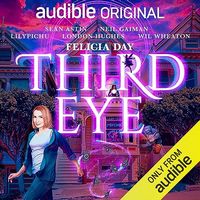
I don’t know what my next book is going to be–I’ll be headed out on vacation before I finish The Aeronaut’s Windlass (probably), and will see what books I decide to dive into while I’m gone. My next audiobook should be The Third Eye by Felicia Day, Narrated by a full cast including: Sean Astin, Felicia Day, Neil Gaiman, LilyPichu, London Hughes, and Wil Wheaton. That’s probably too many cooks in the kitchen, but I’ve gotta give it a try.

???Blank SpaceThe Third Eye

What are you reading?

COVER REVEAL: Traitor’s Tome by Emma L. Adams

Traitor’s Tome  Cover Reveal Banner

I’m very pleased to welcome the Escapist Book Tour’s Cover Reveal for Emma L. Adams’ Traitor’s Tome to The Irresponsible Reader this morning! Before we get to revealing the cover, let’s learn a little bit about the book and author, shall we? It’ll just take a moment, and then we can all feast on the cover.

Book Details:

Book Title: Traitor’s Tome by Emma L. Adams
Series: Death’s Disciple
Genre: Dark Epic Fantasy
Intended Age Group: Adult
Length: approx. 450 pages
Release date: Kickstarter October 10 – October 26, retail release Feb. 2024
Publisher: Self-Published

About the Book

Several weeks have passed since the capital of Laria narrowly escaped destruction at the hands of the god of death and His followers. Former Captain Yala Palathar is attempting to lie low, but the dead no longer rest easily in their graves, and her role in the battle has drawn attention from potential allies and foes alike.

Niema, too, has been irrecoverably changed by the choices she made during the battle of Dalathar, and journeying home to the Disciples of Life reveals the devastating consequences of her actions. Niema grapples with her desire to protect Yala’s secrets, but when monsters start appearing in the forest, she fears that she’s brought doom upon her own people.

When the Disciples of the Flame come to Yala with the news that a dangerous book used by the god of death’s followers has gone missing, Yala is compelled to seek it out to avert further disaster. Her quest takes her to Setemar, home of the Disciples of the Earth, where her path soon crosses with Kelan and the Disciples of the Sky. It isn’t long before Kelan’s alliance with Yala puts him at odds with his fellow Disciples, and the closer Yala treads to the domain of the god of death, the louder Mekan’s voice whispers in her own ear.

With threats stirring above and below ground, ally is set against ally, and not everyone will survive the calamity that will follow…

Book Links

Kickstarter ~ Goodreads

About the Author

Emma L. AdamsEmma L. Adams spent her childhood creating imaginary worlds to compensate for a disappointingly average reality, so it was probably inevitable that she ended up writing fantasy novels. She has a BA in English Literature with Creative Writing from Lancaster University, where she spent three years exploring the Lake District and penning strange fantastical adventures.

Now, Emma lives in the middle of England and is the international bestselling author of over 50 novels including the world-hopping Alliance series, the urban fantasy Changeling Chronicles series, and the fantasy adventure Relics of Power trilogy. When she’s not immersed in her own fictional universes, Emma can be found with her head in a book, playing video games, or wandering around the world in search of adventure.

Website ~ Facebook ~ Twitter ~ Instagram

and now…

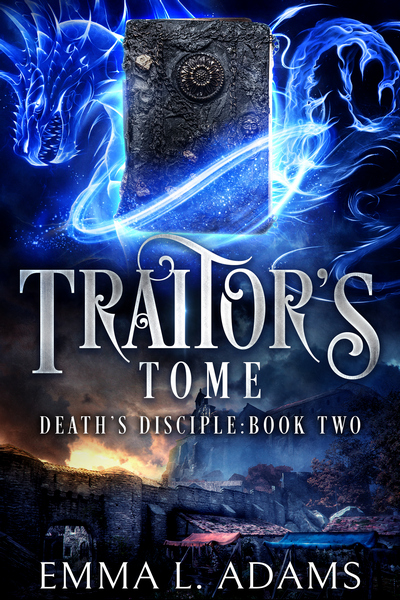
The Cover

Traitor's Tome Cover

That’s a heckuva cover right there. The Kickstarter gets underway soon, so Adams can put that cover on a hardcover book to make your shelves all the prettier. Be sure to kick some start next week!


My thanks to Escapist Book Tours for the invitation to participate in this tour and the materials they provided. The opinions expressed by me are honest and my own.

Escapist Book Tours

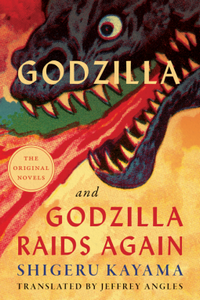
PUB DAY REPOST: Godzilla and Godzilla Raids Again by Shigeru Kayama, Jeffrey Angles (Translator): Obliterating Everything, Incinerate a Renegade

Godzilla and Godzilla Raids AgainGodzilla and Godzilla Raids Again

by Shigeru Kayama, Jeffrey Angles (Translator)

DETAILS:
Publisher: University of Minnesota Press
Publication Date: October 03, 2023
Format: eARC
Length: 256 pg.
Read Date:  September 18-20, 2023

Buy from Bookshop.org Support Indie Bookstores

The Background of Godzilla and Godzilla Raids Again

The movie producer, Tomoyuki Tanaka, brought some ideas (largely adopted from a Ray Bradbury story) to the novelist, Shigeru Kayama, and asked him to turn them into a story for a film. This story, in turn, was developed into a screenplay by Ishirō Honda and Takeo Murata (the director and assistant director) and became the movie Godzilla.

Godzilla was such a success that Tanaka had Kayama come up with a follow-up story, that became Godzilla Raids Again (although Godzilla Counterattacks is a better translation, that’s not what the movie’s title was originally titled in English).

About that time, Kayama was done with the movies and what they were doing to his idea about the monster—but he was helping to launch a series of books for young adult readers and adapted his original ideas for the movies into novellas for that series. These novellas came out around the time of the second movie’s release. Now, they’re being translated into English for the first time.

What’s Godzilla About?

The testing of some nuclear weapons in the Pacific Ocean has disturbed a long-dormant dinosaur/monster. Not only is it now awake, it may have mutated by the bomb(s). Angry and confused, it stumbles onto the Japanese islands and wreaks havoc on the people and cities it encounters.

The beast kills and destroys multitudes and seems invincible to every weapon that the nation has access to. But one scientist has been developing a new kind of weapon, that he doesn’t trust any government to have access to—but he might be forced to unveil it to stop Godzilla.

What’s Godzilla Raids Again About?

It was theorized when Godzilla showed up in the first novella that he might not be the sole monster/dinosaur/kaiju to have been awakened by the tests. A pair of pilots* working for a fishing company stumble upon another Godzilla on an island near Japan—while they’re trying to escape from that Godzilla, it’s attacked by another monster/dinosaur/kaiju, later identified as an Anguirus. The two pilots manage to escape following the fight between the two monsters.

* One of those pilots is named Kobayashi, and any good Star Trek fan knows bad things are about to happen as soon as that name is seen.

They rush back to warn the Anti-Godzilla Task Force who begin to strategize a defense against the monster—they cannot access the same weapon used last time, so they’re going to have to come up with something better, and quickly.

The Supplementary Materials

In addition to the novellas, the book has some additional material—the first (and most useful) is an Afterword, “Translating an Icon,” by the translator (obviously). These 30± pages contained answers to almost every question I had while reading—including a few things that I think would’ve been helpful knowing going into the book (the relation of the novellas to the films, the extent of Kayama’s involvement with the creation of Godzilla, why he published the novellas, etc.).

But there’s a lot of information that I’m glad I didn’t know going in—the critique of the U.S. nuclear testing, why it had to be so subtle, why the films didn’t include it as much as the novellas did, where (and why, sometimes) the films and novellas diverge, and the meaning of some of the more emotional moments. There were points where it was clear that something important or meaningful had happened, but I wasn’t sure exactly what it was—Angles helped a lot.

I guess what I’m trying to say is that in a perfect world (at least perfect for me), we’d have gotten a foreword as well the afterword—but like just about every writer out there, Angles wasn’t writing to satisfy my whims. And as an Afterword, he could really get into spoilers and things it’s best to have explained after the text.

The whole thing was so interesting I could’ve easily read something twice the length (and something tells me that Angles could’ve done that without much effort, it was probably harder for him to leave out ideas and details). The part I enjoyed the most was his discussion of a few translation issues, for example, the excessive (for a contemporary English reader, anyway) use of onomatopoeias throughout the book—but particularly in the battle scenes, or scenes when Godzilla is angry and taking it out on human structures and devices. Those pages read like the Batman TV series from 1966—full of Bams, Pows, and the like. And Angles describes how he cut many of them by translating them somewhat differently. He also discussed how he chose to spell the roars of Godzilla and Anguirus, and I really enjoyed that.

There were some things that he wanted to do a more accurate job of translating, but given the history fans have with the films, etc. he chose to stay consistent with the films, so he wouldn’t have to fend off accusations of bad work from those fans. I absolutely get why he’d make that choice, and feel so bad for him that he had to make it.

I’d noticed that there was a Glossary of Names, Places, and Ideas at the end of the book, but completely forgot to use it while reading the novellas. I don’t know that using it would’ve helped me too much during the reading—almost always the context was clear enough to get the meaning across. But reading it afterward helped clarify a thing or two, but by and large, those were minor details that not knowing them didn’t detract much from the text. The things I really needed (and some I could’ve guessed at) were in the handful of footnotes throughout the novellas. The Glossary was pretty interesting to read, I should note.

So, what did I think about Godzilla and Godzilla Raids Again?

Before I get into this, I want to take a moment to say how cool it was to get to read a book about Godzilla. From the time I can remember this monster has been something I’ve been aware of in some way. The old movies, cartoons about him (and his goofy nephew, Godzooky), the toys, the newer movies, and everything in between. He’s just been one of the coolest creatures in my pop culture awareness—there’ve been few times that I’ve clicked on “Request” so hard on NetGalley. Now, I do have to admit, it’s been decades since I watched the original films—I’m much more familiar with the Gamera movies than Godzilla. So I had to wait until the Afterword to know what was different between what I was reading and what audiences saw in the 50s (it was certainly different enough from the Emmerich movie from 1998, that I remember more of than I want to).

I did think some of the dialogue was pretty stilted, and some of the character reactions seemed overwrought (and some underwrought). It actually reminded me a lot of the Gamera films and other English-dubbed live-action shows/movies I’ve watched—and while reading the book, I frequently thought that I owed those who wrote the scripts for the dubbing an apology—their work felt a lot like Angles’ translation. I don’t think that the dialogue or characterizations damaged my appreciation of the work, it just underlined for me that this is the work of another culture (and another time). So they’d better not sound like native English speakers, and should probably act/react in ways that don’t seem particularly American. What might be slightly off-putting at first quickly becomes part of the charm of the novellas.

The intended audience for these novellas were young adults, and throughout Kayama would insert asides “You may not understand…” or “You’ve probably seen something like…” to help his reader understand what’s going on, or perhaps the feeling behind it. The first time it happened, it was entirely unexpected, but I enjoyed the idea. I liked each successive one more than the last and was disappointed that we didn’t get nearly as many as I’d hoped. I don’t know if this was characteristic of his writing (I suspect it wasn’t), but for these novellas, it really worked.

We don’t see Godzilla right away, and Kayama did a great job of building the tension until we do—he’s there, doing damage and terrifying people, but the reader doesn’t get an idea of what they’re seeing until we’re about one-third of the way through the first novella. As impatient as I was to see the monster myself, I wish he’d been able to hold out a little longer. Now in the second book, we know what Godzilla looks like, so we can skip the build-up and throw him in right away—and then add Anguirus just a couple of pages later.

I found everything about Godzilla more satisfying than Godzilla Raids Again, but the latter was more fun and action-packed. I can see where some might be put off by the not-at-all-subtle messaging of Godzilla, but I thought it fit the story and the need at the time.

The Afterword and Glossary added a lot to my understanding and appreciation of what Kayama was seeking to accomplish and say, lifting the impact of the book as a whole. The novellas on their own would’ve been entertaining and satisfying, mostly as an artifact of another era (see what I said about the dialogue and characterizations)—but the supplementary material added the necessary context and definition to the novellas so that I walked away with a better understanding and appreciation for the book. Don’t skip those bits.

I’ve said a lot more than I expected to—and have only scratched the surface of what I’d hoped to say. So let me cut to the chase—I really enjoyed this experience—fun novellas, a deeper understanding of the creature and the themes the original movie was trying to explore, and a glimpse into Japan of the 1950s. And, once again, it’s a book about Godzilla, do you really need me to say more? I heartily encourage you to check this book up. Now, I’ve got to go track down some black-and-white films.

Disclaimer: I received this eARC from University of Minnesota Press via NetGalley in exchange for this post—thanks to both for this.


4 Stars

This post contains an affiliate link. If you purchase from it, I will get a small commission at no additional cost to you. As always, the opinions expressed are my own.

Irresponsible Reader Pilcrow Icon

MUSIC MONDAY: Comfortable by Fleming & John

Music Monday
Music Monday’s originated at The Tattooed Book Geek‘s fantastic blog and has shown up here and there since then.

My wife and I will be celebrating our 27th anniversary this week, so I’m feeling sappy. So I thought I’d share one of those songs that makes me think of my wife. And, hey, any excuse to Fleming McWilliams’ voice.

The Irresponsible Reader Metallica Logo

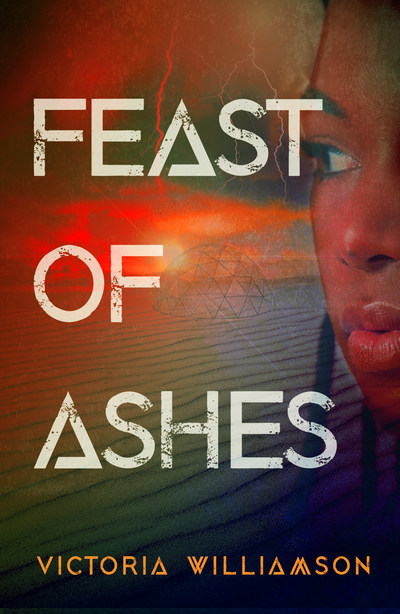
BOOK SPOTLIGHT: Feast of Ashes by Victoria Williamson

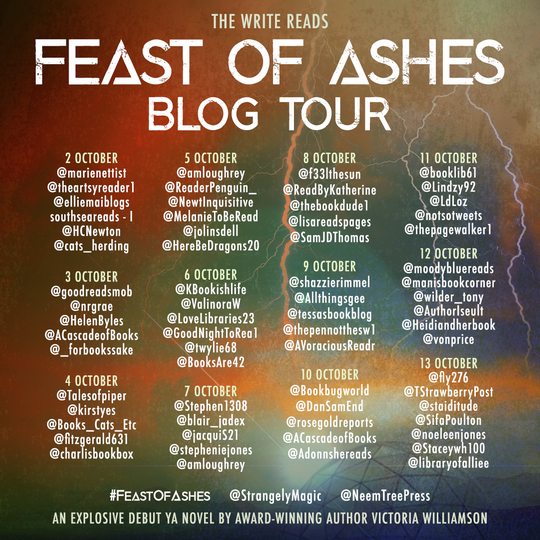
This morning, I’m very pleased to welcome The Write Reads Ultimate Blog Tour for Victoria Williamson’s Feast of Ashes. This is yet one more book that I didn’t have time to read, but wanted to point you to, because you and I should think about fitting it into our upcoming reads. It’s Day One of the Tour, so I can’t point you to much that’s been said about the book, but I’ve seen a little about what some of the bloggers are saying about it, so I want to point you to the X/Twitter feed: https://twitter.com/WriteReadsTours so you can watch what’s being said over the next few days, it appears that people like it and should be saying things that’ll incline you to read it. The book releases October 5—so you might as well go order it now, right?

Feast of Ashes Tour Banner

Book Details:

Title: Feast of Ashes by Victoria Williamson
Genre: YA, Dystopian Fantasy
Publisher: Neem Tree Press
Release date: October 5, 2023
Format: Paperback
Length: 334 pages
Feast of Ashes Cover

About the Book:

The Earth’s ecosystems have collapsed and only ashes remain. Is one girl’s courage enough to keep hope alive in the wastelands?

It’s the year 2123, and sixteen-year-old Adina has just accidentally killed fourteen thousand seven hundred and fifty-six people. Raised in the eco-bubble of Eden Five, Adina has always believed that the Amonston Corporation’s giant greenhouse would keep her safe forever. But when her own careless mistake leads to an explosion that incinerates Eden Five, she and a small group of survivors must brave the barren wastelands outside the ruined Dome to reach the Sanctuary before their biofilters give out and their DNA threatens to mutate in the toxic air.

They soon discover that the outside isn’t as deserted as they were made to believe, and the truth is unearthed on their dangerous expedition. As time runs out, Adina must tackle her guilty conscience and find the courage to get everyone to safety. Will she make it alive, or will the Nomalies get to her first?

Book Links:

Amazon UK ~ Goodreads

About the Author:

Victoria WilliamsonVictoria Williamson is an award-winning author who grew up in Scotland surrounded by hills, books, and an historical farm estate which inspired many of her early adventure stories and spooky tales. After studying Physics at the University of Glasgow, she set out on her own real-life adventures, which included teaching maths and science in Cameroon, training teachers in Malawi, teaching English in China and working with children with additional support needs in the UK. Victoria currently works part time writing KS2 books for the education company Twinkl and spends the rest of her time writing novels, and visiting schools, libraries and literary festivals to give author talks and run creative writing workshops.

Victoria’s previous novels include The Fox Girl and the White Gazelle, The Boy with the Butterfly Mind, Hag Storm, and War of the Wind. She has won the Bolton Children’s Fiction Award 2020/2021, The YA-aldi Glasgow Secondary School Libraries Book Award 2023, and has been shortlisted for the Week Junior Book Awards 2023, The Leeds Book Awards 2023, the Red Book Award 2023, the James Reckitt Hull Book Awards 2021, The Trinity School Book Awards 2021, and longlisted for the ABA South Coast Book Awards 2023, the Waterstones Children’s Book Prize 2020, and the Branford Boase Award 2019.

Her latest novel, The Pawnshop of Stolen Dreams, is a middle grade fantasy inspired by classic folklore. Twenty percent of the author royalties for this book are donated to CharChar Literacy, an organisation working to improve children’s literacy levels in Malawi.

You can find out more about Victoria’s books, school visits and free resources for schools on her website: www.strangelymagical.com.

Author Links:

Website ~ Twitter

My thanks to The Write Reads for the invitation to participate in this tour and the materials they provided.

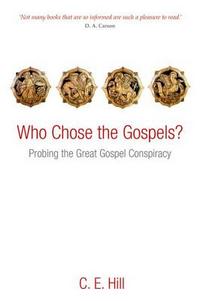
Who Chose the Gospels?: Probing the Great Gospel Conspiracy by C. E. Hill: Robert Langdon Might Have Been on the Wrong Track (shocking, I know)

Who Chose the Gospels?Who Chose the Gospels?:
Probing the Great Gospel Conspiracy

by C. E. Hill

DETAILS:
Publisher: Oxford University Press, USA
Publication Date: April 7, 2012
Format: Paperback
Length: 247 pg.
Read Date: September 10-24, 2023
Buy from Bookshop.org Support Indie Bookstores

All this presents a rather sticky problem. Recall that in Professor Ehrman’s political interpretation of church history it isn’t until the fourth century that the ‘orthodox’ party finally ‘sealed its victory over all of its opponents’, At that time ‘it rewrote the history of the engagement’, claiming that its views were passed down from Jesus’ apostles. And yet here is Irenaeus, nearly two centuries earlier, already ‘rewriting history’ long before the victory was sealed. At a time when, many prominent scholars insist, the issue was still very much in doubt, Irenaeus writes as if the church had been nurtured by these four Gospels from the time of the apostles.

The problem with Irenaeus is that he simply wrecks the popular paradigm. His views about the emerging New Testament canon, and about the four Gospels in particular, are simply too well-developed, too mature, to fit the scheme that many have invested themselves in today. As a second-century Christian author who argued that there are, and can only be, four legitimate Gospels—because they alone teach the truth about Jesus and because they alone had been handed down in the church from the time of the apostles—Irenaeus lies like a fallen Redwood in the path of those who would see the choice of the four Gospels as a late and politically motivated manoeuvre of the fourth century.

How do you solve a problem like Irenaeus?

What’s Who Chose the Gospels? About?

That last question in the quotation would work pretty well as an alternate title for the book—how do you solve a problem like Iraneaus? Or, more to the point, how do you ignore his (early date) recognition of only 4 gospels—Matthew, Mark, Luke, and John—despite what we’re told about the state of gospel availability and canonization by so many today.

Hill examines some of the time frames, uses, content, and provenance of some of the so-called competitor gospels (i.e., those that never were considered canonical) to compare them to both the canonical gospels and those early figures of the Church we see discussing the gospels. But primarily, Hill is concerned with the use of and testimony regarding the canonical gospels—and the evidence regarding their use by the Church and when it started. The overwhelming bulk of the book is focused there.

So, we may now ask, how did the Christian church, apparent drowning in a sea of Gospels, finally end up with only four? The educated reader of today may already have come to the conch. sion that the story was attended with a good bit of bullying intrigue, and skullduggery. Many perhaps picture councils of bad-tempered bishops voting on which books to include in the Bible one minute, and voting to execute heretics the next. As now widely believed, in any case, that the four canonical Gospels emerged into prominence only fairly late from a long and drawnout battle within early Christianity, a battle finally won in the fourth century after the establishment of the church by Constantine the Great. While academics might not, as Teabing does Dan Brown’s novel, attribute the collation of the Bible to ‘pagan emperor Constantine’, many even in the academic community insist that the question of which Gospels the church ought to endorse was still up for grabs in the fourth century.

He also looks a little bit at contemporary theories (both academic and popular) about the development of the canon—insofar as it focuses on the Gospels. He finds it wanting, and somewhat self-contradictory—and talks about that, too. But even as he does so, it’s not the main focus of the book—which is, as said earlier, the four gospels and how the second (and possibly first) century church regarded them, and how that changed (and mostly didn’t change) in the two centuries following.

The Tone of the Book

You probably can’t read it in the image above, but that top blurb is from D.A. Carson and it says, “Not many books that are so informed are such a pleasure to read.” I really didn’t pay much attention to it—and just figured he meant something about how nice it is to have such an informative read or something like that. If for no other reason, it was from Oxford University Press, who are not known for fun reads. I was super duper wrong.

This was a blast to read. Seriously, I had a lot of fun.

Not—and I want to stress, not—because he’s making jokes, being silly, or outrageous or anything like that. There’s just something about Hill’s style. He’s charming (seemingly effortlessly), not in a way that calls attention to itself, but it’s there—a little mild sarcasm, some wordplay, some other bits of humor along the way—but it’s nothing I can point to, and say “there it is!” But time after time while reading this, I found myself grinning for no apparent reason.

That’s just his style—the subject is serious, and frankly, pretty dry. But Hill keeps it from being dry without tuning down the seriousness of both the positive case he’s trying to build and the criticisms he makes toward the other side(s).

So, what did I think about Who Chose the Gospels??

In short, we have no evidence that the church ever sat down collectively or as individual churches and composed criteria for judging which Gospels (or other literature) it thought best suited its needs. On the contrary, the key realization which best explains our inability to find an ultimate ‘chooser’, which best explains why the church didn’t take the easy way out with some kind of singular Gospel and why it never cobbled together a set of criteria to apply to all the Gospel candidates, is that the church essentially did not believe it had a choice in the matter! The question ‘why did you choose these Gospels?’ would not have made sense to many Christians in the second century, for the question assumes that the church, or someone in it, had the authority to make the choice. To many, it would be like the question, ‘why did you choose your parents?

A few other books/chapters that I’ve read on the subject talk about the conclusions Hill draws, and refer to some of the evidence, but Hill’s the first one I’ve read who’s actually “shown the work,” as my math teachers/professors would say. His answers match other scholars, but I can actually see how he got them. For that alone, I enjoyed reading this book and profited from it.

Add in his style? Oh, buddy—now we’re cooking with fire.

Hill is careful and thorough, acknowledging challenges to his position about the emergence of the fourfold Gospel to the place it holds today. But he’s consistent in showing how those challenges don’t have the weight and merit that so many in our culture assume they do. Not to keep picking on it—but the authors/editors of Church History in Plain Language should spend time with this book and others like it before they finish the Sixth Edition—it would really help out with its particularly weak chapter on the Canon.

I think the concluding chapter could’ve been beefed up a little bit. Maybe after a few more readings, I can figure out what it was missing—I just felt it was weak here and there. Or another reading or two will show me that I could’ve paid better attention this time (entirely likely).

Regardless, Who Wrote the Gospels? is a book well worth time and attention—and it’ll repay both.


5 Stars

This post contains an affiliate link. If you purchase from it, I will get a small commission at no additional cost to you. As always, the opinions expressed are my own.

Irresponsible Reader Pilcrow Icon

Page 5 of 5

Powered by WordPress & Theme by Anders Norén