Month: February 2024 Page 1 of 5

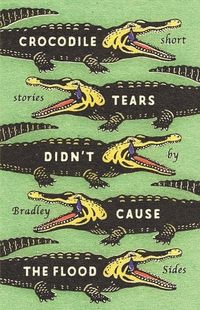
Crocodile Tears Didn’t Cause the Flood by Bradley Sides: It’s the End(s) of the World As We Know It…

Crocodile Tears Didn’t Cause the FloodCrocodile Tears Didn’t Cause the Flood

by Bradley Sides

DETAILS:
Publisher: Montag Press
Publication Date: February 6, 2024
Format: eARC
Length: 142 pg.
Read Date: February 23-26, 2024
Buy from Bookshop.org Support Indie Bookstores

What The $#*! Did I Just Read?

This is a selection of short—sometimes very short—stories that the publisher describes as “magical realism.” Which I guess is fitting—some seem more like SF, Fantasy, or somewhere in-between, than what I think of as “magical realism.” But I’m not going to be finicky about the label—call it whatever you want, as long as “strange” fits into the definition. Because “strange” is the best word to describe every story (even if other words would do better for specific entries). And I truly mean that in the best of ways.

The other element element that characterizes these stories is “Southern Fiction.” This is incredibly apt—even when a story doesn’t mention a locale, or use a colloquialism or slang to show that this is Southern, there’s something about them that just screams Southern Fiction. You know it when you see it.

Economy Of Words

Other than “strange,” “weird,” and so on, the word that comes to mind when describing this book is “Economical.” How anybody can create a tone/tenor, voice, world, and characters in so few words time and time and time again is beyond my ken.

Sure, there are a handful of apocalypses in this book—but they’re distinct. The stories don’t feel like they’re talking about the same World-Ending Event (and they’re not, but you’d halfway expect them to feel similar). The monsters in Story X wouldn’t fit into Story Y, and probably wouldn’t even be noticed as all that monstrous in Story Z.

Bradley Sides is a skilled and gifted writer and you can see that on pretty much every page.

* I think “every page” would be a better way to put it, but let me understate it just in case there are 1-3 that miss.

So, what did I think about whatever that $#*! was?

The question that I started this post with is something I put in my notes more than once. And with maybe one exception, I followed it with “But I’m glad I read it.”

So, the collection started roughly for me—I liked the writing, but the story did nothing for me, but the second? “The Guide To King George” knocked my socks off. Most of the rest did, too. The titular story seemed like a miss to me, too (but what a great title).

Some of these made me laugh and/or chuckle—like the story of the young vampire girl who is desperate to leave her family farm, or the Choose Your Own Adventure story about a Father and Son during an apocalypse—but I stopped chuckling soon and shifted into something else. The setup to “Nancy R. Melson’s State ELA Exam, Section 1: The Dead-Dead Monster” was delightful, even if I felt guilty for being delighted by the end.

Then there are the sobering stories, the heart-wrenching stories. So many captivating, unnerving, and something-in-the-neighborhood of hopeful ways to look at death.

I really can’t explain this collection, as I think I’ve demonstrated pretty well here. I’m sure others can, and you should look for their comments. But I’ll tell you this, you’re not going to find many collections that are as pound-for-pound good as this one. Even when the story doesn’t quite strike you as successful or entertaining as the rest, you’re not going to forget it soon, or regret the experience.

Go grab a copy.

Disclaimer: I received this eARC from the author and Lori Hettler of The Next Best Book Club in exchange for this post—thanks to both for this.


4 Stars

This post contains an affiliate link. If you purchase from it, I will get a small commission at no additional cost to you. As always, the opinions expressed are my own.
Irresponsible Reader Pilcrow Icon

WWW Wednesday, February 28, 2024

Yay, the month is almost over and I can get back to not having to overthink what I type in the Post Title!

So, speaking of February, I’ve mentioned before, but I need to say something one more time. I’m taking part in the fundraiser, I’m Reading Every Day for American Cancer Society this month, and I’d greatly appreciate your support.

Bernie Sanders saying I'm Once Again Asking For Your Support

This meme was formerly hosted by MizB at A Daily Rhythm and revived on Taking on a World of Words—and shown to me by Aurore-Anne-Chehoke at Diary-of-a-black-city-girl.

The Three Ws are:
What are you currently reading?
What did you recently finish reading?
What do you think you’ll read next?

Seems easy enough, right? Let’s take a peek at this week’s answers:

What are you currently reading?

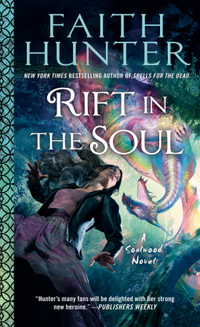
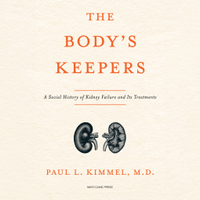
I’m reading the ARC of Rift in the Soul by Faith Hunter, which I’m really enjoying and seemingly not making much progress in. I’m listening to The Body’s Keepers: A Social History of Kidney Failure and Its Treatments by Paul L. Kimmel, MD, read by Lane Hakel on audiobook. It’s both fascinating and a solid reminder that I was right to avoid any career related to medicine.

Rift in the SoulBlank SpaceThe Body’s Keepers

What did you recently finish reading?

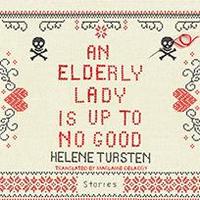
I just finished Bradley Sides’s Crocodile Tears Didn’t Cause the Flood, a very strange book* that I meant to post about today. I also just listened to the mercifully brief An Elderly Lady Is Up to No Good by Helene Tursten, translated by Marlaine Delargy, read by Suzanne Toren on audio.

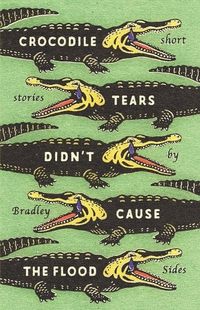
Crocodile Tears Didn’t Cause the FloodBlank SpaceBlank SpaceAn Elderly Lady Is Up to No Good

* And I mean that in the best possible way.

What do you think you’ll read next?

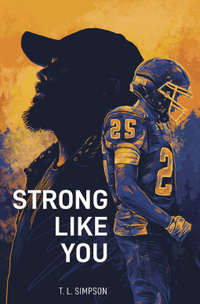
My next book should be for Strong Like You by T. L. Simpson and I have no idea what my next audiobook might be. I haven’t even thought of it, really—there’s a decent chance that I’ll still be listening to The Body’s Keepers when I assemble next week’s WWW, so I’ve got time to decide.

Strong Like YouBlank Space???

What are you reading today—and for the “bonus day” tomorrow?

PUB DAY SPOTLIGHT: Price to Pay by Dave Sivers

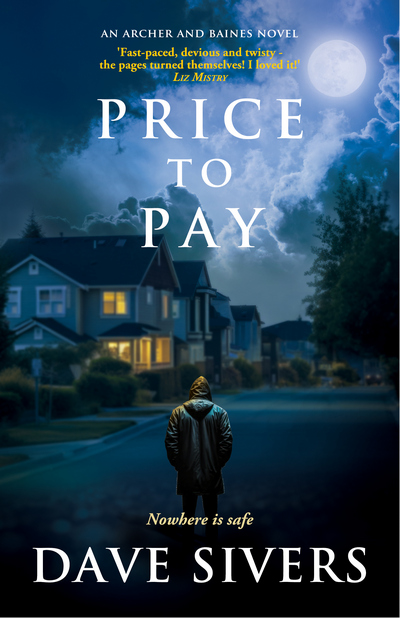
To wish Happy Publication Day to the new Archer and Baines novel, Price to Pay by Dave Sivers, I’ve got this quick spotlight–with a newer blurb than I had for the Cover Reveal to better tempt you.

Book Details:

Book Title: Price to Pay by Dave Sivers
series: Archer and Baines, Book 7
Genre: Police Procedural
Format: eBook
Release Date: February 28, 2024
Price to Pay Cover

About the Book

‘Fast-paced, devious and twisty – the pages turned themselves! I loved it!’  – Liz Mistry


The more you have, the more you have to lose…

Following an arrest that went wrong, leaving her disfigured and her life in ruins, DCI Lizzie Archer transferred to Buckinghamshire’s Aylesbury Vale, hoping to rebuild her confidence, her career and her life. Eleven years later, she’s happily married, her career is back on track, and she has friends she would trust with her life.

But things can change in a heartbeat.

Meanwhile, her friend and colleague, DI Dan Baines, has worries of his own as the long shadow of the serial killer known as the Invisible Man continues to hang over him. When the chance comes to finally get answers to some troubling questions, he is almost afraid to learn the truth. Because sometimes the reality can be worse than your imagination.

Soon after receiving unsettling threats from local criminals, an old flame makes an unwelcome return to Lizzie’s life. Days later, a grisly murder too close to home plunges her into a nightmare that could cost her everything as suspicion falls on her and her husband, Dominic.

Dan and his team are sidelined from the murder investigation, but they’re not going to let that stop them when a friend is in trouble. And the clock is ticking. Because, if they can’t uncover the truth soon, things will get even worse for Lizzie and Dominic.

Go Buy the Book Now


My thanks to Overview Media for the invitation to participate in this reveal and the materials they provided.


Irresponsible Reader Pilcrow Icon

The Djinn’s Apple by Djamila Morani, translated by Sawad Hussain: The Scent of Death

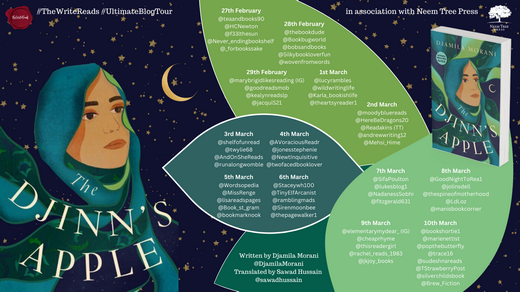
The Djinn’s Apple Tour Banner

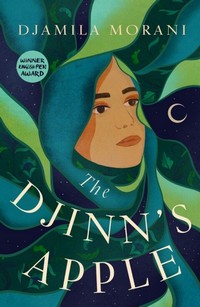
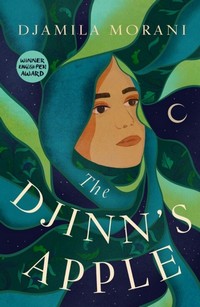
The Djinn's AppleThe Djinn’s Apple

by Djamila Morani , Sawad Hussain (Translator)

DETAILS:
Publisher: Neem Tree Press
Publication Date: May 7, 2024
Format: eARC
Length: 160 pg.
Read Date: February 24, 2023
Buy from Bookshop.org Support Indie Bookstores

What’s The Djinn’s Apple About?

Nardeen is a remarkable twelve-year-old. Her father is a physician known for translating medical texts from a variety of languages into Arabic, and Nardeen soaks up his work. She has an astounding memory and ability to understand what she memorizes.

But due to some political intrigue that she doesn’t wholly understand, Nardeen and her family have to flee their home one night. Sadly, she’s the only one who survives.

Nardeen vows revenge on those responsible for her family’s murder—certain that a friend of her father’s is ultimately to blame.

But before then, she finds herself being taken under the wing of a legendary physician and teacher, Muallim Ishaq. He recognizes her gifts and her heritage from her father—he arranges (mostly by the force of his will) to have her learn at The Bimaristan, a hospital of great renown. There, she’s able to hone her skills and knowledge—and sharpen her tools, resolve, and ability to mete out that vengeance.

Father vs. Father

There are a handful of various conflicts in this book (like with any good book), but at the core, this book seems to be a conflict within Nardeen herself. On the one hand, she has her memories of her father and what he taught her—what he showed her by example—about the way to live. She also has to wrestle with what she’s told about her father—by those who profess to have admired him and those who worked against him.

On the other hand, she has her (for all intents and purposes) adoptive father, what he’s trying to teach her—what he shows her by example—about the way to live. She also has to wrestle with what she’s told about him—by those who profess to admire him and those who work against him.

In many ways, these two fathers line up—but in significant ways, they follow and lead her down divergent paths. So much of how the plotlines of this book resolve depends on Nardeen’s acceptance/rejection of what these men stand for.

The Setting

So, this takes place during the “golden age of Baghdad”—Harun al-Rashid’s rule of the Abbasid Caliphate from 786 to 809. Now, everything that I know about this period of time comes from the appendices to this novel “Harun Al-Rashid: The Golden Age of Baghdad” and “The Bimaristan.” As they are appendices, I read them afterward. So I came into this not knowing anything—which is a bit intimidating. And I figure I’m not alone in this (particularly for the intended YA audience, who probably haven’t had much opportunity to study Eigth-Century history).

But honestly? Anyone who reads Fantasy/SFF knows how to approach something like this—sure, this is a representation of actual history, but the same tools and imagination you need to understand Westeros, Panem, or the world of the Shadowhunters equip you to get into this world.

And, like with those worlds, after getting this taste, you’ll likely want to read more about it.

While reading, and since then, I do have to wonder a little bit about how much Morani was stretching things about the opportunities presented to women in this time and place. Not just for Nardeen, either—but all the women she encounters at the Bimaristan (and I’d be saying this if the city was Paris or Rome, not just because it’s Baghdad). But I’m willing to both suspend disbelief for the sake of a good story and to trust that someone who’s as familiar with Arabic literature as Morani is more than my hunches.

So, what did I think about The Djinn’s Apple?

This book hits the ground running—Morani doesn’t give you the opportunity to settle in and get comfortable in this world or anything like that. She thrusts the reader—and poor Nardeen—straight into life-or-death action. Nardeen has a slightly better understanding of what’s going on than the reader does—but not much. This was a great way to start this read—you don’t get the chance to indulge curiosity or get lulled into thinking it’s a different kind of book than it is—you have to rush to catch up and then keep up with Nardeen and only get the luxury of starting to understand the world until she’s (relatively) safe.

There were a couple of times that I wondered about the timelines and how well they worked. I assume I just missed something (and didn’t want to take the time to go back and check). It wasn’t anything that bugged me enough to look into it, but I would’ve appreciated things being a bit clearer.

The characters of Nardeen and Muallim were so well drawn, so vivid, and so compelling that I really wish we had more time with them. Particularly Muallim—this cantankerous genius is the kind of character I really respond to. Now, given the pacing of this book, that’s impossible. And Morani picked the better option for her story. But the eccentric teacher and the stubborn and gifted student is a combination that could’ve made for a lot of fun.

Somehow in the midst of this propulsive pacing, Morani is able to litter the book with some great observations, some drops of wisdom (primarily from the teacher and student), and memorable prose (some of that credit has to be given to Hussain as well).

This is a fast, immersive read that’ll leave you guessing from the beginning right up to the end. You’d be doing yourself a favor if you pick it up.

Disclaimer: I received a copy of this book from Neem Tree Press and The Write Reads via NetGalley.


4 Stars

This post contains an affiliate link. If you purchase from it, I will get a small commission at no additional cost to you. As always, the opinions expressed are my own.


My thanks to The Write Reads for the invitation to participate in this tour and the materials they provided.

BOOK SPOTLIGHT: The Djinn’s Apple by Djamila Morani, translated by Sawad Hussain

This morning, I’m very pleased to welcome The Write Reads Ultimate Blog Tour for Djamila Morani’s The Djinn’s Apple. In addition to this Spotlight, my post about the book will be coming along soon. In the meantime, go check out https://twitter.com/WriteReadsTours—we’re in the middle of this tour and several bloggers have been writing interesting things about this book and and there are more to come you can find them all there. But for now, let’s learn a little bit about the book, shall we?

The Djinn’s Apple  Tour Banner

Book Details:

Title: The Djinn’s Apple by Djamila Morani, translated by Sawad Hussain
Genre: Historical Fiction / Crime & Mystery / Family
Age Category: Young Adule
Publisher: Neem Tree Press
Release date: February 29, 2024 (UK), May 7, 2024 (US)
Format: Paperback/Ebook
Length: 160 pages
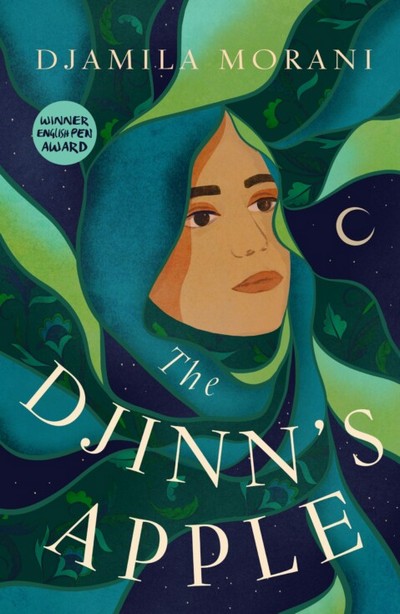
The Djinn’s Apple Cover

About the Book:

Winner of an English PEN Translates Award.

Historical fiction meets crime fiction in The Djinn’s Apple, an award-winning YA murder mystery set in the Abbasid period—the golden age of Baghdad.

A ruthless murder. A magical herb. A mysterious manuscript.

When Nardeen’s home is stormed by angry men frantically in search of something—or someone—she is the only one who manages to escape. And after the rest of her family is left behind and murdered, Nardeen sets out on an unyielding mission to bring her family’s killers to justice, regardless of the cost…

Full of mystery and mayhem, The Djinn’s Apple is perfect for fans of Arabian NightsCity of Brass, and The Wrath and the Dawn.

Book Links:

Neem Tree Press ~ Amazon UK ~ Amazon US ~ Goodreads

About the Author:

Djamila Morani Djamila Morani is an Algerian novelist and an Arabic language professor. Her first novel, released in 2015 and titled Taj el-Khatiaa, is set in the Abbasid period (like The Djinn’s Apple), but in Kazakh- stan. All of her works are fast-paced historical fiction pieces. She is yet to have a full-length work translated into English.

Author Links:

Twitter/X ~ Instagram

My thanks to The Write Reads for the invitation to participate in this tour and the materials they provided.

BOOK SPOTLIGHT: Secrets of PEACE by T. A. Hernandez

I’m very pleased today to welcome The Write Reads Blog Tour for the first book in T. A. Hernandez’ Secrets of PEACE! If you take a look at the feed for https://twitter.com/WriteReadsTours over the next few days, you’ll see a lot of bloggers who did find the time to write interesting things about it. Secrets of PEACE was aone of fifteen finalists for the 2023 Book Blogger’s Novel of the Year Award, so you know there’s a lot of good to be said about it–but before getting to this Spotlight, let’s start with a word about BBNYA. But in the meantime, let me tell you about the book.

BBNYA:

BBNYA is a yearly competition where book bloggers from all over the world read and score books written by indie authors, ending with 15 finalists and one overall winner.

If you want some more information about BBNYA, check out the BBNYA Website https://www.bbnya.com/ or take a peek over on Twitter @BBNYA_Official. BBNYA is brought to you in association with the @Foliosociety (if you love beautiful books, you NEED to check out their website!) and the book blogger support group @The_WriteReads.

Secrets of PEACE Tour Banner

Book Details:

Title: Secrets of PEACE
Genre: Science Fiction, Thriller
Age Category: New Adult
Format: Paperback/Ebook/Audiobook
Length: 273 pages
Publication Date: July 24, 2016
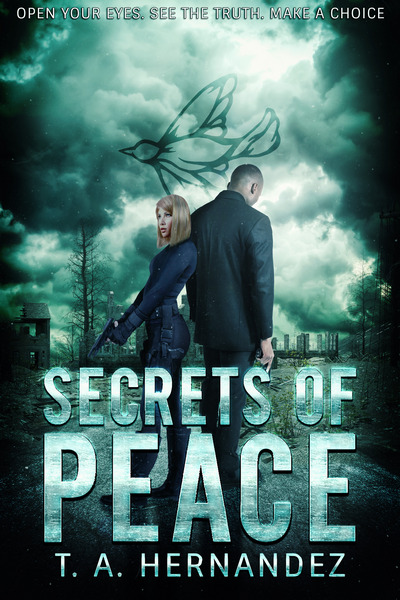
Secrets of PEACE Cover

About the Book:

Open your eyes. See the truth. Make a choice.

Nearly 30 years ago, the PEACE Project rose from the ruins of a global war to take power over a new America. Providing stability in exchange for absolute authority, the Project controls every aspect of citizens’ lives through each of its five units:

Protect
Enforce
Advance
Control
Eliminate

Raised in the Project since infancy, eighteen-year-old Zira has been trained as an assassin under the stern guidance of unit E-2’s Chairman Ryku. After she makes a careless mistake on an assignment, the chairman partners her with Jared, the best operative in her unit. Their partnership transforms into friendship as they work together and learn to rely on each other. But when misinformation causes a solo mission to backfire, Zira’s deepest loyalties and strongest relationships are tested in a place where even a hint of doubt can be perceived as treason.

The life she knows is falling apart, and nothing will ever look the same again.

Book Links:

Amazon UK ~ Amazon US ~ Amazon Canada ~ GoodreadsThe StoryGraph

About the Author:

T. A. Hernandez is a science fiction and fantasy author and long-time fan of speculative fiction. She grew up with her nose habitually stuck in a book and her mind constantly wandering to make-believe worlds full of magic and adventure. She began writing after reading J. R. R. Tolkien’s The Lord of the Rings many years ago and is now happily engaged in an exciting and lifelong quest to tell captivating stories.

She is a clinical social worker and the proud mother of two girls. She also enjoys drawing, reading, graphic design, playing video games, and making happy memories with her family and friends.

Author Links:

Website ~ Instagram ~ TikTok ~ Twitter/X


My thanks to The Write Reads for the invitation to participate in this tour and the materials they provided.

MUSIC MONDAY: Oh Yeah by Yello

Music Monday
Music Monday’s originated at The Tattooed Book Geek‘s fantastic blog and has shown up hither, thither, and yon since then.


Irresponsible Reader Pilcrow Icon

Grandpappy’s Corner: Boop the Snoot by Ashlyn Anstee: Fast, Slow, and Cute Noses to Poke

Grandpappy's Corner Boop the Snoot Logo

Boop the Snoot

by Ashlyn Anstee

DETAILS:
Publisher: Viking Books for Young Readers
Publication Date: July 5, 2022
Format: Board Book
Length: 16 pg.
Read Date: February 18, 2024
Buy from Bookshop.org Support Indie Bookstores

What’s Boop the Snoot About?

How many of these snoots could
a baby boop
if a baby could boop snoots?

This book begins with that age-old question that has had philosophers, dreamers, and that Owl from the Tootsie Pop commercials speculating.

From there we get a series of pictures of toddlers attempting to boop the snoots of various cute animals. And…well, that’s the book, really.

Let’s Talk about the Art for a Minute

It’s so, so cute. Anstee makes this energetic and eye-catching. The pictures are the star of this board book (as is typical) and the snoots are the stars of the art—although the various fingers going in for a boop come in a close second.

And as hard as you’d think it would be to make repeated index fingers engaging, Anstee pulls it off. This is good stuff.

How is it to Read Aloud?

It’s very clearly a book intended to get a child moving, there’s a snoot or two (or more) on every page to be booped. And that’s the focus of the book—the words are there, yeah, and kind of fun. But there’s not a lot to say, it’s just turn the page and look at a snoot, while saying essentially what you’ve said before.

The experience is fun, but the reading itself isn’t as integral as it is with other books (not a criticism, a description).

What did the Little Critter think of It?

I’m not sure how much he was entertained by the book on first blush—but he did like me saying “Boop.” “Snoot,” too, but not as much. Either way, those two words make this the kind of thing that he (or other kids like him) will have fun being read. I’m sure in a couple of months, he’ll get the idea about interacting with the book and he’ll start booping.

So, what did I think about Boop the Snoot?

So, the first time I brought this out for the Grandcritter wasn’t as fun as I’d hoped/expected—but that was because I brought it out too early. That’s on me. He liked looking at it, and hearing me make silly sounds.

I think this has promise—and delivers the silliness you’d expect from something with that name.

Give it a shot.


3 Stars

This post contains an affiliate link. If you purchase from it, I will get a small commission at no additional cost to you. As always, the opinions expressed are my own.
Grandpappy Icon

Not Marriage Material: A Call for Submissions

Sue Bavey, author, editor and champion of indie publishing is looking for submissions for an upcoming poetry/non-fiction anthology called Not Marriage Material set to come out just in time for Valentine’s Day 2025.

Each piece should be a maximum of 5000 words and be on the theme of ex-boyfriends, girlfriends, crushes etc. “The one that got away”.

The tone should be on the light side – no abuse or rape, please. A small amount of spiciness is OK, but no full-blown erotica.

Each piece will be published on Sue’s website and the best will be collected in the anthology. Full details (address, due date, etc.) can be found on her site here.

I’m looking forward to seeing the final form of this thing (and maybe the entries from some of you!)

Irresponsible Reader Pilcrow Icon

The Water and the Blood by Kevin P. Emmert: Sacraments and Identity for In-Christ Persons

The Water and the BloodThe Water and the Blood:
How the Sacraments
Shape Christian Identity

by Kevin P. Emmert

DETAILS:
Publisher: Crossway
Publication Date: November 7, 2023
Format: Paperback
Length: 213
Read Date: January 21-February 11, 2024

Buy from Bookshop.org Support Indie Bookstores


Every now and then I come across a book that leaves me as close to speechless as I get when it comes to time to blog about it—I just can’t express things concisely about a book. Give me a couple of weeks to write and about 20-30 pages, and I might get somewhere. Although, that somewhere is pretty much just going to be an extended abstract of the book.

I think in the past, I’ve talked about wanting to just post the back-of-the-book blurb, say “GO READ IT,” and call it a day.

Obviously, this is one of those books (or it’d be mighty insulting to start the post this way). I’m not going to allow myself to do the extended abstract, and I’m going to try to say a little more than the second option. But that’s pretty attractive. And frankly, if you get into my first section and I’m not being clear enough for you, just click on one of the links above to read the description and then GO READ IT.

Let’s see if I can do a little better than that, eh?

If our morality and sense of identity—which mutually reinforce one another—are shaped so profoundly by aesthetics, then Christians need to not just participate more frequently in the sacraments but also reflect more deeply on their nature, meaning, and power. When rightly understood, rightly administered, and received with faith, baptism and Communion have the power to shape our self-understanding and moral vision. This is because they connect us to the greatest and most powerful story of all time—the gospel of Jesus Christ. Moreover, the sacraments exhibit the historic church’s core beliefs and practices in an attractive and appealing, though certainly ordinary, manner. In baptism and Communion, we find a direct connection between beauty, orthodoxy, and orthopraxy that catechizes the people of God with a greater understanding of the gospel and how they fit into that larger reality as persons in Christ.

What’s The Water and the Blood About?

This is a confessional and theological look at the sacraments and their role in teaching Christians about Christ and forming their character and lives in Him. Unlike almost every book I’ve ever read about the Sacraments (either considered individually or together), there’s no polemics, no debate, nothing along those lines. It’s just careful encouragement, instruction, and guidance.

The book starts by talking about the dependence of the Sacraments on the Word, then moves to a look at the nature of the Sacraments and how they function generally to form Christians. The next two chapters look at each Sacrament specifically—what they tell us about those “who have been immersed into Christ and who commune with Him.” The last two chapters apply all this, how the Sacraments form and inform Christian morality and then how they equip and guide believers into the work of ministry in a variety of settings.

In-Christ Persons

At the core of the statement that the Christian’s identity is in Christ is the biblical truth that our very existence as Christians is constituted in and determined by the living, active, and present Christ. The Christian self is a self in Christ. Put differently, being in Christ is our primary identity as Christians.

From the beginning, Emmert’s clear that his book isn’t just about the Sacraments shaping Christian Identity, it’s about Union with Christ. The Sacraments are an important and essential part of reinforcing that unity, in causing us to meditate on it, in shaping us more and more into the image of Christ—and are effectual and beneficial to us only because of this union (as is the case with all blessings enjoyed by Christians).

To help emphasize that union, Emmert frequently refers to believers as “in-Christ persons.” This is both a nice phrase and a reminder that this is the core, the source of all our benefits—it’s our primary identity. This was the core of John Calvin’s teaching (no matter what you might have heard), drawing on the work of theologians and teachers before him, and is his major contribution to those that follow. Emmert is standing on Calvin’s shoulders here, and the book is better for it.

From that Union, he can then proceed to consider the sacraments.

As visible and tangible confirmations of God’s work in Christ, the sacraments therefore give flesh and bones to the statement that the Christian’s identity is in Christ… Stated differently, baptism and Communion are identity-forming rituals that teach us in touchable and accessible ways what it means to be persons in Christ.

Broadly Protestant

Anytime you see a book citing The Three Forms of Unity, The Thirty-nine Articles of Anglicanism, the Westminster Standards, and the London Baptist Confession of 1689 (and other confessional statements) in a way that those statements support each other—and not to show weaknesses with the latter—you know you’re looking at something of a unicorn in theological books. This is one of the emphases of this book, however. Emmert says in the preface that he’s not interested (in this book) in polemics about proper administration, proper recipients, etc., but about what the sacraments mean in the lives and identity of those in-Christ.

But it’s not just about being Protestant—Emmert’s also looking at what Christians have said since the beginning about these ideas, showing that Protestantism stands in the same continuity as the Early Church and beyond.

So, what did I think about The Water and the Blood?

I was going to quote a passage from the Conclusion to start this section of the post, but I couldn’t pick a portion that satisfied me—it was either all four pages or nothing. So I opted for nothing. But it’s that kind of a book—you can’t just quote a little bit, you want to keep going. Incidentally, all the quotations above are from the Introduction. If I let myself cite from particular chapters…well, see what I said in the opening paragraph.

It sort of feels like I’ve been waiting for decades for someone to write this book—I don’t know that Emmert breaks a lot of new ground here—in fact, he probably hopes he doesn’t. But I think the way he combines statements and positions from a variety of Protestant Confessions and traditions and weaves them together is fantastic. He excels at reminding us of what we all agree on, and what (to be true to our own tradition) we should be saying/thinking/teaching about the Sacraments and our Identity in Christ.

Particularly in the last century and a half (give or take), American Protestants have shied away from talking about Baptism and The Lord’s Supper as anything but rites and rituals—things that talk about our faith and remembering events from Redemptive History. But that’s largely due to anti-supernaturalism, the impact of the (so-called) Second Great Awakening, and a fear of looking/sounding like Roman Catholicism or Eastern Orthodoxy.* This is a deviation from historic Protestantism, and we need to recover the language and points of view of our predecessors. Not because we like history and want to be consistent with that history—but because the early Protestants held to these things because they’re Biblical, and Christians have been speaking in these/similar ways since the First Century.

* That’s awfully reductionistic, and not as nuanced and detailed—or extensive—as it should be. I’m aware of that, I’m also not writing a detailed work on the idea here, so that’s as good as you’re going to get.

Emmert has done us all a service in reminding us of this heritage, calling us to dust off our understanding of it, and to start acting in line of it. Even better is the way that he ties in our identity in Christ—the doctrine of Union with Christ—and how the sacraments shape us into better living out that identity.

A few weeks ago, a few of us were supposed to skim this for a chat about the book as kind of an overview before we dove in. I could not skim it. I just couldn’t, because I wasn’t even halfway through the ten-page introduction before I could tell that this was one of those books I had to marinate in, skimming was not an option.

The book is geared to scholars, preachers, and leaders—theoretically, at least. But this isn’t a message just for them—it’s for everyone in the Church and should be read that way. Sure, leaders and teachers will be able to do more with it, than the rest of us—but that’s true of every theologically-inclined book. Laity shouldn’t feel like this isn’t a book for us.

In case I haven’t been clear so far The Water and the Blood is one of the more helpful and educational books I’ve read in ages. I strongly recommend it to you.


5 Stars

This post contains an affiliate link. If you purchase from it, I will get a small commission at no additional cost to you. As always, the opinions expressed are my own.

Irresponsible Reader Pilcrow Icon

Page 1 of 5

Powered by WordPress & Theme by Anders Norén