Month: September 2024

BOOK SPOTLIGHT: Nocturne with Gaslamps by Matthew Francis

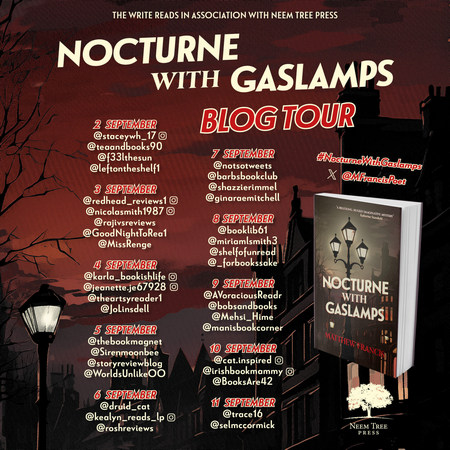
I’m very pleased today to welcome The Write Reads Blog Tour for Matthew Francis’ Nocturne with Gaslamps! This is Day 2 of the tour, so be sure to take a look at the feed for https://twitter.com/WriteReadsTours over the next few days and you’ll see a lot of bloggers who did find the time to read it have some interesting things about it.
Nocturne with Gaslamps Tour Banner

Book Details:

Title: Nocturne with Gaslamps by Matthew Francis
Genre: Mystery; Historical Fiction,
Format: Paperback/Ebook
Length: 224 pages
Publication Date: September 4, 2024 (UK); April 1, 2025 (US)
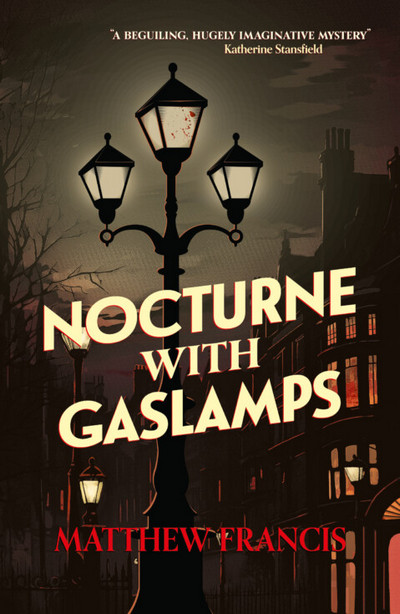
Nocturne with GaslampsCover

About the Book:

A historical crime fiction novel set in Victorian London’s gaslit theatre scene, where ghosts lurk in the shadows and murder takes centre stage.

Gaslight. Ghosts. Murder.

Hastings Wimbury has always dreamt of playing Hamlet, but for now he works as a theatre gas-boy. Here, he tends to a gas chandelier so powerful it creates its own weather, and limelight machines that can throw a shadow onto a wall ten miles away.

When Hastings suddenly disappears, his fiancée Flora sets out to find him with the help of Cassie, her rival in love who is more preoccupied with the ghosts terrorising the streets of London. Soon total darkness is imposed upon the city, and they realise that something far more sinister is at hand…

Ladies aren’t supposed to solve mysteries, but this is a matter of life and death.

Book Links:

Amazon UK ~ Amazon US ~ Goodreads

About the Author:

Matthew FrancisMatthew Francis is Professor Emeritus in Creative Writing at Aberystwyth University. He read English at Magdalene College, Cambridge University. He writes novels, short stories, and poetry collections. He has won the TLS / Blackwell’s Prize for Poetry and the Southern Arts Literature Prize, and been shortlisted twice for the Forward Prize, twice for the Welsh Book of the Year Award and once for the Ted Hughes Award. In 2004, he was chosen as one of the Next Generation Poets. He is a Fellow of the Welsh Academy. Matthew lives with this wife in Aberystwyth, Wales where he enjoys playing chess, cooking and playing the ukulele.

Author Links:

Twitter/X


My thanks to The Write Reads for the invitation to participate in this tour and the materials they provided.

MUSIC MONDAY: What Makes The World by The New Respects

The Irresponsible Reader Music Monday Logo

Music Monday's originated at The Tattooed Book Geek's fantastic blog and has shown up hither, thither, and yon since then.

Irresponsible Reader Pilcrow Icon

Bizarre Frontier Omnibus #1 by Brock Poulsen: Death Doesn’t Stop this Marshall

Cover of Bizarre Frontier Omnibus #1 by Brock PoulsenBizarre Frontier Omnibus #1

by Brock Poulsen

DETAILS:
Series: Bizarre Frontier, Omnibus #1
Publication Date: October 20, 2021
Format: Paperback
Length: 349 pg.
Read Date: August 5-6, 2024

I hate dying. It usually hurts something awful and ruins my whole day. I avoid it whenever possible.

What’s Bizarre Frontier About?

This is a collection of the first three novellas in Poulsen’s Bizarre Frontier series. This series focuses on the adventures of the former Deputy Marshall, Willard Beckett. He didn’t always wear a “white hat,” back in his black hat days, he was cursed by a dying Romani woman. He can’t stay dead. He can die, he can go through all the pain and suffering before death—but he shakes it off after a little while.

As curses go, it’s not the worst, actually.

On Moths

In the first novella, we meet Beckett and learn about his, um, condition.

As any “retired” protagonist in a Western starts, Beckett is living alone, away from everyone else, self-medicating and merely existing. His wife divorced him, he lost the taste for the work (or so I assume, I don’t remember it being spelled out), and really doesn’t have much purpose in life. Until, of course, his old boss comes for help. It seems some brothers that he ran with are causing problems in a local mining town and they can’t be stopped.

The funny thing about that situation, those brothers were killed by the aforementioned Romani woman.

Hanged Man’s Boots

After finding out how those brothers got in the position where they could terrorize the town, Beckett and his ex-wife, Sue, learn that the man behind it all is cutting a swath of destruction behind him as he tries to escape justice. Can the pair stop him?

Husk

The big hook to this one comes from Willard not doing something I’d assumed he took care of in between novellas. And the fact that he didn’t made me roll my eyes pretty hard. Yes, he justified his lack of action to someone later in the novella—and it’s plausible, but I still don’t buy it. Still, without his being careless, we wouldn’t have gotten this story.

It begins with Willard going off to take care of the repercussions of his carelessness and Sue having to go rescue some of her sister’s sheep following a storm and her brother-in-law coming into close contact with a monster (or so he claims and not enough people believe).

Craziness and action ensue. And while the last novella brought the pair into contact with evil made stronger by the supernatural, this one brings them into some supernatural mayhem. It’s hard to argue which is worse

The Strangest Bit

For me, the thing that was stranger than Willard’s curse—or anything else he ran into—was the way he (and everyone else) called the woman who cursed him (and her family) Romani instead of that term that I grew up hearing. I’m not complaining about it—if I’m buying a Deputy Marshall who can’t stay dead for long, I can buy a degree of cultural sensitivity that is just as out of place.

It just took me a second to accept it. But honestly, I like the fact Poulsen made that choice, he didn’t need to.

So, what did I think about Bizarre Frontier?

These stories are light on the Western and heavier on the Urban Fantasy—which is fine with me, if you forgive the anachronistic nature of that. They’re Western enough to qualify, but by a hair—they remind me of the Bodacious Creed Zombie-Steampunk-Westerns in this way. (and actually fans of one of these series, should check the other out)

I wouldn’t mind a little more depth to each of these, but I don’t think they need much more. They work really well for what they are—quick, episodic, adventures with just enough of a tie between them to keep readers coming back (if you get them individually) or to carry you through the omnibus (if you go that way).

There’s a lightness to the prose that keeps it engaging and fun even in the midst of monsters, death, and mayhem. The action is smooth, the recurring characters are fun and I can see hanging out with Willard and Sue for quite a while to come. I’d like to see them deal with something that has no contact with anything they’ve encoutered yet—but if Poulsen keeps going down this path, I’m not going to complain.

I will be back for more as soon as I get a chance. It’d be nice if there was a second omnibus (I mention in case Poulsen reads this), but it looks like I’ll be picking up the novellas at my earliest convenience. I’d recommend you trying these yourself.


3 Stars

20 Books of SummerLiterary Locals logo

August 2024 in Retrospect: What I Read/Listened to/Wrote About

I finished 28 titles (8 up from last month, 3 up from last August), with an equivalent of 9,408 pages or the equivalent (3,017 up from last month), and gave them an average of 3.86 stars (.18 up/down from last month).

I really thought that I was going to be making some decent progress on Mt. TBR this summer, and I was on a decent path, but I stumbled a little bit–not that Epic Sale of Beloved SFF Books and the Narratess Indie Sale didn’t help (a week will and a voracious appetite didn’t either).

My posting wasn’t quite what I wanted, but when is it? I’m giving my self a pass on that. My focus (for good or ill) was on reading this month, blogging was less of a priority. I’d like to say that next month will be different, but I’m not going to hold myself to that.

Any who, here’s what happened here in August.
Books/Novels/Novellas Read/Listened to

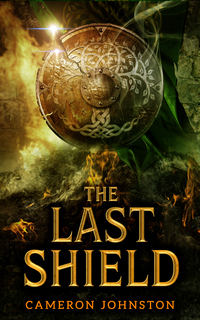
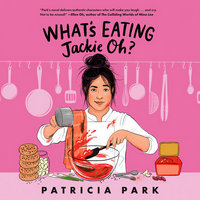
Cover to Why We Read by Shannon Reed Cover of The Last Shield by Cameron Johnston Cover for What's Eating Jackie Oh by Patricia Park
4 Stars 4 1/2 Stars 3.5 Stars
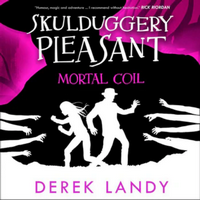
Cover for The Nameless Restaurant by Tao Wong Cover of Mortal Coil by Derek Landy Bizarre Frontier Omnibus 1 by Brock Poulsen
3.5 Stars 3.5 Stars 3 Stars
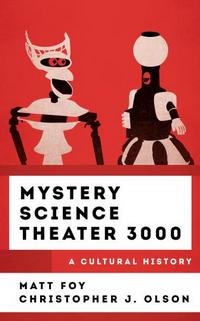
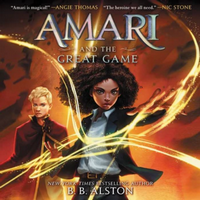
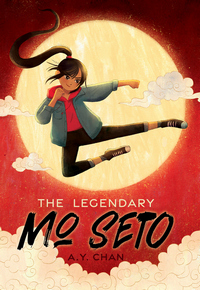
Cover to Mystery Science Theater 3000: A Cultural History by Matt Foy and Christopher J Olson Cover for Amari and the Great Game by BB Alston Cover of The Legendary Mo Seto by AY Chan
4 1/2 Stars 3.5 Stars 4 Stars
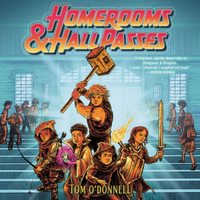
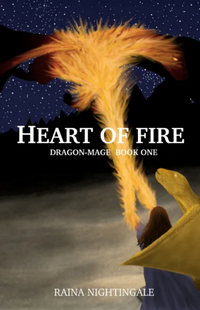
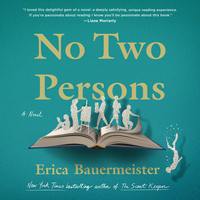
Cover of Homerooms and Hall Passes by Tom O'Donnell Cover of Heart of Fire by Raina Nightingale Cover of No Two Persons by Erica Bauermeister
3 Stars 3 Stars 4 1/2 Stars
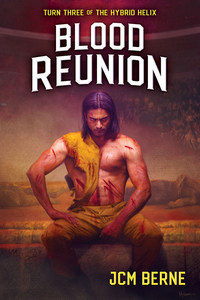
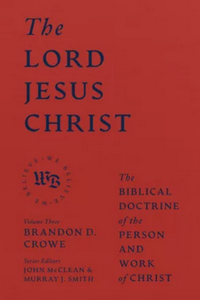
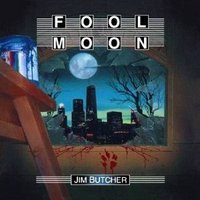
Cover of Blood Reunion by JCM Berne Cover of The Lord Jesus Christ by Brandon Crowe Cover of Fool Moon by Jim Butcher
4 1/2 Stars 5 Stars 4 Stars
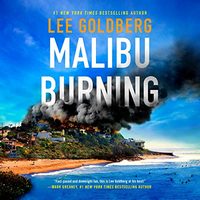
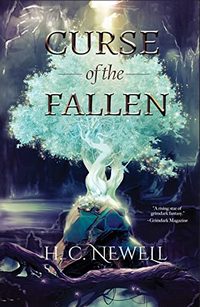
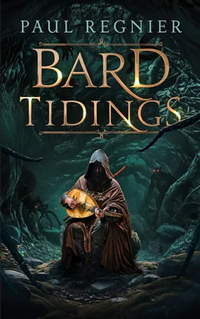
Cover of Malibu Burning by Lee Goldberg Cover for Curse of the Fallen by HC Newell Cover of Bard Tidings by Paul Regnier
4 Stars 3.5 Stars 3.5 Stars
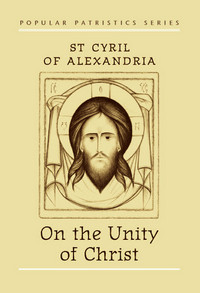
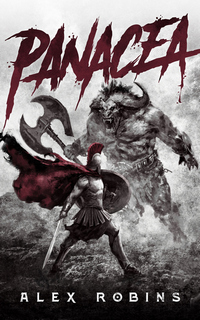
Institutes of Elenctic Theology Vol. 2 Cover of On the Unity of Christ by St Cyril of Alexandria Cover of Panacea by Alex Robins
5 Stars 5 Stars 4 Stars
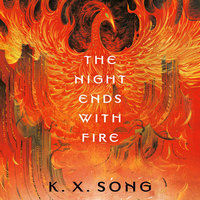
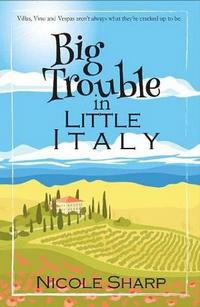
Cover of The Night Ends with Fire by K. X. Song Big Trouble in Little Italy by Nicole Sharp Cover of Moon Over Soho by Ben Aaronovitch
3.5 Stars 4 Stars 3 Stars
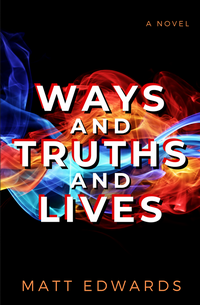
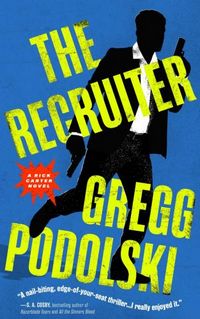
Cover of Ways and Truths and Lives by Matt Edwards Cover of Zero Stars Do Not Recommend by MJ Wassmer Cover of The Recruiter by Gregg Podolski
3.5 Stars 4 Stars 4 Stars
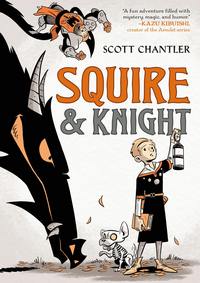
Cover of Squire & Knight by Scott Chantler
3 Stars

Still Reading

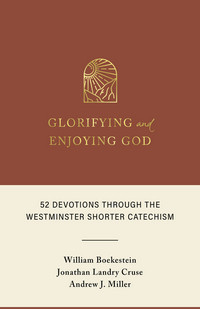
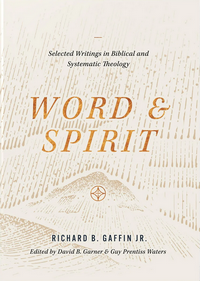
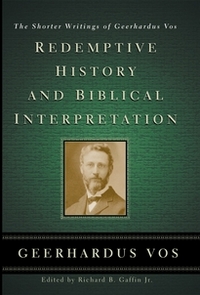
Glorifying and Enjoying God Word and Spirit Redemptive History & Biblical Interpretation

Ratings

5 Stars 3 2 1/2 Stars 0
4 1/2 Stars 4 2 Stars 0
4 Stars 8 1 1/2 Stars 0
3.5 Stars 8 1 Star 0
3 Stars 5
Average = 3.86

TBR Stacks/Piles/Heaps

Audio E-book Physical Goodreads
Want-to-Read
NetGalley
Shelf/ARCs/Review Copies
End of
2023
6 47 68 153 5
1st of the
Month
3 52 76 161 8
Added 4 11 4 3 2
Read/
Listened
3 5 5 2 4
Current Total 4 58 75 162 6

Breakdowns:
“Traditionally” Published: 19
Self-/Independent Published: 9

Genre This Month Year to Date
Children’s 0 (0%) 6 (3%)
Fantasy 9 (21%) 29 (19%)
General Fiction/ Literature 5 (18%) 18 (12%)
Mystery/ Suspense/ Thriller 2 (7%) 53 (35%)
Non-Fiction 2 (7%) 16 (11%)
Science Fiction 2 (7%) 11 (7%)
Theology/ Christian Living 3 (11%) 20 (13%)
Urban Fantasy 4 (14%) 22 (14%)
“Other” (Horror/ Humor/ Steampunk/ Western) 1 (4%) 4 (3%)

Review-ish Things Posted

Other Things I Wrote
Other than the Saturday Miscellanies (3rd, 10th, 17th, 24th and 31st), I also wrote:

Enough about me—how Was Your Month?


Aug Bookmory

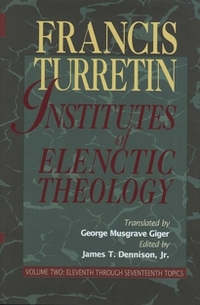
Institutes of Elenctic Theology Vol. 2: Eleventh through Seventeenth Topics by Francis Turretin: A Master Class on Theology and Methodology Continues

Yes, this is largely just a reworking of my post about Vol. 1. It’s not like I’m going to have a lot of different things to say about this, so why torture myself by trying? I reckon the same will be true in December/January when I write about Vol. 3. Still, it’s different enough to justify my time. Hopefully yours, too.


Institutes of Elenctic Theology Vol. 2Institutes of Elenctic Theology
Vol. 2: Eleventh through Seventeenth Topics

by Francis Turretin, George Musgrave Giger (Translator), James T. Dennison, Jr. (Editor)

DETAILS:
Series: Institutes of Elenctic Theology, Vol. 2
Publisher: P & R Publishing
Publication Date: February 1, 1994
Format: Hardcover
Length: 724 pg.
Read Date: May 5-Augst 25, 2024

Buy from Bookshop.org Support Indie Bookstores

What’s Elenctic Theology Anyway?

Elenctic refers to a logical method involving asking questions, of defending a position (or arguing to persuade people to accept it) by proposing alternatives and asking a series of questions—practically cross-examing the alternatives, to show the problems of the alternatives. A good deal of what we call the “Socratic method” is elenctics.

Therefore, Elenctic Theology is a form of defending the truth of Christianity or Christian dogmas by suggesting alternatives and demonstrating their lack by way of asking and answering questions about them. Or by asking a question about a true dogma and asking questions that affirm them. Aquinas’ Summa Contra Gentiles is one example. This book is another.

What’s Institutes of Elenctic Theology Then?

For a long time, it was the standard textbook to train Presbyterian and Reformed ministers in various parts of the world—including the U.S.—until Charles Hodge’s systematic theology overtook it in popularity (Hodge, it should be noted had his students read Turretin’s Institutes).

Turretin wrote it at the height of Protestant Scholasticism, defending the Reformed understanding of Christianity in a post-Synod of Dordt and post-Westminster Assembly-era. He interacts with the best of Roman Catholic theology of the era, as well as Socinians, Remonstrants (read: Arminians), Lutherans, and others.

He examines the big issues of the time—and several smaller issues, as well. In this volume, of the 20 topics these volumes cover, we get topics 11-17. Yes, the last three topics get an excess of 600 pages devoted to them—he’s going to really get into the details with those. But I’m not thinking about that yet. The topics in this volume are:

bullet The Law of God
bullet The Covenant of Grace and Its Twofold Economy in the Old and New Testaments
bullet The Person and State of Christ
bullet The Mediatorial Office of Christ
bullet Calling and Faith
bullet Justification
bullet Sanctification and Good Works

Turretin’s Method

I think the best way to show how Turretin approaches these discussions is to show you the list of questions from one of the topics. Here’s what he looks at in the roughly 130 pages of The Fifteenth Topic: calling and Faith:
I. Are decrees in God, and how?
Il. Are the decrees of God eternal? We affirm against Socinus.
Ill. Are there conditional decrees? We deny against the Socinians, Remonstrants and Jesuits.
IV. Does the decree necessitate future things? We affirm.
V. Is the fixed and immovable end of the life of each man with all its circumstances so determined by the decree of God, that he cannot die in another moment of time or by another kind of death than that in which he does die? We affirm against the Socinians and Remonstrants.
VI. Ought predestination to be publicly taught and preached? We affirm.
VII. In what sense are the words “predestination,” prognōseōs, eklogēs and prosthesōs used in this mystery?
VIII. Was there a predestination of angels, and was it of the same kind and order with the predestination of men? The former we affirm; the latter we deny.
IX. Whether the object of predestination was man creatable, or capable of falling; or whether as created and fallen. The former we deny; the latter we affirm.
X. Is Christ the cause and foundation of election? We deny against the Arminians and Lutherans.
XI. Is election made from the foresight of faith, or works; or from the grace of God alone? The former we deny; the latter we affirm.
XII. Is the election of certain men to salvation constant and immutable? We affirm against the Remonstrants.
XIII. Can the believer be certain of his own election with a certainty not only conjectural and moral, but infallible and of faith? We affirm against the papists and Remonstrants.
XIV. Is the decree of reprobation absolute, depending upon the good pleasure (eudokia) of God alone; or is sin its proper cause? We distinguish.
XV. Is infidelity, or unbelief of the gospel, presupposed as a cause of reprobation? We deny against the Remonstrants.
XVI. Is the will of God to save persevering believers and condemn the unbelieving, the whole decree of reprobation? We deny against the Remonstrants.
XVII. Can there be attributed to God any conditional will, or universal purpose of pitying the whole human race fallen in sin, of destinating Christ as Mediator to each and all, and of calling them all to a saving participation of his benefits? We deny.
XVIII. Is any order to be admitted in the divine decrees, and what is it?

Like I said last time, I texted a friend saying that I wish I could break down an idea like Turretin. He made me feel a little better by replying, “You and everyone else born in the 20th century.” Because from these questions, he’ll spend a few pages breaking down the idea further, systematically working his way through the question and seemingly every possible angle of it.

There’s part of me that wants to abandon this re-read and just focus on observing his method and trying to replicate it in my life. I’m not going to, but it’s a thought.

There are times, however, where I wonder why Turretin would spend time on something like, “Was Christ caught up into heaven before beginning his public ministry in order to be taught there by the Father? We deny against the Socinians.” The answer is, obviously, that these were topics being discussed in the Church, and it seemed necessary to Turretin. It’s just so far out of our experience to think of.

So, what did I think about Institutes of Elenctic Theology Vol. 2?

Let me get this out of the way first: This is dry. Dry like a stale crouton. I know most people think that about Theology in general—and sure, bad theology is usually dry, but not the good stuff. This is one of those exceptions that proves the rule.

There are moments, I should note, that some of Turretin’s personality shows through, some moments expressing the awe appropriate to the topic, the emotions stirred by the Gospel, and even a little humor/snark at the thoughts of his opponents. But those moments are brief and rare. But they’re golden. There were segments in this book where Turretin focused on the gospel and some of those practically sung. It was just great.

As it’s dry, it’s a little harder to read than others (say, Calvin or Bavinck). But it’s absolutely worth the effort—and after a little while, you won’t notice the effort. It’s so crisp, so clear, so helpful that you relish getting to read it. Giger and Dennison likely are due as much credit for this as Turretin is. Giger’s also likely due some credit for the arid language (he was translating in the early Nineteenth Century, not one an era known for punchy prose).

I can’t recommend this highly enough.

We have now said enough on this subject. God grant that, dismissing a vain confidence in our own merit, we may rest in the most perfect merit of Christ alone and so keep faithful to him and fight the good fight even unto the end that we may receive a crown of righteousness; due not to our merit, but most graciously promised to us from the heavenly rewarder. To him, the author and finisher (archēgō kai teleiōtē) of our salvation, the one and triune God, “from whom, by whom and to whom are all things, be praise and glory world without end.” Amen.


5 Stars

This post contains an affiliate link. If you purchase from it, I will get a small commission at no additional cost to you. As always, the opinions expressed are my own.

Irresponsible Reader Pilcrow Icon

Page 5 of 5

Powered by WordPress & Theme by Anders Norén