Month: January 2025 Page 3 of 5

Institutes of Elenctic Theology Vol. 3: Eighteenth through Twentieth Topics by Francis Turretin: A Master Class on Theology and Methodology Concludes

Yes, this is largely just a reworking of my post about Vols. 1 and 2. It’s not like I’m going to have a lot of different things to say about this, so why torture myself by trying? Still, it’s different enough to justify my time. Hopefully yours, too.
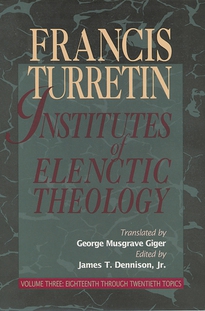

Institutes of Elenctic Theology Vol. 3Institutes of Elenctic Theology
Vol. 3: Eighteenth through Twentieth Topics

by Francis Turretin, George Musgrave Giger (Translator), James T. Dennison, Jr. (Editor)

DETAILS:
Series: Institutes of Elenctic Theology, Vol. 3
Publisher: P & R Publishing
Publication Date: February 1, 1997
Format: Hardcover
Length: 637 pg.
Read Date: September 1-December 29, 2024

Buy from Bookshop.org Support Indie Bookstores

What’s Elenctic Theology Anyway?

Elenctic refers to a logical method involving asking questions, of defending a position (or arguing to persuade people to accept it) by proposing alternatives and asking a series of questions—practically cross-examing the alternatives, to show the problems of the alternatives. A good deal of what we call the “Socratic method” is elenctics.

Therefore, Elenctic Theology is a form of defending the truth of Christianity or Christian dogmas by suggesting alternatives and demonstrating their lack by way of asking and answering questions about them. Or by asking a question about a true dogma and asking questions that affirm them. Aquinas’ Summa Contra Gentiles is one example. This book is another.

What’s Institutes of Elenctic Theology Then?

For a long time, it was the standard textbook to train Presbyterian and Reformed ministers in various parts of the world—including the U.S.—until Charles Hodge’s systematic theology overtook it in popularity (Hodge, it should be noted had his students read Turretin’s Institutes).

Turretin wrote it at the height of Protestant Scholasticism, defending the Reformed understanding of Christianity in a post-Synod of Dordt and post-Westminster Assembly-era. He interacts with the best of Roman Catholic theology of the era, as well as Socinians, Remonstrants (read: Arminians), Lutherans, and others.

He examines the big issues of the time—and several smaller issues, as well. This set contains 20 topics and this book contains only the last three. Yes, the last three topics get an excess of 600 pages devoted to them—Turretin really digs down into these details. The topics in this volume are:
bullet The Church
bullet The Sacraments
bullet The Last Things

Turretin’s Method

I think the best way to show how Turretin approaches these discussions is to show you the list of questions from one of the topics. Here’s what he looks at in the roughly 76 pages of The Twentieth Topic: cThe Last Things:
I. Will there be a resurrection of the dead on the lase day? We affirm.
Il. Are the same bodies numerically which have died to be raised again? We affirm against the Socinians.
Ill. Besides the universal resurrection, is there a particular resurrection of saints or of the martyrs which will precede the last by a thousand years? We deny.
IV. Can anything certain and determinate be held concerning the time of the end of the world? And are certain signs to precede it? The former we deny; the latter we affirm.
V. What will the destruction of the earth be like? Will it be annihilated by the final conflagration or will it be restored and renewed?
VI. Is a final judgment to be expected and what will it be like?
VII. Is there a hell? And what are its punishments—whether only of loss or also of sense? We affirm the latter.
VIII. Will eternal life consist in the vision of God or in the love and enjoyment of him? And under what symbols is it usually described and why?
IX. What are the endowments and qualities of glorified bodies
X. Will there be degrees of glory? And will the glory in heaven be equal or unequal and unlike!
XI. Will the saints in the other world know one another? We affirm.
XII. What is the difference between the church militant and the church triumphant?
XIII. Will the saints glorify God not only with a mental, but also with a vocal language? And will there be a diversity of languages or only one?

Like I said last time, I texted a friend saying that I wish I could break down an idea like Turretin. He made me feel a little better by replying, “You and everyone else born in the 20th century.” Because from these questions, he’ll spend a few pages breaking down the idea further, systematically working his way through the question and seemingly every possible angle of it.

There’s part of me that wants to abandon this re-read and just focus on observing his method and trying to replicate it in my life. I’m not going to, but it’s a thought.

There are times, however, where I wonder why Turretin would spend time on something like part of that last question, “Will the saints glorify God not only with a mental, but also with a vocal language?” The answer is, obviously, that these were topics being discussed in the Church, and it seemed necessary to Turretin. It’s just so far out of our experience to think of.

So, what did I think about Institutes of Elenctic Theology Vol. 3?

Let me get this out of the way first: This is dry. Dry like a stale crouton. I know most people think that about Theology in general—and sure, bad theology is usually dry, but not the good stuff. This is one of those exceptions that proves the rule.

There are moments, I should note, that some of Turretin’s personality shows through, some moments expressing the awe appropriate to the topic, the emotions stirred by the Gospel, and even a little humor/snark at the thoughts of his opponents. But those moments are brief and rare.

As it’s dry, it’s a little harder to read than others (say, Calvin or Bavinck). But it’s absolutely worth the effort—and after a little while, you won’t notice the effort. It’s so crisp, so clear, so helpful that you relish getting to read it. Giger and Dennison likely are due as much credit for this as Turretin is. Giger’s also likely due some credit for the arid language (he was translating in the early Nineteenth Century, not one an era known for punchy prose).

A lot of this volume didn’t click with me as much as the others did. So much of The Sacraments topic just didn’t click with me–I didn’t need that many pages critiquing the Roman system (as good as the critiques were). But that’s not to say I didn’t profit from it, just not as much as the previous volumes.

I can’t recommend this set highly enough. It’s a classic in every sense of the word.

To thee, therefore, thou triune God, the best and the greatest, most merciful Father in Christ, I am indebted and give thanks, not which I owe, but the greatest which I am able, with my whole heart because thou didst not refuse to be so present with me, thine unworthy servant, in this work, begun by me with thy help; that I was able not only to begin and carry on, but to bring it at length to the desired end. I ascribe nothing to my industry, nothing to my powers. The whole of this work is thine, O Lord, who hast made perfect thy strength in my weakness and hast directed by thy Spirit me groping and slipping, to whose grace I give the entire credit, if anything has been done here by me for the illustration of the sacred truth delivered by thee to us. But because to no purpose does anyone plant and water unless thou givest the increase; grant, thou best Father, on account of Christ my precious Redeemer, that these endeavors of mine, whatsoever they may be, may contnbute to the glory of thy most holy name and the benefit of thy church. Grant char as much of the way and of life as still remains to me to be passed with thy divine mercy, | may be able to spend under thy favor and with the most gracious protection of thy Spirit in the exercise of my calling and in the pure and constant worship of thy name, until at length, the most troublesome journey of this life being finished, translated to eternal rest, I can celebrate with everlasting praises thee, my God and Savior, living and blessed for ever in the heavenly assembly of the firstborn. And to thee, the everlasting King, the only wise God, immortal, invisible, Father, Son and Holy Ghost, adorable Trinity, be honor and glory, for ever and ever. Amen.


5 Stars
This post contains an affiliate link. If you purchase from it, I will get a small commission at no additional cost to you. As always, the opinions expressed are my own.

Irresponsible Reader Pilcrow Icon

Saturday Miscellany—1/18/25

Odds ‘n ends about books and reading that caught my eye this week. You’ve probably seen some/most/all of them, but just in case:
bullet Please Don’t Idolize Me (or Anyone, Really)—Sadly, this post from last August by John Scalzi is freshly relevant this week. And, no, I will not be talking more about it. I hope.
bullet The Russian Roots of American Crime Fiction—and the O.G.—Joesph Finder’s piece is a great push to read some classic Russian lit.
bullet Audiobooks Have Taken Over My Life, and I Love It
bullet 8 Thought-Provoking Quotes from To Kill a Mockingbird—Sticking with my tradition (which I haven’t had to invoke in too long), if I see something about TKaM, I share it here. Also, a good reminder about some of these lines.
bullet Jam’s Top Reads of second half of 2024—I hope to read one of these this month–and should probablay look more at some of the others.
bullet The Bard’s Tale Retold: Shakespeare Retellings Done Differently—a fun listicle from Witty & Sarcastic Book Club

A Book-ish Related Podcast episode (or two) you might want to give a listen to:
bullet Crime Time FM ROB PARKER In Person With Paul—nice to hear Parker as the subject of an interview for a change. I really want to read this book now (compared to my general “oooh, a new Rob Parker, I should read that” response)
bullet Speaking of Mysteries Episode 265: Robert Crais—this was entirely too brief. But good to hear from the man himself about his fantastic new book

To help talk about backlist titles (and just for fun), What Was I Talking About 10 Years Ago Week?
bullet Low Midnight by Carrie Vaughn
bullet Foxglove Summer by Ben Aaronovitch—which is such a good one, that I didn’t fully appreciate at the time (and I really liked it at the time)
bullet I also noted the releases of: Near Enemy by Adam Sternbergh and The Way Into Magic by Harry Connolly. Two works that I should try to find time to re-read.

This Week’s New Releases that I’m Excited About and/or You’ll Probably See Here Soon:
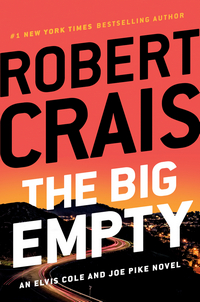
bullet The Big Empty by Robert Crais—If you take nothing else away from this post, know that this book is out now, and you should be reading it. As I described here.
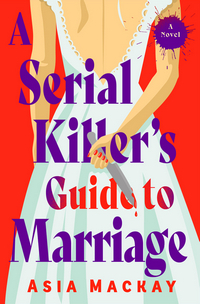
bullet A Serial Killer’s Guide to Marriage by Asia Mackay—a fun book about a marriage on the rocks as the vigilante couple struggles to not go vigilante-ing. I enjoyed it, you’ll likely enjoy it more.
bullet The Troubled Deep by Rob Parker—I will jump on this book as soon as I find an easy way to get it on this side of the Atlantic. “An ex-marine and ex-SBS officer, Cam Killick’s PTSD has made the return to civilian life a living nightmare. The only place he can find peace is underwater, where the world is muffled to white noise. As a cold case diver it is his job to scour the waterways of the country for the lost, the submerged, the drowned, laying their stories to rest alongside them.

Except when Cam throws open the doors to the Brindley car, all four bodies are missing. “
bullet Karma Doll by Jonathan Ames—Happy Doll is framed for a murder in Mexico and has to sneak across the border to find the real killer.
bullet Water Moon by Samantha Sotto Yambao—”A woman inherits a pawnshop where you can sell your regrets, and then embarks on a magical quest when a charming young physicist wanders into the shop, in this dreamlike fantasy novel.” Sign me up.

At one magical instant in your early childhood, the page of a book - that string of confused, alien ciphers - shivered into meaning. Words spoke to you, gave up their secrets; at that moment, whole universes opened. You became, irrevocably, a reader. -  Alberto Manguel'

In 2024…My Life in Books

In 2024...My Life in Books
When I saw this over on Book’d Out, I remember my daughter Carleigh and I having a lot of fun doing the 2023 version. So I tried it, and it turns out that it was fun because my daughter is good at thinking like this. So, I sent her the categories and a list of titles. She did most of this–and the ones I handled, I had her approve before I posted.

She gets full credit for any of this that you enjoy. If you don’t like a response, that was probably my contribution.


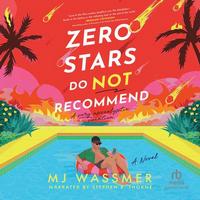
2024 was the year of: Zero Stars, Do Not Recommend by MJ Wassmer
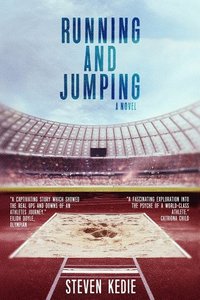
In 2024 I wanted to be: Running and Jumping by Steven Kedie
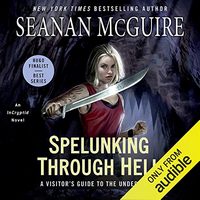
In 2024 I was: Spelunking Through Hell by Seanan McGuire

Cover of Zero Stars Do Not Recommend by MJ Wassmer Cover of Running and Jumping by Steven Kedie Spelunking Through Hell

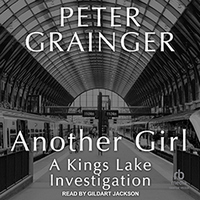
In 2024 I gained: Another Girl by Peter Grainger (it was technically a couple of days before the New Year, but our new dog really jelled into our pack in 2024)
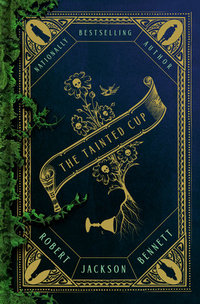
In 2024 I lost: The Tainted Cup by Robert Jackson Bennett
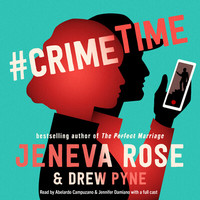
In 2024 I loved: #CrimeTime byJeneva Rose, Drew Pyne

Another Girl The Tainted Cup Cover to #CrimeTime by Jeneva Rose and Drew Pyne

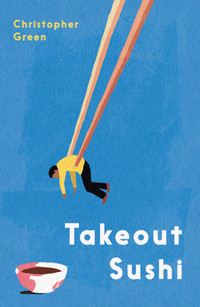
In 2024 I hated: Takeout Sushi by Christopher Green
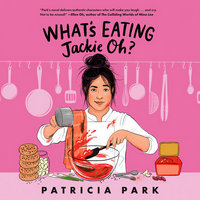
In 2024 I learned: >What’s Eating Jackie Oh? by Patricia Park
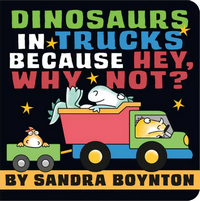
In 2024 I was surprised by: Dinosaurs in Trucks Because Hey, Why Not? by Sandra Boynton (who wouldn’t be?)

Takeout Sushi Cover for What's Eating Jackie Oh by Patricia Park Cover of Dinosaurs in Trucks Because Hey Why Not? by Sandra Boynton

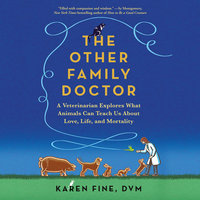
In 2024 I went to: The Other Family Doctor by Karen Fine
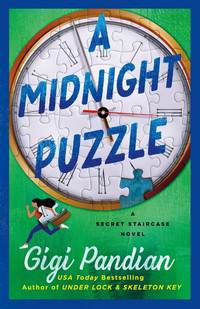
In 2024 I missed out on: A Midnight Puzzle by Gigi Pandian
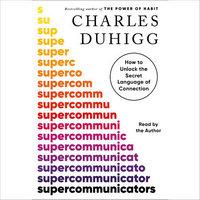
In 2024 my family were: Supercommunicators by Charles Duhigg

The Other Family Doctor A Midnight Puzzle Supercommunicators

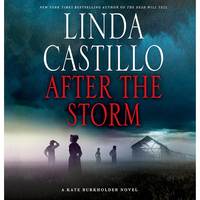
In 2025 I hope it will be: After the Storm by Linda Castillo

Blank Space After the Storm Blank Space

As usual, I’m not tagging anyone in this—but I’d like to see what you all have to come up with.

WWW Wednesday—January 15, 2025

It’s the middle of the week, pretty much the middle of the month, and I’m feeling fair-to-middling. Which all works out nicely. Let’s commemorate this synchronicity by going through this week’s WWW Wednesday, shall we?


WWW Wednesdays Logo

This meme was formerly hosted by MizB at A Daily Rhythm and revived on Taking on a World of Words—and shown to me by Aurore-Anne-Chehoke at Diary-of-a-black-city-girl.

The Three Ws are:
What are you currently reading?
What did you recently finish reading?
What do you think you’ll read next?

Seems easy enough, right? Let’s take a peek at this week’s answers:

What are you currently reading?

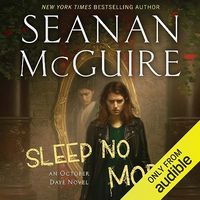
Cover of Pushing Ice by Alastair Reynolds Cover of Sleep No More by Seanan McGuire
Pushing Ice
by Alastair Reynolds
Sleep No More
by Seanan McGuire, read by Mary Robinette Kowal

Words are failing me to try to describe Pushing Ice. I’m a shade past halfway through this and am so impressed. It’s my first Alastair Reynolds novel, and unless the second half falls off the rails, it won’t be my last.

It’s been too long since I spent time with Toby Daye, and I’m enjoying this revisit. As one expects, as I know what’s going to happen, I’m able to enjoy some of the details more. The details are really nicely added. McGuire gave her fans a treat with this one.

What did you recently finish reading?

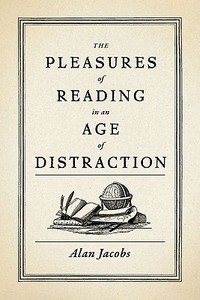
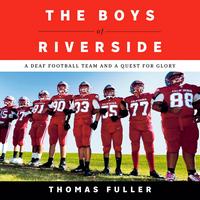
Cover of The Pleasures of Reading in an Age of Distraction by Alan Jacobs Cover of The Boys of Riverside by thomas Fuller
The Pleasures of Reading in an Age of Distraction
by Alan Jacobs
The Boys of Riverside: A Deaf Football Team and a Quest for Glory
by Thomas Fuller

I’ve said somewhere (or maybe a few places), that this Alan Jacobs book is as close to a Mission Statement that The Irresponsible Reader has. This re-read was a good reminder why I say that, as well as a challenge to make an adjustment or three to my approach.

Fuller provides an engaging and interesting book about a football team that can appeal to even those of us who really don’t care that much about SportsBall.

What do you think you’ll read next?

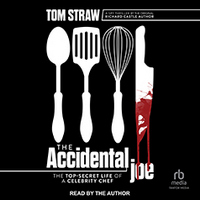
Question Marks Cover of The Accidental Joe by Tom Straw
The Accidental Joe: The Top-Secret Life of a Celebrity Chef
by Tom Straw

I have no idea what my next print book will be, it really depends on my frame of mind when I finish Pushing Ice; and how much energy it leaves me with. I have a few options, but I’m not going to commit.

Meanwhile, I’ve been wanting to try The Accidental Joe for some months now, and a local library finally added it to their collection–celebrity chef turned CIA asset? Should be fun.

How’s this week treating you?

HC Chats with Witty & Sarcastic Book Club about 2024/2025

I’m very pleased to welcome Jodie from Witty & Sarcastic Book Club to talk about what happened on our blogs last year, the books that stood out to us, as well as some hopes and goals for 2025–and very vague reading plans. We ramble a bit about some other things, too.

I hope you enjoy this.

The audio on my end is a wonky (and maybe hard to listen to) at the beginning, but it settles down after a little bit (but is still too loud compared to Jodie’s). Will go back to my old microphone next time.

Show Notes

Blogs/Websites we mentioned:
Peat Long’s Blog: https://peatlong.wordpress.com/
The Orangutan Librarian: https://theorangutanlibrarian.wordpress.com/
Pages Unbound: https://pagesunbound.wordpress.com/
Read Christie 2025: https://www.agathachristie.com/news/2025/read-christie-2025

Bookshop Pages, we’d appreciate you using one or all of these:
Behind the Pages Bookshop Page: https://bookshop.org/shop/BehindthePages
Witty and Sarcastic Book Picks: https://bookshop.org/shop/WittyandSarcasticBookPicks
HC’s Bookshop Page: https://bookshop.org/shop/irresponsiblereader

Particular Books We Mentioned:

A Serial Killer’s Guide to Marriage by Asia Mackay: Vigilante Power Coupling

Cover of A Serial Killer's Guide to Marriage by Asia MackayA Serial Killer’s Guide to Marriage

by Asia Mackay

DETAILS:
Publisher: Bantam
Publication Date: January 14, 2025
Format: eARC
Length: 352 pg.
Read Date: December 23-26, 2024
Buy from Bookshop.org Support Indie Bookstores

What’s A Serial Killer’s Guide to Marriage About?

I had a long and drawn-out version of this planned, but I scrapped it when I realized it would be longer than everything else in the post—and you’d be in better hands if you read Mackay’s version.

So I’m going to try to be brief.

Every parent knows that having a child changes your life. There are two distinct phases—pre-child and post-child. If you’re in a marriage/long-term relationship, that changes, too. Significantly. Generally, it’s worth it—but we all know the “remember when we did X when we wanted to?” feeling. We all have to find new ways to relate to our partners, ways to keep things exciting.

But what if that X was killing people? People who abused women, in particular. What if the thing that brought them together, their joint purpose was this particular vigilantism—along with the travel necessary? What would they do after they had to put it aside for the safety and well-being of a daughter?

What would that do to their relationship? What would it do to them as individuals? What kinds of strain would be caused?

These, and many other questions, are answered in A Serial Killer’s Guide to Marriage

Hazel

You are going to almost instantly appreciate Hazel’s voice and perspective (assuming you can put up with the whole serial killing thing. But if you can’t, you’re probably not reading a book with this title)—part of that is because we start with her POV, partially because she’s a great character that anyone wants to identify with and empathize with.

She wants the best for her daughter and her husband. She’s a devoted mother and dotes on the girl. But she misses who she was. She misses who she and Fox were. She feels shackled by his decision to hang up their knives and live a “straight” life while raising their daughter (children?). She mostly agrees with the choice, but it chafes.

Hazel has never been good at making friends, but she’s trying to fit into her new, suburban life—going to mommy and baby groups, trying to forge relationships. And she is beginning to forge a friendship with a fellow mother when she discovers she’s made a bad choice. This new friend is a police officer.

Whoops.

Gripe #1: Fox’s Perspective

Fox does not make a good first impression—or at least Hazel doesn’t leave us with a good first impression. Thankfully, it didn’t take too long to see something from his perspective and it became possible to empathize with him some. In fact, once we get to see his self-deprecating wit, it’s hard for a reader not to like the guy a little—and to realize that Hazel was being (understandably) uncharitable.

It’s a thing that happens in marriage from time to time—especially the kind that could probably use a guide to marriage.

Fox is incredibly careful and thoughtful (about their criminal activities, anyway, not so much about his wife’s feelings). He does do much for Hazel—for their family’s sake—that he doesn’t tell her about, or explain fully.

There were two angles to things with Fox’s perspective that I think hurt the book as a whole while being things that Mackay clearly intended and I probably just don’t appreciate enough. The first is that we don’t know everything he’s up to and/or knows—this is done so we can learn about it at the same time as Hazel, which works for dramatic effect. But it feels like Mackay is cheating a little bit to get us there.

The other part comes as a result of Fox’s place in the novel—as a character, he’s second banana to Hazel. What she’s doing and thinking is far more important (and I get that), but in addition to having a lot hidden from us, parts of his story are rushed. There’s…a situation back in the States with his family’s company. We get a glimpse or two at it, and then it’s largely resolved—off-screen. It felt like a missed opportunity.

Gripe #2: Communication

One decent conversation with the person each thinks of as a soulmate. One decent conversation between people we see do so much for each other. One decent conversation between people who would die—or kill—for the other.

That’s all it’d take to make this a short story instead of a novel.

Or better yet, put them on a better footing so they could do other things together.

Yes, this is what happens between marriages all the time. Even ones where neither is a criminal of any kind. So it makes sense for Mackay to show this. But it could’ve been resolved quicker so we could see them as a couple (more or less on the same page, but not at loggerheads) when dealing with Fox’s family, Haze’s complicated taste in friends, parenting, etc., etc.

Sure, that’s not the story Mackay wanted to write—so I really shouldn’t gripe about it. But watching how she did everything else (very well, I want to stress), I’d have enjoyed seeing this version more.

So, what did I think about A Serial Killer’s Guide to Marriage?

I really enjoyed it. I wanted more from it though, as my second gripe (which looks worse on the page than it is in my mind) indicates—I think Mackay could easily have brought us something better. More like the Mr. and Mrs. Smith TV show than the movie (not that this is a great comparison in several ways, but it captures the gist).

So I’m going to move on from it there.

This is really aspirational in so many ways—their lifestyle? (obviously minus the murdering bits) Either in the carefree pre-parenthood days, or even the suburban version—is something that few of us will see. The travel, the house, the standard of living—it’s fun to imagine yourself there.

And honestly, we all sort of like the idea of being a lone vigilante (or a pair), doing the things the authorities don’t or can’t. Fox sees the comparison to a comic book figure—and embraces it with a grin. Readers will do the same.

At the end of the day, this is silly, trashy, fun—and I mean that as a compliment. I’m pretty sure that’s what Mackay was going for, and she achieved it. (if that wasn’t her aim, she still hit the mark). I think most readers are going to like it more than I did—I have a short list of people I’m gifting it to, and I am confident they will. Anyone who finds the pitch appealing is going to have fun with this Dexter-ish* comedy, and I recommend it to you.

* Heavy on the “ish.”

Disclaimer: I received this eARC from Random House Publishing Group via NetGalley in exchange for this post—thanks to both for this.


3.5 Stars

This post contains an affiliate link. If you purchase from it, I will get a small commission at no additional cost to you. As always, the opinions expressed are my own.
Irresponsible Reader Pilcrow Icon

PUB DAY REPOST: The Big Empty by Robert Crais: The Muffins Rode Shotgun

The post title there really has little to do with the book, but I loved the line so much, I had to use it.


Cover of The Big Empty by Robert CraisThe Big Empty

by Robert Crais

DETAILS:
Series: Elvis Cole, #19
Publisher: G.P. Putnam's Sons
Publication Date: January 14, 2025
Format: eARC
Length: 384 pg. 
Read Date: December 18-20, 2024
Buy from Bookshop.org Support Indie Bookstores

What’s The Big Empty About?

I’m tempted to skip this part and rush to the bit where I insist you go pick this up, throw up the five stars, and call it a day. But I won’t—I’d feel guilty about it. But honestly, feel free to skip this. It’s just filler until I get to the .jpg with the stars.

The Baker Next Door is an Internet sensation, she’s moving on to TV and brick-and-mortar stores. But her success isn’t enough for her, something’s been chewing at her for a long time, so Traci Beller comes to Elvis with a cold case. The ten-year anniversary of her father’s disappearance is coming up, and she wants some answers. She’d prefer Elvis find him hale and hearty, but she doesn’t expect it. But she wants to know what happened before. Five years ago good investigators that Elvis knows couldn’t find him, and the state declared him deceased. But Traci wants to try again.

Something about her and her determination gets to Elvis, and he agrees to look at the LAPD’s file—as well as the records from the other PIs. Also, Traci gave him muffins. It probably doesn’t hurt that Ben Chenier is fan, either.

Still, it’s a cold case. It’s not going to be easy to find something new—and it’s only something new that will move the case forward. Otherwise, he’s just going to be doing what his predecessors did, just probably less fruitfully. Thankfully (otherwise this would be a short story, not a novel), Elvis asks the right question and gets the answer he needs.

On the other hand, he might have preferred the less eventful version.

Elvis and Joe

At this point, Joe Pike is practically a super-human, or maybe a human so fantastic as to be unbelievable—like Batman or Jack Reacher. And I don’t care (I don’t think anyone does)—because he’s not infallible and we all love to see him come in to save the day.

Meanwhile, Elvis has always seemed pretty mortal. Something happens in The Big Empty that emphasizes this mortality. It is not like what happened to Spenser in Small Vices, but it reminded me of it. But Crais handles it better and more believably—Elvis is not infallible, he’s not invincible, and it’s good for the reader—and for him—to get a reminder of it.

Still, it appears that Crais has taken the “stop the characters aging” route—we don’t get references to Vietnam anymore to keep them from seeming as old as they are (see also: Spenser dropping references to Korea). I don’t care how much Tai Chi or whatever Elvis does—he’s too old to do half of what he does. I’m absolutely okay with that, I don’t need to see inconveniently-timed sciatica messing up Pike’s silent approach to a building or Elvis needing a cane or a hearing aid to get through the day.

Basically, I wouldn’t change a thing about what Crais has done with these characters, nor what he’s doing with them now—and The Big Empty is one of the best books to showcase the strengths of his approach to the characters since The Last Detective.

On the Other Hand, We Have John Chen

Really, truly, John Chen is a lousy excuse for a human being—he’s a decent criminalist (it seems) and he’s really easy for Elvis to manipulate into getting what he needs. But the guy is about as self-aware as a piece of toast. His self-delusions are at the level of Pike’s omnicompetence—this doesn’t make him any less entertaining (or cringe-inducing) to read, but wow…some growth in his character would restore some of my faith in humanity.

I was so happy when he showed up in these pages, and I loved every moment with him. (so, yeah, I really don’t want him to grow or develop as a character)

But what I really want—and I don’t know how this could happen—is a short story/novella where John Chen and Roddy Ho have to team up. It would be the ultimate in HR nightmares, and the two would hate each other (I assume). But boy howdy, would it be fun to watch.

So, what did I think about The Big Empty?

Yes, it’s almost a foregone conclusion that I’m going to love a new Elvis Cole novel. But that shouldn’t take away from just how ____ing good this was. If this was my first time reading Crais, it would not have been my last—and I’d have a stack of library books next to me now (which would be replaced by a stack of paperbacks fresh from the bookstore after I read one or two more).

There’s just something about Crais’ prose that makes you race through it. Because of the pace at which he puts books out lately, I wanted to take my time and savor it. Relish each paragraph. But you just can’t do it—the prose is so smooth, so well put together, that every time you try to slow down, Crais comes along behind you and gives you a nudge and you remember that you’re on a bobsled hurtling down the track. That almost sounds like you’re out of control—but you’re not. Maybe a better metaphor would be that you’re in a Lamborghini Murciélago, trying to drive slowly down a deserted highway to take in the scenery. But that car isn’t built for 35 MPH, and before you notice, you’re doing at least 80.

Also, that wasn’t me complaining (too much) about the pace Crais is publishing lately—if he was faster, that prose wouldn’t be as honed. He can take as long as he wants.

We got a larger-than-usual cast of supporting characters for a Cole or Pike novel (or so it seemed, I didn’t do a headcount, nor am I going to go back and do one for the last few books). I thought they were all great—from the antagonists, to the villains, the witnesses, and the innocent parties that got sucked up into something they shouldn’t have been. I believed them all and would like to see almost all of them again (if only it were possible). I can’t tell you the best characters because it would ruin too much, and I want to stay on Putnam’s good side. But when you get to the last chapter, the character there that I haven’t mentioned in this post? That’s the best character (by a nose) in this one.

The first chapter was great—maybe it didn’t do much in terms of story, but it gets you right back into Elvis and Lucy. Then we meet Traci and her manager (that you want Elvis to punch almost as much as he wants to), and you’re with Elvis in wanting to help her—and the book keeps building from strength to strength there—right up to the perfect closing paragraph.

The sole quibble I have with this was the way that the relationship between Elvis and the Sherriff Department’s detective. It just seemed off the way it developed from the natural antagonism to the endpoint where it seemed more (not completely) collegial easier than it should’ve.

So, yeah, I think I’ve made it clear that I really enjoyed The Big Empty, I don’t think it’s the best thing that Crais has written—but it’s gotta be in the top 5 (it could be recency bias talking, but I don’t think so). I’d have to think long and hard to come up with many (other than The Promise, because of Maggie). Regardless of how it stacks up with the rest of Crais’ oeuvre, it’s a dynamite novel, one of the highlights of 2024 for me—and I predict many people will say it’s a highlight of 2025 for them when it’s published next week.

Get your pre-orders or library holds in now, friends, you want to get your hands on this.

Disclaimer: I received this eARC from Putnam Books via NetGalley in exchange for this post—thanks to both for this.


5 Stars

This post contains an affiliate link. If you purchase from it, I will get a small commission at no additional cost to you. As always, the opinions expressed are my own.

Irresponsible Reader Pilcrow Icon

MUSIC MONDAY: “We Happy Don’t Worry” by American Authors

Music Monday logo

Music Monday's originated at The Tattooed Book Geek's fantastic blog and has shown up hither, thither, and yon since then.

This weekend turned into one of those, so this is going to have to settle for the post for today (hopefully not tomorrow, too)

Irresponsible Reader Pilcrow Icon

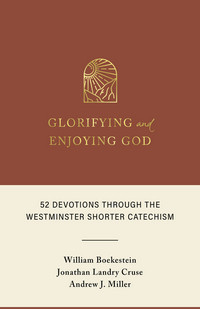
Glorifying and Enjoying God by William Boekestein, Jonathan Landry Cruse, Andrew J. Miller: Heartfelt Application of the Classic Tool

Cover of Glorifying and Enjoying God by William Boekestein, Jonathan Landry Cruse, Andrew J. MillerGlorifying and Enjoying God:
52 Devotions Through the Westminster Shorter Catechism

by William Boekestein, Jonathan Landry Cruse, Andrew J. Miller

DETAILS: 
Publisher: Reformation Heritage Books
Publication Date: October 16, 2023
Format: Hardcover
Length: 229 pg. 
Read Date: January 7-December 29, 2024
Buy from Bookshop.org Support Indie Bookstores

What’s Glorifying and Enjoying God About?

This is a devotional, as promised in the subtitle based on the Westminster Shorter Catechism. The authors, inspired by the organization of the Heidelberg Catechism into Lord’s Days, did the same here—organizing the 107 questions and answers of WSC into 52 weeks.

Each chapter begins with the question(s) for the week and then spends roughly four pages discussing the language of the answers or the topic addressed.

Strengths

Honestly, there’s at least a paragraph or two in each chapter where I could point to something and say “That right there justifies the rest of the chapter.” Not that any chapter was a miss—sure, some were stronger than others, but they were all helpful—but there was at least that paragraph that was better than the rest.

Sometimes it was a bit of insight that I hadn’t considered before or just the right bit of application to drive the point home. Either way, it really doesn’t matter.

I would say that the chapters covering the Law and the Ten Commandments might have been the strongest in the book—I thought that the authors brought a little extra clarity to their points here. Not in any sort of legalistic way or anything—I just thought they did a great job of showing how the commandments/Law revealed God’s character and pointed to the work and person of Christ in a way that they didn’t consistently achieve in other parts of the book.

Weaknesses

Not surprisingly, what I’m calling a shortcoming is actually part of the design. It’s not a bug, it’s a feature.

But the length, and therefore the depth, of each chapter just wasn’t enough for me. Now I realize many (most?) of these questions and answers could be the basis of a full-length book, and I’m not arguing we should’ve had 5200 pages or more in a devotional. But I think twice the length of each chapter wouldn’t have been that much to ask. Typically, these chapters were 3 1/2-4 pages in length—5-7 would’ve been much better.

But that would probably have taken the book out of what people expect from a devotional, and therefore would’ve hurt it. Still, I think it’d have been a stronger overall volume that way.

So, what did I think about Glorifying and Enjoying God?

Cruse and Boekestein have written books that I’ve written positively about before (I have another Cruse book to talk about soon, too), which is what drew me to this—along with the concept. I will continue to be drawn to books they author (and Miller, now, too). It’s difficult to tell who wrote what chapter (outside of the times they identified themselves)—they did a good job blending their voices (possibly they and an editor, I don’t know how the mechanics of it all worked).

The language is clear and accessible—it can be used for a family with fairly young children (with some help from mom and dad) or individuals of whatever level of education.

It is clear that the authors are pastors, the devotionals are directed for real people with real concerns, not mere theory—it might not be all “practical,” but it’s all useful.

The minutes a week I spent with this were typically helpful and edifying, and I’m going to miss this refresher in the Catechism (I’ve taken their 52 week breakdown and will be following it to keep that freshness). I look forward to returning to this devotional in a couple of years, expecting other things to jump out at me than did this time—but I expect I’ll find it as useful.


3.5 Stars

This post contains an affiliate link. If you purchase from it, I will get a small commission at no additional cost to you. As always, the opinions expressed are my own.
Irresponsible Reader Pilcrow Icon

Saturday Miscellany—1/11/25

Odds ‘n ends about books and reading that caught my eye this week. You’ve probably seen some/most/all of them, but just in case:
bullet Can You Guess the Book Titles from These Emojis? Test your knowledge of classic novels and contemporary bestsellers —Let’s start off the week with something silly. It’s also proof that I cannot communicate in emojis. I got none of these.
bullet Why reading out loud is important—something more for the “do audiobooks count?” nonsense (hat tip: booklistfordays)
bullet Craig Johnson’s Next Novel Drops May 27, Was Inspired By Cowboy State Daily Story
bullet There’s a New Version of Hamlet Staged in Grand Theft Auto—I initially rolled my eyes at this (but was going to include it only for the excuse to post the headline), but on third or fourth thought…I’m a little intrigued.
bullet Why I’m making 2025 my year of dead-tree books
bullet Raven’s 2025- The Year of ‘Read Like Nobody’s Watching’… —This is the approach we should all approximate
bullet Bookish Goals in 2025—good, SMART goals
bullet My 2025 Bookish Ins and Outs—wise plans
bullet Presenting the Picture Prompt Book Bingo Challenge for 2025 —After telling myself to cut back on challenges this year, I see this one–which looks like it coule be fun to try.
bullet Five Fantasy Bookstores and Libraries I’d Love to Explore—yeah, I would spend time in these
bullet Plot Pet Peeves—I cannot imagine anyone (other than authors/publishers, apparently) arguing aginst any of Krysta’s points.
bullet The 12 Best Sci-Fi Novels of the Last 10 Years—According to Collider and Reddit, anyway. Although, having read 5 of these, I’m inclined to believe them.
bullet Trying and Failing to Figure Out “Escapism” in Books—some good thoughts from Molly Templeton (as one expects) and others.

It’s the Time of Year for Best of Lists like these to embiggen your 2025 TBRs (or to give you fodder to think about).
bullet Celeste at A Literary Escape listed Favorite Books Published in 2024 and Favorite Backlist Reads of 2024
bullet My Top 10 Ten Books of 2024 and My Top Ten 10 Books for Children 2024—from Left on the Shelf (the latter defintely added to my TBR)
bullet From Worlds Unknown’s 2024 Wrap Up – A Year in Books + What’s Coming in 2025

A Book-ish Related Podcast episode (or two) you might want to give a listen to:
bullet Fiction Fans 2024: Year in Review—a fun look back at their year that was
bullet The Conversation with Nadine Matheson M.W. Craven: Luck, Crime Writing and Life Lessons—I would’ve gladly listened to a few more hours of them talking shop.

To help talk about backlist titles (and just for fun), What Was I Talking About 10 Years Ago Week? (a mostly great week for reviewish posts and new releases)
bullet The Gods of Guilt by Michael Connelly
bullet Us by David Nicholls
bullet Food: A Love Story by Jim Gaffigan
bullet And I noted the releases of Golden Son by Pierce Brown, Firefight by Brandon Sanderson, Foxglove Summer by Ben Aaronovitch, The Witches of Echo Park by Amber Benson, As Chimney Sweepers Come to Dust by Alan Bradley

This Week’s New Releases that I’m Excited About and/or You’ll Probably See Here Soon:
bullet Adrift in Currents Clean and Clear by Seanan McGuire by Seanan McGuire—The latest Wayward Children book is everything you want, as I tried to say recently.

An image of a woman searching through shelves of books over the words 'The person who doesn’t read lives only one life. The reader lives 5,000. Reading is immortality backwards. - Umberto Eco'

Page 3 of 5

Subscribe via Email

Enter your email address to subscribe to The Irresponsible Reader and receive notifications of new posts by email.

Powered by WordPress & Theme by Anders Norén