Author: HCNewton Page 159 of 623

I’m Curious: What Are Some of the Funniest Books You’ve Read?

I know, I know, this can be a moving target (and should be, depending on where you are in life)…

But I’m still going to ask: What is the funniest, or what books are amongst the funniest, you’ve read? I’m looking over the books I have coming up for the rest of the year, and by and large, we’re talking about some dark reading. I could use some laughs…so help me find an idea or three, will you?

Here’s my rather incomplete answer (that I ripped off from something I told K.R.R. Lockhaven last year). I should probably tweak this list before I publish, but I don’t have the time…

Off the top of my head…
bullet The Hitchhiker’s Guide to the Galaxy by Douglas Adams (well, everything Adams wrote)
bullet Mechanical Failure by Joe Zieja
bullet The Fran Lebowitz Reader
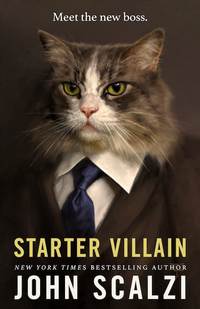
bullet The Android’s Dream by John Scalzi
bullet Heartburn by Nora Ephron
bullet Dave Barry Slept Here by Dave Barry
bullet The Spellman Files by Lisa Lutz
bullet White House Mess by Christopher Buckley
bullet Sir Apropos of Nothing by Peter David
bullet Is Everyone Hanging Out Without Me? by Mindy Kaling
bullet High Fidelity by Nick Hornby
bullet You’ll Never Believe What Happened to Lacey: Crazy Stories About Racism by Amber Ruffin,
Lacey Lamar
bullet The Tales of Pell by Delilah S. Dawson, Kevin Hearne

Incidentally, you should read the entire series of interviews Lockhaven did about humor in fiction–some great things were said, and then there was my entry, too.

I look forward to your recommendations!

WWW Wednesday, August 30, 2023

I’ve got no rambling intro today, just a greeting (Hi everybody!) and the main event, WWW:

This meme was formerly hosted by MizB at A Daily Rhythm and revived on Taking on a World of Words—and shown to me by Aurore-Anne-Chehoke at Diary-of-a-black-city-girl.

The Three Ws are:

What are you currently reading?
What did you recently finish reading?
What do you think you’ll read next?

Easy enough, right?

What are you currently reading?

I’m having a blast with A Sh*tload of Crazy Powers by Jackson Ford and am listening to Hell and Back by Craig Johnson, George Guidall (Narrator) on audiobook—Guidall’s reminding me how good he is.

A Sh*tload of Crazy PowersBlank SpaceHell and Back

What did you recently finish reading?

I just finished Victoria Williamson’s Norah’s Ark, and Be The Serpent by Seanan McGuire, Mary Robinette Kowal (Narrator) on audio (and I was as dissatisfied with the ending this time as I was last year).

Norah's ArkBlank SpaceBe The Serpent

What do you think you’ll read next?

My next book should be Fuzzwiggs: The Switcheroo by Amy Maren Rice , a book I’ve been waiting to get to for months, and my next audiobook should be The Last Ranger by Peter Heller, Mark Deakins (Narrator).

Fuzzwiggs: The SwitcherooBlank SpaceThe Last Ranger<

How are you closing out the summer?

Some Disorganized Thoughts on the Excellence that is Light Bringer by Pierce Brown

Light BringerLight Bringer

by Pierce Brown

DETAILS:
Series: Red Rising, #6
Publisher: Del Rey Books
Publication Date: July 25, 2023
Format: Hardcover
Length: 672
Read Date: August 14-24, 2023
Buy from Bookshop.org Support Indie Bookstores

This Post

Yeah, this isn’t going to be my typical kind of post. I know deep in my bones, the way you know about a good melon, that if I tried my typical approach I’d probably finish this in December. And since I don’t have that kind of patience—and this book was due back at my library on August 19. I’m in deep sh…aving cream already.

So, I’m just going to mention a few things I think are worth saying—and hopefully think of a conclusion to wrap it all up (but no promises).

bullet I need to start with the fact that I went into this with a wrong assumption—I misunderstood something I saw Brown say on Twitter some months ago and thought that this was the finale of the series. I started wondering pretty soon how that was going to be the case, but it took me far too long to admit that I misunderstood him and shouldn’t expect any kind of bow to be put on things by the end of Light Bringer. Once I gave that up, most of my lingering questions about pacing and character went away.

bullet Lyria. If Brown had done nothing else impressive with the post-Morning Star books, what he’s done in creating and growing this character would justify the time reading them. I just cannot get over her. At this point, I enjoy her more than Darrow, Virginia, or the rest. Kavax and Sevro are the only characters that compete with her for my affection. Also, Brown did an excellent job of faking the reader out when it came to her character arc after the last book.

bullet Darrow grows more in these pages than he has since…maybe The Institute. Or probably with Lorn. And a lot of that has to do with the right book being given to him at the right time in his life. (maybe my libro-fixation makes me focus on that part, but, I’m right). I want to see this change in action more—but what Brown does here gives me a lot of hope for our hero. Assuming The Reaper is our hero by the end.

bullet I really, really, really, really want to know how long Brown has been plotting out the major events of this novel—has he been building up to them since Iron Gold or before? Or were they things that came into focus when he started planning Light Bringer? It won’t change what I think of them (devastating, brilliant, etc.)—it’ll just help me understand how he works.

bullet The bonds between so many of these characters are fantastic. Particularly between the classmates turned colleagues turned friends turned enemies turned uneasy allies turned brothers. (or relationships that follow similar paths) How these people can be bound up so tightly with each other after all they’ve gone through is something else. So many times I start off thinking, “There’s no way that Darrow/Lysander/Victra/Whoever is going to trust them is there?” And then they do—and I buy it every single time, just the way that Darrow/Lysander/Victra/Whoever does. And I’m caught as off-guard as they are in the significant percentage of times they end up getting betrayed.

bullet I cannot believe how often these people make me laugh—genuinely laugh. In the midst of all of the death, destruction, revenge, societal upheaval, and uncertainty—there’s a core humanity at work in them all.

bullet After all these thousands of pages (especially when I count re-reads and audiobook listens)…how can Brown completely surprise me the way he does? I can’t even count how many double-crosses that become triple-crosses then go awry and end up becoming alliances that are quadruple-crossed in this book alone. (And that’s not a spoiler, if you’ve read the series, you know that’s going to happen—and I likely left off at least 5 backstabbings).

bullet Speaking of stabbing…Brown’s action scenes—particularly when it comes to small groups of people fighting—one on one, two on two, one on five, etc.—are just great. He’s never been shabby at this, but it felt like he topped himself here. (as he has in each successive book).

bullet Sevro, Sevro, Sevro…I felt so bad for him through so much of this book. Even before he inadvertently found out what happened to his family in Dark Age. But you never want to count the Goblin out, right?

bullet Although, the fox Sophocles just might have done a better job of breaking my heart. Not that it’s a competition.

bullet There’s a fantastic potential spin-off series introduced around the mid-way point. I hope Brown doesn’t give it to us (although I’ll read it if he does), I think I’d prefer my imaginary version of it.

bullet The bond that I referred to earlier is seen in loyalty, forgiveness (and the ability to work together when that forgiveness hasn’t been granted), and best of all, a humor based on shared experiences and attitudes. The humor in this book is almost never situational (too grim for that), or physical (outside maybe of Sophocles)—it comes from old friends being rude to one another, making a joke in reference to something that happened a decade or more ago, etc. And it works—you can’t help but chuckle alongside these men—even when they’re likely saying goodbye for the last time, they can make you laugh. Well done, Mr. Brown.

Let’s See If I Can Wrap This Up

I really think I could just keep going flipping back and forth through the pages of the book and coming up with more and more bullet points to ramble about. But who wants to read that? (especially now that I see that I’ve repeated myself)

I really wish I spent time in discussion groups, fan sites, etc. for this series, so I’d have known that this wasn’t the ending before I started. That preconceived notion really skewed things for a while. Oh well. Like I said before, once I started thinking of this as penultimate—everything clicked.

I do think it’s time for Brown to tie this up—as much as I love this series, readers can only take so many Master Plans that go awry when they meet other Master Plans only to uncover someone else’s Deeper Master Plan working against both.

But it’s been—and will be—quite the ride. These characters are so full of honor, and nobility (of various types), that even when they’re “on the wrong side” it’s hard to think poorly of them until they’ve turned into hypocrites or something. Brown gives us a great picture of so many people working for the common good—if only they could agree with what that is. Chess masters vying against one another to help their picture of the best for society to come about. Sadly, their moves aren’t made with game pieces, but with thousands or millions of lives at a time.

I’m, of course, ignoring the few giant vacuums of decency with a hunger for power and destruction that are also running through the pages.

In Dark Age (and I’m going to be vague just in case someone hasn’t read it yet)—there’s a scene when someone holds down a dying foe, cuts out two giant strips from their back to reveal their ribcage and organs—and pour salt on the wounds. There are a couple of scenes in this book that felt like that. (except for the fact that I was in my recliner sipping on something cool while reading). And with at least one of those scenes the person I was having my heart torn up about was a character I either was bored by or didn’t bother to form an opinion of until this book. But over the course of the novel, Brown’s able to get every one of these modified humans to become a person practically as real as any flesh and blood creature you run into.

It took me less than 50 pages into Red Rising to be awed by Brown and thousands of pages later, he’s still doing it to me.

Go read this series.

5 Stars

This post contains an affiliate link. If you purchase from it, I will get a small commission at no additional cost to you. As always, the opinions expressed are my own.

Irresponsible Reader Pilcrow Icon

Minor Threats: A Quick End To A Long Beginning by Patton Oswalt, Jordan Blum, Scott Hepburn: They’re Going to Save the Day?

 A Quick End To A Long BeginningMinor Threats: A Quick End To A Long Beginning

by Patton Oswalt, Jordan Blum, Scott Hepburn (Artist), Ian Herring (Colorist)

DETAILS:
Series: Minor Threats, Vol. 1
Publisher: Dark Horse Comics
Publication Date: July 12, 2023
Format: Trade Paperback
Length: 136 pg. 
Read Date:  August 11, 2023
Buy from Bookshop.org Support Indie Bookstores

Not Sure Why I Feel Compelled to Say This, But…

I’m going to make a lot of allusions to other comics/superhero stories. This is intentional and, I think, warranted. Oswalt and Blum are satirizing, paying tribute to, and playing with tried-and-true superhero ideas. When I say they’re doing something ____-esque, or in the vein of, etc. I’m not criticizing, I’m describing. Their work is derivative of more things than I’m aware of because they’re commenting on those things. Oswalt and Blum know their stuff, they’ve drunk deeply from more comic wells than I can imagine and used that to produce this series.

Frankie

When she was a kid, Frankie was the costumed sidekick of her mother, a supervillain/thief. At some point, they were arrested and Frankie went to prison. When she got out, she tried to go straight and get a decent job, but we all know how hard it is for an ex-con to get a job, when that ex-con is a Meta? Forget it—door after door slammed in her face. Finally, she found a job working as a bartender in a bar that catered to supervillains. Not really the elite-level villains, but the “lower ranked” ones—with just enough power to typically need a superhero instead of the police. Think the sillier ones in the Suicide Squad.

I’ve seen this kind of bar in Spider-Man comics, a superhero version in The Tick (animated), and a few other places like that. Frankie is friendly with a couple of her regulars but regards most of them with a kind of contempt/pity mixture. Frankie’s the stereotypical Alcoholic in Recovery working as a Bartender—just her addiction is using the abilities that got her locked up.

Not-Jason Todd/The Joker/Batman

So remember what Batman wanted to do to the Joker after he (assisted by the readers of DC Comics) beat the life out of Jason Todd? What would’ve happened if Superman hadn’t stepped in? Well, we get the answer here—after a Joker-esque character (The Stickman) kills the kid sidekick (Kid Dusk) of a Batman-esque hero (The Insomniac), The Insomniac goes on a vigilante rampage looking for The Stickman—and woe to anyone who gets in his way. The story kicks off with someone stumbling into the bar holding the beaten near-corpse of one supervillain who was “interrogated” by The Insomniac.

This leads to the biggest crackdown on Meta criminals ever—the heroes and the police are trying to lock them all up for their own safety more than because of any crimes. It’s wreaking all sorts of havoc. To put a stop to this, Frankie and some acquaintances/customers decide they need to find The Stickman themselves and kill him themselves. Why wait for the good guys to do the job? If Stickman is out of the picture, The Insomniac might be able to be stopped—or maybe stop himself.

Sure, none of these criminals are the best choices for this—and most are past the prime of their abilities—but it’s not like they have a better idea.

The Art

I can’t put my finger exactly on how to describe the art—it reminded me of a lot of mid-80s Marvel Comics art, with shades of Gotham Central. That’s going to help precisely no one, but it’s the best I can do.

I really dug it—the art fits the story and the characters well. It wasn’t too flashy or too polished—neither would fit this story. There’s a roughness to it (but not in a negative way) that really suited what Oswalt and Blum were doing.

So, what did I think about Minor Threats: A Quick End To A Long Beginning?

This is dark. It’s twisted. It’s funny—and it’s not really funny at all. There’s some tragedy to this, too.

I want more. Now.

Is it the greatest comic story I’ve come across lately? Nah, but the way the creative team is playing with, exploring, exploiting, and so on with tropes, stand-bys, themes, character-types, etc. is just so much fun and so interesting.

There’s just a solid story in the midst of all this, too. It’s more than meta-commentary on superhero stories, it’s a good one itself. But for me to really dig into it the way it deserves would take more time and energy than I’m willing to devote to it. So I’ll just leave it at this—you’re going to dig this.


4 Stars

This post contains an affiliate link. If you purchase from it, I will get a small commission at no additional cost to you. As always, the opinions expressed are my own.
Irresponsible Reader Pilcrow Icon

The Character of Christ by Jonathan Landry Cruse: The Fruit of the Spirit in Our Lord

The Character of ChristThe Character of Christ:
The Fruit of the Spirit in the Life of Our Saviour

by Jonathan Landry Cruse

DETAILS:
Publisher: Banner of Truth Trust
Publication Date: April 04, 2023
Format: Paperback
Length: 154 pg.
Read Date: August 6-13, 2023
Buy from Bookshop.org Support Indie Bookstores

The Goal/Design of the Book

The introduction is called “This Is Not A How-To Book.” This is vital, and this emphasis is likely why I bought this book* after hearing Cruse interviewed about it. Christian bookstores (wherever they may still exist) and websites are full of books on how to generate the Fruit of the Spirit in our lives, and are great ways to make yourself feel guilty when they don’t work.

Also, those books really miss the point anyway.

Cruse is clear about the need for believers to produce fruit—and he’s also clear about the way that happens. But that’s a secondary matter for this book—this book is about focusing on the Fruits of the Spirit and seeing how they were seen, manifested, and taught by our Lord.

This is a book about Christ, first and foremost. Following John Owen (and others) Cruse is convinced that as we see Him better, as we understand Him more, we will be transformed and those fruits will be seen.

* Given my appreciation for Cruse, that’s likely an overstatement–but I would’ve bought and read other books first.

What’s The Character of Christ About?

Okay, I just answered that—oops. After the Introduction, Cruse takes one chapter to look at each of the Fruits of the Spirit listed in Galatians 5: love, joy, peace, patience, kindness, goodness, faithfulness, gentleness, and self-control. The organization of each chapter varies—which is annoying for trying to sum it up briefly, but so nice when it comes to reading. It’d have been very easy for each of these chapters to have the same outline, just with different topics—and my eyes would’ve glazed over a lot.

Essentially, we get a good definition of each fruit along with examples of how we see that in the life of our Savior. Cruse will often show us what Christ Himself taught about the fruit, too. Each chapter ends with some sort of application—not in the “How To” sense. But here’s how you can display Christ, go to Jesus, and pray for this to be shown in your life as it applies to each fruit.

The book concludes with a reminder to look to Christ and how He has perfectly kept in step with the Spirit and borne the fruit. As we do so, as we are united to Him by the Spirit, we can be transformed as well.

So, what did I think about The Character of Christ?

This is too brief, not because Cruse was skimpy on details or needed to explain anything better. But each chapter could’ve been twice the length and not lost my interest, I could keep reading more and more about each of these ideas in this manner. Although I’m pretty sure if he did give us twice the length, I’d still be asking for more.

This was a great balance of doctrine and example/illustration. He’s careful not to let the reader focus too much on themselves as they ponder each idea but consistently points to the Author and Finisher of our Faith. It’s easy to read, wonderful to chew on, and truly helpful in the way that how-to books can’t be.

I strongly recommend this to your attention—not just for the content, but the manner in which Cruse presents it.


4 Stars
This post contains an affiliate link. If you purchase from it, I will get a small commission at no additional cost to you. As always, the opinions expressed are my own.

Irresponsible Reader Pilcrow Icon

Saturday Miscellany—8/26/23

It’s been another quieter-than-expected week here on the blog—I’m hoping to crank out a few posts today so I can jump into next week with a few things scheduled. The big problem is committing to one idea lately, I keep writing a sentence or two on one post before thinking of something I need for another…so I have many, many fragments scattered around my hard drive. My daughter keeps trying to tell me that I have undiagnosed ADD, and with weeks like the last couple, I’m tempted to agree. But I digress.

This is a slimmer miscellany than I anticipated, but some great reads—and the first new release that I talk about literally has me dancing in my seat as I think about it. Yes, I did spend time on websites that aren’t part of Lit Hub this week (as hard as it may be to believe—I actually cut links to that site for this week’s list).

Odds ‘n ends about books and reading that caught my eye this week. You’ve probably seen some/most/all of them, but just in case:
bullet Library kids will save the world…one book, one day at a time… together—his tweet might be too optimistic of a take, but the attached video is sure to make you smile. The feel-good link of the week.
bullet The Land of Lost Things—John Connolly wrote a nice little post about the importance of booksellers
bullet On the Bad Binary of “Good” and “Bad” Literature: Josh Cook on Taking Back the Idea of “Good Taste” from Cultural Authoritarians
bullet How Much Does It Cost to Open a Bookstore?

I'm going to break in with a quick word of warning: some of the subject matter in the next few links is going to be difficult for people who are known for saying "It's not hoarding if it's books" or something like that. Trust me, these are worth a read. Or skip to the Velma link if you're wary. I'm not sure why so many people are talking about this lately...

bullet Moving books is a big pain. Here’s how to make it easier.“The most efficient ways to pack them, how to ensure they aren’t damaged — and tips for easing the pain of culling your collection”
bullet On the Difficulty of Getting Rid of Books: “I don’t get rid of them, per se; rather, I set them afloat, in search of new homes.”title
bullet Get Rid of Your Books: Couldn’t you use a little extra space?
bullet The Ritual of Rearranging Your Books
bullet The Greatest Velmas of History and Fiction—”Velma may be the modern model of a particular ideal, but it’s an ideal that’s existed since a nearsighted Australopithecus shone a torch into the back of her cave to logically prove that the Ghost Mammoth was just Ogg with a blanket over his head.” Here’s a look at some of the best from history, film/TV, and books.
bullet Bringing Comic Books to Life With Comic Book Printing—I can’t help but think that I should’ve known all this, but I didn’t—The Coffee Addicted Writer talks about the various techniques of putting comics in our hands.
bullet The Borders of Speculative Fiction—It’s been far too long since I’ve had some Peat Long thoughts on genre to share. Glad to see him musing again.
bullet There Are Too Many Books!—it’s a provocative title, to be sure. And I get where Krysta’s coming from, but…really? Too Many?
bullet Speaking of too many…Narratess Indie August Sale is a giant list of temptation. Over 300 Indie Titles for dirt cheap (or free), including several that I’ve blogged about or featured here and/or just wanted to read.

This Week’s New Releases that I’m Excited About and/or You’ll Probably See Here Soon:
bullet 42: The Wildly Improbable Ideas of Douglas Adams edited by Kevin Jon Davies—I’m not just excited because it feels like it’s been a decade since I Kickstarted this and it’s finally on its way to me. But Davies, a collaborator with Adams has gone through boxes and boxes of archival material to bring readers some of the best things from Adams we’ve never seen before.
bullet Fadeaway Joe by Hugh Lessing—almost every sentence in this book’s description checks a box for me, I’m not going to mangle it by trying to summarize it in a sentence or two. Just click the link.
bullet The Art of Libromancy: On Selling Books and Reading Books in the Twenty-First Century by Josh Cook—I was interested in this even before I read Cook’s piece on taste above. Now, I’m really intrigued. What a great title, too.
bullet What Would Velma Do?: Life Lessons from the Brains (and Heart) of Mystery, Inc. by Shaenon K. Garrity—after reading the excerpt about Velmas, I had to find the book. It looks like fun. “A clever illustrated ode to the breakout star of Scooby-Doo, exploring the life lessons this iconic nerd girl teaches us and why we should all aim to be the Velma of our friend group.”

highlyentropicmind asked: Some of your books make it seems like you believe in actual literal magic, do you? () I can write down a few words and make people thousands of miles away, whom I have never met and will never meet, laugh tears of joy and cry tears of true sorrow for people who do not exist and have never existed and never will exist. If that isn’t actual literal magic I don’t know what is.

These Dog Days Aren’t Over

(Updated and Revised 8/26/23)

It’s National Dog Day, the annual celebration of “all dogs, mixed breed and pure. Our mission is to help galvanize the public to recognize the number of dogs that need to be rescued each year and acknowledges family dogs and dogs that work selflessly each day to save lives, keep us safe and bring comfort.” So it seemed like a good day to post another version of this.

These Dog Days Aren't OverThis was a hard post to come up with a name for‡, essentially this post came from a comment not too long ago about being hesitant to read books about animals if the reader doesn’t know if they survive the book. I get that, I absolutely do. I still bear the scars of Where the Red Fern Grows and Marley and Me (sure, that wasn’t that long ago, but the wound still stings). So, for readers like my correspondent, here are some perfectly safe books prominently featuring dogs!

I plan on updating this regularly, so by all means, chime in with comments about Dogs I’ve forgotten about/haven’t encountered yet!

Non-Fiction

bullet The Particulars of Peter by Kelly Conaboy—this is a collection of humorous essays giving Conaboy the opportunity to rave about her dog, Peter. In her eyes, Peter is a perfect dog, and as you read this, you’ll be tempted to agree. (my post about it)
bullet Olive, Mabel & Me by Andrew Cotter—Cotter’s charming book describes his life with the two dogs that rocketed to international stardom (and brought him along). (my post about it)
bullet My Life as a Dog by L. A. Davenport—Davenport’s short little book about the relationship between the author and his dog, Kevin, a black and tan, pure-bred dachshund. It focuses on what the two of them did over two days and then a weekend selected from the years they spent together. (my post about it)
bullet Dogtology: Live. Bark. Believe. by Jeff Lazarus—Humans are so obsessed with their dogs, we’ve devoted so much time, energy, and work into them that it’s become a religion, with humans essentially worshipping their pets. This book is a look at that devotion and the rituals and beliefs that accompany it. It’s technically humor, but a lot of it seems pretty on-target. (my post about it)
bullet What the Dog Knows: The Science and Wonder of Working Dogs by Cat Warren—Warren basically covers three topics: there’s the science and history of using working dogs (of all sorts of breeds, not to mention pigs(!), birds, and even cats) to find cadavers, drugs, bombs, etc.; there’s the memoir of her involvement with cadaver dogs via her German Shepherd, Solo; and anecdotes of other cadaver dogs and trainers that she’s encountered/learned from/watched in action. (my post about it)
bullet What the Dog Knows Young Readers Edition by Cat Warren, Patricia J. Wynne—The above book adjusted for younger readers, with some great illustrations. It’s not dumbed-down, just adjusted. (my post about it)

Fiction

bullet Mace Reid K-9 Mystery series by Jeffrey B. Burton—A Dog Trainer/Cadaver Dog Handler and his dogs get involved in serial killer cases. Warning: Like many heroes in action novels, most of Mace’s dogs get beat up/injured. Some pretty badly. (my posts about them)
bullet Suspect by Robert Crais—One of my all-favorite books, a cop with PTSD gets assigned to the K-9 Unit and works with a dog fresh from Afghanistan combat. (my post about it) The pair also plays a major role in The Promise.
bullet Pug Actually by Matt Dunn—Doug, a loyal pug, plays cupid for his owner. This is a cute rom-com with a charming canine narrator. (my post about it)
bullet Stepdog by Nicole Galland—A love story where the major impediment to happily ever after is her dog (a gift from her ex). (my post about it)
bullet Noodle and the No Bones Day by Jonathan Graziano, Dan Tavis (Illustrator)—This picture book relates the origin of the Internet Craze and the wonderful, photogenic pug behind it. (my post about it)
bullet Oberon’s Meaty Mysteries by Kevin Hearne (Audiobooks narrated by Luke Daniels)—Oberon, the scene-stealing Irish Wolfhound from The Iron Druid Chronicles narrates this series of novellas (my posts about them).
bullet Neah Bay series by Owen Laukkanen—Lucy is a dog who is trained by prisoner Mason Burke, who has to track her down when he gets out. She’s a service dog for Marine Vet Jess Winslow. Lucy connects the two humans in her life and helps to keep them safe when a corrupt deputy comes after Jess. (my post about them)
bullet I Thought You Were Dead by Pete Nelson—I’m not sure how to sum this one up in a sentence. It’s a pretty typical novel about a troubled writer with a romantic life and family in shambles. But his dog is the thing that makes all the difference. (my post about it)
bullet Chet and Bernie books by Spencer Quinn—Bernie Little is a PI in Phoenix. Chet’s his four-legged partner and the series narrator. It’s too much fun to miss. (my posts about them)
bullet The Right Side by Spencer Quinn—”a deeply damaged female soldier home from the war in Afghanistan becomes obsessed with finding a missing girl, gains an unlikely ally in a stray dog, and encounters new perils beyond the combat zone.” (my post about it)
bullet Woof by Spencer Quinn—The beginning of an MG series about a with a penchant for trouble and her dog. (my post about it)
bullet Andy Carpenter books by David Rosenfelt—Andy Carpenter is New Jersey’s best defense lawyer and a devoted dog owner. He helps run a rescue shelter, too—and almost every client he takes as some sort of connection with a dog. These books aren’t dog-centric like the others on this list, but they’re dog-heavy. (my posts about them)
bullet The K-Team books by David Rosenfelt—a spin-off from the Andy Carpenter series. This features a PI team made up of Andy’s wife/investigator, Laurie; the near super-heroic Marcus; and Corey Douglas, a freshly-retired K-9 officer. His canine partner, Simon Garfunkel, comes along, too. Simon Garfunkel doesn’t play a giant role in the books, but he gets at least one good action scene per book. (my posts about them)
bullet Sharp Investigations by E.N. Crane—A series of comic investigations about an Ex-MP and her K-9 partner in Ohio. Both are pretty skilled and are walking disasters at the same time. (my posts about them)
bullet Voyage of the Dogs by Greg van Eekhout—SF for all ages about a team of dogs on a long-distance space flight. (my post about it)

Supportive Roles

These dogs aren’t as significant a presence in their books as the prior group, but they’re important enough to mention.
bullet Mouse from The Dresden Files by Jim Butcher. (my posts about them)
bullet The Midnight Plan of the Repo Man by W. Bruce Cameron and the sequel Repo Madness by W. Bruce Cameron(my posts about them)
bullet Edgar from the Washington Poe books by M. W. Craven. (my posts about them)
bullet Rutherford from The TV Detective series by Simon Hall (my posts about them)
bullet Oberon from the Iron Druid Chronicles by Kevin Hearne. (my post about them)
bullet Ruffin from the I. Q. series by Joe Ide. (my posts about them)
bullet Dog from the Walt Longmire books by Craig Johnson (my posts about them)
bullet Purvis (and Beau) from The Good Kill by John McMahon (my post about it)
bullet Trogdor from The Golden Arrow Mysteries by Meghan Scott Molin (my post about them)
bullet Mingus from The Drifter by Nicholas Petrie (my post about it)
bullet Herbert and Daisy from Adult Assembly Required by Abbi Waxman (my post about it)

Books with paws on both sides of the line

Some books that belong on this list, but might be a bit too close to not fitting on it for some readers
bullet Lessons From Lucy by Dave Barry—there’s a strong “my beloved dog is old and will die soon-vibe throughout this (it’s the whole point), so some may want to avoid it. But the focus is on what Barry is learning from his aging but still full-of-life dog. (my post about it)
bullet Dead is … series by Jo Perry—the canine protagonist in these mystery novels is a ghost, so there’s a dog death involved. But we meet her as a ghost, so she won’t die (again) in the series. (my posts about them)
bullet Dogtripping: 25 Rescues, 11 Volunteers, and 3 RVs on Our Canine Cross-Country Adventure by David Rosenfelt—For various and sundry reasons, the Rosenfelts decide to move their home and dog shelter from California to Maine. As anyone who’s had to get a dog (or a toddler) into their vehicle for a drive across town can imagine—getting 25 dogs moved across the country is a logistical nightmare. In Rosenfelt’s capable hands, if “tragedy plus time equals comedy,” “nightmarish logistics plus time” does, too. The shelter specializes in senior dogs, so not every dog mentioned or featured lives, but that’s not the focus of the book. (my post about it)
bullet E. B. White on Dogs—if this isn’t every short piece or letter White wrote mentioning dogs, it’s so close as not to matter. Some are witty, some are touching, some are somewhere in between. There are even a few written from the point of view of his dog! Sadly, this does include a eulogy for one dog, a few other mentions of canine mortality, so it can’t make the main list. (my post about it)
bullet Lessons from Tara by David Rosenfelt—a sort-of-sequel to the above. Inspired by the death of their dog, Tara, the Rosenfelts now operate a no-kill shelter for senior dogs. This is the story about the origins and day-to-day of that life. There’s discussion of Tara’s death, and he has to cover the end of days for dogs, but it’s not the focus of the book. It’s one some will want to avoid, but you probably shouldn’t. (my post about it)
bullet Max Boucher Mysteries by Troy Lambert—Max used to be with the Seattle Police, but became a P.I. after the deaths of his wife and daughter. Because of the events of the first novel, Max gains a reputation as an animal detective. Particularly specializing in missing/kidnapped dogs. Most of the dogs in the series get out okay, but some are injured or worse. (my posts about them)
bullet Stray Ally by Troy Lambert—this is an action novel featuring heroics from several dogs working alongside a special ops soldier to try to stop a white supremacist group from launching a terrorist action. Some dogs are hurt, and a few die along the way. (my post about it)


‡ I brainstormed this a bit with my family, and wanted to share some of those titles that didn’t make the cut, just because I enjoyed their creativity:
bullet These Dogs Didn’t Go To Heaven/Not All Dogs Go to Heaven implies these dogs aren’t wonderful creatures, and that’s a solid loser
bullet No Kleenex Required too vague, and not necessarily true, they’re just not required because of a death
bullet The Best Bois
bullet Books Where the Author isn’t A Heartless Bastard (Looking at You, Marley and Me) too long, and boy howdy, does it seem my son has bigger issues with the book than I did
bullet Books that Even PETA Would Be Okay With
bullet Books for the Vegan in You suggests the dog books I don’t mention are in favor of eating them…
bullet Paw Patrol I’m almost confident my daughter’s boyfriend suggested as a joke, for his sake I’m assuming it was
bullet Pawfect Dog Stories I refuse to resort to that kind of joke

(Images by S K from Pixabay and josmo from Pixabay

Grandpappy’s Corner: This Book Will Get You to Sleep! by Jory John, Olivier Tallec (Illustrator): A Delightful Case of False Advertising

Grandpappy's Corner Logo

This Book Will Get You to Sleep!

by Jory John, Olivier Tallec (Illustrator)

DETAILS:
Publisher: Farrar, Straus and Giroux
Publication Date: April 05, 2022
Format: Hardcover
Length: 32 pg.
Read Date: April 29, 2023
Buy from Bookshop.org Support Indie Bookstores

What’s This Book Will Get You to Sleep! About?

The book opens with a kangaroo addressing the reader in a breaking-the-fourth-wall kind of way, wanting to tell the reader that this book is going to put them to sleep. But he seems to think he needs to do a better job of getting the reader’s attention—so he breaks out a bullhorn to make that announcement.

But it doesn’t work. So he tries a handful of different methods to put the reader to sleep—like:
bullet “about fifty ELCECTIC GUITARS jamming out on some WICKED ENDLESS guitar solos”
bullet “about fifty CAR ALARMS going off simultaneously”
bullet a stadium full of animals chanting “FALL ASLEEP! FALL ASLEEP! FALL ASLEEP!

This goes on for some time before the kangaroo comes up with something that might actually work.

Let’s Talk about the Art for a Minute

Tallec knocked it out of the park with this art—each page has so much going on that pre-readers can likely have a great time just going through the pages and looking at the pictures.

The facial expressions of all the characters—particularly the kangaroo–are enough. Actually, what Tallec does with the characters’ eyes is enough to put a grin on my face. But when you add in the actions (and this is a very energetic book) and details of each character and the objects–this becomes a feast for the eyes.

How is it to Read Aloud?

It’s soooo much fun—there’s a lot of variety to read: there are loud parts, sound effects, and all sorts of goofy things to say. I didn’t read too much of it aloud (just a couple of pages to try), but depending on the adult doing the reading, there’s a lot of opportunity to go wild and unleash your inner Robin Williams while reading it.

So, what did I think about This Book Will Get You to Sleep!?

We all know—and many have plenty of experience to back this up—the first book or two that you read when getting someone to sleep doesn’t help them settle down. This is a great book for that slot—it’s definitely not one to put at the end of the setlist or to keep for the encore.

It’s loud, it’s energetic, it’s a great book for the reader and a child to sit and giggle at. I do wonder a little bit how long it’ll keep its charm. But then I remember how many times I watched particular episodes of Blue Clues, etc.—so, yeah, this is going to be a keeper. And I’m definitely keeping my eyes open for more from both of the author and artist(actually, I think I’ve seen a handful of titles from both before that’ve also looked good, but this was the first I picked up).


3 Stars

This post contains an affiliate link. If you purchase from it, I will get a small commission at no additional cost to you. As always, the opinions expressed are my own.
Grandpappy Icon

A Few Quick Questions With…Hilarey Johnson

As I said a bit ago, Johnson participated in my Q&A series about writing in Idaho and now she’s back to talk about Stone of Asylum and writing in general. In case you’re interested, I gave my take on that novel a little bit ago. I hope you enjoy this Q&A, and I do expect to bring you more from Johnson soon, so stay tuned!


We’ve gone over your writer’s bio before, but I wanted to follow up on a couple of things. First, could you talk about your path to publication and what sparked your desire to write in the first place?
I wish I had known that writing could be a career choice, I might have finished school instead of this long journey: I was a young mama with time to read, and my grandma passed all her Christian historical romance books through the family. They always ended with a kiss at the altar…I started to feel like the only significant point of life for a girl was to fall in love and get married. Therefore, there was nothing left for me at the age of 20. I was happy in my marriage, but disgruntled that I had nothing significant left to look forward to in life. I had no idea there were other genres in Christian fiction.

One day while my 6 month fell asleep nursing, I daydreamed a complete story arc about a white missionary who rescues a baby from a village just before he was killed by his dad. They raise him up, until they are martyred, and he eventually returns to the his father’s village with the gospel of reconciliation. It was told from the two mother’s perspectives.

I jumped up and scribbled the outline down. It took me ten years to type out the first draft of that story. It was 50,000 words. I thought I was called to the mission field until I finished writing that book.

When finished, I was confident enough to consider myself a “wannabe writer,” and I got a job in publications. I got mentors, I published in local newspapers. I became the assistant editor. I spent five years writing my second book. (Neither are published.) Then, in 2005, I went to my first writer’s conference and started the path to publication. I wrote Sovereign Ground in a year and it became a finalist in contests before it was published. The editors and agents who liked it told me that the subject was too edgy for the current Christian fiction crisis and economic downturn. So I self-published.

Authors have dozens of ideas percolating at once (if not more), what was it about the idea that became Stone of Asylum that made you decide it was the one you wanted to focus on for a few months? Can you remember what nugget started that book? It’s pretty different from your first two books in terms of genre and tone (at least from what I can tell), was it a conscious choice to look for something different?
I heard once that artists are not satisfied replicating—they desire to create and they need to stretch themselves. My first book was about a dancer and lots of people thought it was my story, because you are supposed to “write what you know.” I was in a tight-knit critique group and they asked my why I didn’t write about martial arts (more about that in question 5). Also, I knew romance would never be the genre I wanted to spend all my time in. I love fantasy.

Was this always intended as part of a series or was it a stand-alone that couldn’t be restrained? How do you go about mapping out the overall arc of a series and what parts of that arc go into an individual book.
I intentionally planned the main story arc to spread over three smaller story arcs. It is intended to be one story told in three parts. I was going for a balance of unfinished but satisfying. It was fun and complicated. I think that was part of stretching myself to build a story differently than I ever had. My critique group helped in the initial brainstorming session. Many of the finer details about the magic and consequences were deliberated with my oldest son—an avid reader, nearly as irresponsible as you.

I like him already 🙂

Talk to me about the research you did for this—you’ve got two immigrant-Asian cultures in the nineteenth century. Immigration to the Western US during that period. Idaho history/mining history…and so much more. Was any of this “old hat” to you or did you have to start at the ground floor entirely?
It was all research. I do not have personal inside knowledge. I read fiction and non fiction written from Chinese Immigrant POV to start to understand motivation and perspective. I visited the Chinese historical museum in San Francisco. And another museum in Coeur d’Alene. It is one of the things I like about being a reader and a writer—trying to feel what someone else would feel while setting aside your own experience (which can make you unable to empathize).

You’ve got some pretty convincing fight scenes in the book, too. How do you compose one of those? I’ve heard of writers using action figures or something to map enact them first, for example. Also—what kind of martial arts background did you have going in—or was this even more research?
Thank you. It was mostly done in my head. But I did have the ability to act out some of the flow. I started practicing a Korean martial art called Tang Soo Do with my dad when I was 7. I met my future husband when we tested for our blackbelts at age 17. When I wrote the Dance of the Crane Series, I was working toward a Master Belt and had a school in Meridian, Idaho. It has been half a dozen years since I stopped practicing/training in martial arts.

What is it about storytelling/writing that keeps it fresh for you? Is this a compulsion to keep going, or is it more pleasure? Along those lines, are there genres you are still hoping to try, or are you sticking in the lanes you’ve picked? Are there genres you don’t see ever trying?
I think for me, it’s learning. I like new. I have a few stories in my head, but they don’t spin like they used to. I feel satisfied for now. I have been spending most of my writing energy on non-fiction. For storytelling, I’m starting to narrate other author’s books.

We should absolutely chat about that sometime.

What’s next for Hilarey Johnson, author?
I hope to continue my blog, Intimacy with God for the Over-Churched >. I’m contributing regularly to IdaHopeChristianWriters.org. And, I would like to set aside a few months to rewrite a non fiction I wrote, and then decide what to do with it.

Thanks for your time—and thanks for Stone of Asylum—I’ll be back for more of The Dance of the Crane soon, I have to know what’s next.
Thank you! That is every writer’s hope.


A Few Quick Questions

Stone of Asylum by Hilarey Johnson: A Clash of Cultures and Reshaping of Destinies

Earlier this year, Johnson participated in my Q&A series about writing in Idaho and later this afternoon, she’ll be back to talk about her own writing and this book in particular. Be sure to come back for that!


Stone of AsylumStone of Asylum

by Hilarey Johnson

DETAILS:
Series: Dance of the Crane, Part 1
Publication Date: March 17, 2017
Format: eBook
Length: 218 pg.
Read Date: August 2, 2023
Buy from Bookshop.org Support Indie Bookstores

What’s the Setting for Stone of Asylum?

While we spend a little time in California, this takes place largely in the Idaho territory (in what would now be considered North Central Idaho…I think) during the Civil War.

There are characters with strong sympathies toward both sides of the War, but it doesn’t come up much, really. Mostly I mention that because it helps locate the story. We do get to see a lot of the racism faced by Chinese workers (Asians in general, although they’re all considered Chinese) in the mines (and other places), as well as other kinds of bigotry and mistreatment of others.

It’s not a kind or forgiving world that Johnson gives us in these pages, but it’s one that seems pretty realistic. At least until you get to the man who can turn into animals. But I’m getting ahead of myself.

Yi Bae

Yi Bae is a Korean warrior who has made his way to San Francisco looking for his sister—they’d been separated sometime before as they traveled through China. He needs to find her to fulfill his mission in life—he is to protect her at all costs. Together they are the last two Watchers in the world—a duty his family has to protect a particular type of garnet with magical abilities.

His search for his sister brings him into conflict with a Chinese businessman/criminal in San Francisco. He then learns some things that convince him to look for his sister in Idaho, which is in the midst of mining booms of various types. He finds that same businessman—who Yi Bae is convinced has something to do with his sister’s disappearance. He also finds himself in the employ, however temporarily, of some less-than-decent people, but is doing what he has to do to track down the other Watcher.

Not only is Yi Bae very capable when it comes to hand-to-hand combat (and those scenes are a lot of fun to read), but that thing I said before about changing into animals? Well, he can do that, too. He’s more like DC’s Garfield Logan (Beast Boy/Changeling) or Jane Yellowrock than your typical lycanthrope, because he can change into various animals.

Eldora

Our other protagonist is Eldora—a young woman whose father is an employee of a wealthy family. Eldora is old enough to begin working as a servant on their ranch. Her primary duty is to be a companion to the family’s daughter. The reader understands quickly that Eldora thinks the relationship is closer than the daughter does—and far closer than the ranch’s owners do. Despite living in a part of the territory that is already fading from prominence in favor of other locales where the mining is better, they’re trying to cling to Southern gentility’s pretensions of position and class.

She is happy (naively so) and well-loved. Which is no small thing. If you can read about Eldora and not almost immediately like her, there’s something wrong with you. Sadly, you know that this happiness and (perhaps) loving environment isn’t going to last long.

I’ll skip over some nasty classist business that reeks of Austen/Brontë-esque villains to the turning point—she has some sort of seizure and is taken from the ranch almost immediately—without her father’s involvement. She’s placed in an asylum, which is exactly as pleasant an experience as you can imagine given the time and location. It might actually be worse. Now we get to find out exactly what Eldora’s made of.

A Chance Encounter

Eldora and Yi Bae do eventually (as we all expected) cross paths with each other—on her way from the ranch. This was my favorite part of the book and I was eager to see what would happen in that eventuality. Sadly, it didn’t last that long—but it did change things for both of them (sadly, only the readers really understand that, for now).

It was kind of a let-down when they didn’t spend too much time around each other, but that’s what future books in the series are for—and what we got was enough to make me want more. A lot more. Which is odd because it wasn’t like they struck up a friendship, or even had a really good conversation. But there was something about them in the same scenes that really worked for me.

The Part that Really Bugged Me

I’m not crazy about the way that Johnson ended this book. It was a bit too abrupt—it felt like she hit a word-limit or page-count and said, “Okay, that’s enough,” and just stopped.

That’s not at all what she intended (I trust)—but that’s what it felt like to me. The last chapter was likely to have been a cliffhanger ending to bring people back for book 2. And that’s fair—I’m not the world’s biggest fan of cliffhangers, but I can appreciate a good one (and can begrudgingly accept them). This wasn’t a good one. I think if she’d left the last couple of pages off and just resolved the arcs for this novel, the ending would’ve been more satisfying. Also, the closing pages and implied threat to one protagonist would’ve been a great hook to start the second novel. I was interested in seeing what happened next to both main characters and knew things weren’t that great for both of them already—I didn’t need the threat to carry me along.

That’s just me—I might be wrong and your results will almost certainly vary.

So, what did I think about Stone of Asylum?

This is a deceptively fast read—there’s a lot more to be mined* from this book if you stop and soak it in—Johnson makes that tough and you can easily just sail along with the current. This is a perfectly fine and enjoyable way to read the book, but you’ll be happier if you catch everything she’s doing.

* Sorry. Had to.

Her fight scenes are great—particularly the way she works in Yi Bae’s supernatural abilities and martial arts skills together. Even if I didn’t care about anything else, I’d probably give the book 3 stars just for these fight scenes.

Yes, I wasn’t happy with the last couple of pages, but the rest were an intriguing mix of family drama, action, fantasy, and cultures mixing (and/or trying not to mix). This blend is a great idea and I’m really looking forward to seeing how Johnson develops this and brings our heroes (and several other characters) through it. I’m also really looking forward to seeing some characters get their just desserts (I’m pretty sure Johnson’s going to be that kind of author) and our heroes figuring out everything they missed or misunderstood here.

In short—this is a solid first entry to a trilogy that I’m eager to see played out over the next two books. I think you will be, too.


3.5 Stars

This post contains an affiliate link. If you purchase from it, I will get a small commission at no additional cost to you. As always, the opinions expressed are my own.20 Books of Summer
Literary Locals logo

Page 159 of 623

Powered by WordPress & Theme by Anders Norén