Author: HCNewton Page 217 of 623

I’m Curious: What Was the First Book That . . .

I’ve asked this before*, but it’s been a few years and I have new readers/commenters now. So let’s revisit this post.

Here, here, and here, if you’re curious.

If you can remember, what was the first book that destroyed you?

For me, it was either: Where the Red Fern Grows (which I read most of several times, and all of a couple of times); The High King by Lloyd Alexander between the deaths and goodbyes, I still can’t do it dry-eyed; or Bridge to Terabithia—I can’t tell you anything about the plot (there were 2 kids, 1 girl and 1 boy, right?), the characters or anything, and I read it 2-4 times—all I can remember is emotional devastation.

Looking forward to hearing from you. Share the emotional scars we all know you have. 🙂

Amari and the Great Game by B. B. Alston: Can Amari Rise to These New Challenges?

Amari and the Great GameAmari and the Great Game

by B. B. Alston

DETAILS:
Series: Supernatural Investigations, Volume Number 2
Publisher: Balzer + Bray
Publication Date: August 29, 2022
Format: Hardcover
Length: 423 pg.
Read Date: October 4-5, 2022
Support Independent Bookstores - Visit IndieBound.org

“Amari,” says Maria. “It’s not your job to save the world every summer.”

“I don’t have a choice!”

What’s Amari and the Great Game About?

Amari has spent the last school year looking forward to one thing: it being over so she can go back to the summer program for the Bureau of Supernatural Affairs. Not only will she have the chance for regular contact with her brother, but it’s at the Bureau that she has found purpose and a place. She’s eager to start the second summer of training as a Junior Agent and whatever work she’ll get to do in that role.

But the day before that summer is supposed to start, something happens that reignites anti-magician rhetoric and sentiment. So much so that the new Head Minister bans her from the summer program. The PR surrounding that is decidedly bad, so Amari is admitted, but the ban is just the beginning of her problems.

Magicians and people with similar profiles are under the microscope, however, and those in power are engaged in all-out persecution–because of their reputations and records, Amari and Maria are spared this. At least overtly.

Meanwhile, Amari is given the opportunity to fill an office with the League of Magicians that would put her in charge — because of her age, she doesn’t think she’s right for the position and passes. She’s not who anyone should be looking toward if it comes to war against the Bureau. But when the opportunity passes to someone else — someone who needs to be kept away from it — she steps up. Starting the Great Game — a series of challenges where these candidates face off against each other for the role.

Amari decides she has to clear Magicians of responsibility for the event that kicked off this new wave of harassment as well as compete in the game. She has to play the game on her own, but she’s going to need the help of her friends and allies (including one very unexpected ally) to pull everything off.

So, what did I think about Amari and the Great Game?

I think Middle Grade readers are going to have a ball with this–it continues the fun and voice of Amari and the Night Brothers, raises the stakes, and includes some great moments for Amari’s friends as well as for Amari. Alston’s able to address misinformation/”Fake News”/propaganda and prejudice in effective and age-appropriate ways while telling a rollicking story.

For me, and I think others who fall out of the demographic will have a similar reaction, this isn’t quite the experience the previous book was. It really felt like Alston was cherry-picking elements from similar MG series and mashing them up into this. If you’ve ever wondered, for example, what a hybrid version of Dolores Umbridge and Rita Skeeter would be like, this book will show you. If you can read the Great Game segments and not think about The Tri-Wizard Cup, you’re a better person than I am. I’ve only mentioned Potter references, but to me, the whole thing had more of a Percy Jackson-vibe.

Readers better versed in MG Fantasies might have other parallels to offer, too. And there is nothing wrong with this–authors do this all the time, and I enjoy seeing the results. Stories lift elements from others because they work well and people enjoy them (and/or they need to be skewered). Outside of parodies, I prefer not to see the influences quite as easily as I did here. But…and this is an important point…a dude pushing 50 is going to read this differently than Alston’s target audience is going to. He shouldn’t be writing to please me.

I did enjoy this–and can’t wait to see what comes next. I wasn’t prepared for the way this book wrapped up, but think it was a great choice on Alston’s part. I really like the way he’s developing the characters as well–both individually and in their relationships with each other. Yes, I’ll go into Book 3 with lower expectations than I went into this book with (I think that’s because the first novel was just that good)–but I’ll be towards the front of the line to read it when it comes out.


3.5 Stars

This post contains an affiliate link. If you purchase from it, I will get a small commission at no additional cost to you. As always, the opinions expressed are my own.

Book Blogger Hop: Lost Without Books?

Book Blogger Hop


This prompt was submitted by Elizabeth @ Silver’s Reviews:

Are you lost if you don’t have a book to read?

Lost doesn’t begin to describe it, really. Up until a few years ago, it’d happen occasionally. I’d read things faster than I could get to the library, I wouldn’t have money for a trip to the bookstore, I couldn’t find anything at a bookstore/library that struck my mood, and so on (okay, that last one didn’t happen too often…but it happened a couple of times, I swear). I’d usually resort to re-reading something, but that didn’t always work.

When that happened, I would be moody and irritable. Which isn’t exactly lost, I know. But being lost does that to me, I guess.

Mercifully, I haven’t been in that state for a couple of years. I’m at the point now where I should read 4 more books by the end of the week to get back on schedule (and could say the same almost every Wednesday). Sure, I have the occasional moment of indecision about what to read next, but it doesn’t last long.

Like I talked about back when the prompt was about using the Kindle app on your phone, nowadays I have a book with me everywhere I go. They’re a handy way to deal with the stress, boredom, ennui, annoyance, etc. that comes from being stuck someplace (including social situations you’re not that interested in).

I have a nagging sensation that I left off something I meant to say here, but this is close enough. I’m gonna go read.

Do You Need to Have a Book at All Times?

WWW Wednesday, October 12, 2022

No time for my rambling today, let’s just get to the WWW Wednesday!

This meme was formerly hosted by MizB at A Daily Rhythm and revived on Taking on a World of Words—and shown to me by Aurore-Anne-Chehoke at Diary-of-a-black-city-girl.

The Three Ws are:

What are you currently reading?
What did you recently finish reading?
What do you think you’ll read next?

Easy enough, right?

What are you currently reading?

I’m racing through Racing the Light by Robert Crais –this man’s writing is so smooth, you can’t help it–and I’m listening to the amusing The World’s Worst Assistant by Sona Movsesian on audiobook.

Racing the LightBlank SpaceThe World's Worst Assistant

What did you recently finish reading?

I just finished Noelle Holten’s 6 Ripley Avenue and Slaying Monsters for the Feeble by Annette Marie, Cris Dukehart (Narrator) on audio. One of those was good, the other was good enough.

6 Ripley AvenueBlank SpaceSlaying Monsters for the Feeble

What do you think you’ll read next?

My next book should be the second Booking Agents novel, Flight Risk by Cherie Priest, and my next audiobook should be South Korean thriller, The Old Woman with the Knife by Gu Byeong-mo, Chi-Young Kim (Translator), Nancy Wu (Narrator).

Flight RiskBlank SpaceThe Old Woman with the Knife

Read anything good lately? Right now?

PUB DAY REPOST: Dead Man’s Hand by James J. Butcher: Welcome to the World of The Unorthodox

Dead Man's Hand Dead Man’s Hand

by James J. Butcher

DETAILS:
Series: The Unorthodox Chronicles, #1
Publisher: Ace
Publication Date: October 10, 2022
Format: eARC
Length: 384 pg.
Read Date: September 16-20, 2022
Support Independent Bookstores - Visit IndieBound.org

The World of This Novel

This is a Fantasy world where the Muggles (here, they’re called “Usuals”) know about Magic and the Supernatural populace (called “the Unorthodox”). They’re largely not that comfortable with them, it doesn’t seem—and maybe look down upon them. We don’t get a lot of Usual/Unorthodox interaction, so it’s difficult to get a good read.

The Unorthodox are policed by a division of the Department of Unorthodox Affairs called Auditors. They’re witches with the power to enforce the laws governing the Unorthodox. And there are rules governing how the Unorthodox interact with Usuals. We don’t get to see a lot of them here—but you know they exist.

It occurs to me now that we really don’t get that much insight or information about all the situation the protagonists find themselves in (more below). Dead Man’s Hand cares about the story and will let the rest take care of itself. It took me until now (and this is the last section of the post I’m writing) to realize just how little we know because I didn’t care. My mindset apparently was the same as the novel’s: just tell me the story. I got the impression that there were rules and bureaucracy and some sort of history, but my focus was on this case.

That’s kind of cool, really—until it comes time to think about and write about the book.

So What Exactly is Dead Man’s Hand About?

One of our two protagonists is Grimshaw Griswald Grimsby. Grimsby grew up wanting to be an Auditor and tried to work on the requisite skills as much as he could to prepare himself. He’s not the most powerful witch, but he can do a lot with what he has (roughly the equivalent of “street smarts” vs. “book smarts”). He’s flunked out of the Auditor Training Program at the very end and has to go find a job in the Usual world.

He ends up as a performer/custodian at a Chuck E. Cheese-style restaurant, where the animated figures are powered by his magic. It’s humiliating, embarrassing, and eats at his soul. Grimsby went through some big trauma in his childhood; was on the verge of his dreams coming true before that ended; and now he’s scraping by demeaning himself and his abilities. It’s hard to find a character with supernatural abilities downtrodden or pitiful, but…Grimsby is. To put it concisely, he’s a schlub and he’s fully aware of that.

The other protagonist is a Usual who worked with the Auditors, Leslie Mayflower, better known as The Huntsman. He’s responsible for enough death and destruction amongst the Unorthodox that many don’t believe he actually exists—he’s an Urban Legend to keep people in line. In reality, he’s a guy who’s seen too much, done too much, and when personal tragedy hits, he’s done. He retires to drink himself into oblivion to avoid the memories and his own tragedy.

The Auditor who flunked Grimsby is considered one of the most powerful and dangerous witches in the world. Mansgraf is respected and feared—mostly feared. And when the novel opens—she’s been killed in a fairly brutal fashion (the only way she’s going to be able to be taken out). Mayflower spent his career (at least the bulk of it) as her partner—and he’s brought in to look at the scene to see if he can pick up any clues. He comes up with one—and doesn’t share it with the Department—and it points right to Grimsby as his prime suspect.

The Huntsman is back in the saddle for one last ride—to get vengeance, and his target is a man currently wearing a pink tutu with taco wings and an avocado wand. The Taco Fairy at Mighty Magic Donald’s Food Kingdom.

It’s almost patently obvious to Mayflower that Grimsby can’t have killed Mansgraf, but that’s where the evidence points. The Auditors won’t be far behind, and they’ll be less inclined to listen to Grimsby. So Mayflower has to stay one step ahead of them while protecting the witch and using him to help the investigation. The result is a buddy cop kind of story—without that much comedy or much in the way of buddy-ness. The duo drag themselves and fight their way through a variety of hazardous situations facing a variety of supernatural obstacles (some are solid takes on well-established ideas—some are new and surprising twists to them).

Broken Heroes

Mayflower is your typical brooding, laconic, action hero. He’s grizzled, he’s serious, and he really only cares about wrapping this up so he can get back to destroying his liver. But he’s fair, he’s got a strong moral core, and on some level, he feels sorry for Grimsby and wants to help him out. We know just enough of his backstory to understand what kind of man he is and the scars he carries.

We get more information about Grimsby and the hardships he’s endured. His cowardice, his lack of confidence, and his lack of career prospects make him a relatable kind of character, and you want to root for this underdog. Although you (and Grimsby) know that he’s going to need a lot of help from Mayflower to survive, much less succeed here. His problems are both played for laughs and treated with respect—frequently in the same paragraph. He has a genuine reason for being scared by things, but it can result in some laughs/grins. I keep thinking about Arthur from The Tick.

There’s a stoic, stay standing while the waves crash against you, feel to Mayflower’s outlook and the way he treats Grimsby. Yes, life is hard, but keep moving because that’s what you have to do. Whatever problems there are with that worldview, the immediate circumstances the duo finds themselves in, it works. if they survive it, maybe more nuanced approaches and help can be found. But that’s a problem for another day.

Comparing This to that Other Butcher

I really don’t want to spend a lot of time comparing this Butcher to his father, but 1. everyone I talk to about this asks about it and 2. the publisher’s description mentions him, basically inviting the comparisons. I’d prefer to consider him on his own—but here we are.

Honestly, I don’t see a lot of similarities—beyond seeing the influence that Jim Butcher has on many UF series (see Anton Strout, Kevin Hearne, Mike Carey, Benedict Jacka, etc., etc.). Sure, there are similar attitudes portrayed, similar character types and voices, and even a couple of situations that feel like I could easily name some parallels to in The Dresden Files. But again, every time I could point to something and say, “That’s his Dad,” I could point it and say, “That’s Peter Hartog” or “That’s Jacqueline Carey.” So maybe it’s just James J. Butcher.

His writing style is different, the characters aren’t just retreads of Harry or his friends, and the particulars of the plot don’t seem to fit something for Harry.

If you’re looking for someone who writes things in the same general vein as Jim Butcher, you can look to James J. Butcher. But if you’re looking for Butcher 2.0? There are other options that would be better.

So, what did I think about Dead Man’s Hand?

This is a solid introduction to a series. I want more of the worldbuilding, I want to see how Usuals/The Unorthodox interact when they’re not at a lousy restaurant, etc. But I’m more than content to wait for it—like I said, I didn’t really realize what we didn’t get until now.

I would say I’m not a huge fan of the epilogue—the events of it should prove interesting, even if I might want for a different storyline to be pursued—but I don’t like the way it functioned in the novel. Personally, I’d have been happier if it had been a prologue to book 2 or 3, and let the book end without it. I don’t think it was needed, and I think the book ending with Chapter 47 would give a stronger impression.

Aside from that, I really have no complaints about the book—I was solidly entertained and invested from Chapter 1 onward. I don’t know that I can say that I was blown away by anything—but there are some things I’m not talking about here because of space/don’t want to give something away, that I will be talking about for months (and have already started doing so). I’m not going to be announcing to the world that the next Jim Butcher/Seanan McGuire is here. But I will say that this new writer is really good and absolutely worth reading. You’re going to be entertained. Seriously, pick this up just for the kid’s birthday party scenes, and then stick around for the excitement.

In the last twelve months, we had to say goodbye to Jane Yellowrock this year and Alex Verus the year before, I’m glad we got to say hello to The Unorthodox Chronicles now. I think this series could be as long and as satisfying as those if it’s given the chance to grow naturally and doesn’t get overshadowed by Butcher’s DNA.

Disclaimer: I received this eARC from Berkley Publishing Group via NetGalley in exchange for this post—thanks to both for this.


4 Stars

This post contains an affiliate link. If you purchase from it, I will get a small commission at no additional cost to you. As always, the opinions expressed are my own.

PUB DAY REPOST: Santa’s Little Yelpers by David Rosenfelt: A Little Yuletide Cheer and Two Dangerous Cases Andy Didn’t Ask Santa For

Santa’s Little YelpersSanta’s Little Yelpers

by David Rosenfelt

DETAILS:
Series: Andy Carpenter, #26
Publisher: Minotaur Books
Publication Date: October 11, 2022
Format: eARC
Length: 304 pg.
Read Date: September 30, 2022
Support Independent Bookstores - Visit IndieBound.org

What’s Santa’s Little Yelpers About?

There’s a new employee at the Tara Foundation—he’s an ex-con, and an ex-lawyer (the former led to the latter). Chris is clear that he was wrongly convicted, but is trying to rebuild some sort of life and move on from there. Andy, Willie, and Sondra are happy to have him on board—especially because one of the shelter’s dogs just had a litter, and Chris has taken mom and her pups into his house until they’re ready to be adopted.

But since this is an Andy Carpenter novel, you know what’s coming next—the dog lover introduced at the beginning of the book is headed for trouble. Chris is told by the major witness in the case against him that he was lying and will recant in court. But before Andy can get anything filed on Chris’s behalf, the witness changes his mind. Chris goes to confront him, the witness is murdered, and, as we all expected, Chris is arrested for that crime.

It’s up to Andy, The K Team, and the rest of Andy’s team to try to prove him innocent of the murder—and maybe the initial crime.

It’s Beginning to Look (a Little) Like Christmas…

I’m not sure why Minotaur keeps doing these Christmas-themed Carpenter novels—there’s very little Christmas-y (or other holidays) in them. The Christmas content in this one is less than usual—don’t worry, there’s enough to justify this being considered a holiday novel or to satisfy those who want that content. But just enough for that—not one sentence more.

I should stress—I’m not complaining about this. I’ll take any excuse for an Andy Carpenter novel, and this gives us two in a year—and some of these “Christmas” novels have been better than the others released that year. I’m just wondering.

So, what did I think about Santa’s Little Yelpers?

Between the 25 previous books in the series and the 3 K-Team books, I like to think I’m pretty familiar with Rosenfelt and his bag of tricks—the series and I are old friends by now, and while I have a ball with these books, I pretty much see most things coming. Or so I thought. Sure, most of the book went as I expected, and I was enjoying it as much as I expected to. And then Rosenfelt pulled off a twist that I didn’t see coming—my interest and appreciation for the book increased.

And then he did it again. I wouldn’t have guessed that by book 29, Rosenfelt would be surprising me twice in one book. I’m not saying that I don’t appreciate the twists and the turns of the stories in most of his books, because I really do—but I usually know something like them is coming—I didn’t see either of these coming at all. (I do think I should’ve been in the ballpark for one of them, though, if I’d been on my game). And because of these reveals, a lot of the book played out in ways I didn’t fully expect. I love it when an author does this.

Are all semi-savvy readers going to experience this? Not necessarily—but you just might.

Even without that—this is a classic Andy Carpenter book, there’s some good Ricky material, Laurie and Marcus get to do their thing—Corey and Simon Garfunkel get some nice moments, too. Sam Willis (very minor spoiler) gets some out-of-the-office work, which is fun. And Andy meets a new judge and prosecutor and doesn’t totally alienate them (I’m not sure he endears himself to either, either).

It’s a good time, a clever case, with some typical quotable lines. Everything an Andy Carpenter fan wants—and, as always, this would be a good jumping on point for a newbie looking for an enjoyable mystery/legal thriller to read.

Disclaimer: I received this eARC from St. Martin’s Press, Minotaur Books via NetGalley in exchange for this post and my honest opinion–thanks to both for this.


4 Stars

This post contains an affiliate link. If you purchase from it, I will get a small commission at no additional cost to you. As always, the opinions expressed are my own.


The Iron Gate by Harry Connolly: The Twenty Palaces—Back and Better than Ever

The Iron GateThe Iron Gate

by Harry Connolly

DETAILS:
Series: Twenty Palaces, #4
Publisher: Radar Avenue Press
Publication Date: September 30, 2022
Format: E-book
Length: 390 pg.
Read Date: October 1, 2022

“My name is Ray Lilly,” I said to the empty room.

There it was. I’d remembered my name, and with it came the realization that I had come to this place, whatever this place was, to find someone—no idea who at the moment—and kill them.

Setting the Stage

It’s been a while since the last Twenty Palaces fiction was published (a novella 5 years ago, a novel more than twice that), let me give a quick review.

Magic is in the world, people who come across a book of it run the risk of opening a gate to another dimension and letting monsters (called predators) into our world. Once in, they won’t stop until our reality is gone.

Standing in the way is the Twenty Palaces Society—their peers track down the books and those who are using them and stop them. Almost always this is a lethal stopping. Annalise has been a peer for quite a while now, she gets the job done without really worrying too much about what stands between her and the target.

Ray Lilly is her wooden man. His job is to be a distraction, getting the attention of the troublemakers (human) and the predators focused on him, so Annalise can dispatch them. He’s not supposed to survive for long, but somehow he’s both lived and proven pretty effective when helping Annalise. Before this, he was a criminal—a car thief, freshly released from prison and trying to live a better life for the sake of the relatives who supported him.

What’s The Iron Gate About?

Annalise sends Ray into a building in a small coastal town to do some recon. They know a predator is in the building, but before she does something (probably destroying the building) he goes in—something happens and his ghost knife (the one spell Ray possesses) lands at her feet. Ray’s been taken by that predator but is still alive. She cancels the “apocalyptic tsunami of magic” she had planned for the building to wait for Ray to either die (which would get that tsunami rescheduled) or to escape.

Meanwhile, Ray finds himself in an Everytown, USA. Everyone calls him “Carl” and…ugh, I’m just going to copy and paste from the book description, because it’s more concise (and better) than what I’ve come up with:

[Ray] realizes that for some time now he’s been living as a puppet, his body and mind under the complete domination of an unknown power, and the townsfolk think this puppet is his real identity.

And that power can still seize control of Ray’s body at any time, forcing him and the people around him to playact in nonsense stories that center around a mysterious boy and his monster dog.

The town and its people shift and change, but only Ray seems to notice.

While she waits to find out what’s going on with Ray, Annalise devotes her time, energy, and money into keeping other people from getting access to that building. The last thing she wants is anyone else feeding that monster.

It’s the Little Things

Ray’s Ghost Knife could easily be the MVP of this series. Despite being a simple spell—and Ray’s version of it screams “bargain basement” in an endearing and charming way—is a surprisingly effective and reliable piece of magic. It turns out to be as versatile as a certain someone’s Sonic Screwdriver.

The way it’s utilized in this book is completely different than we’ve seen before, and is probably responsible for me spending more time thinking about it than I would’ve otherwise (although it’s always been a favorite thing in each book/story). As much as I enjoy the whole world and magic system that Connolly has given us, it might really be this tiny element—which almost seems to be a forgettable gadget when we first saw it—that could be his masterstroke. Just for what it’s allowed him to do in each setting.

Character Growth?

There are certain characters you run into in novels/series that are formed. They don’t display a lot of growth and development and that’s fine, they don’t need to. Most of the time, that’s a flaw in the writing/character design—but sometimes the character just is who they are and that’s good. Everyone around them changes and grows, but they remain a rock. Like a rock that Marcus Aurelias would talk about amidst the raging waves.

Annalise Powliss has always seemed like one of those characters to me—Ray and the civilians they were around would change, and Annalise would remain pretty much the same (maybe relaxing a bit and trusting Ray, but that’s it). But man, over the course of this novel, things happen to change her. The Annalise who drives away from this is not the one we met in Child of Fire.

I’ve liked her since the beginning, but this version takes less effort. More than that, I enjoyed watching the transformation (and how much she hated it when she noticed it happening, yet she rolled with it).

So, what did I think about The Iron Gate?

This book is everything I’ve thought this series could be—not that I thought the previous novels, novellas, short stories, etc. lacked anything, but this seemed to be a slightly better version of them. That’s probably because Connolly’s a better novelist now than he was when he started the series.

Given the set-up for this series, that extra-dimensional powers are about to break into this reality and devour everything—there’s an inherent darkness to the books. Ray, Annalise, and the rest of the Twenty Palaces are the equivalent of the proverbial little Dutch Boy, and they might be running out of fingers to hold back the destruction. There’s a sense of futility to what they’re about, every victory is Pyrrhic. That doesn’t take away from the gripping nature of the storytelling or the entertainment value of the novels—but you don’t shake the feeling of impending loss. I didn’t feel that this time—I have a few theories to explain it, but most feel inadequate, so I’m not going to share them. I don’t know if that’s a tweak Connolly’s making to the series, something tied to The Iron Gate‘s events, or if he’s setting us up for something. I’ll buy any of those explanations—or a combination.

I wonder a little bit if that makes this a more commercial novel than the previous ones. Hopefully—and hopefully word gets out about this book and it finds the audience it deserves.

There’s so much in this book to celebrate—the way Ray figures out what’s going on and how he tries to address it, everything Annalise gets up to, the way things wrap up, and the promise of the last chapter for what’s to come. Connolly is firing on all cylinders here, and it’s great to see. You’ve got unique magic, great action, flawed protagonists, unexpected humor, and a couple of compelling intertwined plots—what more can you ask for?

This would be a good jumping-on point for this series, Connolly gives you enough to get your footing in this world and overarching story while immersing you in this book’s plot (actually, he probably made this as accessible for new readers as the first book was). This is an Urban Fantasy for those who want something out-of-the norm, and is well worth your time.


4 1/2 Stars

The Great Lie by Pierce Taylor Hibbs: He Is Here, and He Is Not Silent

The Great LieThe Great Lie:
What All of Hell Wants
You to Keep Believing

by Pierce Taylor Hibbs

DETAILS:
Publisher: Truth Ablaze
Publication Date: September 12, 2022
Format: Paperback
Length: 190 pg.
Read Date: September 18-25, 2022
Support Independent Bookstores - Visit IndieBound.org

The great lie is that God is not everywhere and always present in his world.

What’s The Great Lie About?

Hibbs takes as his starting point that God is everywhere present in His world, and given his communicated nature—He is always speaking to us, through both the Creation and His Word. But since the temptation (and then fall) of Adam and Eve, the enemy wants us to think His presence is irrelevant (if He’s present). This is the Great Lie.

Hibbs spends five chapters establishing (or refreshing) the theological framework here—reminding us who God is and how He constantly is communicating to humanity, what the Great Lie is, and how we see it in Genesis 3 and worked out in the lives of some individuals as recorded in Scripture.

The second half of the book then looks at how that looks in our lives today—in the world around us, our words, our thoughts, and our actions. Then he looks at God’s response to this Great Lie.

So, what did I think about The Great Lie?

This pairs nicely with his In Divine Company, building on the idea of God’s communicative nature. This time, applying that in a different direction, but keeping the same central concern.

That alone made this book worth the read for me, I’d thought a little about how to apply thinking of God in those terms to other areas of life after reading the work on prayer, but hadn’t gotten as far as I should have. This book helps see the battle with sin through that lens—not in an exhaustive sense, but in a very real and helpful sense.

It’s incredibly practical and assuring while being grounded in thoughtful theology (as any Christian teaching should be as it aims for practically). This really doesn’t do anything new—Hibbs has no novel teaching. But he frames this in a way we’re not used to thinking about it—and that’s refreshing and challenging at the same time.

Paired with Hibbs’ characteristic clear prose and gift with language and illustrations, it’s a winner of a book. Check it out for sure.


3.5 Stars

This post contains an affiliate link. If you purchase from it, I will get a small commission at no additional cost to you. As always, the opinions expressed are my own.

Saturday Miscellany—10/8/22

I’m off doing non-book things today*, so assembled this early. And I know I left a few things off that I’d usually include–hopefully I catch up next week. Still, there are some good things to be read. I think.

* It happens occasionally. Maybe 3 times a year? (still bet I wander into a bookstore at some point this weekend)

Odds ‘n ends about books and reading that caught my eye this week. You’ve probably seen some/most/all of them, but just in case:
bullet Noted audiobook narrator, Dick Hill, died this week. I can’t imagine anyone reading both Lee Child and Dave Barry books and pulling it off, but somehow he did. He will be missed.
bullet A group of angry library patrons in Texas has gone to court over book removals
bullet Audiobooks: Every Minute Counts—A look at audiobook usage, how it’s affecting the book market, and too much for me to sum up.
bullet How to Break Out of a Reading Slump—am not sure they have new advice to offer, but this is a handy collection of tips from Netgalley’s blog.
bullet How Not To Do It: Why I’m Not Much of a Publisher—Harry Connolly talks about the woes of getting his new book, The Iron Gate, published last week. In case you thought writing a book was the tough part.
bullet “Too Many Clients” Reviewed by Anthony Boucher, November 20, 1960—I love this idea: this blogger is posting each mention of Nero Wolfe he can find in the archives of The New York Times, after a lengthy break, he’s back with this post.
bullet 10 literary classics that didn’t sell.
bullet I mentioned the An Author’s Monster Manual series last week, and the results have lived up to the promise:
bullet …Featuring Andi Ewington
bullet …Featuring J.E. Hannaford
bullet …Featuring Geoff Habiger
bullet …Featuring Rowena at Beneath a Thousand Skies
bullet ..Featuring Jonathan Nevair
bullet …Featuring Dan Fitzgerald
bullet Reading and Its Effects on Your Emotions
bullet A quick summary of the arc of American fantasy—a compressed history of the genre in the US.
bullet How to Make Book Blog Friends and Grow Your Audience—a handy-dandy guide that I’ll be returning to.

This Week’s New Releases that I’m Excited About and/or You’ll Probably See Here Soon (and one from last week that I can’t believe I neglected!):
bullet Station Eternity by Mur Lafferty—A Great SF/Mystery Mash Up about an investigation on a sentient space station full of aliens and a handful of humans. I talked about it some this week
bullet 6 Ripley Avenue by Noelle Holten—”One House. Eight Killers. No Witnesses.” Holten’s standalone about a murder in a halfway home for ex-cons looks thrilling.

Good Talk: A Memoir in Conversations by Mira Jacob: Explaining Race in the U.S. to a Child

Good TalkGood Talk:
A Memoir in Conversations

by Mira Jacob

DETAILS:
Publisher: One World
Publication Date: March 25, 2019
Format: Hardcover
Length: 349 pg.
Read Date: October 5-6, 2022
Support Independent Bookstores - Visit IndieBound.org

Sometimes, you don’t know how confused you are about something important until you try explaiing it to someone else.

What’s Good Talk About?

It’s 2014 when the book opens, Mira Jacob’s son Z is six and he’s asking Mom a lot of questions (because he’s six). They start off talking about Michael Jackson—Z is obsessed with him. Z eventually asks about Jackson’s skin color—Z is half-Jewish, half-Indian and has several questions about skin color that stem from this (and likely predate this, but what do I know) which leads to questions about race, race relations, and what he sees on the news. Jacob’s committed to being open and honest with Z, but struggles knowing how much she should say—and how optimistic she should be about the state of the US in terms of Ferguson, MO, and a lot of the rhetoric surrounding the 2016 elections.

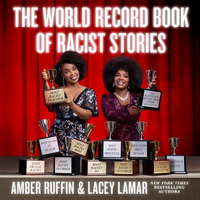
The memoir comes in as Jacob recounts several scenes from her childhood/young adulthood that shaped her. Her parents immigrated from India in the 60s (a week before MLK was assassinated) and took up residence in Albuquerque. We get a few scenes from her childhood and teen years before moving to adulthood, dealing with misunderstandings, assumptions, and unintentional rudeness based on her background. Eventually, she finds herself in New York City trying to make it as a freelance writer and dating. This is all told with frankness and humor. The kind of humor that reminded me of Amber Ruffin/Lacey Lamar’s You’ll Never Believe What Happened to Lacey from last year—you laugh so you don’t have to cry.

The Art

I really don’t know how to describe the art here, but this is a graphic memoir, so it’s a major component of the book. So I’d better try.

I saw someone on Goodreads use the term “mixed media,” and without researching it, I think it’s close enough to use as a description (maybe not technically right?). Please note that this is me trying to describe it, not being dismissive as it may sound. It’s like Jacob drew nice, but not fantastic, paper dolls of each character (some at different ages, others static) and put them on top of photographs or drawings of various locations and added speech bubbles.

I just saw that she has an Instagram account that uses images from the book (in addition to the regular Instagram stuff), so I figure I can “quote” something to show what I’m talking about:

This is nowhere near the kind of art that appeals to me in graphic novels/memoirs etc. Give me something dynamic, something with some flair, something I can bask in. But…this really worked for me. It helped give this a “documentary” kind of feel (don’t ask me to explain this, but it struck me that way). This isn’t about the glitz or the pictures jumping off of the page, it’s about a woman having tricky conversations with her loved ones—and complete strangers, sometimes. The focus is on the words, but the images help carry you along.

So, what did I think about Good Talk?

Sometimes, you go along with it and pretend nothing happened. Sometimes, you hold your breath until the feeling of wanting to believed passes. Sometimes, you weigh explaining against staying quiet and know they’re both just different kinds of heavy. Sometimes, when it’s your mother-in-law—a woman you started calling Mom the day you got engaged because you admired the ferocity with which she loved her children, and maybe even wanted some of it for yourself—you look ahead and see all the years of birthdays and graduations and weddings that will be shadowed by things that she can’t imagine about your life. Sometimes, you can’t hold your breath long enough.

I typed “I really enjoyed this book”, but I’m not sure that’s the appropriate response. I don’t know that supposed to enjoy this—but her style and humor are really engaging and there’s enough hope in there that it feels natural to say. I feel okay saying that this is a good read—it’ll make you think, it might make you grin, and it’ll definitely make you wince.

Right away, when Jacob goes to visit families in India and they tell her that her skin tone (darker than her parents’ or her brother’s) marks her out as not as attractive or a good prospect for marriage, you can tell she will pull no punches. And you can understand why she wouldn’t want to. It’s one of the many, many things that guys like me on Scalzi’s Lowest Difficulty Setting don’t have to think of. There are many sections of the book that hit the same way—like the chapter where she talks about being mistaken for “the help” at a party her mother-in-law was hosting. The above quotation is part of that—she decides mid-way through the conversation that she’s not going to try to explain what happened, nor argue about it. Constantly having to explain your experiences—your life—to people who don’t get it has to be a kind of exhausting that I can’t imagine.

But there’s a lot of humor and hope here, too—not all of it at the expense of clueless white folk saying dumb things. There’s the chapter about getting her dad to use marijuana to help the pain of his cancer treatment, for example. It’s funny and heart-warming. Until he dies, of course, reminding you that this isn’t that the hope is tinged with reality.

I really recommend this book—it’s a deceptively easy read, and you shouldn’t let the style or format fool you into racing through it. There’s a lot to chew on, a lot to reflect on—and a perspective that should be listened to. Even if you can’t relate to her struggles, can’t agree with her politics, and find the whole discussion unsettling. Maybe especially then.


4 Stars

This post contains an affiliate link. If you purchase from it, I will get a small commission at no additional cost to you. As always, the opinions expressed are my own.

Page 217 of 623

Powered by WordPress & Theme by Anders Norén