Author: HCNewton Page 38 of 603

REPOST: Mrs. Plansky’s Revenge by Spencer Quinn: A (Relatable) Revenge Fantasy Full of Heart and Panache

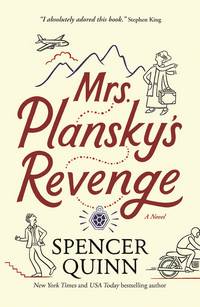
Mrs. Plansky's RevengeMrs. Plansky’s Revenge

by Spencer Quinn

DETAILS:
Series: Mrs. Plansky, #1
Publisher: Forge
Publication Date: July 25, 2023
Format: Hardcover
Length: 291 pg.
Read Date: September 4-5, 2023

Buy from Bookshop.org Support Indie Bookstores

“…there’s also what you might call a demotivating factor.”

“Which is?” said Mrs. Plansky. For some reason she was now finding Agent Gatling easy to understand.

“From our point of view the scammers are bad guys, end of story. But to the elite running the show over there the scammers are bad guys who also have a nice little industry going, bringing in the Yankee dollar and lots of ‘em. And to the everyday Joe they’re punching up, the kind of outlaw people have a soft spot for.”

“Like Robin Hood.”

“You got it.”

They gazed at each other. The message was in his eyes, Mrs. Plansky voiced it.

“You’re telling me to lose hope.”

“Not in so many words.”

What’s Mrs. Plansky’s Revenge About?

Mrs. Plansky is enjoying her retirement (however much it’s tainted by the semi-recent death of her husband). Her hip replacement’s healed enough that she can play tennis, and she’s practically back at the level she was before the surgery. Her kids are established in their lives, her grandchildren are doing okay (although she has some concerns about her grandson’s friends and associates). Things are as good as she could’ve wanted.

Then one day, she’s scammed by someone claiming to be her grandson who needs some money for bail. We’ve (probably) heard about versions of this scam—they don’t just get the bail money, they get enough information from her to empty her accounts.

She’s devastated. How is she going to live? How’s she going to help her father, her children, or her grandchildren? Is she going to be able to convince them that they don’t need to worry about her emotional stability or soundness of mind? And what can she do when even the FBI seems to be giving up before they’ve even started?

Well, Mrs. Plansky does what she’s always done—put her nose to the grindstone and get to work. The FBI said something about some small Romanian town, why not start there? So she sells a very nice piece of jewelry and buys a plane ticket. It may be a fool’s errand, but little ventured, little gained, right?

Norm and the Mrs.

Throughout the book, Mrs. Plansky is identified as “Mrs. Plansky.” Not “Loretta” or “Plansky” as most writers would do after establishing the protagonist’s name. This is how she thinks of herself (although she tells people to call her Loretta all the time). Now, you could come at this with some sort of feminist critique about how her personality/identity has been swallowed by her husband’s or something along those lines. And in some books that would be valid.

But I don’t think that’s the case here (Mr. Quinn, feel free to correct me on this). She just thinks of herself as Norm’s wife. And, I expect, that were he still with us, Norm would think of himself as Loretta’s husband. He’s constantly on her mind as she goes through all this. They had a strong marriage, built a business together (each displaying their own strengths), raised a couple of kids together, and enjoyed a life together (made all the more pleasant by the business taking off and giving them a very comfortable life).

The fact that after his death she still thinks of herself in this way I found particularly sweet. They may have been parted by death, but in many real and tangible ways, they’re still married. It’s a great character point and tells us so much about her without Quinn having to do so. This is not to say that Mrs. Plansky might not consider future romantic entanglements, but she’ll always be Norm’s wife in some sense.

Mrs. Plansky’s Other Opponent

She closed her eyes, resting them, in fact. Giving her eyes a little rest from time to time? That was new in her life. Her eyes had gone along for more than seven decades content to take their rest when the rest of her was resting—team players, the pair of them—but now they were making demands.

Related to that—Mrs. Plansky’s no spring chicken. She’s in great shape for someone of her years and will surprise herself by some of what she’s able to do physically (for example, on the tennis court). At the same time, she’s having to come to grips with the effects of aging—her strength and endurance isn’t what it was, her attention slips from time to time, and her recall might struggle a bit. Everything, basically, is a little more difficult than it used to be. I appreciated the way that Quinn depicted this—not that everything’s falling apart, or that with grit and determination she’s triumphing against the effects of aging, she’s simply noticing and adjusting.

There are moments here and there where this makes Mrs. Plansky (rather, a close third-person narration) slightly unreliable. But Quinn’s spent years writing from the POV of a dog who doesn’t fully understand what humans are doing, and he’s great at depicting that without casting doubt on everything going on and getting the reader to understand things that the protagonist missed.

The Tone

Overall, the book has a lighter and optimistic tone. Most of that comes from Mrs. Plansky’s character and frame of mind.

But (to go with that character), not all of it is light. There are some dark moments, some real despair and worry. For example, I knew the premise of this book months ago, back when Quinn first announced it. Yet when Mrs. Plansky’s on the phone with the scammer and is giving away too much information, I was reading with one hand over my eyes. Similarly, as she comes to grips with just how bad things are for her—and takes in Agent Gatling’s message about how little hope she has to recover the funds…you can’t help but feel for her.

But when she comes up with a plan and begins to execute it—and enjoys doing so. It’s impossible not to catch that optimism and lightness.

So, what did I think about Mrs. Plansky’s Revenge?

This is a very different flavor than I’ve seen from Quinn before—yes, it shares some elements from his other work (The Right Side and the Chet and Bernie books in particular), but overall, it feels like a new and welcome direction. I mean, it’s welcome here as long as he comes back to Chet and Bernie. There’s a depth, a perspective, and a different kind of character than I’m used to. And a total dearth of animal companions, which is just strange.

I loved most of the characters (even the bad guys). And even (in the case of her children, for example—a sure sign that Mr. and Mrs. Plansky weren’t great at everything) when I didn’t like the characters, I appreciated the way Quinn wrote them. The one exception is her father, who lives in a nearby assisted living facility. I’m not sure that we needed Mrs. Plansky’s father as a character—I think he was supposed to be both comic relief and just one more source of financial pressure for her. I don’t think the comedy worked all that well—and Quinn could’ve given us another source for the pressure.

One quick aside, I’m just curious—between this book and Osman’s Thursday Murder Club books, I’m wondering if there’s a surfeit of charming Eastern European men with a “flexible” understanding of the law running around. Can anyone confirm that?

An implausible, but great story. A revenge fantasy that many people will have had, taken on by a relatable character that you can’t help but root for. There’s plenty of heart to go around, and it’ll just leave you feeling good (as long as you don’t put it down while she’s being ripped off).

If you’ve tried Quinn before and he hasn’t clicked with you, try this one. If you haven’t tried him before, try this one. If you’re not sure you want to read a dog-less book from him, try it. If there’s anyone I haven’t covered in this paragraph—try it.


4 1/2 Stars

This post contains an affiliate link. If you purchase from it, I will get a small commission at no additional cost to you. As always, the opinions expressed are my own.

Irresponsible Reader Pilcrow Icon

WWW Wednesday—July 16, 2025

Who’s got time for an introduction? Not this guy! Let’s dive right into this week’s WWW Wednesday!

WWW Wednesdays Logo

This meme was formerly hosted by MizB at A Daily Rhythm and revived on Taking on a World of Words—and shown to me by Aurore-Anne-Chehoke at Diary-of-a-black-city-girl.

The Three Ws are:
What are you currently reading?
What did you recently finish reading?
What do you think you’ll read next?

Seems easy enough, right? Let’s take a peek at this week’s answers:

What are you currently reading?

What do you think you’ll read next?

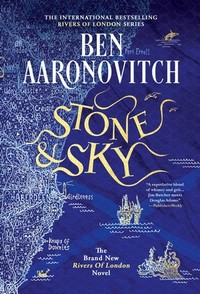
Cover of Stone and Sky by Ben Aaronovitch Cover of 
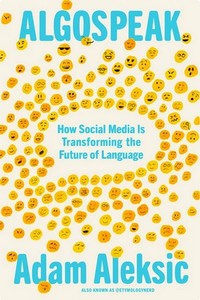
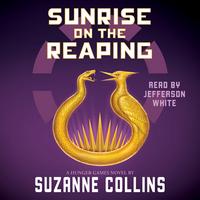
Algospeak by Adam Aleksic Cover of Sunrise on the Reaping by Suzanne Collins
Stone & Sky
by Ben Aaronovitch
Algospeak: How Social Media Is Transforming the Future of Language
by Adam Aleksic
Sunrise on the Reaping
by Suzanne Collins, read by Jefferson White

Almost the entire cast of The Rivers of London series goes on holiday to Scotland (and to look into a strange cat), and at the rate things are going, ol’ Peter is going to find himself banned. There are just so many good things to mention here I could get carried away in this paragraph.

I didn’t mean to start Algospeak Saturday, I was just making sure that it’d loaded onto my e-reader, and before I knew it, I was at 16%. (is there a link between that and the lack of new material on Sunday? Well, yes). It’s utterly fascinating.

I’m remembering why I (like so many people) got really into The Hunger Games back before the movies. Collins is not messing around in this prequel. Allyson, I was with you on this one–but caved to peer pressure, and I think I’m going to be glad about it (but not sure I’d tell you to to give it a shot…yet).

What did you recently finish reading?

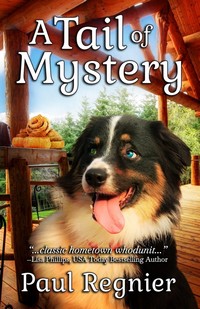
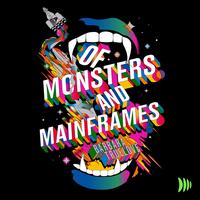
Cover of A Tail of Mystery by Paul Regnier Cover of Of Monsters and Mainframes by Barbara Truelove
A Tail of Mystery
by Paul Regnier
Of Monsters and Mainframes
by Barbara Truelove, read by Chris Devon, Emana Rachelle, Charlie Albers, Eve Passeltiner, Zura Johnson, Cary Hite & Gail Shalan

Paul Regnier’s cozy-adjacent mystery is just fun. Silly, but fun. I’ll be back for more soon.

I’m still deciding what I think about Of Monsters and Mainframes–cool concept, some good characters, and overall an enjoyable story, although a lot of the plotting/pacing annoyed me. The narrators did not do this book any favors–in fact, I think they hurt it. Still, you might want to give it a shot.

What do you think you’ll read next?

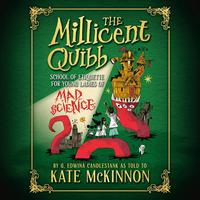
Cover of Samurai! by Saburo Sakai Cover of The Millicent Quibb School of Etiquette for Young Ladies of Mad Science by Kate McKinnon
Samurai!
by Saburo Sakai with Martin Caidin and Fred Saito
The Millicent Quibb School of Etiquette for Young Ladies of Mad Science
by Kate McKinnon, read by Kate McKinnon & Emily Lynne

I’ve said that I was going to read Samurai! more than once over the past couple of years. But I’m pretty sure it’s going to stick this time.

I’m going to need something light and fluffy after Sunrise on the Reaping (if not sooner), and McKinnon’s MG fantasy should fit the bill. Celeste pushed me to it.

What are you using (along with your A/C) to help you ignore the July heat?

A Tail of Mystery by Paul Regnier: A Cozy Mystery. A Talking Dog. What More Could You Want?

Cover of A Tail of Mystery by Paul RegnierA Tail of Mystery

by Paul Regnier

DETAILS:
Series: Luke and Bandit Cozy Mystery, Book 1
Publication Date: December 03, 2020
Format: Kindle Edition
Length: 244 pg.
Read Date: July 10-12, 2025
Buy from Bookshop.org Support Indie Bookstores

I rubbed my temples. “I’m losing it. I’m talking to my dog.”

Bandit walked over and sat beside me. What do you mean? We always talk.

“Not like this!” I stared at him. “Doesn’t this seem different to you?”

He tilted his head. I guess. I mean, sometimes you’re a little thick. You seem to have trouble understanding me. Like when you don’t want to go for a walk, but the weather is perfect. Or you’d rather sit on the couch than play fetch. Or it’s dinner, and we could have steak, but you make a cheese quesadilla. Or—

What’s A Tail of Mystery About?

Luke has hit a little roadblock in his journalism career—his editor fired him. The newspaper industry being what it is now, he didn’t have a lot of options. So he—and his Australian Shepherd, Bandit—are off to his old (small) hometown to live with his mother for a little bit and to lick his wounds.

He has a fairly well-to-do uncle who lives in the same town, too. He’s more eccentric than he is well-off, too—and runs some ethically questionable animal experiments in his home. Luke didn’t realize exactly how ethically-flexible Uncle Zeke is, but by the time he realized it, he’d already agreed to let Zeke use him in his experiments (Luke really needed money, it should be stressed).

Something goes wrong during the experiment—and when Luke wakes up he can hear Bandit’s thoughts in his mind. And vice versa. It’s not unlike Hearne’s Atticus and Oberon, although Bandit seems to have a stronger command of English (and math). Even more wrong, Zeke has been murdered. As the only person at the scene, Luke’s the prime suspect of most of the police town.

And he really can’t tell them “I didn’t do it, but my dog smelled another human around there.”

So, faster than you can say, “Spencer Quinn,” Luke has to team up with his mother (who assures him she’s watched enough Murder, She Wrote to be qualified) and his best friend from High School to see if they can clear Luke’s name, with an assist or two from Bandit.

Crystal Falls

Crystal Falls was just off Highway 55, nestled in a mature forest of pines and firs. A short walk from the center of town took you to the Crystal Falls River. On quiet nights you could hear the musical trickle of water as it flowed over the smooth rocks. The more ambitious hiker, heading north for twenty minutes, would arrive at Crystal Falls, the landmark that gave the town its name. The waterfall was two stories high, and thundered down to a pool of water large enough for the adventurous swimmer or college skinny dipping dare. I left the highway, and took Crystal Road.

Childhood memories flooded back as I drove the curving ascent into town. The road, flanked by thick firs, led through a dense mountain forest. I cracked the window, letting the fresh, cool air fill the car. A choir of chirping birds was scattered among the trees.

The center of town was laid out in a giant oval. One and two-story city buildings and retail stores ran along the edges, and a circular park the size of a football field sat dead center. The park was dotted with Douglas firs, and a colorful variety of deciduous trees displaying a canvas of fall colors. The orange-yellow leaves of willows ringed the outer edge, ushering me into town. A large, white gazebo marked the center of the park, a sentimental landmark of small town America. Roads branched off into the hills, leading to residential homes.

Doesn’t this sound like the perfect, quaint little town? It might as well be Stars Hollow or Del Sol, New Mexico. It’s the kind of small town where everyone knows each other, knows each other’s business, and the biggest scandal is that someone might be cheating in the annual Cinnamon Festival Bake-off (the investigation into this is Luke’s first assignment for the local paper). A murder of an infamous crank definitely gets folks talking—as is any clumsy investigation not done by the police.

We don’t get to see much of it in this book, but we get enough to know that I’m going to enjoy spending time here and getting to know the populace over the next four books.

Bandit

Bandit crept closer, sniffing the fallen body. I’m guessing raccoons… They’re devious creatures, you know? Totally capable of an attack like this.

So, you know I have to talk about Bandit, right? I’d forgotten the whole thing about Luke and Bandit being able to talk to each other when I started this book, and I already thought Bandit was a good boi before he started communicating. He’s a big dog with a lot of heart, and will surely catch a bird or squirrel soon. He’s convinced that raccoons are not to be trusted (and he’s probably right), and has strong opinions on baked goods as well as other foodstuffs.

His personality is great—he’s generally upbeat, devoted to Luke (but he has a soft spot for some of the other humans around, even the ones who smell). It didn’t take me long at all to know I was going to read more of these books just for Bandit (although the rest of the book warranted reading the sequel, too—but I had to wait to decide that).

So, what did I think about A Tail of Mystery?

It’s getting late, so I won’t take the time to get into all the colorful characters we meet here—also, I’d risk giving something away about the murder. But I’ll talk about Luke’s mother, his friend, Kenny, and some of the other memorable folks in a future post. For now, I’ll just repeat myself from above—I want to get to know this Crystal Falls and its populace more. (see what I said about Del Sol and Stars Hollow)

The murder was well-plotted and just mysterious enough to keep you guessing—it would’ve been very difficult (but not impossible) for someone to figure out without Bandit’s nose. Which is one of those notes that I’m always going to love.

I liked Luke—even if he could be a little whiny, hopefully Book 2 doesn’t involve him being accused of murder, so we can see more of the good side of his personality. Regnier’s narrative voice is charming enough that you’ll enjoy the book despite Luke’s misery.

It’s a fun, quick, easy read that hits all the right notes. I encourage you to pick it up—I’m getting the next one soon myself.


3.5 Stars

This post contains an affiliate link. If you purchase from it, I will get a small commission at no additional cost to you. As always, the opinions expressed are my own.


20 Books of Summer 2025 logo
Literary Locals logo

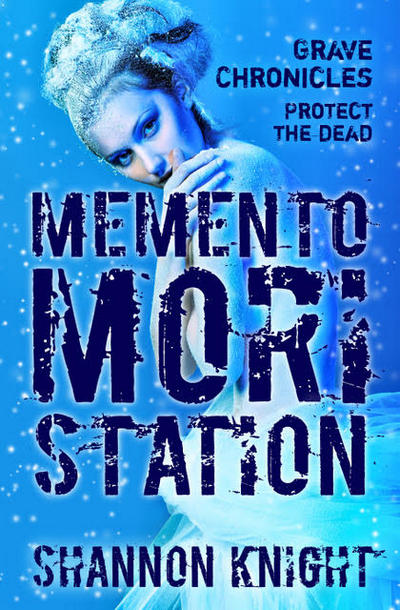
Cover Reveal: Memento Mori Station by Shannon Knight

I’m very pleased today to welcome the Cover Reveals for Shannon Knights’s upcoming Death Rights. I’m more than pleased, I’m excited. No one (including me) has talked more on this site about covers than Shannon Knight, so for her to have a new one, you know thought has gone into this. I’m eager to get my mitts on this book, too. Naturally, the cover is an eye-grabber. Lastly, the cover is one to maybe induce a little placebo effect on your mind on a hot June day. There are plenty of reasons that I’m excited is what I’m saying.

I’ll show you this cover below, but first let’s learn a little bit about the book and author, shall we? It’ll just take a moment, and then we can all take a peak at the cover.

About the Book:

Memento Mori Station: Protect the Dead

A thousand years have passed. Nyle, the only raven still on Earth, dutifully continues to tend the dead. His mind-reading assistant, Em Collins, helps him return to the present when memories pull him into echoes of the past. However, a mysterious invitation from a distant space station breaks Nyle’s routine. He’d had no intention of leaving Earth, but the message ends with a coded SOS from his old friend Ethan West. Nyle doesn’t hesitate.

As his spaceship approaches the station, Nyle has plenty of time to consider the deep cold that signals a massive quantity of untended dead. Records show that multiple ravens had traveled to the station, yet no raven has ever left. Nyle doesn’t intent to abandon either Ethan or the dead, but the vast distances of space mean that whatever mysteries or obstacles surface, Nyle will have to face them with only the aid of his small team.

The past and the future come together in the final installment of the Grave Cold trilogy.

Ebook ISBN: 979-8-9985251-1-7

Book Links:

Goodreads ~ Author’s Website Series Page ~ Amazon Series Page


About the Author

Shannon KnightShannon Knight is a fantasy, science fiction, and horror author living in the Pacific Northwest. She graduated summa cum laude with a Bachelor’s in English. Winter Moon Press is her imprint for self-publication.
Author Links:

Website ~ Bluesky ~ Amazon ~ BookBub ~ Goodreads

and now…

The Cover

cover for Memento Mori Station by Shannon Knight

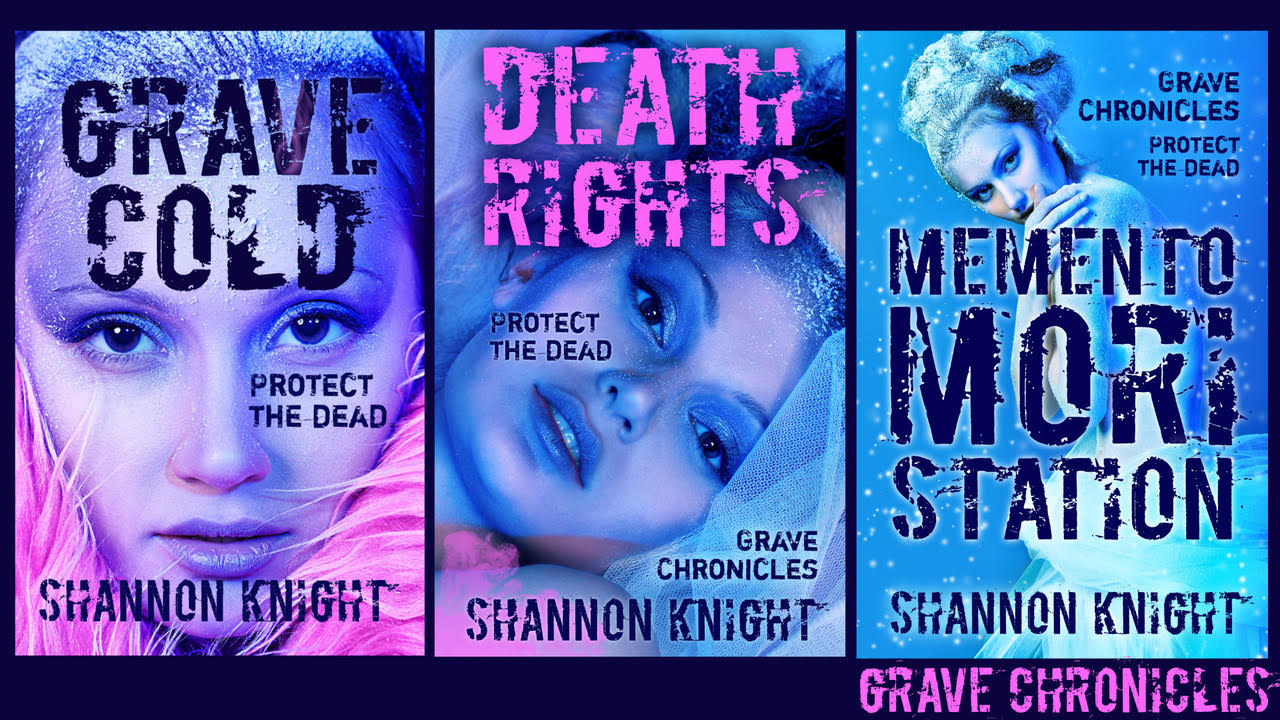
The Complete Series (click the image to embiggen):
covers for The Grave Chronicles Trilogy by Shannon Knight
Kudos to these fine folk for their work on this eye-grabber:
Cover design by Winter Moon Press
Cover photography by Kiselev Andrey Valerevich


Now, would someone go get that poor woman a jacket?

Irresponsible Reader Pilcrow Icon

MUSIC MONDAY: “The Impression That I Get” by The Mighty Mighty Bosstones

The Irresponsible Reader's Music Monday logo

Music Monday's originated at The Tattooed Book Geek's fantastic blog and has shown up hither, thither, and yon since then.

Thanks to this song popping up on a shuffle this weekend, I’m probably going to burn myself out (again) on the Bosstones this week. Until that point, I’m going to have a lot of fun.

>

Irresponsible Reader Pilcrow Icon

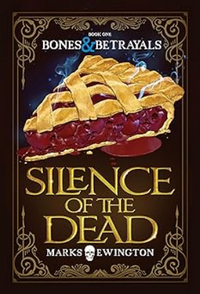
Bones & Betrayal: Silence of the Dead by Andi Ewington/Erica Marks: Murder, Magic, Puns, and Pie. As Yummy As It Sounds.

Cover of Bones & Betrayal: Silence of the Dead by Andi Ewington & Erica MarksBones & Betrayal: Silence of the Dead

by Andi Ewington/Erica Marks

DETAILS:
Series: Bones & Betrayal, Book One
Publication Date: August 5, 2025
Format: eARC
Length: 286 pgs.
Read Date: June 12-24, 2025

What’s Bones & Betrayal: Silence of the Dead About?

Holtar is a former adventurer who has left that life for a quieter and safer option in the city. Sadly, as a necromancer, he’s only somewhat welcome. He’s a walking NIMBY target, really. Being a Dark Elf probably doesn’t help much, either.

But the Captain of the city guard has decided he has a use—who better to help than a necromancer who can call the dead back long enough to ask who killed them? It really tends to make solving a murder pretty easy (and, for all his good points, it really seems that Capt. Moorland isn’t incredibly well-suited for solving crimes). So it’s really not much of an event for Holtar to be called to the shop of a merchant specializing in strange goods to consult on his storeowner’s death.

It becomes an event when Holtar can’t raise him—in fact, quickly decides that his death points to a dark magic that runs a chill down his spine. Holtar and his partner barely start investigating this murder before another one happens. And there’s really no reason to doubt that the killer is just getting started.

Also…will the charming elven baker’s business be able to survive when the word gets out that her pies have been weaponized and turned into the murderer’s weapon? (assuming she isn’t the killer)

Holtar

I’ll be the first to admit, I’m not knowledgeable about necromancers. There’s the one in The Hobbit, and a couple here and there that I’m familiar with. Oh, and of course, Adam Holcombe’s Gam Gam. But that’s not really many—and really, the specialty doesn’t appeal to me. So, I really didn’t know what to expect out of Holtar.

I didn’t figure on a Dark Elf with anxiety and no natural grace (the guy can’t even climb wooden stairs without creaking like crazy—who knew that was possible for an elf?). He seems to have a strong degree of talent, with one trademarked spell—and, who knows, he might have more to develop if he wasn’t putting up with Moorland’s chores.

With his adventuring days behind him, he really just wants a quiet life—and who can’t relate to that?

It’s easy to forget what Holtar does for a living throughout the book, but the authors will slip in a quick reminder here and there to remind you that there’s something inherently creepy about Holtar and his magic. He is not a creep himself, but necromancers aren’t particularly popular people in this world. For good reason.

One way we’re reminded of the dark nature of Holtar’s magic is this impulse he calls The Urge, which is essentially an impulse to let the magic go wild and raise whatever dead happen to be in range of his abilities. Holtar’s worried enough about it that I can’t help but wonder if at some point or another, he didn’t resist The Urge to calamitous results.

Another way is Holtar’s friend/partner…

Seymour

Seymour is a thief—a full-fledged member of the Thieves Guild—who used to travel and work with Holtar until…well, for our purposes, we’ll call it an industrial accident. Remember that their industry involved parties of adventurers who included a necromancer. But thanks to the same necromancer, Seymour isn’t (as Miracle Max would say) all dead. He doesn’t have much of a body—or any organs, he’s simply a talking skull.

Somehow, he can eat, drink, and move around—don’t ask Holtar how any of that works. Which is great fodder for comedy and a pretty neat trick, all things considered. Seymour has a great sense of humor, he loves puns (I’m talking puns/wordplay that would make Burt Ward’s Robin distancing himself), and is not above joking about his body-less state. He’s also a loyal friend who has some pretty clever ideas from time to time (although he typically reserves his cleverness for quips and pranks). He’s the ultimate in wise-cracking sidekicks.

But Holtar is very aware of the optics of a necromancer carrying around a skull that he talks to all the time. So, he pretty much hides Seymour and only takes him out in private.

If you have only one talking skull in your literary life, go with Dresden’s Bob. If you have room for two, however, Seymour is your guy.*

* I can see myself being open to changing the ranking after another book or two.

The Tone

This is a buddy-cop kind of book, technically a buddy-P.I. (of sorts). A partnership full of banter and rarely expressed affection, and obvious loyalty. On page or screen, I’m a sucker for this kind of thing.

It’s best to think of this as a PI novel set in a Fantasy world—the tone and focus hold up better than if you think of it as a Fantasy novel featuring PI-types. (That’s still correct, but I think it gets the accent in the wrong spot).

There are hard-boiled elements, but it’s still light-hearted and comedic. It’s not a cozy, but it’s not far off from it. I think it’s a shade less cozy than Baldree’s Bookshops & Bonedust, for example.

While most of the banter comes from the interplay between Holtar and Seymour, that’s not all of it. The same kind of humor displayed in Ewington’s The Hero Interviews or the sillier parts of Peter David’s Apropos of Nothing books is more than evident here. I could bask in the jokes for a while (and have).

So, what did I think about Bones & Betrayal: Silence of the Dead?

There’s a lot to commend about this book, and very little to quibble with. There’s some really subtle world-building at work here, including some nice references to Ewington’s Hero Interviews, and this expands and adds depth to that world nicely. There are some wonderfully composed sentences in this book—they’re just so efficient that they can deliver a paragraph’s worth of meaning in them—moving the plot forward, or showing a character trait—while doing some effective world-building. Or a combination of the others. This happens often enough that I had to stop and admire them, because it’s one thing to do that once or twice—but Marks and Ewington did it often enough that it had to be purposeful, and it’s just so nice to see, particularly in Fantasy which has a tendency to take too long with this kind of thing.

This is a really good PI story, first and foremost. I think it takes Holtar a little too long to figure out what’s motivating the killer—I talked back a lot to the book on these lines. I don’t know if it’d have hurt things for him to suss that out as quickly as he should’ve. But the rest of the mystery elements are so well done that I can shrug that off (mostly). There’s some good comedy going on, but it’s not the focus–it’s a function of how Holtar’s mind works and the way he and Seymour relate. So, yeah, it’s funny–but it’s not a goofy mystery. It fits along Duncan MacMaster, Gregory Mcdonald, Lee Goldberg, and Marshall Karp’s early works. Which means it’s just what I want a steady diet of.

Then you get the whole Fantasy world of it all–so there’s the D&D-ness of The Hero Interviews. But also the Fantasy+mystery novel of Alex Bledsoe, Luke Arnold, and Keith DeCandido’s Precinct novels. Also, the tone of The Chronicles of Pell (that’s the closest match I can think of right now).

I really want to spend more time with Seymour and Holtar, for the sheer entertainment of the banter alone. But I also like seeing their partnership at work, and a solid buddy-dynamic like theirs should be celebrated as often as possible. I’d like to see something develop between the flirtation between Holtar and [name withheld] (although I’m not certain the attraction is two-way, but dealt with correctly, that could be funny). I could enjoy seeing Holtar butt heads with Moorland more, or Moorland being replaced by someone, too–really not sure I care. And, I’m super curious about the events that the ending sets up for Book Two.

This novel delivers the perfect amount of bang for your entertainment buck. It is a satisfying combination of mystery, tension, magic, and stupid jokes and puns. The friendship that forms the heart of this book will endear you to the protagonists as much as their banter will make you grin. Setting the whole thing in a Fantasy world that will be instantly recognizable to anyone who reads the genre or has played D&D, just makes the whole thing even more satisfying. I had a blast with this–and I literally have a list of people I’ll be giving this to as a gift. I’m eagerly awaiting another two or three installments in this series already.

Disclaimer: I received a copy of this ARC from the authors in exchange for some feedback, and I was invited to do this post, too. But I think I was also offered this ARC because Marks and Ewington are pretty cool froods. Any opinions expressed are mine alone and freely offered.


4 Stars

Irresponsible Reader Pilcrow Icon

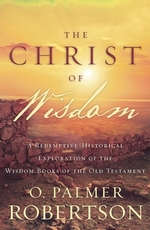
REPOST: The Christ of Wisdom by O. Palmer Robertson

The Christ of WisdomThe Christ of Wisdom: A Redemptive-Historical Exploration of the Wisdom Books of the Old Testament

by O. Palmer Robertson

eARC, 432 pg.
P&R Publishing, 2017

Read: May 7 – 21, 2017


Robertson’s preface laments the way that the Wisdom Literature of the Old Testament is usually ignored in Redemptive-Historical studies —

…how do you fit these wisdom books into the flow of redemptive history that consummates in the Christ? By letting them be what they are in their own distinctiveness. They are, it should be remembered, canonical, divinely revealed, and authoritative writings that tell the world how and what to think about the deeper mysteries of human life. Rather than submitting to the moldings and bendings of modernity, these books broaden our understanding of the nature of redemptive history. Divine progress in the complete restoration of reality does not merely move in a purely linear fashion like the flight of an arrow moving across time and space without deviation until it reaches its target. This “third dimension” of redemptive history moves in a cyclical pattern. For certain aspects of God’s salvation perform according to a pattern of regulated repetition.

To ignore this dimension of redemptive history is to exclude a major portion of the old covenant canon—and that you do not want to do.

So how do you discuss these books from a RH point of view? This is what Robertson seeks to do in this book — not as a final answer, but as the beginning of a search for wisdom along these paths.

In one sense, Robertson could’ve made this easier to talk about this book — there’s not one central argument developed throughout. There’s a general discussion (brief) of wisdom, wisdom Biblically defined, that is. And then using that discussion, Robertson looks at the Wisdom Literature of the Old Testament (and Lamentations, which is not usually considered Wisdom Literature, but can function as such), summarizing each book, looking at the various forms of wisdom described and passed on through it.

Simply,

Wisdom is the ability to understand the basic principles inherent in God’s created order, and to live by those principles. Wisdom enables a person to summarize these basic principles in a succinct and memorable fashion. Wisdom is living out the whole of life with a constant awareness of accountability before a loving, gracious, and just Creator and Redeemer.

The work he does to get to this summary is well worth the time and effort to work through. Actually, that goes for everything in the book, but I’ll hold off on saying that kind of thing for a few paragraphs.

The chapter on Proverbs is, fittingly, the longest and most developed. He discusses various approaches to the book, to understanding its construction and from there trying to understand it:

A much more accurate view of the theology of Proverbs may be gained from a covenantal perspective. The wise sayings of the book are not presented in a vacuum. They are not purely moralistic aphorisms. Instead, they are steeped in theistic assumptions. These wise observations about how the world works assume that God the Creator is none other than Yahweh, the Lord of the Covenant.

This, right here, would help so much of what I’ve read about Proverbs over the last few decades. To get into everything that Robertson says about the pursuit of Wisdom, passing it on and living by it from this book would make this post unbearably long — but it builds the foundation for everything that comes. Proverbs covers Wisdom as a whole — the rest of the book deals with it in specific areas.

While dealing with the personification of Wisdom in Proverbs 8, Robertson gives an excursus, “Athanasius as the Champion of the opponents of Arianism,” that is just gold. I’d love to see this developed into something longer.

Following Proverbs, he moves on to Job. Job doesn’t give us the answers to the puzzling circumstances of life, but for those who understand the book, they learn how to puzzle through the circumstances, how to think about them — how to ask God about them. Yes, there are answers given in the book — not easy answers, not the answers anyone necessarily wants, but answers — answers tied to the hope of the Resurrection. But wisdom knows to look for those answers in the difficulties of life, with a sure faith that is willing to look at dark circumstances and say, “I don’t know why this is happening, but I trust in Him Who does.”

Ecclesiastes, is, naturally, a tricky chapter — Robertson threw me a curveball when setting aside the usual discussion of authorship of the book to note

But a related question of some significance for understanding the book has been generally neglected. This neglected question is the identity of the “target audience”of Ecclesiastes.

Chewing on this a little helps get through some of the discussion of authorship. There are so many divergent readings of Ecclesiastes that your head can swim just trying to get a sense of them, Robertson is a pretty sure guide through them before landing on his conclusion that Ecclesiastes presents a “realistic picture of life” — one that is a precursor to Paul’s discussion in Romans 8, where creation is subjected to frustration, but that this is being renewed. I do think this chapter could’ve been organized in a more straight-forward way, but I appreciate the way that Robertson makes you work through various considerations and themes before leading to his conclusions — which are all very helpful.

His discussion of Lamentations, summed up in the subtitle “How to Weep,” was one of the best things I’ve read on the book (an admittedly too-short list). You may think that’s a pretty easy thing to learn — but there’s a wise way, a godly way to weep over the tragedies that will come into our lives. The book of Lamentations teaches us that — and, here’s the RH emphasis coming through — there’s a hope tied to the wise weeping. A hope tied to faith in God’s commitment to preserving a repentant people to Himself.

Lastly, we get to the wisdom of “How to Love” (in a marital sense) in the Song of Songs. The way he reads the book is a “Redemptive-Historical” way, in

terms of the redemptive work of God in restoring humanity to the situation prevailing at the time of creation . . . a restoration of the initial blessing of man and woman in their relation to each other, just as when they first stood in each other’s presence “both naked” but feeling “no shame” (Gen. 2:25). This Song rejoices in the fullness of God’s redemption of the marriage relationship.

He concludes this chapter uniquely, with a script for a Dramatic Reading of the Song of Songs — I think there could’ve been a bit more instruction on how to approach such a Reading — and why — than he gave. But I really appreciated that part.

He could’ve used a conclusion to wrap things up — returning to the closing admonition of the opening chapter. But that’s probably just a taste thing on my part.

There’s a focus on the literary/poetic forms in each book tying in the themes and teachings of them to the way the author presents them. This kind of discussion — no matter the type of literature (inspired or not) always stretches me. I imagine I’m not alone in that — in fact, I bet many people will skip those parts. This is to their own detriment. Robertson discusses these matters in a way that takes some effort to understand, but it’s effort that pays off.

This is a truly helpful book — not full-fledged commentaries on any of the books, but helpful summaries pointed towards seeing the wisdom passed down in each book, and tied into the Redemptive work going on in history all around us. I found it interesting that the recent A Biblical-Theological Introduction to the Old Testament doesn’t approach some of these books the same way as Robertson — in some ways flatly contradicting him. I’d hoped for more overlap between the two works approaching this material from the same framework — but none of the contradictions or differences change the overall message of the Biblical material, just shadings. Honestly, in each case, I think Robertson’s readings are easier to square with the texts in consideration (and not just because he has more pages to develop his points, either).

Robertson, as always, delivers the goods with this book. The reader has to think about what he says, has to drag out their Bible and use the two books together, but will ultimately come out the better for it. I found this book to be incredibly helpful, insightful and something that drove me back to the fullness and fulfillment of all the wisdom of God — Jesus the Messiah. Just where Robertson wants his readers to focus.

Disclaimer: I received this eARC from P&R Publishing via NetGalley in exchange for this post — thanks to both for this.
N.B.: As this was an ARC, any quotations above may be changed in the published work — I will endeavor to verify them as soon as possible.

—–

4 Stars

Saturday Miscellany—7/12/25

I clearly didn’t spend that much time online this week. This is probably a good thing when it comes to my mental health, but as I’m trying to put this together today, I find myself rather annoyed. Seriously, mental health is overrated, anyway, what was I thinking?

Odds ‘n ends about books and reading that caught my eye this week. You’ve probably seen some/most/all of them, but just in case:
bullet The truth behind the endless “kids can’t read” discourse: Is there a literacy crisis? Or am I just old?—Ugh. Nuance. Who has time for that?
bullet An Interview with Mary Jo Bang on Translating Paradiso by Dante Alighieri—if she only did a prose translation, I might be able to get my way through the trilogy. Nothing like Dante to show me how deficient my education (formal or self-) has been in teaching me to read verse. But this interview makes me want to try again.
bullet Writing Advice and Literary Wisdom from the Great E.B. White—This was posted in honor of his birthday yesterday, and reminds us why people still care about White (and offers some good advice for the writerly-types out there)
bullet 11 Summertime Books to Read When You’re Not Feeling Very Sunny: Once the seasonal malaise hits, these novels will help you unwind.—I really don’t know how a listicle from Marie Claire ended up on one of my feeds. But hey, some good looking reads here.
bullet Michael Robotham On Why We Love Stories About Gangsters
bullet The REAL Lion King!—The Orangutan Librarian takes a break from being insightful and whatnot to sharing some old cartoons. Start here with Part 1.
bullet 5 Books Adults Recommended I Read as a Child that Didn’t Resonate with Me at All—An interesting approach to books from childhood (can’t help but agree with the last one)

To help talk about backlist titles (and just for fun), What Was I Talking About 10 Years Ago Week? (I was weirded-out about how brief these posts were…I’ve gotten talky over the years)
bullet Uprooted by Naomi Novik
bullet Corsair by James L. Cambias
bullet Stay by Victor Gischler
bullet The Snapper by Roddy Doyle
bullet And I talked about the releases of a handful of books: Splintered by Jamie Schultz; The Fraud by Brad Parks; Time Salvager by Wesley Chu; Ink and Bone by Rachel Caine; Letters to Zell by Camille Griep; The Six by Mark Alpert; Bum Rap by Paul Levine; Master of Formalities by Scott Meyer — looks to be as inventive and fun as his Magic 2.0 series.

This Week’s New Releases that I’m Excited About and/or You’ll Probably See Here Soon:
bullet Stone and Sky by Ben Aaronovitch—Sheep get eaten, the Folly heads to Scotland, and…well, that’s all I know, but that’s a strong start.
bullet Yellow Medicine by Anthony Neil Smith—”starts with one of the most memorable and engaging anti-heroes in recent memory. Mix in bent cops, a psychobilly band called Elvis Antichrist, meth cookers in the Minnesota sticks, and a truly nasty pack of wannabe jihadists. Add a liberal helping of guns, knives and explosives.” I’m sold.
bullet The Silver State by Gabriel Urza—”When a public defender receives a letter from a client on death row, he is forced to reexamine his role in the murder case he cannot shake; a gripping and thought-provoking legal thriller that redefines the genre”
bullet The World’s Greatest Detective and Her Just Okay Assistant by Liza Tully—”A brilliant Boomer detective and her ambitious Gen Z assistant try to get along in this delightful feel-good mystery.” Looks fun.
bullet Heal the Beasts: A Jaunt Through the Curious History of the Veterinary Arts by Philipp Schott—”Sharing the stories of 22 different animal healers and veterinarians from across eras and continents, Dr. Schott examines the always fascinating, often unexpected, and sometimes hilarious veterinary methods employed to treat all manner of creatures. From healing dogs and horses to gorillas and even dragons, at the heart lies the evolution of the human-animal bond, which has been more cyclical than linear.”
Hour of the Pumpkin Queen by Megan Shepherd—One year after their wedding, “Sally must embark on a time-bending adventure to save Halloween Town–and her beloved Jack Skellington.” Okay, I’m probably not going to read this follow-up to The Nightmare Before Christmas, but I’m putting it here to remind me to buy it for my daughter (and, who knows, maybe one of you will find it intriguing)

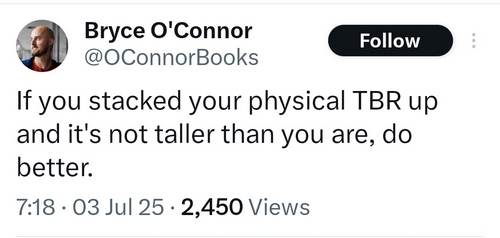
If you stacked your physical TBR up and it's not taller than you are, do better. @OConnorBooks

2025 WWW Wednesday—July 9, 2025

I took the day off from work for some family stuff, which ended up not taking as long as I’d expected–so I got a novel read yesterday. It’s been a minute since I’ve been able to do something like that. It’s pretty nice, I have to say.

WWW Wednesdays Logo

This meme was formerly hosted by MizB at A Daily Rhythm and revived on Taking on a World of Words—and shown to me by Aurore-Anne-Chehoke at Diary-of-a-black-city-girl.

The Three Ws are:
What are you currently reading?
What did you recently finish reading?
What do you think you’ll read next?

Seems easy enough, right? Let’s take a peek at this week’s answers:

What are you currently reading?

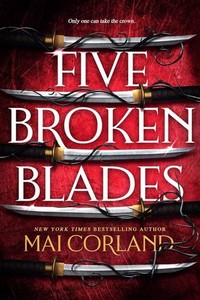
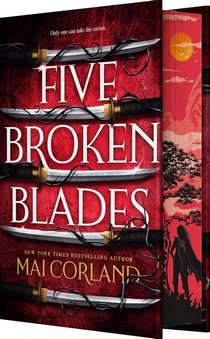
Cover of Five Broken Blades by Mai Corland Cover of Of Monsters and Mainframes by Barbara Truelove
Five Broken Blades
by Mai Corland
Of Monsters and Mainframes
by Barbara Truelove, read by Chris Devon, Emana Rachelle, Charlie Albers, Eve Passeltiner, Zura Johnson, Cary Hite & Gail Shalan

I’ve barely scratched the surface of Five Broken Blades, but everything I’ve heard makes me think I’m going to love it. It’s for Monday’s Book Club, so I’d better make some haste.

I’m 20% into Of Monsters and Mainframes, the story and characters are winning me over–but the narrators are making it difficult. There are some odd choices being made. Truelove didn’t do them any favors with all the strings of binary code, either.

What did you recently finish reading?

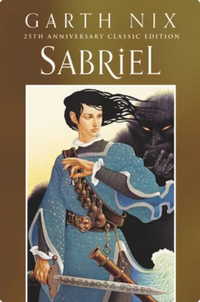
Cover of Sabriel by Garth Nix Cover of Amongst Our Weapons by Ben Aaronovitch
Sabriel
by Garth Nix
Amongst Our Weapons
by Ben Aaronovitch, read by Kobna Holdbrook-Smith

Sabriel was a lot of fun–I can see why my friend thought I’d like it. I should’ve listened to him years ago.

Obviously, I got a little more of Amongst Our Weapons as I revisited it–having listened to the series as a whole so recently helped, too. It’s amazing to see how the series has grown and changed from its beginnings. It’ll make the next title mentioned in this post all the sweeter to start.

What do you think you’ll read next?

Cover of Stone and Sky by Ben Aaronovitch Cover of Sunrise on the Reaping by Suzanne Collins
Stone & Sky
by Ben Aaronovitch
Sunrise on the Reaping
by Suzanne Collins, read by Jefferson White

One more Rivers of London book for this summer–this time I’ll only hear Holdbrook-Smith in my head occasionally as I read.

I really thought I was done with Panem, but a couple of things I read about this book–and the urging of a coworker led me to put my name on the Library’s waitlist. Guess I’ll find out if the weeks of waiting were worth it.

What do you have on your bedside table (literally or figuratively)?

Mid-Year Reading Check Tags

Mid-Year Reading Check Tags
I enjoy doing these mid-year check ins, like this one from The Orangutan Librarian or Stephen Writes, and a few other places I forgot to bookmark. And I typically do one of them around this time, too. This year, I saw the way that Emma @ Words And Peace mashed-up and reorganized a couple of these tags into one. I liked it enough that I’m using her format.

Now, I’m indecisive as usual, so for most of these prompts I gave three responses because I just couldn’t decide. Hope you enjoy.


1. How many books reads so far in 2025?

140

2. What genre I read most of:

As of June 30, it was Mystery/Crime/Thriller with 29% of my reading.

3. My favorite so far:

Cover of Anxious People by Fredrik Backman Cover of Don't Tell Me How to Die by Marshall Karp Cover of My Documents by Kevin Nguyen
Anxious People
by Fredrik Backman
Don’t Tell Me How to Die
by Marshall Karp
My Documents
by Kevin Nguyen

4. Best sequel:

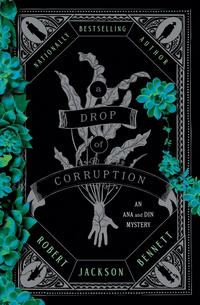
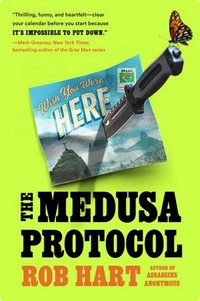
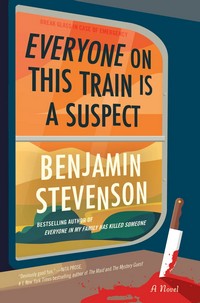
Cover of A Drop of Corruption by Robert Jackson Bennett Cover of The Medusa Protocol by Rob Hart Cover of Everyone on This Train Is a Suspect by Benjamin Stevenson
A Drop of Corruption
by Robert Jackson Bennett
The Medusa Protocol
by Rob Hart
Everyone on This Train Is a Suspect
by Benjamin Stevenson

5. Surprisingly good:

For the record, I expected that all of these were going to be good–which explains me reading/listening. But I didn’t think they’d be as good as they were. (I think that’s the intent of the catgory, I just want to stress it)

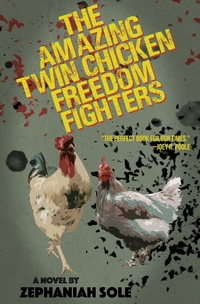
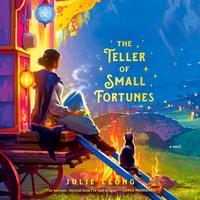
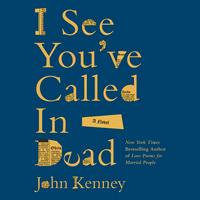
Cover of The Amazing Twin Chicken Freedom Fighters by Zephaniah Sole Cover of The Teller of Small Fortunes by Julie Leong Cover of I See You've Called in Dead by John Kenney
The Amazing Twin Chicken Freedom Fighters
by Zephaniah Sole
The Teller of Small Fortunes
by Julie Leong, read by Phyllis Ho
I See You’ve Called in Dead
by John Kenney, ready by Sean Patrick Hopkins

6. Most disappointing:

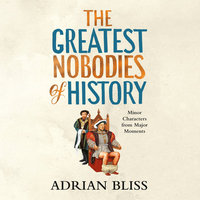
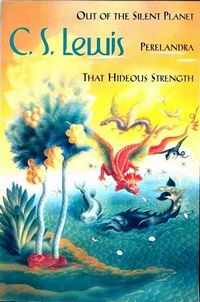
Cover of The Greatest Nobodies of History by Adrian Bliss Cover of The Space Trilogy by C.S. Lewis Cover of A Little History of Music by Robert Philip
The Greatest Nobodies of History: Minor Characters from Major Moments
by Adrian Bliss
That Hideous Strength
by C.S. Lewis
A Little History of Music
by Robert Philip, read by Zeb Soanes

I’m NOT suggesting that That Hideous Strength was bad. It just wasn’t as good as the others in the trilogy, so it was a disappointment. The other two, were “meh” at best.

7. New favorite author discovered in 2025:

Kevin Nguyen Michael Michel Thomas Trang

8. New favorite character:

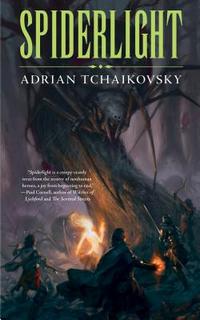
Cover of Don't Tell Me How to Die by Marshall Karp Cover of The Price of Power by Michael Michel Cover of Spiderlight by Adrian Tchaikovsky

Garlenna Renwood, body guard/conscience, of Prince Barodane Ironlight. I can’t put my finger on what exactly is appealing about her–everything? She’s just the best character in Michel’s series (so far), and there are plenty to choose from.

Tchaikovsky’s Enth was both a fascinating (and fun!) character in himself. He was also a compelling look at humanity from a very inhuman perspective. I could’ve picked a few more characters from this book, but Enth is one that I’m not going to forget anytime soon.

Maggie Dunn kept you guessing and finding new layers to her on every page. Karp made her a remarkable character. I wrote about her on a couple of occasions, and I know I haven’t said everything I’d like to.

9. Made me cry:

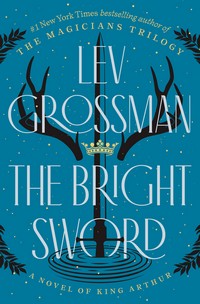
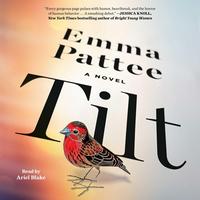
Cover of The Bright Sword by Lev Grossman Cover of Don't Tell Me How to Die by Marshall Karp Cover of Tilt by Emma Pattee
The Bright Sword
by Lev Grossman
Don’t Tell Me How to Die
by Marshall Karp
Tilt
by Emma Pattee, read by Ariel Blake

Nothing has got me there quite yet (I think I said something similar last year, and within a week that streak was over). But…The Bright Sword got close. Tilt made me think about it. Don’t tell Me How to Die almost did get me misty, surprisingly early, too.

10. Made me happy:

Really everything I rated 3 stars or above (the overwhelming majority of what I’ve read this year) has done that. But these three titles stand out along those lines:

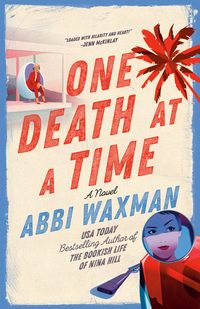
Cover of I See You've Called in Dead by John Kenney Cover of Vera Wong's Guide to Snooping (on a Dead Man) by Jesse Q. Sutanto Cover of One Death at a Time by Abbi Waxman
I See You’ve Called in Dead
by John Kenney, ready by Sean Patrick Hopkins
Vera Wong’s Guide to Snooping (on a Dead Man)
by Jesse Q. Sutanto
One Death at a Time
by Abbi Waxman

12. Most beautiful book bought:

Cover of Five Broken Blades (Deluxe Limited Edition) by Mai Corland
Five Broken Blades (Deluxe Limited Edition)
by Mai Corland

(although the other two in the trilogy might come close, we’ll have to see if I want to buy those)

13. Need to finish:

Whatever I’m reading/listening to today 🙂

Also:

Cover of Wisdom for Life by Michael P. V. Barrett Cover of Commentary on the Heidelberg Catechism by Zacharias Ursinus Cover of Precious Remedies Against Satan's Devices by Thomas Brooks
Wisdom for Life: 52 Old Testament Meditations
by Michael P. V. Barrett
Commentary on the Heidelberg Catechism by Zacharias Ursinus Precious Remedies Against Satan’s Devices
by Thomas Brooks

The first two of these I’m not going to finish until Dec. 28th (Lord willing), they’re designed that way. The Brooks book is one I’m working through with someone, and we’re taking our time, and may not finish this year.

14. Most anticipated 2025 read:

Thus far:

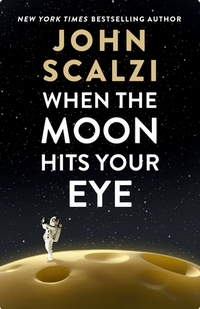
Cover of A Drop of Corruption by Robert Jackson Bennett Cover of When the Moon Hits Your Eye by John Scalzi
A Drop of Corruption
by Robert Jackson Bennett
When the Moon Hits Your Eye
by John Scalzi

15. Most anticipated upcoming 2025 release:

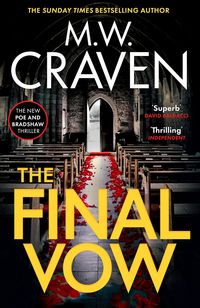
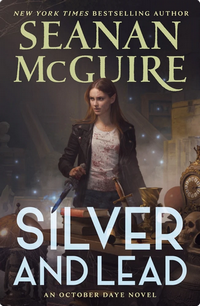
Cover of The Final Vow by M.W. Craven Cover of
The Final Vow
by M.W. Craven
Silver and Lead
by Sanan McGuire

If it was a footrace, The Final Vow, would be so far in the lead that it’d discourage everyone else–with the exception of Silver and Lead, because I’m not used to waiting this long for Toby Daye.

16. Next big priority:

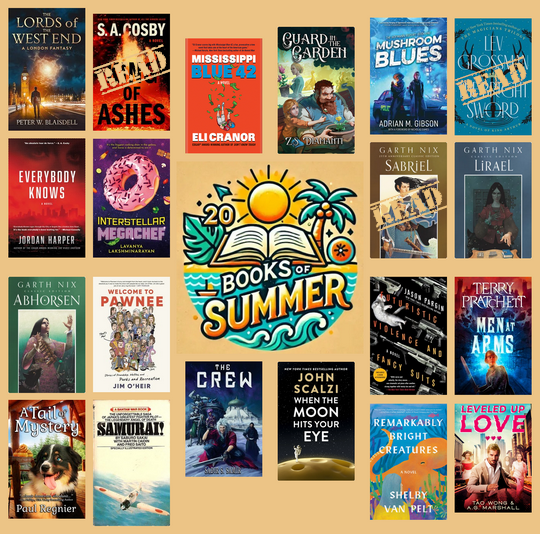
Finishing off this list:
20 Books of Summer '25 Chart July Update In Progress

17. Bookish highlights:

Shared Stories book clubs, it’s just so cool to talk about books with a bunch of similarly-minded people at once. The interactions I’ve had here/on video or on social media with various and sundry writers/readers/bloggers. And everything mentioned above.


As usual, I’m not tagging anyone in this—but I’d like to see what you all have to come up with.

Page 38 of 603

Powered by WordPress & Theme by Anders Norén