Author: HCNewton Page 396 of 633

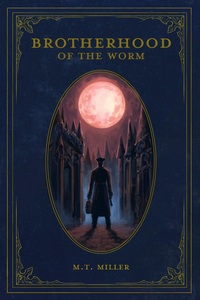
Brotherhood of the Worm by M. T. Miller: A little Sam & Dean, a little more Van Helsing, a lot of Monster Killing

Brotherhood of the Worm

Brotherhood of the Worm

by M. T. Miller
Series: The Culling, Book 1

Kindle Edition, 332 pg.
2019

Read: August 28-29, 2019

The door leading to the hallway and the rooms upstairs slammed open without warning, and in came the missing patron. He was tall, thin, and wide in the shoulders. He had been lodging upstairs for the last three days, and always wore the same grey coat and cocked hat. In his gloved left hand was a heavy-looking leather bag that he never let anyone else touch. Apparently, he even took it to the outhouse.

“Listen to me!” he bellowed after letting the bag down and shutting the door. “And listen well. Until the sun rises, no one may leave this inn!”

Having just emptied a goblet down his throat, Moritz gave the man a look of dull surprise. “What is this? A robbery?”

“I’m afraid not,” the strange patron said. “If it were, we’d all have a better chance of getting through it alive.”

The inn is in an 18th-Century(ish) Germany(ish) country. The strange patron is Conrad Shast, the last member of a noble household turned monster hunter. That’s about as friendly as he gets. He goes from town to town, wherever he’s called to go to eliminate any one of a multitude of monsters on behalf of a shadowy organization that, well, let me let Shast tell it:

“Few refer to it by name, but it is called the Culling, and it’s been protecting the world from monsters and witches for as long as history remembers. From time to time, others have tried their hands at monster hunting, but it never lasted. In the long run, only the Culling has survived the test of time.

“Officially, no noble is under obligation to aid a hunter. But the consequences of rejecting a plea for help far outweigh their potential cost.”

The Culling is a busy group, it seems, there are monsters everywhere in this world (even overrunning some continents), and, as the man said, they’re the only game in town. Generally, they send one or two people to any particular place, but if there’s a big enough problem, they will send out reinforcements. During the course of this novel, Shast ends up working with two other hunters. It’s clear that no two hunters are alike—there’s a variety of approaches, specialties, backgrounds, and personalities (I was a little afraid it’d be armies of Shasts, Miller might have been able to pull it off, but I like this approach better).

Shast is a classic loner, a wandering knight à la Jack Reacher or TV’s David Banner (but with less of a sense of humor). He comes to down, gets his prey and the money he (and The Culling) is owed for that service and moves on. No friends, no family, no entanglements. The particular hunt he’s on when he takes over the inn is a little trickier than most (and will end up being a lot trickier in the end)—he eliminates the monster, but not the source of the infestation. The source has moved on and has likely infested at least one more city by this point. So he has to hit the road to track down the source.

One woman in the inn was so changed by her exposure to the monster that she can detect the hidden creature (not that she wants to), so Shast brings her with him to expedite the hunt. The city guard also dispatches a knight old enough to be her father to act as chaperone and guard. Eventually, they cross paths with another hunter after the same target. She’s into poisons, explosions (Shast prefers a good knife) and making sure her enemies suffer. She joins this grim band as they continue to track down the source, eventually reaching the capital city and discovering things are worse than they thought.

It’s not a smooth journey, and there are distractions and obstacles (both monstrous and human) along the way. The group is not united in any way, and most aren’t that willing to be participating, but there’s not a lot of choice offered any of them. Putting this in an 18th-Century(ish) setting is a great idea—you get a little bit of technology (guns, primarily), but not enough that swords, horses, traveling on foot and slow modes of communication aren’t the flavor of the day. You get a shifting prominence of nobility, a rising middle class, and a church struggling to survive in a hostile world, also. It’s a tumultuous time, not helped at all by the creatures plaguing the citizenry. It’s also a great change from the post-apocalyptic wasteland of Miller’s previous series.

And I wish I had time to give good descriptions of these monsters—and you’d be better to read them for yourselves anyway. The first one we see is simply disgusting and disturbing (and, boy howdy, am I glad we don’t get a bunch of them). Some aren’t that bad (relatively speaking, anyway), but a lot of them could be nightmare fodder is Miller used them a little differently. None of them are easy targets for the Hunters, but it’s only in large numbers that they’re a giant threat. We don’t seem to get anything that you’ve seen before (at least nothing I’ve seen before), which is great. Nothing against trolls, orcs, vampires, wights, etc.—but I appreciate seeing something new.

A common thread, it hit me this weekend, to all the books I read—Crime Fiction, SF, Fantasy, Urban Fantasy, even General Fiction, Non-Fiction or Theology—is that the worst enemies, the greatest predators, the most dangerous threats to humans aren’t aliens, monsters, demons, or whatever external threat you can think of. It’s humanity, our neighbors, our leaders, those like us. And as horrible as the creatures that The Culling targets may be, there’s something hundreds of times worse. Miller using that reality, reflecting that in his fantasy, is my favorite part of this novel (the competition for that was stiff), it’d have been easy and understandable to make a parasite that can control its host—or some other creature—to be the ultimate evil that Shast and the rest contend with. But Miller took the better—and harder—road. Which speaks good things for this new series (and bodes ill for how things are going to go in future installments).

Speaking of future installments, I know he’s already getting things ready to release the sequel in a few months. I can see a lot of options for what that sequel will hold—Character A’s next hunt, or Character B’s hunt/attempt at redemption, Character C & D going forward (together or separately), or a completely new batch of characters in the same world. All of which are pretty appetizing—I’d prefer A or C and/or D to another group or B—but I can see any of those working. Miller’s earned my trust at this point, and I’ll take whatever eagerly.

This is the sixth work I’ve read from Miller (you can read about the four novels and one novella of The Nameless Chronicle here), and I love watching him grow and develop—he’s learned a lot from that last series, and is applying those lessons well. This is more assured and better executed than those—and I had few complaints about them! Jump on to this one at the beginning of what promises to be a great ride.

Disclaimer: I was given a copy of this novel by the author in exchange for my unbiased opinion.


4 Stars
LetsReadIndie Reading Challenge

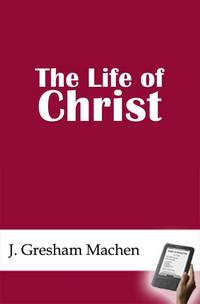
Life of Christ by J. Gresham Machen: Short, Helpful, to the Point

Life of ChristLife of Christ

J. Gresham Machen

Kindle Edition, 50 pg.
Monergism Books, 2015
Read: August 18, 2019

This short work is extracted from the 1922 work A Brief Bible History: A Survey of the Old and New Testaments by Machen and James Oscar Boyd, and it felt similar to portions of Machen’s New Testament Introduction: An Introduction to its Literature and History. I think I’ve heard of the former, I’ve read the latter a couple of times. So, that took a little bit away from the experience for me.

But that doesn’t take away from the value of it—a concise summary of the Life of Christ (harmonized) and the beginnings of the Church in Jerusalem. I’m guessing this was some of the Sunday School curriculum material written by Machen while teaching at Princeton Seminary, and it includes study questions. There’s not a lot of interpretation or application (except in the questions), it’s largely just a boiled down run-through of the gospel accounts.

Machen’s possibly my favorite twentieth-century theologian — he’s definitely the clearest and crispest (with the possible exception of R. C. Sproul). All the things people like to say about C. S. Lewis’ popular apologetics apply to Machen (without the stumbling into troublesome weirdness), and his more academic apologetic work still holds up. This isn’t Machen at his best, but it still displays his style and approach (even if only a little).

Really not much to say about this, so I’ll just recommend it for a nice refresher.

—–

3 Stars
2019 Cloud of Witnesses Reading Challenge

Finding God in the Ordinary by Pierce Taylor Hibbs: Essays to Inspire Devotion

Finding God in the OrdinaryFinding God in the Ordinary

by Pierce Taylor Hibbs
Paperback, 73 pg.
Wipf & Stock Publishers, 2018

Read: August 25, 2019

In the greatness of God, the smallest of things is given tremendous weight.

Hibbs, the associate director of the Theological English Department at Westminster Theological Seminary, has given us a great collection of thirteen essays (semi-inspired by an interview Hibbs heard with Karl Ove Knausgard on NPR but from a very different perspective) based on that idea. As you can guess from the title, Hibbs looks at the minutiae of life and sees how it testifies to the Triune God of the Christian Scriptures.

Some of the everyday, ordinary, common things that he muses on include:

  • dust particles
  • his son’s laugh
  • swirling coffee
  • light
  • wind
  • shadows
  • falling snow

Not your everyday subjects for short essays—particularly not from a theologian, are they? From these everyday things, Hibbs goes on to mediate and wax lyrically on God’s nature, being, truth, care, light, providence, and grace (and other things). These are not theological treatises, but musings on small things around him. Yes, they are theologically-inclined and theologically-informed (and he slips in enough nuggets to make me want to check out his other work). I can’t think of anything else to compare it to, which annoys me, because it’d help explain the volume.

I wondered from time to time if he was going to dance close to pantheism, but he never got that close, really. But he was clearly aware of the hazard, and addressed it in his Epilogue.

The prose is frequently poetic (and there are the occasional bits of actual verse), and gorgeously written. It’s not often that you read theologically-inclined books that possess beautiful language—the ideas are often wonderful, sure, but the language typically fails to live up to it. Not Hibbs—he knows how to phrase things to make an impression, not just impart ideas.

Not only are these essays well-written and thought-provoking, they ought to train the reader to start to find God in the ordinary around them—which is probably the best use of the book. It’s a little on the thin side, honestly, but I don’t know if you could read more than this in a sitting (if you manage to only do one sitting of it) without it losing some power. An interview I heard with him seemed to suggest there might be further collections like this, if there are, I will jump on them. Recommended.

—–

3 Stars

Saturday Miscellany—8/31/19

Can’t think of an intro at the moment, so, no ado today, just the odds ‘n ends over the week about books and reading that caught my eye. You’ve probably seen some/most/all of them, but just in case:

Lastly, I’d like to say hi and extend a warm welcome to1800PetsAndVets®, Global Books, and neoverttun for following the blog this week. Don’t be a stranger, and use that comment box, would you?

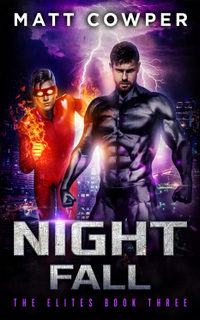
Nightfall by Matt Cowper: The Stunning Conclusion to the Elites Trilogy

NightfallNightfall

by Matt Cowper
Series: The Elites, #3

Kindle Edition, 412 pg.
2019
Read: July 24 – 26, 2019

With The World Savers, I pictured an ongoing series about The Elites, after Rogue Superheroes, I wondered how he could keep it going after raising the stakes so much. Nightfall answers that question (while ruining my hopes for an ongoing series). Cowper brings this trilogy to a close with a conclusion wraps up the storylines well, provides some closure and moves the characters on to the next step in their lives, all while telling an exciting super-hero story.

As we join the book, things are still influx after Rogue Superheroes, Nightstriker doesn’t trust Blaze the way he should (and the rest of his team do), Gillespie is serving as Interim President (and not liking it), and the possible romantic relationship between Gillespie and Nightstriker hasn’t gone anywhere since that initial conversation, and Blaze is still grieving and dealing with everything he did. But after the first chapter or so, progress is made along these lines and it looks like things might be cooling off for the Elites for a while. There’s still a lot of road to go, but positive and realistic steps are being taken.

Which means, of course, it’s time for their newest nemesis to show up. His name is Black Knight and he comes from the future (or so he says). His purpose in coming back in time is to stop one of the Elites before they become too powerful to be stopped, supposedly the damage he’s wrought on civilization in the future is so great that it can’t be allowed to get to the point where they aren’t bound by any kind of ethical cord. But he’s just one man, what can he do against this super team?

Quite a lot, it seems. Between power, reflexes, strategy and a kind of determination usually reserved for Batman and Nightstriker, Black Knight almost accomplishes his goal in the first battle against the team. Coming up with a way to stop him—for everyone’s sake—the team is going to have to lean on a new friend and ally and follow her to a planet light-years away. The Elites in space and on a planet no one has heard of, battling one of the greatest foes they can imagine. A great way to conclude this trilogy! There were several times when I “knew” how it all was going, and the hard choices that Cowper would have to make about some of his characters—and I was wrong every single time. There were a lot of zigs where I expected zags, and I loved every one of them.

As compelling as all that is, the core of this novel has to do with the reaction of the team to hearing that someone in their midst will become a mass murderer. It puts a strain on all relationships (platonic or otherwise) the team is involved with. There’s some horror, some rebellion, but mostly it’s a resolve to back their teammate and help them avoid the solution. There’s some great fodder for thought about choice, determinism, and morality there—Cowper deftly deals with these ideas while not losing the pace of his story.

It’s pretty exciting, and a great way to approach the book, taking these heroes on an interplanetary adventure. After things die down, The Elites return home to start again and some of the heroes are recognized for the forces of good they’d been. Then we get glimpses of where everyone is going forward to start over—some are taking a path far less traveled others are continuing along similar paths, but with renewed focus.. The emotional arcs are great and just what the fans want to read. I was really impressed with the way that Cowper resolved things and yet planted things to harvest later.

This is the third in a series, and I strongly recommend it be read after books 1 and 2, or you won’t get a lot of it. My appreciation for the series has built with each successive novel and it’s hard to find a lot to fault with this one. Some great emotional beats, great characters and a whole lot of fun and excitement as the Elites try to weed the criminals out of society. I’ve enjoyed this trilogy as a whole, but Cowper pulled out all the stops with this conclusion and really blew me away.

Disclaimer: I received a copy of this novel from the author in exchange for my honest opinion about it.

—–

4 1/2 Stars

LetsReadIndie Reading Challenge

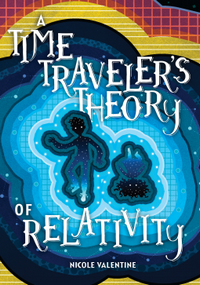
A Time Traveler’s Theory of Relativity by Nicole Valentine: A Captivating MG Mix of Science and Magic

A Time Traveler's Theory of RelativityA Time Traveler’s Theory of Relativity

by Nicole Valentine

eARC, 352 pg.
Carolrhoda Books, 2019

Read: August 27, 2019

Finn Firth is on the verge of turning 13, and is convinced his father will forget his birthday. Which is troubling to him, but really, it’s the least of his troubles. When they were three, his twin sister drowned (and he’s always felt this absence, and is sure everyone around him does, too). He’s not that close with his father, and his mother left home a few months ago, with no warning and no one has heard from her since. Also, his best (only?) friend, Gabi, has been spending less time with him and more time with new friends—the kind that would bully him. He’s also a huge science nerd, the kind of twelve-year-old who reads (and re-reads) Richard Feynman and Carl Sagan for entertainment. The fact that he’s an outsider, that he’s not like the other kids at school is what drives him (like so many) to science, to something he can make sense of and put himself/his trouble in perspective.

So imagine his surprise when his grandmother informs him that she’s a time traveler, actually, all the women in his family have been and are. It’s not just his family, there are people throughout the world capable of this. Some in his family are more powerful than others, most can only travel to the past—one could only travel to the past but during her lifetime—his grandmother and mother are among the few that can travel forward in time. His mother, he’s told, didn’t leave his father and him. Finn’s dad has been reassuring him that “she just needs some time,” and well, that seems to be the case after all. She’s stuck somewhere, unable to come back—but she’s created a way for Finn to come and get her (despite being a boy).

Time travel is impossible, Finn knows—and even if it weren’t, the kind of travel his grandmother describes sounds more magical than scientific. He tells his grandmother this, in fact. But—I won’t get into how, it should be read in context—he’s given some pretty convincing proof.

Now there are those who don’t think Finn should be doing anything regarding time travel, and that no one should be tracking down his mother. And they’re seemingly willing to take some extreme measures to stop him. He and Gabi set out on an adventure to evade these others and get to his mother’s portal. Finn’s ill-prepared for what lies ahead, but he doesn’t care. Between brains and sheer determination (and largely it’s the latter), he’s going to find his mom.

What he never stops to ask is: what else will he find?

This is a fun little read—Finn and Gabi are well-developed characters, his various family members are interestingly and distinctively drawn, the writing is crisp and brisk—once things get going, they stay going, and it’s easy to get swept up in it The best is the mix of science and . . . however you end up describing the time travel. For a book directed toward the 9-14 set, the science (time travel, chaos theory, multi-world theory, etc.) is presented plainly and without condescension. That last point, in particular, resonated with me.

The heart of this book is found in two concepts—the power of individual choice, and the importance of kindness in spite of everything. Lessons good to be absorbed by the target audience, as well as the rest of us.

I really enjoyed this book and heartily recommend it. One thing, though, kept running through my mind as I read it. As much as I enjoyed A Time Traveler’s Theory of Relativity, when I was 8-13, I would’ve loved it (probably when I was 14 and 15, too—I just wouldn’t admit to liking a book written for younger people at that time). It’s the kind of book that I would’ve been checking out of the library every two or three months. Get this for yourself and enjoy it, get this for your kid for them to obsess over.

Disclaimer: I received this eARC from Carolrhoda Books via NetGalley in exchange for this post—thanks to both for this opportunity.

—–

3.5 Stars

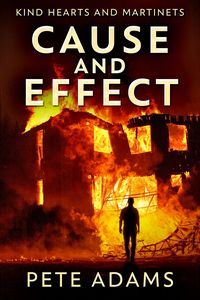
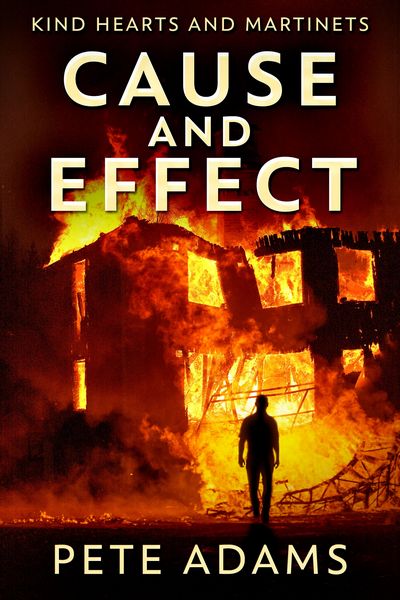
Cause and Effect: Vice Plagues the City by Pete Adams: It’s some effort, but readers will be amused by this

Cause and Effect: Vice Plagues the CityCause and Effect: Vice Plagues the City

by Pete Adams
Series: Kind Hearts and Martinets, #1

Kindle Edition, 432 pg.
2019

Read: August 23 – 27, 2019

I almost DNF’ed this one. I’ll talk more about that in a little bit, but I want that stated upfront. I hope some readers will decide to give this a try, but I want to warn some (I’m thinking of fellow citizens of the U.S. here) that it might take a little work. I also want to stress that I do recommend this book, because I think it’d be easy to walk away from what I’m about to say with a different impression.

Detective Inspector Jack Austin is the kind of cop that can make Jake Peralta look like Joe Friday. He’s undisciplined, offensive, easily distracted, far too concerned about coming on to women and joking around when he should be focusing on work. Yet, within the police, he’s (almost) universally loved and deferred to. The citizens he polices may love him more. That “almost” will prove hazardous to his career, but he can’t seem to be bothered by that.

The title (and marketing) would lead you to believe this is Crime Fiction—and it is, to a degree. But this tale about a multifaceted crime wave running through this city has several issues. My main problem with this storyline is how little police work we got to see. Jack would make some guesses, which would prove to be unerringly correct, but most of the actual work (including, testing those guesses) was done by his team off-screen. Sure, there’s some intimidation of suspects and a lot of heroics by Jack. But, it rarely seemed that Adams was all that interested in the investigation—there were heinous crimes, some horrific human costs—but those frequently took second place to Jack goofing around. This is only something I’ve realized as I was writing this post, in the moment, you get caught up in the story and don’t realize that this near-super cop doesn’t actually do much. Suddenly, that joke I made about Jake Peralta doesn’t seem as funny. Jack really has a lot in common with Jake, for both of them, despite their juvenile antics, they’re beloved, and seem to solve a decent number of crimes.

I actually liked the story around the crimes and thought some of what was used there was pretty ingenious. But in retrospect, I realize that it’s pretty meager as storytelling goes.

There were two other things the novel focused on more (and better) than the criminal investigation. The first is a romance for the out of shape (and not all that attractive) widower, Jack Austin. Things finally click for Jack and a woman he’d been interested in for years since his wife died. This is a sweet story, and I quickly became interested in it, and my interest only waned (and then only a bit) when I was starting to notice how much space the book was spending on it.

What Adams seems most interested in is talking about (or having his characters talk about) Jack Austin—what kind of man he is, what was his life (professionally and personally) before this book ended. The amount of space devoted to off-duty Jack Austin is a lot greater than you might expect going into this book, but it’s the heart and soul of the book. The latter chapters of the book are very intent on teasing this out via challenges to his new romance and his career—but a lot of that doesn’t seem like it should be present, I think it would’ve felt more natural in books 3 or 4. It’s laudatory enough to make you wonder about the way the novel works, it doesn’t feel earned (as it would coming up later in the series), so that rather than letting the reader discover what a swell guy/great cop he is over the course of a series, we’re just told it. However, Austin’s character and qualities are not only is this what Adams seems interested in talking about more than anything else, but it’s also pretty compelling and interesting—moreso than anything else in the book. So take my hesitation about it with a large grain of salt.

The emotions are real, and will get you dragged in—there’s a lot of pretty moving material here in a book that seems to think it’s a comedy (it’s light-hearted, but I don’t think actually ever funny). I appreciated the heart and emotion in every scene and it’s this kind of thing that won me over.

So what was my problem with the book? Jack’s so intent on being eccentric that he intentionally misspeaks, uses nicknames for characters (so you have to learn the nickname as well as the actual name for a whole lot of characters from the starting gate). Throw in some nigh indecipherable Cockney rhyming slang (and a little bit that was more easily decipherable) and you’ve got a real challenge to read. But because I’d agreed to do this Book Tour (and ones for the next four books in the series), I had to press on when I really wanted to set (throw?) the book aside. Instead, I went with the immersion approach to learning a foreign language, trusting that eventually something would click for me with the phrasing and everything would make sense. By the 45% point, I’d grown accustomed to his Jack’s idiosyncratic dialogue and thinking (probably sooner, but I didn’t notice for a little bit.

I mention this only to be forthcoming for potential readers. This isn’t a book to read casually but to plod through with all your critical faculties operating. So, yes, I had to work a lot harder to get through this book than I’m typically inclined to, but I’m glad I did. Not only was it worth the effort, I’m curious and invested enough to look forward to what happens next. Hopefully, you’re smarter than I am and don’t have any problems for the first half (or not that many), so you can enjoy the whimsical and amusing book at an earlier stage than I did. At the end of the day, however, it’s a fun book and worth the effort.

—–

3 Stars


My thanks to damppebbles blog tours for the invitation to participate in this tour and the materials (including a copy of the novel) they provided.

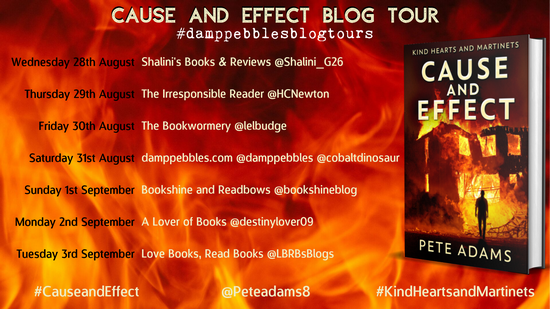
BOOK SPOTLIGHT: Cause and Effect: Vice Plagues the City (Kind Hearts and Martinets #1) by Pete Adams

Today I welcome the Book Tour for Cause and Effect: Vice Plagues the City by Pete Adams. Along with this spotlight post, I’ll be giving my take on the novel here in a bit. But before I get to talking about the book, let’s start by learning a little about this here book, okay?


Book Details:

Book Title: Cause and Effect: Vice Plagues the City by Pete Adams
Publisher: Next Chapter Books
Release date: June 17, 2019
Format: Paperback/Ebook
Length: 452 pages

Book Blurb:

A self-labelled enigma, Detective Inspector Jack Austin is at once miserable and amusing, melancholy and motivated. Running the Community Police Unit from his deck chair, D.I. Austin is known for his ability to solve crimes out of the blue.

Trying to work cases while struggling with his mental issues, Austin deals with a variety of major crimes, including bicycle theft. But when the case of an executed police officer lands on his desk, he accidentally uncovers a malevolent scheme.

Can he discover who is behind it all – and keep what’s left of his sanity?

About Pete Adams:

Pete AdamsPete Adams is an architect with a practice in Portsmouth, UK, and from there he has, over forty years, designed and built buildings across England and Wales. Pete took up writing after listening to a radio interview of the writer Michael Connolly whilst driving home from Leeds. A passionate reader, the notion of writing his own novel was compelling, but he had always been told you must have a mind map for the book; Jeez, he could never get that.

Et Voila, Connolly responding to a question, said he never can plan a book, and starts with an idea for chapter one and looks forward to seeing where it would lead. Job done, and that evening Pete started writing and the series, Kind Hearts and Martinets, was on the starting blocks. That was some eight years ago, and hardly a day has passed where Pete has not worked on his writing, and currently, is halfway through his tenth book, has a growing number of short stories, one, critically acclaimed and published by Bloodhound, and has written and illustrated a series of historical nonsense stories called, Whopping Tales.

Pete describes himself as an inveterate daydreamer, and escapes into those dreams by writing crime thrillers with a thoughtful dash of social commentary. He has a writing style shaped by his formative years on an estate that re-housed London families after WWII, and his books have been likened to the writing of Tom Sharpe; his most cherished review, “made me laugh, made me cry, and made me think”.

Pete lives in Southsea with his partner, and Charlie the star-struck Border terrier, the children having flown the coop, and has 3 beautiful granddaughters who will play with him so long as he promises not to be silly.

Pete Adams’s Social Media:

Twitter ~ Facebook

Purchase Links:

Amazon UK ~ Amazon US ~ Book Depository ~ Google Books


My thanks to damppebbles blog tours for the invitation to participate in this tour and the materials (including a copy of the novel) they provided.

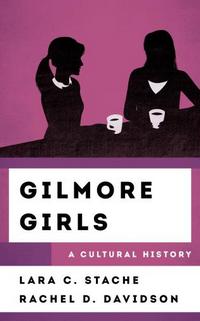
Gilmore Girls: A Cultural History by Lara C. Stache and Rachel Davidson: Oy with the Poodles Already

Of course that headline doesn’t say anything about the book, I’ve just never had an excuse to use that line, and this is as close as I’m going to get.
—

Gilmore Girls: A Cultural HistoryGilmore Girls: A Cultural History

by Lara C. Stache and Rachel D. Davidson

Series:
The Cultural History of Television

eARC, 248 pg.
Rowman & Littlefield Publishers, 2019
Read: August 16 – 23, 2019

I’m a huge fan of the show Gilmore Girls, and am a bigger fan of Amy Sherman-Palladino and Daniel Palladino. So when I saw this title, I had to jump on it. A cultural history of the show? 200+ pages about the show in more than just a raving-fan mode? Sign me up! The authors are big fans of the show, it must be said, but they can be critical of it, which makes all the difference. This book is an examination of both the show’s reflection of the culture around it as well as what impact it had on the culture—the medium of TV, the casual viewers, and the fans. For a show that depends so heavily on pop culture, the former is easy to demonstrate (it’s more of a question of how to focus the examination and when to stop), but the latter is just as important.

In Part I of the book, the authors look at the various relationships depicted in the show—mothers and daughters; fathers/father-figures and children; romance (with mother/daughter relationships, this is obligatory for the show); and friendship. I thought they were spot-on when it came to mothers and fathers. The romantic relationships they concentrated, and the points they raised about them, were what anyone picking up the book expected (although there was a stronger anti-Logan/pro-Jess bias than one might expect)—I did like the way that Dean and Luke were paralleled, and didn’t appreciate the way that Christopher and Logan were (mostly because I think they were right, and I had to lower my regard for Logan if he’s Rory’s Christopher-equivalent). I thought the looks at Lorelai/Sookie and Rory/Lane and what they said about female friendships was just fantastic.

In Part II the authors switch to themes addressed in the show—feminism, class, pop culture and small-town life. I’ll talk more about the chapter on feminism in a moment, but I thought it was exceptional. The Pop Culture chapter was fun and insightful. I appreciated the Class/Wealth examination, but thought they could’ve done more with it. This is part of the book that you probably can’t find much of in discussions about the show—you can’t swing a LOLcat* online without finding someone talking about Luke and Lorelai or Dean and Rory, but thoughtful takes on the greater cultural themes are rarer (not impossible to find, but harder.) The book doesn’t shine as brightly as it could in this Part, but it handles the subjects deftly.

* I feel like I should apologize to Babette for using this expression.

The chapter examining the show’s depiction of feminism features an extended look at Episode 1.14, “That Damn Donna Reed.” This is at the same time the best and worst part of the book. Let me explain: the authors examine this episode and the main storylines in detail and while reflecting about what those stories say about the feminism of Gilmore Girls and the contemporary American culture (and our contemporary culture). I was entertained and satisfied with the book, but when they hit this high point*—and didn’t accomplish anything like it in following chapters—I was disappointed. If we’d gotten that kind of examination of popular culture and class as shown in particular episodes, I’d have probably rated this book higher. I may have rated it higher if that chapter didn’t have the 1.14 section, too—it just made everything else seem a little more shallow.

* I’m not saying I agreed with all of the analysis, but I appreciated what they did.

Chapter 8, “Small-Town Livin’,” is—like most of this book—a look at the depiction of something and a celebration of it. In this case, it’s Stars Hollow as an ideal small town. We’re shown many examples of the peculiarities of Stars Hollow (taken in every sense of the word)—notably some of the characters, the way the community acts as a large family, how it supports (and doesn’t support) each member, and so on. Then the authors talk about how it represents something in our contemporary culture that many, many feel is missing from our communities and how we yearn for it. I don’t know what it was about this chapter precisely that struck me the way it did—but I didn’t expect it, and the sentiments expressed really resonated with me. Perhaps it’s because the rest of the book focuses (as it should) on Lorelai, Rory, Richard, Emily, Luke, etc., and it’s only here that we focus on everyone else that made this show delightful.

My main complaint is that the authors depend on the same handful of examples too often. Luke did X, or Emily said Y are each trotted out to support 5 or 6 (or a dozen) points rather than finding 5 or 6 (or a dozen) other examples to show the same kind of thing. Luke didn’t just act in a certain manner one time in one episode to cite repeatedly, he does repeated things along certain lines that could be used in a variety of contexts. I don’t want to get bogged down in the details on this, so I’m keeping it vague, but it often felt like I could sing along with Stache and Davidson when they started to illustrate a point with one of the frequently used points. I can understand that it’s easier to keep going back to the same well so that they don’t have to explain the citations as much each time, but it got a bit tired.

There’s an appendix (of sorts) wrapping up this book that is worth the purchase price—”The Episodes: An Opinionated Compendium.” The compendium lists every episode, with a one-paragraph synopses (some are short, some aren’t) and a Best Line (except for in Season 7, which almost doesn’t count for the authors as a real season—like the mythical second and third Matrix movies, the fourth Indiana Jones, or third X-Men). I don’t recommend reading that straight through, you’ll burn out—but it’s a great way to revisit the episodes and refresh your memory. I don’t know the page count on this section, but it’s not inconsequential—it’s 27% of my eARC. Any fan will appreciate this part, even if they’re unimpressed with the main text (and I doubt many fans will be unimpressed with anything in these pages).

This is a fun read, a thought-provoking read, and a comfort-read. It’s like spending a couple of hours talking with some pretty intelligent friends about a TV show you all really like. It’s impossible to watch the show without thinking about it in the terms the authors choose to focus on—relationships, feminism, wealth, community, family—but most fans probably haven’t focused on it to the extent this volume does. I wanted more, but not much more. Not only is this a good book and a good way to examine a beloved show, it’s a great introduction to this series of books. I know I’ll be picking up more of them.

Disclaimer: I received this eARC from Rowman & Littlefield via NetGalley in exchange for this post—thanks to both for this opportunity, I thoroughly enjoyed the experience.

—–

3.5 Stars

Reposting Just ‘Cuz: What the Dog Knows: The Science and Wonder of Working Dogs by Cat Warren

Real Life™ interfered today (a good thing, but time consuming), and I wasn’t able to finish a post, so in honor of yesterday’s (8/26) National Dog Day, here’s my look at Cat Warren’s wonderful book. By the way, a Children’s version is coming out in October, looking forward to that!

What the Dog KnowsWhat the Dog Knows: The Science and Wonder of Working Dogs

by Cat Warren

Hardcover, 280 pg.
Touchstone, 2013
Read: May 7 – 15, 2015

People are smart, just like dogs.

Seriously, how do you not like a book that contains that line?

Honestly, the only reason I gave this book a second glance — okay, a first glance — is that Robert Crais blurbed the paperback edition and it showed up on his Facebook page. It seemed kind of interesting, but I wasn’t sure — then I noticed that Spencer Quinn also wrote a blurb. And if two of my favorite mystery novelists (who have a thing for dogs) tell me the book is good, it must be.*

They were right — Warren was a journalist, is now a professor, and knows her way around a sentence. She clearly cares about the subject and has invested a lot of time and effort into getting to know it, her style is engaging and charming (I was chuckling within a couple of pages), and she doesn’t mind showing her own failings and weaknesses.

Warren basically covers three topics: there’s the science and history of using working dogs (of all sorts of breeds, not to mention pigs(!), birds, and even cats) to find cadavers, drugs, bombs, etc.; there’s the memoir of her involvement with cadaver dogs via her German Shepherd, Solo; and anecdotes of other cadaver dogs and trainers that she’s encountered/learned from/watched in action.

The history and science of dogs/other animals being used for their sense of smell, is probably the most fascinating part of this book, but it’d be really easy for the material to be too dry to bother with — Warren’s voice keeps that from happening. I think it’s terrific that at the end of the day, no one knows what it is about the smell of the human body that dogs sense — she’ll explain it better than me, but that’s the kernel the story. I just really enjoy it when the best and the brightest have to shrug and say, “I don’t know.” The chapter she spends on the future of dogs and/or digital replacements is good for similar reasons. Actually, I could just keep listing little facts/factoids/ideas here, but I don’t want to steal Warren’s thunder.

The best part of the book — the part that I found most interesting, and most frustratingly small — is the Warren’s story about getting Solo, discovering he had just too much energy and personality, and needing to find an outlet for it all. Which is followed by the trials and tribulations of a newbie cadaver dog handler and her pup-in-training, growing into a capable working dog. Anyone who has a dog lover as a Facebook friend knows just how easy it is for someone’s stories about their dog to get to the point where you can’t stand to hear another**. Somehow, Warren avoids this totally — not an easy feat. It probably helps that dog does far more fascinating things than just hiking through the woods or chasing a ball.

The stories about the others — her friends, colleagues, teachers, etc. — round out the book. It’s not just about Warren and Solo, it’s not just about the military/police efforts with training animals — it’s about dedicated volunteers, K-9 officers and dogs all over the country (and the world) making a difference. In places and ways you wouldn’t expect. Really? Sending in one guy and his dogs into Vietnam decades later to search for POW/MIA? Also, seeing how different dogs act differently, yet get the same job done was mind-boggling. Especially for dogs trained together/by the same person, you’d think they’d act similarly.

I imagine it’s to spotlight the work of others, to not brag about Solo too much, to talk about things that she and her dog haven’t done/seen/smelled — or whatever reason there is, I wanted more Solo. A lot more. I have no problem with the rest of the book, it’s just that there’s not enough Solo (or Coda).

Fascinating, entertaining, and educational — can’t ask for much more than that.

—–

* Yes, I’m aware there are flaws in the thinking there.
** Of course, your friends don’t have dogs as cool as mine. Let me tell you a little bit about her . . .

—–

4 Stars

Page 396 of 633

Powered by WordPress & Theme by Anders Norén