Author: HCNewton Page 46 of 603

WWW Wednesday—May 21, 2025

WWW Wednesdays Logo

This meme was formerly hosted by MizB at A Daily Rhythm and revived on Taking on a World of Words—and shown to me by Aurore-Anne-Chehoke at Diary-of-a-black-city-girl.

The Three Ws are:
What are you currently reading?
What did you recently finish reading?
What do you think you’ll read next?

Seems easy enough, right? Let’s take a peek at this week’s answers:

What are you currently reading?

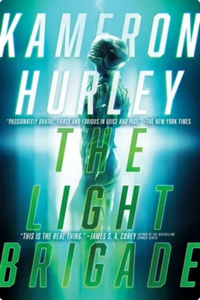
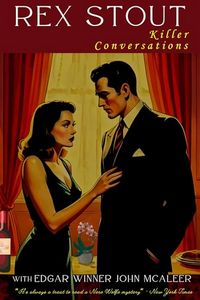
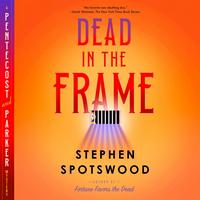
Cover of The Light Brigade by Kameron Hurley Cover of Rex Stout: Killer Conversations with Edgar Winner John McAleer Cover of Dead in the Frame by Stephen Spotswood
The Light Brigade
by Kameron Hurley
Rex Stout: Killer Conversations with Edgar Winner John McAleer
by John McAleer
Dead in the Frame
by Stephen Spotswood

I’ll have started The Light Brigade by the time this posts, but I’ve yet to put a toe in, so I have no idea what to say about it.

I could’ve easily read Killer Conversations in an hour, but I’m savoring it–just a little at a time. It’s so much fun for Stout fans.

Speaking of Stout, Dead in the Frame is the fifth installment in this “inspired by Stout” series. But the comparisons between the two are getting harder to make. It’s like comparing versions of The Office at this point.

What did you recently finish reading?

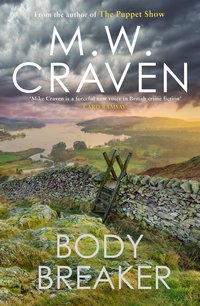
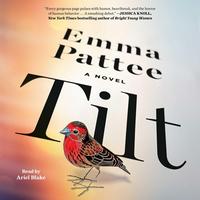
Cover of Body Breaker by M.W. Craven Cover of Tilt by Emma Pattee
Body Breaker
by M.W. Craven
Tilt
by Emma Pattee, read by Ariel Blake

Body Breaker is not the best-written Craven novel, but it was so compelling that I really didn’t care.

I’m still chewing on the last chapter of Tilt. But what Pattee did up to (and including it) is just stunning.

What do you think you’ll read next?

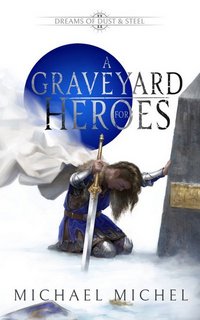
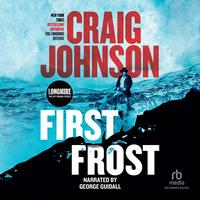
Cover of A Graveyard For Heroes by Michael Michel Cover of First Frost by Craig Johnson
A Graveyard For Heroes
by Michael Michel
First Frost
by Craig Johnson, read by George Guidall

I’ve been wanting to dive into A Graveyard for Heroes since about an hour after I finished The Price of Power, but I made myself wait until closer to release day. But the wait is almost over!

I’m really hoping the second time through First Frost helps me appreciate what Johnson was up to.

What are you reading lately? Do you have something special in store for this long weekend?

LITERARY LOCALS: A Q&A About Writing in Idaho with Glen Gabel

Literary Locals logo
Glen Gabel drops by this series to class it up a bit (seriously, how often do people casually drop in Latin on the Irresponsible Reader? And the Bible in Latin? I’m pretty sure never. When I met Gabel at the Library’s Book Faire–he didn’t even mention his book (and I really should’ve asked him about it), he brought up someone else’s book (also mentioned below) and sold me on it! (not literally, that author wasn’t present, but it was added to my TBR). Who does that? It’s actually an effective advertisement for Gabel’s own book–you want to support someone like that.

Anyway, get to know Glen Gabel, and then track him down at the links below!


Before we get into things, why don’t you give the reader a brief introduction to you and your work.
Sure thing. My name is Glen Gabel, I’m an author and screenwriter, coffee addict and burger connoisseur. I love long walks on the beach, as long as I don’t get sand in my shoes, getting immersed in a good book and muttering under my breath at the kids who play on my lawn. When I’m not obsessing over a writing project, I’m making sweeping generalizations about the decline of western civilization or taking a nice walk out in nature with my wife and wonder-pup, Puffin. Beyond that I do a fair amount of gaming, gardening, and working with kids. You can find me at:
www.glengabel.com
https://www.facebook.com/frompentopage
https://www.instagram.com/ghgabel/
https://x.com/glen_gabel
https://www.youtube.com/@from-pen-to-page

Are you a native Idahoan? What brought you to Idaho in the first place? (answer whichever question applies) What is it about Idaho that keeps you here?
A long time ago in a galaxy far away, we lived in Los Angeles, and then the pandemic hit and we found ourselves suddenly living in a third-world country (maybe it always was to some degree). Since we mostly work from home we decided we needed a change and discovered Idaho. We fell in love with the culture and natural beauty the state offers (also way more affordable) and we moved. Best choice we ever made. I know Californians have a bad reputation here and I get it. No one likes the status quo shaken up, especially when the status quo works well. But our intention wasn’t to change anything, it was to find a new home – and Idaho feels like home to us – a home that only existed in our memories.

“A home that only existed in our memories.” That’s a good line—is that the kind of prose a reader should expect from you?
Hopefully! If I’m feeling inspired at least. Lol.

Are you tied into some sort of local author/bookish group/culture? If so, tell us about it and how it helps you as an author. If you’re not, is there a reason for it?
I’m not a super-outgoing person, so I’m not sure I’m really “connected” to anything but I’ve attended a few local author events and I’m always excited to meet other writers. I’m a firm believer in Proverbs 27, Ferrum ferro exacuitur.

What kind of events in the area do you attend—either to sell/promote your books or to network with authors? Are there any outside of this area that you hit regularly and wish we had something like it here?
Well, we met at the Treasure Valley Book Fair, so that’s one. I’ve done a book signing or two at Shared Stories in Caldwell, and the Authorpalooza in Middleton last year. All fun events and good ways to network with other authors and connect with readers.

Authorpalooza–one of those events in Middleton I only hear about the day of–generally with about 30 minutes left in it. One day, I’ll get there…

What’s the breakdown of your audience—do you have a strong local base, or are your readers from other parts of the world?
Do I have an audience? I think I do. My debut novel, The Soothsayer, is a Christian YA fantasy novel – so I guess teens and fantasy lovers would be it for now. But I wouldn’t really call myself a fantasy author – the truth is I don’t read much fantasy work (save the classics–Tolkein, Lewis, Alexander, and Rothfuss). I don’t like pigeonholing myself to one genre (which I know may confuse potential readers but they can get over it). I’m currently working on a supernatural crime thriller. I think my social media puts it as an author of “thrilling fantasy and supernatural suspense” (which has a nice alliterative ring to it but doesn’t lock me down too much).

Hopefully you’ve got enough of an audience that people have bought your book (who knows if they’ve read it). Or are you such a glutton that you’re going to keep producing until you get an audience?
Haha–yeah I’ve had sales but also yes, I’m a glutton for punishment. Storytelling has always been part of who I am. Even with no audience, I’d write them.

Do you think there are particular challenges or advantages to being a writer in the Treasure Valley? (possibly both)
Challenges–none that I can tell. Writing is tough no matter where you live. Advantages? Well I think the Treasure Valley is more welcoming of writers than L.A., In California everyone and their grandmother has a script or manuscript they’re trying to sell, everyone has the next “big thing”, so there’s a certain amount of indifference that’s pervasive toward writers down there.

Not being from there, I don’t have first-hand experience, but that’s definitely the reputation. So even with the larger potential customer-based, it’s still not as good as the smaller cities/towns around here?
Well, I’ll put it to you this way there’s a lot of people there who want not to write, but to have written, not to produce, but to have the reputation for producing, and definitely not to really read anything, but to have the optics of a nice library. In short – finding a platform down there for your work is easy enough, but getting folks to really read and engage – that’s challenging. Here there’s less noise, fewer distractions – you still have to earn every reader you get, but at least they show up.

Do you bring Idaho (or some sort of Idaho-sensibility, assuming one exists) to your work? Whether or not anyone else sees it, can you look at some aspect of your writing and think “That’s Idaho” or “I would do ____ differently if I was a Kentuckian or from Illinois?”
First you have to ask what makes up an Idaho-sensibility? I’m still new to the state so I don’t want anyone thinking I have it figured out. From what I’ve seen it’s rugged independence, a kind spirit, and stalwart grip on faith, family, and traditional values. All things I’m a fan of. I think my novel, The Soothsayer touches on those themes–holding onto your faith in trying times, bringing some light to a dark world, and racing after your calling despite what the world thinks of you.

One final question, is there a book (or two…or 18, if you get really carried away), that embodies Idaho/the Idaho spirit to you to recommend to my readers?
Well I’ll plug my novel, The Soothsayer first. Whether you’re a fantasy fan or not, I think you’ll find the struggles Colin faces will keep you hooked and the message may resonate. Beyond my work I’d have to say Clair Huffaker’s The Cowboy and The Cossack to be a fantastic western adventure that throws typical cowboy tropes on their heads, and Meg Ashley’s Through the Corner of Circles to be a unique Native-American dystopian epic that has a lot of layers to it.

I’ve added both to my TBR! Thanks! (sort of…I wouldn’t mind some help trimming it down for size)
Great! Thanks for the opportunity to discuss!

Thanks for your time and participation! Hope you enjoyed it!
Thank you!


Literary Locals logo

Book Blogger Hop: Your Favorite Re-Reads

Book Blogger Hop


This prompt was submitted by Nicole @ The Christian Fiction Girl:

What are some of your favorite books to re-read?

I really don’t have–rather, don’t make–much time to re-read anymore. This is one of the biggest complaints I have about my reading, honestly. It’s also the thing I keep telling myself I’ll do better at, and then I’ll go months without re-reading a single thing. As great as it is to find a “new friend” or be blown away by a story you hadn’t imagined before, going back to an old favorite has a kind of comfort and familiarity that can’t be beat (and you get to know them so much better). Before I got into blogging–I’d re-read all the time. Especially when I was a kid, I’d usually come home from the library with a book I’d read before along with the new-to-me reads. Now, I might force myself to do some, but not that often. So these lists are not incredibly current, but they kind of are. And you’re not going to find something more current from me.

Non-Fiction

(there should be more here, but I’m drawing a blank)
bullet The Pleasures of Reading in an Age of Distraction by Alan Jacobs
bullet The Right Stuff by Tom Wolfe

Standalones

bullet Jane Eyre by Charlotte Brontë
bullet The Commitments by Roddy Doyle
bullet The Snapper by Roddy Doyle (this is technically the second in a series, but it works better as a standalone)
bullet The Phantom Tollbooth by Norton Juster
bullet The Princess Bride by William Goldman
bullet The Westing Game by Ellen Raskin
bullet Cyrano de Bergerac by Edmond Rostand (I’ve told myself to read this “next month” at least 35 times since I finished Tom Jones in 2021)

Series

(sometimes I’d read them in order as a set, sometimes I’ll just pick up an individual installment)
bullet Everyone’s favorite 5-part Trilogy, The Hitchhiker’s Guide to the Galaxy, by Douglas Adams (Towel Day is this weekend, readers beware)
bullet Most Robert Crais books (nothing against the others, I just haven’t found the time for them yet)
bullet The Fletch and Flynn series by Gregory Mcdonald–at least those written in the 1970s & 80s
bullet The Spenser novels by Robert B. Parker–especially the first 20, but I’ve re-read them all.
bullet Nero Wolfe/Archie Goodwin books by Rex  Stout (I’ve probably re-read portions of this series more than anything else on this list, actually, the whole response to this prompt should be about me talking about this series)

How about you, reader? Do you have favorites to revisit?

MUSIC MONDAY: “You’re Gonna Go Far, Kid” by The Offspring

The Irresponsible Reader's Music Monday logo

Music Monday's originated at The Tattooed Book Geek's fantastic blog and has shown up hither, thither, and yon since then.

Irresponsible Reader Pilcrow Icon

Rift by Cait West: An Important and Moving Story, That Didn’t Completely Work for Me

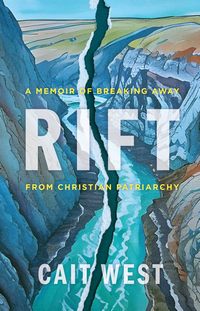
Cover of Rift by Cait WestRift:
A Memoir of Breaking Away from Christian Patriarchy

by Cait West

DETAILS:
Publisher: William B. Eerdmans Publishing Company
Publication Date: April 30, 2024
Format: Hardcover
Length: 226 pg.
Read Date: March 23-30, 2025
Buy from Bookshop.org Support Indie Bookstores

What’s Rift About?

A gripping memoir about coming of age in the stay-at-home daughter movement and the quest to piece together a future on your own terms.

Raised in the Christian patriarchy movement, Cait West was homeschooled and could only wear clothes her father deemed modest. She was five years old the first time she was told her swimsuit was too revealing, to go change. There would be no college in her future, no career. She was a stay-at-home daughter and would move out only when her father allowed her to become a wife. She was trained to serve men, and her life would never be her own.

Until she escaped.

In Rift, Cait West tells a harrowing story of chaos and control hidden beneath the facade of a happy family. Weaving together lyrical meditations on the geology of the places her family lived with her story of spiritual and emotional manipulation as a stay-at-home daughter, Cait creates a stirring portrait of one young woman’s growing awareness that she is experiencing abuse. With the ground shifting beneath her feet, Cait mustered the courage to break free from all she’d ever known and choose a future of her own making.

Rift is a story of survival. It’s also a story about what happens after you survive. With compassion and clarity, Cait explores the complex legacy of patriarchal religious trauma in her life, including the ways she has also been complicit in systems of oppression. A remarkable literary debut, Rift offers an essential personal perspective on the fraught legacy of purity culture and recent reckonings with abuse in Christian communities.

“Lyrical Meditations on the Geology…”

I really didn’t intended on talking about this, but reading that line in the jacket copy drives me to it. Every time West started talking about the geology, in using contintental rifts as a metaphor for what was going on in her family, and so on–I rolled my eyes.

It was clear what she was doing, but there was no subtlety to it. I’m not trying to say that this kind of thing should be subtle, but it shouldn’t be so heavy-handed and artless. It just came across as pretentious.

Critiquing Patriarchy

I picked this book up because I heard an interview with West and was intrigued by her–when I heard that she had a book out detailing her story in more detail than she could in 30 minutes or so. So please understand, I have very little sympathy for those who would be considered–by themselves or others–part of the Christian patriarchy movement. But I don’t think this book is an effective critique of it.

I do think it’s a tragic case study into what this movement can do, and has done, in one family. And it is easy–maybe too easy–to critique what this father did to his children. It’s hard to see the things that were experienced by others nearby–who thought similarly, but not necessarily identically to, this man.

So, what did I think about Rift?

This is an accessible read–frequently powerful. I do wish that West had curbed her attempts at artistic flair. I also wish that she’d done a more thorough job of trying to show how her father’s beliefs and behaviors lined up with others, and were linked to specific teachings by particular individuals rather than just a vague guilt by association.

I fully believe that documentation could be made, let me stress. But for what are probably good reasons. I don’t get them–but I assume she had them. If for nothing else, it’d change this from a memoir into some other kind of thing. I guess I’d hoped for that something else–a memoir +.

But it’s Cait West’s story, hers to tell how she wants. For this reader, it wasn’t enough. But I’m probably in the minority.

It took a lot for her to put this together–to expose the pain. My problems aren’t with her or what she said. Simply the experience as a reader.


3 Stars

This post contains an affiliate link. If you purchase from it, I will get a small commission at no additional cost to you. As always, the opinions expressed are my own.
Irresponsible Reader Pilcrow Icon

Saturday Miscellany—5/17/25

Odds ‘n ends about books and reading that caught my eye this week. You’ve probably seen some/most/all of them, but just in case:
bullet Pay Attention! The invention of close reading.
bullet Extraterrestrial tongues: Imagining how aliens might communicate prepares us for first contact and illuminates the nature of our own languages
bullet Crime Novelist Don Winslow Unretires For ‘The Final Score’—color me giddy
bullet Murder, Mischief, and Mayhem: The Best Campy and Humorous Thriller Series—Good list (although, I might quibble with one and I have no experience with one other), but better yet, Gagnon putting together a list like this means she has something to plug! See below.
bullet Chapters for Change posted this great video about the Poe and Tilly series (one more of you need to be reading)
bullet Changing the World by Shannon Knight—a good post from Knight (as one expects)
bullet AI Audio vs Human Narration—A great video from someone who knows the subject well.
bullet Are Kids “Bored” by Books Below Their Reading Level?
bullet Do Your Book Reviews Change Over Time?—ooh, this is a good topic, and an interesting take on it.
bullet WELP IT’S BEEN A DECADE SINCE I STARTED BLOGGING – Ten Things I Wish I Could Tell My Younger Self—Only 10 years of The Orangutan Librarian? Good lessons that someone should’ve taught me, too.
bullet Top Five Dragons of All Time—a flawed list, but very fun to read
bullet Announcement: Self-Published Authors Appreciation Week 2025—the annual celebration of Self-Published Authors is back (and I should probably get to work planning what I’m going to do). If any self-published author is reading this and wants to participate on this site, let me know!

To help talk about backlist titles (and just for fun), What Was I Talking About 10 Years Ago Week?
bullet The Younger Gods by Michael R. Underwood
bullet Another Man’s Moccasins by Craig Johnson
bullet Buried Secrets by Joseph Finder
bullet Rolling Thunder; Fun House; and Free Fall by Chris Grabenstein
bullet And I mentioned the releases of: How to Start a Fire by Lisa Lutz; Dry Bones by Craig Johnson; Luckiest Girl Alive by Jessica Knoll; Goddess of Buttercups & Daisies by Martin Millar; and Rumrunners by Eric Beetner

This Week’s New Releases that I’m Excited About and/or You’ll Probably See Here Soon:
bullet This came out two weeks ago, and I’m ashamed to admit that I forgot it: The Amazing Twin Chicken Freedom Fighters by Zephaniah Sole—Reasons to consider this book: That’s a great title; the cover is eye-catching as all get-out; and the blurb: “The war between the agents of the Worldview Freedom Fighters and the minions of the mysterious Hip Gnosis spills into our reality when Jake and Joy, two lost and broken souls, wake up one day in chicken suits they can’t remove and learn they are the key to a prophesied revolution – a revolution that will not be pasteurized.”
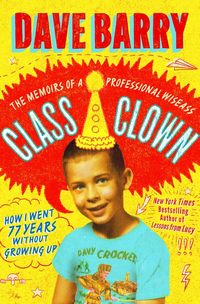
bullet Class Clown: The Memoirs of a Professional Wiseass: How I Went 77 Years Without Growing Up—As I said yesterday, this memoir is a great combination of (compressed) personal history and fun anecdotes
bullet The Devils by Joe Abercrombie—Abercrombie’s take on The Suicide Squad in an alternate medieval Europe populated by Fantasy species? Sign me up!!
bullet Slaying You by Michelle Gagnon—back to the world of Killing You? This is going to be a wild and twisty ride.
bullet Whack Job: A History of Axe Murder by Rachel McCarthy James—”Whack Job is the story of the axe, first as a convenient danger and then an anachronism, as told through the murders it has been employed in throughout history: from the first axe murder nearly half a million years ago, to the brutal harnessing of the axe in warfare, to its use in King Henry VIII’s favorite method of execution, to Lizzie Borden and the birth of modern pop culture. Whack Job sheds brilliant light on this familiar implement, this most human of weapons. This is a critical examination of violence, an exploration of how technology shapes human conflict, the cruel and sacred rituals of execution and battle, and the ways humanity fits even the most savage impulses into narratives of the past and present.”

Bookstores have become my candy shop.
(which reminds me, I need to get going to “the candy shop”)

Class Clown by Dave Barry: A Chuckle-Filled Peek Behind the Curtain

Cover of Class Clown by Dave BarryClass Clown:
The Memoirs of a Professional Wiseass: How I Went 77 Years Without Growing Up

by Dave Barry,

DETAILS:
Publisher: Simon & Schuster
Publication Date: May 13, 2025
Format: eARC
Length: 256 pg.
Read Date: May 4-6, 2025
Buy from Bookshop.org Support Indie Bookstores

What’s Class Clown About?

It’s really all there in the subtitle: it’s Dave Barry’s memoirs about his career as a professional wiseass—primarily through his humor column, but he’s found other outlets for it, too.

Here’s some of the jacket copy to help beef that up:

America’s most beloved wiseass finally tells his life story with all the humor you’d expect from a man who made a career out of making fun of pretty much everything.

How does the son of a Presbyterian minister wind up winning a Pulitzer Prize for writing a wildly inaccurate newspaper column read by millions of people?

In Class Clown, Dave Barry takes us on a hilarious ride, starting with a childhood largely spent throwing rocks for entertainment—there was no internet—and preparing for nuclear war by hiding under a classroom desk. After literally getting elected class clown in high school, he went to college, where, as an English major, he read snippets of great literature when he was not busy playing in a rock band (it was the sixties).

He began his journalism career at a small-town Pennsylvania newspaper where he learned the most important rule of local journalism: never confuse a goose with a duck. His journey then took a detour into the business world, where as a writing consultant he spent years trying, with limited success, to get corporate folks to, for God’s sake, get the point. Somehow from there he wound up as a humor columnist for The Miami Herald, where his boss was a wild man who encouraged him to write about anything that struck him as amusing and to never worry about alienating anyone…

Class Clown isn’t just a memoir; it’s a vibrant celebration of a life rich with humor, absurdity, joy, and sadness. Dave says the most important wisdom imparted by his Midwestern parents was never to take anything too seriously. This laughter-filled book is proof that he learned that lesson well.

His Origin Story

The first four chapters are the most autobiographical part of the book—a little less than 50% of it. Here we cover his parents, his childhood, schooling, and early career—from his first newspaper job, his detour through business education, and then finding his way back to journalism and becoming a humor columnist.

This is all the nitty-gritty stuff—what were his parents like? (nothing like you’d guess) What did his childhood entail? (bad jokes and throwing things) What did he write before making money with booger jokes? And so on.

This was the more educational—in a good way, I stress—part. He wrote about is parents, in particular, with warmth and humanity. He was open about some of their struggles, but with sensitivity. I really appreciated the way he talked about his marriages—past and present—very briefly, yet definitively. There is some humor, but it’s largely self-directed, or at the culture he and his parents were in.

This is really the kind of thing you come to a memoir for, and Barry did it well. He quotes some of his more serious (and some of his less-serious) columns here to show what he’s said about these things in the past.

Topical Memories

A little over half the book is devoted to what I’m describing as “Topical Memories”—he has a chapter on things like “My Readers,” “Politics,” and “Books, Music, and Movies.” In these, he relates a collection of stories and anecdotes from all over his career along these lines.

So we get stories about the great things his readers have sent him—and some of the less positive things they’ve said. Scandals he created—inadvertently or not. How he was involved in Obama’s first inaugural parade, or had Bruce Springsteen sing backup for him, how he accidentally offended an audience of Russians by screening one of his films. I particularly enjoyed him talking about his feud with his Neil Diamond-loving readers (I’m a pretty big Diamond fan, but thought Barry’s jokes were good and deserved, for what it’s worth)

There are several extended quotations from his columns here—and we get a lot of the stories behind the columns, too. Not the nuts-and-bolts of how he wrote them, but what led to them.

If the Origin Story chapters were educational—this was recess. Just a lot of fun and goofing off, telling wild stories and recounting past glories (and blunders). It was exactly the kind of thing that Barry readers pick up his books for.

The Appendix

I don’t frequently talk about appendices; they’re supplemental material, and I prefer to focus on the main portion of the book, but every now and then, one comes along that demands attention.

For example (as you might have guessed), this appendix. It was a hoot—its title is “A Good Name for a Rock Band.” Barry (like many of us) will frequently pick up on a phrase from something he quoted and say it would be a good name for a rock band (also known by the super-easy and memorable acronym WBAGNFARB). After discussing this practice a bit, Barry gives a non-exhaustive, but extensive list of some of those bands.

I think reading them in context is best—but you definitely can appreciate them in a different way with no context whatsoever. They are definitely more ridiculous that way.

It’s worth picking the book up from the shelf at your local bookstore/library just to read those few pages. (Of course, you’d be better served by reading the whole thing). Even people who don’t have a background with Barry will find some laughs there.

So, what did I think about Class Clown?

I’m fairly certain at this point in my life that I’m hardwired to enjoy Davy Barry’s writing, and that I don’t have the neuroplasticity to change that. No matter what apps for seniors I try. So maybe take this with a softball-sized grain of salt.

I really enjoyed this book. A lot—and on several levels.

Part of me would’ve liked a little more depth, a little more digging into details of his life, maybe his approach to writing. But it’d just feel strange knowing that much about Barry—and we all know what happens to a joke when you dissect it, knowing too much about how his sausage is made might not be that entertaining. Really, for Dave Barry—this is about as deep as we want. Every time I started to say “I wish he’d given us more about X,” I stopped myself and realized that no, this was just the right amount.

So no, it’s not as self-revealing as say, Patrick Stewart’s or Matthew Perry’s books—and that’s good.

This is a great way to get to know Barry a little better—given the nature of his work, a lot of us have had a para-social relationship with him before that was a phrase people used. It’s nice for us to deepen that relationship to a degree—before we get back to jokes about exploding cows, questionable song lyrics, or whatever.

I heartily encourage readers of Dave Barry to pick this up—even casual readers will have fun with this, you don’t have to be a die-hard like me. He’s one of a kind, and it’s great to bask in that for a little while.

Disclaimer: I received this eARC from Simon & Schuster via NetGalley in exchange for this post which contains my honest opinion—thanks to both for this.


4 1/2 Stars

This post contains an affiliate link. If you purchase from it, I will get a small commission at no additional cost to you. As always, the opinions expressed are my own.
Irresponsible Reader Pilcrow Icon

Hive by D. L. Orton: A Wild Time Travel Ride

Hive Tour Banner

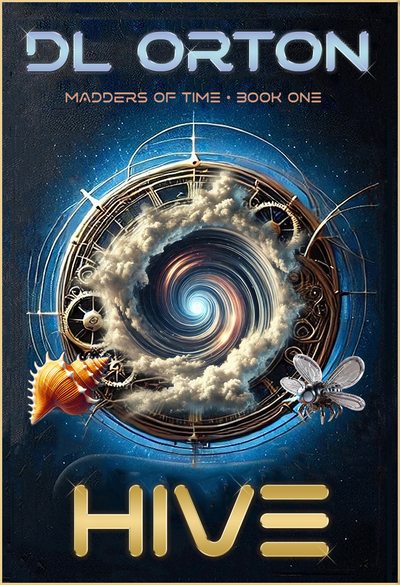
Cover of Hive by D. L. OrtonHive

by D. L. Orton

DETAILS:
Series: Madders of Time, Book One
Publisher: Rocky Mountain Press
Publication Date: May 6, 2025
Format: ARC
Length: 350 pg.
Read Date: May 8-9, 2025

Buy from Bookshop.org Support Indie Bookstores

What’s Hive About?

We open on a semi-functional (less so by the day) biodome some 30 years in the future (it’s vague, but safe to put it in the 2040s-2060s largely depending from when the reader picks this up)—there are two living humans, and an AI of sorts trying to keep going. There are some other biodomes out there, and hopefully, they’re doing better. The land outside the biodome is not fit to sustain human life—or much in the way of animal or vegetable life, either.

They have enough energy to use a spacetime bridge one more time as a last-ditch effort to go back and stop things from getting to this point. The target day was a fateful day for the two of them as individuals, and apparently one for the timeline as well (probably for different reasons, I’m not suggesting history pivots on them). They can send one person back with the sole idea of preventing their present.

I’m being as vague on details as the characters are here—you’ll get an idea about the particulars later.

We spend the rest of the book watching how this plays out from the point of view of some pivotal individuals (earlier versions of these characters in one way or another), with some observations from that AI about how well it’s working and the chances their mission holds of success.

A Quick Look at the Characters

Our primary characters (in the 2010s-2030s) are Matthew, Diego, and Isabel. Matthew and Diego did some work together in the past, and have some loose connections in the book’s “present”—but they’re not great pals or anything, and their stories don’t intertwine much (in Hive, anyway—I expect that to change). Matthew is a physicist of some repute and his expertise will be important.

When we meet Isabel, her divorce has just been finalized and she is excited and free from her husband (well, as free as you can be from an egomanical technocrat that you happen to work for and who owns your research). Diego is the would-be do-gooder scientist/entrepreneur who’s trying to do his part to help poorer countries with their water supply. Diego is also the one who got away, for Isabel. Through some unlikely coincidences (probably shaped by their future selves), they reconnect and try to start over/make up for lost time.

Also, they’ve received prompting from future-Isabel to stop Dave. It’s unclear what they’re supposed to stop him from doing, but they’re all in.

Dave is the kind of character that the reader is primed and ready to hate, or at least really dislike, from his first line of dialogue—and your impression of him goes downhill from there. There are a few sycophants in his company that we don’t get to know too well, but their devotion to him really solidifies your impression of them.

Meanwhile, Matthew is pretty much kidnapped by a couple of representatives of the U.S. government to work on a mysterious artifact, presumably (to the reader) something sent back to the past from the biodome. The senior member of this pair is easily as dislikable as Dave—almost irrationally so. And while he might be one of the “good guys,” or at least is working to help people, he’s definitely one of those envisioned by the coiners of the phrase, “Who needs enemies with friends like this?”

I’m focusing on these two here to be efficient—other than these two jackwagons, 99% of the rest of the characters (from very minor on up) are kind, pleasant, smart (if not brilliant), and are working to improve things. They’re the kinds of characters you want to spend time with—they’ve got good senses of humor, are optimistic and determined to keep going. Reading about them while there’s some sort of apocalypse around them is actually pleasant. Even if only you and the AI knew how bad things were going to get for them, you would like their chances and be pleased every time the AI mentioned their chances of improving their chances of success.

A Focused Armageddon

It’s hard to judge the scope of this/these calamity/calamities—our view is of Denver and the surrounding area. We get some hints that conditions are the same in other parts of the country as things get worse. But we really don’t know what things are like outside the U.S.

Given how bad it is 30+ years into the future when we first see things, it makes sense to think this happened globally. But it’s also possible that the devastation was limited to North America (or just the U.S.) and the rest of the world was able to protect itself, or weren’t exposed to the effects. During the bulk of our time with Diego and Isabel, some forms of communication work and some don’t for them, so it’s believable that they just have no clue what’s happening outside of Colorado. Communications around Matthew seem a lot more reliable, but he’s kept so much in the dark that it really doesn’t get the reader anywhere.

I’m not sure how much it matters for the story—particularly at this point. But I think it’s fun to speculate about while you’re reading and afterwards. Has the rest of the world moved on, fairly intact, waiting for things to calm down in North America so they can come over and try to rebuild? Or are they, so far removed from the three events, suffering just as much?

Crossing in Time

Feel free to skip this part and move on—I’m not sure this adds much to the overall post, but I can’t stop thinking about this.

This is a reworked version of Orton’s novel Crossing in Time. I listened to that book back in 2021 and enjoyed it—try as I might not to, I inevitably kept what was different about this version. The little voice in the back of my head just wouldn’t shut up. To make things worse—I think I have some details of Crossing in Time conflated with one or more other time travel books involving a strong love story.*

What I think she did here was lop off some later chapters, I assume to move them to Book Two. And introduce and/or beef up some of the chapters and subplots. I’m more sure about the former than the latter, if I’m right, that makes the ending more of a cliff-hanger that will springboard you into wanting Book Two in your hands straightaway.

I also think Orton removed what could be described as convolutions—making the novel more streamlined and fast-paced. Overall, I get her choices, and I do think it makes the book a stronger read.

But again, I could be wrong—but I couldn’t stop thinking about it as I read the book, or as I think about it now—so I had to get this out.

* With apologies to the author, there have been 800 or so books between now and then, details get fuzzy.

So, what did I think about Hive?

This is a fast-paced, propulsive read filled with amiable characters who aren’t afraid to joke around even when things are tense or confusing. The hook gets set pretty early, and the pages melt away as you plunge ahead to follow the events. It’s exactly the kind of popcorn read that helps you escape after a long day.

The tech is very cool—both the stuff that Isabel developed and the items that Matthew talks about and develops. Orton gives you enough to understand how it all works and to visualize it clearly without bogging down the pace with paragraphs and paragraphs of details. The plausibility of it all? Eh, it’s SF, it’s plausible enough if you come with a standard level of suspension of disbelief needed for time travel (especially, in this case, when the time travel comes with a side order of multiverse story).

Because of the pacing, Orton’s able to get away with a few things that maybe she couldn’t in a slower-moving book. I don’t actually see the grounding of the romance between Diego and Isabel—he’s carried a torch for years, she regrets making the choice years ago to walk away. But…that’s it. We don’t see many sparks, just have to take it because we’re told that. There’s no reason for the senior agent involved with Matthew to be such an ass to everyone, all the time, especially when just a sentence from him now and then would be enough to get people to work with him instead of his threats (and I don’t care how instinctive and characteristic his brusqueness is, you don’t move up in an organization simply be being mule-headed, there has to be at least an insincere level of cooperativeness expressed occasionally). All the depth of the characters that could be brought out are merely nodded to, or you have to assume them.

Actually, this all might be necessary because of her pacing. If so, I understand the choice (as much as I disagree with it).

I want to stress, however, in the moment, you don’t think about this (and if you do, you brush it off because you don’t want to step out of the movement). Everything works, everything clicks while you’re reading and speeding off to the next twist/revelation. It’s only after you get to the ending that leaves you holding onto the cliff’s edge with your fingers that this might occur to you if you stop and think about it. Mostly, you’re going to be thinking about how long it will be until you can get your hands on Book Two.

It’s easily enjoyable, engrossing, and entertaining. You should give it a try.

This post contains an affiliate link. If you purchase from it, I will get a small commission at no additional cost to you. As always, the opinions expressed are my own.


My thanks to The Write Reads for the invitation to participate in this tour and the materials they provided, including the ARC.

BOOK SPOTLIGHT: Hive (Madders of Time #1) by D.L. Orton

I’m very pleased today to welcome The Write Reads Ultimate Blog Tour for Book One in D.L. Orton’s Madders of Time series, Hive! If you take a look at the feed for https://twitter.com/WriteReadsTours over the next week, you’ll see what several other bloggers have had to say about it. My $.02 will be coming along in a little bit.

Hive Tour Banner

Book Details:

Title: Hive by D. L. Orton
Genre: Madders of Time, Book One
Genre: Science Fiction
Age Category: Adult
Format: Hardcover/Paperback/Ebook
Length: 350 pages
Publication Date: May 6, 2025
Hive Cover

About the Book:

What if saving the future meant rewriting the past?

In a dying world overrun by microdrones, humanity’s last survivors cling to life inside the Eden-17 biodome. Isabelle Sanborn knows her time is running out, but one desperate plan might give humanity a second chance. With the help of Madders, an enigmatic AI built from the memories of a brilliant physicist, Isabelle sends Diego Nadales—the love of her life—35 years into the past. His mission? To change the course of history and prevent their world’s collapse.

When Diego arrives in the vibrant yet fragile Main Timeline, he’s forced to confront ghosts of the past, including a younger, ambitious version of Isabelle. As he battles to shape a better future, Diego must navigate a delicate web of relationships and events without destroying the very fabric of time.

Brimming with suspense, heart-pounding action, and a poignant love story that transcends time, Madders of Time – Book One is a breathtaking science fiction adventure. Award-winning author DL Orton weaves a tale that explores sacrifice, resilience, and the timeless power of love.

Fans of The Time Traveler’s Wife and Dark Matter will find themselves captivated by this unforgettable journey through parallel worlds and intertwining destinies.

The clock is ticking. Can love survive the collapse of time itself?

Prepare to lose yourself in the first installment of the Madders of Time series—a story that will keep you turning pages and leave you hungry for more.

Book Links:

Amazon Canada ~ Amazon US ~ Amazon UK ~ Goodreads ~ The StoryGraph

About the Author:

Forest Issac JonesThe BEST-SELLING AUTHOR, DL ORTON, lives in the foothills of Colorado where she and her husband are raising three boys, a golden retriever, two Siberian cats, and an extremely long-lived Triops. Her future plans include completing the books in the BETWEEN TWO EVILS series followed by an extended vacation on a remote tropical island (with a Starbucks).

When she’s not writing, playing tennis, or helping with algebra, she’s building a time machine so that someone can go back and do the laundry.

Ms. Orton is a graduate of Stanford University’s Writers Workshop and a past editor of “Top of the Western Staircase,” a literary publication of CU, Boulder. The author has a number of short stories published in online literary magazines, including Literotica.com, Melusine, Cosmoetica, The Ranfurly Review, and Catalyst Press.

Her debut novel, CROSSING IN TIME, has won numerous literary awards including an Indie Book Award and a Publishers Weekly Starred Review. It was also selected as one of only 12 Great Indie Stars by BookLife’s Prize in Fiction.


My thanks to The Write Reads for the invitation to participate in this tour and the materials they provided.

WWW Wednesday—May 14, 2025

I haven’t quite read as much as I wanted to this week–and leaving my headphones at home Monday really hurt my audiobook progress–but at least I’ve gotten more sleep than I usually do (see also: the silence for the last couple of days). But, at least I’ve had a good time reading what I have managed to get to. Let’s see if that converts into posts about books anytime soon. But first, let’s get to this:


WWW Wednesdays Logo

This meme was formerly hosted by MizB at A Daily Rhythm and revived on Taking on a World of Words—and shown to me by Aurore-Anne-Chehoke at Diary-of-a-black-city-girl.

The Three Ws are:
What are you currently reading?
What did you recently finish reading?
What do you think you’ll read next?

Seems easy enough, right? Let’s take a peek at this week’s answers:

What are you currently reading?

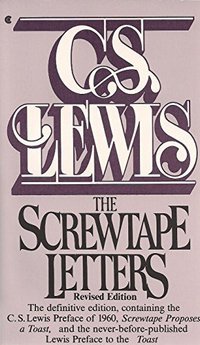
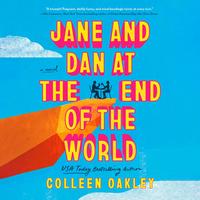
Cover of The Screwtape Letters by C.S. Lewis Cover of Jane and Dan at the End of the World by Colleen Oakley
The Screwtape Letters
by C.S. Lewis
Jane and Dan at the End of the World
by Colleen Oakley, read Hillary Huber

This is possibly my favorite Lewis book–so glad to get back into it (although I wouldn’t mind one of the new-to-me books by him to change the ranking).

I’m not sure how much I’m going to end up liking this audiobook about a doomed Date Night going horribly, horribly wrong–but it’s kept my interest, and I’m enjoying the journey.

What did you recently finish reading?

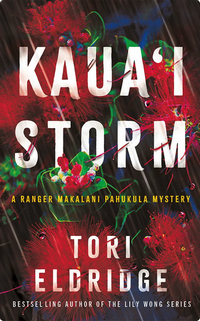
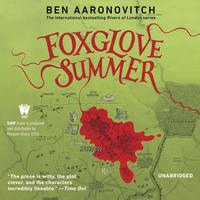
Cover of Kaua'i Storm by Tori Eldridge Cover of Foxglove Summer by Ben Aaronovitch
Kaua’i Storm
by Tori Eldridge
Foxglove Summer
by Ben Aaronovitch, read by Kobna Holdbrook-Smith

Eldridge’s thriller/family drama (or is it a family drama/thriller?) is not what I expected from her–but a great ride.

Yet again, Foxglove Summer didn’t fail to entertain me. I’m glad I’m picking up the pace on this series.

What do you think you’ll read next?

Cover of Body Breaker by M.W. Craven Cover of Tilt by Emma Pattee
Body Breaker
by M.W. Craven
Tilt
by Emma Pattee, read by Ariel Blake

There’s been an un-read Craven on my shelf for too long, past time to fix it.

I had to grab Tilt after hearing the owner of Shared Stories talk about it–technically, overhearing her tell another customer about it. But the premise intrigued me, and she had nothing but good things to say about it. (click on the link/cover and see what you think)

Are you reading anything good?

Page 46 of 603

Powered by WordPress & Theme by Anders Norén