Author: HCNewton Page 529 of 625

Madam Tulip by David Ahern

While in the shower this morning, it hit me that I left out something like a paragraph and a half of this — and I had to make the choice: fix this before it posted, or get to work and fix it later. Because my wife tends to appreciate things like paychecks, a roof over our heads and food for the kids, I chose the latter. If you read this already, try it again.

This one just launched this past weekend — get it while it’s hot and fresh so he can do more!

Madam TulipMadam Tulip

by David Ahern
Series: Madam Tulip, #1

Kindle Edition, 309 pg.
Malin Press, 2016

Read: April 27 – 28, 2016

‘Hi,’ said Marlene, pausing for the briefest moment before striding up the steps and through the entrance, trailing the rest behind. Derry might have been justifiably offended at the offhand greeting but recognised the signs of a woman bursting for a pee. That a supermodel needed to pee was a gratifying thought, even endearing, though Derry recognised it was odd to like somebody just because they had a bladder. . .

Derry sighed. Her father was about to lose two hundred euro on a race, and although he wouldn’t dream of blaming her, she felt responsible. And now she was condemned to spend the afternoon in the company of a supermodel. Next to Marlene, Derry felt like a hobbit—a hobbit overweight and round even by the famously relaxed standards of hobbits. She looked down at her shoes (charity shop) then at Marlene’s (Jimmy Choos) and her soul shrank a little inside her.

Derry’s an out-of-work actor — “fully qualified for unemployment in three different dialects” — trying to make a go of it in her father’s hometown of Dublin, and is on her last legs. Her mother is on the verge forcing her to return to the States and get a real job. And by “force,” I mean, “stop paying her bills so she has no choice.” But Derry’s got a little something extra working for her, she’s the only daughter of a seventh son of a seventh son — and therefore, has a bit of a gift. She uses it to read Tarot and other cards for her friends as a laugh, and that’s really about it. But suddenly, she really needs money, and the mother of invention just had another kid.

With the help of her friend, Bella, and a couple of costume and makeup artists at a local theater, they create an alter ego for Derry, Madam Tulip — celebrity fortune-teller. Her first gig is at a charity event that Marlene sets her up with — Marlene is blown away by Derry’s gift, and desperately needs a friend. The event is the perfecting launching pad for her new role, it’s attended by actors, musicians, models, has-beens, wanna-bes, people with too much money, etc. For example, there’s Mojo.

Mojo was an outlandishly gorgeous rapper from London, winner of numerous industry awards. He was also the star of TV ads for masculine cosmetics and a revolutionary vacuum cleaner also created especially for men, so presumably designed to withstand long periods of storage under the stairs.

(yeah, it was an awkward transition, but I got to use that quotation)

Not to get into details, but the event goes well — Tulip sees many people, some of whom take her card; Derry and Marlene get closer; money is raised for . . . something, I don’t know. Well, sure, nothing’s perfect — Derry runs into an old flame, Bella runs into trouble and someone died. If Derry’s sight is right, that’s just the beginning of the trouble. Before long, Derry and at least two of her friends are in danger on several fronts. Oh, yeah, and her mother is coming to town.

Ahren’s put a lot of thought into these characters, it’s clear — they’re well-drawn, well-utilized, and prime for return in a sequel. Beyond Derry and Marlene, we have the aforementioned Bella — an outspoken fellow struggling-actress, the ex-boyfriend (will let you learn about him on your own) and Bruce. Bruce is an actor, and so much more — starting with ex-SEAL, which means he can be used for the dangerous stuff. Thankfully, he’s more human than most characters in this position, he’s not a gay version of Joe Pike or Ranger from the Stephanie Plum novels (nor is he Spike from the Sunny Randall series). He’s a guy who’s done some things, seen some things, and is working to move on into his new life. We also have Derry’s folks — her mother (just as charming as you’d expect from the ultimatum) and her artist father. Derry’s father, Jacko, is the stand-out character for me — he reminded me of Moxie Mooney’s father from Fletch’s Moxie (been years since I’ve read that, so maybe he shouldn’t have). Jacko’s full of life, an inveterate gambler, a painter with an ego to match his talent, womanizer, not-as-devoted-as-he-thinks father — and, of course, the seventh son of a seventh son. I can easily see him becoming a drag on the series (see Grandma Mazur in the Plum novels), but as long as Ahren uses him right, he’s probably going to be my favorite.

Here’s the best part of the book for me, it’s also the part that keeps this in the “Mystery” category and not “Urban Fantasy,” Derry’s gift really has very little to do with the outcome of things. She knows there’s trouble afoot (murder tends to indicate that), she has friends in peril, and she does something about it (calling the police is out, for pretty good reasons). It’s Derry’s wits and some help from her friends that allows her to help bring justice to the situation. Naturally, most of the help on the friend side comes from the ex-SEAL, because when you’re in danger, and you have an ex-SEAL friend, that’s who you look to. Derry risks life and limb to help out her friends without any supernatural, extrasensory, etc. assistance.

This isn’t a comedy, but it’s comedic. Ahern writes with a light, but confident, touch. It’s well-paced, and it kept me very engaged. The mystery is fairly simple, but this doesn’t set out to to be a head-scratcher. It’s a silly adventure — and a well-executed one at that. Think Psych where Shawn actually has abilities, and doesn’t need James Roday’s affable charm to keep him from being the most annoying character in television history. Ahern’s clearly and carefully set the stage for several more books with these characters, and I’m eager to see what he does next.

Disclaimer: I received this book from the author in exchange for an honest review, and I thank him for bringing it to my attention.

—–

4 Stars

April 2016 Report

So, here’s what happened here in April:

Books Read:

Calamity Making All Things New The Watcher in the Wall
3 Stars 3 Stars 3 Stars
Waylaid Songs In Ordinary Time The Absconded Ambassador
3 Stars 1 Star 4 Stars
How to Be an Atheist Fate Ball Every Heart a Doorway
4 Stars 4 1/2 Stars 5 Stars
Ideas and Inspiration for Fantasy and Science Fiction Writers Life, The Universe and Everything Off to See the Wizard
3 Stars 3 Stars 4 Stars
There Will Always Be a Max Burned Madam Tulip
4 Stars 5 Stars 4 Stars
The Old World        
3 Stars
or
4 Stars
       

Still Reading:

A Light to the Nations Reformed Dogmatics, Volume 2    

Reviews Posted:

How was your month?

United States of Books – Songs In Ordinary Time by Mary McGarry Morris

I somehow managed to make 3 references to The Simpsons in my original draft of these — and almost made one more before I decided to knock it off. I only left one, it seemed apt. The major difference between this book and The Simpsons, of course, is that one brings happiness, smiles and joy to people; the other one has no yellow people and everyone has 5 fingers on each hand.

Songs In Ordinary TimeSongs In Ordinary Time

by Mary McGarry Morris

Paperback, 740 pg.
Penguin Books, 1996

Read: April 6 – 13, 2016


There’s a stereotype about Oscar-bait movies the come out late in the year, super-serious movies with super-serious actors about families in crisis, social unrest, a woman standing on her own, and so on. Nothing anyone really wants to see, but we all take it seriously. Yes, that’s a stereotype, an over-generalization, blah blah blah — but we all know that kind of movie. This book is like that — deadly serious, grim, full of people with no capacity for joy or to make a wise decision — or any action that involves a lack of melodrama.

I just couldn’t force myself to care about this one — not one bit.

The book centers on a divorced mother of three, Marie Fermoyle, and her children: Alice, Norm and Benjy. Marie’s barely scraping by, teeters between despondency and angry outbursts. Until Omar Duvall comes to town. The best thing that could possibly be said about Omar is that he’s a two-bit hustler and womanizer. Much worse could be said about him. Marie is so desperate for a way out of her life, that she falls for his flummery. Sam, Marie’s ex, is the town drunkard — a hopeless alcoholic, surviving on crumbs his sister gives him to get by, the children go out of their way to avoid him — as does pretty much everyone. The new priest in town, and Sam’s brother-in-law are pretty much the only exceptions to that. The priest is, well — he has problems, and the brother-in-law is henpecked and an obscene phone-caller. There are other characters — several, in fact — but let’s limit this to these characters. I could go on and on. Not unlike Morris.

A couple of months back, I caught a little flack because I didn’t buy a Roman Catholic priest character in crisis — I bought this one. I didn’t like him as a person or a character, but I could absolutely buy him. Just a point of personal privilege there, back to this book.

This collection of characters are the greatest conglomeration of self-centered, self-pitying, self-deceived (often), self-justifying, and miserable people I can imagine. And everything they do (well, 99% of the things they do, anyway) make their lives worse (and half of that other 1% is ruined almost immediately). On page 508, I jotted down in my notes, “Please, someone, stop this book — just put these people out of their misery! Mine, too!”

These people are so miserable, so self-pitying that I laughed out loud when I read Marie thinking, “Hope . . . there was more of that in her veins than blood.” Really? I couldn’t believe that for a second. About 200 pages later, we read, “She was so very, very tired. All this, she thought, biting her lip, all this because once, a long time ago, she had made a fatal mistake. She had fallen in love too young with the wrong man. Imagine, it was as simple as that and now she would never catch up. She would never be happy.” That I could believe. That’s one of the most honest sentences in the book.

Each male character (I think without exception — two children, are probably exempt) is able to talk a good game, able to spin a tale about something to make the people around him believe in him — and typically even fools himself. It happens at least once for every character — each time I disliked them more and more for it.

The main plot centers around Marie falling for Omar’s line and risking everything while underwriting a pyramid scheme that he’s peddling (as does a whole lot of the town), while alienating her two older children along the way. Her youngest knows better than the others suspect how terrible Omar is, but he suppresses that information and knowledge so his mother can hopefully be happy. There are crimes not associated with Omar, people dying, people suffering, people trying (and generally failing) to escape their pasts and improve their life. There are two characters out of this that might succeed in improving their lot in life, but we’re not given enough information to know for sure — a couple of others that seem to have turned a corner, but if the 700 previous pages are any indication these latter characters are 5 pages away from running back around that corner the other way.

So why did Entertainment Weekly put this one on their list for Vermont? I’m only guessing here — there aren’t that many novels set in the Green Mountain State. There was nothing distinctly Vermont about this book, as far as I could tell. It was Anytown, USA — there was a lake nearby, a university not too far away (but far enough), a Roman Catholic Church in town (maybe a Protestant one, too — but I’m not sure), one drive in, and a few small towns within an hour or two by car. That’s really all we learn about the geography. The state name is invoked a few times, but otherwise, it could literally be anywhere — like The Simpsons‘ Springfield. I learned nothing about that state, its people, or anything beyond another lesson in endurance in the face of overwhelming tedium.

Plot(s), character, setting — this book failed on all three. It was well-written, I guess, but there was nothing special about even that. I really have nothing positive to say about this one, if you haven’t noticed.

—–

1 Star

Saturday Miscellany – 4/30/16

Odds ‘n ends over the week about books and reading that caught my eye. You’ve probably seen some/most/all of them, but just in case:

    We’re apparently exposing my Inner Child with This Week’s New Releases I’m Excited About and/or You’ll Probably See Here Soon:

  • Arf by Spencer Quinn — The sequel to last year’s Woof by the author of the Chet and Bernie Mysteries. Woof was loads of fun, I bet this will be, too.
  • The Worst Night Ever by Dave Barry — the sequel to last year’s The Worst Class Trip Ever should be a hoot if it’s 2/3 as good as the first.

Lastly, I’d like to say hi and welcome to Vijayalakshmi Harish and allysonyj for following the blog this week.

What’s Scary About Books?

No new piece today, Dadding takes priority (usually). So, I’ll just share this clip that I’m going to be quoting for a long time…

Guest Post – Why You Should Make That Rejection Letter the Focal Point of Your Home

As part of Reader’s Legacy’s Rowling celebration, they’ve provided me with a few Guest Posts to draw attention to their Sale (through 4/30!) and a Grant Program created in order to give away 1 million physical books in support of literacy programs — be sure to check those out!

“I pinned my 1st rejection letter to my kitchen wall because it gave me something in common with all my fave writers!” – J.K. Rowling via Twitter (March 25, 2016).

What do literary geniuses, J.K. Rowling, Dr. Seuss, F. Scott Fitzgerald, George Orwell, and Agatha Christie all have in common? Surprisingly enough, each of them have written books that were rejected by multiple publishers. As hard to believe as that may be, it’s entirely true!

Contrary to popular belief, rejection more than anything is a learning opportunity. Of course, no one welcomes rejection. In fact, they avoid it at all costs. But everyone gets rejected at one point in their life, or another, and instead of dwelling on the pain of being told “no”, they can use that rejection as a motivator – the greatest motivator in their life!

On March 25, 2016, J.K. Rowling took to twitter to share two rejection letters she received on her crime novel, “The Cuckoo’s Calling”, written under the alias of Robert Galbraith. While Rowling’s “Harry Potter” series has sold more than 400 million copies to date, Rowling admits to having self-doubt. “I wasn’t going to give up until every single publisher turned me down, but I often feared that would happen” she explains. Despite these fears, “The Cuckoo’s Calling” was eventually published by Sphere Books, an imprint of Little, Brown & Company, and the rest is history.

Rowling didn’t allow the fear of going unpublished stop her from trying time and time again, which is an example many dreamers can learn from. Yes, rejection bruises a person’s ego and, more often than not, forces them to go back to the drawing board, but sometimes that’s the best thing a person can do. Going back to the drawing board means making improvements both personally, and in one’s work, and making those improvements brings the motivation to pursue that passion even further.

Remember, rejection isn’t a death sentence, but merely a stepping stone which brings you closer to finally hearing that “yes” you’ve been waiting for. Though it might sound crazy to hang a negative note about your life’s work up on a wall, it can serve as a reminder to persevere…and when you achieve your success, it will be a reminder of all that you’ve overcome.

As an added perk of Reader’s Legacy’s Rowling celebration, we will be holding a special 20% off sale for each of her novels from April 25th to April 30th – ReadersLegacy.com/JKRowling.

The sale not only celebrates J.K. Rowling, but was also brings attention for a special grant program we have created in order to give away 1 million physical books in support of literacy programs! Spreading a love of books, and ending illiteracy around the world is 100% possible, and with the help of reader’s on the site, we believe will be one step closer to achieving that goal! Get in on this sale HERE.

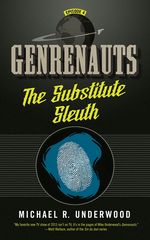
There Will Always Be a Max by Michael R. Underwood

There Will Always Be a MaxThere Will Always Be a Max

by Michael R. Underwood
Series: Genrenauts, Episode 2.1

Kindle Edition, 26 pg.
Tor.com, 2016

Read: April 23, 2016


It’s not often that I do prep work before reading something — especially a 26 page story. But I wanted to fully appreciate this, so in the weeks leading up to the release (and one week after — hence the late review), I watched the Mad Max films — I’m not sure why, but they never appealed to me back in the 80s, and while I was curious about Fury Road, I hadn’t gotten around to it yet. While I’m very underwhelmed by the first two, the third was okay, and I really liked the latest. So finally, I felt ready to read this story.

So, so glad that I watched the movies first — I’d have been okay without it, but there were nuances, etc. that you pick up with the right background.

So we’re in a post-apocalyptic area, very much out of the Mad Max movies. Angstrom King is the only Genrenaut involved here — for reasons well explained — but Roman overshadows everything. I really appreciated this approach. I’ve been curious about the hints that Underwood dropped in The Absconded Ambassador about Roman and am glad we got more here — tho’ I’m still looking forward to getting the whole story eventually. It was good to see King doing more than commanding a mission, it was good for the character to get in the thick of things.

Underwood’s treatment of “The Max” idea/character is well done. The story, while brief, is full and exciting. Not much more to ask from 26 pages, really.

—–

4 Stars

The Absconded Ambassador (Audiobook) by Michael R. Underwood, Mary Robinette Kowal

The Absconded AmbassadorThe Absconded Ambassador

by Michael R. Underwood, Mary Robinette Kowal
(Narrator)
Series: Genrenauts, Episode 2

Unabridged Audiobook, 3 hours and 25 minutes
Macmillan Audio, 2016
Read: April 8, 2016
I really don’t have much more to say about the audiobook that I didn’t say about the original, but I wanted to get something up — so if this seems largely familiar, it is. But not entirely …

Working as a Genrenaut was like being a member of a theater troupe run by a burnt-out hippie who melded Devising with MBA management: the ideas were outlandish and random, but the execution was 100% corporate.

The second episode in Michael R. Underwood’s Genrenauts delivers on the promise of Episode 1, and demonstrates that his special alchemy of Leverage + The Librarians + Quantum Leap + Thursday Next (just my current guess at his secret recipe) has legs — and will hopefully go a long time.

Leah has had about a week to get used to this new reality since her adventure in Western World — a week filled with meetings, reading assignments and trying to wrap her head around things. In the meanwhile, everyone at Genrenauts HQ is trying to prepare for the next breach (in the midst of a spike of 15% over the norm, for your corporate types), probably in Romance World. Which obviously means it’ll be pretty much anywhere else, like say Science Fiction World.

The station of Ahura-3, in the space opera region, to be specific. I’m sure the similarity between the name of the station and a certain Communications Officer is a huge coincidence. Ahura-3 is everything you want in a space station — it’s a melting pot of very-alien-looking/acting aliens, it’s a culture to itself, with strategic location, and very delicate intergalactic politics.

Leah’s excitement about being in “honest-to-goodness, Sally Ride is my homegirl zero-g” space was infectious (especially in this format). But even more fun was the amount of SF references Underwood fit into half of chapter 1 — truly astounding, and didn’t feel forced or overcrowded. He deserves a tip of the cap right there. But the fun’s not limited to the references and allusions — it’s in the alien cultural practices (and appearances), the various factions (human and otherwise), businesses, and just watching the whole Science Fiction World thing at work.

Mary Robinette Kowal did another bang-up job. I’m still not crazy about her voice for King, but I listened to this one using my earbuds instead of my car speakers and she’s much easier to hear with that voice that way, so it doesn’t bother me as much. I liked her alien characters a lot. Shirin and Leah are great (I think I like the audiobook take on Shirin better than the one in my head when reading, actually)

Good way to spend a little time — very entertaining all around.

—–

4 Stars

Guest Post – Wizards, Witches, and Muggles, Oh My!

As part of Reader’s Legacy’s Rowling celebration, they’ve provided me with a few Guest Posts to draw attention to their Sale (through 4/30!) and a Grant Program created in order to give away 1 million physical books in support of literacy programs — be sure to check those out!

The votes are in, and in a remarkable landslide, J.K. Rowling has been identified as the top author of Reader’s Legacy! To celebrate Ms. Rowling’s literary triumph, we looked into our Goblet of Fire and pulled these out 10 magical phrases; sure to guarantee any Potterhead the Hogwarts acceptance letter they’ve been waiting for!

  1. “It’s no good crying over spilt potion.” – Meaning there is no use in worrying about events that have already taken place, and that cannot be undone.
  2. “In the name of Merlin.” – An expression of bewilderment. EX: “What in the name of Merlin, are you doing?”
  3. “Like bowtuckles on doxy eggs.” – Meaning to stick to someone or something, incredibly close. Used in a sentence, “She took to potions like bowtuckles on doxyeggs.”
  4. “I’ll take Cadogan’s Pony.” – Meaning to make light of a dark situation.
  5. “The fire’s lit but the cauldron’s empty.” – Meaning someone seemingly functions in a proper manner, but is actually socially inept.
  6. “The tip of the dungheap.” – Synonymous to the muggle idiom, ‘Tip of the Iceberg’, it symbolizes a smaller piece of a larger picture.
  7. “To have a hairy heart.” – Meaning, someone bitter. To have a cold and unforgiving way about you.
  8. “Don’t count your owls before they are delivered.” – Meaning to not plan on anything expected to happen in the future, as said to Harry Potter by Dumbledore in ‘The Half-Blood Prince’.
  9. “Hanged for a dragon as an egg.” – A larger punishment for a minor offence in order to bring the point across stronger to the offender.

As an added perk of Reader’s Legacy’s Rowling celebration, we will be holding a special 20% off sale for each of her novels from April 25th to April 30th – ReadersLegacy.com/JKRowling

Ideas and Inspiration for Fantasy and Science Fiction Writers by James Hutchings

Ideas and Inspiration for Fantasy and Science Fiction WritersIdeas and Inspiration for Fantasy and Science Fiction Writers

by James Hutchings

Kindle Edition, 453 pg.
2016


You know what this book could’ve used? An introduction. Just something to ground the reader in the books intention, design, scope . . . something. It just dives in, you flip from the Table of Contents to the first entry.

The only way you know what the book is for is to have read the description from Goodreads/ebook seller:

If you want to spark new ideas for worlds, plots or characters, you want Ideas and Inspiration for Fantasy and Science Fiction Writers. Medicinal corpses, the jargons of thieves and carnies, Nazi UFOs, the colonization of space and green children from nowhere are only a few of the topics covered. This sourcebook is for all writers of fantasy or science fiction–whether novels, short stories, games, or any other form of storytelling.

The afterword touches on it a little, but who wants that at the end of a book?

Smoother writing, maybe a touch of personality to the writing would’ve been a plus, too.

It’s not something you can read cover-to-cover, it’s a resource book that you can consult, or flip through. I’m pretty sure I’ve read almost all of it over the course of a couple of weeks. It sparked an idea or two (not that I have time for them), but that’s about it.

I guess, this book set out to do what it intended, is thorough, easy to read, so . . . 3 stars? Next time you’re trying to prepare for NaNoWriMo or a Creative Writing course, give it a thumb-through.

Disclaimer: This book was provided to me by the author in exchange for an honest review.

—–

3 Stars

Page 529 of 625

Powered by WordPress & Theme by Anders Norén