Author: HCNewton Page 551 of 625

Go Set a Watchman by Harper Lee

Go Set a WatchmanGo Set a Watchman

by Harper Lee
Hardcover, 278 pg.

HarperCollins, 2015

Read: August 14 – 15, 2015

Maycomb did not have a paved street until 1935, courtesy of F. D. Roosevelt, and even then it was not exactly a street that was paved. For some reason the President decided that a clearing from the front door of the Maycomb Grammar School to the connecting two ruts adjoining the school property was in need of improvement, it was improved accordingly, resulting in skinned knees and cracked crania for the children and a proclamation from the principal that nobody was to play Pop-the-Whip on the pavement. Thus the seeds of states’ rights were sown in the hearts of Jean Louise’s generation.

I don’t know what to think. I just do not. It’s that simple. I probably shouldn’t even be blogging about this one, but I feel compelled to.*

There are so many things that’d help me know what to think about this; for example: 1. if there wasn’t the cloud of controversy over the publication — did Lee really want it published? Is she of sound enough mind to make that choice now? and so on. 2. If there’d been a third book of hers published, it’d be easier to know which is the aberration — Mockingbird or Watchman (because there is a clear qualitative distinction) — it’d be easier to cut her some slack if we knew this wasn’t her typical work.

Am I glad I read this? I think so. There are phrases, sentences, paragraphs, vignettes, scenes, that I relished. I do think I like the story of Jean Louise here. I think I appreciate Atticus as father, not necessarily Atticus as a man making certain choices. I’m pretty sure I like Jean Louise’s Uncle Jack.

But there’s bits about this novel that just confound me. Some of the speechifying seems so out of place (and I won’t get into what I think of the points of them). A lot of the speechifying makes it seem like an unfinished draft — where Lee could’ve come back, fleshed it out, edited it and made the same points through dialogue, not monologues.

Maybe in time, after weeks/months of thought, a few re-reads, some distance, I’ll have an opinion about the book that I can stand behind. Right now, best I can manage is a shrug.

—–

* And because I’m really close to having blogged about every novel this year, haven’t missed one since February — and I don’t want to break my streak.

—–

? ? ? ? ?

The Most Useless Page Ever?

Is there anyone holding this book in their hands that needs to be given this information? Why waste the ink?
Also by Harper Lee
“Oh, To Kill a Mockingbird, huh? Never heard of it. Wonder if it’s any good.”

Obviously, there are people who haven’t heard of the Mockingbird — but none of them are going to be tempted to pick up Go Set a Watchman.

Now, the question is, once the initial furor/money-grab over this new book has died down, are there going to be future printings of Mockingbird printed with an “Also by Harper Lee” page? And if so, will the font size be legible?

At this point, I’ve got a little less than a hundred pages to go in the book, and I have no idea what I think of it. Individual sentences or paragraphs? I have very strong opinions about some of them.

But the novel?

I just don’t know.

Saturday Miscellany – 8/15/2015

Odds ‘n ends over the week about books and reading that caught my eye. You’ve probably seen some/most/all of them, but just in case:

Lastly, I’d like to say hi and welcome to The Historical Diaries, Justin Whitehouse and Sarah Johansson for following the blog this week.

Image credit: Grammarly

Texts from Jane Eyre by Mallory Ortberg

Texts from Jane EyreTexts from Jane Eyre: And Other Conversations with Your Favorite Literary Characters

by Mallory Ortberg; Illustrated by Madeline Gobbo

Hardcover, 226 pg.

Henry Holt and Co., 2014

Read: August 13, 2015


The answer to the question nobody asked: What would some of the most famous literary figures (characters/writers) say if they texted their friends and family? Well, Mallory Ortberg asked it, I guess. Most of the answers she cooked up are worth reading — some will induce chuckles, maybe a guffaw, and many smiles.

The Jane Eyre conversations (as might be suggested from the title) are the best of the batch — although the Poe material is just as strong (Hamlet’s close to that). The rest is a step or two back, in my estimation. Some of the rest of the material is pretty weak, but Ortberg makes the most of it. Typically, the reader’s appreciation of these text messages will line up with their familiarity with the source material.

Still, no collection is going to be free from bad apples, and The Hunger Games‘ conversations aren’t just weak, they’re disappointing. I don’t see how Ortberg could’ve missed so completely. But that’s just 2 pages out of 200, that’s more than a pretty decent percentage.

A nice break from heavier reading, I recommend taking these a few pages at a time — not the whole book in a sitting or two (although it’d be easy to knock out that way). Try for too many at once, and they lose their punch. Some funny stuff for book nerds here.

—–

3 Stars

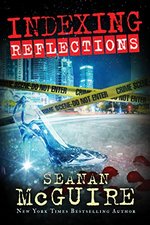
Indexing: Reflections, Episode 1: Forbidden Doors by Seanan McGuire

Indexing: ReflectionsIndexing: Reflections, Episode One: Forbidden Doors

by Seanan McGuire
Series: Indexing, #2.1

Kindle
47North, 2015
Read: August 12, 2015

Fairy tales are not for children, and they don’t care who dies. They never have.

Seanan McGuire’s Indexing is back, and it’s like we never left.

It’s been a few weeks since the team saved the world, but the ATV’s investigation into the matter isn’t quite finished. They’ve got one more hurdle to get through: a series of interviews with an HR Department shrink.

It’s a nice little narrative device — we’re reintroduced to the characters (or new readers are introduced), get the last series recapped (and interpreted from a couple of angles), we get to see how the team’s reacting to the rather dramatic turn of events they lived through, and get ready for what’s next. Since there are (an estimated) eleven more episodes to go through — you know going in that things are going to go pretty well for the majority of them. Sure, there’s a chance that one or two will be packed off somewhere for some “treatment” or “observation”, but the team, as a whole, will be fine.

It’s a lot like a lot of TV season premiers, actually.

There were a couple of highlights for me:

  • Sloane made me laugh, hard, at her apologetic for keeping Henry around (and I liked pretty much everything else she did here).
  • I probably enjoyed Demi more than I have before.
  • The more time we spend with Jeff, the more he threatens Sloane as the series’ most interesting and/or entertaining character.
  • I hope (and sorta fear) that we get to spend a little more time with Dr. Ciara Bloomfield –in her professional capacity, she’d be fun to have around; if it’s about her personal life, I can’t imagine that’d be pretty.

https://irresponsiblereader.com/2015/08/13/indexing-reflections-episode-1-by-seanan-mcguire.

—–

3 Stars

Spell or High Water by Scott Meyer

 Spell or High WaterSpell or High Water

by Scott Meyer
Series: Magic 2.0, #2

Kindle, 443 pg.
47North, 2014
Read: August 1 – 7, 2015

“It was an act of stubbornness, not intelligence.” Vic nodded . “Sadly, I find that stubbornness often beats intelligence eventually. Stubbornness will beat anything eventually. That’s the whole point of stubbornness.” Martin didn’t like that idea. He agreed with it, but he did not like it.

This was not as impressive or surprising (or even funny, despite bits like the above) as Off to Be the Wizard. But it was probably a better novel. It’s not as fun, but it’s a better quality read.

It’s been a couple of months since Philip assumed the leadership of the wizards in Medieval England, and he’s getting bored. When the invitation to a summit of all the magic users in the world comes, he and Martin agree to represent their group. The women of Atlantis are the organizers, and they bring 2 of every group — all over the world and from all sorts of times. Turns out a lot of people have figured out how to tap into the computer program, and they’ve come up with unique ways of interacting with it. The summit is to come up with some rules to govern the use of magic (or whatever the groups call it) and how to stop/punish people like Jimmy (more on him in a bit) who abuse it. Before they can get into the meat of the summit, these two have to deal with a murder mystery, political intrigue, romance, romantic problems, and questions of free will/determinism (because who doesn’t think that sounds fun?).

Naturally, there’s a heckuva surprise waiting for them when they get back. But that’s not for me to get into.

Atlantis is run by sorceresses, and is really the only place on Earth (throughout history) that they’ve felt safe and comfortable — which is a pretty big indictment of the rest of the world, really. This is not to say it’s the land of the Amazons or anything — there are plenty of men around. Someone has to do the non-magical work around the city, right? The male culture that has arisen is the source of plenty of cheap jokes as well as a little cultural criticism for Meyer. Atlantis as a whole — the city and how it’s made, the political structures, the male/female roles, the culture — this is the best thing that this book has to offer. Meyer really had to put the thinking cap on to come up with this — and to keep it entertaining.

I realize the previous book ended with a strong indication that the vanquished foe wasn’t down for the count. But I’d hoped that we wouldn’t see too much of him anytime soon. So much for that. Jimmy, the Wizard formerly known as Merlin, was around for a major role in this book. A larger role, really, than he played last time. Now, I didn’t really like Jimmy as a character — I know we’re not supposed to “like” him because he’s the bad guy, but that’s not what I mean. As a character, he was okay enough for one book (especially a book focused on introducing us to the other characters and world), but I didn’t want/need more of him. I’m still not crazy about him, even after the events of this book that make him a better rounded character.

There’s probably fewer jokes per inch here than in its predecessor. But those that are there were solid, the voice of the narration is light and humorous enough that you don’t miss jokes. I’m not saying there aren’t jokes — there are entire scenes that are little more than extended jokes (most of them worth it). Like its predecessor, there are bits of this book that are just great, are worth going through the whole book for, even if the book isn’t your thing. For example, the conversation that Martin has with Gilbert and Sid, who are magic users who make a living doing stage magic. That conversation hits a sweet spot for me that little else can. You may not react that way to that conversation, but there’ll be similar moments for you (that don’t work that way for me). Actually, almost every conversation between Gilbert, Sid and Martin are pretty good, particularly where the former two explain to Martin why they don’t get along.

It’s the same world as Off to Be — same kooky guys, unique magic system and plenty of chuckles; but with a richer, better developed plot, and a more expanded world. Fans of the first will definitely want to check this one out.

And, hey, learning who it was on the grassy knoll? You can’t pass that up.

—–

3 Stars

The Redeemers by Ace Atkins

The RedeemersThe Redeemers

by Ace Atkins
Series: Quinn Colson, #5

Hardcover, 370 pg.
G.P. Putnam’s Sons , 2015
Read: August 7 – 10, 2015

The first thing you want to do after being shot is make sure you are not shot again.

That sentence just makes me grin. Which, honestly, is not something that someone spends a lot of time doing while reading a Quinn Colson novel. But The Redeemers is not your typical Quinn Colson novel.

We start off with Quinn on one of his last days as sheriff — Johnny Stagg, the man Boss Hogg wanted to be, finally worked his magic and got the election result that he worked so hard for — Quinn’s out and a man of his backing is in. Most readers are going to instinctively prefer Colson. and want to not like his successor, Rusty Wise. Rusty was most recently an insurance salesman, although he did work as a police officer for a time (nothing to noteworthy in his career — or at least not that Stagg didn’t bury). The problem with being anti-Rusty is that he’s actually a decent guy (sorry, Johnny), who honestly thought he could do a better job than Colson — and gets thrown into the fire on his first day (hours before it, really). Now, we all know — and Lillie Virgil will tell you — Wise is no Colson, not even close. But he’s trying.

On the other end of the spectrum, are a few idiotic criminals — you’ve got the so-called master safe cracker and his University of Alabama Football-obsessed nephew/apprentice, hired by a local to help he and his friend get revenge on a crooked businessman. I’m fairly certain these criminals had noticed that they had no place to live without Elmore Leonard, so they dropped by to see how they’d fare in Tibbehah County. Short answer: they were better off before. If you don’t chuckle at these numbskulls at least one, call your doctor and get your funny bone checked. Lille and Wise have the lead on this investigation, but the wife of their victim gets Colson to check into it a bit, too.

He gets pulled in because that woman is the aunt of Anna Lee — who has definitively left her husband, who has definitively left town, so she and Quinn can definitively do something about their old flame. Which is just one of the balls that Quinn has to keep in the air on the personal side — his father’s moving into Quinn’s house and bringing his horses on to Quinn’s land; his sister Caddy has fallen way off the wagon again; and Quinn’s unemployed — unless he wants to get a job at the new Wal-Mart, he’s going to have to do something about that. There’s an element of “oh, this again?” with Caddy’s struggles with drug addiction. But what do you want from that kind of thing? And with Quinn’s father, I felt a strong, “ugh, how long are we going to out up with this guy?” (I think Quinn agrees with me),

You have to ask (and people do), why does Quinn stay in Jericho? For that matter, why does Caddy (not just because Quinn drags her back), why does Lillie? Part of it is because it’s where they grew up, where they are home. Part of it, is hard to pin down, but Quinn touches on it while talking with the federal agent, undercover in Stagg’s business:

“There’s more to the place than the ugliness,” Quinn said. “Maybe someday I can take you out hunting and fishing and you can know more than just that . . . truck stop. Get out on Choctaw Lake and out into the National Forest.”
“I’d like that.”
“Folks like Stagg and Cobb haven’t ripped all the guts out of the place,” Quinn said. “There’s still a lot left.”

I do fear that Assistant Sheriff Lillie Virgil is given short shrift again. Yes, every time she’s used, she’s: competent, dangerous, smarter than most people in the room with her. She just seems to get the short end of the stick when it comes to story, to emotional arcs, and the like. I want more for her — professionally, personally, and narratively. Now, along the same lines, but perhaps more importantly: can someone arrange a novel/short story/something where Lille and Vic Moretti team up? Yes, it’s possible that would be just too much feminine toughness and gunplay for audiences. But surely, it has to be tried.

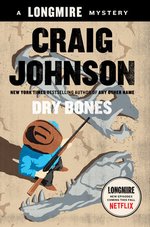
For the most part the book keeps trudging along — interesting, occasionally funny — but nothing special — Stagg’s up to his thing, Quinn’s figuring out his next move, the Leonard refugees are seemingly trying to get caught. But nothing that really grabs you. Until you get to the last 60± pages, that is. After lulling the reader into a false sense of security, Atkins packed a while lotta happenings, and loose ends being tied up and bodies being dropped into these pages. Action, and emotion, and a dream sequence that seems straight out of Craig Johnson.

In interviews, Atkins states that the next novel is going to be dark (which is part of why this is so light) — I’m a little worried about what that means. I’m pretty sure the only one who’s safe is the guy who’s name is in the series title (though it wouldn’t surprise me if he got really banged up — but he’ll survive).

—–

4 1/2 Stars

Review Catch-Up: Hidden by Benedict Jacka; The Winter Long by Seanan McGuire

These have been nagging at me for eleven months now. No, I have no explanation for why it took me so long, but I’m glad I took a lot of notes on both. I’m going to get this posted before I start the next Jacka novel (which should be happening today). While I’m at it, the next Toby Day is a couple of weeks away.

Anyway, overdue mini-looks at a couple of the best Urban Fantasies I read in 2014:

HiddenHidden

by Benedict Jacka
Series: Alex Verus, #5


Mass Market Paperback, 293 pg.
Ace, 2014
Read: September 26 – 30, 2014
. . . man, I have really missed Alex. Everyone’s favorite diviner has really come a long way, lately — shedding the near lone-wolf thing, and is now looking after a passel of magic rookies. Whether they want him to or not.

Anne Walker is definitely in the “or not” category. She’s done all she can to stay away from Alex — but she probably didn’t mean to include being kidnapped as one of those ways. Alex goes to some pretty dark places to help someone who doesn’t want it.

At the same time, Alex (via the Council) is feeling some pressure for the events of the last book. They’re also pressuring him to do some official work for them. Plus the rumors are getting more and more intense that his mentor, Richard, is back. If that’s true, no one is going to be happy. Naturally, everyone thinks that Alex knows what Richard is up to. And every time he says he doesn’t, he convinces them that he does.

So yeah, Alex has his hands full.

I think it was Chekhov who said that if a magic user grabs a focus in the opening chapters, that by the end of the book . . . Anyway, that was a nice use of it.

Not that Alex has had an easy life over the last couple books (or we wouldn’t be reading them) but the one big take away from Hidden is that it’s going to get a lot worse for our friend (I swear I hadn’t read that note when I wrote about Veiled over the weekend). There are other take aways, mostly happier, but I’ll leave that to you to find.

A wholly satisfying read. Get to know Alex Verus.

4 Stars

The Winter LongThe Winter Long

by Seanan McGuire
Series: Toby Daye, #8


Mass Market Paperback, 358 pg.
DAW, 2014
Read: September 13 – 16, 2014

I don’t like parties. Someone always tries to assassinate someone I actually like, and there are never enough of those little stuffed mushroom caps.

A book starts off with a line like that? You’re going to have fun.

Thankfully, one’s appreciation of a book doesn’t depend on how the protagonist acts. When I was on page 46, I wrote , “Granted, this is early, but Toby’s being stupid, foolishly so. She’s not paying attention to anything said during the fight she just had — actually, technically didn’t really have. Instead, she’s reacting to something that happened to a friend, and acting out of fear, prejudice and alarm. That disappoints me. Her saying, ‘that smile, brief as it had been, was all I could have asked for. A smiling Tybalt was a Tybalt who was still capable of stepping back and looking at the situation rationally. I loved him, but even I could find him frightening when he was fixated on vengeance.’ Man, choke me on the irony, McGuire.”

There’s just go much about this novel that I can’t describe without spoiling it. Let me limit myself to a couple of more notes: Toby lost a lot of blood on this one — I mean like The Bride in the Showdown at the House of Blue Leaves kind of a lot. It’s a good thing she has a healing factor to make Logan jealous. While she’s bleeding she’s having her world rocked.

McGuire takes a lot of what Toby’s “known” since we met her (all of which is what we’ve “known,” too) and turns it upside down and shakes the truth out. Every other book in the series has been affected by these revelations — in one fell swoop, she re-wrote previous 7 books — which is just so cool. It’s not that we’ve (we= readers and Toby) been wrong, our understanding is just . . . askew. There’s also some nice warm fuzzies in this book, which isn’t that typical for the series. McGuire’s outdone herself.
5 Stars

Saturday Miscellany – 8/8/15

So, I’ve done a little more site maintenance/upgrades this week — I’ve posted a blogroll. If yours is there, I hope it generates a view or three for you. If yours isn’t, and you want it there — just let me know (and I apologize in advance). Also, I’ve started writing little “Author 101” type entries for the authors I seem to spend a lot of time/attention on (linked in the menu above). So far, I’ve completed the V-Z section. All two authors.

As part of this work, I’ve been looking over old posts, seeing what I’ve written about Author X and so on. I keep noticing things that blow my mind — for example, I find it hard to believe that I’ve only blogged about 3 books by Rick Riordan, when I’ve read 20! There are several other authors like that — but then I have to remember that I’ve only been doing this for a couple of years, and I’ve been reading him for 7 years or so.

Enough blather from me, let’s get on to the odds ‘n ends over the week about books and reading that caught my eye. You’ve probably seen some/most/all of them, but just in case:

    This Week’s New Releases I’m Excited About and/or You’ll Probably See Here Soon:

  • Kitty Saves the World by Carrie Vaughn — Time to say good-bye to Kitty. (Sniff). But what a way to end a series — if you missed it, I reviewed it here.
  • Veiled by Benedict Jacka — looks like things are getting serious in Alex Verus’ world (not that I thought life was unicorns and rainbows for him before)
  • Combat-Ready Kitchen: How the U.S. Military Shapes the Way You Eat by Anastacia Marx de Salcedo — This book looks great, but man…I tell you, I’m not sure I want to learn what she has to say.
  • School for Sidekicks by Kelly McCullough — something lighter from McCullough should be fun, and I like the premise. It’s YA, so I’ll have to get it for one of my kids as a cover 🙂
  • Con Academy by Joe Schreiber — a couple of years ago, I read one of Schreiber’s books in one sitting — was fast, action-packed and fun. This looks like it’ll have a lot of the same things working for it. Should be a quick, entertaining read.
  • Whirligig by Magnus Macintyre — amusing-looking mystery set in the Scotland.
  • A Better Way to Die: The Collected Short Stories by Paul Cornell — It’s Cornell, these have to be worth a glance.

Lastly, I’d like to say hi and welcome to enthrallingdimple for following the blog this week. Thanks to sp for the interaction – not long to wait, sp! And a big thanks to Andy Abramowitz for the kind words and signal boost.

Long Black Curl by Alex Bledsoe

Long Black CurlLong Black Curl

by Alex Bledsoe
Series: Tufa, #3

Hardcover, 377 pg.

Tor Books, 2015

Read: June 11 – 13, 2015

5 Stars
This book was practically un-put-downable. Not because I was driven to find out what happens next — like a Finder, or Child etc. This is one of those kind of books you don’t want to put down because you don’t want to leave that world, not for a minute, to step back into this one, as nice as it is — filled with your stuff, and your great wife and frequently tolerable children. But this book’s little corner of Appalachia that touches another world (in more ways than one) is a place you just want to exist in. Granted, I’d rather be in one of the earlier books than this one (not a reflection of the quality of the book, just the events portrayed).

Not all that long ago, especially by Tufa standards, Bo-Kate Wisby and her beau, Jefferson Powell wreaked all sorts of havoc. They were so terrible that they were banished from the community, unable to return — or, worst of all, make music. WHen you think of some of the despicable things that have happened or have been described in the previous two novels by citizens in good standing, you get an idea just how bad this was. Both have spent decades yearning to return, to play music — but have had to settle for incredibly successful careers in the music business. Which would be a special kind of torture and pleasure — being that close but not able to partake, still being able to appreciate it though. Somehow, however, this curse was lifted without anyone realizing it.

Well, anyone but Bo-Kate. She returns to get revenge and bow the Tufa to her will, destroying their heritage, their way of life and instituting her own. Her approach is not subtle, she clearly learned a little bit from the “Shock and Awe” tactics of a recent war. My jaw almost dropped when i saw the first step that was taken by Bo-Kate. I — like most of the Tufa — didn’t think that was possible, or at least likely. Although there was something to appreciate about that action, there wasn’t in the rest of what she did to the community — I can’t think of any fictional character I’ve had such a visceral reaction to (especially this quickly) this side of Joffrey Lannister Baratheon, first of his name.

It should go without saying with this world, the way the rest of the Tufa respond and defend themselves isn’t how you’d expect. Which goes double for how things play out.

Thankfully, I did really enjoy the rest of the Wisbys — especially Bo-Kate’s sister. I hope to spend more time with them. Actually, I liked getting to know all the new characters — including Bo-Kate’s allies (or those characters who weren’t new, but we hadn’t really spent time with). The characters in this community are so well drawn, so real that you almost don’t need a plot to enjoy a book about them.

As always, I’m jealous of the relationship between these people and music. I don’t have it — a couple of my kids do, at least. I think the way the two banished Tufa react to their returning musical ability tells you almost everything you need to know about them. These are books that need to come with their own score, their own soundtrack. Sadly, I don’t think humans are capable of putting out anything worthy of the books. As good as some of the music inspired by this series has been, it’s not good enough to live up to Tufa standards.

Two things that detracted from the book for me. First is the sex. Not that Bledsoe’s a model of Victorian attitudes toward sex before this, but Long Black Curl is pretty sexually explicit — moreso and more often than before (I’m reasonably sure, but am not interested enough to go back and check). I don’t think it was necessary, but don’t think it hurt things. It was just one of those things that seemed to stick out to me.

Secondly, this is absolutely the most straight-forward of the series, which is both a strength and a weakness. It’s more accessible. There’s almost no doubt whatsoever whats going on. The previous two books haven’t been exactly subtle about the magic and how it works out in the lives of the Tufa — but (and I’m struggling to express this the way I want to) they mostly just let us see what happened and say “hey, that’s magic.” There’s some winking and nudging, but primarily the reader has to do the heavy lifting. To switch metaphors, Bledsoe gave us all the numbers and equations, but we had solve for x on our own. But here? It’s all spelled out. It’s somewhat refreshing, but a little disappointing, too.

But that’s just a little tarnish to the series. It’s still one of the best out there. This book changes the world, but not so much that you won’t recognize it — this is all about growth, development. It does my heart good to know that Bledoe is writing #5 at the moment, so we’ve got at least a few hundred more pages of this world to come.

You can absolutely start here, but I think you’d be better off starting with the first, The Hum and the Shiver to you can catch all the nuance and atmosphere and all that. What it means that character X shows up and does Y. That kind of thing. Either way, dive into this world.

—–

4 1/2 Stars

Page 551 of 625

Powered by WordPress & Theme by Anders Norén