Author: HCNewton Page 83 of 609

The Ballad of Bonaduke—Episode 56: What We All Want by R. T. Slaywood: That Seems Like a Mistake…

After the episode I read yesterday, I didn’t want to wait a week


Cover Image for The Ballad of Bonaduke by RT SlaywoodThe Ballad of Bonaduke—
Episode 56: What We All Want

by R.T. Slaywood

DETAILS:
Series: The Ballad of Bonaduke, #56
Format: Kindle Vella Story
Read Date: September 20, 2024

“Got it, got it.” I said.

“So what about you Bonaduke, what do you want now that you’re up to speed?”

This time I was the one wanting to change the subject.

The Story So Far…

A drunken Michael Bonaduke decides to use a grift (with maybe some sort of magic/magic-like “help”) to win on a scratch-off lottery ticket so he has money to buy more to drink. He pulls off whatever he did, gets his money and some booze and stumbles off into the darkness to drink himself into oblivion so he can start again the next day. He’s hit by dark memories (probably what’s driving him to the drinking) of fire, pleading, and screaming. There’s going to be a price to pay for his grift, and he’s trying to be ready.

He’s abducted by some representatives of a mysterious group who subject him to a test—if he passes, everything will be explained to him (and hopefully the reader, too). He passes—and is brought somewhere for answers, or maybe training, or maybe another test. Time will tell (or things are going to get really annoying). Answers aren’t quick to come—but the mysteries and questions keep piling up.

Things get hairy and Bonaduke leaves and finds himself back in the neighborhood he started from. He takes refuge in a homeless encampment shortly before a police raid. He’s apprehended and finds himself an interrogation room and shortly escapes after using his grift (but with results he didn’t quite intend). He finds himself by a group of squatters who seem to have strapped a woman to a chair for reasons that can’t be good. He attempts to rescue her before he even realizes what he’s doing, and seems to have succeeded—well, the two of them got away from the group anyway—breathing but bruised. They make their way to a fast-food taco joint and Bonaduke really needs to refuel to keep going. He tries, but fails to get food because he keeps passing out. Thankfully, the clerk is the same guy from the liquor store and he both recognizes him and gives him first aid. The woman (Zero) wakes up and shows some abilities of her on as she helps them escape from her captors who’ve tracked her down. One thing leads to another—Zero and Bonaduke’s magics don’t mix well (at least until they understand what each other can do?), and they end up in a video-game race against the squatters in a tricked-out version of Eric (the clerk’s) car. Note, I said video-game race, not a video-game-style race. They’re actually in one. When dumped back into reality, he’s surrounded by bruised and broken bodies (of people and cars). And then he gets into a supernatural fight and survives…just.

Or maybe not. But he gets better. And then his new…friends? Acquaintances? People who keep popping up in his life?…start explaining exactly what’s going on to him while they set up a new HQ and try to teach him about his abilities (and everyone tries to understand them) while they try to fund their further work. This plan doesn’t go so well, they end up stealing a book that contains (for lack of a better word) a malignant presence (something like a demon or nasty djinn), and things have gone really poorly since then. It’s almost like they’ve been cursed.

What’s What We All Want About?

The guys go around the room, talking about their goals/desires for the circle and why they want to lock horns with the Omnicrats. One idea seemed sort of…odd to me, but I can accept it working for this world. The other two make a lot of sense. Then they ask Bonaduke what he wants.

And we get the exchange above and it moves on from there…Bonaduke confronts them with some of his theories about what’s happened in the last few weeks. They try to respond, but he’s not buying it (I’m not sure I blame him) and then he takes a step to get some answers that seems like a bad idea. Like someone lighting a match in the control room of the Hindenburg bad.

So, what did I think about What We All Want ?

This was interesting–even the bits that seemed strange (even for Fantasy fiction), and it helped me understand these guys so much better.

And then Bonaduke and his self-delusional, self-destructive brain took him down the path at the end of the episode and…eh. Things will be a hopping in episode 57, I bet.


3 Stars

The Ballad of Bonaduke—Episode 55: Cursed by R. T. Slaywood: ANSWERS!! Explanations! Backstory!

After a 2 month break, I’m back to this. Hopefully, I can pick up the pace and catch back up…


Cover Image for The Ballad of Bonaduke by RT SlaywoodThe Ballad of Bonaduke—
Episode 55: Cursed

by R.T. Slaywood

DETAILS:
Series: The Ballad of Bonaduke, #55
Format: Kindle Vella Story
Read Date: September 19, 2024

“Out of curiosity, have either of you taken the time to explain what we’re doing?” Om asked the others.

“I’ve been busy.” Zero said

“Same.” Alan added though less convincingly.

“Honestly I’ve gotten used to it.” I said and leaned back in my recliner.

“Well I commend your patience. Ok, first let’s call the circle to order. Then we’ll go over what has happened up to this point.”

The Story So Far…

A drunken Michael Bonaduke decides to use a grift (with maybe some sort of magic/magic-like “help”) to win on a scratch-off lottery ticket so he has money to buy more to drink. He pulls off whatever he did, gets his money and some booze and stumbles off into the darkness to drink himself into oblivion so he can start again the next day. He’s hit by dark memories (probably what’s driving him to the drinking) of fire, pleading, and screaming. There’s going to be a price to pay for his grift, and he’s trying to be ready.

He’s abducted by some representatives of a mysterious group who subject him to a test—if he passes, everything will be explained to him (and hopefully the reader, too). He passes—and is brought somewhere for answers, or maybe training, or maybe another test. Time will tell (or things are going to get really annoying). Answers aren’t quick to come—but the mysteries and questions keep piling up.

Things get hairy and Bonaduke leaves and finds himself back in the neighborhood he started from. He takes refuge in a homeless encampment shortly before a police raid. He’s apprehended and finds himself an interrogation room and shortly escapes after using his grift (but with results he didn’t quite intend). He finds himself by a group of squatters who seem to have strapped a woman to a chair for reasons that can’t be good. He attempts to rescue her before he even realizes what he’s doing, and seems to have succeeded—well, the two of them got away from the group anyway—breathing but bruised. They make their way to a fast-food taco joint and Bonaduke really needs to refuel to keep going. He tries, but fails to get food because he keeps passing out. Thankfully, the clerk is the same guy from the liquor store and he both recognizes him and gives him first aid. The woman (Zero) wakes up and shows some abilities of her on as she helps them escape from her captors who’ve tracked her down. One thing leads to another—Zero and Bonaduke’s magics don’t mix well (at least until they understand what each other can do?), and they end up in a video-game race against the squatters in a tricked-out version of Eric (the clerk’s) car. Note, I said video-game race, not a video-game-style race. They’re actually in one. When dumped back into reality, he’s surrounded by bruised and broken bodies (of people and cars). And then he gets into a supernatural fight and survives…just.

Or maybe not. But he gets better. And then his new…friends? Acquaintances? People who keep popping up in his life?…start explaining exactly what’s going on to him while they set up a new HQ and try to teach him about his abilities (and everyone tries to understand them) while they try to fund their further work. This plan doesn’t go so well, they end up stealing a book that contains (for lack of a better word) a malignant presence (something like a demon or nasty djinn), and things have gone really poorly since then. It’s almost like they’ve been cursed.

What’s Cursed About?

So, it’s been three weeks of everyone licking their wounds from the last episode (good time for me to take a break from the series, too, it turns out). Bonaduke hasn’t had much to do to recover, but the rest have.

At the end of the three weeks, the team—well, circle—meets in order to regroup and move into the next phase. The meeting starts with the above interchange, and then…hold on to your hats, readers. The characters explain things to Bonaduke and the reader! Not in the kind of detail that I’d like—but enough. Then they start looking to the future.

So, what did I think about Cursed?

With that last line of the quotation above, Om is now my favorite character in the series. No contest. Yeah, I’d have a appreciated more details, but after the drought we’ve been in since Bonaduke was taken off the streets by them, this little bit of information was enough.

I can care about the circle, I get an idea about their goals and what they’re trying to avoid. I want to see them succeed for reasons beyond “they’re who we’re spending time with.” Yes, I want more—but I’m greedy that way. I’ll take what we’ve been given.

And it’s tantalizing to think we might be getting a better idea of their goals in the next episode, too.

Beyond that, it was good to see the group take some time to recover. To slow down, and not just bounce from escapade to escapade.

All in all, one of my favorite episodes thus far.


4 Stars

WWW Wednesday, September 18, 2024

Yup. I’m late with this. It’s not even Wednesday for many of you…it’d been a day and I needed some good no-screen time today, and thankfully my wife drug me away from them. But I’m home now, and have time to finish this off.

This meme was formerly hosted by MizB at A Daily Rhythm and revived on Taking on a World of Words—and shown to me by urore-Anne-Chehoke at Diary-of-a-black-city-girl.

The Three Ws are:
What are you currently reading?
What did you recently finish reading?
What do you think you’ll read next?

Seems easy enough, right? Let’s take a peek at this week’s answers:

What are you currently reading?

I’m reading (and meant to finish yesterday) the ARC for Candle & Crow by Kevin Hearne—it might be my favorite thing in this series, I am making progress in On Classical Trinitarianism: Retrieving the Nicene Doctrine of the Triune God edited by Matthew Barrett, and I’m listening to Sleepless City by Reed Farrel Coleman, read by Peter Giles on audiobook. (Giles’ raspy, tough, Bales-as-Batman narration has had to have shredded his vocal cords, I hope he was taken care of)

Cover of Candle & Crow by Kevin Hearne</aBlank SpaceCover of On Classical Trinitarianism by Matthew BarrettBlank SpaceCover of Sleepless City by Reed Farrel Coleman

What did you recently finish reading?

I just finished Andy Weir’s Project Hail Mary and #CrimeTime by Jeneva Rose and Drew Pyne, read by: Abelardo Campuzano, Jennifer Damiano, Phil Thron, Gary Tiedemann, Peter Berkrot, P.J. Ochlan, Nancy Linari, Chris Andrew Ciulla, Piper Goodeve, Kevin R. Free and Samantha Desz on audio.

Cover of Project Hail Mary by Andy WeirBlank SpaceCover to #CrimeTime by Jeneva Rose and Drew Pyne

What do you think you’ll read next?

My next book should be The Debt Collector by Steven Max Russo—a book I told Russo I’d read before March 20 of this year. Ugh. My next audiobook should be An Inheritance of Magic by Benedict Jacka, read by Will Watt. I don’t know if I can handle Jacka with a different narrator (as age-appropriate as he might be compared to Gildart Jackson)

Cover of The Debt Collector by Steven Max RussoBlank SpaceCover of An Inheritance of Magic by Benedict Jacka

What are you working through?

REPOSTING JUST CUZ: Top Ten Tuesday: Top 10 Opening Lines

Today is turning out to be a bad day for me to post things, but I’ve been inspired by Witty & Sarcastic Bookclub’s thread on Twitter to revisit this post (and a similar one). So, why not repost it while I consider revising the list? From wayyyyyy back in 2020.


The topic for this week’s Top Ten Tuesdays is Opening Lines.

Part of what made cutting last week’s Top 5 Opening Lines down to just five was that I knew this was coming. I let myself go a little long with these, hopefully not annoyingly so. These may not be the best openings I’ve ever read, but they’re the most memorable.

10 White Noise

White Noise by Don DeLillo

This is just one of those novels that imprinted on me in ways I don’t fathom, and it all started like this.

The station wagons arrived at noon, a long shining line that coursed through the west campus. In single file they eased around the orange I-beam sculpture and moved toward the dormitories. The roofs of the station wagons were loaded down with carefully secured suitcases full of light and heavy clothing; with boxes of blankets, boots and shoes, stationery and books, sheets, pillows, quilts; with rolled-up rugs and sleeping bags; with bicycles, skis, rucksacks, English and Western saddles, inflated rafts. As cars slowed to a crawl and stopped, students sprang out and raced to the rear doors to being removing the objects inside; the stereo sets, radios, personal computers; small refrigerators and table ranges; the cartons of phonograph records and cassettes; the hairdryers and styling irons; the tennis rackets, soccer balls, hockey and lacrosse sticks, bows and arrows; the controlled substances, the birth control pills and devices; the junk food still in shopping bags—onion-and-garlic chips, nacho things, peanut creme patties, Waffelos and Kabooms, fruit chews and toffee popcorn; the Dum-Dum pops, the Mystic mints.

I’ve witnessed this spectacle every September for twenty-one years. It is a brilliant event, invariable. The students greet each other with comic cries and gestures of sodden collapse. Their summer has been bloated with criminal pleasures, as always. The parents stand sun-dazes near their automobiles, seeing images of themselves in every direction. The conscientious suntans. The well-made faces and wry looks. They feel a sense of renewal, of communal recognition. The women crisp and alert, in diet trim, knowing people’s names. Their husbands content to measure out the time, distant but ungrudging, accomplished in parenthood, something about them suggesting massive insurance coverage. This assembly of station wagons, as much as anything they might do in the course of the year, more than formal liturgies or laws, tells the parents they are a collection of the like-minded and the spiritually akin, a people, a nation.

9 The Violent Bear It Away

The Violent Bear It Away by Flannery O’Connor

O’Connor’s the perfect mix of Southern sensibility, Roman Catholic worldview, and glorious prose.

FRANCIS MARION TARWATER’S uncle had been dead for only half a day when the boy got too drunk to finish digging his grave and a Negro named Buford Munson, who had come to get a jug filled, had to finish it and drag the body from the breakfast table where it was still sitting and bury it in a decent and Christian way, with the sign of its Saviour at the head of the grave and enough dirt on top to keep the dogs from digging it up. Buford had come along about noon and when he left at sundown, the boy, Tarwater, had never returned from the still.

The old man had been Tarwater’s great-uncle, or said he was, and they had always lived together so far as the child knew. His uncle had said he was seventy years of age at the time he had rescued and undertaken to bring him up; he was eighty-four when he died. Tarwater figured this made his own age fourteen. His uncle had taught him Figures, Reading, Writing, and History beginning with Adam expelled from the Garden and going on down through the presidents to Herbert Hoover and on in speculation toward the Second Coming and the Day of Judgment.

8 The Doorbell Rang

The Doorbell Rang by Rex Stout

I could’ve filled this list with Stout beginnings. But I limited myself to this one.

Since it was deciding factor, I might as well begin by describing it. It was a pink slip of paper three inches wide and seven inches long, and it told the First National City Bank to pay to the order of Nero Wolfe one hundred thousand and 00/100 dollars. Signed, Rachel Bruner. It was there on Wolfe’s desk, where Mrs. Bruner had put it. After doing so, she had returned to the red leather chair.

7 Dead Beat

Dead Beat by Jim Butcher

The first words I read by Butcher, got me hooked but good.

On the whole, we’re a murderous race.

According to Genesis, it took as few as four people to make the planet too crowded to stand, and the first murder was a fratricide. Genesis says that in a fit of jealous rage, the very first child born to mortal parents, Cain, snapped and popped the first metaphorical cap in another human being. The attack was a bloody, brutal, violent, reprehensible killing. Cain’s brother Abel probably never saw it coming.

As I opened the door to my apartment, I was filled with a sense of empathic sympathy and intuitive understanding.

For freaking Cain.

6 Adventures of Huckleberry Finn

Adventures of Huckleberry Finn by Mark Twain

This was the hardest cut from last week’s list, but I just can’t resist the moocow.

You don’t know about me without you have read a book by the name of The Adventures of Tom Sawyer; but that ain’t no matter. That book was made by Mr. Mark Twain, and he told the truth, mainly. There was things which he stretched, but mainly he told the truth. That is nothing. I never seen anybody but lied one time or another, without it was Aunt Polly, or the widow, or maybe Mary. Aunt Polly—Tom’s Aunt Polly, she is—and Mary, and the Widow Douglas is all told about in that book, which is mostly a true book, with some stretchers, as I said before.

Now the way that the book winds up is this: Tom and me found the money that the robbers hid in the cave, and it made us rich. We got six thousand dollars apiece—all gold. It was an awful sight of money when it was piled up. Well, Judge Thatcher he took it and put it out at interest, and it fetched us a dollar a day apiece all the year round—more than a body could tell what to do with. The Widow Douglas she took me for her son, and allowed she would sivilize me; but it was rough living in the house all the time, considering how dismal regular and decent the widow was in all her ways; and so when I couldn’t stand it no longer I lit out. I got into my old rags and my sugar-hogshead again, and was free and satisfied. But Tom Sawyer he hunted me up and said he was going to start a band of robbers, and I might join if I would go back to the widow and be respectable. So I went back.

5 A Portrait of the Artist as a Young Man

A Portrait of the Artist as a Young Man by James Joyce

I remember in our English class in High School when we were assigned this book, pretty much no one was interested. When Mr. Russo passed out the paperbacks, a few of us flipped it opened and read these first words—and suddenly we were open to the idea (didn’t last long for all of us, but that’s beside the point, we’re focused on the opening lines here). It’s stuck with me for almost 30 years, that’s gotta say something.

Once upon a time and a very good time it was there was a moocow coming down along the road and this moocow that was coming down along the road met a nicens little boy named baby tuckoo….

4

Neuromancer by William Gibson

This sentence was love at first glance for me. Still love it. Naturally, no one knows what color this is referring to anymore.

The sky above the port was the color of television, tuned to a dead channel.

“It’s not like I’m using,” Case heard someone say, as he shouldered his way through the crowd around the door of the Chat. “It’s like my body’s developed this massive drug deficiency.” It was a Sprawl voice and a Sprawl joke. The Chatsubo was a bar for professional expatriates; you could drink there for a week and never hear two words in Japanese.

Ratz was tending bar, his prosthetic arm jerking monotonously as he filled a tray of glasses with draft Kirin. He saw Case and smiled, his teeth a webwork of East European steel and brown decay. Case found a place at the bar, between the unlikely tan on one of Lonny Zone’s whores and the crisp naval uniform of a tall African whose cheekbones were ridged with precise rows of tribal scars. “Wage was in here early, with two joeboys,” Ratz said, shoving a draft across the bar with his good hand. “Maybe some business with you, Case?”

Case shrugged. The girl to his right giggled and nudged him.

The bartender’s smile widened. His ugliness was the stuff of legend. In an age of affordable beauty, there was something heraldic about his lack of it.

3

The Big Sleep by Raymond Chandler

Oft-parodied. Oft-imitated. Often-celebrated. Does it get better than this?

It was about eleven o’clock in the morning, mid October, with the sun not shining and a look of hard wet rain in the clearness of the foothills. I was wearing my powder-blue suit, with dark blue shirt, tie and display handkerchief, black brogues, black wool socks with dark blue clocks on them. I was neat, clean, shaved and sober, and I didn’t care who knew it. I was everything the well-dressed private detective ought to be. I was calling on four million dollars.

The main hallway of the Sternwood place was two stories high. Over the entrance doors, which would have let in a troop of Indian elephants, there was a broad stained-glass panel showing a knight in dark armor rescuing a lady who was tied to a tree and didn’t have any clothes on but some very long and convenient hair. The knight had pushed the vizor of his helmet back to be sociable, and he was fiddling with the knots on the ropes that tied the lady to the tree and not getting anywhere. I stood there and thought that if I lived in the house, I would sooner or later have to climb up there and help him. he didn’t seem to be really trying.

2

Harry Potter and the Sorceror’s Stone by J. K. Rowling

Why bother saying anything here?

Mr. and Mrs. Dursley, of number four Privet Drive, were proud to say that they were perfectly normal, thank you very much. They were the last people you’d expect to be involved in anything strange or mysterious, because they just didn’t hold with such nonsense.

1

The Hitchhiker’s Guide to the Galaxy by Douglas Adams

Far out in the uncharted backwaters of the unfashionable end of the Western Spiral arm of the Galaxy lies a small unregarded yellow sun.

Orbiting this at a distance of roughly ninety-eight million miles is an utterly insignificant little blue-green planet whose ape-descended life forms are so amazingly primitive that they still think digital watches are a pretty neat idea.

This planet has—or rather had—a problem, which was this: most of the people living on it were unhappy for pretty much of the time. Many solutions were suggested for this problem, but most of these were largely concerned with the movement of small green pieces of paper, which was odd because on the whole it wasn’t the small green pieces of paper that were unhappy.

And so the problem remained; lots of the people were mean, and most of them were miserable, even the ones with digital watches.

REPOSTING JUST CUZ: Top 5 Tuesday – Top 5 Opening Lines

Today is turning out to be a bad day for me to post things, but I’ve been inspired by Witty & Sarcastic Bookclub’s thread on Twitter to revisit this post (and a similar one). So, why not repost it while I consider revising the list? From wayyyyyy back in 2020.


I love a good opening line. A solid opening paragraph or page is great, but an opening line that sells you on the next 200-500 pages? Magic. When I saw this list topic listed, these 5 jumped to mind—they may not be the best I’ve ever read, but they’re the most memorable.

(I tried, tried, tried to limit myself to the opening line, but I failed on a couple of them, couldn’t help myself.)

5 A Portrait of the Artist as a Young Man
A Portrait of the Artist as a Young Man by James Joyce

I remember in our English class in High School when we were assigned this book, pretty much no one was interested. When Mr. Russo passed out the paperbacks, a few of us flipped it opened and read these first words—and suddenly we were open to the idea (didn’t last long for all of us, but that’s beside the point, we’re focused on the opening lines here). It’s stuck with me for almost 30 years, that’s gotta say something.

Once upon a time and a very good time it was there was a moocow coming down along the road and this moocow that was coming down along the road met a nicens little boy named baby tuckoo….

4
Neuromancer by William Gibson

This sentence was love at first glance for me. Still love it. Naturally, no one knows what color this is referring to anymore.

The sky above the port was the color of television, tuned to a dead channel.

3
The Big Sleep by Raymond Chandler

Oft-parodied. Oft-imitated. Often-celebrated. Does it get better than this?

It was about eleven o’clock in the morning, mid October, with the sun not shining and a look of hard wet rain in the clearness of the foothills. I was wearing my powder-blue suit, with dark blue shirt, tie and display handkerchief, black brogues, black wool socks with dark blue clocks on them. I was neat, clean, shaved and sober, and I didn’t care who knew it. I was everything the well-dressed private detective ought to be. I was calling on four million dollars.

2
Harry Potter and the Sorceror’s Stone by J. K. Rowling

Why bother saying anything here?

Mr. and Mrs. Dursley, of number four Privet Drive, were proud to say that they were perfectly normal, thank you very much. They were the last people you’d expect to be involved in anything strange or mysterious, because they just didn’t hold with such nonsense.

1
The Hitchhiker’s Guide to the Galaxy by Douglas Adams

I’ll go on and on about this book next week, so I’ll just keep my trap shut here. But man…there was something about these lines that got into my blood.

Far out in the uncharted backwaters of the unfashionable end of the Western Spiral arm of the Galaxy lies a small unregarded yellow sun.

Orbiting this at a distance of roughly ninety-eight million miles is an utterly insignificant little blue-green planet whose ape-descended life forms are so amazingly primitive that they still think digital watches are a pretty neat idea.

Book Blogger Hop: Back-to-School Time

Book Blogger Hop


This prompt was submitted by Billy @ Coffee Addicted Writer:

It’s back-to-school time. What book would you recommend to students, whether it’s an educational read or an enjoyable diversion from textbooks?

Let’s start with the “enjoyable diversion” bit, it’s the easiest (and the toughest to implement sometimes). Find something that appeals to you–because of the cover, because of what the back cover promises, because you’ve read something by the author, because someone you know liked it.

Now, for the “educational read” part. I don’t think I can limit it to one, really. But if I had to, I’d go with:

Cover of Dreyer's English by Benjamin Dreyer
Dreyer’s English:
An Utterly Correct Guide to Clarity and Style

by Benjamin Dreyer
Cover of Dreyer's English (Adapted for Young Readers) by Benjamin Dreyer
Dreyer’s English (Adapted for Young Readers):
Good Advice for Good Writing

by Benjamin Dreyer
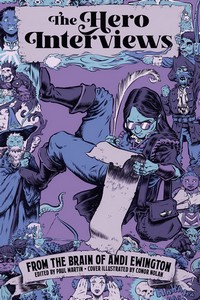
Cover of The Pleasures of Reading in an Age of Distraction by Alan Jacobs
The Pleasures of Reading in an Age of Distraction
by Alan Jacobs
Cover of How to Think by Alan Jacobs
How to Think:
A Survival Guide for a World at Odds

by Alan Jacobs
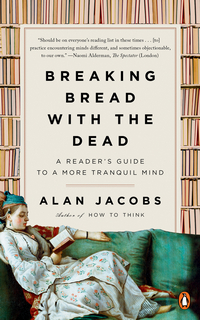
Cover of Breaking Bread with the Dead by Alan Jacobs
Breaking Bread with the Dead:
A Reader’s Guide to a More Tranquil Mind

by Alan Jacobs
Cover of Surviving Religion 101 by Michael J. Kruger
Surviving Religion 101:
Letters to a Christian Student
on Keeping the Faith in
College

by Michael J. Kruger

Dreyer’s English (pick the version most appropriate) is going to be my pick if I have to limit it to one. Getting language, punctuation, and other details about writing down will help in all sorts of courses (and life)–and Dryer’s book will help greatly in that way, and is entertaining enough that you won’t mind learning something outside of class.

I feel like I should have some other suggestions for Elementary and Middle School readers, but I don’t. Sorry.

For High Schoolers and above:

The trilogy of Alan Jacobs books there are ever-so-helpful. The first helps you remember that reading should be a pleasure, and not the equivalent of eating your vegetables. The second book is so helpful to train you to think clearly and charitably–something we all need. And then Breaking Bread with the Dead, helps the reader see ways they can read, profit from, and enjoy books and writers from the past, even if their lives, politics, morality, and so on, is different from our own.

Lastly, Michael Kruger’s book is a very handy book for College or High School students to read as they interact with non-Christians and anti-Christians socially or in the classroom. It’d probably be handy for non-Christians to read so they understand what they might be decrying.

As (almost) always when I’m asked for a book recommendation, I overshot. Oh, well…

What did I leave off my list?

This Is Who We Are Now by James Bailey: One Corvette Short of a Textbook Mid-Life Crisis

Cover of This Is Who We Are Now by James BaileyThis Is Who We Are Now

by James Bailey

DETAILS:
Publication Date: October 23, 2023
Format: eBook
Length: 240 pg.
Read Date: July 23-24, 2024

“Sorry.”

“For what?” Her honey brown eyes are equal parts amused and curious when she looks up into mine.

I don’t have an answer. Sorry is just a word you say when you have nothing substantive to offer. I’m sorry you missed your bus. I’m sorry your boss was in such a foul mood. I’m sorry everyone is such assholes these days. I didn’t cause any of these problems, and I can’t make any of them better, but I can offer you some useless empathy. I’m sorry your life didn’t turn out to be more fulfilling. Rest assured, however, in a parallel universe in which we didn’t break up, you’re happier. Maybe. And I’m sorry if you’re not. Or at least the parallel me is. He’s the one that let you down there.

What’s This Is Who We Are Now About?

Henry drags his wife and sons to his parents’ house for a few days. One son doesn’t want to leave his girlfriend behind, his wife is trying to finish organizing a charity activity that takes place while they’re away, and Henry really doesn’t want to be there because his family will be celebrating Henry’s 50th birthday.

When they arrive, his parents are having a yard sale, selling a lot of memorabilia from Henry’s childhood and he’s upset by that. A rivalry with his brother reheats, and he keeps running into his incredibly serious high school/college girlfriend.

Things go bad with his wife, his brother, his parents, and his kids. Henry repeatedly tries—and sometimes succeeds—to keep their connection alive. But the challenges (many self-created) continue. Can Henry make it through the visit with his family intact? Is it too late to come-of-age when you’ve hit 50?

So, what did I think about This Is Who We Are Now?

I can defend everything I’ve done since we arrived. Even the worst of Denise’s complaints, in isolation, would be waved away by most objective observers. Collectively, however, maybe it’s not a body of work to stake a flag in. Maybe the picture when all the dots are connected isn’t a flattering one.

I have struggled with this post—especially because I’ve had to write it in bits and pieces over a couple of weeks, which I do often enough that’s not the issue. But I keep changing my mind about the book every time I write—which leads to a lot of editing, re-editing, re-re-editing, and I just give up and walk away.

Even when Henry was making it really easy not to like him (which was often), there’s something very charming, very effortless, and pretty entertaining about this book. His moments with his sons would largely make you wonder why his family is in such a precarious state—then you remember he doesn’t have/make/take the time when they’re at home to be this kind of dad. Then there’s everything he says to, reacts to, or treats Denise…it’s just painful.

I thoroughly enjoyed everything about Henry’s sister, Margo, on the other hand. Her strengths, her bad decisions, and how she reacts to them are easily the saving grace of the novel.

I enjoyed this novel while reading it. But I haven’t been able to decide what I think about almost any part of it that doesn’t involve Margo or Henry’s kids. I think that says something about how realistic Henry, Denise, and their problems and family are. But I don’t know how real I want a book like this to be.

I like Bailey’s writing, I think he’s amusing enough when he wants to be, he gets you invested in his characters, and I wanted to like this a lot. But at the end of this day, I like it just enough to recommend it (most days, other days I could like it a lot more or a lot less).


3 Stars

20 Books of Summer

MUSIC MONDAY: I Like Birds by EELS

The Irresponsible Reader Music Monday Logo

Music Monday's originated at The Tattooed Book Geek's fantastic blog and has shown up hither, thither, and yon since then.

Irresponsible Reader Pilcrow Icon

Cover Reveal: A Dress to Kill For by Tessa Hastjarjanto

I’m very pleased today to welcome the Cover Reveal for Tessa Hastjarjanto’s short story A Dress to Kill For to this patch o’ cyberspace this morning! Before the main event, let’s learn a little bit about the story and author, shall we? It’ll just take a moment, and then we can all take a peak at the cover.

Book Details:

Book Title: A Dress to Kill For by Tessa Hastjarjanto
Genre: Horror, historical
Length: 4k words, (21+/- pages)
Release Date: September 30, 2024
Content warnings: Occultism/demons, murder, physical violence (stabbing), ableism, physical permanent injury, chronic pain

About the Story:

How much are you willing to sacrifice to gain everything you ever wanted?

Lady Claire Rosewood lives on the fringes of society, pitied by the people she used to call her friends, and her husband is no longer the suave businessman he once was. Frustrated with both her status and her marriage, she longs for more.

When an opportunity presents itself that allows her not only to be part of higher society, but to mingle with the elite, she needs to make a choice. Every rise to the top comes at a cost, but is she ready to pay with blood?

A Dress to Kill For is a horror short story, perfect for those who love The Picture of Dorian Gray and Crimson Peak.

Links:

Universal Book Link ~ Goodreads
Newsletter subscribers receive their free copy on September 28th. Signup is on her author site www.tessahastjarjanto.com

About the Author:

Tessa Hastjarjanto is a Dutch/Indonesian writer from the Netherlands. She writes speculative fiction, and blogs at narratess.com about books, fountain pens, and writing.

From a young age, she imitated popular stories and games in creating her own worlds. This love eventually led to a master’s degree in media and game studies at the University of Utrecht. However a mundane desk job was enough to inspire her to follow her creative passion. The first fanfics were written in lunch breaks and soon original fiction followed.

With the support of her husband, she now focuses on her writing career while battling chronic pain. Swiss white shepherd, Shiro, acts as a therapy dog to keep her healthy and reduce stress through extensive cuddle sessions.

Author Links:

Website ~ Twitter ~ Instagram ~ Book Bub ~ Amazon ~ Goodreads>

and now…

The Cover

If you’re in the mood for this dramatic reveal in a video, click here (I can’t get it to display here for some reason). Otherwise, scroll down a little further…

cover for A Dress to Kill for by Tessa Hastjarjanto Woman with dark red hair wears a Victorian evening gown made form black satin. The bottom of the skirt is blood red, forming a gradient towards the black. She stands with her back towards the camera and holds open the red velvet curtains, walking through them. Shadows surround the whole image. There's red text at the top, Tessa Hastjarjanto (author), and next to the woman, on the shadowed curtain, A Dress to Kill For.

That’s a good level of creepy for this time of year and this type of story, right? Cover designer: Tessa Hastjarjanto; Cover art: Feastock/Depositphoto
Irresponsible Reader Pilcrow Icon

Redemptive History & Biblical Interpretation: The Shorter Writings of Geerhardus Vos Edited by Richard B. Gaffiin, Jr.: A Treasure of Briefer Theological Writings

Cover of Redemptive History & Biblical Interpretation by Geerhardus VosRedemptive History & Biblical Interpretation: The Shorter Writings of Geerhardus Vos

by Geerhardus Vos, edited by Richard B. Gaffin, Jr.

DETAILS:
Publisher: P & R Publishing 
Publication Date: June 1, 2021
Format: Hardcover
Length: 543 pg. 
Read Date: January 7-September 1, 2024

“Jehovah appeared of old unto me saying, Yea, I have loved thee with ap everlasting love, therefore have I drawn out long lovingkindness unto thee” (31:3), in order to do justice to their sweetness and beauty. This is like coming out of the waste of the wilderness into a land of paradise. Even quite objectively regarded, the piece has its ineffable charm. It is like a landscape bathed in the glow of the harvest-season. In the farther distance winds the caravan of returning captives, coming homeward with weeping and supplication along rivers of water. The people are seen flowing unto the goodness of Jehovah, to the grain, the new wine, and the oil. In the foreground rises Judah with her cities, a mountain resplendent in holiness. And the whole is made musical by the sound of tabrets in the dances of them that make merry. Still, while a delight in itself, the scene, in order to be fully enjoyed, should be seen through the eyes of the prophet. It sounds like the notes of a bird finding its cage unexpectedly open, and with delirious joy exploring the new-gained freedom. For once the vision and the seer’s deepest desire are perfectly blended. The lyre thrills in unison with something that sings itself within and needs no composing. The words move in absolute harmony with the graceful movements of the dancing virgins in the feast. Surely this prophet bore within himself a great poet. One cannot help feeling this even in his litanies with their forecast of doom on the sin of Israel. But most effectively, it shows itself in the larger and freer rhythms of the ascriptions of glory to Jehovah. It is in part a poet’s satisfaction, that at the receding of the tide of vision, finds voice in the spontaneous words, “Upon this I awaked and beheld, and my sleep was sweet unto me” (31:26). For the prophets are the only true interpreters of the sleeping or waking moments in which God communicated His word unto them.

What’s Redemptive History & Biblical Interpretation About?

Paraphrasing the Preface, the plan for this work was to include almost all of Vos’s work that wasn’t included in his “major works.” But there was just too much of it—so Gaffin limited this to his shorter works that weren’t sermons or that weren’t dated. We get seven “Major Biblical and Theological Studies,” sixteen “Shorter Biblical Studies,” two addresses, and nine book reviews.

Those reviews “either deal with books of continuing influence or provide a valuable statement of Vos’s own views.”

Major Studies

The book starts out with the heavy-weights of the collection20+ page articles on things like “The Eschatology of the New Testament,” “The Range of the Logos Title in the Prologue to the Fourth Gospel,” two (dynamite) pieces on the book of Hebrews, the Doctrine of the Covenant, and so on.

Most of these were worth the purchase price of the book as a whole—I’ve read entire volumes on some of these topics that didn’t give me as much to chew on as these did. Most of what he said in his article on Biblical Theology has been echoed by Vos’s students and readers for decades, so I didn’t get as much from that one as I’d hoped—but it was nice hearing it from his own pen.

Basically, just an outstanding way to start this book, and a great way to spend 270 or so pages.

The Shorter Studies and Addresses

These were a mixed bag of focused and impactful articles and some that had to settle for being interesting and thoughtful. There was one article here that went largely over my head—and probably relied too much on linguistic scholarship that has probably shifted a great deal in the century +/- since it was written. Sometimes—especially in these shorter pieces—you can see that Vos also dabbled in poetry, because some of the phrasing is so lyrical.

The addresses make me wish we had video—or at least audio—recordings of him. I bet those were fascinating to hear—they’re fascinating to read, but probably would give an extra punch when delivered. The first of the addresses, “The Scriptural Doctrine of the Love of God” is something I should read annually—at least.

Book Reviews

Dr. Denney’s latest book puts us under the strange necessity of heartily praising its contents and at the same time deploring most deeply the main purpose for which it was written. We confess to having seldom read a book productive of such a sudden and painful revulsion of feeling, from a sympathetic and enthusiastically admiring state of mind to one of sharp protest and radical dissent, as the work before us. Dr. Denney’s style and manner of presentation are so brilliant and yet so warm and genial, he carries us along so easily, so absolutely compels our belief in the irrefutableness of his argument, that, when he proceeds to make the disagreeable application, we find it more than ordinarily difficult to arrest the momentum of conviction acquired and turn our minds all at once in the opposite direction. The sense of disillusionment at the close is so poignant that it inevitably gives rise to the question, whether perhaps the profound agreement in which we imagined ourselves to be with the writer was not after all a delusion, arising from a misinterpretation on our part of the real drift of the discussion, so that, if we had only read more carefully and between the lines, we would have disagreed from the beginning. Whether the case lies actually as just stated or whether it is a simple instance of non sequitur between approved premises and a false conclusion, we find it extremely difficult to decide.

I really figured that the home stretch of this book contained in these reviews would be easy reading, and really something I could skim because who’d ever heard of most of these books? Wow, I could not have been more wrong (and, it had been months since I read the Preface, so I’d forgotten that “valuable statement of Vos’s own views” part).

To start with, we get reviews of the first two volumes of Bavinck’s Gereformeerde Dogmatiek (known in English as Reformed Dogmatics)—I wish we’d gotten reviews of all four volumes. What I found interesting here was how much what Vos said about these volumes matched what my friends, others in my Church, and I have said about Bavinck’s writing.

Then we move to the books he wasn’t quite so positive about—there are two books by Albert Schweitzer here, and I at least know a little about him, but the other names were new to me. I’m not positive, but I think that all but Bavinck fall under the “statement of Vos’s own views.” These all share a similar outline: a pretty glowing introductory paragraph, a quick synopsis of the work or its premise, and a very nice one-paragraph conclusion. He’s largely complimentary in these parts, recognizing the labor, the experience, and the intelligence of the author. It’s all the stuff in-between where Vos will talk about the many, many flaws of these works and will challenge the thinking, conclusions, and some of the basic assumptions involved. He is capable of appreciating the work and its strengths—and has no problem talking about them—but still talking about the faults, in a serious but not in an offensive or mean-spirited way. He really gives an example for his readers in that way.

He also does a bang-up job of working in those principles and types of argument that can be profitable, even if the works he’s talking about have faded from almost everyone’s memory.

So, what did I think about Redemptive History & Biblical Interpretation?

Let us not forget, however, that as of all theology, so of Biblical Theology, the highest aim cannot lie in man, or in anything that serves the crea. ture. Its most excellent practical use is surely this, that it grants us a new vision of the glory of Him who has made all things to the praise of His own wonderful name. As the Uncreated, the Unchangeable, Eternal God, He lives above the sphere of history. He is the Being and never the Becoming One. And, no doubt, when once this veil of time shall be drawn aside, when we shall see face to face, then also the necessity for viewing His knowledge in the glass of history will cease. But since on our behalf and for our salvation He has condescended to work and speak in the form of time, and thus to make His works and His speech partake of that peculiar glory that attaches to all organic growth, let us also seek to know Him as the One that is, that was, and that is to come, in order that no note may be lacking in that psalm of praise to be sung by the Church into which all our Theology must issue.

This is not going to come as a shock to anyone who’s read any of the things I’ve said about Vos in the previous four posts about his work, but this collection just knocked my socks off. I read an article a week and it was one of the highlights of the week for me to do so.

I learned a lot. Not just about Vos and his brand of theology, but about the Scriptures and the Lord who gave them to His Church so she would see Him and His glory in them.

The writing is fantastic. The thinking is even better. I had to think about a lot of this, to ponder and wrestle with it, and got to revel in it, too.

I can’t think of a reason to not read this book—it’ll reward careful reading (and casual reading, too—just not as richly). It’s just great stuff.


5 Stars

Irresponsible Reader Pilcrow Icon

Page 83 of 609

Powered by WordPress & Theme by Anders Norén