|


In 2018, I read my first book by Nick Kolokowski, Boise Longpig Hunting Club, which is pretty much everything you think it is from the title. In the two years and change since then, I’ve read five other books by Kolokowski—well, six now. That alone should be an indication of what I think about his stuff.
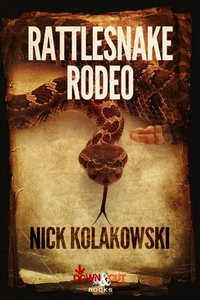
What’s Rattlesnake Rodeo About?
This is the sequel to Boise Longpig Hunting Club, taking up minutes after it. Spoilerly talk about BLHC—bounty hunter, Jake; his sister, Frankie (a gun smuggler); and ex-wife/fiancé, Janine (who has nothing to do with criminals); are kidnapped by a group of super-wealthy people, and set loose in an Idaho forest while they’re being hunted. Jake and Frankie are a lot more resourceful than anyone expected—and Janine has depth that no one expected—and they end up killing all the hunters.
We rejoin them in this book headed back to Boise. They have a number of emotions and thoughts running through their minds at this time—as they should—the most prominent of them is: how are we going to get away with this? There’s no way that they didn’t leave all sorts of DNA, fingerprints and other sorts of evidence behind that’ll make forensic techs happy. And there will be scores of techs, investigators, agents and what have you at the crime scene—very rich, very important people died up there and someone is going to have to pay for that. Oh, and Frankie wants fries. You work up an appetite fighting for your life.
Karen
They quickly learn about one person who not only has links to the Longpig Hunters, evidence about Jake and Frankie’s involvement, and a reputation to make people quake in their boots. Like Prince, Madonna, or Hawk (to bring it back to crime fiction), she’s known by one name: Karen.
Quick aside: I wonder if in early drafts, she was called something like Margo or Helen, but given, well, all of 2020, Kolakowski decided to go back and change it. Or did he have enough foresight months ago to go with that?
Back to the book: Karen offers them a deal, they do one incredibly horrible task for her, or she ruins the lives and reputations of Jake, Frankie, and Janine. They have no choice…they have to find an Option C.
Gunfights, treachery, and (obviously) rattlesnakes ensue.
Frankie and Her Troops
In almost every novel I’d normally read, Frankie and her employees would be the targets of the protagonist, not their ally. But I’ve gotta say, for a bunch of gun-running criminals, benefiting from the miseries of others (and being a means to innocents being killed at the hands of their customers), they’re a lot of fun. There’s a fun sense of camaraderie and some good banter among them. They’re a pretty effective squad, too. Kolakowski could write a pretty entertaining series featuring these guys. And not just because they’re led by a man who always wears a rubber gorilla mask.
Which is fitting, considering how cool their boss is. Spenser has Hawk, Kenzie and Gennaro have Bubba, Elvis Cole has Joe Pike, Walt Longmire has Henry Standing Bear, Joe Pickett has Nate Romanowski, Sunny Randall has Spike, and Jake has Frankie. The “not-bound by the same laws and ethics that the series protagonist is” so that the protagonist can keep his/her nose clean and still get the job done. They’ll cut the corners, they’ll take and make the shots that no one else will, they’ll be the ones to use lethal force when their friend just can’t bring themselves to do it—and they won’t feel guilt (at least not enough to interfere with their ability to get things done).
Frankie is, as far as I know, the only female lethal sidekick, in crime fiction. Through grit, determination, skill, and panache—Frankie is what ultimately keeps her brother and sister-in-law breathing. It’s just fun to see a female in this role, particularly one that fits. I could never see Sunny Randall go toe-to-toe with some of the dudes she needs to without Spike (or Jesse, or Richie, or Richie’s family)—but I can see Frankie (like Lori Anderson or Charlie Fox) do it without blinking.
The Setting
I’ve talked a little about this in the other book, but it’s fun for me to see the region I’ve lived my whole life in depicted so well in these pages. I enjoy anyone finding a way to bring a crime novel to life outside of Boston, NYC, New Jersey, Chicago, Miami or LA—Elmore Leonard, Jason Miller, Craig Johnson, C. J. Box, Darynda Jones, and G. M. Ford have/continue to do a good job of that, but there needs to be more*. Kolakowski brings my corner of the world into that fold (Jayne Faith did it in Urban Fantasy, and Wesley Chu set a Tao book near where the climax of this novel took place). It’s nice not having to use my imagination much when picturing a scene, at the same time—if I’d never been anywhere near this place, Kolakowski depicts it well enough that someone from Michigan, Mississippi, or New Mexico would have no problem seeing what he’s going for.
* I don’t pretend that’s an exhaustive list, still feel free to add others I should get to know.
So, what did I think about Rattlesnake Rodeo?
You could feel the dread coming off of Jake and Frankie as they thought about the police and (probably) feds coming for them after surviving the last novel, you could feel their hatred (for Karen) and revulsion for their task for her, and you could sense the chaos, smell the smoke, and taste the air from the big scenes at the end of the novel. There are significant portions of this novel you experience as much as you read. You’ve gotta love that.
There was one death that totally caught me unprepared and left me stunned. The violence felt a little more grounded than the genre demands, but Kolakowski knows when to loosen the reins and let things go a little over the top. Which is just fun.
At the same time, there’s a great sense of enjoyment to this novel—to the characters, what they do, and how they go about it. It’s the kind of action novel that gets your fists pumping as much as anything else.
Just the fact that the novel starts with the trio worried about all the evidence they left behind made this a winner—how many characters in novels worry about that sort of thing? Add in the characters—from the oddity of Monkey Man, to the implausibly competent Frankie, to the quiet strength of Janine, to the terror that is Karen—and the great balance of tones, and you’ll see why Kolakowski is my favorite US indie Crime Novelist.
I strongly recommend Rattlesnake Rodeo, whether or not you read BLHC first, it’s a fun ride.
Disclaimer: I received this eARC from the author in exchange for this post and my honest opinion, I appreciate the opportunity.


…I was about to do something monumentally stupid for the sake of potentially saving Simon.
Simon Torquill. The man I’d once considered to be be my greatest enemy The man I was now willingly risking everything I had for the opportunity to save. Faerie isn’t fair and the world doesn’t make sense.
“You sound scared.” [Danny said]
“I am.”
“If this is somethin’ that scares you…”
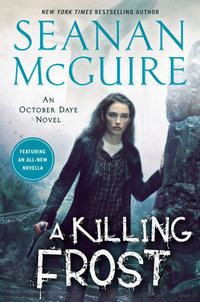
What’s A Killing Frost About?
Simon Torquill. Is there any name that promises as much upheaval to Toby Daye’s life as much as his? I’m getting ahead of myself, though. Actually, I could just answer my first question with his name and move on to the next section of this post…
Anyway, Toby takes a break from working with May to find a wedding dress that she a. likes and b. doesn’t mind getting covered in blood—because who are we kidding here, if Toby’s wearing it, it’s going to be covered in blood before the end of the day. She and Tybalt are out on a date, having a perfectly enjoyable time when they’re interrupted by Patrick and Dianda Lorden. The Lordens are worried that Toby’s lack of diplomatic training has opened her up to a problem.
See, if she doesn’t invite Simon Torquill to her wedding—thanks to some silly Faerie custom—she’s liable to create an opportunity for Simon or someone claiming to act on his behalf to attack her in a pretty grievous way. Of course, to invite him, she’s going to have to find him—and after The Brightest Fell, we all know that’s not going to be easy.
So, May, Quentin, Toby and Spike(!) head out to do the nigh-impossible, find Simon and get him to the wedding.
Wither art Thou, Tybalt?
Thanks to a warning from Karen, for everyone to survive, Tybalt can’t accompany Toby on this little quest. This is just about the most Tybalt-free book I can think of (second only to The Brightest Fell). When he’s around, it’s important that he is and he makes a big impact.
It’s strange to have him gone so much, but I think it worked pretty well as a change of pace and heightened the reader’s appreciation for him when he was around.
At one point, [name withheld] describes the relationship between Tybalt and Toby,
It’s clear to anyone with eyes how much he loves you, and I’ve held your blood on my tongue. Your love for him flavors everything you are.
In any other series, that might be disgusting/strange. But in this context? That’s one of the sweetest sentences I can think of.
There’s Just So Much I Can’t Talk About
Because I keep a pretty strict no-spoiler policy to these posts, there’s just so much that I can’t talk about that I really want to. Even if I spoiled things, I couldn’t talk about them too much because we’re going to need a book or five to figure out how things work out. McGuire’s one of the best at planting seeds and then seemingly ignoring them for several books just to have them spring up and bear fruit when you least expect it.
One of those forgotten seeds bears series-altering fruit here while she’s planting seeds relating to Walther and Cassie—but more importantly to Stacy. There’s a shattering scene with Luna and Sylvester. There’s something afoot with Rayseline, too. August does something surprising. Amandine’s furious by the end of the novel (that can’t be good). And we learn something blood-curdling about Eira Rosynhwyr that might make an enraged Amandine seem trivial.
And then there’s…yeah, you know what? I just can’t even hint at the rest. Go read it and we can talk.
So, what did I think about A Killing Frost?
This is not a book designed to welcome new readers to the series. I’m sure there’s enough to draw in someone who’s said to themselves, “I keep hearing about this series, I wonder what it’s about?” But really, it’s not a great entry point. If you’re one of those readers, drop a comment and I’ll try to give you a better entry point.
But for readers of this series? They’re going to be in hog-heaven. Take out all of the spoiler stuff I alluded to/avoided above, and you’ve got yourself a great Toby adventure, full of thrills, twists, grievous wounds, nasty curses, and heroism of all sorts.
Include the stuff I didn’t talk about? You’ve got a jaw-dropping novel full of so many heart-warming and heart-wrenching moments that it’d be hard to enumerate them. This isn’t McGuire’s best novel in the series, but it’s great. And fans will be discussing, dissecting and reveling in it for years.

This post contains an affiliate link. If you purchase from it, I will get a small commission at no additional cost to you. As always, opinions are my own.
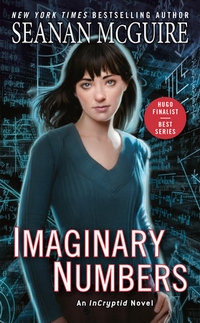
What’s Imaginary Numbers About?
The Price’s cousin, Sarah, the Johrlac (aka “cuckoo”) adopted by the family years ago and last really seen in Midnight Blue-Light Special—but mentioned in almost/every book since—has finally recovered from the events of that book (5 years ago, in the series chronology), or at least recovered enough to travel on her own. She’s still not at 100% (and is further from it than anyone but Sarah realizes).
She flies out to Portland to reconnect with the family out there, and while she does reconnect with the Prices, she also finds herself connecting to a bunch of other cuckoos. Which is something that the species just doesn’t do—these telepathic apex predators have developed in such a way that they can’t share territory for long at all. So the fact that you have a group of them working together spells trouble for Sarah and any cryptozoologists trying to keep the peace between the species (and, in this case, to preserve a spot for every species that isn’t a Johrlac to live).
That’s a little brief, but I don’t know how else to be.
Imaginary Numbers’ Place in the Series
It’s been five years in series’ time, seven years and seven novels in our timeline, since we spent any real time with Sarah. I remember really liking her as a character for the first two books and couldn’t believe McGuire would do what she did to her so soon out of the gate for the series. But over the years, as she’s been largely “off screen” recovering, I’ve pretty much forgotten everything about her and what made her click for me as a character. I remembered enough to understand what a big deal it was for Sarah and Artie to see each other and to be say all they needed to say. But beyond that…it’d just been too long for me. Maybe if I’d re-read Midnight Blue-Light Special recently (or ever), this wouldn’t have been a problem.
This is our fourth narrator (fourth plus? There’s a lot of this book not narrated by Sarah) in this series, and like most fans, I’ve embraced that as a feature and as a strength. But this one feels more like a sequel to the Annie books (the previous three novels) than we usually get with a narrator switch. There’s a direct connection between the events of Verity’s Chaos Choreography and Annie’s Magic for Nothing, and all the other books show an awareness of the others. But the cast from <‘b>That Ain’t Witchcraft is present and accounted for here, and Imaginary Numbers is happening in its shadow. This isn’t good bad or indifferent, it just gives this book a different vibe than I’m used to in this series.
And the way this ends is pretty different, too—McGuire hasn’t given us a cliffhanger (this is a pretty complete story, thankfully) before. It’s a good one, but, again, not something I’m used to in these books.
One of the advantages of the way this series is set up is that it can do things like this—each book, or each “set” of books*, can take on a different flavor, a different way of approaching the story, a different way to fit in the series, a different way to end a book. While all being part of a larger, overarching story. But there are some dangers with this approach, too. And right now I’m not sure what to think of the Sarah set’s approach.
* The initial “Verity” set, the “Alex” set, then the three “Annie”s and now, two (at least) “Sarah”s, I’m not sure how to group the Verity novel between the Alex and Annie sets.
Hail, Aeslin Mice!
There was much rejoicing here (and I’m betting among all fans) that the Aeslin Mice were back in these pages. If we took nothing else from their absence in the last two books, it’s just how important they are for the telling of these stories—they’re far more than comic relief (although they are that), and for me, the best emotional moments of this particular novel came from them.
So, what did I think about Imaginary Numbers?
I liked it, but not as much as I expected to, not as much as I wanted to. There was just so much space devoted to getting everyone caught up with Sarah (and reminding us who she was/what happened to her). Then another big chunk explaining Jorlacs—and then there was another exposition dump when the Johrlacs explained what was going on to Sarah (and then another chunk when it was explained to the Prices). Just so much talking that it felt like the story got pushed out of the way.
Based on the way this ended, I’m not sure I can actually say what I thought about the book. I might have to wait until the end of Calculated Risks. Still, I enjoyed it. I like this world, I like the characters. McGurie writes a good book, and is probably incapable of writing anything but.

This post contains an affiliate link. If you purchase from it, I will get a small commission at no additional cost to you. As always, opinions are my own.
I thought this would be a fun little tool to use to look back over the first part of 2020. I saw this one over on One Book More’s blog, and it seemed to have been created by Moon Creations.
What is the best book that you’ve read so far in 2020?
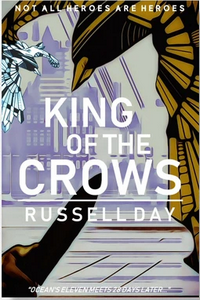
No doubt about it. Epic in scope, but with personal story at its heart. If I really start talking about it, I won’t shut up. I talked about it a little here.
What has been your favorite sequel of the first half of the year?
That’s a tough call, there’ve been a few. But I think I’m going to go with:
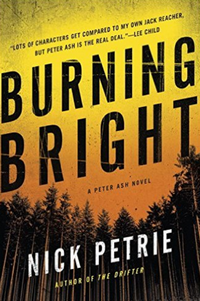
As I said here, I should’ve read this shortly after I read The Drifter in the summer of 2018. The third in the series, Light It Up is coming soon.
Is there a new release that you haven’t read yet but you’re really excited for?
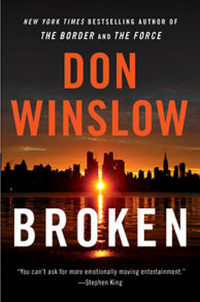
Broken by Don Winslow
Winslow’s The Border stands between Broken and me–so hopefully, I can get to this novella collection by September.
What is your most anticipated release for the second half of the year?
er, um…that’s a good question. I should probably say Betty by Tiffany McDaniel, because her debut novel was sood and I frequently have pretensions about being all literary and hoity-toity, proving that being an English Major wasn’t just a passing fancy. But if I’m being completely honest, there’s no contest:
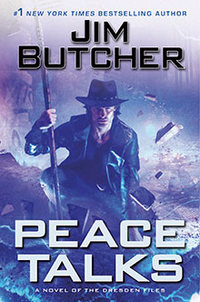 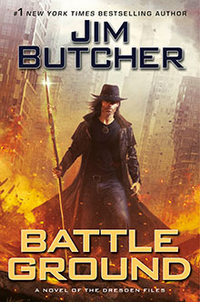
(it’s not cheating to say that–it was one book that was split into two…). I’m a rabid Dresden fanboy and we’ve been waiting so long!
What is your biggest disappointment so far?
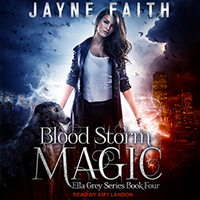
The Ella Gray series in general. I really enjoyed the way this series started, and while I never figured these would be in the Toby Daye/Harry Dresden league, I didn’t expect that I’d get to the stage where I was disappointed in them, but I hit there. I haven’t even posted about it yet, guess I spoiled that one, eh?
What is your biggest surprise so far?
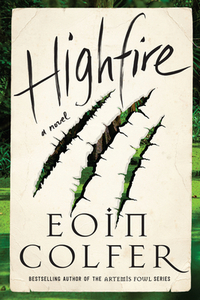
Highfire. I never expected Colfer to write a novel about a Dragon for adults–if anything, I expected something along the lines of Screwed or Plugged. So that’s surprise number one. Surprise number two is that the dragon is a Drunken, Netflix-binging, Lousiana swamp-dwelling, crotchety one. Funny and full of heart–entertaining from snout to tail.
Runners-Up: The Audiobooks Back to Reality by Mark Stay & Mark Oliver, narrated by Kim Bretton and The In Between by Michael Landweber, narratoed by Brittany Pressley and Mark Boyett.
Who is your favorite new to you, or debut, author?
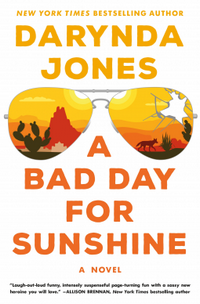
Darynda Jones has several novels published already, and I don’t think I’d heard of any of them until I was finished with this intro to her new series. She’s the favorite new to me author and the book has a couple of strong contenders for favorite new characters of 2020, as I stated here.
Who is your favorite fictional crush from this year?
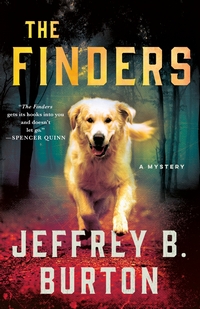
Elvira from The Finders by Jeffrey B. Burton
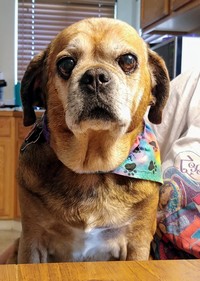
I’ve never gotten into the whole Book Crush thing–I’m already in a long-term relationship. Still, I have to admit, as happily committed as I am, there’s something about Vira, the tough, spirited, brilliant Golden Retriever with a troubled past that just makes me want to make her part of my pack.
But please, no one tell this girl that I said that:
What are 6 books that you want to read by the end of the year?
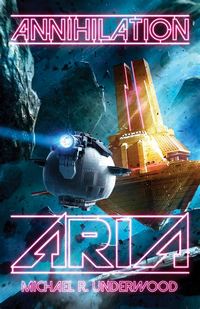
Other than Betty, Peace Talks, and Battleground, right? Five upcoming releases and one book I’m tired of beating myself up for not having read yet (not unlike Burning Bright above, I should have read the Cartmel book in the Fall of ’18)
  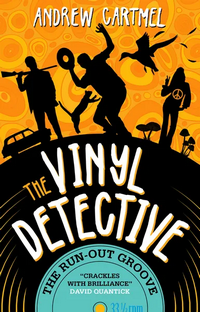
As usual, I’m not tagging anyone in this—but I’d like to see what you all have to come up with.
“Nothing ever goes according to plan,” Shast said. That was why contingencies existed. Layers upon layers of them.
That’s from Chapter 4. By the time the book ends 11 chapters later, Shast is going to a whole new understanding of that.
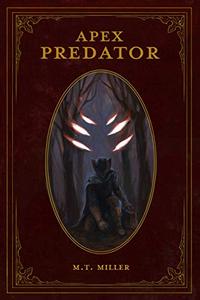
But I’m getting ahead of myself there’s some sort of monster infestation in a city—forces have been sent to take care of it–two different waves, actually. But they didn’t work. So now, The Culling–the organization that handles these kinds of things, has sent a full Hand to clear it out. A Hand is a team of five hunters, each with a different specialty. With those combined talents, they should be able to handle anything.
Only Shast and the most senior member of the Hand have worked together before, the other three are experienced, but not that much. It’s a diverse group of people who usually work along and there’s a good deal of bickering and being at loggerheads on the way to the city. Once there, once the hunt gets underway, that gets compartmentalized and the Hand gets to work.
For a completely foreign world—that we still don’t really know that much about (but we’re learning)—it’s a testimony to Miller’s story-telling that the reader is able to plug into their activities, get an idea what’s at stake and why they’re doing what they’re doing.
It doesn’t take long for every theory they have to be proven wrong, everything they try to not have any success. And before long, it’s clear that what they’re facing is something most of them had never heard of—or if they had, they thought was a myth. It’s not a myth, and soon the hunters are the hunted.
Interspersed with that story are flashbacks to a hunt from early in Shast’s career, and enduring that was pivotal in his development into the hunter that he is. He gained the perspective, the cold-heartedness that he requires to survive the hunt that’s the focus of this novel. I don’t remember Miller doing anything like this before, he pulls it off pretty well. There are times when you get a story like this that you really wonder what the flashback storyline has to do with anything, but I gave Miller the benefit of the doubt and was rewarded for it.
Last time out, I praised Miller’s design of monsters. This time, I need to do the same. I don’t remember reading monsters like this before—while they were completely original, I had no trouble getting a clear idea how these things looked or acted. They were disturbing, powerful and you have little trouble understanding why the Hand wants to destroy them.
Even better is his character design—each member of the Hand is a fully realized character–and we learn their backstory, culture, specialties, and the rest without ever feeling like we endured an info drop. Through them, we get a better idea how this world works and how the Culling developed. I’m still trying to get a handle on this world, not that it bothers me much, I know what I need to know—but I’m intrigued, I’m curious. I appreciate getting a little more information about this place.
Now in the first book of the series, Shast and his companions face off with a large and unprecedented force of monsters, but it’s something they can get a handle on, something they can understand and adapt to. This time, the Hand is completely blindsided and maybe outclassed. How he moves on from this point to book 3, I have no idea—I assume Miller has a few tricks up his sleeve and I’m looking forward to seeing what they are. In the meantime, I’d encourage you all to go pick this one up.
Note: I received a copy of this book from the author in exchange for this post and my honest opinion. I thank him for that.
This post contains an affiliate link. If you purchase from it, I will get a small commission at no additional cost to you. As always, opinions are my own.
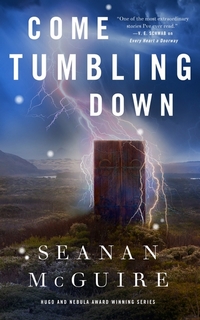
Eleanor West’s Home for Wayward Children was an island of misfit toys, a place to put the unfinished stories and the broken wanderers who could butcher a deer and string a bow but no longer remembered what to do with indoor plumbing. It was also, more importantly, a holding pen for heroes. Whatever they might have become when they’d been cast out of their chosen homes, they’d been heroes once, each in their own ways. And they did not forget.
I wanted to do an Opening Lines post for this book, but I couldn’t decide where to stop—maybe around page 6 (which is a little too long for that kind of post). Seriously, it took less than a page for me to fall in love with this book.
It’s a typical day at Eleanor West’s School for Wayward Children (assuming such a thing exists) when a door appears, but instead of someone getting to go to their “home,” two figures emerge. One is a complete stranger, the other is Jack. Well, sort of. Close enough for our purposes here.
Things on the Moors have gotten to a crisis point where only one of the Wolcott twins can survive—Jack or Jill. Jill has struck first and things are dire. Jack recruits a couple of her friends and classmates to return with her (she was relatively certain she could return them to the school) to aid her in confronting her sister. They used to be heroes, they will be heroes again—as often as needed—much to Eleanor’s chagrin.
Once in the Moors, a dark and nasty place to be sure, dangers that no one (save maybe Jack) could’ve predicted present themselves and threaten the lives of the students in horrible and chilling ways. Culminating in what appears to be a final encounter for the sisters.
I love the way that McGuire writes these books, and Come Tumbling Down is no exception. It is full of the typical whimsical, fantastic and nigh-poetic language and ideas. If you’ve read a Wayward Children book before, you know what I’m talking about. If you haven’t . . . it’s hard to tell you. Here’s a sample or two:
“This is terrible . . . I mean we knew it was going to be trouble . . . but this is bonus terrible. This is the awful sprinkles on the sundae of doom.”
“A little knowledge never hurt anybody,” said Sumi.
“Perhaps not. But a great deal of knowledge can do a great deal of harm, and I’m long past the point of having only a little knowledge.”
Sumi was Sumi. Spending time with her was like trying to form a close personal relationship with a cloud of butterflies. Pretty—dazzling, even—but not exactly companionable. And some of the butterflies had knives, and that was where the metaphor collapsed.
Jill had always been the more dangerous, less predictable Wolcott, for all that she was the one who dressed in pastel colors and lace and sometimes remembered that people like it when you smiled. Something about the way she’d wrapped her horror move heart in ribbons and bows had reminded him of a corpse that hadn’t been properly embalmed like she was pretty on the outside and rotten on the inside. Terrifying and subtly wrong.
“wrapped her horror movie heart in ribbons and bows” is pretty much worth the purchase price of the book.
I’m glad that I enjoy—relish, really—the language like I do, because there’s not a lot of plot or action here. There’s enough, but there’s an awful lot of talk both around and before the action really gets underway. That’s not a wholly bad thing, and I enjoyed all of it, it just seemed self-indulgent.
It felt to me that McGuire’s reached the point of diminishing returns with this one, it’s been one too many trips to the Moors and it’s time for other Wayward Children to get the focus. Thankfully, that seems to be the plan.
I don’t think this would be a great introduction to this series (but it would function okay that way) if you’re not going to read them all in order, I feel safe in saying that it needs to be read after Down Among the Sticks and Bones. This is a good way to return to the world and revisit some of these characters. I can’t wait to see what happens in the next volume.
This post contains an affiliate link. If you purchase from it, I will get a small commission at no additional cost to you. As always, opinions are my own.
Like last year, while trying to come up with a Top 10 this year, I ran into a small problem (at least for me). Crime/Thriller/Mystery novels made up approximately half of the novels I read this year and therefore dominated the candidates. So, I decided to split them into 2 lists—one for Crime Fiction and one for Everything Else. Not the catchiest title, I grant you, but you get what you pay for.
These are my favorites, the things that have stuck with me in a way others haven’t—not necessarily the best things I read (but there’s a good deal of overlap, too). But these ten entertained me or grabbed me emotionally unlike the rest.
Anyway…I say this every year, but . . . Most people do this in mid-December or so, but a few years ago (before this blog), the best novel I read that year was also the last. Ever since then, I just can’t pull the trigger until January 1. Also, none of these are re-reads, I can’t have everyone losing to books that I’ve loved for 2 decades that I happened to have read this year.
Enough blather…on to the list.
(in alphabetical order by author)
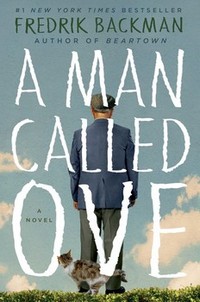
by Fredrik Backman, Henning Koch (Translator)
My original post
I’ve been telling myself every year since 2016 that I was going to read all of Backman’s novels after falling in love with his My Grandmother Asked Me to Tell You She’s Sorry. The closest I got was last year when I read his first novel, A Man Called Ove (and nothing else). It’s enough to make me resolve to read more of them, and soon. The story of an old, grumpy widower befriending (against his will, I should stress) a pretty diverse group of his neighbors. It’s more than that thumbnail, but I’m trying to be brief. The story was fairly predictable, but there’s something about the way that Backman put it together that makes it perfect. And even the things you see coming will get you misty (if not elicit actual tears).

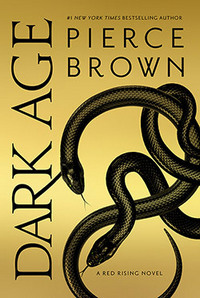
by Pierce Brown
My original post
When I started reading this, I was figuring that Pierce Brown’s Red Rising Saga was on the downward trend. Boy, was I wrong. Dark Age showed me that time after time after time after time . . . Entertaining, occasionally amusing, stress-inducing, heart-wrenching, flat-out captivating. It was brutal and beautiful and I can’t believe I doubted Brown for a minute.
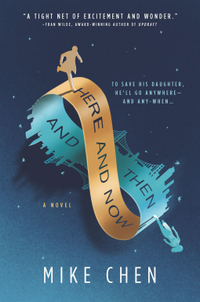
by Mike Chen
My original post
One of the best Time Travel stories I’ve ever read, but it’s so much more—it’s about fatherhood, it’s about love, it’s about friendship. Heart, soul, laughs, and heartbreak—I don’t know what else you want out of a time travel story. Or any story, really. Characters you can like (even when they do things you don’t like), characters you want to know better, characters you want to hang out with after the story (or during it, just not during the major plot point times), and a great plotline.

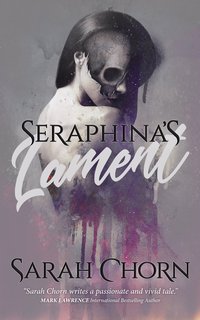
by Sarah Chorn
My original post
Chorn’s prose is as beautiful as her world is dark and disturbing. This Fantasy depicts a culture’s collapse and promises the rebirth of a world, but getting there is rough. Time and time again while reading this book, I was struck by how unique, how unusual this experience was. As different as fantasy novels tend to be from each other, by and large, most of them feel the same as you read it (I guess that’s true of all genres). But I kept coming back to how unusual this feels compared to other fantasies I’ve read. The experience of reading Seraphina’s Lament isn’t something I’ll forget any time soon.
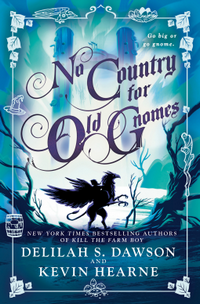
by Delilah S. Dawson and Kevin Hearne
My original post
Having established their off-kilter world, strong voice, and approach to the stories of Pell, Dawson and Hearne have come back to play in it. The result is superior in every way that I can think of. I lost track of how many times I said to myself while reading something along the lines of, “how did they improve things this much?” These books are noted (as I’ve focused on) for their comedy—but they’re about a lot more than comedy. The battle scenes are exciting. The emotional themes and reactions are genuine and unforced. And tragedy hits hard. It’s easy to forget in the middle of inspiring moments or humorous aftermaths of battle that these kind of novels involve death and other forms of loss—and when you do forget, you are open to getting your heart punched.
(but mostly you laugh)
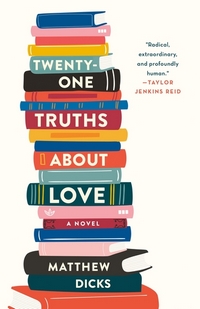
by Matthew Dicks
My original post
It’s an unconventionally told story about a man figuring out how to be a businessman, husband, and father in some extreme circumstances. The lists are the star of the show, but it’s the heart behind them that made this novel a winner.
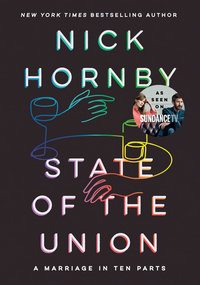
by Nick Hornby
My original post
This series of brief conversations held between a married couple just before their marriage counseling sessions. At the end of the day, this is exactly what you want from a Nick Hornby book (except the length—I wanted more, always): funny, heartfelt, charming, (seemingly) effortless, and makes you feel a wide range of emotions without feeling manipulated. I loved it, I think you will, too.
by Lisa Lutz
My original post
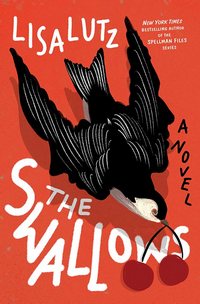
This is not my favorite Lutz novel, but I think it’s her best. It has a very different kind of humor than we got in The Spellman Files, but it’s probably as funny as Lutz has been since the third book in that series—but deadly serious, nonetheless. Lutz puts on a clinic for naturally shifting tone and using that to highlight the important stories she’s telling. From the funny and dark beginning to the perfect and bitingly ominous last three paragraphs The Swallows is a winner. Timely and appropriate, but using tropes and themes that are familiar to readers everywhere, Lutz has given us a thrilling novel for our day—provocative, entertaining, and haunting. This is one of those books that probably hews really close to things that could or have happened and you’re better off hoping are fictional.
by Ian Shane
My original post
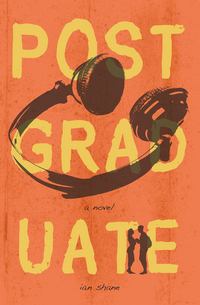
This has the general feel of Hornby, Tropper, Norman, Weiner, Russo (in his lighter moments), Perrotta, etc. The writing is engaging, catchy, welcoming. Shane writes in a way that you like reading his prose—no matter what’s happening. It’s pleasant and charming with moments of not-quite-brilliance, but close enough. Shane’s style doesn’t draw attention to itself, if anything, it deflects it. It’s not flashy, but it’s good. The protagonist feels like an old friend, the world is comfortable and relaxing to be in (I should stress about 87.3 percent of what I know about radio comes from this book, so it’s not that). This belongs in the same discussion with the best of Hornby and Tropper—it’s exactly the kind of thing I hope to read when I’m not reading a “genre” novel (I hate that phrase, but I don’t know what else to put there).
by Abbi Waxman
My original post
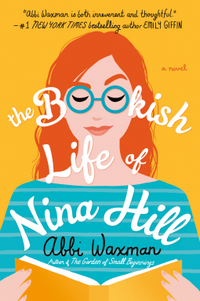
This is a novel filled with readers, book nerds and the people who like (and love) them. There’s a nice story of a woman learning to overcome her anxieties to embrace new people in her life and heart with a sweet love story tagged on to it. Your mileage may vary, obviously, but I can’t imagine a world where anyone who reads my blog not enjoying this novel and protagonist. It’s charming, witty, funny, touching, heart-string-tugging, and generally entertaining. This is the only book on this particular list that I know would’ve found a place on a top ten that included Crime Novels as well, few things made me as happy in 2019 as this book did for a few hours (and in fleeting moments since then as I reflect on it).
Books that almost made the list (links to my original posts): Not Famous by Matthew Hanover, Circle of the Moon by Faith Hunter, Maxine Unleashes Doomsday by Nick Kolakowski, In an Absent Dream by Seanan McGuire, The Rosie Result by Graeme Simsion, and Lingering by Melissa Simonson
|