Category: P-U Page 29 of 36

Robert B. Parker’s Blind Spot by Reed Farrel Coleman

This should’ve been done at the beginning of the month, but I wanted to do this book justice, and if I couldn’t hit this out of the park, I didn’t want to swing. Also, (this is partially justification for the delay) I wanted to think about it some before putting pen to paper, so to speak. But it’s now at the point that if I didn’t get something written, I wasn’t going to — so I just did my best, and hopefully have a base hit here. As for thinking about this? Pretty sure I haven’t had a new thought about the book since I put it down — and I’ve thought about it a good deal — I’m just less prone to hyperbole about how great it is now.

Robert B. Parker's Blind SpotRobert B. Parker’s Blind Spot

by Reed Farrel Coleman
Series: Jesse Stone, #13

Advance Review Copy, 339 pg.
Putnam Adult, 2014
Read: August 1 – 5, 2014

One of the major drags (I’d imagine) for the writer in Coleman’s position is all the comparisons — to Parker himself, and to Michael Brandman. But, I don’t really have a choice, how else to you talk about the merits of the 13th book in a series without comparing it to the previous? I guess you could act like this was the first in a series, but that just disrespects what’s gone before (however much one might want to forget some of that).

I know I’ve said a lot of this before — this will (probably) be the last time: When Night Passage was released, I was hooked immediately. Spenser’s series was in the midst of the really rocky post-Taming a Sea Horse period, and it was so refreshing to see Parker really on his game, and with something so fresh, so different. He kept that up for three additional books, and then the series started slipping in quality. I kept buying and reading them — there’d always be a few lines or a couple of chapters that had that ol’ Parker magic, and I liked the characters, but a couple of these were the worst things that Parker ever published. Then following his death, Michael Brandman tried to carry on in three books, none of which were good, and were generally worse than anything Parker had done on a bad day. So, I was pretty hopeful and enthusiastic when it was announced that Reed Farrel Coleman was going to take over the series — at this point, all I’d read by him was his essay about Jesse in Penzler’s In Pursuit of Spenser, but that was enough to get me hopeful.

Unlike what Atkins is doing (pretty well) with Spenser — trying to retain Parker’s voice; and what Brandman did (disastrously) with Jesse — trying to keep the feel of the CBS/Selleck movies; Coleman is keeping the characters and the world, but writing them in his own voice (or maybe not his natural voice, but in a voice unique to him). This, coupled with Coleman’s own strengths as a writer, gives Jesse Stone a freshness, a richness, and a quality that’s been missing since the end of 2003’s Stone Cold. Just in word count alone, Coleman shines above the sparseness of Parker’s writing — it doesn’t feel bloated, it’s well-paced, but Coleman takes a lot more time and words to tell his story — this is a strength, everyone gets fleshed out. Ideas are followed up on, shades of gray are introduced to events — this is a more complex novel than others in the series.

There are, of course, several references to events and people in earlier books — far more than is typical for a Jesse Stone novel. Some of them come across as natural, others are more like nods to the reader, some feel like Coleman trying to establish his bona fides — “Trust me, I know the series.” At this point, I welcome them all — I like to be reassured, I like being reminded of books I liked — but if he keeps it up at this pace, it could get old really quick.

One of thing that gets mentioned in every Jesse Stone novel is that he was in the Minor Leagues and probably would’ve made it to the Major League, if he hadn’t suffered a career- ending injury. He keeps a large picture of Ozzie Smith on prominent display in his sparsely furnished and decorated home. He tosses a ball into an old glove while he thinks. It is the great unknown in Jesse’s life — and probably what really got him drinking seriously. He knows that he and Jen couldn’t ever make it work (as much as he still wants it to), he knows what kind of cop, employee, and leader he is — he even knows just how much his drinking is messing up his life. What he doesn’t know? Could he have made the Big Leagues? Could he have been a great — or even just good — player. But we’ve never seen Jesse spend much time on that — a little here and there. An occasional toast in the general direction of Smith’s picture. But that’s it, until now. Now Coleman gives us a Jesse brooding over how things turned out — a few times, beyond brooding and moved right into nasty and bitter. It never occurred to me before how little Jesse thinks about this chapter in his life — maybe it’s because Parker (apparently) lived without a good deal of self-reflection that he didn’t know how to write Jesse doing just that. I don’t know, but it was a mistake — and I’m glad that Coleman has addressed it. It doesn’t need to become an obsession or anything, but something that he thinks about from time to time is good. It might even be healthy.

Jesse’s ruminations on his thwarted career are prompted by a reunion of his Minor League team, hosted by the only member of that group to make it to the Major League, Vic Prado. During the festivities, both Vic and his wife approach Jesse individually, saying they want to talk to him about something. Neither tells him what they want to talk about, but it’s serious, and has nothing to do with a reunion. Meanwhile, in Paradise, a rich college kid and his girlfriend are crashing his parents’ vacation home for some undisturbed time together. One will be killed and the other kidnapped. Add in a vicious mob boss and his Irish enforcer, a wealthy man and his criminal defense lawyer. a federal agent obsessed with a target, and one of the scariest hit-men I can remember. The result is a novel with a lot of moving pieces, shifting targets and high stakes. That said, it didn’t take long to figure out what’s going on with the various and sundry criminal interests and enterprises involved here — but it’s still very intriguing to watch the pieces be put in place until there’s a very clear picture of everything that’s going on .

Coleman took better advantage of what a third-person omniscient narrator could do than Parker ever did. Not only are we told Jesse’s story, we see a lot more of the stories of the other characters — particularly the various criminals running around here. In the end, I felt like I understood why each character did something, and who they were in general — not just Jesse’s interpretation of their motivations.

There were a lot of little moments in this book that worked so well, that moved this out of the range of Brandman — and out of the range of a lot of books in the genre. Two examples were the chapter where the “woman the folks in Scottsdale knew as Dee Harrington” evaluated her last (and lost) opportunities, and came to some big decisions — and the chapter where the parents of the murder victim arrive with Molly to identify the body. The way that Coleman is able to reveal and establish character, or to underline what we knew about other characters while showing us new sides or aspects to them, is such a pleasure to watch. Character and plot development aside, just some of what he’s able to say about the human experience is impressive.

Of course, at one point, Jesse comes across a woman being harassed by tough guy of some sort. Rather than mind his own business, arrest the guy (he has an excuse this time — he’s out of his jurisdiction), or involve some other authority; Jesse proceeds to beat the guy up. It’s borderline gratuitous, and it’s fairly typical of the series. We get a little flash of the mean, brutal side of Jesse that he normally keeps under wraps, but that really informs most of his life; this is also a bit of Jesse letting off steam from the frustrations of his murder case, there’s also a bit of chivalry. This is really Jesse Stone in a nutshell. This does nothing to the overall search of the killer and for answers for what’s behind the kidnapping. But it reminds us about the person that Jesse Stone is — he’s hard, he’s not that emotional, and he has a very strong sense of what’s legitimate and what’s just wrong when it comes to public behavior.

Seeing echoes of Harry Bosch’s creed of “Everyone matters or no one matters” in John Ceepak last year started me looking for things that revealed other detective’s guiding philosophies, or drives, and doing so has helped me understand a lot of these characters better (whether it’s a new character to me or one that I’ve been reading for years). When Jesse arrives at the initial crime scene, we’re given insight into what makes Jesse the cop he is:

Jesse understood that his demeanor at crime scenes sometimes led his cops to believe he thought hat one corpse was like the next, that one murder victim was like any other. He supposed that it was okay for them to believe that. He also supposed it was true, if not completely. Every murder victim deserved justice, needed an advocate. Just as every living citizen was entitled to equal protection under the law, so too were the murdered entitled. Yet some victims were more equal than others. Maybe that wasn’t fair or right, but it was human, and cops were owed that much leeway.

There’s a semi-redemption for one of the criminals involved in this mess that struck me. It’s not one that I think Parker would’ve given that particular guy — I’m not altogether sure that Parker would’ve paid as much attention to him as Coleman did. However, both the character and his semi-redemption are consistent with Parker’s world. Jesse, Spenser, Virgil and maybe even Hawk, would approve of this guy’s change, his reasons for doing so and how he attempted it.

There’s one other character I’d like to talk about, but I can’t quite figure out how to do so without spoiling far too much. But if you read the book, you’ll understand the one sentence I’m allowing myself, “I found myself really liking __________, and hope we see a lot more of her in future novels.”

I do have a few minor gripes and I’m going to list all of them to provide a little balance (I feel like I’m gushing more than is becoming). Some word choices repeated too often (at least often enough that one noticed). The way that the Joe Breen talked seemed off somehow — and not in a purposeful way. I either got used to it, or eventually Breen’s dialogue improved, I got too involved in everything else about him that I forgot to track that.

I’m not loving the fact that Jen comes back into the picture, while he was never really going to get over her, Jesse seemed to have moved on in Parker’s last books. But, Coleman did brought her back in just the right way, so I’m only complaining about it as a formality.

My real problems are about the way that Suit and Molly were treated. Coleman says that he loves Suit (“How can you not?” he correctly asks in some of the promotional material). But he doesn’t use him as much in this book as he should. Coleman nails every line involving Officer Simpson, which is encouraging, but there aren’t enough of them.

I have three distinct problems with the way he used and depicted Molly. There’s a set banter between Jesse and Molly — she’ll say something disparaging or critical (in jest or not) about him, he’ll echo her jab adding “Chief” to the end — and she’ll eventually do the same. It’s cute enough, and Parker over-used it, too. But not as much as Coleman did — wow, dude. You’re on the verge of parody here. Honestly, Coleman might use the catchphrase as frequently as Parker did, but since Coleman has more Molly/Jesse conversations in this book than in a typical Parker, it seems worse.

Secondly, yes, Molly had one brief dalliance with Crow back in Trouble in Paradise, and yes, Jesse has brought it up on occasion. But Coleman has the Chief doing so several times in this book — almost brow-beating her with it. I don’t have a count, but I’d be willing to believe Jesse brings it up as often here as he has in the last ten books. Hyperbole aside, it seems out of character.

Lastly, in various points in the past, we’ve read, “Molly Crane had a pretty good body, Jesse thought, for a cop with three kids.” Parker’s Jesse keeps using that qualifier “for a cop with three kids.” But in this book we get a different kind of reaction — at least from the other males that see her (I don’t remember Jesse reflecting on her body in general or on specifics of it like others do). Maybe Molly’s been spending time with Tony Horton DVDs, I don’t know, it just didn’t feel right to read the comments made about her. Part of Molly’s appeal is that she’s — for lack of a better term — “real.” She’s not the glamorous type from Los Angeles. She’s a small-town cop and a Roman Catholic mom of three. Keep her that way.

None of this is a deal killer for me, but I hope that Coleman makes some adjustments to the way he uses Molly in the future, and that he just uses Luther “Suitcase” Simpson more.

All in all — a great read. Coleman has made Jesse Stone his own, while maintaining the universe that Parker created. Lee Goldberg said that Coleman “has saved Jesse Stone.” Indeed he has, and I’m so happy to be able to say that.

One more comparison to Parker before I’m done — not in his almost 70 novels did Parker end one like Coleman did here. Bravo. It was a gutsy move and it worked just the way you want an ending like this to. Jesse Stone #14 can’t hit the shelves fast enough.

Note:I received this book as an uncorrected proof from the publisher. Which was generous and cool of them, but didn’t impact what I said about the book, I care too much about Jesse to be swayed by that (which isn’t to say I couldn’t be bought if someone wanted to try). I’ll endeavor to verify my quotations with the printed book as soon as I can.

—–

5 Stars

Landline by Rainbow Rowell

LandlineLandline

by Rainbow Rowell

Hardcover, 310 pg.
St. Martin’s Press, 2014
Read: August 13, 2014

If the last few years have taught us readers anything, it’s that if you want quirky, honest, heart-felt romance with real (and usually moderately overweight) people and solid laughs, Rainbow Rowell will consistently deliver for you. And if you don’t think you want that, after you read her, you’ll realize that’s just what you wanted after all. She has two YA books and now two Adult books to her credit. Her latest, Landline delivers the typical Rowell magic in her story, but this time she included something else: actual magic. Sort of.

Georgie McCool is half of a pretty successful TV writing team who are thiiiiis close to being much more successful, all they have to do is crank out a handful of scripts in the next couple of weeks and they’re in a great position to sell their first series. The catch is, this involves working over Christmas — despite Georgie’s plans to go to her mother-in-law’s in Omaha with her husband, Neal and their two daughters. Georgie says that she can’t pass up this opportunity, so Neal and the girls go off without her.

Georgie sees this as a regrettable occurrence, but one of the sacrifices she has to make to get her dream show made. Her mother, step-father and sister see it as her husband leaving her, and Georgie ends up staying with them. Which gets Georgie to worrying — especially when she can never seem to reach Neal on the phone during the day. At night, however, when her iPhone battery is dead, she has to resort to the landline in her old room and she ends up talking to Neal back before they got engaged.

Don’t ask. It makes no sense. She never bothers to explain. And it doesn’t matter. Georgie eventually figures out that’s what’s going on and she rolls with it, and the reader does, too.

These conversations, as well as the absence of her family, lead Georgie on a path down memory lane, reflecting on the beginning of their relationship and how it changed as they did. Maybe Neal had made a mistake choosing her. Maybe she’d ruined her life (and his) by choosing him. Would they have both been better off going their separate ways? Or was there something worth fighting for now? Would that matter? The clock is ticking — for Georgie’s marriage (both now and then) and her career. Is she up for it?

The tension is real, the apprehension, fear, and self-doubt (for starters) that Georgie is wrestling with is very obvious and palpable. Yet while focusing on this, Rowell’s able to create a believable world filled with a lot of interesting people. There’s Georgie’s partner/best friend, Seth and another writer on their current (and hopefully future) show — and Georgie failing to hold up her end of things there, as much as she tries.

Then there’s her sister, mother and step-father. They’re much better developed (probably only because we spend more time with them). Her mother’s a pretty implausible character, yet not a cartoon, she’s a pug fanatic, married someone much younger than her, and generally seems really happy. Her sister’s about done with high school and is figuring herself out (and mostly has) — she’s a hoot, and my biggest problem with the book is that we don’t get more of Heather. Not that there wasn’t plenty of her — and it’d require the book to take a far different shape. We get whole storylines about all the non-Neal people in her life, little vignettes showing us their character, giving us smiles in the midst of Georgie’s crisis, like:

“Kids are perceptive, Georgie. They’re like dogs”–she offered a meatball from her own fork to the pug heaped in her lap–“they know when their people are unhappy.”
“I think you may have just reverse-anthropomorphized your own grandchildren.”
Her mom waved her empty fork dismissively. “You know what I mean.”
Heather leaned into Georgie and sighed. “Sometimes I feel like her daughter. And sometimes I feel like the dog with the least ribbons.”

Not only do the supporting stories, or even the little moments like this fill out Georgie’s world and make it more interesting, they provide a breather for the reader from having to deal with the disintegrating marriage.

I know some people think we spend too much time in flashbacks, where Georgie’s remembering how she and Neal met, got to know each other, and started seeing each other, etc. But we need that. If all we get is Neal in the present, or past-Neal on the phone, we’re not going to care enough. Especially in the first couple of scenes we get with Neal, it’d be real easy to see him as unsympathetic — the guy holding Georgie and her career back. We need these flashbacks so the reader can sync their feelings about Neal with Georgie’s, so that when we read something like:

Georgie hadn’t known back then how much she was going to come to need Neal, how he was going to become like air to her.
Was that codependence? Or was it just marriage?”

or

She needed him.
Neal was home. Neal was base.
Neal was where Georgie plugged in, and synced up, and started fresh every day. He was the only one who knew her exactly as she was.

find ourselves agreeing with her, or at least seeing why she says it.

At the end of the book, there’s a lot of plot lines dangling — some very important ones, actually. Enough so, that normally, I’d devote a paragraph to complaining about it. But I won’t this time — it works for Landline. There’s a lot for Georgie to work out herself, she’s really only settled on the one most important thing, leaving the rest to be resolved another day. And that’s got to be good enough for the reader.

Not her best, but Rowell on an off day is still really, really good.

—–

4 1/2 Stars

In Medias Res: Landline by Rainbow Rowell

as the title implies, I’m in the middle of this book, so this is not a review, just some thoughts mid-way through

—–

Landline
Landline

by Rainbow Rowell

I’m on page 153 of 308 — as close as you can get to half-way (at least if you stop at the end of a chapter), and I’m all in on this book. It’s told with Rowell’s trademark warmth and charm. It’s funny, but not hilariously so; tragic, but not heartbreaking (yet); romantic, without being sappy; and real, without being . . . non-fiction?

Yeah, okay, that sentence got away from me.

This is a story about a marriage on the rocks, about the beginning of this romance, maybe about its end, friendship, priorities, and a magic telephone. Most of these are themes not new to Rowell, but that are in constant demand as fodder for stories. Rowell’s doing a bang-up job so far, I’m really pulling for this couple (in both the beginning and at the later part of the relationship). As always, Rowell gives us real people — people we could know, people we would befriend, people we could be.

At this point, I can see a few ways this could end — all of which are entirely justified by what’s come so far, and the vast majority of them end with me risking alcohol poisoning. I’m really liking Georgie McCool that much (and yes, that is her real name).

Review Catch Up: Broken Homes; Black Arts; The Player; Speaking from Among the Bones

I’ve got a backlog of 50 or so reviews I’ve been meaning to write — some of them, I just have to admit aren’t going to get done. But I’m going to try my level best. The four books I’ve decided to tackle in one fell swoop are books I enjoyed, from series I enjoy, and yet I’ve had trouble reviewing them. In the end, I decided that was because by and large, I don’t have anything to say about these books that I haven’t said about others in the series.

But I do want 1. clear these off my to-do list and 2. more importantly, encourage readers to give these a look. So, without further ado:

Broken Homes (Peter Grant, #4)Broken Homes

by Ben Aaronovitch
Series: The Rivers of London, #4

Mass Market Paperback, 324 pg.
DAW, 2014
Read: February 15, 2014

The plot took its own sweet time getting where it was going, with a lot of strange little turns here and there — which works because it’s probably what actual policemen go through investigating a crime. But almost doesn’t work because it makes it feel like Aaronovitch didn’t pace this correctly (which is silly, because he did).

I really, really liked the undercover stuff. The conclusion is probably the best that this series has been. It’d be great if Peter learned a bit more though, his stumbling efforts are amusing, but it’s time for more proficiency.

I’m eager for the next one of these (and would be even without the big twist) — such a great world he’s created here, and I want to learn more about it and the characters that inhabit it.
4 Stars

—–

Black Arts (Jane Yellowrock, #7)Black Arts

by Faith Hunter
Series: Jane Yellowrock, #7
Mass Market Paperback, 325 pg.
Roc, 2014
Read: March 25 – 29, 2014

What’s to say about this one, that I haven’t said about other books in the series already?

The action’s tight, the vamp politics and Jane’s interaction with it are pretty interesting, Faith’s coming to grips with more of her background was really compelling, and her growing relationship with the brothers is fun.

Obviously, this is the most personal case that Jane’s had yet — for someone to be messing around with Molly, that’s just beyond the pale. Those raised stakes (pun fully intended), and the ongoing drama with Leo’s grip on the New Orleans vampires made this the best of the series.
4 Stars

—–

The Player: A Mystery (Carter Ross, #5)The Player

by Brad Parks
Series: Carter Ross, #5

Hardcover, 336 pg.
Minotaur Books, 2014
Read: April 1 – 4, 2014

What’s to say about this one, that I haven’t said about other books in the series already?

A lot of fun — great characters, love Carter’s voice, everything that you want to see in a Carter Ross novel was here — twisty conspiracy, some good laughs, Carter’s personal life in shambles. It was nice to meet his family.

Sadly, I’m at a loss for words here (something that never seems to be Carter’s problem), this was a lot of fun. I want a lot more of these.
4 Stars

—–

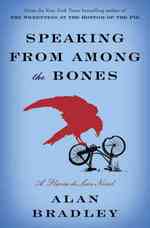
Speaking from Among the Bones (Flavia de Luce, #5 )Speaking from Among the Bones

by Alan Bradley

Hardcover, 372 pg.
Delacorte Press, 2013
May 16 – 14, 2014

Flavia’s her typical charming, precocious, incorrigible self. Perhaps a bit more clever than we’ve seen her before, definitely with less a sense of self-preservation than we’ve seen previously. Her sisters are a bit, more human? Or maybe Flavia’s portraying them more honestly/more sympathetically. The financial pressures her father’s under are more and more pressing, causing everyone to be a bit more realistic, it seems.

Still, that doesn’t deter Flavia from doing her thing when a body is discovered. It’s everything you want in a Flavia de Luce novel — very, very smart conclusion to this mystery.
3 Stars

The Sound and the Furry by Spencer Quinn

The Sound and the Furry (A Chet and Bernie Mystery #6)The Sound and the Furry

by Spencer Quinn
Series: Chet and Bernie, #6

Hardcover, 320 pg.
Atria Books, 2013
Read: July 23, 2014

I cannot think of another narrator in contemporary fiction as charming, as relateable, as endearing Chet — unreliable as all get out, but utterly trustworthy. I’m sure there are readers out there who are not susceptible to Chet’s canine charms, but I’m not one of them. I chuckle, I laugh, I am drawn in instantly — and as long as the stories are passable, that combination is a winner.

Thankfully, usually the stories are more than passable, which is just frosting on the cake. This time out, the Little Detective Agency finds itself on the road to New Orleans, of all places — a far cry from their normal stomping grounds. It’s good to see Quinn shake things up a little, he can’t be as dependent on things like Bernie chasing down a former C.I. or a familiar source of information. They also don’t know the lay of the land at all, and Bernie has to acclimate himself quickly.

Sure, some of Quinn’s tropes are here — Bernie not making sound financial choices, Chet causing a little trouble (tho mostly charming people), Chet getting separated for a time from Bernie (although this time it felt more organic than in any other of these books — I was a little bit into the separation before it dawned on me that, “yup, it’s about time for this”). But that doesn’t detract from the change in setting — or make it seem like less of a change. Instead, the presence of Quinn’s usual moves just underlines their universality.

It’s not uncommon for the sidekick of a detective to notice something missed by their associate — and it’s not uncommon for the sidekick to be unable to get the detective to see what they want them to/understand what they’re excited about, etc. And in almost any other detective novel where the detective is so clueless about so much of what the sidekick notices would be full of griping and complaining from the sidekick (justified griping, but griping, nonetheless). Not these books , however – except for his questionable financial decisions, Chet can’t even think of Bernie negatively, and he forgets anything that approaches negative almost instantly. This leaves the reader to chew on all the clues that Bernie’s missing while Chet’s focused on other things. I Love that. Typically, it’s the detective that has access to clues before the reader/independent of the reader (and that’s true here to an extent) but these books turn the tables on that, giving us readers the advantage.

Don’t know of its because Chet’s a dog, or if Quinn’s just that good at what he does (or some other thing), but when Chet’s in danger I get tenser than I do reading just about anything else — even if the danger’s not that great ultimately. But when Chet tussles with a certain critter in this book, I know my adrenaline levels jumped up and I read a lot faster just so I could get to the resolution of the fight.

My main (only?) problem with the book is its treatment of Suzie Sanchez. She seemed more like a refugee from Three’s Company than the reporter we’ve come to know and like. Quinn’s bounced between from treating her as a strong, capable character and this disappointment — she deserves better (as do Bernie & Chet, and the readers). If I’m drawing the right inferences from the cover image on the seventh Chet & Bernie book, it looks like he’ll give it a shot. If I’m wrong, Quinn should just write the character out of the series and start over with a new love interest.

We’ll never see it — I don’t imagine — but Chet kept hinting at this deeper, darker story, this side of Bernie we haven’t really seen (I think we’ve gotten glimpses before, but nothing like in this book). The kind of thing that belongs in a far more hard-boiled novel than this one. And unless we get someone else’s point of view, we’ll never see this side of Bernie in full because Chet can’t really admit it to be true. But we got a few hints this time — I sure wouldn’t want to be on the wrong side of Bernie.

Until then, we get these light, joy-filled mysteries equal parts puzzle and entertainment. Who’d ask for more?

—–

4 Stars

Shield and Crocus by Michael R. Underwood

Shield and CrocusShield and Crocus

by Michael R. Underwood

Paperback, 391 pg.
47 North, 2014
Read: June 26 – July 02, 2014

The level of detail in this world is astounding, it reads like it could be the 4th installment or so in a long-running series — the worldbuilding is just fantastic. I don’t know for a fact that Underwood has the history of Audec-Hal, of these races all mapped out for centuries before, and these characters lives detailed going back to birth — but it reads that way. He seems to know them all that well — but best of all, he doesn’t share all the homework he’s done with you, but you can tell he’s done it. The care, the detail, the intricacy, the strangeness of all of this — I mean strange in a good way, that somehow makes total sense in context — is so impressive. I don’t think I can adequately express my appreciation of the imagination and craft here.

We come into this city which is a shadow of itself — no longer in the heyday of its republic, it’s now a city controlled by competing tyrants. Where the citizens live in a sort of fearful servitude, a new generation being raised to know only this reality, and their elders in danger of forgetting what came before. Now where most writers would put a scrappy insurgency here, made up of soldiers, former government officials, and young ideologues, Underwood zigs instead of zags. Instead? We get the Justice League — or maybe the Justice Society (last time I checked, JSA was more welcoming of elderly heroes) — a band of costumed vigilantes doing what they can to destabilize the tyrants and protect the citizenry.

Right there, that’s enough. I’m in. I’m buying the T-shirts, pre-ordering any sequels, seeking out fanart (feel free to direct me to any shirts or art, btw).

The team’s leader, the Fist Sentinel is a Batman/Blue Beetle (Ted Kord)-esque figure. Getting by on his wits, fists and gadgets (tho’ some of his are magic, something that Batman and Beetle couldn’t say). He’s advanced in years, and doesn’t have much fight left in him, but he’s too stubborn/committed to quit. Then there’s the Shield — a sort-of guardian of the city, a mystic mantle that passes to new bearers after the death of the previous — a literal shield, which gives the bearer increased strength, etc. is the mark of the mantle. The current Shield is the Sentinel’s adopted son — think Captain America dosed by magic instead of revolutionary science. There’s a speedster, a woman with super-strength, someone who can control rocks with her mind, someone with mental powers — and a loosely organized group of mundane types who act as spies.

I’m getting into recapping too much here — this should be enough to whet your appetite. And there’s so much more to say in the setup, the details, the people.

Wonderfully told, well-plotted, well-paced. It’s everything I hoped and expected from Underwood.

But.

I didn’t care about these people. I was curious how things would turn out, I was pulling for The First Sentinel and the Shield. But honestly? I didn’t care about them. I know Underwood is capable of making me care about characters — seemingly effortlessly. But something here was off. I’m able to rave about this as a display of care, skill, and imagination — but there’s a distance between the reader and the characters and I just don’t think he bridged it.

A couple of items other things worthy of note: Both before and immediately upon release, I heard a lot of talk about the map in this book — which seemed a bit odd, but then I saw the map. It is so cool. Possibly the greatest map in the history of fantasy fiction — it’s like nothing you’ve seen before. Underwood states, “It all started with a doodle on the back of a grocery list. Now, rendered by a professional, it is amazing. :)” He’s right. The cover art’s pretty great, too.

Basically, this is a book I admire more than I enjoyed. What Underwood constructed here was fantastic, I just couldn’t connect with it emotionally the way I wanted to (the way I can with most of the people in his Ree Reyes series). His care for the world, for his characters is more than evident. He just didn’t do enough to get me to share that. Your results may vary, you might think I’m out to lunch here. That could be — I still really recommend this novel, just not as strongly as I’d expected to.

—–

4 Stars

Dusted Off: Fool Me Twice by Michael Brandman

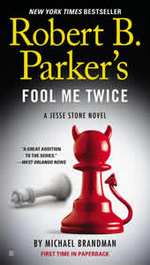
Robert B. Parker's Fool Me Twice (Jesse Stone, #11)Robert B. Parker’s Fool Me Twice

by Michael Brandman
Series: Jesse Stone, #11

Hardcover, 288 pg.
Putnam Adult, 2012
Read: September 26, 2012
My rating: 2 of 5 stars

sigh…I shouldn’t have been able to finish this in an hour.

It was fun enough, and I think this was an improvement over Brandman’s first try. But…it was just slight, I guess. Sort of like this review–not a lot to it, but gets the point across.

Not that all of Parker’s Stone books were dynamite, but it was easier to overlook his weaker works because of all the others. Brandman doesn’t have others, just this weak tea.

—–

2 Stars

No Colder Place by S. J. Rozan

No Colder Place (Lydia Chin & Bill Smith #4)No Colder Place

by S.J. Rozan
Series: Lydia Chin & Bill Smith, #4

Hardcover, 288 pg.
St. Martin’s Press, 1997
Read: June 5, 2014

Rozan was able to tap into her day job here and use her knowledge of architecture, construction — particularly the idiosyncratic way that construction is done in NYC. Bill, and the tune/atmosphere Rozan uses for his books, is able to be pensive, reflective, and almost poetic in thinking about the act of building. Lydia wouldn’t be able to do that. This type of thing is a real advantage to switching POV characters the way Rozan does.

The series feels different when Bill is at the center, and I found myself liking it more this time than last. I feel bad for him as far as Lydia is concerned. When the novel is told from her perspective, there’s something quixotic about his pursuit of her, and you can give a sympathetic chuckle when he tries. But from his point-of-view, it’s just sad.

There is just so much unsaid about Bill. The retreat to the cabin. His piano playing. Why he won’t move on from Lydia. Rozan’s walking a fine line between having an enigmatic character and just withholding information. I do want to see and learn more about him, but I’m not feeling cheated (for now).

Anyway, I should focus on the case in this book. Again we have Bill going undercover (also again, thanks to someone from his murky past) — with Lydia providing backup and support. This time on a construction site plagued by robberies, a disappearance — and perhaps a little bookmaking or drug dealing. Naturally, it doesn’t take long for things to get ugly and far messier than he’d expected. It’s deftly told with the right amount of twists, turns, and danger. Plus interesting and compelling sporting characters, and not your everyday detective novel crimes.

Come to think about it, that’s one of the best parts of this series — the crimes they are hired to investigate are not your typical mystery novel fare. Yeah, things eventually return to the mainstays (murder, blackmail, etc), but they start in interesting places.

No Colder Place is worthy entry to this series, and I’m ready for the next one.

—–

3.5 Stars

Robert B. Parker’s Cheap Shot by Ace Atkins

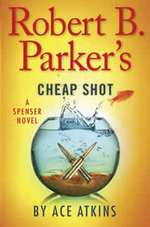
Robert B. Parker's Cheap ShotRobert B. Parker’s Cheap Shot

by Ace Ace Atkins
Series: Spenser, #42

Hardcover, 320 pg.
Putnam Adult, 2014
Read: May 12 – 14, 2014

For 25 years or so, I’ve been a huge Robert B. Parker fan. Read everything I could get my hands on by him — mostly multiple times, even when the quality started to drop out and you could never tell which Parker you were going to get — the one that was close to his former greatness, or the guy who showed up, got his scheduled time in on the book and moved on with life. Even at his worst, there was always something to enjoy in his work — even if it was only a snippet of dialogue or a line or two of description.

As I’ve said before, when Dr. Parker died at his keyboard and they called in this Ace Atkins guy (had never heard of him), I was happy but cautious. Would he be able to pull it off? Would he sound like Parker without doing a cheap rip off? But I liked what Atkins did. So much that I waited a year to review Lullaby, and I haven’t reviewed Wonderland yet (spoiler alert: loved it. Always wanted a Henry-centric novel) — I just didn’t want to geek out and just go fanboy all over them — I wanted to reflect on them some before discussing them (I’m choosing to ignore what I thought about Silent Night: A Spenser Holiday Novel for now). But with Cheap Shot, I’m throwing caution to the wind, and will just talk about it now. And yeah, I’m all Fanboy.

On the one hand, this is not Atkins’ best Spenser. But it’s the one that feels like Parker more than the rest (make of that what you will). The banter, the poking around and stirring things up until you get a break, the fisticuffs, the donuts, the gun fight, the needling of underworld players, and so on — he captures Parker’s voice and pacing better here than he’d managed before (yet doesn’t come across as pastiche). Spenser’s sniffing around the big money and big boys (and a few men) in sports, which serve as a good place for Spenser to reflect how men are to act. Parker did this Mortal Stakes and Playmates (and to lesser extents elsewhere — like Early Autumn), and Atkins is able to do that here (arguably he does so with a subtlety that Parker didn’t achieve).

Kinjo Heywood’s a fun character — slightly more grounded than Mortal Stakes‘ Marty Rabb, far more mature and grounded than Playmates‘ Dwayne Woodcock. One advantage Heywood has is his son, Akira (who’s plenty of fun on his own) — he has someone to provide a good example to, and he strives to. Heywood also seems to have thought ore about life and how one should live it. Marty seemed to think only about Linda (his wife) and baseball, Dwayne was all about his girlfriend (Chantel) and basketball, too — but with less self-examination, it’s just that’s all he had the chance to think about (although Chantel would see that changed, and his horizons broadened if she had anything to say about it). Heywood’s got a kid, he’s been through a divorce, and is fully aware of his place in the limelight (including social media) and his own shortcomings. This alone saves the book from being a reworking of Parker.

I should add that Sixkill has a lot of perspective here (with the assistance of Atkins’ own background in football) — he was close to Heywood’s level, and if he’d made one or two better choices, he would’ve been at this level. He has a better idea what’s going on in Heywood’s mind than Spenser and his brief stint in the boxing world would.

The book begins with Spenser doing bodyguard duty — and as always (Stardust, Looking For Rachel Wallace, A Savage Place, Rough Weather) things don’t go well. You’d think people’d stop hiring him for this kind of work. Spenser turns to investigating — and unearthing lie after lie from his client — while getting Hawk and Sixkill to pitch in on the bodyguard front.

In addition to the main characters, Hawk, Susan, Sixkill, Tony Marcus, and so on; Atkins continues to show a command and familiarity with the impressive gallery of supporting characters in the Spenser-verse (although my gut tells me we’ll never see Atkins’ Spenser crossing paths with anyone from Paradise, Mass.). And the new characters fit into the ‘verse just fine, nothing that Parker wouldn’t have created. One character who started off the novel being opposed to Spenser’s hiring and further involvement with the case came around pretty quickly — and really without warning. I’m not sure that change was warranted by the text (and even if warranted, it was really easy for this guy to come around to Spenser’s side.)

Not only did Atkins give us a good story this time, he appeared to be planting and/or watering seeds for future books at the same time — something Parker never bothered with, but I’m glad to see (if only because it indicates Atkins plans on sticking around).

This one’s getting 5 Stars from me. May not be the best book (or one of the best) that I’ll read this year — but it made me happy, made me want to read more in this series (both prior to and post- this one), made me want to read the next non-Spenser Atkins novel more. And that’s good enough for me.

Next time, Mr. Atkins? Paul. We need to see Paul again. Please?

—–

5 Stars

Saturday Miscellany — 5/17/14

Odds ‘n ends over the week about books and reading that caught my eye. You’ve probably seen some/most/all of them, but just in case:

    Only saw one new release this week that I expect you’ll be seeing here:

  • Hot Lead, Cold Iron by Ari Marmell — Prohibition-era Urban Fantasy. ‘Nuff said.


4 Stars

Page 29 of 36

Powered by WordPress & Theme by Anders Norén