Category: Authors Page 101 of 123

Robert B. Parker’s Blind Spot by Reed Farrel Coleman

This should’ve been done at the beginning of the month, but I wanted to do this book justice, and if I couldn’t hit this out of the park, I didn’t want to swing. Also, (this is partially justification for the delay) I wanted to think about it some before putting pen to paper, so to speak. But it’s now at the point that if I didn’t get something written, I wasn’t going to — so I just did my best, and hopefully have a base hit here. As for thinking about this? Pretty sure I haven’t had a new thought about the book since I put it down — and I’ve thought about it a good deal — I’m just less prone to hyperbole about how great it is now.

Robert B. Parker's Blind SpotRobert B. Parker’s Blind Spot

by Reed Farrel Coleman
Series: Jesse Stone, #13

Advance Review Copy, 339 pg.
Putnam Adult, 2014
Read: August 1 – 5, 2014

One of the major drags (I’d imagine) for the writer in Coleman’s position is all the comparisons — to Parker himself, and to Michael Brandman. But, I don’t really have a choice, how else to you talk about the merits of the 13th book in a series without comparing it to the previous? I guess you could act like this was the first in a series, but that just disrespects what’s gone before (however much one might want to forget some of that).

I know I’ve said a lot of this before — this will (probably) be the last time: When Night Passage was released, I was hooked immediately. Spenser’s series was in the midst of the really rocky post-Taming a Sea Horse period, and it was so refreshing to see Parker really on his game, and with something so fresh, so different. He kept that up for three additional books, and then the series started slipping in quality. I kept buying and reading them — there’d always be a few lines or a couple of chapters that had that ol’ Parker magic, and I liked the characters, but a couple of these were the worst things that Parker ever published. Then following his death, Michael Brandman tried to carry on in three books, none of which were good, and were generally worse than anything Parker had done on a bad day. So, I was pretty hopeful and enthusiastic when it was announced that Reed Farrel Coleman was going to take over the series — at this point, all I’d read by him was his essay about Jesse in Penzler’s In Pursuit of Spenser, but that was enough to get me hopeful.

Unlike what Atkins is doing (pretty well) with Spenser — trying to retain Parker’s voice; and what Brandman did (disastrously) with Jesse — trying to keep the feel of the CBS/Selleck movies; Coleman is keeping the characters and the world, but writing them in his own voice (or maybe not his natural voice, but in a voice unique to him). This, coupled with Coleman’s own strengths as a writer, gives Jesse Stone a freshness, a richness, and a quality that’s been missing since the end of 2003’s Stone Cold. Just in word count alone, Coleman shines above the sparseness of Parker’s writing — it doesn’t feel bloated, it’s well-paced, but Coleman takes a lot more time and words to tell his story — this is a strength, everyone gets fleshed out. Ideas are followed up on, shades of gray are introduced to events — this is a more complex novel than others in the series.

There are, of course, several references to events and people in earlier books — far more than is typical for a Jesse Stone novel. Some of them come across as natural, others are more like nods to the reader, some feel like Coleman trying to establish his bona fides — “Trust me, I know the series.” At this point, I welcome them all — I like to be reassured, I like being reminded of books I liked — but if he keeps it up at this pace, it could get old really quick.

One of thing that gets mentioned in every Jesse Stone novel is that he was in the Minor Leagues and probably would’ve made it to the Major League, if he hadn’t suffered a career- ending injury. He keeps a large picture of Ozzie Smith on prominent display in his sparsely furnished and decorated home. He tosses a ball into an old glove while he thinks. It is the great unknown in Jesse’s life — and probably what really got him drinking seriously. He knows that he and Jen couldn’t ever make it work (as much as he still wants it to), he knows what kind of cop, employee, and leader he is — he even knows just how much his drinking is messing up his life. What he doesn’t know? Could he have made the Big Leagues? Could he have been a great — or even just good — player. But we’ve never seen Jesse spend much time on that — a little here and there. An occasional toast in the general direction of Smith’s picture. But that’s it, until now. Now Coleman gives us a Jesse brooding over how things turned out — a few times, beyond brooding and moved right into nasty and bitter. It never occurred to me before how little Jesse thinks about this chapter in his life — maybe it’s because Parker (apparently) lived without a good deal of self-reflection that he didn’t know how to write Jesse doing just that. I don’t know, but it was a mistake — and I’m glad that Coleman has addressed it. It doesn’t need to become an obsession or anything, but something that he thinks about from time to time is good. It might even be healthy.

Jesse’s ruminations on his thwarted career are prompted by a reunion of his Minor League team, hosted by the only member of that group to make it to the Major League, Vic Prado. During the festivities, both Vic and his wife approach Jesse individually, saying they want to talk to him about something. Neither tells him what they want to talk about, but it’s serious, and has nothing to do with a reunion. Meanwhile, in Paradise, a rich college kid and his girlfriend are crashing his parents’ vacation home for some undisturbed time together. One will be killed and the other kidnapped. Add in a vicious mob boss and his Irish enforcer, a wealthy man and his criminal defense lawyer. a federal agent obsessed with a target, and one of the scariest hit-men I can remember. The result is a novel with a lot of moving pieces, shifting targets and high stakes. That said, it didn’t take long to figure out what’s going on with the various and sundry criminal interests and enterprises involved here — but it’s still very intriguing to watch the pieces be put in place until there’s a very clear picture of everything that’s going on .

Coleman took better advantage of what a third-person omniscient narrator could do than Parker ever did. Not only are we told Jesse’s story, we see a lot more of the stories of the other characters — particularly the various criminals running around here. In the end, I felt like I understood why each character did something, and who they were in general — not just Jesse’s interpretation of their motivations.

There were a lot of little moments in this book that worked so well, that moved this out of the range of Brandman — and out of the range of a lot of books in the genre. Two examples were the chapter where the “woman the folks in Scottsdale knew as Dee Harrington” evaluated her last (and lost) opportunities, and came to some big decisions — and the chapter where the parents of the murder victim arrive with Molly to identify the body. The way that Coleman is able to reveal and establish character, or to underline what we knew about other characters while showing us new sides or aspects to them, is such a pleasure to watch. Character and plot development aside, just some of what he’s able to say about the human experience is impressive.

Of course, at one point, Jesse comes across a woman being harassed by tough guy of some sort. Rather than mind his own business, arrest the guy (he has an excuse this time — he’s out of his jurisdiction), or involve some other authority; Jesse proceeds to beat the guy up. It’s borderline gratuitous, and it’s fairly typical of the series. We get a little flash of the mean, brutal side of Jesse that he normally keeps under wraps, but that really informs most of his life; this is also a bit of Jesse letting off steam from the frustrations of his murder case, there’s also a bit of chivalry. This is really Jesse Stone in a nutshell. This does nothing to the overall search of the killer and for answers for what’s behind the kidnapping. But it reminds us about the person that Jesse Stone is — he’s hard, he’s not that emotional, and he has a very strong sense of what’s legitimate and what’s just wrong when it comes to public behavior.

Seeing echoes of Harry Bosch’s creed of “Everyone matters or no one matters” in John Ceepak last year started me looking for things that revealed other detective’s guiding philosophies, or drives, and doing so has helped me understand a lot of these characters better (whether it’s a new character to me or one that I’ve been reading for years). When Jesse arrives at the initial crime scene, we’re given insight into what makes Jesse the cop he is:

Jesse understood that his demeanor at crime scenes sometimes led his cops to believe he thought hat one corpse was like the next, that one murder victim was like any other. He supposed that it was okay for them to believe that. He also supposed it was true, if not completely. Every murder victim deserved justice, needed an advocate. Just as every living citizen was entitled to equal protection under the law, so too were the murdered entitled. Yet some victims were more equal than others. Maybe that wasn’t fair or right, but it was human, and cops were owed that much leeway.

There’s a semi-redemption for one of the criminals involved in this mess that struck me. It’s not one that I think Parker would’ve given that particular guy — I’m not altogether sure that Parker would’ve paid as much attention to him as Coleman did. However, both the character and his semi-redemption are consistent with Parker’s world. Jesse, Spenser, Virgil and maybe even Hawk, would approve of this guy’s change, his reasons for doing so and how he attempted it.

There’s one other character I’d like to talk about, but I can’t quite figure out how to do so without spoiling far too much. But if you read the book, you’ll understand the one sentence I’m allowing myself, “I found myself really liking __________, and hope we see a lot more of her in future novels.”

I do have a few minor gripes and I’m going to list all of them to provide a little balance (I feel like I’m gushing more than is becoming). Some word choices repeated too often (at least often enough that one noticed). The way that the Joe Breen talked seemed off somehow — and not in a purposeful way. I either got used to it, or eventually Breen’s dialogue improved, I got too involved in everything else about him that I forgot to track that.

I’m not loving the fact that Jen comes back into the picture, while he was never really going to get over her, Jesse seemed to have moved on in Parker’s last books. But, Coleman did brought her back in just the right way, so I’m only complaining about it as a formality.

My real problems are about the way that Suit and Molly were treated. Coleman says that he loves Suit (“How can you not?” he correctly asks in some of the promotional material). But he doesn’t use him as much in this book as he should. Coleman nails every line involving Officer Simpson, which is encouraging, but there aren’t enough of them.

I have three distinct problems with the way he used and depicted Molly. There’s a set banter between Jesse and Molly — she’ll say something disparaging or critical (in jest or not) about him, he’ll echo her jab adding “Chief” to the end — and she’ll eventually do the same. It’s cute enough, and Parker over-used it, too. But not as much as Coleman did — wow, dude. You’re on the verge of parody here. Honestly, Coleman might use the catchphrase as frequently as Parker did, but since Coleman has more Molly/Jesse conversations in this book than in a typical Parker, it seems worse.

Secondly, yes, Molly had one brief dalliance with Crow back in Trouble in Paradise, and yes, Jesse has brought it up on occasion. But Coleman has the Chief doing so several times in this book — almost brow-beating her with it. I don’t have a count, but I’d be willing to believe Jesse brings it up as often here as he has in the last ten books. Hyperbole aside, it seems out of character.

Lastly, in various points in the past, we’ve read, “Molly Crane had a pretty good body, Jesse thought, for a cop with three kids.” Parker’s Jesse keeps using that qualifier “for a cop with three kids.” But in this book we get a different kind of reaction — at least from the other males that see her (I don’t remember Jesse reflecting on her body in general or on specifics of it like others do). Maybe Molly’s been spending time with Tony Horton DVDs, I don’t know, it just didn’t feel right to read the comments made about her. Part of Molly’s appeal is that she’s — for lack of a better term — “real.” She’s not the glamorous type from Los Angeles. She’s a small-town cop and a Roman Catholic mom of three. Keep her that way.

None of this is a deal killer for me, but I hope that Coleman makes some adjustments to the way he uses Molly in the future, and that he just uses Luther “Suitcase” Simpson more.

All in all — a great read. Coleman has made Jesse Stone his own, while maintaining the universe that Parker created. Lee Goldberg said that Coleman “has saved Jesse Stone.” Indeed he has, and I’m so happy to be able to say that.

One more comparison to Parker before I’m done — not in his almost 70 novels did Parker end one like Coleman did here. Bravo. It was a gutsy move and it worked just the way you want an ending like this to. Jesse Stone #14 can’t hit the shelves fast enough.

Note:I received this book as an uncorrected proof from the publisher. Which was generous and cool of them, but didn’t impact what I said about the book, I care too much about Jesse to be swayed by that (which isn’t to say I couldn’t be bought if someone wanted to try). I’ll endeavor to verify my quotations with the printed book as soon as I can.

—–

5 Stars

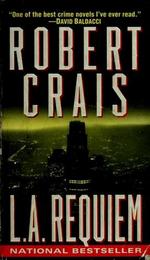
Reread Project: Lullaby Town by Robert Crais

Lullaby Town (Elvis Cole, #3)Lullaby Town

by Robert Crais
Series: Elvis Cole, #3

Mass Market Paperback, 352 pg.
Bantam, 1993
Read: August 21, 2014


The third book in the Elvis Cole series is about sixty pages longer than the previous — and it was about sixty pages longer than the first. This isn’t a trend that will continue, I say with some relief (in fact, I believe the next will be shorter). But the growth isn’t just in page count; it’s in depth of story, depth of character, and the way Crais deals with making sure neither plot nor character get short-shrifted in this.

There’s an obvious effort here to establish a series continuity here with The Monkey’s Raincoat. We get the return of Pat Kyle and her laugh — and that would be enough to help establish this book’s place in the Cole-verse, but we get more. As he spends time sticking out like a sore thumb in a small town, he reminisces about the first time he visited Watts with Cleon Tyner and felt the same way. We also see (and get a reference to) Ellen Lang, briefly. She’s doing much better than she was when we saw her last. In Stalking the Angel, Elvis makes reference to keeping in touch with a couple of former clients, and with Ellen’s appearance we see him doing that again. Unlike with the clients in Stalking, she wasn’t there as a plot device, she was just there to let series readers know that she was still around. I really appreciate little touches like that.

If one’s an incident, two’s a coincidence, and three’s a pattern, we have ourselves a legitimate pattern established. For the third book in a row, Elvis is approached by a potential client/representative of a potential client who is difficult or obnoxious. Elvis will say that he’s not taking the case for the difficult client/client representative, but he will for the likable/put-upon representative/client. I can see why Crais uses this — Elvis gets to show some independence, some graciousness to the non-obnoxious person, and even a little wit in the way he phrases it. But, it’s getting to be lazy returning to this so often. Then again, if I wasn’t reading these so close to each other, I probably wouldn’t have noticed this pattern. So who am I to say?

So here’s the setup: Peter Alan Nelson, the 3rd biggest director in the world (mostly action flicks, apparently — a proto-Michael Bay, but one who’s not as Bay-ish, let’s hope) dumped his wife and kid just before he made it big. It’s been ten years and he’s feeling bad about that now, and wants to get to know his son. So the studio hires Elvis to find them. He does so, she’s living on the other side of the country, appears to have actually done okay for herself, the boy seems good — really, the last thing they need is a brash, self-obsessed, Hollywood type to interrupt their lives. But that’s what Elvis was paid to help with — but first he wants to check into something odd about Nelson’s ex. Turns out, she’s under the thumb of the capo di tutti capi. So before Elvis unleashes Hurricane Peter into their lives, he and Joe Pike will have to see about removing that thumb.

The tension is high, the solution isn’t obvious — and isn’t easy to achieve, either. Elvis does a pretty neat job investigating things to find Heather Lloyd in the first place and he has to do plenty more to figure out how to extricate her from this situation. There’s a good deal of sleuthing in this book, which really makes up for last time. Teach me to be snarky about that. Sure, they’ve got the ex-cop with all the connections and some power, Rollie George, to act as a font of all knowledge and help them navigate a city they aren’t familiar with. But that really doesn’t come across as a cheat — Elvis still has to act on the info given and turn it into something. Rollie cuts out a lot of time, but he doesn’t hand him anything wrapped in a bow. Having someone be a source of local information can really help keep things moving plot-wise.

This time out, the Peter Pan quest, protection of innocence — whatever you want to call it — is very brief and understated. If anything we see the dangers of that kind of life — Peter Alan Nelson could arguably be considered an eternal youth, with expensive toys to play with — but his demeanor, self-centeredness and lack of ethical code make him a very different kind of child than Elvis. If you’re going to hold on yo your childhood, do it the right way, or you end up as a petulant slob. There’s a child-like way of approaching things, and a childish manner. Cole’s not interested in the latter one bit. It’s interesting to watch Elvis draw the distinctions, or at least act on distinctions that he’s drawn, so that we can see what they are. You also have to wonder, seeing Peter Alan Nelson throw a fit, if Cole seeks to shed a bit of his version of Peter Pan so that he won’t act like “that guy.”

Lullaby Town has moments of humor throughout, but like Stalking, it’s not as jokey as Monkey’s was. The wit is there, he just doesn’t feel the need to break it out as often. Or when he does (and he’s not just provoking annoying clients or self-important mafia persons), there’s a purpose, to illustrate something, to reveal something — or to break monotony. Either way, Crais is learning how to let situations drive this kind of thing.

Portrait of the Big City Detective sitting on a small-town bench, ferreting. In the cold. People passed on the sidewalk, and when they did they nodded and smiled and said hello. I said hello back to them. They didn’t look as cold as me, but perhaps that was my imagination. You get used to the weather where you live. When I was in Ranger School in the Army, they sent us to northern Canada to learn to ski and to climb ice and to live in the snow with very few clothes. We got used to it. Then they sent us to Vietnam. That’s the Army.

Our knowledge of Elvis isn’t enhanced a lot by this novel, but what we do get is important. On the not-so-important side, we get a definitive note from him about giggling – he doesn’t like it (which maybe was hinted at before, but his displeasure wasn’t as explicit). We do get confirmation of a good deal here, his character, his willingness to help those who need it, but can’t afford him — that sort of thing. He gives Karen a concise explanation for why he decided to help her rather than turn things over to the police.

“And you haven’t told the police?”
“No.”
“But those men beat you up.”
I said, “I knew something was wrong and I wanted to find out what it was. Cops deal with the law. The law isn’t usually concerned with right and wrong. Ofttimes, there are very large differences.”
She shook her head as if I’d spoken Esperanto.

Elvis is solidified here as your hard-boiled hero. It’s not about legal/illegal, it’s about right and wrong — an objective morality. This is the core of Elvis Cole, and even Joe Pike — why do they do what they do? From tearing up Ellen Lang’s check, to carrying on the search for Mimi Warren after being fired, to putting themselves out on the limb for a client they were only hired to find (and who can’t pay them anything). This is it.

As the action in this one takes place no where near the LAPD, we don’t get to see the antagonism they have for Joe Pike, but we learn a little bit about him. Bit by bit, we’re getting a picture of Pike so that when we do eventually learn a good deal, there’s an impact. As tensions are at their highest between Elvis and the mafia, we get this exchange:

I asked Pike, “Are you afraid?”
He shook his head.
“Would you be afraid at midnight if we were alone?”
He walked a moment. “I have the capacity for great violence.”
I nodded. So did I. But I thought that I might still be afraid.

“Elvis?”
“Yeah?”
“I remember being afraid. I was very young.”

and that’s all we get about that. For now. But it hints at something serious — that we will explore in the future. As serious a moment as that was, I have to chuckle at Pike’s “I have the capacity for great violence.” Yeah, no kidding, buddy — never would’ve guessed.

I don’t know if I can successfully describe why I like this one so much — not that I had real problems with the first two books, but this one seems to have everything clicking and only the minor-est of problems. Funny, snappy writing, solid action, a complex solution, and growth and development in multiple secondary characters. There will be higher points in the series, but for awhile, this will be the standard by which Cole novels are measured by me.

Coming up next: Free Fall which is definitely a departure for Crais, Cole and Pike in many ways.

—–

4 1/2 Stars

—–

Drawing by Kirsty Stewart, chameleonkirsty on deviantART, used with permission.

Dusted Off: Mad Mouse by Chris Grabenstein

Mad Mouse (John Ceepak Mystery, #2)Mad Mouse

by Chris Grabenstein

Hardcover, 320 pg.
Carroll & Graf, 2006
Read: November 27 – 28, 2012

Man, this is just such a fun series. Ceepak’s a great superhero cop (though I hope he becomes a bit more rounded in the books to come), and Danny’s one of the best sidekicks around. Watching him grow up is a blast.

I thought it was great that this book didn’t focus on a murder (my wife took a different stance), a serious crime, yes, but not a murder. The sense of urgency was still real, it was a serious crime, but a crime more likely that a small town would face–rather than a Jessica Fletcher-like situation where 3 centuries worth of murders happen to a tiny city in a matter of months.

—–

4 Stars

Landline by Rainbow Rowell

LandlineLandline

by Rainbow Rowell

Hardcover, 310 pg.
St. Martin’s Press, 2014
Read: August 13, 2014

If the last few years have taught us readers anything, it’s that if you want quirky, honest, heart-felt romance with real (and usually moderately overweight) people and solid laughs, Rainbow Rowell will consistently deliver for you. And if you don’t think you want that, after you read her, you’ll realize that’s just what you wanted after all. She has two YA books and now two Adult books to her credit. Her latest, Landline delivers the typical Rowell magic in her story, but this time she included something else: actual magic. Sort of.

Georgie McCool is half of a pretty successful TV writing team who are thiiiiis close to being much more successful, all they have to do is crank out a handful of scripts in the next couple of weeks and they’re in a great position to sell their first series. The catch is, this involves working over Christmas — despite Georgie’s plans to go to her mother-in-law’s in Omaha with her husband, Neal and their two daughters. Georgie says that she can’t pass up this opportunity, so Neal and the girls go off without her.

Georgie sees this as a regrettable occurrence, but one of the sacrifices she has to make to get her dream show made. Her mother, step-father and sister see it as her husband leaving her, and Georgie ends up staying with them. Which gets Georgie to worrying — especially when she can never seem to reach Neal on the phone during the day. At night, however, when her iPhone battery is dead, she has to resort to the landline in her old room and she ends up talking to Neal back before they got engaged.

Don’t ask. It makes no sense. She never bothers to explain. And it doesn’t matter. Georgie eventually figures out that’s what’s going on and she rolls with it, and the reader does, too.

These conversations, as well as the absence of her family, lead Georgie on a path down memory lane, reflecting on the beginning of their relationship and how it changed as they did. Maybe Neal had made a mistake choosing her. Maybe she’d ruined her life (and his) by choosing him. Would they have both been better off going their separate ways? Or was there something worth fighting for now? Would that matter? The clock is ticking — for Georgie’s marriage (both now and then) and her career. Is she up for it?

The tension is real, the apprehension, fear, and self-doubt (for starters) that Georgie is wrestling with is very obvious and palpable. Yet while focusing on this, Rowell’s able to create a believable world filled with a lot of interesting people. There’s Georgie’s partner/best friend, Seth and another writer on their current (and hopefully future) show — and Georgie failing to hold up her end of things there, as much as she tries.

Then there’s her sister, mother and step-father. They’re much better developed (probably only because we spend more time with them). Her mother’s a pretty implausible character, yet not a cartoon, she’s a pug fanatic, married someone much younger than her, and generally seems really happy. Her sister’s about done with high school and is figuring herself out (and mostly has) — she’s a hoot, and my biggest problem with the book is that we don’t get more of Heather. Not that there wasn’t plenty of her — and it’d require the book to take a far different shape. We get whole storylines about all the non-Neal people in her life, little vignettes showing us their character, giving us smiles in the midst of Georgie’s crisis, like:

“Kids are perceptive, Georgie. They’re like dogs”–she offered a meatball from her own fork to the pug heaped in her lap–“they know when their people are unhappy.”
“I think you may have just reverse-anthropomorphized your own grandchildren.”
Her mom waved her empty fork dismissively. “You know what I mean.”
Heather leaned into Georgie and sighed. “Sometimes I feel like her daughter. And sometimes I feel like the dog with the least ribbons.”

Not only do the supporting stories, or even the little moments like this fill out Georgie’s world and make it more interesting, they provide a breather for the reader from having to deal with the disintegrating marriage.

I know some people think we spend too much time in flashbacks, where Georgie’s remembering how she and Neal met, got to know each other, and started seeing each other, etc. But we need that. If all we get is Neal in the present, or past-Neal on the phone, we’re not going to care enough. Especially in the first couple of scenes we get with Neal, it’d be real easy to see him as unsympathetic — the guy holding Georgie and her career back. We need these flashbacks so the reader can sync their feelings about Neal with Georgie’s, so that when we read something like:

Georgie hadn’t known back then how much she was going to come to need Neal, how he was going to become like air to her.
Was that codependence? Or was it just marriage?”

or

She needed him.
Neal was home. Neal was base.
Neal was where Georgie plugged in, and synced up, and started fresh every day. He was the only one who knew her exactly as she was.

find ourselves agreeing with her, or at least seeing why she says it.

At the end of the book, there’s a lot of plot lines dangling — some very important ones, actually. Enough so, that normally, I’d devote a paragraph to complaining about it. But I won’t this time — it works for Landline. There’s a lot for Georgie to work out herself, she’s really only settled on the one most important thing, leaving the rest to be resolved another day. And that’s got to be good enough for the reader.

Not her best, but Rowell on an off day is still really, really good.

—–

4 1/2 Stars

Reread Project: Stalking the Angel by Robert Crais

Stalking The Angel (Elvis Cole, #2)Stalking The Angel by Robert Crais
Series: Elvis Cole, #2

Mass Market Paperback, 260 pg.
Crimeline, 1992
Read: August 13 – 14, 2014


Okay, here we go with the second Elvis Cole adventure — I hesitate to call this a mystery, the amount of investigating that Elvis performs before finding what he’s been hired to is pretty minimal. What can I say, the guy’s got himself some great instincts.

The book opens with a great visual — Elvis is doing a headstand in the middle of his office when in walks the man who will go on to hire him, and his lawyer — “the best looking woman [Elvis has] seen in three weeks.”

I said, “You should try this. Invigorates the scalp. Retards the aging process. Makes for embarrassing moments when prospective clients walk in.”

Bradley Warren is not amused, but is in a hurry and needs an investigator so he sticks around to hire Elvis.

Crais packs a lot into the description of Warren’s lawyer — giving us his initial impressions of her, as well as revealing a little about himself to (re-)familiarize readers to his character, in addition to the obvious physical description:

Jullian Becker was in her early thirties, slender in gray pants and a white ruffled shirt with a fluffy bow at the neck and a gray jacket. She held a cordovan Gucci briefcase that complemented the gray nicely, and had very blond hair and eyes that I would call amber but she would call green. Good eyes. There was an intelligent humor in them that the Serious Businesswoman look didn’t diminish.

They explain, Warren does a lot of business (he’s a very influential and wealthy man, they make sure Elvis realizes) with Japanese investors — and in a promotional stunt, he’d arranged a loan of one of the few original copies of The Hagakure from the thirteenth-century, and it was stolen from his home safe. He needs it back in a couple of days, and as distasteful as he fins Elvis, he needs his help. He and Elvis spend a little time annoying each other, before Elvis relents — for Jullian’s sake — and agrees to help find the manuscript. While Warren and Becker jet off to Japan, he starts investigating at the scene of the crime, where he runs into Warren’s very drunk wife who makes several passes at Elvis. Tiny spoiler: Elvis keeps it in his pants for the whole book. Maybe having established his noir cred in Monkey, Crais didn’t have to keep that going (not that Elvis doesn’t notice attractive women, flirt, etc).

Elvis taps a source for someone who dabbles in stolen art and leans on him to get an idea who’d have motive and means to steal The Hagakure, he gets a name. Elvis pushes the dabbler to the edge of despair — he know that his world could come crashing down around him and ruin the lives of his family. Elvis is disturbed by that, musing to his cat later,

“You ever notice . . . that sometimes the bad guys are better people than the good guys?”

It’s a small moment, but reveals a lot about Elvis that the reader needs to know without just telling us the information. The bad guy as a better person (and vice versa) is something we’ll see again in this book — and frequently from here out.

Elvis takes that lead he bullied out of that man and finds someone with ties to the yakuza — and the LAPD task force watching him. Things don’t go well with either group and he has to bring Joe into the picture. Oddly, things escalate with Warren and he starts receiving threats. But he goes ahead with business as usual. After failing to convince him to cancel a public event despite these threats against him and his family, Elvis and Joe help out with security in a location almost impossible to secure.

Pike drifted up to me. “This sucks.”
That Joe.
“I could off anybody in this place five times over.”
“Could you off someone and get away with you here?”
Head shake. “I’m too good even for me.”

Technically, Joe didn’t joke there — but he came close.

Things get worse from there, spiraling out of control and pushing Elvis to the brink. Which allows Crais to explore the friendship between the two — Pike spends a lot of time reassuring Elvis, trying to keep him from going over the edge. With more sensitivity than he showed Ellen Lang in Monkey, Pike’s there, keeping Elvis on track.

“You were doing your best for her, something that no one in her life has ever done.”
“Sure.” Mr. Convinced.
“Ever since the Nam, you’ve worked to hang on to the childhood part of yourself. Only here’s a kid who never had a childhood and you wanted to get some for her before it was too late.”

I know I noticed that theme of protecting childhood — Elvis’ own, and others’ — as I read the series before, but I don’t think I saw how prominent it is, this will be interesting to track.

Speaking of Joe, we get more of the Pike myth — at some point the FBI gets involved in the case. The agent talking to Elvis knows Pike’s name, and understands something of his reputation. He doesn’t want to meet Joe, but he does want to take a look at him. The Agent’s attitude is different than the LAPD’s, Pike’s not despised by him, it’s more like an urban legend that he gets to verify exists. Later, Elvis and Joe have to do a little skulking around a home that the police have staked out, and Pike stays back in case he’s recognized by them. By this point, Crais is making sure you’re wondering what’s going on here.

Elvis — both in dialogue and in narration — is still funny, but I think there are fewer jokes per inch in this book, but I think they’re funnier. Elvis cracks me up, and I appreciate that. He also drops the jokes toward the conclusion, when things get violent and deadly. I noticed that some readers were critical of Elvis’ joking at the similar point in the last book, and Crais must’ve seen something similar twenty years ago — or it’s just him being more disciplined as an author. Hopefully the latter, but I’d assume the former is possible.

Crais seems more confident, more sure of his characters and story this time out — as he should be, this is a stronger book. In addition to a strong hard-boiled detective story, we see themes of friendship, honor; the protection of childhood; criminals acting nobly, “good guys” who need someone like Elvis to threaten to kill them.

A very successful sequel to The Monkey’s Raincoat, Stalking the Angel secures Crais’ place at the top of the field. That’s about all I have to say about it, so I’ll see you next week for one of my favorites, Lullaby Town.

—–

4 Stars

—–

Drawing by Kirsty Stewart, chameleonkirsty on deviantART, used with permission.

In Medias Res: Landline by Rainbow Rowell

as the title implies, I’m in the middle of this book, so this is not a review, just some thoughts mid-way through

—–

Landline
Landline

by Rainbow Rowell

I’m on page 153 of 308 — as close as you can get to half-way (at least if you stop at the end of a chapter), and I’m all in on this book. It’s told with Rowell’s trademark warmth and charm. It’s funny, but not hilariously so; tragic, but not heartbreaking (yet); romantic, without being sappy; and real, without being . . . non-fiction?

Yeah, okay, that sentence got away from me.

This is a story about a marriage on the rocks, about the beginning of this romance, maybe about its end, friendship, priorities, and a magic telephone. Most of these are themes not new to Rowell, but that are in constant demand as fodder for stories. Rowell’s doing a bang-up job so far, I’m really pulling for this couple (in both the beginning and at the later part of the relationship). As always, Rowell gives us real people — people we could know, people we would befriend, people we could be.

At this point, I can see a few ways this could end — all of which are entirely justified by what’s come so far, and the vast majority of them end with me risking alcohol poisoning. I’m really liking Georgie McCool that much (and yes, that is her real name).

Review Catch Up: Broken Homes; Black Arts; The Player; Speaking from Among the Bones

I’ve got a backlog of 50 or so reviews I’ve been meaning to write — some of them, I just have to admit aren’t going to get done. But I’m going to try my level best. The four books I’ve decided to tackle in one fell swoop are books I enjoyed, from series I enjoy, and yet I’ve had trouble reviewing them. In the end, I decided that was because by and large, I don’t have anything to say about these books that I haven’t said about others in the series.

But I do want 1. clear these off my to-do list and 2. more importantly, encourage readers to give these a look. So, without further ado:

Broken Homes (Peter Grant, #4)Broken Homes

by Ben Aaronovitch
Series: The Rivers of London, #4

Mass Market Paperback, 324 pg.
DAW, 2014
Read: February 15, 2014

The plot took its own sweet time getting where it was going, with a lot of strange little turns here and there — which works because it’s probably what actual policemen go through investigating a crime. But almost doesn’t work because it makes it feel like Aaronovitch didn’t pace this correctly (which is silly, because he did).

I really, really liked the undercover stuff. The conclusion is probably the best that this series has been. It’d be great if Peter learned a bit more though, his stumbling efforts are amusing, but it’s time for more proficiency.

I’m eager for the next one of these (and would be even without the big twist) — such a great world he’s created here, and I want to learn more about it and the characters that inhabit it.
4 Stars

—–

Black Arts (Jane Yellowrock, #7)Black Arts

by Faith Hunter
Series: Jane Yellowrock, #7
Mass Market Paperback, 325 pg.
Roc, 2014
Read: March 25 – 29, 2014

What’s to say about this one, that I haven’t said about other books in the series already?

The action’s tight, the vamp politics and Jane’s interaction with it are pretty interesting, Faith’s coming to grips with more of her background was really compelling, and her growing relationship with the brothers is fun.

Obviously, this is the most personal case that Jane’s had yet — for someone to be messing around with Molly, that’s just beyond the pale. Those raised stakes (pun fully intended), and the ongoing drama with Leo’s grip on the New Orleans vampires made this the best of the series.
4 Stars

—–

The Player: A Mystery (Carter Ross, #5)The Player

by Brad Parks
Series: Carter Ross, #5

Hardcover, 336 pg.
Minotaur Books, 2014
Read: April 1 – 4, 2014

What’s to say about this one, that I haven’t said about other books in the series already?

A lot of fun — great characters, love Carter’s voice, everything that you want to see in a Carter Ross novel was here — twisty conspiracy, some good laughs, Carter’s personal life in shambles. It was nice to meet his family.

Sadly, I’m at a loss for words here (something that never seems to be Carter’s problem), this was a lot of fun. I want a lot more of these.
4 Stars

—–

Speaking from Among the Bones (Flavia de Luce, #5 )Speaking from Among the Bones

by Alan Bradley

Hardcover, 372 pg.
Delacorte Press, 2013
May 16 – 14, 2014

Flavia’s her typical charming, precocious, incorrigible self. Perhaps a bit more clever than we’ve seen her before, definitely with less a sense of self-preservation than we’ve seen previously. Her sisters are a bit, more human? Or maybe Flavia’s portraying them more honestly/more sympathetically. The financial pressures her father’s under are more and more pressing, causing everyone to be a bit more realistic, it seems.

Still, that doesn’t deter Flavia from doing her thing when a body is discovered. It’s everything you want in a Flavia de Luce novel — very, very smart conclusion to this mystery.
3 Stars

Reread Project: The Monkey’s Raincoat by Robert Crais

The Monkey's Raincoat (Elvis Cole, #1)The Monkey’s Raincoat

by Robert Crais
Series: Elvis Cole, #1

Mass Market Paperback, 201 pg.
Crimeline, 1992 (originally 1987)
Read: August 6, 2014


We start the Reread Project with The Monkey’s Raincoat, which should be read as the pilot for the Elvis Cole series. It establishes the characters, the world, the tone — the story is secondary to that. It’s also the foundation — everything after this will be building on this, and will be an improvement (if for no other reason than Crais gets better). It does all the establishment work pretty well — and some points of the non-establishment work is standard, some of it is quite well done. In the end, its a successful pilot, showing the promise to be delivered in ensuing novels.

“Peter Pan. You told Ellen you wanted to be Peter Pan.”
“Unh-hunh.”
“That’s crap. Stay a little boy forever.”
“It’s not age. Childhood, maybe. All the good things are in childhood. Innocence. Loyalty. Truth. You’re eighteen years old. You’re sitting in a rice paddy. Most guys give it up. I decided eighteen was too young to be old. I work at maintaining my self.”
“So at thirty-five, you’re still eighteen.”
“Fourteen. Fourteen’s my ideal age.”
The left corner of her mouth ticked.

Now, I contend that something happens in a few books to get Elvis to decide to grow up (I’m not convinced he realizes it though) — but for at least a handful/handful-and-a-half novels, this is a great summary of Elvis’ core.

A lot of people will compare Elvis Cole to Spenser and while it’s frequently over-stated, it is a legitimate comparison. And Raincoat Elvis compares pretty strongly with The Godwulf Manuscript Spenser, but Elvis is a lot closer to the character he’ll be from now on, than Godwulf Spenser is to the character he will be following it. Which says something about the thought that Crais put into Elvis before writing, and his experience working with character — Parker really ever had this until he had a few novels under his belt.

Before we get to the Peter Pan self-disclosure, we see that in action — in the decorations of his office, his dress style, the way he talks to prospective clients — all in the first few paragraphs. Which also contain a nice info dump disguised as dialogue, as way to introduce himself to the reader as well as the client who asked him about his qualifications. It gets the job done and it doesn’t feel all clunky and Dan Brown-like. Crais doesn’t do anything ground-breaking here, but so often (especially in first books of a series) this is done in a clumsy way, so it’s nice to see it done smoothly.

There’s a lot to Elvis Cole here that seems straight from the hard-boiled detective starter-kit: he’s got the relationship with a police detective that’s based on mutual respect, but the police detective can’t color outside the lines like Elvis can. He’s got the friend who’s a newspaper reporter — far too busy to have a real conversation with him, but will give him just the right quick answers (while being a real smart aleck) to move the investigation along (in return for tickets to a sporting event). He’s got quite the way with the ladies. He’s a lone wolf type, will drink a lot, he’ll constantly have a wise-crack at the ready, he had a few odd jobs related to law enforcement prior to this, but he can’t work within the system — and so on. It’s what Crais does with these elements — and the rest of Elvis’ characteristics that elevate the character.

So much of the what will separate Elvis from Spenser/Patrick Kenzie/Lincoln Perry/Cormoran Strike/etc. are the quirks and the little details: The nameless, beer drinking cat; the morning yoga; his Elmore Leonard fixation; his Hawaiian shirts and Disney stuff. I liked the fact that Elvis keeps a roll of nickels in his car to use in case of a fist fight. Even more, I like that he had to dig around under the seat to find the roll (and if the interior matches the exterior, it’s not easy to find anything under the seat).

Now, you can’t talk about Elvis Cole without talking about Joe Pike — his business partner with the empty office. Yes, in many ways Joe’s the Hawk to Elvis’ Spenser. But he’s more. By the time we meet him, Elvis has had a couple of very brief phone chats with him, but even the terseness of those won’t prepare us for actually meeting him. Our first introduction to Pike is striking:

The next morning I woke with brilliant white sunlight in my face, smelling coffee. The sliding glass doors were open and Joe Pike was out on the deck. He was wearing faded jeans and a great sweat shirt with the sleeves cut off and blue Nikes and government issue pilot’s sunglasses. He rare takes the glasses off. He never smiles. He never laughs. I’d known Joe Pike since 1973 and he has never violated those statements. He’s six feet one with short brown hair and muscled the way a fast cornerback is muscled, weighing in somewhere between one eighty-five and one-ninety. He had a red arrow tattooed on the outside of each shoulder when he was in The Nam. They pointed forward.

The description today would be a little different. A little. But on the whole, Joe’s consistent, he’s grown a little bit as a character (because of Elvis, he’d assure us), but even with growth, the Joe you get in Monkey’s is the Joe you get in Taken.

Every time Joe’s name is mentioned around someone from LAPD, it’s answered with scorn (at best). Elvis will shed a little light on this eventually when Ellen asks (again, info dump — however small — and dialogue that doesn’t feel forced). But on the whole, all Crais is doing is a bunch of seeds that he’ll harvest later in a way that probably no one reading this can guess. Since this is Elvis’ narration, and Elvis is his friend, we trust that the LAPD is out to lunch on this, and this is reinforced by the clueless way they handle the disappearance of Perry Lang. Time will tell if our trust in Elvis is well-placed.

There’s a clear affection between Elvis and Joe. They trust each other, they tease each other — they depend on each other (without ever coming out and saying it). They’ve known each other more than 15 years at this point, as partners for most of that, and a lot doesn’t need to be communicated anymore

The thing that truly separates Pike from your typical mercenary/bonebreaker-as-sidekick is the way he deals with Ellen Lang. He tells her things about his past, he helps her learn to shoot, he goes out of his way to empower her — and through that, comfort her. Elvis will give her pep talks, he’ll encourage her — even force her to see reality. But Joe (unintentionally) inspires her, and then will (intentionally) show her the inner strength, the character she has and needs to meet the future. Hawk would never do that.

I’m sure I should say something about the story, too. So, Ellen Lang comes (with a lot of prompting from her friend Janet Simon) to Elvis needing help finding her estranged husband, who seems to have taken off with their son (but not their daughters). Elvis isn’t crazy about the idea, but he has rent to pay — so he takes the case and starts poking around looking for the missing talent agent. He finds Mort’s girlfriend, but that doesn’t help but it sheds some interesting light on Mort’s lifestyle. Before long, there’s a body, a couple of kidnappings, a lot of missing cocaine, and a crime boss’ Eskimo enforcer roughly the size of a small bull.

As Elvis goes through the investigation, it’s good, solid stuff carried along by his narration. But there’s nothing other than his narration and the character work he’s started to make it distinctive over any other of a dozen PI’s. But then you get to the conclusion — a big, guns-blazing, bullets-flying, implausible-but-not-really, story climax — and you really start to see the potential for this Crais guy and his pair of Vietnam Vets.

I’m not sure I’d give this 4-stars if I this was my first read of the series, or even of this book (rather than the 6th or 7th). But it’s not, I know what seeds Crais planted (whether he intended to or not), I know where’s he’s going with this and how well this sets up the books to follow. As such, it deserves no less than 4-stars.

—–

4 Stars

—–

Drawing by Kirsty Stewart, chameleonkirsty on deviantART, used with permission.
Coming soon: The Reread Project

Joe Pike and Elvis ColeOne of the things I’ve been thinking about lately is that I don’t re-read as much as I used to, so I’m making a greater effort to do that, starting in January of this year. Think I’ve managed to reread 1 book before this week. Whoops.

Anyway, I got to talking about Robert Crais with a buddy last week who was wanting to dip his toe in the water, and wanted to know if he needed to read the Cole/Pike books in order or if he could just read which ever he could get his hands on. I’m sure he regretted asking because rather than the 1 sentence answer that he was probably looking for, he got most of a page of text. And if I’d had more time before needing to get to sleep, I’d have probably written pages. And that was just off the top of my head.

I honestly couldn’t stop thinking about Elvis and Joe after that email — I’d read everything up to book nine, The Last Detective, at least twice. But had only managed to reread the first two Joe Pike books since. So the series is ripe for this kind of thing. If I manage myself correctly, I’ve got enough time to read the series before the next novel hits my doorstep in November. Which makes it a bit more appealing — I love a good deadline.

My reviews will be a bit longer (I think) than usual, if the first one is any indication, anyway (1400 words or so) — looking both at the novel and their place in the series, the changes, developments, ties between novels, themes, etc. I don’t think I’ll have time for the two stand-alone novels that introduced characters now part of the series, so we’ll have to rely on my memory for that. These should go up on Mondays — leaving the few “Dusted Off” posts that I have for those weekdays I just can’t get anything else finished.

Once I’m done with Elvis/Joe, I’ll move on to something else. I like the discipline of one reread a week. I did it with the Nero Wolfe series a couple of years ago, and really enjoyed that.

Hope you enjoy this — and if you’ve read the series, please, please contribute to the comments.

—–

Drawing by Kirsty Stewart, chameleonkirsty on deviantART, used with permission.

Half-Off Ragnarok by Seanan McGuire

Half-Off Ragnarok (InCryptid, #3)Half-Off Ragnarok

by Seanan McGuire
Series: InCryptid, #3


Mass-Market Paperback, 356 pg.
DAW, 2014
Read: March 21 – 22, 2014

I — like a number of people, I expect — approached this one with a sense of trepidation and a laundry list of questions: No Verity? We’ve got to start over with some other guy? Why? What did we do wrong? Why is Seanan punishing us like this? How are we supposed to get along without the Aeslin mice? (good news and minor spoiler: Alex has his own colony of them — Seanan doesn’t hate us). After about 50-60 pages, I’d admitted that McGuire knew what she was doing (how could I doubt that?) and that Half-Off Ragnarok served as a good jumping-on point for the series, or good next entry for those who’d been following it already. Alex has a similar voice to Verity, but it is different — close enough that they could be siblings, though.

The story, particularly its central mystery, was just okay. But the setting and the characters elevated the whole thing. They sold me on what was going on, and once the narrative got flowing, I didn’t notice how not-stellar the story was (I’m not saying it was bad, it just didn’t knock me out). Having a cryptozoologist working in a zoo — and doing field research nearby, gave this a different feel from Verity’s nightclubs and sewers — like maybe there was something less haphazard about it this endeavor.

But more than anything else, the characters are what sell this story. There’s Alex’s Gorgon assistant, Dee; a little girl I won’t describe for your sakes here (you want to discover her eccentricity on your own); there’s Alex’s grandparents; his pet griffin, Crow; the aforementioned Aeslin mice; and the knock-out blonde Australian who works at the same zoo that he does. Best of all, his and Verity’s cousin, Sarah. She’s staying at their grandparent’s home for awhile to recover from what happened to her at the end of Midnight Blue-Light Special — well, hopefully recover, anyway. Sarah’s presence helps link the installments of the series together, helps us trust Alex more right away for the way her treats her.

A couple of notes about this world McGuire’s building here. Without getting into details, it was very nice to see that there are options other than the Prices and the Covenant for humans who are aware of the cryptozoological populations, it makes it all a little less David and Goliath. The other thing that’s highlighted here is just how different groups/species view the Prices. Which isn’t exactly all positive — there’s suspicion, distrust, antagonism, begrudging respect — along with more positive views. I got that impression during the Verity books, but it’s underlined here. This is a fun world, and it’s nice to see it fleshed out.

I like Alex, and would gladly read more of his adventures–at home or abroad. I would also like to check in on Verity again — and soon — as she was our entry point into this world, but it’s possible I like Alex more at the end of the day. Unlike Verity, he’s all in when it comes to this work, and doesn’t spend so much time wanting to do something else. Although, Verity’s conflict between her duty/interest in cryptozoology and love for dance is one of the things that makes her interesting. Never mind, my guess is that my favorite Price sibling is whichever one I’m reading/just finished reading. Just give me more of both of them.

—–

4 Stars

Page 101 of 123

Powered by WordPress & Theme by Anders Norén