Category: Book Tour Page 48 of 56
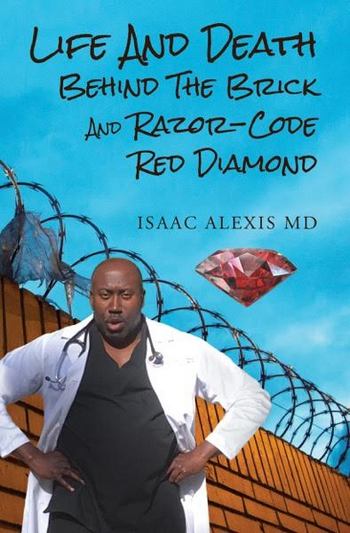
Life and Death Behind the Brick and Razor: Code Red Diamond
by Isaac Alexis, MD
Kindle Edition, 100 pg.
2017
Read: December 12, 2017

I wanted to use science to heal people and simultaneously teach them about how their bodies functioned and how to properly take care of their bodies. I also wanted to make a difference in the lives of people who traditionally did not have access to care to begin with. So I chose correctional medicine. It had its challenges but also opportunities to save many lives. In my opinion, it also had areas that seriously needed to be addressed.
Years after this decision, Dr. Alexis has turned to writing, using his experiences and point of view, to discuss some health tips and suggestions to help teens through some hot-button and pressing issues.
After a quick autobiographical chapter, the chapters revolve around the treatment of one particular patient, and then using that patient’s particular diagnosis (or lack thereof) and struggle as a launching point for health tips and/or discussion of some of the struggles that young people (or everyone) go through related to STDs, Drug Abuse, Gang Membership, etc.
There is so much energy, so much care, conviction, expertise behind this book that it’s a shame I can’t heartily endorse it. There’s a lot of heart here, and I admire that. But it’s just not that well written. Maybe it’d be more correct to say that it wasn’t that well-edited and re-written.
First of all, it needs a thorough editorial pass on basic grammar. But it needs some work on structure, too. Within the various chapters, things can seem to be randomly organized with a lack of transitions, or foundation for some of what he’s talking about. That page count of 100 pages should be 150 at a minimum — he really needs to flesh out everything just a bit. He’s got the material, he just needs to work with it a bit more so his readers can better understand both his experiences and perspective. The nature of the facility he works at — and its relation to other prisons and hospitals, is a good example — I think I have a decent idea how all that works out, but it takes using information from all parts of the book to come up with my guess; that shouldn’t be, I should’ve been given a one or two (or more) sentence description of that so I can appreciate his struggles to provide adequate care.
Now, what he doesn’t need to give us more of us medical jargon — often he’ll unleash a couple of paragraphs of almost non-stop medical terminology. This is not a bad thing, but I think he could help the non-informed reader a little bit more than he does with some of those streams of terminology. What I eventually decided is, the book reads like a transcript of someone telling stories about his life to a new friend, people just sitting around a table swapping stories. The hopping around, the unclear writing, and so on come across just the way people talk. If you think of it that way, the book is a lot easier to take.
If you can find some way (my suggestion or something else that works for you) to overlook/make your peace with Alexis’ style, you’ll probably enjoy this book. You can even appreciate the book without that — it’s just harder. Alexis writes from conviction and passion — with a healthy dose of morality. There’s a lot to be gained from this book. I liked Life and Death Behind the Brick and Razor, but it woulnd’t take much to make me like it sooo much more. He has important things to say, I just wish the book did a better job of providing the platform.
Disclaimer: I received this book in exchange for this post and my participation in this tour — I appreciate the opportunity, but my opinion remains my own.
—–

This interview was provided to me as part of this tour, but given his busy schedule, this was all he had time for. I appreciate the time he was able to give to this — it does give you a pretty good feel for the book, too.
| Can you describe your book in 20 words or less? | ||
|
||
| What do you hope your memoir/reference book will do for your readers? | ||
|
||
| What was the hardest thing about writing this book? The easiest? | ||
|
||
| What is the funniest (or strangest, or scariest) incident that has ever happened to you? | ||
|
||
| Can you share with us some of the people you admire the most? | ||
|
||
| Any future projects you would like to share with us? | ||
|
||
Today we’re welcoming Dr. Isaac Alexis’ Life and Death Behind the Brick and Razor: Code Red Diamond. We’re starting things with this spotlight post (which includes a giveaway). In a little bit, we’ll have an interview with Dr. Alexis, and later, I’ll tell you what I thought of this book. But let’s start by learning a bit about it:
Book Details:
Book Title: Life and Death Behind the Brick and Razor: Code Red Diamond
Author: Isaac Alexis, MD
Category: Adult Non-Fiction, 100 pages
Genre: Education and Reference
Publisher: Independent
Release date: October 17, 2017
Content Rating: PG-13 for mature themes
Book Description:
A prison doctor offers insights into the system’s “Correctional Medicine”
Dr. Isaac Alexis’ newly-released book Life and Death Behind the Brick and Razor: Code Red Diamond tells of his varied experiences as a physician in correctional medical facilities while at the same time urges teenagers to make better decisions to avoid the perils of incarceration.
Dr. Isaac Alexis brings the fast-paced, high-pressure reality of correctional medicine to readers in his new book. He discusses health problems that inmates face during incarceration and offers detailed descriptions of medical complications that plague many people inside and outside of prison. He also speaks directly to young people about avoiding gangs and drug addiction, as well as respecting their bodies in order to preserve their physical and mental health and their freedom. Dr. Alexis’s personal experiences growing up in a tough New York neighborhood act as examples of how young people can overcome obstacles and achieve their goals.
The desire to help people who do not have access to quality health care drove Dr. Isaac Alexis to focus on correctional medicine. The author also shares how his faith empowers him to advocate for the best medical treatment for the population he works with.
A fascinating and important book, Life and Death Behind the Brick and Razor: Code Red Diamond is a book that should be read by anyone dealing with teenagers and young adults whether in the home, public or educational facilities.
Buy the Book:
Meet the Author:
Isaac Alexis, MD, completed an internship in trauma surgery at Cornell University at New York Hospital of Queens, and he cross-trained in family medicine and anesthesiology. Dr. Alexis served as medical director at the Department of Justice as well as director of infection control and chair of the quality improvement medical committee. He has several years of correctional medicine under his belt.Dr. Alexis’s book Life and Death behind the Brick and Razor-Code Red Diamond relays his experiences as a physician in correctional medical facilities while also challenging teenagers to make better decisions to avoid the perils of incarceration.
Connect with the author: Website
Enter the Giveaway!
Book Giveaway:
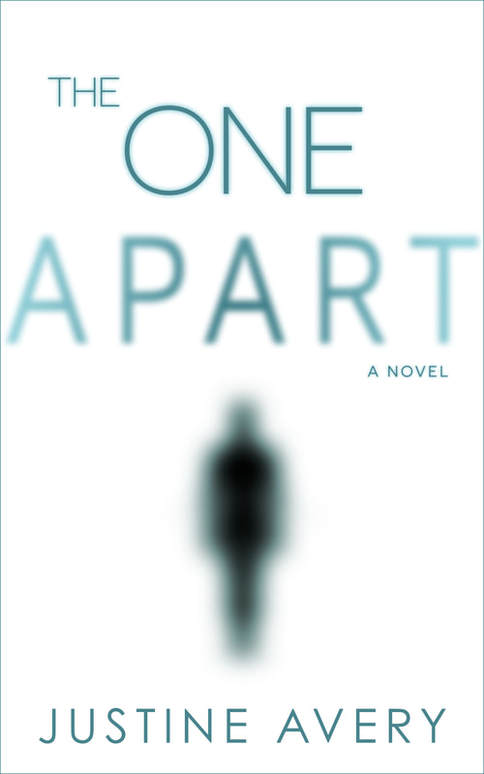
Win an ebook copy of The One Apart and a $10 Amazon gift card (open internationally / 1 winner)
a Rafflecopter giveaway
https://widget-prime.rafflecopter.com/launch.js
If the handy-dandy Rafflecopter doesn’t show up above, just click this link.
Book Details:
Book Title: The One Apart by Justine Avery
Category: Adult fiction, 568 pages
Genre: Sci-fi & Fantasy / Paranormal
Publisher: Justine Avery
Release date: Dec 4, 2017
Content Rating: PG-13
Book Description:
Only one obstacle stands in his way of enjoying a normal life.
He remembers—every life he’s lived before.
Tres is about to be born… with the biggest burden any has ever had to bear. He is beginning again—as an ageless adult trapped in an infant body.
He and his teenage mother face life filled with extraordinary challenges as they strive to protect, nurture, and hide how truly different he is. But Tres alone must solve the greatest mystery of all: who is he? The answer is linked to the one question he’s too afraid to ask: why am I?
In his quest, Tres discovers that all is considerably more interconnected and dynamic than he could ever imagine—and fraught with far more danger. He cannot hide from the unseen threat stalking him since his birth.
Life as he knows it—as all know it—is in peril. And Tres is the only one aware.
Justine Avery is an award-winning author of stories large and small for all. Born in the American Midwest and raised all over the world, she is inherently an explorer, duly fascinated by everything around her and excitedly noting the stories that abound all around. As an avid reader of all genres, she weaves her own stories among them all. She has a predilection for writing speculative fiction and story twists and surprises she can’t even predict herself.
Avery has either lived in or explored all 50 states of the union, over 36 countries, and all but one continent; she lost count after moving 30-some times before the age of 20. She’s intentionally jumped out of airplanes and off the highest bungee jump in New Zealand, scuba dived unintentionally with sharks, designed websites, intranets, and technical manuals, bartered with indigenous Panamanians, welded automobile frames, observed at the Bujinkan Hombu Dojo in Noba, Japan, and masterminded prosperous internet businesses—to name a few adventures. She earned a Bachelor of Arts degree that life has never required, and at age 28, she sold everything she owned and quit corporate life—and her final “job”—to freelance and travel the world as she always dreamed of. And she’s never looked back.
Aside from her native English, Avery speaks a bit of Japanese and a bit more Spanish, her accent is an ever-evolving mixture of Midwestern American with notes of the Deep South and indiscriminate British vocabulary and rhythm, and she says “eh”—like the Kiwis, not the Canadians. She currently lives near Los Angeles with her husband, British film director Devon Avery, and their three adopted children: Becks, Sam, and Lia. She writes from wherever her curiosity takes her.
Avery loves to connect with fellow readers and creatives, explorers and imaginers, and cordially invites you to say “hello”—or konnichiwa.
Win an ebook copy of The One Apart and a $10 Amazon gift card (open internationally / 1 winner)
a Rafflecopter giveaway
https://widget-prime.rafflecopter.com/launch.js
If the handy-dandy Rafflecopter doesn’t show up above, just click this link.
Flame in the Dark
by Faith Hunter
Series: Soulwood, #3eARC, 352 pg.
Ace/Roc, 2017
Read: September 22 – 27

Rookie Agent Nell Ingram and her PsyLED team start this novel in a multi-agency investigation into an attack on a political fundraiser — with a focus on one family in particular. There’s no obvious paranormal aspect to the attack, so PsyLED isn’t in the lead, but there’s enough to keep them hanging around the investigation. If for no other reason than the local vampires are interested in what’s going on. Soon, other attacks occur, making it even clearer that one family is the target. As the team starts to investigate that family, more questions are raised and secrets are revealed. But it’s a long while before the secrets and questions lead to anything useful for preventing further loss of life.
The presence of the vampires is a nice bonus — they were present a little in Blood of the Earth, but not really in Curse on the Land. Nell’s still struggling to make up for a faux pas in her initial exposure to the vampires — and a couple of them seem to be enjoying her discomfort. I enjoy seeing Hunter’s particular brand of vampires running around without Jane and her stakes, as long as she doesn’t return to this particular well too much in this series, the Vamps’ presence will be a plus.
The PsyLED case itself is a little on the tepid side — it’s far easier for readers to figure out what’s going on than it is for the characters, and that always hurts the stories somewhat. But — wow. What’s actually going on when the team finally puts all the pieces together? Wow — just wow. It makes putting up with their earlier slowness utterly worth it (also, the reader won’t be as correct as they thought they were for a long time). Basically, if you find yourself getting annoyed with this story, your patience will be rewarded. Probably more than rewarded.
Speaking of patience, Nell needs to exercise a good deal of it with her family, who are still struggling with understanding just what’s going on with her (and they don’t know it all!) and her move for independence from the cult she’s left. It’s clearly, and understandably, difficult to continue to distance herself from the ways and practices she was raised in, while trying to strengthen the ties with the family members still in the church. Meanwhile, the church does seem to be trying to change their practice — moving to orthopraxy, without much of a move towards orthodoxy. That kind of thing isn’t really going to work in the long run — but then again, Hunter’s not writing a realistic account of a movement in a religious group — so it’s not anything to get worked up over. Anyway, Nell puts her foot down on a couple of fronts and draws on some of what she’s learned in working with others, to be able handle her family in a way that hopefully gets through to them. She’s also making some smart moves regarding her sister, Mud/Mindy, who seems to share a lot of abilities and inclinations with Nell. I can’t wait to see what Hunter’s got up her sleeve with this.
While this is really Nell’s book (and series), there’s a great ensemble of characters here. Particularly in the PsyLED team. I’d have preferred a better use of the team, and for the second book in a row, I wondered why Hunter didn’t use some of the characters as well as she did in the first book. Maybe this is just me asking for more for Tandy to do.
There’s some satisfying development on the Brother Ephriam/foreign entity in Soulwood front (that’ll make sense to readers of the series), and regarding the “Vampire Tree.” Which just might be the creepiest floral entity I’ve ever read about — and it’s creepier than a lot of fauna, too. I’m particularly glad about the Brother Ephriam development, I was afraid that things were going to go on too long with that without any real shift in the status quo.
There’s also a stronger look at Nell’s romantic life here — her taking the first steps in exploring a real romantic relationship (in contrast to that marriage she was in), and maybe even getting her first “Improperly Proper Kiss.” There’s just enough romance story allow the reader to see her grow in this way (in addition to all the others she’s growing in), just one more step towards her fulfillment — but not so much that it’s the novel’s focus.
One of the pluses (and minuses) about this series all along has been how hard it is to simply say what Nell Ingram is. With most UF you can summarize things briefly: She can see dead people, he’s a wizard PI, she’s a skinwalker vampire hunter, he’s the world’s oldest living druid, she’s a changeling PI, she’s a ridiculously named werewolf who has a radio talk show, and so on . . . Nell’s a, um. Well. There’s magic, and powers over growing things, but no real spells, per se. See what I mean? This is a pain when trying to describe it to others, or even in knowing what to expect from her stories. And Hunter takes full advantage of this, she’ll have Nell do whatever at any point in time, and as long as it sort of relates to what she started off doing in Book 1, you buy it. By the same token, I can imagine that might be too much of a blank slate for Hunter — there are no well-established strengths/weaknesses/tropes to play with. There are things that Nell does here that just blows me away — and that has a lot to do with Hunter creating this magic creature/race on her own.
When I say that Hunter takes full advantage of this — I should say I thought she had been for the past two books — she really lets loose with it this time.
Let me try to sum up this rambling post: this is a slow burn of a novel — it puts down roots and grows like Nell’s plants, and eventually blossoms into something that’s great to look at. Be patient with it, watch the growth, and you’ll be rewarded. Because when things get going — they really get going, and it’s almost too much to take in. I vacillated a lot about what to rate this — I argued myself into 4-Stars and then into 5 and back into 4 and so on a few times. but because I really don’t place too much weight on the stars, really, I just stopped and split the difference. For those who’ve been around for the previous two books this is a must read — if this was going to be the last in the series, it’d be a decent way to leave (thankfully, Soulwood isn’t a trilogy); for Yellowrock fans who haven’t tried this series yet, you’ll appreciate it; and if you’ve never tried either — take a dip into this world, but I’ll warn you: you’ll end up reading all the others.
Disclaimer: I received this eARC from Berkley Publishing Group via NetGalley in exchange for this post — thanks to both for this. Thanks also to Let’s Talk! Promotions for the opportunity to take part in this book tour. My opinions about the book remain my own.
—–

Retired Dallas police officer turned detective novelist, Anita Dickason, is sharing the good news about her debut detective novel series, featuring strong female lead characters.
To kick things off we’re highlighting Sentinels of the Night, which puts FBI Tracking Agent Cat Morgan on the trail of a brutal serial killer.
Cat teams up with town police chief Kevin Hunter to accomplish one crucial goal: catching the sadistic killer before he strikes again. Although Cat and Kevin soon recognize that the romantic tension between them is undeniable, both hard-working, dedicated professionals know that catching the killer comes before anything else. Cat and Kevin must set aside their personal feelings to put a final end to the killer’s reign of terror.

This week, Dickason is showing up around the Book Blogosphere with some guest posts. We’re happy to have her drop by this little patch of cyberspace with these writing tips and a giveaway. Click here to enter.
My Top Five Writing Tips for New Authors
I came across a website that ran a short story contest. The theme was based on a picture posted
on the site and was limited to 500 words. The image caught my attention. A tattered and broken
doll stood in a barren, run-down old room with spider webs and torn and stained wallpaper. I
later learned the doll did exist and was used in haunted houses. While it was designed to be eerie,
there was also a sense of tragedy.
I thought what the heck, its only 500 words. I wrote my first fictional story titled Not Dead, Not
Dead. To my utter amazement, I won third place. I was hooked. I now have two published
books, Sentinels of the Night, and Going Gone!, and am working on a third.
I have learned a lot about the craft of writing along the way and would offer these suggestions.
1) Write! Now that seems like a simplistic answer to a complicated question: how do I start?
However, it is so true. I enjoy talking to writing groups about writing and publishing.
Someone will always ask this question. Most everyone who has a yen to write has ideas
rolling in their head. Start putting them down on paper, just start writing.
2) Start with the challenge of a short story. It is a fun way to learn the dynamics of writing.
When limited to 500 or 1000 words, you cannot ramble. Once the story is complete,
submit it to a short story contest or magazine.
3) Don’t worry about perfection in the first draft. Get the ideas and flow of the plot down.
Trying to get a paragraph or dialogue 100% perfect will only slow down the creativity.
Write, get it all down, then go back and edit.
4) Keep a notepad by the keyboard. It helps to keep track of character names, dates, times
and other pesky details that can get lost. I use multiple changes in POV (point of view) as
I shift between agents and locations. The technique can get complicated, and I use the
notepad to keep track of who knew what and when.
5) Edit. There are software programs that can be invaluable. I use Grammarly and
ProWriting Aid. Each has several great features to catch not only errors in punctuation
but also sentence structure, overused words, etc.
For more information on Sentinels of the Night and the second Tracker novel, Going Gone!,
please see my website or the book trailers.
www.anitadickason.com
Sentinels of the Night: https://www.youtube.com/watch?v=4m00v2W4K4o
Going Gone!: https://www.youtube.com/watch?v=DGI9MzkBkSE
Flame in the Dark
by Faith Hunter
Series: Soulwood, #3eARC, 352 pg.
Ace/Roc, 2017
Read: September 22 – 27

Rookie Agent Nell Ingram and her PsyLED team start this novel in a multi-agency investigation into an attack on a political fundraiser — with a focus on one family in particular. There’s no obvious paranormal aspect to the attack, so PsyLED isn’t in the lead, but there’s enough to keep them hanging around the investigation. If for no other reason than the local vampires are interested in what’s going on. Soon, other attacks occur, making it even clearer that one family is the target. As the team starts to investigate that family, more questions are raised and secrets are revealed. But it’s a long while before the secrets and questions lead to anything useful for preventing further loss of life.
The presence of the vampires is a nice bonus — they were present a little in Blood of the Earth, but not really in Curse on the Land. Nell’s still struggling to make up for a faux pas in her initial exposure to the vampires — and a couple of them seem to be enjoying her discomfort. I enjoy seeing Hunter’s particular brand of vampires running around without Jane and her stakes, as long as she doesn’t return to this particular well too much in this series, the Vamps’ presence will be a plus.
The PsyLED case itself is a little on the tepid side — it’s far easier for readers to figure out what’s going on than it is for the characters, and that always hurts the stories somewhat. But — wow. What’s actually going on when the team finally puts all the pieces together? Wow — just wow. It makes putting up with their earlier slowness utterly worth it (also, the reader won’t be as correct as they thought they were for a long time). Basically, if you find yourself getting annoyed with this story, your patience will be rewarded. Probably more than rewarded.
Speaking of patience, Nell needs to exercise a good deal of it with her family, who are still struggling with understanding just what’s going on with her (and they don’t know it all!) and her move for independence from the cult she’s left. It’s clearly, and understandably, difficult to continue to distance herself from the ways and practices she was raised in, while trying to strengthen the ties with the family members still in the church. Meanwhile, the church does seem to be trying to change their practice — moving to orthopraxy, without much of a move towards orthodoxy. That kind of thing isn’t really going to work in the long run — but then again, Hunter’s not writing a realistic account of a movement in a religious group — so it’s not anything to get worked up over. Anyway, Nell puts her foot down on a couple of fronts and draws on some of what she’s learned in working with others, to be able handle her family in a way that hopefully gets through to them. She’s also making some smart moves regarding her sister, Mud/Mindy, who seems to share a lot of abilities and inclinations with Nell. I can’t wait to see what Hunter’s got up her sleeve with this.
While this is really Nell’s book (and series), there’s a great ensemble of characters here. Particularly in the PsyLED team. I’d have preferred a better use of the team, and for the second book in a row, I wondered why Hunter didn’t use some of the characters as well as she did in the first book. Maybe this is just me asking for more for Tandy to do.
There’s some satisfying development on the Brother Ephriam/foreign entity in Soulwood front (that’ll make sense to readers of the series), and regarding the “Vampire Tree.” Which just might be the creepiest floral entity I’ve ever read about — and it’s creepier than a lot of fauna, too. I’m particularly glad about the Brother Ephriam development, I was afraid that things were going to go on too long with that without any real shift in the status quo.
There’s also a stronger look at Nell’s romantic life here — her taking the first steps in exploring a real romantic relationship (in contrast to that marriage she was in), and maybe even getting her first “Improperly Proper Kiss.” There’s just enough romance story allow the reader to see her grow in this way (in addition to all the others she’s growing in), just one more step towards her fulfillment — but not so much that it’s the novel’s focus.
One of the pluses (and minuses) about this series all along has been how hard it is to simply say what Nell Ingram is. With most UF you can summarize things briefly: She can see dead people, he’s a wizard PI, she’s a skinwalker vampire hunter, he’s the world’s oldest living druid, she’s a changeling PI, she’s a ridiculously named werewolf who has a radio talk show, and so on . . . Nell’s a, um. Well. There’s magic, and powers over growing things, but no real spells, per se. See what I mean? This is a pain when trying to describe it to others, or even in knowing what to expect from her stories. And Hunter takes full advantage of this, she’ll have Nell do whatever at any point in time, and as long as it sort of relates to what she started off doing in Book 1, you buy it. By the same token, I can imagine that might be too much of a blank slate for Hunter — there are no well-established strengths/weaknesses/tropes to play with. There are things that Nell does here that just blows me away — and that has a lot to do with Hunter creating this magic creature/race on her own.
When I say that Hunter takes full advantage of this — I should say I thought she had been for the past two books — she really lets loose with it this time.
Let me try to sum up this rambling post: this is a slow burn of a novel — it puts down roots and grows like Nell’s plants, and eventually blossoms into something that’s great to look at. Be patient with it, watch the growth, and you’ll be rewarded. Because when things get going — they really get going, and it’s almost too much to take in. I vacillated a lot about what to rate this — I argued myself into 4-Stars and then into 5 and back into 4 and so on a few times. but because I really don’t place too much weight on the stars, really, I just stopped and split the difference. For those who’ve been around for the previous two books this is a must read — if this was going to be the last in the series, it’d be a decent way to leave (thankfully, Soulwood isn’t a trilogy); for Yellowrock fans who haven’t tried this series yet, you’ll appreciate it; and if you’ve never tried either — take a dip into this world, but I’ll warn you: you’ll end up reading all the others.
Disclaimer: I received this eARC from Berkley Publishing Group via NetGalley in exchange for this post — thanks to both for this. Thanks also to Let’s Talk! Promotions for the opportunity to take part in this book tour. My opinions about the book remain my own.
—–


I’ve gotta say, I was pretty intimidated when I got the word that Faith Hunter was going to participate in this, but it ended up being a lot easier to come up with questions to ask her than it was for many other writers. The main problem was cutting them down to five! Anyway, I enjoyed this — hope you do, too.
| Ms. Hunter, before we begin, I’d like to thank you for taking the time to provide some A’s to the Q’s here. I’ve been reading the Yellowrock series since 2011 and have been become a big fan of your work. I want to ask about a dozen questions about the last two or three chapters of Flame in the Dark, but I don’t think you’d want to answer them — and if you did, you wouldn’t let me post your answers. Here are their replacements, which should be spoiler-free, and hopefully you haven’t been asked too many times. | ||
|
||
| First off, what’s been the reaction from your fans toward this spin-off? Anything surprising about the reaction (hopefully positive surprises, but I’ve been online long enough to not know to assume that). | ||
|
||
| Each book comes with its own particular set of challenges. What were the particular challenges of Flame in the Dark? | ||
|
||
| For me, one of the highlights of the Soulwood books is Nell’s reaction to the food (mostly of the “junk” variety) her colleagues are introducing her to. It’s such a subtle and effective way to remind/demonstrate just how far away her life was from the world we all know before she joined up with PsyLED (and so fun to watch this farm-to-table type woman revel in processed foods). Assuming I’m not reading too much into that — why food? Why not . . . the Internet or music? Was it a conscious choice, or just something that started that you ran with? Is the research for it just dreadful? How many Krispy Kremes do you have to eat to make sure you get it right? 🙂 [sorry I babbled a bit there . . . ] | ||
|
||
| The religious lives of Jane and Nell play a more significant role in the novels than any other Urban Fantasy series I can think of, where does that come from? How do you approach bringing their faith (understanding that Nell’s is in flux given her past) into the stories in a way that seems authentic? | ||
|
||
| What’s the one (or two) book/movie/show in the last 5 years that made you say, “I wish I’d written that.”? | ||
|
||
| Again, thanks for your time and participation. I hope Flame in the Dark is as successful as it deserves to be, and I can’t wait to see what’s next for either Jane or Nell. |