

Category: Further Up and Further In

The Pilgrim’s Regress by C.S. Lewis: Everyone Has to Start Somewhere

Further Up and Further In A Year with C.S.Lewis

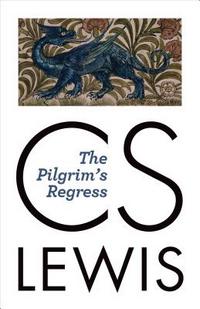
Cover of The Pilgrim's Regress by C.S. LewisThe Pilgrim’s Regress

by C. S. Lewis

DETAILS:
Publisher: William B. Eerdmans Publishing Company
Publication Date: October 22, 2014
Format: Paperback
Length: 230 pg.
Read Date: January 1-3, 2025

Buy from Bookshop.org Support Indie Bookstores

A Bit of Personal History (feel free to skip)

Back in ’91 or ’92, I saw a copy of The Pilgrim’s Regress on a bookstore shelf. I was in a “read everything by Lewis you can get your hands on phase,” so I instantly picked it up. But the back of the book talked about it as the modern equivalent of Bunyan’s The Pilgrim’s Progress in a way that I figured I should read Bunyan before it.

It took me a little while to track down the Bunyan (the toilsome times before online bookshops), and by the time I worked my way through it, the bookstore didn’t have that copy any more and I was distracted by other things.

I’ve often thought about trying this book since then—but it wasn’t until I started thinking about this project that I finally combined ambition with general curiosity.

What’s The Pilgrim’s Regress About?

This modern-retelling of The Pilgrim’s Progressis an allegory about a man named John on his journey from childhood exposure to religion in Puritania to an Island of pleasure. Along the way, he has to deal with several physical, spiritiual and itellectual challenges to take him away from his journey (pretty much like Bunyan’s Christian).

This was the first thing that Lewis wrote after his conversion, and it’s considered to be an intellectual biography of that journey.

Basically, think Bunyan for the early 20th Century and you’ve got it.

A Couple of Things That Helped Me

Early on, John encounters a “brown girl” who distracts him from his interest in—or at least pursuing that interest. They begin a sexual relationship, which goes awry and causes some serious problems for John (actually, that entire relationship from her introduction on is a serious problem.) I was pretty sure that Lewis wasn’t making any kind of ethnic characterization or anything, but it’s hard to shake the feeling. Thankfully, reading this blog post by a Lewis expert made me feel so much better (and shows I was on the right path in general with it). I’d explain it, but Dr. Hurd does it better.

The other thing that helped was the afterword that Lewis wrote for the Third Edition, ten years after the original publication. He points to some flaws, or at least things he could’ve done better. I agreed with most of his self-diagnosis, and at least one point, his explanation made me understand an aspect of the book (and, yes, he was right to critique himself).

So, while I’m glad for the additional things that helped me appreciate the book, I trust that with very little effort, I could find more. I shouldn’t have to look to these kinds of things to appreciate a book. To gain a better understanding, sure. But to move me from “meh” to “okay, that wasn’t that bad/objectional” should come from the text itself—not from others.

So, what did I think about The Pilgrim’s Regress?

It’s been almost a century since this was first published, and I cannot decide if it’s a good thing or not that so many of the characters and ideas John encounters are still relevant and identifiable (although some details may have altered a bit). The reader can see that these intellectual movements are nothing new—sadly, many of them haven’t been forgotten. One of the best things about reading theological works written generations before me is wondering exactly what the author is targeting (or why they’re bothering)—but the ideas that Lewis wants to confront are still in his readers’ lives. Probably even more than they were for him.

The beginning of the book seemed promising with an uncaring and cold clergy, parents who were off the mark, and so on—I thought John’s journey would lead us to a correction of or confrontation with these things. But no, we get the brown girl and then things go far from where I thought we were going. Naturally, I don’t mind that—but I would’ve appreciated something more definitive. That’s personal taste, though.

Like many allegories, particularly Bunyan’s, there is nothing subtle about The Pilgrim’s Regress. That doesn’t mean it’s not good, or that it’s so clear always that there’s no thinking involved, but, wow—it does tend to feel like it’s hitting you with a brick when John encounters a new person/idea.

Am I glad that I read this? Yes. So I can see Lewis’ development as a writer, to satisfy a certain curiosity in general, and to cross off a decades-old item from my “To Read List.” For people who don’t have at least two of those motivations to pick this up, I can’t really recommend it. I’m not sure I really can for those who do have those motivations—but it satisfies those particular itches.

Is this bad? By no means. It’s not good either. I did particularly enjoy certain lines, scenes, or encounters. I thought some of the ways that Lewis framed the better alternatives to be refreshing and helpful. But overall this really did nothing for me.


3 Stars

This post contains an affiliate link. If you purchase from it, I will get a small commission at no additional cost to you. As always, the opinions expressed are my own.

Irresponsible Reader Pilcrow Icon

The Problem of Pain by C.S. Lewis: His First Apologetic Work is a Mixed Bag

Further Up and Further In A Year with C.S.Lewis

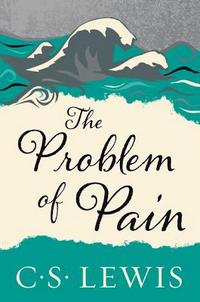
Cover of The Problem of Pain by C.S. LewisThe Problem of Pain

by C. S. Lewis

DETAILS:
Publisher: HarperOne
Publication Date: April 28, 2015
Format: Paperback
Length: 159 pg.
Read Date: January 5-12, 2025
Buy from Bookshop.org Support Indie Bookstores

His Omnipotence means power to do all that is intrinsically possible, not to do the intrinsically impossible. You may attribute miracles to Him, but not nonsense. This is no limit to His power. If you choose to say ‘God can give a creature free will and at the same time withhold free will from it’, you have not succeeded in saying anything about God: meaningless combinations of words do not suddenly acquire meaning simply because we prefix to them the two other words ‘God can’. It remains true that all things are possible with God: the intrinsic impossibilities are not things but nonentities. It is no more possible for God than for the weakest of His creatures to carry out both of two mutually exclusive alternatives; not because His power meets an obstacle, but because nonsense remains nonsense even when we talk it about God.

What’s The Problem of Pain About?

This book is an attempt to answer the question, “Why do Bad Thing Happen to Good People?” as well as “Why do Bad Things Happen to Not-Good People, or Animals, or Pretty Much at All?” Why is there suffering among those beings and creatures that God created?

Lewis approaches these questions with a mix of Biblical wisdom, careful thought, compassion, and understanding. And the ability to not go too far (frequently) with his own insight, but to stop and say, “I don’t know.”

This is an honest, if imperfect, attempt to wrestle with these questions, put them in the right context, and assure the world and the Church that there are answers.

Some Weaknesses

This is the work of someone who is still relatively new to the Faith as he wrote it, and that shows. There’s a lot of vaguely Christian speculation. But not quite enough dealing with the text of Scripture to base this speculation on.

Chapter 5, “The Fall of Man,” is a great example of this. It contains a lot of nonsense—and by the end of the chapter, he’d lost me completely (not that I didn’t understand him, I just couldn’t stay with him). Still, I liked most of it, and given the presuppositions he started with and stated (as much as I’d want to tweak them), I could ride along with his argument and enjoy it. The last paragraph of the chapter was okay and went a good way to getting me to stick with the book.

A Few Good Points

I don’t know that I have the patience to work through these ideas—and this would post would end up going in a direction I try to avoid if I did. But I rather enjoyed these quotations and like thinking through these ideas, so let me just paste them here as an example of the highs that this book can hit—and the thoughts it can provoke.

From Chapter 3, “Divine Goodness.”

We want, in fact, not so much a Father in Heaven as a grandfather in heaven—a senile benevolence who, as they say, ‘liked to see young people enjoying themselves’, and whose plan for the universe was simply that it might be truly said at the end of each day, ‘a good time was had by all’. Not many people, I admit, would formulate a theology in precisely those terms: but a conception not very different lurks at the back of Many minds. I do not claim to be an exception: I should very much like to live in a universe which was governed on such lines, But since it is abundantly clear that I don’t, and since I have reason to believe, nevertheless, that God is Love, I conclude that my conception of love needs correction.

From Chapter 6, “Human Pain”:

Confessors as well as martyrs are saved, and some old people whose state of grace we can hardly doubt seem to have got through their seventy years surprisingly easily. The sacrifice of Christ is repeated, or re-echoed, among His followers in very varying degrees, from the cruelest martyrdom down to a self-submission of intention whose outward signs have nothing to distinguish them from the ordinary fruits of temperance and “sweet reasonableness’. The causes of this distribution I do not know; but from our present point of view it ought to be clear that the real problem is not why some humble, pious, believing people suffer, but why some do not. Our Lord Himself, it will be remembered, explained the salvation of those who are fortunate in this world only by referring to the unsearchable omnipotence of God.

From Chapter 7, “Human Pain Continued” (which might be my favorite chapter, although the preceding one is close)

But if suffering is good, ought it not to be pursued rather than avoided? I answer that suffering is not good in itself. What is good in any painful experience is, for the sufferer, his submission to the will of God, and, for the spectators, the compassion aroused and the acts of mercy to which it leads.

So, what did I think about The Problem of Pain?

If any real theologian reads these pages he will very easily see that they are the work of a layman and an amateur. Except in the last two chapters, parts of which are admittedly speculative, I have believed myself to be restating ancient and orthodox doctrines. If any parts of the book are ‘original’, in the sense of being novel or unorthodox, they are so against my will and as a result of my ignorance. I write, of course, as a layman of the Church of England: but I have tried to assume nothing that is not professed by all baptised and communicating Christians.

As this is not a work of erudition I have taken little pains to trace ideas or quotations to their sources when they were not easily recoverable. Any theologian will see easily enough what, and how little, I have read.

Despite many good things Lewis wrote in this work, these two paragraphs that close the Preface might be the truest. Lewis makes some serious errors here, misreading Scripture and showing an ignorance of theology (what he says about Total Depravity is the easiest illustration of this). He’s a layman, he’s allowed (many who read this will be quick to point the same is true of me—and I assure you, I’m just as aware as Lewis was). There’s a part of me that wishes he’d continued in his efforts to not write this.

Still, he did. And I do appreciate him wrestling with so many important ideas here—if nothing else, the way he framed the questions and thought through his answers demonstrates that “The Problem of Pain” can be responded to, can be shown to not be an insurmountable problem. Best of all, Lewis demonstrates that a thoughtful believer can have questions, can struggle, can find things difficult, and yet continue to believe.

Lewis has greater works ahead (I know because I’ve read some of these), and while I ultimately find his work here to be wanting—I respect the effort. I find a lot worthy of chewing on—but sadly, there’s a lot of it that must be ignored.

I do recommend it as a tool to make yourself consider some difficult ideas, and to find some good ways to think about them.


3 Stars

This post contains an affiliate link. If you purchase from it, I will get a small commission at no additional cost to you. As always, the opinions expressed are my own.
Irresponsible Reader Pilcrow Icon

Page 2 of 2

Powered by WordPress & Theme by Anders Norén