Category: Blog Series Page 167 of 220

A Few Quick Questions With…Steven Max Russo

I’ve blogged about Russo’s two novels now, and thankfully, I got to ask him a few questions about himself and his books. If you like this Q&A, be sure you check out Thieves and The Dead Don’t Sleep.

Tell us about your road to publication—was your plan/dream always to become a novelist and your education/other jobs were just to get you to this point, or was this a later-in-life desire?
I can’t say that my plan was to become a novelist, but it was always a dream of mine. I guess since high school I’ve harbored a secret desire to become an author. I wrote short stories and took several creative writing classes in college, and even began a novel once I got out of school, but I never got around to finishing it.

The truth is, when I was young, I just didn’t know how to go about becoming a writer. Also, deep down, I didn’t think I had the talent or perseverance to actually write an entire book.

I ended up becoming an advertising copywriter by default I suppose. It involves creative writing, but of a totally different sort.

Anyway, a few years back, I was feeling creatively frustrated and one night I just sat down and wrote a short story. It was about a young white collar criminal who is coerced into helping commit a murder.

I sent that story out, almost as a lark, and to my total astonishment a small online publication called The Rag actually published it. Paid me for it too!

That reignited the fire and I began writing seriously.

In Thieves, it’s really Skooley and Esmerelda’s story, and really you could’ve told the whole story without them (and Ray). But you kept bringing in Loretta. Can you—without spoiling anything—explain why you brought her into the story, what did she add that Esmerelda couldn’t have on her own?
An interviewer once asked me if I was a “plotter” or a “pantser.” Unfortunately, I am a pantser. That is, I don’t plot out where the story is going, I simply write by the seat of my pants.

I often tell people that I feel more like a reporter chronicling the events taking place than I do an author writing fiction. That is, I write what I see in my head. When I brought Loretta into the story, I was simply following Skooley as he left the house and went searching for something to eat. He ran into Loretta in a bar. I didn’t plan it that way, that’s just the way it happened.

What I think Loretta does is address a certain humanityand lack of humanityin the story.

She is the only main character that is even remotely likable. She is a victim and I think deep down sees herself as a victim. And to the psychopath, Skooley, she helps further show the depths of his depravity and psychosis.

She also helps ratchet up the tension.

Turning to The Dead Don’t Sleep, there’s at least a dozen things I want to ask. But I’m going to go with this one: The National League All Stars—where did this idea come from (both the name and the concept)? It seems like something that’s close to fact, but skewed a bit to the fictional side.
As I stated above, when I started this story, I didn’t know where it was going. I introduced this group of nasty characters and I knew they were tied to Frank’s past, but I wanted to isolate them, make them a specific group or subset that Frank could identify. Not everyone (such as Frank himself) who participated in this particular program during the war was a bad actor. Also, as the story progressed, these old baseball cards that are left were a device I could use to point the finger back at this group.

As for the name I chose, I wanted something that was instantly recognizable. It also allowed my characters to leave something that could be easily carried (baseball cards – one early reader of the manuscript, a big baseball fan, actually corrected the playing position of one of the baseball players I used) and it also allowed me to point directly to the relevant era.

Lastly, it gives the reader a hint at the false self-image this group had of itselfas an elite commando unit (hence All Stars)while their actions show that they were basically a group of drugged up, violent, and somewhat inept psychopaths.

Who are some of your major influences? (whether or not you think those influences can be seen in your work—you know they’re there)
I’d have to say that the three writers who influenced me most were Elmore Leonard, Ernest Hemingway, and Stephen King. If anyone can say they actually see their influences in my writing, I’d be immensely pleased! But I, and I believe most writers, are influenced by many of the writers we read. The trick is taking all these influences and putting them into the blender of your own imagination and then coming out with a voice that is your own, even if that voice sounds vaguely (or not so vaguely) like someone else’s.
Is there a genre that you particularly enjoy reading, but could never write? Or are you primarily a mystery/suspense/thriller reader?
I think when it comes to my own enjoyment, I am primarily a mystery/suspense/thriller reader. As far as what I can or cannot write, that remains to be seen. I am a novice author. I hate to admit it, but technically, I don’t really know what I’m doing! I can honestly say that I don’t see myself writing cozy mysteries or romance novelsbut who knows? I enjoy writing and telling stories and am just as surprised as readers are as to where the story is going next!
What’s next for Steven Max Russo?
Well, I’ve written a new book (my third) titled The Debt Collector that is now with my new agent (Peter Rubie of FinePrint Lit) and I am working on two more novels. I’m not really sure what the future holds. I plan to keep on writing. How much time I have to devote to writing novels, at least in the short term, will depend at least in part on how well my books are received, and how many I sell.
Thanks for your time—and thanks for both of these reads, I enjoyed them and hope you have plenty of success with both of them.

WWW Wednesday, 20-November-2019

Welcome to WWW Wednesday!

This meme was formerly hosted by MizB at A Daily Rhythm and revived on Taking on a World of Words — and shown to me by Aurore-Anne-Chehoke at Diary-of-a-black-city-girl.

The Three Ws are:

What are you currently reading?
What did you recently finish reading?
What do you think you’ll read next?

Easy enough, right?

What are you currently reading?

I’m working reading Paul Cornell’s The Lights Go Out in Lychford (it’s a blast), and An Accidental Death by Peter Grainger, Gildart Jackson (Narrator).

What did you recently finish reading?

I just finished Robert B. Parker’s Angel Eyes by Ace Atkins and Artemis by Andy Weir, Rosario Dawson (Narrator) on audio.

What do you think you’ll read next?

My next book will either be Not So Common People by T Gamache or Dawn of Dreams by Bronwyn Leroux. I have no idea what audiobook is next for me…scrambling for ideas atm.

Hit me with your Three W’s in the comments! (no, really, do it!)

A Few Quick Questions With…Dr. Heather L. Beal

Earlier, I posted my quick take on Hurricane Vacation, I’ve now read and written about three of Dr. Beal’s books, it’s about time I asked her a few questions, right? I really am impressed with the idea behind this series of books and hope that they find their way into the lives of many children. (while being very glad I live in Idaho, where most of them aren’t applicable). Here’s some more information about the author and her books—I hope you enjoy.

Tell us about your road to publication—you talk about it a little on your website, but how did you make the decision to apply your education in writing books for children? Having made that decision, how did you implement it? How steep was that learning curve behind the first book?
Great questions. First, I tried to explain a tornado watch to my daughter one rainy, stormy, evening when I feared the watch might become a warning. Needless to say, I failed horribly and ended up scaring her. It was then that I realized that not only had I chosen the wrong time to talk with her (right before or during the event).

I started researching what was available and while I found a lot of ‘science of’ types of books, nothing was out there that could teach my daughter what to do ‘just in case’ in an age-appropriate way. Once I realized there was a gap, I decided I wanted to do something about it. I starting learning about book design, formatting, and structure. I had already dabbled in fiction books, but I had never looked at writing children’s books. As a linguist I realized that writing a children’s book was simply talking ‘child’ and the children in my books wanted their voices heard in their own special ways.

The steepest part of the learning curve had to be not so much the writing, the story developed as I wrote, but in how to balance the message, keep the story interesting, make sure children could learn how to be safe, and do it in as few words as possible. I would say that the struggle was, and continues to be, balancing that word count against everything I, and my beta-readers (mostly emergency managers like myself), think should be in the books that teach little ones how to stay safe.

I don’t want to ask “where do you get your ideas?” But how tricky is it to figure out how to present the topic to your readers? What’s been the hardest (or, if it’s a better story, the most surprisingly easy) of the topics so far to tackle?
When I started, I had a variety of topics I wanted to cover, and I still do. Before starting my third book, Lions, Leopards and Storm, Oh My, I took it to my followers, the 1,000 or so subscribers of my newsletter and asked them – where should the focus be? Hurricanes, volcanoes, severe weather, etc. The consensus was severe weather, followed by hurricanes, so that was where I got my ‘marching orders’ for the 3rd and 4th books.

The trick, or the hardest thing I feel I have to do, is figure out how to introduce all the topics, various disasters, without making my kiddos look like the unluckiest children on earth to experience everything – lol! I find that while some of the experiences can naturally occur within a classroom environment, as it might happen in day-to-day experiences such as the tornado in Elephant Wind, the storm in Lions, Leopards, and Storms, Oh My or the training for earthquakes in Tummy Rumble Quake, not everything would. For this latest book, Hurricane Vacation, the kids are visiting their cousin and we start to explore how a family prepares for a disaster. It’s important that my readers can relate this events to their own lives and different environments.

After a few of these under your belt, do you have an impulse to step out of the natural disaster realm and do something silly or fantasy-based like a rhyming book about unicorns sliding down rainbows?
While I am a huge fan of mermaids, unicorns, and the like, I have to be careful that my characters stay within the realm of what children need to do, and can do, to stay safe. Creatures with special powers or skills wouldn’t necessarily be seen by the children as having to act the same way they would.

That being said I would love to start a series of board books that more playfully look at what to do and not do as during various scenarios, sort of a question – answer short book that allows children to express themselves and laugh at the silly things the character thinks to do. I teach earthquake safety in childcare and use Tummy Rumble Quake as part of that, but my favorite part is asking the kids about how to drop, cover and hold on through a series of questions where I do it wrong. For example, I ask “do I cover here” and alternate covering my head, framing my chin, covering my ears, or my face – which gets them to laugh as the “teach me” how to do it properly. I think that could be a great series of books that would entertain as well as teach even younger kiddos what to do to stay safe.

I’m fascinated by the process of putting together a book like this—and seeing how different children’s book authors answer this. What’s the process like between you and the illustrator behind the scenes? Does it vary a little from illustrator to illustrator?
It’s a very educative one. I have been lucky to work with two different illustrators and have learned a lot about creative license. I provide a page by page guidance document if you will of my vision for the cover and page illustrations, but sometimes I get stuck on what exactly I want to depict and there is a great collaboration with my illustrators on ideas about how to best approach the desired image. There is variance between illustrators, but that too has taught me a lot. For example, my first illustrator brought my vision of different children to life, but her cultural background was different from my own and it was a really fun discussion about how kiddos here are different than where she grew up and it helped me realize the importance of not assuming my writer’s vision would be the same as my illustrator’s vision.
What kind of feedback are you getting from kids, parents/guardians, teachers? Are there one or two items that really stand-out to you?
I do get a lot of feedback from parents, and childcare providers. If I had to pick what was most talked about, it would have to be the songs and the resources and questions in the back if the book. I remember the Berenstain Bears from when I was a kid and that was where I got the idea to have the questions that parents and providers could talk with kiddos about to see if they understood the topics, or just have available to answer their more detailed questions. On my list of ‘hot’ items to do is getting a recording of the songs on my website to compliments the free downloadable certificates of training and song posters that can be used to help kids remember what to do in these scenarios.
Can you talk about your next project yet?
I have a couple of things in the works, but the very next project is the sequel if you will to Hurricane Vacation. When we end Hurricane Vacation the family is on the way to the shelter. Coming up next has to be what happens there. My goal is to help demystify a shelter and make it a less-scary idea. A lot of work has been happening within emergency management and sheltering operations to help create safe, child-friendly spaces within shelters and I want to highlight to positives of shelters. Again, like all disaster situations, there are negatives, but the goal of these books is to focus on the positives and help empower children to be safer and better prepared for what often times cannot be prevented.
Thanks for your time—and thanks for Hurricane Vacation. I enjoyed it, and hope it finds its way into the hands of many kids who could use it.

Yet More Quick Questions with . . . Nick Kolakowski

Man…this is the third time I’ve got to pick Nick Kolakowski’s brain (the first and the second, for you completists). I can’t believe he keeps coming back for more — but when I get great answers like these, I’ve gotta keep asking, you know? Do read the others if you’re wanting to learn more about him in general — I stuck to Maxine Unleashes Doomsday (I posted about it earlier today, in case you missed that) this time.

Hope you enjoy!

Did you set out to write Science Fiction or is that something that came about as you started the project?
I’ve always wanted to write a dystopian novel, but all my early attempts were ignoble failures; they were Diet Cormac McCarthy, pastiches of “The Road” that were just retreads of what everyone else was trying to do. It’s only when I mashed the concept onto a noir framework that it started to work for me—a heist novel was the grounding that I needed, even if the target of that heist, in this post-apocalyptic context, is really, really weird.
What were some of the new challenges (and/or freedoms) compared to your earlier works given this setting/genre?
I’ve never written a book that covers the whole scope of someone’s life. Any novel comes with its share of continuity challenges; even if the timeframe is really short (i.e., a few hours or days), you need to keep all of your pieces and characters aligned and consistent. But keeping the details of a character’s life aligned across decades can prove much more difficult—did this happen to her left or right arm when she was a teenager, etc.

In terms of freedoms, though, you can create an incredible character arc if you have that kind of super-expansive timeframe to play with. There’s a real poignancy to tracing someone’s life from their teenagehood to the very end, especially if the country is radically changing around them at the same time.

What came first—the story or Maxine? Is that your typical approach, or does it vary from project to project?
Maxine came first: I had a vision of a badass woman, bitter and chain-smoking but refusing to give up no matter what life threw at her. From there, I wanted a story that put her in worse and worse circumstances. What happens to someone who loses everything? What’s left?

In terms of actual writing, this book started in the middle. Then I wrote Maxine’s childhood and teenage-dom. Then I stalled for about a year because I couldn’t think of where to take her from there; it was only when I came up with the broader framework—of academics discussing her life and her impact on society—that I figured out where to take everything.

In this book, Preacher reminded me a lot of Main Bad Guy’s Walker—but a very different take on the character type. Is 2019 your Year of the Aging Badass, or is that just a coincidence?  I’m having a hard time not asking a spoiler-laden question about him, so let me take the easy way out – what would a prospective reader want to know about Maxine’s very disfunctional paternal figure?
That was a coincidence, but now that you mention it… yeah, Preacher and Walker are brothers of a type! I didn’t mean it that way; Preacher made his first appearance in my head circa 2014, while Walker emerged around 2017-18, when I was writing “Main Bad Guy.”

Not to spoil too much, but Preacher isn’t the badass that Maxine thinks. He’s ultra-tough, and he deserves his fearsome reputation in the ruined part of the world where Maxine and her family lives. But his weaknesses—and frankly, his lies—eventually force Maxine to step up. The thing about badasses like Preacher and Walker, they can serve as crutches for your main character; at some point, you need to neuter them or take them away if your protagonist is truly going to move on and grow.

Are you far enough into your next book to talk about it – are you sticking with SF, going back to Crime Fiction, or trying your hand at something like Wizards?
Haha! Noir-ish wizards would be pretty cool, although I’m sure someone has already covered that arena already. Up next is actually the sequel to “Boise Longpig Hunting Club,” so it’s back to crime fiction (and Idaho!). The as-yet-untitled sequel is actually giving me a bit of trouble, because I’m trying to ratchet up the tension as tightly as possible on Jake and Frankie, my two main characters (and siblings). They survived some insane crap in the first book, so I have to figure out a way to make things even crazier.
Thanks for your time—and thanks for introducing me to Maxine
Thank you! I love her. I hope readers will, too.

WWW Wednesday, 6-November-2019

Welcome to WWW Wednesday!

This meme was formerly hosted by MizB at A Daily Rhythm and revived on Taking on a World of Words — and shown to me by Aurore-Anne-Chehoke at Diary-of-a-black-city-girl.

The Three Ws are:

What are you currently reading?
What did you recently finish reading?
What do you think you’ll read next?

Easy enough, right?

What are you currently reading?

I’m working through the audiobook of The Right Stuff by Cornelia Funke and Lynn Redgrave (Narrator) and I’m reading Stephen Clark’s Hands Up.

What did you recently finish reading?

I just finished The Night Fire by Michael Connelly and Monday I finished Dragon Bones by Patricia Briggs and Joe Manganiello (Narrator) on audio.

What do you think you’ll read next?

My next book will be Fallen by Benedict Jacka (5 weeks after its release…what is wrong with me?), my next audiobook will be Undeath and Taxes by Drew Hayes and Kirby Heyborne (Narrator)

Hit me with your Three W’s in the comments! (no, really, do it!)

Fleishman is in Trouble by Taffy Brodesser-Akner: This novel is as Troubled as the Eponym

Fleishman is in Trouble

Fleishman is in Trouble

by Taffy Brodesser-Akner

Hardcover, 373 pg.
Random House, 2019

Read: October 22-23, 2019

Hr, which was what his preferred dating app was called, was now his first-thing-in-the-morning check. It had replaced Facebook, since when he looked at Facebook, he became despondent and overwhelmed by the number of people he hadn’t yet told about his divorce. But Facebook was also a landscape of roads not taken and moments of bliss, real or staged, that he couldn’t bear. The marriages that seemed plain and the posts that seemed incidental and not pointed, because they telegraphed not an aggressively great status in life but a just-fine one, those were the ones that left him clutching his heart. Toby hadn’t dreamed of great and transcendent things for his marriage. He had parents. He wasn’t an idiot. He just wanted regular, silly things in life, like stability and emotional support and a low-grade contentedness. Why couldn’t he just have regular, silly things? His former intern Sari posted a picture of herself bowling at a school fundraiser with her husband. She’d apparently gotten three Strikes. “What a night,” she’d written. Toby had stared at it with the overwhelming desire to write “Enjoy this for now” or “All desire is death.” It was best to stay off Facebook.

Back with my In Medias Res post about this book, I pretty much covered everything I want to say about this book. I was hoping that the last half would pick up (and I almost decided it did). But, really, it just kept doing what it had been and ended up killing almost all my interest in the book.

The official blurb says:

Toby Fleishman thought he knew what to expect when he and his wife of almost fifteen years separated: weekends and every other holiday with the kids, some residual bitterness, the occasional moment of tension in their co-parenting negotiations. He could not have predicted that one day, in the middle of his summer of sexual emancipation, Rachel would just drop their two children off at his place and simply not return. He had been working so hard to find equilibrium in his single life. The winds of his optimism, long dormant, had finally begun to pick up. Now this.

As Toby tries to figure out where Rachel went, all while juggling his patients at the hospital, his never-ending parental duties, and his new app-assisted sexual popularity, his tidy narrative of the spurned husband with the too-ambitious wife is his sole consolation. But if Toby ever wants to truly understand what happened to Rachel and what happened to his marriage, he is going to have to consider that he might not have seen things all that clearly in the first place.

A searing, utterly unvarnished debut, Fleishman Is in Trouble is an insightful, unsettling, often hilarious exploration of a culture trying to navigate the fault lines of an institution that has proven to be worthy of our great wariness and our great hope.

I’d summarize it as: two messed-up people in a very troubled marriage (that had been troubled for a while), going through a divorce and bringing out the worst in each other and themselves. Hurting careers, friendships, their children and each other along the way. By the time we meet them, they’re like many going through a bitter divorce, and are (at least then) terrible, horrible, no good, very bad people doing terrible, horrible, no good, very bad things to each other (while exonerating themselves of all but a few faults). And this is supposed to be comedic.

All of which could have been addressed years ago if they’d just talked to each other and worked together, rather than keeping score, justifying themselves, assuming the worst of each other and holding grudges. But that’s neither here nor there.

There were some saving graces:

  • Brodesser-Akner’s writing, there are some great passages, great insights, and sentences worthy of praise, study, and quotation. As I said previously, the prose is delightful, there are turns of phrase that I’ve stopped to re-read. Brodesser-Akner has a sharp wit and an equally sharp eye for observation/social commentary. If/When she publishes a second novel, the technical aspects of b>Fleishman is in Trouble were strong enough that I’ll be back.
  • When Toby (a hepatologist) is at work and caring for patients and/or instructing his interns, he’s a great character. Inspirational even. I’d read a book about him at work dealing with the bureaucracy of a hospital, insurance companies, young doctors and suffering patients and probably do little beside sing its praises. This, it should be stressed, is not that book.
  • Toby’s friend Libby. I don’t approve of (not that she asked)/appreciate a lot of her choices and attitudes. But she feels real, she’s genuine, she’s relatable (even—especially—when she’s treating her husband like garbage for no good reason), she deals with her problems (and her friends) in a way that most readers can see themselves in. She actually has a greater role in the novel than you think she will in the first half (or more), but the book would really benefit for more of her.
  • I have neither the time, inclination, or interest in listing my problems with this novel—just see my summary of the novel as a whole, and we’ll call it good.

    Based on some of what I’ve read about this novel, and my own observations, you could get away with calling this a Feminist John Updike. Which is a pretty good summation of why I wouldn’t recommend it, actually. It’s also reductionistic, so you probably shouldn’t say it. However, if a Feminist Updike sounds like something you’d really enjoy (not just are mildly curious about)—you might find yourself enjoying this.


    2 1/2 Stars

    2019 Library Love Challenge

A Few Quick Questions With…Beth Ruggiero York

Earlier, I posted about Beth Ruggiero York’s Flying Alone. York kindly took the time to provide a few As to some Qs that I sent her. They probably do a better job of recommending the book to you than I may have pulled off. I think I’ve said it before, but I don’t read what an author says in these before I write a post about the book. So it looks like she’s actually responding to that post I wrote over the weekend. Which works out nicely.

Hope you enjoy this, I did.

Could you start off by giving the reader a quick “elevator pitch” for your book and tell us why you decided to tell this particular story and why do it now?
“From the time she was a teenager, Beth knew she wanted to fly, and a solo trip across the country to visit family confirmed her aspirations of becoming a pilot. But her dreams were almost grounded before they could take off when she received the diagnosis of multiple sclerosis at the age of 22. Beth vowed that this new challenge would not put restrictions on her life and embarked on journey to become an airline pilot. Starting at the small local airport, the aviation world swallowed her whole, and the next five years of her life were as turbulent as an airplane in a thunderstorm, never knowing when, how or if she would emerge. An agonizing love affair with her flight instructor, dangerous risks in the sky and flying broken airplanes for shady companies all intertwined to define her road to the airlines, eventually being hired by Trans World Airlines in 1989. Flying Alone takes readers through the struggles and the challenges of civil aviation that Beth faced 30 years ago. Ultimately a story of survival and overcoming overwhelming odds, Flying Alone is told with soul-baring candor, taking readers on a suspenseful journey through terror, romance and victory.”

I wrote Flying Alone when my aviation career came to an abrupt end in 1990. The years leading up to that had been so turbulent and challenging that I wanted to write it all down while the events were still fresh in my memory. The story is of the challenges of a young woman and how she battled through them and came through on the other side a stronger person. The message is very important for young women of any generation as they find their place in the world.

I’m always interested in the writing process, why writers make the choices they make along the way—and know that so often the important choices aren’t what to include, but are what not to include. How did you make those choices? Especially looking back at the book now, are there things you’re kicking yourself for not finding a way to work in (or the opposite, I guess)?
Because this is my memoir, it was extremely difficult to decide to include certain things for fear of making myself look like, for lack of a better word, an ‘idiot’. I made many bad decisions during those years, so the ultimate decision to tell the story candidly and expose my vulnerability was difficult. In the end, I bared it all and am so glad I did. It couldn’t just be a story of triumphs, because triumph doesn’t come without struggles and setbacks.

Looking back now, though, I wish I had not ended it where I did. I’ve had feedback that readers want to know more, and, in fact, there is so much more to tell from that time. So, I am planning to write a follow-up memoir to give ‘the rest of the story’.

What was the biggest surprise about the writing itself? Either, “I can’t believe X is so easy!” or “If I had known Y was going to be so hard, I’d have skipped this and watched more TV”.
The biggest surprise about writing has been how therapeutic it can be to go into my own physical and mental space and let the words flow.
A lot of what makes a writer are the books that they’ve read—what books, in particular, do you think made you the writer you are/the book the book it is?
There are a number of books that will always be with me because of their words and messages. Foremost are Pearl Buck’s The Good Earth, Anne Morrow Lindbergh’s North to the Orient, and Beryl Markham’s West with The Night.
(This is mostly tongue-in-cheek, but not wholly) How do you expect your readers to feel safe flying – or being anywhere near a flight path – after some of what you say about Cash Air and other ill-advised piloting choices here?
I’ve had some readers tell me they’re going to take it on vacation and read it on the flight, and I always squirm a little. Really, though, commercial flying is very safe. It has changed quite a bit since the 1980s, and the world of Cash Air and those types of companies were isolated situations flying freight. I feel safe flying, and I know what goes on up there in the cockpit!
Thanks for your time—and thanks for Flying Alone, I enjoyed it, and hope you have plenty of success with it.

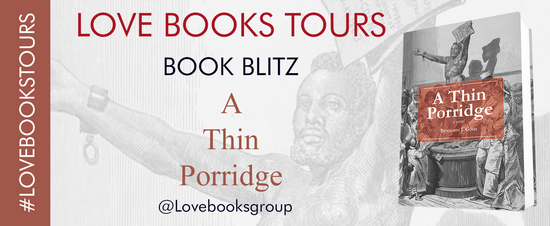
COVER REVEAL: I Can See The Lights by Russ Litten

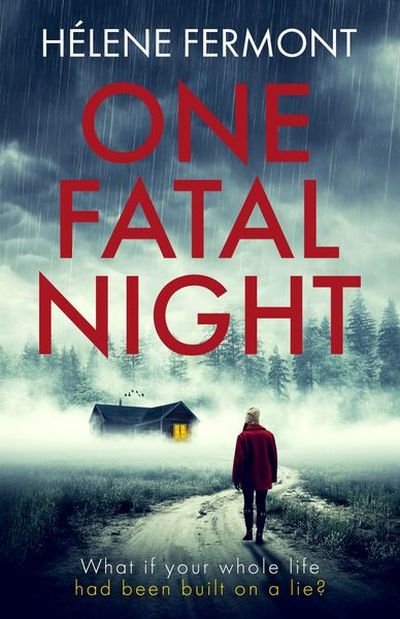
Welcome to The Irresponsible Reader’s part in the Cover Reveal for Russ Litten’s I Can See The Lights! Pretty pictures ahead.

But first, some words. The kind of words that you’d find in a . . .

Book Blurb

The prose poems in I Can See The Lights are earthy and raw, but also incredibly sensitive. It’s pretty much guaranteed that more than one of them will bring you to tears. Characters are vividly brought to life, and stark but warm environments evoked in a down to earth, yet almost painterly manner by Russ Litten’s uncompromising voice.

Tales of home, of un-belonging, of strife at sea—of a northern city’s beating heart. Told in a mesmeric, stripped-down tone, this collection is a work of genius.


Author Bio

Russ Litten is the author of the novels Scream If You Want To Go FasterSwear DownKingdom and the short story collection We Know What We Are.

As one half of the electronic storytelling duo Cobby and Litten, he has released three spoken word/electronica albums My People Come From The SeaBoothferry and Pound Shop Communism</b.

He has written for TV, radio and film and has worked as a writer in residence at various prisons and youth offender units. I Can See The Lights is his first poetry collection.


Without further ado…

The Cover


Now, that’s a good match between title and cover image—I honestly can’t think of a better way to evoke that title (and I’ve tried a little).

You can get your hands on this cover (and the prose poems behind it!) on the 10th of February. Keep an eye on the website for Wild Pressed Books for details (or their Twitter feed).


My thanks to Love Books Group for the invitation to participate in this reveal and the materials they provided.

Love Books Group

October 2019 in Retrospect: What I Read/Listened to/Wrote About

30 books down! 9,183 pages! Wow! With an average of 3.7 Stars, too. Man…not much wrong with October, was there?

(At work I’ve been able to listen to a bunch of audiobooks this month, which was a lot of help)

I really don’t have a lot to say at the moment, so let’s just get on with what happened here in October.

System Failure A Bloody Arrogant Power Last Argument of Kings
4 Stars 3 Stars 5 Stars
The Rest of Us Just Live Here Don't Get Involved This is Where I Leave You
3 Stars 3.5 Stars 4 1/2 Stars
XYZ The Dead of Winter Theological Retrieval for Evangelicals
3 Stars 3 Stars 4 Stars
The Dead Dont Sleep Flying Alone Anbatar
3.5 Stars Still Deciding 3.5 Stars
How Not to Die Alone Famous in Cedarville Back of Beyond
4 Stars 4 Stars 4 Stars
Because Internet The Abels The Utterly Uninteresting and Unadventurous Tales of Fred, the Vampire Accountant
3 Stars 3.5 Stars 3 Stars
Open Season Fleishman is in Trouble Side Jobs
4 Stars 2 1/2 Stars 4 1/2 Stars
The Highway Christianity and Liberalism Savage Run
3.5 Stars 5 Stars 3.5 Stars
Shattered Bonds Bearded Too When You Reach Me
4 1/2 Stars 4 Stars 3.5 Stars
The Right Stuff  Maxine Unleashes Doomsday Look Both Ways
4 Stars Still Deciding 3.5 Stars

Reformed Dogmatics, Volume 5:Ecclesiology, the Means of Grace, Eschatology            

5 Stars 2 2 1/2 Stars 1
4 1/2 Stars 4 2 Stars 0
4 Stars 8 1 1/2 Stars 0
3.5 Stars 8 1 Star 0
3 Stars 7
Average = 3.7


Physical Books: 4 Added, 2 Read, 31 Remaining
E-Books: 0 Added, 0 Read, 24 Remaining
Audiobooks: 0 Added, 1 Read, 1 Remaining

2019 Library Love Challenge

2019 Library Love Challenge

  1. Because Internet: Understanding the New Rules of Language by Gretchen McCulloch (link forthcoming)
  2. The Abels by Jeremy Scott, Eric Michael Summerer (link forthcoming)
  3. The Utterly Uninteresting and Unadventurous Tales of Fred, the Vampire Accountant by Drew Hayes, Kirby Heyborne (link forthcoming)
  4. Open Season by C. J. Box, David Chandler (link forthcoming)
  5. Fleishman is in Trouble by Taffy Brodesser-Akner (link forthcoming)
  6. Side Jobs by Jim Butcher, James Marsters
  7. The Highway by C. J. Box, Holter Graham (link forthcoming)
  8. Savage Run by C. J. Box, David Chandler (link forthcoming)
  9. When You Reach Me by Rebecca Stead, Cynthia Holloway (link forthcoming)
  10. Look Both Ways: A Tale Told in Ten Blocks by Jason Reynolds (link forthcoming)
  11. Last Argument of Kings by Joe Abercrombie, Steven Pacey
  12. The Rest of Us Just Live Here by Patrick Ness, James Fouhey (link forthcoming)
  13. Back of Beyond by C. J. Box, Holter Graham (link forthcoming)

While I Was Reading 2019 Challenge

Nothing this month.

LetsReadIndie Reading Challenge

#LetsReadIndie Reading Challenge

  1. A Bloody Arrogant Power by Malcolm J. Wardlaw
  2. Don’t Get Involved by F J Curlew
  3. The Dead of Winter by A. B. Gibson
  4. XYZ by William Knight
  5. The Dead Don’t Sleep by Steven Max Russo
  6. Flying Alone: A Memoir by (link forthcoming)
  7. Anbatar: Legacy of the Blood Guard by Anne Dolleri
  8. Bearded Too by Jeremy Billups
  9. Maxine Unleashes Doomsday by Nick Kolakowski (link forthcoming)
2019 Cloak & Dagger Challenge

2019 Cloak & Dagger Challenge

  1. A Bloody Arrogant Power by Malcolm J. Wardlaw
  2. Don’t Get Involved by F J Curlew
  3. The Dead of Winter by A. B. Gibson
  4. The Dead Don’t Sleep by Steven Max Russo
  5. Open Season by C. J. Box, David Chandler (link forthcoming)
  6. The Highway by C. J. Box, Holter Graham (link forthcoming)
  7. Savage Run by (link forthcoming)
  8. Famous in Cedarville by Erica Wright
  9. Back of Beyond by C. J. Box, Holter Graham (link forthcoming)
Humor Reading Challenge 2019

Humor Reading Challenge 2019

  1. System Failure by Joe Zieja
  2. XYZ by William Knight
2019 Cloud of Witnesses Reading Challenge

2019 Cloud of Witnesses Reading Challenge

    Nothing this month.

How was your month?

Opening Lines: Look Both Ways

We all know we’re not supposed to judge a book by its cover (yet, publishing companies spend big bucks on cover design/art) (also, this has a great cover). But, the opening sentence(s)/paragraph(s) are fair game. So, when I stumble on a good opening (or remember one and pull it off the shelves), I’ll throw it up here. Dare you not to read the rest of the book.

from Look Both Ways: A Tale Told in Ten Blocks by Jayson Reynolds:

This story was going to begin like all the best stories. With a school bus falling from the sky.

But no one saw it happen. No one heard anything. So instead, this story will begin like all the . . . good ones.

With boogers.

“If you don’t get all them nasty, half-baked goblins out your nose, 1 promise I’m not walking home with you. I’m not playln’.” Jasmine Jordan said this like she said most things—with her whole body. Like the words weren’t just coming out of her mouth but were also rolling down her spine. She said it like she meant it.

The only thing better than that first paragraph is the third. And I can already see Jasmine as clear as day.

Page 167 of 220

Powered by WordPress & Theme by Anders Norén