Category: Blog Series Page 228 of 232

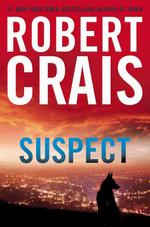
Reread Project: Suspect by Robert Crais

SuspectSuspect

by Robert Crais

Hardcover, 309 pg.
G.P. Putnam’s Sons, 2013

Read: November 3, 2015

This isn’t steel and nylon. It’s nerve. You clip one end to you, you clip the other to this animal, it ain’t for dragging him down the street. You feel him through this nerve, and he feels you, and what flows through here flows both ways — anxiety, fear, discipline, approval — right through this nerve without you and your dog ever even having to look at each other, without you ever having to say a word. He can feel it, and you can feel it. too.

Thus spake Dominick Leland, LAPD K-9 corps’ sergeant and alpha. It’s that kind of devotion to the animals that characterizes this book. These people take their dogs seriously (well, it takes Scott a little bit, but that’s the point), almost too seriously.*

Someone on the Facebook Robert Crais FanClub mentioned re-reading this to prepare for the release next week of Crais’ The Promise which will feature (who knows how much) the two stars of this novel. Seemed like such a good idea, I pounced on it, too. So glad I did, I remember really liking this book, but I didn’t remember how much I really, really, really liked this book.

This is the story of two partners grieving the loss of their most recent partners, and recovering from wounds both physical and psychological while trying to move past the trauma by gearing up for a new assignment for the future. One of the pair is a once-SWAT-bound LAPD officer, and the other is a former explosive sniffing German Shepherd with the Marines in Afghanistan. Which adds a bit of novelty to the situation.

That Prologue is one of the most effective opening chapters I can think of — it’s like the first ten minutes or so of Pixar’s Up — warmth, purpose, courage, heartbreak — there’s almost nothing more you could ask of it.

I love the way Crais describes Maggie’s sniffing/scenting for work. For that matter, Maggie’s perspective in general is great — not goofy or cartoonish, played for laughs or anything like that. Sure, some of it is projection, some of it is just guess-work, some of it is poetic license — but it’s all good, authentic, writing.

I guess the same could be said for what Officer Scott James goes through — I don’t know what PTSD is like, really. I just know about it from various literary/dramatic sources. But this sure seems to work — the guilt, the fear, the stress, the nightmares, the obsession, it rings as true. Granted, Maggie’s got a greater emotional pull (who doesn’t love a good dog?), and is a little less familiar than Scott — but at least we can relate to his suffering and him.

As with almost everything Crais writes, this takes place in the world inhabited by Elvis Cole, Joe Pike and the rest. We see that by a brief interaction between one of the detectives and John Chen (who as also mentioned by name earlier). Brief interactions with Chen are probably the best for all involved, and here he was John Chen at his John Chen-iest — I just love it. Although thanks to Gotham, I’m getting an Edward Nigma-vibe off of him, thankfully, I know better. (right?)

From the start, this gets you right in the emotions, and Crais keeps you there. You’re drawn to Maggie, and because of her, Scott. You get invested more easily than with other new characters because of Maggie With about 40 pages to go, even though I knew how it ended, I still was tense. That’s good writing. Period. End of discussion. And for the record, my eyes totally did not get misty at the end, I don’t know why you’d ask.

When I blogged about this back in 2013, I said “I don’t think this is the best Crais novel . . .but, given the way this worms into your heart, it’s probably my favorite.” It’s still probably not his best, but it’s better than I thought it was initially (I was more concerned with plot and character than craft, I think) — probably in the top 5, and it is my favorite so far.

—–

* Yeah, totally kidding. Not possible to be too serious about your dog.

—–

5 Stars

Opening Lines – If I Fall, If I Die

We all know we’re not supposed to judge a book by its cover (yet, publishing companies spend big bucks on cover design/art). But, the opening sentence(s)/paragraph(s) are fair game. So, when I stumble on a good opening (or remember one and pull it off the shelves), I’ll throw it up here. Dare you not to read the rest of the book

The boy stepped Outside, and he did not die.

He was not riddled with arrows, his hair did not spring into flame, and his breath did not crush his lungs like spent grocery bags. His eyeballs did not sizzle in their sockets, and his heart’s pistons did not seize. No barbarian lopped his head into a blood-soggy wicker basket, and no glinting ninja stars were zinged into his throat.

Actually, incredibly: nothing happened–no immolation, no blood-bath, no spontaneous asphyxiation, no tide of shivery terror crashing upon the shore of his heart–not even a trace of his mother’s Black Lagoon in his breath.

Somehow Will was calm.

from If I Fall, If I Die by Michael Christie

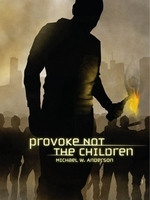
Provoke Not The Children by Michael W. Anderson

Provoke Not The ChildrenProvoke Not The Children

by Michael W. Anderson


Kindle Edition, 348 pg.
Amazon Digital Services, Inc., 2014
Read: August 27 – 31, 2014

Some dystopian futures seem plausible — even inevitable — 1984, The Hunger Games; while others seem impossible — Divergent, Red Rising. Anderson’s world is possibly the most plausible I’ve read.

In this future U. S., parents are no longer responsible for the day-to-day raising, nurturing, or educating of their children (they are still responsible for paying for all that). Instead, they entrust their children to the care of Proxies. Proxies are professional child-raisers. The idea is that these people know exactly what an individual child needs for full academic, social, psychological and physical progress and health, and are far better suited to ensuring children receive this care than an y parent could hope to. So after years and years of more and more parents turning to this option, it becomes mandatory for all children in the U. S. to be handed over to the professionals.

What do parents do with all this time they’re not, you know, parenting? Why, they’re making themselves the best possible versions of themselves that they can. Kids just get in the way of paying attention to yourself, your career, your well-being, and so on. (other than having someone to show off at parties and to inherit what you have left, I’m not sure what the point is to having kids in this world — but let’s just assume the biological imperatives win out or something.)

Now, with a government mandate of this size, regulations are going to come into play. And where there are regulations, you need people to enforce them. Enter our hero, Chase Stern. Chase is a Proxy Review Officer — he travels the Northwest working to make sure that children are being cared for by Proxies, and that the Proxies are doing things right.

Naturally, not all are. In fact, there’s a very disturbing number of Proxies getting away with fraud, abuse, and neglect. Chase blows the proverbial whistle on this unpleasant truth and is first publicly pilloried for this, but that soon turns into the opportunity for Chase to be part of the reforms of the Proxy Industry. The cure proposed may turn out to be worse for society as a whole, and the children in particular, than the disease.

Great premise, right? Hard to go wrong with a setup like that.

And yet, Anderson doesn’t quite pull it off. He’s close. I don’t think he was ready to write characters and a story to go with ideas this big quite yet. The pacing was strange at times, and I think the book would’ve been better served if we’d gotten to see more of the process involved — not just opening chapters with a “In the months/years since the end of the last chapter, many things happened”-type summary. Also, there’s a whole lot more telling than showing going on here, his characters gave a lot of speeches. Not quite as bad as Asimov in Foundation*, but along the same lines.

The biggest problem with this book is the characters. They’re flat. They’re not people. The novel is entirely from Chase’s perspective and he comes closest to being a person. But even he’s flat. There’s no growth, nothing other than his crusade to reform. Yes, Chase had been the kind of parent who was in a rush to get his kids Proxied so that he could fulfill himself, and then something happens and he changes into the kind of guy who cares about the welfare of children. Whatever changes he goes through — say, learning how to lobby congresspeople — just appear in between chapters.

That said, Maria, is one of the — I want to say evil, but she’s too shallow for that. Maria’s about the most wretched, vile, hateful character I’ve ever read (her husband, Conrad, is about as bad — but he does less, so maybe he’s just a self-centered twit, not a force for all that is wrong with the world). There are a couple of other characters here that are more actively malicious, too. Still, they’re all little more than amalgamation of characteristics. But Anderson has trouble with the white hat characters. Perhaps he understands human nature too well for that.

There was a very unfortunate typo in the edition I read — and I was taken out of the scene during the climatic confrontation. I’ve emailed the author and he said he’d be fixing it. That’s the big advantage of self-publishing ebooks. Anton Strout, for example, tells the story about someone pointing out a similar problem in one of his fight scenes years after the publication, which will remain in the paperbacks. Anderson’s error is gone. Welcome to the 21st century.

Provoke Not the Children had a killer concept, and a chilling world that you’ll keep thinking about for days. The story’s almost, but not quite where it needs to be. I still recommend it in the end, but don’t expect too much from the narrative. I expect in a book or two, Anderson’s execution will match his world-building.

—
* I remember that being very speech-filled, I think that’s even talked about in the forward Asimov wrote in the edition I last read 20+ years ago. Hope I’m not wrong about that, it’s just the best example I could come up with at the moment. Besides, being compared to Asimov in Foundation should be seen as a compliment.

—–

3 Stars

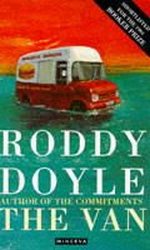
Reread Project: The Van by Roddy Doyle

The VanThe Van

by Roddy Doyle
Series: The Barrytown Trilogy, #3

Trade Paperback, 311 pg.
Minerva, 1991
Read: August 25 – , 2015
Jimmy Rabbitte, Sr. started off as a supporting character in The Commitments, moved up to co-star in The Snapper, and finally moves to the forefront in The Van, which is more about him than the other two were about any one person. Which isn’t to say that Jimmy, Jr., Sharon, Veronica, Darren and the twins aren’t here, they’re just in the background — as are most of Jimmy, Sr.’s friends (actually, I think Jr.’s in this far more than he was The Snapper).

Not only is the focus more narrow, the final installment in the trilogy is different in other ways — it’s almost 100 pages longer (depending on the printing) than The Snapper which was about 50 pages longer than The Commitments. Which gives Doyle more space to do things he hadn’t really before. It’s still primarily told through heavily stylized In the first 90 pages, I estimated I’d read more (significantly more) narration than I did in the first two volumes of the trilogy.

It’s not been clear before what Jimmy did for a living, but whatever it was, it was pretty clear the bills were barely paid. They stretched what they had pretty far, but they seemed to manage. Somewhere along the line, pretty sure it was post-Snapper, but I’m not sure, Jimmy lost his job. Unemployment isn’t setting well with him — he can’t support his family, he’s bored, he can’t even go down to the pub to have a few pints with his friends.

Jimmy’s trying to grow — he’s reading the classics. Thinking of taking some classes. But it’s not enough. At some point his friend, Bimbo, also gets laid off. The two spend a lot of time together — having a companion in his unemployment makes the whole thing tolerable for Jimmy — almost like summer vacation from school. Bimbo isn’t quite as accepting of this new reality — he almost applies to work at McDonald’s, but is shamed out of it by Jimmy. Bimbo’s wife is even less satisfied with his job status. Which leads to a reckless move on Bimbo’s part — reckless, yet maybe inspired — he uses some of his last dollars on a Chip Van (minus an engine). In the midst of the U.S.’ current Food Truck craze, this might not seem so risky, but in the early 90s? (then again, what do I know of early 90’s Dublin, other than what I’ve picked up from Doyle’s novels and the movies based on them?)

They’ve just a few weeks until the World Cup games start when they hope they can cash in on the post-game crowds. So Jimmy and Bimbo rush to clean the, learn to cook, design a menu, etc. And now you’ve got yourself a plot — can these two make a go of this? Can they remain friends and co-workers? Will they start a grease fire that destroys the whole of Barrytown?

There was, it seemed to me, a maturing of Jimmy that started back in The Snapper. Not that he wasn’t a good father before, but he kicked it into a higher gear with Sharon during her pregnancy. Here, that seems to manifest itself in a paternal pride — Junior’s having some sort of success out there, is getting married; his other son, Darren, is doing very well in school (better than anyone else in the family, that’s sure). Part of Jimmy’s reaction to it is finding pleasure in someone else’s success for what it means to them. I’m not convinced that the Jimmy of The Commitments or the first part of The Snapper could do that.

That’s not to say that he’s Man of the Year material or anything. There are some real (human) flaws to him. He’s petty, he’s jealous, he’s proud — there’s some sort of mid-life crisis that he’s got a half-hearted interest in involving Other Women. As in all good fiction, these just make him someone you can like, someone you can relate to, someone you can get annoyed with — even pity.

There’s some great, great stuff about sports fans here — national pride around The World Cup, the joy in sports, the very real camaraderie that can exist for a few moments around a shared experience. That’s not my typical milieu, but I’ve tasted it a time or two — and I can’t imagine many capture it better than Doyle did here. Even if I didn’t like the rest of the book, I think that part would’ve been worth it.

In the end, this is Doyle’s best work (to date), not the most enjoyable, but the best. It’s impossible after reading this, to ignore Jimmy, Sr.’s brief appearances in The Commitments, to not pull for him earlier than you should in The Snapper, and really to forget him. Just a great character in a world you really don’t want to leave.

—–

4 Stars

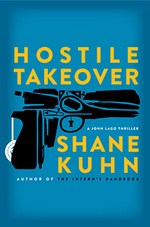
Hostile Takeover by Shane Kuhn

Hostile TakeoverHostile Takeover

by Shane Kuhn
Series: John Lago Thriller, #2

Hardcover, 246 pg.

Simon & Schuster, 2015

Read: August 24, 2015


John Lago is back, folks — and he picks up right where he left off, with some of the most adrenaline and testosterone-fueled writing you’ll come across this year. That may not be your cup of tea.

Hostile Takeover is one of those sequels I didn’t think needed to exist. Seriously, who was dissatisfied with where things ended up for Lago? It was narratively sufficient as it was — but as the opening lines of this book could’ve literally been the next page in The Intern’s Handbook, it’s hard to complain.

So, John decides to tie up two loose ends: 1. Alice and 2. HR, Inc. He marries Alice and the two take over HR but it doesn’t take too long (at least not many pages) before both of those go wrong — they break up and she kicks him out of the company (not really spoiler material, folks, it’s in the Jacket Copy). John switches to Plan B, the complete destruction of both. Which is not the most mature of plans, you’ve got to admit.

Which is the bulk of the book — John going undercover again, John trying (and/or being the target of) elaborate assassination schemes, great fight scenes and enough munitions used to make Michael Bay choke. All delivered in that movie-obsessed, rapid-fire (no pun intended) narration that won over so many fans before.

I thoroughly enjoyed, have used already, and will continue to do so, Lago’s comments on the movie Fletch. It was that line that reminded me how much I liked the first book.

Did I enjoy this as much as The Intern’s Handbook? Nope. Only because it didn’t blow me away with it’s freshness. But it’s a worthy sequel, as good as it’s predecessor and leaves me wanting more. An intense, fast read — buckle up and enjoy the ride.

—–

4 Stars

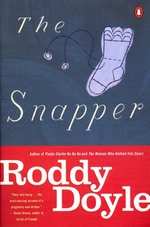
Reread Project: The Snapper by Roddy Doyle

The SnapperThe Snapper

by Roddy Doyle
Series: The Barrytown Trilogy, #2

Paperback, 212 pg.

Penguin, 1992

Read: May 20 – 21, 2015Naturally, after one of the best rock band novels ever — one fully of music, laughs, and style — Doyle follows it up with a heartfelt story of a young woman who gets pregnant after a one-night stand. Who wouldn’t?

Now, Sharon (the young woman in question) is the sister of Jimmy Rabbitte — The Commitments’ manager. So there is a tie — and we saw a little of their father and the rest of the family last time. Still, this feels so different, it’s hard to conceive of them being part of a trilogy. Oh well — it works — so who cares?. Carried along by Doyle’s inimitable style, this story — which could easily have been maudlin, overly sentimental, or sappy; comes across as genuine and heartfelt instead.
Where The Commitments was full of laughs, raunch, and style; The Snapper is full of laughs, family and heart. It’s not just about one member of the family this time — it’s all of them. The focus is on Sharon and her father, Jimmy, Sr.

Sharon finds herself “up the pole,” much to her distress. She knows who the father is, a one-night stand (something far less meaningful, actually) she wishes had never happened. Unwilling to let anyone know the father’s real identity, she makes one up (which also relieves her of the need to let the real guy have anything to do with the kid). Initially, she’s in sort of a denial — she knows the baby will change everything. But that’s months away — right now, she and her friends can still hit the pub after she gets off working at the supermarket and pretend that everything’s just like it was a couple of weeks ago. Eventually, she starts to make the changes necessary, but only when she has to. There’s personal growth here for Sharon, when she has no choice. But honestly — other than questionable taste in men, and an utter lack of awareness about Fetal Alcohol Syndrome — she seems like she’s got her head screwed on right already.

Jimmy, Sr. seems like the kind of guy you’d like to hang out in a pub with occasionally — I think he (and his friends) would get old quickly if you hung out with them all the time. Generous, funny, and gregarious. Maybe not the most responsible guy around — but he’s making ends meet (mostly), and doing (almost) his best for his kids. Eventually, he seems to get his act together for Sharon — or at least he tries. Which just makes you like him more — even as (because?) he just doesn’t make it some times.

While these two are on the forefront of Doyle’s attention, we do get some time with Sharon’s siblings (even Jimmy, Jr. — a little bit — who’s still trying to make it in the music business) and long-suffering mother. We watch the family stumble along through financial woes, various school clubs, a bicycle club or two, and being the subject of neighborhood gossip. These all might not be as well-rounded as Sharon and her father are, but they’re close enough that you think you know them.

Back in college, I read The Commitments a lot — but I think I read The Snapper more. It’s not as fun as its predecessor, but it’s a better novel — populated with actual people, actual growth, and something that looks a lot like actual life for many people. The Rabbites could be your neighbors, and you’d be happy to have them, which makes getting to spend time with them between the covers of a book just that pleasant.

—–

4 1/2 Stars

I Am Princess X by Cherie Priest (Kali Ciesemier, Illustrator)

I Am Princess X I Am Princess X

by Cherie Priest, Kali Ciesemier, Illustrator

Hardcover, 227 pg.
Arthur A. Levine Books, 2015

Read: June 4, 2015

This book starts off just like the book description tells you — it’s practically an outline of the first 40 pages. Somehow, even if all they were doing was fulfilling the book jacket copy, the opening chapters sucked me in more and more with each detail until the last sentence on page 35. That line was just creepy. At that point, I put my finger in the book to save the page, called to my daughter (who’d showed minor interest on the book) and told her that unless Priest screwed things up, she had to read this (and seriously , what were the odds of Priest doing that?).

Years after the death of her best friend, Libby, May starts to see drawings around town of something the two had created together (and no one else knew about). How is that possible? She does everything she can to find out, but that doesn’t tell her anything other than that there’s a (pretty popular) webcomic out there starring their creation. There’s a self-proclaimed computer guru (Patrick — he prefers Trick, though) living a few floors below her dad that May hires/cons into going the extra technological mile for her. Their investigation doesn’t remain online, and before long the two are running all over Seattle. They dance between employer/employee; condescending college-aged twerp/younger, slightly naive teen; pals throughout in a way that seems organic and real. It’s probably the most realistic thing in the book after the death of Libby. While I’m talking about them — the hijinks the pair get into in the cemetery result in either the funniest or the grossest line of dialog I’ve read this year. Possibly both.

This isn’t the kind of comic/prose hybrid that Jeff Kinney, James Patterson, Stephen Pastis, etc. are doing — Priest uses the comic pages (taken from the fictional webcomic) to further the plot, to help us see what May and Trick are reading/seeing. Rather than trying to describe (and likely not succeeding all that often) a series of panels and the artwork, we just get them. Shorter, sweeter, to the point. A great merger of the two media. Ciesemier’s art is spot-on, I could easily read a webcomic she draws.

This is a YA novel with no love triangle, no romantic love period — that’s practically enough of a sales pitch for me right there. Friendship — that’s the emotional core driving this. The old friendship between Libby and May, that death hasn’t changed too much; the budding friendship between May and Trick, and another one that’s in spoiler territory. Nowhere along the lines is there even a whiff of anything else between these characters. What a breath of fresh air! There’s some actual parenting (not perfect, but humans trying) along the line, too — a couple of pretty good dads — something else I don’t see a lot in YA. So yay there, too.

It’s an implausible story grounded in three real characters (May, Trick and May’s dad) — and a couple of others that could have been as grounded if we’d gotten a few more pages from them. For the story this is trying to tell? That’s just enough to carry it.

We see the villain enough to find him threatening and somewhat believable, learn enough about him to support that, but not enough that we can develop any sympathy for him — he’s mostly shadow, which frequently feels like under-writing or a cheat by the author. But here it felt like a device to underline the threat he poses.

This is pure escapist adventure reading — no muss, no fuss, no frills. The story matches the medium of a webcomic pretty well. Sure, it could’ve been a deeper, more reflective novel — or even a slightly more realistic one. But it doesn’t need to be. Have I rated better written/constructed novels lower than this? Oh yeah. But this novel was exactly everything it promised to be, everything it needed to be. This grabbed me from the start and didn’t let go until it was done.

As an added bonus for people like me, I’m pretty sure there’s a tip o’ the hat to Robert B. Parker in these pages. That just brought a smile to my face.

—–

—–

4 1/2 Stars

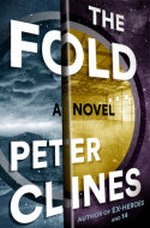
The Fold by Peter Clines

Sigh. Vacation took more out of me than I thought, it took me far too long to get this written. I really hoped that I could get caught up this week. Oh well…

The FoldThe Fold

by Peter Clines

Hardcover, 372 pg.
Crown, 2015
Read: June 4 – 5, 2015
If you’ve ever wanted an episode of Fringe with more contemporary pop-culture references and a more obvious sense of humor — yet with all the mind-bendy science and disturbing images, this just might be the book for you.

Reggie Magnus is in a bind — he’s some muckety-muck in DARPA and a secret project he’s been funding to develop teleportation has diverged a bit from its original design and started generating unbelievable results. At the same time . . . he knows something’s just not right out there at the development facility — he has no idea what’s wrong, but he knows something is. What’s a guy to do? Well, considering that he’s spent billions (yup, with a “b”) on this project, he needs to make sure he delivers something. Thankfully, Reggie’s got a genius friend with a few months free to send out to California, see what’s going on — hopefully fix the problem and help Reggie to justify the budget for this program.

Enter Mike (Leland Erikson, actually, but he answers to Mike — long story). He is a genius, with a photographic memory (a frighteningly detailed one), a curious streak a mile wide, and….three months off to do this since he’s a High School English teacher just done for the summer. So, he goes to California, meets some legendary scientists (and a few others no one has head of), and then excitement ensures.

While I was reading the second chapter, I scrawled the note: “The tonal shift between chaps 1 & 2 was enough to give me Whiplash (and I’m talking the kind where J K Simmons slaps you repeatedly, not the kind you get a TV lawyer to help with). Think it bodes well for the book.” And it did. After the jarring sensation between the first two chapters (think of the typical NCIS/Bones/etc. type opening wherein someone going about their routine, daily life stumbles on to a body before we join our heroes bantering around the office), things calmed down. The plot unwinds at a good pace — building up a good head of steam until everything goes cuckoo bananas. Eventually, all the pieces come together — but the explanation doesn’t end things, it only sets up a action-packed, mind-scrambling conclusion.

Like Mike, we get a nice orientation to the research facility and its team. Most come thi-i-i-i-s close to being right out of Central Casting, but Clines tweaks them just enough to keep them from being a frightening cliché. Ditto for Reggie, actually. This is not to say that Clines spends all that much time fully developing these characters — he comes close with Dr. Arthur Cross and Jamie Parker.

Jamie’s your basic attractive blond with severe emotional issues, when she’s not being a ultra-professional uber-computer scientist, that is. Dr. Cross is the 4th most popular scientist in the world — behind Neil deGrasse Tyson, Stephen Hawking and Bill Nye. He writes books for popular audiences and heads up research projects like this one (to over-do the Fringe comparisons, he’s William Bell). When he’s not being dark and mysterious, he’s the kind of scientist you want to learn from, dropping lines like: “Almost any concept or idea in the world can be expressed through comparison with a classic Warner Bros. cartoon,” and then goes on to demonstrate just that.

Actually, it may not be character development. Those two might be the characters we spend the most time with. This sounds like a criticism, but it’s not really. It’s not that type of book, all it requires are characters to move the plot along, not people you get too invested in.

Now, Mike is another story, he’s fully fleshed out. He is sort of a Robert Langdon type character — brilliant, in the right place at the right time, driven, and courageous enough to jump into danger, yada yada yada. — but with one significant difference: I liked Mike from the moment I met him, and I never, not for one sentence (over two books) liked Langdon. He’s charming, down-to-earth (in his own way), and is desperate just to be a regular guy. It’s hard not to respond to that.

It’s an engaging story, told well, filled with likeable characters doing out-of-this-world things. Solid SF work. Give this one a shot.

Disclaimer: I received this book from the nice folks over at Blogging for Books for this review. Not sure they got their money’s worth, but I came out pretty good on the deal.

—–

4 Stars

Opening Lines – Kickback

We all know we’re not supposed to judge a book by its cover (yet, publishing companies spend big bucks on cover design/art). But, the opening sentence(s)/paragraph(s) are fair game. So, when I stumble on a good opening (or remember one and pull it off the shelves), I’ll throw it up here. Dare you not to read the rest of the book

On the first day of February, the coldest day of the year so far, I took it as a very good omen that a woman I’d never met brought be a sandwich. I had my pair of steel-toed Red Wings kicked up on the corner of my desk, thawing out, when she arrived. My morning coffee and two corn muffins were a distant memory.

She laid down the sandwich wrapped in wax paper and asked if my name was Spenser.

“Depends on the sandwich.”

“A grinder from Coppa in the South End,” she said. “Extra provolone and pickled cherry peppers.”

“Then my name is Spenser,” I said. “With an S like the English poet.”

“Rita said you were easy.”

“If you mean Rita Fiore, she’s not one to judge.”

from Kickback by Ace Atkins


(technically, not the opening lines, but this is the beginning of Chapter 1, so it sorta counts)

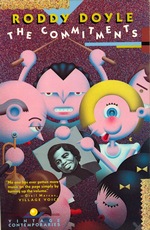
Reread Project: The Commitments by Roddy Doyle

The CommitmentsThe Commitments

by Roddy Doyle
Series: The Barrytown Trilogy, #1

Paperback, 165 pg.
Vintage Contemporaries, 1987
Read: April 15, 2015

Will yeh please put your workin’ class hands together for your heroes. The Saviours o’ Soul, The Hardest Workin’ Band in the World, —Yes, Yes, Yes, Yes —The Commitments.

This is a tough one for me to talk about — I’m a long-time fan, I’ve read it a dozen or so times, it’s all I can do to not turn total fan-boy and just gush. eh, I might not try too hard.

My college roommates and I became fans of the music video for “Try a Little Tenderness” from the soundtrack for the movie adaptation, and we waited for what seemed like a interminable amount of time before the movie came to the art-house theater in town. I loved it from the opening sequence on and tracked down the novel the next day. It blew my mind (for reasons I’ll get into in a bit), and I read it a dozen or so times over the few years until I loaned it (and the rest of the trilogy) to someone at work. Naturally, I never saw him again (I ended up with a copy of Gaines’ A Lesson Before Dying and another book in the transaction). I finally let myself buy a replacement copy a few years ago (found a used copy with the same cover), and have now read it twice. And, if anything, my appreciation grows each time.

It’s the late 80’s and three young Dubliners (from the poorest part of Dublin) have formed a band — sort of. Not everyone in it are musicians yet, but they’re working on it. Thanks to the direction of their keyboard (defined in the loosest possible way) player, they’re going to play synth-pop and go by the name “And And! And” (and, yes, I got the exclamation point in the right place). Their first order of business (while learning how to play) is to hire a manager. Jimmy Rabbitte is the guy from their school/neighborhood who’s the area’s music/music industry expert. As evidenced by the fact that he’s the first one anybody knew of that was aware of Frankie Goes to Hollywood — and, even greater — he’s the first to realize how bad they were. Jimmie gets things going immediately by dropping the name (especially that !) and the keyboard player.

Instead, they’re going to play American soul music — and then put an Irish twist on it — local slang, geographic references, and so on. Jimmie puts an ad in the paper to recruit some musicians, hits up a coworker he heard at a company party, and so on. As a result, he collects a very strange crew of musicians — including a trumpet player decades older than the rest of them, with plenty of professional experience (the trumpet in “All You Need is Love,” for example). The rest, as they say, is history.

The story of The Commitments is told through a very unconventional prose and dialogue style. It’s like Doyle took Leonard’s 10 Rules to the furthest point possible (other than #7, which he violates in every line). You can hear these characters talk, you can feel the energy in the room — heck, this book comes closer to capturing musical performances better than anything this side of Memorex or vinyl. Couldn’t tell you what anyone looks like (well, The Commitmentettes are pretty attractive — especially Imelda), what their homes are like, the weather, or anything of that other stuff that tends to fill the pages of novels. But I can tell you what happened, to whom, and how all related reacted. Which is good enough for me.

This isn’t one of those books that gives you diminishing returns upon re-reading. It’s fresh (while dated — no idea how Doyle pulls that off), funny, and full of soul. Dublin soul, of course. Just like the rag-tag musicians that come to life in its pages.

Oh, if you can get your hands on the soundtrack albums (or find them streaming somewhere) to listen to while reading, it makes it all better (even though there’s almost no overlap between songs).

—–

5 Stars

Page 228 of 232

Powered by WordPress & Theme by Anders Norén