Category: Blog Series Page 45 of 218

HC Chats with Jodie from Witty and Sarcastic Bookclub about Self-Published Authors Appreciation Week

I’m dipping my toe into something new here. There’s some things I’ve wanted to try and the written word just ain’t gonna cut it. (and I hate saying that about the written word–maybe it’s just my capabilities with it that are the problem…that seems more likely).

Jodie was willing to be my first victim, er, chat partner. This comes across a little more interview-y than I’d hoped. I’ll get there, maybe. Still we chat about Jodie’s blog, the origins of Self-Published Authors Appreciation Week, what some of this year’s features are going to be like, some self-published work in general, and a little more. Hope you enjoy!

As an added bonus, you can watch me adjust settings while recording–because who doesn’t do that? And try to awkwardly find a comfortable way to sit while staying in frame. Clearly, I’m not a professional. I’m barely an amateur.

I’ve got one more trial balloon scheduled that you should see in a few days. We’ll see if I schedule more.*

* Obviously, part of that is going to depend on finding people to sit down with me. If you’re interested, let me know.

Irresponsible Reader Pilcrow Icon

Saturday Miscellany—7/6/24

As is typical of a holiday week, this is a short post. Less to distract you from your Saturday reading, right?

Odds ‘n ends about books and reading that caught my eye this week. You’ve probably seen some/most/all of them, but just in case:
bullet This is Why Book Marketing Doesn’t Work
bullet ‘Really I just want to stay home and make art about my dog’: An interview with Sara Varon—I’m pretty sure I’ve never run across Varon before, but this interview makes me interested in checking out her stuff.
bullet 7 Thrillers With Shocking Twists
bullet 10 Must-Read Authors for Fans of First-Person Adult Urban Fantasy—This is a very narrow category…but can’t argue with most of this picks.
bullet Tough Questions with Left on the Shelf—the latest in the Tough Questions series

To help talk about backlist titles (and just for fun), What Was I Talking About 10 Years Ago Week? (not much, really)
bullet Don’t Hurt People and Don’t Take Their Stuff: A Libertarian Manifesto by Matt Kibbe
bullet I noted the release of Premonitions by Jamie Schultz and Artful by Peter David

This Week’s New Releases that I’m Excited About and/or You’ll Probably See Here Soon:
bullet Broiler by Eli Cranor—I dunno…it’s by Cranor, isn’t that enough? It’s about revenge, power, economic disparity in the most American of places—a chicken processing plant.
bullet Dog Day Afternoon by David Rosenfelt—Marcus asks Andy for a favor and gets him to represent a suspected mass-shooter. I really enjoyed this one, as I said recently.
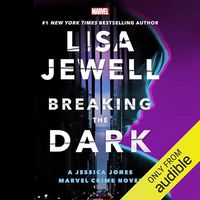
bullet Breaking the Dark: A Jessica Jones Marvel Crime Novel by Lisa Jewell—Jessica Jones travels to England to investigate some teens who are too-perfect. It’s hard to explain in a phrase or two…but these are creepy kids and something has to be making them that way.
bullet Boise Longpig Hunting Club by Nick Kolakowski—the new edition of this explosive thriller
bullet The Night Ends with Fire by K. X. Song—a new retelling of the story of Mulan.
bullet Junkyard Roadhouse by Faith Hunter—Shining Smith is neck-deep in trouble—that’s nothing new, sure, but it’s a different kind of trouble.

For books are not absolutely dead things, but do contain a potency of life in them to be as active as that soul was whose progeny they are; nay, they do preserve as in a vial the purest efficacy and extraction of that living intellect that bred them. - John Milton

WWW Wednesday, July 3, 2024

This meme was formerly hosted by MizB at A Daily Rhythm and revived on Taking on a World of Words—and shown to me by Aurore-Anne-Chehoke at Diary-of-a-black-city-girl.

The Three Ws are:
What are you currently reading?
What did you recently finish reading?
What do you think you’ll read next?

Seems easy enough, right? Let’s take a peek at this week’s answers:

What are you currently reading?

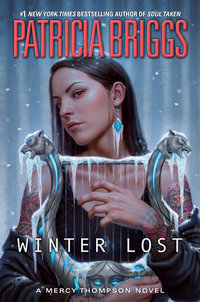
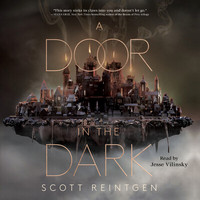
I’m reading Winter Lost by Patricia Briggs, and am listening to A Door in the Dark by Scott Reintgen, read by Jesse Vilinsky on audiobook–it’s a very strange semi-zombie Fantasy novel. Thankfully, there’s only one zombie-ish thing wandering around. (still, I shook a virtual fist at the friend who recommended it to me).

Cover of Winter LostBlank SpaceCover for A Door in the Dark by Scott Reintgen

What did you recently finish reading?

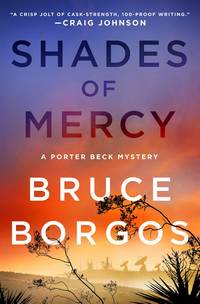
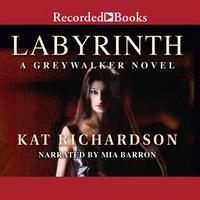
I just finished Bruce Borgos’s Shades of Mercy–and Borgos was not messing around with this sequel. The last audiobook I finished was Labyrinth by Kat Richardson, read by Mia Barron.

Cover for Shades of Mercy by Bruce BorgosBlank SpaceCover for Labyrinth by Kat Richardson

What do you think you’ll read next?

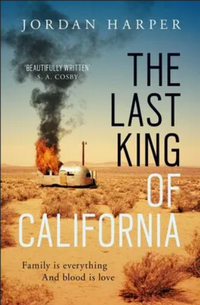
My next book should be for The Last King of California by Jordan Harper and my next audiobook should be Breaking the Dark by Lisa Jewell, read by Helen Laser. I’ve been wanting to read this Harper book for ages, meanwhile, I didn’t know anything about the audiobook until yesterday. But I’m curious about what Marvel’s trying on the novel front, might as well start here, right?

Cover of The Last King of California by Jordan HarperBlank SpaceCover of Breaking the Dark by Lisa Jewell

You got anything explosive on your hands for tomorrow?*

* Yeah, I should do better. Sorry.

Some Questions About Cover Art With…Savanna Mayer and Shannon Knight

Last year, Shannon Knight and her cover artist stopped by for a Q&A about the cover to Wish Givers and how it was designed. Now she’s back with Savanna Mayer to talk about the cover of her upcoming Domestication and Savanna’s work on the cover. I participated (belatedly) in the Cover Reveal for it last week, but please allow me to remind you all about the creepy image in question.
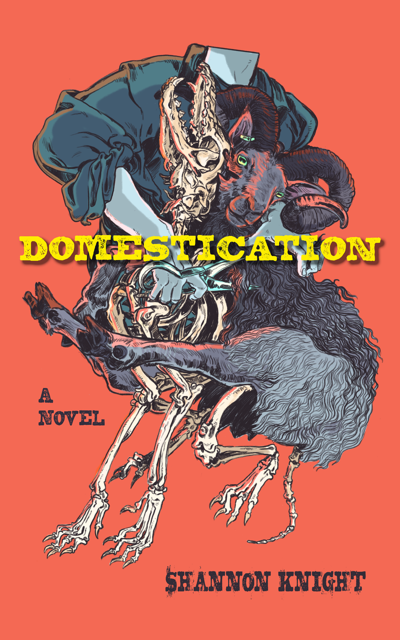
Cover for Domestication by Shannon Knight

I typically call these posts “A Few Quick Questions”—but we leave “Few” and “Quick” in the rearview mirror. So I’m going with “Some” (because that’s as creative as I am today). Why don’t we get to them now?


Savanna: Why don’t you give my readers a quick introduction to you and your work–including whatever titles, websites, links, etc. you’re in the mood to share. Also, because I’m a philistine incapable of it–how would you describe your style?
Savanna Mayer is a hermit-like illustrator, collector of rusty old keys, and ever-aspiring necromancer.  Residing in the mythical dairyland of Wisconsin, when Savanna is not busy wrangling barn cats, they’re almost certainly drawing lady knights or practicing their Breath of the Wild chefery. With a variety of works ranging from independent comics to sword-themed tattoos, for a wide range of clientele including Critical Role, Baffling magazine, and Dual Wield Studios, Savanna is inspired by all things fantasy. They strive to create new worlds and to explore the power and perspective misfits can bring to them.

I can be found posting the majority of my finished and in-progress work on Tumblr: Nightmaskart.tumblr.com or on Twitter: @well_dipper

My official website is under construction by my lovely girlfriend who handles the confusing computer side of things when I get too overwhelmed.

How to describe my style… let’s see I’d say representational/ old comic book style. I take so much inspiration from Chris Riddel, Tony DiTerlizzi, and Jeremy Bastian. I grew up pursuing a very traditional pen and ink style very akin to the golden age of comics like Jeffrey Catherine Jones and her contemporaries. That traditional base of my work carries over into the way I now work digitally. I do often get asked if my digital works are traditional when in fact I just prefer to use a brush that most closely resembles a pencil to get that nice gritty but at the same time clean line texture.

How did you get into doing cover art? I don’t imagine you just hang your shingle out there (virtual or otherwise) and start getting clients.
I started out doing serious freelance by posting fan art of different TTRPG shows I had been watching and that got attention. I started getting paid to do patreon comics for one TTRPG company and then as my work got more polished indie creators in the TTRPG community reached out wanting to commission me for interior illustration. Finally, I got a gig doing cover work and that just kept going. The TTRPG community has been so nurturing to me as an artist, there’s always work to be found.

Shannon, I had Savanna describe their style earlier, now it’s your turn–how would you describe it? Did you seek them out for Domestication or find them as you were looking for someone and think, “That’s it!”?
I’d describe Savanna’s style as comic with rough lines. I’d decided that a rough comic style would work well for Domestication based on pieces by an artist called WolfSkullJack. (For contrast, I think of Jen Bartel as a comic artist with really clean lines.)

I learned about Savanna in 2023 when I saw an illustration of theirs of Gideon the Ninth, which, of course, was jam-packed with bones. I knew my illustration would need bones, so I took a closer look at their portfolio, which, I admit, was a little difficult to find. In this case, Savanna’s lack of a formal website and portfolio did increase the odds that their commercial work would be less expensive, which was an important element for me, especially since I was passing up the cheaper and more traditional option of altered photography so common in the horror and thriller genres.

Savanna: Any advice for those looking for an artist that Shannon didn’t mention? Obviously, the short answer is hiring you. But let’s pretend you can’t take on a client, what should someone do?
Forgive me for being goth for a hot second, but to quote Hannibal Lecter from Silence of the Lambs, “We covet what we see every day.” I think as artists we’re always voracious to grow our craft and get better and therefore surround ourselves with art that we love and use as inspiration in our own craft. To find artists that create the same work as I do, I would say just look through my twitter feed and see whose work I’m reposting or commenting under, see who I’m following and you’ll find my inspirations or people who match my style pretty closely.

I think it’s perfectly okay to message an artist and give a brief synopsis of your project and be upfront with what kind of budget you’re working with. If it’s not in their scope it’s not rude to ask if they have an artist friend they could recommend for the job with a similar style who’s willing to work for the budget. Most of us in the community are friends and we love to help give each other work.

Yeah, wouldn’t want to sound goth-y with this cover. 🙂 A Silence of the Lambs quotation is welcome here anytime.

Shannon, let’s focus on Domestication, how (as much as you remember off the top of your head) did you describe what you were looking for to Savanna?
H.C., I pour out words. I am a person of words. With my previous cover artists, I’d had a very specific image in mind, but I didn’t have one for this book. There was one scene I could use, but what I really wanted was an abstract image, so I referenced a few different pictures, I summarized the plot and highlighted some themes, and I even threw in a Spotify playlist of mostly American folk and bluegrass that I’d created for the story while writing.

Elizabeth Peiró, who painted my Wish Givers cover and whom you talked with previously, H.C., really gave me confidence that more is better when an author is first sharing her ideas with a cover artist, which is why I even included the playlist.

I love the idea of a playlist as part of the package. Savanna–did that help? (or at least expose you to new artists?) Incidentally, I’ve been using that playlist a lot since you sent it to me, Shannon.
Savanna: Yes, it was very helpful. I love when clients have mood boards or playlists, it makes it easier to get a sense of what they’re looking for.
Shannon: Oh, hurray!

What was it about this project that appealed to you? (or are you at the stage in your career that “a project that pays” is your criteria?)
Savanna: I may always be at the ‘a project that pays’ criteria stage haha, [I hear that] but Shannon said I’d get to draw bones and I said ‘say less’. I love drawing bones so that was a big selling point. I love horror and I live on a farm already, I know how creepy the intricacy of farm life can get and thought it was a great synopsis for a book so I’m thrilled to work with Shannon. Living on a farm not many people realize how closely you work with the earth and you brush shoulders with life and death every day.
Shannon: Savanna, your work is ideal for horror, and I could definitely see your career expanding in that direction. There’s a simplicity to a comic-style illustration, I think, that allows for frightening and creepy images that would perhaps be considered too much in a more realistic-to-life art style.

To further make my point, H.C., take a look at one of the alternative designs that Savanna had proposed. It’s very visually arresting! An additional note explained that farm animals, people, and bones are tumbling down from the fingers. Very unsettling and powerful! For additional clarification, my story is entirely realistic in its execution, so these visuals are abstract rather than concrete representations from the book.
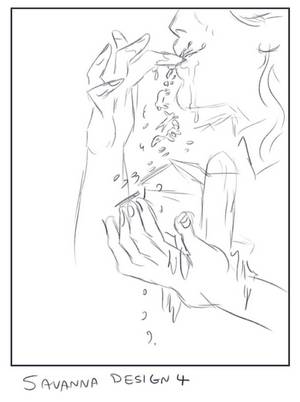
Domestication alternate design proposal

For you both: When pitching ideas, do you literally show existing covers by others and say “like this one, but without X” or “something that feels like/has the same vibe as this”? Or do you leave other peoples’ work out of the conversation?
Shannon: This time, I did reference an existing cover. I said I’d prefer something abstract, perhaps with no humans in it at all, and I shared the cover of Kingfisher’s What Moves the Dead with art by Christina Mrozik as an example of an ideal design.

More importantly, though, I tend to share an artist’s own work back with them as examples of what appeals to me. For instance, I mentioned Savanna’s knight and mermaid illustration because of the circular shape of the design. You can see it in one of their proposed designs.
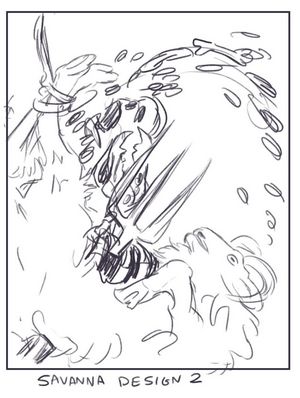
Domestication alternate design proposal
I’m definitely seeing the line between that Mrozik cover and this one.
Savanna: I think when touching base with a client to make sure I’m understanding what they want I try to come up with as many sketches as I can and leave others’ work out of the process as the client will usually have other projects in mind from different media. For this book illustration in the back of my mind, I was thinking of the cover for Lapvona and there’s this sculpture, I can’t remember the name of, but it’s a jackrabbit tied up by its back legs and dangling and I knew I wanted to draw on that inspiration. I don’t want to influence what the client has in mind, because they have a better vision of what they want and I don’t want to skew that vision with other input. I think I only bring up my own ideas from other media if a client and I are really struggling to touch base, but that’s pretty rare.

What was the process involved in designing this cover? Savanna—did you read all/part/none of the book before diving in?
Savanna: Shannon had a strong sense of what she wanted when she approached me. I remember writing down a list of what kind of vibes she was looking for/ what kind of elements/ priorities that must be in the design etc… I wasn’t given access to the full story, but given a blurb which definitely got the vibe across and I got a good understanding of what she wanted. Shannon provided tons of reference photography as well as her own sketches for cover ideas. From there I came up with several sketches, some exact interpretations of Shannon’s original sketches, other ideas that I had come up with based on the list I had made. We settled on a sketch and I did some color passes to determine a palette. After that, I got started on linework and once that was completed I started base colors. I kept Shannon updated throughout the entire process so changes could be made easily if needed. We ended up changing the color palette slightly from red bones back to an off-white color, just to make readability better. After colors, I was all done and handed the files over to Shannon to apply text where it was needed.
Shannon: I would very happily share a book with a cover artist! I learned early on, though, as I queried various artists for my first covers, that asking to read the book was an excessive request of their time, so, with Savanna, it didn’t even occur to me that they might be willing to read it while or before creating the cover art.

(Eli Peiró kindly accepted and read the portions of the book I sent to her for Wish Givers. She was illustrating a scene directly from the book, and she was the soul of courtesy about the extra reading homework. We also discussed any visual deviations from the book.)

Savanna, are there genres that you won’t do/don’t think you can do at this stage of your career? Or are you at an “I’ll do anything” stage? Are there genres that you haven’t done a cover for that you’d like to try?
Hmm, I’m really up for anything, but I know I’m not the best at say the cyberpunk genre, too many sharp lines and mechanical things that won’t look right if they’re slightly off. I love drawing organic shapes too much so I fear cyberpunk may be off the table as cool as it is.

So far, I’ve only done covers for indie authors or indie TTRPG creators. I would really love to do a cover for a YA series that would be so much fun.
I don’t know…I’d like to see you tackle “Johnny Mnemonic” or some other early-Gibson work…I can see it. But I hear ya…probably not your direction.
I’ll be honest, I’ve never heard of “Johnny Mnemonic”, apologies. I’m more of a horror or fantasy fan and rarely venture into the world of sci-fi.
It’s an early cyberpunk story, no big deal.
Shannon: The Locked Tomb is sci-fi! I also wrote a necromancer sci-fi you might be game for. It’s set in the near future, with a necromancer beautician and a man born in Anglo-Saxon England working together to save the dead from being used as an energy source. It’s called Grave Cold.

Another one for both of you: Are there examples of cover art/design recently that have made you stop and say–“I’d love to try something like that one day”?
Shannon: Oh! I just saw a special edition book cover by Danlin Zhang that took my breath away! I especially adore this type of romantic cover with a lot of botanical details and a protagonist. No shock that Danlin is also the artist behind the special edition of Fathomfolk. I super like those soft colors and expansive details. I’d love to write a fantasy that would go with these types of covers.

Savanna: Oh where to begin… J.H Williams has been working on this comic book series called Echolands and everything is in landscape orientation. Not only does this make for incredible covers, but inside are sprawling comic pages of someone just running through an unending crowd.
Don’t Go Without Me by Rosemary Valero-O’Connell, the cover is a limited color palette of purple and pink, with the main figure entirely in shadow looking out into a window of pink chaos and there’s gold foil emerging out of the pink chaotic figures.

My friends Cait May and Trevor Bream have their graphic novel out called Another Kind, the cover illustration is incredible and I got to see all the sketches before the final product, but my favorite part of the hard jacket copy is taking off the dust jacket and on the book cover are eerie green cabinet of curiosity bones of different creatures in the book and ugh I want to do something like where the cover and inside cover play off of each other so nicely.

Finally, anything by Jody A Lee. Her covers for Mercedes Lackey’s books are something I always go back to, the way she uses color and texture, I just stare at her work for hours and I love when she does little vignettes of other characters in the borders, I try to do the same in my own work.
Shannon: I had so many of those Jody A. Lee covers as a kid! I love those! The way the whole design of the illustration works, especially breaking off from the primary illustration of the protagonist, functions so perfectly as a cover design!

I appreciate the time that that Shannon and Savanna took for this. Readers, be sure to check out Shannon’s site for more about the novel, Domestication and go spend some time looking through Savanna’s portfolio. You’ll be glad you did.


A Few Quick Questions

Book Blogger Hop: Fireworks or Reading?

Book Blogger Hop


This prompt was submitted by Billy @ Coffee Addicted Writer:

Which do you enjoy doing more on the 4th of July: watching fireworks light up the sky or reading an inviting book?

I know when I was younger, I enjoyed fireworks—but that ended at some point in my teens. Outside of one night at Disneyland about 18 years ago—I don’t get the appeal of them anymore. I can appreciate them for about 40 seconds nowadays.

Even if I enjoyed them, I think anyone who knows me would expect me to say “reading an inviting [or even simply not-unappealing] book” is what I enjoy more. That’s pretty much the case when the choice is “X or reading” for most values of X, truth be told.

However, on Thursday, I’ll be commemorating—as has been my habit for the last several years—Scare-The-Crap-Out-of-Your-Dog Day. It’s not that fun—and it frequently leaves me in rough shape for work the next day. But, good quality time with my dogs (even if they’re certain the word is ending) is one of those values of X that can beat reading.

Do you prefer pyrotechnics, the printed word, or perhaps another option?

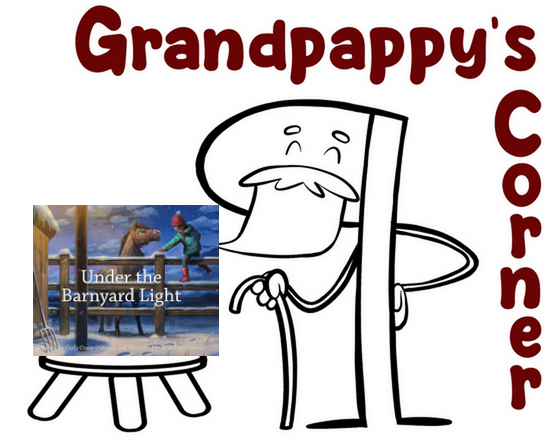
Grandpappy’s Corner: Under the Barnyard Light by Carla Crane Osborne, Brandon Dorman (Illustrator): A Quiet, Wintry Night’s Chores

Grandpappy's Corner Logo featuring the cover of Under the Barnyard Light

Under the Barnyard Light

by Carla Crane Osborne, Brandon Dorman (Illustrator)

DETAILS:
Publisher: Gogonago
Publication Date: November 17, 2020
Format: Hardcover
Length: 26 pg.
Read Date: June 29, 2024
Buy from Bookshop.org Support Indie Bookstores

What’s Under the Barnyard Light About?

This book follows a young girl as she takes care of some farm chores on a cold and wintry night.

Let’s Talk about the Art for a Minute

No slight intended toward the text, but the art here is the star of the show. That’s a commentary on the art, not the text. Few authors would be able to compete (not that it’s a competition). Dorman’s just fantastic. In these pages, he combines realism with a style that will appeal to the younger readers. The colors might not be bright enough and the art “loud” enough to get the youngest readers, but he’ll draw in those north of two (I think). It looks painted, not drawn and colored.

When I checked out his website, I realized I’d held other books that he’d illustrated and/or done the covers for–several of them, actually. My kids even owned some of them growing up.

How is it to Read Aloud?

Like Every Dreaming Creature, this book seems to demand a quiet reading voice–this is a book for settling down for the night (or at least a nap).

I will admit that the first time I read this myself, I got distracted by the rhyme scheme and ended up spending more time paying attention to it and trying to suss out the pattern. Take it from me–don’t do it. Just read it line by line–or couplet by couplet–while being ready to deal with frequent non-rhyming lines. If you go looking for a pattern or a rhythm, you’ll be lost.

Just sit back, adopt a hushed tone, and read. If you do that, you’ll find it to be a nice, soothing read. The text–and the art–are gentle and cozy. You read it that way and you’ll be set.

What did the Little Critter think of It?

He seemed to like the pictures, but had no patience for the book, we only got three pages into it before he was finished. In fairness, he’s young–and I picked a wrong time to try it. He wasn’t in the mood for a quiet book.

But I’m confident that when I try again, he’ll be fine with it.

So, what did I think about Under the Barnyard Light?

I enjoyed this–it did make me think of Every Dreaming Creature and settling down for the night–it’s a quiet book, it’s a calming book. Between the atmosphere, the soft edges of the art, and the way the text carries you along–I imagine this is going to be a bedtime favorite for many. Including the grandcritter in a few months.

This definitely inclines me to read more by Osborne, I’m curious to see what she does with different kinds of stories (for example, I doubt Pony Express is the kind of book you curl up with on your way to sleep).

3 Stars

This post contains an affiliate link. If you purchase from it, I will get a small commission at no additional cost to you. As always, the opinions expressed are my own.

Grandpappy IconLiterary Locals logo

LITERARY LOCALS: A Q&A About Writing in Idaho with Carla Crane Osborne

Literary Locals logo
It sometimes seems like half of the local authors I encounter write books for young children–which is great, it’s just not what I ever expect (I will learn one day). Carla Crane Osborne’s work for children is about as Idaho as it gets (from my limited exposure to it, anyway). I hope you enjoy this quick Q&A with her.


Before we get into things, why don’t you give the reader a brief introduction to you and your work.
My name is Carla Crane Osborne and I am an Idaho Children’s Book Author. I write children’s books based on my experiences growing up on a farm in southern Idaho. I currently have 5 books out and another 2 in the works! I sell my books through my own website, www.gonasreadingranch.com, Amazon.com, and I regularly post about my books, animals, and projects on social media. You can find me on Instagram and Facebook at Gonas Reading Ranch!

Are you a native Idahoan? What brought you to Idaho in the first place? (answer whichever question applies) What is it about Idaho that keeps you here?
I am a native Idahoan! I was born and raised in Burley, Idaho and that is where I grew up alongside my siblings on my parent’s farm. We grew crops and had livestock and we all grew up learning how to tend to and care for the crops and animals and it gave us a sense of responsibility from a young age. Life on the farm as a child was the best experience, in my opinion, and it is the inspiration for my books! We worked hard and we played even harder when the work was done. It allowed us the freedom to expand our imaginations and be as creative as we wanted because we could wander and explore and make up our own little worlds.

Are you tied into some sort of local author/bookish group/culture? If so, tell us about it and how it helps you as an author. If you’re not, is there a reason for it?
Being a full time mom, grandma, and author has not left me a ton of time to get as invested in local groups as I would like. However, I do try to attend local events as often as I can and always enjoy chatting with the other local authors!

What kind of events in the area do you attend—either to sell/promote your books or to network with authors? Are there any outside of this area that you hit regularly and wish we had something like it here?
Most of the events that I attend are local author meet and greets, book fairs, and local school events! I love being able to connect with our community and other local authors. My favorite activity is when I am invited into a school to do book readings with the kids! I love to share my books when they are still in progress and get feedback from the children. A lot of times I end up using bits and pieces of ideas that the kids give me and find a way to include them in my books. I have been to some author events outside of the Treasure Valley, mainly in my hometown, Burley and a couple in Coeur d’Alene. I have done a couple author meet and greets in Burley and a couple author events in CDA. My books are carried in the library and at a lovely little books store called, Fig Pickels in CDA, and I love being invited to attend author get-togethers, meet and greets, or book signings that are put on by either place.

What’s the breakdown of your audience—do you have a strong local base, or are your readers from other parts of the world?
Most of my readers are local. I sell the most books here at local events and I have my books in quite a few of the local libraries as well! I also like to donate books to our local hospitals and toy drives, so I believe most of them end up somewhere in the valley.

Do you think there are particular challenges or advantages to being a writer in the Treasure Valley? (possibly both)
I think the biggest challenge to being a author in the Treasure Valley, or just in general, is the fact that we live in an increasingly digital age. I feel that a lot of times it is easier for parents to use a digital media to entertain kids than it is to sit down and read to them. However, I think that in the Treasure Valley, we have a large population of people who are shifting to a mindset of slowing down and taking more time to do things like sitting to read with their children. I see a lot of parents on social media talking about their children’s education and incorporating more books, outdoor learning, and practical, functional learning and it’s really encouraging to see! There’s nothing that can replace the feeling of holding a real book in your hand!

Do you bring Idaho (or some sort of Idaho-sensibility, assuming one exists) to your work? Whether or not anyone else sees it, can you look at some aspect of your writing and think “That’s Idaho” or “I would do ____ differently if I was a Kentuckian or from Illinois?”
I definitely think that I bring Idaho to my books! The books are all about growing up on a farm and a lot of us in Idaho can relate to that! I think it especially shines through with the illustrations in my books. I have had the chance to work with two fantastic illustrators, Brandon Dorman and my own nephew, Michael Crane, who have captured some truly beautiful representations of Idaho landscape. From the mountains in “Alex the Wonder Lamb” to the beet fields in “Gona’s Halloween Hunt,” it all looks like something you could see within a 30 minute drive, almost anywhere, in Idaho.

One final question, is there a book (or two…or 18, if you get really carried away), that embodies Idaho/the Idaho spirit to you to recommend to my readers?
If had to choose one book that embodies the Idaho spirit, it would probably be the book that I have in the works, “Buster the Brave.” I’ll say as much as I can without spoiling the book before it comes out but, it is themed after our very own Boise State Bronco mascot, Buster. It tells the tale of a young horse who dreams of being the Boise State mascot someday and the determination and bravery it takes to overcome his fears. I think that most of us in Idaho tend to have that “fighting spirit” in us and don’t typically shy away from challenges. I am so excited for this book to be published and I hope that the people of Idaho and fans of our beloved Boise State Bronco’s, love it!

Thanks for your time and participation! Hope you enjoyed it!


Literary Locals logo

The Hijacked Conscience by Debra Peck: An Obsession for Assurance and Certainty

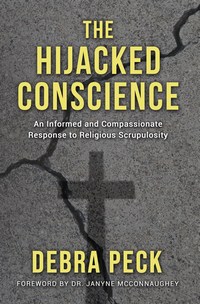
Cover of The Hijacked ConscienceThe Hijacked Conscience:
An Informed and Compassionate Response to Religious Scrupulosity

by Debra Peck

DETAILS:
Publisher: SacraSage
Publication Date: February 10, 2023
Format: Paperback
Length: 158 pg.
Read Date: June 9-16, 2024

What Exactly is RSOCD?

This book focuses on Religious Scrupulosity Obsessive-Compulsive Disorder (RSOCD) and I want to be sure that I describe it carefully and accurately. The best way to do that is to let Debra Peck do the honors (obviously, she goes into more depth, but this’ll do for starters):

The International OCD Foundation describes it as “A form of Obsessive-Compulsive Disorder (OCD) involving religious or moral obsessions. Scrupulos individuals are overly concerned that something they thought or did might be a sin or other violation of religious or moral doctrine.”’ In simplest terms, people with Scrupulosity OCD see sin where there is none.

Those who suffer from Scrupulosity usually have an overly sensitive moral conscience which causes their faith to be experienced as anxiety and fear instead of as peace. The French call it “the doubting disease.” People with Scrupulosity hold themselves to a rigorous level of spirituality and practice, not out of love or even out of obligation, but out of deep-seated fear and anxiety that not doing so imperils their eternal soul.

Like all forms of Obsessive-Compulsive Disorder, Scrupulosity is marked by unwanted and intrusive thoughts (obsessions), overwhelming anxiety that demands resolution, and either outward or internal rituals (compulsions) that relieve the anxiety for a time.

What’s The Hijacked Conscience About?

Peck tries (fairly successfully, I think) to introduce RSOCD to believers, pastors, counselors, and others to the concept. Using her own life and experiences she walks the reader through the struggles she endured (with help and hindrances from family, friends, and fellow Christians) until she was diagnosed. And how having this diagnosis—and the better treatments that came from it—have helped, and how it hasn’t (enough).

Throughout, there’s an attempt to generalize from her experience—or at least show how things she went through can be similar to things others go through.

She also brings in some of the research she and others have done about the disorder alongside her own experiences—which is essential.

I Can’t Help But Wonder…

Early on, Peck describes things that people say in response to questions and concerns raised by people with RSOCD. I’ve heard some of these given to questions by people without it—and I found them just as troublesome and almost as damaging. I put in my notes around that time—these people need a good dose of the Heidelberg Catechism (and the rest of the Three Forms of Unity/Westminster Standards). And, yes, I know—that is not a panacea here, and there’s a lot more going on than bad theology. However…it’s sure not helping them.

Peck herself says,

For those from a Wesleyan-holiness position which emphasizes that the heart can be completely cleansed from sin and living a sin-free life is the expectation of those who are “sanctified,” this can be especially debilitating.

I’ll leave it to others to deal with Wesleyen perfection and the myriad problems it has and that stem from it. But I absolutely see where it’d be debilitating to anyone honest with themselves about their spiritual condition—for someone who is compelled to be “overly concerned” with spiritual matters, debilitating seems like an understatement.

Now, people in the Wesleyan-holiness traditions don’t have a monopoly on this tendency—R. Scott Clark talks about many Evangelical strains affected by what he calls the QIRC and the QIRE—RSOCD really seems like a super-powered version of the Quest for Illegitimate Religious Certainty (with a dose of Quest for Illegitimate Religious Experience, too). Clark defines the QIRC as “the pursuit to know God in ways he has not revealed himself and to achieve epistemic and moral certainty on questions where such certainty is neither possible nor desirable.” The QIRC is problematic for anyone—you add OCD to it? And forget it—you need to fight this with medication, therapy, and better theology.

I don’t for a second believe that Reformed believers can’t struggle with this—the Heidelberg isn’t an inoculation against it. But I do wonder how it would present itself from someone within the Reformed tradition. (I’m curious about Muslims, Universalists, or Wiccans struggling with RSOCD, too).

So, what did I think about The Hijacked Conscience?

This is clearly Peck’s story—or, better, a look at RSOCD through Peck’s story. And as such, it’s good. What would’ve made this better is seeing a few other people’s stories—not the whole thing, but more. Sure, we’re told that there are others—given a couple of historical examples that are likely true, or at least possible—but as it is, it’s harder to get an idea about how RSOCD affects people who aren’t Debra Peck. It’d also be nice to see things others have done to help themselves.

Again, I know that’s not the design or intent of the book. I just think it’d have made this a stronger book—maybe that’s what a future sequel holds? (I don’t know if Peck has plans/intentions for a follow-up, I’m just spitballing here)

But as for the book we do have? It was good—it’s a solid introduction to the concept of RSOCD, a good look at how undiagnosed/untreated it can affect a person, and how—with help—someone can cope (for lack of a better term) with it. There’s even a nice little discussion on the use of medications for this, and similar, afflictions.

The writing is clear and approachable—frequently engaging and pleasant. There’s nothing to be daunted about here, just a good primer to help you weep with those who weep.


3 Stars

Literary Locals logo

Saturday Miscellany—6/29/24

Odds ‘n ends about books and reading that caught my eye this week. You’ve probably seen some/most/all of them, but just in case:
bullet Kinky Friedman, Alt-Country Musician and Celebrated Humorist, Dies at 79—from his mysteries to his music and beyond, Friedman was a unique voice (that should’ve been heard by more)
bullet How the ‘Owner’s Guide’ Became a Rare Book
bullet How to Tell a Great Campfire Story
bullet The Literary Power of Hobbits: How JRR Tolkien Shaped Modern Fantasy
bullet Rob Hart on ‘Assassins Anonymous’ and the Dark Appeal of the Assassin Genre—Nick Kolakowski chats with Hart about his latest book, the genre, and the sequel (squee!!!!)
bullet The Joy of Reading Books You Don’t Entirely Understand: It really should be acceptable and normal to say “I don’t entirely understand what I just read, but I loved it.”—There’s a few books I’ve read in the last few years that fall under this category. Glad to see I’m not alone (and I know that I really should read more things like this, but do enjoy the comfort of understanding things)
bullet Traditional publishing vs. Self-publishing: Should There Be A Conflict?—I haven’t finished this yet, but there’s some good stuff to chew on in this conversation
bullet 2000th Post and 6 Years Blogiversary Q&A—Sifa Elizabeth Reads celebrates two landmarks with a Q&A (and some decent advice)
bullet Bookmark Chat: Organization
bullet Idle Thoughts on Fantasy Stereotypes: The Big Man—a good follow up to the Idle Thoughts on The Mentor

To help talk about backlist titles (and just for fun), What Was I Talking About 10 Years Ago Week?
bullet Little Tiny Teeth by Aaron Elkins—Gideon Oliver and John Lau enjoy an Amazon River cruise (until the obligatory dead body shows up)
bullet The Hero’s Guide to Storming the Castle by Christopher Healy—the second in this very fun MG Fantasy series
bullet Dead Connection by Alafair Burke—I remember really liking this first Ellie Hatcher book (and, sadly, almost nothing else about it).
bullet I also noted the release of The Silkworm by Robert Galbraith

This Week’s New Releases that I’m Excited About and/or You’ll Probably See Here Soon:
bullet Don’t Let the Devil Ride by Ace Atkins—”A Memphis woman hires a PI to find her missing husband, only to discover that he is involved in a dangerous web of international intrigue–and she and her children are now at risk.” I think the promo line, “S.A. Cosby meets Don Winslow,” is a bit odd (kinda seems like using too many words to say “Ace Atkins”), but eh…it is catchy.
bullet The Daughters’ War by Christopher Buehlman—Galva’s backstory in “set during the war-torn, goblin-infested years just before The Blacktongue Thief.” The prequel nature of this really doesn’t intereste me. But I do like the concept, I really enjoyed my first exposure to Buehlman early this year, and that podcast I featured last week did pique my curiouslty. Which is me using too many words to explain why I’ll be listening to this soon (probably explaining to myself more than anyone…)
bullet Love Letters to a Serial Killer by Tasha Coryell—”An aimless young woman starts writing to an accused serial killer while he awaits trial and then, once he’s acquitted, decides to move in with him and take the investigation into her own hands.” If this wasn’t described as a black comedy, I’d stay far away from it (while understanding why others race to it). But I gotta admit, I’m intrigued…

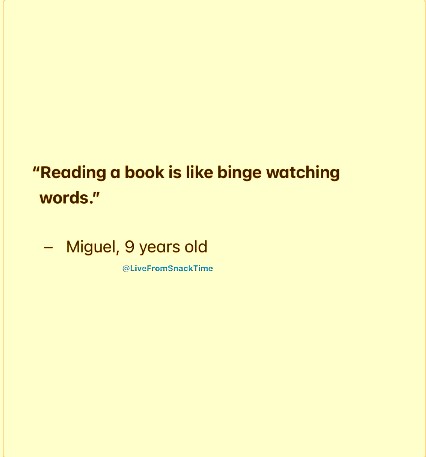
'Reading a book is like binge watching words.' - Miguel, 9 years old @LiveFromSnackTime

IN MEDIAS RES—The Book of Perilous Dishes by Doina Rusti, James Christian Brown (Translator): The Arts of Occult Cuisine

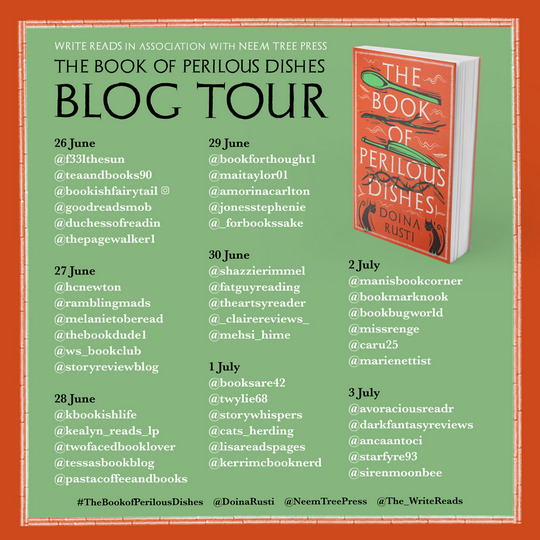
The Book of Perilous Dishes Tour Banner
As the title implies, I’m in the middle of this book (59%), so this is not a full post, just some thoughts mid-way through. There were some challenges getting me a copy that my eyes could read, so I didn’t get the chance to finish the book on time. Many thanks to Dave at The Write Reads Tours for trying so valiantly to help.


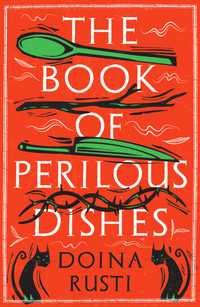
The Book of Perilous DishesThe Book of Perilous Dishes

by Doina Rusti, James Christian Brown (Translator)

DETAILS:
Publisher:  Neem Tree Press
Publication Date: May 21, 2024
Format: e-Book
Length: 272 pgs.
Buy from Bookshop.org Support Indie Bookstores

What’s The Book of Perilous Dishes About?

This novel takes place in two distinct times, the majority of which starts in 1798 when fourteen-year-old Pâtca is forced to flee the only home she really knows because the city guards are raiding it to take in her grandmother (and anyone else they find there) for crimes imagined (and possibly real). She runs to Bucharest, the city she was born in, where her family had lived for a long time, and where her parents died when she was young.

She was told to track down her “little uncle,” Cuviosu Zăval, who could bring her to her parents’ home as well as provide for her. But Zăval is dead when she arrives—murdered, actually—and things get worse from there. Her meager possessions are stolen, she’s captured by criminals (possibly to be sold as a slave), accused of crimes and imprisoned, taken under the care of someone that she—and readers—cannot be sure she should trust, and…so much more (including several things I haven’t read yet).

Pâtca, Zăval, her grandmother, and who knows how many other members of her family, follow occult practices of various types. Some time back, Pâtca, compiled several recipes that are will bespell the eater into a collection called “The Book of Perilous Dishes.”

At the same time, the city is in turmoil. The current prince is about to be deposed (it doesn’t seem likely that he’ll be able to stop the fomenting rebellion). This prince recently took a slave, Silică, from a prominent citizen (the woman who will later assume Pâtca’s guardianship)—he’s a chef of a caliber that would get an invitation from the Chairman to take on Iron Chef in another time. Soon after she arrives in the city, Pâtca becomes convinced that Silică bought “The Book of Perilous Dishes” from her uncle, and is (unwittingly?) about to unleash chaos on the city unless she stops him.

(there’s a few other things afoot, but let’s stick with the story that the book gets its title from)

The other time is 1829, a.k.a. “The Present” is the perspective the 1789 story is being told from. We get snippets of what’s going on in Pâtca’s life there throughout the book—and the Table of Contents tells me that the last chapter will take place there. I’m really unsure beyond that what to say about it. I mean, obviously, Pâtca survives the tight places and dangers she faces (although that’s generally implied in first-person narration, but with the amount of ghosts/possible ghosts and other weirdness going on here, I’m not convinced that’d be guaranteed in this book)

That Opening

I can think of at least 4 books I’ve read in the last two years that have started like this*—guards/police/authorities/angry crowds, etc. coming for the protagonist/protagonist and their family and they have to flee their home to hide/take on a new persona/find a new home. I don’t bring this up to complain about the lack of originality or anything, it’s just something that occurred to me as Pâtca was being rushed out the door by her grandmother, Maxima.

Not only is it an exciting way to open a book—far better than a description of the weather or something—it almost guarantees that the reader will be hooked for at least a chapter or two, but it also tells the reader a lot about the novel and what to expect just from the opening pages. Odds are, not all of those who flee are going to make it—or someone is going to stay behind in an act of self-sacrifice, so you’ve got some tragedy right out of the gate. You’re also going to see your protagonist with a thirst for revenge, justice, or a resolve to carry on with whatever brought whoever to their door.

It’s an efficient and effective bit of writing and storytelling strategy. And Rusti pulls it off well.

* …and who knows how many in the last 40 years.

Rusti’s Writing

A good deal of the appeal to this book is Rusti’s descriptions and depiction of life in Bucharest. The way she describes certain people and Silică’s food, for example, just about justified what I paid for the book. For example:

If I tell you he was handsome, you will understand nothing. He was a man so luminous that you’d be drawn like a magnet to him from any distance. You couldn’t see his eyes. You couldn’t describe any of the features of his face. He was quite simply a soul that soaked into your flesh and blood. He was like water. He was a spark struck from the heart of a coal. He was the very breath of that noontide, fixed over the city.

That woman had a way of looking that was impossible to forget. She didn’t smile, but her face lit up as if she had drunk up all the events that she gazed at.

Beyond that, there’s just her language and way of telling the story. Largely this has to be Rusti’s culture and heritage shining through—the result is something that feels a lot less like our world than a lot of Fantasy/SF that’s supposed to be in worlds that have no relation to Earth. Tatooine, Qo’noS, and Krynn are a lot more like the U.S./U.K. than the world of this book—which is actually in Europe. This really shines forth brightly in this novel and adds a richness to the experience.

There’s a circuitous style to the way that Rusti moves the plot forward that’s both charming and frustrating. I’m not sure if I can describe it but I’ll try. She’ll begin a section at Step 10 (although you won’t realize that right away) and then slip to Step 2 (or 1) and proceed in order to Step 6 or 7, and maybe make you guess at/assume 8 and 9 while resuming at Step 10. Occasionally, she’ll throw a flashback into the middle of that.

I do wonder about some of the language used—there’s a formality to some of the writing and vocabulary that seems out of place to the pacing and atmosphere (and possibly, characters, I’m not sure about that yet). It’s not in every sentence or paragraph (which, I guess is why I said “some”), but it pops up often enough that I can’t help but take note of it. This is at least partially attributable to James Christian Brown, particularly when it comes to word choices—and what not to translate*. I don’t know how much of Rusti’s vocabulary is as formal as Brown’s, but for my purposes, I have to assume that if Rusti wrote this in English, it’d read this way.

* There is a handy-dandy glossary in the back of the book, I discovered too late, because why read the Table of Contents?

So, what do I think about The Book of Perilous Dishes so far?

I like it. I’m confused and/or uncertain about many things going on—I’m not even sure how much I like/trust/care about Pâtca, much less anyone else. But I’m intrigued and very curious about where this all is going.

It’s definitely one of those books that I’m going to have to read the last couple of pages of before I know what I think of the whole thing—I largely think that the journey is as rewarding as the destination when it comes to books—and certainly, the trip I’m on is pretty interesting. But this is going to be one of those books that I’ll have to look back at the journey once I arrive to decide if it was all worth it, pretty scenery notwithstanding.

At this point, I can say that this is a fascinating world, filled with riveting characters, and a story that’ll keep you wondering and guessing throughout (I’m willing to bet until the last ten pages). But I feel confident in saying that it’s worth a shot.


This post contains an affiliate link. If you purchase from it, I will get a small commission at no additional cost to you. As always, the opinions expressed are my own.

My thanks to The Write Reads for the invitation to participate in this tour and the materials they provided.

Page 45 of 218

Powered by WordPress & Theme by Anders Norén