Category: Blog Series Page 62 of 230

PUB DAY REPOST: The Djinn’s Apple by Djamila Morani, translated by Sawad Hussain: The Scent of Death

The Djinn’s Apple Tour Banner

The Djinn's AppleThe Djinn’s Apple

by Djamila Morani , Sawad Hussain (Translator)

DETAILS:
Publisher: Neem Tree Press
Publication Date: May 7, 2024
Format: eARC
Length: 160 pg.
Read Date: February 24, 2023
Buy from Bookshop.org Support Indie Bookstores

What’s The Djinn’s Apple About?

Nardeen is a remarkable twelve-year-old. Her father is a physician known for translating medical texts from a variety of languages into Arabic, and Nardeen soaks up his work. She has an astounding memory and ability to understand what she memorizes.

But due to some political intrigue that she doesn’t wholly understand, Nardeen and her family have to flee their home one night. Sadly, she’s the only one who survives.

Nardeen vows revenge on those responsible for her family’s murder—certain that a friend of her father’s is ultimately to blame.

But before then, she finds herself being taken under the wing of a legendary physician and teacher, Muallim Ishaq. He recognizes her gifts and her heritage from her father—he arranges (mostly by the force of his will) to have her learn at The Bimaristan, a hospital of great renown. There, she’s able to hone her skills and knowledge—and sharpen her tools, resolve, and ability to mete out that vengeance.

Father vs. Father

There are a handful of various conflicts in this book (like with any good book), but at the core, this book seems to be a conflict within Nardeen herself. On the one hand, she has her memories of her father and what he taught her—what he showed her by example—about the way to live. She also has to wrestle with what she’s told about her father—by those who profess to have admired him and those who worked against him.

On the other hand, she has her (for all intents and purposes) adoptive father, what he’s trying to teach her—what he shows her by example—about the way to live. She also has to wrestle with what she’s told about him—by those who profess to admire him and those who work against him.

In many ways, these two fathers line up—but in significant ways, they follow and lead her down divergent paths. So much of how the plotlines of this book resolve depends on Nardeen’s acceptance/rejection of what these men stand for.

The Setting

So, this takes place during the “golden age of Baghdad”—Harun al-Rashid’s rule of the Abbasid Caliphate from 786 to 809. Now, everything that I know about this period of time comes from the appendices to this novel “Harun Al-Rashid: The Golden Age of Baghdad” and “The Bimaristan.” As they are appendices, I read them afterward. So I came into this not knowing anything—which is a bit intimidating. And I figure I’m not alone in this (particularly for the intended YA audience, who probably haven’t had much opportunity to study Eigth-Century history).

But honestly? Anyone who reads Fantasy/SFF knows how to approach something like this—sure, this is a representation of actual history, but the same tools and imagination you need to understand Westeros, Panem, or the world of the Shadowhunters equip you to get into this world.

And, like with those worlds, after getting this taste, you’ll likely want to read more about it.

While reading, and since then, I do have to wonder a little bit about how much Morani was stretching things about the opportunities presented to women in this time and place. Not just for Nardeen, either—but all the women she encounters at the Bimaristan (and I’d be saying this if the city was Paris or Rome, not just because it’s Baghdad). But I’m willing to both suspend disbelief for the sake of a good story and to trust that someone who’s as familiar with Arabic literature as Morani is more than my hunches.

So, what did I think about The Djinn’s Apple?

This book hits the ground running—Morani doesn’t give you the opportunity to settle in and get comfortable in this world or anything like that. She thrusts the reader—and poor Nardeen—straight into life-or-death action. Nardeen has a slightly better understanding of what’s going on than the reader does—but not much. This was a great way to start this read—you don’t get the chance to indulge curiosity or get lulled into thinking it’s a different kind of book than it is—you have to rush to catch up and then keep up with Nardeen and only get the luxury of starting to understand the world until she’s (relatively) safe.

There were a couple of times that I wondered about the timelines and how well they worked. I assume I just missed something (and didn’t want to take the time to go back and check). It wasn’t anything that bugged me enough to look into it, but I would’ve appreciated things being a bit clearer.

The characters of Nardeen and Muallim were so well drawn, so vivid, and so compelling that I really wish we had more time with them. Particularly Muallim—this cantankerous genius is the kind of character I really respond to. Now, given the pacing of this book, that’s impossible. And Morani picked the better option for her story. But the eccentric teacher and the stubborn and gifted student is a combination that could’ve made for a lot of fun.

Somehow in the midst of this propulsive pacing, Morani is able to litter the book with some great observations, some drops of wisdom (primarily from the teacher and student), and memorable prose (some of that credit has to be given to Hussain as well).

This is a fast, immersive read that’ll leave you guessing from the beginning right up to the end. You’d be doing yourself a favor if you pick it up.

Disclaimer: I received a copy of this book from Neem Tree Press and The Write Reads via NetGalley.


4 Stars

This post contains an affiliate link. If you purchase from it, I will get a small commission at no additional cost to you. As always, the opinions expressed are my own.


My thanks to The Write Reads for the invitation to participate in this tour and the materials they provided.

Top 5 All-Time Desert Island Books with Noelle Holten

Top 5 All-Time Desert Island Books
What can I possibly say about Noelle Holten? I first heard her on the Two Crime Writers and a Microphone podcast, and sought out her blog, CrimeBookJunkie. Sometime after that I started reading her novels–and am an even bigger fan of those than her (too rare) posts. Noelle’s a great supporter of the blog, too–and has been known to share one of my posts before I get a chance to on social media–and expressed interest in taking part in these if I did it again. Well, here we are…

Her official bio states: “Noelle Holten is an award-winning blogger at www.crimebookjunkie.co.uk. She’s a PR & Social Media Manager for Bookouture, a leading digital publisher in the UK, and she worked as a Senior Probation Officer for eighteen years, covering a variety of cases including those involving serious domestic abuse. Noelle has three Hons BA’s – Philosophy, Sociology (Crime & Deviance) and Community Justice, a Diploma in Probation Studies and a Masters in Criminology. Her hobbies include reading, attending as many book festivals as she can afford and sharing the booklove via her blog.
Dead Inside – her debut novel with One More Chapter/Harper Collins UK is an international kindle bestseller and the start of a new series featuring DC Maggie Jamieson. 6 Ripley Avenue is her first stand-alone crime thriller and hopefully not her last!”


Huge thanks to H.C. for taking me up on my offer to share my 5 Desert Island books! Assuming I can’t take my kindle… plus I’m not scientific enough to figure out how I’d power it without a plug, here are the 5 books I’d choose and a little explanation as to why!

In no particular order:

Sophie’s World by Jostein Gaarder. Don’t be shocked it’s not crime as my love of philosophy is just as strong – my Hons BA proves that! Or does it? 🤔 The book is about a girl named Sophie who starts getting letters from a philosopher, Alberto Knox. It’s like a crash course in philosophy, wrapped in a story and has stayed with me for over 40 years. It’s about understanding people, the decisions they make, the importance of knowledge and learning as well as questioning everything. I recently bought a special edition copy to re-read and see if I pick up anything new!

Rebecca by Daphne DuMaurier. A classic psychological suspense thriller, this story got under my skin when I first read it in high-school. I then became obsessed with the original film and anything since. I think this book just stands the test of time (I bought a special edition copy of this one a few years ago!). It is haunting, thrilling and emotional and if you haven’t read it yet… you should!

A Game of Thrones by George R.R. Martin. Mainly because I might actually finish it! 😂 I have the whole collection and love the world-building, characters and imagery. It would be the perfect escape and it’s one hell of a story. Plus I’d get my fix of dragons… another obsession! If I could bring the whole collection, I would (but that would be cheating!

Crime and Punishment by Fyodor Dostoevsky. This was one of the books that made me want to go into Probation. The question of morality and justice, good and evil, are prominent in the story as well as whether what the MC, Raskolnikov, did was wrong. A fine line where murder is just? 🤔 His conscience soon catches up with him as the police close in. I’ve read it so many times, I’ve lost count and will probably read it many more as I usually pick up something new from the previous read.

The Handmaid’s Tale by Margaret Atwood. I’ve read the book a few times and watched the series multiple times because it is one hell of a story… something you could picture happening if certain people got into power. 😲 I was fascinated at the insight the author had and although there is violence, oppression, power, misogyny, etc … the fight for survival and justice is strong. It is haunting, thrilling and another that has stayed with me. So this would definitely be coming – in case I need any tips to escape!

There you have it. I stayed away from any current novels because as much as I would love to take a few, the choice was much harder. I’m a series gal as well, so this would make the choice even worse. Thanks again to H.C. for having me.

Are any of these on your list, let us know in the comments!

Be sure to check out Noelle’s blog and novels!


Top 5 All-Time Desert Island Books Footer

Image by Clker-Free-Vector-Images from Pixabay

Top 5 All-Time Desert Island Books with Lashaan Balasingam

Top 5 All-Time Desert Island Books
Lashaan is a Tolkien and Batman nut. There’s more to him, but those are the things that first jump to mind. His blog describes him as:

“A reader. A reviewer. A researcher.
He’s a Ph.D. candidate in criminology and works full-time in a North American police organization.
He has an eclectic reading taste but primarily focuses on science-fiction, fantasy, and graphic novels.
He might seem busy by day, but he chases after stories, whatever form they are in, by night.”


He’s also an incredibly nice guy who has pointed me to about 50% of the comics/graphic novels I’ve picked up in the last few years. Lashaan is one of the first I reached out to for this round of guest posts, asking him “What’s your Top 5 Desert Island Top 5 list?

Be sure to check out Roars and Echoes on a regular basis, you’ll be glad you did.


Yep. That’s THE question that always sends ANY reader down a dark, dark spiral of madness and mayhem. You’d think it’s an easy question with the number of books you might have already read so far into your life, but that’s just it. So many to pick from. Which five do you keep? So here I go:

Crime and Punishment cover

  1. Crime and Punishment by Fyodor Dostoyevsky (https://roarsandechoes.com/2016/01/30/crime-and-punishment-by-fyodor-dostoyevsky/)

I usually systematically go with this book as my all-time favourite novel, so it’s a bit hard not to keep it in a list like this one. Every time I think back at the first time I read and finished this book, I’m reminded by the suffocating psychological journey the protagonist goes through and that’s definitely a story I’d like to have by my side to relativize my own desert island experience.

The Hobbit cover

  1. The Hobbit by J.R.R. Tolkien (https://roarsandechoes.com/2019/11/08/the-hobbit-by-j-r-r-tolkien/)

The book that paved the way to my deep plunge into the professor’s fantasy universe. This one is sure to keep me entertained, to keep me dreaming awake, to keep me resilient all alone on my island.

The Lord of the Rings cover

  1. The Lord of the Rings by J.R.R. Tolkien (https://roarsandechoes.com/2020/07/25/the-fellowship-of-the-ring-by-j-r-r-tolkien/)

I’m sort of cheating with this one since this would contain all three books in one neat edition, but hey, that’s the only way to get the whole adventure. How can I also not bring this along when it’s clearly the ultimate epic fantasy adventure that couldn’t possibly ever get hold no matter how many times you read it!

Dune cover

  1. Dune by Frank Herbert (https://roarsandechoes.com/2019/10/02/dune-by-frank-herbert-2/)

Another classic that I’ll always cherish and even more because of the protagonist’s coming of age story, his ability to face the unknown, to surmount his fears, to embrace his prophecy. While I might not be able to continue the rest of the series on my island, this along will surely keep me happy until my last breath!

The Killing Joke Cover

  1. Batman: The Killing Joke by Alan Moore (https://roarsandechoes.com/2015/07/26/the-killing-joke-by-alan-moore-2/)

You didn’t possibly think I’d end this top 5 without at least mentioning Batman once, did you? One of my all-time favourite graphic novels is one of Alan Moore’s greatest creation: The Killing Joke. I’m always all giddy with excitement when I think of this particular story. Such a masterpiece.


Top 5 All-Time Desert Island Books Footer

Image by Clker-Free-Vector-Images from Pixabay

Saturday Miscellany—5/4/24

Not much to say today as an intro. (“Phew!” is the collective response, I’m sure).

The next couple of weeks are going to be very interesting, I think, here. I’ll talk about it Monday—but I’m telling you now, reader, you’re going to want to stop by a lot (or just a couple of times, I guess—but it should read it all).
Odds ‘n ends about books and reading that caught my eye this week. You’ve probably seen some/most/all of them, but just in case:
bullet We’re All Reading Wrong: To access the full benefits of literature, you have to share it out loud.—hmmmmm….
bullet But Why a Penguin?—Who among us hasn’t wondered?
bullet I missed the provocative essay No One Buys Books last week, where Elle Griffin dove into the data from the recent Penguin vs. DOJ case to look at what it says about book sales.
bullet This week, there were two (at least) responses to that: The Puzzle of Publishing and Yes, People Still Buy Books: How a viral post got some key statistics wrong.—between the three of these pieces, there’s a heckuva education into the business side of book publishing.
bullet M.W Craven up for Theakston Old Peculier Crime award for 3rd year—a quick catch-up with Craven
bullet The Edgar Awards were this week, which means it’s time for Crime Reads’ annual nominee roundtable on The State of the Crime Novel. Part 1: Writing Life and Part 2: The Future of Crime Writing
bullet How Fiction Became Edible: A new genre of cookbooks is reverse engineering the foods of all your favorite pieces of pop culture. Now your stomach can travel to Westeros, Tatooine, the Shire, and more.
bullet The Author as Protagonist: Why are so many fictional writers solving crimes in detective novels?
bullet A few good books about too-good-to-be-true tech (to read after your Tesla explodes).—a fun listicle
bullet Andrew Miller: Namaste Mart Confidential—A quick Q&A with Miller (and a website I need to spend more time with, you will likely enjoy it, too)
bullet Historical Fiction Pros & Cons—Reading Ladies Book Club looks at the genre
bullet Why I No Longer Request ARCs—I absolutely get this (and agree with almost every part of it). But my stack-o’-ARCS suggests I may need to consider Krysta’s words more closely soon.
bullet Speaking of things I need to think more about: How Negative Am I? Posing the Question of Negativity on the Internet
bullet 7 Reasons Adults Should Read Children’s Books—#1 & #3 are the big ones for me. With #4 gaining steadily, as the Grandcritter ages, I expect it’ll take first place.

To help talk about backlist titles (and just for fun), What Was I Talking About 10 Years Ago Week?
bullet <bOutlander by Diana Gabaldon—left me utterly unimpressed
bullet In Defense of the Descent by Daniel R. Hyde—a short and compelling book about the controversial line in the Apostle’s Creed. I still refer to this book.
bullet Dawn’s Early Light by Pip Ballantine and Tee Morris—steampunky fun in the U.S. of A.

This Week’s New Releases that I’m Excited About and/or You’ll Probably See Here Soon:
bullet Namaste Mart Confidential by Andrew Miller—A pair of unlicensed PIs/Grocery Store Clerks search for a missing (possibly kidnapped) woman in the L.A. of 2013. I rambled about it a little earlier this week
bullet Takeout Sushi by Christopher Green—a collection of short stories from (mostly) contemporary Japan. I posted about it recently and managed not to make a single joke about one of the world’s least appealing (to me) types of food. That’s personal growth right there.
bullet Crimson Arches by Rebecca Carey Lyles—in this follow-up to Shadow Ranch, Kasenia somehow finds herself in a tense situation with another polygamous bunch.
bullet What’s Eating Jackie Oh? by Patricia Park—a YA look at cooking competitions and dealing with parental expectations.
bullet The Vanishing Station by Ana Ellickson —”a lyrical and bold YA debut about an underground magic system in San Francisco—and the lengths one girl is willing to go to protect the ones she loves.” Intriguing setup and world.
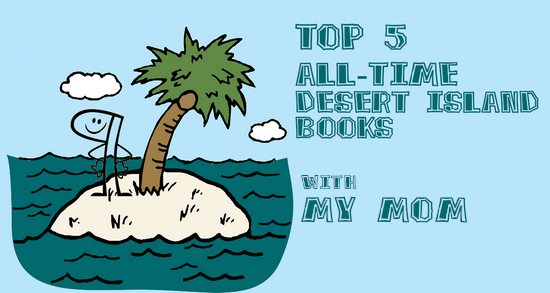
How to Read Books: Step 1 - Say you're going to read more books; Step 2 - Buy more books; Step 3 - Repeat step 2 over and over again without actually reading any of the books, you cannot be stopped. - Dave

Opening Lines: Christa Comes Out of Her Shell by Abbi Waxman

Head & Shoulders used to tell us that, “You never get a second chance to make a first impression.” That’s true for wearing dark shirts, and it’s especially true for books. Sometimes the characters will hook the reader, sometimes the premise, sometimes it’s just knowing the author—but nothing beats a great opening for getting a reader to commit.

So, I’m going to kick off by making one thing very clear: None of this was my fault. I was part of it, sure, but only like a flea is part of a cat. I was carried along, contributing my own pain-in-the-ass factor, no argument there, but I was mot, in any sense, driving the bus. Let’s not forget that when this story starts, was literally on an island in the middle of nowhere. Hands full, head busy, heart well guarded. Safe as houses, baby.

Wait, that’s not completely accurate. The island of Violetta isn’t in the middle of nowhere; it’s slightly to the right of Africa, many hundreds of miles into the Indian Ocean. It’s a geography cal, political and sociological anomaly, It’s also home to a frozwn vodka drink called the Barrier Island, beyond which no man may safely travel, but that’s a sidenote. It lies two days’ sail from a large French-speaking island more than five hundred miles off the east African coast, which is probably why the French didn’t bother to claim it. It was ignored by the Mauritians, because they thought the French already nabbed it, and blithely disregarded by the British, who had no idea who owned it, but had no reason to think was them.

No one paid much attention to it at all until the 1950s, when an enterprising young Violettan by the name of Agnes Bottlebrush did a school project on the even younger United Nations and then quietly applied for membership for Violetta (Agnes was an overachiever with time on her hands). As the result of a series of fortunate and slightly comedic events, Violetta became the smallest member of the United Nations, and Agnes received a rapid promotion to Head Girl. Then she walked around to everyone’s houses and handed them a copy of the UN Charter and gathered suggestions for what to put on the flag.

from Christa Comes Out of Her Shell by Abbi Waxman
Christa Comes Out of Her Shell Cover
I’m not sure what happens over the next 369 pages (in a sense). I just want almost 400 pages like this.

Opening Lines Logo

PUB DAY POST: Takeout Sushi by Christopher Green: Slices of Life from Japan (and a couple of other spots)

Yup. This is going up about 22 hours after it should have. Mr. Green, Neem Tree Press, and The Write Reads—I’m incredibly sorry.


Takeout Sushi Tour Banner

Takeout SushiTakeout Sushi

by Christopher Green

DETAILS:
Publisher: Neem Tree Press
Publication Date: May 2, 2024
Format: eARC
Length: 272 pg.
Read Date: April 17-27, 2024

What’s Takeout Sushi About?

This is a collection of 17 stories—13 taking place in contemporary Japan, and 4 in other parts of the world and other times.

It’s difficult to describe a common theme or anything with this collection—you’ve got one crime story, one thing that straddles Science Fiction and Contemporary Fiction, and then a few that fall under slice-of-life kind of things. I’d compare them to the shorter works of Raymond Carver, John Cheever, or John Updike—at least in the kind of stories he’s telling, I’m not equipped to talk about literary quality. I will say that I liked most of these better than almost everything I read by those guys.

Characters in the Stories

Speaking generally, these stories focus on one person, with 1-3 other characters. I guess that’s frequently the case for short stories in general, but as I read it, this collection felt more focused on an individual or two rather than the outside world.

With several of these, I have the impression I got to know the protagonist as well as I do some characters in 400-page novels—Green has a real gift for getting us up close and personal to his characters. And, I guess, we really don’t get to know these people all that well—but in the moment, you’ll be convinced you know them better than their own mothers or psychiatrists.*

* That’s a joke, I can’t imagine any of these people seeing a psychiatrist. Most should, however.

Mawage

There’s probably an entire post to be written about the marriages depicted in the book—and, on the whole, the institution doesn’t come out looking to good. There are a couple of exceptions—and one promises to be better soon after the story’s events (thanks to an oddly sympathetic police officer). But, particularly early on, my notes are full of comments about the strange and (often) strained relationships between husband and wife depicted here.

I will say this—Green is fairly even-handed in what partner is “the problem.” Too many collections like this would tend to paint the wife negatively—or the husband—but Green bounced back and forth between the two.

Basically, don’t give this as a Valentine’s Day gift.

So, what did I think about Takeout Sushi?

Almost every time I talk about a short-story collection, I end up saying something like, “there were some real winners, and some that didn’t do much for me, I expect you’ll find the same (just with a different list of stories in each category).” I hate to repeat myself, buuuuuut…

Now, those that were real winners were just amazingly good. “Laugh out loud from surprise because you didn’t expect to read something that skillfully done and imaginative” good (and occasionally laugh out loud because of the conclusion). Those that didn’t rise to that level (in my estimation, I stress), did absolutely nothing for me. I even re-read a couple of them to see if I could figure out what I missed—I just didn’t understand the point of them. There was one exception to that—the penultimate story, “The Pool.” It was effective and affective—and completely not for me—but at least I got it.

A few years ago, I read a short story by Russell Day called “Not Talking Italics.” It blew me away and started a years-long obsession with Day and his shorter and longer pieces. Green’s “Crimes for Dummies” hit me in almost the same way. My note at the end was just one word: Fantastic. A few others were almost as good (“The Choice”)—or better (“Spinning Wheels”).

I’m not going to say any more about them because it would rid those stories of their punch. But those three more than justify the purchase price of the book—whatever you end up spending on it.

As usual, I’m more than prepared for people to come along and tell me that “The Pool” was brilliant (and explain why), or that “Spinning Wheels” was silly or derivative of something. Because tastes differ—as they should.

In any case, I expect that whoever picks up this collection are going to frequently have a real blast with it—and a couple of things to shrug at before diving into the next one that will get them giddy with excitement.

Disclaimer: I received a copy of this book from Neem Tree Press and The Write Reads via NetGalley.


3.5 Stars


My thanks to The Write Reads for the invitation to participate in this tour and the materials they provided.


BOOK SPOTLIGHT: Takeout Sushi by Christopher Green

This morning, I’m very pleased to welcome The Write Reads Blog Tour for Christopher Green’s short story collection, Takeout Sushi. In addition to this Spotlight, my post about the book will be coming along sometime today (I hope). The Tour, so check out https://twitter.com/WriteReadsTours to see other people are saying about the book, my positive remarks will join them soon. But for now, let’s learn a little bit about the book, shall we?

Takeout Sushi Tour Banner

Book Details:

Title: Takeout Sushi by Christopher Green
Genre: Contemporary Short Stories, Japan
Release date: May 2, 2024
Length: 272 pages
Publisher: Neem Tree Press
Takeout Sushi Cover

About the Book:

Takeout Sushi is a collection of 17 illustrated short stories set mostly in contemporary Japan that explore feelings of belonging, displacement, and the strangeness of everyday human interaction.

In an innovative, fast-paced company, a man’s job comes under threat when a team of robots are brought in to replace the HR department. A husband’s search for shortcuts to his domestic tasks goes painfully wrong. Overwhelmed by the hustle and bustle of Tokyo, a foreigner takes a weekend break and discovers something other than solitude in the mountains.

Marking Christopher Green’s debut adult fiction and inspired by his own experiences, these whimsical slice-of-life tales are full of heart and humour—perfect for fans of Convenience Store Woman and Before the Coffee Gets Cold

Book Links:

Amazon UK ~ Amazon US ~ Neem Tree Press ~ Goodreads

About the Author:

Christopher GreenA long-time resident of Japan, Christopher lives near Tokyo with his wife and daughter. Christopher writes short stories and children’s stories. His first collection of short stories Takeout Sushi is due for publication by Neem Tree Press in May 2024.

For a little more about Christopher and his books, please visit www.greeninjapan.com.

For Christopher’s goodreads page for his children’s books, please visit Chris Green.

Thank you for reading!

My thanks to The Write Reads for the invitation to participate in this tour and the materials they provided. Apologies for the tardiness of this post and the next one, too.

Grandpappy’s Corner: Tiny Hands Hymns, Tiny Hands Prayers, and Tiny Hands Promises edited by Hannah Duguid Estes, illustrated by Jessica Hiatt: A Great Set of Starter Devotional Reads

Grandpappy's Corner Tiny Hands Books

Tiny Hands Hymns

Tiny Hands Prayers

and

Tiny Hands Promises

edited by Hannah Duguid Estes, illustrated by Jessica Hiatt

DETAILS:
Publisher: P & R Publishing
Publication Date: October 25, 2023
Format: Board Book
Length: 16 pg. (each)
Read Date: April 27, 2024

What are the Tiny Hands About?

These are little board books that serve as beginning devotional materials—training wheels for young worshippers, if you will.

Tiny Hands Hymns

These are the first stanzas/verses of some of the best hymns around (and easiest to learn, too): “Holy, Holy, Holy,” “Be Thou My Vision,” “Amazing Grace,” “This Is My Father’s World,” “Great Is Thy Faithfulness,” “Come, Thou Fount of Every Blessing,” “Crown Him with Many Crowns,” and Thomas Ken’s doxology.

On the opposite pages are fitting illustrations, with some accent illustrations on the pages with text.

Buy from Bookshop.org Support Indie Bookstores

Tiny Hands Prayers

These are a selection of prayers—translated by Iain Duguid (Professor of Old Testament at Westminster Theological Seminary), from various portions of Scripture to serve as models of prayer.

They include: Mary’s prayer from Luke 1, Hannah’s from 1 Samuel 2, a prayer based on Daniel’s Prayer from Daniel 9:4-19, a prayer based on Ephesians 3:14-19, David’s prayer from Psalm 130, The Lord’s Prayer from Matthew 6, and the prayer of the saints from Revelation 19, and the Aaronic benediction from Numbers 6.

Again, opposite each is an appropriate illustration, with some accent illustrations on the pages with text.

Buy from Bookshop.org Support Indie Bookstores

Tiny Hands Promises

This is a collection of covenant promises from the Old and New Testaments to introduce and remind even the littlest members of the covenant of what God has promised them. These, too, are translated by Iain Duguid.

They are Isaiah 43:1-3; John 10:27-28; Matthew 7:7-11; 2 Corinthians 12:9; James 1:5; 1 John 1:9, 7*; Philippians 1:6; and Revelation 21:3-5.

*I’m not sure I get why he ordered them this way.

Yet again, opposite each is an appropriate illustration, with some accent illustrations on the pages with text.
Buy from Bookshop.org Support Indie Bookstores

Let’s Talk about the Art for a Minute

I’ve apparently appreciated Hiatt’s work as a cover designer on a few books (The Wonderful Works of God by Herman Bavinck, Things Unseen by J. Gresham Machen, and Struck Down but Not Destroyed by Pierce Taylor Hibbs), but illustrating board books calls for a slightly different skill set. Still, the illustrations remind me of those covers.

I think these are great. Bright and cheerful, without being cartoonish or silly (I have nothing against those kinds of illustrations, but they’re not fitting for the subjects).

How are they to Read Aloud?

They’re fine—although I can’t imagine that anyone, even those who can’t carry a tune, not singing the hymns instead of reading them.

The translations (I’d be tempted to call them paraphrases, but the books say translations—and I don’t know enough to contradict that) are foreign-feeling for people who are familiar with/have memorized the relevant portions from the AV, ESV, NASB, etc. Once you get past that feeling, there’s nothing about the text that’s difficult or odd to read—and they seem easy enough for young children to comprehend (to some degree).

What did the Little Critter think of Them?

Okay, I haven’t had the chance to read these with him, but his Momma has. She reports that he likes Tiny Hands Hymns, because she sings them, and he really responds well to singing. He doesn’t really seem to care about the others one way or another. That fits his personality—but doesn’t really reflect on the books, if you ask me.

So, what did I think about the Tiny Hands books?

I think they’re a great idea—and overall, I am pleased with the execution. I do recommend them without hesitation.

I have some questions about some of the technical bits of translation, verse choices, and whatnot—not so much that I have a problem with the books, I’d just like someone good with the original languages to sit down with me and walk through these.

But for a young child? I think they’re well done and would be great resources for regular use.


4 Stars

This post contains an affiliate link. If you purchase from it, I will get a small commission at no additional cost to you. As always, the opinions expressed are my own.
Grandpappy Icon

Saturday Miscellany—4/27/24

For U.S.-types, Happy Independent Bookstore Day!! Be sure to venture forth and take advantage of the fun in your area. I actually have 3 choices to go to today (and, yes, I’m tempted to hit all three, but time and money prevent that). This month has not been good for my To Be Read mountain, and I don’t think today will help a lot.

(non-U.S.-types should go and visit your local indie shop, too.)

Odds ‘n ends about books and reading that caught my eye this week. You’ve probably seen some/most/all of them, but just in case:
bullet A novel experience: Why small bookstores are thriving in Canada—this seems to be a good day to celebrate those stores north of the border, too.
bullet There’s a revolution happening in children’s publishing—you can thank the book bans—the Law of Unintended Consequences has teeth
bullet Yes, It’s Okay to Throw Away a Book: We love acquiring, hoarding, and displaying books even more than we love reading them—That subtitle is a bit much, but the rest of the piece is worth a read. Unconvincing, I think.
bullet The literary romantic holiday that should replace Valentine’s Day.—this one also seems like a bit of a stretch, but I’m inclined to be swayed.
bullet Shakespeare and Fanfiction: Despite an enduring slice of audience that treats his work as precious and mythic, most Shakespeare fans have rarely met an adaptive concept they didn’t like.
bullet The Unexpected Resurrection of Harlan Ellison
bullet The Heyday of Pulp Fiction: Keith Roysdon on the heroes and villains of American pop culture, introduced to millions of readers in cheap magazines.
bullet Encyclopedia Brown: A Story for My Brother, Philip Seymour Hoffman
bullet How to Read More—Armed With a Book brings a fresh idea or two to this perennial topic.
bullet Brian Bilston is “fed up with people pointing out all the mistakes in my poetry” and responds with Pedants—absolutely worth the read.

To help talk about backlist titles (and just for fun), What Was I Talking About 10 Years Ago Week?
It looks like whatever was distracting me from blogging in April 2014 started to wane, and I managed to note the publication of a few books that looked promising (I read at least 3 of them—all 3 winners)
bullet The Dragon Business by Kevin J. Anderson
bullet Attack The Geek: A Ree Reyes Side-Quest by Michael R. Underwood
bullet The Thousand-Dollar Tan Line by Rob Thomas and Jennifer Graham
bullet Heaven’s Queen by Rachel Bach
bullet Dawn’s Early Light by Pip Ballantine and Tee Morris

This Week’s New Release that I’m Excited About and/or You’ll Probably See Here Soon:
bullet Next of Kin by Samantha Jayne Allen—Annie McIntyre’s third adventure finds her looking into a client’s family history and stirring up dust that causes problems for her and the client in the present. Looking forward to diving into this one.

I do not know how to give alt text for this, sorry. Follow the link and maybe the original post does

Grandpappy’s Corner: Along Came a Radioactive Spider by Annie Hunter Eriksen, Lee Gatlin (Illustrator): The Man Behind Spidey’s Look (and more!)

Grandpappy's Corner Along Came a Radioactive Spider

Along Came a Radioactive Spider:
Strange Steve Ditko and
the Creation of Spider-Man

by Annie Hunter Eriksen , Lee Gatlin (Illustrator)

DETAILS:
Publisher: Page Street Kids
Publication Date: August 1, 2023
Format: Hardcover
Length: 32 pg.
Read Date: April 20, 2024
Buy from Bookshop.org Support Indie Bookstores

What’s Along Came a Radioactive Spider About?

It’s right there in the title—subtitle, really, I guess. This is an unauthorized biography (we’re told at one point that Ditko would hate a book about him, so there’s no chance of an authorized one) of Spider-Man’s co-creator, Steve Ditko, written for the older picture book reader.

It covers his childhood and a little of his comic book career up to Spider-Man and then Doctor Strange. Following that, we get two text-heavy pages talking about Ditko in a bit more detail (for the parents, I’m guessing).

Let’s Talk about the Art for a Minute

Gatlin has a very distinctive style that I wish I knew how to describe. I’ve seen his work here and there on the internet (I don’t think it ever had his name attached, sadly), but I’ve never seen this much in one place at a time.

You’re never in doubt as to what he’s drawing, but realism isn’t really what he’s going for. There’s an energy, a mood, a feeling of movement to all his drawings that I find really appealing—and I imagine young readers/those-read-to will find compelling as well.

I assumed that when the book covered people like Spider-Man or Doctor Strange that he’d go for a Ditko-feel to the art, just to pay homage or show the reader what Ditko produced. But he didn’t—at least not too much—there’s a distinct look to most of that art to separate it from the rest of the book, but it’s just a different flavor of Gatlin (which is perfectly fine, I’m just trying to describe things in my own meager way).

I’m planning on spending more time just looking at the illustrations, catching what I missed the first couple of times—and I don’t imagine I’ll be the only one.

So, what did I think about Along Came a Radioactive Spider?

I really do wonder how many children will care about this—they may like Spider-Man or Doctor Strange, but will they care about the story of the man who drew them and helped create them? I’m just not sure.

Now, their parents and grandparents are going to love this—and probably want more. And yes, this could be a fun non-Marvel Cinematic Universe way to introduce a child to a couple of comic book heroes, and that’s probably the idea behind most people buying this book.

Or I could be wrong—that’s just a guess on my part. I’d like to be wrong.

For a biography of a little-known figure who has altered superhero history the way that few have, this is a great read. And the right reader is going to delight in it. I’d have liked it to be twice the length—but the subject and the medium don’t really allow for that, so I got over that pretty quickly.

This is apparently a companion book to With Great Power: The Marvelous Stan Lee from the same creators—I’ve got to get my hands on that one.

3.5 Stars

This post contains an affiliate link. If you purchase from it, I will get a small commission at no additional cost to you. As always, the opinions expressed are my own.
Grandpappy Icon

Page 62 of 230

Powered by WordPress & Theme by Anders Norén