Category: Fantasy Page 10 of 46

20 Books of Summer 2025: June Check-In

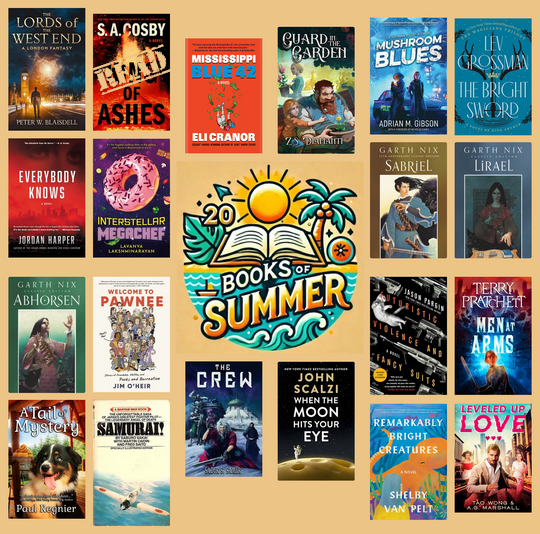
20 Books of Summer 2025 logo
A quick check-in for this Reading Challenge hosted by Emma of Words and Peace and Annabel from AnnaBookBel (you can read more about it here). I don’t typically like to do this kind of thing until the first of the next month, but since I doubt that I’ll read 500 pages today, I figured I might as well get this up since I won’t be able to finish the post I initially planned for today. So, I’ve read 1 1/6 books for this challenge (hopefully 1 1/2 by the end of the day). It’s not the most auspicious start, but I’ll take it (and I’ve had worse starts).

So here’s the list:

1. The Lords of the West End by Peter Blaisdell
✔ 2. King of Ashes by S. A. Cosby
3. Mississippi Blue 42 by Eli Cranor
4. Guard in the Garden by Z. S. Diamanti
5. Mushroom Blues by Adrian M. Gibson
6. The Bright Sword by Lev Grossman
7. Everybody Knows by Jordan Harper
8. Interstellar MegaChef by Lavanya Lakshminarayan
9. Sabriel by Garth Nix
10. Lirael by Garth Nix
11. Abhorsen by Garth Nix
12. Welcome to Pawnee: Stories of Friendship, Waffles, and Parks and Recreation by Jim O’Heir
13. Futuristic Violence and Fancy Suits by Jason Pargin
14. Men at Arms by Terry Pratchett
15. A Tail of Mystery by Paul Regnier
16. Samurai! by Saburo Sakai with Martin Caiden and Fred Saito
17. The Crew by Sadir S. Samir
18. When the Moon Hits Your Eye by John Scalzi
19. Remarkably Bright Creatures: Shelby Van Pelt
20. Leveled Up Love by Tao Wong & A. G. Marshall

(subject to change, as is allowed, but I’m going to resist the impulse to tweak as much as I can).

On the other hand, I’m doing pretty well with my Books on My Summer 2025 to-Read List (That Aren’t on My 20 Books Challenge)

1. Stone and Sky by Ben Aaronovitch
2. Algospeak: How Social Media Is Transforming the Future of Language by Adam Aleksic
3. Light From Uncommon Stars by Ryka Aoki
✔ 4. The Blue Horse by Bruce Borgos
5. Five Broken Blades by Mai Corland
6. This Is How You Lose the Time War by Amal El-Mohtar, Max Gladstone
✔ 7. The Medusa Protocol by Rob Hart
✔ 8. Station Eleven by Emily St. John Mandel
9. Mrs. Plansky Goes Rogue by Spencer Quinn
10. Dogged Pursuit by David Rosenfelt

Okay, if you think it as a percentage, I’ve read 14% of the books I called my shot on for the summer. Again, inauspicious. July promises to be a good one for reading—I hope/expect that I’ll be looking better in 31 days.

(and no, I don’t see a conflict between this and the Orangutan Librarian’s recent post about competitive reading. This is me comparing myself with my goals, or my past self, or—worst of all—my expectations.

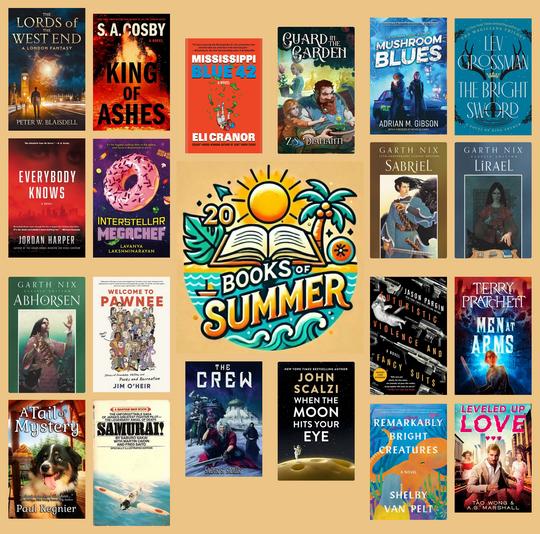
20 Books of Summer '25 Chart June Update

The Great Divorce by C.S. Lewis: Do you listen to the angels on the outskirts?

Further Up and Further In A Year with C.S.Lewis


Cover of The Great Divorce by C.S. LewisThe Great Divorce

by C. S. Lewis

DETAILS:
Publisher: Macmillan Publishing Company
Publication Date: 1946
Format: Paperback
Length: 128
Read Date: June 22, 2025
Buy from Bookshop.org Support Indie Bookstores

“Then those people are right who say tht Heaven and Hell are only states of mind?”

“Hush,” said he sternly. “Do not blaspheme. Hell is a state of mind—ye never said a truer word, And every state of mind, left to itself, every shutting up of the creature within the dungeon of its own mind—is, in the end, Hell. But Heaven is not a state of mind. Heaven is reality itself. All that is fully real is Heavenly. For all that can be shaken will be shaken and only the unshakable remains.”

Sixpence None the Richer’s “Soul”

Since 1994 (two or three years after I read this for the first time) I haven’t been able to think about, much less read, this book without thinking of this song. So why not let you have it run through your head as you read this?

What’s The Great Divorce About?

The conceit of this book is that C.S. Lewis is granted a vision in a dream of the afterlife. He starts out in a miserable place, full of people that could best be described as miserable (although that might be being too kind). He sees a bunch of them waiting for a bus, and since that’s pretty much the only people he can see around, he joins the queue. Before he knows it, he gets one of the last remaining seats.

After a couple of really unpleasant interactions with fellow passengers, the bus comes to a stop and everyone disembarks. They’re near some trees, but mostly there’s a large amount of grassy land near a cliff. Everyone kind of separates and walks around, while others come from a distance toward them. The best way that Lewis can come up with to describe these people is “Bright Ones” or “Solid People.”

They seem more solid and bright than anyone else—who now pretty much seem like disembodied ghosts to Lewis. Meanwhile, the grass is intensely hard and sharp; the trees and rocks are similarly “more real.” Once the Bright Ones arrive, they all head off to talk to individual ghosts—and the interactions that Lewis watches/overhears, the interactions aren’t all that pleasant.

The Bright Ones, it should be stressed, aren’t the problems. They’re patient, kind, and entirely honest. The Ghosts, on the other hand, are nasty, defensive, selfish, and seem to go out of their way to twist the words of the Bright Ones. The Bright Ones are trying to convince the Ghosts to leave these problems—and so many others behind, so they can find true happiness and forgiveness in the City.

Lewis watches some of these, and then is met by his own Bright One, who answers some questions for him about what’s going on.

Okay, that’s more of a summary than I typically give—but the meat of the book isn’t in that outline, it’s in the individual interactions between Bright Ones and the Ghosts.

“The Transmortal Conditions”

In his Preface, Lewis stresses that this book is a Fantasy, sure, it’s one with a moral—but it’s Fantasy. “The transmortal conditions are solely an imaginative supposal; they are not even a guess or a speculation of what may actually await us.”

That’s for the best because there are many problems with his vision of the realms—but at the same time, he does a wonderful job of depicting them

The loneliness of Hell/Purgatory* and how the denizens exacerbate the problem continuously to their own detriment is utterly fantastic. Even better is the hyper reality of the outskirts of the City and the Bright Ones. Lewis said he got the idea from some article he read by an American whose name he’d forgotten years before.

Between this book and Perelandra, I’m starting to come to the conclusion that Lewis’ best writing is reserved for him trying to capture Paradise and relate it to his readers. He falls short, obviously, but the way he does communicate either the area around Heaven or a Pre-Fall Venus are so fantastic that I find myself trying to describe the ineffable.

* It’s Hell for those who don’t take the opportunity to repent, Purgatory for those who do. An intriguing way to be able to placate either the Roman Catholic or Protestant in his readership.

George MacDonald

On one of the rocks sat a very tall man, almost a giant, with a flowing beard. I had not yet looked one of the Solid People in the face. Now, when I did so, I discovered that one sees them with a kind of double vision. Here was an enthroned and shining god, whose ageless spirit weighed upon mine like a burden of solid gold: and yet, at the very same moment, here was an old weather-beaten man, one who might have been a shepherd—such a man as tourists think simple because he is honest and neighbours think “deep” for the same reason. His eyes had the farseeing look of one who has lived long in open, solitary places; and somehow I divined the network of wrinkles which must have surrounded them before re-birth had washed him in immortality.

Among the many things I forgot about this book is the way that MacDonald serves as Virgil, guiding Lewis around the area, answering many of the questions he has about what he’s seeing and experiencing. Having read Surprised by Joy pretty recently, when he goes into what kind of impact MacDonald made on him really helped underline this part for me.

When so many of the other Ghosts had Bright Spirits appear to them that were someone important to them—mostly family members, Lewis (who isn’t quite a Ghost, but is largely treated as one) gets an author who was instrumental in laying the groundwork for his conversion. A great choice, and a very honest/self-revelatory one.

So, what did I think about The Great Divorce?

Never fear. There are only two kinds of people in the end: those who say to God, “Thy will be done,” and those to whom God says, in the end, “Thy will be done.” All that are in Hell, choose it. Without that self-choice there could be no Hell. No soul that seriously and constantly desires joy will ever miss it. Those who seek find. To those who knock it is opened

I absolutely loved this. I remembered liking it, but I was just blown away this read-through.

Yes, I’d quibble with some of the theology here—Lewis and I aren’t going to see eye-to-eye on many things until we both arrive in the City to be corrected (and neither of us will care about that then). But this isn’t a systematic theology, it’s a Fantasy story with apologetic aims. As such, it’s wonderful. And, I’m never going to sneeze at the chance to read Lewis describing a paradise.

And this is not an apologetic work in the way most of his are—he’s not trying to make a case for the thoughtfulness of Christianity, the reasonableness in the belief in miracles, or anything like that. He’s looking at the core of people, how they think; how they react; how in every thought, word, and deed they are selfish; it’s all about self-interest, self-importance, self-worth. They may try to dress it up somehow, but eventually—even if it’s just for a moment, it’s about them. Seeing myself in these ghosts—I assume that most readers do—is not unlike seeing yourself in the words of advice that Screwtape gives to his nephew. Neither is a pleasant experience, but the mirror that Lewis holds before his readers is pretty clear.

Of the works by Lewis that I’ve read this year, this is his best writing, his most subtle thinking, his most heart-opening thoughts. I heartily encourage this one to those who are curious—even if just for the Fantasy of it all.


5 Stars

This post contains an affiliate link. If you purchase from it, I will get a small commission at no additional cost to you. As always, the opinions expressed are my own.
Irresponsible Reader Pilcrow Icon

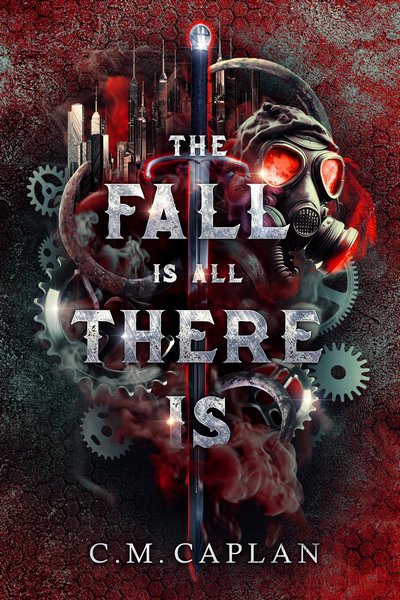
BOOK SPOTLIGHT: The Fall is All There Is by C.M. Caplan

I’m very pleased today to welcome The Write Reads Blog Tour for C.M. Caplan’s, The Fall is All There Is! If you take a look at the feed for https://twitter.com/WriteReadsTours over the next few days, you’ll see a lot of bloggers who, unlike me, had the time to read it and write interesting things about it. The Fall is All There Is was the 6th Place Finalist for the 2024 Book Blogger’s Novel of the Year Award, so you know there’s a lot of good to be said about it–but before getting to this Spotlight, let’s start with a word about BBNYA.

BBNYA:

BBNYA is a yearly competition where book bloggers from all over the world read and score books written by indie authors, ending with 15 finalists (16 in 2024) and one overall winner.

BBNYA Finalist Badge 2024

If you want some more information about BBNYA, check out the BBNYA Website https://www.bbnya.com/ or take a peek over on Twitter @BBNYA_Official. BBNYA is brought to you in association with the @Foliosociety (if you love beautiful books, you NEED to check out their website!) and the book blogger support group @The_WriteReads.

The Fall is All There Is Banner

Book Details:

Title: The Fall is All There Is
Genre: Fantasy, Science Fiction
Age Category: Adult
Format: Paperback/Ebook/Audiobook
Length: 415 pages
Publication Date: November 7, 2022
The Nameless by C.M. Caplan Cover

About the Book:

All Petre Mercy wanted was a good old-fashioned dramatic exit from his life as a prince. But it’s been five years since he fled home on a cyborg horse. Now the King – his Dad – is dead – and Petre has to decide which heir to pledge his thyroid-powered sword to.

As the youngest in a set of quadruplets, he’s all too aware that the line of succession is murky. His siblings are on the precipice of power grabs, and each of them want him to pick their side.

If Petre has any hope of preventing civil war, he’ll have to avoid one sibling who wants to take him hostage, win back another’s trust after years of rivalry and resentment, and get an audience with a sister he’s been avoiding for five years.

Before he knows it, he’s plunged himself into a web of intrigue and a world of strange, unnatural inventions just to get to her doorstep.

Family reunions can be a special form of torture.

Book Links:

Amazon Canada ~ Amazon US ~ Amazon UK ~ Goodreads ~ The Story Graph

About the Author:

C.M. CaplanC.M. Caplan is the author of the SPFBO 9, BBNYA, and Indie Ink Awards Finalist, The Fall Is All There Is. He’s a quadruplet (yes, really), autistic, and has a degree in creative writing. If you enjoy his books, you can rate them on Goodreads and Amazon.

Facebook


My thanks to The Write Reads for the invitation to participate in this tour and the materials they provided.

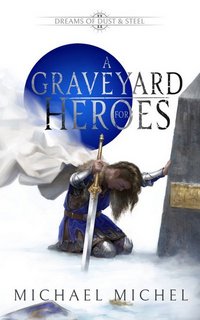
A Graveyard for Heroes by Michael Michel: The Canvas is Bigger, but the Intensity Remains.

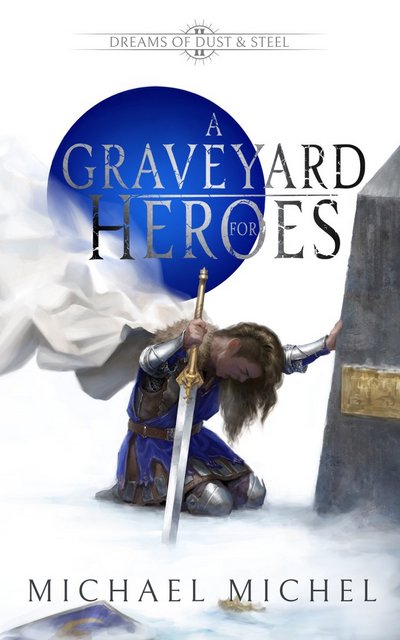
Cover of A Graveyard for Heroes by Michael MichelA Graveyard for Heroes

by Michael Michel

DETAILS:
Series: Dreams of Dust and Steel, #2
Publisher: Chainbreaker Books
Publication Date: June 11, 2025
Format: eARC
Length: 606 pg.
Read Date: May 24-30, 2025
Buy from Bookshop.org Support Indie Bookstores

Caveat Lector

I’ve yet to write a word of this post, but I’m going to tell you now that I’m going to end up spoiling some things from the first book—there’s just no way to talk about this book without it. I will try to keep them vague if I can’t avoid them, but they will be there.

But also, why are you reading this post if you haven’t read the first book? Read The Price of Power and I predict you’ll move on to the rest reflexively (as many of “the rest” are out when you finish, that is).

Still, be careful what you read from here.

What’s A Graveyard for Heroes About?

The first book was very focused—well, as much as you can be with 4 characters/storylines. You saw the impending (or not so impending) collapse of the nation/confederation in the background (to one degree or another) of three of the storylines, but the reader’s focus was rarely on that—it was these people getting to know them and their immediate circle. Through them you started to understand the world, its cultures, its history.

In the closing chapters of the book, the first visible domino of the collapse falls over.

In Graveyard, we keep our focus on these characters—but we also see the ongoing collapse, the ongoing treason (and the treason within that movement), and how it’s affecting not just the characters we got to know in The Price of Power, but also in others—faces and names new and old.

The story grows grander, our perspective enlarges—and assuming that the pre-Price status quo was as good as it could be, this civilization is in trouble from many sides.

*There are several reasons to believe the system could be better—as every system could be and every character we got to know recognized. But the stability, order, and painfully slow opportunities for reform were there.

The Missing Character?

Of the four characters/groups of characters that were the focus in the first book, one seemed to be almost missing. Not entirely, but so close that it’d be easy to miss.

Unless of course, their name/appearance has changed. I’ve spent a good amount of time thinking about this, and am pretty sure I’ve made up my mind about what I think. (at the same time, I’m ready for Michel to show me how I missed something).

Regardless, it’s fun to chew on.

Thephus

When we saw him last, his fate seemed uncertain. Frankly, I’m even less sure about what’s going on with him now. It’s as frustrating as it is satisfying to see Michel not giving us all the answers.

While I liked the guy—and felt bad for him—from the time we met him. My respect for him as a person has grown—he’s a well-conceived and complex character. Not just complex, he’s pretty confusing, too. Moreso to himself than anyone else. I wonder who will figure him out first—the reader or Thephus himself?

Just because his storyline bothers me and leaves me with more questions at the end of every one of his chapters doesn’t mean I think him any less. On the contrary, I think that sentence applies to every single chapter he’s been featured in since his introduction.

So much is going to make sense to us when we do get answers—and if all we’re doing now is piling up the questions, how much more satisfying will it be? Also, the part of this world that Thephus and those like him inhabit is more than intriguing.

So, what did I think about A Graveyard for Heroes?

This is me speculating here, as my precognition abilities are on the blink right now. But I’m guessing that you can make the case for Books 1 and 2 of Dreams of Dust and Steel serve as a massive prequel for an epic trilogy. To borrow a phrase from the back cover, “The pieces are set. The gameboard is chosen.” And now…things are going to really get going.

I can only imagine that as grim as things look here for our heroes…but also, our villains…by the end of book three, they’ll all wish that they were back in these events. But man…there’s not a lot of positive in this book—at least not plotwise.

There’s a whole lot of positive things to say about the writing, storytelling, and characters. So much so that I know I’ve left off things I’ve told myself “You gotta mention this.” For example, there’s a treat for people who miss Tyrion Lannister’s personality.

And just because I said prequel—I am not suggesting that these books are skippable. They’re not—you’d be robbing yourself of so much. There’s a character we meet in this book, for example, on the worst day of her life. She quickly became one of my favorites of the series. I reached out to Michel and was assured that we’d see her again—but based on what we saw here, there’s nothing inherent in her story that demands it. He could’ve closed the door on her and moved on—and it’d have been worth it just to wsee hat we got here. (I’d go into this deeper in a spoiler-rich conversation if anyone is interested).

My point is, the book is full of things that like that—the overall plot and seeing what happens with the characters we already know are the big ticket items. But this world and how Michel is telling its story is so rich, so full of moments that will stay with you, that even if these first to novels are “merely” setting it up for the bigger stuff to come—you want to read them.

This is a fantasy novel, and like most of them, this features some very important fight scenes, as well as a few battle scenes. Frankly, I find the smaller combat scenes more satisfying—and I usually do, that’s probably more of a personal taste thing. The larger battle scenes were really well done, and were largely haunting. The one-on-one fights/small group vs. small group/one-on-small group fights were much more satisfying (and somewhat haunting, too). They had me in much more suspense than the others. I audibly reacted to the last one focusing on Ishoa—I think you could see that particular point in her arc coming (either in this book or not), but actually seeing it made me cheer and pump my fist.

I may have shouted at my ereader for what the last page held—especially once I realized it was the last page, and not simply the end of a chapter.

What I’m saying is that once Michel stopped setting up his dominoes and started the reactions, you’re going to care. You’re going to be reeling. You’re going to wonder—”just where is he taking this?” while not caring that much because the ride is so fun.

I don’t remember the last time I was this invested in a Fantasy series. I suggest you all hop on board.


4 1/2 Stars

This post contains an affiliate link. If you purchase from it, I will get a small commission at no additional cost to you. As always, the opinions expressed are my own.
Irresponsible Reader Pilcrow Icon

REPOST: Quick Fire Fantasy Book Tag

I’m not going to finish the post today that I meant to put up yesterday. So…let’s look at this again (all but the third prompt are still valid). I’ve been thinking a lot about the Fantasy genre. Might as well keep the trend going…


I saw this over at Bookstooge’s Reviews on the Road, and it seemed like a fun way to revisit some Fantasy Favorites, and indulge in a bit of nostalgia while I was at it.

Play along, will ya?

Rules:

  • Thank the person who tagged you and link back to their post
  • Link to the creator’s blog (thebookwormdreamer.wordpress.com) in your post
  • Answer the prompts below – all fantasy books!
  • Tag 5 others to take part
  • Enjoy!


5 star book

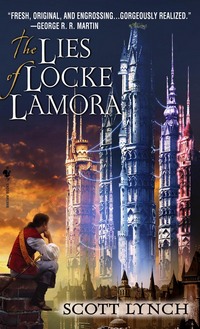
The Lies of Locke LamoraThe Lies of Locke Lamora
I’ve read this at least 4 times and love it more each time. A Con Novel, a Heist Novel, a story of Found Family and vengence gone wrong (and, right, if you think that’s possible). I can’t get enough of Book I of the Gentleman Bastard Sequence. It’s fun, it’s suspenseful, good fight scenes, and characters you want to spend more time with.

Oh, and the fantasy world is pretty cool, too 🙂

(I have a very short post about it here)


Always going to recommend

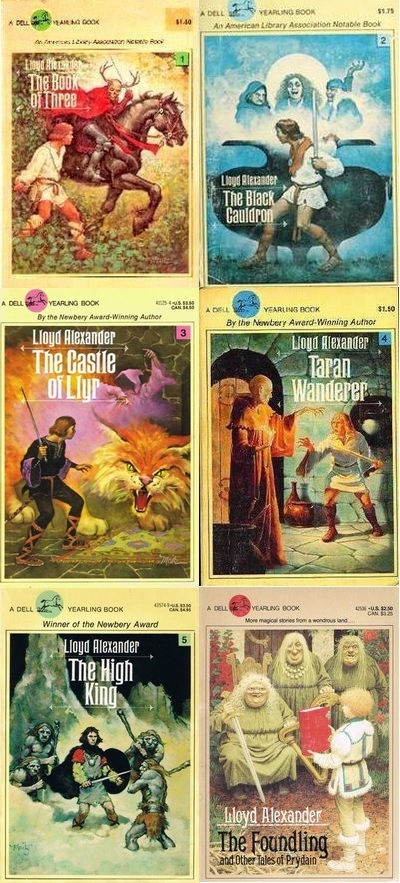
The Chronicles of PrydainThe Chronicles of Prydain

The Chronicles of Narnia made me a Lewis fan. The Chronicls of Prydain turned me into a Fantasy fan (which is why I had to use the covers I owned as a kid). Yeah, it’s written for what we’d call today a Middle Grade audience, but when I listened to the audiobooks a year or two ago (or when I read them to my kids a decade ago), I thought it was just about as effective as you could hope. A little bit of fun, a dash of romance, a hero quest straight out of Campbell, a decent amount of magic (but not too much), a good mythic basis—and a oracular pig! It’s also probably the series that taught me that you’ll end up having emotional attachments to characters to the extent you may get teary about when they die and/or say good-bye to each other (and, yeah, did as an adult).

(my posts about the audiobook series)


Own it but haven’t read it yet

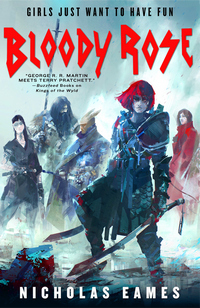
Bloody RoseBloody Rose

I tried to read this last year, and failed. I’m hoping to read it this year, and am likely to fail. I less-than-three’d Kings of the Wyld (in print and audio) so much, I don’t know why I haven’t made the time for the sequel.


Would read again

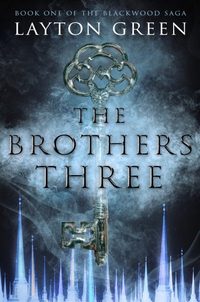
The Brothers ThreeThe Brothers Three

The first of The Blackwood Saga is everything I loved about portal fantasies as a kid—but it’s written for adults. Some good characters, a good amount of growth (especially in the later books in the series), good fight scenes and a pretty cool world to explore. This worked for me in ways I didn’t expect—and the sequels have done a good job building on this one. I’ve yet to read the newest in the series, but this one feels like a good comfort-read if I needed one.

(my post about this one)


In another world

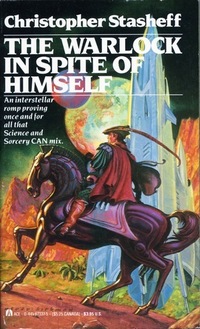
The Warlock in Spite of HimselfThe Warlock in Spite of Himself

(I probably would’ve gone with Brooks’ The Magic Kingdom for Sale, but Bookstooge beat me to it in his post).

I honestly remember very little about this novel, despite having read it several times. But the last time was probably in 1990-91. I was able to find a couple of the later novels in the series, too—just not enough for me at the time (I probably could now—yay, Internet). Still, somehow this is what sprang to mind when I thought of a fantasy on another world. A cool combination of SF and fantasy, as I recall.


Back on Earth

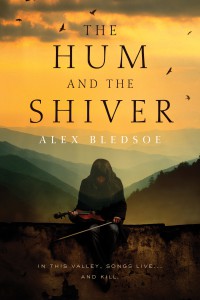
The Hum and the ShiverThe Hum and the Shiver

(and the rest of the series, too, but this is good enough—as good as many series hope to be in itself)

A magical people with amazing musical talent in the Smoky Mountains, dealing with modernization, an Iraqi war vet, and a feud going back generations. I’m not a believer in magic, but Bledsoe makes me want to with these books—this is the best of a great series, and thinking about it now has got me thinking it might be time for read #4 of this one.


As for the tagging . . . nah, I’ll just leave this open to all my readers, I’d love to see what you all would put here. (W&S Book Club, here’s another chance to talk about The Dragonlance Chronicles—you’re welcome)

PUB DAY SPOTLIGHT: A Graveyard for Heroes by Michael Michel

I’m excited to help Michael Michel spread the word about today’s publication of the second book in his Dreams of Dust and Steel series, A Graveyard for Heroes. Fantasy reader friends and foes (assuming I have one or two) are going to want to get this right away and move it to the top of your TBRs. I’d go on about that, but this post isn’t about that. Let me just give you the facts about this book, and I’ll rave later–hopefully tomorrow (assuming I can figure out how to stop without telling you everything that happens).

Book Details:

Title: A Graveyard for Heroes by Michael Michel
Series: Dreams of Dust and Steel, #2
Format: Hardcover/Kindle/Paperback
Length: 606 pg.
Publisher: Chainbreaker Books
US Publication Date: June 11, 2025
Cover of A Graveyard for Heroes by Michael Michel

About the Book:

Loss. Redemption. Grief…and the dangers of belief.

Treachery looms across the land.

With scores to settle, the lowborn shake rust from their knives and trade allegiances for a promise of blood while the highborn rally their armies.

Namarr’s future rests on a blade’s edge, and the heroes who might save it can no longer hide.

Meanwhile, across the sea, Scothea has already succumbed to revolution.

Fanatics led by the Arrow of Light wrest the throne from an ancient line of kings. Now, their sights are set on a Third Crusade against Namarr. For most, it will be their last.

The pieces are set. The gameboard is chosen.

For those unwilling to play, there’s only one peaceful place left…

The inside of a grave.

The second installment in the Dreams of Dust and Steel series continues with the plight of characters both loved and hated. Perfect for fans of A Game of Thrones, The Age of Madness, The Five Warrior Angels, The Broken Empire, and Ash and Sand.


Dreams of Dust and Steel has the gritty feel of a western, the sweeping scope of the fantasy classics, and brings a fresh new voice to the genre.

In this world, pain can be turned into magic powers, and the price of success can often be worse than failure. Rooted in spirituality as much as it is steeped in bloody violence, this is Game of Thrones meets X-Men.

If you want a character-driven epic rife with scheming politicians, psychedelic horrors, savage knights, and chilling cult leaders, this is one of five books in a series sure to leave you with all the emotional baggage you desire.

Book Links:

Amazon ~ Bookshop.org

About the Author

Michael MichelMichael Michel lives in Bend, Oregon with the love of his life and their two children. When he isn’t obsessively writing, editing, or doing publishing work, he can be found exercising, coaching leaders in the corporate world, and dancing his butt off at amazing festivals like Burning Man. His favorite shows are Dark, The Wire, Arcane, and Norsemen. He loves nature and deep conversations. Few things bring him more joy than a couple of hours playing table tennis.

Website ~ Twitter ~ Instagram ~ Goodreads

20 Books of Summer 2025: Can I Make it Five in a Row?

20 Books of Summer 2025g
After Cathy of 746 Books retired from hosting this challenge after an impressive 10 years, I figured this was going away. But Emma of Words and Peace and Annabel from AnnaBookBel stepped up to carry the torch. You can read their kick-off post here. So, I’m back for my fifth year of participation in this challenge–and hopefully completing it. “But HC,” some of you might be saying, “a lot of these books look suspiciously like books from other challenges you mentioned.” Yes, yes they are. I’ve not done a great job at some of my challenges this year (okay, most of them0. So, why not multitask? I’ll force myself to read some anticipated new releases (another thing I’ve failed at this year), read every book I’ve borrowed from a friend, and chip away at two other challenges (possibly more). That’s a win-win-win in my book.

Still, I’m worried about completing it. Feel free to harass me about this from time to time.

I’ve frequently used the unofficial US Dates for Summer—Memorial Day to Labor Day, but Memorial Day has already passed. So, I’ll go along with the June 1-August 31 (actually, none of these books are what I’d read on a Lord’s Day, so June 2-August 30). And It’s going to be Friday at the earliest before I can start one from this list. So…sure, I’m stacking the deck against me (although a couple of years ago, I didn’t read any in June and finished okay).

There’s still time to join in the fun—if you’re into this kind of thing. (there are 10 and 15 book versions, too)

This summer, my 20 are going to be:

1. The Lords of the West End by Peter Blaisdell
2. King of Ashes by S. A. Cosby
3. Mississippi Blue 42 by Eli Cranor
4. Guard in the Garden by Z. S. Diamanti
5. Mushroom Blues by Adrian M. Gibson
6. The Bright Sword by Lev Grossman
7. Everybody Knows by Jordan Harper
8. Interstellar MegaChef by Lavanya Lakshminarayan
9. Sabriel by Garth Nix
10. Lirael by Garth Nix
11. Abhorsen by Garth Nix
12. Welcome to Pawnee: Stories of Friendship, Waffles, and Parks and Recreation by Jim O’Heir
13. Futuristic Violence and Fancy Suits by Jason Pargin
14. Men at Arms by Terry Pratchett
15. A Tail of Mystery by Paul Regnier
16. Samurai! by Saburo Sakai with Martin Caiden and Fred Saito
17. The Crew by Sadir S. Samir
18. When the Moon Hits Your Eye by John Scalzi
19. Remarkably Bright Creatures: Shelby Van Pelt
20. Leveled Up Love by Tao Wong & A. G. Marshall

(subject to change, as is allowed, but I’m going to resist the impulse to tweak as much as I can).

What do you think of this list? Any warnings—or anything you think I should be really excited about?

20 Books of Summer '25 Chart

Cover Reveal: Banners of Wrath by Michael Michel

I’m very pleased today to welcome the Cover Reveal for the third entry in Michael Michel’s Dreams of Dust and Steel— series: Banners of Wrath to this patch o’ cyberspace this morning! It’ll be the third book in an expected five-book series and will be on sale in January 2026. Which is too far away for my taste, but it’ll be worth the wait (based on the quality of the first two in the series). Before the main event, let’s learn a little bit about the book and author, shall we? It’ll just take a moment, and then we can all take a peak at the cover.

About the Book

This is where I’d normally give a blurb for the book, and I don’t have one for this. So let’s set the stage with this description of the first book, The Price of Power:

Loss. Redemption. Grief. And the dangers of belief.

Prince Barodane could not hold back the darkness. Not even in himself. He laid an innocent city in its grave and then died a hero.

In his absence, war whispers across the land.

Power-hungry Highborn dispatch spies and assassins to the shadows as they maneuver for the throne, while an even greater threat rises in the South. Monsters and cultists flock to the banners of a mad prophet determined to control reality…and then shatter it.

Destiny stalks three to the brink of oblivion.

A dead prince that isn’t actually dead. Barodane buried his shameful past in a stupor of drugs, drink, and crime, and now, he’d rather watch the world fall apart than wear a crown again.

An orphan with hero’s blood who is forced to make a harrowing choice: betray her country or sacrifice her first love.

And a powerful seer who has no choice at all–her grandson must die.

If any of them fails to pay the price…

The cost will be the world’s complete annihilation.

Let that simmer for 1,000+ pages. While it simmers throw in some intrigue, rebellion, murder, scheming, some tragic deaths, some less-than-tragic deaths, a lot of bravery and acts of courage, and more “What the–?!?” moments than you’d expect. And that’s basically where you’ll be at the beginning of Banners of Wrath.

I have a few choice excerpts to share with you from the book.

“Tyrants oft arrive in velvet slippers, but they always leave in iron-shod boots.”

In the face of death, gratitude filled him. There were worse places to be. Worse people to be with at the end. It wasn’t ideal, but so few things in life were. For as long as he could remember, he’d been trying to force that truth to be different, stepping over a passing moment of joy to hunt the great mythical beast of happiness.

And missing it. Missing it every time.

Regret, he decided, was the greatest curse of man and the cruelest gift of the gods.

and lest you worry that this will be thinking, musing, and political maxims…

Slicing and scraping and the press of bodies. The air so suddenly oppressive with cloying heat and bitter breath. Axes rising scarlet then snapping down. She caught a handle on her weapon—hacked off the fingers holding it. Elbowed another man in the teeth. Split another Scoth’s nose with her hatchet blade, his eyes crossing to center on what killed him as sundered brain juice poured from his nostrils.

Anthera yanked her weapon free as an ax swung down at her—overextended. The handle bashed her collarbone and drove her to her knees. Before he could manage a second blow, the man’s face burst in a shower of crimson.

Grunting exertion and the blur of motion. Death devolving into a carousal. So much movement and color, if it were a painting, she’d think it sublime.
But it wasn’t that. It was a machine of threshing sharp edges, and if she stopped for a second, it would chew her to pieces.

About the Author

Anca AntociMichael MichelMichel lives in Bend, Oregon with the love of his life and their two children. When he isn’t obsessively writing, editing, or doing publishing work, he can be found exercising, coaching leaders in the corporate world, and dancing his butt off at amazing festivals like Burning Man. His favorite shows are Dark, The Wire, Arcane, and Norsemen. He loves nature and deep conversations. Few things bring him more joy than a couple of hours playing table tennis.

Website ~ Twitter ~ Instagram ~ Goodreads

and now…

The Cover

cover for Banners of Wrath by Michael Michel
cover wrap for Banners of Wrath by Michael Michel
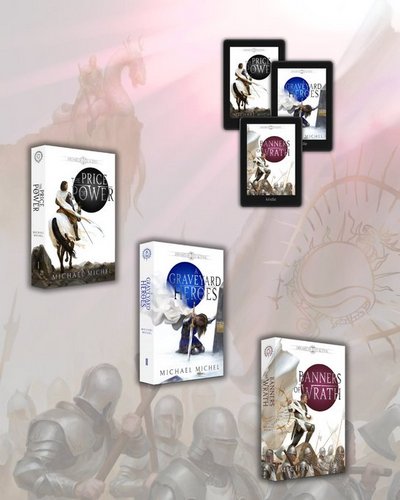
Don’t those look great? The Cover Art is by Christopher Cant and the design is by Rachel St. Clair. They did a bang-up job if you ask me. Look at the series thus far:
covers for Dreams of Dust and Steel 1-3 by Michael Michel
I can’t wait to see wait Cant and St. Clair have in store for the next two.
Irresponsible Reader Pilcrow Icon

The Price of Power by Michael Michel: An Addictive and Powerful Multi-Threaded Fantasy Novel

I talked about this book before I finished reading it a week or so ago, but I wanted to make some corrections to bad guesses/assumptions and then just talk about things in general now that I’m finished. But yes, a lot of this material is reused.


Cover of The Price of Power by Michael MichelThe Price of Power

by Michael Michel

DETAILS:
Series: Dreams of Dust and Steel, #1
Publisher: Chainbreaker Books
Publication Date: April 2, 2025
Format: eARC
Length: 498 pg.
Read Date: March 29-April 4, 2025

Buy from Bookshop.org Support Indie Bookstores

What’s The Price of Power About?

This is not the easiest question to answer, I’ll tell you right now. The title really sums it up well, this is a story about what power costs—political, familial, monetary, military, personal, magical.

But that’s not much of a plot, that’s more of a description. There are four plotlines—that somewhat overlap, but most of that overlap is promised for Book Two and beyond. But the further you read, the more you see how they are intertwined even if most of the characters don’t see/understand that yet.

So I’m going to steal a little from the blurb that Michel sent me (and that I posted recently) to give some quick thoughts about each plotline.

“A mad prophet determined to control reality”

This is the hardest one to talk about, primarily because this storyline is full of symbolism, visions, dreams, and magic. The point of view character and most of the people him aren’t sure what is going on—what’s real, what’s a dream, and what’s their imagination. Those who do know what’s going on are either lying, deluded, or a supernatural entity who is trying to trick the humans.

I was engrossed, though. I may not have understood it all, but I was hooked by what I did figure out. By the last chapter of this storyline? I was gobsmacked. While I felt like I should’ve understood what Michel was going for early on, there was no reason for me to have. It was one of those situations where an author did something fairly unexpected, but did it so well that you couldn’t imagine any other way it could’ve gone.

“A dead prince who isn’t dead”

This, on the other hand, is a straightforward story about a prince whose thirst for vengeance—driven by rage and grief—led to a type of destruction that might make Tywin Lannister take a step back.

Now he’s just trying to avoid contact with everyone, denying who he is, dwelling on what he did, and what it cost him (the price he paid, to make it less than subtle). You almost feel sorry for him and wish he’d snap out of his self-pity and self-destruction when he needs to (which is right about the time we meet him). But also…if anyone should hate themselves, it’s hard to argue against him.

The action in these chapters is just great—the prince and his allies face off against some very vile criminals. The fight scenes will get your blood pumping—and maybe a fist or two (but not every time). There are horrors—and the closest you’ll get to grins in this book.

Barodane is set up for a redemption story. But I’m not convinced that’s what Michel has in mind. Of all these four plots, this is the one I’m most invested in because of some of the surrounding characters.

“An orphan with hero’s blood”

This, too, feels like a familiar fantasy story. A princess raised to take the place of her dead parents leading the nation through a tumultuous time, with everyone wondering if she is capable of doing the job. You just can’t help but feel bad for this girl. She’s got the weight of the world on her shoulders (or at least the weight of a nation), and pressures and expectations on her are as high as can be.

On the one hand, what she’s called upon to do (so far) is easier than the rest—but her age and visibility even out the scales a bit. I like her, I like her teachers and her animal companion. But honestly, everyone else in her immediate circle could be wiped out and the only reason I’d care is because of the impact it’d have on those four.

I’m pretty sure that I’ve spent a decent amount of time leaning forward during her chapters like you do during a tense part of a film (am I the only one who does that while reading?). A lot of the turns her story took were expected—but not all of them were. And a couple left me reeling.

“And a powerful seer “

This is a hard storyline to work through. This grandmother/Obi-Wan figure is a tough old lady, having to act tougher than she really is to do what she has to. Her ability to see time and reality have shown her what needs to happen, and the price she and her grandson will have to pay.

Michel keeps the details vague at this point—but you get to see enough to keep you invested and eager to learn alongside her grandson. If, as I/the title/and I think the author say, this book is about the price you pay for power—this seer has paid a hefty price already and is preparing to pay a bigger price. She’s also caused (and plans on causing) others to pay—it’s a little unclear who benefited from them paying great prices, but the seer would claim it’s for the greater good (and probably believes that).

There’s a very cool magic battle in this story—at least one, anyway—and just knowing that this kind of thing is possible around this woman will keep you invested, even if you weren’t inclined to be anyway.

This seer is very much in the Elizabeth Best (from The Thursday Murder Club)/Taishi (from The Art of Prophecy)/Akina Azure (from Partial Function) mold of scarily competent elderly characters. Barodane might be a frighteningly violent warrior, but honestly, this woman would worry me more if I lived in this world. The way she’s tied to every other storyline just makes me want to understand her more than her own did.

Dramatis personae

There’s a lengthy (or maybe my e-reader font is just set large enough that it seems that way) dramatis personae at the beginning of the novel—if you’re like me, keep it open on your phone while you use an e-reader for easy reference. If you got your hands on a paper copy, keep a bookmark there—you’re going to want to check it often for the first third or so (results may vary on your attention span or memory).

Even if you don’t rely on it, it’s a good way to think about the book—4 rosters of characters to get to know now.

I expect that those who survive will get tossed together like a salad in the ensuing novels.

How the Novel Works

This isn’t a “Book One: Barodane”, “Book Two: Princess” kind of thing where each book tells the complete story of each character. Each character/storyline gets a chapter and then it moves on to the next, and keeps rotating that way. There are some variations from the pattern, but it holds more often than not—and any of the variations only serve to push the story forward.

There are two schools of thought when it comes to chapters—a lot of authors will close an idea, or a time period at the end of a chapter. This makes it easy to put your bookmark/quitter strip in the book and set it down to sleep, eat, converse with people, or whatever. Other writers will end a chapter in a way that propels you to move on to the next (Jim Butcher, for example, talks a lot about this practice). This keeps you engaged, moves you to keep reading—and is an excellent way to annoy a reader who really has other things they should be doing.

Michel falls into the latter category. Of course, the trick with this book is that as a Bardodane chapter leaves you hungry for the next thing in his story—but you have to go through three other plotlines before you get back to it (and each one of those will leave you hungry to press on with that storyline). I love this—I also hate it. Some people will choose to skip chapters to stick with one story through the end. This is a mistake—and will inevitably involve you getting something spoiled (I can think of at least once where that spoiler is major. There may be more to come).

So gird up, and prepare for Michel to play with you like a fisherman trying to tire out his catch before reeling it all the way in.

The Secondary Characters

To keep this to a length people would want to read, I’ve limited what I’ve said about secondary characters. This is a problem—some of them just as interesting and compelling as the point-of-view characters (possibly more so). That long dramatis personae is filled with people you will want to spend time with, or at least understand better. And sure, some of them are despicable and you will root for their defeat (but you’ll still want to understand them and maybe spend time with them on the page, just not at a pub).

There are a few secondary character deaths in this book—and you know there are more to come. One of them provoked me to send a message to Michel (the number of times I do that mid-read is incredibly small), threatening him if he did something similar to another character before the fifth book (at which point, I assume almost everyone will die or be defeated). I suspect I will not be alone in feeling that way about some of these characters, even if you pick ones that aren’t as cool as the ones I pick.

Michel is not playing around when it comes to character design or messing with his reader’s emotions.

So, what did I think about The Price of Power?

I don’t know what else to say here—I think I slipped out of my typical post outline above. In case you haven’t picked up on it—this book is one of my favorite Fantasy novels in recent memory.

This is about as far from cozy fantasy as you can get, obviously. But it doesn’t quite reach what I’d define as grimdark—I’m no expert in those definitions, but that’s what my gut says. Michel prefers the term gritty—and that makes sense to me. It’s very noir, a Fantasy version of hard-boiled. I’m not going to say that it’s what Nathanael West would’ve written if he wrote a Fantasy novel—but if that idea intrigues you, this just might, too.

The prologue wowed me. The first chapter raised the stakes—and as every point-of-view character was introduced the intrigue grew. I was already impatient for the next book to be published before I finished with this one.

Go grab this one as soon as you can. Books 2 and 3 are scheduled for release this year—Book 2 should be out in June—and you’re going to want to be ready for them.

Disclaimer: I received this eARC from the author in exchange for this post which contains my honest opinion—but also, I bought the earlier edition of the novel and just hadn’t gotten around to it yet, so I’m not sure how necessary this disclaimer is.


4 1/2 Stars

This post contains an affiliate link. If you purchase from it, I will get a small commission at no additional cost to you. As always, the opinions expressed are my own.

Irresponsible Reader Pilcrow Icon

In Medias Res: The Price of Power by Michael Michel. A Powerful, Addicting Read

As the title implies, I’m in the middle of this book (well, a little past middle), so this is not a review, just some thoughts along the way.


Cover of The Price of Power by Michael MichelThe Price of Power

by Michael Michel

DETAILS:
Series: Dreams of Dust and Steel, #1
Publisher: Chainbreaker Books
Publication Date: April 2, 2025
Format: eARC
Length: 498 pg.
Buy from Bookshop.org Support Indie Bookstores

What’s The Price of Power About?

This is not the easiest question to answer, I’ll tell you right now. The title really sums it up well, this the story about what power costs–political, familial, monetary, military, personal, magical.

But that’s not much of a plot, that’s more of a description. There are four plotlines–that somewhat overlap, but most of that is promised for book two and beyond. But the further you read, the more you see how they are intertwined even if most of the characters don’t see/understand that yet.

So I’m going to steal a little from the blurb that Michel sent me (and that I posted earlier today) to give some quick thoughts about each plotline.

“A mad prophet determined to control reality”

This is the hardest one to talk about–at this point, I’m not certain who the mad prophet is (I’m pretty sure, but I’m waiting to know for sure). But I’m probably in denial because I don’t want this person to be the prophet. The main reason that this is hard to talk about is that this storyline is full of symbolism, visions, dreams, and magic. The point of view character–and those around him, too–isn’t sure what is going on–what’s real, what’s a dream, and what’s his imagination.

I’m engrossed, though. I may not get it all, but I’m hooked by what I do get.

“A dead prince who isn’t dead”

This, on the other hand, is a straightforward story about a prince whose thirst for vengeance–driven by rage and grief–led to a type of destruction that might make Tywin Lannister take a step back.

Now he’s just trying to avoid contact with everyone, denying who he is, dwelling on what he did and what it cost him. You almost feel sorry for him and wish he’d snap out of his self-pity and self-destruction when he needs to (which is right about the time we meet him). But also…if anyone should hate themselves, it’s hard to argue against him.

Barodane is set-up for a redemption story. But I’m not convinced that’s what Michel has in mind. Of all these four plots, this is the one I’m most invested in because of some of the surrounding characters.

“An orphan with hero’s blood”

This, too, feels like a familiar fantasy story. A princess raised to take the place of her dead parents leading her nation through a tumultuous time, with everyone wondering if she is capable of doing the job. You just can’t help but feel bad for this girl. She’s got the weight of the world on her shoulders (or at least the weight of a nation), pressures and expectations on her are as high as an be.

On the one hand, what she’s called upon to do (so far) is easier than the rest–but her age and visibility even out the scales a bit. I like her, I like her teachers, and her animal companion. But honestly, everyone else in her immediate circle could be wiped out and the only reason I’d care is because of the impact it’d have on those four.

I’m pretty sure that I’ve spent a decent amount of time leaning forward during her chapters like you do during a tense part of a film (am I the only one who does that while reading?).

“And a powerful seer “

This is hard storyline to work through. This grandmother/Obi-Wan figure is a tough old lady, having to act tougher than she really is to do what she has to. Her ability to see time and reality have shown her what needs to happen, and the price she and her grandson will have to pay.

Michel keeps the details vague at this point–but you get to see enough to keep you invested and eager to learn alongside her grandson.

There’s a very cool magic battle in this story–at least one, anyway–and just knowing that this kind of thing is possible around this woman will keep you invested, even if you weren’t inclined to be anyway.

The way she’s tied to all of the above just makes me want to understand her more.

Dramatis personae

There’s a lengthy (or maybe my e-reader font is just set large enough that it seems that way) dramatis personae at the beginning of the novel–if you’re like me, keep it open on your phone while you use an e-reader for easy reference. If you got your hands on a paper copy, keep a bookmark there–you’re going to want to check it often for the first third or so (results may vary on your attention span or memory).

Even if you don’t rely on it, it’s a good way to think about the book–4 rosters of characters to get to know now.

I expect that those who survive will get tossed together like a salad in the ensuing novels.

How the Novel Works

This isn’t a “Book One: Barodane”, “Book Two: Princess” kind of thing where each book tells the complete story of each character. Each character/storyline gets a chapter and then it moves on to the next, and keeps rotating that way (I’m pretty sure it’s a pattern that repeats, but honestly I forgot to track–that largely holds true–and it doesn’t matter).

There are two schools of thought when it comes to chapters–a lot of authors will close an idea, or a time period at the end of a chapter. This makes it easy to put your bookmark/quitter strip in the book and set it down to sleep, eat, converse with people, or whatever. Other writers will end a chapter in a way that propels you to move on to the next (Jim Butcher, for example, talks a lot about this practice). This keeps you engaged, moves you to keep reading–and is an excellent way to annoy a reader who really has other things they should be doing.

Michel falls into the latter category. Of course, the trick with this book is that as a Bardodane chapter leaves you hungry for the next thing in his story–but you have to go through three other plotlines before you get back to it (and each one of those will leave you hungry to press on with that storyline). I love this–I also hate it. Some people will choose to skip chapters to stick with one story through the end. This is a mistake–and will inevitably involve you getting something spoiled (I can think of at least once where that spoiler is major. There may be more to come).

So gird up, and prepare for Michel to play with you like a fisherman trying to tire out his catch before reeling it all the way in.

The Secondary Characters

To keep this to a length people would want to read, I’ve limited what I’ve said about secondary characters. This is a problem–some of them are just as interesting and compelling as the point-of-view characters (possibly more so). That long dramatis personae is filled with people you will want to spend time with, or at least understand better. And sure, some of them are despicable and you will root for their defeat (but you’ll still want to understand them and maybe spend time with them on the page, just not at a pub).

There are a few secondary character deaths in this book–and you know there are more to come. One of them provoked me to send a message to Michel (the number of times I do that mid-read is incredibly small), threatening him if he did something similar to another character before the fifth book (at which point, I assume almost everyone will die or be defeated). I suspect I will not be alone in feeling that way about some of these characters, even if you pick ones that aren’t as cool as the ones I pick.

Michel is not playing around when it comes to character design or messing with his reader’s emotions.

So, what did I think about The Price of Power?

I’m at the 75% mark–so it’s possible that Michel will mess up the ending and lose me.

Possible, but unlikely.

Really, he’d have to do many, many things wrong to turn me off at this point–and he shows no signs of doing so.

The prologue wowed me. The first chapter raised the stakes–and as every point-of-view character was introduced the intrigue grew. I’m already impatient for the next book to be published and I’m not even finished with this one yet.

Go grab this one as soon as you can. Books 2 and 3 are scheduled for release this year (he talks about the timeline in the video I posted earlier today) and you’re going to want to be ready for them.

Disclaimer: I received this eARC from the author in exchange for this post which contains my honest opinion—but also, I bought the earlier edition of the novel and just hadn’t gotten around to it yet, so I’m not sure how necessary this disclaimer is.

This post contains an affiliate link. If you purchase from it, I will get a small commission at no additional cost to you. As always, the opinions expressed are my own.

Irresponsible Reader Pilcrow Icon

Page 10 of 46

Powered by WordPress & Theme by Anders Norén