Category: Fantasy Page 15 of 47

Grave Cold by Shannon Knight: She Sees Dead People

Cover of Grave Cold by Shannon KnightGrave Cold

by Shannon Knight

DETAILS:
Publication Date: May 2, 2023
Format: e-Book
Length: 394 pg.
Read Date: May 16-21, 2025

Where Does Grave Cold Take Place?

In a dystopian future the geography of the (what we’d now consider) the Western U.S. looks much different—states are a thing of the past, and two major population centers are the District of Utah (which does contain Salt Lake City) and the District of Portland (Oregon, not Maine). There are people who have been Genetically Modified for one reason or another—and in the D.P. they’re largely feared and ostracized because of what they are and what they can do.

D.P. is where the action takes place in the novel—and it feels like it came out of Portland, OR, too. And not just because Voodoo Doughnuts still exists. Yes, even in a quasi-dystopia people want their donuts. Maybe they need them more than we do, come to think of it.

There’s a lot of the tech, etc. that one usually associates with more utopian-looking/feeling SF. And maybe for many people it’s just that. But D.P.’s government is definitely of the dystopian type (and, boy howdy, do we learn more about that as the book continues), and the area outside the District feels that way, too, filled with mutants and who knows what else.

If you’re one of those readers who really gets into worldbuilding, you’re going to be happy with this read.

What’s Grave Cold About?

Cait’s a beautician with a lot flair and very little money. She’s scraping by, barely. When she sleeps (which she tries not to), the dead come to her and talk to her, trying to get her to do things. So…it’s easy to understand why she doesn’t like to sleep.

A man named Nyle sneaks into Portland after having been prevented legal entrance by a guard—and he’s not the only one like him who has been denied entrance. Nyle, however, is older, more experienced, more powerful, and probably more determined. He and those like him are called “ravens” (although there are other, more contemporary(?) names like “ferrymen”)—they’re tasked with freeing the spirits of the dead from their bodies. It’s been so long since they’ve been permitted in D.P. that Nyle has been compelled to come so he can do his work.

He and Cait have a strong rapport right away, she has some friends (and some family she has a troubling relationship with), but not that many. The two of them click right away, and Cait helps Nyle change his appearance so he can hide from the authorities. He tells her that she’s not Genetically Modified, she has supernatural abilities like him—she’s a necromancer.

While it’s not the same power, it’s close to his and he has experience with necromancers and guides her to use her abilities better.

Working together, they begin to free the spirits of the dead and learn why ravens have been blocked from entering D.P.—those spirits are being used by newly developed technology. This pits the pair against the authorities and other powerful people.

Here’s the Thing

I don’t get magic/paranormal/supernatural systems like this one where someone/something is required to separate souls from bodies at/around/near death. Whether it’s this book (and it’s oncoming sequel), Amber Benson’s Calliope Reaper-Jones series, the TV show Dead Like Me, or any of the other examples I had in mind for weeks to bring up that disappeared as soon as I started composing this post. It just doesn’t make any sense to me.

This doesn’t mean I don’t enjoy these works of fiction. I just don’t understand what ties these non-corporeal entities/substances/existences/whatever to the body at or after death and why someone has to come along and separate them.

So I guess I’m saying two things here—1. If you’re like me on this point, you can still get into this book. I honestly didn’t think about it while reading the Grave Cold, it’s only when I think about the book/system that it gives me pause. 2. If you’re not like me…can you explain this?

So, what did I think about Grave Cold?

I cannot describe it to my satisfaction, but Knight has embued this novel with an atmosphere, a texture that you can’t help but feel as you read. Her descriptions are pretty sparse, but at the same time, I really think I know what Cait’s environs look and feel like.

It’s difficult to think of spirits as capable of being mistreated or abused—they’re spirits of dead people, right? But in Knight’s world that’s exactly what’s happening. Abusing the dead ranks right up there with elder-abuse somehow. As Nyle says,

“It’s easy to see the dead as non-persons when you’re alive. It’s harder when you know them.”

Instead of going on to whatever is next once the spirit is released, the former citizens of D.P. are trapped and exploited.

While this story is dark and harrowing, there’s a real pleasure (and sometimes lightness) in watching the friendship between Nyle—a centuries-old being—and Cait deepen and grow stronger. It’s a tricky thing to attempt (much less pull off), but Knight does it well.

Great world-building, questionable (to me) magic system—but it’s cool to see in action, some well-designed characters (including all of them that I didn’t mention here), a plot that moves well and is intricate enough that you’re kept wondering where it’s going until the end. Knight has written (on my blog) about coming up with the sequel, so I know one is coming. And I’m looking forward to it—at the same time, were this a stand-alone, it’d be very satisfactory as one.


3.5 Stars

Self-Published Authors Appreciation Week Footer

The 2024 Self-Published Authors Appreciation Week Logo was made by Witty and Sarcastic Book Club

The Irresponsible Reader On…Self-Published Fantasy

(updated 7/24/24)
Self-Published Author Appreciation Week '24 Banner

From the first moment that people did the strange thing of asking me to talk about their books on my blog, I’ve been impressed by the quality of a lot of what’s been published by authors going out on their own, taking all the risks, shouldering all the responsibility and doing all the work to get their words, their dreams, their blood, sweat, and tears. This should be celebrated—it’s definitely appreciated, as we’re trying to show this week.

In addition to the Q&As and Guest Posts I have this week, I’m also continuing my habit of highlighting the self-published works that I’ve blogged about over the last few years—just a sentence or two.  Hopefully, this’ll be enough to make you click on the link to the full post. Beyond that, it’d be great if I inspired you to add a few of these to your TBR. Also, be sure you check out the other posts over at the SPAAW Hub.

Today we’re going to be looking at Self-Published Fantasy. These are some of the most imaginative, creative, and enjoyable Fantasy novels I’ve read since I started blogging. These authors approach this beloved genre in ways that surprise and inspire me. Check out these books, hopefully, you’ll find something good.

bullet Healed by Carrie Alani—A tired and beleaguered nurse gains the ability to heal (my post about it)
bullet Partial Function by JCM Berne—a fun-as-all-get-out wuxia-inspired novel where a former lengendary warrior has to try to rescue her kidnapped daughters, and who knows what wake of destruction she’ll leave along the way (my post about it)
bullet Of Honey and Wildfires by Sarah Chorn—Chorn’s Western/Fantasy about…I don’t have room here. It’s beautiful prose, heartbreaking stories, and a stellar example of writing. (my post about it)
bullet Oh, That Shotgun Sky by Sarah Chorn—the follow-up to the above. A handful of people trying to come to grips with the new world they find themselves in. (my post about it)
bullet Seraphina’s Lament by Sarah Chorn—A planet is dying, political upheaval, and the dawn of a new reality. One of the most brutal reads in recent memory (and one of the most disturbing covers!). I absolutely loved it and would be literally counting down the days until the sequel if I knew the date. (my post about it)
bullet One Man by Harry Connolly—A man hiding from his past, becomes a one-man army trying to save a kidnapped mother and daughter. (my post about it)
bullet Toby and the Silver Blood Witches by Sally Doherty—A young boy who takes care of his seriously ill mother, gets the suprise of a lifetime when a witch crashes into his attic and asks for his help! It’s a fun MG adventure. (my post about it)
bullet Haven by Ceril N Domac—a family in a slightly grimmer (and future) version of the U.S. has to go on the run to a safe settlement when they start to display signs of being more than human. (my post about it)
bullet The Hero Interviews by Andi Ewington—A Loremaster conducts a series of interviews with Fantasy heroes, and others, to find and describe the essence of heroism. A thoughtful look at the idea is buried under jokes that will appeal to Fantasy Readers and RPG Players in particular-but many others, too. I had a great time with this. (my post about it)
bullet The Story of Lucius Cane: Book One by Vanya Ferreira—a mildly atypical vampire goes up against a lycanthrope-ish rogue in 1794. (my post about it)
bullet The Blackwood Saga by Layton Green—three brothers from New Orleans travel to a fantasy version of Earth and have to fight their way back home. (I haven’t finished this series yet, and it’s driving me crazy)
bullet The Brothers Three (my post about it)
bullet The Last Cleric (my post about it)
bullet The Spirit Mage (my post about it)
bullet The White Room by Pierce Taylor Hibbs—There’s a lot going on (visibly and invisibly) in this Pennsylvanian small town. (my post about it)
bullet The Knight Revenant by Adam Holcombe—this short story introduces Gam Gam the Necromancer in a fantastic way. (my post about it)
bullet A Necromancer Called Gam Gam by Adam Holcombe—a newly orphaned child finds refuge with a knitting Necromancer in a fun adventure, that isn’t afraid to explore other emotional environments. (my post about it)
bullet Stone of Asylum by Hilarey Johnson—In the late 1800s, as the Gold Rush in the Northwest starts to die off, a Korean warrior, with particular magical abilities, tries to track down his missing sister.(my post about it)
bullet Sunbolt by Intisar Khanani—a street thief/revolutionary finds herself over her head after her latest mission. A fast and fascinating read. (my post about it)
bullet A Wizard’s Guide to Defensive Baking by T. Kingfisher—A 14-year-old young woman whose magic controls baked goods is the only thing standing between her city and an invading army. You know, that old yarn. It’s delightfully charming. (my post about it)
bullet Grave Cold by Shannon Knight—a mix of creepy fantasy and creepier SF in a dystopian future. (my post about it)
bullet The Conjuring of Zoth-Avarex: The Self-Proclaimed Greatest Dragon in the Multiverse by K.R.R. Lockhaven—A group of magic users summons a dragon into 21st Century U.S. and immediately lose control over it. Heroics and hilarity ensue. It’s part corporate-satire, part fantasy-trope satire, part celebration of those same tropes, and all very funny. (my post about it)
bullet Mrs. Covington’s by K.R.R. Lockhaven—This book about friendship and nachos describes a young man looking to get out from his weathly father’s shadow who ends up buying a capybara-themed pub and running it with his new friends. There’s also a treasure hunt. Warm fuzzies, kindness, and good times ensue. (my post about it)
bullet Zoth-Avarex’s Escape Plan: A Pick-Your-Own-Path Experience by K.R.R. Lockhaven—A short Choose-Your-Own-Adventure style sequel about what happens to the dragon after the novel. (my post about it)
bullet The Culling by M. T. Miller—a bleak fantasy world is beset by monsters, and The Culling is a committed group of warriors wandering the countryside to fight them. These are dark books, but so fun to read.
bullet Apex Predator (my post about it)
bullet Brotherhood of the Worm (my post about it)
bullet The City of Scales (I accidentally deleted my post when it was almost done, and I’m having a hard time replicating it. But it’ll be here soon)
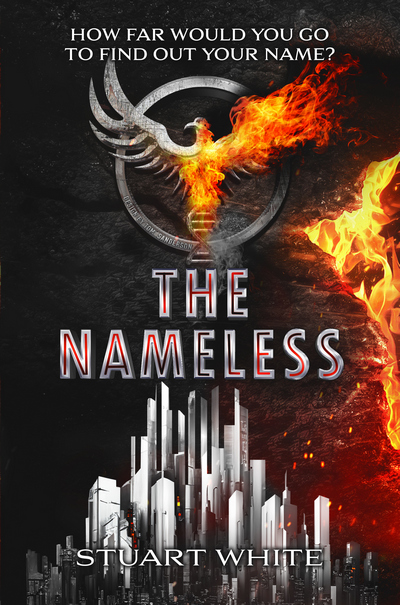
bullet The Nameless Chronicle by M. T. Miller—humanity struggles in a desolate, post-apocalyptic world. One man rises to fight the despots ruling them. He suffers, he bleeds, he dies. He just can’t seem to stay dead.
bullet Ascent (my post about it)
bullet Bedlam (my post about it)
bullet Risen (my post about it)
bullet A Strange Chemistry (my post about it)
bullet Strife (my post about it)
bullet The Complete Nameless Chronicle—the series is now published in one “boxed set” eBook
bullet Sir Thomas the Hesitant and the Table of Less Valued Knights by Liam Perrin—a wholesome and comedic Arthurian tale about knights not quite good enough for the Round Table (my post about it)
bullet Klone’s Stronghold by Joyce Reynolds-Ward—a temporary teaching job becomes so much more. (my post about it)
bullet An Unexpected Afterlife by Dan Sofer—wide-scale resurrection of the dead causes more than a few problems for everyone in modern Israel. (my post about it)


If you're a self-published author that I've featured on this blog and I didn't mention you in this post and should have. I'm sorry (unless you're this guy). Please drop me a line, and I'll fix this. I want to keep this regularly updated so I keep talking about Self-Published Authors.

Self-Published Authors Appreciation Week Footer

The 2024 Self-Published Authors Appreciation Week Logo was made by Witty and Sarcastic Book Club

The White Door by Pierce Taylor Hibbs: Good vs. Evil and a Tolkien-Quoting Cat

A lot of what follows is me thinking my way through things as I wrote. I maybe should’ve spent more time thinking and posted this next week. I may—may—come back to this with a follow-up post after things have settled in my mind a bit.


Cover for The White Door by Pierce Taylor HibbsThe White Door

by Pierce Taylor Hibbs

DETAILS:
Publisher: Truth Ablaze
Publication Date: August 15, 2024
Format: eARC
Length: 484 pg.
Read Date: July 7-20, 2024
Buy from Bookshop.org Support Indie Bookstores

What’s The White Door About?

A pull-quote on the cover calls this “Pilgrims Progress meets Stranger Things.” I’m not sure that Bunyan belongs in the conversation—maybe Lewis meets Stranger Things? This Present Darkness with better theology is closer yet.

There’s a great ensemble of characters featured in this novel, but let’s focus (as the novel does) on two—the first is Pastor Cleft Warrington. It’s evident soon after we meet him that he’s the kind of pastor you’d want—educated, compassionate, smart, and faithful. But there’s more than that to him—the small town in Pennsylvania that he pastors in has more going on than is visible to the naked eye. There are forces on the move—and he is one of the few aware of it.

The other character we focus on is Seth Logan—he’s a father of a couple of little kids and a writing professor. His wife is a steadying and supportive influence in his life, which he really needs. When we meet him, he’s unaware (like most people in this town) of the unseen workings around him. But all that changes when he comes across a stray cat one day while hiking.

I’m not sure how much else to say, but the cover blurb says little more—there are two doors (in places that have no business having doors, see McGuire’s Wayward Children series for examples). A white one and a black one—those who walk through them are changed. What, and how, they see is altered in ways that say a lot more about the doors than anything else.

The custodian (for lack of a better term) is named Skotos—he has been popping up in Dingmans Ferry now and then for quite some time. Cleft is trying to monitor his actions as much as he can. Cleft can’t say for certain what Skotos is up to—or what his aims are—but they are not for anyone’s benefit but his.

The Choice of the 80s

This is set in the 1980s, which is an interesting choice. And I’m not sure that it was necessary for the story. Sure, it eliminates the Internet in early or current form, so that’s an advantage—this would’ve been a difficult story to tell if characters could just check certain events online.

While there may be little about the events or the narrative that demands that time period, the smaller town feels more authentic in the 80s, I guess. There are plenty of little details that Hibbs provides to help it feel like that time.

The biggest thing that made me wonder about the choice of chronological setting (probably the only thing) was the way that Seth’s anxiety was depicted (and the way people reacted to him). I haven’t done any research on this—but I’m not sure that too many people in the 80s were talking about people with anxiety disorders or panic attacks quite the way these characters do. Particularly regarding adult men. Maybe I’m wrong, but I’d wager that was a stumble (as an example, see how strange it was in the late 90s for characters like Tony Soprano to deal with those things, and the ways they covered it up).

The Mix of Theology and Fantasy

Mixing Christian thinking, Christian belief, and fiction—particularly Fantasy—is a tricky thing. It can be done, and there is a tradition of it. But I can’t help wondering about the way that Hibbs does it. I enjoyed it thoroughly, but I had some questions and qualms.

The titular white door and the way it changes those who walk through it…both are great, full of symbolism and meaning. I really appreciated the effects produced in those who’ve entered it. But I have so many questions about it, too—why aren’t all the believers in town taken to it? Is it some sort of second blessing?* Why is it available for any random person walking by (although it is out of the way) to just walk through? Along those lines—Skotos’ victims…the way that Seth and his companions figure out what happened to them and the way they appeal to Paul’s writings to get there really misses the apostle’s point and even contradicts it. And that really troubles me.

* I know Hibbs wouldn’t go for that, but it kind of seems like one.

There are some other things depicted—some visions, another reality that’s visited (to put it as vaguely as I can), and things of that nature—that were just great. The pure fantasy stuff—or at least the things that he can talk about in purely fantastic terms—was great.

You take the blending of fantasy and theology out of this—leave us only with Skotos’ “magic” or whatever, the Deeper Magic of the Doors, and whatnot—I wouldn’t have a complaint at all. No church, no sermons, no Bible—just warring Good and Evil? The whole thing works. But Hibbs frequently stumbles when he combines them.

Now let’s set aside the Fantasy for a minute and just focus on the Theology. First of all, anyone who’s read much of Hibbs is going to recognize his thinking here. Narnia, Seth, and Cleft sound like they’ve studied Hibbes’ work (ignoring the anachronism there)—which is good. If only so you know that you’re supposed to think they’re on the right path. Other characters largely sound like they’re on their way to sounding that way, too.

Even the demonic (or at least really evil) character’s theology is rock solid. He rejects it—but he knows it. Watching him explain something, and then reacting to it, was really well done.

I have to add, that some of the seekers get animal companions—stewards—who can talk to the seekers. We see two of them in this book, Seth’s cat, Narnia, and Cleft’s dog, Roland. They are just fantastic. A Tolkein-quoting cat with a penchant for talking theology? That’s a critter I’d put up with my allergies attacking me to spend time with. Every bit with those animals are great. There are some other animals that show up later, too—I really dug them, too. But my spoiler policy prevents me from talking about them.

Some Word Choices

I’m going to throw this out there just to be thorough—and because I know a couple of my readers will think about it—maybe even be turned off by it.

The characters in this novel are not all Christians. And some of them are very recent converts who haven’t quite gotten around to cleaning up their language thoroughly. Hibbs has them use realistic words for people in those situations—a depiction of how the world is, not how he might want it to be.

That said, nothing too terrible is said in the book—nothing you couldn’t get away with in a PG movie (which isn’t the best barometer for some people, but it’s the easiest to convey) or a sitcom from the mid-80s.

Hibbs’ Writing

As a surprise to no one who’s read what I’ve said about Hibbs’ style and way with words before, I loved it. There are some sentences, some passages, and even some phrases that I just adored. If I had a final version and not an ARC, you’d be reading plenty of quotations in this post.

These characters and their emotional lives are richly drawn. The descriptions of little things as well as major events or scenes are the kind of thing that keep people reading regardless of plot and character.

There are two character deaths described that just blew me away. One happens just as the book begins and we see a grieving husband in the minutes after his wife’s death. It’s handled with sensitivity and care—and right from the get-go, you get attached to this character, his reactions feel just right. The other death that we spend an extended time on is handled differently, but perhaps even better. There are other deaths that don’t get this—or similar—kind of treatment. They’re handled the way that most fictional deaths are, and that’s fine. But the two we linger on? Hibbs gets everything right about those and I loved reading them (and will again).

I should add that this book isn’t full of character deaths—but there are some.

I’ve gotten off-topic a bit, but this is just some great writing. There’s a hint of poetry to so much of this energized by an eye for detail. Little things—like the description of Seth’s daughter’s laugh—are just beautiful, and some of the bigger things are done just as well.

So, what did I think about The White Door?

It’s been a long time since I read Christian Fiction regularly—sure, I read a few things by Christians (mostly local authors), but not a lot that calls itself Christian Fiction. In fact, I think this is the fourth book of that type I’ve posted about here. But when I heard that Hibbs was going to be bringing his first novel into the world, you know I had to give it a read. I’ve often said that his books are the best written theological/Christian Living/etc. books that I’ve read (published in the last 50 years, anyway), so of course I want to see what he does with fiction.*

* I should probably try his poetry, too. But it’s poetry, so don’t expect that anytime soon.

I’m so glad I did.

I have mentioned a few quibbles above—the downside of doing that is that it overshadows all the good that can be said. I can’t think of a way to do that without giving too much away. So my own limitation makes the book come across as worse than it should. Note the above paragraph, if nothing else.

It started slow, and I wondered for a while just what the book was going to be about (I didn’t bother reading anything about it before requesting a copy—I just knew it was the first novel for Hibbs, and that was enough)—but it kept me going—and it wasn’t long before I was fully invested (and that kept growing). By the time it was over, I wasn’t quite ready to walk away from these characters and this world.

The conversations that Cleft and Seth have together—or with other characters—about books, The Bible, language, and so on? They’re just great—and I could’ve read many more of them. There’s no justification in terms of character development or plot for us to spend more time with Seth (and Narnia) in Seth’s classes—but Hibbes could’ve given us more of them and I wouldn’t have complained. (I may have noted that he was padding the book with them, but I’d have enjoyed the padding enough to give him a pass)

Similar things could be said for Seth spending time with his family (with or without Narnia)—and so many other aspects of the book.

Every element of this novel works really well when considered on its own. Many of them work in conjunction with the others—it’s when all of them are brought together in these 484 pages that I think Hibbs trips over himself. It’s really a total is less than the sum of its parts kind of thing. But those parts are so worth your time and energy—and I wouldn’t be shocked to learn that I’m alone in some/all of my judgments.

I do encourage you to pick this up. It’s a good read, a refreshing, hopeful read—and I hope it’s the first of several novels from Pierce Taylor Hibbs.

Disclaimer: I received a copy of this eARC from the author, but the opinions expressed are mine and honest. And are what I would’ve said about the copy I bought—I’m just saying them a few weeks earlier.


4 Stars

This post contains an affiliate link. If you purchase from it, I will get a small commission at no additional cost to you. As always, the opinions expressed are my own.

Self-Published Authors Appreciation Week Footer

The 2024 Self-Published Authors Appreciation Week Logo was made by Witty and Sarcastic Book Club

Howl by e rathke: Postapocalyptic Monsters and Those Who Hunt Them

Cover of Howl by e rathkeHowl

by e rathke

DETAILS:
Series: The Howling Earth, #1
Publication Date: December 5, 2022
Format: eBook
Length: 177 pg.
Read Date: June 11, 2024

We’d give until nightfall or the first howls before we gave them up for lost. Lost to never be spoken of again. Those ghosts trapped in meat who would become monsters to haunt us, to hunt us.

What’s Howl About?

That’s the end of the first chapter—and it tells you all you need to know about how warm and fuzzy this world isn’t.

This novella takes place in some sort of postapocalyptic future, and the world is in a very confusing place. It could be filled with the sufficiently advanced technology indistinguishable from magic or, it could be filled with sufficiently ordered magic indistinguishable from technology. Or maybe in the overlap of the Venn Diagram of the two. Eh…it doesn’t matter—one or both, it’s a cool world (for the reader, anyway, not so great for the residents).

In this harsh world, a young man and woman are kicked out of their tribe, their names taken from them—they’re left to try to survive as long as they can in the wilderness (yes, I’m glossing over important things). Following an encounter with some beasts that no one wants to come across, they meet a woman powerful enough to help them. She’s a monster hunter who has recently lost her team. This pair are a team in need of shelter, food, identity, and purpose. She takes them in, starts to teach them about the world outside all they’ve known and gives them those things they need.

And then…well, as you expect from monster hunters—they run into something nasty.

So, what did I think about Howl?

The writing was solid throughout—with moments that surpassed that and approached “good.” This isn’t necessarily a book that requires good writing—it’s got an inventive setting, strong characters, a propulsive storyline, and strange magic/science. Solid, capable writing is enough to keep you engaged and turning the pages—it’s enough to bring you back for more in the series. But good writing? The parts where you really can tell that craft has gone into a sentence or more? That’s icing on the cake—and rathke brushes up against that on a few occasions. Enough to make you realize he’s capable of it–and that maybe he’ll deliver more of that soon.

That said, there were a few moments where I wondered if he was trying too hard to make some of the emotional beats hit hard. If he’s backed off a bit and let them impact the reader with their own gravity, rather than giving an extra “oomph,” I think it might have been more effective. One of those moments was tied to a big reveal for a couple of the characters—or at least they acted like it was a big reveal. All I could think at the moment was, “Were you not paying attention a few pages back? I was.” Having paid that kind of attention, the (second) revelation didn’t make much of an impact on me, so the characters’ reactions seemed a bit off.

But let’s ignore those points (or at least rush past them), they’re not all that important.

What is important is the action, the worldbuilding, the characters—and the promise that we’ll learn a lot more about everything we see in this novella.

Once it gets moving (and it takes just a little while to get there), things happen quickly and intensely. The action scenes are great, the dashes of humor are fun—and I want more of all of this.


3 Stars

20 Books of Summer

20 Books of Summer 2024: June Check-In

20 Books of Summer
Here’s a quick check-in for this challenge run by Cathy at 746 Books.

So far, I’ve read 4—which puts me a 2/3 of a book behind last year. I should read at least 1 more this coming week, but I’m a little intimidated about my picks for the rest of the summer. A little. Really 8 books a month doesn’t sound that bad for the rest of the summer, but I know full well that other things are going to pop up to distract me. It’s a self-inflicted problem—and one I fully predicted. But still…

I’m more intimidated by the fact that I haven’t written about any of these four yet—am hoping that I can get at least one posted about by Friday. (stranger things have happened, I hear).

Let’s take a quick look at my progress in June:

1. This is Who We Are Now by James Bailey
2. Blood Reunion by JCM Berne
3. Ways And Truths And Lives by Matt Edwards
✔ 4. The Running Grave by Robert Galbraith
✔ 5. Grammar Sex and Other Stuff: A Collection of (mostly humorous) Essays by Robert Germaux
6. The Camelot Shadow by Sean Gibson
7. Last King of California by Jordan Harper
8. Steam Opera by James T. Lambert
9. The Glass Frog by J. Brandon Lowry
10. Rise of Akaisha Morningstar by Kataya Moon
11. Curse of the Fallen by H.C. Newell
12. Heart of Fire by Raina Nightengale
✔ 13. Detours and Do-overs by Wesley Parker
14. Bizarre Frontier Omnibus #1 by Brock Poulson
✔ 15. Howl by e rathke
16. Bard Tidings by Paul J. Regnier
17. Panacea by Alex Robins
18. Cursed Cocktails by S.L. Rowland
19. Big Trouble in Little Italy by Nicole Sharp
20. The Nameless Restaurant by Tao Wong

(subject to change, as is allowed, but I’m going to resist the impulse to tweak as much as I can).

20 Books of Summer '24 June Check In Chart

IN MEDIAS RES—The Book of Perilous Dishes by Doina Rusti, James Christian Brown (Translator): The Arts of Occult Cuisine

The Book of Perilous Dishes Tour Banner
As the title implies, I’m in the middle of this book (59%), so this is not a full post, just some thoughts mid-way through. There were some challenges getting me a copy that my eyes could read, so I didn’t get the chance to finish the book on time. Many thanks to Dave at The Write Reads Tours for trying so valiantly to help.


The Book of Perilous DishesThe Book of Perilous Dishes

by Doina Rusti, James Christian Brown (Translator)

DETAILS:
Publisher:  Neem Tree Press
Publication Date: May 21, 2024
Format: e-Book
Length: 272 pgs.
Buy from Bookshop.org Support Indie Bookstores

What’s The Book of Perilous Dishes About?

This novel takes place in two distinct times, the majority of which starts in 1798 when fourteen-year-old Pâtca is forced to flee the only home she really knows because the city guards are raiding it to take in her grandmother (and anyone else they find there) for crimes imagined (and possibly real). She runs to Bucharest, the city she was born in, where her family had lived for a long time, and where her parents died when she was young.

She was told to track down her “little uncle,” Cuviosu Zăval, who could bring her to her parents’ home as well as provide for her. But Zăval is dead when she arrives—murdered, actually—and things get worse from there. Her meager possessions are stolen, she’s captured by criminals (possibly to be sold as a slave), accused of crimes and imprisoned, taken under the care of someone that she—and readers—cannot be sure she should trust, and…so much more (including several things I haven’t read yet).

Pâtca, Zăval, her grandmother, and who knows how many other members of her family, follow occult practices of various types. Some time back, Pâtca, compiled several recipes that are will bespell the eater into a collection called “The Book of Perilous Dishes.”

At the same time, the city is in turmoil. The current prince is about to be deposed (it doesn’t seem likely that he’ll be able to stop the fomenting rebellion). This prince recently took a slave, Silică, from a prominent citizen (the woman who will later assume Pâtca’s guardianship)—he’s a chef of a caliber that would get an invitation from the Chairman to take on Iron Chef in another time. Soon after she arrives in the city, Pâtca becomes convinced that Silică bought “The Book of Perilous Dishes” from her uncle, and is (unwittingly?) about to unleash chaos on the city unless she stops him.

(there’s a few other things afoot, but let’s stick with the story that the book gets its title from)

The other time is 1829, a.k.a. “The Present” is the perspective the 1789 story is being told from. We get snippets of what’s going on in Pâtca’s life there throughout the book—and the Table of Contents tells me that the last chapter will take place there. I’m really unsure beyond that what to say about it. I mean, obviously, Pâtca survives the tight places and dangers she faces (although that’s generally implied in first-person narration, but with the amount of ghosts/possible ghosts and other weirdness going on here, I’m not convinced that’d be guaranteed in this book)

That Opening

I can think of at least 4 books I’ve read in the last two years that have started like this*—guards/police/authorities/angry crowds, etc. coming for the protagonist/protagonist and their family and they have to flee their home to hide/take on a new persona/find a new home. I don’t bring this up to complain about the lack of originality or anything, it’s just something that occurred to me as Pâtca was being rushed out the door by her grandmother, Maxima.

Not only is it an exciting way to open a book—far better than a description of the weather or something—it almost guarantees that the reader will be hooked for at least a chapter or two, but it also tells the reader a lot about the novel and what to expect just from the opening pages. Odds are, not all of those who flee are going to make it—or someone is going to stay behind in an act of self-sacrifice, so you’ve got some tragedy right out of the gate. You’re also going to see your protagonist with a thirst for revenge, justice, or a resolve to carry on with whatever brought whoever to their door.

It’s an efficient and effective bit of writing and storytelling strategy. And Rusti pulls it off well.

* …and who knows how many in the last 40 years.

Rusti’s Writing

A good deal of the appeal to this book is Rusti’s descriptions and depiction of life in Bucharest. The way she describes certain people and Silică’s food, for example, just about justified what I paid for the book. For example:

If I tell you he was handsome, you will understand nothing. He was a man so luminous that you’d be drawn like a magnet to him from any distance. You couldn’t see his eyes. You couldn’t describe any of the features of his face. He was quite simply a soul that soaked into your flesh and blood. He was like water. He was a spark struck from the heart of a coal. He was the very breath of that noontide, fixed over the city.

That woman had a way of looking that was impossible to forget. She didn’t smile, but her face lit up as if she had drunk up all the events that she gazed at.

Beyond that, there’s just her language and way of telling the story. Largely this has to be Rusti’s culture and heritage shining through—the result is something that feels a lot less like our world than a lot of Fantasy/SF that’s supposed to be in worlds that have no relation to Earth. Tatooine, Qo’noS, and Krynn are a lot more like the U.S./U.K. than the world of this book—which is actually in Europe. This really shines forth brightly in this novel and adds a richness to the experience.

There’s a circuitous style to the way that Rusti moves the plot forward that’s both charming and frustrating. I’m not sure if I can describe it but I’ll try. She’ll begin a section at Step 10 (although you won’t realize that right away) and then slip to Step 2 (or 1) and proceed in order to Step 6 or 7, and maybe make you guess at/assume 8 and 9 while resuming at Step 10. Occasionally, she’ll throw a flashback into the middle of that.

I do wonder about some of the language used—there’s a formality to some of the writing and vocabulary that seems out of place to the pacing and atmosphere (and possibly, characters, I’m not sure about that yet). It’s not in every sentence or paragraph (which, I guess is why I said “some”), but it pops up often enough that I can’t help but take note of it. This is at least partially attributable to James Christian Brown, particularly when it comes to word choices—and what not to translate*. I don’t know how much of Rusti’s vocabulary is as formal as Brown’s, but for my purposes, I have to assume that if Rusti wrote this in English, it’d read this way.

* There is a handy-dandy glossary in the back of the book, I discovered too late, because why read the Table of Contents?

So, what do I think about The Book of Perilous Dishes so far?

I like it. I’m confused and/or uncertain about many things going on—I’m not even sure how much I like/trust/care about Pâtca, much less anyone else. But I’m intrigued and very curious about where this all is going.

It’s definitely one of those books that I’m going to have to read the last couple of pages of before I know what I think of the whole thing—I largely think that the journey is as rewarding as the destination when it comes to books—and certainly, the trip I’m on is pretty interesting. But this is going to be one of those books that I’ll have to look back at the journey once I arrive to decide if it was all worth it, pretty scenery notwithstanding.

At this point, I can say that this is a fascinating world, filled with riveting characters, and a story that’ll keep you wondering and guessing throughout (I’m willing to bet until the last ten pages). But I feel confident in saying that it’s worth a shot.


This post contains an affiliate link. If you purchase from it, I will get a small commission at no additional cost to you. As always, the opinions expressed are my own.

My thanks to The Write Reads for the invitation to participate in this tour and the materials they provided.

BOOK SPOTLIGHT: The Book of Perilous Dishes by Doina Rusti

This morning, I’m very pleased to welcome The Write Reads Blog Tour for Donia Rusti’s novel, The Book of Perilous Dishes. In addition to this Spotlight, my first post about the book will be coming along a little later. The Tour started yesterday and will be going on for a few more days, and there are going to be plenty of interesting things said about the book. So check out https://twitter.com/WriteReadsTours (see also the snazzy image below) to catch other people’s perspective. But for now, let’s learn a little bit about the book, shall we?

The Book of Perilous Dishes Tour Banner

Book Details:

Title: The Book of Perilous Dishes by Donia Rusti, translated by: James Christian Brown
Genre: Historical Fiction, Romanian Literature
Release date: February 2017, March 3, 2022 (Neem Tree Press edition), May 21, 2024 (U.S.)
Length: 272 pages
Publisher: Neem Tree Press
Cover for The Book of Perilous Dishes by Donia Rusti

About the Book:

1798: A magical, dark adventure. Fourteen-year-old Pâtca, initiated in the occult arts, comes to Bucharest, to her uncle, Cuviosu Zăval, to retrieve the Book of Perilous Dishes. The recipes in this magical book can bring about damaging sincerity, forgetfulness, the gift of prediction, or hysterical laughter. She finds her uncle murdered and the book missing. All that Zăval has left her is a strange map she must decipher. Traveling from Romania to France and on to Germany to do so, Patca’s family’s true past and powers are revealed, as is her connection to the famous and sublime chef, Silica.

Book Trailer:

Book Links:

Amazon UK ~ Amazon US ~ Neem Tree Press ~ Goodreads

About the Author:

Donia RustiDOINA RUŞTI, important contemporary Romanian novelist, is unanimously appreciated for epic force, for originality and erudition of her novels. She received all major Romanian awards, including the Romanian Academy Prize, and was translated into many languages (even in Chinese).

She wrote ten novels, including: Fantoma din moară (The Phantom in the Mill, 2008), Lizoanca (2009), Zogru (2006).

The novels Manuscrisul fanariot (The Phanariot Manuscript, 2015), Mâța Vinerii (The Book of Perilous Dishes, 2017) and “Homeric” (2019) can be a Phanariotic Trilogy (18th century). The most recent novel: Paturi oculte (Occult beds), 2020.

Good international reviews in: La Stampa, Stato Quotidiano, Il Venerdì di Repubblica. Il Libero, Neue Zürcher Zeitung, Magyar Nemzet, La Opinion, Turia. Il Mercurio etc.

My thanks to The Write Reads for the invitation to participate in this tour and the materials they provided.

PUB DAY REPOST: Moonbound by Robin Sloan: The White Stripes Save the World (but not really)

MoonboundMoonbound

by Robin Sloan

DETAILS:
Publisher: MCD
Publication Date: June 11, 2024
Format: eARC
Length: 432 pg.
Read Date: May 21-27, 2024
Buy from Bookshop.org Support Indie Bookstores

Let’s Get This Out of the Way Right Now

This is not like the Robin Sloan books you may have read. This is not Mr. Penumbra’s 24-Hour Bookstore (even if everything I’ve seen from the publisher says it’s part of the Penumbraverse) and this isn’t Sourdough. If you’re looking for something like that, I can’t help you by talking about this book.

And yet…some of the same themes, the same kind of ideas, the same oddball ways of thinking, the same characters that will fascinate and (sometimes) frustrate you, the same quality of writing are present. So it is like the Robin Sloan books you may have read. But not really.

What’s Moonbound About?

Maaaannnn….I don’t know, I really don’t know. In case those semi-contradictory paragraphs above didn’t give you a clue. Also, to really talk about it would involve a few pages on my part and several spoilers.

Let’s start with this: the events of the book begin in the year 13777. The number of things that the human race has gone through—cultural, technological, societal, scientific, and political changes (revolutions, really) are impossible to describe. Civilizations have come and gone—the planet Earth looks little like it does now, and humanity isn’t much like it is now (except humans are going to be human—it’s like Doctor Who‘s far future episodes that way—just without the space travel). Even the Moon—the Moon, for crying out loud—isn’t the same.

In William Goldman’s The Princess Bride (and the movie does something very similar), Goldman talks about his father coming in while he’s sick to read him a book by S. Morgenstern.

“Does it have any sports in it?”

“Fencing. Fighting. Torture. Poison. True Love. Hate. Revenge. Giants. Hunters. Bad men. Good men. Beautifulest Ladies. Snakes. Spiders. Beasts of all natures and descriptions. Pain. Death. Brave men. Coward men. Strongest men. Chases. Escapes. Lies. Truths. Passion. Miracles.”

“Sounds okay,” I said and I kind of closed my eyes.

Similarly, let me tell you a little about what Moonbound contains:
Knights. Brothers. Talking swords. Dragons. Friendship. Robots. Bogs (which are very different than swamps). Raiders. Wizards. Bees that give direction. Gleaning coffee shops. Climate Warrior Beavers. Constructive debates (literally). Genetic engineering. Legendary warriors. Forty-three million dimensions.* Pizza rolls. Trash-pickers.

* Not really like Marvel’s Multiverse, more like the mathematical concept of three-dimensional or four-dimensional space, but much, much more expanded.

I’m not sure that’s helpful, but it’s something.

We begin when our protagonist, a boy named Ariel de la Sauvage, finds the remains of one of the greatest warriors in human history. This discovery ends up starting a chain of events that will lead to Ariel being on the run from the Wizard who rules the valley Ariel and his brother have grown up in—not just grown up in, but have never left. They have no knowledge of anything outside this valley—if anything exists beyond it, really. But to overthrow the Wizard and save his brother, Ariel will have to go into the wider world and learn about it. He needs experiences that his valley cannot give him. Equipped with this education and experience, Ariel should be able to confront the wizard and rescue his brother and the rest of the people he grew up surrounded by.

Oh, and he’s guided throughout this by an AI who has the accumulated knowledge of most of human history and is currently residing in a microorganism that has implanted itself in Ariel’s body.

Clear as mud, right?

Story

More than anything else—and there’s a lot of “anything else”—this is a novel about Story. The power of story to shape reality, to shape our expectations, the way we go about our lives, and the way we need others to go about their lives. The stories we tell ourselves about ourselves. The stories we tell others about ourselves. The stories that others tell us about themselves—and us. The stories that societies, governments, and other groups tell us and others about themselves and us.

Lastly, and maybe most importantly, Moonbound about the way we can re-write our stories, the way we can take control of them (once we realize the story being told) and change things.

So, what did I think about Moonbound?

That’s a great question, and one I’ve been chewing on for more than a week now. I want to read this at least two more times before I think I’ll be ready to answer that. Maybe the fact that I want to read this at least two more times in the next year or so gives you and me both a hint about what I think about it.

I haven’t been able to stop thinking about this book since I started reading it two weeks ago. Part of that is to think about what I read and decide what Sloan was doing and what I thought about it. Another part of that thinking is just reveling in just how strange and wonderful it was.

While reading, when I was able to stop thinking things like, “what is going on here?” or “What is Sloan trying to accomplish?” and just enjoy it and get caught up in the story—I was able to lose myself in the book. And that got easier the further into the book I got. But I also spent an awful amount of time just trying to suss things out and overthinking things.

I don’t think that’s a bug when it comes to this book—it’s a feature. Sloan has given the reader so much to take in, that if you’re not chewing on almost every idea, you’re doing the book and yourself a disservice. But it’s also the kind of book you can relax with and enjoy. At a certain point in the book, Ariel learns to lay back and float in water—which is both one of those things that takes effort and can be incredibly relaxing at the same time. Like him, the reader has to learn how to “float” in this book. And when you do, you’ll be rewarded. How greatly you’ll be rewarded, I’m not sure—but you will be.

I’m not going to give this a star rating—sorry if that’s what you’re looking for. I just don’t know (in case I haven’t used that phrase enough yet in this post)—I can both defend every rating from 3-5 Stars, and I can wage a better argument against each of those. I encourage readers who find anything I’ve rambled about above intriguing, fans of Sloan, or people who read what the Publisher’s site says to give it a shot. And then let’s get together and talk about it, because I’d love to bounce some spoilery ideas off of someone.

Disclaimer: I received a copy of this book from Farrar, Straus and Giroux via NetGalley—thanks to both for this.

This post contains an affiliate link. If you purchase from it, I will get a small commission at no additional cost to you. As always, the opinions expressed are my own.
Irresponsible Reader Pilcrow Icon

Moonbound by Robin Sloan: The White Stripes Save the World (but not really)

MoonboundMoonbound

by Robin Sloan

DETAILS:
Publisher: MCD
Publication Date: June 11, 2024
Format: eARC
Length: 432 pg.
Read Date: May 21-27, 2024
Buy from Bookshop.org Support Indie Bookstores

Let’s Get This Out of the Way Right Now

This is not like the Robin Sloan books you may have read. This is not Mr. Penumbra’s 24-Hour Bookstore (even if everything I’ve seen from the publisher says it’s part of the Penumbraverse) and this isn’t Sourdough. If you’re looking for something like that, I can’t help you by talking about this book.

And yet…some of the same themes, the same kind of ideas, the same oddball ways of thinking, the same characters that will fascinate and (sometimes) frustrate you, the same quality of writing are present. So it is like the Robin Sloan books you may have read. But not really.

What’s Moonbound About?

Maaaannnn….I don’t know, I really don’t know. In case those semi-contradictory paragraphs above didn’t give you a clue. Also, to really talk about it would involve a few pages on my part and several spoilers.

Let’s start with this: the events of the book begin in the year 13777. The number of things that the human race has gone through—cultural, technological, societal, scientific, and political changes (revolutions, really) are impossible to describe. Civilizations have come and gone—the planet Earth looks little like it does now, and humanity isn’t much like it is now (except humans are going to be human—it’s like Doctor Who‘s far future episodes that way—just without the space travel). Even the Moon—the Moon, for crying out loud—isn’t the same.

In William Goldman’s The Princess Bride (and the movie does something very similar), Goldman talks about his father coming in while he’s sick to read him a book by S. Morgenstern.

“Does it have any sports in it?”

“Fencing. Fighting. Torture. Poison. True Love. Hate. Revenge. Giants. Hunters. Bad men. Good men. Beautifulest Ladies. Snakes. Spiders. Beasts of all natures and descriptions. Pain. Death. Brave men. Coward men. Strongest men. Chases. Escapes. Lies. Truths. Passion. Miracles.”

“Sounds okay,” I said and I kind of closed my eyes.

Similarly, let me tell you a little about what Moonbound contains:
Knights. Brothers. Talking swords. Dragons. Friendship. Robots. Bogs (which are very different than swamps). Raiders. Wizards. Bees that give direction. Gleaning coffee shops. Climate Warrior Beavers. Constructive debates (literally). Genetic engineering. Legendary warriors. Forty-three million dimensions.* Pizza rolls. Trash-pickers.

* Not really like Marvel’s Multiverse, more like the mathematical concept of three-dimensional or four-dimensional space, but much, much more expanded.

I’m not sure that’s helpful, but it’s something.

We begin when our protagonist, a boy named Ariel de la Sauvage, finds the remains of one of the greatest warriors in human history. This discovery ends up starting a chain of events that will lead to Ariel being on the run from the Wizard who rules the valley Ariel and his brother have grown up in—not just grown up in, but have never left. They have no knowledge of anything outside this valley—if anything exists beyond it, really. But to overthrow the Wizard and save his brother, Ariel will have to go into the wider world and learn about it. He needs experiences that his valley cannot give him. Equipped with this education and experience, Ariel should be able to confront the wizard and rescue his brother and the rest of the people he grew up surrounded by.

Oh, and he’s guided throughout this by an AI who has the accumulated knowledge of most of human history and is currently residing in a microorganism that has implanted itself in Ariel’s body.

Clear as mud, right?

Story

More than anything else—and there’s a lot of “anything else”—this is a novel about Story. The power of story to shape reality, to shape our expectations, the way we go about our lives, and the way we need others to go about their lives. The stories we tell ourselves about ourselves. The stories we tell others about ourselves. The stories that others tell us about themselves—and us. The stories that societies, governments, and other groups tell us and others about themselves and us.

Lastly, and maybe most importantly, Moonbound about the way we can re-write our stories, the way we can take control of them (once we realize the story being told) and change things.

So, what did I think about Moonbound?

That’s a great question, and one I’ve been chewing on for more than a week now. I want to read this at least two more times before I think I’ll be ready to answer that. Maybe the fact that I want to read this at least two more times in the next year or so gives you and me both a hint about what I think about it.

I haven’t been able to stop thinking about this book since I started reading it two weeks ago. Part of that is to think about what I read and decide what Sloan was doing and what I thought about it. Another part of that thinking is just reveling in just how strange and wonderful it was.

While reading, when I was able to stop thinking things like, “what is going on here?” or “What is Sloan trying to accomplish?” and just enjoy it and get caught up in the story—I was able to lose myself in the book. And that got easier the further into the book I got. But I also spent an awful amount of time just trying to suss things out and overthinking things.

I don’t think that’s a bug when it comes to this book—it’s a feature. Sloan has given the reader so much to take in, that if you’re not chewing on almost every idea, you’re doing the book and yourself a disservice. But it’s also the kind of book you can relax with and enjoy. At a certain point in the book, Ariel learns to lay back and float in water—which is both one of those things that takes effort and can be incredibly relaxing at the same time. Like him, the reader has to learn how to “float” in this book. And when you do, you’ll be rewarded. How greatly you’ll be rewarded, I’m not sure—but you will be.

I’m not going to give this a star rating—sorry if that’s what you’re looking for. I just don’t know (in case I haven’t used that phrase enough yet in this post)—I can both defend every rating from 3-5 Stars, and I can wage a better argument against each of those. I encourage readers who find anything I’ve rambled about above intriguing, fans of Sloan, or people who read what the Publisher’s site says to give it a shot. And then let’s get together and talk about it, because I’d love to bounce some spoilery ideas off of someone.

Disclaimer: I received a copy of this book from Farrar, Straus and Giroux via NetGalley—thanks to both for this.

This post contains an affiliate link. If you purchase from it, I will get a small commission at no additional cost to you. As always, the opinions expressed are my own.
Irresponsible Reader Pilcrow Icon

20 Books of Summer 2024: This is Going to Be A Tough One

20 Books of Summer
Cathy at 746 Books is hosting 20 Books of Summer for the 10th year, which is impressive. This is the fourth year for me (not nearly as impressive), and it’s proved to be fun and a good way for me to actually focus on things I’ve gotten distracted from and/or impulse buys. This year I had a plan since January or February, and then when it came time to put it into action threw all of it out. I’m a little apprehensive about this list, it’s ambitious—I think both length and content are going to make several of these slower reads—and risky—I haven’t read most of the authors before, and don’t know what I’m getting into. However, I’ve wanted to read all of these (some of them for years), and I own all but one of these already. Yup! Nineteen books (at least) are leaving Mt. TBR this summer*!

I typically use the unofficial US Dates for Summer—Memorial Day to Labor Day (May 27th through September 2nd), just because it’s easier for me to think that way. And I’ve needed those first few days of September more than once, but let’s not think about that. Now, here it is almost a week later and I’ve just finalized my list—and I probably won’t get started reading any until June 6, this is almost certainly going to come back to bite me somewhere sensitive. But that’s a problem for tomorrow…or August, I guess.

There’s still time to join in the fun—if you’re into this kind of thing. (there are 10 and 15 book versions, too)

* Technically, I guess, one of these has only been on the mountain for a week, but it still counts.

This summer, my 20 are going to be:

1. This is Who We Are Now by James Bailey
2. Blood Reunion by JCM Berne
3. Ways And Truths And Lives by Matt Edwards
4. The Running Grave by Robert Galbraith
5. Grammar Sex and Other Stuff: A Collection of (mostly humorous) Essays by Robert Germaux
6. The Camelot Shadow by Sean Gibson
7. Last King of California by Jordan Harper
8. Steam Opera by James T. Lambert
9. The Glass Frog by J. Brandon Lowry
10. Rise of Akaisha Morningstar by Kataya Moon
11. Curse of the Fallen by H.C. Newell
12. Heart of Fire by Raina Nightengale
13. Detours and Do-overs by Wesley Parker
14. Bizarre Frontier Omnibus #1 by Brock Poulson
15. Howl by e rathke
16. Bard Tidings by Paul J. Regnier
17. Panacea by Alex Robins
18. Cursed Cocktails by S.L. Rowland
19. Big Trouble in Little Italy by Nicole Sharp
20. The Nameless Restaurant by Tao Wong

(subject to change, as is allowed, but I’m going to resist the impulse to tweak as much as I can).

20 Books of Summer '24 Chart

Page 15 of 47

Powered by WordPress & Theme by Anders Norén