Category: General Fiction/Literature Page 6 of 53

IN MEDIAS RES—The Book of Perilous Dishes by Doina Rusti, James Christian Brown (Translator): The Arts of Occult Cuisine

The Book of Perilous Dishes Tour Banner
As the title implies, I’m in the middle of this book (59%), so this is not a full post, just some thoughts mid-way through. There were some challenges getting me a copy that my eyes could read, so I didn’t get the chance to finish the book on time. Many thanks to Dave at The Write Reads Tours for trying so valiantly to help.


The Book of Perilous DishesThe Book of Perilous Dishes

by Doina Rusti, James Christian Brown (Translator)

DETAILS:
Publisher:  Neem Tree Press
Publication Date: May 21, 2024
Format: e-Book
Length: 272 pgs.
Buy from Bookshop.org Support Indie Bookstores

What’s The Book of Perilous Dishes About?

This novel takes place in two distinct times, the majority of which starts in 1798 when fourteen-year-old Pâtca is forced to flee the only home she really knows because the city guards are raiding it to take in her grandmother (and anyone else they find there) for crimes imagined (and possibly real). She runs to Bucharest, the city she was born in, where her family had lived for a long time, and where her parents died when she was young.

She was told to track down her “little uncle,” Cuviosu Zăval, who could bring her to her parents’ home as well as provide for her. But Zăval is dead when she arrives—murdered, actually—and things get worse from there. Her meager possessions are stolen, she’s captured by criminals (possibly to be sold as a slave), accused of crimes and imprisoned, taken under the care of someone that she—and readers—cannot be sure she should trust, and…so much more (including several things I haven’t read yet).

Pâtca, Zăval, her grandmother, and who knows how many other members of her family, follow occult practices of various types. Some time back, Pâtca, compiled several recipes that are will bespell the eater into a collection called “The Book of Perilous Dishes.”

At the same time, the city is in turmoil. The current prince is about to be deposed (it doesn’t seem likely that he’ll be able to stop the fomenting rebellion). This prince recently took a slave, Silică, from a prominent citizen (the woman who will later assume Pâtca’s guardianship)—he’s a chef of a caliber that would get an invitation from the Chairman to take on Iron Chef in another time. Soon after she arrives in the city, Pâtca becomes convinced that Silică bought “The Book of Perilous Dishes” from her uncle, and is (unwittingly?) about to unleash chaos on the city unless she stops him.

(there’s a few other things afoot, but let’s stick with the story that the book gets its title from)

The other time is 1829, a.k.a. “The Present” is the perspective the 1789 story is being told from. We get snippets of what’s going on in Pâtca’s life there throughout the book—and the Table of Contents tells me that the last chapter will take place there. I’m really unsure beyond that what to say about it. I mean, obviously, Pâtca survives the tight places and dangers she faces (although that’s generally implied in first-person narration, but with the amount of ghosts/possible ghosts and other weirdness going on here, I’m not convinced that’d be guaranteed in this book)

That Opening

I can think of at least 4 books I’ve read in the last two years that have started like this*—guards/police/authorities/angry crowds, etc. coming for the protagonist/protagonist and their family and they have to flee their home to hide/take on a new persona/find a new home. I don’t bring this up to complain about the lack of originality or anything, it’s just something that occurred to me as Pâtca was being rushed out the door by her grandmother, Maxima.

Not only is it an exciting way to open a book—far better than a description of the weather or something—it almost guarantees that the reader will be hooked for at least a chapter or two, but it also tells the reader a lot about the novel and what to expect just from the opening pages. Odds are, not all of those who flee are going to make it—or someone is going to stay behind in an act of self-sacrifice, so you’ve got some tragedy right out of the gate. You’re also going to see your protagonist with a thirst for revenge, justice, or a resolve to carry on with whatever brought whoever to their door.

It’s an efficient and effective bit of writing and storytelling strategy. And Rusti pulls it off well.

* …and who knows how many in the last 40 years.

Rusti’s Writing

A good deal of the appeal to this book is Rusti’s descriptions and depiction of life in Bucharest. The way she describes certain people and Silică’s food, for example, just about justified what I paid for the book. For example:

If I tell you he was handsome, you will understand nothing. He was a man so luminous that you’d be drawn like a magnet to him from any distance. You couldn’t see his eyes. You couldn’t describe any of the features of his face. He was quite simply a soul that soaked into your flesh and blood. He was like water. He was a spark struck from the heart of a coal. He was the very breath of that noontide, fixed over the city.

That woman had a way of looking that was impossible to forget. She didn’t smile, but her face lit up as if she had drunk up all the events that she gazed at.

Beyond that, there’s just her language and way of telling the story. Largely this has to be Rusti’s culture and heritage shining through—the result is something that feels a lot less like our world than a lot of Fantasy/SF that’s supposed to be in worlds that have no relation to Earth. Tatooine, Qo’noS, and Krynn are a lot more like the U.S./U.K. than the world of this book—which is actually in Europe. This really shines forth brightly in this novel and adds a richness to the experience.

There’s a circuitous style to the way that Rusti moves the plot forward that’s both charming and frustrating. I’m not sure if I can describe it but I’ll try. She’ll begin a section at Step 10 (although you won’t realize that right away) and then slip to Step 2 (or 1) and proceed in order to Step 6 or 7, and maybe make you guess at/assume 8 and 9 while resuming at Step 10. Occasionally, she’ll throw a flashback into the middle of that.

I do wonder about some of the language used—there’s a formality to some of the writing and vocabulary that seems out of place to the pacing and atmosphere (and possibly, characters, I’m not sure about that yet). It’s not in every sentence or paragraph (which, I guess is why I said “some”), but it pops up often enough that I can’t help but take note of it. This is at least partially attributable to James Christian Brown, particularly when it comes to word choices—and what not to translate*. I don’t know how much of Rusti’s vocabulary is as formal as Brown’s, but for my purposes, I have to assume that if Rusti wrote this in English, it’d read this way.

* There is a handy-dandy glossary in the back of the book, I discovered too late, because why read the Table of Contents?

So, what do I think about The Book of Perilous Dishes so far?

I like it. I’m confused and/or uncertain about many things going on—I’m not even sure how much I like/trust/care about Pâtca, much less anyone else. But I’m intrigued and very curious about where this all is going.

It’s definitely one of those books that I’m going to have to read the last couple of pages of before I know what I think of the whole thing—I largely think that the journey is as rewarding as the destination when it comes to books—and certainly, the trip I’m on is pretty interesting. But this is going to be one of those books that I’ll have to look back at the journey once I arrive to decide if it was all worth it, pretty scenery notwithstanding.

At this point, I can say that this is a fascinating world, filled with riveting characters, and a story that’ll keep you wondering and guessing throughout (I’m willing to bet until the last ten pages). But I feel confident in saying that it’s worth a shot.


This post contains an affiliate link. If you purchase from it, I will get a small commission at no additional cost to you. As always, the opinions expressed are my own.

My thanks to The Write Reads for the invitation to participate in this tour and the materials they provided.

BOOK SPOTLIGHT: The Book of Perilous Dishes by Doina Rusti

This morning, I’m very pleased to welcome The Write Reads Blog Tour for Donia Rusti’s novel, The Book of Perilous Dishes. In addition to this Spotlight, my first post about the book will be coming along a little later. The Tour started yesterday and will be going on for a few more days, and there are going to be plenty of interesting things said about the book. So check out https://twitter.com/WriteReadsTours (see also the snazzy image below) to catch other people’s perspective. But for now, let’s learn a little bit about the book, shall we?

The Book of Perilous Dishes Tour Banner

Book Details:

Title: The Book of Perilous Dishes by Donia Rusti, translated by: James Christian Brown
Genre: Historical Fiction, Romanian Literature
Release date: February 2017, March 3, 2022 (Neem Tree Press edition), May 21, 2024 (U.S.)
Length: 272 pages
Publisher: Neem Tree Press
Cover for The Book of Perilous Dishes by Donia Rusti

About the Book:

1798: A magical, dark adventure. Fourteen-year-old Pâtca, initiated in the occult arts, comes to Bucharest, to her uncle, Cuviosu Zăval, to retrieve the Book of Perilous Dishes. The recipes in this magical book can bring about damaging sincerity, forgetfulness, the gift of prediction, or hysterical laughter. She finds her uncle murdered and the book missing. All that Zăval has left her is a strange map she must decipher. Traveling from Romania to France and on to Germany to do so, Patca’s family’s true past and powers are revealed, as is her connection to the famous and sublime chef, Silica.

Book Trailer:

Book Links:

Amazon UK ~ Amazon US ~ Neem Tree Press ~ Goodreads

About the Author:

Donia RustiDOINA RUŞTI, important contemporary Romanian novelist, is unanimously appreciated for epic force, for originality and erudition of her novels. She received all major Romanian awards, including the Romanian Academy Prize, and was translated into many languages (even in Chinese).

She wrote ten novels, including: Fantoma din moară (The Phantom in the Mill, 2008), Lizoanca (2009), Zogru (2006).

The novels Manuscrisul fanariot (The Phanariot Manuscript, 2015), Mâța Vinerii (The Book of Perilous Dishes, 2017) and “Homeric” (2019) can be a Phanariotic Trilogy (18th century). The most recent novel: Paturi oculte (Occult beds), 2020.

Good international reviews in: La Stampa, Stato Quotidiano, Il Venerdì di Repubblica. Il Libero, Neue Zürcher Zeitung, Magyar Nemzet, La Opinion, Turia. Il Mercurio etc.

My thanks to The Write Reads for the invitation to participate in this tour and the materials they provided.

Opening Lines: One In the Chamber by Robin Peguero

Head & Shoulders used to tell us that, “You never get a second chance to make a first impression.” That’s true for wearing dark shirts, and it’s especially true for books. Sometimes the characters will hook the reader, sometimes the premise, sometimes it’s just knowing the author—but nothing beats a great opening for getting a reader to commit.

You aren’t born a killer. You don’t gradually become one, either. One minute, you’re not, and the next, you just are. Like your first time having sex. Just as thrilling. Just as awkward. Nothing much changes but the label. you’re still you. But now, you’re a quote-unquote murderer. You played God and took a human life.

It’s entirely natural, but it still shocks people. Some people want other people dead. We visualize our goals, and we achieve them. Shouldn’t that be celebrated?

You swish someone wanted you dead. Not that you have a death wish. You’re too self-involved for that, and suicide is so gauche. you just wish you were that important to someone. It’s a compliment really: to have given another person’s endpoint more than a passing thought. To decide for them that today is enough. And not just today, but at this very minute, their contribution to history should meet its unceremonious finish. High Flattery.

You’re welcome.

from One In the Chamber by Robin Peguero
Cover to One in the Chamber
I’m not sure what happens over the next 369 pages (in a sense). I just want almost 400 pages like this.

Opening Lines Logo

Poetry Comics by Grant Snider: Simply Bursting with Adequatulence

Cover for Poetry Comics by Grant SniderPoetry Comics

by Grant Snider

DETAILS:
Publisher: Chronicle Books
Publication Date: March 26, 2024
Format: Hardcover
Length: 96 pgs.
Read Date: June 1, 2024
Buy from Bookshop.org Support Indie Bookstores

What’s Poetry Comics About?

Rather than try to really describe this book (and I wouldn’t do a great job of it), here’s a shody photo of the back cover (forgive the partial library barcode)
Photo of the Back Cover to Poetry Comics by Grand Snider

A Word About the Art

If you’re a fan of Snider’s characteristic simple drawings, you’ll enjoy the art here. I am one of those, so I did.

The panels pair up really nicely with the poems—sometimes augmenting the shape and construction of the poem, sometimes simply illustrating them. Either way, it’s just what you want in this kind of book. They never detract from the poems (they probably make some of the simpler ones better—they definitely disguise their brevity*).

* I don’t mean to suggest that simple/brief poems are bad, they’re simply short.

So, what did I think about Poetry Comics?

This book is a shining example of adequasivity. It was perfectly fine, but on the whole, it really didn’t do much for me.

There were a few poems about writing a poem—they were nice (not particularly practical). Most seemed to be trying really hard to be uplifting—and many of those fell flat to me, primarily because they were clearly trying really hard, but I did enjoy a couple of those. I’m going to guess that I really enjoyed about 10% of them—but there were none that I’d consider “bad,” on the whole, the book was adequate.

So adequate that I knew halfway through that I’d have to look up that Newsradio video linked above.

Do I think readers in the target age range would appreciate this more than I did? Sure, if they like poetry (and possibly those who are ambivalent to it).


3 Stars

This post contains an affiliate link. If you purchase from it, I will get a small commission at no additional cost to you. As always, the opinions expressed are my own.
Irresponsible Reader Pilcrow Icon

PUB DAY REPOST: Moonbound by Robin Sloan: The White Stripes Save the World (but not really)

MoonboundMoonbound

by Robin Sloan

DETAILS:
Publisher: MCD
Publication Date: June 11, 2024
Format: eARC
Length: 432 pg.
Read Date: May 21-27, 2024
Buy from Bookshop.org Support Indie Bookstores

Let’s Get This Out of the Way Right Now

This is not like the Robin Sloan books you may have read. This is not Mr. Penumbra’s 24-Hour Bookstore (even if everything I’ve seen from the publisher says it’s part of the Penumbraverse) and this isn’t Sourdough. If you’re looking for something like that, I can’t help you by talking about this book.

And yet…some of the same themes, the same kind of ideas, the same oddball ways of thinking, the same characters that will fascinate and (sometimes) frustrate you, the same quality of writing are present. So it is like the Robin Sloan books you may have read. But not really.

What’s Moonbound About?

Maaaannnn….I don’t know, I really don’t know. In case those semi-contradictory paragraphs above didn’t give you a clue. Also, to really talk about it would involve a few pages on my part and several spoilers.

Let’s start with this: the events of the book begin in the year 13777. The number of things that the human race has gone through—cultural, technological, societal, scientific, and political changes (revolutions, really) are impossible to describe. Civilizations have come and gone—the planet Earth looks little like it does now, and humanity isn’t much like it is now (except humans are going to be human—it’s like Doctor Who‘s far future episodes that way—just without the space travel). Even the Moon—the Moon, for crying out loud—isn’t the same.

In William Goldman’s The Princess Bride (and the movie does something very similar), Goldman talks about his father coming in while he’s sick to read him a book by S. Morgenstern.

“Does it have any sports in it?”

“Fencing. Fighting. Torture. Poison. True Love. Hate. Revenge. Giants. Hunters. Bad men. Good men. Beautifulest Ladies. Snakes. Spiders. Beasts of all natures and descriptions. Pain. Death. Brave men. Coward men. Strongest men. Chases. Escapes. Lies. Truths. Passion. Miracles.”

“Sounds okay,” I said and I kind of closed my eyes.

Similarly, let me tell you a little about what Moonbound contains:
Knights. Brothers. Talking swords. Dragons. Friendship. Robots. Bogs (which are very different than swamps). Raiders. Wizards. Bees that give direction. Gleaning coffee shops. Climate Warrior Beavers. Constructive debates (literally). Genetic engineering. Legendary warriors. Forty-three million dimensions.* Pizza rolls. Trash-pickers.

* Not really like Marvel’s Multiverse, more like the mathematical concept of three-dimensional or four-dimensional space, but much, much more expanded.

I’m not sure that’s helpful, but it’s something.

We begin when our protagonist, a boy named Ariel de la Sauvage, finds the remains of one of the greatest warriors in human history. This discovery ends up starting a chain of events that will lead to Ariel being on the run from the Wizard who rules the valley Ariel and his brother have grown up in—not just grown up in, but have never left. They have no knowledge of anything outside this valley—if anything exists beyond it, really. But to overthrow the Wizard and save his brother, Ariel will have to go into the wider world and learn about it. He needs experiences that his valley cannot give him. Equipped with this education and experience, Ariel should be able to confront the wizard and rescue his brother and the rest of the people he grew up surrounded by.

Oh, and he’s guided throughout this by an AI who has the accumulated knowledge of most of human history and is currently residing in a microorganism that has implanted itself in Ariel’s body.

Clear as mud, right?

Story

More than anything else—and there’s a lot of “anything else”—this is a novel about Story. The power of story to shape reality, to shape our expectations, the way we go about our lives, and the way we need others to go about their lives. The stories we tell ourselves about ourselves. The stories we tell others about ourselves. The stories that others tell us about themselves—and us. The stories that societies, governments, and other groups tell us and others about themselves and us.

Lastly, and maybe most importantly, Moonbound about the way we can re-write our stories, the way we can take control of them (once we realize the story being told) and change things.

So, what did I think about Moonbound?

That’s a great question, and one I’ve been chewing on for more than a week now. I want to read this at least two more times before I think I’ll be ready to answer that. Maybe the fact that I want to read this at least two more times in the next year or so gives you and me both a hint about what I think about it.

I haven’t been able to stop thinking about this book since I started reading it two weeks ago. Part of that is to think about what I read and decide what Sloan was doing and what I thought about it. Another part of that thinking is just reveling in just how strange and wonderful it was.

While reading, when I was able to stop thinking things like, “what is going on here?” or “What is Sloan trying to accomplish?” and just enjoy it and get caught up in the story—I was able to lose myself in the book. And that got easier the further into the book I got. But I also spent an awful amount of time just trying to suss things out and overthinking things.

I don’t think that’s a bug when it comes to this book—it’s a feature. Sloan has given the reader so much to take in, that if you’re not chewing on almost every idea, you’re doing the book and yourself a disservice. But it’s also the kind of book you can relax with and enjoy. At a certain point in the book, Ariel learns to lay back and float in water—which is both one of those things that takes effort and can be incredibly relaxing at the same time. Like him, the reader has to learn how to “float” in this book. And when you do, you’ll be rewarded. How greatly you’ll be rewarded, I’m not sure—but you will be.

I’m not going to give this a star rating—sorry if that’s what you’re looking for. I just don’t know (in case I haven’t used that phrase enough yet in this post)—I can both defend every rating from 3-5 Stars, and I can wage a better argument against each of those. I encourage readers who find anything I’ve rambled about above intriguing, fans of Sloan, or people who read what the Publisher’s site says to give it a shot. And then let’s get together and talk about it, because I’d love to bounce some spoilery ideas off of someone.

Disclaimer: I received a copy of this book from Farrar, Straus and Giroux via NetGalley—thanks to both for this.

This post contains an affiliate link. If you purchase from it, I will get a small commission at no additional cost to you. As always, the opinions expressed are my own.
Irresponsible Reader Pilcrow Icon

Moonbound by Robin Sloan: The White Stripes Save the World (but not really)

MoonboundMoonbound

by Robin Sloan

DETAILS:
Publisher: MCD
Publication Date: June 11, 2024
Format: eARC
Length: 432 pg.
Read Date: May 21-27, 2024
Buy from Bookshop.org Support Indie Bookstores

Let’s Get This Out of the Way Right Now

This is not like the Robin Sloan books you may have read. This is not Mr. Penumbra’s 24-Hour Bookstore (even if everything I’ve seen from the publisher says it’s part of the Penumbraverse) and this isn’t Sourdough. If you’re looking for something like that, I can’t help you by talking about this book.

And yet…some of the same themes, the same kind of ideas, the same oddball ways of thinking, the same characters that will fascinate and (sometimes) frustrate you, the same quality of writing are present. So it is like the Robin Sloan books you may have read. But not really.

What’s Moonbound About?

Maaaannnn….I don’t know, I really don’t know. In case those semi-contradictory paragraphs above didn’t give you a clue. Also, to really talk about it would involve a few pages on my part and several spoilers.

Let’s start with this: the events of the book begin in the year 13777. The number of things that the human race has gone through—cultural, technological, societal, scientific, and political changes (revolutions, really) are impossible to describe. Civilizations have come and gone—the planet Earth looks little like it does now, and humanity isn’t much like it is now (except humans are going to be human—it’s like Doctor Who‘s far future episodes that way—just without the space travel). Even the Moon—the Moon, for crying out loud—isn’t the same.

In William Goldman’s The Princess Bride (and the movie does something very similar), Goldman talks about his father coming in while he’s sick to read him a book by S. Morgenstern.

“Does it have any sports in it?”

“Fencing. Fighting. Torture. Poison. True Love. Hate. Revenge. Giants. Hunters. Bad men. Good men. Beautifulest Ladies. Snakes. Spiders. Beasts of all natures and descriptions. Pain. Death. Brave men. Coward men. Strongest men. Chases. Escapes. Lies. Truths. Passion. Miracles.”

“Sounds okay,” I said and I kind of closed my eyes.

Similarly, let me tell you a little about what Moonbound contains:
Knights. Brothers. Talking swords. Dragons. Friendship. Robots. Bogs (which are very different than swamps). Raiders. Wizards. Bees that give direction. Gleaning coffee shops. Climate Warrior Beavers. Constructive debates (literally). Genetic engineering. Legendary warriors. Forty-three million dimensions.* Pizza rolls. Trash-pickers.

* Not really like Marvel’s Multiverse, more like the mathematical concept of three-dimensional or four-dimensional space, but much, much more expanded.

I’m not sure that’s helpful, but it’s something.

We begin when our protagonist, a boy named Ariel de la Sauvage, finds the remains of one of the greatest warriors in human history. This discovery ends up starting a chain of events that will lead to Ariel being on the run from the Wizard who rules the valley Ariel and his brother have grown up in—not just grown up in, but have never left. They have no knowledge of anything outside this valley—if anything exists beyond it, really. But to overthrow the Wizard and save his brother, Ariel will have to go into the wider world and learn about it. He needs experiences that his valley cannot give him. Equipped with this education and experience, Ariel should be able to confront the wizard and rescue his brother and the rest of the people he grew up surrounded by.

Oh, and he’s guided throughout this by an AI who has the accumulated knowledge of most of human history and is currently residing in a microorganism that has implanted itself in Ariel’s body.

Clear as mud, right?

Story

More than anything else—and there’s a lot of “anything else”—this is a novel about Story. The power of story to shape reality, to shape our expectations, the way we go about our lives, and the way we need others to go about their lives. The stories we tell ourselves about ourselves. The stories we tell others about ourselves. The stories that others tell us about themselves—and us. The stories that societies, governments, and other groups tell us and others about themselves and us.

Lastly, and maybe most importantly, Moonbound about the way we can re-write our stories, the way we can take control of them (once we realize the story being told) and change things.

So, what did I think about Moonbound?

That’s a great question, and one I’ve been chewing on for more than a week now. I want to read this at least two more times before I think I’ll be ready to answer that. Maybe the fact that I want to read this at least two more times in the next year or so gives you and me both a hint about what I think about it.

I haven’t been able to stop thinking about this book since I started reading it two weeks ago. Part of that is to think about what I read and decide what Sloan was doing and what I thought about it. Another part of that thinking is just reveling in just how strange and wonderful it was.

While reading, when I was able to stop thinking things like, “what is going on here?” or “What is Sloan trying to accomplish?” and just enjoy it and get caught up in the story—I was able to lose myself in the book. And that got easier the further into the book I got. But I also spent an awful amount of time just trying to suss things out and overthinking things.

I don’t think that’s a bug when it comes to this book—it’s a feature. Sloan has given the reader so much to take in, that if you’re not chewing on almost every idea, you’re doing the book and yourself a disservice. But it’s also the kind of book you can relax with and enjoy. At a certain point in the book, Ariel learns to lay back and float in water—which is both one of those things that takes effort and can be incredibly relaxing at the same time. Like him, the reader has to learn how to “float” in this book. And when you do, you’ll be rewarded. How greatly you’ll be rewarded, I’m not sure—but you will be.

I’m not going to give this a star rating—sorry if that’s what you’re looking for. I just don’t know (in case I haven’t used that phrase enough yet in this post)—I can both defend every rating from 3-5 Stars, and I can wage a better argument against each of those. I encourage readers who find anything I’ve rambled about above intriguing, fans of Sloan, or people who read what the Publisher’s site says to give it a shot. And then let’s get together and talk about it, because I’d love to bounce some spoilery ideas off of someone.

Disclaimer: I received a copy of this book from Farrar, Straus and Giroux via NetGalley—thanks to both for this.

This post contains an affiliate link. If you purchase from it, I will get a small commission at no additional cost to you. As always, the opinions expressed are my own.
Irresponsible Reader Pilcrow Icon

20 Books of Summer 2024: This is Going to Be A Tough One

20 Books of Summer
Cathy at 746 Books is hosting 20 Books of Summer for the 10th year, which is impressive. This is the fourth year for me (not nearly as impressive), and it’s proved to be fun and a good way for me to actually focus on things I’ve gotten distracted from and/or impulse buys. This year I had a plan since January or February, and then when it came time to put it into action threw all of it out. I’m a little apprehensive about this list, it’s ambitious—I think both length and content are going to make several of these slower reads—and risky—I haven’t read most of the authors before, and don’t know what I’m getting into. However, I’ve wanted to read all of these (some of them for years), and I own all but one of these already. Yup! Nineteen books (at least) are leaving Mt. TBR this summer*!

I typically use the unofficial US Dates for Summer—Memorial Day to Labor Day (May 27th through September 2nd), just because it’s easier for me to think that way. And I’ve needed those first few days of September more than once, but let’s not think about that. Now, here it is almost a week later and I’ve just finalized my list—and I probably won’t get started reading any until June 6, this is almost certainly going to come back to bite me somewhere sensitive. But that’s a problem for tomorrow…or August, I guess.

There’s still time to join in the fun—if you’re into this kind of thing. (there are 10 and 15 book versions, too)

* Technically, I guess, one of these has only been on the mountain for a week, but it still counts.

This summer, my 20 are going to be:

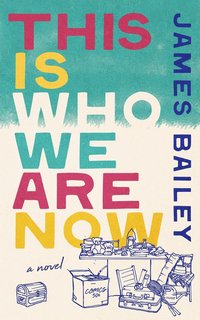
1. This is Who We Are Now by James Bailey
2. Blood Reunion by JCM Berne
3. Ways And Truths And Lives by Matt Edwards
4. The Running Grave by Robert Galbraith
5. Grammar Sex and Other Stuff: A Collection of (mostly humorous) Essays by Robert Germaux
6. The Camelot Shadow by Sean Gibson
7. Last King of California by Jordan Harper
8. Steam Opera by James T. Lambert
9. The Glass Frog by J. Brandon Lowry
10. Rise of Akaisha Morningstar by Kataya Moon
11. Curse of the Fallen by H.C. Newell
12. Heart of Fire by Raina Nightengale
13. Detours and Do-overs by Wesley Parker
14. Bizarre Frontier Omnibus #1 by Brock Poulson
15. Howl by e rathke
16. Bard Tidings by Paul J. Regnier
17. Panacea by Alex Robins
18. Cursed Cocktails by S.L. Rowland
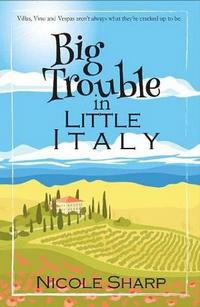
19. Big Trouble in Little Italy by Nicole Sharp
20. The Nameless Restaurant by Tao Wong

(subject to change, as is allowed, but I’m going to resist the impulse to tweak as much as I can).

20 Books of Summer '24 Chart

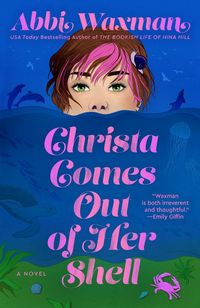
Christa Comes Out of Her Shell by Abbi Waxman: Family, (Unwanted) Fame, Love, and Snails

Christa Comes Out of Her ShellChrista Comes Out of Her Shell

by Abbi Waxman

DETAILS:
Publisher: Berkley Books
Publication Date: April 16, 2024
Format: Paperback
Length: 371 pg.
Read Date: May 2-7, 2024
Buy from Bookshop.org Support Indie Bookstores

I glanced up from the phone screen and caught sight of myself in the mirror. With thoughts of my mother in my head, I straightened up and took a look. As always, I was wearing pieces from what she refers to as my “forest floor collection.” It makes my life easier to wear khaki, green, olive or sand, because all of my clothes end up coated with seawater, salt lines and general beach muck. I researched and found the perfect pair of shorts, I researched and found the softest, most durable T-shirt, then bought four sets of both and never wear much else. Honestly, when Einstein did it, he was an eccentric genius; when Steve Jobs did it, he was a genius emulating an eccentric; and when I do it, I’m not making enough of an effort. Patriarchal bullshit; those are quality shorts.

What’s Christa Comes Out of Her Shell About?

Christa Barnet is a biology researcher happily studying a particular kind of snail on a remote island in the Indian Ocean. The island is populated by people who grew up there and a rotation of other researchers taking advantage of the isolation of the flora and fauna from the rest of the world. She has no real close relationships, a nice room in a boarding house, and her snails—life is pretty much what Christa wants.

Until her father comes back from the dead. Well, kind of. It’s not a zombie novel or anything. Her dad was an internationally known TV host of nature programs. Think Steve Irvin without the accent. But when Christa was a small girl, the plane her dad was flying went down in the Alaskan wilderness and no one knew what happened to him. He was eventually declared dead, and the family moved on.

But now, he’s back—so Christa has to leave her snails behind and go back to help her mother and sisters deal with this, to find out what her dad has been doing (and why no one knew he was alive).

To get all reductionistic there are three main plotlines afoot and I want to touch on them briefly—but each of them is about Christa coming out of her shell in their essence.

The Whole Dad Thing / Celebrity Culture

So, yeah…her Dad is back. It’s hard to talk about this as anything but strange. And Christa and her family don’t even bother trying. As they learn more and more about where he’s been, it gets even stranger.

Obviously, all of them have a lot to catch up on, they’ve missed decades of life with him—Christa has only the vaguest memories of him because she was so young when he disappeared. Her sisters have relationships to repair and rebuild (to say nothing of what her mother needs to do)—but Christa essentially needs to start from nothing.

Given his status (which has only grown while he was “dead”), the way that the media is sensationalizing his return, and the way the American public loves a good reboot—the press and opportunities for books, movies, new series, etc., etc., etc. are insane. It’s difficult to try to reestablish/establish any kind of family ties under the microscopes and spotlights that surround the family right now—and that’s assuming the family wants to.

Agents representing entertainment professionals live lives illuminated by reflection. When their clients do well, they do well, and some cycles are virtuous and some are vicious. One fortunate feather in an agency’s cap is a celebrity who DWF—died while famous. All famous people die, but most do not die famous. Most simply die old, like everyone else.

When they do kick off at their peak, their agency inherits an icon. It’s an annuity, kind of, or like money in a mattress. Somebody benefits from the fact that Jimi Hendrix (for example) isn’t a happily retired guitar player growing tomatoes in Seattle, though that would have been a better outcome in every other way.

Throughout all of this, Waxman has her sights set on the entertainment industry (with a special eye on publicists/PR/focus on image over substance), the role of the press in covering that industry, and social media (in general and relating to celebrities). Waxman reminds me so much of Christopher Buckley (oddly, Dave Barry’s fiction comes to mind, too) when this plotline is the focus—she has a similar ability to find the alienness to what “regular people” think, the absurdity of the “logic” employed by the media types, and the ridiculousness of how it all works—and is eaten up by viewers/fans. She excoriates this whole thing—but also shows the appeal.

The Romance Story

He frowned quizzically at me. “You’re very dreamy for a scientist. I think of you guys as practical and all about the facts, ma’am.”

I laughed. “You’re completely wrong. Scientists fall deeply in love with something and spend their lives obsessing over it.” I turned my head to look at him. “Like when you first fall in love with someone, and want nothing more than to be with them all the time, learn everything you can, discover how they feel, what they think . . . that’s science. Isn’t love just an overwhelming desire to solve the mystery of another human being?” I shrugged. “Science is full of mysteries, and people trying to get to the bottom of them.”

Nate has been a constant feature in Christa’s life (and vice versa), he’s older than her—more like her sister’s age. But their families were close while they grew up—so they spent a lot of time in each other’s orbit. He’s now running the business side of her family’s conservation work, and they really haven’t set eyes on each other for over a decade.

When they do meet each other in this novel, the mutual attraction is pretty obvious (especially to everyone who isn’t them). What unfolds from there is one of your standard-issue Rom-Com stories. But Waxman is so good at writing it that it feels pretty fresh, and you can easily find yourself forgetting that you’ve read umpteen times and seen even more stories that follow the same outline. Also, it needs to be remembered why we’ve seen/read this story so many times—it works really well and people enjoy it. People really enjoy it when someone as clever as Waxman is telling it.

The two are sweet and cute together. The story is easily the most engaging part of the book—and it’s nice to have it to fall back on when things get dicey with the above story.

Christa’s Mother and Sisters

“What’s with your hair?” she said, reaching out to tousle it, a move I was able to block.

I shrugged. “I like it like this; it makes it easier for people to find me.” It also goes with the tattoos and piercings to suggest I might be a badass. . . It’s a basic tenet of camouflage: Look like something dangerous (an edgy chick who might mess you up) and no one will get close enough to see the truth (a nervous scientist who would rather be left in peace).

I think readers are supposed to get more invested in the story about Nate—and the story about her Dad is really the bigger story of the novel. But the plotline that did the most for me was about Christa’s family that didn’t go missing—her mother and older sisters.

Like with many such stories, there’s a mix of who these people are as adults and who they were as children/teens (and younger adults, in the case of her mother). Christa, more than the others, still sees the others the way she saw them as a child and during her turbulent teen years. Yes, she understands how they’re not the same people, but her view of them as people and their relationships with her were set in stone then. And for her sisters, they largely see the troubled teen she was.

In the last couple of years, however, Christa’s sisters have started to change—and they all get to see new sides of their mother given the return of her not-that-deceased-first husband. They all see Christa in new ways, too—and we get the idea they actually understand her better than she does herself.

If you’ve read Waxman before, you know how well she depicts relationships between women. If you haven’t—just take my word for it, she depicts them in a way that you could just sit and read dozens and dozens of pages of it, even without much of a plot. When they’re working together on something (even if they don’t all agree on the way to do it), it’s just great. If Waxman just wants to give us a novella about the next Thanksgiving these women enjoy together (or something like that), I’ll be first in line.

I have largely complimentary things to say about the novel as a whole, but this aspect is the one I’ll spend the most time thinking about.

We Could’ve Faded to Black a Little Quicker

Like with the Sunshine Vicram series, at a certain point I couldn’t believe I recommended this book to my mother.* I’m sure she’ll enjoy it, but things get a little more spicy (and detailed) before Waxman fades to back on our couple. And Christa’s first-person narration is fine with talking about things that happen while things were faded to black.

* Note to Self: Finish Books before recommending them to her.

I don’t think we actually achieve the, um, levels of ardor that Sunshine does (not like that’s the most extreme I’ve encountered, I just think I’ve talked more about what the people that make up TV/Movie warnings call “adult situations” with that series than others). But we get close on a couple of occasions.

Is it too “adult” for most actual adults to read? No. Will many of you find it tame? Yes. Did it make me a little uncomfortable? Yes (I keep telling you I’m a prude). Does it really impact what I think of the novel? Nope. But it was noteworthy enough, that I figured I should mention it.

If only I feel better about things when my mother ends up reading the novel.

So, what did I think about Christa Comes Out of Her Shell?

According to my notes, the first 87 pages of this book might have been my favorite 87 pages this year. Maybe it went on longer, but that’s where I was when I wrote that down. Not every page after those were as good, but overall, I had a real blast with this book.

Christa is definitely a Waxman-brand protagonist. But she’s different enough to make it clear that Waxman has range. Christa is more abrasive—she also has more formal education than the others I’ve encountered and shows it (not in a performative or braggadocio way). There’s also a Bernadette Fox-ish vibe to her. The rest of the characters are easily the kind to shop at Nina Hill’s bookstore or hang out at the boardinghouse with Laura Costello and the rest. In other words, they’re complicated, fallible, and fun to spend time with.

Waxman’s voice is one of my favorites—and has been since I first encountered her work. I love her characters, her wit, and the stories she decides to tell. This seemed like a departure for her—not in ways I can articulate, nor in ways I can or want to criticize. It’s just a different feel from her last three novels—and more power to her for making those choices.

I laughed, I was moved, my heart was warmed—all the typical reactions to Abbi Waxman. I loved being in this world, surrounded by Waxman’s words and I cannot wait for the next excuse I have to do it again. I heartily encourage you all to do the same.


4 1/2 Stars

This post contains an affiliate link. If you purchase from it, I will get a small commission at no additional cost to you. As always, the opinions expressed are my own.
Irresponsible Reader Pilcrow Icon

PUB DAY REPOST: The Djinn’s Apple by Djamila Morani, translated by Sawad Hussain: The Scent of Death

The Djinn’s Apple Tour Banner

The Djinn's AppleThe Djinn’s Apple

by Djamila Morani , Sawad Hussain (Translator)

DETAILS:
Publisher: Neem Tree Press
Publication Date: May 7, 2024
Format: eARC
Length: 160 pg.
Read Date: February 24, 2023
Buy from Bookshop.org Support Indie Bookstores

What’s The Djinn’s Apple About?

Nardeen is a remarkable twelve-year-old. Her father is a physician known for translating medical texts from a variety of languages into Arabic, and Nardeen soaks up his work. She has an astounding memory and ability to understand what she memorizes.

But due to some political intrigue that she doesn’t wholly understand, Nardeen and her family have to flee their home one night. Sadly, she’s the only one who survives.

Nardeen vows revenge on those responsible for her family’s murder—certain that a friend of her father’s is ultimately to blame.

But before then, she finds herself being taken under the wing of a legendary physician and teacher, Muallim Ishaq. He recognizes her gifts and her heritage from her father—he arranges (mostly by the force of his will) to have her learn at The Bimaristan, a hospital of great renown. There, she’s able to hone her skills and knowledge—and sharpen her tools, resolve, and ability to mete out that vengeance.

Father vs. Father

There are a handful of various conflicts in this book (like with any good book), but at the core, this book seems to be a conflict within Nardeen herself. On the one hand, she has her memories of her father and what he taught her—what he showed her by example—about the way to live. She also has to wrestle with what she’s told about her father—by those who profess to have admired him and those who worked against him.

On the other hand, she has her (for all intents and purposes) adoptive father, what he’s trying to teach her—what he shows her by example—about the way to live. She also has to wrestle with what she’s told about him—by those who profess to admire him and those who work against him.

In many ways, these two fathers line up—but in significant ways, they follow and lead her down divergent paths. So much of how the plotlines of this book resolve depends on Nardeen’s acceptance/rejection of what these men stand for.

The Setting

So, this takes place during the “golden age of Baghdad”—Harun al-Rashid’s rule of the Abbasid Caliphate from 786 to 809. Now, everything that I know about this period of time comes from the appendices to this novel “Harun Al-Rashid: The Golden Age of Baghdad” and “The Bimaristan.” As they are appendices, I read them afterward. So I came into this not knowing anything—which is a bit intimidating. And I figure I’m not alone in this (particularly for the intended YA audience, who probably haven’t had much opportunity to study Eigth-Century history).

But honestly? Anyone who reads Fantasy/SFF knows how to approach something like this—sure, this is a representation of actual history, but the same tools and imagination you need to understand Westeros, Panem, or the world of the Shadowhunters equip you to get into this world.

And, like with those worlds, after getting this taste, you’ll likely want to read more about it.

While reading, and since then, I do have to wonder a little bit about how much Morani was stretching things about the opportunities presented to women in this time and place. Not just for Nardeen, either—but all the women she encounters at the Bimaristan (and I’d be saying this if the city was Paris or Rome, not just because it’s Baghdad). But I’m willing to both suspend disbelief for the sake of a good story and to trust that someone who’s as familiar with Arabic literature as Morani is more than my hunches.

So, what did I think about The Djinn’s Apple?

This book hits the ground running—Morani doesn’t give you the opportunity to settle in and get comfortable in this world or anything like that. She thrusts the reader—and poor Nardeen—straight into life-or-death action. Nardeen has a slightly better understanding of what’s going on than the reader does—but not much. This was a great way to start this read—you don’t get the chance to indulge curiosity or get lulled into thinking it’s a different kind of book than it is—you have to rush to catch up and then keep up with Nardeen and only get the luxury of starting to understand the world until she’s (relatively) safe.

There were a couple of times that I wondered about the timelines and how well they worked. I assume I just missed something (and didn’t want to take the time to go back and check). It wasn’t anything that bugged me enough to look into it, but I would’ve appreciated things being a bit clearer.

The characters of Nardeen and Muallim were so well drawn, so vivid, and so compelling that I really wish we had more time with them. Particularly Muallim—this cantankerous genius is the kind of character I really respond to. Now, given the pacing of this book, that’s impossible. And Morani picked the better option for her story. But the eccentric teacher and the stubborn and gifted student is a combination that could’ve made for a lot of fun.

Somehow in the midst of this propulsive pacing, Morani is able to litter the book with some great observations, some drops of wisdom (primarily from the teacher and student), and memorable prose (some of that credit has to be given to Hussain as well).

This is a fast, immersive read that’ll leave you guessing from the beginning right up to the end. You’d be doing yourself a favor if you pick it up.

Disclaimer: I received a copy of this book from Neem Tree Press and The Write Reads via NetGalley.


4 Stars

This post contains an affiliate link. If you purchase from it, I will get a small commission at no additional cost to you. As always, the opinions expressed are my own.


My thanks to The Write Reads for the invitation to participate in this tour and the materials they provided.

Opening Lines: Christa Comes Out of Her Shell by Abbi Waxman

Head & Shoulders used to tell us that, “You never get a second chance to make a first impression.” That’s true for wearing dark shirts, and it’s especially true for books. Sometimes the characters will hook the reader, sometimes the premise, sometimes it’s just knowing the author—but nothing beats a great opening for getting a reader to commit.

So, I’m going to kick off by making one thing very clear: None of this was my fault. I was part of it, sure, but only like a flea is part of a cat. I was carried along, contributing my own pain-in-the-ass factor, no argument there, but I was mot, in any sense, driving the bus. Let’s not forget that when this story starts, was literally on an island in the middle of nowhere. Hands full, head busy, heart well guarded. Safe as houses, baby.

Wait, that’s not completely accurate. The island of Violetta isn’t in the middle of nowhere; it’s slightly to the right of Africa, many hundreds of miles into the Indian Ocean. It’s a geography cal, political and sociological anomaly, It’s also home to a frozwn vodka drink called the Barrier Island, beyond which no man may safely travel, but that’s a sidenote. It lies two days’ sail from a large French-speaking island more than five hundred miles off the east African coast, which is probably why the French didn’t bother to claim it. It was ignored by the Mauritians, because they thought the French already nabbed it, and blithely disregarded by the British, who had no idea who owned it, but had no reason to think was them.

No one paid much attention to it at all until the 1950s, when an enterprising young Violettan by the name of Agnes Bottlebrush did a school project on the even younger United Nations and then quietly applied for membership for Violetta (Agnes was an overachiever with time on her hands). As the result of a series of fortunate and slightly comedic events, Violetta became the smallest member of the United Nations, and Agnes received a rapid promotion to Head Girl. Then she walked around to everyone’s houses and handed them a copy of the UN Charter and gathered suggestions for what to put on the flag.

from Christa Comes Out of Her Shell by Abbi Waxman
Christa Comes Out of Her Shell Cover
I’m not sure what happens over the next 369 pages (in a sense). I just want almost 400 pages like this.

Opening Lines Logo

Page 6 of 53

Powered by WordPress & Theme by Anders Norén