Category: A-F Page 13 of 16

Series A-F

Who Let The Dog Out? by David Rosenfelt

Who Let The Dog Out?Who Let The Dog Out?

by David Rosenfelt
Series: Andy Carpenter, #13
Hardcover, 324 pg.
Minotaur Books, 2015
Read: September 4 – 5, 2015

As Michael Corleone said in The Godfather, Part Ill, “Just when I thought I was out, they pull me back in.” The fact that it was the worst movie in the history of movies does not take away from the truth of that statement, as it relates to my legal career.

Poor, beleaguered Andy Carpenter. Dragged, kicking and screaming back into the courtroom to defend someone he really doesn’t care about, but by doing so he gets to investigate a crime he’s really concerned with.

As we all expect, that crime involves a dog.

The Tara Foundation, the dog rescue shelter that Andy runs with his former client, Willie, is broken into. The thief does a very professional job and takes off with one dog. Professional or not, the thief didn’t take into account how devoted Andy and Willie are to these animals and how obsessive they can be about them. It doesn’t take them long at all to track down the dog…and the corpse he’s next to.

Andy wants to know more about the dog, and the dog’s owner who turns out to be a fugitive, suspected of murder. The only way he can keep his foot in this case is to defend the man accused of the killing. He eventually does figure out who kills the thief, but it’s almost accidental — it’s certainly incidental to anything else going on. Just one of the little bits of pleasure this provided was that “ah ha” moment.

During the trial — the stage of many of this series’ highlights — Andy treats us to an amusing clinic on all the ways that a couple of lawyers (and people in other professions) can use the word “frankly,” including all the shades of meaning that word can provide. Like so many of Andy’s lessons, this was worth the ticket price.

Rosenfelt brings us yet another storylines that could summed up as: It looks like a simple crime, but is actually the linchpin to uncovering a major terrorist plot/international crime syndicate (minor spoiler that if you read more than a couple of chapters you’d see for yourself). I’m getting a little sick of these. The terrorist plot, by the way, makes me reconsider the plausibility of a similar plan in Robert B. Parker’s Night Passage. I’d always thought that the weakest part of an otherwise compelling read, seeing it now in light of this book makes me think there was something there. Still, for crying out loud, Mr. Rosenfelt, let major criminal enterprises and terrorist organizations figure out that a trip through Patterson, NJ is asking for trouble. Local conspiracies, okay. But major international conspiracies? You’ve got to stop going to that well so often. Or period.

My other worry about this is Ricky. If you haven’t read this far in the series, you may want to skip the rest of this paragraph. About half of the material around Ricky was cute and fun — just like it was in Hounded. The other half (mostly involving stale sit-com like bits about kids’ sports) teetered on painful. I fear that this series might be like the older comedies who felt compelled to add the cute little kid late in the run (Andy on Family Ties, Cousin Oliver on The Brady Bunch, Olivia on The Cosby Show, Chrissy on Growing Pains, etc., etc., etc.). If that’s the case, I worry about the future of the series.

Don’t get me wrong — I enjoyed this overall. I can suspend my beefs with this series as it goes on and enjoy Andy’s laziness, his awe of Marcus, Marcus’ awe-inducing self, the hacking seniors, and all the rest. I don’t open up an Andy Carpenter novel expecting to be hanging in suspense, to be chilled, to be challenged in any way; I expect to spend a couple of hours in some pleasant company and sometimes to get a fun puzzle. In that sense Who Let the Dog Out? delivered enough.

—–

3 Stars

Scents and Sensibility by Spencer Quinn

Scents and SensibilityScents and Sensibility

by Spencer Quinn
Series: Chet and Bernie, #8

Hardcover, 305 pg.

Atria Books, 2015

Read: July 16 – 17, 2015Bernie Little is back from his cross-country adventures, not much worse for wear, probably with a little coin in his pocket (knowing Bernie. He gets home to find one of his elderly neighbors in the hospital and her husband being investigated by some overreaching environmental authority. Which gets Bernie’s protective instincts engaged. Oh, yeah, and there’s a hole in Bernie’s wall where a safe used to be. That’s in the mix, too — but it takes a back seat to the Parsons’ plight.

It seems that the Parsons’ son was recently released from prison, making the timing of Mr. Parson’s troubles (and the missing safe), a little suspicious. Bernie starts investigating the son — which leads into looking at the crime that put him away in the first place. Which leads Bernie to cross paths with an old rival. An old rival who may have had something to do with the fact that Bernie is no longer employed by the Phoenix Police Department.

The past and present mingle with the personal and professional for Bernie as the case gets more complicated and dangerous. Which makes this a pretty decent detective novel — then throw in our loyal narrator, Chet with his uniquely irrepressible voice and perspective. That’s a thick layer of icing on a pretty good cake.

Which I guess makes the presence of a young dog who looks and smells like Chet (he’s the source of the latter observation) a nice fondant?

I think the illustration is getting away from me, so I’d better move on.

There are a few certainties in crime fiction, in every novel: a vehicle operated by Stephanie Plum will explode; Nero Wolfe will have beer; Harry Bosch will listen to jazz; and Chet will be separated from Bernie. Sometimes, this annoys me because it seems so forced, but this time it snuck up on me so naturally that I was three or four paragraphs into it before I realized it had happened. There’s some other Ce and Bernie mainstays here: Bernie says something he regrets to Suzie; Bernie’s ex seems to go out of her way to misunderstand Bernie, Chet is spoiled and eats like a goat. Really, it has all the elements of this series, Quinn just uses them better than usual here.

A compelling story, the characters back in their stride, and we learn a little bit more about Bernie — if that’s all this had, I’d jumping with excitement. But when you add those last few paragraphs? Forget it — this is the best thing Quinn’s done since introducing us to this pair.

—–

4 1/2 Stars

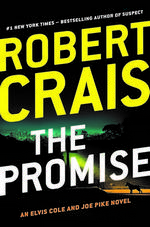
Robert Crais’ The Promise Delayed Again?

Since I talked about the last one, I figured I’d better talk about this one, too. According to an e-mail I received yesterday, and an update to the Robert Crais Facebook page, we’re looking at another delay for The Promise by Robert Crais: November 10. Which makes it almost exactly 1 year late.

I don’t know if it’s a publication thing, Crais putting some more finishing touches on it, or what — it’s just aggravating. Nevertheless, I’ll wait. I can be patient to let Crais and his publisher put out the book they want to, make sure it’s right, however hard that’s getting to be.

Still . . .

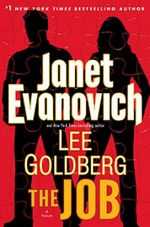
The Job by Janet Evanovich and Lee Goldberg

The Job (Fox and O'Hare, #3)The Job

by Janet Evanovich and Lee Goldberg
Series: Fox and O’Hare, #3

Hardcover, 304 pg.
Bantam, 2014
Read: November 29 – December 1, 2014How is this only the third in the series? It’s a testament to the professionalism and craft of Evanovich and Goldberg that this feels like a series that’s been around for at least a half-dozen books, a well-oiled machine.

The hook to this particular case — someone posing as Nick Fox pulling off some major heists — was pretty fun, and a great excuse for Kate to go jet-setting around the world. That lasted just long enough to set up the major target for this novel: one of the biggest, baddest, most mysterious Drug Lords in the world. Thankfully, he has a pretty major Achilles’ heel that Nick and Kate were able to take advantage of. In just about any other series, I’d cry “foul” about someone like Lester Menendez falling for this implausible con. But it totally worked in this world — and would probably have worked if Nate Ford and the crew had tried it, too. Slick talking, fast work and a hint of danger (more from the psychotic bodyguard Reyna Socorro and her trusty AK-47 than from her boss) — and bam. The bad guy gets defrauded and sent away for a long time.

The major difference between this one and the previous two installments is that the rest of the team doesn’t have as major a role to play — don’t get me wrong, the usual players and some new faces are there and important. We just don’t spend as much time with them — it’s more heavily geared to being the Nick and Kate Show. They’re even restrained in their use of Jake O’Hare. I don’t have anything against the rest of the team, and really enjoy some of them — but I’m glad that they were put in a secondary position this time. As long as they get featured more prominently on a regular basis, I think focusing on the title pair makes sense.

The only suspense really is how far the “Will They/Won’t They” go (and so far, that hasn’t reached the point of being annoying). We all know that Fox and O’Hare will get their target, we may not be sure how — we won’t know how much fun there’ll be along the way, how much private property will be destroyed, and how many exotic (or domestic) locales will be visited along the way. And it’s fine that this isn’t a suspense-filled series. It’s a lot of fun. That’s what it promises, and that’s what it delivers — as long as we don’t look for more than banter, impossible cons and slick writing, we won’t be disappointed.

Not that the first two were slogs by any stretch of the imagination, but I raced through this — with a little more sleep, I’d have tackled this in one sitting, but I had to leave the last 50 pages for another day. The writing, the plot, the banter was just so smooth it was almost impossible to stop once I got started. I thoroughly enjoyed this one and already am looking forward to the next.

—–

4 Stars

Robert Crais’ The Promise Delayed

According to an email I just received about my preorder* and a post to his Facebook page (but no update to his website yet), The Promise has been delayed. The Facebook post says a US publication date is forthcoming, but I’m supposed to receive mine on April 28 of next year.

On the one hand — you know what? I’d rather it be done right, rather than done fast. Robert Crais, much like George R. R. Martin or Patrick Rothfuss or Jim Butcher (to name a few notable authors who’ve delayed things lately) is not my bitch. Crais knows when the book is done, and until then, I can wait.

On the other hand, this is rather short notice for this kind of thing from what I can tell. Makes me wonder about the editorial process for one of his books. Also? I’d scheduled things so I could go right from Taken one week to The Promise the next (yes, the reviews are behind by two books, but my reading is on track).

The positive take: Crais is going to give us the book he wants to. Personally, drat, it means more time without a new Cole/Pike (plus Maggie!) book. And it’s just further proof that the Scot knew what he was talking about when he described how schemes “Gang aft agley.”

—–

* One of the dumbest words in widespread use right now. Why not just say I ordered it? Just because it hasn’t released doesn’t make it a special kind of ordering…

Reread Project: The Last Detective by Robert Crais

The Last Detective (Elvis Cole, #9)The Last Detective

by Robert Crais
Series: Elvis Cole, #9

Hardcover, 320 pgs.
Doubleday, 2003
Read: October 1 – 2, 2014

The Last Detective begins a few months after the L. A. Requiem and Joe Pike is trying to get himself back in fighting shape after his devastating injuries in exactly the place you’d expect — the Alaskan wilderness (isn’t that where’d you go?). Joe’s looking more mortal than he had since the shooting in The Monkey’s Raincoat, but like the tattoos indicate, he’s moving forward. While there he encounters an Alaskan brown bear? The way Crais describes it (which seems pretty realistic), if you stop and think about it — that’s horror, that’s terror. Hannibal Lecter, Martin Vanger, Alex Kork — that’s fiction, that’s fantasy. Brown bear? That’s reality. A reality I hope never to know better than I do now. But, this isn’t Joe Pike starring in Man vs. Wild, so we’re off to L. A.

Elvis and Ben Chenier are hanging out for a few days while Ben’s mom is out of town, Elvis and Lucy are still trying to recover from the hit their relationship took in Requiem. Ben goes off to play outside while Elvis is on the phone with Lucy, and then he doesn’t come back. Elvis gets scared, finds his video game laying in the brush below Elvis’ house. It’s not too long afterwards that they get a call — the boy didn’t get lost, he didn’t run away — he was abducted.

The investigation gets into full swing fairly quickly — Elvis calls in some favors from the police to help. Here we meet investigator Carol Starkey (from Crais’ Demolition Angel) who vacillates between appreciating Elvis’ investigatory skills and being annoyed with him. Lucy’s ex comes in, pushing his investigators into the investigation, trying to push Elvis out and generally making life difficult for him. Richard clearly has an Elvis-shaped chip on his shoulder and uses this circumstance to throw dirt on his ex-wife’s new love.

It seems that Ben’s kidnapping is related in some way to what Elvis did in Vietnam, and both the reader and those involved in the investigation learn a lot about something that Elvis thought he was done talking about. What some people called his secrets, he saw differently:

I wasn’t keeping secret. Some things are better left behind, that’s all, you move past and go on. That’s what I’ve tried to do, and not just about the war.

Elvis’ life before and during the war weren’t wonderful, and he’s tried to go on. But that’s no longer an option — he has to revisit a lot of that, which Lucy doesn’t react well to.

On the one hand, I’m still liking Lucy less and less for more of the same that I complained about last time. But that’s not to say I disagree with her — when she tells Joe Pike that the way he and Elvis live isn’t normal.

I don’t like the way violence follows you; you and him. I’ve known police officers all my life, and none of them live like this. I know federal and state prosecutors who’ve spent years building cases against murderers and mob bosses, and none of them have their children stolen . . . I am normal! I want to be normal! Are you so perverted that you think this is normal? It isn’t! It is insane!

. She’s right. But . . . well, see what I said last time. I sympathize, but I still don’t like her any more.

Now, this isn’t just a manhunt for the kidnappers — there’s plenty for Elvis to investigate, a few twist and turns and — of course, secrets unearthed and a decent helping of violence. The emotional toll these events take is worse than anything else, all things considered.

Although the focus is on Elvis and the search for Ben. We do learn a little more about Pike (no problems between he and the LAPD this time). We get a different explanation for Joe’s need for order and cleanliness than I’d surmised from Requiem, but it’s probably a combination. I’m only talking about it so much because for so long it’s what little we knew about him — he liked his Jeep spotless and everything immaculate. Joe displays his typical loyalty to Elvis here — it’s typical for him, it’s out-of-place in today’s world on the whole. He even takes on a debt that sets up a future book, a detail I hadn’t really paid attention to until now, but it was a huge move on his part.

John Chen returns — and is again helped to gain a bit of the spotlight he so craves, but he’s got skills of his own (and is probably learning a good deal from Joe and Elvis). He’s still a not good guy, really, but you can’t help but like him. I had a brief moment of fan-boy excitement when everyone’s favorite Vietnam Tunnel Rat turned LAPD detective puts in a cameo. It really helped lighten the oppressive mood. It was nice to see him in these pages, it was nicer still that it happened when it did.

This is the most intense, fastest-paced Elvis Cole novel yet. It’s all forward momentum (see Pike’s tattoos yet again — Crais isn’t the only one who can overuse them as a symbol). Part of this — maybe a large part of this — has to do with the fact that it’s a kidnapping case, every minute counts. It certainly doesn’t hurt that every chapter leads off with “X Hours, Y Minutes” since the kidnapping.

This is really great stuff here. Even though I remembered why the various villains were up to their villainy, seeing it revealed to Elvis still got me riled up as it was intended to, and though I knew how both the kidnapping and related stories wrapped up, I was still glued to the pages, turning as fast as I could. Which is the sign of a master of suspense writing — that even when there’s no suspense, the reader is still reacting as if there was.

—–

5 Stars

—–

Drawing by Kirsty Stewart, chameleonkirsty on deviantART, used with permission.

Reread Project: L.A. Requiem by Robert Crais

L.A. Requiem (Elvis Cole, #8)L.A. Requiem by Robert Crais
Series: Elvis Cole, #8

Mass Market Paperback, 539 pages
Published October 3rd 2002 by Pocket
Read: September 24 – 25, 2014


I know that I’ve read this one at least twice previously, but you wouldn’t have been able to prove it last week when I started my re-read of it. I’d spent the last few weeks while planning this series (and probably years before it), convinced that the events of The Last Detective happened in this book — and that the back story revealed here was revealed a couple of books earlier.

Not only that, I’d forgotten this was where we met John Chen! I’d even forgot that he was on the horizon! Sure, John Chen is a despicable, slimey guy. But there’s something about him I liked — even here, before any of his redeeming qualities are found (developed?), there’s something about John that’s likeable. He’s a creep, but he’s Pike’s creep.

Still, I’d clearly forgotten just about everything meaningful about this novel — at least as far as plot goes. I remember what I learned about Pike (but, as I said, thought I learned it elsewhere). Making this a lot of fun to reread. Which is, I guess, the whole point of rereading.

Anyway, to the book itself:

One of my all-time favorite movies is Midnight Run, if you haven’t watched it, shame on you. Really. There’s no excuse. Go rectify that situation. As you’ll recall, Jonathan Mardukus torments the bounty hunter bringing him back to LA with the question, “Why are you so unpopular with the Chicago police department?” Throughout this series, astute readers have likely been asking a similar question: “Why is Joe Pike so unpopular with the Los Angeles police department?” — at least I have (which is not to say you’re an astute reader if you haven’t been asking the question I have — clearly, you’re astute. And good looking. With a great sense of humor). Except for the times when the detectives have hard to travel out of town, we’ve seen animosity to outright hatred in the LAPD’s reaction to Joe (with the exception of Det. Angela Rossi). In these pages, we finally learn why (it’s an understandable, yet, mistaken reason — naturally). But we learn a lot more about him, here, too: the foundation for his obsession with keeping his jeep clean, why he’s driven in many of the ways that he is, and more — but this isn’t just a series of flashbacks — all we learn about Joe serves the main story as well as the character.

For a little change of pace here in book 8, Joe Pike brings in the client. In this case, it’s the father of a woman Joe dated back when he was a police officer, things ended badly, but not so badly that Frank Garcia has lost any respect for Joe. So when Karen goes missing one day, and the police won’t help him yet, Frank turns to Joe for help. Joe, naturally, brings Elvis along for this investigation.

The events that turned Pike into LAPD’s Most Hated are related to the outcome of this case — and not just because it makes every cop willing to believe the worst in Joe and not look too hard for an alternative explanation when Joe becomes a suspect. His partner jailed, the police hostile to any efforts to seek another suspect, the Karen Garcia case becomes Elvis’ most personal case yet (until the next book).

The various police officers and detectives involved in this book are just horrible — bordering on cartoonishly bad at the beginning. Not necessarily bad at their jobs, just bad human beings. Thankfully, Crais isn’t that kind of writer, and you learn there’s actually a reason for these men and women to act this way. Garcia’s able to use his political clout to force the detectives assigned to the case to let Elvis observe them, read their reports and whatnot. Which is resented (and not just because of Joe), particularly by the detective who’s forced to act as his liaison, Samantha Dolan. Dolan eventually softens to a degree, and her relationship with Cole acts as a precursor/template for another coming soon in Elvis’ life.

I’m going to break my anti-spoiler policy here, and rant a bit. If you want to read it, use your mouse to select the following paragraph:
Lucy, Lucy, Lucy — I am so disappointed in you. Of course Elvis is going to choose to help Joe here. Of course, he’s going to put his life on the line for his partner (who’s saved his life more than once). Of course, Elvis is going to bend the law (at best), going to pull out all the stops to find the killer and save Joe. What did you think he was going to do? Stop being Elvis? How did you two meet? What lengths did Elvis go to in order to help out these complete strangers and the woman who lied to him and fired him? And then what did he do for those kids, after you forced him to help? Not to mention the case that got you your job in L.A.? I get it, you’re in a vulnerable place, you’ve changed your whole life thanks to Elvis and you feel like he owes you a bit. But before you moved to L. A. you knew who he was. You knew the kind of man he was and what kind of dangerous work he did. I started disliking Lucy here, and that only grows in the next book (even if I sympathize with her more there), so that when she shows up in The Forgotten Man I don’t even want to see her.

Nothing is simple about this case — not the mystery, not the motive for the killings, not the various motives for the investigators, not the lives of those touched by the crimes/criminals/investigators. It’s all complicated, messy and very human.

In the end, this is Crais’ masterpiece. Which isn’t to say that he hasn’t written some very satisfying and enjoyable books after this — many of which I like more. But nothing’s as good as this one. This brings us to a new stage in the Cole books — one that continues to this day. I might contrast the two stages a bit more in the weeks to come (maybe during/after The Forgotten Man or maybe to go along with The Promise), almost making them two different series. And yes, I miss the old Elvis — but that’s not to say there’s a problem with the new one, it’s just noting a difference. It’s haunting, it’s disturbing, and will affect any reader that has an emotional connection to the partners. Really well done. Oh, and as a bonus, the last 3 or 4 pages are just gorgeous — probably the most “writerly” writing that Crais has done yet.

—–

5 Stars

—–

Drawing by Kirsty Stewart, chameleonkirsty on deviantART, used with permission.

Reread Project: Indigo Slam by Robert Crais

Indigo Slam (Elvis Cole, #7)Indigo Slam

by Robert Crais
Series: Elvis Cole, #7

Mass Market Paperback, 320 pg.
Fawcett Books, 2003
Read: September 16 – 17, 2014


This, right here, is the low point for the Elvis Cole series. So why, you ask, do you give this 3 stars? Am I just that much of a mindless fanboy?

Well, probably. But that’s not it. One’s appreciation for this novel has everything to do with what you think of the clients. If you like them, see something in them that teaches us something about Elvis — you’ll probably like this book. If not, well, this’ll likely be a tougher read for you. Now, me? I liked the kids, especially Teri, the Fifteen year-old eldest sister, and substitute mom. Little sister Winona’s clearly adorable, Charles is a punk clearly in need of a strong male authority figure. Either individually, or considered as a group, I liked the kids — and therefore, when they ask the World’s Greatest Detective to find their absentee dad – I cared.

If it was almost anyone else looking for their dad, Clark, I can’t imagine caring. Once Elvis found him, I quickly reached the point where I didn’t care if Elvis was able to help him, as long as the kids would be alright.

Towards the end of the book, both Elvis and Joe make a major blunder that almost gets all of them killed. And sure, I don’t necessarily expect the two to have everything worked out before they take action — but there was evidence enough that they could’ve been on their toes security-wise and not almost got killed in the process. Not only do they miss the pretty obvious conclusion, they don’t even see that there’s a conclusion to be found. I’ve read Indigo four times now, and it distracts and detracts each time.

What makes Elvis’ (and, to be fair, Joe’s) blunder so egregious, was that it was hot on the heels of Elvis’ latest cunning plan. Some of these plans he comes up with to get his clients/clients’ families out of hot water stretch credulity, this one takes the cake. As Blackadder would say, it’s “a plan so cunning, you could put a tail on it and call it a weasel!” I can’t believe that anyone would go along with it — beyond the desperate family, that is — but not only do a group of criminals/revolutionaries, but Elvis gets multiple federal agencies to sign off. And it works. Mostly.

But somehow the book works. For two independent reasons: 1. As I stated previously, because of the clients — I bought into them. And 2., Because of the Lucy Story.

There was just something I liked about these kids and their plight — I believed it, I could see it. I enjoyed watching Elvis and Joe interact with them (really sick of Joe as baby sitter, let him do a little more, Elvis!)

There’s a little bit of a Lucy story, not as big as in the last two novels, but it’s there, and it’s an important development of what started in Sunset Express. But more than that, it’s a chance for Elvis to demonstrate the sensitive, caring male that he is. For Lucy to be an independent woman. And for the reader to see that this isn’t going to be a relationship that’s only wine and roses. Yes, Elvis is still the giddy, goofy guy in love making kissy sounds over the phone. But he’s also an adult who respects his partner.

Not a whole lot (other than Joe and Lucy) to tie this one to earlier novels — Elvis continues to use Lou Poitras and Eddie Ditko as his own personal (anachronistic) Google. And Elvis’ actions in Free Fall end up paying off for him, which was nice to see.

In the end, this was pretty blah. There were some nice character moments, a few chuckles, a nice firefight or two..but that’s really it. Not much going for it at all, which is a shame. Not the way that Phase 1 for Elvis Cole should end — but the parts that are a prequel for Phase 2 were strong enough (you’ll have to read L. A. Requiem to better understand that).

—–

3 Stars

—–

Drawing by Kirsty Stewart, chameleonkirsty on deviantART, used with permission.

Reread Project: Sunset Express by Robert Crais

Sunset Express (Elvis Cole, #6)Sunset Express by Robert Crais
Series: Elvis Cole, #6

Hardcover, 288 pg.
Hyperion, 1996
Read: September 10, 2014


There are two stories being told by Crais in this book — yes, interwoven and interdependent — but two stories. The fun one involves Lucy Chenier coming out to LA for work and to see Elvis. She brings along her son to make it a little family vacation. When Elvis gets the news, he becomes a different person than we’ve seen before — or at least a more intense version of something we saw in Voodoo River, but that’s about it. He’s a lovestruck fool — very clearly — and Crais does a great job of portraying him that way. Yes, the World’s Greatest Detective can, of course, get his mind focused on work when necessary, but off the clock, he’s a grinning victim of Cupid. The two of them together are cute, charming, and can’t help but want to see them together a lot more.

The story focusing on Elvis’ professional life isn’t nearly as fun, heartwarming or cute. But Elvis gets to be snarky and ironic, and do the typical Elvis things (investigate, make jokes people don’t get, and even use his fists and gun a little). Jonathan Green — high-profile attorney in the F. Lee Bailey, Robert Shapiro, Johnnie Cochran, etc. mold — and his team of associates (and a camera crew), hire Elvis to help with the defense in the trial of Teddy Martin. Teddy Martin’s a celebrity restaurateur accused of the brutal murder of his wife — a pretty open and shut case, it seems. But Green’s people are getting tips like crazy and they need additional investigators to comb through them. One of the more promising tips involves allegations of one of the detectives in the case planting evidence in previous cases. Elvis agrees to investigate Det. Angela Rossi and track down other tips, but insists he’ll report the truth, not what will necessarily help the case — Green agrees to this, insisting that’s all he wants. Elvis gets to work and finds some quick results. But it’s not too long before he sees a stark discontinuity between what he finds ot about Rossi and other tips and how that information is being used by the defense.

Sunset Express is hindered by having one of those plots that people who read (or watch) a lot of detective novels will realize is problematic in a way the characters can’t. Everything in Elvis’ case moves along too smoothly. Now, in Lullaby Town and Voodoo River, for example, his investigation goes pretty smoothly, but you can tell that the plot complications are going to come from what happens as a result of his work. Here, you can tell there’s something wrong with the answers he’s finding. Yet, Elvis doesn’t have our perspective, he can’t tell he’s getting yanked around. It’s frustrating, just sitting around waiting for things to dawn on him so he can catch up to us.

As frustrating (please note I didn’t say it wasn’t compelling) as that storyline is, the relationship material with Elvis and Lucy (and, with Ben to a lesser degree) is great. The whole book could’ve been built around that (and arguably was) and I’d have been happy. It’s good to see that the two have kept their long-distance relationship going. She’s clearly good for him (and, I think, him for her) — even if the reader can’t tell that for certain, all you have to do is watch how Joe reacts to her.

It wouldn’t be an Elvis Cole book without some good natured humor at Joe’s expense, for example:

I called Joe Pike to tell him that we were once more employed. His answering machine picked up on the first ring and beeped. He used to have a one-word message that just said, “Speak,” but I guess he felt it was long-winded. Now, there was just the beep. When I asked him how people were supposed to know who they had gotten or what to do, he’d said, “Intelligence test.” That Pike is something, isn’t he?

For a good chunk of this novel, it looks like Joe is going to be relegated to baby-sitting Ben. Now, granted, he seems to enjoy Ben and there are few people your kid is going to be safer with, but what a waste of our friend with the Aviator Glasses-fixation.

Of course, Rossi knows Joe. They used to work together back when Joe was on the force, and as of this point in the series, she is the member of the LAPD that doesn’t hate Joe. For more reasons than that, Joe respects her (although that can’t hurt), so when things start to go off the rails for her, Joe insists that his partner step up and clear her name. Joe’s not much help on the investigation front, but in the gun packing (and more), fast driving, and personal intensity departments? He’s aces.

Other little treats in this box of Cracker Jacks? The return of Ray Depente — I’d completely forgotten he came back in this one, and it was so nice to see him. He’s a lot of fun in his couple of scenes. And, Eddie Ditko is back, unpleasant and omniscient as ever.

As Free Fall featured Elvis’ reaction to/stance/meditation on L.A.’s racial divide and police corruption, this gives us his take on the manipulation of the legal system (and a healthy amount of support for the police — particularly in light of Free Fall). Elvis has understood the difference between the legal system and justice, and has worked outside (if not at odds with) the system before in the pursuit of justice. But this time, he was seeking justice — thought he’d helped various people find it — only to find his work, his self, his name used as a tool to twist the system into preventing justice being carried out. His ultimate solution to this problem is very effective, and would likely be far more effective today than it was 18(!!) years ago. Well done, Mr. Cole.

A strong satisfying read, with two storylines well worth reading, Sunset Express is a solid entry to this series, and the first step away from the Elvis Cole of the first stage of the series and into the next (see previous entry for my discussion of this). Sunset and Indigo Slam are the bridge between these stages, but properly belong to the first. Even ignoring my little theory of the stages/eras in the series, this is a strong and well-deserved follow-up to Voodoo River, our heroes are back in L.A., as are the criminals and Elvis lady friend. It’s enough to get another verse out of Randy Newman.

—–

3.5 Stars

—–

Drawing by Kirsty Stewart, chameleonkirsty on deviantART, used with permission.

Reread Project: Voodoo River by Robert Crais

36 hours behind schedule. For anyone tracking, I’m sorry and I’ll try to do better.

—–

Voodoo River (Elvis Cole, #5)Voodoo River

by Robert Crais
Series: Elvis Cole, #5

Mass Market Paperback, 416 pages
Published April 1st 1996 by Hyperion
Read: September 3 – 4, 2014


Many people see L. A. Requiem as the apex of the Cole series. For my money, Voodoo River is the apex of the series that began in The Monkey’s Raincoat — he’s thoughtful, more meditative, yet still jokey. There’s a greater sense of place than in most of the earlier books. Elvis is vulnerable, yet just as competent and confident as he’s been the whole time we’ve known him. I’ll explain my thinking here and different take on Requiem in a few weeks when we get to it.

Once again, we open with a great description of his new client:

“Excuse us, but are you Jodi Taylor?”
In the space of a breath Jodi Taylor put away the things that troubled her and smiled the smile that thirty million Americans saw every week. It was worth seeing. Jodi Taylor was thirty-six years old, and beautiful in the way that only women with a measure of maturity can be beautiful. Not like in a fashion magazine. Not like a model. There was a quality of realness about her that let you feel that you might meet her in a supermarket or in church or at the PTA. She had hazel eyes and dark skin and one front tooth slightly overlapped the other. When she gave you the smile her heart smiled, too, and you felt it was genuine. Maybe it was that quality that was making her a star.
. . .
Jodi smiled wider, and if you had never before met or seen her, in that moment you would fall in love.

When we meet her, Jodi Taylor is the star of one of the biggest shows on television, but thirty-six years ago when no one cared who she was, she was an orphan — given up for adoption by her mother. She was raised by a loving couple who she considers her parents — she’s not on a search for her roots, her “real” mother or anything like that. But she’s curious about her medical history, worried about what genetic time-bombs might be ticking away inside her. So she hires Elvis — on the recommendation of Peter Alan Nelson — to go to Louisiana and work with an attorney specializing in adoption to find her birth parents and get this information.

Despite the strictness of the adoption laws in the Pelican State, it seems like a pretty straight-forward case, and after arriving in Baton Rouge, sampling some local cuisine, and consulting with the attorney, Lucy Chenier, Elvis gets to work and it doesn’t take long for him to make some solid progress.

Here’s where complications set in: someone starts trailing Elvis as he investigates, this person seems to have some sort of criminal ties, and the biggest complication of all: Lucy Chenier. Elvis is smitten with her. Almost immediately, and more and more so in every conversation afterwards. This isn’t some sort of passing fancy, as was the case with Janet Simon; or the creepy, drunken attraction for Jennifer Sheridan; or whatever he had going with his office neighbor, Cindy. Elvis falls for this woman, hard. That’s clear for the reader straightaway, the only question is what impact that’ll have on Elvis, his current investigation, and maybe his future. Elvis even has the beginning of a relationship with her son, Ben.

As for the guy following him? He’s not that good at it, and he’s even worse at picking up a tail. Elvis is able to exploit his deficient skills and learn a few things that get him closer to finding Jodi’s mother. And that’s when things get really nasty — Elvis finds himself in the middle of a decades’ old crime, a murder investigation and caught between three criminal organizations. Given that, naturally, Joe finds himself in Louisiana, too.

So the first of the criminal enterprises is a local group — run by a good ol’ boy-type. Milt Rossier isn’t going to catch the attention of anyone i New York, Miami or even New Orleans. But in his small pond, he is one huge fish. He does a little bit of everything, has some very loyal employees (including a scary George and Lenny like pair) and an old, huge and vicious turtle named Luther. Luther is described as “a snapping turtle that had to be three feet across and weigh almost two hundred pounds. It was dark and primordial with a shell like tank armor and a great horned head and a monstrous beak.” Gives me the heebie-jeebies just to read about him. Milt reminded me of Domingo Garcia Duran from The Monkey’s Raincoat, using toreo to intimidate and threaten Elvis. However, Duran only served to anger Elvis, make him more determined. Milt and Luther? They brought out something we’d not yet seen in Elvis — we’ve sen him angry, we’ve seen him morose, we’ve seen him lost, but after his session with Luther? He’s shaken, he’s frightened to his core. I don’t know if it’s Milt, the reaction of the others there, or just Elvis’ reaction to the reptilian Luther versus the human threat of Duran — but it’s something deeper we see here.

Another one of the groups that Elvis tangles with is headed by Frank Escobar. Escobar’s a criminal mastermind who looks nothing like what you’d expect (which likely means he’s more realistic than the rest), he’s this friendly middle-aged guy with a hospitable wife and kid. Just hanging out having gin and tonics next to the pool, the kind f guy you want as a neighbor. Until he gets angry. You wouldn’t like him when he’s angry. He’s the kind of crook that I’d love to read more about.

As far as the third? Well, we don’t get to know them too much — it’s basically Escobar’s group, but larger and with a head who’s not so cuddly.

You put Elvis in the middle of all that while trying to sort out one family’s problems — past and present? Well, it’ll take he and Joe at the top of their game. Hopefully Elvis can get his head cleared enough, but at least we don’t have to worry about Joe — I’m not sure that Joe has anything but the top of his game.

Elvis’ jokes are there, but they’re subdued. Elvis has found himself in the middle of some really nasty stuff — the adoption as well as the criminal activity he stumbled into — and it’s hard to joke his way through it, but he does as often as possible. Still, there is room for him to be something other than just the crime-fighter. As long as Lucy Chenier’s around, Elvis will make time.

When they first meet, Elvis asks her out — and is turned down, after all, they work together. He keeps after her, and while I’m not saying he wore her down, she eventually takes him to dinner at a local restaurant. What follows is possibly the funniest thing in the series so far as Elvis tries to 1. be charming, 2. not get drunk and 3. keep things cool with Lucy. But he does something right, probably later, because they have another dinner or two together, and well, a lot more.

Later, when things are going better, Elvis will spend time with Lucy and Ben at home enjoying a quiet evening hanging out and watching Star Trek: The Next Generation:

It was the one where you follow the android, Data, through a twenty-four-hour period in his life, most of which is spent attempting to comprehend the vagaries of the humans around him. The fun comes in watching the logical, emotionless Data try to make sense of the human condition, which is akin to trying to make sense of the senseless. He never quite gets it, but he always keeps trying, writing endless programs for his android brain, trying to make the calculus of human behavior add up. When you think about it, that is not so different from what I do.

Yeah, it’s a little heavy-handed, but I liked it.

Of course, Joe and Lucy met. And it’s fun to read.

“It was a pleasure, Joe. You’re an interesting man.”
Pike said, “Yes.”
Lucy gave me a kiss, then let herself out and went into her building. I twisted around in the seat and looked at Joe. “She says you’re interesting and you say yes?”
Pike got out of the back and into the front. “Did you want me to lie?”

We see something new happen to Pike here. But — see that one for yourself. It’s refreshing (like in Lullaby Town) to see Pike interact with the police without pushback or resentment (or something worse). There’s plenty of opportunity for Elvis’ warrior friend to do what he does best. There’s even some opportunities for Elvis and Joe to just hang out, work out together, and talk. They get to interact as friends a little, not just partners. We need to see more of this. At one point, we get what’s possibly Pike’s biggest speech since the one he gave Ellen Lang in Monkey and just as on point. He really helps Elvis keep his head when he disappoints Jodi. Lots of warm fuzzies are to be had there.

There’s some interesting things said here about honor (not in the way that Parker does, it’s under the dialogue and narration, almost never the subject of it), conscience, and duty. Really, there’s a straight line from Elvis assuring Ellen Lang that he’d help her, through tearing up her father’s check and hunting down Mimi Warren, through doing all he could to help Karen Lloyd, to Jennifer Sheridan to Jodi and her family. It’s the same impulse driving Elvis (and therefore Joe). This impulse, this drive is what unites Elvis and Joe to the hard-boiled PI legacy, but their application of it is what helps distinguish them from others. As I recall, there’s a change in the wings for how Elvis approaches things, making this the apex of Stage I of the Cole series, if not the whole.

—–

5 Stars

Page 13 of 16

Powered by WordPress & Theme by Anders Norén