Category: Mystery/Detective Fiction/Crime Fiction/Thriller Page 104 of 153

The Rat Tunnels of Isfahan by Alejandro de Gutierre

The Rat Tunnels of IsfahanThe Rat Tunnels of Isfahan

by Alejandro de Gutierre
Series: Scorpions and Silk, #1

Kindle Edition, 75 pg.
De Gutierre, 2017

Read: November 9, 2017

I wasn’t crazy. Not like most of the tortured souls I shared the prison with. Some wandered, muttering and bumping into walls. Some sat unmoving for hours, staring into a darkness even the desert sun couldn’t penetrate, their eyes seeing but not seeing, ears hearing but not listening. And a sad few would break; they would weep, and rock, and cry out. These were the broken: shuffling from place to place, barely eating, barely drinking, numbly watching the flesh drip from their bones, oblivious to the blood slowing in their veins.

We know very little about the central (practically only) character in this novella — he’s a prisoner, somewhere in Persia, sometime long ago. That’s about all that we know — for that matter, that’s about all he knows. His imprisonment has left him so psychologically shattered that he can’t remember anything about himself. He has children somewhere, he thinks.

We see him struggle to survive, struggle to get free, struggle to convince himself that he’s not crazy, and return to/rebuild his life. I don’t know much about him, but I like him, and I want to see the best for him.

I don’t think it’s possible for the word “visceral” to show up more in my notes for a 75-page novella than it did here. You feel this story as much as you read it — the almost-alien creepiness of a scorpion, the isolation, the fear, the rat chewing on a toe — all of it, de Gutierre puts you right in the mind of his amnesiac (his having no name helps there).

Until this story spools out a bit more — maybe volume 2, maybe until the end — I’m not sure what I think of the story, plot or characters. I can tell you that I want to know these characters better, I want to find out what happens to them, but that’s as far as I can say on that front. So, I’m left with de Guiterre’s writing — which is just what this story needs. He knows what he’s doing, and has got me hooked, even if I don’t have a clue about what he’s doing. This atmospheric, visceral read will leave you demanding more, soon.

Disclaimer: I received a copy of this novella from the author in exchange for my honest opinion — and I’m glad he gave it to me, because I wouldn’t have heard of it otherwise.

—–

3 Stars

Righteous by Joe Ide

RighteousRighteous

by Joe Ide
Series: IQ, #2

Hardcover, 326 pg.
Mulholland Books, 2017

Read: November 3 – 4, 2017


Isaiah Quintabe is back with a couple of dynamite cases. IQ ended with Isaiah stumbling upon the car that killed his brother. So about half of this book is devoted to Isaiah’s renewed efforts to find the man who killed his brother. He quickly concludes that Marcus was not killed in an accident, as he’d believed and the police had included. Rather, it’s pretty clear to him that Marcus was targeted by the driver. So now, Isaiah starts digging — he finds more suspects than he’d prefer, and he starts to have some questions about Marcus’s lifestyle/livelihood.

That story alternates with an actual paying case — Marcus’ girlfriend (and the object of Isaiah’s teenaged affections) comes calling for Isaiah’s help. Her little sister, a gambling addict, and her equally addicted boyfriend are in trouble — they’ve got a Loan Shark gunning for them, and have resorted to some freakishly stupid lengths to get the money they need to get him off their case. These lengths have made them the target of some of the nastiest, deadliest, coldest criminals you’ve ever read. So, Isaiah and Dodson head to Vegas to help them. Dodson is fairly assertive here, not wanting to be relegated to sidekick and PR status, but to been seen as an equal to Isaiah — more of an Elementary‘s Joan Watson than Doyle’s John, without the student-vibe (or Dr. Eric Foreman to Dr. House . . . ugh, there are just too many versions of Holmes to walk an unbeaten path). Which is not to suggest that Ide’s blossoming partnership here is just a retread or a rehash, Dodson just reminds me of Joan a little. There’s a dynamic between these two that you don’t often see in detective duos, outside of police shows where two are forced to work together — a mix of partnership, antagonism, respect, and rivalry.

So why does Isaiah bring him along? Because he’s growing as a person, realizing that he needs social connections, other people in his life — he has a new dog, but that’s not enough. There’s even a longing for something like Dodson’s new family. His work, his trying to make something out of the wreck his life became after Marcus’ death — that’s not enough (nor is it finished) — he wants people around, and Dodson’s the first step.

There’s a couple of criminals wandering around Vegas making life horrible for several people that I’d love to see again — [spoiler] we won’t, and they got what they deserved — but man, I enjoyed them so much. All the “bad guys” (and, wow, were there a lot of them) were much more than your typical mystery novel baddies (even really well-written ones!). They were fully fleshed-out, individuals, with believable (and contradictory) self-interests and motivations.

As compelling as the baddies are, Isaiah is better. And in this book (like IQ) we see one of the ways that Ide is superior to Arthur Conan Doyle. In A Study in Scarlet, we see Holmes as the successful version of himself — on the verge of being a legend, really. Like Athena fully formed, emerging from Zeus’ skull. But IQ is still learning, still fallible — yes, he’s achieved a large measure of success and notoriety, but he’s still making mistakes. He’s good, but he needs more discipline, more patience, less ego, etc. In Righteous, as in IQ, we get the equivalent of Miller’s Batman: Year One and Barr’s Batman: Year Two. He’ll get to the point where his mistakes are more rare and less obvious, no doubt — but he’s not there yet. Combining this aspect of the character and the nascent social life and you’ve got a lot of fodder for character growth.

I’ve recently started reading (for those who don’t read every post) the John Rebus books, plugging my way through the 30 years of history of the character. I’ve received various encouragements from long-time Rebus readers to stick with it, the best is yet to come (not that I was in any danger of dropping it), and that I was reading something special. I can easily see myself giving similar encouragement to someone just starting these books in a decade or so. Isaiah is one of those characters that I can see myself reading for years to come. Between Isaiah and Dodson as characters, and Ide’s style and skill — this series is one to read.

—–

4 Stars
2017 Library Love Challenge

Pub Day Repost: Bonfire by Krysten Ritter

BonfireBonfire

by Krysten Ritter
eARC, 288 pg.
Crown Archetype, 2017
Read: October 6 – 10, 2017

When you grow up in a place called Barrens, you want to get out — especially if it’s an area with limited job options, a struggling agricultural industry, and nothing else to commend it. Although, the name alone would probably justify wanting to get out even if the economy and culture were richer. But as is the case with too many small towns like this, few manage to get out. Abby Williams headed for Chicago two days after she graduated from high school, went to college and law school, becoming an associate at an environmental firm — and only sometime after that did she return.

She returns with her friend (a gay black man, who tends to stick out in the small, rural Illinois town), a first-year associate and a couple of students to investigate some claims about the water in the local reservoir. The town’s only major employer is called Optimal Plastics, which has been dogged by rumors of shoddy environmental practices and health problems for years — including before they came to Illinois — and the team is going to see if they can make these rumors and concerns stick this time.

As they dig into records, tests, regulatory reports and whatnot, Abby notices something. Optimal Plastics is clean. Absolutely clean — on paper, there’s never been a company so clean and responsible. Which just seems impossible, no one is this perfect. Abby smells blood in the water and goes on the attack.

At the same time, in a small town, you can’t help but run into people you don’t want to see again — which is pretty much everyone from High School. The girls who used to torment her, the guy she had a large crush on, the people she wasn’t so sure about. It takes mere moments for her to get embroiled (or re-embroiled) in the same relationships, problems, gossip that she’d escaped from. From “the old crowd” (that was never Abby’s crowd), she gets her insight into Optimal Plastics — all the good they’ve done for the town, the numbers of people they employ, the money they pour into the schools, and so on. So much good that no one wants to take a good look into them, the price is potentially too high.

This reminds her (not that she needed the reminder) of some problems potentially tied to the company back when she was in high school — girls that seemed inexplicably sick. What else could it be from? She’s told time and time again by her friend that what happened over a decade ago doesn’t matter,what matters is what the company is doing now. Abby’s not convinced, and keeps digging at this — even if she agrees with him, the ghosts that haunt her will not allow her to let it go. Abby becomes more and more focused on this aspect of the investigation — flirting with and maybe crossing the lines into obsession.

Oh, and did I mention her father? As you may have picked up from the fact I mentioned earlier that she hadn’t returned to Barrens since high school that she’s not that close to anyone there — including her father. The exploration of and changes to their relationship is one of the more emotionally satisfying storylines in the book.

I’m from a small town, I get the feeling of never actually escaping from it — returning to the same place you left. But I’m willing to bet that even readers from larger towns/cities can relate to this. You can take the girl out of High School, but you can never take High School out of the girl, I guess. Ritter deals with the emotional realities and hazards like a pro — there’s not a beat that seems false or forced. The manner in which Abby makes connections, interweaves her look into what happened years ago with what’s going on right now is great (for the reader). The secrets she uncovers are chilling and unthinkable — yet entirely believable.

Would I have liked to have seen more with her colleagues reacting to Barrens, helping her follow the leads she’s interested in, or just interacting with her at all? Absolutely — but I’m not sure how Ritter could’ve done that without more effort than it’s probably worth. Could she have done more with her Chicago-friend sticking out in Barrens? Yup, but it might have distracted from the overall plot (but if she’s going to remark on it as often as she does, she should do something on it — it comes across as urban snobbery). I think that’s almost something I could say about everything in the book. I don’t know that I needed a lot more of everything, but I think every bit of the story, the characters, the mystery, etc. could use a little bit more development, a little more space. Not much, just a little bit.

I liked Abby almost immediately — from the fairly disturbing Prologue, on through to her struggles in town and questionable choices, you root for her and hope that she finds an element of peace. Her coworkers are great. It’s hard to decide what you think about some of her old high school friends right away, and probably best no to decide too much about anyone in town until The Reveal at the end.

The writing is crisp and compelling — Ritter has some really nice turns of phrase as well. There’s a couple of times that Abby is drunk and/or the influence of alcohol plus other things that were just excellent. Abby’s inability to keep her perceptions in line, to have a coherent recollection about everything she experiences through this time — that’s just excellently executed.

I won’t say that it’s one of the best books I’ve read this year — if there’s a plot point here that you haven’t seen, I’ll be surprised. If there’s a character, character arc, or anything like that you haven’t seen before, I’ll eat my hat. Does it matter? Nope. The way that Ritter tells the story, how she treats the characters and shows them to the reader — how she executes things, that’s the key. It all worked really well, I was thoroughly entertained, even held in suspense. Even if in retrospect I decided that I’d seen it all before, I didn’t see a lot of it coming — or I’d seen story elements X and Y a few dozen times, I hadn’t seen them combined the way Ritter did. This is a solid first novel, and I hope there’s at least a second on the way.

Disclaimer: I received this eARC from Crown Publishing via NetGalley in exchange for this post — thanks to both for this.

—–

3 Stars

The Squirrel on the Train by Kevin Hearne

The Squirrel on the TrainThe Squirrel on the Train

by Kevin Hearne
Series: Iron Druid Chronicles/Oberon’s Meaty Mysteries, #2

eARC, 120 pg.
Subterranean Press, 2017

Read: November 2, 2017


Can the magic of The Purloined Poodle be recaptured? Yes — maybe even topped. For many, that should be all I need to write. If that’s the case, you’re fine — go ahead and close this, no need to finish this.

If you’re still here, I’ll write a little more — While on a trip to Portland to go sight-seeing, er, sight-smelling, Oberon, Orlaith and Starbuck get away from Atticus (er, I mean, Connor Molloy) while chasing after a suspicious-looking squirrel. That’s a tautology, I realize, if you ask the hounds, but this was a really sketchy-looking squirrel. Anyway, this brought the group into the path of Detective Ibarra. She happens to be at the train station investigating the odd murder of a man who looks just like Atticus.

Naturally, that gets him interested and investigating things as best as he can. Thanks in no small part to the noses of the hounds, Atticus and an old friend are able to uncover what’s going on to help Atticus’ new friend make an arrest.

It’s a whole story in Oberon’s voice, I don’t know what else I can say about the writing/voice/feel of the book. That says pretty much everything. From Oberon’s opening comparison of the diabolical natures of Squirrels vs. Clowns to Orlaith’s judgment that “death by physics” “sounds like justice” to the harrowing adventure at the end of the novella, this is a fine adventure for “the Hounds of the Willamette and their pet Druid!”

There’s a nice tie-in to some of the darker developments in the Iron Druid Chronicles — that won’t matter at all if you haven’t read that far, or if you can’t remember the connection. This was a good sequel that called back to the previous book, and told the same kind of story in a similar way — but didn’t just repeat things. Just like a sequel’s supposed to be, for another tautology. I smiled pretty much the whole time I read it (as far as I could tell, it’s not like I filmed myself). I don’t know if we get a third in this series given the end of the IDC next year. If we do, I’ll be happy — if not, this is a great duology.

Disclaimer: I received this eARC from Subterranean Press via NetGalley in exchange for this post — thanks to both for this.

—–

4 Stars

Y is for Yesterday by Sue Grafton

Y is for YesterdayY is for Yesterday

by Sue Grafton
Series: Kinsey Millhone, #25

Hardcover, 483 pg.
Marian Wood Books/Putnam, 2017

Read: October 24 – 27, 2017

…all I had to do was return the retainer and that would have been the end of it.

But I was already hooked. The little terrier in my nature was busy chasing after the problem, throwing dirt up behind me as I dug my little hole. There was a rat down there somewhere and I would have it for my very own.

It’s this attitude that won me to Kinsey’s side, and has kept me reading her.

Fritz McCabe has just been released from prison — ten years after being given the maximum sentence for being part of a murder as a high school student. Now his parents are being blackmailed with the threatened release of a videotape (seeming?) to show him (and the others involved in the murder) participating in a sexual assault on a drunk/high younger girls. If this tape leaks, he will be put back in prison, doing adult time. The legal bills will destroy his family, and they know that the blackmailer’s demands will eventually do the same. Kinsey’s hired by the parents to put an end to the blackmail. She is, rightly, horrified by the events on the tape, but wants to help the parents.

While she investigates what happened to the tape for the decade-plus since the murder (and the brief time between the making of the tape and the murder), Kinsey investigates the events surrounding the creation of the tape (how consensual was it?, was it just a joke by all involved?) — and keeps brushing up against the murder. What actually happened? We get flashbacks to the day of the murder (and the lead up to it), so that we see a lot more than Kinsey will get exposed to through memories, dishonest witnesses, and news stories. It’s pretty obvious to the reader what actually happened in 1979, and what’s probably going on in 1989, early on — we don’t get the full picture until Kinsey does, but then it’s just confirmation. The final reveal on this was nevertheless very satisfactory — possibly the best part of the book.

Meanwhile, the serial killer from X is still lurking around, trying to find some of the evidence he left behind — and is harassing Kinsey while at it. This is by far the most interesting of the stories, but it can’t seem to keep Kinsey’s attention the way it should. She even notes that herself — clearly it’s something she doesn’t want to think about, and who can blame her? But how do you not think about it? The ending to this story wasn’t as satisfying to me, but it worked, and wasn’t (exactly) what you’d expect.

The flashbacks didn’t work as well for me as they have in previous novels, I’m not sure that I can put my finger on why, but Grafton didn’t pull it off as well. It could be related to the fact that everyone in this story was thoroughly unpleasant — the only person you could kind of like was the girl you knew was going to die. Actually, I liked her a lot — even though in the opening chapter I knew she was going to be dead for a decade by the time Kinsey gets involved. One other member of the group who served time related to the murder has made the best of his life that he can following his release from prison — he’s really turned his life around, and I could admire him (in 1989).

Once things heat up on the serial killer side of things, I really liked everyone involved — it was a collection of great characters. As I write this, I realize just how much I wish the book focused on this story (I honestly didn’t realize that until now). It is really hard to talk about, however, beyond what I’ve said already, so I’ll just leave it at that.

There’s a few things going on in her personal life — with Henry, her cousin, Jonah, etc. I’m not going to bother with it, typical judgmental, cantankerous Kinsey — and that’s about it. I don’t think I’ve ever got too concerned about historical accuracies in these books before, but there were a couple of things that people said that just didn’t seem like 1989 to me, maybe mid-90s. But it didn’t distract me too much or take me out of the story for too long (which is the make or break thing for me when it comes to this kind of thing).

It wasn’t bad, but it sure wasn’t good — Y is for Yesterday will scratch the itch that long-term Kinsey fans have, but won’t do much for newer readers.

—–

3 Stars

2017 Library Love Challenge

A Die Hard Christmas by Doogie Horner, JJ Harrison

A Die Hard ChristmasA Die Hard Christmas: The Illustrated Holiday Classic

by Doogie Horner, JJ Harrison (Illustrator)

Hardcover, 32 pg.
Insight Editions, 2017

Read: October 25, 2017


This is going to be short and sweet. The premise: Take Die Hard one of the greatest action films ever made, one of the greatest Christmas movies ever made, and an all-around pop culture touchstone and turn it into a (NOT for kids) rhyming picture book.

I’m not sure I really need to say more, do I?

Horner does an admirable job with taking the flick and turning it into a series of rhymes — it doesn’t feel like a gimmick. A lot of what he doesn’t grab, Harrison takes care of in the illustrations. It’s not perfect, things are left out, but with only 32 pages — you pretty much have to. Only 1 four-letter word, too (technically, 12 letters, but you get the point).

The art is great — although you could make the case that Harrison gave McClane too much hair. The art is dynamic, you can feel the action, the characters all look just right. Some samples of the illustrations are here on Harrison’s site.

One complaint? No Argyle. Which I guess makes sense given the limited space, but man . . .

This is a hoot — yeah, a novelty book, but well executed and well worth a read. Something to bring out every December (if you’re the type to do that).

—–

5 Stars

The Hanging Garden by Ian Rankin

The Hanging GardenThe Hanging Garden

by Ian Rankin
Series: John Rebus, #9

Hardcover, 335 pg.
St. Martin’s Press, 1998

Read: October 4 – 6, 2017

Rebus couldn’t get so excited. The whole enterprise had shown him a simple truth: no vacuum. Where you had society, you had criminals. No belly without an underbelly.

It’s just that kind of chipper optimism that keeps readers coming back to the Rebus books, isn’t it? The events in The Hanging Garden sure aren’t going to change his mind. There are three investigations at the core of this book (although another is referred to repeatedly) — but far more than 3 crimes.

The first is an investigation into an older gentleman who is suspected to be a former Nazi officer who was involved in the slaughter of an entire town in the waning days of WWII. Because of Rebus’ penchant for taking historical deep-dives when most police officers wouldn’t, he’s assigned to investigate this man. There are individuals from various organizations, governmental entities, and the press who are pressuring the accused and Rebus on this front.

The second involves an up and coming gangster — Tommy Telford’s smarter, quicker, and crueler than Rebus and the rest are used to dealing with — he’s also a genuine rival to Big Ger Cafferty (especially since Cafferty’s in prison). There’s a prostitute, a victim of human trafficking, that Rebus focuses on, trying to get her out of Telford’s control while using her to take him down. This becomes laden with some personal baggage (see below) and Rebus takes some risky moves that have some devastating consequences.

Lastly, Rebus’ daughter, Sammy is struck by a car in a hit and run and spends days in a coma. Based on a witness’ statement, Rebus becomes convinced that she was targeted thanks to her involvement with the prostitute and/or being his daughter. Either way, Rebus is out for blood — if only he knew who he was after. He strikes a deal to get criminals looking for the perpetrator while he’s helping/prodding the official police investigation. It really doesn’t matter which side of the law finds the driver, as far as he’s concerned, the end is the only important thing.

I’m not sure we needed the Nazi storyline — which by the way, is based on a real atrocity — but it serves to muddy the waters for Rebus and distract him. So it did play its part, and was good enough that I’m not complaining. Telford is a wonderful (fictional) criminal — I don’t want this guy walking around in my world, but in a novel? Love him. And the Sammy story — obviously, this is the emotional core to the book and is really well done.

When you have that many plates spinning, it’s hard to keep them going — and to do so in a way that balances the story telling to keep the reader engaged and not confused. Throwing in the personal aspects make it all the harder for Rankin — Clarke and Templar are involved with the police actions, and Jack Morton plays a significant role, too (and I finally liked him). Plus you have Sammy (mostly seen in flashbacks), Rhona (her mother) who comes to look after her comatose daughter. Patience Aitken is around as well — what she ever sees in Rebus, I’ll never know, it’s clearly a horrible match.

The way that Rankin has put this one together made it very difficult for me to talk about (I’ve tried to get this post written at least a dozen times). But that doesn’t mean it was hard to read — once I was in 10 pages or so in, there was no stopping. It’s a heckuva read, and I really can’t express more than that.

Rebus — mostly sober throughout, for a change — has some strong moments of self-assessment and self-examination, and is able to see/express things about himself and his approach to his work that many readers probably have intuited but it’s nice to have the man himself realize. Including one insight into himself that enabled me to finally figure out what makes Rebus and Harry Bosch different — something I’ll hopefully return to soon.

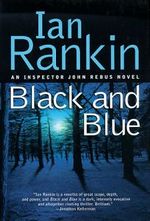
I didn’t expect that this would live up to Black and Blue, and it didn’t. But it wasn’t a let-down in any sense — it was a different kind of story, a different kind of crime, and different motivations for John Rebus. Still, the essentials are there: Rebus, his outlook, his tenacity, his humor, and his demons. Crime fiction doesn’t get much better than this.

—–

4 Stars

2017 Library Love Challenge

Happy Birthday, Archie!

My annual tribute to one of my favorite fictional characters (if not my all-time favorite).

On Oct 23 in Chillicothe, Ohio, Archie Goodwin entered this world–no doubt with a smile for the pretty nurses–and American detective literature was never the same.

I’m toasting him in one of the ways I think he’d appreciate most–by raising a glass of milk in his honor.

Who was Archie? Archie summed up his life thusly:

Born in Ohio. Public high school, pretty good at geometry and football, graduated with honor but no honors. Went to college two weeks, decided it was childish, came to New York and got a job guarding a pier, shot and killed two men and was fired, was recommended to Nero Wolfe for a chore he wanted done, did it, was offered a full-time job by Mr. Wolfe, took it, still have it.” (Fourth of July Picnic)

Long may he keep it. Just what was he employed by Wolfe to do? In The Black Mountain he answers the statement, “I thought you was a private eye” with:

I don’t like the way you say it, but I am. Also I am an accountant, an amanuensis, and a cocklebur. Eight to five you never heard the word amanuensis and you never saw a cocklebur.

In The Red Box, he says

I know pretty well what my field is. Aside from my primary function as the thorn in the seat of Wolfe’s chair to keep him from going to sleep and waking up only for meals, I’m chiefly cut out for two things: to jump and grab something before the other guy can get his paws on it, and to collect pieces of the puzzle for Wolfe to work on.

In Black Orchids, he reacts to an insult:

…her cheap crack about me being a ten-cent Clark Gable, which was ridiculous. He simpers, to begin with, and to end with no one can say I resemble a movie actor, and if they did it would be more apt to be Gary Cooper than Clark Gable.

I’m not the only Archie fan out there:

  • A few months back, someone pointed me at this post, The Wit and Wisdom of Archie Goodwin. There’s some really good stuff here that I was tempted to steal, instead, I’ll just point you at it.
  • Robert Crais himself when writing an introduction to a Before Midnight reprint, devoted it to paying tribute to Archie. — one of the few pieces of anything written that I can say I agree with jot and tittle.

In case you’re wondering if this post was simply an excuse to go through some collections of Archie Goodwin quotations, you wouldn’t be totally wrong…he’s one of the fictional characters I like spending time with most in this world–he’s the literary equivalent of comfort food. So just a couple more great lines I’ve quoted here before:

I would appreciate it if they would call a halt on all their devoted efforts to find a way to abolish war or eliminate disease or run trains with atoms or extend the span of human life to a couple of centuries, and everybody concentrate for a while on how to wake me up in the morning without my resenting it. It may be that a bevy of beautiful maidens in pure silk yellow very sheer gowns, barefooted, singing “Oh, What a Beautiful Morning” and scattering rose petals over me would do the trick, but I’d have to try it.

I looked at the wall clock. It said two minutes to four. I looked at my wrist watch. It said one minute to four. In spite of the discrepancy it seemed safe to conclude that it would soon be four o’clock.

She turned back to me, graceful as a big cat, and stood there straight and proud, not quite smiling, her warm dark eyes as curious as if she had never seen a man before. I knew damn well I ought to say something, but what? The only thing to say was ‘Will you marry me?’ but that wouldn’t do because the idea of her washing dishes or darning socks was preposterous.)

“Indeed,” I said. That was Nero Wolfe’s word, and I never used it except in moments of stress, and it severely annoyed me when I caught myself using it, because when I look in a mirror I prefer to see me as is, with no skin grafted from anybody else’s hide, even Nero Wolfe’s.

If you like Anglo-Saxon, I belched. If you fancy Latin, I eructed. No matter which, I had known that Wolfe and Inspector Cramer would have to put up with it that evening, because that is always a part of my reaction to sauerkraut. I don’t glory in it or go for a record, but neither do I fight it back. I want to be liked just for myself.

When a hippopotamus is peevish it’s a lot of peeve.

It helps a lot, with two people as much together as he and I were, if they understand each other. He understood that I was too strong-minded to add another word unless he told me to, and I understood that he was too pigheaded to tell me to.

I always belong wherever I am.

Ghost Hero by S. J. Rozan

Ghost HeroGhost Hero

by SJ Rozan
Series: Lydia Chin & Bill Smith, #11

Hardcover, 325 pg.
Minotaur Books, 2011

Read: October 13 – 16, 2017


So, Lydia Chin is approached by a potential client who is clearly lying about his identity about some paintings that are rumored to be in New York, and potentially on sale soon. This client really wants to establish a name for himself in Contemporary Chinese Art, and owning these paintings — preferably before they go on sale — will go a long way toward that. Here’s the trick, no one knows if they really do exist, or where they might be. Still the rumors persist, and in the “where there’s smoke, there’s fire” kind of thinking, they’ve got to exist. The trick is that the artist was killed in the Tiananmen Square protests of 1989. The client wants her to find them, prove they’re real (ideally), and help him get the leg up on the competition.

Like I said, Lydia doesn’t trust the man, and doesn’t understand why he picked her, but his cash is good and she’s curious (about him, the paintings, why he might want the paintings). So she takes the case, but doesn’t know where to start. Luckily, her partner, Bill Smith knows just the guy to talk to — another Chinese PI. Second generation ABC, from the Midwest, Jack Lee has an art degree and mostly looks into stolen and questionable art. Really, he’s the ideal PI to look for these paintings — and it turns out that someone else thought so, too and already hired him to do that. The three decide to work together on this, each playing to their own strengths.

From there, they dive deep into the New York Art Scene — at least those that brush up against Chinese Art — there are people who care about art, people who care about influence and money, and those who really, really care about art. Some care so much that Jack Lee gets shot at more than once. There are other threats as well — the idea that Chau might still be alive is a pretty hot political topic, and various governmental entities seem interested in what Lydia is up to.

The case is pretty interesting — and the various people that the trio interacts with are so interesting, so colorful, occasionally so despicable. The solution that Lydia cooks up is worthy of Blackadder’s Baldrick, but I kind of liked it. It works as a solution in a novel (I hope nothing like this would happen in real life). The ultimate reveal was a bit too obvious, but I still enjoyed it — and the rest of the mystery made up for it.

I’ve said time and time again, I love reading the back-and-forth between Lydia and Bill — adding Jack to that seems like a gamble. Thankfully, it worked wonderfully, he fits in with the two of them so wonderfully well that you wish he’d been around for a couple of novels previously to this. It almost doesn’t matter if the plot behind the book was entertaining, just get the three of these guys around a beverage or two and it’s worth it.

On the one hand, I’m kind of with Lydia in not understanding why someone would come to her to look for this — art isn’t her thing. On the other hand, she dealt with art dealers in China Trade, Chinese heirlooms in Reflecting the Sky, missing jewels in The Shanghai Moon (which yeah, is sort of precious minerals, but the art aspect of the Moon seems as/more important than the gems). So it’s not like she’s an utter novice. Sure, going to Bill Smith or Matt Scudder would seem like a bad move — but Lydia’s a good choice for this case (not as obvious a choice as Jack Lee, I grant you). And how could I not think of another PI in New York?

There was one thing I was disappointed in: I was truly hoping/expecting that this book would contain a clue (if not more) about why this was the last book to be published in the series — and given the 6 years that have passed since then, it seems pretty likely that this was it for the series. I’m assuming that it wasn’t planned, but can’t find any information about it (which means that someone’s going to come along in half an hour with a link to 15,000 words about the reason for this.) Update: A few hours after posting this, Rozan assured me that the series is not over, which is great to hear

A fun, fast-paced read that is enjoyable, engaging and all around entertaining — which is pretty much a great way to describe any novel from Lydia Chin’s point of view. Give this one a shot and then pick up the others (or pick up the others, and then this one — either way).

—–

4 Stars

2017 Library Love Challenge

Tilt-a-Whirl (Audiobook) by Chris Grabenstein, Jeff Woodman

Tilt-a-Whirl (Audiobook)Tilt-a-Whirl

by Chris Grabenstein, Jeff Woodman (Narrator)
Series: John Ceepak Mystery, #1
Unabridged Audiobook, 8 hrs., 18 min.
Audible Studios, 2007

Read: July 18 – 20, 2007


Danny Boyle grew up in Sea Haven, NJ — a tourist trap of a town on the Jersey Shore. He likes the life — hanging out with the friends he’s had since high school, goofing around, eating and drinking more than he should. He’s got a nice Summer gig — working as a Part-Time police officer. The downside is his partner — John Ceepak, an Iraq War vet and former MP. He’s so by the book, he might as well have written it. The Sea Haven chief served with Ceepak and offered him a job when he was done with the Army. After an incident (IED-related), Ceepak can’t drive anymore — which is where Danny comes in.

It’s not an ideal working relationship, but Danny can put up with Ceepak’s eccentricities well enough. Until one day their pre-shift breakfast is interrupted by a girl covered in blood, standing in the middle of the street screaming. Ceepak jumps into action, and Danny tries to keep up. The girl takes them to the local amusement park, to the Tilt-a-Whirl ride, where her father lies shot dead. They’d snuck in before the place opened and had been held up by some junkie hiding near the ride. Or so she reports later. Her father owns half the real-estate in NY and NJ (or so it seems), sort of a would-be Trump, so his murder is big, big news.

Ceepak and Danny have to deal with media attention, annoying lawyers, gang members possibly trying to go straight, local politics, a Crime Scene Investigator that’s more of a hindrance than a help, and Danny’s inexperience if they’re going to solve this murder and let Sea Haven get back to what it does best in the summer — taking in every tourist dollar that it can.

The book is told with a light touch — Danny’s a smart-aleck and is (truthfully) too immature for his job; which is bad for the populace of Sea Haven, good for the reader/listener. But the lightness never gets in the way of the seriousness of the initial murder, and the crimes that follow.

Woodman is exactly the narrator that this book needed — he’s able to sound the right age for Danny, the right attitude, everything (apparently, he does a lot of YA Audiobook work, that makes sense to me). Until I heard Woodman, I hadn’t thought what a challenge it might be to get just the right narrator for this. Thankfully, I noted that with a strong sense of relief, because man…he was so good.

The Ceepak books were one of those series I fully enjoyed, and had forgotten how much I had liked them since I (apparently) finished the series. This audiobook helped me remember how much I missed reading them. If you haven’t gotten around to them, you should — either as an audiobook or text — Ceepak and Boyle are some of the most entertaining police officers around.

—–

3.5 Stars

Page 104 of 153

Powered by WordPress & Theme by Anders Norén