Category: Mystery/Detective Fiction/Crime Fiction/Thriller Page 107 of 153

The Blinds by Adam Sternbergh

The BlindsThe Blinds

by Adam Sternbergh

Hardcover, 382 pg.
Ecco, 2017

Read: August 17 – 19, 2017


I just finished this and am not sure how to talk about it. I don’t know what I can say without ruining things, so I’m just going to copy and paste from Sternbergh’s page:

Welcome to Caesura, Tx, aka The Blinds, a dusty town in the Texas Panhandle cut off from the outside world and populated entirely by former criminals and witnesses put in protective custody. The twist: None of these people know who they are, because all of them have had their memories of their pasts erased. All the better to give them a fresh start and a second chance. But one thing is clear to them: If they leave the Blinds, they will end up dead.

For eight years, Sheriff Calvin Cooper has kept an uneasy peace—but after a suicide and a murder in quick succession, the town’s residents revolt. Cooper has his own secrets to protect, so when his new deputy starts digging, he needs to keep one step ahead of her—and the mysterious outsiders who threaten to tear the whole place down. The more he learns, the more the hard truth is revealed: The Blinds is no sleepy hideaway. It’s simmering with violence and deception, aching heartbreak and dark betrayals.

If I say one more thing about the plot/premise I’m afraid that I’ll ruin things for you. The book starts off with a whole lot of exposition, setting up the world (well, town, to be accurate) it takes place in — but Sternberg works that in well with the plot, so it doesn’t get bogged down with the exposition. Then once the dominoes are all set up, he knocks them down and you just sit back and watch.

But you don’t actually sit back — you lean forward in your seat and turn the pages quickly. At one point there are four or five conflicting plans at work, and it’s a footrace to see which will get accomplished first (and hopefully not get supplanted by another). At times it seems like any of them will end up working out — they’re all plausible.

It’s just so great. So compelling. Such a fun ride.

Yeah, the characters could be a bit more fully-developed, but that’s hard when part of their history, part of their personality — part of them — has been deleted. So, I’m not sure I can actually complain about that. We do get plenty about who the characters are in the here and now — definitely enough to get you invested in them.

In this driving plot, there’s some exploration of the nature of memory, of personality, of the nature of man, of evil. There’s some moments of triumph, of despair, heartbreak, and more than a couple of instances of “what??” You will learn a Russian phrase that will chill you to your bone and you will be ever so happy that Sternberg found gainful employment in journalism rather than turning to a life of crime.

On page 119, I wrote, “I’m either going to hate this ending or I’m going to be recommending this book for months.” And I didn’t hate it — Sternberg’s got another winner here. If his Shovel Ready wasn’t your thing, this is different enough that you should give it a shot. He’s got a strong voice, a twisted imagination and a knack for story telling — this book as secured him a place on my “auto-read” list.

Just go read the thing, I’m going to stop before I ruin something.

—–

4 1/2 Stars
2017 Library Love Challenge

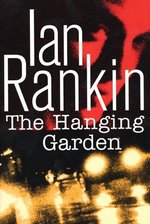
Let it Bleed by Ian Rankin

Let it BleedLet it Bleed

by Ian Rankin
Series: John Rebus, #7

Hardcover, 287 pg.
Simon & Schuster, 1996

Read: August 9 – 10, 2017

He stood there shivering after the warmth of the pub and his car. He was a few yards from where the boys had jumped. The area was cordoned off with metal barriers, anchored by sandbags. Two yellow metal lamps marked off the danger area. Someone had climbed over the barriers and laid a small wreath next to the broken rail, weighing it down with a rock so it wouldn’t be blown away. He looked up at the nearest of the two vast supports, red lights blinking at its summit as a warning to aircraft. He didn’t really feel very much, except a bit lonely and sorry for himself. The Forth was down there, as judgmental as Pilate. It was funny the things that could kill you: water, a ship’s hull, steel pellets from a plastic case. It was funny that some people actually chose to die.

“I could never do it,” Rebus said out loud. “I couldn’t kill myself.”

Which didn’t mean he hadn’t thought of it. It was funny the things you thought about some nights. It was all so funny, he felt a lump forming in his throat. It’s only the drink, he thought. It’s the drink makes me maudlin. It’s only the drink.

Yeah, right.

Before we get to this moment of self-deception (or self-mockery, it could go either way with his sense of humor), we’re treated to what’s quite possibly the most action-packed few pages in the series thus far — more happens in the first 6 pages of this novel than can happen in chapters of Rebus novels. Two suspected kidnappers are leading the police on a high-speed chase, and no one’s relishing it more than Chief Inspector Frank Lauderdale. No one’s hating it more than Inspector John Rebus. Things go really bad from there, but not in the way that anyone expects (least of all the reader, as jaded as we might be from too many crime novels).

While the police are still trying to sort out what exactly happened there, a man walks into a (poorly attended) public meeting with a Councilman and shoots himself in front of the Councilman. Once Rebus visits the widow, something starts bugging him. There’s just something wrong with that suicide (more than just what has to be wrong to lead to a suicide). Rebus starts asking some questions. Before he realizes it, he’s investigating two incidents of suicide connected to two Councilmen.

And then pressure comes down on Rebus to stop. Which works about as well as you’d think. He’s “encouraged” to take a few days of leave, which he uses to dive in without restraints to get his answers. This series as dabbled in political intrigue, power brokering and the like before, Let it Bleed takes it up a notch. What can happen to Rebus if he falters — or what can happen to him if he makes all the right people happy — shows that he’s in a whole other league now.

And then after all the action at the beginning of the novel, Rankin gives us an incredibly talky ending. And it works. Not many novels about police officers or detectives end with as much dialogue, as many meetings, as this does, but it’s entirely satisfying. No one’ll be sitting there for the last couple of chapters just wishing for a car chase, a gun fight, or anything like that. Rebus being smarter, wilier, and unwilling to bend is what makes this ending not only inevitable, but just what the reader needs.

There are a lot of criminals in this novel, but most of them aren’t your typical mystery novel “bad guys.” They’re guys who take advantage of the system, manipulate the system, and then try to protect their assets (that last one is the most problematic). There are textbook villains — and not all of them pay for it — but with Rebus around, you know that some justice will be meted out.

Our favorites are back — so is Patience — Rebus’ daughter’s back in Edinburgh, on her own now. Siobhan Clarke, Farmer Watson, Gill Templer, and Brian Holmes all are involved. Clarke is the most interesting, yet again, her determinism and ability to stay (pretty much) in line with her superiors while helping Rebus make her a fun character to spend time with. She’s more involved in these cases than she has been in the past — and it’s good to see Rebus having someone allied with him. Thankfully, she’s a good police officer, too. Because, honestly, Rebus is a horrible police detective. He’s just too much of a lone wolf, too intuitive, not the kind of detective you want building a case for you. With Templer, Farmer and Clarke around, at least he’s got some good, capable help.

A gripping, tense, intriguing, and frequently funny, novel. Let it Bleed is just a great book. This series has been growing on me, little by little for seven books now, that’s pretty clear. Let it Bleed is above and beyond the best of the bunch, and I am looking forward to what’s coming up.

—–

4 1/2 Stars

2017 Library Love Challenge

Pub Day Repost: Fox Hunter by Zoë Sharp

Fox HunterFox Hunter

by Zoë Sharp
Series: Charlie Fox, #11
eARC, 400 pg.
Pegasus Books, 2017
Read: May 22 -24, 2017

I honestly had given up on seeing another Charlie Fox novel — which was a cryin’ shame, but I get that authors have to move on sometimes. But then a couple of weeks ago, when I logged onto NetGalley to take care of something, there it was on the front page — and I jumped to request it (despite promising myself I was taking a NetGalley break to catch up on other things).

“You were a soldier, Miss Fox , and you are now a bodyguard. There is an old saying that is true in both cases : To survive—to protect a life— you have to be lucky every day. But your enemies, they have to be lucky only once.”

Following his near-miraculous recovery from the injuries no one expected him to survive, Charlie Fox’s love/boss, Sean, hasn’t been the same. Now, it looks like he’s settling old debts — not necessarily his own. The fact that he’s doing that is bad enough — it’s not quite de rigueur for someone in his position to go around exacting vengeance. But the way these debts are being settled (if that’s what’s happening) speaks to someone not in full control. Charlie fights for the opportunity to do the boots-on-the-ground investigation to prove that it’s not Sean’s handiwork.

This ground is Kuwait and Iraq, and before she knows it, Charlie is dealing with soldiers/mercs that she’s annoyed in the past, Russians with a grudge, Iraqis trying to defend cultural artifacts and certain three-letter agencies mucking around in it all — and every sign is that Sean’s up to exactly what Charlie is convinced he’s not doing. Before the book ends, she’ll come face to face with multiple faces from her past (none of which she ever wanted to encounter again) and will be forced to reassess some of the most formative events of her past and career.

For those new to Charlie Fox — this would make a pretty good entry point, by the way — she’s former British Army, who received some special forces training, before her career was derailed. Since then she’s done plenty of work as a bodyguard and worked other types of security. She’s stubborn, loyal, inventive and tenacious. And deadly — it eats away at her, but when push comes to shove, Charlie’s as lethal as you can find.

Killing because your life—or that of another—is in immediate danger is one thing. I’d been trained to accept that possibility right from the start of my army career. But appointing yourself judge, jury, and executioner is quite another. As is doing it anyway, only to discover that it doesn’t trouble your conscience nearly as much as it should.

Sharp has given Charlie a strong voice — one you can believe can accomplish all she needs to, yet one that’s entirely human.

The new characters are well developed — and we see plenty of old faces, too. One unexpected antagonist is almost too evil to be believable (but, sadly, I imagine that plenty of Armed Forces have people just like him). There’s one death that was a real gut-punch for the reader (or at least this one) — that’s a testimony to Sharp’s skill that she can create someone like that in a brief period.

I don’t remember any of the previous novels being all that tied to current events, but Fox Hunter clearly took place post-Brexit and during the Trump administration. I’m not saying that’s bad, but oddly specific — and changes when the rest of the books happened as well, because this didn’t take place long after Die Easy despite the 5 years between the novels — I’d have had an easier time swallowing the book without that specificity, but not much — I note it because I found it strange.

That aside, this is exactly what Charlie Fox readers have come to expect from her — she takes the proverbial licking and keeps on ticking, and kicking, swinging and everything else. Best of all, she thinks — she plots, she improvises, she keeps on trying. Not to sound cliché, but this damsel finds herself in plenty of distress — and gets herself out of it (occasionally with help — but not in a Nell Fenwick sort of way; more like Lt. Templeton Peck way). Plenty of action, plenty of violence, plenty of suspense — all with some character development, moving ongoing story arcs forward (while re-evaluating everything before).

Not much else to ask for — except another volume soon.

Disclaimer: I received this eARC from W. W. Norton & Company via NetGalley in exchange for this post — thanks to both for this.
N.B.: As this was an ARC, any quotations above may be changed in the published work — I will endeavor to verify them as soon as possible.

—–

4 Stars

Dead is Good by Jo Perry

Dead is GoodDead is Good

by Jo Perry
Series: Charlie & Rose Investigate, #3

Kindle Edition, 282 pg.
Fahrenheit Press, 2017

Read: August 3, 2017

Oh, and after all this time I learned something else about being dead.

Death is failure.

Death is loss.

Everything—who you are, what you know—goes.

Whoever you thought you were, you weren’t and you’re not.

When he was alive, Charlie Stone was married multiple times to pretty horrible women (if we’re to believe him — and we might as well, he seems pretty upfront and honest about this kind of thing), not that he was any catch, either. But he really only loved one person, Grace Morgan. Grace broke things off with Charlie and moved on with her life, but apparently after hearing about his murder, she was moved to change her approach to art — deciding to challenge the audience, forcing them to realize how close to death they are.

Yeah, it sounds pretty silly and pretentious to me, but hey…that’s not the important part of the story. Maybe if we got more examples of her art, I’d care more and maybe even understand. What is important about Grace, for our purposes, is that her life is in danger, it’s because of this danger that Charlie and Rose have been brought from their afterlife-limbo back to Earth.

The book opens with one of the more blatant suicide-by-cop scenes you’ve ever read, which is intended to serve as protection for Grace. It doesn’t work out, or the book would be really short. Powerless to do anything but watch and hope things turn out okay, Charlie and Rose travel around L.A. discovering for themselves what it was that endangered Grace in the first place — which brings them into a world of drugs, sweatshop workers, deceptive piñatas, and smuggled birds.

This is a very tangled story, it takes Charlie quite a while to put the pieces together — Rose has her own priorities in this mess and spends some time away from Charlie, unwilling to turn her focus on his behalf. The way that this criminal enterprise is eventually revealed to work not only seems like something that really exists, but is revealed in a way that is narratively satisfying.

Charlie will tell his readers over and over that there’s no character growth in death — that’s nonsense. Post-mortem Charlie is a much more emotionally mature and self-sacrificing kind of guy than pre-mortem Charlie was. In this book we see him come to — or at least acknowledge — a greater and deeper understanding of what love is, and what he allowed his previous relationship to become. It may not do him any good in the afterlife, but Charlie is better for it, and in someway we can hope that Grace is better off having gone through all this, so that whatever life has in store for her can be tackled face-on.

I love these characters — even while we readers don’t fully understand their circumstances, how they know where to go, what brings them to this world at certain times. Even while they don’t have much better of an idea than we do (at least Charlie doesn’t). I love how while they can’t interact with their environment, the people they see and events they watch unfold, they are driven to find answers, driven to care about what’s happening. There’s something about that compulsion — and success they have in figuring things out — that matters more than when Bosch or Spenser or Chin and Smith put all the pieces together to thwart someone.

This wasn’t as amusing as previous installments, but it was just as satisfying — maybe more so. For a good mystery with oddly compelling characters, once again, look no further than Jo Perry.

The L.A. County Department of Medical Examiner-Coroner has a gift shop?? Why isn’t anyone investigating this? It may be real, it may be popular and legal. But surely that’s a crime against tact, right?

—–

4 Stars

The Late Show by Michael Connelly

The Late ShowThe Late Show

by Michael Connelly
Series: Renée Ballard, #1

Hardcover, 405 pg.
Little, Brown and Company, 2017

Read: July 17 – 22, 2017


Det. Renée Ballard works the graveyard shift out of the Hollywood Station, nicknamed the Late Show. She and her partner, the veteran detective John Jenkins, are basically place-holders — they handle the initial investigation of a crime (or sign off on a suicide) and then hand off their notes to one of the other detective squads that work days. It’s not demanding work — Jenkins likes it because there’s almost no overtime, and he can go home and be with his sick wife during the day. Ballard is stuck on the Late Show because she made some political waves a couple of years back, she couldn’t be fired over it, they could just make sure she found the prospect of another line of work appealing.

We meet Ballard on a pretty eventful night, she and Jenkins look into an elderly woman’s report of her purse being stolen and people using her credit cards; the vicious assault of a transvestite prostitute; and are involved in a minor role following a night club shooting. She and her partner are supposed to be turning over their involvement in these cases to someone else, but Ballard just can’t let go. She works the murder under the radar (as much as she can), gets permission to keep at the assault (which should not be construed as her investigating it according to Hoyle), and is brought back into the robbery organically — I stress this because it’s not all about Ballard skirting regulations, she works within (or near) the system.

Connelly constructs this like a pro — weaving the storylines into a good, cohesive whole. Each story feels like it gets enough time to be adequately told (without the same amount of space being devoted to each), there’s no grand way to connect them all into one, larger crime (which I almost always enjoy, but this is a bit more realistic), while something she learns on one case can be applied to another.

There’s one point where I thought that a plot development meant “oh, now we’re going to wrap things up now — cool.” Which I never would have thought if I bothered to pay attention to which page I was on, but it still seemed like the point that most writers would wrap it up. Instead, Connelly plays things out the way you expect, and then uses that to turn the novel in a different direction.

The book is full of nice little touches like that — Connelly’s been around enough that he knows all the tricks, knows all the plays — he can give you exactly what you think he will and then have the result come up and Connelly’s you.

In the future, I’d like to see a little more about Jenkins — but then again, how much did Connelly really develop Jerry Edgar or Kiz? Still, this is a new series, so he can develop things a bit more — I don’t think there’s a lot that can be done with Jenkins, but he can be more than just the guy who splits paper work with her. I hope that [name withheld] doesn’t become Ballard’s Irving, but I can think of worse things that might happen, so I won’t complain. I also hoped I’d get out of this with only 1 bit of comparison to the Bosch books. Oops.

The best thing — the most important thing — to say here is that Renée Ballard is not a female Harry Bosch; all too often, an established crime writer will end up creating a gender-flipped version of their primary character — basically giving us “X in a skirt” (yeah, I’m looking at you, Sunny Randall). This isn’t the case here. There’s a different emotional depth to Ballard, different lifestyles, different aspirations. Sure, she’s driven, stubborn, and obstinate, just like Harry — but name one fictional detective that isn’t driven, stubborn and obstinate. Readers don't show up in droves for slackers. Is there plenty of room for development and growth for Ballard in the future? Oh yeah. She's not perfect by any means (as a fictional character or as a person). But what a great start.

Same can be said for the series, not just the character — this book does a great job of capturing L.A. (an aspect of it at least), has a great plot, with enough turns to keep the reader satisfied, and a final reveal that's truly satisfying. The last thing that Connelly really needed was to start something new — but I'm glad he decided to.

—–

4 Stars

The Hangman’s Sonnet by Reed Farrel Coleman

The Hangman's Sonnet Robert B. Parker’s The Hangman’s Sonnet

by Reed Farrel Coleman
Series: Jesse Stone, #16

eARC, 352 pg.
G.P. Putnam’s Sons, 2017

Read: July 3 – 5, 2017


On the one hand, I know that Coleman is a pro, and that he’s going to approach each series, each character from a different angle. But he’s so effective at writing a broken, grieving Gus Murphy, that you have to expect a grieving Jesse Stone to be written as effectively and with a similar depth. Which gave me a little pause when it came to cracking this one open — how much of a mess would Jesse be?

Big. A big mess.

Still, I was chuckling within a few pages — Jesse’s pursuing a path to self-destruction unlike any he’s had before, even that which cost him his career with the LAPD, but at his core he’s still the same guy we’ve been reading for 20 years. He may not care about himself (or at least he wants to punish himself), but Suit, Molly, and the rest of Paradise. When push comes to shove, he’ll do what he has to do. Some times he might need prompting, however.

But let’s set that aside for the moment — there are essentially two stories involving Jesse and the PPD. There’s the titular sonnet — a reference to a legendary lost recording by Massachusetts’ answer to Bob Dylan, Terry Jester. Sometime after this recording, Jester pulled a J. D. Salinger and disappeared from the public eye. Jester is about to turn 75, and a large birthday gala is being planned on Stiles Island. Jesse has to consult with Jester’s manager, PR agent and the chief of security for the island. Jesse can’t stand this idea — he can’t stand much to do with Stiles Island — he just doesn’t want to put up with the hassle, the celebrities, the distraction from the typical duties of PPD. But he doesn’t have much choice — for one, there will need to be something done to deal with the traffic, celebrities, and what not; but Jesse also has to deal with the mayor’s political aspirations. And you don’t get very far without the support (and money) of celebrities and the positive media coverage that kind of thing should bring.

On the other end of the spectrum, an elderly woman has been found dead in her bed, but under suspicious circumstances. She has deep ties to the history of Paradise, causing her death to grab more headlines than it might otherwise. Did I mention the mayor’s political aspirations? Well, the last thing she needs is an unsolved murder when she’s trying to cash in on the media attention that Jester’s celebration will bring. So she starts applying pressure to Jesse. When Jesse starts to think there’s a link between her death and the hunt for The Hangman’s Sonnet master recording, the pressure — and the urge to drink — increases for Paradise’s Police Chief. Thanks to the Law of Interconnected Monkey Business, the reader knew there was likely a link all along, so I don’t think I gave away too much there.

That right there would be enough to get me to read and probably recommend. But you add Coleman’s writing into the mix and you’ve got yourself a winner. There’s a wonderful passage where Jesse meditates on the beauty of the accessories to his drinking — the different glasses, the bottles, the rituals. The mystery was solid work — and I was close to figuring everything out, but not close enough. When the final reveal was made, I felt pretty stupid, all the pieces were there I just didn’t assemble them correctly. There were a couple of “red shirt” criminals early on that were so well written, that even when you know they’re not going to stick around too long, you get invested in them (one of them had a death scene fairly early that most writers would let be predictable — and the death was — but the way that Coleman wrote it got me highlighting and making notes). Coleman even does something that Parker said he couldn’t do.

I won’t say that everything that happened during Debt to Pay has been dealt with thoroughly — it hasn’t. But, most of the characters have been able to get a degree of resolution and closure that means they can move forward. Not perfectly, perhaps, but honestly. Jesse, in particular, might come back for book 17 in a significantly better place (or at least significantly different) — but the core will be there, and woe on any criminal that steps foot into Paradise.

Great character moments; slow, organic development; and top-notch writing. Coleman delivers again, continuing to take the foundation laid by Parker and building on it in a way that’s true to the spirit of the world Parker created, but brought to us with a newfound depth.

Disclaimer: I received this eARC from Putnam Books via NetGalley in exchange for this post — thanks to both for this.

—–

4 1/2 Stars

Mortal Causes by Ian Rankin

Mortal CausesMortal Causes

by Ian Rankin
Series: John Rebus, #6
Hardcover, 310 pg.
Minotaur Books, 1994
Read: July 15 – 18, 2017

When he’d washed his eyes last night, it had been like washing behind them as well. Always it came to this, he tried to do things by the books and ended up cooking them instead. It was easier, that was all. Where would the crime detection rates be without a few shortcuts?

Before Rebus gets to his shortcuts, he’s called to investigate a homicide. A particularly grisly one, reminiscent of some that Rebus saw in Northern Ireland when he was serving there.

It’s his familiarity with that execution that gets him loaned to a special squad also investigating the homicide, especially as it seems tied into some gun smuggling. Rebus isn’t pleased at all to be the new guy — much less, the temporary new guy — on a team, as much as he seems to appreciate some of the individuals on the team (while others make him think more fondly of Chief Inspector Lauderdale). The investigation takes him to Northern Ireland to collect some intelligence, to a dangerous neighborhood, and he brushes up against an American who’s funneling guns of all kinds to (and through) Edinburgh.

In the midst of all of this, Rebus has some drama in his personal life — nothing involving his tenants or brother, but things with Patience Aitken aren’t going as smoothly as one might want (are they ever?) — and there’s another woman who has Rebus in her sights (the guy isn’t a catch, from what I can tell — how does this happen so regularly?).

Throw in an appearance by Big Ger Cafferty while the bodies are piling up and you’ve got yourself a story.

I’m not sure why I don’t have much to say about this one. Maybe because we live on this side of the Good Friday Agreement? But that doesn’t seem to ring true. Rebus is Rebus, Clarke is Clarke, Holmes is Holmes, Farmer Watson is off the wagon, but still pushing his bad coffee . . . the new squad ha some interesting characters, but we don’t spend much time with them. There are some great and colorful characters we brush into during the investigation, too. I don’t know. I liked it, but I can’t think of anything to say beyond that.

There’s a lot to commend in this novel, from great lines like: “He’d had wrong hunches before, enough for a convention of the Quasimodo fan club”; to the wide-ranging sources of trouble for Rebus; to the horrible history and equally horrible present behind the crimes — this is a solid and haunting novel. Something about this was a little off, I’m not sure what — at least as I think back on it, it doesn’t seem as fully developed as the last two. But in the moment I was gripped. I’m not saying that this isn’t fine, I just know Rankin can do better.

—–

3.5 Stars
2017 Library Love Challenge

The Mask (Audiobook) by Taylor Stevens, Hilary Huber

The MaskThe Mask

by Taylor Stevens, Hillary Huber (Narrator)
Series: Vanessa Michael Munroe, #5

Unabridged Audiobook, 13 hrs., 54 min.
Random House Audio, 2015
Read: June 1 – 6, 2017


I spent a lot of time being annoyed with Michael in this novel — more time being annoyed with Miles, however. Well, that’s not true — events keep Miles off of the board for most of the book, so let me say that I spent more time annoyed with him while he active. I get that communication is hard for them, and I guess it was good to see that Miles was human, too — even his ability to understand Michael’s needs and desires has limits.

But I’m getting ahead of myself.

So Michael’s got her head on right after The Catch and goes to join Miles in Japan. He’s there in a strange corporate security consulting gig that he really won’t clue her in on. They spend a few months together, him working days and her trying not to get bored and learning Japanese. The latter of those two works a whole lot better than the former. She needs something to do — and not in the “I’ve gotta kill someone or take drugs” kind of way she did back in The Vessel. She just needs something to occupy her time while he’s putting in 15 hour days. Which isn’t dong their relationship any good. Before she can have it out with him, he gets arrested for murdering someone at the tech company he’s working for. If she had tried to talk, if he’d explained himself a little better — if they had communicated at all . . . so much of this novel wouldn’t have happened. Too many books/movies/TV shows rely on this poor interpersonal communication to force plots forward, it really gets on my nerves.

First, we get a little lesson in Japanese jurisprudence, which by itself was enough to convince me that I don’t want to end up arrested in Japan (not that I really want to be arrested anywhere). Then Michael goes to work to clear his name, no one else is going to. The hoops she has to jump through make her previous adventures seem easy — sure, she was in more peril in most of the previous books, but it seemed easier for her to get around and get the information she wanted. Cultural and corporate protocols are tougher to beat by bribery, sensuality and violence than other things, I guess. Throw in some underworld figures and you’ve got yourself a thriller worthy of Monroe. I really enjoyed this story once Miles got arrested and things got moving — Stevens is getting better at plot intricacies.

There’s a great corporate espionage plot throughout with an operative that could probably sustain her own novel if Stevens ever got around to it. I’m not sure I can say more than that without messing something up. But as despicable as I find (some of) her methods, they made for good reading.

About the time that I’d given up on Michael doing more than outwitting her opponents, she got sucked into a very violent confrontation. I didn’t spend a second thinking that she was in trouble, but man, she had to work hard to eliminate these guys. There’s that scene in The Vessel where Stevens cuts away from the action, and we don’t get to see Michael kill her captives, we just know she’s about to do something and then Miles comes along later and finds the aftermath. This fight scene was probably pretty similar to that — but there’s no cut. We get the whole thing.

I should take a moment to talk about Hilary Huber, but I can’t say anything about her narration than I’ve said before. Now that I’m caught up with these, I’m going to have to track down some other books that she’s narrated.

I never expected a happily ever after scenario between Michael and Miles — but I expected something better than this (not that this is in any way, shape or form the end of their relationship), and that took some of the shine off this book for me. Otherwise, this was very entertaining, gripping, and so on — a Michael Monroe thriller that tops its predecessors, and deepens our understanding of Michael. Not much more to ask.

—–

3.5 Stars

Open Apology to Susan Barton and Robert Germaux

Public screw up, public apology.

I’ve been out of town for a couple of days (roughly 5 pm Tuesday to 11:40pm Thursday) for some medical screening and evaluations for one of my kids (long story, not that relevant, but if you’re super curious, feel free to check out The Backup Kidney blog). To help keep things alive during that time, I signed up for a couple of Book Tours — posts that are pretty much prepared by someone else, and can be scheduled well ahead of time.

One of those was for the entertaining read, One by One by Robert Germaux, as put together by Susan Barton. Those posts went up Thursday, technically yesterday now. Monday while packing, I finished putting those together, got them scheduled to post and checked another item off my pre-trip To Do list, and thought no more about them.

They looked fine, everything worked in Preview mode.

Then this morning, somewhere between a chest X-Ray and an echocardiogram (I’m not exactly sure when), I got an email from Ms. Barton that things weren’t looking right — no images were showing up — and could I please fix that. Well, no, I was on a spotty and slow connection with only my phone — I really couldn’t even get a reply composed given all that was going on. I was 400+ miles and 13-14 hours away from being able to sit down and fix things.

I don’t know what happened, again, it all looked good Monday night. I didn’t bother to troubleshoot — I just uploaded the files with different names and changed the coding on the posts. I believe things are displaying correctly now. I sure hope so. If not, I’ll try again as soon as I get home from work tomorrow — and then, I don’t know, try self-immolation.

I’ve given the explanation, now the apology — I’m very sorry, Ms. Barton and Mr. Germaux. I said I’d do something and I didn’t deliver. The “irresponsible” in the blog title is supposed to mean that I read whatever, with only a regard for what catches my eye, not in an effort to better myself or be literary or live up to whatever standard — it’s not supposed to be an ethic.

GIVEAWAY: One by One by Robert Germaux


We hope you’ve enjoyed these posts today, and are interested in the book. Click here to enter the Rafflecopter giveaway for One by One by Robert Germaux

Page 107 of 153

Powered by WordPress & Theme by Anders Norén