Category: Mystery/Detective Fiction/Crime Fiction/Thriller Page 127 of 153

Hell is Empty by Craig Johnson

Hell is EmptyHell is Empty

by Craig Johnson
Series: Walt Longmire, #7

Hardcover, 312 pg.

Viking, 2011

Read: August 21, 2015

Where Junkyard Dogs started off with a chuckle inducing bang, this one starts slower, and makes it clear early on that creepy and foreboding are going to be the order of the day.

We join Walt and Deputy Santiago ‘Sancho’ Saizarbitoria as they’re transporting three felons to meet up with a prison transport and a FBI team. Two of them are pretty hardened guys, guys who scare people like me — but the third? He’s the kind who scares people like them. He goes by the name Shade, and right away, he fixates on Walt in a pretty unhealthy way. And you know that the rest of the novel is going to be about this.

Turns out, Shade is going to help the FBI locate his first victim’s remains, they’re somewhere around where the meet up is to happen. Naturally, the remains are in Absaroka County, so Walt and Sancho get to spend more time with Shade and the FBI. It doesn’t take a genius to figure out what’s going to happen — Shade’s going to escape, he’s going to kill many law enforcement officials, and Walt’s going to have to save the day. Johnson telegraphs this (there’s no way to avoid it), and even though you know it’s inevitable, you still watch it through half-opened eyes.

Oh, naturally, there’s a record-setting winter storm about to hit, too. Can’t forget that.

As standard, boiler-plate as much of this sounds, Johnson makes it work. It’s taught, it’s gripping, with just the right mix of tension, determination, and humor. It will keep you turning the pages, needing to know what’s coming next. Even as most readers are going to have the whole thing pretty-well mapped out in their heads from the beginning — it’s how Johnson executes this so well is a testimony to his skill and the reason that you’ll keep turning those pages as fast as you can.

Vic and Henry are almost absent through this book — and Cady’s appearance is token at best. But Johnson uses their brief appearances to their most. This novel is about Walt’s struggle against Shade and against nature — both seem to be focused on killing him.

Sancho, who is really becoming my favorite non-Walt character in the series is around more than those other three combined; although after the introductory chapters he’s off-screen until the end as well. Before then, he not only makes amusing contributions to a very dark book, he’s an important part of the plot. After his recent near-death experience and career crisis, Sancho’s taken to trying to expand his horizons and catch up on the Liberal Arts education he skipped over. So he had those who did get that education to compile a reading list for him — a copy of which is included as an Appendix. It’s a good list and would be helpful for most people — and gives us a nice look into the personalities of those that compiled the list.

In the acknowledgments, Johnson talked about how difficult this novel was to write — and I can see why. But, as we have come to expect form him, when he set his mind to it, he pulled it off. A gripping tale of man against nature, man against man, man against himself, told with Johnson’s signature style and wit, with one foot in Dante and the other in Indian folklore. Not an easy task, but one well done.

—–

4 Stars

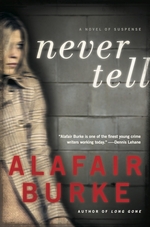
212 by Alafair Burke

212212

by Alafair Burke
Series: Ellie Hatcher, #3


Hardcover, 368 pg.
Harper, 2010
Read: February 25 – 26, 2015
It’s a law that in detective novels if you have two completely unrelated crimes being investigated, that one of the things the detectives are going to discover before all the pieces fall into place is that the crimes are completely related — one is very likely the cause of the other.* So, in 212 we start with Crime A, and then move onto Crime B — and sure, there’s a chance that A was just to reintroduce to this world, maybe show how Ellie and her partner are just frustrated in general, and maybe set them up for something. Maybe A is there simply to remind us all that she’s human and vulnerable and not perfect.

We leave Crime A for B. It doesn’t take too long before it’s clear that B is going to be the focus of the novel, and that frankly, you’d like the novel to be short, because you don’t want the perpetrator walking even fictional streets for long.

Right away, I started to wonder just how she was going to the the two crimes together, and by page 93 I was pretty sure that the theory I’d been percolating would be correct, and I was feeling a little clever. Which lasted a while, until Burke showed me that I was no where near to the right path. For my ego’s sake, I’m just assuming that an early draft matched my thinking but then she had a brain storm to make everything better.

As usual, this is nicely plotted, well-paced, filled with likeable (when they’re supposed to be) and relatable characters. Also typically, Burke nails a lot of the little moments. It’s this kind of thing that elevates this over other similar novels. For example, when the parents of the central victim are notified of her death, Burke’s description of the scene is striking. She captured the moment perfectly (at least, as I imagine it’d play out). Ellie’s speculation about the future of their marriage? Icing on a tasty cake.

There is one hefty Coincidence Ex Machina essential to the plot that stretches credulity, but somehow Burke pulls it off.

My other quibble with this is that Ellie acts too much like a super-cop for someone so young. I’m not denying that she’s got good instincts and that she should be given more credit than she frequently is. But Ellie isn’t Harry Bosch, she shouldn’t treat J. J. like Bosch does his partners. I’d really like to see her work with J. J. a bit more, take advantage of his experience more. I like Ellie, I think in a few years she would be NY’s equivalent to Bosch and then could be excused for treating her partner like an assistant (although, she’s mostly too nice to do that — another problem I have with this treatment — and no one’s ever accused Harry of being nice).

My complaints do nag at me while I read — but Burke’s plotting and voice are strong enough that I can push them aside until I’m done enjoying the book. Could this book be better? Could the series? yes and yes. But there’s little in the world that can’t.

A quick, enjoyable read — solid work that’s a little better than it needs to be.

—–

* The Law of Interconnected Monkey Business talked about in the Gideon Oliver novels, applies in a special way to all mystery novels.

—–

3.5 Stars

The Redeemers by Ace Atkins

The RedeemersThe Redeemers

by Ace Atkins
Series: Quinn Colson, #5

Hardcover, 370 pg.
G.P. Putnam’s Sons , 2015
Read: August 7 – 10, 2015

The first thing you want to do after being shot is make sure you are not shot again.

That sentence just makes me grin. Which, honestly, is not something that someone spends a lot of time doing while reading a Quinn Colson novel. But The Redeemers is not your typical Quinn Colson novel.

We start off with Quinn on one of his last days as sheriff — Johnny Stagg, the man Boss Hogg wanted to be, finally worked his magic and got the election result that he worked so hard for — Quinn’s out and a man of his backing is in. Most readers are going to instinctively prefer Colson. and want to not like his successor, Rusty Wise. Rusty was most recently an insurance salesman, although he did work as a police officer for a time (nothing to noteworthy in his career — or at least not that Stagg didn’t bury). The problem with being anti-Rusty is that he’s actually a decent guy (sorry, Johnny), who honestly thought he could do a better job than Colson — and gets thrown into the fire on his first day (hours before it, really). Now, we all know — and Lillie Virgil will tell you — Wise is no Colson, not even close. But he’s trying.

On the other end of the spectrum, are a few idiotic criminals — you’ve got the so-called master safe cracker and his University of Alabama Football-obsessed nephew/apprentice, hired by a local to help he and his friend get revenge on a crooked businessman. I’m fairly certain these criminals had noticed that they had no place to live without Elmore Leonard, so they dropped by to see how they’d fare in Tibbehah County. Short answer: they were better off before. If you don’t chuckle at these numbskulls at least one, call your doctor and get your funny bone checked. Lille and Wise have the lead on this investigation, but the wife of their victim gets Colson to check into it a bit, too.

He gets pulled in because that woman is the aunt of Anna Lee — who has definitively left her husband, who has definitively left town, so she and Quinn can definitively do something about their old flame. Which is just one of the balls that Quinn has to keep in the air on the personal side — his father’s moving into Quinn’s house and bringing his horses on to Quinn’s land; his sister Caddy has fallen way off the wagon again; and Quinn’s unemployed — unless he wants to get a job at the new Wal-Mart, he’s going to have to do something about that. There’s an element of “oh, this again?” with Caddy’s struggles with drug addiction. But what do you want from that kind of thing? And with Quinn’s father, I felt a strong, “ugh, how long are we going to out up with this guy?” (I think Quinn agrees with me),

You have to ask (and people do), why does Quinn stay in Jericho? For that matter, why does Caddy (not just because Quinn drags her back), why does Lillie? Part of it is because it’s where they grew up, where they are home. Part of it, is hard to pin down, but Quinn touches on it while talking with the federal agent, undercover in Stagg’s business:

“There’s more to the place than the ugliness,” Quinn said. “Maybe someday I can take you out hunting and fishing and you can know more than just that . . . truck stop. Get out on Choctaw Lake and out into the National Forest.”
“I’d like that.”
“Folks like Stagg and Cobb haven’t ripped all the guts out of the place,” Quinn said. “There’s still a lot left.”

I do fear that Assistant Sheriff Lillie Virgil is given short shrift again. Yes, every time she’s used, she’s: competent, dangerous, smarter than most people in the room with her. She just seems to get the short end of the stick when it comes to story, to emotional arcs, and the like. I want more for her — professionally, personally, and narratively. Now, along the same lines, but perhaps more importantly: can someone arrange a novel/short story/something where Lille and Vic Moretti team up? Yes, it’s possible that would be just too much feminine toughness and gunplay for audiences. But surely, it has to be tried.

For the most part the book keeps trudging along — interesting, occasionally funny — but nothing special — Stagg’s up to his thing, Quinn’s figuring out his next move, the Leonard refugees are seemingly trying to get caught. But nothing that really grabs you. Until you get to the last 60± pages, that is. After lulling the reader into a false sense of security, Atkins packed a while lotta happenings, and loose ends being tied up and bodies being dropped into these pages. Action, and emotion, and a dream sequence that seems straight out of Craig Johnson.

In interviews, Atkins states that the next novel is going to be dark (which is part of why this is so light) — I’m a little worried about what that means. I’m pretty sure the only one who’s safe is the guy who’s name is in the series title (though it wouldn’t surprise me if he got really banged up — but he’ll survive).

—–

4 1/2 Stars

Luckiest Girl Alive by Jessica Knoll

Luckiest Girl Alive Luckiest Girl Alive

by Jessica Knoll

Hardcover, 338 pg.

Simon & Schuster, 2015

Read: July 27 – 31, 2015
There has been so much buzz about this book the last couple of months, it might as well be inhabited by bees. There’s been a couple of times this summer that half of my Twitter feed seems obsessed with it — it’s really only one or two people, but they really like posting reviews about it. I get the love for it — I don’t share it (at least to the extent that so many seem to) — but I can see where some would go ga-ga over it.

For me, not since Mark Watney from last year’s The Martian has a book depended so much on a narrator’s voice for me. This thing rises and falls with what you think of Ani FaNelli. If she doesn’t turn you off in the first 10 pages (odds are, I know the exact line), you’ll enjoy the ride.

The book opens on Ani and her fiancĂ© working on their wedding gift registry, but it’s pretty much unlike every such trip you’ve seen/read. I’m pretty sure I emitted an audible chuckle or two. The fiancĂ© is not really a cad, not really a bore, more of a guy who would be a jerk, or a really good guy if he just put a little effort into things in either direction, but can’t seem to bother to care. Ani is driven, emotionally-complex, with a dark sense of humor, there’s a subtext straight from the start that says some nasty stuff has happened to her, and it’s shaped the way she relates to life — it should be said that this subtext isn’t all that “sub.”

As we march towards the wedding day, we start to look back at how Ani’s (then TifAni’s) high school life made her into who she is today — her trials, her trauma, her friends, and everything else. As we get further along in each story, we gain more understanding of why she does what she does. I’m not all that certain I liked Ani as a person, but as a character? Oh, yeah. She’s a damaged mess of various disorders, doing her best to keep things together and progressing (it’s clear that she’s earned every one of those disorders). In the end, Ani just wants acceptance, love (for who she is, not what someone wants her to be), and a little public vindication. It’s just harder for her to find that because of who she is.

It’s hard to argue with desires like that — particularly from someone who’s gone through what she’s gone through. I’ve seen more than one review who talked about not being able to connect to Ani, and while I enjoyed her voice, I’m not sure I could either. What I could connect with was her goals, her desires. So my emotional investment came from wondering what kind of success she’d find.

Ani had a plan — one overarching plan since high school — she developed it, let it evolve, but by and large her plan was everything to her, a religion. I don’t think you could say it was a great plan, but it seems plausible. More than that, it was Ani’s and she liked it. But — somewhere in these pages, a little of that character growth thing happens — plus a handy accident occurs — that necessitates change in her plan. It’s impossible to say if that growth would’ve without the accident, or without the growth if she’d been able to take advantage of the accident. Either way, it’s how you handle a change in your circumstance and plans that reveals the most about you, right? The payoff here was satisfying.

The book promises a lot of twists — and there are several — but most of them I could see coming. That didn’t matter, Knoll teases them just long enough, and then brings them to light just at the right time for them to be fully effective. The ones I didn’t see coming, on the other hand? They were just as effective, and oh, so wonderful.

Thanks to the cover copy and promotions, this is being compared to Gone Girl — some people like the comparison, some don’t. I’m not going to make that comparison (mostly because I haven’t read the other). But for cryin’ out loud — don’t base you opinion of this book on that comparison. That’s not Knoll’s comparison, it belongs to someone at Simon & Schuster’s marketing department (and valid or not, that bit of cover copy paid off for the company).

Give this 10-30 pages. If you’re curious about what happened to Ani, if you like her voice, if you want to if she succeeds in her goals, keep going. If you don’t? Drop it and grab something else.

—–

4 Stars

Scents and Sensibility by Spencer Quinn

Scents and SensibilityScents and Sensibility

by Spencer Quinn
Series: Chet and Bernie, #8

Hardcover, 305 pg.

Atria Books, 2015

Read: July 16 – 17, 2015Bernie Little is back from his cross-country adventures, not much worse for wear, probably with a little coin in his pocket (knowing Bernie. He gets home to find one of his elderly neighbors in the hospital and her husband being investigated by some overreaching environmental authority. Which gets Bernie’s protective instincts engaged. Oh, yeah, and there’s a hole in Bernie’s wall where a safe used to be. That’s in the mix, too — but it takes a back seat to the Parsons’ plight.

It seems that the Parsons’ son was recently released from prison, making the timing of Mr. Parson’s troubles (and the missing safe), a little suspicious. Bernie starts investigating the son — which leads into looking at the crime that put him away in the first place. Which leads Bernie to cross paths with an old rival. An old rival who may have had something to do with the fact that Bernie is no longer employed by the Phoenix Police Department.

The past and present mingle with the personal and professional for Bernie as the case gets more complicated and dangerous. Which makes this a pretty decent detective novel — then throw in our loyal narrator, Chet with his uniquely irrepressible voice and perspective. That’s a thick layer of icing on a pretty good cake.

Which I guess makes the presence of a young dog who looks and smells like Chet (he’s the source of the latter observation) a nice fondant?

I think the illustration is getting away from me, so I’d better move on.

There are a few certainties in crime fiction, in every novel: a vehicle operated by Stephanie Plum will explode; Nero Wolfe will have beer; Harry Bosch will listen to jazz; and Chet will be separated from Bernie. Sometimes, this annoys me because it seems so forced, but this time it snuck up on me so naturally that I was three or four paragraphs into it before I realized it had happened. There’s some other Ce and Bernie mainstays here: Bernie says something he regrets to Suzie; Bernie’s ex seems to go out of her way to misunderstand Bernie, Chet is spoiled and eats like a goat. Really, it has all the elements of this series, Quinn just uses them better than usual here.

A compelling story, the characters back in their stride, and we learn a little bit more about Bernie — if that’s all this had, I’d jumping with excitement. But when you add those last few paragraphs? Forget it — this is the best thing Quinn’s done since introducing us to this pair.

—–

4 1/2 Stars

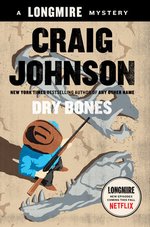
Junkyard Dogs by Craig Johnson

Junkyard DogsJunkyard Dogs

by Craig Johnson
Series: Walt Longmire, #6

Hardcover, 306 pg.

Viking Adult, 2010

Read: July 25, 2015This one opens with probably the funniest incidents in the series, I don’t want to spoil it, just trust me. Actually, there’s quite a few things in the opening chapters of this book to chuckle at or with.

But it wouldn’t be much of a mystery novel if it stayed that way. And so one chuckle-worthy happening is used by Walt to try to help one of his deputies. And then another string of comic events and characters ends with a corpse or two turning up. Which pretty much stops the laughter. It’s really a shame, I liked one of the people who died — and the family of one of the others. (Which isn’t to say that it’s not a shame when it happens to characters I don’t like)

The mystery was a little easier to solve than I really like, but these books aren’t really so much about the whodunit as they are about what happens with Walt and co. while they figure it out. On that front, this was pretty entertaining.

Seeds were planted for something involving Henry’s brother. Well, seeds have been planted already — I guess I should say that the previously planted seeds about Henry’s brother got a decent watering. However you want to look at it — something’s brewing on that front, and it’s not going to be pretty when it’s done. I hope the same isn’t the case with the impending nuptials.

As usual, with a book that takes in a part of the country like Absaroka County, WY, you have to worry about the number of murders and the risk posed to everyday residents of it. But at least they’ve got a lawman on their side who’ll make sure that those who disturb that corner of the woods pay for it. And not to sound too callous, but as long as these books keep being that entertaining, I can live with the hit to the census.

—–

3.5 Stars

Murder Boy by Bryon Quertermous

Murder BoyMurder Boy

by Bryon Quertermous
Series: Dominick Price, #1

Kindle Edition, 256 pg.

Polis Books, 2015

Read: July 11 – 14, 2015File this one under “There’s no accounting for taste.” And by that, I mean mine. By all accounts, this is one that should’ve appealed to me. The premise promises something like The Wonder Boys meets Fargo and Koryta’s endorsement (among others) makes it seem like that promise is fulfilled.

But nope. Just didn’t do anything for me at all. Didn’t find it funny. Didn’t buy any of the characters. I wanted the protagonist/narrator to get smacked around and dumped in the trunk of the car for everything after chapter 4 (and I wouldn’t have been incredibly concerned with the state of his health while in the trunk). Really, nothing about it (apart from the premise) appealed to me.

Quertermous mingles in some thoughts (maybe insights?) about narrative — both what we read and what we construct for ourselves. There’s actually a lot of metanarrative fodder for thought sprinkled throughout. And if I liked this book — even a little — I think I’d have found it insightful and entertaining. But as things were, it just came across as pretentious and annoying.

I might — might — give this another shot when the sequel comes out. Or I just might try the sequel, to see if it was my mood, the kind of books I’m reading at the moment, or something else that shows my problem with the book was internal. But right now? Just humbug.

—–

1 Star

Stay by Victor Gischler

StayStay

by Victor Gischler


Hardcover, 295 pg.
Thomas Dunne Books, 2015
Read: July 4, 2015
I must say that it sort of bugs me that everything I read about this book mentions the deal with CBS for the rights — I’m happy for Gischler, but that doesn’t make me want to read it more (or less). Still, Stay can at times seem like a really thorough pitch for a movie deal.

Beyond that — I was a little disappointed. Gischler takes so many suspense novel mainstays — the special ops guy with a troubled past forced into violence to protect his family, the paranoid old service buddy who’s an expert hacker and willing to drop everything to help his pal, the foreign mobsters who will stop at nothing . . . yada yada yada. There was virtually nothing new here. Now just because you have so many genre tropes, doesn’t mean the book has to be hacky (I’m not saying this was, but you could see hacky from the front porch) — take Finder’s Nick Heller books. Almost entirely the same tropes, but Finder pulls it off. Gischler doesn’t.

The dialogue was mediocre, the characters were thin, the sex was a touch too detailed, the violence was about right (maybe a less detailed than expected a few times). One thing I don’t need is the same narrator justifying the use of a head-butt twice in the same novel — and almost in identical terms.

Ultimately, I wanted more. More surprise, more details, more originality to the characters, more depth to David and Amy (and heck, the bad guys as well). There wasn’t enough grit, enough horror, enough….anything. I guess you could say that I think this was a good start — but not a good final draft. Entertaining enough to keep me turning the page. But could’ve been so much more.

—–

2 1/2 Stars

Lois Lane: Fallout by Gwenda Bond

Lois Lane FalloutLois Lane: Fallout

by Gwenda Bond
Series: Lois Lane, #1

Hardcover, 303 pg.

Switch Press, 2015

Read: June 27, 2015I’d love to be able to talk about this book as a YA adventure tale on its own. But I can’t. It’s Lois Lane, fer cryin’ out loud. Lois the intrepid, fiery, determined journalist. Not the ditz, not the comic relief, not the damsel in distress (except for the distress she finds herself in because she plunged into danger, not as a victim). Sure, she’s sixteen and a rookie when it comes to reporting things — but she’s gotta start somewhere.

Not only is this Lois Lane, but it’s teenaged Lois. So you have to think about this in terms of Smallville, well I have to, anyway. Bond’s Lois isn’t Smallville‘s — she’s closer to Chloe Sullivan (just with less tech savvy). Actually, if we’re talking WB shows, Bond’s Lois is Veronica Mars without the cool dad. But she’s not just smart and tenacious. She also gets people — she may have no social skills (or not enough of them), but she can read a person. Early on, Lois sees what’s going on with the other girl in the news staff pining after one of the guys. There were other examples, but putting that one where it was — and the way Lois saw it — makes you believe her “reads” of other people.

After spending her life bouncing around the world, from base to base, and seeing the negative effect it’s having on his daughter. General Lane gets himself a permanent assignment to Metropolis (the exact nature of which isn’t clear — but what teenager cares that much about what their parent does?). Lois is going to put down roots here, too, and not get in trouble at school — a resolution that doesn’t last through first period. But, this draws Perry White’s attention as he visits the school, and he invites her to join a new student news project. From there, Lois and her new colleagues uncover a story that involves a strange mix of cyberbullying, VR gaming, and group psychology.

Sure, the story she uncovers is about outlandish, a little hopefully) hard for us to believe. But, hey, this is a book based on comics. So yeah, outlandish works. It also allows Bond to make some subtle (maybe overly subtle) remarks about group-think, the dangers of our online society, and so on.

The use of Gen. Lane, Lucy, Perry White and the Daily Planet were inventive, but were consistent with the source material. Which was both a relief, and a key for the book working as well as it did.

Her friends aren’t that developed — but there’s enough of them to be more than cardboard cutouts of high school stereotypes. I look forward to learning more about them all — I think Maddie’s the most entertaining and interesting, but I’d gladly see more of the others as well. Which goes for East Metropolis High as a whole, really. I hope in future installments that Lois can find someone other than the school secretary to dupe to accomplish her ends.

She doesn’t do much with him, but I enjoyed Bond’s treatment of Lois’ online friend, SmallvilleGuy. Someone she met online after posting about seeing something inexplicable in the middle of Kansas. Bond doesn’t try to hide from the reader who this guy is, or play games with us — the nickname is a dead giveaway. Still, it would’ve been easy for Bond to pretend for a couple of books that this stranger was someone new to the canon. Instead, she plays it straight — sure, she has some fun because we all know a whole lot more than Lois does about this guy, and what their future will hold. But she doesn’t do it at the expense of either character.

Fallout was engaging, fun, and an inventive contemporary take on a timeless character. Recommended for comic book types who don’t mind a different look at canon and/or people who like CW dramas.

—–

3.5 Stars

Top Secret Twenty-One by Janet Evanovich

Top Secret Twenty-OneTop Secret Twenty-One

by Janet Evanovich
Series: Stephanie Plum, #21

Mass Market Paperback, 326 pg.

Bantam, 2015

Read: June 27, 2015

What to say, what to say . . . I mean seriously, these are like 80’s sitcoms at this point. A big reset to the status quo at the end of the novel, most of the jokes are variations on previous novels. Which makes it hard to talk about them. Let’s break this one down quickly:

  • The Good: Vinnie didn’t appear. Joyce Barnhardt only appeared as an allusion. The pacing was a bit different, I thought. Stephanie’s main target was taken care of pretty early, freeing her up to help Ranger.
  • The Bad: The main target for Stephanie was so close to the guy in Takedown Twenty that I briefly wondered if I’d already read this one.
  • The Surprising: The other big case for this book — Ranger’s case, was a lot more serious (grading on a Plum curve here) than we’re used to. Involving a bit more peril than one expects. Grandma was used well, and Evanovich showed a little restraint with her and her antics.
  • The Funny: There was the standard amount of general amusement. But, and this is important, (at least until Evanovich figures it out and drives it into the ground), Bob + Ranger = Comedy Gold. Who knew? I actually laughed out loud. That whole scene lifted this from a 2-2.5 star rating to a three. It’s been a long time since I actually laughed at one of these.

On the whole, once I settled into it, I enjoyed myself. I’m glad I read it — would I prefer that Evnovich reintroduce a real sense of serialization, let things progress with one of the two romantic leads, let Stephanie get better at her job, introducing real stakes would also improve the humor. Otherwise, this remains fairly reliable, decent, disposable reading material.

—–

3 Stars

Page 127 of 153

Powered by WordPress & Theme by Anders Norén