Category: Mystery/Detective Fiction/Crime Fiction/Thriller Page 14 of 153

PUB DAY REPOST: Assassins Anonymous by Rob Hart:The Confessions of a Tactical Drone with a Heartbeat and a Dairy Allergy

Assassins AnonymousAssassins Anonymous

by Rob Hart

DETAILS:
Publisher: G.P. Putnam's Sons
Publication Date: June 11, 2024
Format: eARC
Length: 320
Read Date: May 27-29, 2024
Buy from Bookshop.org Support Indie Bookstores

What’s Assassins Anonymous About?

Almost a year ago, Mark walked away from his old life and into a 12-step meeting. It’s been a struggle for him—he’s almost relapsed, he came close to suicide, and he’s struggled every day. But with the support of the other people in his group, his sponsor, and a little orange cat who came into his life at just the right time—Mark is making it, day by day.

Then one day, Mark’s cleaning up after the meeting and he’s attacked by a Russian who moves like a professional killer. Mark fights back—incapacitating the Russian and escaping with a serious—but not-too-serious—wound of his own and a burning question: who sent the Russian? The search for the answer takes Mark (and his cat) around the world—into some very dangerous situations, and almost more temptation for Mark to relapse than he could’ve imagined.

You see, Mark’s 12-step meeting isn’t for Alcoholics Anonymous, Gamblers Anonymous, Narcotics Anonymous, or anything like that. As you’ll guess from the book’s title, it’s Assassins Anonymous. Hitmen, Assassins, Serial Killers, and the like, who are tired of the life, who are tired of killing and want to try to live productive, life-affirming lives. They have to fight old impulses, old habits, old attitudes, they have to abandon adrenaline rushes (which are probably pretty addictive) and all the rest for a quiet life. Mark had been one of the best in the world (or the worst, depending on your perspective)—almost legendary—until he went cold turkey. But someone’s apparently trying to warm up the poultry.*

* That’s a metaphor I really shouldn’t have tried to stretch.

Can Mark discover why someone game for him almost a year after he quit “the life”? Can Mark make them stop without having to throw away all the work he’s done over the last (almost) 12 months?

The Movies

Like many moviegoers, I love a good hit man movie. I can even enjoy a “just okay” hitman movie (sorry, The Whole Ten Yards you don’t qualify as either). Mark, unsurprisingly, isn’t a fan of most of them. Sadly, that’s where most people get their ideas and information about assassins and hitmen from. So by character, actor, or movie title, they’re brought up frequently—usually to Mark’s dismay. He’ll also just compare his life to those movies on occasion. I enjoyed this aspect of the character a lot—particularly one running bit where people kept expecting him to look more like a particular actor.

Other kinds of movies are used throughout the novel, too—they’re a great shorthand way of revealing character. What movies he likes, what movies he refuses to mention liking, and so on are a convenient and efficient way of telling you a lot about Mark. Also, it’s just fun to see characters talk about movies and whatnot—as people like Whedon, Tarantino, and Smith have been showing us.

The 12-steps

As the book started to really focus on—and feature—things like the meetings Mark’s attending, his recovery, and his working the steps, I started to get worried. Primarily because it was early on, and while I understood that Mark was flippant, even a wiseacre—was Hart going to be flip about the 12-steps? That feels like something you shouldn’t touch—like a third rail, a skunk with a hair-trigger, or that Easter Egg you finally found in late June.

But no—the meetings, the steps, the attitude about recovery, and the way the characters interacted about their recovery were dealt with respectfully. Sure, there was a little bit of Mark’s attitude (or similar ones) expressed in the meetings and whatnot—but not about the meetings or the program, just about each other or themselves. (much like I imagine happens in an actual meeting)

If anything, this is practically an advertisement for those kind of programs and the good work they can do. Because this is the heart of the novel—yes, there’s the violence, the suspense, the twists, and whatnot—let’s call them “The Thriller Aspects.” Those aspects are what will draw readers to the book, they’re what’ll keep your attention and get you hooked on it. But Assassins Anonymous isn’t so much about the “Assassins” as it is the struggle, the stumbles, and the victories associated with Recovery. In my book, we should get more of those—particularly honest books about the victories.

So, what did I think about Assassins Anonymous?

Imagine Martin Q. Blank, Jimmy Tudeski, and Frank Moses meeting up and trying to take care of business—non-lethally (I guess that’d be something like the pacifist version of The Expendables), and you’ll have something like this book.

Let’s start with The Thriller Aspects—Hart nailed them. Even—maybe especially—the more outlandish aspects of them (which are really the trickier part to pull off). There’s a confident panache to the novel—as well as most of the characters—that lets you know right away that you’re in good hands and are set for a great ride. Some twists you’ll see coming, and won’t care because of the way he executes them. But also,

The 12-Step aspect—well, see above—another win for Hart.

What about the comedy and narrative voice? Spot on—seriously good. It’d be easy to go overboard on the comedy—or to not use enough of it (we are talking about a bunch of people who have killed many others), but I think Hart hits the balance just right. And Mark’s the kind of guy you can enjoy being stuck in the mind of for 320 pages.

The first chapter gives you everything you need to know about this novel—it’s such a well-written chapter, too. Voice, character, action, comedy. If you read it and aren’t hooked, you’re probably going to feel that way about the rest of it. If that first chapter works for you? Kick back and enjoy.

Sure, this novel is right in my wheelhouse—I’m practically its target demographic incarnate—but I think even if I wasn’t, it would’ve won me over. I strongly encourage you to pick this one up. I can’t tell you what’s keeping me from giving it the final full star, but something is (and since I’ll have to round up almost everywhere I cross-post, I’m not going to lose any sleep over it)—but, boy howdy, you’re in for a great time when you open this one up.

Disclaimer: I received a copy of this book from Putnam Books via NetGalley—thanks to both for this.


4 1/2 Stars

This post contains an affiliate link. If you purchase from it, I will get a small commission at no additional cost to you. As always, the opinions expressed are my own.
Irresponsible Reader Pilcrow Icon

The Secret & Hunting Virgins: Two Short Stories by Wayne Hawk: I Read It So You Don’t Have To

The Secret & Hunting VirginThe Secret & Hunting Virgins:
Two Short Stories

by Wayne Hawk

DETAILS: 
Publisher: Page Publishing
Publication Date: September 10, 2020
Format: Paperback
Length: 80 pg.
Read Date: May 9, 2024

What’s The Secret & Hunting Virgin About?

These are two short stories, sort of linked by protagonists purporting to possess some unique spiritual role/status. They’re thrillers best described as a mix of realism and SF/Fantasy. That’s really all I can think of to link them.

The Secret

This story follows a man who cannot keep a secret as he takes a road trip to visit his father one last time before he dies. At his father’s deathbed, he learns a secret that will change the world. Somehow surviving a hail of bullets that don’t prevent him from learning this secret, he’s instead imprisoned on trumped-up charges and put into solitary confinement (while never explaining why the government doesn’t use one more bullet once there’s a clear shot). Will he be able to outwit the guards and other prison officials to broadcast this secret?

Hunting Virgins

This is both an experiment into how often—and in how many ways—the word “virgin” can be used in a 33-page story as well as the story of a team of hard-partying hazardous-tree removal experts. At some point, their leader has a religious conversion and leaves this profession to start a church on the other side of the U.S.

A decade later, he returns with an offer too good to be true (literally). He recruits his old team—plus his beautiful and virtuous daughter who shouldn’t be anywhere near these louts—to go with him to a portion of Siberia to clear part of a forest heretofore untouched by logging in exchange for a small fortune. Why Russian loggers are incapable of doing this for far less, we’re not told. Nor why any company thinks that logging in an area so difficult to get to makes any sense at all, especially when the expenses incurred to do that are so large.

But maybe their dangerous profession and the well-known hardships of the Siberian climate aren’t the most deadly things that lay in wait for them…

So, what did I think about The Secret & Hunting Virgin?

I honestly can’t tell you which story made me angrier—the plots were disappointing, unoriginal, and somehow nonsensically inexplicable at the same time. The characters were utterly unlikeable at best and contemptible (in an uninteresting way) most of the time. The writing was dry and uncompelling—and the ineptness of the prose was only challenged by its lack of clarity for the least appealing part of it.

The ways that Christian—or pseudo-Christian and near gnostic—ideas are scattered throughout these two stories are just as off-putting as the rest of the elements of this writing. I can’t tell if Hawk is really trying to tell stories with Christian themes* or if he’s just using the trappings of those themes the way that Pierce Brown uses the trappings of the Roman Empire to tell his stories. Either way, he fails.

* I’m using Christian in the broadest and most watered-down possible sense here.

“The Secret” features a couple of people with delusions of grandeur comparing themselves to Apostles to bring the world one of the tiredest ideas this side of Whitley Strieber. I wondered a few times if I’d have liked it more if Hawk hadn’t tried to compress the events into such a short space, but had developed them fully and let them breathe. But I just don’t see any evidence that he’s capable of doing that. He spent more time on this than he should’ve.

“Hunting Virgins” is even worse—these tree-removal experts have the maturity of the main characters of the 80s Porky’s films* and should be trusted with power tools to the same extent. There’s nothing about them that says megacorporations should shower them with money to do anything—and when things start to go wrong for them, there’s nothing about the situation to make the reader care.

* I can’t believe that I remembered these things existed, either. Or that anyone ever used the word “film” to describe them with a straight face.

Why did I finish? I was curious—and the book is crazy short. Also, I spent enough money on this volume that I couldn’t let myself just walk away. I regret the whole thing and hope I’ve convinced you to avoid this experience.


1 Star

Literary Locals logo

Red Queen by Juan Gómez-Jurado, Nick Caistor (Translator): A Disappointing Thriller

Red QueenRed Queen

by Juan Gómez-Jurado, Nick Caistor (Translator)

DETAILS:
Series: Antonia Scott, #1
Publisher: Minotaur Books
Publication Date: March 14, 2023
Format: Hardcover
Length: 365 pg.
Read Date: April 29-May 1, 2024
Buy from Bookshop.org Support Indie Bookstores

What’s Red Queen About?

So there’s this international crime-fighting organization, with chapters or branches (I don’t remember exactly how or if we’re told) all over the place. They work around law enforcement, frequently preventing them from doing their job, by covering up crimes in order to get the results they’re looking for.

Those results are keeping their benefactors—the megarich and powerful out of the headlines. Yes, they do stop criminals, save lives, and all of that—but there’s something about their M.O. that leaves a lot to be desired. They do have the best of the best—forensic scientists, laboratories, tech, and investigators. One of those is Antonia Scott—her mind works on levels that others don’t.

She’s also dealing with some severe trauma. Her handler brings in a decent police officer who’s facing discipline charges (legitimately, it should be stressed) to try to get her to leave her apartment and help solve some ritualistic crimes. If Jon Gutierrez can do that, the charges against him will go away.

She’s brilliant and offputting. He’s street smart and able to deal with people—if you’re thinking Temperance Brennan and Seely Booth.

So, what did I think about Red Queen?

I actually liked Jon Guitierrez’s character and thought Gómez-Jurado designed him very well—he’s really the bright point in this book.

The whole not-evil-but-not-good secret organization bugged me—their methods, their attitude, the way they treated/trained/recruited their people. I really hope that this series ends with someone destroying them.

It was good enough—it kept me turning the pages, but..just barely. The writing was cliché and stiff—I don’t know if that’s Gómez-Jurado, Caistor, or a combination. The whole thing felt contrived—and yeah, I know, it’s a novel, it’s all contrived. But this seemed like Gómez-Jurado was trying to manufacture a best-seller rather than write a decent book—but what do I know? It’s an international best-seller.

There were some good twists and turns (many predictable), the pacing was pretty well done, and like I said, it kept me turning pages to see what happened next. But I can’t say I was entertained. I’m definitely not coming back for more.


2 1/2 Stars

This post contains an affiliate link. If you purchase from it, I will get a small commission at no additional cost to you. As always, the opinions expressed are my own.
Irresponsible Reader Pilcrow Icon

20 Books of Summer 2024: This is Going to Be A Tough One

20 Books of Summer
Cathy at 746 Books is hosting 20 Books of Summer for the 10th year, which is impressive. This is the fourth year for me (not nearly as impressive), and it’s proved to be fun and a good way for me to actually focus on things I’ve gotten distracted from and/or impulse buys. This year I had a plan since January or February, and then when it came time to put it into action threw all of it out. I’m a little apprehensive about this list, it’s ambitious—I think both length and content are going to make several of these slower reads—and risky—I haven’t read most of the authors before, and don’t know what I’m getting into. However, I’ve wanted to read all of these (some of them for years), and I own all but one of these already. Yup! Nineteen books (at least) are leaving Mt. TBR this summer*!

I typically use the unofficial US Dates for Summer—Memorial Day to Labor Day (May 27th through September 2nd), just because it’s easier for me to think that way. And I’ve needed those first few days of September more than once, but let’s not think about that. Now, here it is almost a week later and I’ve just finalized my list—and I probably won’t get started reading any until June 6, this is almost certainly going to come back to bite me somewhere sensitive. But that’s a problem for tomorrow…or August, I guess.

There’s still time to join in the fun—if you’re into this kind of thing. (there are 10 and 15 book versions, too)

* Technically, I guess, one of these has only been on the mountain for a week, but it still counts.

This summer, my 20 are going to be:

1. This is Who We Are Now by James Bailey
2. Blood Reunion by JCM Berne
3. Ways And Truths And Lives by Matt Edwards
4. The Running Grave by Robert Galbraith
5. Grammar Sex and Other Stuff: A Collection of (mostly humorous) Essays by Robert Germaux
6. The Camelot Shadow by Sean Gibson
7. Last King of California by Jordan Harper
8. Steam Opera by James T. Lambert
9. The Glass Frog by J. Brandon Lowry
10. Rise of Akaisha Morningstar by Kataya Moon
11. Curse of the Fallen by H.C. Newell
12. Heart of Fire by Raina Nightengale
13. Detours and Do-overs by Wesley Parker
14. Bizarre Frontier Omnibus #1 by Brock Poulson
15. Howl by e rathke
16. Bard Tidings by Paul J. Regnier
17. Panacea by Alex Robins
18. Cursed Cocktails by S.L. Rowland
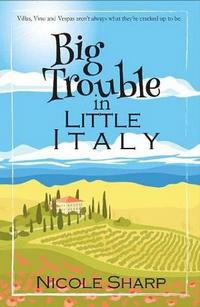
19. Big Trouble in Little Italy by Nicole Sharp
20. The Nameless Restaurant by Tao Wong

(subject to change, as is allowed, but I’m going to resist the impulse to tweak as much as I can).

20 Books of Summer '24 Chart

BLOGIVERSARY REPOST: P is for Peril by Sue Grafton

To commemorate the 11th Blogiversary of The Irresponsible Reader, I’m reposting the first six books I blogged about this week. I hope you’ve enjoyed this stroll down Amnesia Lane as much as I did.


P is for Peril (Kinsey Millhone #16)P is for Peril by Sue Grafton
Series: Kinsey Millhone, #16

My rating: 3 of 5 stars

Well, this is totally not surprising at all…a solid mystery novel, with plenty of satisfying twists and turns from Sue Grafton.

A name from the past (and one of my favorite Grafton books) refers Kinsey for another missing persons case — against her better judgement, she takes it and before too long finds herself in the middle of broken family politics, pouty teenagers, a potential stalker, and cases of grand theft, fraud, murder, and a handful of other brushes with human frailty and depravity.

I did rather enjoy all these voices from the 80s complaining about the labyrinth that is Medicare/Medicaid/other federal health regulations — if they only knew!

I do wish, and I don’t think I’ve complained about this before, but Kinsey blabs way too much — to friends (especially new ones), to suspects/interviewees/sources, and even to clients. Maybe it fits with the research that Grafton’s done about proper P.I.-ing, but man. Every time she starts to divulge information I want to reach into the book and slap my hand over her mouth. Seriously, lady, keep it to yourself.

The conclusion to this one is atypical — we don’t get resolution to any of they mysteries she’s involved with; well, we sort of get resolution to one of them, but it has nothing to do with any sleuthing on Kinsey’s part. The rest of the mysteries are solved by Kinsey, but we don’t see the resolution of the story line — we don’t even get the (often) heavy-handed wrap up where she reflects on the events of the novel. Nope. Not saying that’s good or bad (honestly, I’m not sure). It’s just not par for the course. Not sure why Grafton did it that way, but it worked this time (could get to be tiring if she keeps it up)

Assassins Anonymous by Rob Hart:The Confessions of a Tactical Drone with a Heartbeat and a Dairy Allergy

Assassins AnonymousAssassins Anonymous

by Rob Hart

DETAILS:
Publisher: G.P. Putnam's Sons
Publication Date: June 11, 2024
Format: eARC
Length: 320
Read Date: May 27-29, 2024
Buy from Bookshop.org Support Indie Bookstores

What’s Assassins Anonymous About?

Almost a year ago, Mark walked away from his old life and into a 12-step meeting. It’s been a struggle for him—he’s almost relapsed, he came close to suicide, and he’s struggled every day. But with the support of the other people in his group, his sponsor, and a little orange cat who came into his life at just the right time—Mark is making it, day by day.

Then one day, Mark’s cleaning up after the meeting and he’s attacked by a Russian who moves like a professional killer. Mark fights back—incapacitating the Russian and escaping with a serious—but not-too-serious—wound of his own and a burning question: who sent the Russian? The search for the answer takes Mark (and his cat) around the world—into some very dangerous situations, and almost more temptation for Mark to relapse than he could’ve imagined.

You see, Mark’s 12-step meeting isn’t for Alcoholics Anonymous, Gamblers Anonymous, Narcotics Anonymous, or anything like that. As you’ll guess from the book’s title, it’s Assassins Anonymous. Hitmen, Assassins, Serial Killers, and the like, who are tired of the life, who are tired of killing and want to try to live productive, life-affirming lives. They have to fight old impulses, old habits, old attitudes, they have to abandon adrenaline rushes (which are probably pretty addictive) and all the rest for a quiet life. Mark had been one of the best in the world (or the worst, depending on your perspective)—almost legendary—until he went cold turkey. But someone’s apparently trying to warm up the poultry.*

* That’s a metaphor I really shouldn’t have tried to stretch.

Can Mark discover why someone game for him almost a year after he quit “the life”? Can Mark make them stop without having to throw away all the work he’s done over the last (almost) 12 months?

The Movies

Like many moviegoers, I love a good hit man movie. I can even enjoy a “just okay” hitman movie (sorry, The Whole Ten Yards you don’t qualify as either). Mark, unsurprisingly, isn’t a fan of most of them. Sadly, that’s where most people get their ideas and information about assassins and hitmen from. So by character, actor, or movie title, they’re brought up frequently—usually to Mark’s dismay. He’ll also just compare his life to those movies on occasion. I enjoyed this aspect of the character a lot—particularly one running bit where people kept expecting him to look more like a particular actor.

Other kinds of movies are used throughout the novel, too—they’re a great shorthand way of revealing character. What movies he likes, what movies he refuses to mention liking, and so on are a convenient and efficient way of telling you a lot about Mark. Also, it’s just fun to see characters talk about movies and whatnot—as people like Whedon, Tarantino, and Smith have been showing us.

The 12-steps

As the book started to really focus on—and feature—things like the meetings Mark’s attending, his recovery, and his working the steps, I started to get worried. Primarily because it was early on, and while I understood that Mark was flippant, even a wiseacre—was Hart going to be flip about the 12-steps? That feels like something you shouldn’t touch—like a third rail, a skunk with a hair-trigger, or that Easter Egg you finally found in late June.

But no—the meetings, the steps, the attitude about recovery, and the way the characters interacted about their recovery were dealt with respectfully. Sure, there was a little bit of Mark’s attitude (or similar ones) expressed in the meetings and whatnot—but not about the meetings or the program, just about each other or themselves. (much like I imagine happens in an actual meeting)

If anything, this is practically an advertisement for those kind of programs and the good work they can do. Because this is the heart of the novel—yes, there’s the violence, the suspense, the twists, and whatnot—let’s call them “The Thriller Aspects.” Those aspects are what will draw readers to the book, they’re what’ll keep your attention and get you hooked on it. But Assassins Anonymous isn’t so much about the “Assassins” as it is the struggle, the stumbles, and the victories associated with Recovery. In my book, we should get more of those—particularly honest books about the victories.

So, what did I think about Assassins Anonymous?

Imagine Martin Q. Blank, Jimmy Tudeski, and Frank Moses meeting up and trying to take care of business—non-lethally (I guess that’d be something like the pacifist version of The Expendables), and you’ll have something like this book.

Let’s start with The Thriller Aspects—Hart nailed them. Even—maybe especially—the more outlandish aspects of them (which are really the trickier part to pull off). There’s a confident panache to the novel—as well as most of the characters—that lets you know right away that you’re in good hands and are set for a great ride. Some twists you’ll see coming, and won’t care because of the way he executes them. But also,

The 12-Step aspect—well, see above—another win for Hart.

What about the comedy and narrative voice? Spot on—seriously good. It’d be easy to go overboard on the comedy—or to not use enough of it (we are talking about a bunch of people who have killed many others), but I think Hart hits the balance just right. And Mark’s the kind of guy you can enjoy being stuck in the mind of for 320 pages.

The first chapter gives you everything you need to know about this novel—it’s such a well-written chapter, too. Voice, character, action, comedy. If you read it and aren’t hooked, you’re probably going to feel that way about the rest of it. If that first chapter works for you? Kick back and enjoy.

Sure, this novel is right in my wheelhouse—I’m practically its target demographic incarnate—but I think even if I wasn’t, it would’ve won me over. I strongly encourage you to pick this one up. I can’t tell you what’s keeping me from giving it the final full star, but something is (and since I’ll have to round up almost everywhere I cross-post, I’m not going to lose any sleep over it)—but, boy howdy, you’re in for a great time when you open this one up.

Disclaimer: I received a copy of this book from Putnam Books via NetGalley—thanks to both for this.


4 1/2 Stars

This post contains an affiliate link. If you purchase from it, I will get a small commission at no additional cost to you. As always, the opinions expressed are my own.
Irresponsible Reader Pilcrow Icon

BLOGIVERSARY REPOST: Pros and Cons: A Short Story by Janet Evanovich & Lee Goldberg

To commemorate the 11th Blogiversary of The Irresponsible Reader, I’m reposting the first six books (or, I guess, stories) I blogged about this week. This post got me my first comment here—from Goldberg himself! I did go on to love the series (at least until Goldberg moved on), so the first thing I predicted came true.


I spent the better part of an hour writing a different review this morning — it wasn’t as good as I wanted it to be, but I’d worked on it a lot. And then I lost it. One stupid, wrong and mostly stupid click of the mouse and …poof. Didn’t have time to try to recreate it, but wanted to post something new today. And hey, I just purchased the Evanovich/Goldberg short story, Pros and Cons. Perfect! That’d fit the bill. Right? well…

—–

Pros and Cons: A Short Story (O'Hare and Fox, #0.5)Pros and Cons: A Short Story by Janet Evanovich and Lee Goldberg
Series: Fox and O’Hare, #0.5
My rating: 2 of 5 stars

I’ve been eagerly awaiting The Heist since it was first announced — I’m a big fan of both Janet Evanovich and Lee Goldberg, so when this short story prequel was released I couldn’t resist.

I probably should have found the will power. This, at best, was not bad. Amusing at times, but most of the humor felt forced. Even then, the humor was overly broad most of the time. Worse than that, the story was chock-full of exposition dumps that are almost worthy of Dan Brown.

That said, I’ve read almost 30 books by these two over the years and have no doubt that the novels are going to be better. The primary characters — Agent O’Hare and scoundrel Fox, are promising and chock-full of potential. Sure, I’m a little less enthused about The Heist than I was yesterday, but I’ll get over that once it’s in my hot little hands.

Short version: Skip this tease, come back for the real thing.

BLOGIVERSARY REPOST: Gone Tomorrow by Lee Child

To commemorate the 11th Blogiversary of The Irresponsible Reader, I’m reposting the first six books I blogged about this week. This was apparently the first book I discussed here—something I don’t remember looking up until I prepped this.


Gone Tomorrow (Jack Reacher, #13)Gone Tomorrow by Lee ChildSeries: Jack Reacher, #13
My rating: 4 of 5 stars

4.5 out of 5 really. Not sure why I’m holding that .5 out, but let’s say it wasn’t perfect — just so, so close.

On the one hand, this was a typical Jack Reacher novel* — Reacher sees a wrong that needs righting, a question that needs answered, someone who needs a little help, a little vengence that needs meting out, and he takes care of business, period. On the other hand — this was more intense, had more twists and turns, with higher (personal) stakes than your typical Reacher novel.

So, I guess it was a typical Reacher novel — just turned up to 11.

It’s really hard to say much about this Gone Tomorrow without spoiling the whole thing. But I’m going to try a bit: From the outset, it’s hard to tell who Reacher is working for until a little over halfway through the book (I think–didn’t take notes); everyone (everyone) lies to him about all sorts of things — but there’s enough truth mixed into the lies that I didn’t just spoil anything there; the violence (at least on Reacher’s part) is a bit more concentrated than usual, but once it starts…whoa, Nelly.

The biggest difference in this one is the looming specter of various counter-terrorism agencies and entities, functioning in the full protection and powers given by the Patriot Act and so on. Reacher and other characters in this book aren’t reticent to voice their complaints with these powers and the curtailment on citizen rights, honestly, to an extent that surprised me. While Reacher’s not directly in opposition to these agencies (he never would be that), his purposes and theirs do not directly align. Which gives an extra layer of danger for him — if Reacher’s not careful, he can disappear like he’s never existed before.

Basically the only other thing I can say without spoiling the crap out of this is simply: With Gone Tomorrow, Child, once again, shows that he and Reacher are the best around.

——-

* And a typical Jack Reacher novel is a great read, so don’t take this characterization as a complaint.

Price to Pay by Dave Sivers: “The past is never dead. It’s not even past.”

Price to Pay Tour Banner

Price to PayPrice to Pay

by Dave Sivers

DETAILS:
Series: Archer and Baines, #7
Publication Date: February 28, 2024
Format: eBook
Length: 288 pg.
Read Date: May 9-11, 2024

What’s Price to Pay About?

It’s not necessarily news-making when someone threatens a DCI. But DCI Archer gets a couple of very fresh threats from family members of someone she’s just put away and from a would-be organized crime heir, and things seem to be a little more real than usual. She’s ready to ignore them both, but some spoilery-events prevent that.

More annoyingly, an ex—some might call him the ex—tracks her down and announces his intention to win her back. Archer is utterly uninterested in him—and her husband is not amused by his antics at all. The ex- is on the verge of turning into a full-fledged stalker, and Archer’s mild-mannered husband is about to try to get into a fistfight over this.

As the distractions and annoyances start to pile up—there’s a murder. The initial evidence points at Archer and her husband, and a lot of their past starts coming back to haunt them. There are plenty of alternate suspects around, but none of them are quite as convenient for the police (Archer, on the other hand….)

Meanwhile, DI Baines has to deal with the repercussions of stopping the serial killer, The Invisible Man, on his family—who were almost victims. As the expert in The Invisible Man, he’s also brought in to consult on some cold case murders that might be connected to him. As much as he wants to help out—his loyalties are divided, because Archer needs help a lot sooner than these cold cases. (although he’s officially not allowed to be working on the case, for obvious reasons)

Backstory, Backstory, Backstory

Now it takes a little bit for the plot to get really rolling along because there is just so much backstory involved with Archer and Baines individually at this point. Particularly when it comes to Archer—she’s got connections with just about everyone we meet early on in these pages.

As this is my first time reading Sivers, I don’t know how many of these various and sundry people are making their first appearance in these pages, and how many are just people from her past that are being brought back into her life in this book. It really doesn’t matter, because Sivers will pause the narrative long enough to catch you up with the relationship/history between Baines, Archer, and these people from their pasts.

Most authors do this—and most of the time it’s good as a refresher or a way to get a new reader oriented. But with a book as rooted in the past and the ties between characters past and present as this one…taking the time to give all this background really slows things down. I think I’d have appreciated Sivers finding a better way to blend these into the narrative rather than stopping everything. It was such a momentum killer.

That said…all the backstories were pretty interesting. A couple might have been a smidgen too soap-opera-ish for me, but still interesting. The amount of work and character development demonstrated by these says a lot about the series that’s been built up to now.

So, what did I think about Price to Pay?

Once all the dominoes were set up—the crime established, the motives, the backstories told—Sivers started knocking them over and things moved so well that all the annoyances of the stop-and-start pacing of the early chapters were forgiven. To change up metaphors, it took a long time for Sivers to get his hook into me, but once he did—I couldn’t stop turning the pages.

This is such a rich, detailed world with a very clever—and well-executed—mystery. And, as is necessary for a police procedural series to be as established as this one, the characters are really well-developed and jump off the page. It’s a real treat to read.

While Price to Pay can serve as an entry point to the series, and has a strong stand-alone element to it, the amount of ongoing character and story arcs involved are going to be an obstacle for anyone approaching it without some previous knowledge of Archer, Baines, and the rest—and what they’ve been up to lately. Is it worth persevering? Oh yeah. But you should know that going in. And by the time you’re done—you’ll be curious about what’s next*—and maybe about what was before. Based on Book 7, Books 1-6 are quite the ride, you might be well-served starting from there.

* I will admit that I’m not sure what kind of future the series has, but it should be fun to see.

If you’re not new to this series, obviously, you’re not going to have that difficulty. You likely won’t need me to suggest that you give this a shot, you’re probably ahead of me on that point. Still, if you haven’t gotten around to it, you should probably remedy that.

That’s two paragraphs just to say: Price to Pay is an entertaining and rewarding police procedural that I recommend to you.


My thanks to Overview Media for the invitation to participate in this tour and the materials they provided (including the novel).

BOOK SPOTLIGHT: Price to Pay by Dave Sivers

I’m very pleased to welcome Overview Media’s Book Tour for the seventh Archer and Baines novel, Price to Pay by Dave Sivers. We’ll start with this spotlight to learn a little about the book and I’ll be along a little later with my take on the novel.

Price to Pay Tour Banner

Book Details:

Book Title: Price to Pay by Dave Sivers
series: Archer and Baines, Book 7
Genre: Police Procedural
Format: eBook/Paperback
Release Date: February 28, 2024
Price to Pay Cover

About the Book

‘Fast-paced, devious and twisty – the pages turned themselves! I loved it!’  – Liz Mistry

The more you have, the more you have to lose…

Following an arrest that went wrong, leaving her disfigured and her life in ruins, DCI Lizzie Archer transferred to Buckinghamshire’s Aylesbury Vale, hoping to rebuild her confidence, her career and her life. Eleven years later, she’s happily married, her career is back on track, and she has friends she would trust with her life.

But things can change in a heartbeat.

Meanwhile, her friend and colleague, DI Dan Baines, has worries of his own as the long shadow of the serial killer known as the Invisible Man continues to hang over him. When the chance comes to finally get answers to some troubling questions, he is almost afraid to learn the truth. Because sometimes the reality can be worse than your imagination.

Soon after receiving unsettling threats from local criminals, an old flame makes an unwelcome return to Lizzie’s life. Days later, a grisly murder too close to home plunges her into a nightmare that could cost her everything as suspicion falls on her and her husband, Dominic.

Dan and his team are sidelined from the murder investigation, but they’re not going to let that stop them when a friend is in trouble. And the clock is ticking. Because, if they can’t uncover the truth soon, things will get even worse for Lizzie and Dominic.

Book Links:

Amazon UK ~ Amazon US

About the Author:

Dave Sivers
Dave Sivers grew up in West London and has been writing all his life. His books include the popular crime series featuring the Aylesbury Vale detectives, DI Lizzie Archer and DS Dan Baines.

The Scars Beneath the Soul and Dead in Deep Water were both top three bestsellers in the Amazon Kindle Serial Killers chart. In Ice is the second in the DI Nathan Quarrel series.

His other works include the Lowmar Dashiel crime fantasy novels.

Dave also writes plays and other material for the amateur stage and is a founder of the annual BeaconLit festival of books and writing. He lives in Buckinghamshire with his wife, Chris.

To keep up with Dave’s news and upcoming releases, subscribe to his newsletter at www.davesivers.co.uk.

Author Links:

Website ~ Twitter/X ~ Facebook


My thanks to Overview Media for the invitation to participate in this tour and the materials they provided.

Page 14 of 153

Powered by WordPress & Theme by Anders Norén