Category: Fiction Page 155 of 341

Pub Day Post: Cheater’s Game by Paul Levine: Things Get Personal for this Defense Attorney

I cannot believe I did this—Levine’s publicist agreed to facilitate an interview about this book to post along with this one and I completely forgot about it. I was so focused on getting this post right that I lost track of that. Hopefully, I can still get that going and will end up talking about this book again soon.

Cheater's Game

Cheater’s Game

by Paul Levine
Series: Jake Lassiter, #14

Kindle Edition, 424 pg.
Herald Square Publishing, 2020

Read: April 8-10, 2020
Grab a copy from your local indie bookstore!

When it comes to my conduct in trials, I have only two rules. I won’t lie to the court or let a witness do it. Other than that, batten the hatches, because I sail straight into storms.

Bolden spent a few more minutes talking about the judge’s wise instructions and the jurors’grave responsibilities, then thanked them all and sat down.

I got to my feet, nodded to the judge, buttoned my suit coat, smiled warmly, and said my six favorite words in the English language. “Ladies and gentlemen of the jury . . .”

When it comes to legal thrillers, those six words are pretty much my favorite, too. I want to see the protagonist in the courtroom, plying his or her tradesure, I get that a lot of the action has to take place outside of the courtroom, but it seems even my favorite fictional lawyers are spending fewer pages there all the time. Since Perry Mason (in print or on screen) made me a fan of the genre, everything outside the courthouse just doesn’t interest me as much. The fact that Lassiter utters those words at the 52% mark thrilled me–jury selection started 5% earlier. When the trial portion of a novel beings in the first half, I’m happy as you can hope for.

Which isn’t to say that the material before then wasn’t goodit’s just secondary for me. But we can’t get to the jury if we don’t have a crime, a client, and a lawyer. We should probably start with them.

Our (chief) narrator, protagonist and the lawyer we met in above is Jake Lassiter, a former Miami Dolphin player turned defense attorney. Thanks to the repeated hits to the head he took as a football player, Lassiter suffers from C.T.E.Chronic Traumatic Encephalopathya progressive degenerative disease affecting the brain. In response to this, Lassiter’s recently stopped his defense work and works for the Florida Bar.

So what gets Lassiter back to the defense table? His nephew, Kip. Lassiter basically raised Kip, and is his father in all but name. The relationship isn’t as close as it should be lately, but when Kip needs him, Lassiter’s there for him. Kip is freakishly smart, but some foolish moves in college resulted in him getting the boot. So he’s gone another route and is working as an SAT coach. At a certain point, that coaching turned into taking the tests for his clients (or arranging to be present in-person for a little hands-on coaching). As we’ve all seen recently, the Feds swept in, arresting several people involvedand Kip is put in the position of taking the fall for a lot of the unethical behavior.

It’s clear that he’s guiltyhe admits what he didbut he’s also the only one that anyone’s seriously prosecuting. Lassiter was already going to do everything he could for Kip, but the injustice of his being singled-out for prosecution really provokes his uncle’s ire. The gloves are off when it comes to this defense.

Which is a little trickier than he’s used tothis is in Federal Court, where Lassiter hasn’t tried a case before. The dynamic’s a little different, and the judge is far less open to antics. (doesn’t stop Lassiter, it should be noted). The federal prosecutor is pretty chummy with the judge, but seems to play fair and is a good opponent for Lassiter. She’s a great trial lawyer herself and won’t give him an inchbut will admit when he bests her on a point. I seriously loved the dynamic between the twoit’s not the typical adversarial kind of thingit is adversarial, make no mistake, but there’s a respect and lack of hostility there. A significant portion (as I indicated above) of the novel is about the trial and I loved every second of it.

Not only is Lassiter dealing with the emotional weight of defending his nephew (and what it would mean to lose), but he’s dealing with the cognitive and physical effects of C.T.E.I don’t remember ever reading anything close to this before. I respect Levine for trying it, and even more so for doing it so wellI don’t know enough to say that he depicts this perfectly, but it’s done with sensitivity and care (and, sure, a light touch), making me think it’s pretty accurate.

Our other narrator is Melissa Gold, the specialist who’s been treating Lassiter since his diagnosisshe’s also a leading researcher in the field. She’s also Lassiter’s fiancé, and practically a stepmother to Kip. She’s about as invested in this trial as either of them, but is more focused on Lassiter’s well-being. Her chapters provide an outside look at how Lassiter is dealing with the trial and everything around it. It’s an interesting way to get around some of the limitations of the first-person narration.

This is not maudlin (as easy as it would be), it’s not all somber, sober and serious, either. Lassiter is a jokey kind of guy and that comes through in his narration and his dialogue. This isn’t a comedy by any means, but there’s a lot of wit, and more than a few laughs throughout. That doesn’t take away from any of the tension in the courtroom (or with Lassiter’s condition), but it flavors the book. Think of the Andy Carpenter books without dogs and you’ve got a good idea how this reads.

Fifteen years ago, I became a fan of Levine’s Solomon vs. Lord series after about 20-30 pages and read those all several times. I can’t explain why, but I never tried the Lassiter books (although I meant to)I now know that was a mistake, and one I hope to rectify. This is written in such a way that you don’t need to have read any of the novels ahead of this, but it’d surely add a little depth to some of the serialized aspects of the novel. But I want to stress, it’s completely accessible for anyone who hasn’t encountered Lassiter before.

Good courtroom action, fun characters, and a wonderful voice. Cheater’s Game is a sure-fire crowd-pleaser.


4 Stars

Disclaimer: I received this novel from the Saichek Publicity in exchange for this post and my honest opinion.

This post contains an affiliate link. If you purchase from it, I will get a small commission at no additional cost to you. As always, opinions are my own.


Top 5 Saturday: Sibling Relationships

Top 5 Saturday Sibling Relationships

The Top 5 Saturday weekly meme was created by Amanda at Devouring Books.

Rules!

  • Share your top 5 books of the current topic—these can be books that you want to read, have read and loved, have read and hated, you can do it any way you want.
  • Tag the original post (This one!)
  • Tag 5 people (I probably won’t do this bit, play along if you want)

This week’s topic is: Sibling Relationships. If the Weasley family doesn’t immediately spring to mind once you think about siblings, there might be something broken in your mind—ditto for the Pevensies. But I wouldn’t let myself use them. The more I wrote in this list, the more relationships came to mind that I don’t have space for–that’s very annoying (a lot of fun, too), I hate to leave some of these off. I don’t know why I didn’t grab sibling relationships that are more than a pair (the aforementioned groups, the Spellmans or Tropper’s Altmans would’ve worked)—I’m assuming it’s because I had one sibling myself, so I tend to think of pairs rather than 3+?

Sibling relationships are tricky to depict—they’re all a little different, but there are some typical aspects. There’s a shared history (even if individuals react pretty differently to them, and remember them differently); jealousy/rivalry—usually tempered by some sort of affection and loyalty; usually a bit of reflexive self-sacrifice (frequently malgré lui); and a kind of honesty you don’t get from anyone else.


Raistlin and Caramon Majere

from: Dragonlance Chronicles, Dragonlance Legends
by
Margaret Weis, Tracy Hickman

This is the first sibling relationship that really sticks out at me (post-juvenile fiction, anyway). They need each other (in healthy and unhealthy ways), but really don’t like each other. There’s a love and a bond that’s nigh-unbreakable, don’t get me wrong, but man…Raistlin treats his brother like trash. I remember regularly being so upset with him for that (and a little bit now just thinking about it), but Caramon keeps coming back for it. He never gives up on his twin. Even when—especially when—he absolutely should. It’s a nuanced and complex relationship and is likely one that I judge many other fictional representations by.

Side note: I really need to re-read the first couple of Dragonlance trilogies.


Jack and Jill Wolcott

from: Wayward Children
by
Seanan McGuire

(art by Rovina Cai)
While I do wonder if McGuire had come back to this well one time too many in this series, there’s clearly something about this fractured relationship (huh, another set of twins, with one more to come…didn’t mean to do that) that clearly resonates with readers and the author. If there’s anything healthy in their relationship when we first meet them, it’s gone by the most recent volume—but they’re the textbook definition of inextricably linked. To their detriment, yes, but that’s beside the point. Fascinating pair.


Scout and Jem Finch

from: To Kill a Mockingbird
by
Harper Lee

Scout worships her brother (doesn’t stop her from being frustrated with him frequently) and Jem’s clearly devoted and protective of her. I’ve loved reading about these two since I first met them in Mme. Dobbs’ English class* in high school and I’ll probably love it for the rest of my life. They’re not ideal, but they’re pretty close.

* she also taught my French class, so I reflexively think of her with that title)


Doug and Clair Parker

from: How to Talk to a Widower
by
Jonathan Tropper

Alas, I don’t have a picture of them—Tropper doesn’t inspire a lot of fan art. Yeah, Doug and Clair’s relationship echoes any number of the sibling relationships in Topper’s work. This is honestly the first pair that jumped to mind when I compiled this list. The honesty, the humor, the prodding/pushing, and care between the two is one of the best parts of this novel (probably my favorite of his). Great interplay between the two. Neither Doug or Clair remind me of my sister or myself individually, but for some reason, their relationship made me think about our relationship.


Harry Dresden and Thomas Wraith

from: Dresden Files
by
Jim Butcher

(art by Mika-Blackfield)
Sure, these two weren’t aware of each other for most of their lives, so their shared history has only to do with their mother. Still, the bond, the love, the loyalty that everyone thinks of when it comes to brothers is perfectly depicted with these two. They’re probably my favorite sibling pair that’re still being written about—I just hope they both survive ’til the end.

The History of Tom Jones, a Foundling by Henry Fielding: BOOK V., ix.-xii.

Fridays with the Foundling
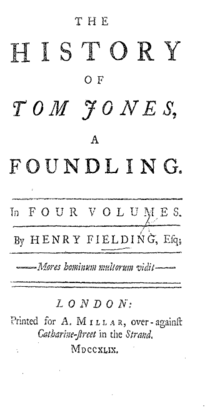
Tom Jones Original CoverAfter Allworthy pronounced his will in the reading from last week, we focused on everyone else in the house—and ignored Tom. Fielding now turns to focus on him. Tom doesn’t deal well with his guardian’s impending death—not that anyone else did, but Tom’s focused on Allworthy himself, not what he’s being left.

In the aftermath both of Blifil’s tragic news and Allworthy’s recovery, Tom and Thwackum bicker a bit and then Blifil and Tom get into a scuffle as well—tempers are short (and alcohol-fueled), but peace eventually prevails. Tom heads outside to cool down and turns his thoughts to Sophie—but he sees Molly doing some fieldwork (I don’t think Fielding specified, but she has a pitch-fork). The two chat a bit, and then head off into the bushes for some privacy.

Thwackum and Blifil have a similar idea—they’re taking a walk to get over the fights. Naturally, they see those two heading for the bushes. Blifil recognizes both of them, but Thwackum only sees a couple of people up to something. He heads off to try to stop the illicit behavior, and Blifil doesn’t do anything to stop him. The two make enough of a racket that the lovers know they’re coming.

Molly has gone into hiding and Tom goes to confront the interlopers and to keep them from discovering who the young woman was (which seems their primary concern). The fists start flying—and it’s kind of an amusing fight scene at the beginning. But the still recovering Tom starts to succumb to the numbers when he’s joined in the fight. A passerby is offended by the idea that two would fight one and jumps in to even the odds without wondering who the one is, much less the two.

It turns out that it’s Squire Western who’d joined the fray and he’s more than enough to turn the tide.

At this Time, the following was the Aspect of the bloody Field. In one Place lay on the Ground, all pale, and almost breathless, the vanquished Blifil. Near him stood the Conqueror Jones, almost covered with Blood, part of which was naturally his own, and part had been lately the Property of the Reverend Mr. Thwackum. In a third Place stood the said Thwackum, like King Porus, sullenly submitting to the Conqueror. The last Figure in the Piece was Western the Great, most gloriously forbearing the vanquished Foe.

Before Western came to Tom’s rescue, he’d been out for a walk with his wife and Sophie—who come upon that scene. Seeing Tom covered in blood is too much for Sophie, who faints dead away—until Tom revives her. Tom and the Westerns go their way and Blifil and Thwackum return to Allworthy’s and Book V comes to an end.

I’m honestly not sure what I think about this section—after the reading last week it looked liked things were starting to happen, but these chapters felt like a whole lot of tire spinning. Sure, it’s nice that things are getting a bit clearer between Blifil and Tom—and Tom and Sophie—it just felt like a little bit of a let-down (it also could’ve been that I had a hard time focusing). Still, the fight scene made it worthwhile.

I cheated a bit and read the first paragraph of Book VI, and I am looking forward to it, so there’s that…

The Identity Thief by Alex Bryant: A Contemporary Hunt for Centuries-Old Power

The Identity Thief

The Identity Thief

by Alex Bryant
Series: The God Machine, #1

Kindle Edition, 438 pg.
K&M Books, 2020

Read: April 13-14, 2020


Bryant has given us a YA/MG Urban Fantasy Adventure with so many layers that it’s hard to summarize or talk about with any degree of detail.

Essentially the book is about a villain with the unlikely name of the Cuttlefish who is trying to steal as many of a set of books that he can. On the face of it, that doesn’t seem to be much of a premise, even when you throw magic into the equation. Cuttlefish doesn’t really strike fear into your heart at first glance, and stealing books? Really? But the lengths he goes to in order to get these books—fatal lengths—gets the reader invested far before the motive behind wanting all the books is revealed.

While the Cuttlefish is running around England, using his very interesting brand of magic, we generally focus on a twelve-year-old girl, Cass, her friends, her mother, a boy she’s totally not interested in (and he’s not interested in her, just ask them), and a new family in their neighborhood.

Cass seems like a fairly typical pre-teen. Her peers’ approval of her is more important than it should be and overrides her reflexes to be polite/friendly when it comes to Hector (the new boy). In a nice bit of realism (even if it’s frustrating to read) that when her friends show themselves to be unworthy of her loyalty/concern, she’s still unwilling to break free from them.

Hector is an unattractive, socially awkward (for good reasons, it turns out) boy of Greek descent (in this world magic is tied to ancient Greek culture, so he’s a little bit of an outsider already). He desperately wants to be Cass’s friend but has no idea how to do that—especially not in a way that she won’t find mortifying. Not only is he strange, but he is also prone to seizures—there’s just no way for him to gain any kind of social acceptance.

Cass’s mother is with the police, a branch dedicated to policing magic users—and she’s very involved in the Cuttlefish hunt. She’s also decided that Hector and his mother are going to be her project—they’re new to the area and not that welcomed by the populace. So, she’s going to do her part to make up for everyone else. As is Cass, whether she wants to or not. Hector’s mom is strange, but incredibly friendly—which really doesn’t help Cass. And when the two mothers get uncomfortably close, Cass just can’t handle it.

Cass is part of a clique of four at her school, and she’s definitely not the Alpha. One of her friends is nice, supportive and not really as fixated on the typical popularity/social goals. The other two are probably not the kind of girls you want your daughter to be friends with. In pack-mode, however, the don’t make life easy for Hector. Although there’s a group of boys who make these girls look like saints—although one of them (the one Cass is absolutely only a friend with) does try to get everyone to treat Hector like a human being. You may find yourself tempted occasionally to wonder why we’re dealing with all the twelve-year-old drama, but have patience, it’ll pay off—also, Bryant makes it all entertaining enough that you rarely wonder what it has to do with the Cuttlefish story.

Cuttlefish is sort of a Voldemort figure. He’s a notorious thief who disappeared (and was assumed dead) for years, only to re-appear with more outlandish crimes than before. The thing about him is that no one knows what he looks like. He is an Identity Thief—he can perfectly mimic anyone—voice, appearance—the whole thing. Typically, he takes on the likeness of his most recent victim and uses that identity to gain access to his next.

The magic system is pretty intricate, but there’s a lot yet to learn. It does, again, have its roots in Ancient Greece, and the alphabet and language of the Greeks are vital to its use. As magic users are ostracized in British (and presumably, Western) culture, Greeks are seen as likely magic users and are treated suspiciously. It’s a strange quirk that most authors wouldn’t have added to this, but says a lot about this world.

The Identity Thief joins a large number of books I’ve read in the last 6 months or so that scatters a lot of supplemental material throughout the book—newspaper articles, school flyers, website comment forums, and the like—these add a lot of flavor to the book, as well as ways for Bryant to dump a lot of information about the world without detracting from the narrative. Oh, also, most of them are just a lot of fun.

There is a darkness to this book that’s uncommon for YA/MG fiction. But there’s a playfulness to all of it, too—particularly the Cuttlefish portions. He enjoys what he’s up to. The feel of the work reminds me of Derek Landy’s Skulduggery Pleasant. And like Landy’s books, this is the kind of YA/MG (MG-leaning) book that can appeal to readers of all ages.

I had a blast reading this—Bryant’s creativity with the magic involved is only topped by the creativity he displays with the plot. Every time I thought I knew what he was going, he’d pull something off that I couldn’t have expected. Those times where I did know what to expect (there were a couple of them), his execution was still skillful enough that it felt like I didn’t know what was coming. Which is a pretty neat trick, you have to admit.

This was simply fun to read and I’m a more than a little curious about what’s in store for these characters. Inventive, stylish, unpredictable—The Identity Thief should steal a place on your TBR right away.


3.5 Stars


My thanks to Love Books Group for the invitation to participate in this reveal and the materials (including a copy of the novel) they provided.

Love Books Group

BOOK SPOTLIGHT: The Identity Thief by Alex Bryant

Today I’m pleased to welcome the Book Tour for the unexpected The Identity Thief by Alex Bryant. A few weeks ago, I was pleased to take part in the cover reveal for the book, and now it’s time to talk about the book! Following this spotlight post, I’ll be giving my take on the novel here in a bit. But let’s start by learning a little about this here book, okay?


Book Details:

Book Title: The Identity Thief by Alex Bryant
Release date: February 28, 2020
Format: Ebook/Paperback
Publisher: K&M Books
Length: 438 pages

Book Blurb:

A shapeshifting sorcerer called Cuttlefish unleashes a terrifying wave of magical carnage across London. A strange family known as the River People move into Cassandra Drake’s neighbourhood. Are the two events connected?

Spoiler alert: no.

Reasons to buy this book:
✔ Good cover.
✔ Cheap. Seriously, the Kindle version only costs as much as about 3 mangoes. What would you rather have – 10 hours of gripping urban fantasy, or 30 minutes of biting into sweet, succulent mango flesh?
✔ OK, I shouldn’t have used mango, objectively the best fruit, as a comparison. But buying this book doesn’t stop you from buying mangoes, if that’s what you insist on doing.

About the Alex Bryant:

Alex BryantAlex has led a largely comfortable but unremarkable life in North London, and more recently Oxford. His main hobbies as a kid were reading and sulking.

When he’s not writing, he’s performing with his improvised comedy troupe, Hivemind Improv. And when he is writing, he’s procrastinating.

The first idea for The God Machine came when he was 19, shortly after falling off a horse. Or possibly shortly before – the exact chronology is lost to history. So is the horse’s name, in case you were wondering.

Social Media:

Author Site ~ Goodreads ~ Instagram ~ Facebook ~ Twitter

Purchase Link:

https://amzn.to/2vlq0Qg

My thanks to Love Books Group for the invitation to participate in this reveal and the materials (including a copy of the novel) they provided.

Love Books Group

BOOK BLITZ: Unflappable by Suzie Gilbert

I’m pleased to host a Book Blitz for Suzie Gilbert’s Unflappable today, your typical adventure novel about a woman and an eagle on the run. Er, wait…that’s not typical…

Book Details:

Book Title: Unflappable by Suzie Gilbert
Publisher: Perch Press
Release date: March 24, 2020
Format: Ebook/Paperback
Length: 328 pages
Purchase Link: Amazon UK/Amazon US

Book Blurb:

Twenty-five-year-old Luna Burke is on the run.

Licensed to care for injured and orphaned wildlife, she is determined to smuggle a homicidal Bald Eagle out of her husband’s private zoo in Florida, reunite the bird with its mate, and get them both to an eagle sanctuary in Canada. Hot on her trail is her furious husband, his bodyguards, the police, conservation officials, and an expert government tracker; aiding and abetting her is a smitten young tech guy, a lethal Navy SEAL turned panther advocate, and an underground railroad of wildlife rescuers intent on protecting one of their own. Waiting in Ontario is a legendary old eco-warrior more than willing to provide refuge…as long as Luna can make it across the border.

About Suzie Gilbert:

Suzie GilbertHi, I’m Suzie Gilbert. I’m a wildlife rehabilitator and author.I live in New York’s beautiful Hudson Valley, am passionate about wildlife, and have been working with wild birds for nearly 30 years. I hope you will join me in my quest to raise awareness of how humans and wildlife can coexist in better ways.

I’ve written a memoir about the slippery slope all rehabbers eventually slide down, called Flyaway: How a Wild Bird Rehabber Sought Adventure and Found Her Wings (HarperCollins); a children’s book, Hawk Hill (Chronicle Books); and numerous articles, op-ed pieces, and blogs.

My new book, Unflappable, is a funny, dark, sexy adventure about a wildlife rehabber on the run with an eagle, with her soon-to-be-ex-husband and the authorities hot on her trail.

https://www.suziegilbert.com/about

My thanks to Love Books Group for the invitation to participate in this tour.

Love Books Group

COVER REVEAL: Sword by Bogdan Teodorescu

Welcome to The Irresponsible Reader’s part in the Cover Reveal for Bogdan Teodorescu’s Sword! Thanks to Time Zones and whatnot, this isn’t so much a Cover Reveal as much as it is a Cover Confirmation at this point, but that’s being a little pedantic. There’s a spiffy looking cover down below, but before the picture, I’ve got a few words to share about the book.

Book Blurb

On the streets of Bucharest, a brutally efficient serial killer is at work. His targets: individuals from the Roma community with a criminal record. Each victim is killed with a single blow to the throat and tensions rise at the same rate as the body count. For not everyone disagrees with this vigilante killer.

With Presidential elections about to take place, and the police seemingly unable to track down the elusive assassin they’ve nicknamed Sword, the government struggles to keep control while other political figures try to stoke public resentment for their own ends.

The demons in Romania’s fractured society begin to resurface, as old distrust and prejudices grow with each new victim from the Roma community. The case is under the media’s relentless spotlight. Meanwhile, ruthless figures both inside and outside the government are manoeuvring to take advantage of the situation. But are they playing with political fire for their own purposes – are they in danger of sparking a vicious racial conflict?

Bogdan Teodorescu paints an acid portrait of a divided society in this powerful political thriller containing themes that will echo around the world.

Buy Link

https://www.amazon.com/Sword-Bogdan-Teodorescu-ebook/dp/B0872C8LFY


And now…

The Cover


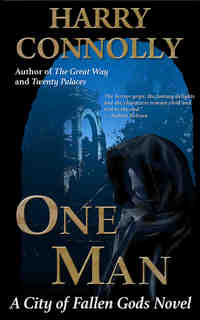
That is not a shadow that I want to see behind me . . .great atmospheric cover, eh?

You can get your hands on this cover (and the novel it goes with!) at https://www.amazon.com/Sword-Bogdan-Teodorescu-ebook/dp/B0872C8LFY next month (obviously, you can order it now…and you should).


My thanks to Love Books Group for the invitation to participate in this reveal and the materials they provided.

Love Books Group

The History of Tom Jones, a Foundling by Henry Fielding: BOOK IV., xiv-BOOK V., viii.

Fridays with the Foundling
Tom Jones Original CoverA couple of bonus chapters to catch up, which was supposed to be up last week. Then this week’s…basically, this one going to go on for a bit.

Tom’s laid up (at Mr. Western’s, you may recall) recuperating and Allworthy comes by regularly to check on him and encourage moral reform. Thwackum does, too, naturally, he’s “more severe” than Allworthy. Squire Western is another regular visitor (it is his house) and gets drunk talking to him while Tom lies in bed—which seems to be a pretty good time. Fielding throwing in a drunken dialect to his already archaic British spelling made me have to read things out lout to get what was going on.

And eventually, Jones realizes—slowly, realistically—that he has actual feelings of love for Sophie. Mature love, not something selfish and adolescent, it’s one of the best descriptions of that kind of feeling I remember reading. Tom’s growing affection is stunted by Western’s frequent drunk discussions of getting Sophie married to a rich man. He wants to treat Western better than to frustrate his aims and he doesn’t want to lessen Allworthy’s esteem for him. Also…Molly. Molly’s in a precarious social position and he doesn’t want to abandon her.

It’s hard not to like the guy when he thinks like that (even if you can tell that it’s a narrative disaster waiting to happen).

And then like Sophie a few chapters back, he’d resolve to set aside his feelings for her to focus on Molly. And that would last until he spent time with her in the evenings listening to her play the pianoforte for her father. In addition to Fielding telling us this, there’s a great incident that showed this wonderfully. It took a couple of pages to set it up and a few paragraphs to execute, and was just great storytelling. It’s like allysonyj commented, a slow-building romance, the kind we don’t get to see anymore (and maybe not as much as we should have had before).

Though this Incident will probably appear of little Consequence to many of our readers; yet, trifling as it was, it had so violent an Effect on poor Jones, that we thought it our Duty to relate it. In reality, there are many little Circumstances too often omitted by injudicious Historians, from which Events of the utmost Importance arise. The World may indeed be considered as a vast Machine, in which the great Wheels are originally set in Motion by those which are very minute, and almost imperceptible to any but the strongest Eyes…

The Citadel of Jones was now taken by Surprize. All those Considerations of Honour and Prudence which our Heroe had lately with so much military Wisdom placed as Guards over the Avenues of his Heart, ran away from their Posts, and the God of Love marched in in Triumph.

But…Molly. What to do about her? He’s made some promises, and feels a good deal of compassion for her—he can’t just abandon her. Maybe, just maybe, he could buy her off—she’s really poor (and not a little bit vain), maybe a large sum of money that would leave her comfortable would do the trick. So he goes to visit her, he ended up waking her from a nap and proposes this to her. She bewails and laments the suggestion—how could he? She’ll never recover from this—oh, the heartbreak. I’ll admit, my eyes rolled a bit.

And then a nice bit of elaborate physical comedy ensues—as a result of her overly-dramatic response, she knocks a curtain aside, exposing Thwackum’s debate partner, Square in a state of undress. Apparently, a few weeks back, he’d been struck by her beauty (about the time that everyone in town realized she was with child) and pursued her. Honestly, “he liked the Girl the better for the Want of that Chastity.” Which is a pretty good reason to like him less.

The Reader will be mistaken, if he thinks Molly gave Square the Preference to her younger Lover: on the Contrary, had she been confined to the Choice of one only, Tom Jones would undoubtedly have been, of the two, the victorious Person. Nor was it solely the Consideration that two are better than one (tho’ this had its proper Weight) to which Mr. Square owed his Success: the Absence of Jones during his Confinement was an unlucky Circumstance; and in that Interval some well-chosen Presents from the Philosopher so softened and unguarded the Girl’s Heart, that a favourable Opportunity became irresistible, and Square triumphed over the poor Remains of Virtue which subsisted in the Bosom of Molly.

And in the fortnight between that time and Tom’s visit, things had apparently continued in that fashion. Square and Tom exchange some words about this, both pledging to keep their mouths shut about this incident and Tom leaves. The two lovers squabble a bit and then makeup and Sophie insists that everything she’d said to Tom mere moments before was a joke and that Square was the true master of her heart all along.

Not long after that Tom discovers (okay, fine, Molly’s jealous older sister tells him) that he wasn’t “the first Seducer of Molly” and that there’s a good chance that someone else could be the child’s father. And in a pre-Maury Povich world, it was impossible to say who was the daddy. The other potential father is named WIll Barnes and is quite the cad—he’s got a list of conquests, and either drove one broken-hearted girl to suicide or killed her himself.

Tom’s solely focused on Sophie and believes she feels the same, but he still had the same concerns about Western and Allworthy. Western is oblivious to Tom’s feelings (which he does a lousy job of hiding), but Sophie’s not—in fact, she sees them and encourages them. There’s a very sweet encounter between the two not long afterward, and you start to wonder how these two could possibly get together so early in the book.

Which is exactly when Allworthy falls ill. So dangerously ill that he summons his family—including Blifil, Thwackum, Square, some of the servants—and gives a few last words, just in case this disease kills him, which includes his Will. Thwackum and some of the servants are less than pleased with what he’s leaving them (at least compared to others) and are lamenting this when they’re interrupted with more news—Mrs. Blifil had died on her way to attend her brother. The chapter ends with them relating this news to Allworthy as he seems to be on the verge of recovery.

There’s just so much to take in here—I really didn’t do myself any favors by being too tired to write up the first part of this last week. But in short—this was just great. There’s great comedy, a little drama, and a lot of sweetness. Fielding’s voice is just great (as I’ve noted before) and the narration just carries you away. I’m really enjoying this book. That’s pretty much all there is to say.

The Wanderlust Book Tag

The Wanderlust Book Tag
My general attitude toward traveling is, “Why?” Followed closely by, “Well, okay, but can I bring books?” Which is not to say that I have anything against the idea of other places, but they’re things best experienced by other people. Or vicariously.

Which brings us to this Book Tag, seen recently on Bookstooge’s Reviews on the Road (but I’ve also appreciated Ola and Pio’s entry on Re-enchantment Of The World and The Orangutan Librarian‘s). Nothing better than exploring different environments than through novels.

The Rules

bullet Mention the creator of the tag and link back to original post [Alexandra @ Reading by Starlight]
bullet Thank the blogger who tagged you (see earlier mention of Bookstooge)
bullet Answer the 10 questions below using any genre
bullet Tag 5+ friends (the first five people who read this should consider themselves tagged. Not sure if you’re #3 or #17? Assume you’re #3)

The Settings

1. Secrets and lies: a book set in a sleepy small town

Paradox BoundParadox Bound

by Peter Clines
My post about the book.
A (seemingly?) typical small New England town is our entry point into a cross-country time travel adventure.


2. Salt and sand: a book with a beach-side community

The Dawn PatrolThe Dawn Patrol

by Don Winslow
I can’t believe that I’ve never written anything about this. Sigh. I read “beach” and it’s the first novel that pops to mind (also third, sixth, ninth-twelfth, and so on). A stylish, deceptively breezy PI novel centering on a group of surfers in San Diegeo is what made me a Don Winslow fan for life.


3. Here there be dragons: a book with a voyage on the high seas

Wake of the Bloody Angel (Eddie LaCrosse, #4)Wake of the Bloody Angel

by Alex Bledsoe
My post about the book.
This entry in the Eddie LaCrosse “PI in a fantasy world” series takes our redoubtable hero to the high seas in search of a missing person. There’s adventure, piracy, sword-play, banter, friendship, and a bit of betrayal.


4. Tread lightly: a book set down a murky river or a jungle

The InformationistThe Informationist

by Taylor Stevens, Hillary Huber (Narrator)
My post about the book.
I think there’s a nasty river, there’s jungle, and a good deal of urban settings. This first Vanessa Michael Monroe adventure introduces readers to a world not seen enough, as well as a heckuva character.


5. Frozen wastes: a book with a frost bitten atmosphere

Hell is EmptyHell is Empty

by Craig Johnson
My post about the book.
As Johnson tries to cycle through the seasons in these books, Walt’s actually had a few Wyoming-as-frozen-wasteland adventures. This one is just my favorite of them. Walt’s on the hunt for escaped federal prisoners in the middle of a blizzard. A gripping tale of man against nature, man against man, man against himself, told with Johnson’s signature style and wit, with one foot in Dante and the other in Indian folklore.
Runner up: Winterkill (Audiobook) by C. J. Box, David Chandler


6. The boonies: a book with rough or isolated terrain

A Star-Reckoner's LotA Star-Reckoner’s Lot

by Darrell Drake
My post about the book.
Set in Persia, full of rough and isolated terrain. Full of social mores that are just as foreign to Western readers as anything that the most imaginative novelist could invent, along with a magic system, a belief system, and a host of supernatural beings that are equally novel. Years later, I’m still in awe of what Drake did with this.


7. Hinterlands and cowboys: a book with a western-esque setting

The Shootout SolutionThe Shootout Solution

by Michael R. Underwood
My post about the book.
The beginning of the Genrenauts series, which I can’t summarize (I’ve tried). So, here’s a bit from the blurb from Underwood’s site:…our world is just one of many, and every other world is the home of a story genre — Science Fiction or Romance, Fantasy or Western — populated by archetypal characters and constantly playing out familiar stories.

The Genrenauts’ mission: find and fix broken stories. If they fail, the ripples from the story worlds will cause havoc and devastation on their home world.

This particular mission takes place on Western world, which is pretty much the definition of Western-esque.


8. Look lively: a book set across sweeping desert sands

Hunger Makes the WolfHunger Makes the Wolf

by Alex Wells
My post about the book.
A SF with a touch of fantasy set on a planet that’s basically defined by sweeping desert sands. Tanegawa’s World is a little forgotten backwater of a planet—think Tatooine—so forgotten that none of the colonists there really have a clue that there’s an interplanetary government, or what’s going on with any other planet. The company that runs the mines (and by extension, the farming communities that support the mines) runs the whole show. There are organizations of workers in individual towns, and there’s a loose network connecting them, for mutual assistance and support. And then there are the Ghost Wolves—a band of mercenary bikers. They are a law unto themselves, but have strong ties to the miner groups. They may be supported by/sympathized with by most people in the towns, but officially they’re outlaws.


9. Wild and untamed: a book set the the heart of the woods

Back of BeyondBack of Beyond

by C. J. Box, Holter Graham (Narrator)
My post about the book.
For those of us in the US (at least the lower 48), there’s nothing like Yellowstone National Park for wild woods. This adventure into the untamed wilds on the hunt for a murderer pits a bunch of people who have no business being in the woods (helped by a couple of pros) against the elements, their own incompetency, and a little bit of urban evil.


10. Wildest dreams: a whimsical book shrouded in magic

No Country for Old GnomesNo Country for Old Gnomes

by Delilah S. Dawson and Kevin Hearne
My post about the book.
Yeah, I can think of a few other contenders for this. But “whimsy” is the best word to describe this book. And there’s loads of magic afoot (or is that a-beard?). Such a freakishly fun read, I have to throw in a reference to it whenever I can.

We Begin at the End by Chris Whitaker: Hunting for Hope (and Life?) in a Hopeless Place

Am glad to welcome the Book Tour for We Begin at the End by Chris Whitaker today—it’s one of those books that I don’t feel quite adequate to talk about, but we’ll give it a shot. Be sure to check out some of these other blogs on the graphic below, as well. There’s some great blogs covering this one.

We Begin at the End

We Begin at the End

by Chris Whitaker

eARC, 464 pg.
Zaffre, 2020

Read: April 4-7, 2020
Grab a copy from your local indie bookstore!


Thirty years after (the then minor) Vincent King was imprisoned for killing a girl, he’s released to a world he can only barely recognize. His childhood best friend, now Chief of Police, picks him up from prison to drive him back to the small coastal town they grew up in. Geographic changes, economic changes, societal drift, and other pressures have radically altered this community.

But some things remain—the high school jock who’s athletic future was derailed by an injury still drives the car his father bought while he was in High School, and works to recapture the physical condition he was in then. Chief Walker—Walk—is still hung up on his high school sweetheart (who moved away not long after King was imprisoned). And Star Radley, Vincent’s then-girlfriend, and sister of his victim, still lives in town, still shaped by the events of thirty years prior.

Star has two children—thirteen-year-old Duchess and her little brother, Robin. Duchess does most of the care-taking of Robin, feeding him, getting him ready for school, making sure he’s sleeping. She’s doing everything she can to raise Robin (and protect him from the world), and to keep her mother healthy for Robin’s sake. On the eve of Vincent’s return, Star tries to overdose on pills—and not for the first time.

Walk’s a constant presence in the lives of Star, Duchess, and Robin—but not a necessarily welcome one. Still, he’s the steadiest and most reliable adult in the children’s lives (and in some way, Duchess does depend on him and look up to him).

That’s the status quo that King’s release upsets. What follows is a chain of heartbreak, calamity, tragedy, violence, vengeance, and depravity. There’s a little glimmer of hope, too—but it’s hard to find, and there’s a lot of suffering surrounding it.

Whitaker delivers this in lean prose, without wasting a word. It’s almost as if he took Leonard’s rule to “leave out the parts that people skip,” and dialed it up to 11. The prose matches the emotions, the characters—beauty, ornament, sentiment have no place in their lives, and it’s largely empty from the novel. There’s not a word out of place, each one carefully placed for maximum impact and effectiveness.

Each character has a depth that you don’t always see. Whitaker doesn’t explore the depth too much, doesn’t explain it—but he shows that it’s there. Duchess, in particular, is a character so well drawn that I can practically see her. I won’t forget her anytime soon.

There are some problems, not many, but they’re there. The text in the ARC (and perhaps this will be addressed in the final text) contains a couple of sloppy Britishisms—terms that would be commonplace in the UK, but have no place in a US character’s mind. Particularly if they’re a poorly educated child. Whitaker’s language is so precise, so clear, that having something like that just takes me out of the text—ruining the spell.

Secondly, Whitaker’s sparse style occasionally works against him. Every now and then the prose works against him, making a scene difficult to parse. Just a few more words (judiciously placed, obviously) to flesh things out could help.

I wish I could say that I enjoyed this book—I really do. But I didn’t. I did fall under its spell, the stark, bleak outlook affected me (I wonder how I’d have reacted to a thing or two if Duchess’s and Walk’s plights weren’t in the back of my mind the last couple of days). This is not your typical Crime Novel. It’s not written in the typical fashion, with typical characters and motivations, with typical ends in mind. The terms “moody” and “atmospheric” seem like understatements. It is powerful, skillfully written—and will stay with you for quite a while.

Do yourself a favor, take the plunge.


4 Stars


My thanks to Tracy Fenton and Compulsive Readers for the invitation to participate in this tour and the materials (including a copy of the novel) provided via NetGalley.


This post contains an affiliate link. If you purchase from it, I will get a small commission at no additional cost to you. As always, opinions are my own.

Page 155 of 341

Powered by WordPress & Theme by Anders Norén