Category: Fiction Page 22 of 339

The Price of Power by Michael Michel: An Addictive and Powerful Multi-Threaded Fantasy Novel

I talked about this book before I finished reading it a week or so ago, but I wanted to make some corrections to bad guesses/assumptions and then just talk about things in general now that I’m finished. But yes, a lot of this material is reused.


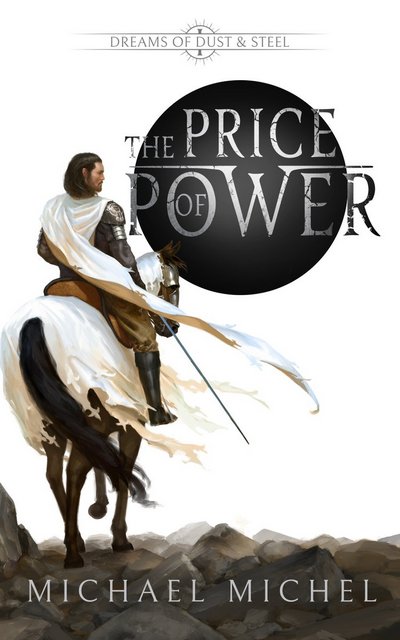
Cover of The Price of Power by Michael MichelThe Price of Power

by Michael Michel

DETAILS:
Series: Dreams of Dust and Steel, #1
Publisher: Chainbreaker Books
Publication Date: April 2, 2025
Format: eARC
Length: 498 pg.
Read Date: March 29-April 4, 2025

Buy from Bookshop.org Support Indie Bookstores

What’s The Price of Power About?

This is not the easiest question to answer, I’ll tell you right now. The title really sums it up well, this is a story about what power costs—political, familial, monetary, military, personal, magical.

But that’s not much of a plot, that’s more of a description. There are four plotlines—that somewhat overlap, but most of that overlap is promised for Book Two and beyond. But the further you read, the more you see how they are intertwined even if most of the characters don’t see/understand that yet.

So I’m going to steal a little from the blurb that Michel sent me (and that I posted recently) to give some quick thoughts about each plotline.

“A mad prophet determined to control reality”

This is the hardest one to talk about, primarily because this storyline is full of symbolism, visions, dreams, and magic. The point of view character and most of the people him aren’t sure what is going on—what’s real, what’s a dream, and what’s their imagination. Those who do know what’s going on are either lying, deluded, or a supernatural entity who is trying to trick the humans.

I was engrossed, though. I may not have understood it all, but I was hooked by what I did figure out. By the last chapter of this storyline? I was gobsmacked. While I felt like I should’ve understood what Michel was going for early on, there was no reason for me to have. It was one of those situations where an author did something fairly unexpected, but did it so well that you couldn’t imagine any other way it could’ve gone.

“A dead prince who isn’t dead”

This, on the other hand, is a straightforward story about a prince whose thirst for vengeance—driven by rage and grief—led to a type of destruction that might make Tywin Lannister take a step back.

Now he’s just trying to avoid contact with everyone, denying who he is, dwelling on what he did, and what it cost him (the price he paid, to make it less than subtle). You almost feel sorry for him and wish he’d snap out of his self-pity and self-destruction when he needs to (which is right about the time we meet him). But also…if anyone should hate themselves, it’s hard to argue against him.

The action in these chapters is just great—the prince and his allies face off against some very vile criminals. The fight scenes will get your blood pumping—and maybe a fist or two (but not every time). There are horrors—and the closest you’ll get to grins in this book.

Barodane is set up for a redemption story. But I’m not convinced that’s what Michel has in mind. Of all these four plots, this is the one I’m most invested in because of some of the surrounding characters.

“An orphan with hero’s blood”

This, too, feels like a familiar fantasy story. A princess raised to take the place of her dead parents leading the nation through a tumultuous time, with everyone wondering if she is capable of doing the job. You just can’t help but feel bad for this girl. She’s got the weight of the world on her shoulders (or at least the weight of a nation), and pressures and expectations on her are as high as can be.

On the one hand, what she’s called upon to do (so far) is easier than the rest—but her age and visibility even out the scales a bit. I like her, I like her teachers and her animal companion. But honestly, everyone else in her immediate circle could be wiped out and the only reason I’d care is because of the impact it’d have on those four.

I’m pretty sure that I’ve spent a decent amount of time leaning forward during her chapters like you do during a tense part of a film (am I the only one who does that while reading?). A lot of the turns her story took were expected—but not all of them were. And a couple left me reeling.

“And a powerful seer “

This is a hard storyline to work through. This grandmother/Obi-Wan figure is a tough old lady, having to act tougher than she really is to do what she has to. Her ability to see time and reality have shown her what needs to happen, and the price she and her grandson will have to pay.

Michel keeps the details vague at this point—but you get to see enough to keep you invested and eager to learn alongside her grandson. If, as I/the title/and I think the author say, this book is about the price you pay for power—this seer has paid a hefty price already and is preparing to pay a bigger price. She’s also caused (and plans on causing) others to pay—it’s a little unclear who benefited from them paying great prices, but the seer would claim it’s for the greater good (and probably believes that).

There’s a very cool magic battle in this story—at least one, anyway—and just knowing that this kind of thing is possible around this woman will keep you invested, even if you weren’t inclined to be anyway.

This seer is very much in the Elizabeth Best (from The Thursday Murder Club)/Taishi (from The Art of Prophecy)/Akina Azure (from Partial Function) mold of scarily competent elderly characters. Barodane might be a frighteningly violent warrior, but honestly, this woman would worry me more if I lived in this world. The way she’s tied to every other storyline just makes me want to understand her more than her own did.

Dramatis personae

There’s a lengthy (or maybe my e-reader font is just set large enough that it seems that way) dramatis personae at the beginning of the novel—if you’re like me, keep it open on your phone while you use an e-reader for easy reference. If you got your hands on a paper copy, keep a bookmark there—you’re going to want to check it often for the first third or so (results may vary on your attention span or memory).

Even if you don’t rely on it, it’s a good way to think about the book—4 rosters of characters to get to know now.

I expect that those who survive will get tossed together like a salad in the ensuing novels.

How the Novel Works

This isn’t a “Book One: Barodane”, “Book Two: Princess” kind of thing where each book tells the complete story of each character. Each character/storyline gets a chapter and then it moves on to the next, and keeps rotating that way. There are some variations from the pattern, but it holds more often than not—and any of the variations only serve to push the story forward.

There are two schools of thought when it comes to chapters—a lot of authors will close an idea, or a time period at the end of a chapter. This makes it easy to put your bookmark/quitter strip in the book and set it down to sleep, eat, converse with people, or whatever. Other writers will end a chapter in a way that propels you to move on to the next (Jim Butcher, for example, talks a lot about this practice). This keeps you engaged, moves you to keep reading—and is an excellent way to annoy a reader who really has other things they should be doing.

Michel falls into the latter category. Of course, the trick with this book is that as a Bardodane chapter leaves you hungry for the next thing in his story—but you have to go through three other plotlines before you get back to it (and each one of those will leave you hungry to press on with that storyline). I love this—I also hate it. Some people will choose to skip chapters to stick with one story through the end. This is a mistake—and will inevitably involve you getting something spoiled (I can think of at least once where that spoiler is major. There may be more to come).

So gird up, and prepare for Michel to play with you like a fisherman trying to tire out his catch before reeling it all the way in.

The Secondary Characters

To keep this to a length people would want to read, I’ve limited what I’ve said about secondary characters. This is a problem—some of them just as interesting and compelling as the point-of-view characters (possibly more so). That long dramatis personae is filled with people you will want to spend time with, or at least understand better. And sure, some of them are despicable and you will root for their defeat (but you’ll still want to understand them and maybe spend time with them on the page, just not at a pub).

There are a few secondary character deaths in this book—and you know there are more to come. One of them provoked me to send a message to Michel (the number of times I do that mid-read is incredibly small), threatening him if he did something similar to another character before the fifth book (at which point, I assume almost everyone will die or be defeated). I suspect I will not be alone in feeling that way about some of these characters, even if you pick ones that aren’t as cool as the ones I pick.

Michel is not playing around when it comes to character design or messing with his reader’s emotions.

So, what did I think about The Price of Power?

I don’t know what else to say here—I think I slipped out of my typical post outline above. In case you haven’t picked up on it—this book is one of my favorite Fantasy novels in recent memory.

This is about as far from cozy fantasy as you can get, obviously. But it doesn’t quite reach what I’d define as grimdark—I’m no expert in those definitions, but that’s what my gut says. Michel prefers the term gritty—and that makes sense to me. It’s very noir, a Fantasy version of hard-boiled. I’m not going to say that it’s what Nathanael West would’ve written if he wrote a Fantasy novel—but if that idea intrigues you, this just might, too.

The prologue wowed me. The first chapter raised the stakes—and as every point-of-view character was introduced the intrigue grew. I was already impatient for the next book to be published before I finished with this one.

Go grab this one as soon as you can. Books 2 and 3 are scheduled for release this year—Book 2 should be out in June—and you’re going to want to be ready for them.

Disclaimer: I received this eARC from the author in exchange for this post which contains my honest opinion—but also, I bought the earlier edition of the novel and just hadn’t gotten around to it yet, so I’m not sure how necessary this disclaimer is.


4 1/2 Stars

This post contains an affiliate link. If you purchase from it, I will get a small commission at no additional cost to you. As always, the opinions expressed are my own.

Irresponsible Reader Pilcrow Icon

In Medias Res: The Price of Power by Michael Michel. A Powerful, Addicting Read

As the title implies, I’m in the middle of this book (well, a little past middle), so this is not a review, just some thoughts along the way.


Cover of The Price of Power by Michael MichelThe Price of Power

by Michael Michel

DETAILS:
Series: Dreams of Dust and Steel, #1
Publisher: Chainbreaker Books
Publication Date: April 2, 2025
Format: eARC
Length: 498 pg.
Buy from Bookshop.org Support Indie Bookstores

What’s The Price of Power About?

This is not the easiest question to answer, I’ll tell you right now. The title really sums it up well, this the story about what power costs–political, familial, monetary, military, personal, magical.

But that’s not much of a plot, that’s more of a description. There are four plotlines–that somewhat overlap, but most of that is promised for book two and beyond. But the further you read, the more you see how they are intertwined even if most of the characters don’t see/understand that yet.

So I’m going to steal a little from the blurb that Michel sent me (and that I posted earlier today) to give some quick thoughts about each plotline.

“A mad prophet determined to control reality”

This is the hardest one to talk about–at this point, I’m not certain who the mad prophet is (I’m pretty sure, but I’m waiting to know for sure). But I’m probably in denial because I don’t want this person to be the prophet. The main reason that this is hard to talk about is that this storyline is full of symbolism, visions, dreams, and magic. The point of view character–and those around him, too–isn’t sure what is going on–what’s real, what’s a dream, and what’s his imagination.

I’m engrossed, though. I may not get it all, but I’m hooked by what I do get.

“A dead prince who isn’t dead”

This, on the other hand, is a straightforward story about a prince whose thirst for vengeance–driven by rage and grief–led to a type of destruction that might make Tywin Lannister take a step back.

Now he’s just trying to avoid contact with everyone, denying who he is, dwelling on what he did and what it cost him. You almost feel sorry for him and wish he’d snap out of his self-pity and self-destruction when he needs to (which is right about the time we meet him). But also…if anyone should hate themselves, it’s hard to argue against him.

Barodane is set-up for a redemption story. But I’m not convinced that’s what Michel has in mind. Of all these four plots, this is the one I’m most invested in because of some of the surrounding characters.

“An orphan with hero’s blood”

This, too, feels like a familiar fantasy story. A princess raised to take the place of her dead parents leading her nation through a tumultuous time, with everyone wondering if she is capable of doing the job. You just can’t help but feel bad for this girl. She’s got the weight of the world on her shoulders (or at least the weight of a nation), pressures and expectations on her are as high as an be.

On the one hand, what she’s called upon to do (so far) is easier than the rest–but her age and visibility even out the scales a bit. I like her, I like her teachers, and her animal companion. But honestly, everyone else in her immediate circle could be wiped out and the only reason I’d care is because of the impact it’d have on those four.

I’m pretty sure that I’ve spent a decent amount of time leaning forward during her chapters like you do during a tense part of a film (am I the only one who does that while reading?).

“And a powerful seer “

This is hard storyline to work through. This grandmother/Obi-Wan figure is a tough old lady, having to act tougher than she really is to do what she has to. Her ability to see time and reality have shown her what needs to happen, and the price she and her grandson will have to pay.

Michel keeps the details vague at this point–but you get to see enough to keep you invested and eager to learn alongside her grandson.

There’s a very cool magic battle in this story–at least one, anyway–and just knowing that this kind of thing is possible around this woman will keep you invested, even if you weren’t inclined to be anyway.

The way she’s tied to all of the above just makes me want to understand her more.

Dramatis personae

There’s a lengthy (or maybe my e-reader font is just set large enough that it seems that way) dramatis personae at the beginning of the novel–if you’re like me, keep it open on your phone while you use an e-reader for easy reference. If you got your hands on a paper copy, keep a bookmark there–you’re going to want to check it often for the first third or so (results may vary on your attention span or memory).

Even if you don’t rely on it, it’s a good way to think about the book–4 rosters of characters to get to know now.

I expect that those who survive will get tossed together like a salad in the ensuing novels.

How the Novel Works

This isn’t a “Book One: Barodane”, “Book Two: Princess” kind of thing where each book tells the complete story of each character. Each character/storyline gets a chapter and then it moves on to the next, and keeps rotating that way (I’m pretty sure it’s a pattern that repeats, but honestly I forgot to track–that largely holds true–and it doesn’t matter).

There are two schools of thought when it comes to chapters–a lot of authors will close an idea, or a time period at the end of a chapter. This makes it easy to put your bookmark/quitter strip in the book and set it down to sleep, eat, converse with people, or whatever. Other writers will end a chapter in a way that propels you to move on to the next (Jim Butcher, for example, talks a lot about this practice). This keeps you engaged, moves you to keep reading–and is an excellent way to annoy a reader who really has other things they should be doing.

Michel falls into the latter category. Of course, the trick with this book is that as a Bardodane chapter leaves you hungry for the next thing in his story–but you have to go through three other plotlines before you get back to it (and each one of those will leave you hungry to press on with that storyline). I love this–I also hate it. Some people will choose to skip chapters to stick with one story through the end. This is a mistake–and will inevitably involve you getting something spoiled (I can think of at least once where that spoiler is major. There may be more to come).

So gird up, and prepare for Michel to play with you like a fisherman trying to tire out his catch before reeling it all the way in.

The Secondary Characters

To keep this to a length people would want to read, I’ve limited what I’ve said about secondary characters. This is a problem–some of them are just as interesting and compelling as the point-of-view characters (possibly more so). That long dramatis personae is filled with people you will want to spend time with, or at least understand better. And sure, some of them are despicable and you will root for their defeat (but you’ll still want to understand them and maybe spend time with them on the page, just not at a pub).

There are a few secondary character deaths in this book–and you know there are more to come. One of them provoked me to send a message to Michel (the number of times I do that mid-read is incredibly small), threatening him if he did something similar to another character before the fifth book (at which point, I assume almost everyone will die or be defeated). I suspect I will not be alone in feeling that way about some of these characters, even if you pick ones that aren’t as cool as the ones I pick.

Michel is not playing around when it comes to character design or messing with his reader’s emotions.

So, what did I think about The Price of Power?

I’m at the 75% mark–so it’s possible that Michel will mess up the ending and lose me.

Possible, but unlikely.

Really, he’d have to do many, many things wrong to turn me off at this point–and he shows no signs of doing so.

The prologue wowed me. The first chapter raised the stakes–and as every point-of-view character was introduced the intrigue grew. I’m already impatient for the next book to be published and I’m not even finished with this one yet.

Go grab this one as soon as you can. Books 2 and 3 are scheduled for release this year (he talks about the timeline in the video I posted earlier today) and you’re going to want to be ready for them.

Disclaimer: I received this eARC from the author in exchange for this post which contains my honest opinion—but also, I bought the earlier edition of the novel and just hadn’t gotten around to it yet, so I’m not sure how necessary this disclaimer is.

This post contains an affiliate link. If you purchase from it, I will get a small commission at no additional cost to you. As always, the opinions expressed are my own.
Irresponsible Reader Pilcrow Icon

HC Chats with Michael Michel about The Price of Power and some other stuff

HC sat down with gritty Fantasy author extraordinaire Michael Michel (https://michaelmichelauthor.com/) to talk about his book The Price of Power (released 4/2/25!) his other books, influences, and things of that nature. HC also works in an error-filled description of Thespis–a mischievous ghost (apologies to Jeremy Goodwin).

Some of the books we mentioned were:
Michael’s books:
The Price of Power
A Graveyard for Heroes
War Song
Way of the Wizard

Other books we mentioned/discussed:
Prince of Thorns by Mark Lawrence
The Trouble with Peace by Joe Abercrombie (Book 2 of The Age of Madness)
The Steel Remains(Author) by Richard K Morgan (Book 1 of A Land Fit for Heroes)
Sons of Darkness by Gourav Mohanty (I’m pretty sure about this one, my handwriting got hard to read, and if I’m wrong, it looks like something we should’ve talked about)

For the two of you who might be curious, what I should’ve said about Thespis:

Jeremy:…in 534 B.C. that Thespis stepped out onto the stage of the Theater Dionysis during a choral song and dance and became the first man to speak words as an actor in a play.

Dana: Thespis?
Jeremy: The first actor. Now a mischievous ghost. He likes to wreak havoc on performances of any kind.


SPOTLIGHT: The Price of Power by Michael Michel

I’m excited to help Michael Michel spread the word about this week’s publication of the first book in his Dreams of Dust and Steel series, The Price of Power. Fantasy reader friends and foes (assuming I have one or two) are going to want to get this right away and move it to the top of your TBRs. I’d go on about that, but this post isn’t about that. Let me just give you the facts about this book, and I’ll rave later.

Book Details:

Title: The Price of Power by Michael Michel
Series: Dreams of Dust and Steel, #1
Format: Hardcover/Kindle/Paperback
Length: 498 pg.
Publisher: Chainbreaker Books
US Publication Date: April 2, 2025
Cover of The Price of Power by Michael Michel

About the Book:

Loss. Redemption. Grief…and the dangers of belief.

Prince Barodane could not hold back the darkness. Not even in himself. He laid an innocent city in its grave and then died a hero.

In his absence, war whispers across the land.

Power-hungry Highborn dispatch spies and assassins to the shadows as they maneuver for the throne, while an even greater threat rises in the South. Monsters and cultists flock to the banners of a mad prophet determined to control reality… and then shatter it.

Destiny stalks three to the brink of oblivion.

A dead prince who isn’t dead. Barodane buried his shameful past in a stupor of drugs, drink, and crime, and now, he’d rather watch the world fall apart than wear a crown again.

An orphan with hero’s blood who is forced to make a harrowing choice: betray her country or sacrifice her first love.

And a powerful seer who has no choice at all–her grandson must die.

If any of them fails to pay the price…

The cost will be the world’s complete annihilation.


During a dark prophet’s rise to power, fate calls on four heroes to sacrifice everything they love…or face oblivion.

Dreams of Dust and Steel has the gritty feel of a western, the sweeping scope of the fantasy classics, and brings a fresh new voice to the genre.

In this world, pain can be turned into magic powers, and the price of success can often be worse than failure. Rooted in spirituality as much as it is steeped in bloody violence, this is Game of Thrones meets X-Men.

If you want a character-driven epic rife with scheming politicians, psychedelic horrors, savage knights, and chilling cult leaders, this is one of five books in a series sure to leave you with all the emotional baggage you desire.

Book Links:

Amazon ~ Bookshop.org

About the Author

Michael MichelMichael Michel lives in Bend, Oregon with the love of his life and their two children. When he isn’t obsessively writing, editing, or doing publishing work, he can be found exercising, coaching leaders in the corporate world, and dancing his butt off at amazing festivals like Burning Man. His favorite shows are Dark, The Wire, Arcane, and Norsemen. He loves nature and deep conversations. Few things bring him more joy than a couple of hours playing table tennis.

Website ~ Twitter ~ Instagram ~ Goodreads

Cover Reveal: Death Rights by Shannon Knight

I’m very pleased today to welcome the Cover Reveals for Shannon Knights’s upcoming Death Rights. I’m more than pleased, I’m excited. No one (including me) has talked more on this site about covers than Shannon Knight. Also, I had the privilege of beta reading this book, and it’s a banger. Lastly, the cover is catchy.

I’ll show you this cover below, but first let’s learn a little bit about the book and author, shall we? It’ll just take a moment, and then we can all take a peak at the cover.

About the Book:

Grave Chronicles: Protect the Dead

Grave Cold introduces a world overrun by mutations where the dead remain in their bodies till a raven releases them. Each raven is a long-lived individual steeped in the culture of the time and place they originated. However, the District of Portland is using the dead as an energy source. Nylewulf, an Anglo-Saxon man who has spent centuries hiding from humanity, and Cait, a beautician who happens to be a necromancer, team up to protect the dead.

In Death Rights, Nyle and Cait have reached Angel’s Rest when a raven even older than Nyle appears. Lucius, known as the Kingmaker, is part of the council that regulates the elusive ravens. While DP aims to destroy every raven sanctuary in the district, Lucius unfurls his own plot. Once again, Nyle and Cait strive to stay alive and protect the dead. But survival alone doesn’t satisfy either of them. Will protecting the dead require them to take over the government?

Ebook ISBN: 979-8-9985251-0-0

Book Links:

Goodreads ~ Storygraph


About the Author

Shannon KnightShannon Knight is a fantasy, science fiction, and horror author living in the Pacific Northwest. She graduated summa cum laude with a Bachelor’s in English. Winter Moon Press is her imprint for self-publication.

Author Links:

Website ~ Bluesky ~ Amazon ~ BookBub ~ Goodreads

and now…

The Cover

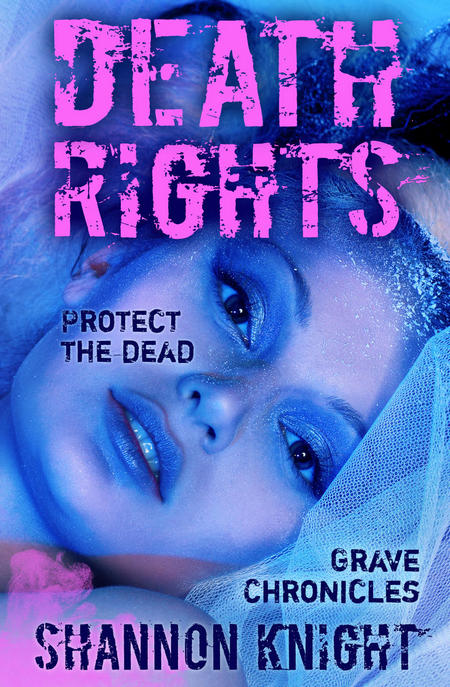
cover for Death Rights by Shannon Knight

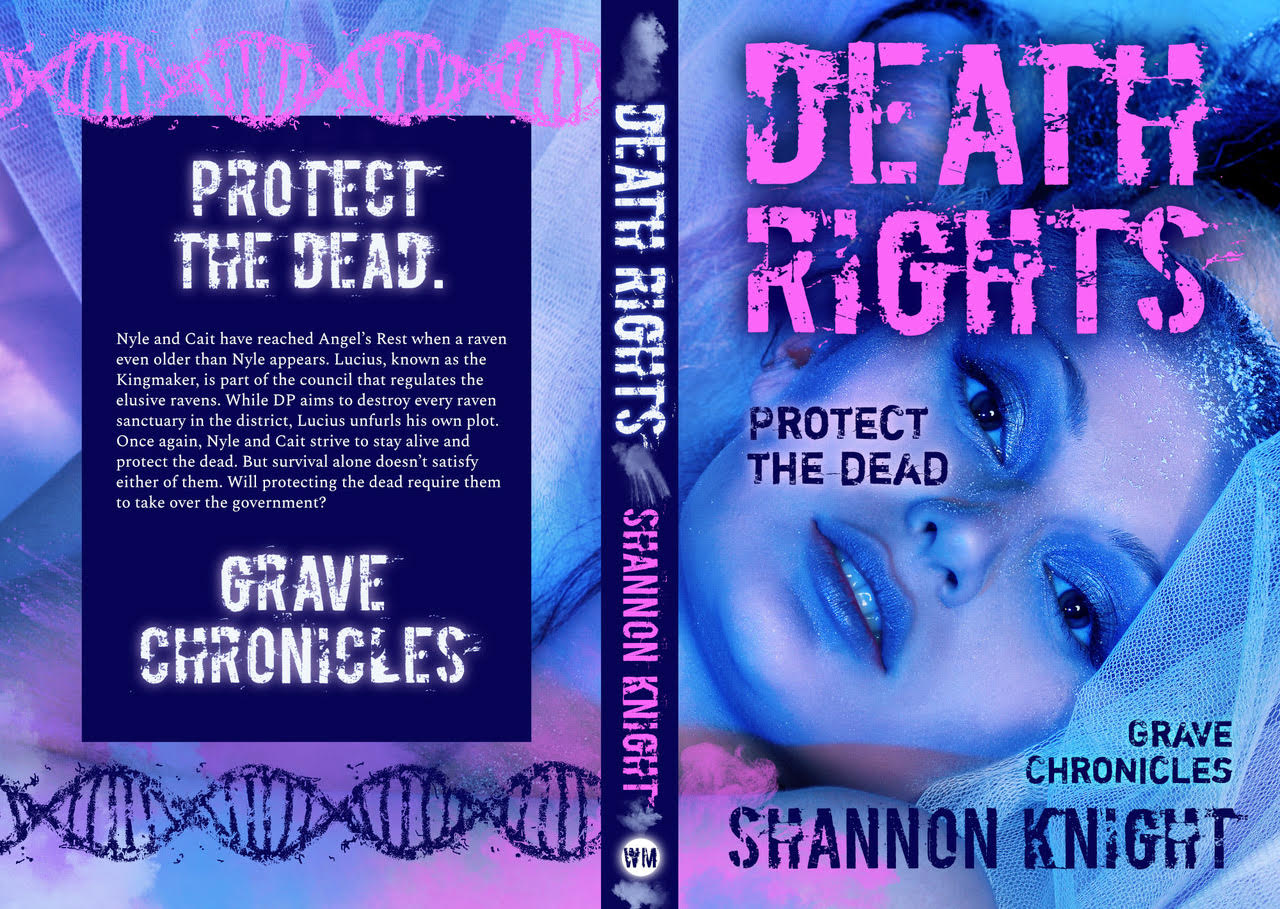
The Complete Wrap-around (click the image to embiggen):
cover wrap for Death Rights by Shannon Knightl
Kudos to these fine folk for their work on this eye-grabber:
Cover design by Winter Moon Press
Cover photography by Kiselev Andrey Valerevich / Shutterstock.com
Cover font Boycott by Ryoichi Tsunekawa / Flat-it
Cover font Shortcut by Eduardo Recife / Misprinted Type
Irresponsible Reader Pilcrow Icon

A Drop of Corruption by Robert Jackson Bennett: There’s Not More than A Drop of this to Complain About (so I won’t)

Cover of A Drop of Corruption by Robert Jackson Bennett A Drop of Corruption

by Robert Jackson Bennett

DETAILS:
Series: Shadow of the Leviathan, #2
Publisher: Del Rey
Publication Date: April 1, 2025
Format: eARC
Length: 480 pgs.
Read Date: March 17-21, 2025
Buy from Bookshop.org Support Indie Bookstores

What’s A Drop of Corruption About?

Dinios Kol arrives (as is his custom) in the canton of Yarrowdale, ahead of his boss, Ana Dolabra. They’ve been assigned to investigate the disappearance of a Treasury officer. This officer—and the rest of the Treasury delegation—is in Yarrowdale to negotiate with the King the final steps of Yarrowdale fully joining the Empire once and for all.

Right now, Yarrowdale is (rightly or wrongly) considered a backwater territory, valuable for one thing only—it’s a place that the leviathans do not travel to, so their corpses can be moved there and harvested for the copious near-magical substances used by the Empire. (incidentally, I found this whole aspect just tremendously cool. I won’t say more than that, but if we only got a novella about this part, I’d have been satisfied). This is the only place where this is safely done, so it’s hard to understate the strategic importance of Yarrowdale.

So one of the Empire’s chief negotiators going missing is no small thing—so Dolabra is assigned to find him.

Not at all shockingly (to any reader), the corpse of the officer is quickly located once Kol arrives. Its condition raises eyebrows and concerns—and that’s just the beginning, the more they investigate the circumstances around this killing the less sense things make, and the greatness of the mind behind it is seen. Dolabra is excited by the challenge, while everyone around her becomes more and more apprehensive with each discovery or conclusion she makes.

I won’t go on much beyond this—I’d love to summarize the whole book for you, but why? More victims are found, more questions are raised, the stakes keep climbing higher, and the implications for the future of the Empire are great.

Dolabra and Kol

When I talked about The Tainted Cup, I didn’t really talk about the primary characters. I hesitate to start now because I’m going to have a hard time stopping. But let me try to dip my toe into it.

Ana Dolabra is a brilliant investigator for the Empire—being sent to the trickiest investigations and given almost unlimited authority to get the answers she seeks. Due to some physical (and psychological) limitations—and the fact that she has zero interpersonal skills (and that’s being generous)—she requires a deputy to handle most of the actual investigating, bringing her the evidence and testimony that she needs to solve the crimes.

Which is where Dinios Kol comes in. He’s been altered to have a perfect memory—sights, sounds, smells, conversation…you name it, he remembers it all (even if he doesn’t want to). So he’s the perfect assistant for someone who will not interact with people of her own volition. There are jobs he’d rather perform—and places he’d rather perform them. But his family needs money to pay medical debt, and this is the surest way for him to accomplish that. He escapes into drink, drugs (I think it’s more like tobacco than anything, but I’m prepared to be shown that I’m wrong), and sex as often as he can. But is reliable when the chips are down—he has to be.

Ana Dolabra is very much in the Nero Wolfe mold—purposefully so. But she breaks the mold in all the right ways—her reasons for relying on someone else to interact with the outside world are different and less self-imposed. Her ego is as large (I wasn’t sure that was possible), and she takes some of these crimes as a personal attack on her and her genius (like Wolfe occasionally does). But she relishes the challenge—and talks openly about enjoying this case compared to the boring murders and whatnot she’s solved recently. She has a strange relationship with eating so that sometimes she sounds like her antecedent and other times the complete opposite.

Most people will not care about this (and I assure you, that paragraph could be longer)—but I’m incapable of reading any section featuring Dolabra without pausing to contrast her to Wolfe. She never comes out bad in these comparisons—just different in a creative way.

Her Archie Goodwin, Dinios Kol, can be compared and contrasted in the same way. I started to say he’s less like Archie, and I really want to. But I can really think of one major difference—what drives them. Kol’s motivation for the work (at this point, anyway, it may be shifting toward the end) is different. So he behaves with a little less loyalty. This makes him more interesting and makes up for his lack of humor. Ah, look there—I found another notable difference. Kol is far too serious to really be an Archie, but I wouldn’t want to change a thing about him.

Building on the Worldbuilding

In The Tainted Cup, Bennett introduced us to a fascinating and complex world of kaiju-esque monsters, magic-feeling science, and a massive empire that’s keeping humanity alive. it was both awesome and strange. In A Drop of Corruption, it’s almost as if Bennet tells the reader, “So you’ve seen the typical in this world, but you ain’t ready for this.” As strange and terrible as we thought things were…ha.

We get to see new augmentations, we get to see how outsiders (or semi-outsiders) regard the Empire, we learn a whole lot of history about the Empire, the monsters, the science behind the augmentations, and so much more. I’m having trouble expressing it all.

In both books so far Bennett can bring the unbelievable and indescribable to life. Din will start a sentence by saying something like, “Words cannot express ___” or “It’s too incredible to explain” or something like that—and then will falteringly describe it in such a way that the reader comes away with a pretty good idea of what Din saw. Even when he’s not calling his shot like that, item after item, phenomenon after phenomenon, creature after creature that really shouldn’t make sense when written about comes through with a level of detail that leads the reader to think they’re imagining what Bennett imagined.

Sure….it’s likely that no two readers will have similar mental images. But that’s not important—you’ll think you do.

The Author’s Note

The Author’s Note (largely an Acknowledgement section, but a little bit more) is a must-read. I don’t know if you’re prone to reading them—particularly if they feel more like an Acknowledgment than anything else. But make an exception for this one. It’s worth your time.

So, what did I think about A Drop of Corruption?

I was blown away by The Tainted Cup, and so I was apprehensive about this one—could it live up to it? I’m pleased to say that it did. I very likely enjoyed this much more—because I was ready for the strangeness and could just let it build on what the prior book did.

I feel bad saying I had fun reading about all the trauma that these victims went through, but I really did. Kol and Dolabra—and Kol’s new local acquaintances are just so well-conceived and vividly drawn, that it’d be harder to be disinterested than captivated.

The mystery kept me guessing until the end (except for the time I thought I’d figured it out, and I was very wrong). There was even a point where I wrote in my notes, “Could this be a redder herring?” and it was anything but. I won’t go into details so you can be fooled like I was, but man… The only thing I like more than the smug satisfaction of figuring out a mystery before a brilliant detective is an author who can fool me into that smugness only to pull the rug out from under me. Not to get elitist or anything, but a fantasy writer should be worse at this than a mystery writer. Bennett didn’t get that memo.

I do think you could read this book without the first in the series—but don’t do that to yourself. Buy a copy of this now (or get on your Library’s waitlist), but get The Tainted Cup at the same time. If I’m right about where this series is going (or even almost close to right), you’re going to want to be ready for it. This is just dynamite.

This book deserves more compliments from me—but who has the time? (not the guy who meant to post this a week or so ago). A great mystery novel, a great fantasy novel, with characters that you’d want to read about even if the plots weren’t worth the time or trouble.

Disclaimer: I received this eARC from Random House Publishing Group – Del Rey, Random House Worlds, Inklore via NetGalley in exchange for this post which contains my honest opinion—thanks to both for this.


5 Stars

This post contains an affiliate link. If you purchase from it, I will get a small commission at no additional cost to you. As always, the opinions expressed are my own.
Irresponsible Reader Pilcrow Icon

REPOST: Vera Wong’s Unsolicited Advice for Murderers by Jesse Q. Sutanto: Come Meet Your New Favorite Senior Citizen Sleuth

Some Real Life™ stuff has come up this week, interfering with my writing plans. So, let me dust this off. I’m a little over halfway through the sequel which is just as delightful. But that’s for another day.


Vera Wong's Unsolicited Advice for MurderersVera Wong’s Unsolicited Advice for Murderers

by Jesse Q. Sutanto

DETAILS:
Publisher: Berkley Books
Publication Date: March 14, 2023
Format: eARC
Length: 352 pg.
Read Date: March 2-7, 2023

What’s Vera Wong’s Unsolicited Advice for Murderers About?

I’m not sure that I can answer this question without just recapping the entire novel—but without the charm and warmth.

Just Try…

How much time do you have?

It Publishes Today, You Need to Get Something Posted. Just Give Us the Setup

Okay, okay, I’ll attempt it—but I really want to spend the next hour just regurgitating the whole thing.

Vera Wong is an older Chinese woman, the owner of a small tea shop in San Francisco’s Chinatown. It’s dark, dingy, and doesn’t get much in the way of customers. She has one regular that she can count on to stop in early in the morning, and then spends most of the rest of the day waiting for someone else to walk in and order. Typically in vain. But it’s her life—she has nothing else to do with her time—her husband is dead, and her son is busy with work. So busy that he rarely has time to visit—or acknowledge all of the super-helpful advice she gives him to succeed at work and/or to find a wife. This doesn’t stop her from texting or calling him frequently to offer the advice, it should be noted.

Then one day, she comes down the stairs from her apartment above the shop to discover a dead body in the middle of the floor. She has little faith that the police will be able to tell her who killed the man, so she decides to discover the identity of the killer for them. How hard can it be? She’s watched plenty of procedurals, is smart, and (unlike Sherlock Holmes) is a suspicious Chinese mother. The murderer doesn’t stand a chance.

So she helps herself to a little bit of the evidence before the police arrive so that she can hunt for the murderer. It’ll be a good change of pace for her.

She sets a trap for the murderer and ends up with four good suspects, it’ll just take her some time to figure out who killed him and why. In the meantime, she sees at least three younger people that need some guidance to get their lives in order—she decides to take that on along with her murder investigation.

Vera

I’d like to spend a few pages talking about Vera—I’m certain that if you ask me in December, she’s still going to be one of my favorite characters of 2023.

She is so human—such a mass of contradictions and differing impulses. The fact that at her, um, advanced age she’s able to chart a new course for her life, to let people in, and adapt gives me a little hope.

But it’s her spirit, her way of looking at the world, and not backing down that’s really inspiring.

Once she’s done with these characters, I could use a grandmother like this.

Be Careful

Vera knows her tea, she spends a lot of time and energy on it—certain that she can make someone just the right kind of tea for whatever they’re facing to help them through the day. If you can make it through a chapter or two (especially in the early chapters) without needing a cup of your own, I’d like to know how.

But other than needing to take the time to boil water and steep your tea, that’s not a big deal (unless you’re inspired to go shopping for more teas, which can get expensive—and can distract you from your reading). However, Vera also spends a lot of time cooking for her new friends and suspects. And she ends up spending more time cooking than making tea.

This is where you need to be careful—if you’re not, you could find yourself putting on a few pounds before the killer is identified. Sutanto’s descriptions of Vera’s creations—and the way everyone responds to them—are so vivid, so enticing, they can send you to your pantry for a snack—or to your food delivery app of choice to order some Chinese food.

I’m not saying that you should avoid these portions of the book—just be prepared so you can fight temptation (or have a handy justification to indulge yourself, if that’s more your preference).

So, what did I think about Vera Wong’s Unsolicited Advice for Murderers?

By the time I got halfway through the opening paragraph, I’d started coming up with a list of people to recommend this book to. There was something about the voice that just jumped off of the page (er, screen) and said, “You’re going to have fun with this.” And I absolutely did—but there was more to it than that, being around these characters felt comfortable. I just wanted to spend time in their presence—like Stars Hollow, CT; the locker room of AFC Richmond; the Parks and Rec Department of Pawnee, IN; the Jigsaw Room of Cooper’s Chase retirement village; or Knight’s Bookstore in Abbi Waxman’s L.A. I don’t remember the last time that I read a cozy mystery that was so worthy of the title “Cozy.”

Yes, I wanted to figure it out. Yes, I wanted to know what happened to the characters and wanted closure for this period in their lives. But I read as slowly as I could because I wanted to linger.

It’s not just Vera that creates that feeling—it’s the other characters’ reactions to her, as well as their relationships with each other. Yes, she is undeniably the center of this little world, but it wouldn’t work without the others.

There’s a lot of gentle humor and heart—that’s what fills this charming work. But that’s not all of it—there are laugh-out-loud moments, as well, and real emotions. There’s a budding romance, a rekindled friendship, family ties, and a lot of people finding the confidence to step out into something new—or into something they’ve tried before and have been scared to try again. The found family that’s created along the way makes all of that possible—particularly the last part—the mutual support (in various forms) and encouragement from the others enable the others to make those steps.

I don’t want to give the impression that this book is all sunshine, flowers, and good times. There are portions of this that are hard to get through, sure—there’s a suspicious death, criminal behavior—at the very least the actions of a scoundrel—heartbreak and a great deal of loneliness and despair. But Sutanto doesn’t leave us there for long—she grounds the book in it, but provides a way forward—through grit, determination, and the help of others.

The murder investigation was fine—probably more than fine, actually. It was a clever little story, with plenty of good suspects and nice twists. But the book isn’t all that interested in the murder investigation, really. It’s just an excuse for these people to come together and start interacting. Vera herself doesn’t really want any of her suspects to be guilty—she’s too busy meddling in their lives to improve them (in selfless acts of assistance only, she’d hurry to tell you). But she keeps plugging away at her little list of suspects because it’s something she’s started—and wouldn’t it be exciting to actually find a murderer? (even if it’s someone she doesn’t want to get into any kind of trouble).

I talk about mysteries more than anything else here, and the fact that I’d started wrapping up the post without addressing the mystery part of this book says a lot to me. It’s the driving force behind the plot and the instigating incident—but again—it’s secondary to the rest of the storylines. Still, most readers will have a hard time finding sympathy for the murdered man, and more than once you’ll likely wonder if it’d really be that bad if no one figures out who did it. You probably won’t feel the way you usually do when a murder is solved when the culprit is named, either.

There’s just so much to commend about this book—and so little to quibble with—I’m on the verge of repeating myself and/or overhyping this thing (but boy howdy, does it deserve a lot of hype!). So I’m just going to leave it with this—go get your hands on a copy, brew yourself a nice pot of tea (I promise you’re going to want tea), and lose yourself in this book for a few hours.

Disclaimer: I received this eARC from Berkley Publishing Group via NetGalley in exchange for this post—thanks to both for this.


4 1/2 Stars

This post contains an affiliate link. If you purchase from it, I will get a small commission at no additional cost to you. As always, the opinions expressed are my own.

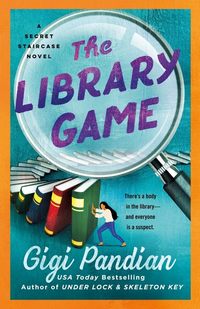
The Library Game by Gigi Pandian: Never Ask “What’s the Worst That Can Happen?”

This is a week and a half late or so, mostly because I kept trying to go on and on and on about aspects of the book that I should leave for Pandian to tell you. My apologies for the delay to the nice people at Minotaur who offered me the book and have been nudging me to say something about it.


Cover of The Library Game by Gigi PandianThe Library Game

by Gigi Pandian

DETAILS:
Series: Secret Staircase Mysteries, #4
Publisher: Minotaur Books
Publication Date: March 18, 2025
Format: eARC
Length: 320
Read Date: March 5-8, 2025
Buy from Bookshop.org Support Indie Bookstores

What’s The Library Game About?

The project that Secret Staircase Construction is about to wrap up has a couple of distinctive elements (on top of the sliding bookshelves, escape room, etc.)—their client is dead, and his death is not a mystery at all. Most people might not consider that very distinctive, but those people haven’t read a mystery novel featuring Tempest Raj.

This client was an aficionado of classic mysteries—okay, aficionado is an understatement—he was borderline obsessed and had the money to indulge that obsession. As his death neared, he decided to turn most of his house into a library (leaving room for an apartment for his librarian nephew), stocked with his own collection. This sounds like a dream come true for most of my readers, right?

He hired Secret Staircase to give it just the right look and touch, even turning part of it into an Escape Room. Sadly, he died before it was completed, leaving his nephew to bring his vision to life.

While the library is being finished—and waiting for official approval to make it a public entity—there’s a neighborhood festival. To get some promotion for the library (and to be good neighbors), they’ve hired some local actors to stage a little performance.

During a dress rehearsal for that performance, something goes wrong—one of the actors disappears (I’m glossing over a lot here), so they try again the next day—in the midst of that… I don’t even know how to gloss over this. It’s like they all chanted “Macbeth!” while walking under a ladder and crossing a black cat’s path or something—so many things go wrong, and a body is discovered. Tempest’s magician friend, Sanjay, appears to be the prime suspect—although the rest of the actors and workers aren’t above suspicion either.

Well, more than one person floats the idea of the deceased client’s ghost being behind it all. So, there are plenty of suspects, however unlikely.

Tempest (and her friend group and family) has her work cut out for her if she’s going to clear Sanjay’s name, find the killer, and get the Library set for the festival.

The Sense of Fun

Yes, this is a murder mystery. Livelihoods, wrongful convictions, and more are on the line. But there is a strong sense of fun to this book. Our amateur sleuths are a group of friends who’ve been down this road before (three times to be exact)—in one way or another.

They like the challenge, they enjoy mysteries, illusions, and everything else going on here—and they can’t help but enjoy this in some way—and this comes out in their interactions with each other.

There’s a sense of play here as they work through this, some running jokes, and so on. I’m not saying that books two and three were absent fun, but it was played down a bit because of everything else. This is as fun as the first book—and maybe more so, because the relationships are better settled and Tempest isn’t under that cloud anymore.

Beyond the greater sense of fun than we’ve had for a bit, there’s the cozy and warm feeling you get from reading a solid found family/friend group (in the midst of a flesh and blood family), these people like each other. It’s hard to beat that feeling.

All of that serves as a bonus to a clever mystery.

So, what did I think about The Library Game?

I was fairly convinced that the previous book in the series, The Raven Thief was going to be the last one as it wrapped up a three-book arc, serving as a nice trilogy. I was so happy to be wrong—I wanted more time with Tempest and her friends—especially Ivy (I’d take a spin-off book full of her essays on locked-room mysteries) and Abra. Not to mention the fun of imagining Ash’s culinary offerings.

Beyond the characters, Pandian knows how to deliver a contemporary locked-room crime and how to keep the tension building while keeping the whole book entertaining. I need to make time for her backlist soon to see how these books compare with her earlier offerings.

I’d like Ernest Cunningham (or Ivy, I guess) to weigh in on Pandian’s books because I’m not entirely certain that she plays fair with her clues and solutions. Particularly in this case. But that’s just to satisfy a mental itch, because I really don’t care—I thought the solution to this and the reveal were pulled off satisfyingly well.

This would make a good jumping-on point for someone new to this world and is a must-read for people who enjoyed any of the previous three. It’s a clever book, a smart mystery, filled with good friends and warm feelings. Who doesn’t want that?

Disclaimer: I received this eARC from St. Martin’s Press via NetGalley in exchange for this post which contains my honest opinion—thanks to both for this.


4 Stars

This post contains an affiliate link. If you purchase from it, I will get a small commission at no additional cost to you. As always, the opinions expressed are my own.

Irresponsible Reader Pilcrow Icon

HC Chats with M.D. Presley about Laurel K. Hamilton

Covers of The Inner Circle novels by M.D. PresleyLast year, you’ll have seen the name M.D. Presley here a few times–thanks to the first two books in his Inner Circle UF series. We had a fun chat last week that I bring to you today. Matt introduced me to the work of Laurel K. Hamilton and her influence on the genre.

Of course, better than that, would be checking out her site and work for yourself. But you might as well start with this chat.

M.D. Presley Links:

Website ~ Bluesky ~ Facebook ~ Rites of Passage (Inner Circle book 1) ~ Worldbuilding Nonfiction


Are you a Reader of Things and want to chat with me about an author/series/something other than promoting your own work (which we will do, just not primarily)? I’d love to keep trying this, but I’m not ready to start pestering people about it. So please let me know.

Irresponsible Reader Pilcrow Icon

REPOSTING JUST CUZ: The Hero Interviews by Andi Ewington: A Thoughtful Fantasy Adventure Shares the Page with 900 Fireball Jokes, 750 Quips about Useless Clerics, 600 Ways to Mock Paladins, and Plenty of Other Comedic Bits

So this is like a month overdue. I feel really bad about that because Andi Ewington got his Q&A responses back to me in record-time and I paid him back by dithering with this. It’s one of those I started and abandoned several times because it wasn’t right. This isn’t either, but I forced myself to actually finish it—it’s just going to get worse the more I tinker with it.

Oh, yeah, and do check in later this morning for a very nice Q&A with Ewington.


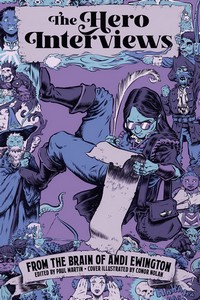
Cover of The Hero Interviews by Andi EwingtonThe Hero Interviews

by Andi Ewington

DETAILS:
Publisher: Forty-Five Limited
Publication Date: December 1, 2022
Format: eBook
Length: 925 pgs.
Read Date: January 20-February 11, 2023

What’s The Hero Interviews About?

The child and sibling of heroic adventurers, Elburn Barr, has taken a different path in life—one fit for someone with his particular set of skills (or lack thereof). He is a Loremaster—no spells, weapons, or danger for him, thank you very much. At this point in his life/career, Elburn has set out to understand what makes a hero tick—what is it that drives them, what early influences molded them, how do they keep going on? Does it vary from type to type? Are Barbarians made of different stuff from a Cleric or a Thief? What about a Ranger or a Wizard?

In addition to interviewing various leading examples of each type of hero, he talks to non-heroes, too. Like a farmer whose farm was saved(?) by some heroes from a dragon, the curator of a hero museum, people who run/design dungeons, etc.

We get these interviews in transcript form—with a little introduction from Elburn at the beginning of each, and maybe a little narrative about what’s going on around them during the interview, or what he does after. But primarily, it’s transcriptions of the interviews.

In addition to trying to understand the heroic psyche in general, Elburn’s hoping to understand and maybe connect with his adventurer-filled family. But he has an ulterior motive for all this—his older brother went off adventuring ten summers ago, and Elburn would like to know what happened to him. He’s hoping to find him alive somewhere but will settle for just knowing what happened.

This sounds heavy—but I should stress that this is a comedy. There’s a serious story (or three) being told, sure. But the book is a comedy.

Comic Footnotes

I’m a long-established fan of comic footnotes in novels—see what I’ve said about Josh Bazell, Lisa Lutz, Thomas Lennon, and K.R.R. Lockhaven for example. But Ewington puts them all to shame.

At least in terms of volume—there are almost 2 per page, although I’d have wagered it was higher than that (that’s an average—there are pages with several). Occasionally, it feels annoying to stop the flow of what you’re reading to check it. All I can say is that if you’re feeling that way, just keep reading and then circle back for the footnote after that bit of dialogue or at the end of the chapter—it’s not going anywhere.

On the whole, they work better in the moment without doubling back, so click the link if you’re not at the annoyed point. I did it both ways depending on my mood and can vouch for both methods. Whatever you do, don’t skip them.

You get a good sense of Elburn’s personality and attitude toward his interview subjects from the main text—but it really shines forth in the footnotes. To really understand the protagonist, you need to read them.

But your comedy-per-word ratio is higher in the footnotes, too. In the main text, comedy has to come out of the words, situations, and characters. In the footnotes, Ewington doesn’t have to do that—he can just make the joke. Frequently, that’s all it is—the joke. Neither is a superior joke-delivery method, it’s just easier to get to the funny bit in the footnote.

Audience

Anyone who’s into Fantasy to one degree or another is going to be able to appreciate most of what Ewington’s doing here. There is a pretty solid D&D-basis to everything, however, so the more you understand and/or have been exposed to the game.

The Length

There’s no getting around this point, The Hero Interviews is long. One might argue that it’s too long. I’m not sure I’d agree—but I wouldn’t disagree.

Early on (maybe around the 20% mark), I started to wonder if this thing wouldn’t work better as a trilogy. Break this into (roughly) thirds, add a 1-3 page Epilogue/Prologue to each to connect them and it’s a lot easier to digest. I think it’d work. Check out my Q&A with Ewington to see why he disagrees with that idea. I’m not entirely convinced, but at the end of the day, it’s not that important.

I do wonder how many readers will find their patience pushed by the length—I’d tell them to stick with it because it’s absolutely worth it (but taking a break every few chapters isn’t the worst idea).

A practical downside to the length is that it’s likely cost-prohibitive to publish this in paperback. This is a real shame because everyone I can think of to give this to won’t read it in ebook. (but I’m trying to think of a way to work around that)

So, what did I think about The Hero Interviews?

I hate when people drag out Douglas Adams or Terry Pratchett when talking about humorous SF/F, but I can’t get away from this one. For a long time, I’ve said that Life, the Universe, and Everything by Douglas Adams isn’t so much a novel as it is a series of comic episodes/scenes/bits trying to look like a novel.* As I’ve been trying to come up with a succinct way to talk about this book the last few weeks, I’ve decided that it’s the opposite—it’s a novel trying to look like a series of comic episodes/scenes/lines.

* I feel compelled to add at this point that I love the book, some of my favorite lines/paragraphs/ideas from Adams are in it. But it’s not a good novel.

It takes a while to see the plotlines emerge—it really does seem to be a light-hearted look at D&D clichés, stereotypes, tropes, etc. at the beginning, but eventually, you start to see the story arcs emerging and even start to see Elburn grow and develop. That’s something I didn’t expect to see when I started reading this.

If only because I have memories of interview transcripts and fantasy humor (and sadly, not much else), I expected this to feel like Off to See the Wizard by Clay Johnson, but it really doesn’t. Ewington’s ambitions are larger—and he packs more jokes into his pages. Ewington is also more interested in playing with the tropes and types of the genre, while Johnson was working within pretty well-established types.

Once I got to the interview with Gwenyn, the poor farmer with a field ruined by a dragon corpse left behind by heroes, I knew this book was for me. The Mime Warrior interview was so ridiculous that I had to love it—and I even came around to the least-Conan-like Barbarian (I admit I had a hard time with that one at first blush). Ewington both seems to embrace and relish going for the obvious joke—but the way he gets there, or what he surrounds the obvious joke with—that’s pretty special and creative. I’m not sure that makes a lot of sense, you’re just going to have to read it to see what I’m trying to communicate.

It’s really easy to see why Jodie recommended this one to me for the 12 Books Challenge, and I’m so glad she did (I wanted to, but hadn’t gotten around to buying it until she did). You should pretend that she recommended it to you, too (here, read her post about it). I mean, I’m recommending it to you—but maybe you’ll listen to both of us more than you’d listen to just me.

You’ll laugh; you’ll chuckle; you’ll grin; you’ll shake your head and roll your eyes while wondering, “Did he just find another way to make the same fireball joke?”*; and you’ll have a lot of fun. No better time than the present to go grab this, you’ll be glad you did.

* Yes, yes he did.


4 Stars

Page 22 of 339

Powered by WordPress & Theme by Anders Norén