Category: Fiction Page 272 of 341

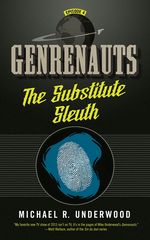
There Will Always Be a Max by Michael R. Underwood

There Will Always Be a MaxThere Will Always Be a Max

by Michael R. Underwood
Series: Genrenauts, Episode 2.1

Kindle Edition, 26 pg.
Tor.com, 2016

Read: April 23, 2016


It’s not often that I do prep work before reading something — especially a 26 page story. But I wanted to fully appreciate this, so in the weeks leading up to the release (and one week after — hence the late review), I watched the Mad Max films — I’m not sure why, but they never appealed to me back in the 80s, and while I was curious about Fury Road, I hadn’t gotten around to it yet. While I’m very underwhelmed by the first two, the third was okay, and I really liked the latest. So finally, I felt ready to read this story.

So, so glad that I watched the movies first — I’d have been okay without it, but there were nuances, etc. that you pick up with the right background.

So we’re in a post-apocalyptic area, very much out of the Mad Max movies. Angstrom King is the only Genrenaut involved here — for reasons well explained — but Roman overshadows everything. I really appreciated this approach. I’ve been curious about the hints that Underwood dropped in The Absconded Ambassador about Roman and am glad we got more here — tho’ I’m still looking forward to getting the whole story eventually. It was good to see King doing more than commanding a mission, it was good for the character to get in the thick of things.

Underwood’s treatment of “The Max” idea/character is well done. The story, while brief, is full and exciting. Not much more to ask from 26 pages, really.

—–

4 Stars

The Absconded Ambassador (Audiobook) by Michael R. Underwood, Mary Robinette Kowal

The Absconded AmbassadorThe Absconded Ambassador

by Michael R. Underwood, Mary Robinette Kowal
(Narrator)
Series: Genrenauts, Episode 2

Unabridged Audiobook, 3 hours and 25 minutes
Macmillan Audio, 2016
Read: April 8, 2016
I really don’t have much more to say about the audiobook that I didn’t say about the original, but I wanted to get something up — so if this seems largely familiar, it is. But not entirely …

Working as a Genrenaut was like being a member of a theater troupe run by a burnt-out hippie who melded Devising with MBA management: the ideas were outlandish and random, but the execution was 100% corporate.

The second episode in Michael R. Underwood’s Genrenauts delivers on the promise of Episode 1, and demonstrates that his special alchemy of Leverage + The Librarians + Quantum Leap + Thursday Next (just my current guess at his secret recipe) has legs — and will hopefully go a long time.

Leah has had about a week to get used to this new reality since her adventure in Western World — a week filled with meetings, reading assignments and trying to wrap her head around things. In the meanwhile, everyone at Genrenauts HQ is trying to prepare for the next breach (in the midst of a spike of 15% over the norm, for your corporate types), probably in Romance World. Which obviously means it’ll be pretty much anywhere else, like say Science Fiction World.

The station of Ahura-3, in the space opera region, to be specific. I’m sure the similarity between the name of the station and a certain Communications Officer is a huge coincidence. Ahura-3 is everything you want in a space station — it’s a melting pot of very-alien-looking/acting aliens, it’s a culture to itself, with strategic location, and very delicate intergalactic politics.

Leah’s excitement about being in “honest-to-goodness, Sally Ride is my homegirl zero-g” space was infectious (especially in this format). But even more fun was the amount of SF references Underwood fit into half of chapter 1 — truly astounding, and didn’t feel forced or overcrowded. He deserves a tip of the cap right there. But the fun’s not limited to the references and allusions — it’s in the alien cultural practices (and appearances), the various factions (human and otherwise), businesses, and just watching the whole Science Fiction World thing at work.

Mary Robinette Kowal did another bang-up job. I’m still not crazy about her voice for King, but I listened to this one using my earbuds instead of my car speakers and she’s much easier to hear with that voice that way, so it doesn’t bother me as much. I liked her alien characters a lot. Shirin and Leah are great (I think I like the audiobook take on Shirin better than the one in my head when reading, actually)

Good way to spend a little time — very entertaining all around.

—–

4 Stars

Ideas and Inspiration for Fantasy and Science Fiction Writers by James Hutchings

Ideas and Inspiration for Fantasy and Science Fiction WritersIdeas and Inspiration for Fantasy and Science Fiction Writers

by James Hutchings

Kindle Edition, 453 pg.
2016


You know what this book could’ve used? An introduction. Just something to ground the reader in the books intention, design, scope . . . something. It just dives in, you flip from the Table of Contents to the first entry.

The only way you know what the book is for is to have read the description from Goodreads/ebook seller:

If you want to spark new ideas for worlds, plots or characters, you want Ideas and Inspiration for Fantasy and Science Fiction Writers. Medicinal corpses, the jargons of thieves and carnies, Nazi UFOs, the colonization of space and green children from nowhere are only a few of the topics covered. This sourcebook is for all writers of fantasy or science fiction–whether novels, short stories, games, or any other form of storytelling.

The afterword touches on it a little, but who wants that at the end of a book?

Smoother writing, maybe a touch of personality to the writing would’ve been a plus, too.

It’s not something you can read cover-to-cover, it’s a resource book that you can consult, or flip through. I’m pretty sure I’ve read almost all of it over the course of a couple of weeks. It sparked an idea or two (not that I have time for them), but that’s about it.

I guess, this book set out to do what it intended, is thorough, easy to read, so . . . 3 stars? Next time you’re trying to prepare for NaNoWriMo or a Creative Writing course, give it a thumb-through.

Disclaimer: This book was provided to me by the author in exchange for an honest review.

—–

3 Stars

Off to See the Wizard by Clay Johnson


Here we are at the end of our day-long Book Tour stop for Off to See the Wizard (see Parts One, Two, and Three). Hope you enjoyed it.

Off to See the WizardOff to See the Wizard

by Clay Johnson

Kindle Edition, 373 pg.

Ravenswood Publishing, 2016
Read: April 18 – 22, 2016

From the beginning? Are you certain? The beginning is pretty dull, you know. All of the violence comes later. The beginning is just sex and blood and guts, and— yes, right, I see it now; fair point.

Let’s see… it began with that dwarf. At least, I think he was a dwarf. He may have been a child. I don’t honestly pay much attention to the jesters they hire. Mostly, they are little more than jingling bells in the background. I know he was very short. Wait! He had a beard. One of those awful, disgusting sort that grow scraggly and in patches. Looked like he’d glued stringy chunks of carpet to his cheeks; do you know the sort?

Yes, had to have been a dwarf.

A tale of an attempted apocalypse, a quest to thwart it, love (or something like it) in bloom, love (or something like it) in trouble, and the aftermath of it all. It may not sound like fodder for comedy, but in Clay Johnson’s hands, it is.

A royal feast ends abruptly, and in a disturbing way (although the way it’s narrated, its pretty humorous). And then soon, horrible things (mostly involving blood in places and amounts no one wants) start happening all over. Naturally, citizens, royalty and everyone in between demands answers — so they turn to a wizard to tell them what’s going on and how to stop it. The wizard has no clue (this will be a recurring theme), but sets off on a quest to find out. He takes his girlfriend, a swordsman, and a redshirt (the wizard has a strong sense of self-preservation). He soon regrets all of these choices — his girlfriend spends most of the time upset with him, the redshirt is a mopey kid who writes horrible poems (and is never used as cannon fodder), the swordsman deserts them. Thankfully, a better swordsman, and a drunken elf queen in training join up after that. Really, very little goes well on the quest.

Meanwhile, the Demon Lord who started the whole thing, really didn’t mean to — he was actually trying to do something else, and it went horribly wrong (I’ll leave it to you to learn what) — and he spends most of the book trying to ameliorate the situation and get his original purpose back on track. Very little goes well for him, either.

In the end, things are a giant mess, so a Royal Inquisitor is sent out to investigate it afterwards, and the book is a edited together compilation of transcripts of his interviews with witnesses, the quest party, the villains of the piece, and others. The mutually contradictory takes on the events given by the various interviewees are hilarious — each person has a strong voice, you pretty much get to the point where you skip the text identifying who’s speaking, you can tell who it is just from their language. It doesn’t take long for the reader to suss out how to take the competing versions and get to a pretty good idea of what really happened.

I don’t remember the details, and am short on time, so I can’t look for them. But somewhere, C. S. Lewis talks about why it’s appropriate (well, at least not totally inappropriate) to laugh at bawdy jokes if they’re cleverly told, involve some creative word play, and so on — not at the vulgarity of them. Given that cover by the noted apologist, I can freely admit that I laughed plenty at this. Johnson’s characters, their dialogue, and his creative use of words and imagery are wielded so well, that you just could help but laugh (even a few times when I knew Lewis wouldn’t approve of it). This is what Franco, McBride and the rest were going for in the movie Your Highness a couple of years ago — a funny fantasy. The Princess Bride for those who appreciate rated-R comedies.

For example, there’s a moment that got me laughing out loud — a lot — where someone inadvertently invents/coins one of the seven words you can’t couldn’t say on TV. The effect that word has on the most hardened criminals in the kingdoms was fantastic — it’s a moment that’ll stick with me for awhile.

From time to time the narrative started to drag a little bit, and I’d start to wonder if anything was actually going to happen. But within a page, I’d chuckle at something again and forget about the slow plot.

In the end, it was a little too off-color for me, but Johnson pulled it off in such a way that I was able to put that aside and enjoy his story and his story-telling. Really, Off to See the Wizard is the funniest thing I’ve read this year — and I can’t imagine much topping it.

Disclaimer: I received this book from the nice folks at Ravenswood Publishing in exchange for an honest review.

—–

4 Stars

Guest Post: The Machine Keeps Feeding Me by Clay Johnson


Welcome to Part Two of our participation in the Off to See the Wizard Book Tour (see Part One), a couple more posts will be up in a while. This is a Guest Post by Clay Johnson, the novel’s author, about his process:


I have to hear the words in my head before I start writing, or I’m pretty much hosed. I used to plan out the whole story, or at least try to. I spent a lot of time thinking about it, picturing the action and the plot points, really getting into the thing. I did a lot of imagining while listening to music. I figured if I could see what I wanted to write, then I was golden. Unfortunately, when it came time to actually sit down and do it, I’d hit a dry spot. It wasn’t writer’s block, though; it was more like I was incredibly bored. What I pictured so vividly in my head just wasn’t coming out anywhere nearly so thrilling, and in the few instances that it did I still wasn’t particularly captivated by the process. I kept trying though, and I kept ending up with a bunch of barely started or, at best, half-finished manuscripts.

One day, somewhere around senior year, of high school, instead of an idea, I had just a line. It wasn’t a particularly good line. It was something like: Bill woke up to find death staring down at him and asking if they had any nachos. But I liked what the line made me think of, and I was bored in class, so instead of trying to plan out what that story might be I just went with it. The result was an awesome mess. But it was an “awesome” mess. It was full of great little moments, and a lot of threads that led nowhere. I couldn’t use the story for anything, but I felt invigorated the whole way through. In working on that story I finally figured out my problem. If I knew where the story was going, I didn’t care. I’d already thought that part out; I just wanted to move on to the next story. Somewhere in the transition from over-planning to not planning, I’d found my voice.

I started riffing on just a line, or a vague idea built around a specific image. But the trick was that I had to be able to hear at least the opening line in my head. I had to be able to hear the voice the character would use. As long as I could tap into that, then I could continue the story. The rest seems to take place beneath the surface.

It feels like there is some constantly running story machine cranking away somewhere in the basement of my mind, and while I’m busy doing other things, it’s making connections and drawing paths between two unplanned plot points. Those are the moments I love the most when I write, those moments where two bits that I wrote on a whim meet up and fit together so well that I can’t believe they weren’t planned. Writing this way makes it harder in the revision process, because I end up with a lot of gems I want to keep and can’t, and there’s also a lot of connections that still have to be made after the fact, but almost always less of them than I would expect. As long as I can tap into the sound of the story, the way the words flow and the beat of the thing, the machine keeps feeding me.

Off to See the Wizard


Welcome to Part One of our participation in the Off to See the Wizard Book Tour — we’ve got a couple of Guest Posts from the author, Clay Johnson, and a review coming up in a bit.

Let me tell you a little about the book (well, let me steal some text from the publisher to talk about the book)

TITLE: Off to See the Wizard
RELEASE DATE: March 20, 2016
AUTHOR: Clay Johnson
KEYWORDS: fantasy, mystery, magic, wizards, fairies, ogres, elves
CATEGORIES: Epic/High Fantasy/Adventure
SYNOPSIS: At the end of most heroic quests, after a plucky band of heroes has averted the apocalypse, all is well, and everyone lives happily ever after… (until the next book in the series.)

Now, for the first time, readers get an in depth look into what really happens after the quest. This is the collected case file of the Grand Inquisitor’s investigation into the Misery Reach debacle. Read first hand as the participants try to explain their actions and make their case. Did the Demon Lord Krevassius really try to end the world just to impress a girl? Would everyone be better off if the Wizard Galbraith hadn’t invented a quest in order to stave off criticism? And what about an elf queen peeing on a Minotaur? A swordsman’s losing battle with a young raccoon? And the transvestite assassin with a heart of gold?

ONE LINER: Classic tale: villain starts apocalypse to meet a girl, people blame wizard, wizard invents quest to save himself, quest goes wrong, world goes to hell.

PAGE COUNT: 373
ISBN: 978-0692638170
IMPRINT: Chimera

Book Page: http://ravenswoodpublishing.com/bookpages/offtoseethewizard.html

AUTHOR BIO: Clay Johnson received an MFA from an old man running a forged documents booth under the 8th street bridge. When he’s not out saving the world as an international super spy and master of kung fu, he makes graphics and animation for a TV station. Clay lives with his wife and daughter in New Hampshire.

Author Link: http://www.ravenswoodpublishing.com/authors4.html#

United States of Books – Fear and Loathing in Las Vegas (Audiobook) by Hunter S. Thompson, Ron McLarty

I’m a long-time fan of the Narrator, Ron McLarty, but didn’t know he did audiobooks — I need to go track some down, probably not this one, though.

Fear and Loathing in Las Vegas Fear and Loathing in Las Vegas

by Hunter S. Thompson, Ron McLarty
(Narrator)

Author: Wattle at Whimsical Nature

2 Stars

Synopsis: In Las Vegas to cover a motorcycle race, Raoul Duke (Thompson) and his attorney Dr. Gonzo (inspired by a friend of Thompson) are quickly diverted to search for the American dream. Their quest is fueled by nearly every drug imaginable and quickly becomes a surreal experience that blurs the line between reality and fantasy. But there is more to this hilarious tale than reckless behavior, for underneath the hallucinogenic facade is a stinging criticism of American greed and consumerism.

Review: I’ve been to Las Vegas exactly once, I thought it was a bit odd, a bit dirty and not a place I would like to spend any considerable amount of time in.

I felt similar things toward this book. I’ve tried to read it before in paperback, and I put it down after five pages or so. I have seen the film and hated it; so when I saw this on my list for review I was a little worried.

Rightly so, it turns out.

I opted to listen to the audiobook in the hope that I would find it more engaging than if it were text. Ron McLarty did a wonderful job with the narration, I really liked listening to him, but Fear and Loathing in Las Vegas was such a tedious story. The 6 hours I spent listening to it felt like 6 years.

This story is meant to be hilarious and surreal. I think I laughed once, and it was more of a derisive snort than actual laughter. I’m still not entirely sure what the point of the book was, there was such excess and stupidity and vastly irresponsible behavior.

If it was trying to teach me a lesson, I failed to see it (unless that lesson was – don’t do drugs). The characters were all unlikable; the story felt like it was just a rambling bunch of sentences thrown together with little direction. The content was definitely not for me (I don’t even drink, so the characters desire to be constantly wasted was beyond me), I felt the casualness of their drug taking and ridiculous behavior in general was more worrying than amusing.

I gave it two stars, 1.5 for the narration (which was really very good) and 0.5 for the work itself – it was much too far out of my comfort zone and just a bit too strange for me to get into. A pity, because I think if it had been written in a different way, it would have been a much more engaging work.

Reread Project: Life, The Universe and Everything by Douglas Adams

Life, The Universe and EverythingLife, The Universe and Everything

by Douglas Adams
Series: The Hitchhiker’s Guide to the Galaxy Trilogy, #3

Paperback, 232 pg.
Del Rey, 2005

Read: April 18, 2016

“One of the interesting things about space,” Arthur heard Slartibartfast saying . . . “is how dull it is?”

“Dull?” . . .

“Yes,” said Slartibartfast, “staggeringly dull. Bewilderingly so. You see, there’s so much of it and so little in it.”

Between General Busy-ness and having a hard time locating a reading copy of this book (I have one leather-bound edition of the “trilogy” pre-Mostly Harmless that I’m trying not to further abuse and a 1st edition that I really don’t want to abuse at all), I didn’t get to reading this one on schedule. I was briefly tempted to write this up from memory — and I think I’d have hit 80% of the same things, but that seemed dis-honest, somehow.

Also, I really wanted to read the Belgiuming thing (if you’ll pardon the expression)

Thankfully, the Nampa Library came through. So, yeah, a little late and without further ado…

Sigh. This one just doesn’t work as well as its predecessors, does it? You can sense how hard Adams is trying to recapture the sensibility of the previous two novels — but it just comes across like someone trying (or locked in a hotel room by his editor until he’s done, which I believe is what happened here). For example, look at the concept of Bistromathic Drive, if that’s not a desperate attempt to remake the Infinite Improbability Drive, I’m a frood who doesn’t know where his towel is. And then the whole Krikkit saga? Don’t get me started with that.

Which is not to say that this doesn’t have some good moments — most of Ford’s dialogue is great. The whole thing with Agrajag is both a great call-back and a fun diversion. The best part of the book (both in concept and execution) has to be:

The Hitchhiker’s Guide to the Galaxy has this to say on the subject of flying.

There is an art, it says, or rather, a knack to flying.

The knack lies in learning how to throw yourself at the ground and miss.

It goes on for quite a while after this — and I love every bit of it.

I had forgotten Marvin’s arc in this — I enjoyed that more than the rest (even if it wasn’t as good as his arc in Restaurant). It’s the best use of Trillian in the series, bar none. So, it wasn’t a total wash. Still, it felt forced, his heart didn’t seem to be in it. Which made us even, I guess, my heart sure wasn’t. Still, Adams on an off-day is better than most things.

—–

3 Stars

A Few Quick Questions With…Adam W. Jones


Here’s Part Deux of the Book Tour for Adam W. Jones’ Fate Ball — the review posted not too long ago, and Mr. Jones was gracious enough to keep participate in a Q&A with me. There were a bunch of questions about the book I wanted to ask — I was only 49% or so done with the book, so I didn’t ask most of them.

A quick look at his author bio shows that he has too much on his plate to spend too much time with me. Thankfully, I try to keep these brief, so he didn’t have to. I do appreciate the time he gave — as well as the A’s he provided to my Q’s. Hope you enjoy.

What prompted this particular story? What was the genesis of the book?
Fate Ball is loosely based on a past relationship. It was a life-altering relationship that stayed with me for years after we split up. Fate Ball began as a way to work through some emotions and put the relationship behind me. After it sat on the shelf for many years I decided to turn it into a work of fiction. It’s 80% fiction and 20% fact. The real Ava is alive and well…although still fighting her demons.

I almost phrased the question, “How much of this is autobiographical?” But was sure that if I did, he’d respond with something like, “It’s all imagination . . . ”

In the writing of Fate Ball, what was the biggest surprise about the writing itself? Either, “I can’t believe X is so easy!” or “If I had known Y was going to be so hard, I’d have skipped this and watched more TV”.
Once I decided to make Fate Ball fiction it really became easier to write. I found that my imagination would flow easily and I could get into a groove when I wasn’t trying to be factually correct. It started out in first person and the conversion to third person was a bit of a struggle, but once there things came easily.
I see you’ve done some articles and short pieces before this, what got you into writing? Who are some of your major influences? (whether or not you think those influences can be seen in your work — you know they’re there)
I’ve always enjoyed writing and telling stories. I consider myself a storyteller more than a pure writer. In 7th grade I won a national award for a poem I wrote and, Ms. White, my teacher really encouraged me to keep writing. I wrote for my high school newspaper, then studied Journalism at Carolina..getting several class projects published which bumped your grade a full letter. After college I did some freelance writing and had several travel and children’s stories published. I don’t believe I have a writing influence…if anything, I was influenced by my extended family who were always telling stories around the table or on the porch at the beach.
Fate Ball strikes an almost impossible balance between romance, humor and drama, why did you select that approach, and how did you pull it off (if you know)?
I guess I got lucky. As I said, I am just telling a story and everything fell into place. I did not have a specific plan when I began writing Fate Ball other than telling the full story…full of emotion both good and bad.
Your author bio says this is your first novel — what’s next for you (if you know)?
Originally, I was planning a trilogy with the Able character and having the other two books be prequels to Fate Ball. Those prequels would be “The Headman Chronicles” which is Able’s coming of age story during his trek across Europe after high school; and “The Rabbit Field” which is Able’s childhood experiences with young friends. Since Fate Ball is now out there I have considered an alternative by doing a non-Able story. My most recent thought is a love story entitled “Trailer Bride” set in Charleston. It’s a story about a young man from a socially elite family who falls in love with a girl from the other side of the tracks.

Fate Ball by Adam W. Jones


Welcome to Part One of our participation in the Fate Ball Book Tour — a brief interview will follow in a couple of minutes. Hope you enjoy both of these posts half as much as I enjoyed this book.

Fate BallFate Ball

by Adam W. Jones

PDF, 279 pg.
Wisdom House Books, 2016

Read: April 14 – 15, 2016

Parents always seem to think that saving the day is a good thing, but really it just postpones the inevitable. Sometimes, they should just let their kids crash and burn, so they learn their lesson the hard way. Parents can be the biggest enablers of them all when they’re acting out of love and kindness, but that usually just makes things worse.

That’s not the most dazzling piece of writing in Fate Ball, nothing catchy or inherently memorable, like I try to start with — but this is the heart of the book. People trying to help an addict not ready to be helped, and inadvertently making things worse.

In the prologue, Able Curran receives news that Ava Dubose has died — Chapter One takes us back 14 years to 1980 to meet her. In Chapter Two (one of the best chapters I’ve read this year), Able meets her — and falls for her almost instantly (and many readers will, too). Over the next few chapters, you see the two falling deeper and deeper in love — one of the cutest couples you’ve read.

All the while, you know that things are leading to the fateful phone call Able receives in 1994. We start to see some signs of trouble (well, those started before this) long before Able does. When he finally gets clued it, it destroys him — and they don’t see each other for some time. From there we watch these two lives intersect from time to time over the next 15 years (usually, Able trying to help her), as well as getting glimpses of their lives between the intersections.

This is really the story of two addicts — one who lets their dependency control and destroy them. The other who learns how to live with the problem, controlling and eventually overcoming. And even as you know it’s happening, you still hold out hope for Ave to shake things off, to achieve the serenity — or at least the contentment that she so desperately needs. Things get worse and worse — yet Jones is able to keep things from despairing, there’s a lightness to the prose that keeps things moving. While things fall apart for Ava, they move on for Able and their friends — success, new love, children, life.

In some hands, you’d be beaten over the head with the contrast, Jones doesn’t do that however. It all spools out naturally, easily (the kind of ease that takes work to pull off). You like everyone here enough that you’re pulling for them, no matter what stupid choices they make. Jones as come up with a perfect blend of humor, romance, drama, and tragedy.

There are plenty of little touches along the way to keep things light, to immerse you in the world — which is good because the book could become too fixated on Able and Ava.

His mother was always asking, then answering her own questions. That’s why she was always right. She could have a whole conversation with herself, even a fight depending on the subject matter, and no one had to say a word. All Able needed to do was just nod his head once in a while and she would take care of the rest.

This is not the best book I’ve read — not even the best novel on addiction. But it works well enough that it doesn’t matter. I’m not saying it’s a bad book, or there are glaring problems — but objectively, I just think it could be better. But when you’re reading it? It delivers everything you want, and some things you don’t expect. I really enjoyed this and think you will, too.

Disclaimer: I received a copy of this book from the kind folks at Wisdom House Books in exchange for an honest review.

—–

4 1/2 Stars

Page 272 of 341

Powered by WordPress & Theme by Anders Norén