Category: Fiction Page 292 of 341

Dead to Me by Cath Staincliffe

I really didn’t mean to do TV related books in a row, it just worked out that way. Yesterday was from a series that’s the basis of a TV show — this one’s going the other way.

Dead to MeDead to Me

by Cath Staincliffe

Hardcover, 393 pg.
Minotaur Books, 2012
Read: March 27 – 31, 2015Cath Staincliffe, award-winning novelist and TV writer, brings her talent to an adaptation of ITV’s Scott & Bailey, telling the story behind DC Rachel Bailey’s introduction to the MIT and planting seeds for stories that would shape the first two series (at least — that’s all I’ve seen, maybe there’s more).

Staincliffe captured the voice of the characters so well — I could see them all playing clearly in my mind. The case was nothing spectacular — wasn’t the death of a major political figure, a celebrity, or anything particularly gory. It was a simple stabbing of a poor drug addict, yet this team throws everything at the case. Precisely the way that Harry Bosch or John Ceepak would — I’d like to think that actual police work as hard as their fictional counterparts, hopefully that’s true.

There are plenty of suspects, plenty of red herrings, and plenty of obstacles to Rachel becoming a member of the team and earning her new boss’ trust (and plenty of times Rachel shot herself in the foot in the process of both). It’s not all about Rachel (as viewers know), but she’s the entry point here. There’s plenty about DC Janet Scott and their boss, DCI Gill Murray — both professionally and personally.

I liked the parallelism of Janet trying her best with her kids and the victim’s mother repeatedly saying the same. It’s not a revolutionary idea by any measure, but Staincliffe handled it deftly. Later on, she did the same when Gill deals with a minor emergency involving her teenage son. Rachel doesn’t have a motherhood parallel, hers is on the other end. All of it, really well done and none of these get to the point of beating a dead horse.

This was a solid read, strong enough to justify reading a second book in the series (even without the show) — and likely more by this author, just to see what she can do with her own characters.

—–

3 Stars

Kindness Goes Unpunished by Craig Johnson

Kindness Goes UnpunishedKindness Goes Unpunished

by Craig Johnson
Series: Walt Longmire, #3

Paperback, 336 pg.
Penguin Books, 2014
Read: April 1, 2015
3.5 Stars
I hate covers that are just images for TV/movie adaptations, don’t you? Blame my local library for this one.

It’s a sure sign that I need to spend more time reading Johnson than watching the show based on this series in that I’m consistently surprised at how funny these books are. Sure Henry Standing Bear’s dry wit is there, Vic is brash and inappropriate — amusing enough — but the narration, Walt himself? I chuckled a lot.

So, Walt and Henry (and Dog!) are off to the City of Brotherly Love to visit Walt’s daughter, Cady, meet her boyfriend, and for Henry to do something at a museum (just an excuse to see Cady). Oh, and conveniently enough, to meet Vic’s family (three police officers, one former police officer, and one attractive mother). After arriving in town, Walt doesn’t even get to see Cady before she’s brutally attacked and hospitalized.

Naturally, Walt stumbles upon the one person in Philadelphia who’s more knowledgeable and interested in Indians than Henry. It’s that interest (obsession?) and his connection to Walt that makes Walt the best man to track down the man who put Cady in the hospital (and other assorted nefarious acts). That’s a level of coincidence that you just buy — like Gideon Oliver vacationing somewhere that a set of bones surprisingly shows up; Nero Wolfe needing information from someone who’s a sucker for orchids; or that every falsely accused murderers that Andy Carpenter stumbles upon happen to own a cute dog.

There’s enough twists, turns — and one seeming unnecessary but entertaining diversion (that turns out to be not so ancillary) — to satisfy any mystery reader. Even out of water, this fish can swim. There’s some very interesting things that go on in the character’s personal lives that should make things interesting down the road (and that I can’t talk about while remaining spoiler free) — enough to make this more than a tale of a father’s vengeance.

The first chapter (only one in Wyoming) is great — Walt totally failing to connect with an elementary school classroom, a fun and prototypical Absaroka County shootout, and other things that make up a typical day for Sheriff Longmire on the eve of his trip.

I’ve enjoyed each of these Longmire books — but I’ve taken a really casual approach to them, I think one a year so far is my rate. Kindness Goes Unpunished has convinced me that has to end, I’m pretty sure I’ll catch up with Johnson before the year is up.

—–

3.5 Stars

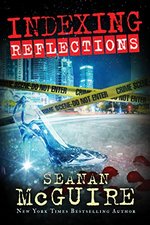
Pocket Apocalypse by Seanan McGuire

Pocket ApocalypsePocket Apocalypse

by Seanan McGuire
Series: InCryptid, #4


Mass Market Paperback, 341 pg.
DAW, 2015
Read: March 14 – 17, 2015

Airplanes: essentially buses that fly, and hence have the potential to drop out of the sky at any moment, spreading your insides — which will no doubt become your outsides sometime during the collision — across whatever you happen to have been flying over. Since we were flying mainly over ocean, I was sure the sharks would appreciate our sacrifice.

So where, pray tell, are Alex and Shelby flying off to? Her home country of Australia, to help out her family and the cryptozoologist group/alliance/whatnot they’re part of deal with the continent’s first outbreak of the werewolf virus. Unlike everyone else there, Alex has dealt with werewolves before, and he’s a Price — that has some benefit (although how much is debatable, as he soon learns). He’s also going to meet Shelby’s family for the first time. It’s pretty unclear which of these two items are the most hazardous to his health.

We’ve had a lot of exposure to the idea that the Price family isn’t like the Covenant — in motives or means. Now we’re introduced to the Thirty-Six Society, who aren’t as nasty as the Covenant is to cryptids; but nowhere near as interested in understanding and cooperating with them as the Prices are. Also, they’re not so sure that the Price’s are all that different than the Covenant (which is really odd to think about from the point-of-view of the reader). So, all told — they’re not to interested in a know-it-all Price coming in from the U. S. to tell them how to take care of a problem. Particularly when that Price is sleeping with one of their own, and perhaps leading her away from them.

I did tire a bit — more than a bit, to be honest — with the way that Alex and various members of the Tanner family had the same conversation over and over about his allegiances, intentions toward Shelby, and methods. I realize in Real Life™ that you do repeat yourself, but so much of these conversations were essentially “second verse, same as the first,” and got pretty darn tiring. It would’ve been better if Alex wasn’t quite as right as he was all the time, too.

But that’s the backdrop, really. The very real likelihood that Australia is going to be overrun with werewolves in the coming weeks is the main concern (although I’m not convinced the word count would reflect that). With so much exposure to Patricia Briggs and Carrie Vaughn (not to mention Jim Butcher, Kim Harrison, Kevin Hearne, and so on) it’s easy to forget that werewolves used to be a horror movie staple. Leave it to McGuire to remind me that werewolves are generally thought of as monsters. These werewolves are pretty monstrous, and what they do to their victims isn’t pretty.

We don’t see as many of the native cryptids as we get hints of them — the couple that we do see are pretty interesting, but I could’ve used more. As with any inCryptid novel, you have to talk about the Aeslin mice. If for no other reason than they’re fun. This is probably their best showcase yet — they’re more than comic relief here, they help out — in a way that Alex could never have predicted. Some of the raw-est emotion (and not just joy and rapture over a new religious observance) comes from these little guys. I honestly don’t know if I’ll ever tire of these mice.

Occasionally, the humor feels forced — as if McGuire’s done a word-count since the last quip and shoves one in. This is typical for the series, and still occasionally works, oddly enough. But McGuire’s narrative flows better — and is funnier — when she allows the humor to flow naturally (as much as anything as crafted as one of her books is “natural”) and not imposed on the text.

This novel contains the word “denuded” more than I can recall ever seeing in a single work — there was one chapter, in fact, that nailed that record — but “denuded” showed up later, too. It doesn’t matter one way or the other, but it showed up so frequently (and so rarely anywhere else) that it couldn’t help but make an impression.

I don’t know why, but it took me forever to really “get into” this one. From page 1 it looked interesting and entertaining, but I kept putting it down after a half a chapter or so. When it did pick up, I didn’t take the time to jot it down because I didn’t want to stop reading, but I think it was a little after page 100. From that point on, I was into it the way I expected to from the get-go, and it kept my interest to the end. I think I like this more than the others (maybe Discount Armageddon was as good), and really look forward to the next one — it’ll be good to see Verity again.

—–

4 Stars

Dorothy Parker Drank Here by Ellen Meister

Dorothy Parker Drank HereDorothy Parker Drank Here

by Ellen Meister

Hardcover, 336 pg.
G.P. Putnam’s Sons, 2015
Read: March 9 – 10, 2015
Meister’s previous novel, Farewell, Dorothy Parker, was an enjoyable though fairly predictable but well-executed tale with characters I appreciated. While I intended to track down more by Meister, I hadn’t yet. One thing I didn’t expect was to see a sequel — there was really nothing in the it to make me think one was forthcoming — or necessary. So I didn’t read this with any great sense of anticipation, mostly just hoping that it wouldn’t be worse than Farewell.

Well, it wasn’t worse — it was actually better.

Ted Shriver is a — was a — literary star. A novelist of a stature and fame that every MFA student dreams of — until plagiarism scandal a few decades ago ruined that career and turned him into a recluse. He’s currently residing in the Algonquin Hotel, which is where the same hotel that the ghost of Dorothy Parker is spending as much of eternity as she can. Enter Norah Wolfe, a young producer about to be out of a job when the talk show she works for is going to be canceled. She’s got this crazy idea, though — if she can get her hero, Shriver, to come on the show and be interviewed for the first time since the scandal, she just might be able to keep the show on the air. And a certain ghost decides to join the cause, as soon as she convinces Norah that she’s really there.

I know, outlandish, right? An appearance by a novelist is going to save a TV show —puh-leez. (the ghost tied to a guest book is completely believable by comparison).

I do think (but haven’t compared the two in order to examine), that this time, Dorothy Parker isn’t as much fun — either in antics or dialogue. But she’s more flawed, more regretful over the past, more self-reliant, lonelier. — basically, she’s a more well-rounded character reflecting a lot of the less snarky, less quotable Parker. Shriver was believable (and a self-pitying jerk), I think the story could’ve used more time with him as an active character, not just the person everyone is reacting to (even when he’s nowhere to be seen). Norah is our Point of View character — she’s likable, driven, damaged (in a pretty obvious way), and it’s not long before you’re wanting things to work out for her. There are a few other notable characters — and a few that are little more than one dimension, but on the whole you are left with the impression that they could easily be more than that.

I did wonder at the lack of any mention of the events of the previous novel or its protagonist, even in passing. Which means you can read these independently of each other, or in whatever order you wish.

This wasn’t a perfect novel — there was one subplot that was largely unnecessary and a little annoying (but in the end, Meister used it effectively, but she could’ve found another way to achieve the same ends). Other than that, compared to its predecessor, I thought the characters were more complex, the emotional stakes were richer, and the book was about more than just the pretty straight-forward plot. A pleasant read, give it a shot.

—–

3.5 Stars

The Witches of Echo Park by Amber Benson

The Witches of Echo ParkThe Witches of Echo Park

by Amber Benson
Series: The Witches of Echo Park, #1

Paperback, 294 pg.
Ace, 2015
Read: March 18 – 19, 2015
So, you have a coven of witches (who don’t like to be called that) who connected to some global network of covens that are under attack. We’re not given much information on that part — just enough so that the threat of violence is real, if shadowing (and mostly so far removed as to not be a looming presence). The local leader of the coven –the last of a generation, it seems — is dying of cancer, and she recruits her great-niece (or something), Lyse, to take her place. Lyse had no idea her great-aunt (or something) was a witch — or in Lyse’s point of view, she had no idea her great-aunt was a little crazy, not full-blown insane, but unhinged enough to believe in magic. But she goes along with her dying wish, and is initiated into the coven. At which point in time, enough crazy stuff starts happening that Lyse has to admit that, yeah, there’s something to that magic stuff.

We don’t get nearly enough time with the rest of the coven to really connect with them — this is about introducing us to the world, about Llyse and Eleanora, and connecting Lyse to everything. It’s only in retrospect that I noticed that I didn’t get to know everyone as well as I wanted to. Lizabeth was close — but I think it’d take 200 pages devoted to her for me to have enough. I wouldn’t need as much time with the others, but, well, trust me on this — Lizabeth is one to watch. They all seem fun and interesting, but no one else comes close.

I’m really light on details here, because the novel’s an introduction to the series — so the details about characters and the tiny bit of plot are all there really is. Which is fine — for this book, not for #2 in the series. I did spend most of the last 50 pages thinking the ending would be unsatisfactory, but she pulled it off — again, for the first book of a series, not for anything later.

This is so different than Benson’s last series, the Calliope Reaper-Jones novels. Honestly, they don’t even seem like they were written by the same person. The characters, the world, the emotions at play, even the magic system feels more grounded, more realistic (if you can say that).

Most Urban Fantasy reads like a Detective/Mystery novel with Magic/Supernatural elements mixed in. This one felt like a Chick Lit (meaning that in the nicest possible way, and just to describe things) book flavored with magic. Which makes it stand out from the pack — by quite a ways. The cover reflects that, I think. Lyse (I assume) doesn’t look like she’s ready to kick butt and take names, she looks like someone who could be my neighbor in the middle of bad day. This is not going to appeal to every UF reader, but I dug it.

On the one hand, it doesn’t take too many pages before you’re pretty sure you know what kind of story this is, how things are going to go. It’s solid stuff, don’t get me wrong — nor is it predictable. It’s just a certain type of story. Yet even knowing that (and I was right, more than I was wrong, anyway) the way that Benson unspooled things drew me in further and further. She set the hook well.

By page 55 I was prepared to call this Benson’s best by a mile — and I only became more convinced the further I read. Friendship, family, devotion, screwy-beliefs, a touch of romance, and magic — Benson brings it all. If you’re up for an Urban Fantasy that doesn’t read like every other one you’ve read, give it a shot.

—–

4 Stars

Review Catch Up: Uneasy Relations; Skull Duggery; Dying on the Vine by Aaron Elkins

So, in the last couple of months, I’ve read Gideon Oliver 15-17 and haven’t had a chance to write them up. Might as well tackle them in one post, right?

Some general thoughts that apply to them all, before moving into specifics.

As always with this series, these books are fun, clever, and not terribly violent. All of which are a nice balance to some of the darker things I read — and I know I could find darker yet in this genre. Say what you will about cozies (and I don’t know if these are technically cozies, but they’re at least cozie-adjacent), they’re a darn sight more entertaining than the noirest of noirs.

Not just by the sly and witty narrative, Gideon Oliver books remind me of the Nero Wolfe mysteries — he never ages, he can always find a away around the stickiest of situations and outsmart law enforcement without getting into trouble (Gideon’s better at this than Wolfe, and much prefers working with than in competition with them), and while Elkins will surprise you frequently by the solutions to the mysteries, he never cheats. Can’t take this list too far, because at the end of the day Gideon isn’t Wolfe and neither would find the comparison all that flattering.

Judging by his anthropological research, I’m guessing Elkins has done similar research into the way various law enforcement agencies work around the world. Particularly with the latter two of these, I really enjoyed getting glimpses into the police methods and structures of these countries — ditto for Unnatural Selection, but I don’t think I mentioned that when I reviewed it (and am too lazy to go look).

I’ve said it before, and I’ll say it again, reading these books are a like visiting with old friends, and I can’t wait to do it again.

Uneasy RelationsUneasy Relations

by Aaron J. Elkins

Hardcover, 288 pg.
Berkley Hardcover, 2008
Read: December 10, 2014

I’m glad he doesn’t return to this well too often, but when Elkins decides he’s going to invent a fictional (no doubt inspired by a real) major archaeological find, he does it right. Serving as the backdrop for this puzzle, this find sounds like the kind of thing I read about in various and sundry Anthropology textbooks in college. Throw in some satirical takes on publishing, literary agents, and academics and this becomes a really fun read. Oh yeah, and the murder — there’s that. That was a good puzzle, too.

I can’t get into it, but the site of the major find is really the star of this one, and it’s pretty cool. The solution to the murder was a nice twist, and the Skeleton Detective was as clever as ever.
3 Stars

Skull DuggerySkull Duggery

by Aaron J. Elkins
Hardcover, 281 pg.
Berkley Hardcover, 2009
Read: February 21, 2015

This one gets a bonus 1/2 star for the mentions by both Gideon and Julie that if he’s around, a skeleton (at least a skull) will appear to keep him busy (and would probably deserve the bonus without those mentions). I also appreciated the “just another day in the office” aspect of the attempt on Gideon’s life. At this point, he should really take out a bigger life insurance policy any time he leaves the country.

A week’s vacation in a little, out of the way, Mexican village turns deadly for Gideon and Julie. I really enjoyed the setting and the backstory on this one, even more than the forensics.

This one was almost painfully easy to figure out the killer — although the actual motive was trickier than I thought, but after The Reveal, it totally made sense. Despite that, I thought this was one of the better ones in this series that almost never has a lesser entry.
3.5 Stars

Dying on the VineDying on the Vine

by Aaron J. Elkins

Hardcover, 294 pg.
Berkley Hardcover, 2012
Read: February 28 – March 3, 2015

The whole band’s back together for this one — John & Marti, Julie & Gideon in old-school Italian wine country. The intrigue and informatin about the wine production (rephrase) reminded me of the behind the scenes look at coffee production from Twenty Blue Devils (although that subject is nearer and dearer to my heart). While I’m not a big wine person, I know I’d rather drink a bottle (one glass at a time, I’m not a Philistine) from the hands and craft of the traditional elements of the Cubbiddu, not the mechanical/mass produced stuff they started putting out — which I’m guessing Elkins agrees. Although, I can probably only afford the latter.

John navigating the local cuisine was a highlight for me, and probably speaks to my juvenile humor.

The mystery itself? Typical Elkins, smart enough to keep you guessing, compelling enough to keep you turning the pages, and not as important as the characters — new and old — and their interactions.

Heckuva lotta fun.
3 Stars

The Girl Who Circumnavigated Fairyland in a Ship of Her Own Making by Catherynne M. Valente

The Girl Who Circumnavigated Fairyland in a Ship of Her Own Making The Girl Who Circumnavigated Fairyland in a Ship of Her Own Making

by Catherynne M. Valente

Hardcover, 247 pg.
Feiwel & Friends, 2011
Read: February 19 – 20, 2015

But what September chiefly noticed were their hats.
Any child knows what a witch looks like. The warts are important, yes, the hooked nose, the cruel smile. But it’s the hat that cinches it: pointy and black with a wide rim. Plenty of people have warts and hooked noses and cruel smiles but are not witches at all. Hats change everything. September knew this with all her being, deep in the place where she knew her own name . . . For one day, her father had put on a hat with golden things on it and suddenly he hadn’t been her father anymore, he had been a soldier, and he had left. Hats have power. Hats can change you into someone else.

There’s much more to be said about the true nature of seasons, sentient keys, the immorality of novelists, the thoughtfulness of smoking jackets, the desires and drives of shoes….But I’m getting ahead of myself.

So last week, I found myself on the end of a batch of pretty heavy books, and needed something light and breezy — hopefully cheery, too. So I grabbed this off my daughter’s shelf (had been meaning to get around to it since I bought it for her 3 years ago). It didn’t at all fit the bill for what I wanted, but thankfully was an enjoyable read about a girl named September and the improbable trip she takes to (and around) Fairyland.

Those were all big words, to be sure, but as it has been said, September read often, and like it best when words did not pretend to be simple, but put on their full armor and rode out with colors flying

Who couldn’t love a hero like that?

While her father is off fighting in Europe during WWII, and her mother is spending her days with Rosie the Riveter (and doing her best to take care of her daughter, it should be stressed — she hasn’t been abandoned), September is convinced to join someone calling himself The Green Wind to go for a ride on his flying leopard to visit Fairyland.

Once there, she meets all sorts of incredible people, creatures, animals . . . and other things that I can’t really describe. She befriends a Wyvern and sets off on adventures — eventually being drafted by the unpopular, practical and efficient Marquess (who replaced, the wonderful and beloved Queen) into retrieving a magic object for her. This quest sends her (literally) all around Fairyland in an effort to obtain this object and save her friends.

The sensibility here is something like taking The Phantom Tollbooth, The Last of the Really Great Whangdoodles and throwing them into a blender with Neil Gaiman’s children books. Almost. To me, and I get the sense that I’m in a distinct minority here, this comes across more as a technical exercise — “how many strange and quirky things can I work into a narrative?” Despite the setting, target audience and obvious authorial skill it feels joyless, there’s no sense of play. Unlike the other works I’ve compared it to, there’s almost no fun here.

Yes, it’s a children’s book. But it’s not just for kids — in fact, there’s a lot here that very few children will pick up on (I’m willing to bet that I missed a trick or two). Not as amusing as I hoped for/expected, still, a good read for children or adults who aren’t afraid to read a book marketed for children.

—–

3 Stars

Stone Quarry by S. J. Rozan

Stone QuarryStone Quarry

by S. J. Rozan
Series: Lydia Chin & Bill Smith, #6

Hardcover, 276 pg.
Minotaur Books, 1999
Read: March 3, 2015I feel a little awkward about this one, because I haven’t found (read: made) the time to review the previous book in the series, but I just finished this one and didn’t want to put it off, in case I forgot the experience. So far, the Bill Smith novels in this series haven’t thrilled me — they’re interesting, they deliver what they promise, it’s fun to see these two from a different perspective, etc. But I just don’t like them as much as the Lydia Chin novels.

Until now. (you saw that coming, didn’t you?)

And honestly, reading the book jacket copy saying that Rozan had won two pretty prestigious awards, both for Bill Smith books befuddled and annoyed me. But I think I’m over that now.

Like the other Bill novels, Rozan tends to get a bit more writer-y, more noir-ish, a bit more moody than the Lydia novels which tend to be more plot and character-driven.

We’re not in New York City this time — Bill’s been hired to work for someone upstate near the fishing cabin he retreats to from time to time. So we’re plunged into a new world — a world Bill is familiar with, but a stranger to. The case he’s investigating is quickly overshadowed by other events that concern people Bill’s semi-close to, and it’s not long before the bodies start to pile up, the secrets and lies start to get exposed, and Bill is repeatedly assaulted. Small town politics, police corruption, corporate — and garden variety — criminals are everywhere, and a few (relatively) innocent people are caught up in it all.

There’s been some progress/advancement/development/insert your own word in both the professional and personal relationships between Bill and Lydia, that’s obvious. But it’s all happening between the books — which is an interesting way to go about it, keeps the books focused on the mysteries and from changing into something else. Not that I’d necessarily mind what it changed into (and still may), but I appreciate the approach.

Something about Stone Quarry — and, no, I can’t tell you what, I wish I could — struck home with me — the ambiance, the characters, Bill’s reactions, the story, the strong sense of place (and the tie between the characters and the place) — in a way that nothing else in this series has. In reading breaks between the last few chapters, for some reason my mind when to the experience of reading Lehane’s A Drink before the War and Parker’s A Savage Place. Neither one of those books, or this one, have much in common at all — but they all left me feeling the same way. There’s a bit of melancholy, a sense of dissatisfaction (with the events — not the book), yet knowing that the author put you right where he/she wanted you the whole time and brought you to those feelings. Now, I don’t think this book is as good as those two (which is not a criticism, almost nothing can touch those two for me), but this was really satisfying.

—–

4 Stars

Gemini Cell by Myke Cole

Gemini CellGemini Cell

by Myke Cole

Nook, 384 pg.
Ace, 2015
Read: February 4 – 9, 2015He started off strong three novels back, but Myke Cole is one of those authors who gets discernibly better with each book (I assume that will stop at some point — not that I’m in a rush for it), and this one seems like a major step beyond Breach Zone. So when I say this is a well-written book, I mean really well-written. But man, I really didn’t enjoy this book. It’s not his fault, well, let me rephrase it: it’s not Cole’s abilities or voice this time. I don’t know what it is. I guess I just don’t like the story or the characters all that much, as skillfully as they’re delivered to us?

Early on in the Great Reawakening, years before (possibly many) the Supernatural Operations Corps is in full swing, the U. S. Government has begun to use magic resources for its own ends (and, presumably, other nations are doing the same). One of these resources is a magician who can take the recently killed and unite their body and mind (slash soul?) with the mind (slash soul? again) of a long-dead warrior to create a Firestorm-like entity to use as the ultimate special-forces operator. Because somehow, this union gives them super-strength and abilities, while not feeling any pain or bleeding. As they’re technically dead, they can use them for anything, and if things don’t go right on the mission — oh well, what’s one more corpse? It’s a little more complicated than that, but that’ll do for now.

So, we have Jim Schweitzer, loving husband, doting father, and SEAL. His professional artist wife, Sarah, doesn’t fit in with the other Navy wives, and is really tired of not knowing where he is, when he’ll be called upon for a mission, and so on — puts her foot down. Family or Team. Just as he’s about to choose, a hit squad of people who shouldn’t know who he was, somehow find out and invade their home, wounding Sarah and their son and killing Jim. Giving the magician a fresh subject. Jim turns out to be one of the best (if not the best) of this reanimated soldier project, partially because he holds on to his humanity and memories better than most.

Sarah and Jim’s team member Steven, grieve his death (unaware that he’s not totally dead) and support each other in this time — while trying to figure out just what happened to his body, which is mysteriously not available for burial.

There’s one character we spend far too much time with given what happens to him/her by the end of the novel. One character who might as well be twirling a mustache in a couple of scenes. Mostly, everyone is this mix of motives, morality and action which are probably intended to depict the gray-ish nature of us all, but frequently come across as the products of an indecisive narrator. Jim battling his new soul-mate for control is just the most obvious example of the good vs. bad in all of us.

Cole explores similar themes to his past work — how honorable people/soldiers can function in inherently less-than-honorable conditions and systems. Who, ultimately, do soldiers fight — and why they do so. Cole’s said that this is to be a not at all subtle metaphor for PTSD, and I can see that — I’m just not sure it’s a helpful one (yet).

While I said Cole’s at the top of his writerly game, this isn’t a perfect book. At least once, he repeated a metaphor within a couple of pages (I don’t normally get that picky, but that one really took me out of the moment). And his sex scenes? Not good. They’re not Tom Wolfe bad, don’t get me wrong. But they read like . . . exactly like a sex scene written by a guy who’s better suited for describing Special Operations forces eliminating high-value enemy targets.

My major beef with this book is the magic. We’re four novels into this world by now, and the previous three have established some pretty clear rules for magic — at least the types of magic usually displayed in the U.S. But it’s clear that there might be variations throughout the world. So, it’s believable that we’d find another type of magic here. Also, this takes place quite a while before the Shadow Ops series, so changes may have occurred between now and then — if magic can appear and reappear, it can evolve, right? But it still feels too different (realizing I might have misunderstood this book, or the three others) — particularly the different (deeper?) magic that comes into prominence in the final chapters. I’m not saying there’s not a decent explanation for this, there very well may be — but given what we know about the universe this just doesn’t work. Which shouldn’t take away from the really strong and effective way that Cole used this bending/breaking of his own rules, because the last couple of chapters were great.

See what I mean? I can’t decide what I think about Gemini Cell — and I’ve been thinking about this for a couple of weeks, started writing this three days ago (you probably can’t tell that a lot of effort was put into this, but trust me). At this point, the only thing I’m sure of is that I’ll be back for the sequel, Javelin Rain, and hopefully that’ll wash all this away.

—–

Rating: I’m still not sure — somewhere between 2.5 – 4.5, I think.

Robert Crais’ The Promise Delayed Again?

Since I talked about the last one, I figured I’d better talk about this one, too. According to an e-mail I received yesterday, and an update to the Robert Crais Facebook page, we’re looking at another delay for The Promise by Robert Crais: November 10. Which makes it almost exactly 1 year late.

I don’t know if it’s a publication thing, Crais putting some more finishing touches on it, or what — it’s just aggravating. Nevertheless, I’ll wait. I can be patient to let Crais and his publisher put out the book they want to, make sure it’s right, however hard that’s getting to be.

Still . . .

Page 292 of 341

Powered by WordPress & Theme by Anders Norén