Category: Urban Fantasy Page 25 of 44

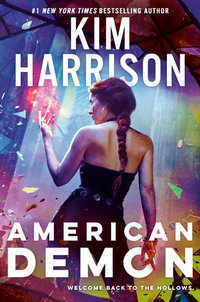
American Demon by Kim Harrison: Harrison Comes Back to The Hollows Without Missing a Step

I want to start off thanks to Beth Tabler for some research help—she saved me a whole lot of time and effort.

American Demon

American Demon

by Kim Harrison
Series: The Hollows, #14

eARC, 496 pg.
Ace, 2020

Read: June 1-4, 2020
Grab a copy from your local indie bookstore!


First off, I want to talk about two things that Harrison did that really have nothing to do with the plot. First, in the last chap of The Witch with No Name, we’re treated to a glimpse into Rachel’s future, twenty-five years after that novel. At the time, I said we could’ve lived without it, but it was a nice way to say goodbye to the series. Now, it seems all the more ingenious of her to do. Twenty-five years provides several opportunities for Harrison to spin new tales. I don’t know if it was purposeful or not at the time, but it sure worked out well.

I was a little intimidated about coming back to this series after such a long breakHarrison’s novels were typically stuffed (occasionally, overstuffed) with plotmultiple storylines tying the novels together. There was just no way I could remember them allmuch less remember all the various characters. The preface to American Demon consists of a portion of Rachel Morgan’s Inderland Security file, sketching out her escapades as well as her associates. It’s a wonderful refresher course in all things Rachel Morgan and did enough jogging of my memory that I was ready to dive in.

Anyway, what about the novel itself? It’s been a few months since the events of The Witch with No Name and those events have caused ripples throughout society (both the supernatural and mundane) as well as the in the lives of the series’ characters. Trent’s struggling with his bank balance and his relationship to the rest of the elves (although Rachel seems to be having more difficulty with both than Trent is), Rachel and Jenks are struggling to put their church back together, Ivy’s dealing with her new reality (and the city is looking for a new Master vampire), Rachel’s trying (not too successfully) to cope with the changes to her abilities, and…that’s just a taste. As much as things seemed wrapped up, life (even fictional life) isn’t that clean. Unlike my usual M. O., I’m not going to get further into the plotfans don’t need it, and new readers won’t appreciate it without Rachel explaining what it all means.

Harrison manages to bring back every major, and many minor characterseven working in mentions to the major dead characters from the past. It may just be fan-service to let all the cast make an appearance, but it was done so smoothly, so organically, that it really doesn’t matter.

At the same time, Harrison brings in some new faces (and most seem like they’ll around for a while)there’s a new elf, a new vampire, a new demon, and a whole new supernatural species. Each of them moves the series in a new direction and add aspects to the ongoing storylines that are very satisfactory. I can see Harrison adding one of these characters per novelbut all of them at once. She’s more than shaking up the status quo, she’s making a bold move forward for the series.

If I’d fallen into a coma shortly after reading The Witch with No Name and had just woken up in time to read this, I wouldn’t have known that Harrison spent anytime away, much less that she’d start a new series that was entirely distinct from The Hollows. For example, in this age of TV continuationsfans of the originals can easily tell the difference between the series that went off years ago, and the new episodes that aired recently. I assumed the same would be true herenot that the book would be bad or anything, just a little differentand I couldn’t have been more wrong.

By the way, since I expect some will asksure, this is a decent jumping-on point. A lot won’t make sense, but you’ll be entertained enough to shrug that off and keep going both with this book and those that are waiting in the wings. You’ll be given enough reason to go back and read the previous volumes.

From wrapping up a series very nicely with one book to telling a complete story in the next while setting up 4+ (depending on how you count them) multi-book arcs in the next is a pretty nice trick. This could’ve just been a nice little reunion, but Harrison has done more than thatshe’s breathed new life into this series as well providing some solid entertainment. Welcome back to the Hollows, folks.


4 Stars

Disclaimer: I received this eARC from Berkley Publishing Group via NetGalley in exchange for this post — thanks to both for this.

20 Books of Summer

This post contains an affiliate link. If you purchase from it, I will get a small commission at no additional cost to you. As always, opinions are my own.

20 Books of Summer 2020

20 Books of Summer
One summer.

Three months.

93 Days.

20 books.


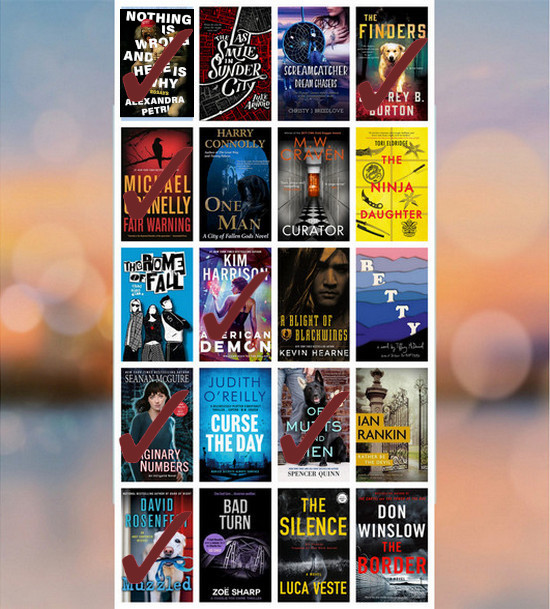
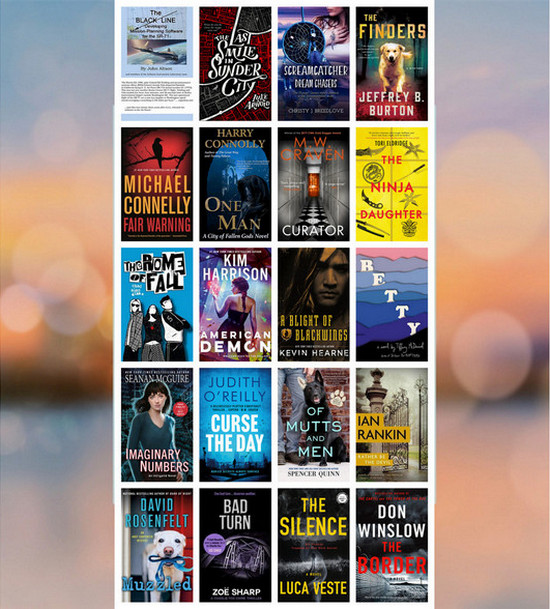
Here’s the kickoff post on 746 Books in case you want more details. I’ve seen people do this the last couple of years, and it seemed like fun. I’ll be reading more than 20 books over this period, anyway. I’ve found myself having a hard time staying focused lately when it comes to reading lately–although the WWW Wednesdays have helped a bit. I figure this is the same principle, just expanded over a few weeks rather than the next couple of days. Anyway, here’s my list (subject to change, but I’m going to resist the impulse to tweak as much as I can).

1. The Black Line by John Altson
2. The Last Smile in Sunder City by Luke Arnold
3. Screamcatcher: Dream Chasers by Christy J. Breedlove
4. The Finders by Jeffrey B. Burton
5. Fair Warning by Michael Connelly
6. One Man by Harry Connolly
7. The Curator by M. W. Craven
8. The Ninja Daughter by Tori Eldridge
9. The Rome of Fall by Chad Alan Gibbs
10. American Demon by Kim Harrison
11. A Blight of Blackwings by Kevin Hearne
12. Betty by Tiffany McDaniel
13. Imaginary Numbers by Seanan McGuire
14. Curse the Day by Judith O’Reilly
15. Of Mutts and Men by Spencer Quinn
16. Rather Be the Devil by Ian Rankin
17. Muzzled by David Rosenfelt
18. Bad Turn by Zoë Sharp
19. The Silence by Luca Veste
20. The Border by Don Winslow

20 Books of Summer Chart

Top 5 Saturday: Sibling Relationships

Top 5 Saturday Sibling Relationships

The Top 5 Saturday weekly meme was created by Amanda at Devouring Books.

Rules!

  • Share your top 5 books of the current topic—these can be books that you want to read, have read and loved, have read and hated, you can do it any way you want.
  • Tag the original post (This one!)
  • Tag 5 people (I probably won’t do this bit, play along if you want)

This week’s topic is: Sibling Relationships. If the Weasley family doesn’t immediately spring to mind once you think about siblings, there might be something broken in your mind—ditto for the Pevensies. But I wouldn’t let myself use them. The more I wrote in this list, the more relationships came to mind that I don’t have space for–that’s very annoying (a lot of fun, too), I hate to leave some of these off. I don’t know why I didn’t grab sibling relationships that are more than a pair (the aforementioned groups, the Spellmans or Tropper’s Altmans would’ve worked)—I’m assuming it’s because I had one sibling myself, so I tend to think of pairs rather than 3+?

Sibling relationships are tricky to depict—they’re all a little different, but there are some typical aspects. There’s a shared history (even if individuals react pretty differently to them, and remember them differently); jealousy/rivalry—usually tempered by some sort of affection and loyalty; usually a bit of reflexive self-sacrifice (frequently malgré lui); and a kind of honesty you don’t get from anyone else.


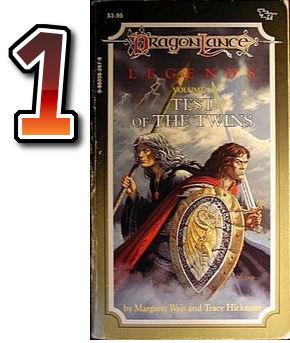
Raistlin and Caramon Majere

from: Dragonlance Chronicles, Dragonlance Legends
by
Margaret Weis, Tracy Hickman

This is the first sibling relationship that really sticks out at me (post-juvenile fiction, anyway). They need each other (in healthy and unhealthy ways), but really don’t like each other. There’s a love and a bond that’s nigh-unbreakable, don’t get me wrong, but man…Raistlin treats his brother like trash. I remember regularly being so upset with him for that (and a little bit now just thinking about it), but Caramon keeps coming back for it. He never gives up on his twin. Even when—especially when—he absolutely should. It’s a nuanced and complex relationship and is likely one that I judge many other fictional representations by.

Side note: I really need to re-read the first couple of Dragonlance trilogies.


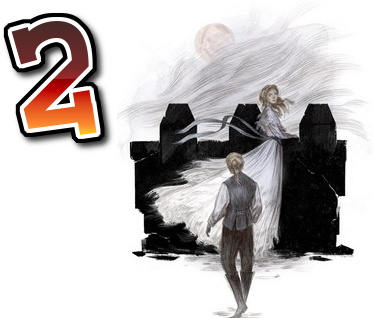
Jack and Jill Wolcott

from: Wayward Children
by
Seanan McGuire

(art by Rovina Cai)
While I do wonder if McGuire had come back to this well one time too many in this series, there’s clearly something about this fractured relationship (huh, another set of twins, with one more to come…didn’t mean to do that) that clearly resonates with readers and the author. If there’s anything healthy in their relationship when we first meet them, it’s gone by the most recent volume—but they’re the textbook definition of inextricably linked. To their detriment, yes, but that’s beside the point. Fascinating pair.


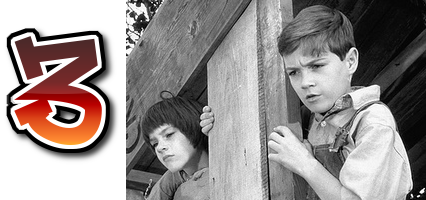
Scout and Jem Finch

from: To Kill a Mockingbird
by
Harper Lee

Scout worships her brother (doesn’t stop her from being frustrated with him frequently) and Jem’s clearly devoted and protective of her. I’ve loved reading about these two since I first met them in Mme. Dobbs’ English class* in high school and I’ll probably love it for the rest of my life. They’re not ideal, but they’re pretty close.

* she also taught my French class, so I reflexively think of her with that title)


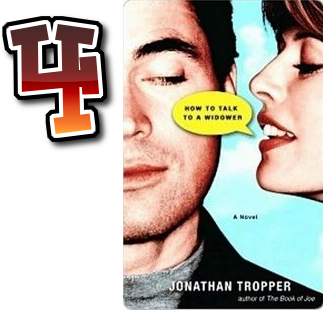
Doug and Clair Parker

from: How to Talk to a Widower
by
Jonathan Tropper

Alas, I don’t have a picture of them—Tropper doesn’t inspire a lot of fan art. Yeah, Doug and Clair’s relationship echoes any number of the sibling relationships in Topper’s work. This is honestly the first pair that jumped to mind when I compiled this list. The honesty, the humor, the prodding/pushing, and care between the two is one of the best parts of this novel (probably my favorite of his). Great interplay between the two. Neither Doug or Clair remind me of my sister or myself individually, but for some reason, their relationship made me think about our relationship.


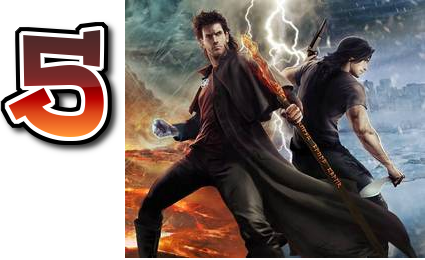
Harry Dresden and Thomas Wraith

from: Dresden Files
by
Jim Butcher

(art by Mika-Blackfield)
Sure, these two weren’t aware of each other for most of their lives, so their shared history has only to do with their mother. Still, the bond, the love, the loyalty that everyone thinks of when it comes to brothers is perfectly depicted with these two. They’re probably my favorite sibling pair that’re still being written about—I just hope they both survive ’til the end.

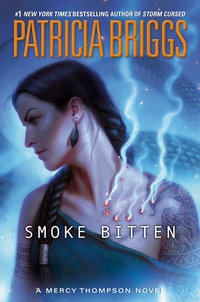
Smoke Bitten by Patricia Briggs: Mercy Deals with Unexpected Threats from Every Direction

Smoke Bitten

Smoke Bitten

by Patricia Briggs
Series: Mercy Thompson, #12

Hardcover, 342 pg.
ACE, 2020

Read: March 24-28, 2020
Grab a copy from your local indie bookstore!


There’s just so much going on in this novel, it’s hard to know where to start—this may be the busiest Mercy Thompson novel yet. Well, okay, we’ll start with the titular bit. Something/Someone has escaped from Underhill. This seems fairly impossible, but I guess even nigh-omnipotent sentient spaces make mistakes every now and then. Doubtlessly the Columbia Basin pack would’ve gotten involved at some point, but since Mercy recognized the threat before the Fae—or anyone else—did, they were on the front line for this. Whoever it bites, it controls. It can shape-shift to look like anyone, too. It’s deadly and doesn’t seem to have much of a plan beyond creating as much chaos and gathering as much power as it can.

While dealing with that, another threat to the pack presents itself. There are some new werewolves in the area, and their goal is simple: become the new pack in town. As Adam’s pack is now independent of The Marrok, these wolves have decided they’re ripe for a takeover. None of these are wolves to be taken lightly—some have recently left a pack run by very dominant Alpha, which took some strength. All of them have strong reputations amongst the wolves (generally positive), although one is known as the wolf who’d do things that Charles Cornick wouldn’t do for his father. These are not going to be easy to face off against.

The thing that’s the most distressing (and given what I’ve just talked about, that’s saying something) for Mercy is that there’s a problem between her and Adam. The roots of the issue go back to before we met Adam, but something happened in Storm Cursed to tip Adam over the brink. The latest meddling by Adam’s ex, Chrissy, made it all boil over and threatened the peace and stability of the pack—as well as their marriage. We see Mercy at her most vulnerable since…well, probably since the attack at the garage (or what The Monster tried to do in Bone Crossed), which stresses for the reader how bad the situation is. The two take some positive steps, but things aren’t resolved wholly here—and I hope Briggs doesn’t patch things up quickly between the two between novels. I think we need to see the pair continuing to work through things.

There’s a few more things going on, too, including some fun with Sherwood (who is quickly becoming a favorite character), some interesting developments with Jesse’s life, and some interesting character development in general with pretty much each of the pack members we usually get time with. Oh, and lest I forget, an old friend comes back.

One final thing to mention: last year, while talking about Storm Cursed, I said:

There’s something that happens in the climactic battle scene that I want to talk about more than I want to talk about anything else in this book—because in the long run it’s going to be bigger and more important than anything else that happens or I’ll eat my hat. It’s so small, so quick that it’d be easy to miss—2 sentences on one page, then twelve pages later 2 more sentences. And Briggs has at least one novel’s worth of plot seeded right there. I love when I see an author do something like that and make it look effortless. And I think I’m underselling it. But I’ll have to leave it there—maybe in book 12 (or 15) when it happens, I’ll remember to say, “Remember that thing I didn’t talk about in Storm Cursed? This is it.”

Well, Briggs gave that seed plenty of water and a little fertilizer in these pages. I still don’t feel comfortable talking about it in detail for reasons I can’t explain. But whoo-boy, I can’t wait to see what Briggs has in mind.

So, yeah, like I said—a lot of balls in the air. Or plates spinning. Pick a metaphor you like best. And I think Briggs did alright by them all—yeah, I’d have liked a bit more time with the new wolves, but we didn’t need it—and I’m not sure we’re done with them (maybe in the next Alpha and Omega book if not in an upcoming Mercy novel?). To deal well with all these elements and keep the novel moving quickly and resolving in a satisfactory manner (with a few more strings than usual left for the next installment) speaks highly of Briggs’ skill. Fans of Mercy Thompson shouldn’t wait to grab this, people who are curious about the series should be able to come on board now, too (although, you really ought to read them all). Briggs is at the top of her game now, and it’s just fun to watch.


4 Stars

This post contains an affiliate link. If you purchase from it, I will get a small commission at no additional cost to you. As always, opinions are my own.

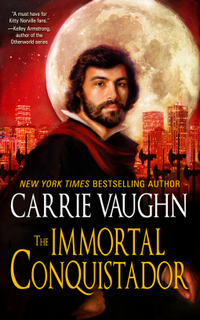
The Immortal Conquistador by Carrie Vaughn: Just who is the Vampire Rick, Anyway?

I’ve been trying to get this out for over a week now (it was published last week), but I couldn’t seem to be able to—I’m a little surprised I’ve had the energy to post anything since I started telecommuting (odd that not going anywhere tires me out more than going to work does). Finally, with apologies to the publisher for getting this post up late.

The Immortal Conquistador

The Immortal Conquistador

by Carrie Vaughn
Series: Kitty Norville

eARC, 192 pg.
Tachyon Publications, 2020

Read: March 20-23, 2020


I’ve been a fan of the Kitty Norville series since the debut in 2005, and one of the supporting characters that fans seem most enamored of—and are given the least information about—is Kitty’s vampire ally, Rick (the Master of Denver).

For those (like me) who need a little brushing up on some of what went on toward the end of the series, Rick leaves Denver for a while in order to explore a different way to take on Dux Bellorum (the series’ Big Bad).

This book gives the reader some insight into what Rick was up to during this time. The book stitches together four short stories about Rick’s origin (some previously published, some not) while Rick introduces himself to the Order of Saint Lazarus.

I’d already read the first story, “Conquistador de la Noche,” in the collection Kitty’s Greatest Hits—but it worked really well in this setting, too—this sets the stage for the rest of Rick’s history and tells about him becoming a vampire. The next two stories show what happens when he first encounters the Vampire sub-culture and is first exposed to the rules (most) Vampires live by and how Rick skirts the edges of those rules and starts to make both a name for himself and build his different kind of power base.

The fourth story is my favorite detailing what happens when Rick meets a legendary Old West character. It was just a great story with an element of fun. It’s also something the reader is told that Rick’s never told anyone about before. It’s precisely the kind of thing that Kitty would kill to hear, she’s constantly asking vampires and other supernatural types for stories like this. That Rick would go out of his way to deprive her of this story (but we get to read it) was a little extra dash of fun.

I don’t know that this gave me a much better picture of Rick—the novels had pretty much done that. We know his character, we may not understand his past and what he was—but we know who he is. But this book rounds out our understanding of the man and gives the reader a little hope for his future.

Once I cottoned on to what Vaughn was doing—stitching together short stories—I was a little skeptical of the format. But I came around pretty quickly and decided it worked really well. It’s better than a simple short story collection, essentially giving us a bonus story. The stories (including the framing device) feel different from the Kitty series, but not so much that it doesn’t feel like the same world.

A cool bonus of this—you can read it totally independent of the Kitty Norville series. It’s not dependent at all on the events or people of the series (there are references to certain antagonists, but not in any way that makes familiarity with the series necessary for understanding).

I do have to wonder about the timing of this—the series ended almost five years ago, so I’m not sure I get why we’re getting this material in this format now. But that’s just me being curious, not complaining. Did I (or the series) need The Immortal Conquistador? No. But I’m very glad I got it.

Disclaimer: I received this eARC from Tachyon Publications via NetGalley in exchange for this post —thanks to both for the opportunity.


3.5 Stars

Dryad Teas Inspired by the Dresden Files

And Now for Something Completely Different

This is not what I typically post about, but it sort of fits.

I’m not a big tea drinker—but I dabble from time to time, and we’re in the middle of another attempt to drink more (health benefits, no sugar, etc., etc.—oh, and it tastes good, too). While I’m playing around with this blend and that, someone posts on one of the Dresden Files Fan Facebook pages a link to Dryad Teas’ Dresden Files inspired teas (and then someone posts about another company’s varieties, too!). I have to be honest, my mind is boggled, how do you come up with tea blends based on fictional characters? Sure, I can see a Picard-branded Earl Gray variety or something that Lady Mary or Count Grantham might drink; but thinking about a character and coming up with a tea blend based on them? I wouldn’t know where to start—and I’m freakishly impressed (and incredibly curious about it).

Anyway, I ordered some samples from Dryad’s Dresden teas, and thought I’d share a thought or two about them.

KarrinKarrin

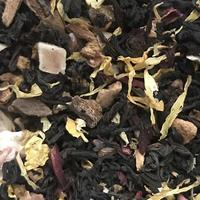
Inspired by the amazing ‘Dresden Files’ book series by Jim Butcher, this blend is a thought provoking mix of peach and apricot with deep undertones of black tea.

I’m not sure that this says, Karrin Murphy to me. It does make me think of her house—left to her by her grandmother, and I don’t think she re-decorated it much (I’m ready to be corrected on that front). In the end, it was too fruity for me. It smells great, though, and tastes very pleasant.

Bob the SkullBob the Skull

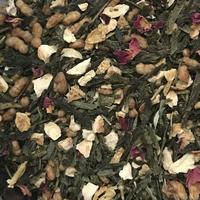
…this blend is a delicious mix of genmaicha and citrus. Notes of raspberry and lime pair with the depth of the genmaicha to create a light blend with promise, fitting for Bob the Skull.

Another one that I’m not sure about—it’s too floral, and too mild for me to drink regularly. I’m also not a big green tea guy. But there’s something about this blend of flavor that is very, very pleasant. I would absolutely drink it again (I’m not sure I’d buy it though). I think they drew too much from Bob’s love of Romance novels when they came up with the blend. (just a wild guess)

DresdenDresden

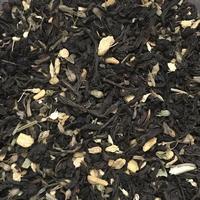
…this blend is inspired by Dresden. Smoky and spicy, the text of “The building was on fire, and it wasn’t my fault.” explains the character perfectly. This tea is no different.

Now this? This was my cup of tea.* Going from that quoted line, it’s smokey, dark, deliciousness. I tried to explain the flavor to my wife by saying it’s like “a tea made from pipe tobacco, but it tastes good.” She told me I shouldn’t ever tell anyone that. I tried explaining it to a friend, who is also a Dresden fan, by saying “Imagine the ashes of the building that was on fire (but wasn’t his fault), made into a tea, that somehow tastes good.” She didn’t tell me that I shouldn’t repeat that description, but her expression pretty much did.

Basically, I don’t know how to describe how things taste–this was strong, smokey, bold, full of flavor. I’d drink this by the gallon.

* Had to be done.

Anyway, check out Dryad Teas. Even if these don’t appeal, they have a lot of geeky teas/accessories.

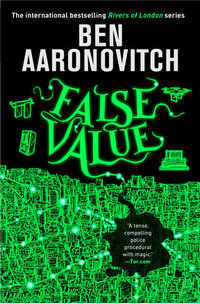
False Value by Ben Aaronovitch: Peter Grant Gets a New Job and a Great Series Gets Better

False Value

False Value

by Ben Aaronovitch
Series: The Rivers of London, #8

Hardcover, 294 pg.
DAW Books, 2020

Read: February 28-March 3, 2020
Grab a copy from your local indie bookstore!

“Somebody else came during the night and magicked them,” I said.

“Is that a real term—’magicked?'” asked Guleed.

“And it’s spelt with a ‘k,’ too,” I said. “But the technical term is actually ‘enchanted.’ Only the trouble with that word is that everyone starts thinking glass slippers and spinning wheels.”

There’s very little that I don’t like in The Rivers of London series, you may have noticed, but the friendship and banter between Peter and DS Sahra Guleed is possibly my favorite part of the books. The way they slip between discussions of magic (or magick) theory, police procedure, family stuff, the cases they’re working without missing a beat—or doing so professionally or like a couple of teenagers having too much fun under the nose of authority figures. It feels real, it feels natural, and it’s fun.

It’s also much more beneficial for each character—and the Queen’s peace—than his friendship with Leslie May.

After the series-altering events of Lies Sleeping, the question most readers had was, “Will the series be any good post-Martin Chorley?” Most were likely like me, with a firm “Very probably. Hope so.” False Value demonstrates that things are just fine without Chorley—better than fine, really (although everyone is dealing with the aftermath of everything he did).

Also, as nice as The October Man was, it’s great to be back with Peter and the rest of the Folly.

Most of the books in this series are about a Wizard-in-Training who happens to be a police officer. This book was a Crime Fiction novel about a guy who happens to be a wizard in training.

With the suspension he received at the end of the last book, and his future with the Police uncertain, Peter Grant goes off in search of a new job. He ends up finding work investigating some internal shenanigans for a tech giant headquartered in London. Peter’s computer-geek gets the chance to shine a bit as well as flexing his investigative muscles.

It’s not long before he discovers the source of the shenanigans, and that’s where things get interesting. The source is associated with The New York Libraries Association, “the militant magical wing of the New York Public Library Services.” Which is one of the American analogues to The Folly (just without the official police sanction). He and his superior are also investigating the company—because they’re convinced that SCC is utilizing magic in a potentially hazardous way, paving the way for something huge. I am beyond curious about the Libraries Association and hope we get to see them in action again soon. The whole thing is ripe with possibilities and it’s going to be great to see it all play out.

If you were to draw a Venn diagram with circles for Charles Babbage/Ada Lovelace, Artificial General Intelligence, and Wizardry—the overlap is where you’d False Value. Who wants more? The mix of contemporary cutting-edge technologies and Newtonian magic is just fantastic.

This all leads up to a wonderfully exciting climactic showdown between Nightingale, Peter and the rest on one side, The Librarians on another, and SCC on the other.

If we act now we might be able to roll them up before they know what’s hit them.”

Nightingale frowned into his teacup.

“Perhaps,” he said.

“What have we got to lose?” I said.

Nightingale looked up and gave me a strange, sad smile.

“Oh, everything, Peter, “he said. “But then such is life.”

Yeah, sure, there’s plenty of things going on with Abigail, Molly, Foxglove, and (of course) a very pregnant Beverly. But I just don’t have the time to talk about it all. I think it’s safe to say that this is the busiest novel in the series with something for every fan (more than one something, too).

We also got to check in with our favorite FBI Agent. She was able to give Peter all sorts of background about SCC and its founder (an American), which proved vital and interesting (she got some information about the Librarians in return). Better yet, some of what she uncovered changed Peter’s understanding of some of what went on in Lies Sleeping (the reader’s understanding, too). I’m betting this will prove to be at the core of the next arc for the series.

So now we have an idea about two groups in the States, German practitioners, ,and then a smattering of some in the UK. I love how they’re all very diverse, while sharing a lot in common.

I stopped short in the first sentence of the book:

My final interview at the Serious Cybernetics Corporation…

Serious Cybernetics Corporation? As in,

The Encyclopedia Galactica defines a robot as a mechanical apparatus designed to do the work of a man. The marketing division of the Sirius Cybernetics Corporation defines a robot as “Your Plastic Pal Who’s Fun to Be With.” The Hitchhiker’s Guide to the Galaxy defines the marketing division of the Sirius Cybernetic Corporation as “a bunch of mindless jerks who’ll be the first against the wall when the revolution comes,”

from The Hitchhiker’s Guide to the Galaxy. So I thought that Aaronovitch was having a little fun with an in-joke and moved on. But no, it was a theme throughout the entire tech company. HR is referred to as “the Magrathean Ape-Descended Life Form Utilization Service,” and Security (where Peter was applying) is “the Vogon Enforcement Arm.” The book is full of these things, and after page 14, I stopped counting them. There’s so many of these that around page 150, Peter says something about SCC “pushing copyright” after a particularly egregious example. I had a great time with this book anyway, but all this was a thick layer of icing on the cake.

A carefully and intricately plotted main story, some fantastic action scenes, and character growth—coupled with Aaronovitch’s signature style and wit. I just can’t think of anything wrong with this book—this is exactly the kind of book that I want to read.


5 Stars

This post contains an affiliate link. If you purchase from it, I will get a small commission at no additional cost to you. As always, opinions are my own.


Top 5 Saturday: Books Inspired by Mythology


The Top 5 Saturday weekly meme was created by Amanda at Devouring Books.

Rules!

  • Share your top 5 books of the current topic—these can be books that you want to read, have read and loved, have read and hated, you can do it any way you want.
  • Tag the original post (This one!)
  • Tag 5 people (I probably won’t do this bit, play along if you want)

This week’s topic is: Books inspired by Mythology. Which you’d think would be super-easy—and it was fairly easy—but coming up with a fifth took a little more work than I expected.


Bad Blood
by
Lucienne Diver

An Urban Fantasy featuring a strong, snarky, female PI who doesn’t believe the family legend that she’s descended from Pan and Medusa. But when Apollo himself shows up to hire her, she starts to come around . . . I admit I don’t remember a lot of this (I read it 7 years ago), but it was one of the first I thought of when I decided to do this list and I do keep asking myself why I never got around to reading the rest of the series.


American Gods
by
Neil Gaiman

Honestly, not my favorite Gaiman (maybe on a second read that’d change). But man, there are passages in this book that are pure magic. Epic in scope, but filled with fantastic characters, and Gaiman’s prose, you can absolutely understand why it’s beloved and so widely-read.


The Long Dark Tea-Time of the Soul
by
Douglas Adams

Unless I read something I cannot recall, this was the first book I read that made use of mythological characters in a contemporary setting. I absolutely loved the idea and wondered why more people didn’t do that. Clearly, they do (just see the rest of this post and the others posting on this theme today), but at the ripe old age of 15, it was revolutionary to me. Odin, Thor, Loki and a few other Norse dignitaries are flitting about London and the area, inflicting damage, killing innocents, and driving nursing home staff crazy. Throw in Dirk Gently and Adams at his best and you have a killer read.


Hunted
by
Kevin Hearne

Members of five (I think) pantheons show up in this book—in what’s probably Hearne’s finest use of them all. A good story for Atticus, Oberon, and Granuaile (Oberon has his best dramatic moment, as I recall) aside from that, but a great way of blending the various pantheons into the Iron Druid’s world. One of my Top 2 in the series.


The Lightning Thief
by
Rick Riordan

How can you have a list like this and not include this book (or one of the legion it spawned)? The book that started a craze and gave Riordan the ability to quit teaching. This set the template for all of Riordan’s myth-inspired books (be it Greek, Roman, Egyptian or Norse mythology) and is just fun (unlike some of the latter books which got a bit preachy and tedious). It’s not quite Potter-level of fame/influence, but it’s the closest we have in the States, a nice collection of kids, a creative way of brining myths to the 21st Century, and a rollicking good time.

My Favorite Non-Crime Fiction of 2019

Like last year, while trying to come up with a Top 10 this year, I ran into a small problem (at least for me). Crime/Thriller/Mystery novels made up approximately half of the novels I read this year and therefore dominated the candidates. So, I decided to split them into 2 lists—one for Crime Fiction and one for Everything Else. Not the catchiest title, I grant you, but you get what you pay for.

These are my favorites, the things that have stuck with me in a way others haven’t—not necessarily the best things I read (but there’s a good deal of overlap, too). But these ten entertained me or grabbed me emotionally unlike the rest.

Anyway…I say this every year, but . . . Most people do this in mid-December or so, but a few years ago (before this blog), the best novel I read that year was also the last. Ever since then, I just can’t pull the trigger until January 1. Also, none of these are re-reads, I can’t have everyone losing to books that I’ve loved for 2 decades that I happened to have read this year.

Enough blather…on to the list.

(in alphabetical order by author)

A Man Called OveA Man Called Ove

by Fredrik Backman, Henning Koch (Translator)

My original post
I’ve been telling myself every year since 2016 that I was going to read all of Backman’s novels after falling in love with his My Grandmother Asked Me to Tell You She’s Sorry. The closest I got was last year when I read his first novel, A Man Called Ove (and nothing else). It’s enough to make me resolve to read more of them, and soon. The story of an old, grumpy widower befriending (against his will, I should stress) a pretty diverse group of his neighbors. It’s more than that thumbnail, but I’m trying to be brief. The story was fairly predictable, but there’s something about the way that Backman put it together that makes it perfect. And even the things you see coming will get you misty (if not elicit actual tears).

5 Stars

Dark AgeDark Age

by Pierce Brown

My original post
When I started reading this, I was figuring that Pierce Brown’s Red Rising Saga was on the downward trend. Boy, was I wrong. Dark Age showed me that time after time after time after time . . . Entertaining, occasionally amusing, stress-inducing, heart-wrenching, flat-out captivating. It was brutal and beautiful and I can’t believe I doubted Brown for a minute.

5 Stars

Here and Now and ThenHere and Now and Then

by Mike Chen

My original post
One of the best Time Travel stories I’ve ever read, but it’s so much more—it’s about fatherhood, it’s about love, it’s about friendship. Heart, soul, laughs, and heartbreak—I don’t know what else you want out of a time travel story. Or any story, really. Characters you can like (even when they do things you don’t like), characters you want to know better, characters you want to hang out with after the story (or during it, just not during the major plot point times), and a great plotline.

4 1/2 Stars

Seraphina's LamentSeraphina’s Lament

by Sarah Chorn

My original post
Chorn’s prose is as beautiful as her world is dark and disturbing. This Fantasy depicts a culture’s collapse and promises the rebirth of a world, but getting there is rough. Time and time again while reading this book, I was struck by how unique, how unusual this experience was. As different as fantasy novels tend to be from each other, by and large, most of them feel the same as you read it (I guess that’s true of all genres). But I kept coming back to how unusual this feels compared to other fantasies I’ve read. The experience of reading Seraphina’s Lament isn’t something I’ll forget any time soon.

4 1/2 Stars

No Country for Old GnomesNo Country for Old Gnomes

by Delilah S. Dawson and Kevin Hearne

My original post
Having established their off-kilter world, strong voice, and approach to the stories of Pell, Dawson and Hearne have come back to play in it. The result is superior in every way that I can think of. I lost track of how many times I said to myself while reading something along the lines of, “how did they improve things this much?” These books are noted (as I’ve focused on) for their comedy—but they’re about a lot more than comedy. The battle scenes are exciting. The emotional themes and reactions are genuine and unforced. And tragedy hits hard. It’s easy to forget in the middle of inspiring moments or humorous aftermaths of battle that these kind of novels involve death and other forms of loss—and when you do forget, you are open to getting your heart punched.

(but mostly you laugh)

4 1/2 Stars

Twenty-one Truths About LoveTwenty-one Truths About Love

by Matthew Dicks

My original post
It’s an unconventionally told story about a man figuring out how to be a businessman, husband, and father in some extreme circumstances. The lists are the star of the show, but it’s the heart behind them that made this novel a winner.

5 Stars

State of the UnionState of the Union: A Marriage in Ten Parts

by Nick Hornby

My original post
This series of brief conversations held between a married couple just before their marriage counseling sessions. At the end of the day, this is exactly what you want from a Nick Hornby book (except the length—I wanted more, always): funny, heartfelt, charming, (seemingly) effortless, and makes you feel a wide range of emotions without feeling manipulated. I loved it, I think you will, too.

4 1/2 Stars

The SwallowsThe Swallows

by Lisa Lutz

My original post
This is not my favorite Lutz novel, but I think it’s her best. It has a very different kind of humor than we got in The Spellman Files, but it’s probably as funny as Lutz has been since the third book in that series—but deadly serious, nonetheless. Lutz puts on a clinic for naturally shifting tone and using that to highlight the important stories she’s telling. From the funny and dark beginning to the perfect and bitingly ominous last three paragraphs The Swallows is a winner. Timely and appropriate, but using tropes and themes that are familiar to readers everywhere, Lutz has given us a thrilling novel for our day—provocative, entertaining, and haunting. This is one of those books that probably hews really close to things that could or have happened and you’re better off hoping are fictional.

5 Stars

PostgraduatePostgraduate

by Ian Shane

My original post
This has the general feel of Hornby, Tropper, Norman, Weiner, Russo (in his lighter moments), Perrotta, etc. The writing is engaging, catchy, welcoming. Shane writes in a way that you like reading his prose—no matter what’s happening. It’s pleasant and charming with moments of not-quite-brilliance, but close enough. Shane’s style doesn’t draw attention to itself, if anything, it deflects it. It’s not flashy, but it’s good. The protagonist feels like an old friend, the world is comfortable and relaxing to be in (I should stress about 87.3 percent of what I know about radio comes from this book, so it’s not that). This belongs in the same discussion with the best of Hornby and Tropper—it’s exactly the kind of thing I hope to read when I’m not reading a “genre” novel (I hate that phrase, but I don’t know what else to put there).

4 1/2 Stars

The Bookish Life of Nina HillThe Bookish Life of Nina Hill

by Abbi Waxman

My original post
This is a novel filled with readers, book nerds and the people who like (and love) them. There’s a nice story of a woman learning to overcome her anxieties to embrace new people in her life and heart with a sweet love story tagged on to it. Your mileage may vary, obviously, but I can’t imagine a world where anyone who reads my blog not enjoying this novel and protagonist. It’s charming, witty, funny, touching, heart-string-tugging, and generally entertaining. This is the only book on this particular list that I know would’ve found a place on a top ten that included Crime Novels as well, few things made me as happy in 2019 as this book did for a few hours (and in fleeting moments since then as I reflect on it).

5 Stars

Books that almost made the list (links to my original posts): Not Famous by Matthew Hanover, Circle of the Moon by Faith Hunter, Maxine Unleashes Doomsday by Nick Kolakowski, In an Absent Dream by Seanan McGuire, The Rosie Result by Graeme Simsion, and Lingering by Melissa Simonson

The Lights Go Out in Lychford by Paul Cornell: The Stakes and Tension are High in the Penultimate Lychford Novella

The Lights Go Out in Lychford

The Lights Go Out in Lychford

by Paul Cornell
Series: Witches of Lychford, #4

Kindle Edition, 144 pg.
Tor/Forge, 2019

Read: November 19, 2019


Oh, man…I was so glad to be back in this world. Lychford, a tiny little English town that acts as the border between this world and realities beyond our understanding, is a wonderfully conceived and executed setting—just getting to spend time here again was a blast.

I’ve tried three times now to describe this, and I just can’t without letting something slip. So, what’s the publisher say?

The borders of Lychford are crumbling. Other realities threaten to seep into the otherwise quiet village, and the resident wise woman is struggling to remain wise. The local magic shop owner and the local priest are having troubles of their own.
And a mysterious stranger is on hand to offer a solution to everyone’s problems. No cost, no strings (she says).
But as everyone knows, free wishes from strangers rarely come without a price . . .

Judith’s struggle with the effects of aging on her mind—and the way that her use of magic has accelerated them—is wonderfully depicted. Of course, it’s not just Judith dealing with her fading capabilities—her apprentice, her friend and her son also go through a lot trying to help her. This might be the best part of the book.

Autumn is working herself to exhaustion—not to mention loneliness and poverty—trying to rush her preparation for taking over for Judith. She’s also driven by the grave errors of the last book that have really put Lychford in danger.

Something about this one had me on tenterhooks throughout. There’ve been threats to Lynchford and/or the trio of protagonists before, but it all seemed much more likely this time.

The conclusion was simply fantastic and heart-wrenching—with a last line that will drive you to the online bookstore of your choice to try to order the conclusion immediately.

Can you read this without having read the previous entries in the series? Yeah, I guess you could. Cornell provides enough backstory to muddle through. Should you? Nope. I don’t think you’d appreciate everything the way it should be appreciated. Should you read the previous 3 novellas? Yes, and then read this and join me in waiting for the fifth and final one next year.


4 Stars

Page 25 of 44

Powered by WordPress & Theme by Anders Norén