Category: Books Page 144 of 160

Saturday Miscellany – 3/12/16

I didn’t think this new job would have quite as big of an impact on the blog as it has. Next week should be better.

Still, I was able to track down a few odds ‘n ends over the week about books and reading that caught my eye. You’ve probably seen some/most/all of them, but just in case:

    This Week’s New Releases I’m Excited About and/or You’ll Probably See Here Soon:

  • Fire Touched by Patricia Briggs — no clue what it’s about, honestly. Who cares? New Mercy Thompson, ’nuff said.
  • Stop the Presses! by Robert Goldsborough — The only reason I haven’t read the last one yet is because the library didn’t get a copy, hopefully they get this one, so I can read it and hate myself.
  • The Stone Bearer by Jacque Stevens — a great looking fantasy — on sale for the next few days!

Lastly, I’d like to say hi and welcome to the Defined Introvert (overdue, actually) and mpatraiko for following the blog this week.

Saturday Miscellany – 3/5/16

Odds ‘n ends over the week about books and reading that caught my eye. You’ve probably seen some/most/all of them, but just in case:

    This Week’s New Releases I’m Excited About and/or You’ll Probably See Here Soon:

  • The Passenger by Lisa Lutz — I’m hearing good things about this, and the description sold me even without hearing anything. I just messed up and got my dates wrong, so I didn’t have this ordered. Hoping to get my hands on this soon.
  • Chaos Choreography by Seanan McGuire
  • Borderline by Mishell Baker — A little bit of Genrenauts, a little bit of Fringe, a little…I don’t know what. Just go read the description I linked. If nothing else, the Seanan McGuire blurb at the bottom of this page should be enough to convince you if you’re on the fence.
  • East Of The City by Grant Sutherland — I’ve been wanting to get to the previous novel for a couple of months, if Fahrenheit Press would just slow down a minute so I can catch up, that’d really help.
  • Who Wants To Be The Prince Of Darkness? by Michael Boatman — a reality show to find Lucifer’s replacement? Should be good for a laugh or three.
  • The Courier by Gerald Brandt — a little SF, a little thriller . . . looks like a lot of fun.
  • Arkwright by Allen Steele — this looks like the most realistic SF novel since . . . Clarke or Crichton, maybe?

Lastly, I’d like to say hi and welcome to Fernando Ortiz, Jr. and ebookbump for following the blog this week.

February 2016 Report

So, here’s what happened here in February.

Books Read:

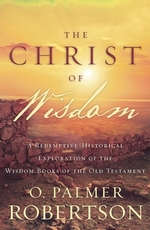
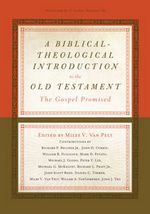
The Miracles of Jesus The Prince of Tides Guardians
4 Stars 2 1/2 Stars 3.5 Stars
Confessions of a Clumsy Christian: Unqualified The Highly Capable The Batgirl of Burnside
2 Stars 3.5 Stars 3.5 Stars
The Relic Master Thing Explainer</a The Restaurant at the End of the Universe
DNF
4 Stars 4 1/2 Stars
Glory Veiled & Unveiled Some Assembly Required Talking to the Dead
3.5 Stars 3 Stars 4 Stars
No Problem, Mr. Walt Freedom's Child Steal the Sky
3.5 Stars 3 Stars 4 Stars
The Story of Lucius Cane        
3 Stars        

Still Reading:

Reformed Dogmatics, Volume 1 Morning Star    

Reviews Posted:

How was your month?

Saturday Miscellany – 2/27/16

If you haven’t had time to weigh-in on Wednesday’s post about books that left you a wreck , take a second and do so, would you? I’m enjoying what you all have come up with.

I was on the road last week when I got the news about Harper Lee’s death, so I couldn’t add anything to the scheduled post for Saturday. But it’s no secret that I loved her stuff, and the news saddened me. Sure, we all knew that we weren’t going to get anything new from her, and that she was in declining health. But, to hear that she’s gone, just seems wrong. I tried to come up with something on my own, but my words were inadequate. Here’s a small sample of the tributes that were worth reading and resonated most with me:

Now for the odds ‘n ends over the week about books and reading that caught my eye. You’ve probably seen some/most/all of them, but just in case:

    This Week’s New Releases I’m Excited About and/or You’ll Probably See Here Soon:

  • The Absconded Ambassador by Michael R. Underwood — the 2nd Genrenauts novel. I dug it and I think you will, too.
  • Out of the Blues by Trudy Nan Boyce — An Atlanta Police Dept. vet turns mystery author. This will bleed authenticity. Looks like a good novel, too.
  • The Drowned Detective by Neil Jordan — this detective novel looks as thoughtful and moving as one of one of his movies.
  • The Forbidden Wish by Jessica Khoury — an intriguing looking YA-take on Aladdin.
  • Kill the Boy Band by Goldy Moldavsky — The title’s enough, right? When being a Super-fan goes awry.

Lastly, I’d like to say hi and welcome to Bibliophage and greenlanddiary for following the blog this week.
A Few Quick Questions With…Vanya Ferreira

This morning I blogged about Vanya Ferreira’s story, “The Story of Lucius Cane: Book One,” a promising start to a series of stories about an atypical Vampire. Vanya was kind enough to take part in a little Q&A with me about his writing in general and his upcoming projects. I kept it short and sweet, because I’d rather he work on those project than take too much time with me, y’know?

What got you into writing? Who are some of your major influences? (whether or not you think those influences can be seen in your work — you know they’re there)
That’s actually a very interesting question. I remember my parents reading to me as a child and as I got older, my friends would be out and about, while I roamed in the library. I always found the library to be my sanctuary; a place where different worlds, knowledge and realities all overlay. I guess that it was all the reading that got me into writing but this only came much later; I did, in fact, actually despise English as a subject at school. Some of my major influences would have to be Stephen King, Paulo Coehlo, Oscar Wilde, Aldous Huxley, George Orwell, Christopher Paolini and many more.
About Lucius Cane: how many stories do you have in mind for this? Or are you going to expand this into a novel?.
I’m actually thinking about having 3 to 4 books for this series which would include a complete background of who Lucius is. However, to keep something of the mystery and why he is who he is, I plan to release the background as the final book in the series. I don’t think that I’ll expand it into a novel but I’ll rather just keep it as a short story collection that flows into each other. I have noticed with today’s society that our attention spans have gotten rather short and I think that this makes the story easier to read and keeps the excitement for what’s to come next.
Your Amazon bio says that you’ll have Crime Thriller out this year — what can you tell us about that?
Yes, indeed, I am. At the moment it is still very much a work in progress and doesn’t have a title yet. I believe that it will be quite different than most crime thrillers out there since it closely follows the life of the killer himself as the main character. I wanted to create something that would take the reader through the emotional depths and the crevices of madness that I imagine many killers must feel. For example, the serial killer William Heirens (a.k.a The Lipstick Killer) actually wrote a call for help in lipstick at one of his crime scenes, which just goes to show how difficult it must have been for him to be, well, who he was. So my aim for the novel is to try and transform that mental disparity and transport the reader into the world, and hopefully mind, of a killer.
In the writing of “The Story of Lucius Cane”, what was the biggest surprise about the writing itself? Either, “I can’t believe X is so easy!” or “If I had known Y was going to be so hard, I’d have skipped this and watched more TV”.
About the writing itself? Hmm… I think that I was quite surprised at how easily the story unfolded. I remember that I had the vague idea of someone watching a girl from the bushes, as seen in the prologue, and the rest just seemed to flow. I admit, however, that there were days in between where my inspiration just flat-lined but it seems that to just continue writing would spark it back up. Apart from the writing, I would have to say that the biggest surprise, by far, was the amount of work it takes to actually publish and promote a work. Looking back, it’s quite clear that writing was merely the first, and easiest, stage; it’s the promoting and getting it out there where the real work is at.

I’m Curious: What Was the First Book That . . .

I hate these kind of days — I try to get something up at least 6 days a week. But some days a combination of my job, parenting, husbanding and need for sleep — IOW, the stuff that happens when I’m not reading or blogging — has to take precedence. Today’s such a day.

I did accomplish some things today for the blog, but it’s all behind the scenes stuff and/or things I can’t post quite yet.

Anyway. . .

This was asked a couple of weeks ago on some Facebook group I belong to and I thought the answers were interesting enough, I’d ask you:

If you can remember, what was the first book that destroyed you?

For me, it was either: Where the Red Fern Grows (which I read most of several times, and all of a couple of times); The High King by Lloyd Alexander between the deaths and goodbyes, I still can’t do it dry-eyed; or Bridge to Terabithia — I can’t tell you anything about the plot (there were 2 kids, 1 girl and 1 boy, right?), the characters or anything, and I read it 2-4 times — all I can remember is emotional devastation.

Looking forward to hearing from you. Share the emotional scars we all know you have. 🙂

Saturday Miscellany – 2/20/16

Odds ‘n ends over the week about books and reading that caught my eye. You’ve probably seen some/most/all of them, but just in case:

    This Week’s New Releases I’m Excited About and/or You’ll Probably See Here Soon:

  • Switcheroo by Aaron J. Elkins — A trip to Britain’s Channel Islands with Dr. Oliver? Don’t mind if I do.
  • Calamity by Brandon Sanderson — the final book in the Reckoners series. This should be great.

Lastly, I’d like to say hi and welcome to JAH and raulconde001 for following the blog this week. Thanks to Brenton Dickieson for the interaction.
Saturday Miscellany – 2/13/16

Odds ‘n ends over the week about books and reading that caught my eye. You’ve probably seen some/most/all of them, but just in case:

    This Week’s New Releases I’m Excited About and/or You’ll Probably See Here Soon:

  • Morning Star by Pierce Brown — the trilogy comes to a conclusion — and something tells me there’s a lot of death, destruction, and twists along the way. I’m hearing very good things about this.
  • Dead Is Better by Jo Perry — A ghost solving his own murder with a ghost dog by his side — okay, my paraphrase doesn’t sound nearly as good the description on Fahrenheit Press’ site, click the link and it’ll convince you.
  • Atlanta Burns: The Hunt by Chuck Wendig — Atlanta Burns’ senior year looks like it’ll be tough and violent and twisted — basically, like the rest of her life.
  • As Chimney Sweepers Come to Dust by Alan Bradley — A new Flavia de Luce novel means I’m even further behind.

Lastly, I’d like to say hi and welcome to Fictionophile and Aidan Reid for following the blog this week. Thanks to S. C. Flynn and Jayme the Scribbler for the interaction (and the reblog!).
A Few Quick Questions With…Joe Klingler

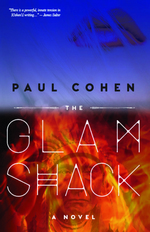
I posted about Joe Klingler‘s novel, Missing Mona last week (if you didn’t read it, take a moment now — or skip what I said and go get the book). Klingler was kind enough to participate in a Q&A with me. I asked some Missing Mona-specifc questions and then a couple of generic questions. I kept it short and sweet, because I’d rather he work on his next book than take too much time with me, y’know? It could’ve been a little shorter, but he insisted on providing thoughtful answers (I really appreciated the last one)

Where there challenges in writing someone going through a “technology reallocation phase” that you didn’t expect? I’ve often thought Sue Grafton’s books would be at least 1/3 shorter if Kinsey had a cell phone — there are so many things she has to do to make a call/get messages/get information/etc.
One of the challenges was how to keep Tommy connected to a grid that he wasn’t a part of, since all of the other characters had smartphones, and used them constantly. He was already an outsider from another town, but his lack of a phone also made him an outsider in the virtual world as well. He had to constantly figure out how he was going to solve problems without technical assistance—which wasn’t always even possible. However, his interaction with paper messages, meeting times, and just showing up places unannounced provided experiences that would have never happened if he had just sent a text.

The other challenge he immediately faced was how to fill all the alone time created by not being constantly connected to the stream of text and images most people interact with all day long. This gave him time ponder and appreciate his new experiences, plan his next step, and even practice his guitar.

Seeing the references to Martin Caidin on your website warmed my heart — I was afraid I was the only one who remembered him. Describe some the influences on Missing Mona beyond the initial inspiration from Crais (whether or not you think they’re on display in Missing Mona).
Caidin’s The God Machine started me thinking long ago about the perils of power concentrated in one place (or person, or corporation), which we see in the character of LaRuche. Hammett and Chandler helped me understand how to describe experience as it happens, without much attention to the past or future. John D. MacDonald’s Travis McGee is a masterwork on how to construct a long series, and build story around a single character with enough depth to carry many novels. Lee Child has his character Jack Reacher arrive in a new town on a new adventure in each book, much the way cowboys did in old westerns. His approach inspired me to have Tommy start out on a road trip with only a vague destination.

I also drew on some of my own experience riding an R75/6 BMW motorcycle along the east coast and down the Blue Ridge Parkway in the Smoky Mountains, seeking only to experience different people and places (yes, I rode to Chicago on a number of occasions.)

If you’ve decided, when we next meet Tommy is he going to be on Route 66 (or en route to it), or will he have returned to Chicago? Are we going to see Marvin, Lizzie, Penny and the rest again?
Tommy will likely begin his next mystery in Chicago, right where he left off. He has made new friends, and found a place to play guitar. Will he stay? How does a traveler ever know when it is time to stop, or if it’s best to keep moving? He finally has himself in motion after years at Walmart, and will struggle with the idea of stopping. That said, his new friends might show up at any time in the future, wherever he may be.

(Phew! That’s what I wanted to hear)

Is there a genre that you particularly enjoy reading, but could never write? Or are you primarily a mystery/suspense/thriller reader?
I read widely, though I prefer writing mysteries and thrillers because they integrate the way people, events, social customs, personal decisions, and technology are all interconnected. I’m a big fan of science fiction, and would like to try it at some point. A horror novel would be very difficult for me to write; I’m not sure I could sleep at night while writing one, though I like reading them on occasion.
I’ve often heard that writers, or artists in general, will forget hundreds of positive reviews but always remember the negative — what’s the worst thing that someone’s said about one of your books, and has it altered your approach to future books?
I definitely remember the positive ones, so please keep them coming. In an interview Stephen King said that if one person says something about your book, you can usually safely ignore it, but if ten people have the same criticism, then perhaps you should look at your work and see how you might improve in that area. So, when I read reviews, I look for the same topic to come up (often in different guises). I like to tell a story from many different perspectives (which some people don’t care for), and I have to be careful with how, and how often, I change point of view. One of the reasons Missing Mona was told in the first person is because I wanted to experiment with using a single point of view.

The worst thing is hard to measure, but being misunderstood is way up there on my list. One person hated the name Qigiq because she couldn’t figure out how to pronounce it, another considered RATS not good enough for an airplane ride, and one thought there were too many floozies in Mash Up. Every reader comes to a book with their own background and set of expectations. About the only thing a writer can do is describe the book clearly in their marketing materials, get as many reviews as possible, and trust that the book will find its readers while he or she sets off to write the next book as well as they possibly can.

Another challenge is that some readers try to infer things about an author from their fiction. Stephen King also wrote to never try to figure out his beliefs from his books. Characters in fiction have their own biases and beliefs and are created to fill the needs of the story. What they think has nothing to do with what the author thinks.

Saturday Miscellany – 2/6/16

Because of a friend’s question, I did some checking — in addition to those who follow via RSS feed and Twitter, there are 282 of you subscribed to this thing in one form or another — that’s just mind-boggling. Obviously, all of you don’t read everything, but you’ve at least taken a moment at some point to read something here, and liked it enough to get more delivered to you. Thanks, thank you very much. Now — make some noise! What do you like, what am I doing right? I suppose, if you must, tell me what I’m doing wrong! What could I do more of — comments are open. There’s email, FB, Twitter options over to your right. But seriously, thanks for the views, the reads, for following, etc.

Anyway…the Odds ‘n ends over the week about books and reading that caught my eye. You’ve probably seen some/most/all of them, but just in case:

    A Long List of New Releases for the Week that I’m Excited About and/or You’ll Probably See Here Soon:

  • Keep Calm by Mark Binder — a thriller recommended by Jonathan Tropper and Lee Child? How can I not? (yeah, Tropper recommending a thriller seems strange, but if you’ve watched Banshee you realize he knows whereof he speaks)
  • The Custodian of Marvels by Rod Duncan — the conclusion of the Gas-Lit Empire series — can’t wait to see how he pulls this off.
  • Blood in her Veins by Faith Hunter — shorter works about Jane Yellowrock and friends, from various points in the series. Read the Big Idea she wrote about this book and the dual voices in her protagonist.
  • Graft by Matt Hill — this looks like a crime novel I’ve read before (or something very like it), but this one is set in 2025 and involves crimes we can’t even imagine yet. Creepy cover, too.
  • The Alchemy of Chaos by Marshall Ryan Maresca — super-heroes in a traditional fantasy setting? I’m in — and apparently I have to read the first one from last year, too. He did a Big Idea this week, too.
  • A Criminal Magic by Lee Kelly — In 1926 and the 18th Amendment bans sorcery? Okay, sure — and just like you’d expect, it creates an underground of magic. Goofy enough to work.
  • Harmony Black by Craig Schaefer — a FBI agent and witch working off-the-books occult case. Perfect.
  • The Deavys by Alan Dean Foster — a strange YA fantasy with a premise too long for me to try to summarize, but looks like fun.

Lastly, I’d like to say hi and welcome to Haidji and Marve Gandah for following the blog this week. Thanks to S. C. Flynn for the interaction.


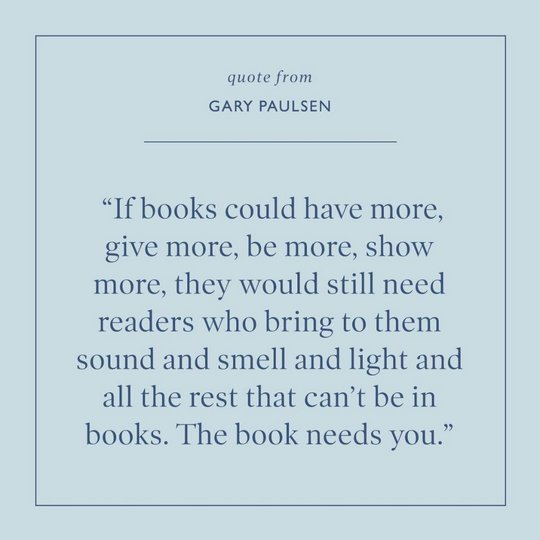
(via Read it Forward)

Page 144 of 160

Powered by WordPress & Theme by Anders Norén