Category: Books Page 146 of 162

Saturday Miscellany – 2/13/16

Odds ‘n ends over the week about books and reading that caught my eye. You’ve probably seen some/most/all of them, but just in case:

    This Week’s New Releases I’m Excited About and/or You’ll Probably See Here Soon:

  • Morning Star by Pierce Brown — the trilogy comes to a conclusion — and something tells me there’s a lot of death, destruction, and twists along the way. I’m hearing very good things about this.
  • Dead Is Better by Jo Perry — A ghost solving his own murder with a ghost dog by his side — okay, my paraphrase doesn’t sound nearly as good the description on Fahrenheit Press’ site, click the link and it’ll convince you.
  • Atlanta Burns: The Hunt by Chuck Wendig — Atlanta Burns’ senior year looks like it’ll be tough and violent and twisted — basically, like the rest of her life.
  • As Chimney Sweepers Come to Dust by Alan Bradley — A new Flavia de Luce novel means I’m even further behind.

Lastly, I’d like to say hi and welcome to Fictionophile and Aidan Reid for following the blog this week. Thanks to S. C. Flynn and Jayme the Scribbler for the interaction (and the reblog!).

A Few Quick Questions With…Joe Klingler

I posted about Joe Klingler‘s novel, Missing Mona last week (if you didn’t read it, take a moment now — or skip what I said and go get the book). Klingler was kind enough to participate in a Q&A with me. I asked some Missing Mona-specifc questions and then a couple of generic questions. I kept it short and sweet, because I’d rather he work on his next book than take too much time with me, y’know? It could’ve been a little shorter, but he insisted on providing thoughtful answers (I really appreciated the last one)

Where there challenges in writing someone going through a “technology reallocation phase” that you didn’t expect? I’ve often thought Sue Grafton’s books would be at least 1/3 shorter if Kinsey had a cell phone — there are so many things she has to do to make a call/get messages/get information/etc.
One of the challenges was how to keep Tommy connected to a grid that he wasn’t a part of, since all of the other characters had smartphones, and used them constantly. He was already an outsider from another town, but his lack of a phone also made him an outsider in the virtual world as well. He had to constantly figure out how he was going to solve problems without technical assistance—which wasn’t always even possible. However, his interaction with paper messages, meeting times, and just showing up places unannounced provided experiences that would have never happened if he had just sent a text.

The other challenge he immediately faced was how to fill all the alone time created by not being constantly connected to the stream of text and images most people interact with all day long. This gave him time ponder and appreciate his new experiences, plan his next step, and even practice his guitar.

Seeing the references to Martin Caidin on your website warmed my heart — I was afraid I was the only one who remembered him. Describe some the influences on Missing Mona beyond the initial inspiration from Crais (whether or not you think they’re on display in Missing Mona).
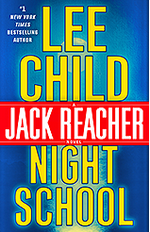
Caidin’s The God Machine started me thinking long ago about the perils of power concentrated in one place (or person, or corporation), which we see in the character of LaRuche. Hammett and Chandler helped me understand how to describe experience as it happens, without much attention to the past or future. John D. MacDonald’s Travis McGee is a masterwork on how to construct a long series, and build story around a single character with enough depth to carry many novels. Lee Child has his character Jack Reacher arrive in a new town on a new adventure in each book, much the way cowboys did in old westerns. His approach inspired me to have Tommy start out on a road trip with only a vague destination.

I also drew on some of my own experience riding an R75/6 BMW motorcycle along the east coast and down the Blue Ridge Parkway in the Smoky Mountains, seeking only to experience different people and places (yes, I rode to Chicago on a number of occasions.)

If you’ve decided, when we next meet Tommy is he going to be on Route 66 (or en route to it), or will he have returned to Chicago? Are we going to see Marvin, Lizzie, Penny and the rest again?
Tommy will likely begin his next mystery in Chicago, right where he left off. He has made new friends, and found a place to play guitar. Will he stay? How does a traveler ever know when it is time to stop, or if it’s best to keep moving? He finally has himself in motion after years at Walmart, and will struggle with the idea of stopping. That said, his new friends might show up at any time in the future, wherever he may be.

(Phew! That’s what I wanted to hear)

Is there a genre that you particularly enjoy reading, but could never write? Or are you primarily a mystery/suspense/thriller reader?
I read widely, though I prefer writing mysteries and thrillers because they integrate the way people, events, social customs, personal decisions, and technology are all interconnected. I’m a big fan of science fiction, and would like to try it at some point. A horror novel would be very difficult for me to write; I’m not sure I could sleep at night while writing one, though I like reading them on occasion.
I’ve often heard that writers, or artists in general, will forget hundreds of positive reviews but always remember the negative — what’s the worst thing that someone’s said about one of your books, and has it altered your approach to future books?
I definitely remember the positive ones, so please keep them coming. In an interview Stephen King said that if one person says something about your book, you can usually safely ignore it, but if ten people have the same criticism, then perhaps you should look at your work and see how you might improve in that area. So, when I read reviews, I look for the same topic to come up (often in different guises). I like to tell a story from many different perspectives (which some people don’t care for), and I have to be careful with how, and how often, I change point of view. One of the reasons Missing Mona was told in the first person is because I wanted to experiment with using a single point of view.

The worst thing is hard to measure, but being misunderstood is way up there on my list. One person hated the name Qigiq because she couldn’t figure out how to pronounce it, another considered RATS not good enough for an airplane ride, and one thought there were too many floozies in Mash Up. Every reader comes to a book with their own background and set of expectations. About the only thing a writer can do is describe the book clearly in their marketing materials, get as many reviews as possible, and trust that the book will find its readers while he or she sets off to write the next book as well as they possibly can.

Another challenge is that some readers try to infer things about an author from their fiction. Stephen King also wrote to never try to figure out his beliefs from his books. Characters in fiction have their own biases and beliefs and are created to fill the needs of the story. What they think has nothing to do with what the author thinks.

Saturday Miscellany – 2/6/16

Because of a friend’s question, I did some checking — in addition to those who follow via RSS feed and Twitter, there are 282 of you subscribed to this thing in one form or another — that’s just mind-boggling. Obviously, all of you don’t read everything, but you’ve at least taken a moment at some point to read something here, and liked it enough to get more delivered to you. Thanks, thank you very much. Now — make some noise! What do you like, what am I doing right? I suppose, if you must, tell me what I’m doing wrong! What could I do more of — comments are open. There’s email, FB, Twitter options over to your right. But seriously, thanks for the views, the reads, for following, etc.

Anyway…the Odds ‘n ends over the week about books and reading that caught my eye. You’ve probably seen some/most/all of them, but just in case:

    A Long List of New Releases for the Week that I’m Excited About and/or You’ll Probably See Here Soon:

  • Keep Calm by Mark Binder — a thriller recommended by Jonathan Tropper and Lee Child? How can I not? (yeah, Tropper recommending a thriller seems strange, but if you’ve watched Banshee you realize he knows whereof he speaks)
  • The Custodian of Marvels by Rod Duncan — the conclusion of the Gas-Lit Empire series — can’t wait to see how he pulls this off.
  • Blood in her Veins by Faith Hunter — shorter works about Jane Yellowrock and friends, from various points in the series. Read the Big Idea she wrote about this book and the dual voices in her protagonist.
  • Graft by Matt Hill — this looks like a crime novel I’ve read before (or something very like it), but this one is set in 2025 and involves crimes we can’t even imagine yet. Creepy cover, too.
  • The Alchemy of Chaos by Marshall Ryan Maresca — super-heroes in a traditional fantasy setting? I’m in — and apparently I have to read the first one from last year, too. He did a Big Idea this week, too.
  • A Criminal Magic by Lee Kelly — In 1926 and the 18th Amendment bans sorcery? Okay, sure — and just like you’d expect, it creates an underground of magic. Goofy enough to work.
  • Harmony Black by Craig Schaefer — a FBI agent and witch working off-the-books occult case. Perfect.
  • The Deavys by Alan Dean Foster — a strange YA fantasy with a premise too long for me to try to summarize, but looks like fun.

Lastly, I’d like to say hi and welcome to Haidji and Marve Gandah for following the blog this week. Thanks to S. C. Flynn for the interaction.

(via Read it Forward)

January 2016 Report

(I need to think of a catchier name for these posts…)

So, here’s what happened here in January.

Books Read:

Indexing: Reflections The Book of Unknown American Sex & Violence in the Bible
3.5 Stars 3.5 Stars 3 Stars
The Next to Last Word The Odd Fellows Society Hidden
3.5 Stars 3 Stars 3.5 Stars
In Defense of the Moth The Hitchhiker's Guide to the Galaxy The Sabbath
3 Stars 6 3 Stars
Songs of a Suffering King Sing a New Song Winter
3 Stars 4 Stars 4 1/2 Stars
The Storms of Deliverance Lessons from Tara Three Slices
3.5 Stars 4 Stars 3 Stars
Staked The Intern Missing Mona
4 1/2 Stars 3 Stars 4 Stars

Still Reading:

Reformed Dogmatics, Volume 1 The Miracles of Jesus

Reviews Posted:

How was your month?
Saturday Miscellany – 1/30/16

Odds ‘n ends over the week about books and reading that caught my eye. You’ve probably seen some/most/all of them, but just in case:

    There’s a Bumper Crop of This Week’s New Releases I’m Excited About and/or You’ll Probably See Here Soon:

  • Staked by Kevin Hearne — by the time this posts, I should be finished with this. So, so, so good!
  • Broken Hero by Jonathan Wood — I’m so excited to see this series return — the first two books were great, can’t wait to get back to this world.
  • All the Birds in the Sky by Charlie Jane Anders — This one looks great — Check out The Big Idea.
  • Where it Hurts by Reed Farrel Coleman — The first Gus Murphy book, which I really enjoyed.
  • The Murder Quadrille by Fidelis Morgan — A very strange looking crime novel, I’m seeing the words Hitchcock and slapstick a lot. Because why not?

Lastly, I’d like to say hi and welcome to Edmond Sanganyado and natalieslovelyblog for following the blog this week. I forgot to welcome As the page turns.. to our little group last week – so a belated thanks and welcome there.

A Few Quick Questions With…Larry Higdon

I’ll be posting about Larry Higdon’s first novel, The Storms of Deliverance, tomorrow (Spoiler: It’ll be positive), but before that, I wanted to post this Q&A that he was kind enough to participate in with me. Kept it short and sweet, because I’d rather he work on his next book than take too much time with me, y’know?

Why don’t you start by giving me the elevator pitch for this book.
(Warning: His answer reveals a little more than I’d want to know about the book before reading it)
           A former baseball player, who has wasted his life through alcoholism and violence, seeks to win back his ex-wife and daughter. On this quest he suffers a traumatic experience, a bout of amnesia, and encounters with supernatural phenomena. He emerges from these experiences a better man with at least a chance of realizing his dream of reuniting his family.
What prompted this particular story? What was the genesis of the book?
           Most of my life I had three or four scenes in my head that didn’t seem to connect with each other. Then all of a sudden they did, and I decided to try to put them together in a novel.

Just a great answer

In the writing of Storms, what was the biggest surprise about the writing itself? Either, “I can’t believe X is so easy!” or “If I had known Y was going to be so hard, I’d have skipped this and watched more TV”.
           This novel wrote itself. I felt as though I were taking dictation. Of course, when the editors got involved, the work became more like work.
Describe some your influences (whether or not you think they’re on display in Storms).
           I had given up writing–sick and tired of rejection slips. One Christmas my niece, who is also a writer, gave me a copy of Stephen King’s On Writing. That plus King’s novels have influenced me. Some wags might say that I kill off children because King often does so, but that’s not true. That was one of those scenes in my head.
So, it’s been a few years since the publication of Storms — is there more on the way?
           The sequel should be published this year. It’s called The School from Hell. Johnson’s ex Katy narrates it. She’s assigned as a counselor to a high poverty elementary school. Johnson, Zoe, McBroom, and Ellen all make appearances.

This is about as far from the answer I’d have guessed at/hoped for as you could imagine. And I’m really looking forward to this sequel.

Saturday Miscellany – 1/23/16

Odds ‘n ends over the week about books and reading that caught my eye. You’ve probably seen some/most/all of them, but just in case:

    This Week’s New Releases I’m Excited About and/or You’ll Probably See Here Soon:

  • Orphan X by Gregg Hurwitz — The premise alone makes this worth a look. When you add in the endorsement’s on this (Crais, Baldacci, Child, etc.), the comparisons to Bourne, Reacher and others . . . this has got to at least be worth a try.
  • The Rogue Retrieval by Dan Kobold — shades of Terry Brooks and Christopher Stasheff help this debut fantasy sound like a winner.

Lastly, I’d like to say hi and welcome to Dr. Joseph Suglia for following the blog this week.
(cat is absolutely not necessary)

Top Ten (and a bonus) Books from My Childhood

I was bemoaning how long my current read was the other day and how it was going to leave me without a post for today, and my ever-so-clever daughter suggested, “Why don’t you list the Top 10 Books from your childhood?” That sounded pretty fun, so I figured that I might as well. It turned out to have been better than I thought, so kudos to her.

Ranking them really would be impossible, but then 11 came to mind really without any effort, and I couldn’t axe one of them, so there’s a bonus entry to the list. All of these I read more than I can count — if they’re part of a series, these were the ones that I came back to most often. The links are to Goodreads pages because I can’t find good official pages for all the books/authors (a true sign of my age, I guess).

Enough of that, on with the trip down Amnesia Lane:

The Castle of LlyrThe Castle of Llyr

by Lloyd Alexander

The Chronicles of Prydain taught me most of what I needed to know about Fantasy (augmenting The Chronicles of Narnia‘s lessons). Fflewddur Fflam here is at his best, I think it’s here that I fell in love with Eilonwy, Taran’s more of a real hero than before, and you get plenty of Gurgi (who I just have to mention because thinking of him makes me smile). There’s peril, the characters grow more than they have before, a hint of romance . . . it’s not the most important book in the series, but I think it’s pivotal.

Danny Dunn and the Anti-Gravity PaintDanny Dunn and the Anti-Gravity Paint

by Raymond Abrashkin and Jay Williams

I didn’t know until today that this was the first in the series, I always figured it was mid-series. It’s the only one of the series that I owned — thankfully, the library had a few more — so it’s the one I read most. It was also my favorite — I just loved the stuff at the edge of our solar system and Prof. Bullfinch and Doctor Grimes making musical instruments from their hair — stupid as all get out, but it worked for me.

The Mystery of the Dead Man's RiddleThe Mystery of the Dead Man’s Riddle

by William Arden

While Encyclopedia Brown (see below) got me reading mysteries, it was The Three Investigators — Jupiter Jones, Bob Andrews and Pete Crenshaw (btw, the only thing there I had to look up was Pete’s last name — not bad for a series I haven’t touched since the late 80’s) got me hooked on reading detective series. The Dead Man’s Riddle was one of my favorites — and I think the first or second I read — something about the Cockney slang kept bringing me back to it. I read what I do today because of this series, really.

SuperfudgeSuperfudge

by Judy Blume

I remember Tales of a Fourth-Grade Nothing being funnier, but this was a better story — the Fletchers leaving NYC, Peter maturing, Fudge being a real pain, not just a cute nuisance. Blume taught me a lot about how to read non-genre stuff, probably paving the way for Hornby, Tropper, Weiner, etc.

The Last of the Really Great WhangdoodlesThe Last of the Really Great Whangdoodles

by Julie Edwards

What a great world, what a great magic system . . . I’m not sure I can express what this book meant to me as a kid, and the copious warm-fuzzies the memory brings up. I remember that it was in the pages of this book about a magic kingdom that I first learned about DNA and RNA (and what those letters meant) — thanks, elementary school science classes. The creatures’ names in this are great (and, as an adult, I can “hear” Andrews saying them in my mind for an added layer of fun). There’s a great deal of whimsy here, a sense of play that permeates this — even when it gets silly. The kingdom’s motto, “peace, love and a sense of fun” really sums up the spirit of the book.

Me and My Little BrainMe and My Little Brain

by John D. Fitzgerald, Mercer Mayer (illus.)

Sure, the series was supposedly about Tom, but J. D.’s the real hero of the books. He has a conscience, a better moral compass than his brother — and is probably just as smart. This is the book that lets him shine as he ought to have all along. All the books had their strong points, and were fun, but this ruled them all.

The Phantom TollboothThe Phantom Tollbooth

by Norton Juster, Jules Feiffer (illus.)

Such wordplay! What a great, twisted way to teach how important words and ideas are. Seriously, just a wonderful book. The humor is so off-kilter, any appreciation I have for puns came from this book (and it set the standard that a pun must achieve for me not to groan). If you haven’t seen the documentary about it, The Phantom Tollbooth: Beyond Expectations, get on it. (I contributed to the Kickstarter for it, I should add).

The Voyage of the Dawn TreaderThe Voyage of the Dawn Treader

by C. S. Lewis

I remember the bookstore where I bought this, the date and month that I bought it, and reading a good chunk of it before I got home. I read this one more than the rest of the series (Prince Caspian a close second). I just love this one — you get Reep at his bravest and funniest, some really odd creatures, an epic story, and Eustace’s redemption (back when I did crazy things like this, I almost got a tattoo of Eustace as Dragon). Who could ask for more?

Alan Mendelsohn the Boy from MarsAlan Mendelsohn, the Boy from Mars

by Daniel M. Pinkwater

Pinkwater has funnier and stranger books (both before and after this one), but there was heart, there was depth — there was length! — to this story about a kid who didn’t really fit in until he made a friend who didn’t want to fit in. This is another one where I can peg the place and time I bought it. Science Fiction-y in a real world (didn’t know you could do that!), comic book geeks as heroes, and real non-sanitized-for-kids emotions. There’s no way this wouldn’t be a favorite. More than the rest on this list, I’m thinking of finding my old copy and taking it out for another spin (because I just read the next one a couple of years ago).

The Westing GameThe Westing Game

by Ellen Raskin

If I had to pick one off this list (and I don’t), this would probably be my favorite. I re-read it two years ago, and it was one of my favorite experiences that year with a book. The characters are great, the story was so clever, the writing so crisp. There’s nothing wrong with this book at all.

I saw a hardcover reprinting of this on Monday, and had to fight to resist buying a new copy. Kind of regretting that now.

Encyclopedia Brown Boy DetectiveEncyclopedia Brown, Boy Detective

by Donald J. Sobol

Summer after second grade, we were on a forever-long road trip and I was bored, so I demanded my parents buy me something to read. I must’ve been a real snot about it, because at the next town, they did. I got two books, this one and Sugar Creek Gang Screams in the Night (not the best in the series, but it was good enough to read several times). It blew me away — I loved the puzzles, the characters, the idea. I wanted to be a P. I. This was my first mystery book, and it clearly set the stage for most of what I’ve read since (about a third of what I read).
Were you a fan of any of these as a kid? What were some of your faves? Have you read them lately?

Saturday Miscellany – 12/19/15

Odds ‘n ends over the week about books and reading that caught my eye. You’ve probably seen some/most/all of them, but just in case:

    This Week’s New Releases That Caught my Eye:

  • Bryant & May and the Burning Man by Christopher Fowler — It’s been years since I’ve read a Peculiar Crimes Unit mystery novel, but reading the description for this one makes me want to get back on the horse. Hmmm, need another 2016 project….

Lastly, I’d like to say hi and welcome to writtengems for following the booklikes version of blog this week.

Saturday Miscellany – 12/12/15

Odds ‘n ends over the week about books and reading that caught my eye. You’ve probably seen some/most/all of them, but just in case:

    Only stumbled across on New Release this week that caught my eye, should be a good one though,.

  • The Relic Master by Christopher Buckley — One of the best satiric novelists around (maybe the best) brings a tale about a 16th century attempt to fake the Shroud of Turin. A slight departure from the rest of his work (which is primarily set in or around Washington, D. C.)

Lastly, I’d like to say hi and welcome to Hooked on Books for following the blog this week. Thanks to Casey Owen for the comment and email — really appreciate it.

Page 146 of 162

Powered by WordPress & Theme by Anders Norén