Category: Humor

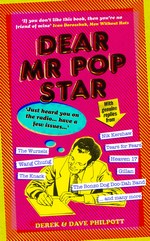
Dear Mr Pop Star by Derek & Dave Philpott: Hilarious, Unique, Addictive are some Adjectives I use to describe this Incredibly Entertaining Book

Dear Mr Pop StarDear Mr Pop Star

by Derek & Dave Philpott

eARC, 412 pg.
Unbound, 2018
Read: July 24 – August 7, 2018<br/

In my intro post for this Tour Stop, I said that this book was “almost indescribable” and I really mean that — the blurb for the book says, “deliberately deranged letters to pop stars from the 1960s to the 90s to take issue with the lyrics of some of their best-known songs.” And that’s right, but it doesn’t seem to get to the heart of it. The answer to the first question in the Q&A is a pretty good description, though. But if you don’t want to read that (which I get, you’re wrong — but I get it), I should probably try to convey what you’ll find here.

Let’s take a look at the letter they wrote to Starship. I don’t feel too bad about talking about this letter in detail because their take on their song “We Built this City” is common (I used to own, for example, a t-shirt that made the same joke, just in briefer form). Now, their letter goes into a great amount of detail about the nature of foundations, different types of them, etc. and how this makes their “design project” the “most ludicrous” in the history of architecture. This kind of thing is funny, and a collection of these sort of letters — as well-written as these are — would be worth the time to read and would make you laugh — I’d give it a pretty high rating, encourage you to get it, etc.

But what separates this book from similar tomes, what makes it special is that on the very next page, you get to read a response from Martin Page, who co-wrote the song. Page mounts an impassioned defense of the song — full of references to Rock classics as proof. I’ll spare the details so you can appreciate Page’s inspired choice in response. Each letter printed in this collection is answered by a songwriter, musician, or other representative of a musical act. Some of these responses debate the premise of the Philpott’s letter, some answer in the same vein, others take the premise and run with it in their own way — some appear to be in on the joke, others appears to be flummoxed that anyone would take their lyrics in this insane manner.

In particular, Tears for Fears, The Knack, and NuShooz/J. Smith had great responses — Kimberly Rew (of Katrina and the Waves) is my current favorite. EMF must have either absolutely loved or utterly hated writing their response, I cackled at it. The Human League and Wang Chung composed very long responses — some are as short as a paragraph or three. I really could keep listing some other distinctives about the responses, and great ones to look for — but this is already getting pretty long.

They also include some little notes or postcards like the one to ELO, talking about the impossibility of their name; to “Mr. John” about the unacceptability of violence on any night; or to John Parr (involving canonization of a particular Muppet, and the danger of exposing him to flame) — I just reread that one and cracked up, again. These probably couldn’t support being stretched into a letter of any length, and there are no responses printed — but are very likely the most funny parts of the book.

There’s an elevated vocabulary used by the Philpotts — this isn’t an uneducated reaction to lyrics. The letters are frequently erudite and earnest. The letters don’t come across as something written for comedic effect — yes, they’re funny. But that’s not the intention. Somehow, that happens without turning the joke back on them for misunderstanding the lyrics, either. They’re a strange kind of tribute, but this kind of close reading of a lyric is a form of flattery.

Many of the acts haven’t made much of an impact in the States, and I clearly don’t know enough about British Pop Music to understand each of these — but thanks to youtube and lyrics websites, I was able to get the gist of what I was supposed to be reading about (and I was able to enjoy those I was feeling too lazy to look up). But by and large these are acts and songs that are well-known enough that this book is accessible to readers from around the English-speaking world (and maybe larger, I’m not an expert on music listening habits). The acts run the gamut from Herman’s Hermits to Judas Priest and many, many points in between.

I cannot stress enough how much fun I had with this book — I read whole letters or notes aloud to family members, and/or forced them to read one for themselves. These are the perfect literary equivalent of potato chips, you can eat a handful at a time and then leave the bag for later (along those lines, it’s possible to read too many at once). The letters are short enough that you can just dip in and out of the book. And, I can assure you, these are the kind of thing you can return to later and still enjoy — not unlike a good pop song (huh, wonder where I got that imagery?) A combination of satire, analysis, tribute and comedy — without any meanness or cruelty — Dear Mr Pop Star will appeal to music lovers from all sorts of eras. Do yourself a favor and grab this today.

Disclaimer: I received a copy of this book from the authors in exchange for my participation in this tour stop.

—–

5 Stars

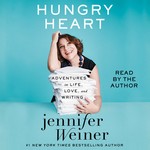
Hungry Heart (Audiobook) by Jennifer Weiner

Hungry Heart (Audiobook) Hungry Heart: Adventures in Life, Love, and Writing

by Jennifer Weiner , Jennifer Weiner (Narrator)

Unabridged Audiobook, 13 hrs, 15 min.
Simon & Schuster Audio, 2016
Read: February 6 – 14, 2017


I’m not the biggest Jennifer Weiner fan in the world, nor am I in her target demographic in any way, shape, or form — but I’ve enjoyed (in some cases more) those books of hers that I’ve read. So I figured there was a better than even chance that I’d appreciate this collection of essays about her life, career, love life, dogs, social media and more. It’s also read by Weiner herself, which is almost always a winning characteristic for me.

Sadly, this audiobook was better in theory than it was in real life.

There’s a scene in the last season of Gilmore Girls where Logan points out to Rory that despite her prejudices, attitudes and belief, she’s actually part of the same privileged class that he is — which she doesn’t take too well (understandably). I kept thinking about that as I listened to some of Weiner’s tales of woe about her childhood and college life. I’m not saying that she didn’t have problems in her childhood, that she didn’t have trials that no one should have to go through, or overcome a lot in her professional life. But man…the self-pity was overblown — she got an Ivy League education, came out of it with less debt than many people I know who went to less prestigious schools, took a high school trip to Israel, and a largely pleasant childhood.

It doesn’t get much better when she starts talking about her adult life, either. She assumes sexism — and has faced, continues to face, and will probably face a good deal of it in the future — but seems to have some fairly strong gender biases herself. She will frequently say something like “As a woman, I know I’m supposed to be X in this situation.” Almost every time she said something like that I thought, actually a man in the same situation would be expected to behave the same way — it may not be honest, healthy, or “authentic” in the contemporary understanding — but it’s what how an adult person in polite Western culture should act.

Oddly, for someone who lamented her own inability to be a stay-at-home mom/writer, the scorn she displays for stay-at-home moms later in the book seems out of character. Actually, she is dismissive of people with other beliefs and convictions than hers. I’m not suggesting for a moment that she shouldn’t be an opinionated person (of any sex), but it’s hard to respect anyone who can’t reason with their opponents with out dismissing or vilifying them.

I actually had a few more things in my notes along those things, but seeing this on the screen makes me want to stop before this becomes a diatribe against the book. Because, believe it or not, I enjoyed this book — when she tells a narrative or goes for a laugh, I really got into the book and wanted to hear more. It’s when she gets on her soapbox or when she doles out advice that wouldn’t work for women less-well-off than she is, I couldn’t enjoy it.

If anything, this book makes me like her fiction more — because the flawed people she writes about are a lot more relatable than she presents herself as. But listening (I think reading would be better — see below) to Weiner describe her problems with overeating, or the journey to get her first book published (and the real life experiences that shaped the book), her mother’s reactions to her book tours, getting the movie In Her Shoes made, stories about her dogs, and so on — man, I really liked that and would’ve gladly consumed more of that kind of thing.

As an audiobook, this was a disappointment. I found the little sound effect/chime thing between chapters grating. Weiner’s reading was too slow and her cadence demonstrates that she reads a lot to her kids. Which would be fine if the prose matched, but it didn’t.

I can’t rate this too low — it was well-written I laughed, I felt for her and some of the other people she talked about in a way that I can’t justify rating below a 3. But man, I want to.

—–

3 Stars

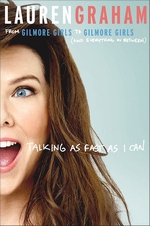
Talking as Fast as I Can by Lauren Graham

Talking as Fast as I CanTalking as Fast as I Can: From Gilmore Girls to Gilmore Girls, and Everything in Between

by Lauren Graham
Hardcover, 205 pg.
Ballantine Books, 2016

Read: December 12 – 31, 2016

This book isn’t a proper autobiography or anything (doesn’t claim to be, either); it’s stories, memories, thoughts and humorous bits that Lauren Graham shares about her life and career.  She uses the revival of Gilmore Girls as an excuse to look back on her both to this point, as her career is marked by looking back this year. I haven’t seen the new Gilmore episodes (still working my way through the series with my kids), so I could’ve read the material discussing that a little closer — although I did think the tributes to Edward Herrmann fitting and touching.

The book covers pretty much what you’d expect from an actor’s memoirs — discussion of her childhood, paying her acting dues, education, her big break and so on. All told with wit and charm. Graham’s personality shines forth and really draws you in. She spends a good amount of time talking about the original run of Gilmore Girls, Parenthood, and her novel. I was glad to see that she did that — so many actors/celebrities don’t give that much time or space to the things that made someone want to read their books in the first place.

A few of the highlights of this book are from the parts that aren’t de rigueur. There’s a section on eating and health tips, that made me laugh out loud — Graham learned the same lesson Jim Gaffigan and Weird Al did — food jokes work 99.6% of the time. There’s some really good writing advice that Graham was given by a friend that helped her to finish this book — and seems like the kind of thing that could help many authors. There’s some recurring jokes about Ellen DeGeneres and the cast of Today. I don’t want to suggest those are all the highlights, but they’re are good sample. 

Most of the book feels like Graham set her phone to “Voice to Text” and cut loose. But there’s no way that it would’ve come out as good if that’s what she did — that kind of feel is the result of a lot of hard work and planning. It all paid off, this was one of the more enjoyable books to read that I’ve tackled recently — don’t get me wrong, the content was good, too — but the writing was as smooth as silk. Unlike that sentence. Between this and her novel, it’s clear that Graham’s really quite a writer, I hope to see more from her.

This was a fast, breezy read — a lot of fun with plenty of heart. Pretty much everything you want from/would expect from Graham. A sure fan pleaser.

—–

3.5 Stars

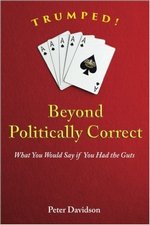
Trumped! by Peter Davidson

Trumped!TRUMPED! Beyond Politically Correct: What You Would Say if You Had the Guts

by Peter Davidson

Kindle Edition, 116 pg.
Sweet Memories Publishing, 2016

Read: July 12, 2016


Let’s get this straight: this is not about being politically incorrect, it’s an instructional guide to being a boor, a lout, a cad . . .

I kept thinking: if I read on, I’ll get the joke, I’ll see the satire. But nope. Didn’t happen. It’s a shoddily written, cliché-ridden situational guide to being “brutally honest.”

I typically try to be thorough with these posts (especially if I’m not crazy about the book, if only to justify my problems and the time I spent reading it), but I’m not going to bother with this one. The only reason I didn’t toss this in a corner is that I didn’t think my Kindle could take it. Every second I spent reading it was a waste, it ruined my day plowing through this. I if read something as bad as this again in 2016, I may just shut this site down.

Disclaimer: I received this book from the author in exchange for this post.

—–

1 Star

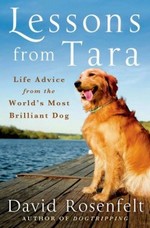
Lessons from Tara by David Rosenfelt

Lessons from TaraLessons from Tara: Life Advice from the World’s Most Brilliant Dog

by David Rosenfelt

Hardcover, 227 pg.
St. Martin’s Press, 2015

Read: January 23 – 25, 2016


One of my resolutions this year was to read more Non-Fiction — I’m going to try for 1 a month, in addition to “whenever I see something that catches my eye.” So, I marched up to the New Release shelf at the Library and started browsing — hope sinking fast, a whole lot of diet, productivity and political books. Ugh. Just not in the mood, then I got to the 600’s and David Rosenfelt’s name jumped out at me. Had to do it, Rosenfelt talking about Tara (the inspiration for Andy Carpenter’s dog) might be cheating a little, but it was good enough.

I was expecting a little Marley & Me-ish type story about the Rosenfelts and Tara. I couldn’t have been more wrong — thankfully (this meant I sniffled far less than I would’ve otherwise). This is a collection of short (no more than 5 pages), mostly humorous, essays about their life and work with Rescue Dogs. Tara is mentioned frequently, as the work they do with Rescue Dogs was inspired by her, but she’s not the focus of this book. It’s their entire menagerie, those they’ve rescued that aren’t part of their pack, the humans they’ve worked with — and even a few they decidedly haven’t — and the lessons Rosenfelt has learned from them.

While every chapter has a joke or two, some are pretty serious — Rosenfelt talks earnestly about the way people treat dogs — particularly older dogs. The focus of The Tara Foundation is on older/senior dogs who aren’t that likely to be adopted from shelters. I know that he’s made me rethink what dogs I look at when we go to adopt next.

Fans of the Andy Carpenter series will be happy to hear that Andy’s voice is Rosenfelt’s — the book at times feels like an Andy Carpenter book without all the muss and fuss of a plot, murder, or trial. I laughed, I chuckled, I learned a thing or two, and I even got misty more than I wanted to. All in all a really strong read. If you’re a dog lover, or just someone who likes to read good things, find some time for this one.

—–

4 Stars

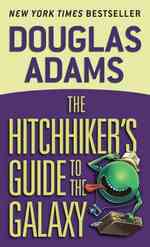
Reread Project: The Hitchhiker’s Guide to the Galaxy by Douglas Adams

The Hitchhiker's Guide to the GalaxyThe Hitchhiker’s Guide to the Galaxy

by Douglas Adams
Series: The Hitchhiker’s Guide to the Galaxy Trilogy, #1

Mass Market Paperback, 216 pg.
Del Rey Books, 1995 (originally, 1979)
Read: January 14 – 15, 2015

If I’m not really careful, this will be the longest thing I ever post here. Let’s see how much restraint I have, shall we?

I think I read The Hitchhiker’s Guide to the Galaxy for the first time in 1987 (maybe 1988), and have read it countless times since then. I quote it all the time (frequently unconsciously and unintentionally) — I think I’ve even plagiarized it a couple of times (really unintentionally). The only reason that my PIN isn’t 4242 is because it seems to be too obvious. I love this book. Rereading it is still fun. Even though I have paragraphs committed to memory, I can hear large portions of it in the voices of the original radio play actors, still the act of reading it is enjoyable, it’s like coming home after a long day at work.

The fixation on digital watches seems so quaint. It starts in the first paragraph and doesn’t really let up until late in the book. I so wish Adams was with us to see what he’d do with our smartphone addictions.

So much of what Adams does here has been repeated by others that he inspired, it’s tough to see some of it as fresh anymore, but he didn’t so much break the mold as ignored it and accidentally created a new one.

The Vogons are fantastic creatures. From the description of their evolutionary process — abandoned though it may be — their anatomy, their inherent meanness, to the commentary on civil servants. Just a fun alien race to read about. But is Adams satisfied with that? No. He adds the monstrosity that is their poetry (and the swipe at the old schoolmate) and they near perfection.

The Babel fish, what can you say about that? They are inspired. They take care of a problem that every space-bound Science Fiction story has to deal with in a way that’s actually more believable than technology-based solutions (Doctor Who does the same thing a bit less convolutedly, but less amusingly, too).

The Python-esque dialogue of the representatives of the Amalgamated Union of Philosophers, Sages, Luminaries and Other Thinking Persons. Is just a delight and picks up what could be a lull in the story.

Another little bonus that’s easy to over look is cop ex machina appearance of the Blagulon Kappa police officers — they’re a great commentary on law enforcement, notions of masculinity, depictions of both in the media — and how all three were undergoing a change at the time.

Strip away all the laughs, the jokes, the satire, the general zaniness and you still have a decent story — not a great one, mind you, but a decent one. There’s some good character work here, too — but it’s hard to see. The reactions of both Arthur and Trillian to the destruction of Earth are a lot deeper and real then Adams needed to make them. Unfortunately, that’s about all the good that Adams does with Trillian. Arthur still has some good treatment in his future.

It’s not perfect, don’t get me wrong — there are some problems with the characters (see Trillian), it being an adaptation of the radio program makes things a bit episodic with clunky transitions, and other hiccups (like the multiple introductions of Ford Prefect). Still, the highs are higher than the lows are low and there are a lot more of them.

    I stopped taking notes of particular lines on page 5 this time, there are just too many to count, and far too many to list. Still, there are a few I have to note:

  • “Time is an illusion. Lunchtime doubly so.”
  • “This must be Thursday. . . I never could get the hang of Thursdays.”
  • “You’d better be prepared for the jump into hyperspace. It’s unpleasantly like being drunk.”
    “What’s so unpleasant about being drunk?”
    “You ask a glass of water.”
    (I’m not sure why, but this has always made me chuckle, if not actually laugh out loud. It’s just never not funny)
  • “He had found a Nutri-Matic machine which had provided im with a plastic cup filled with a liquid that was almost, but not quite, entirely unlike tea.”
  • “In those days spirits were brave, the stakes were high, men were real men, women were real women and small furry creatures from Alpha Centauri were real small furry creatures from Alpha Centuari. And all dared to brave unknown terrors, to do mighty deeds, to boldly split infinitives that no man had split before . . . “
  • “Look,” said Arthur, “would it save you a lot of time if I just gave up and went mad now?”
  • Slartibartfast
    (okay, not technically a line, but that name…c’mon)

It’s a classic, you just need to read it if you haven’t. If you have, is it time for a re-read?

—–

5 Stars
(only because I don’t have time to make a 6-star graphic) 6 out of 5 stars, easy.

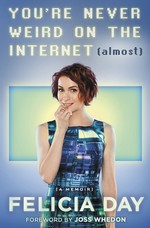
You’re Never Weird on the Internet (Almost) by Felicia Day

You're Never Weird on the Internet (Almost)You’re Never Weird on the Internet (Almost)

by Felicia Day
Hardcover, 258 pg.

Touchstone, 2015

Read: November 2, 2015


There is, a certain degree of difficulty in evaluating a memoir or autobiography, you can’t really critique the plot — “I just didn’t find the protagonist all that believable here,” “sure, things like that just happen…” You’re limited to writing ability/style and what’s contained in the volume (or what’s left out).

So let me start with my minor gripe: I’d have liked a little more information on The Guild — what we got was great, but we barely got any information/impressions on her castmates, the stories, anything beyond the process of getting the first episodes made and then securing the means to make the rest. Even more, I’d have loved more about her work on Buffy, Dr. Horrible, Eureka, and Supernatural which barely got a mention. I get that the book isn’t about that kind of thing — and I can appreciate that. But, I’d have liked to see that kind of thing (and I expect I’m not alone).

So what is the book about? It’s about Felicia Day — how the things in her life made her who she is. So yes, there’s a lot about The Guild, and what the process of making it did to her. Not too much about the other projects, sadly. But while reading it, I didn’t give it much thought beyond muttering to myself, “Oh, come on, we’re just skipping ____?”

Weighed against all the things about this book that really work, that’s really minor (but apparently takes me two paragraphs to explain). If you’re a fan of Felicia Day’s, you know that persona she’s established (I’m not saying it’s not primarily genuine, but she’s careful to keep it consistent). That persona shines forth in every sentence in this book. It’s hard, really hard not to hear Day’s voice in your head as you read this — at a certain point, I stopped trying because why should I? It’s fun hearing things in her voice — most of her readers are reading the book because they enjoy her — that’s why they got the book.

She talks about her mother’s unique approach to homeschooling (“for hippie reasons, not God reasons”), the various and sundry artistic endeavors she tried as a kid/teen — singing, dancing, acting, violin, and more, her college experience, her early acting days, discovering her writing/producing/creative mojo — and most importantly, discovering video games and the Internet.

This, and more, told in her indelible, inimitable, charming style, makes this book a winner — and a real laugh-out-loud read. Also, this book is noteworthy for the most mentions of Ross Perot in any book I’ve read this century. That really has nothing to do with anything, but it’s such strange distinguishing mark, I felt it had to be mentioned.

—–

4 Stars

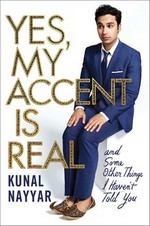
Yes, My Accent Is Real by Kunal Nayyar

Yes, My Accent Is RealYes, My Accent Is Real: and Some Other Things I Haven’t Told You

by Kunal Nayyar
Hardcover, 242 pg.

Atria Books, 2015

Read: September 23 – 24, 2015


This book was all sorts of okay. Occasionally more, rarely less.

It’s a series of (primarily) autobiographical essays about his childhood in India, his family, his time in Portland during college, training as an actor, and his break on a little show you may have heard of, The Big Bang Theory. He closed the book by talking about meeting, courting and marrying his wife — probably the book’s emotional highpoint (the portions about his father are a close second).

Some are a page or two in length, some are longer. Nayyar doesn’t always come across looking good, he’s quick to point out his own shortcomings and how he’s trying to be a better person following that. Overall, he’s a decent guy, and that comes across pretty clearly.

As a fan of Raj, like (I’m assuming) 98.75% of the readers of this book, I enjoyed what little time he spent talking about the character and playing him. I particularly appreciated what he said about Raj’s selective mutism, the choices he made to depict that, and the audience’s reaction to that.

Some of these stories, I’d heard Nayyar tell before — like on Aisha Tyler’s podcast — in written form, with new (or fewer) details was nice, and unlike some, having previous exposure didn’t hurt the book.

Pleasant enough, funny, charming, even touching. It was a nice read. If you enjoy his acting, you’ll likely enjoy it. Yes, My Accent Is Real isn’t a must read, but it’s worth your time.

—–

3 Stars

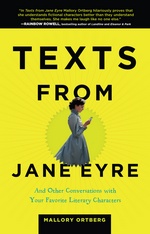
Texts from Jane Eyre by Mallory Ortberg

Texts from Jane EyreTexts from Jane Eyre: And Other Conversations with Your Favorite Literary Characters

by Mallory Ortberg; Illustrated by Madeline Gobbo

Hardcover, 226 pg.

Henry Holt and Co., 2014

Read: August 13, 2015


The answer to the question nobody asked: What would some of the most famous literary figures (characters/writers) say if they texted their friends and family? Well, Mallory Ortberg asked it, I guess. Most of the answers she cooked up are worth reading — some will induce chuckles, maybe a guffaw, and many smiles.

The Jane Eyre conversations (as might be suggested from the title) are the best of the batch — although the Poe material is just as strong (Hamlet’s close to that). The rest is a step or two back, in my estimation. Some of the rest of the material is pretty weak, but Ortberg makes the most of it. Typically, the reader’s appreciation of these text messages will line up with their familiarity with the source material.

Still, no collection is going to be free from bad apples, and The Hunger Games‘ conversations aren’t just weak, they’re disappointing. I don’t see how Ortberg could’ve missed so completely. But that’s just 2 pages out of 200, that’s more than a pretty decent percentage.

A nice break from heavier reading, I recommend taking these a few pages at a time — not the whole book in a sitting or two (although it’d be easy to knock out that way). Try for too many at once, and they lose their punch. Some funny stuff for book nerds here.

—–

3 Stars

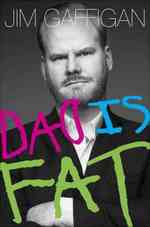
Dad is Fat by Jim Gaffigan

Dad Is Fat

by Jim Gaffigan

Published May 7th 2013 by Crown Archetype
Read: July 19 – 22, 2014

It’s been years — almost decades since I last read a book by a stand-up comedian. I used to love them — you get their act, usually expanded — if not, at least more of it then you got to see on TV in Idaho. If you were familiar enough with the comedian, it was almost automatic to hear their voice in your head as you read. Always liked them, just ran out of time/money.

But I’ve been feeling the pull towards Jim Gaffigan’s Dad is Fat for awhile now, so when Blogging for Books offered me a copy, I jumped on it. Which was a good move on my part — this is a funny book.

Not a a surprise, I realize. Still, it is good to see that he can transfer his humor to the page (you can never be sure). A good deal of the material — but not all — is adapted from his stand-up, and that’s funny enough. But the rest is just as good — if not better, because it’s fresher and in a different medium, so he can do other kinds of humor. I laughed out loud more than a few times, and had to resist reading the entire thing to whoever happened to be near-by.

But frequently, Gaffigan sets the jokes aside to talk about being a parent, the choices that women and men make to do that — how so many don’t understand why people do that. He defends the choices his family made to have kids, to have as many as they have, and to have home births. He doesn’t stop joking as he does this, but they do take a back seat to what he’s talking about though (while serving as the proverbial spoonful of sugar to help). These points are where the book is the strongest, he doesn’t attack those who disagree, rather he says this is what they’ve decided to do, let them follow their own convictions and stay out of their way. Which doesn’t seem so much to ask, but we all know better. He takes a simple, commonsense approach to this stuff — he doesn’t get too esoteric or philosophical, just a simple, pragmatic “this is what we did, and it works for us.” My esteem for he and his wife/writing partner increased after reading this book.

They’re short essays, and I wouldn’t recommended reading too many of them in one sitting — just a few at a time to keep it fresh and funny.

If anyone in the world actually remembered the book, I’d compare this to Paul Reiser’s Babyhood but from a different angle. It has a similar mix of humor and sentiment on the same topic. Dad is Fat has a lot of laughs, some warming of the heart, and so many lines that I want to quote, I’d cross into copyright infringement if I tried. Give it a whirl, even if you don’t have kids, you’ll probably enjoy this.


Note:I received this book for free from Blogging for Books for this review. Which was generous and cool of them, but didn’t impact what I said about the book.

—–

4 Stars

Page 7 of 7

Powered by WordPress & Theme by Anders Norén