Category: Non-Fiction Page 33 of 61

The Lost Discipline of Conversation by Joanne J. Jung: Seemed to Lose the Thread

The Lost Discipline of ConversationThe Lost Discipline of Conversation:
Surprising Lessons in Spiritual Formation
Drawn from the English Puritans

by Joanne J. Jung

DETAILS:
Publisher: Zondervan
Publication Date:  June 12, 2018
Format: Kindle Edition
Length: 224
Read Date: February 6, 2022
Support Independent Bookstores - Visit IndieBound.org

From the Back of the Book:

Recovering Spiritual Practices of the Past titles reach beyond commonly known spiritual formation practices in order to mine the wisdom of the past, bringing to light ways of thinking, living, and growing in Christ that the church today has largely overlooked.

In The Lost Discipline of Conversation, spiritual formation professor and author Joanne Jung walks readers through the Puritan practice of “conference,” or focused, spiritual conversations intended to promote ongoing transformation. An antidote to privatized faith, conference calls believers to biblical literacy and soul care in a context of transparency and accountability.

Useful for believers in any sphere or ministry or stage in life, conference is ultimately a tool for nurturing mutual, godly authenticity within community.

Beyond the Back of the Book

Part I, “Rediscovering a ‘Lost’ Means of Grace,” outlined the need for community and the benefit of this practice (although equating it with the Means of Grace is questionable).

Part II looks at the various contexts in which conferencing can take place and suggests some ways to promote it. I lost track of the idea of conferencing during this Part—it seemed so flexible so as to maybe lose meaning.

Part III

Part III is called “Soul-to-Soul Bible Studies,” and added nothing to the work. They were scripts/prompts to guide you through a one-on-one (or larger) study of a handful of seemingly random New Testament passages. The explanatory notes were redundant, and not incredibly useful.

I didn’t see the point of this part at all.

So, what did I think about The Lost Discipline of Conversation?

Seven years before this was published, Jung published Godly Conversation: Rediscovering the Puritan Practice of Conference, and I can’t help but wonder what my reaction to this book would be if I’d read it first. This feels like it’s building on the work done in the initial book. Maybe I’d walk away from this with a greater understanding of both Jung’s overall project as well as the Puritan practice of conference. Still, this book needs to be able to stand on its own, and it just doesn’t.

The biggest question I have from this book is what’s the foundation for this practice? How is “conferencing” based on, or built on, Puritan thought? You can’t follow Puritan practices (on this or any other point) without their teaching backing it up—it just doesn’t work that way. Leave that to Finney and those who follow in his footsteps, not to Bownd, Owen, or Alleine. Practices without the theology are meaningless actions. It’s not “do X, Y, and Z” to get spiritual growth in a mechanistic/automatic way, it’s not powdered milk where you just add water. The Puritans acted in certain ways (like conferences) because of something. Jung did her readers a disservice leaving that out.

I don’t necessarily contest the value of the practice, but I don’t know that she’s convinced me that it’s as valuable as she sets it out to be. I’ve read a good number of the original sources she cites, and I never got the inkling that this was particularly vital—useful, potentially, but as important as this?

I do have to wonder why the title specifies “English Puritans” when there’s so many citations of New England Puritanism. The distinctions aren’t huge, but there are differences. Just delete the word “English,” and it’s better. That seems picky, and probably is. But at a certain point, the quibbles I had with the material overwhelmed the pros, and the little ones got under my skin more than they should.

I feel bad about thinking like this about the book, because the person that recommended this to me clearly thought I’d appreciate it—and I wanted to. But this is largely a swing and a miss for me. At the risk of repeating myself, I do wonder what my reaction to this would’ve been had I read Godly Conversation first. As it is, though, I’ll chalk this up as a well-intentioned miss.


2 1/2 Stars

This post contains an affiliate link. If you purchase from it, I will get a small commission at no additional cost to you. As always, opinions are my own.

Go Back to Where You Came From by Wajahat Ali: An All American Story

Go Back to Where You Came FromGo Back to Where You Came From:
And Other Helpful Recommendations
on How to Become American

by Wajahat Ali

DETAILS:
Publisher: W. W. Norton & Company
Publication Date: January 25, 2022
Format: Hardcover
Length: 231 pg.
Read Date: February 2-4, 2022

Support Independent Bookstores - Visit IndieBound.org

As the two towers fell, I was standing in my pajamas, staring at the TV, and I realized our lives had forever changed. There was a permanent fork in the road for my generation. A disruption in the timeline. A disturbance in the Force. For us, there would always be a pre—9/11 and a post—9/11 world. A few hours earlier, I had been a twenty-year-old senior still trying to figure out his major and serve as a board member of the Muslim Student Association of UC Berkeley. Instantly, I was transformed into an accidental activist, a global representative of 1.8 billion Muslims worldwide and a walking Wikipedia of 1,400 years of all things Islam.

I have to be perfect, because any flaw, mistake, errant word, or quote can and will be used against me and all my people in the court of public opinion. On the drop of a dime, I have to be an expert on the following topics: Islam, Quran, the Prophet Muhammad, Sharia, Iran, Iraq, Pakistan, India, Hamas, Hummus, Hezbollah, Arabic, Agrabah, Afghanistan, Al Qaeda, Al Aqsa, Aladdin, Salman Khan the Bollywood Actor, Salman Khan of the Khan Academy, and everything in between. I have to be able to explain them to a skeptical national audience, being sure not to say anything too radical or extreme, because that one mistake will be emblazoned on me like a scarlet letter and be used to beat up this thing called the “Muslim world.”

What’s Go Back to Where You Came From About?

From the Publisher’s Website:

“Go back to where you came from, you terrorist!”

This is just one of the many warm, lovely, and helpful tips that Wajahat Ali and other children of immigrants receive on a daily basis. Go back where, exactly? Fremont, California, where he grew up, but is now an unaffordable place to live? Or Pakistan, the country his parents left behind a half-century ago?
Growing up living the suburban American dream, young Wajahat devoured comic books (devoid of brown superheroes) and fielded well-intentioned advice from uncles and aunties. (“Become a doctor!”) He had turmeric stains under his fingernails, was accident-prone, suffered from OCD, and wore Husky pants, but he was as American as his neighbors, with roots all over the world. Then, while Ali was studying at University of California, Berkeley, 9/11 happened. Muslims replaced communists as America’s enemy #1, and he became an accidental spokesman and ambassador of all ordinary, unthreatening things Muslim-y.

Now a middle-aged dad, Ali has become one of the foremost and funniest public intellectuals in America. In Go Back to Where You Came From, he tackles the dangers of Islamophobia, white supremacy, and chocolate hummus, peppering personal stories with astute insights into national security, immigration, and pop culture. In this refreshingly bold, hopeful, and uproarious memoir, Ali offers indispensable lessons for cultivating a more compassionate, inclusive, and delicious America.

The Universality of Humor

Like with Native Americans in Nesteroff’s We Had a Little Real Estate Problem and Soviet-era Russians in Grechishkin’s Everything is Normal, one thing that Ali talks about is how often people are surprised that Muslims have senses of humor, that they enjoy laughing. A lot of that comes down to media representation—in the news, in our TV and movies, the typical depiction of Muslims is of angry, violent men—or those suffering because of them—or those in the middle of a serious religious observance. We don’t get to see a lot of people relaxing at home, enjoying a meal, or just hanging out.

I’m not sure why this is so hard for people to wrap their heads around—people of all backgrounds laugh. People find things funny. People are funny. These three books (and others, sure, but these are those I’ve talked about here) help readers remember that there’s a shared humanity in laughter (remembering that what’s funny varies a little bit from culture to culture), and I have to think that we’d all be better off to remember that and look for it as a starting point.

Cross-Cultural Hardship

Before he began to get into the details of the hardships that his cultural, ethnic, and religious background would bring on him in our culture, he talks about a challenge that crosses ethnic, religious, geographic, and political lines—he’s a southpaw.

True, there’s a particular accentuation for Muslims, but at the root is the inconvenience that all left-handed people put up with every day. I thought it was a rhetorically nice touch because it makes him universally relatable—it was also pretty funny.

So, what did I think about Go Back to Where You Came From?

Let me start by saying, I had no idea who Wajahat Ali was before this book—I may have seen him on a news show or five as a talking head—but, like most of those, he didn’t make enough of an impression for me to remember his name*. So I didn’t come into this book with any preconceived notions of what to expect, I wasn’t a fan already (or a detractor). All I knew was that Paul from Paul’s Picks had very positive things to say about the book (as he should have).

* I will absolutely take notice next time I see him in that role, however.

This was a great mix of memoir, social commentary, and satire—with a little sprinkling of a more general humor thrown in. The way he shifted between the genres was fairly seamless and quite effective—his own story (and that of his parents) were good illustrations of the societal ills he wanted to point to, and also it worked well occasionally as argumentum a minore ad maius.

I found myself reading large sections of this to whatever family member happened to be around when I read it (or I’d bookmark a section I thought someone might find almost as interesting as I did to read at them later)—there’s just so much good to be found here. The material about 9/11 and its aftermath was the most poignant—which kind of feels like a gimme sometimes, and some authors shouldn’t milk it. Given Ali’s subject matter, however, it was something he had to discuss and it was the book’s most powerful material.

Ali’s story is the kind that Americans love to tell and hear about success—even if his telling points to many of the flaws in our society. Through grit, determination, perseverance, and endurance, Ali pushes through all sorts of cultural, societal, legal, medical, and circumstantial challenges to arrive where he is. Because he believes in what we can be as a people, based on our (incredibly inconsistently applied and demonstrated) ideals and aspirations. It’s the kind of story we need to see, hear, and read more of.

Go Back to Where You Came From is a challenging read, it will make you uncomfortable, but it should also give you a little glimmer of hope. I strongly encourage you to read this.


4 Stars

This post contains an affiliate link. If you purchase from it, I will get a small commission at no additional cost to you. As always, opinions are my own.


Reposting Just Cuz: In Christ Alone: Living the Gospel Centered Life by Sinclair B. Ferguson

I’ve been thinking about this book lately, and last night, I was so knackered that I couldn’t writ anything, so, I figured that it’d be nice to revisit this. Maybe someone else might want to think about it a bit.

—–

In Christ Alone: Living the Gospel Centered Life
In Christ Alone: Living the Gospel Centered Life by Sinclair B. Ferguson

My rating: 4 of 5 stars

There’s not a lot of in-depth theology here, you won’t come away from this with a deep understanding of any one subject, or a few related ones. This is a compilation of fifty articles, grouped together by topic, which will enable you to gain a refresher on a spectrum of topics, or an introduction to ideas, concepts and texts that you want to come back to and study in the future. As such, it’s a really strong compilation and one that I’m glad I spent an afternoon with.

Don’t get me wrong — it’s not that I didn’t learn anything, or gain a deeper understanding of anything. But compared, say, to his The Holy Spirit or Pundits Folly, it’s (by design) not as in-depth. I thought his framing the book of Romans as a series of exchanges (e.g., man exchanging the truth of God for a lie; the gospel exchange of righteousness and justification instead of unrighteousness and condemnation) was very handy and something I’m trying to internalize. The chapters that followed it were a series of glimpses at the letter to the Hebrews, and now I want an entire book on that epistle by Ferguson.

In the section on “The Spirit of Christ,” he has a chapter called “When the Spirit Comes,” which is an examination of John 16:8-11.

And when he comes, he will convict the world concerning sin and righteousness and judgment: concerning sin, because they do not believe in me; concerning righteousness, because I go to the Father, and you will see me no longer; concerning judgment, because the ruler of this world is judged.

His thesis is that while, yes, there is a continuing relevance of these verses,

we miss their rich significance of we interpret them in a way that bypasses their historical context. In their original setting, these words constitute a prophecy of the Spirit’s work on the day of Pentecost (Acts 2:1 ff).
When we recognize this, we are able to fill out the content of the promise. But when we fail to recognize it, we are in danger of interpreting (and thus remolding and distorting) Scripture in the light of our own experience.

I’ve got to say, I’ve been guilty of this remolding and distorting until today, and will have to set to work on correcting my thinking.

On the whole, the book doesn’t feel too much like a collection if unrelated articles, rather than a book he set forth to write; and as such it doesn’t really suffer from being a compilation — though Part IV, “The Privileges of Grace,” is the weakest and most scattered. That said, the chapters from Part IV, “The Life of Faith” (on “Now faith is the assurance of things hoped for, the conviction of things not seen.”) and “‘The Greatest of All Protestant Heresies’?” (on the doctrine of assurance) were very helpful and thought-provoking. So even at its weakest, this book rewards the reader.

Part V, “A Life of Wisdom,” is really a section on sanctification. But instead of the approach that is usually employed here, Ferguson focuses on the more internal sanctification that needs to happen to result in the external fruit. All of which could use some extended treatment by this author. Particularly, I found the chapter on discernment rich and one that I need to return to for further meditation. His extended look at Psalm 131 to show how to cultivate contentment is, naturally, valuable — Ferguson’s always at his best when discussing the Psalter.

The final chapters center on the idea of spiritual warfare — not the flashy, type that characterize so much evangelical writing on the topic. But the quieter, more difficult, and (dare I say) more Biblical approach — focusing on our sin, our need for mortification, or own worldliness.

The closing chapter on Sabbath rest is far too brief, but excellent. He reminds us that the Sabbath in creation was a “time for Adam to listen to all the Father had to show and tell about the wonders of His creating work,” — a “Father’s Day” every week. Which, of course, was ruined by the Fall, redeemed by Christ and will be fully enjoyed every day in Glory. Practically,

this view of the Sabbath helps us regulate the whole week. Sunday is “Father’s Day,” and we have an appointment to meet Him. The child who asks, “How short can the meting be?” has a dysfunctional relationship problem — not an intellectual, theological problem. Something is amiss in his fellowship with God.

There’s a lot to be mined here for devotional use, as well as a spring-board for future study.

God with Us by Daniel R. Hyde: A Look at The Mystery of the Incarnation

God with UsGod with Us:
Knowing the Mystery
of Who Jesus Is

by Daniel R. Hyde

DETAILS:
Publisher: Reformation Heritage Books
Publication Date: June 29, 2021
Format: Paperback
Length: 155 pg.
Read Date: January 16, 2022
Support Independent Bookstores - Visit IndieBound.org

Machen powerfully stated, “Let us not deceive ourselves; a Jewish teacher of the first century can never satisfy the longing of our souls.” No mere man, however holy, can bring us into fellowship with God.

What is amazing in Scripture is that this is the case because God not only desired to give us grace that met our crimes against Him but that His grace would “super-abound” (hupereperisseusen) beyond our sins (Rom. 5:15-21). Only an infinite Savior could bring us an infinite grace. Had Christ not possessed the two natures of divinity and humanity in His one person, we would be without salvation.

What’s God with Us About?

Hyde begins his Introduction by talking about some of the problematic teachings he was introduced to as a young Christian as an example of the wide range of problematic teachings being promulgated throughout Evangelicalism (whatever that means).

The antidote for that is a better understanding of what the Bible teaches—as developed, defined, and defended by the Early Church. In five chapters he talks about the singularity of the Incarnation, helps the reader to understand the doctrine of the hypostatic union, and also clarifies understanding of Christ’s Human Nature and His Divine Nature. Why was it necessary for Christ to be both God and Man, and the benefits for believers that He was.

Hyde closes with a chapter comparing the Christ presented in the Qur’an and the Christ of the Bible as a means of applying the rest of the work.

So, what did I think about God with Us?

This is the Second Edition of this book, and Hyde refers to improvements he made, but without spending time reading both, I really couldn’t tell you what was changed. He does quote some hymns from The Trinity Psalter Hymnal, that wasn’t published when the first edition was, so I guess that would be a change (he may have cited some of those same hymns before, just from a different hymnal)—oddly, though, he didn’t update his Bavinck quotations from Our Reasonable Faith to The Wonderful Works of God.

Throughout Hyde’s footnotes refer to dense, heavy theological tomes, but he distills the points to easy-to-digest wording.

Not only does he provide good explanations of the teachings of the Early Church as they worked through these doctrines, but he also ties it into the Reformation churches to demonstrate their continuity with the Early Church. Hyde made particular use of the Belgic Confession, of the Three Forms of Unity, it’s the one I see cited the least, so that was nice to see.

The book as a whole was great—Hyde does yeoman’s service in laying out these doctrines in a clear and helpful manner. For me—this time through, at least—the most meaningful chapter was Chapter 6, “The Importance of this Mysterious Doctrine.” Faith, sanctification, worship, personal comfort, evangelism, and more are tied to and grounded by our understanding of the Incarnation, of God truly being one of us. Outside of reading the whole book, it’s a chapter to return to.

Do I recommend this book? Absolutely, for those new to the Christian faith and those who are not—a better understanding, or a refreshed understanding, of these vital truths is always called for and Hyde is a great guide through them.


4 Stars

This post contains an affiliate link. If you purchase from it, I will get a small commission at no additional cost to you. As always, opinions are my own.

Why Did Jesus Have to Live a Perfect Life? by Brandon D. Crowe: Obedience that Actually Saves

Why Did Jesus Have to Live a Perfect Life?Why Did Jesus Live a Perfect Life?:
The Necessity of Christ’s Obedience for Our Salvation

by Brandon D. Crowe

DETAILS:
Publisher: Baker Academic
Publication Date: October 26, 2021
Format: Paperback
Length: 189 pg.
Read Date: December 19-26, 2021
Support Independent Bookstores - Visit IndieBound.org

What’s Why Did Jesus Have to Live a Perfect Life? About?

Crowe seeks to focus on this question:

Is perfect obediencce necessary for enternal life?

The question could be rephrased a number of ways; Is perfect obedience necessary for justification? Is perfect obedience necessary for salvation? Did Jesus have to be perfectly obedient in order to save us? And if so, why?

Obviously, he says it is necessary—noting that we’ll underplay and miss all of what Christ did on our behalf and that we’d end up putting too much importance on our own works.

After Crowe establishes the question and ensures that the reader understands the definitions he’s using for the key terms, he turns to the Biblical text for some exegetical looks at key texts. This is, as it should be, the bulk of the book. In the third part of the book, he moves on to practical application—given what’s been said about the necessity of Christ’s perfect obedience, what’s the place of/need of the obedience and good works of the believer?

So, what did I think about Why Did Jesus Have to Live a Perfect Life??

I appreciated Crowe’s approach to the topic of Christ’s obedience—and, as usual, found his study of the texts to be helpful and challenging. The place of works in the Christian life too often is pitted against the obedience of Christ, or tied to it in an unbiblical fashion–Crowe’s discussion was more than helpful and I wish I saw more works like it.

A couple of highlights from the book for me were that third part about obedience and the last chapter in the exegetical part. In that chapter, Crowe examines the connection between Jesus’s obedience and the resurrection. That discussion tied in nicely to his 2020 book, The Hope of Israel: The Resurrection of Christ in the Acts of the Apostles (one of those books I still think about).

This is a careful overview of the topic, and will reward a similarly careful read. By design, he doesn’t posit anything revolutionary or new—it’s a restatement and reminder of what Reformation churches have been teaching for centuries. Even so, it’s something we need to be reminded of.


4 Stars

This post contains an affiliate link. If you purchase from it, I will get a small commission at no additional cost to you. As always, opinions are my own.
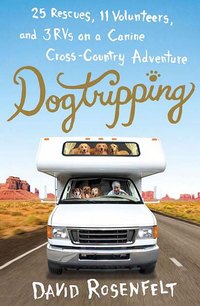
Dogtripping by David Rosenfelt: Moving a Very Unusual, Very Large, Very Hairy Family Across the U.S.

DogtrippingDogtripping:
25 Rescues, 11 Volunteers,
and 3 RVs on Our Canine
Cross-Country Adventure

by David Rosenfelt

DETAILS:
Publisher: St. Martin's Press
Publication Date: July 23, 2013
Format: Hardcover
Length: 278 pg.
Read Date: January 19-20, 2022
Support Independent Bookstores - Visit IndieBound.org

The overriding view of everyone was that it was going to be a great adventure, successful and a hell of a lot of fun.

Except for me.

I was expecting a disaster.

What’s Dogtripping About?

After a decade and a half or so of running their dog rescue in southern California, David Rosenfelt and his wife decide to move out of California (a very close call with a wildfire is a primary impetus for this) to Maine. But they have a bigger logistical challenge than most of us do when we make a move—either cross-town or cross-country. Sure, it can be hard to figure out the best way to move a piano or a fragile heirloom—but ultimately, that’s something that people do all the time. But how do you get twenty-five dogs cross-country?

First of all, you need help—and we’re not talking the kind of help where you get a few friends together, promise a pizza and a six-pack to split, and get them to help you move a piano or a sofa. This is a bigger project. You also have to figure out what kind of vehicle—or vehicles—will be needed, where you all will sleep, how can you deal with the bathroom breaks, and so on.

Right there, that’s an interesting story, many people—especially dog lovers would read that. When the talented and amusing author of the Andy Carpenter novels tells the story, it becomes an entertaining read.

Interspersed between chapters discussing the preparation for the trip and the trip itself are chapters describing the background for The Tara Foundation (starting with the dog it’s named after), the development and growth of their rescue efforts, and profiles of some of the dogs.

Dog Profiles

My favorite parts of the book are the 2-3 page profiles of some of the dogs that have stayed with their pack—for anywhere from a week to several years. He starts by describing how the dog came to their attention, then he talks about the specific challenges for that dog, their personality, and how they integrated into the menagerie. Then he’ll describe how they took to the move—if they were part of that 25—found a family to adopt them, or how their life came to an end.

Obviously, I preferred reading the first two endings—but they’ve been at this for a long time, and most of their rescues are senior dogs, it’s a reality they have to deal with far too often. Not always, but I generally got a little misty for those other endings. Rosenfelt has a real knack for making you grin/chuckle, telling a heartwarming story, and then hitting you with the sadness that comes from the brevity of canine life.

Still, I’d read an entry on every dog they ever had in their shelter and come back for more.

Incidentally, he includes some really sound advice on deciding when to put an ailing dog to sleep.*

* Please, no one tell my almost 16-year old Pug/Beagle mix that I read anything about that. No need to stress her out.

Too Many Italics

I am not a fan of extended sections of italics—there are better ways to set aside chunks of text (going to a sans serif typeface, for example), but I’m mostly used to them. A character’s thoughts—usually a sentence or two–I can handle. I can even put up with a few paragraphs for a dream sequence or flashback or something. But whole chapters really bug me.

And that’s what we get here—and not just a few, but several. There’s no set pattern, but typically a couple of chapters in regular type (one of them being really brief) and then one in italics. It’s very aggravating.

But here’s the worst part—it’s the chapters that are about the subject of the book that are italicized! The background chapters, the chapters that profile individual dogs, or are just full of Rosenfelt talking about some topic (for example: their efforts to keep the smell of all their dogs using the back yard as a bathroom from bothering the neighbors) are all in regular type. But the part of the book that the title and subtitle describe are italicized.

I don’t understand that choice. I certainly didn’t enjoy it.

So, what did I think about Dogtripping?

Twenty-five is pretty much the fewest dogs Debbie and I have had in the last ten years. We’ve had as many as forty-two, but we feel that more than forty is slightly eccentric.

This was a fast, fun read—with some really touching moments mixed in.

I’m going to borrow the conclusion to my post about Rosenfelt’s other book about their rescues, Lessons from Tara, because it works just as well here, and I’m tired:

Fans of the Andy Carpenter series will be happy to hear that Andy’s voice is Rosenfelt’s—the book at times feels like an Andy Carpenter book without all the muss and fuss of a plot, murder, or trial. I laughed, I chuckled, I learned a thing or two, and I even got misty more than I wanted to. All in all a really strong read. If you’re a dog lover, or just someone who likes to read good things, find some time for this one.


3.5 Stars

This post contains an affiliate link. If you purchase from it, I will get a small commission at no additional cost to you. As always, opinions are my own.

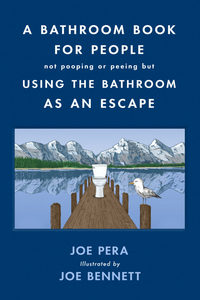
A Bathroom Book for People Not Pooping or Peeing but Using the Bathroom as an Escape by Joe Pera, Joe Bennett (Illustration)


A Bathroom Book...A Bathroom Book for
People Not Pooping or
Peeing but Using the
Bathroom as an Escape

by Joe Pera, Joe Bennett (Illustrator)

DETAILS:
Publisher: Forge Books
Publication Date: November 15, 2021
Format: Hardcover
Length: 111 pg.
Read Date: January 18, 2022
Support Independent Bookstores - Visit IndieBound.org

What’s A Bathroom Book… About?

I don’t know how to describe this book, so I’m going to lift this from the publisher:

Joe Pera goes to the bathroom a lot. And his friend, Joe Bennett, does too. They both have small bladders but more often it’s just to get a moment of quiet, a break from work, or because it’s the only way they know how to politely end conversations.

So they created a functional meditative guide to help people who suffer from social anxiety and deal with it in this very particular way. Although, it’s a comedic book, the goal is to help these readers:

1. Relax
2. Recharge
3. Rejoin the world outside of the bathroom

It’s also fun entertainment for people simply hiding in the bathroom to avoid doing work.

A Bathroom Book for People Not Pooping or Peeing But Using the Bathroom as an Escape will be waiting in the bathroom like a beacon for anxious readers looking to feel calm, confident, and less alone.

The Illustrations

I’m not sure how to describe it. A few adjectives jump to mind: quirky, offbeat, unusual. But they fit the tone of the book really well.

When the illustration is of an object (or a few of them), it’s very realistic—cartoonish, but realistic. There’s very little realism to the people depicted, however. They’re very cartoonish, with nods to realism. It’s an interesting way to go with that. I should stress that cartoonish isn’t a criticism, it’s just the best word I can come up with to describe these. Bennett has a style all his own—oddly compelling and fairly eccentric.

Along these lines, whoever did the page layout and typesetting deserves a slap on the back and maybe a raise.

So, what did I think about A Bathroom Book…?

Frankly, I had to buy this just because of the title. How do you walk away from it? I knew nothing about Joe Pera until this—now I’m curious about him.

Some years back, as I understand, there were a variety of books labeled “Bathroom Humor” or something like that—vaguely risqué (maybe some weren’t that vague), full of jokes and perhaps cartoons. I remember my grandfather had a book like that equipped with a chain so you could hang it on the towel rack or something like that. This is not that kind of book.

This is a gentler humor—the purpose of it is to help you relax and regroup, maybe to take a beat and prepare to leave the bathroom to face whatever social pressure (or similar hurdle) lies outside the bathroom.

We’ve all been there at least once—some of us are there on a regular basis—using the bathroom not just for a biological need, but to take a breather from life for just a couple of minutes. This is short enough that it can fit the bill (or, if you read slowly, it’s easy to dip in and out for a quick trip).

You’re not going to laugh out loud (probably—except maybe for the Jane Goodall jokes). But you just might smile—even a half-smile—because it reminds you of human oddities. And maybe because it’ll remind you that you’re not alone in needing this oasis from reality.

I enjoyed this, I think it’ll hold up to repeated readings. It’s an odd source of affirmation and encouragement—but I like it, and will take the affirmation and encouragement where I can find it.

This post contains an affiliate link. If you purchase from it, I will get a small commission at no additional cost to you. As always, opinions are my own.

God Dwells Among Us by G. K. Beale and Mitchell Kim: Eden, the Once and Future Temple

God Dwells Among UsGod Dwells Among Us:
A Biblical Theology of the Temple

by G. K. Beale, Mitchell Kim

DETAILS:
Series: Essential Studies in Biblical Theology
Publisher: IVP Academic
Publication Year: 2014, 2021 (in this format)
Format: Paperback
Length: 153
Read Date: January 2-10, 2022
Support Independent Bookstores - Visit IndieBound.org

What’s God Dwells Among Us About?

The book opens describing Eden as the first temple on Earth—the dwelling place of God on Earth, that Israel’s Tabernacle and Temple would mirror. After Adam and Eve failed their probation, their duties to the temple, by letting the serpent and sin pollute it. After establishing that, Beale and Kim show how Adam and Eve were to spread Eden—spread the worship and image of God—throughout the world.

This call is, while changed due to the Fall, reiterated to the Patriarchs, seen in the Tabernacle and Temple. The Prophets declare Eden’s restoration to come, and the new Temple is established in Christ and begins expanding through the Church. This new Temple is served by a kingdom of priests who serve those around them as they worship God. Eden, then, will be completely restored in the New Earth.

That’s 134 pages reduced to 136 words,* so obviously I’m leaving a lot out. But that’s the gist.

* How cool would that have been if I’d accidentally got that to 134 words?

The Last Two Chapters

I’m pretty sure that the last time I read this, I focused on chapters 1-9, the more theoretical and exegetical portions. This time—I appreciated and learned from those chapters, but these last two grabbed me.

Chapter 10, “‘Why Haven’t I Seen This Before?’: Seeing the Purpose of God’s Dwelling Place in Eden,” addresses an important question. How can believers who’ve spent years reading the Scriptures not have seen this? They sketch out some factors, like a difference in cosmology a defective understanding of the unity of the Biblical message, a weak view of typology, and a different understanding of what a “literal” fulfillment of prophecy entails. I thought this chapter and the hermeneutical ideas it put forward were very insightful.

The final chapter, “Concluding Practical Reflections: Foundational Convictions for Sacrificial Mission in the Temple” is notable not only for the practical, applicatory perspective; but also for the emphasis on missions. It’s important to see that this isn’t just theology, this is a call to a way of life. Too often books like this can seem to forget that (sometimes they actually do), there’s no way to think that about this book.

So, what did I think about God Dwells Among Us?

I said something earlier about reading this book before—it was originally published in 2014, and then re-released as part of the Essential Studies in Biblical Theology series. Somewhere I got the impression that it had been revised somewhat as part of being brought into the series—I think that was an error on my part. Oh well, it was good to re-read it anyway.

As the text pre-dates the series, it has a different feel than the others—I liked that about it.

This was accessible, approachable, and beneficial to life and mind. Beal and Kim are great at both shining a light on the text and bringing it to bear on the reader. This is one of the more useful and valuable entries in this really good series and I’m glad to recommend it to you.


4 Stars

This post contains an affiliate link. If you purchase from it, I will get a small commission at no additional cost to you. As always, opinions are my own.

A Dream About Lightning Bugs by Ben Folds: Pianos, Pop Music, and a Life in Progress

A Dream About Lightning Bugs

A Dream About
Lightning Bugs:
A Life of Music
and Cheap Lessons

by Ben Folds

Trade Paperback, 311 pg.
Ballantine Books, 2019

Read: December 17-27, 2021
Grab a copy from your local indie bookstore!

So what about the middle-aged making pop music? Sure, it’s allowed. But let’s be honest about what pop, or popular, music is. It’s music for the mating age. It’s a soundtrack for that yearning, that youthful anger, those ideals and inside jokes of the teenagers and young adults as they experience the rough ride together. It fills an an important need. It help us get through to adulthood. Pop music can be a life jacket, a sexy security blanket, a hipster Hallmark card. And it communicates very real things. It also requires serious craft and is a competitive business, worthy of great respect. Pop music saved my ass as a kid, paid the bills in my earlier career. And I love to make fun of it.

What’s A Dream About Lightning Bugs About?

Well, it’s a memoir by Ben Folds, covering childhood through the present (give or take a few years). He talks about the teachers that helped him along the way, his struggles in various schools, his early music career (including being a one-man polka band), how horrible he is at marriage, the formation of Ben Folds Five, the dissolution of it, his solo career, parenting and how (and why) his career is shifting, his thoughts on writing, music, comedy and all sorts of other things.

Basically, a little about everything.

Highlights

I don’t have time—and you don’t have the attention span—to write about all the things that are worth saying about this book. So, here’s a quick list of some of the highlights of the book:
bullet He has a section about humor records that he listened to as a kid, and muses on comedy in general. It was the first time in the book that things really clicked for me.
bullet There’s a section about life in the suburbs, the angry music associated with it in the 90s (and beyond) and I thought was really insightful.
bullet The story about the release day for his album Rockin’ the Suburbs and being live on the radio to promote it when the attacks for 9/11 happened. That chapter was just great.
bullet It’s hard to beat a section on writer’s block by someone who’s worked through it.
bullet I’m a big fan of the (little known) band Fleming and John—him talking about them for a paragraph or two made me really happy. Also, the part of the book about William Shatner? There’s nothing like a good Shatner story.
bullet Folds has done some truly horrible things on tour—throwing piano stools on a regular basis with the band (and breaking other things with those stools), lying like crazy about his personal life on tour with John Mayer and the fallout from it. It ain’t pretty, but it’s good to see him talking about it.

The Spotify Playlist

Random House has a Spotify playlist for the book, which is just a great idea. It’s a great soundtrack for the book or just fun to listen to on its own. There are many songs by Folds that he talks about or makes a passing reference to in the book. There are also many songs that he didn’t write/record but that he talks about. If you like Folds/the music that inspired him—you’re going to dig this.

So, what did I think about A Dream About Lightning Bugs?

I enjoyed getting to know Folds a bit better—warts and all. It took a long time for me to really get into it, though. Yes, the parts about his early life were interesting—and I enjoyed it, but it was really easy to put the book down.

But once we got to Ben Folds Five? I was hooked and I flew through the rest of the book. Maybe it’s because I was getting background information on the band and music I knew so well. But I think it’s because Folds shows a different kind of passion for things once his career started to take off and that passion translated into being more interesting reading. It’s likely a little of both and a few other things, too.

Some of the book that’s less about him and his career and more about his thoughts about creating, performing, music, etc.—that’s inspirational, motivational—and the kind of thing I’ll come back to re-read from time to time.

This probably isn’t a book for people who aren’t at least a casual fan of Folds as a solo artist or his band. But for those who are? It’s a lot of fun, and worth the time.


3.5 Stars

This post contains an affiliate link. If you purchase from it, I will get a small commission at no additional cost to you. As always, opinions are my own.

My Favorite Theology/Christian Living Books of 2021


Unlike 2020, when I posted about almost nothing I read in this category, I was much stricter with myself and posted about everything. I don’t know if anyone else appreciated or benefited from it, but I sure did. It also made this post a lot easier 🙂

As always, re-reads don’t count for these lists. It’s a self-imposed rule, so I don’t feel too bad about playing fast and loose with the rule for a couple of these entries.

(in alphabetical order by author)

The Wonderful Works of GodThe Wonderful Works of God

by Herman Bavinck

My original post
Bavinck boiled down the material covered in his four-volume Reformed Dogmatics into this “simple explanation of the Christian faith in a book of modest scope.” It’s a pastoral work, a compassionate work, and one that will repeatedly point to the Gospel as well as the Majesty of the Triune God.

5 Stars

Faith in the Time of PlagueFaith in the Time of Plague

Edited by Stephen M. Coleman and Todd M.Rester

My original post
This is an anthology of “plague writings” from (primarily) Reformation and post-Reformation era pastors and theologians, to show how leaders in the past dealt with times of widespread communicable disease. Those looking for easy answers to “how would the early Church or Reformers” deal with COVID-19 (or the like)”, will be disappointed. There are no quick and easy answers here. But this can remind readers that the Church has been through similar—and worse—times before. She likely will again. There have been careful, pastoral responses to it in the past, and that can be true again. We don’t have to have a snappy, one-size-fits-all approach at the first sign of trouble, but we are called to gracious, Christ-honoring, people-serving responses.

4 Stars

On God and ChristOn God and Christ, The Five Theological Orations and Two Letters to Cledonius

by Gregory of Nazianzus, Translators: Frederick Williams & Lionel Wickham

My original post
These sermons were pivotal in the development of the position behind the modification to the Nicene Creed at the Council of Constantinople. It’s full of technical Trinitarian language, so it’s not the easiest thing to read. But with a lot of care, it’s rewarding. These sermons have lasted since the Fourth Century because they’re useful, educational, approachable, and understandable. The translator calls them “as much high art as high theology” in his introduction. This is a man who cares about what he’s talking about—this is important to him, important to his opponents, important to his audience, and therefore it must be dealt with carefully, with precision, and clearly. All of which translates well to us today.

5 Stars

Finding Hope in Hard ThingsFinding Hope in Hard Things: A Positive Take on Suffering

by Pierce Taylor Hibbs

My original post
The central thesis of the book is: hard things are going to shape us in ways easy things can’t. He develops this thesis through a collection of essays about the death of his father, his anxiety disorder, and his struggles with self-doubt. These case studies are just that, things that his readers can relate to, sympathize with, and find similarities in their lives. After that, Hibbs points to finding Christ and His purposes in the hard things, and that’s where we find hope. This isn’t a book that comes to say “here’s a bunch of things you need to know to deal with suffering,” instead it’s “here’s what I’ve learned while through these trials, maybe you can learn from what I’ve been through, too.”

3.5 Stars

What Happens When We WorshipWhat Happens When We Worship

by Jonathan Landry Cruse

My original post
This is not a manual for the “how-to” aspects of worship, nor does it wade into the “style” debates and conflicts, he doesn’t look into the “why” we do certain things in worship (although he brushes against the idea). This is about the supernatural aspect to the ordinary, weekly event. It’s about what God does to and for His people in worship, what’s happening as we worship. Edifying, educational, orthodox, and even devotional—this book will introduce you to the vital topic or will gently remind you of the things you’ve been taken for granted.

5 Stars

Things UnseenThings Unseen: A Systematic Introduction to the Christian Faith and Reformed Theology

by J. Gresham Machen

My original post
These are transcripts of weekly radio addresses Machen made presenting a systematic approach to Christian teaching. Flying in the face of the mode of the day, Machen gives a strong presentation of Reformed distinctives, as well as a whole-hearted belief in a supernatural Christianity. He’s succinct, pastoral, accessible, and even witty. These are not talks for scholars, or dumbed-down–they’re straightforward presentations of the topics for everyone. This is one of the most rewarding books I’ve read in a few years. Even when Machen is merely restating what generations before him taught, there’s a freshness to his presentations that really are appealing.

(I’m thumbing my nose at my “only new to me” rule here–I’ve read these talks in other collections several years ago–but not organized like this in one volume)

5 Stars

The TrinityThe Trinity: An Introduction

by Scott R. Swain

My original post
This is an introduction to the classical Christian doctrine of The Trinity. He’s not trying to re-invent the wheel, he’s definitely not trying to innovate, but to provide a concise jumping-off point into deeper studies by providing a solid foundation. While Swain never seems to be leaving out details or avoiding the complicated ideas (although he obviously has to), he keeps things short and sweet.

This is one of those books where my notes keep saying “Chapter X is likely the highlight of the book,” “the section on X is likely the most valuable in the book.” It appears 60-70% of the book is a highlight—and I may not have written all of those parts down. Which is to say, there’s a lot of gold here. Helpful, insightful, and useful—it also achieves its end for leading on to further study for me. It’s accessible, but not easy, reading. At the same time, it’s a challenging, but not difficult, text.

5 Stars

The Trinity and the BibleThe Trinity and the Bible: On Theological Interpretation

by Scott R. Swain

My original post
Rather than one overarching topic, this is a collection of previously published papers that seek to show both how the Bible reveals the Trinity and how the Trinity shapes our reading of the Bible. This is not an easy read, but it was worth the effort, every bit of it. Like a lot of the more scholarly theological books I read, I was reminded frequently while reading that I’m not an academic and this is above my weight class. But it wasn’t inaccessible, just difficult and required a little commitment. Like all good academic theology, there were moments of the most doxological writing—or doxology-inspiring writing (or a mix). There are paragraphs and paragraphs that I wish I could commit to memory, so I could use them at the drop of my hat in conversation and in prayer.

5 Stars

Foundations of Covenant TheologyFoundations of Covenant Theology: A Biblical-Theological Study of Genesis 1–3

by Lane G. Tipton

My original post
I’ve read several introductions to Covenant Theology in the last couple of decades. This is a different way of covering these concepts and it’s a very effective one. It’s also a different way of looking at Genesis 1-3. Almost every time I’ve seen these chapters explained and exegeted, it had to do with the doctrine of Creation, the Fall and the Promise of the Seed in Genesis 3, and so on. But Tipton’s approach—while addressing all that—focuses on the Big Picture, looking at the purposes behind Creation, the protoevangelium, the Covenants of Work and Grace, and how those are worked out in history (particularly in the last two chapters about Christ as the Promised Seed and the Second Adam).

It’s a self-described “brief and non-technical” book, building on the work of Geerhardus Vos and Meredith G. Kline. Maybe a bit too brief, a little more expansion would be beneficial, but a fascinating and helpful read.

4 Stars

Grace and Glory (BoT Edition)Grace and Glory

by Geerhardus Vos

My original post
Another version of this book made this list a couple of years ago, but this version has more sermons. It’s easily the best collection of sermons I’ve ever read. Yes, there’s rich theology behind these sermons, but they’re primarily expositions and applications of the texts for the hearers. And, yes, the audiences of these sermons were students at Princeton Theological Seminary (before the downgrade that led to the creation of Westminster Theological Seminary), but these were not airy, academic addresses. Sure, as the initial hearers were largely future ministers, there are portions that are more applicable to preachers than to laity. But there’s not a lot of that, and even in the midst of one of those sections, there’s still a lot of gold to be mined.

5 Stars

Page 33 of 61

Powered by WordPress & Theme by Anders Norén