Category: Non-Fiction Page 42 of 62

Catch-Up Quick Takes: Greenlights, The World’s Strongest Librarian, No Time Like the Future, A Very Punchable Face

Greenlights

Greenlights

by Matthew McConaughey
Unabridged Audiobook, 6 hrs., 42 min.
Random House Audio, 2020
Read: December 1-3, 2020
Grab a copy from your local indie bookstore!

(the official blurb)
I’m not the biggest McConaughey fan in the world—I don’t think I’ve ever not liked anything he’s done, but I don’t seek him out—and am not at all the target audience for this. But something about what he said about the writing of this book when he was on Hot Ones, made me want to take a look. That my library had the audiobook available to borrow made it all the easier to do so.

This dude can tell a story. I’m sure he’s exaggerating a lot of the events—not necessarily being dishonest, just spinning a good yarn. And honestly, I don’t care. I had a blast listening to this. If 30% of this stuff is true, he’s led a great life and probably deserves to make up 70% of it for the entertainment value.

You’re not going to get a lot of behind-the-scenes stuff about his movies (there are a couple of exceptions), it’s mostly about his personal life—childhood, family, friends, wife, and some miscellaneous solo adventures.

I laughed, I learned a thing or two, I shook my head a few times. Mostly, I just enjoyed a good storyteller at work. (I’m not sure any other narrator could’ve pulled it off, but McConaughey made it feel like we were sitting around a campfire or at a bar somewhere).

3.5 Stars

The World’s Strongest Librarian

The World’s Strongest Librarian: A Memoir of Tourette’s, Faith, Strength, and the Power of Family

by Josh Hanagarne, Stephen R. Thorne (Narrator)
Unabridged Audiobook, 8 hrs., 35 mins
Blackstone Audio, 2013
Read: August 25-September 2, 2020
Grab a copy from your local indie bookstore!

(the official blurb)
I’d started a full post about this book months ago, and just couldn’t get it to the point I was satisfied with it—I think because something about Hanagarne’s story made me want to get granular about it. I’m going to try really hard to limit myself to a couple of quick paragraphs.

There’s a part of me that wanted more about Tourette’s, but after his initial diagnosis and learning to cope (for lack of a better term), Hanagarne largely left that behind. Sure, it was clear that Tourette’s was a constant presence in his life, but he didn’t dwell on it. He talked about some of the things he did to combat the symptoms, but he didn’t talk that much about having to deal with it day after day. This makes sense, it’s not what I expected, but as I listened to the book, I couldn’t argue with it.

Hanagarne’s a reader, has been for his whole life—and right there is where I made my connection to him. He talks like a reader, cares about literacy and knowledge, makes reader-ly references—an instant connection between me and his book. I can see myself having regular conversations with him that last for hours.

A lot of the book focuses on his family—both growing up and then his wife and their struggles to have a child and struggles adopting. A lot of that was heartbreaking, but it was inspiring to see the way that he and his wife kept moving forward.

I have to address this because Hanagarne does so much in his book, skip this paragraph if you want. What broke my heart more than that though was his repeated discussions of the struggling with his faith. Like every Latter-Day Saint I’ve talked to, he worried about doing enough. Praying enough—and sincerely enough. Doing enough good works. Believing enough. So that God would bless him, help him with his Tourette’s, his depression, his marriage, having a kid. It’s all about his performance, so that he might be enough. There was no Gospel here. No promise. No grace. No faith as the Bible describes. Just human striving. I was sincere when I said my heart broke, I stopped the book frequently to pray that even now, years after this book was written, someone would come alongside him and help. Even now, thinking about this book makes me hope that he actually hears the Gospel.

He’s living a fascinating life and this book was a great way to talk about it, not only can Hanagarne talk about books, he knows how to write one. There are no easy answers when it comes to religion, family, or Tourette’s. Just one guy stumbling through this and other things as best as he can.

3.5 Stars

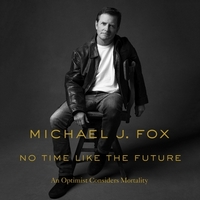
No Time Like the Future

No Time Like the Future: An Optimist Considers Mortality

by Michael J. Fox
Unabridged Audiobook, 5 hrs., 59 min.
Macmillan Audio, 2020
Read: December 23-26, 2020
Grab a copy from your local indie bookstore!

(the official blurb)
It’d be easier to talk about this if I’d read Fox’s earlier books, to compare. But from what I gather, the past memoirs have been about embracing his challenges and finding ways to celebrate the life and career that he’s enjoyed.

This book seems to be about when it gets hard to be an optimist. When the challenges seem to be winning (and, sure, he’s in a privileged place, but his challenges are the kind that’d break many people), how do you stay optimistic? Or do you? Well, if you have people like Fox does in your life (and one great-sounding dog), maybe you do. Fox describes himself as characteristically optimistic, but lately, it’s because of the people in his life and deliberate decisions on his part to stay that way.

He talks about the challenges, he’s honest about the impact on him, and he celebrates the people—friends, family, strangers, medical professionals—who’ve helped him keep going. But told with a lot of heart and humor. I really enjoyed this.

Fox doing the narration—clearly not the easiest task for him, made it even better.

4 Stars

A Very Punchable Face

A Very Punchable Face

by Colin Jost
Unabridged Audiobook, 7 hrs., 41 min.
Random House Audio, 2020
Read: October 1-3, 2020
Grab a copy from your local indie bookstore!

(the official blurb)
Jost tells some jokes about Long Island, himself, cast members of SNL. He talks about growing up on Long Island, some early struggles in his life, his early career and making it to SNL and the ups and downs there, and what’s probably next for him—usually the stories are littered with tiny jokes, but not always.

The best—and most heartfelt part of the book—is when he describes the work his mother did in relation to the fire department and 9/11. Not that the book wouldn’t have been entertaining without it, but it’s that section that made it feel worthwhile.

It’s a pleasant way to spend a few hours, and it’ll make you chuckle at least a few times.
3 Stars


2020 Library Love Challenge

This post contains affiliate links. If you purchase from any of them, I will get a small commission at no additional cost to you. As always, opinions are my own.

Olive, Mabel & Me by Andrew Cotter: Two Very Good Dogs and the Human Who Introduced them to the World

Olive, Mabel & Me

Olive, Mabel & Me: Life and Adventures with Two Very Good Dogs

by Andrew Cotter

Hardcover, 205 pg.
W. W. Norton & Company, 2020

Read: December 24-26, 2020
Grab a copy from your local indie bookstore!

What’s Olive, Mabel & Me About?

In short, it’s about a guy and his dogs.

Andrew Cotter is a freelance sports journalist who found himself (like many people) with an excess of time on his hands in the early days of COVID. With no sports to cover, he needed an outlet, so…you know what? It’ll be easier to post the video that catapulted Cotter and his dogs into the attention of people around the world. He’s this guy, and they’re these dogs:

In the Introduction, Cotter talks a little about that video, those that followed, and the reaction to them—and then he moves on, only making small asides to them until the last chapter when he talks a little more about them. The book isn’t about the Youtube/Social Media sensation, it’s about the man and his dogs that happened to end up as part of that sensation.

The Dogs Before

We begin with Cotter talking about his family’s history with dogs—his grandparents had quite a .few, and he and his mother, did, too. I was predisposed to like him going in, but it was his description of his bullmastiff that solidly won me over.

Then came college and his early career days, when it just wasn’t possible/feasible to own any kind of dog. Then he got together with his partner, Caroline, and she, too wanted a dog, when possible. A few years later, they moved out of London and it was time.

There’s some great discussion about the pros and cons of various breeds and I laughed more than once in that chapter.

Olive and Mabel

Then we meet Olive and the book takes off. She’s a delightful Lab* and it’s clear that Cotter is smitten with her. Cotter talks about her and some of their adventures together, and it’s all well and good. I’m not going to say more, because you want to read it the way Cotter tells it.

* A tautology, I realize.

Then after a few years, Mabel comes along—a very different dog, with a personality that’s very different, but wanting to learn from Olive. Then it becomes adventures for the three of them. The bond is strong and obvious, and it’s the kind of thing that dog lovers will respond to.

Climb Every Mountain

One of Cotter’s favorite activities—and one he involves the dogs in as often as he can—is walking up mountains. He recounts several such walks with the two, the sights they saw, the mishaps, and so on—he even talks some about times he went without them (like, say, Mt. Fuji). Now, I cannot foresee me ever sharing this interest, or even wanting to (it’s beside the point why I wouldn’t—besides, I have to go to work tomorrow, so I don’t have enough time).

But I enjoyed Cotter’s discussion of his hobby—I don’t get it, but that’s okay, he does, and he can talk about it in a way that keeps it interesting, even for us homebodies. It’s this that keeps it from simply a guy rattling off cute stories about his dogs and makes it into something only he can tell—cute stories about Andrew Cotter and his dogs. It’s a fine distinction, but an important one, if I’m going to read a book about it.

So, what did I think about Olive, Mabel & Me?

I love my dogs dearly but couldn’t necessarily see how explaining that relationship and affection might stretch more than a couple of pages.

Yet in writing about your dogs, you very quickly realize that you are writing about all aspects of your life, because there isn’t really a part of it that the dogs don’t touch. They entwine themselves around it all—the serious matters and trivial, the fun and the less so. As you have read, they are there for the exciting adventures but also for the mundane. They are with you for everything, and everything is all the better for them.

Cotter was smart to take the opportunity created by his videos to write a book—nothing against him, but I wouldn’t have picked up this book if I hadn’t been a fan. But I’m very glad I did, this is a heartwarming read. It’s funny—he’s a very clever writer (and I’d be willing to read more things he wrote, as long as they weren’t too sports-heavy)—it’s touching, it’s relatable. It’s a cup of hot cocoa on a chilly day.

I think most dog people enjoy talking to others about their dogs. This was a lot like that—but Cotter didn’t let me share similar tales about my canine companions, which is fine—he’s a better storyteller. He even included pictures to gush over. Did I possibly give out an extra scritch or two to my own dog and grand-pup after reading this? Oh absolutely. I felt I owed Mabel and Olive some, so the dogs here were the beneficiary.


3.5 Stars

This post contains an affiliate link. If you purchase from it, I will get a small commission at no additional cost to you. As always, opinions are my own.

Catch-Up Quick Takes: The Power of Bad, Everything is F*cked, The Checklist Manifesto, And Then You’re Dead

The point of these quick takes post to catch up on my “To Write About” stack—emphasizing pithiness, not thoroughness.

The Power of Bad

The Power of Bad: How the Negativity Effect Rules Us and How We Can Rule It

by John Tierney and Roy F. Baumeister, Paul Bellantoni (Narrator)
Unabridged Audiobook, 8 hrs., 9 min.
Penguin Audio, 2019
Read: November 24-25, 2020
Grab a copy from your local indie bookstore!

(the official blurb)
Ignore the chapter where the authors totally misunderstand the evangelistic work of Whitefield and Edwards in the 1700s (and the part where the Narrator couldn’t pronounce Whitefield’s name correctly, over and over and over and over), and I really liked this.

The way the authors explain negativity bias—and then apply it to improving our jobs/careers, marriages, and more. Utterly fascinating. I probably need to read and/or listen to this a few more times, and maybe take notes at least once before I can both articulate what I find helpful here—and what I find problematic.

But it’s the kind of book that makes you think about things in a way you probably haven’t before. While being counter-intuitive, much of it rings true. And best yet, it’s a good read/listen—engaging and entertaining.


3.5 Stars

Everything is F*cked

Everything is F*cked: A Book About Hope

by Mark Manson
Unabridged Audiobook, 7 hrs., 2 min.
Harper Audio, 2019
Read: October 16/17, 2020
Grab a copy from your local indie bookstore!

(the official blurb)
Manson’s warmed-over Stoicism didn’t work nearly as well for me as it did in his first book. The writing was almost as good—but not as clever, I just think it’s not as well written. The topics interested me, but I found myself questioning his basic premises in almost every instance.

Ultimately, his hope is founded on a total lack of foundation—he finds it freeing, I find it unstable and doomed to failure. It’s hard getting my point across short of a 20-30 page paper examining the book, and I just don’t care enough to undertake it.

I actually enjoyed a lot of it, but I also found myself annoyed and/or mildly angry with this one for significant portions of the time.


2 1/2 Stars

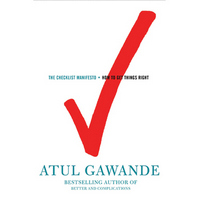
The Checklist Manifesto

The Checklist Manifesto: How to Get Things Right

by Atul Gawande, John Bedford Lloyd (Narrator)
Unabridged Audiobook, 6 hrs., 9 min.
Macmillan Audio, 2009
Read: September 21, 2020
Grab a copy from your local indie bookstore!

(the official blurb)
First off: Gawande is a doctor/surgeon, and a lot of his illustrations and examples are surgical in nature. A bit too detailed for me early on—I’m a little more squeamish about real-life blood and guts than most people. I figure most readers won’t be bothered by it like me (some may not even call it detailed).

Anyway, it’s a simple premise, but seeing how checklists have been used by pilots, surgeons, investment bankers and the like is utterly fascinating. There’s just no way that I can make it sound like it. Could’ve been a little longer, could’ve used a little more guidance on how to implement it for yourself.

Still, at the end of the day, more fun, more interesting than you’d think a book about checklists would be.


3.5 Stars

And Then You're Dead

And Then You’re Dead: What Really Happens If You Get Swallowed by a Whale, Are Shot from a Cannon, or Go Barreling Over Niagara

by Cody Cassidy, Paul Doherty, Dennis Boutsikaris (Narrator)
Unabridged Audiobook, 4 hrs., 59 min.,
Penguin Audio, 2017
Read: December 21, 2020
Grab a copy from your local indie bookstore!

(the official blurb)
So, yeah, what I said about squeamish earlier? Pushed to the edge a couple of times in this short read/listen. It’s all about the science behind what would happen to you if say, stowed away in an airplane, stowed away on a trip to the Moon, fell into the works at a Pringles factory, ate the same number of cookies as the Cookie Monster—and more.

It’s funny (thankfully, or I couldn’t have made it through a couple of spots), informative, creative—and a great way to spend a few hours. At one point the authors tell the reader not to do a google search on one topic. First, that hadn’t even begun to cross my mind as a good idea. But secondly, given the detail they’d used when describing what happens to a human body shot out of a cannon, or swallowed by a whale, and several other topics, when they say, “don’t go looking at pictures of something”? I am taking their word for it.

I had a blast listening to this. If I taught high school science, I’d have at least one copy of this on hand for reference or to pass along to students. Since I don’t, I just have to remember some of these stories/theories for my own amusement.


3.5 Stars

2020 Library Love Challenge
This post contains affiliate links. If you purchase from any of them, I will get a small commission at no additional cost to you. As always, opinions are my own.

The Friday 56 for 12/18/20

The Friday 56This is a weekly bloghop hosted by Freda’s Voice

RULES:
The Friday 56 Grab a book, any book.
The Friday 56 Turn to Page 56 or 56% on your ereader. If you have to improvise, that is okay.
The Friday 56 Find a snippet, short and sweet.
The Friday 56 Post it

from page 56 of:
Olive, Mabel & Me

Olive, Mabel & Me: Life and Adventures with Two Very Good Dogs by Andrew Cotter

She just wouldn’t leave Olive alone. And Olive, having enjoyed four years of peace and solitude, was clearly rather put out by the visitor—asking, with those Labrador eyes that tell all, “Is this thing going to be staying long?”

I’m pretty sure that from the start Mabel saw Olive as some sort of replacement mother. They are, in fact, related in that curious mixed-up dog dynamic, where romantic liaisons are free and easy and they don’t feel tied down by human constraints or propriety. Olive’s father Henry was also the father of another litter, which contained Mabel’s mother Izzy. Working it out, that makes Olive a half-aunt to Mabel, if there can be such a thing. One of these days we’ll get everyone together on a Jerry Springer-style program and Henry will be confronted by his numerous partners and offspring. Child support will finally catch up with him and it will all get messy.

One thing that was more simple and obvious was Mabel’s love for Olive, and within just a few weeks, some—if not all—of that love was reciprocated. Neither would now want to be without the other, but Olive could probably spend more time without Mabel than vice versa.

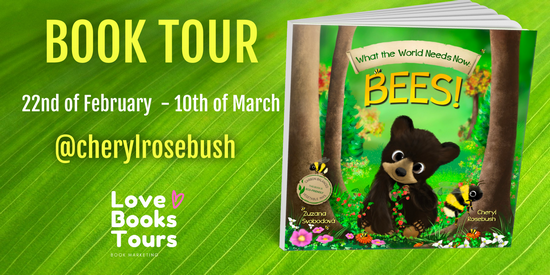
What the World Needs Now – Trees! By Cheryl Rosebush, Zuzana Svobodová: Orangutans and Rainforests for Kids


What the World Needs Now - Trees!

What the World Needs Now – Trees!

by Cheryl Rosebush, Zuzana Svobodová (Illustrator)
Series: What the World Needs Now

PDF, 34 pg.
2020

Read: November 21, 2020

What’s What the World Needs Now – Trees! About?

This is a cute little book about an orangutan named Jefri, his home in the Sumatran rainforest, deforestation; and what can and should be done about to prevent it.

Okay, so only some of it is cute—it’s hard to make deforestation (in general) and the elimination of rainforests (in particular) adorable.

In addition to the main information, there are little boxes with additional/supplemental information, ideal for whatever adult is reading to/with the child to give more information or to launch a discussion.

How were the Illustrations?

The art is wonderful. Svobodová balances accuracy with an attractive, cartoonish style. The illustrations are full of small little touches to keep the attention of the youngest readers as they come back again and again.

So, what did I think about What the World Needs Now – Trees!?

I wanted a little more from the text—either something to hook the reader a bit more, or another detail or two. It’s hard to put my finger exactly on it—but I thought something was missing. That aside, I thought it was a good introduction to the issue without being alarmist and suggests common-sense solutions.

It’s good, important information delivered in an attractive package. A great way to kick-off this series for young readers.


3 Stars

My thanks to Love Books Group for the invitation to participate in this tour and the materials (including the book) they provided.

Love Books Group

My Life as a Dog by L. A. Davenport: Man’s Best Friend, Indeed

My Life as a Dog

My Life as a Dog

by L. A. Davenport

Kindle Edition, 140 pg.
P-Wave Press, 2019

Read: October 28-29, 2020

He grasps that I’m not going to give him any, although he evidently has no idea why.

“If only you’d remember what makes you ill, you’d be a much happier dog.”

He returns to his forlorn expression and I wonder whether it was less perturbing when he was simply begging.

What’s My Life as a Dog About?

This is a short little book about the relationship between the author and his dog, Kevin, a black and tan, pure-bred dachshund. It focuses on what the two of them did over two days and then a weekend selected from the years they spent together. Through this we get a little bit of an idea about Davenport himself and a really good idea about the kind of dog that Kevin is.

The first day involves the two walking around London, just spending the day together. The second chapter focuses on Davenport at work and going for drinks with friends, with Kevin tagging along (which changes the dynamic for both activities). The final selection follows the pair taking the train to a seaside B&B for the weekend on a whim. Nothing flashy, nothing dramatic, just a few slices of life.

What about that Title?

Okay, so I didn’t read the blurb I shared in the Spotlight post, so this is on me, but I spent most of the book with one thought lingering in the back of my mind—”What was up with that title?” Near the end of the book, Davenport starts musing on the way Kevin sees the world, and the title is explained. Instead of a vaguely and mildly irksome point, the title transformed into a nice little idea, a very pleasant musing.

I’m not going say more because Davenport will do a better job, but I just wanted to say you should roll with the title.

(Just this Once) Everybody Lives

Is there an opposite of a trigger warning? This is whatever that would be. So often, especially when it comes to memoirs, in books about a dog, it ends with the dog dying. And I know more than a few people who refuse to read books like that. This is a safe one, though. Kevin makes it through to the end.

Yes, Kevin would probably be considered a “senior dog” and Davenport’s narration makes it clear he realizes that he doesn’t have much time left with the dog. But there’s a good chance he has a few more years from when the book ends, and that’s reassuring enough to spare sensitive readers.*

* There’s no judgment there, my fourteen-year-old Pug/Beagle mix is snoring a few feet from me as I type this (and will be again in a few hours when this posts) and I’d probably qualify as a sensitive reader if Kevin didn’t fare too well at the end of the book.

So, what did I think about My Life as a Dog?

I gave the ‘I’m over here’ whistle and he bolted towards me at full pelt. I crouched down and he leapt into my arms, licking my face and ears and wriggling with delight.

I do not know a purer love than that, and never will.

As I said earlier, these are just slices of life—with none of the inherent intensity or drama that you might see in other books. These episodes are steeped in ordinary-ness, which adds to the beauty of various moments that Davenport can make clear to the reader. It’s easy to impress a reader when the situation demands it, but to impress while the focus is on everyday kind of activities takes some skill.

The flip side of that is that the book is a quiet book, there’s not a lot of flash, slapstick comedy, or anything. It’s about the small moments, the looks that Kevin gives him, the reaction Kevin has to various stimuli, and the relationship between the two. Davenport writes in such a way that you can see Kevin in the moments he’s described.

And the book is sweet. He’s a doting dog owner and the way he cares about Kevin is the clearest impression you will walk away from the book with. It’s a quick read, it’s a sweet read, it’s exactly the kind of thing to buoy your spirits after a long week (or 2020). I do recommend this for you or the dog lover in your life.


3 Stars

My thanks to Overview Media for the invitation to participate in this tour and the materials (including a copy of the novel) they provided.

BOOK SPOTLIGHT: My Life as a Dog by L. A. Davenport

Today I’m pleased to welcome the Book Tour for the charming and sweet My Life as a Dog by L. A. Davenport. Following this spotlight post, I’ll be giving my take on the novel here in a bit. But let’s start by learning a little about this here book, okay?


Book Details:

Book Title: My Life as a Dog by L. A. Davenport
Release date: December 19, 2019
Format: Ebook/Paperback
Publisher: P-Wave Press
Length: 140 Pages

Book Blurb:

Perhaps with him I am a dog.

What was Kevin? He was earnest yet playful, boisterous yet lazy, a little rough sometimes, extremely direct and always sure of what he wanted. He was also sensitive, kind, supportive and caring, not to mention highly communicative and supremely understanding towards children.

My Life as a Dog is the funny, heartwarming and moving story of a life shared between a black and tan dachshund and his owner.

Told over two days and a weekend drawn from their many years together, it explores how Kevin overcame his cruel upbringing to flower into a self-confident dog that left everyone he met spellbound. And as they grew together, his owner learned to live in the present and navigate the difficult times they faced together.

But with Kevin rejected by the canine world and their connection ever-more profound and symbiotic, the question was: What does he think I am?

About the Author:

L. A. Davenport L. A. Davenport is an Anglo-Irish author and journalist.

Sometimes he lives in the countryside, far away from urban distraction, but mostly he lives in the city. He enjoys long walks, typewriters and strong black coffee.

L. A. Davenport (Andrew) first met Kevin in 2001, when someone put an advert in a listing newspaper in London saying they wanted get rid of their black and tan, pure-bred dachshund.  They explained that he had become a burden on the household and he didn’t get on with their two other dogs. But it was obvious that Kevin, who was the runt of a show-dog litter, had been badly treated and they simply wanted to discard him.

Kevin was traumatised by his experiences and was difficult to handle at the beginning, but it was clear that he was an unusually sensitive and intelligent dog. As time went on, Kevin overcame his traumas and he and Andrew become closer. Over the fourteen years they spent together, they went through many ups and downs, navigating failed relationships, house moves, the vagaries of the freelancer life and the 2008 financial crash, as well as a string of health issues for Kevin. Yet every challenge seemed to bring them closer together, and they developed an instinctive understanding for each other.

My Life as a Dog is the story of their relationship. Told over two days and a weekend drawn from their many years together, it explores how Kevin overcame his cruel upbringing to flower into a  self-confident dog that left everyone he met spellbound. And as they grew together, Andrew learned to live in the present and navigate the difficult times they faced together.

L. A. Davenport is author of the novel Escape and the short story collections No Way Home and  Dear Lucifer and Other Stories, as well as the upcoming novel The Nucleus of Reality, or The  Recollections of Thomas P—. 

Purchase Links:

~ https://geni.us/mylifeasadog-choice ~


My thanks to Overview Media for the invitation to participate in this tour and the materials (including a copy of the novel) they provided.

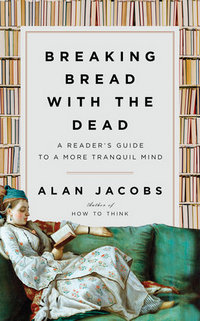
Breaking Bread with the Dead by Alan Jacobs: Interacting with the Classics from a Contemporary Perspective in Order to Learn and Critique

Breaking Bread with the Dead

Breaking Bread with the Dead: A Reader’s Guide to a More Tranquil Mind

by Alan Jacobs

Hardcover, 192 pg.
Penguin Press, 2020

Read: September 26-October 15, 2020
Grab a copy from your local indie bookstore!

What’s Breaking Bread with the Dead About?

If I tried to summarize this book (unless I read it 3-4 more times), it would be out-of-control, just me blathering on for 4+ pages. So, let’s have mercy on us all and just appropriate what’s on the publisher’s site:

>From the author of HOW TO THINK and THE PLEASURES OF READING IN AN AGE OF DISTRACTION, a literary guide to engaging with the voices of the past to stay sane in the present

W. H. Auden once wrote that “art is our chief means of breaking bread with the dead.” In his brilliant and compulsively readable new treatise, Breaking Bread with the Dead, Alan Jacobs shows us that engaging with the strange and wonderful writings of the past might help us live less anxiously in the present–and increase what Thomas Pynchon once called our “personal density.”

Today we are battling too much information in a society changing at lightning speed, with algorithms aimed at shaping our every thought–plus a sense that history offers no resources, only impediments to overcome or ignore. The modern solution to our problems is to surround ourselves only with what we know and what brings us instant comfort. Jacobs’s answer is the opposite: to be in conversation with, and challenged by, those from the past who can tell us what we never thought we needed to know.

What can Homer teach us about force? How does Frederick Douglass deal with the massive blind spots of America’s Founding Fathers? And what can we learn from modern authors who engage passionately and profoundly with the past? How can Ursula K. Le Guin show us truths about Virgil’s female characters that Virgil himself could never have seen? In Breaking Bread with the Dead, a gifted scholar draws us into close and sympathetic engagement with texts from across the ages, including the work of Anita Desai, Henrik Ibsen, Jean Rhys, Simone Weil, Edith Wharton, Amitav Ghosh, Claude Lévi-Strauss, Italo Calvino, and many more.

By hearing the voices of the past, we can expand our consciousness, our sympathies, and our wisdom far beyond what our present moment can offer.

So, what did I think about Breaking Bread with the Dead?

Really, what I want to do at this point is to write a series of posts about this book (probably not one per chapter, I could probably combine a couple of chapters together). But really, they’d be the equivalent of those old Chris Farley SNL interviews, “So, you remember X? Yeah…that was cool.”

I’m not saying this book is perfect, but it’s insightful, it’s thought-provoking, and it’s impossible to read without feeling a whole lot more well-read than you are* and (simultaneously) be inspired to read more and more widely. This is essentially true of everything Jacobs writes, I have to admit, so that’s not news. But it’s accurate.

* This is not necessarily true for you, just me.

At the end of the day, you may not agree with every way that Jacobs applies his principles for reading outside your time/culture/perspective, but those principles he enumerates are pretty sound—and at the very least provide a starting point. I think Jacobs is right more than he’s not, and even when I’m not convinced by him, I still find a lot to value.

Get it, chew on it, see if you can apply it yourself.


4 1/2 Stars

2020 Library Love Challenge

This post contains an affiliate link. If you purchase from it, I will get a small commission at no additional cost to you. As always, opinions are my own.

20 Books of Summer 2020: Wrap-Up

20 Books of Summer
Well, that’s a wrap on the 2020 20 Books of Summer. You may accuse me of playing fast and loose with the challenge (and you’d be right!), but this seems like a casual enough thing that I really don’t care (and I can’t imagine anyone else does, either). As I mentioned last month, I did a lousy job of taking into account new releases, review copies, and life when I made the original list. I made a valient effort, but I just couldn’t post about all these books by September 1 (I did read all of them by the end of August, I note only semi-defensively), but in that last week, it hit me, June 1-August 31 isn’t really “Summer.” It works as a rough designation, but June solstice to the September equinox is a better definition. I’m not that pedantic though (well, about seasons). But here in the States, “Summer” also is defined as the period from Memorial Day through Labor Day, which was just the time I needed to get everything posted.

So I’m calling this a win. I liked the focus this gave me for the last couple of months, and I know I read some things I’ve been meaning to read for months because they were on this list and I couldn’t make (yet another) excuse to put it off. I think next year I’ll do a better job of taking into account New Releases when I make my list (how Peace Talks wasn’t the first book I put down I’ll never know) to make life easier for me–I also think I’ll put down more of the books I own, but keep delaying on. I really like freeing up space on my (literal) TBR shelf.

I had a lot of fun doing this and looking at others working their way through the challenge. Congrats to the winners.


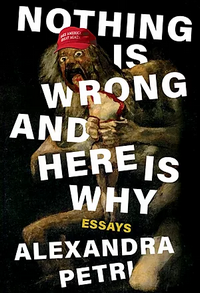
✔ 1. Nothing Is Wrong and Here Is Why by Alexandra Petri (my take on the book)
✔ 2. The Last Smile in Sunder City by Luke Arnold (my take on the book)
✔ 3. Screamcatcher: Dream Chasers by Christy J. Breedlove (my take on the book)
✔ 4. The Finders by Jeffrey B. Burton (my take on the book)
✔ 5. Fair Warning by Michael Connelly (my take on the book)
✔ 6. One Man by Harry Connolly (my take on the book)
✔ 7. The Curator by M. W. Craven (my take on the book)
✔ 8. The Ninja Daughter by Tori Eldridge (my take on the book)
✔ 9. The Rome of Fall by Chad Alan Gibbs (my take on the book)
✔ 10. American Demon by Kim Harrison (my take on the book)
✔ 11. Ink & Sigil by Kevin Hearne (my take on the book)
✔ 12. Betty by Tiffany McDaniel (my take on the book)
✔ 13. Imaginary Numbers by Seanan McGuire (my take on the book)
✔ 14. Curse the Day by Judith O’Reilly (my take on the book)
✔ 15. Of Mutts and Men by Spencer Quinn (my take on the book)
✔ 16. Rather Be the Devil by Ian Rankin (my take on the book)
✔ 17. Muzzled by David Rosenfelt (my take on the book)
✔ 18. Bad Turn by Zoë Sharp (my take on the book)
✔ 19. The Silence by Luca Veste (my take on the book)
✔ 20. The Revelators by Ace Atkins (my take on the book)

20 Books of Summer Chart Aug

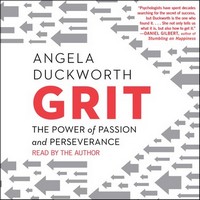
Grit: The Power of Passion and Perseverance (Audiobook) by Angela Duckworth: The Key is Passion and Perseverance, not Talent

Grit

Grit: The Power of Passion and Perseverance

by Angela Duckworth

Unabridged Audiobook, 9 hrs., 22 mins.
Simon & Schuster Audio, 2016

Read: August 18-21, 2020
Grab a copy from your local indie bookstore!

…as much as talent counts, effort counts twice.

What’s Grit About?

I’m afraid I’d get lost in minuate or that I’d overcorrect and not give an adequate idea if I tried to give a thumbnail, so let me borrow from Duckworth’s website:

pioneering psychologist Angela Duckworth shows anyone striving to succeed—be it parents, students, educators, athletes, or business people—that the secret to outstanding achievement is not talent but a special blend of passion and persistence she calls “grit.”
Why do some people succeed and others fail? Sharing new insights from her landmark research, Angela explains why talent is hardly a guarantor of success.

Angela has found that grit—a combination of passion and perseverance for a singularly important goal—is the hallmark of high achievers in every domain. She’s also found scientific evidence that grit can grow.

Angela gives a first-person account of her research with teachers working in some of the toughest schools, cadets struggling through their first days at West Point, and young finalists in the National Spelling Bee. She also mines fascinating insights from history and shows what can be gleaned from modern experiments in peak performance. Finally, she shares what she’s learned from interviewing dozens of high achievers—from JP Morgan Chase CEO Jamie Dimon to Seattle Seahawks Coach Pete Carroll.

It’s a fascinating mix of psychological research, case studies, and personal anecdotes. Duckworth structured this in such a way that not only it was informative and educational, it was enjoyable and motivational.

How about the narration?

I thought Duckworth herself was a great choice for narrators—she gives an energetic reading, that feels all the more authentic because it’s based on her research and experiences*. She talks at one point about the work she put in to make her TED Talk more successful and probably carried over that work to this. In the end, it was one of the more compelling non-fiction narrations I can remember.

* Not that another narrator would’ve felt inauthentic…

So, what did I think about Grit?

I loved this—I was entertained, educated, and a little inspired. The subject was interesting, the approach challenging, and didn’t always give the answers you expected. Duckworth made it clear that with the right mindset and time, it was possible to increase your own grit and find a measure of success. It’s not a one-size-fits-all solution, nor is it a promise of instant success. Just a reassurance that smart work can pay off.

I couldn’t stop thinking of different friends/family members that I wanted to share insights from this with—I think one son, in particular, should be very happy that he was busy with school while I was listening to this so I didn’t force him to listen along (it probably would have done him some good, but he probably wouldn’t have appreciated it in the moment).

The associated PDF was a nice supplement to the audiobook (so I can see charts/graphs and whatnot). Still, I think I’m going to have to get a hold of the hard copy for easy reference (it’s just easier to flip through to find something, or to use the index, than skipping through an audio file) and probably give out a copy or three.


4 1/2 Stars

2020 Library Love Challenge

This post contains an affiliate link. If you purchase from it, I will get a small commission at no additional cost to you. As always, opinions are my own.

Page 42 of 62

Powered by WordPress & Theme by Anders Norén