Category: Theology/Christian Living Page 18 of 32

REPOSTING JUST CUZ: The Christ of Wisdom by O. Palmer Robertson

The Christ of WisdomThe Christ of Wisdom: A Redemptive-Historical Exploration of the Wisdom Books of the Old Testament

by O. Palmer Robertson

eARC, 432 pg.
P&R Publishing, 2017

Read: May 7 – 21, 2017


Robertson’s preface laments the way that the Wisdom Literature of the Old Testament is usually ignored in Redemptive-Historical studies —

…how do you fit these wisdom books into the flow of redemptive history that consummates in the Christ? By letting them be what they are in their own distinctiveness. They are, it should be remembered, canonical, divinely revealed, and authoritative writings that tell the world how and what to think about the deeper mysteries of human life. Rather than submitting to the moldings and bendings of modernity, these books broaden our understanding of the nature of redemptive history. Divine progress in the complete restoration of reality does not merely move in a purely linear fashion like the flight of an arrow moving across time and space without deviation until it reaches its target. This “third dimension” of redemptive history moves in a cyclical pattern. For certain aspects of God’s salvation perform according to a pattern of regulated repetition.

To ignore this dimension of redemptive history is to exclude a major portion of the old covenant canon—and that you do not want to do.

So how do you discuss these books from a RH point of view? This is what Robertson seeks to do in this book — not as a final answer, but as the beginning of a search for wisdom along these paths.

In one sense, Robertson could’ve made this easier to talk about this book — there’s not one central argument developed throughout. There’s a general discussion (brief) of wisdom, wisdom Biblically defined, that is. And then using that discussion, Robertson looks at the Wisdom Literature of the Old Testament (and Lamentations, which is not usually considered Wisdom Literature, but can function as such), summarizing each book, looking at the various forms of wisdom described and passed on through it.

Simply,

Wisdom is the ability to understand the basic principles inherent in God’s created order, and to live by those principles. Wisdom enables a person to summarize these basic principles in a succinct and memorable fashion. Wisdom is living out the whole of life with a constant awareness of accountability before a loving, gracious, and just Creator and Redeemer.

The work he does to get to this summary is well worth the time and effort to work through. Actually, that goes for everything in the book, but I’ll hold off on saying that kind of thing for a few paragraphs.

The chapter on Proverbs is, fittingly, the longest and most developed. He discusses various approaches to the book, to understanding its construction and from there trying to understand it:

A much more accurate view of the theology of Proverbs may be gained from a covenantal perspective. The wise sayings of the book are not presented in a vacuum. They are not purely moralistic aphorisms. Instead, they are steeped in theistic assumptions. These wise observations about how the world works assume that God the Creator is none other than Yahweh, the Lord of the Covenant.

This, right here, would help so much of what I’ve read about Proverbs over the last few decades. To get into everything that Robertson says about the pursuit of Wisdom, passing it on and living by it from this book would make this post unbearably long — but it builds the foundation for everything that comes. Proverbs covers Wisdom as a whole — the rest of the book deals with it in specific areas.

While dealing with the personification of Wisdom in Proverbs 8, Robertson gives an excursus, “Athanasius as the Champion of the opponents of Arianism,” that is just gold. I’d love to see this developed into something longer.

Following Proverbs, he moves on to Job. Job doesn’t give us the answers to the puzzling circumstances of life, but for those who understand the book, they learn how to puzzle through the circumstances, how to think about them — how to ask God about them. Yes, there are answers given in the book — not easy answers, not the answers anyone necessarily wants, but answers — answers tied to the hope of the Resurrection. But wisdom knows to look for those answers in the difficulties of life, with a sure faith that is willing to look at dark circumstances and say, “I don’t know why this is happening, but I trust in Him Who does.”

Ecclesiastes, is, naturally, a tricky chapter — Robertson threw me a curveball when setting aside the usual discussion of authorship of the book to note

But a related question of some significance for understanding the book has been generally neglected. This neglected question is the identity of the “target audience”of Ecclesiastes.

Chewing on this a little helps get through some of the discussion of authorship. There are so many divergent readings of Ecclesiastes that your head can swim just trying to get a sense of them, Robertson is a pretty sure guide through them before landing on his conclusion that Ecclesiastes presents a “realistic picture of life” — one that is a precursor to Paul’s discussion in Romans 8, where creation is subjected to frustration, but that this is being renewed. I do think this chapter could’ve been organized in a more straight-forward way, but I appreciate the way that Robertson makes you work through various considerations and themes before leading to his conclusions — which are all very helpful.

His discussion of Lamentations, summed up in the subtitle “How to Weep,” was one of the best things I’ve read on the book (an admittedly too-short list). You may think that’s a pretty easy thing to learn — but there’s a wise way, a godly way to weep over the tragedies that will come into our lives. The book of Lamentations teaches us that — and, here’s the RH emphasis coming through — there’s a hope tied to the wise weeping. A hope tied to faith in God’s commitment to preserving a repentant people to Himself.

Lastly, we get to the wisdom of “How to Love” (in a marital sense) in the Song of Songs. The way he reads the book is a “Redemptive-Historical” way, in

terms of the redemptive work of God in restoring humanity to the situation prevailing at the time of creation . . . a restoration of the initial blessing of man and woman in their relation to each other, just as when they first stood in each other’s presence “both naked” but feeling “no shame” (Gen. 2:25). This Song rejoices in the fullness of God’s redemption of the marriage relationship.

He concludes this chapter uniquely, with a script for a Dramatic Reading of the Song of Songs — I think there could’ve been a bit more instruction on how to approach such a Reading — and why — than he gave. But I really appreciated that part.

He could’ve used a conclusion to wrap things up — returning to the closing admonition of the opening chapter. But that’s probably just a taste thing on my part.

There’s a focus on the literary/poetic forms in each book tying in the themes and teachings of them to the way the author presents them. This kind of discussion — no matter the type of literature (inspired or not) always stretches me. I imagine I’m not alone in that — in fact, I bet many people will skip those parts. This is to their own detriment. Robertson discusses these matters in a way that takes some effort to understand, but it’s effort that pays off.

This is a truly helpful book — not full-fledged commentaries on any of the books, but helpful summaries pointed towards seeing the wisdom passed down in each book, and tied into the Redemptive work going on in history all around us. I found it interesting that the recent A Biblical-Theological Introduction to the Old Testament doesn’t approach some of these books the same way as Robertson — in some ways flatly contradicting him. I’d hoped for more overlap between the two works approaching this material from the same framework — but none of the contradictions or differences change the overall message of the Biblical material, just shadings. Honestly, in each case, I think Robertson’s readings are easier to square with the texts in consideration (and not just because he has more pages to develop his points, either).

Robertson, as always, delivers the goods with this book. The reader has to think about what he says, has to drag out their Bible and use the two books together, but will ultimately come out the better for it. I found this book to be incredibly helpful, insightful and something that drove me back to the fullness and fulfillment of all the wisdom of God — Jesus the Messiah. Just where Robertson wants his readers to focus.

Disclaimer: I received this eARC from P&R Publishing via NetGalley in exchange for this post — thanks to both for this.
N.B.: As this was an ARC, any quotations above may be changed in the published work — I will endeavor to verify them as soon as possible.

—–

4 Stars

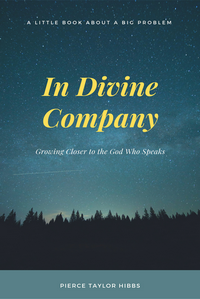
In Divine Company by Pierce Taylor Hibbs: Communication Failure?

In Divine CompanyIn Divine Company: Growing Closer to the God Who Speaks

by Pierce Taylor Hibbs

DETAILS:
Publication Date: June 7, 2018
Format: Kindle Edition
Length: 43 pg.
Read Date: June 5, 2022

God is a communicative being who speaks with himself in three persons and speaks to his creation by way of revelation. This communicative nature of God is utterly critical. The moment we say God does not speak in any recognizable sense is the moment we throw our theology in the wastebasket, along with any hope of relationship. Speech is at the core of who God is, and it’s how we come to know him.

What’s In Divine Company About?

Like many, Hibbs sees a problem in the prayer life of most Christians, and it plays a significant role in the feeling too many have of being distant from God. He calls this a “communicative malnourishment.”

His treatment for CM is two-pronged:

predictable, I think, but I hope to look at it in fresh ways: (1) following God’s voice in Scripture and listening to what the world is saying about him (hearing from God), and (2) praying to the Trinity (speaking with God).

This short booklet looks at God (and then His people) as communicative beings, as language as communion behavior. God’s communication comes from General and Special Revelation, ours is in prayer.

What did I think about In Divine Company?

If you read this book and change nothing in your life, then either I have failed as a writer or you have failed as a responsive reader…I want to be forthright in saying change is the most important measure of value for this book. So, I encourage you to read and grow, not merely to read and know.

If it’s the most important measure of value for the book, it’s really the best way to evaluate the book. It’s too soon for me to say how much this book has changed me, it’s only been a week—but I think the potential is there.

I love this approach to thinking about prayer and the problems with our prayer life. By better understanding the nature of our communicative God, we better understand our need (as image-bearers) to communicate with Him. Communication is part of our nature as it is His nature, how can we not communicate with him, and seek to find more ways and more time to do so? To be better listeners and better talkers?

Hibbs has got to be my favorite theological writer today. There are theologians that I learn more from, but none that I enjoy reading like him—it only makes sense, he cares a bit more about language and writing than your typical theologian.

This is good for the mind and offers plenty of tools to use for change. The rest is up to the reader.


4 Stars

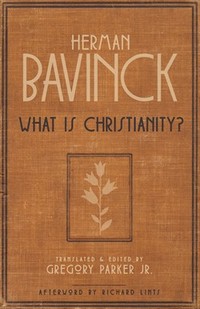
What Is Christianity? by Herman Bavinck, Gregory Parker Jr. (Translator): Short, Sweet, To the Point

What is Christianity?What is Christianity?

by Herman Bavinck, Gregory Parker, Jr. (Translator)

DETAILS:
Publisher: Hendrickson Academic
Publication Date: May 17, 2022
Format: Paperback
Length: 83 pg.
Read Date: May 29, 2022
Support Independent Bookstores - Visit IndieBound.org

After all, [mankind’s] deepest needs always boil down to the fact that all that is finite rests in the Infinite and Eternal One, who cannot be thought of in any other way than as a just and holy God who hates sin and is far removed from wickedness. But if there is to be any talk of comfort and peace for mankind, then this just and holy God must also be a merciful and gracious Father, who reconciles and forgives sin, frees us from guilt, and accepts us as his children out of grace. And finally, he must also be the Almighty and Faithful One who can realize what he promises and who, in the course of regeneration and sanctification, transforms the world and mankind into a kingdom of God.

These are the ineradicable needs of the human heart. But they are also the basic ideas of Christianity, which stand before us in historical facts as monuments. The apostolic benediction of the love of the Father, the grace of the Son, and of the fellowship of the Holy Spirit is the core of the universal, undoubted, Christian faith [2 Cor. 13:14].

What’s What is Christianity? About?

These are two short works by the noted Dutch Theologian newly translated into English. The second piece is an essay he wrote in 1883 called “The Christian Faith” (and because it’s the way my mind works since it was written first, I had to read it first).

The first piece is a small book called Christianity that was published in 1912 as part of a series of books called Great Religions. In this work, he starts by talking about who Jesus is, then covers the life of Jesus and those aspects of the Christian faith common to all its branches. From there he gives a survey of this history of doctrine that is both concise and thorough (in a way I wish I could emulate), before landing on and summarizing a Reformed Protestant understanding of the Faith.

A Nice Touch

Before the text, Parker reprinted a brief review from The Princeton Theological Review of Christianity. It was nice to see a contemporary take on the work from a trusted name to see that what people think of Bavinck now is pretty much what people thought of him then.

So, what did I think about What is Christianity??

These are apologetic works to be sure, but they aren’t aggressive or all that assertive. Bavink is clear and convincing without being combative. Typically for him, he displays a catholicity in his approach—he’s clearly Reformed Protestant, but he doesn’t disparage other views.

Bavinck has a reputation (somewhat deserved) as being a difficult author to read and comprehend. This small book demonstrates pretty conclusively that he’s not always difficult.

I don’t know he accomplishes all he does in so few pages—there’s a lot of subtle theological and apologetic work, here. But there’s also a lot that’s just easy to digest, clear and helpful. Bavinck gives his readers a Christ-centered, Christ-focused definition and description of Christianity (you’d think that’d be a given, but…). As Warfield put it, “We cannot imagine how the work could be done better.”


4 1/2 Stars

This post contains an affiliate link. If you purchase from it, I will get a small commission at no additional cost to you. As always, opinions expressed are my own.

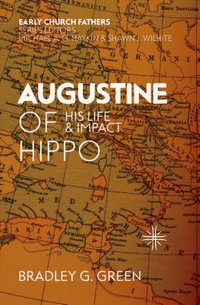
Augustine of Hippo: His Life and Impact by Bradley G. Green: A Protestant Introduction to this Important Father

Augustine of HippoAugustine of Hippo:
His Life and Impact

by Bradley G. Green

DETAILS:
Series: The Early Church Fathers
 
Publisher: Christian Focus Publications
Publication Date: November 6, 2020
Format: Kindle Edition
Length: 224 pg.
Read Date: May 22, 2022
Support Independent Bookstores - Visit IndieBound.org

At the end of the day, we stand on the shoulders of giants. One of the giants of giants is undoubtedly Augustine. Protestants and Catholics will continue to read him and mine his works, which is as it should be. He built the edifice of Western theology, and one simply cannot grasp the nature and contour of Western theology without going through Augustine.

What’s Augustine of Hippo About?

This is a mini-biography of Augustine and an overview of his more significant writing and teaching.

As a biography, the emphasis is on Augustine’s early life up through being made a priest—and it tends to gloss over everything else. It was interesting—even if a lot of it was common knowledge (if it can be said that anything about a Church Father is common knowledge).

Then it moves into an overview of some of Augustine’s teachings and the controversies he was involved in—the Pelagian controversy and his struggles against the Donatists in particular.

Strengths

I thought the material on the nature of God and The Trinity was very helpful. The section on the Donatists was great—and not just because that’s something I’ve been meaning to read about for a dozen years.

The chapter “Augustine and the Protestant,” was a great addition to this book. Green’s honest about the differences between Augustine and those who’d claim to follow him during and after the Reformation. But he’s also good at pointing out where Augustine would have common ground with us, and it’s good to see how Protestant thought developed Augustine.

The Series

I literally stumbled on to this series, The Early Church Fathers, a few weeks ago and thought it sounded like a great idea. It looked kind of like a mix of Crossway’s Theologians on the Christian Life and Oxford’s Very Short Introductions (incidentally, that’s what it ended up being).

I picked this one to start with because while I’m no Augustine expert at all, I’m familiar enough with him—his life and writing—to have a rough idea about how to evaluate the book. If I’d picked Basil or Patrick, there’s be more guesswork involved.

So, what did I think about Augustine of Hippo?

First, as I began to lay out my writing and reading agenda, and to think through how to structure the book, one thought kept pressing itself upon me: I want to write a book that I would hand to someone who asked: ‘What would you recommend to me if I wanted to begin to understand Augustine?’ Life is too short for ‘just another book’ on Augustine. So, I hope you find that this is a book about which you can say: ‘It gave me a good overview of who Augustine was and what he thought.’ Second, this book is written by someone committed to the theological perspective of the Protestant Reformation. Rather than be coy or even duplicitous, it is best to be straightforward on this point.

On those terms, the book was a success. I really thought this was great—I really liked both the look at his life and his writings. Green provided an overview of Augustine and his thought that covers all the basics, and while it may not get into the weeds on everything—he at least points out where some of the weeds are.

You can’t be thorough in 200 pages when it comes to someone like Augustine (it can’t be done when it comes to most people—and most people aren’t Augustine) and Green doesn’t even pretend to try. This is about the essentials. This is about beginning to understand.

Yes, Roman Catholics are going to have some problems with what he says about Augustine. But I think he made a good-faith effort to not just get Augustine on his side (as he says a couple of times).

This is an easy read, but still thoughtful. It’ll also make the reader want to read more about Augustine* and maybe take Green’s advice on where to start reading the man himself.

* Like maybe the entry on Augustine in the aforementioned Crossway series.


3.5 Stars

This post contains an affiliate link. If you purchase from it, I will get a small commission at no additional cost to you. As always, opinions are my own.

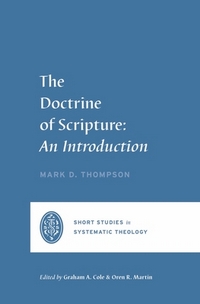
The Doctrine of Scripture: An Introduction by Mark D. Thompson: A Strong and Helpful Entry this Series

The Doctrine of ScriptureThe Doctrine of Scripture:
An Introduction

by Mark D. Thompson

DETAILS:
Short Studies in Systematic Theology
Publisher: Crossway
Publication Date: April 26, 2022
Format: Paperback
Length: 185 pg.
Read Date: May 15, 2022
Support Independent Bookstores - Visit IndieBound.org

The Christian doctrine of Scripture is an integrated account of the word of the living God given to us in written form through the conscious, creative, yet faithful agency of human servants especially prepared for this work, and attended at every point by the Holy Spirit. As a doctrine, it does not arise from isolated and unusual “proof texts.” Instead, it emerges from a broad and deep biblical theology and is ultimately anchored in the being and character of the triune God. At its center is Jesus Christ, the incarnate Word, who himself appealed to the written word, both endorsing and fulfilling the Old Testament and, through the commission he gave to his apostles and the promise of his Spirit, authorizing the New Testament.

What’s The Doctrine of Scripture About?

This seventh volume in the Short Studies in Systematic Theology series addresses (as the title states), the doctrine of Scripture.

Thompson grounds his discussion in Christ’s view of Scripture—how he uses it, refers to it, and points people to that. If that’s his view, then those who follow him ought to share it. From there, he discusses God’s speaking to his people as depicted throughout Scripture—as He is a communicative God, we ought to rightly esteem and study that communication—starting with the spoken word and then the record of it—as well as the rest of the written revelation given to us. He then explains the attributes—or character—of Scripture: clarity, truthfulness, sufficiency, and efficacy. The book then closes with some guidance and encouragement for how the believer ought to use scripture—how we are to be discipled by it.

Highlights

I typically like to address highlights in a book like this—sadly, I don’t think I can really point to any. I can’t point to a chapter or two, or line of argumentation, or anything that I thought was more valuable, made a bigger impact on me, or anything else. It’s a strange feeling, really. Each chapter was equally strong—it’s not often you find a book like that.

I guess the strongest part of the book was Thompson’s approach—he kept it centered on Christ. Nothing against other books on the Doctrine of Scripture or Sola Scriptura, etc.—but few of them focus on Christ this way.

So, what did I think about The Doctrine of Scripture?

How a person responds to the word of God, spoken by Jesus or written in the Scriptures, has serious consequences. The most articulate confession of the nature of Scripture and the strongest affirmations of its authority mean nothing if a person is not willing to live under that authority with repentance and faith. In contrast Jesus once exclaimed, “Blessed . . . are those who hear the word of God and keep it!” (Luke 11:28).

This is one of the better entries in the series—it covers all the basics in clear, comprehensible terms, and then goes a little further, prompting the reader to further reflection and study.

A book this good deserves more than that sentence as an evaluation, but there’s not much more to be said. If you’re looking for a capable, accessible, and useful introduction to the Doctrine of Scripture—or a refresher on the essentials on this vital topic, you will be well served to give this a read.


4 Stars

This post contains an affiliate link. If you purchase from it, I will get a small commission at no additional cost to you. As always, opinions are my own.

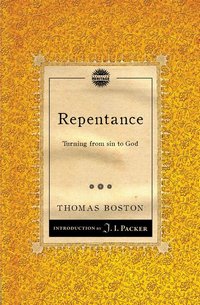
Repentance: Turning from Sin to God by Thomas Boston: Calls to Faith and Repentance as Clear Today As They Were 300 Years Ago

RepentanceRepentance:
Turning from Sin to God

by Thomas Boston

DETAILS:
Publisher: Christian Heritage
Publication Date: September 19, 2012
Format: Paperback
Length: 250 pg.
Read Date: May 1-8, 2022
Support Independent Bookstores - Visit IndieBound.org

What’s Repentance About?

This is a collection of sermons preached by Thomas Boston to his congregation in the parish of Ettrick in the early eighteenth century.

The sermons were selected from the sixth volumes of his collected works, and really weren’t conceived of as a set by him. They’re all on the theme of Repentance, from a variety of texts of Scripture.

They are warm, pastoral, clear, and firm. Pretty much everything you want and expect in a collection of Eighteenth-Century Presbyterian sermons.

Tweaking Boston

There were some layout changes and restructuring of the original texts for this book (it’s too long to detail it here)—basically taking works from the early 1700s and making them read like something that was written in the early 2000s.

It bugged me. It might make it easier to read and more approachable to contemporary readers, but it left a bad taste in my mouth.

Modernization of spelling and punctuation don’t bother me that much (I prefer to read it without the editing, but I’m weird that way). It’s the other tweaks that get to me.

The Introduction

Not at all surprisingly to anyone who’s ever read anything J.I. Packer ever wrote about Puritans and their successors the Introduction he wrote is almost as good as the rest of the book. It’s simply impossible to read that and not get ramped up for the rest.

So, what did I think about Repentance?

I like Boston—I’ve never not profited from time with his work. The Crook in the Lot is one of the greatest works I’ve ever read.

However (you knew there was a “but” coming), I’m not entirely convinced this collection is the best representation of either the doctrine or the preacher. As Packer notes, by the time of the later Puritans and then Boston, the emphasis on repentance had shifted from the penitent life (as espoused by Luther, Calvin, Book of Common Prayer, etc.) to the initial act of repentance of the convert. It’s that focus that dominates this book.

It’s good that it does. It’s important that it does. There’s not a word that Boston says on that point that is incorrect. But, I really could’ve used more about what repentance should look like every day, calls to/reminders for the believer to shape their lives that way. I realize that says more about me than the work, but given the title, that’s what I expected.

It’s a good collection of sermons. Boston’s way with words is rare and great to read. I just didn’t appreciate this as much as I’d hoped to.


3 Stars

This post contains an affiliate link. If you purchase from it, I will get a small commission at no additional cost to you. As always, opinions are my own.

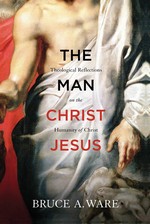
Reposting Just Cuz: The Man Christ Jesus: Theological Reflections on the Humanity of Christ by Bruce A. Ware

Was flipping through this book the other day, dipping my toes in here and there after reading Bavinck on Christ’s humanity (not that there was a problem with Bavinck, I just needed someone else’s voice in my head for a minute). So it seemed fitting to repost this today, rather than something half-baked on another book. I just wish that I’d finished the sentence I abandoned in paragraph #4….

The Man Christ Jesus: Theological Reflections on the Humanity of ChristThe Man Christ Jesus: Theological Reflections on the Humanity of Christ

by Bruce A. Ware
Kindle Edition, 160 pg.
Crossway, 2012
Read: March 9, 2014

One of Ware’s presuppositions — repeated throughout this book — is that evangelical Christians today have a good understanding of and embrace the doctrine of the Divinity of Christ, but their understanding of his humanity is wanting — enter this book. Without dipping a toe into Nestorianism, Ware wants his readers to understand the humanity of Jesus. He explains this so with a constant eye to His divinity — and how that divinity is expressed in the life of the God-man.

One of his main interests is for his readers to understand the dependency of Jesus on the Spirit — His indwelling, guidance and empowering. Without that indwelling, it would be impossible for Jesus to carry out His father’s will. If we grasp that, we see the limitations of the divine nature of Christ to his earthly work, which may seem paradoxical, but isn’t as Ware will explain.

The application portions to every chapter keep this book from being merely theoretical (however great that theory is) to helping readers put shoe leather to this teaching — as every teaching ought. It’s just easier when the author goes out of his way to help us start that on our own.

I really appreciated the chapter “Resisting Temptation,” Ware’s reflections on Hebrews 4:15 and the idea of Jesus being tempted to sin in general. He surveys some of the leading theories before suggesting his own idea how the idea of the impeccable theanthropos being tempted without sinning. He put into words an idea or two that had been floating around in my own head for a few years, and

I was surprised that Ware had to devote an entire chapter defending the masculinity of the God-man, although I shouldn’t have been. Sadly, this was a pretty boring chapter. Ware really beat this horse far beyond the point of its flatline. Sadly, he probably needed to be as through given today’s thinking.

Deep enough to discourage a casual read, but friendly enough that this should be able to be read by thoughtful laity.

—–

4 Stars

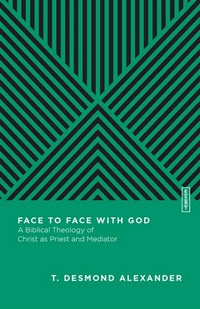
Face to Face with God: A Biblical Theology of Christ as Priest and Mediator by T. Desmond Alexander: A Biblical Theology of Hebrews

Face to Face with GodFace to Face with God:
A Biblical Theology of
Christ as Priest
and Mediator

by T. Desmond Alexander

DETAILS:
Series: Essential Studies in Biblical Theology 
Publisher: IVP Academic
Publication Date: March 22, 2022
Format: Paperback
Length: 138 pg.
Read Date: April 17-24
Support Independent Bookstores - Visit IndieBound.org

A study of Jesus Christ’s high priestly ministry takes us on a journey through paths that have largely become overgrown through lack of travelers. At times our journey will require perseverance as we familiarize ourselves with new terrain. Ultimately, we shall be rewarded as new vistas will come into view as we orientate ourselves toward the throne of grace in the heavenly sanctuary. Most important of all, as we follow the ascended Christ to the right hand of the Father in heaven, we shall hopefully discover afresh the magnitude of God’s forgiveness and the generosity of his love as he invites us to share in a kingdom that can never be shaken.

What’s Face to Face with God About?

A/The* central theme of the Epistle to the Hebrews is the Priesthood of the Lord Jesus Christ. Face to Face with God looks at the themes of priesthood—in general, and Christ’s specifically—in Hebrews and by examining the passages and teachings from the Old Testament that the Epistle is building on.

Amongst the themes Alexander explores are The Tabernacle (and Temple), Moses and Aaron’s relationship with God (prefiguring Christ’s), the role of the High Priest as Intercessor as well as in presenting the sacrifice, and the Priesthood of Melchizedek. He looks at the texts we get these ideas from as well as how the author of Hebrews deals with them as he develops his arguments, ending with a consideration of how believers are to live as a result of his priestly work—something that ought not to be ignored.

* Depending on who you ask.

So, what did I think about Face to Face with God?

This is an introductory survey, as are all the books in this series, so Alexander doesn’t dig too deeply into any of these ideas. But he does explore them with enough depth that the reader gets the complete picture.

This reads differently than the others in the series due to the way Alexander uses the book of Hebrews as his focal point and examines the texts and themes that the author of Hebrews cites in order to understand them. It’s not better or worse than the organization of the others, it’s simply a feeling of freshness that benefits the series.

I learned a lot, Alexander’s framing of the question of when Christ’s work as priest began was incredibly helpful. Not because of the answer (although that was great), but because of the thought process that went into the answer—reframing the way I thought of priesthood in general and Christ’s in particular. I had a similar reaction to his material involving Melchizedek. The other chapters had similarly helpful material, and I don’t want to take anything away from them, but those are the two that clicked the most with me.

This is a very helpful book, an interesting read, and a great example of what Biblical Theology can bring to the table.


3.5 Stars

This post contains an affiliate link. If you purchase from it, I will get a small commission at no additional cost to you. As always, opinions are my own.

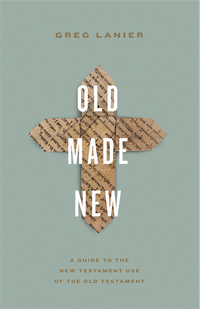
Old Made New by Greg Lanier: A Practical and Engaging Guide for Laypeople

Old Made NewOld Made New:
A Guide to the New Testament
Use of the Old Testament

by Greg Lanier

DETAILS:
Publisher: Crossway
Publication Date: April 12, 2022
Format: Paperback
Length: 137
Read Date: April 10-17, 2022
Support Independent Bookstores - Visit IndieBound.org

What’s Old Made New About?

Lanier’s goal is to enable the average reader of the New Testament to understand how and why the authors would use an Old Testament passage at a particular point. As often as the NT uses the OT, that’s so important.

He begins—and this is beyond sad that he has to—by explaining why the reader of the NT would want to understand their use of the OT. He then differs his approach from others—primarily he’s not going to get bogged down in or distracted by technical considerations. As interesting as I find that kind of thing, he has a point.

In Chapter 1, he explains his method for analyzing the NT usage of a portion of the OT (I won’t get into that here), and then he spends the next few chapters demonstrating it.

The bulk of the book consists in tracing the NT authors’ engagement with the OT along three major themes:
Chapter 2—articulating the gospel in terms of the saving work of God in history and the gift of salvation to individual believers
Chapter 3—articulating the fullness of Jesus in his person and work, both as divine Son and human Savior
Chapter 4—articulating the identity of the church as eschatological Israel, as well as its mission and conduct for today

Each chapter has a mix of shorter examples that help prove out these themes, as well as longer case studies (six per chapter) that model for the reader how to do the work.

Appendix

There is a fourteen-page appendix to this book, “Inventory of New Testament Uses of the Old Testament,” listing most of the major agreed-upon uses of the Old Testament in order of New Testament chapter and verse, and then notes what kind of NT usage (Quotation, Allusion, Citation). There are some disagreements about what verses are NT uses of the Old, so Lanier keeps it to those with widespread agreement.

This is a very useful list both for the sake of reference and to help the reader practice the principles in the book. I know I’m coming back to this appendix.

I would’ve liked another version of this list using the same data, but in order of the OT book/chapter/verse—only to make things easier.

So, what did I think about Old Made New?

Lanier did a great job of balancing explaining his points with demonstrating the principles, and showing why the reader would want to use these principles. This is an engaging book, an eminently practical read, and an easy-to-use hermeneutic guide.

I really liked Lanier’s 3-step approach to analyzing the usages, it’s easy to wrap your brain around both as an example and for following the example. His case studies are both great object lessons and interesting for what he shows about the passage. I’d have had no problem reading these chapters if they were twice as long for personal benefit. Getting a handle on tools like this is such an aide for personal study and understanding, and Lanier’s given the Church a great gift with such an easy-to-understand and easy-to-use guide.

I definitely recommend this to your attention, study, and application. You’ll be rewarded.


4 Stars

This post contains an affiliate link. If you purchase from it, I will get a small commission at no additional cost to you. As always, opinions are my own.

Instruction in Christian Love by Martin Bucer, Paul Traugott Fuhrmann (Translator): A 16th Century Classic We Need Today

Instruction in Christian Love [1523]Instruction in Christian Love [1523]

by Martin Bucer, Paul Traugott Fuhrmann (Translator)

DETAILS:
Publisher: Wipf & Stock Publishers
Publication Date: August 4, 2008
Format: Paperback
Length: 52 pg.
Read Date: April 10, 2022
Support Independent Bookstores - Visit IndieBound.org

What’s Instruction in Christian Love About?

This was written in response to some requests to expand on Bucer’s “sketchy lectures,” on the topic. In this brief book, he considers two ideas:

…according to the Scripture I exhort every one of you not to live for himself, but for his neighbor. I shall later show how to attain this ideal, for it can be realized in this world and life…

There are two chapters in the work, the exhortation, and application.

The Exhortation to not live for yourself, but for your neighbor takes the bulk of the work. Bucer begins by showing this obligation comes from the way humans were created and that the obligation continues—particularly for the believer. He then goes on to decry men seeking their own advantage, how that fuels injustice, wrapping up by saying the Christian not only shouldn’t seek their own advantage but should give up what is rightly due to them in order to promote the well-being of others.

The second chapter focuses on how the believer can carry out their duties—it was helpful and convincing. Almost everything he says here isn’t exclusive to this call to self-abnegation, but can be applied to most/all Christian duties. Which makes it more valuable, really.

So, what did I think about Instruction in Christian Love?

It’s a short work, so there’s not much to say. The second chapter is useful and can even be easily applied to the modern reader (sometimes 16th Century works are harder to relate to in their application).

But the treasure of this book is in the convicting and inspiring first chapter. I really had to be impressed with some of Bucer’s arguments and interpretation.

I came across a mention/description of this book in Meador’s What Are Christians For?, and I probably should’ve waited longer between the two—I couldn’t appreciate this work for Bucer’s genius as Meador’s words were still echoing in my ears. If I came to it fresher, I think I’d be more impressed.

But oh, well, it’s still a good work—and an easy read (outside of the conviction) that was well worth the time, and in years to come will be a very profitable re-read for me.

This post contains an affiliate link. If you purchase from it, I will get a small commission at no additional cost to you. As always, opinions are my own.

Page 18 of 32

Powered by WordPress & Theme by Anders Norén