Category: Theology/Christian Living Page 20 of 33

Why bother with church? by Sam Allberry: A Too-Brief (for me) but Solid Introduction to The Church

Why bother with church?Why bother with church?:
And other questions about
why you need it and why
it needs you

by Sam Allberry

DETAILS:
Series: Questions Christians Ask 
Publisher: Good Book Co.
Publication Date: February 12, 2016
Format: Paperback
Length: 95 pg.
Read Date: February 13, 2022

Support Independent Bookstores - Visit IndieBound.org

What’s Why bother with church? About?

Allberry starts with talking about one Sunday walking through a park on his way to his church’s service and how he was tempted to just stay and enjoy the park instead—he didn’t, but it raised the question, why not stay in the park? Why bother with church? Which serves pretty well as an introduction to this short book.

The Table of Contents actually does the best, brief job of telling you what to expect in this book. Sure, it uses 82 pages to answer all these questions, so obviously, none of the answers are too thorough, but they’re all complete enough to give someone a solid start on the ideas presented.

  1. What is church?
    Hasn’t the church done more harm than good?
  2. Why do I need church?
  3. What makes a good church?
    How should I pick a church?
    What are baptism and communion for?
  4. How is a church run?
    Can’t I view my small group as my church?
    Should pastors and elders only be men?
    Why are there so many denominations?
  5. How do I survive church?
  6. How can I be a good church member?
    What is the future of the church?

He concludes with an important reminder about what goes on in the church—in both worship and the life beyond the weekly service—pointing to the spiritual realities that are easy to forget.

Highlights

The second level questions appear at the end of the chapter and are a more focused look at something on the chapter’s topic. While I thought Allberry did a decent enough job answering the larger question, these “sub-questions” seem to be a more pressing contemporary question and add good value to the chapter.

The other highlight I’d focus on is Chapter 5, a title that might raise an eyebrow or two. Why would anyone think they need to “survive church”? In this chapter, Allberry tackles the ideas that church can be boring or exhausting (which feel like contradictory ideas unless you’ve actually spent time in a church), which are well and good—and an idea that too few think to tackle. But the best part of the chapter addresses people that have been hurt by the/a church. In too many ways, too many people know that part of church experience. It’s vital that Christians know how to deal with this idea—either for themselves or someone else. I am so glad that Allberry addressed this idea.

Shortcomings

Really, the only thing that stood out was the length—82 pages plus an introduction and conclusion means this is only a primer. For example, the section on “hurt by the church” that I liked so much only gets 12 small-to-medium-sized paragraphs. Which is good, but it’s just a sample of what needs to be said.

I realize that the length of the book is both a strength and a weakness—it’s not intimidating and will be more likely picked up by many than a book that would satisfy this reader. That’s by design, so I don’t hold it against the book, I just find the “sample” length dissatisfying.

So, what did I think about Why bother with church??

Last year, I read The Church: An Introduction and was disappointed with it, thinking it tried to do too much that was beyond an introduction and stumbled most of the time it did that. This was a much better introduction to the idea of The Church. Allberry’s approach was far more approachable, very basic—which doesn’t quite fit that other series. I couldn’t help but think while reading this one that if Allberry’s material was presented with the thoroughness and style of the other one, it’d be a perfect introduction.

That said, given this series’ approach to its topics—very simple, yet careful—or as the publisher describes it, “short, readable books,” this is a great introduction. It covers all the necessary areas in a way that’s clear and understandable by readers from 13 and up (possibly younger). Allberry writes in an easy, conversational tone that’s warm and inviting, you’ll race through the book (possibly requiring deliberate slowing down/rereading).

Is this a book on the topic that I’ll return to? Probably not—I’ll save that for more demanding works. Is this a book on the topic I can give/recommend to anyone looking for something on the idea? Without hesitation.


3 Stars

This post contains an affiliate link. If you purchase from it, I will get a small commission at no additional cost to you. As always, opinions are my own.

The Imputation of Adam’s Sin by John Murray: There’s a Good Deal of Theologizing in a Small Number of Pages Here.

The Imputation of Adam's SinThe Imputation of Adam’s Sin

by John Murray

DETAILS:
Publisher: P&R Books
Publication Date: August 31, 1977
Format: Paperback
Length: 95 pg.
Read Date: February 13, 2022
Support Independent Bookstores - Visit IndieBound.org

What’s The Imputation of Adam’s Sin About?

In four short chapters, John Murray examines the doctrine of the Imputation of Adam’s Sin—sketching out a few competing visions of the doctrine as well as laying out the particulars of it—the sin involved, the union between Adam and his posterity in it (from two different viewpoints), as well as the nature of the Imputaion itself.

He does this by examinings and exegeting Romans 5:12-19. More than 90 pages on those verses might seem overkill, but I can’t help but think that Murray was not getting as detailed as he wanted. It’s rather impressive to see him work all the areas I mentioned into this exegesis and interpretation.

So, what did I think about The Imputation of Adam’s Sin?

This was footnoted a couple of times in a book I read recently (probably Why Did Jesus Have to Live a Perfect Life? by Brandon D. Crowe), and I realized that despite seeing I don’t know how many references to it over the years, I’ve never gotten around to reading it. So, now I’ve fixed it. And I’m glad that I did. I learned a good deal more than I expected, and assume I’ll be coming back more than once to chew on this book.

This book is typical Murray—crisp, clear, concise, and convincing. Sure, there’s the drawback that his prose is dry and empty of all personality. The book doesn’t need them (and I’d think it strange to read Murray with it). I wouldn’t have minded a greater scope—like if there’d been another couple of passages to get this treatment other than Romans 5:12-19.

This is a great introduction to the idea of Imputation of Adam’s Sin and I strongly recommend it.


4 Stars

This post contains an affiliate link. If you purchase from it, I will get a small commission at no additional cost to you. As always, opinions are my own.

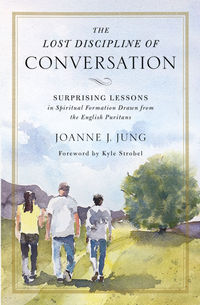
The Lost Discipline of Conversation by Joanne J. Jung: Seemed to Lose the Thread

The Lost Discipline of ConversationThe Lost Discipline of Conversation:
Surprising Lessons in Spiritual Formation
Drawn from the English Puritans

by Joanne J. Jung

DETAILS:
Publisher: Zondervan
Publication Date:  June 12, 2018
Format: Kindle Edition
Length: 224
Read Date: February 6, 2022
Support Independent Bookstores - Visit IndieBound.org

From the Back of the Book:

Recovering Spiritual Practices of the Past titles reach beyond commonly known spiritual formation practices in order to mine the wisdom of the past, bringing to light ways of thinking, living, and growing in Christ that the church today has largely overlooked.

In The Lost Discipline of Conversation, spiritual formation professor and author Joanne Jung walks readers through the Puritan practice of “conference,” or focused, spiritual conversations intended to promote ongoing transformation. An antidote to privatized faith, conference calls believers to biblical literacy and soul care in a context of transparency and accountability.

Useful for believers in any sphere or ministry or stage in life, conference is ultimately a tool for nurturing mutual, godly authenticity within community.

Beyond the Back of the Book

Part I, “Rediscovering a ‘Lost’ Means of Grace,” outlined the need for community and the benefit of this practice (although equating it with the Means of Grace is questionable).

Part II looks at the various contexts in which conferencing can take place and suggests some ways to promote it. I lost track of the idea of conferencing during this Part—it seemed so flexible so as to maybe lose meaning.

Part III

Part III is called “Soul-to-Soul Bible Studies,” and added nothing to the work. They were scripts/prompts to guide you through a one-on-one (or larger) study of a handful of seemingly random New Testament passages. The explanatory notes were redundant, and not incredibly useful.

I didn’t see the point of this part at all.

So, what did I think about The Lost Discipline of Conversation?

Seven years before this was published, Jung published Godly Conversation: Rediscovering the Puritan Practice of Conference, and I can’t help but wonder what my reaction to this book would be if I’d read it first. This feels like it’s building on the work done in the initial book. Maybe I’d walk away from this with a greater understanding of both Jung’s overall project as well as the Puritan practice of conference. Still, this book needs to be able to stand on its own, and it just doesn’t.

The biggest question I have from this book is what’s the foundation for this practice? How is “conferencing” based on, or built on, Puritan thought? You can’t follow Puritan practices (on this or any other point) without their teaching backing it up—it just doesn’t work that way. Leave that to Finney and those who follow in his footsteps, not to Bownd, Owen, or Alleine. Practices without the theology are meaningless actions. It’s not “do X, Y, and Z” to get spiritual growth in a mechanistic/automatic way, it’s not powdered milk where you just add water. The Puritans acted in certain ways (like conferences) because of something. Jung did her readers a disservice leaving that out.

I don’t necessarily contest the value of the practice, but I don’t know that she’s convinced me that it’s as valuable as she sets it out to be. I’ve read a good number of the original sources she cites, and I never got the inkling that this was particularly vital—useful, potentially, but as important as this?

I do have to wonder why the title specifies “English Puritans” when there’s so many citations of New England Puritanism. The distinctions aren’t huge, but there are differences. Just delete the word “English,” and it’s better. That seems picky, and probably is. But at a certain point, the quibbles I had with the material overwhelmed the pros, and the little ones got under my skin more than they should.

I feel bad about thinking like this about the book, because the person that recommended this to me clearly thought I’d appreciate it—and I wanted to. But this is largely a swing and a miss for me. At the risk of repeating myself, I do wonder what my reaction to this would’ve been had I read Godly Conversation first. As it is, though, I’ll chalk this up as a well-intentioned miss.


2 1/2 Stars

This post contains an affiliate link. If you purchase from it, I will get a small commission at no additional cost to you. As always, opinions are my own.

Reposting Just Cuz: In Christ Alone: Living the Gospel Centered Life by Sinclair B. Ferguson

I’ve been thinking about this book lately, and last night, I was so knackered that I couldn’t writ anything, so, I figured that it’d be nice to revisit this. Maybe someone else might want to think about it a bit.

—–

In Christ Alone: Living the Gospel Centered Life
In Christ Alone: Living the Gospel Centered Life by Sinclair B. Ferguson

My rating: 4 of 5 stars

There’s not a lot of in-depth theology here, you won’t come away from this with a deep understanding of any one subject, or a few related ones. This is a compilation of fifty articles, grouped together by topic, which will enable you to gain a refresher on a spectrum of topics, or an introduction to ideas, concepts and texts that you want to come back to and study in the future. As such, it’s a really strong compilation and one that I’m glad I spent an afternoon with.

Don’t get me wrong — it’s not that I didn’t learn anything, or gain a deeper understanding of anything. But compared, say, to his The Holy Spirit or Pundits Folly, it’s (by design) not as in-depth. I thought his framing the book of Romans as a series of exchanges (e.g., man exchanging the truth of God for a lie; the gospel exchange of righteousness and justification instead of unrighteousness and condemnation) was very handy and something I’m trying to internalize. The chapters that followed it were a series of glimpses at the letter to the Hebrews, and now I want an entire book on that epistle by Ferguson.

In the section on “The Spirit of Christ,” he has a chapter called “When the Spirit Comes,” which is an examination of John 16:8-11.

And when he comes, he will convict the world concerning sin and righteousness and judgment: concerning sin, because they do not believe in me; concerning righteousness, because I go to the Father, and you will see me no longer; concerning judgment, because the ruler of this world is judged.

His thesis is that while, yes, there is a continuing relevance of these verses,

we miss their rich significance of we interpret them in a way that bypasses their historical context. In their original setting, these words constitute a prophecy of the Spirit’s work on the day of Pentecost (Acts 2:1 ff).
When we recognize this, we are able to fill out the content of the promise. But when we fail to recognize it, we are in danger of interpreting (and thus remolding and distorting) Scripture in the light of our own experience.

I’ve got to say, I’ve been guilty of this remolding and distorting until today, and will have to set to work on correcting my thinking.

On the whole, the book doesn’t feel too much like a collection if unrelated articles, rather than a book he set forth to write; and as such it doesn’t really suffer from being a compilation — though Part IV, “The Privileges of Grace,” is the weakest and most scattered. That said, the chapters from Part IV, “The Life of Faith” (on “Now faith is the assurance of things hoped for, the conviction of things not seen.”) and “‘The Greatest of All Protestant Heresies’?” (on the doctrine of assurance) were very helpful and thought-provoking. So even at its weakest, this book rewards the reader.

Part V, “A Life of Wisdom,” is really a section on sanctification. But instead of the approach that is usually employed here, Ferguson focuses on the more internal sanctification that needs to happen to result in the external fruit. All of which could use some extended treatment by this author. Particularly, I found the chapter on discernment rich and one that I need to return to for further meditation. His extended look at Psalm 131 to show how to cultivate contentment is, naturally, valuable — Ferguson’s always at his best when discussing the Psalter.

The final chapters center on the idea of spiritual warfare — not the flashy, type that characterize so much evangelical writing on the topic. But the quieter, more difficult, and (dare I say) more Biblical approach — focusing on our sin, our need for mortification, or own worldliness.

The closing chapter on Sabbath rest is far too brief, but excellent. He reminds us that the Sabbath in creation was a “time for Adam to listen to all the Father had to show and tell about the wonders of His creating work,” — a “Father’s Day” every week. Which, of course, was ruined by the Fall, redeemed by Christ and will be fully enjoyed every day in Glory. Practically,

this view of the Sabbath helps us regulate the whole week. Sunday is “Father’s Day,” and we have an appointment to meet Him. The child who asks, “How short can the meting be?” has a dysfunctional relationship problem — not an intellectual, theological problem. Something is amiss in his fellowship with God.

There’s a lot to be mined here for devotional use, as well as a spring-board for future study.

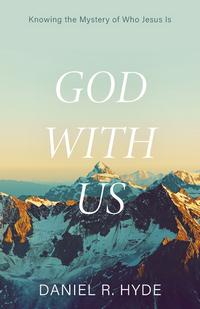
God with Us by Daniel R. Hyde: A Look at The Mystery of the Incarnation

God with UsGod with Us:
Knowing the Mystery
of Who Jesus Is

by Daniel R. Hyde

DETAILS:
Publisher: Reformation Heritage Books
Publication Date: June 29, 2021
Format: Paperback
Length: 155 pg.
Read Date: January 16, 2022
Support Independent Bookstores - Visit IndieBound.org

Machen powerfully stated, “Let us not deceive ourselves; a Jewish teacher of the first century can never satisfy the longing of our souls.” No mere man, however holy, can bring us into fellowship with God.

What is amazing in Scripture is that this is the case because God not only desired to give us grace that met our crimes against Him but that His grace would “super-abound” (hupereperisseusen) beyond our sins (Rom. 5:15-21). Only an infinite Savior could bring us an infinite grace. Had Christ not possessed the two natures of divinity and humanity in His one person, we would be without salvation.

What’s God with Us About?

Hyde begins his Introduction by talking about some of the problematic teachings he was introduced to as a young Christian as an example of the wide range of problematic teachings being promulgated throughout Evangelicalism (whatever that means).

The antidote for that is a better understanding of what the Bible teaches—as developed, defined, and defended by the Early Church. In five chapters he talks about the singularity of the Incarnation, helps the reader to understand the doctrine of the hypostatic union, and also clarifies understanding of Christ’s Human Nature and His Divine Nature. Why was it necessary for Christ to be both God and Man, and the benefits for believers that He was.

Hyde closes with a chapter comparing the Christ presented in the Qur’an and the Christ of the Bible as a means of applying the rest of the work.

So, what did I think about God with Us?

This is the Second Edition of this book, and Hyde refers to improvements he made, but without spending time reading both, I really couldn’t tell you what was changed. He does quote some hymns from The Trinity Psalter Hymnal, that wasn’t published when the first edition was, so I guess that would be a change (he may have cited some of those same hymns before, just from a different hymnal)—oddly, though, he didn’t update his Bavinck quotations from Our Reasonable Faith to The Wonderful Works of God.

Throughout Hyde’s footnotes refer to dense, heavy theological tomes, but he distills the points to easy-to-digest wording.

Not only does he provide good explanations of the teachings of the Early Church as they worked through these doctrines, but he also ties it into the Reformation churches to demonstrate their continuity with the Early Church. Hyde made particular use of the Belgic Confession, of the Three Forms of Unity, it’s the one I see cited the least, so that was nice to see.

The book as a whole was great—Hyde does yeoman’s service in laying out these doctrines in a clear and helpful manner. For me—this time through, at least—the most meaningful chapter was Chapter 6, “The Importance of this Mysterious Doctrine.” Faith, sanctification, worship, personal comfort, evangelism, and more are tied to and grounded by our understanding of the Incarnation, of God truly being one of us. Outside of reading the whole book, it’s a chapter to return to.

Do I recommend this book? Absolutely, for those new to the Christian faith and those who are not—a better understanding, or a refreshed understanding, of these vital truths is always called for and Hyde is a great guide through them.


4 Stars

This post contains an affiliate link. If you purchase from it, I will get a small commission at no additional cost to you. As always, opinions are my own.
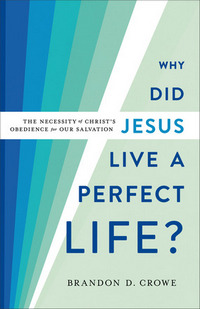
Why Did Jesus Have to Live a Perfect Life? by Brandon D. Crowe: Obedience that Actually Saves

Why Did Jesus Have to Live a Perfect Life?Why Did Jesus Live a Perfect Life?:
The Necessity of Christ’s Obedience for Our Salvation

by Brandon D. Crowe

DETAILS:
Publisher: Baker Academic
Publication Date: October 26, 2021
Format: Paperback
Length: 189 pg.
Read Date: December 19-26, 2021
Support Independent Bookstores - Visit IndieBound.org

What’s Why Did Jesus Have to Live a Perfect Life? About?

Crowe seeks to focus on this question:

Is perfect obediencce necessary for enternal life?

The question could be rephrased a number of ways; Is perfect obedience necessary for justification? Is perfect obedience necessary for salvation? Did Jesus have to be perfectly obedient in order to save us? And if so, why?

Obviously, he says it is necessary—noting that we’ll underplay and miss all of what Christ did on our behalf and that we’d end up putting too much importance on our own works.

After Crowe establishes the question and ensures that the reader understands the definitions he’s using for the key terms, he turns to the Biblical text for some exegetical looks at key texts. This is, as it should be, the bulk of the book. In the third part of the book, he moves on to practical application—given what’s been said about the necessity of Christ’s perfect obedience, what’s the place of/need of the obedience and good works of the believer?

So, what did I think about Why Did Jesus Have to Live a Perfect Life??

I appreciated Crowe’s approach to the topic of Christ’s obedience—and, as usual, found his study of the texts to be helpful and challenging. The place of works in the Christian life too often is pitted against the obedience of Christ, or tied to it in an unbiblical fashion–Crowe’s discussion was more than helpful and I wish I saw more works like it.

A couple of highlights from the book for me were that third part about obedience and the last chapter in the exegetical part. In that chapter, Crowe examines the connection between Jesus’s obedience and the resurrection. That discussion tied in nicely to his 2020 book, The Hope of Israel: The Resurrection of Christ in the Acts of the Apostles (one of those books I still think about).

This is a careful overview of the topic, and will reward a similarly careful read. By design, he doesn’t posit anything revolutionary or new—it’s a restatement and reminder of what Reformation churches have been teaching for centuries. Even so, it’s something we need to be reminded of.


4 Stars

This post contains an affiliate link. If you purchase from it, I will get a small commission at no additional cost to you. As always, opinions are my own.

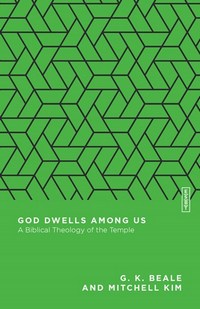
God Dwells Among Us by G. K. Beale and Mitchell Kim: Eden, the Once and Future Temple

God Dwells Among UsGod Dwells Among Us:
A Biblical Theology of the Temple

by G. K. Beale, Mitchell Kim

DETAILS:
Series: Essential Studies in Biblical Theology
Publisher: IVP Academic
Publication Year: 2014, 2021 (in this format)
Format: Paperback
Length: 153
Read Date: January 2-10, 2022
Support Independent Bookstores - Visit IndieBound.org

What’s God Dwells Among Us About?

The book opens describing Eden as the first temple on Earth—the dwelling place of God on Earth, that Israel’s Tabernacle and Temple would mirror. After Adam and Eve failed their probation, their duties to the temple, by letting the serpent and sin pollute it. After establishing that, Beale and Kim show how Adam and Eve were to spread Eden—spread the worship and image of God—throughout the world.

This call is, while changed due to the Fall, reiterated to the Patriarchs, seen in the Tabernacle and Temple. The Prophets declare Eden’s restoration to come, and the new Temple is established in Christ and begins expanding through the Church. This new Temple is served by a kingdom of priests who serve those around them as they worship God. Eden, then, will be completely restored in the New Earth.

That’s 134 pages reduced to 136 words,* so obviously I’m leaving a lot out. But that’s the gist.

* How cool would that have been if I’d accidentally got that to 134 words?

The Last Two Chapters

I’m pretty sure that the last time I read this, I focused on chapters 1-9, the more theoretical and exegetical portions. This time—I appreciated and learned from those chapters, but these last two grabbed me.

Chapter 10, “‘Why Haven’t I Seen This Before?’: Seeing the Purpose of God’s Dwelling Place in Eden,” addresses an important question. How can believers who’ve spent years reading the Scriptures not have seen this? They sketch out some factors, like a difference in cosmology a defective understanding of the unity of the Biblical message, a weak view of typology, and a different understanding of what a “literal” fulfillment of prophecy entails. I thought this chapter and the hermeneutical ideas it put forward were very insightful.

The final chapter, “Concluding Practical Reflections: Foundational Convictions for Sacrificial Mission in the Temple” is notable not only for the practical, applicatory perspective; but also for the emphasis on missions. It’s important to see that this isn’t just theology, this is a call to a way of life. Too often books like this can seem to forget that (sometimes they actually do), there’s no way to think that about this book.

So, what did I think about God Dwells Among Us?

I said something earlier about reading this book before—it was originally published in 2014, and then re-released as part of the Essential Studies in Biblical Theology series. Somewhere I got the impression that it had been revised somewhat as part of being brought into the series—I think that was an error on my part. Oh well, it was good to re-read it anyway.

As the text pre-dates the series, it has a different feel than the others—I liked that about it.

This was accessible, approachable, and beneficial to life and mind. Beal and Kim are great at both shining a light on the text and bringing it to bear on the reader. This is one of the more useful and valuable entries in this really good series and I’m glad to recommend it to you.


4 Stars

This post contains an affiliate link. If you purchase from it, I will get a small commission at no additional cost to you. As always, opinions are my own.

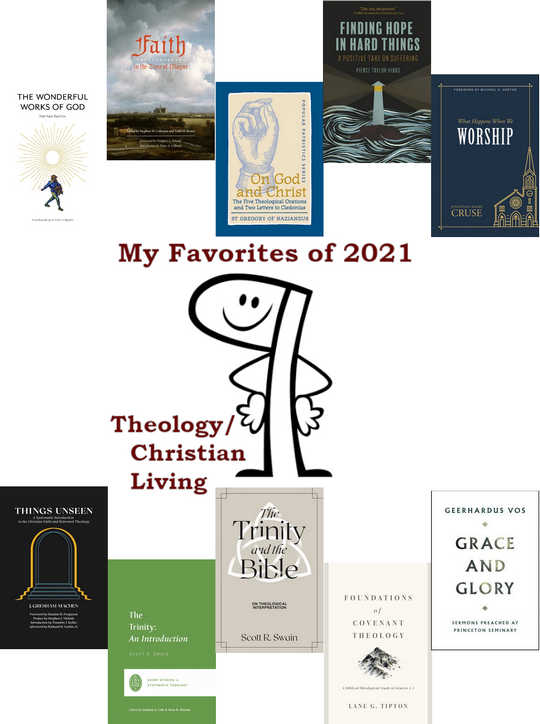
My Favorite Theology/Christian Living Books of 2021


Unlike 2020, when I posted about almost nothing I read in this category, I was much stricter with myself and posted about everything. I don’t know if anyone else appreciated or benefited from it, but I sure did. It also made this post a lot easier 🙂

As always, re-reads don’t count for these lists. It’s a self-imposed rule, so I don’t feel too bad about playing fast and loose with the rule for a couple of these entries.

(in alphabetical order by author)

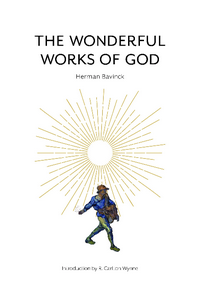
The Wonderful Works of GodThe Wonderful Works of God

by Herman Bavinck

My original post
Bavinck boiled down the material covered in his four-volume Reformed Dogmatics into this “simple explanation of the Christian faith in a book of modest scope.” It’s a pastoral work, a compassionate work, and one that will repeatedly point to the Gospel as well as the Majesty of the Triune God.

5 Stars

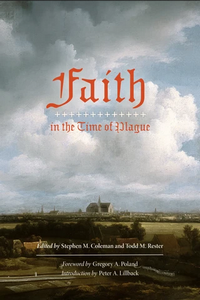
Faith in the Time of PlagueFaith in the Time of Plague

Edited by Stephen M. Coleman and Todd M.Rester

My original post
This is an anthology of “plague writings” from (primarily) Reformation and post-Reformation era pastors and theologians, to show how leaders in the past dealt with times of widespread communicable disease. Those looking for easy answers to “how would the early Church or Reformers” deal with COVID-19 (or the like)”, will be disappointed. There are no quick and easy answers here. But this can remind readers that the Church has been through similar—and worse—times before. She likely will again. There have been careful, pastoral responses to it in the past, and that can be true again. We don’t have to have a snappy, one-size-fits-all approach at the first sign of trouble, but we are called to gracious, Christ-honoring, people-serving responses.

4 Stars

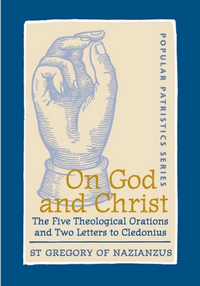
On God and ChristOn God and Christ, The Five Theological Orations and Two Letters to Cledonius

by Gregory of Nazianzus, Translators: Frederick Williams & Lionel Wickham

My original post
These sermons were pivotal in the development of the position behind the modification to the Nicene Creed at the Council of Constantinople. It’s full of technical Trinitarian language, so it’s not the easiest thing to read. But with a lot of care, it’s rewarding. These sermons have lasted since the Fourth Century because they’re useful, educational, approachable, and understandable. The translator calls them “as much high art as high theology” in his introduction. This is a man who cares about what he’s talking about—this is important to him, important to his opponents, important to his audience, and therefore it must be dealt with carefully, with precision, and clearly. All of which translates well to us today.

5 Stars

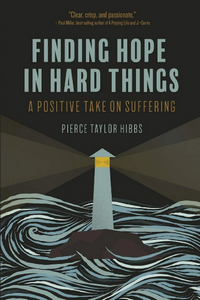
Finding Hope in Hard ThingsFinding Hope in Hard Things: A Positive Take on Suffering

by Pierce Taylor Hibbs

My original post
The central thesis of the book is: hard things are going to shape us in ways easy things can’t. He develops this thesis through a collection of essays about the death of his father, his anxiety disorder, and his struggles with self-doubt. These case studies are just that, things that his readers can relate to, sympathize with, and find similarities in their lives. After that, Hibbs points to finding Christ and His purposes in the hard things, and that’s where we find hope. This isn’t a book that comes to say “here’s a bunch of things you need to know to deal with suffering,” instead it’s “here’s what I’ve learned while through these trials, maybe you can learn from what I’ve been through, too.”

3.5 Stars

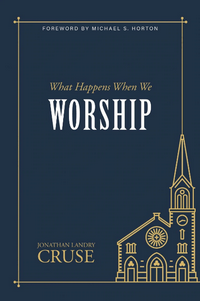
What Happens When We WorshipWhat Happens When We Worship

by Jonathan Landry Cruse

My original post
This is not a manual for the “how-to” aspects of worship, nor does it wade into the “style” debates and conflicts, he doesn’t look into the “why” we do certain things in worship (although he brushes against the idea). This is about the supernatural aspect to the ordinary, weekly event. It’s about what God does to and for His people in worship, what’s happening as we worship. Edifying, educational, orthodox, and even devotional—this book will introduce you to the vital topic or will gently remind you of the things you’ve been taken for granted.

5 Stars

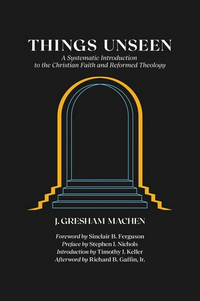
Things UnseenThings Unseen: A Systematic Introduction to the Christian Faith and Reformed Theology

by J. Gresham Machen

My original post
These are transcripts of weekly radio addresses Machen made presenting a systematic approach to Christian teaching. Flying in the face of the mode of the day, Machen gives a strong presentation of Reformed distinctives, as well as a whole-hearted belief in a supernatural Christianity. He’s succinct, pastoral, accessible, and even witty. These are not talks for scholars, or dumbed-down–they’re straightforward presentations of the topics for everyone. This is one of the most rewarding books I’ve read in a few years. Even when Machen is merely restating what generations before him taught, there’s a freshness to his presentations that really are appealing.

(I’m thumbing my nose at my “only new to me” rule here–I’ve read these talks in other collections several years ago–but not organized like this in one volume)

5 Stars

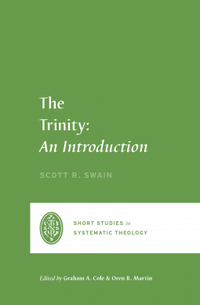
The TrinityThe Trinity: An Introduction

by Scott R. Swain

My original post
This is an introduction to the classical Christian doctrine of The Trinity. He’s not trying to re-invent the wheel, he’s definitely not trying to innovate, but to provide a concise jumping-off point into deeper studies by providing a solid foundation. While Swain never seems to be leaving out details or avoiding the complicated ideas (although he obviously has to), he keeps things short and sweet.

This is one of those books where my notes keep saying “Chapter X is likely the highlight of the book,” “the section on X is likely the most valuable in the book.” It appears 60-70% of the book is a highlight—and I may not have written all of those parts down. Which is to say, there’s a lot of gold here. Helpful, insightful, and useful—it also achieves its end for leading on to further study for me. It’s accessible, but not easy, reading. At the same time, it’s a challenging, but not difficult, text.

5 Stars

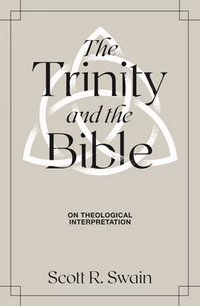
The Trinity and the BibleThe Trinity and the Bible: On Theological Interpretation

by Scott R. Swain

My original post
Rather than one overarching topic, this is a collection of previously published papers that seek to show both how the Bible reveals the Trinity and how the Trinity shapes our reading of the Bible. This is not an easy read, but it was worth the effort, every bit of it. Like a lot of the more scholarly theological books I read, I was reminded frequently while reading that I’m not an academic and this is above my weight class. But it wasn’t inaccessible, just difficult and required a little commitment. Like all good academic theology, there were moments of the most doxological writing—or doxology-inspiring writing (or a mix). There are paragraphs and paragraphs that I wish I could commit to memory, so I could use them at the drop of my hat in conversation and in prayer.

5 Stars

Foundations of Covenant TheologyFoundations of Covenant Theology: A Biblical-Theological Study of Genesis 1–3

by Lane G. Tipton

My original post
I’ve read several introductions to Covenant Theology in the last couple of decades. This is a different way of covering these concepts and it’s a very effective one. It’s also a different way of looking at Genesis 1-3. Almost every time I’ve seen these chapters explained and exegeted, it had to do with the doctrine of Creation, the Fall and the Promise of the Seed in Genesis 3, and so on. But Tipton’s approach—while addressing all that—focuses on the Big Picture, looking at the purposes behind Creation, the protoevangelium, the Covenants of Work and Grace, and how those are worked out in history (particularly in the last two chapters about Christ as the Promised Seed and the Second Adam).

It’s a self-described “brief and non-technical” book, building on the work of Geerhardus Vos and Meredith G. Kline. Maybe a bit too brief, a little more expansion would be beneficial, but a fascinating and helpful read.

4 Stars

Grace and Glory (BoT Edition)Grace and Glory

by Geerhardus Vos

My original post
Another version of this book made this list a couple of years ago, but this version has more sermons. It’s easily the best collection of sermons I’ve ever read. Yes, there’s rich theology behind these sermons, but they’re primarily expositions and applications of the texts for the hearers. And, yes, the audiences of these sermons were students at Princeton Theological Seminary (before the downgrade that led to the creation of Westminster Theological Seminary), but these were not airy, academic addresses. Sure, as the initial hearers were largely future ministers, there are portions that are more applicable to preachers than to laity. But there’s not a lot of that, and even in the midst of one of those sections, there’s still a lot of gold to be mined.

5 Stars

Things Unseen: A Systematic Introduction to the Christian Faith and Reformed Theology by J. Gresham Machen: Concise Looks at Fundamental Doctrines

Things Unseen

Things Unseen:
A Systematic Introduction
to the Christian Faith
and Reformed Theology

by J. Gresham Machen

Hardcover, 426 pg.
Westminster Seminary Press, 2020

Read: January 3-December 26, 2021/td>

What’s Things Unseen About?

Starting in 1934 and continuing until his death in 1937 (although he had plans to keep it going for at least another two years), J. Gresham Machen delivered a series of radio addresses on WIP in Philadelphia. The addresses focused on the Christian doctrine of the Bible and what the Bible tells us about God, the Christian view of Man, and then doctrines of salvation (this was cut off before he completed it).

While not technically a Systematic Theology, the outline matches how many/most Systematics cover the topics.

These addresses had been collected and published in collections in previous decades, but now, they’re published in one attractive (and seemingly durable) volume.

So, what did I think about Things Unseen?

With a couple of weekends off for travel or sickness, I read a chapter a week this last year, and it was a great practice. The addresses took thirty minutes or so a week when delivered, so they take only a few minutes to read. But minutes that serve as a wonderful reminder of the basics of Christian Doctrine.

In the 1930s, the vogue was to downplay Reformed distinctives, as well as a whole-hearted belief in a supernatural Christianity. Machen flies in the face of that and was bold in his teaching on both fronts. He’s succinct, pastoral, accessible, and even witty. These are not talks for scholars, or dumbed-down–they’re straightforward presentations of the topics for everyone.

Were this a smaller collection, I might be able to get deeper about some of the topics–but there’s just too much to try to talk about. But it’s all great–this has been one of the most rewarding books I’ve read in a few years. Even when Machen is merely restating what generations before him taught, there’s a freshness to his presentations that really are appealing.

I can’t recommend this enough.


5 Stars

Faith in the Time of Plague Edited by Stephen M. Coleman and Todd M. Rester: Reformation and Post-Reformation Voices Speak to Our Moment

Faith in the Time of Plague

Faith in the Time of Plague

Edited by Stephen M. Coleman and Todd M.Rester

Hardcover, 309 pg.
Westminster Seminary Press, 2021

Read: November 7-December 12, 2021

The main point? Two rocks must be steered clear of: stupid boldness and exceedingly vicious fear. On the first, one does those things that while we fear nothing—would often lose ourselves and others. On the second it happens that as we would look to our own life, we would desert the work of Christ. Therefore, let us fear what can happen if we fail to avoid those evils. But let us be confident in the Lord and let us remain as steadfast as possible—even to the point of death—in our calling and in the work of Christ.

What’s Faith in the Time of Plague About?

The Editors describe the book like this:

The body of extant plague writings is vast and much of it remains unavailable in English. The selections in this book were determined to a great extent by the treasures that came to light in translating the 1655 pamphlet Variorum tractatus theologici de peste, which makes up Part I of the book. This collection of tracts is an unparalleled Post-Reformation treatment of the plague, from pastoral and scholarly points of view. Part II consists of those Reformation and Post-Reformation works that Beza, Rivet, Voetius, and Hoornbeeck [the authors in Part I] engaged with frequently (Zanchi, Abbot, and Ursinus). Alongside those pieces are additional contemporary works that we felt would be especially useful for pastors, scholars, and interested readers to have available in book form (Zwingli, Luther, Lavater, and Rawlet), and which give the reader a more complete picture of the Reformed tradition’s branch of plague writings. Each of these eleven authors addresses the unique questions posited by the plague in distinct ways, yet each does so by definitively Reformed methods—grounded in Scripture, historically informed, and always with the issue of faith in Christ at the forefront.

There are also two appendices, On Mortality by Cyprian of Carthage—a work that multiple authors in the main texts refer to (and likely shape even those who don’t) and the section Prayer and Thanksgiving from the Book of Common Prayer—an application of all the theology of the main texts.

Part 1: Variorum tractatus theologici de peste

The various works in part one are careful, methodical, Scriptural, and thorough—they cover all the bases. The treatise by Beza seems to both reflect the thinking of the rest of the Reformation as much as it shapes everything that comes after (or at least everything in the book).

Some parts of this took some work to get through, but it was worth it.

Part II: Reformation and Post-Reformation Plague Writings

Others sin on the right hand. They are much too rash and reckless, tempting God and disregarding everything which might counteract death and the plague. They disdain the use of medicines; they do not avoid places and persons infected by the plague, but lightheartedly make sport of it and wish to prove how independent they are. They say that it is God’s punishment; if he wants to protect them he can do so without medicines or our carefulness. This is not trusting God but tempting him. God has created medicines and provided us with intelligence to guard and take good care of the body so that we can live in good health.

For me, this part of the book (roughly a third) was the most rewarding. Luther’s Whether One May Flee from a Deadly Plague covered most/all of the points in Part I, but in a pithier and more digestible fashion. Which is what you expect from Luther, right?

Zwingli’s Plauge Hymn is great. I really don’t know what else to say.

The most moving, the most personal entry in the volume is John Rawlet’s A Letter to my Mother is clearly part of that preparation for death mentioned in the post last week. In this printing, it’s an eleven-page letter* written by an Anglican minister in London sure he was soon to contract the plague and die. He was wrong about contracting the plague and never sent the letter—but he was ready for it.

* Hard to fathom in the age of texts, tweets, and email.

An Unimportant Observation

I’m pretty sure I’ve never run into the word “licit” as often as I have in this work. Like most people (especially those who read a lot of Crime Fiction), I run across “illicit” all the time. But “licit”? Almost never.

Maybe it’s a quirk of the translators, but I doubt it. It’s just refreshing to see the word—and it’s one I’m going to try to use more often.

So, what did I think about Faith in the Time of Plague?

One thing that struck me was how often these Reformation authors appealed to earlier theologians (like Cyprian). But largely not about plagues or other diseases. Instead, it was how they approached the response to persecution—could believers flee from it, or do they have to run toward it or simply wait for it? Both persecution and disease come from the Lord—as both trial and result of sin.

I have to say, I’m not sure I’d have approached it that way before.

Those looking for easy answers to “how would the early Church or Reformers” deal with COVID-19 (or the like)”, will be disappointed. There are no quick and easy answers here. But this can remind readers that the Church has been through similar—and worse—times before. She likely will again. There have been careful, pastoral responses to it in the past, and that can be true again. We don’t have to have a snappy, one-size-fits-all approach at the first sign of trouble, but we are called to gracious, Christ-honoring, people-serving responses.

These are some excellent examples of how to do it. This isn’t the easiest, breeziest thing I’ve read this year—it might even be the furthest from it. But it’s an invaluable resource and I’m glad Westminster Seminary Press brought it to us.

Page 20 of 33

Powered by WordPress & Theme by Anders Norén